



Abstract
User experience has a significant impact on the effective product design and improvement, especially for a personalized product to meet user’s individual need. The development of personalized products requires data from user experience in the evaluation of the product function and performance. The existing methods of Internet-based interactive platforms and direct market user surveys cannot provide users full experience of product features. This research proposes a user interactive system based on virtual reality technologies to provide users a close-real experience in the development of open-architecture products. The system provides users an interface built on the virtual environment. The users can review a product design by virtually operating and evaluating the product. The system records users’ operations and feedbacks for designers to improve the product. Food trucks designed using the open-architecture concept are used as applications to verify the proposed method. A user survey is conducted to examine the system effectiveness.
Introduction
A variety of products in the market can meet different user requirements, which however increases cost of the product. Open-architecture products (OAPs) were proposed for a cost-effective solution to meet personalized needs based on the existing manufacturing mode. 1 OAPs allow product users to add personalized functional modules in an original product to meet their changeable requirements during the product lifespan. The knowledge of users’ needs is essential in the development of OAPs for the personalized functional module. 2 The current product development is mainly the work of industries and product designers. There is not enough involvement of users in the process of product development. It is therefore necessary to have a new way to allow users to participate in the process of product development effectively.
The existing methods provide three ways for users to involve in the process of product development. They are interactive platforms based on the Internet, the direct product experience, and the survey of product users, respectively. The first and third methods cannot provide the user real experience of product features fully. The second way cannot be used in a large scale as the time and cost required. Virtual reality (VR) technologies provide interactive environments for users to obtain experience that is difficult to have in reality. VR systems have been used in product design,3,4 process evaluations,5–7 and manufacturing simulations.8,9 However, there is a lack of VR applications for the user involvement in product development.
VR integrates technologies of the simulation, computer graphics, human–machine interface, multimedia, sensor and networks. VR hardware includes computers, tracking equipment, and input/output (I/O) devices. Data gloves are commonly used in the human–computer interaction of VR systems. Through the finger bend and the palm camber, the sensor can capture positions and directions of hands for virtual hands to control virtual objects in virtual environments. Besides the visual perception of computer graphics, there are other sensations in VR systems such as hearing, touch, feel, and even smell and taste. The motion simulation can animate moving of the human head, eyes, gestures, or other actions corresponding to participants in a real environment. Sensing devices support interactions between users and products.
The development of VR technologies has made a lot of progress in recent years with applications in various fields. 10 Using a VR system, virtual human models can be built. With the aid of the track ball, head-mounted device (HMD), and data gloves, users can easily understand the structure of a product. The United States Department of Defense Advanced Research Projects agency has conducted a study called the SIMNET virtual battlefield system since the 1980s to provide tank joint training; the system can connect more than 200 simulators. 11 VR has applications in manufacturing called virtual manufacturing to investigate the dynamic process of manufacturing systems. 12 VR technologies have also been used in the interior design, real estate development, and industrial simulations.13–15
One of the purposes in VR applications is to form an immersive environment to simulate details of a product or process without the manufacturing cost occurred in traditional methods. 16 VR can improve the product analysis and validation using digital product models. 17 VR has been used in the product development and improvement. 18 VR can provide users a close-real experience in a cost-effective way to involve the users in the process. 19 Through the visual feedback and product interaction, users can evaluate a product based on their requirements. 20 The VR technology was used to test and verify the performance of products where the most computer-aided design (CAD) systems cannot do. 21 A lot of efforts have been made by industries and researchers to meet users’ needs in products or processes. 22 The user involvement in the design process is the key for customized products. 23 There are many studies on the user involvement in product design. Zhang et al. 20 discussed two methods to increase the degree of user involvements in product design using the network platform and VR systems. Li discussed the design of personalized toys for different age users. 24 Dai 25 introduced an emotional design method to the personalized product design. Sun 26 built an information flow model to study the involvement of individuals and groups for the product innovation. Tang 27 studied methods for rapid responses to the product customization. Wang 28 described the important role of user participations in the product development and innovation.
The OAP was proposed in the 2013 annual conference theme report of International Academy for Production Engineering (CIRP) as a new structure of products. It uses functional modules from different sources for the product adaptability to meet different users’ need. 29 An OAP is formed by officially approved public common platforms and privately designed personalized modules. 30 Characteristics of the OAP were discussed by Zhang et al. 31 Users can change personalized functional modules of an OAP to meet their individual needs. Big manufacturers produce the product platform. Development of personalized modules can be conducted by small-sized industries or product users. 32 The OAP enable not only users to be the product consumer but also developers of the product by allowing them to participate in the design process. An OAP therefore can result in the improved product performance and reduced product cost to solve problems in the development of personalized products. 33
For industries to develop products using the OAP concept, a cost-effective tool is required in the development and improvement of the product functional modules with the user involvement. 34 Current research activities in design of the OAP mainly focus on the integration of different methods, 35 such as the analysis of functional requirements based on the axiomatic design, 36 and the module division of an OAP based on QFD (Quality Function Deployment) product modules. 35 Two methods were proposed by Zhang et al. 20 for the user involvement in product design. The first method using a network platform cannot provide the true experience of users for the product performance. The users cannot decide whether the product meets their need accurately. The second method uses VR, but it can only show the result without the process detail of users’ involvement. There were no details of information of the user participation. It is therefore necessary to have an effective method to improve the participating degree of users’ involvement in product design.
The evaluation of product assembly and disassembly operations is also an important content in the OAP design to ensure that the product is easily upgraded by users using the personalized functional module. VR provides an ideal tool for this purpose, such as interactive operations in VR environments. 36 An assembly navigation approach can support human interactions in virtual environments to achieve effective virtual assembly path planning.37 –40 A mixed VR disassembly environment can evaluate disassembly sequences in the product development. 41 A virtual training system has been used to guide users in assembly operations with haptics and visual fidelity. 42
The method proposed in this research develops an interactive VR system with functions of the user interaction, product model processing, function simulation, user data recording, and analysis. It provides tools to analyze details of users’ involvement in the OAP design. The system can not only support users’ participation in the OAP development but also provide data for OAP developers to improve the product. It can also be used in the operation simulation of upgrading personalized modules. Food trucks designed using the OAP concept are used in the case study to verify the proposed system.
In order to test the effectiveness of the proposed system, a questionnaire survey is conducted by comparing users’ experience in the knowledge and operations before and after using the system. Participants with varied ages and genders have no experience of using the VR system and food truck. Both qualitative and quantitative questions are provided for the participants. The statistical analysis of the questionnaire reveals that the VR interactive system provides an ideal tool for users in learning and experiencing.
VR-based user interactive system
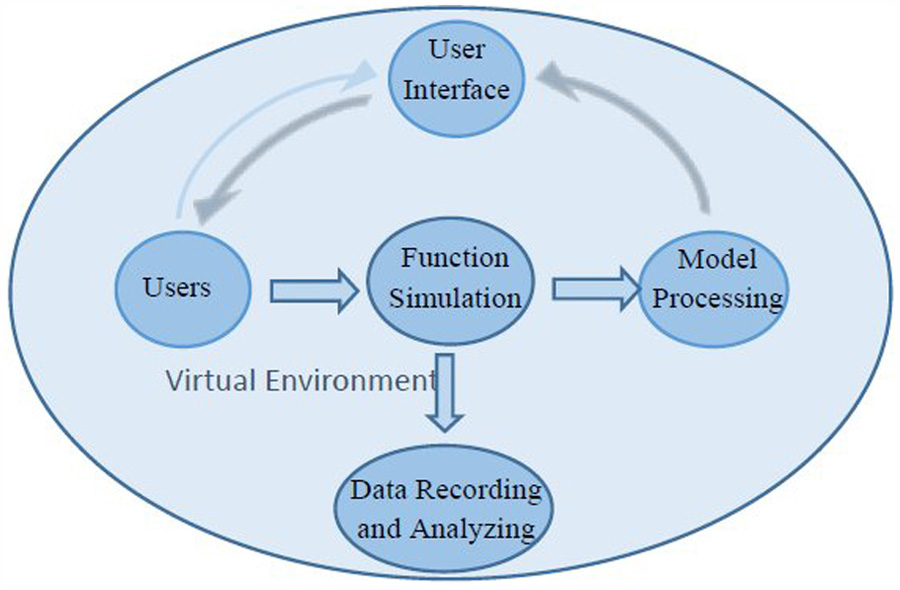
The proposed system uses VR technologies in the design of OAPs to improve the user experience. Interactions are conducted between product models and users for the product evaluation and improvement. Figure 1 shows elements of the proposed user interactive system.
VR-based user interactive system.
The system consists of a user interactive interface, a product processing module, a function simulation module, and a data recording and analyzing module. Users operate product models in the virtual environment to experience the product, which includes the review and operation of product models. Details of the system elements are explained as follows:
User interactive interface. Users interact with product models through VR devices. The interface follows users’ commands to display product operations using VR functions to accomplish different user requirements to experience the product functions.
Product model processing. Product models are imported into the VR system with different functional modules to be used in product operations. The product models are stored in a product model base.
Function simulation. It performs interactive activities between users and product models and recognizes users’ requirements and instructs VR system operations to accomplish different interactions.
Data recording and analysis. It records the process of the user involvement and provides the feedback to designers for the product improvement. Users’ needs and suggestions for the product improvement are concluded through the data analysis.
User interactive interface
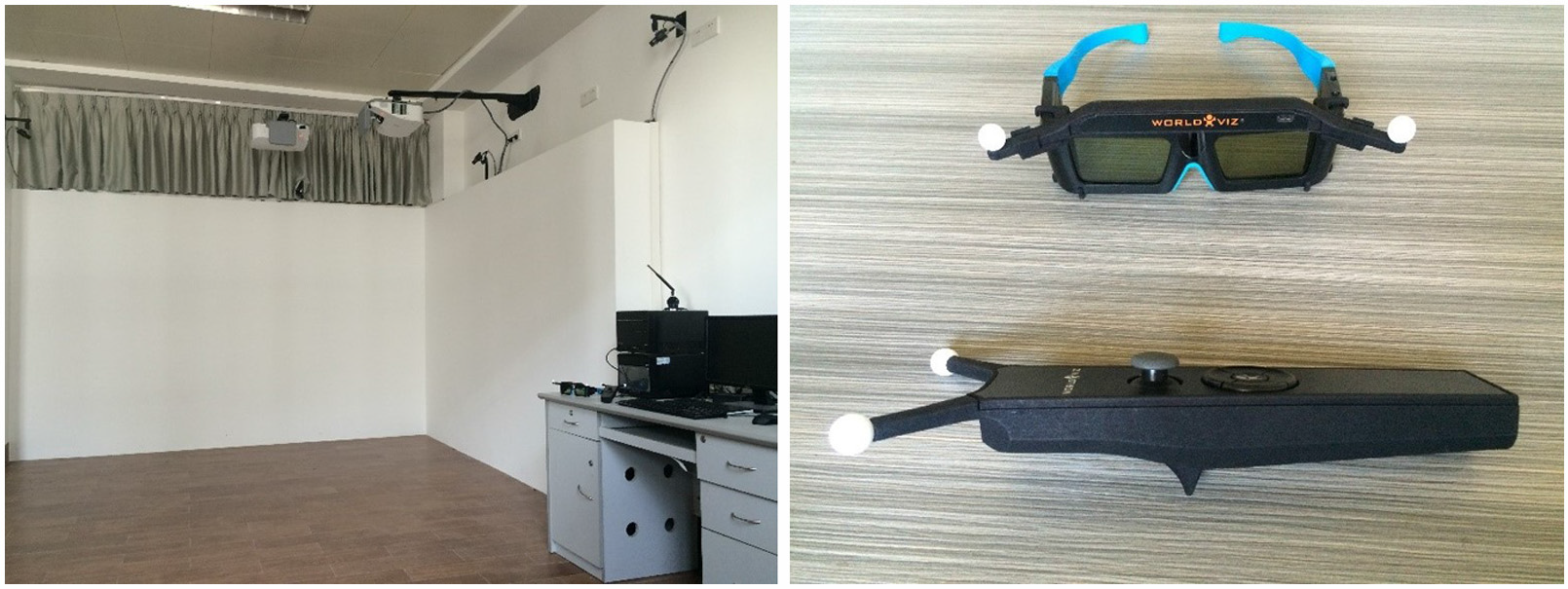
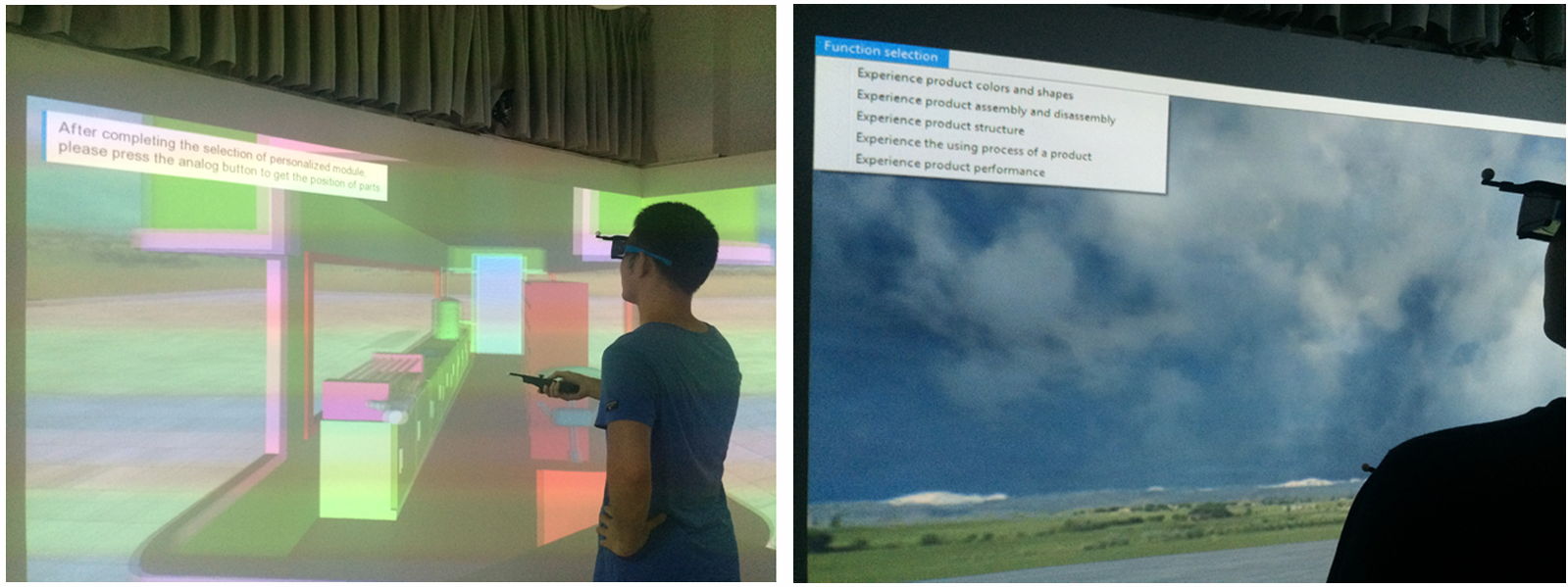
WorldViz VR devices used in the research for user interactions with product models are shown in Figure 2. Users conduct interactive actions of product evaluations using two projection screens to form a virtual simulation environment. The user interactive interface is formed using the Python program in a functional style to provide a functional-appearing interface as shown in Figure 3. Product models are operated by a user in the virtual environment through the interactive process until results are satisfied by the user. The user can choose any part of a product for examinations in the process of experience.
VR devices.
User interface.
Product model processing
Product model processing in the system converts product models into the function simulation models. The models are stored in a model base for simulation operations. The product models are converted into a data format used in the VR system. Details are built for modules of OAPs required in the simulation, such as module operations, configurations, and replacements. Product models available in the system have to meet user selections in the simulation.
After different product models are formed for the interactive need, the system is ready for the user operation in the virtual environment. Along with applications of the interactive system, the number of models in the product model base will continue to increase. It is a continuous work for product model processing when each time new models are added into the system. Different product models are dynamically updated by the model processing for the simulation need in the product evaluation and improvement. The model format and data contents are listed in Table 1.
Data format and transformation.

Design for user experience
Design for user experience is a key of the system application. Users can be product designers, current and potential product users, which require different contents of the user experience. Current product users and potential users may examine the product functions and performances. Designers may experience product details comprehensively including rationality of the product structure and assembly details. Therefore, the design for user experience includes following contents:
Different user preferences in product colors and shapes for product’s appearance.
Product assembly and disassembly for user operations and for designers to develop the product.
Rationality of product structure and characteristics of the structure by observing structure of a product for upgrading product function modules.
Operation details of the product, such as driver’s view of a car, the convenience of car operations, and driver’s comfort in the car.
Product’s special performance such as the collision effect.
Function simulation
Function simulation processes user interactions with product models. The simulation identifies the user operation to convert user’s requirements to instructions for VR operations. One of its most important parts is the motion capture system. The motion capture system used in this research has a tracking mode with 6 degrees of freedom, combined with functions of optical tracking and inertia positioning to obtain XYZ coordinates of the motion object and the rotation angles of XYZ three directions. The optical motion capture system includes Precision Position Tracking (PPT) Wand, PPT Processor, PPT Cameras, and PPT Eyes. PPT Wand is a wireless handheld input device with 6 degrees of freedom to browse, navigate, select targets, and has other interactive operations in the virtual environment combined with PPT trackers. PPT Eye is a small, portable, wireless motion tracking device that can be installed by users. When it is used with WorldViz PPT action system, users can browse the product model in the VR system. PPT Processor is mainly used to process the tracking data and transmit data in the VR system.
The response speed and precision of the function simulation affect the simulation reality directly. The Vizard VR package has the infrastructure built on Open GL high-performance image processing software to realize the rapid and efficient virtual environment rendering. Users wear three-dimensional (3D) glasses and PPT Eyes, holding a PPT Wand in the simulation environment to have the product experience. In the operation, the simulation processes interactions in real time between product models and users according to the simulation requirement. The simulation is processed by a rendering system before the visualization is projected onto screens. Different interactions can be conducted between the user and VR system in the simulation process. The interactive process is recorded in the computer for the further analysis.
Data recording and analysis
Data recording and analysis record the process of user’s participations and operation details and analyze data for suggestions of user’s needs and the product improvement. The process supports the product data recording in the simulation process. The data recorder uses the VR motion capture system. In the operation process, data recorded can be real time displayed on the screen. It can also generate a list of the data and show locations of the operating part. The recorded data are classed into different groups for the analysis. Data analysis can identify the user personalized need for the product improvement, especially for personalized function modules.
During the user experience, the system automatically generates two types of documents. One is for the level of user’s satisfaction and the time used in the system operation. The other document is the process of product operations. Accurate locations of the tracker are recorded in the simulation. These data are used to analyze users’ experience for designers to identify potential problems in the design improvement.
The system implementation
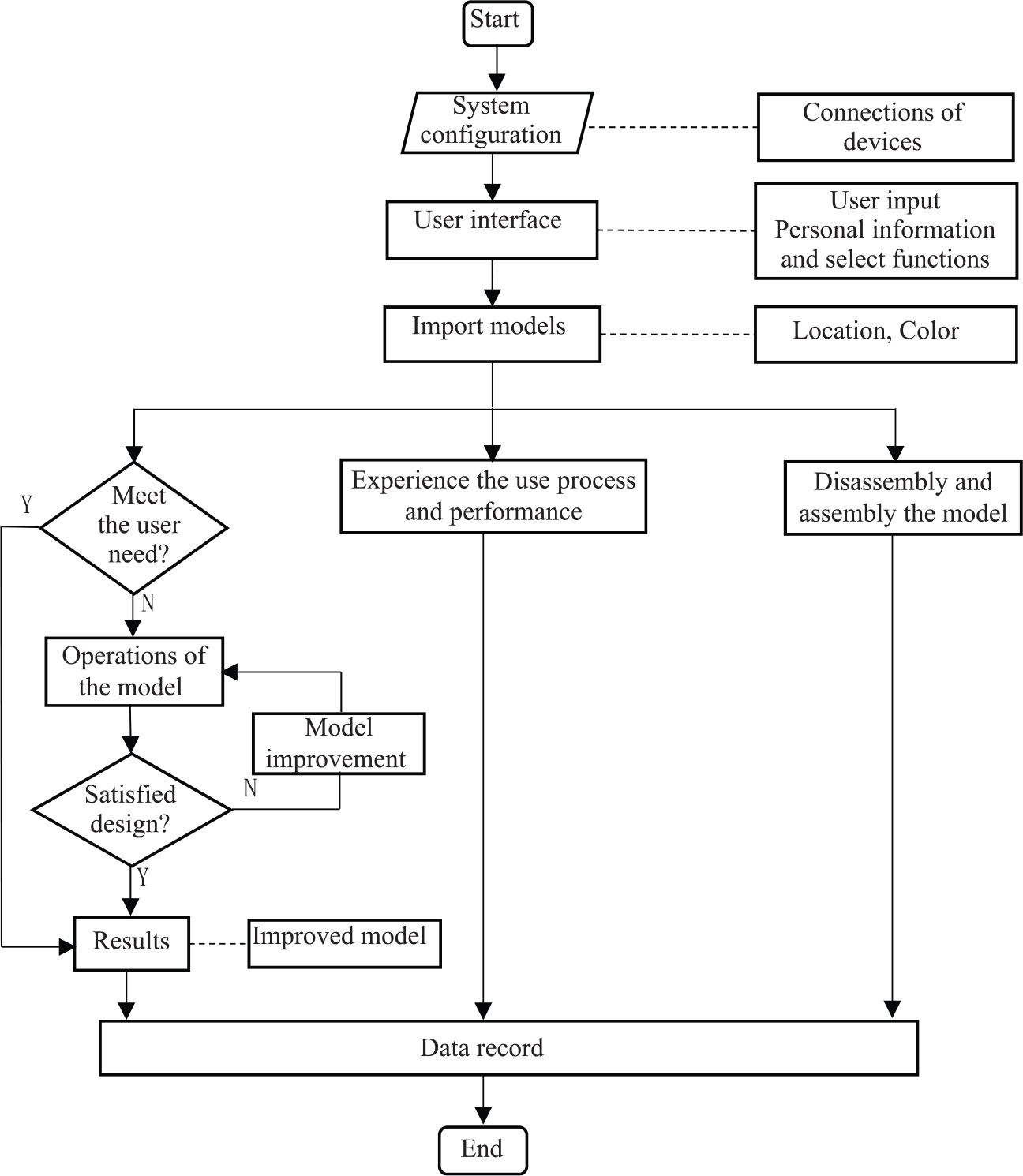
The system is implemented using the computer Python language under the WorldViz VR system. Figure 4 shows the program flowchart. When the program starts, the configuration runs to connect VR devices such as the PPT Wand and glasses. A VR interface shows to the user for operations. The system then loads in models for the user to operate the product in the VR environment. The system data flow contains series-parallel data with the unidirectional and bidirectional flows in the interactive system. The data interact with various product models. For example, the function simulation passes the data according to user’s operations to the computer, and then the computer controls the user interactive interface to generate operations. In the process, the data mainly flow between product models and components in the computer, at the same time, the computer will pass results to the user through the user interactive interface. After that, the data flow is mainly from the product model processing to the simulation operation. The simulation handles data to show results through the user interface. Some data flow from the simulation to data recording and analyzing processes.
Flowchart of the system.
Case study
Food trucks have a variety of structures to offer different functions based on the food for sales. There are over 5000 food trucks providing 1.2 million different kinds of meals a day from halal food to hot dogs in streets of New York at the end of year 2015.27,30 There is also an increasing demand for food trucks in China to meet different needs. For requirements of consumers and regulators, the design and production of food trucks using the open-architecture concept provides an ideal solution for the fast food industry.
The food truck is proposed as a typical OAP using common platform modules, customized function modules, and personalized modules as shown in Figure 5. Parts formed by chassis, motor, and steering systems are common platform modules applied for all different food trucks, made by original manufacturers. They will not be changed in the product use phase. The customized function modules are parts of the truck body including the truck body, doors and windows, and so on, which can be customized by users with the manufacturer. The body can have different shapes and colors. Personalized function modules include cabinets, grills and gas tanks, and so on. These personalized modules can be produced by different manufacturers or supplied by users. The combination of these modules forms a personalized food truck based on user’s preference to meet user’s individual need. A user can experience a variety of product performances in the proposed system through the interactive operation proposed in this research.
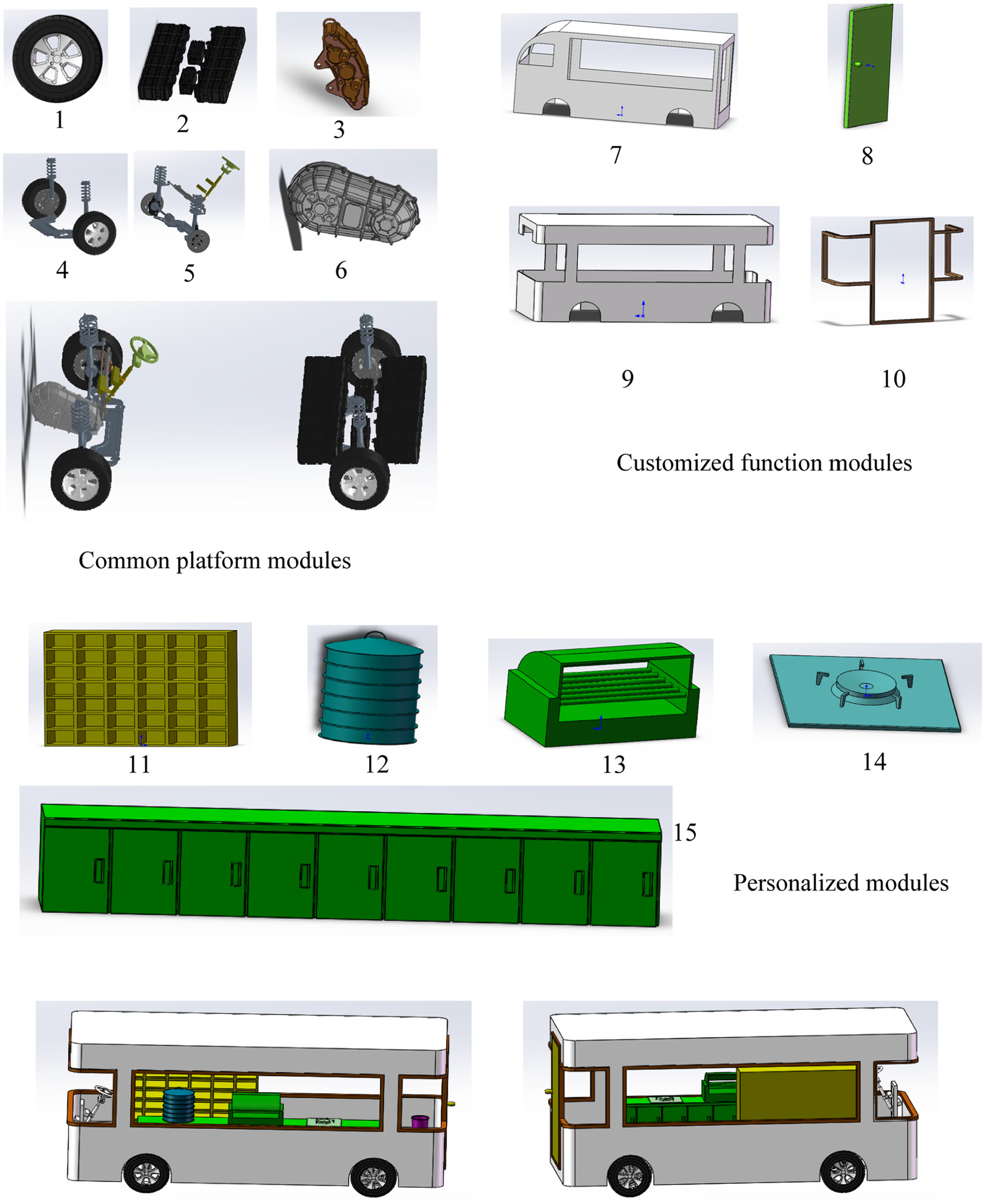
Food trucks and function modules.
Experience in different user preferences in product colors and shapes for product’s appearance
A user can select different shapes and colors of the food truck according to the individual need. The user observes the shape and color of the truck from different distances and perspectives in the VR environment. The color and shape can be changed using the VR device wand. There are six colors designed for the truck. The color of different parts can be changed by the user as shown in Figure 6.
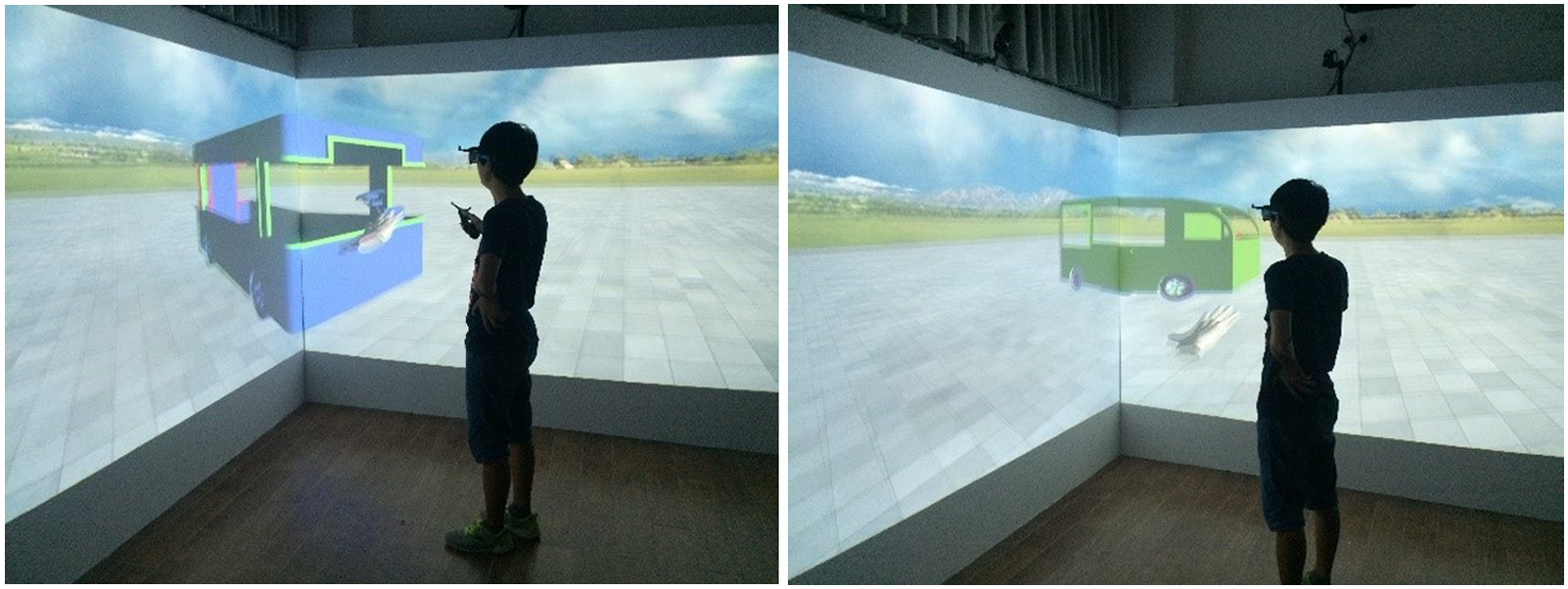
Selection of shapes and colors.
Experience in product assembly and disassembly
The food truck and its modules can be simulated for the assembly and disassembly to check the feasibility of upgrading modules or train operators as shown in Figure 7.
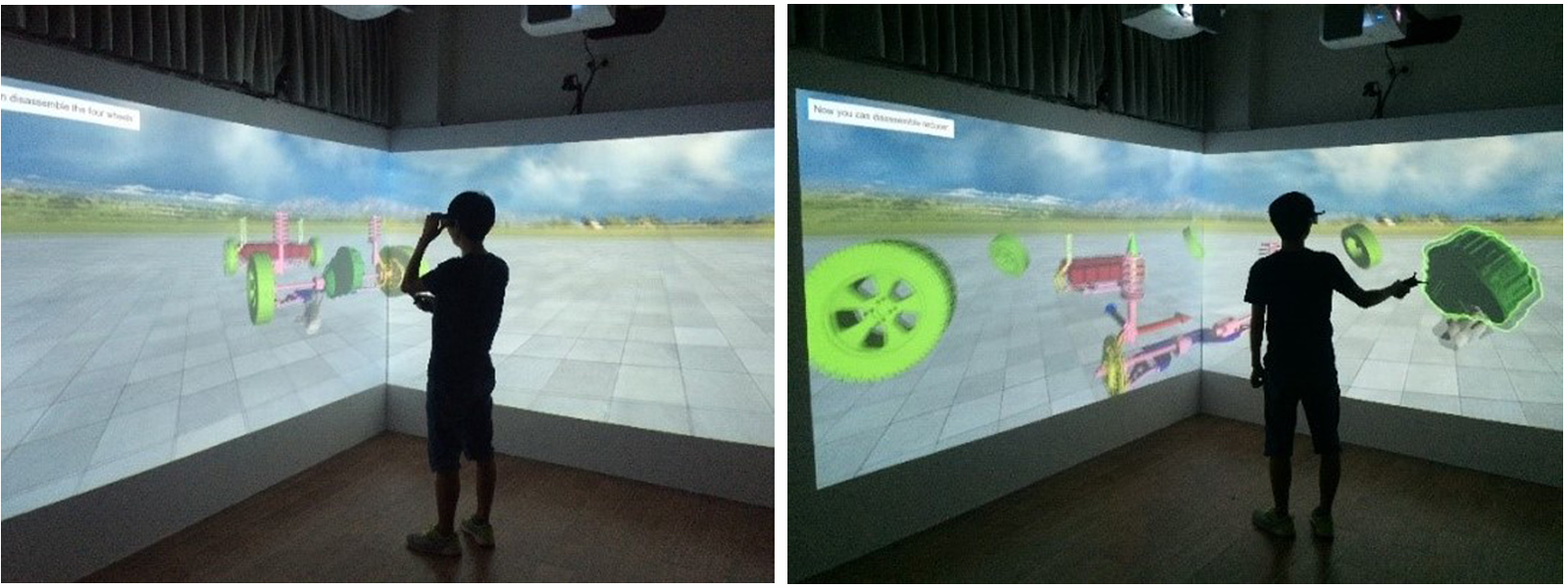
Simulation of the assembly and disassembly.
Experience in the rationality of product structure and characteristics of the structure
This operation observes the product structure for upgrading product functional modules. Users can select a variety of personalized modules according to the individual requirements in the VR environment. The PPT Wand is used to operate various kinds of kitchen appliances. An object becomes the light green when a virtual hand is closed to the object. The selected object can be moved with the virtual hand when the user presses a trigger of the wand. The user releases the trigger key when the object is reached the specified location. Figure 8 shows the selection and placement of personalized function modules.
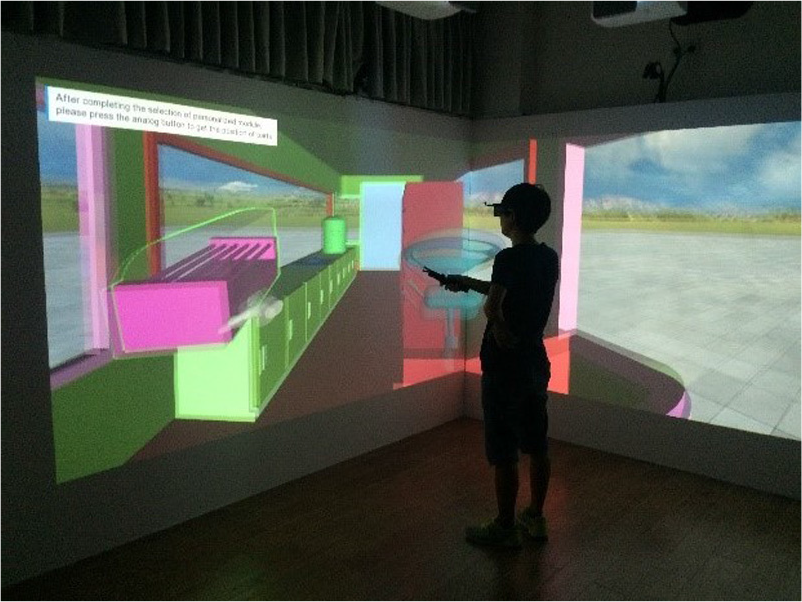
Selection and placement of personalized function modules.
Experience in the product operation
Users can experience the food truck in the operation simulation. User’s perspective is fixed in driver’s position but the angle of view can be changed. The user can experience driving the food truck through controlling moving directions. At the same time, the driving speed can be adjusted. Figure 9 shows the simulation of different driving speeds.
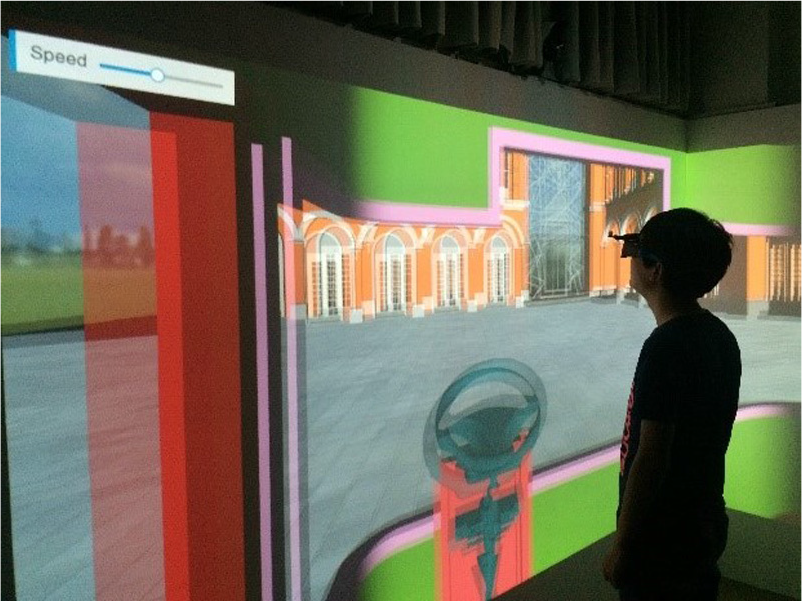
Experience in different driving speeds.
Experience in product’s performance in some special needs
The truck performance can be simulated in some special circumstances, such as colliding objects. Based on the quality, density, friction coefficient, acceleration of gravity, and other physical quantities of the truck and objects, the user can see different collision effects by setting different physical quantities. Figure 10 shows a screenshot of the simulation.
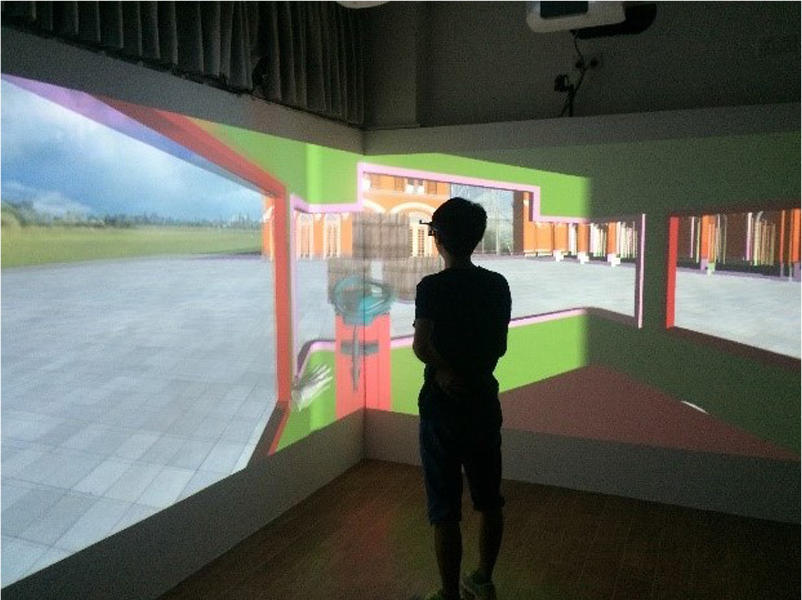
Simulation of the collision.
Therefore, users can have an in-depth understanding of the food truck performance using the proposed interactive system, which enhanced the user participation in the product design process. When a user experiences the product, the interactive system records a series of data, such as users’ selections of the customized function modules and corresponding colors, locations of the personalized modules in the system. Designers can clearly understand the user needs based on these data and then design a food truck to meet the user’s requirement.
System evaluation
A questionnaire survey method is used to evaluate the effectiveness of the proposed system by comparing users’ experience before and after using the interactive system. Prior to the experiment, 15 participants with varied ages and genders were given a brief verbal introduction to the experiment. Due to the lack of knowledge on the VR-based interactive system, the participants were provided a training program of the system to learn the PPT Wand and system operations. They were then asked to experience the product model in the system and then to complete a questionnaire about their experience of the food truck. In the questionnaires listed in Appendix 1, the subjects were asked to give scores (ranging from 0 for “unknown” to 100 for “well known”) about the experience. Data collected from the questionnaires are analyzed to evaluate the system performance. In addition, the subjects were also asked to comment advantages and disadvantages of the system.
Using the statistical analysis in the SPSS software, the Cronbach’s alpha is calculated to test reliability and internal consistency for rating questions in the questionnaires. The t-test is used to find the statistically significant difference of mean scores between before and after using the system. Through the data analysis, both of questionnaires get a high Cronbach’s alpha (0.733) and (0.8233), respectively, which means that the scale of the questions has a high level of the reliability and internal consistency in the both questionnaires. Figure 11 shows one of the results.
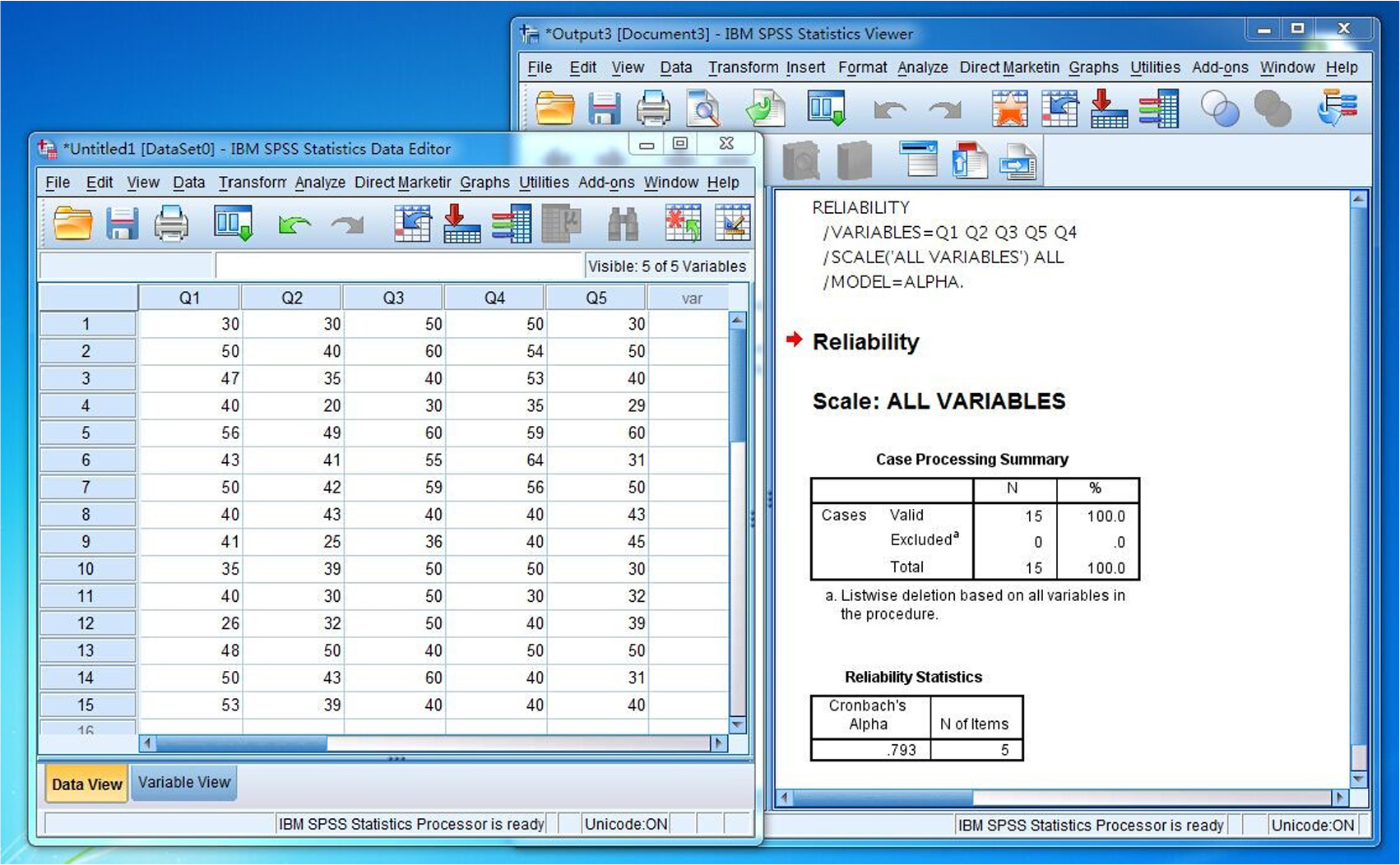
Cronbach’s alpha of Question 1.
Figure 12 shows the mean scores, difference of two mean scores, and quantity of subjects of Question 1 in the two questionnaires. It is to test users’ experience in colors and shapes for the food truck. A statistically significant difference was found before and after the experience of the interactive system, p-value <0.05. Therefore, it indicates that the users’ experience for the food truck has been significantly improved after using the system.
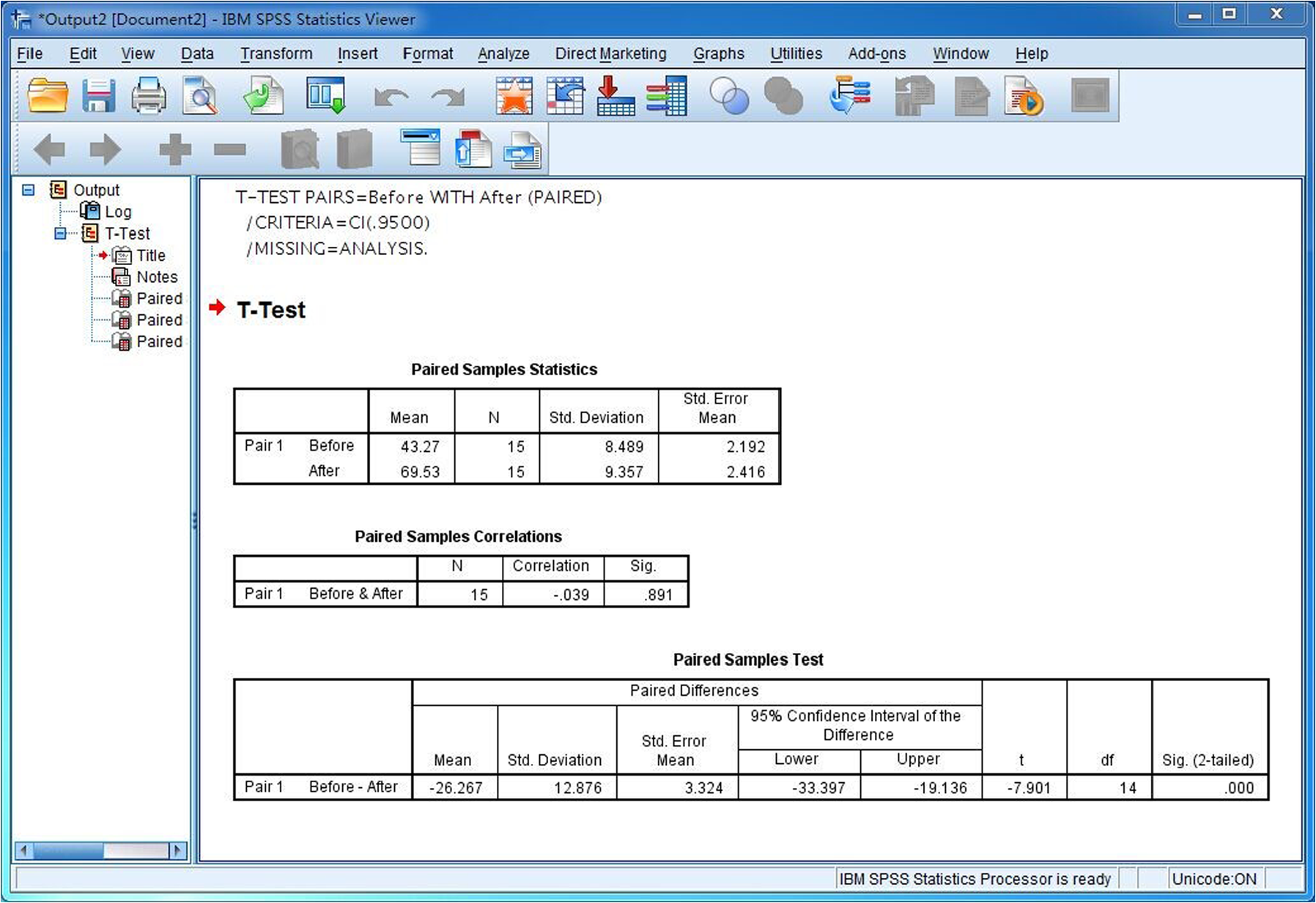
The t-test result of Questionnaire 1.
Table 2 displays scores of Question 2 about the experience of assembly and disassembly of the food truck and shows scores of Question 3 about the experience degree of the structure for the food truck. There is a statistically significant effect of the interactive system on the both understanding of the food truck configuration, p < 0.05, and learning of the assembly and disassembly, p < 0.05. Therefore, the results suggest that users acquire not only understanding of the food truck structure but also experience of assembly and disassembly of the food truck.
T-test results of Questions 2, 3, 4, and 5.

For Questions 4 and 5 in Table 2, the former is for the cognition degree of operating food trucks and the latter is to evaluate users’ cognition performance in some special needs for food trucks. It reveals that users got understanding of the operation, p < 0.05, and performance, p < 0.05, through the interactive system.
In the open questions, 80.0% of participants comment that the interactive system creates a friendly and realistic-learning environment and an almost truly experiencing environment. Using a wand to operate the virtual food truck largely increases the learning and experience interest. Some of them also proposed that it would be more confident to operate the food truck through the interactive system training. However, 55.3% of participants mentioned that it is not easy to catch the certain virtual parts accurately and quickly in the operation using the VR device.
In conclusion, the statistical analysis reveals that the proposed system in this research creates an effective learning and experiencing environment, which significantly improves user involvements in the product design and evaluation. The majority of participants agree that the VR-based system provides a user-friendly, cost-effective, safe, and highly interactive learning and experiencing environment.
Conclusion
It is essential for designers to understand users’ requirements and changeable demands in the development of personalized products. An effective user interface is important for users to experience product in the product development and improvement. Current practices of the product development are mainly the work of product developers. There is a lack of users’ involvements in the process. VR technologies provide a close-real environment to improve the user participation in the product development. VR enables users to involve a design process and evaluate the product performance for their requirements, which provides an ideal tool for the OAP design to achieve the personalized product performance with the reduced cost. The goal of this research was the development of a VR-enable user interactive system to improve user’s involvement in the OAP development. The proposed system considered the need in the user experience of a product. The user interactive system provides functions of the user interaction to product models, the process simulation, and user data process for details of users’ involvement. The system can support both the user participation and product developers for their different needs in the product development. It can also be used in the operation simulation of upgrading personalized modules. The user survey shows the archived goal of the proposed system.
Further work of this research will consider different factors in the system to improve the interactive functions, and apply the proposed system in different products for the system further evaluation and improvement.
Footnotes
Appendix 1
Before using the VR-based user interactive system, please mark following questions from 0 for “unknown” to 100 for “well known”:
After the experience of the VR-based interactive system, please mark following questions from 0 for “unknown” to 100 for “well known”:
Open-ended questions are as follows:
Declaration of conflicting interests
The author(s) declared no potential conflicts of interest with respect to the research, authorship, and/or publication of this article.
Funding
The author(s) disclosed receipt of the following financial support for the research, authorship, and/or publication of this article: The authors wish to acknowledge that this research has been supported by the National Natural Science Foundation of China (Grant No. 51375287, 51505269) and Discovery Grants (RGPIN-2015-04173) of the Natural Sciences and Engineering Research Council (NSERC) of Canada.