




Abstract
This article deals with the lean strategy evaluation process using SWOT (strengths, weaknesses, opportunities and threats) analysis aimed at identifying lean strategies and providing an initial decision framework. It involves specifying the objective of the industry and identification of internal and external factors and its sub-factors and lean strategies, which are either favourable or unfavourable in the accomplishment of the stated objective. However, the SWOT analysis method does not provide an analytical method to evaluate the priorities of identified decisive strategic factors. To overcome this limitation, this article presents a case study in an Indian foundry industry using two multiple criteria decision-making methods, that is, analytic network process and modified TOPSIS (technique for order of preference by similarity to ideal solution), to provide a computable basis in determining the rank of lean strategies. In this approach, the analytic network process is used to calculate the priorities of identified SWOT factors and sub-factors and the modified TOPSIS is applied to rank the lean strategies. A sensitivity analysis is also provided to illustrate how ‘sensitive’ the proposed model is to changes in the priorities of SWOT factors. The results show that the quantitative SWOT analysis–based approach is a feasible and exceedingly capable method that provides vital sensitivity in evaluating the priorities of lean strategies for an Indian foundry industry and can also be employed as an effective method for many other complex decision-making processes.
Keywords
Introduction
The deregulation and globalization have contributed to a lot of changes in the products and processes due to which manufacturing industries are facing a fierce competition in all business aspects. The 20th century was marked by the development of several advanced manufacturing strategies that were beginning to transform the traditional approaches due to intense global competition, rapid technological changes and advances in manufacturing and information technology for the optimization of manufacturing processes enabling manufacturers to deliver high-quality products in lesser time. 1 Nowadays, lean manufacturing strategies are some of the most powerful strategies for achieving operational and service excellence in manufacturing industries.
Over the last few decades, the foundry industry has played a key role in the development of the economies of many developing and developed nations. It has manufactured products which are used in many industries, such as steel, electrical and electronics, railway, aerospace, automobile, infrastructure and various other industries. However, the foundry industries across the globe are failing to utilize the natural and human resources, and manufacturing potentials efficiently and economically. The government and metal casting industry associations have presented several norms and guidelines to abate pollution by controlling emissions and proper disposal of pollutants that now has a significant impact on the way that foundry industry conducts its business. Nevertheless, the foundry industry can become economically and environmentally sustainable industry by implementing and capitalizing the strategies proposed by lean manufacturing in a systematic way. 2 Even though the issue of lean has been explored in previous research in different types of industry, little attention has been paid to its implementation in the process industries, such as the foundry industry.3,4 The existing methods for evaluation of appropriate lean strategies rely on the manufacturers’ common sense of judgement rather than any sequence of analytical justification. 1
Strengths, weaknesses, opportunities and threats (SWOT) analysis is recognized widely as one of the most effective methods implemented to systematically analyse an organization’s internal and external factors and to formulate strategies. Therefore, for the identification of lean strategies in the foundry industry, SWOT analysis can be helpful since internal and external factors influence almost every activity within an industry. The qualitative SWOT analysis method is not without limitations as it does not provide the analytical means to compute the relative importance of identified decisive strategic factors or the ability to assess the relative importance of alternatives based on these factors. 5 To overcome these limitations, many researchers employed strategic decision-making methods that would consider multiple criteria in their analysis, such as analytic hierarchy process (AHP), 6 analytic network process (ANP) 7 and technique for order of preference by similarity to ideal solution (TOPSIS). 8 Some researchers have even integrated different multiple criteria decision-making (MCDM) techniques to obtain the rank of alternatives.9–11 The integration of AHP and TOPSIS has the broadest application in the multiple criteria evaluation problems. 12
The AHP is an undeniably efficient method since it makes the best judgement between both tangible and intangible aspects of a decision. However, there is a major limitation: it is incapable of measuring possible interactions and dependencies between the criteria at different levels. 7 The ANP can overcome the limitations of AHP; it can be employed for solving various complex MCDM problems involving feedback approach and efficiently representing many complicated relationships. The TOPSIS is based on the concept that the optimal solution should have the shortest distance from the positive-ideal solution (PIS) and the longest distance from the negative-ideal solution (NIS) at the same time. 13 Deng et al. 14 presented modified TOPSIS, which uses the weighted Euclidean distances instead of representing weighted decision matrix. The modified TOPSIS can be widely used in many applications, such as supplier selection15,16 and decision-making. 17
This article proposes to use SWOT analysis to determine lean strategies and integrate two MCDM methods, that is, ANP and modified TOPSIS, to obtain the priorities of lean strategies. In the integrated approach, we use ANP only as a weighing system to obtain the priorities of SWOT factors and sub-factors and apply modified TOPSIS to rank the lean strategies with respect to the weighted SWOT sub-factors. Our approach inherits advantages of the reliability offered by modified TOPSIS and the modelling power of ANP. To the best of our knowledge, this is the first attempt to use hybrid modified TOPSIS for evaluating the priorities of lean strategies in the foundry industry.
The article is organized as follows. The literature review is provided in section ‘Literature review’. Section ‘MCDM methods’ describes the research methodologies of ANP and modified TOPSIS. Section ‘Proposed research method for lean strategy evaluation’ analyses the lean strategies of Indian foundry industry so as to provide decision aid to this industry in developing its strategy. In this section, a sensitivity analysis is also provided. Section ‘Conclusion’ presents the conclusions and directions for future research.
Literature review
Lean manufacturing and strategies
The term lean was coined by Krafcik 18 in the year 1986 to describe Toyota’s production system (TPS). In 1990, Womack et al. 19 published a book entitled The Machine That Changed the World, in which the quality and efficiency improvement practices applied by Toyota in their production system were identified as lean production. Lean has developed as a long-term philosophy with the motto ‘to do more with less’ aimed at the total elimination of waste or muda while reducing costs and improving delivery times and quality with a systematic and continuous improvement (kaizen) based approach. 19 Shah and Ward 20 proposed the definition of lean manufacturing as ‘an integrated socio-technical system whose main objective is to eliminate waste by concurrently reducing or minimizing supplier, customer, and internal variability’. Lean is most often associated with the elimination of seven categories of waste that include over-production, waiting, transportation, inventory, motion, defects and over-processing. 21 Russell and Taylor 22 defined waste as anything other than the minimum amount of equipment, effort, materials, parts, space and time that is essential to add value to the product and for which the customer is willing to pay. The key thrust of the lean production concept is to identify extremely efficient and operational manufacturing systems that utilize fewer resources and simultaneously produce higher quality and lower cost as outcomes. Using a more practical- and project-based perception, a key lean strategy is the elimination of waste. 23
Lean manufacturing uses a wide variety of practices that include (1) Just-In-Time (JIT), (2) Total Quality Management (TQM), (3) Total Productive Maintenance (TPM), (4) Kaizen and (5) Value Stream Mapping (VSM). 24 However, the benefits of lean cannot be realized simply by adopting a few tools and techniques. 25 The advantages are usually associated with time, productivity, efficiency, space, quality, people and cost savings. 26
Womack and Miller 27 stated that lean is not just a manufacturing tactic, but a management strategy that is applicable to all organizations since it enhances processes. According to Shannon et al., 28 successful lean implementation requires managers and employees to be educated in the appropriate application of lean practices and the effective strategies for lean implementation. According to Bhasin, 29 any lean strategy, regardless of its strengths, will not be accepted if it is outside the bounds of an organization’s culture. Sahoo et al. 30 addressed the implementation of lean philosophy using VSM and Taguchi’s method of design of experiments in a forging company to develop and analyse several lean strategies to eliminate waste and implement lean principles. Sánchez and Pérez 31 recommended lean indicators which can check manufacturing strategies from time to time since the lean implementation is a gradual productivity improvement process.
Quantitative SWOT analysis
Evaluation of strategies is a complex task that not only involves a trade-off between strengths and weaknesses entailed but also takes opportunities and threats into consideration. Hisrich and Peters 32 provided that responding to internal strengths and weaknesses is one of the fundamental constituents of the strategic management process. Several strategic management approaches have been developed to solve such real-life problems. SWOT analysis, initially described by Learned et al., 33 is one of the primary methods to address complex strategic situations while reducing the magnitude of information and improving decision-making. SWOT analysis is a prevalent method of strategic planning that is implemented to provide a basic framework to identify internal and external factors and to formulate strategies. 34 Using the SWOT analysis, an individual can determine the way to leverage its strengths, overcome its weaknesses, seize opportunities and elude hypothetically detrimental threats or nonetheless scrutinize them through more consistent perusing. 35
In spite of its advantages and usages to strategists, SWOT analysis is often criticized because of its inability to provide an analytical method for computing the importance of decisive strategic factors or its inability to assess the relative importance of defined alternatives based on the identified factors. Ho 12 provided the evidence based on a literature review that the integrated AHPs are better than the stand-alone AHP and expressed that the five commonly integrated techniques with the AHP include mathematical programming, quality function deployment (QFD), meta-heuristics, data envelopment analysis (DEA) and SWOT analysis. Many researchers have employed strategic decision-making models that would evaluate the relative importance of strategies with respect to the strategic factors by incorporating AHP, known as the SWOT-AHP method or the A’WOT method. 6 Even though the AHP method provided a computable basis and hierarchical structure to the SWOT analysis framework, it lacks the ability to encapsulate potential interactions, interdependencies and feedbacks among the strategic factors. To overcome this limitation, the researchers developed an ANP-based SWOT model.5,7 However, the past studies have proven that the evaluation criteria for alternatives may interact with each other and not be independent in some cases. 36 For this reason, few researchers such as Yang 8 employed the SWOT-TOPSIS method. The SWOT-TOPSIS method also possesses an inherent difficulty of assigning reliable subjective preferences to the criteria even though the concept of TOPSIS is rational and reasonable and the computation involved is uncomplicated. To overcome this limitation, the modified TOPSIS method proposed by Deng et al. 14 could be applied which uses a new defined weighted Euclidean distance and ranks the alternatives with respect to their overall performance on the weighted criteria.
Shinno et al. 6 solved the competitive strategy formulation problem by integrating SWOT analysis with AHP. They proposed quantitative SWOT analysis to methodically determine relationships among SWOT factors and to formulate a competitive strategy on the basis of determined relationships. The proposed method is accomplished by performing pairwise comparisons between SWOT factors and then evaluating them using the eigenvalue method applied in the AHP technique. Yüksel and Dagˇdeviren 7 demonstrated a process for quantitative SWOT analysis using the ANP method, thereby allowing the measurement of dependency among the strategic factors. The developed methodology consisted of three steps: in the first step, SWOT analysis is used to identify the SWOT factors, sub-factors and strategies. In the second step, the authors determined the priorities of the SWOT factors based on the algorithm developed for evaluating criteria priorities. In the third step, according to the inner dependencies among the SWOT factors, the inner dependency matrix and weights of SWOT sub-factors are determined, and the priority vectors for alternative strategies are computed based on the SWOT sub-factors. Azimi et al. 37 proposed an integrated SWOT model for prioritizing the strategies using ANP and TOPSIS. They developed a SWOT model in three steps: in the first step, SWOT analysis is used to determine strategic factors and alternative strategies. After that, the priorities of strategic factors are analysed by the application of ANP. In the third step, they ranked the strategies on the basis of the priorities of SWOT sub-factors using TOPSIS.
Observations from the literature review
From the literature review, it has been observed that these methods have produced new insights into the literature and deserve merit regarding their analytical means for evaluating the ranking of strategic factors and strategies, but they still possess a major limitation: ignoring the inherent complexity of assigning consistent subjective preferences to the criteria. But, in addition to this, it is usually impractical to find a single dominant factor, sub-factor and lean strategy to determine the overall success of a firm. The importance of each lean strategy depends on its contribution to the long-term performance of the firm, and on the basis of this analogy, the ranking of factors, sub-factors and lean strategies can be established. Therefore, it is a complicated task to evaluate lean strategies. To solve this kind of complex problem, the integration of two MCDM methods, ANP and modified TOPSIS is proposed. In this way, we can also derive advantage of the reliability offered by modified TOPSIS method while dealing with the modelling power of ANP. The proposed method would fill this limitation in the literature and provide the organizations a systematic approach to formulate and develop adequate criteria and minimize the risk of employing sub-optimal strategies.
MCDM methods
MCDM refers to the process of solving decision problems for finding the best alternative involving evaluation from among the set of a feasible and finite number of alternatives. These methods often require experts to provide qualitative and quantitative judgements for defining the performance of each alternative on criteria and the relative priorities of criteria with respect to the overall goal or objective. The advantage of most MCDM techniques is that they possess the ability of simultaneously analysing both qualitative and quantitative evaluation criteria. The ANP and modified TOPSIS are both logical and rational decision-making methods that deal with the problems of evaluating the best alternative from a set of alternatives.
In this study, the primary objective is to develop an integrated method using SWOT analysis–based MCDM methods for solving the lean strategy evaluation problem. Therefore, these methods are briefly described in the following subsections.
ANP
The ANP is the generalized form of AHP and is used to solve various complex decision problems involving feedback, interactions and interdependencies in the decision-making system with more accuracy and precision. In the AHP approach, the analytical aspects of a decision problem are decomposed into an independent unidirectional hierarchy structure with overall goal at the top level of the hierarchy, followed by criteria and sub-criteria at the middle level and feasible alternatives at the bottom level. However, several decision problems cannot be designed hierarchically as they involve dependence and interaction of higher level elements with lower level elements. 38 ANP does not assume this independence among different levels of criteria and within the level of a hierarchy. It structures a network without levels which signifies that some elements may exhibit influence over several others. A comparison of structure and supermatrix between AHP and ANP methods is presented in Figure 1.
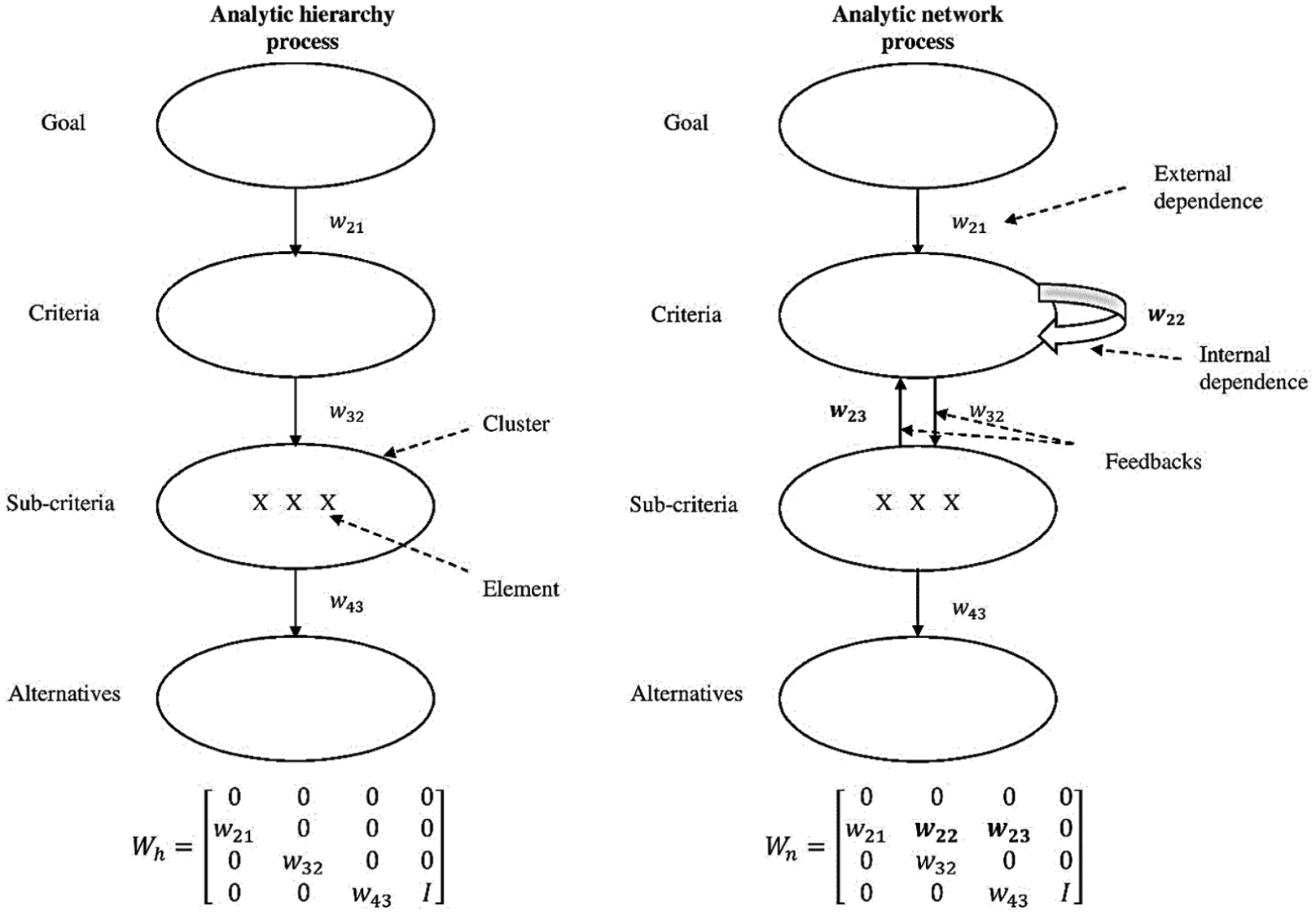
A comparison of the structure and supermatrix between AHP and ANP.
Figure 1 illustrates that all elements and clusters are connected to each other with at least one of the potential connections. In other words, ANP involves a system-with-feedback approach since it includes both internal and external relationships with feedbacks, and thus making it possible for the elements in a cluster to either influence some or all of the elements in same or another cluster. The external relationship indicates the dependence of the elements of a cluster on other cluster’s elements. The internal relationship, which is shown by a looped arc, refers to the dependence of an element of a cluster on other elements in the same cluster integrated with feedback. As depicted in Figure 1,
Eliciting priorities of elements of each cluster requires pairwise comparison of elements on their upper level ‘control’ criterion. The priorities of elements for an internal relationship are obtained by comparing it with respect to their influence on other elements within their own cluster. Pairwise comparisons of elements in a cluster are made for an external relationship by comparing them with elements of other clusters to which they are connected. These pairwise comparisons are made systematically using the fundamental scale of absolute numbers ranging from 1 to 9 as tabulated in Table 1. The relative importance of the element i on the element j is represented by
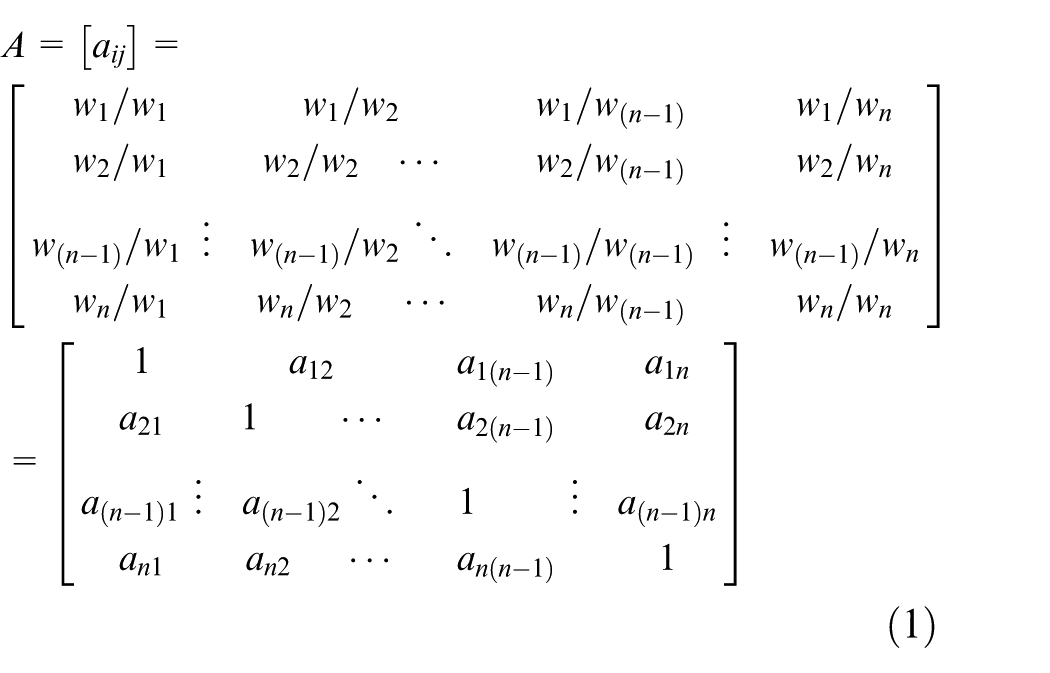
Pairwise comparison scale of absolute numbers.
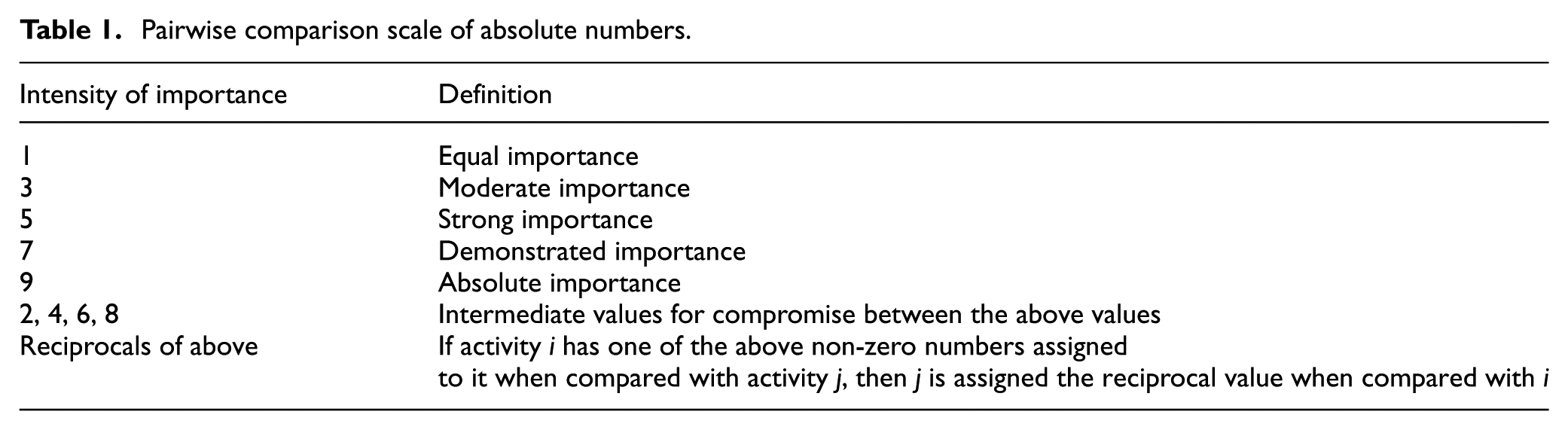
After the completion of the matrix A, an estimation of the relative priority of the elements assessed is figured by the solution of equation (2)

where
According to Saaty,
38
if consistency ratio (CR) is determined to be less than 0.10, the pairwise comparisons are considered acceptable and therefore there is consistency; otherwise, the re-assessment of the part of the questionnaire must be made and assessments of the pairwise comparisons must be modified. The consistency index (CI) is calculated using


In the ANP method, there are three matrix analyses such as supermatrix, weighted supermatrix and limit matrix. The supermatrix is a partitioned matrix that represents priorities obtained from the pairwise comparisons of the elements that are arranged hierarchically into the appropriate columns of the matrix. Using the supermatrix, the influences of interdependence that exists between the criteria and sub-criteria of the system can be determined. The weighted supermatrix is used to find out the priority that is obtained by the priorities of supermatrix and the priority of each cluster. In the limit matrix, the stable priorities of each priority are determined by taking the necessary limit of the weighted supermatrix. The results of the decision-making problem are obtained from the limit matrix values.
Note that the elements of the supermatrix have to be raised to arbitrarily large powers by taking the necessary limit to obtain the limit matrix. This matrix is inclusive of the final priorities required to attain a set of long-lasting constant priorities. Higher values in the final priorities convey the greater desirability of that alternative. For an alternative i and determinant a, the ‘desirability index’ or final priority can be calculated by normalizing each block of the limit matrix using the following equation proposed by Meade and Sarkis 39

Modified TOPSIS method
The TOPSIS is an MCDM method proposed by Hwang and Yoon 13 based on the concept that the chosen alternative should have the shortest distance from the PIS and the longest distance from the NIS. In the classical TOPSIS method, the elements of the normalized decision matrix are weighted by multiplying each column of the matrix by its associated criterion weight. The weight of an alternative is then determined by its Euclidean distances to the PIS and the NIS. Conversely, in the modified TOPSIS method presented by Deng et al., 14 these distances are interconnected with criterion weights and are incorporated in the distance measurement. All alternatives are compared with the PIS and the NIS, instead of directly comparing among themselves. The modified TOPSIS uses the weighted Euclidean distances rather than representing weighted decision matrix.
First, it is required to establish a decision matrix on the basis of all the information available on criteria, which can be structured with ith alternative in each row,
Geometric mean could be employed to group multiple opinions of experts into a single judgement. Considering a group of k experts, an element of decision matrix from each expert can be aggregated by taking the geometric mean to attain the group importance weight of that element as shown in equation (6)

The elements of the normalized decision matrix R
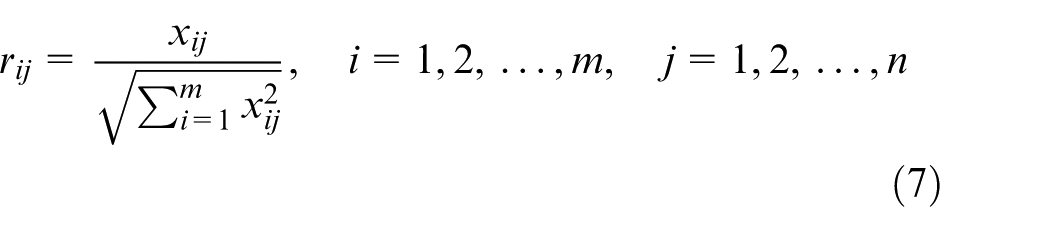
The PIS


where
The weighted distances of each alternative from


where
The relative closeness coefficient of a particular alternative,

where
Finally, the set of alternatives can be ranked in descending order according to the value of
Proposed method for lean strategy evaluation
Integrated ANP-modified TOPSIS model
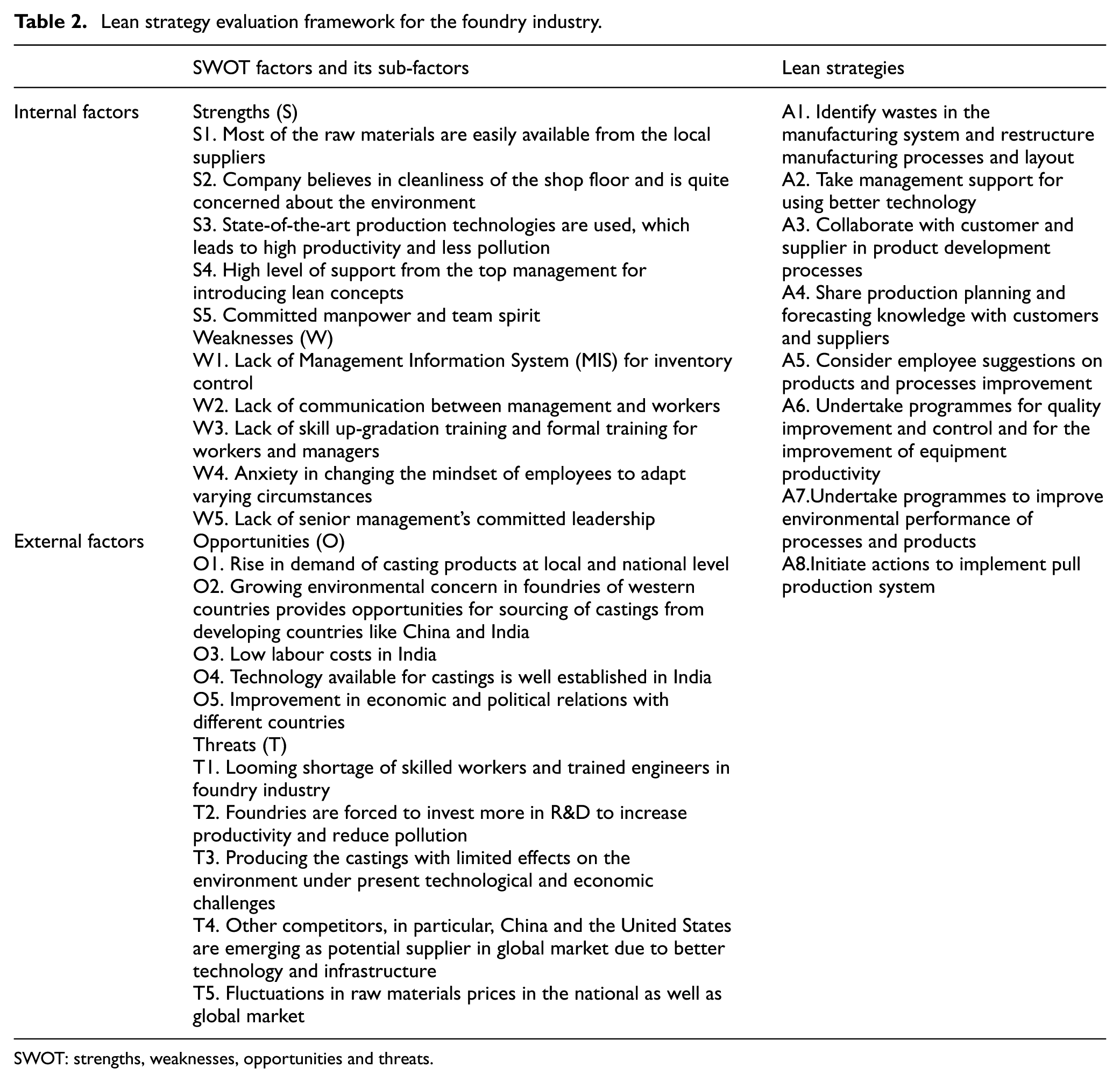
The proposed research method of this article is based on the SWOT analysis and the integrated approach of ANP and modified TOPSIS. Thus, the problem is decomposed into a network decision-making model such that the importance of lean strategies can be determined on the basis of the priorities of the identified SWOT factors and sub-factors as shown in Figure 2. The overall goal of ‘evaluation of lean strategies’ has been placed at the top level of the model, followed by factors and sub-factors at the second and third levels, respectively. As can be seen from Figure 3, each SWOT factor includes five sub-factors. Therefore, a total of 20 sub-factors have been identified. The bottom level of the model consists of eight feasible lean strategies developed for this study. For the sake of simplicity, eight potential lean strategies identified in this study are abbreviated as S1, S2, S3, S4, S5, S6, S7 and S8 in the following discussion. As the key steps of this study involve the identification of SWOT factors, sub-factors and lean strategies, it provides a framework for obtaining the priorities of identified factors and sub-factors using the ANP. After that, the ranking of identified lean strategies can be obtained using the modified TOPSIS method. Figure 3 shows the flowchart for the proposed decision-making model. Table 2 presents all the factors, sub-factors and lean strategies used.
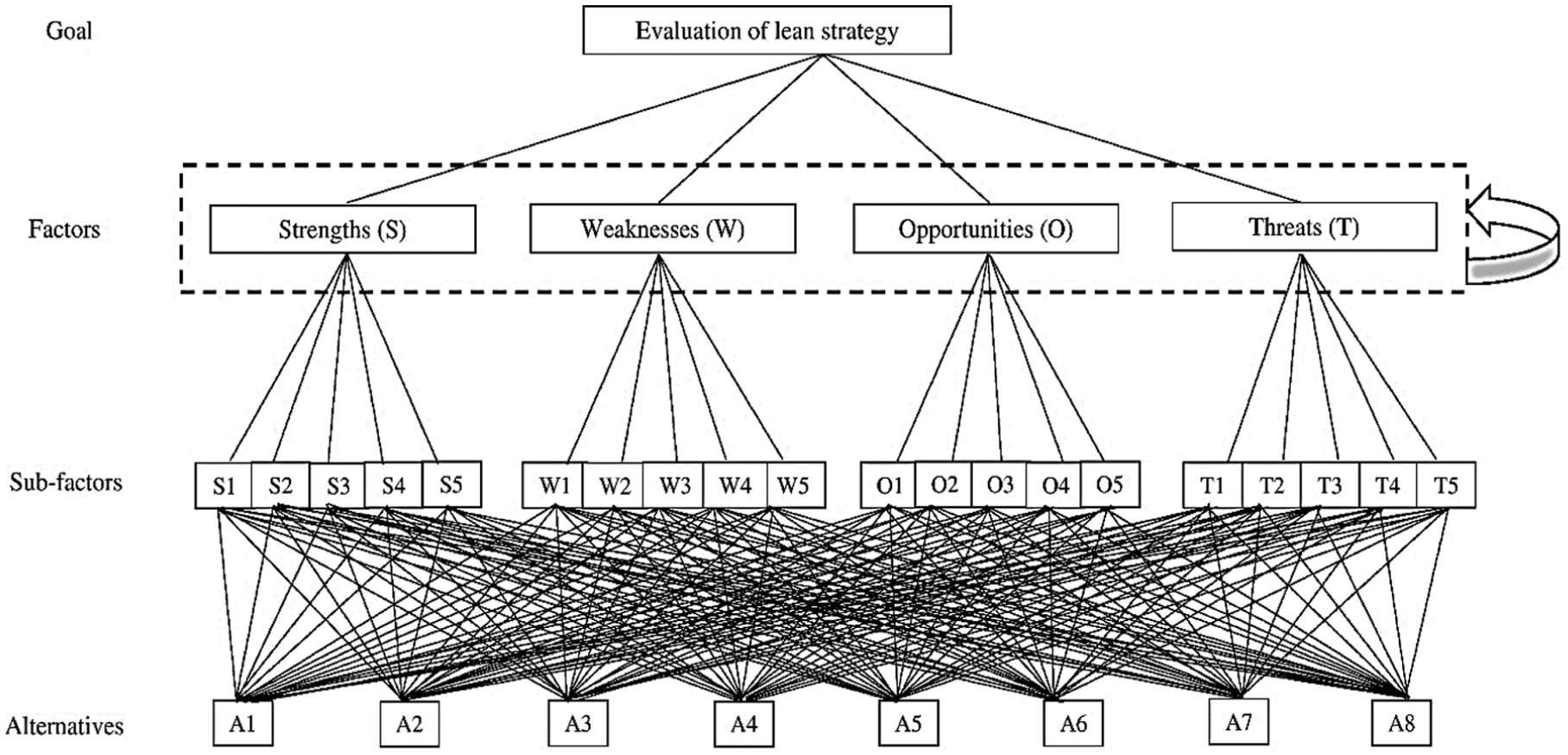
A proposed decision-making model for lean strategy evaluation.
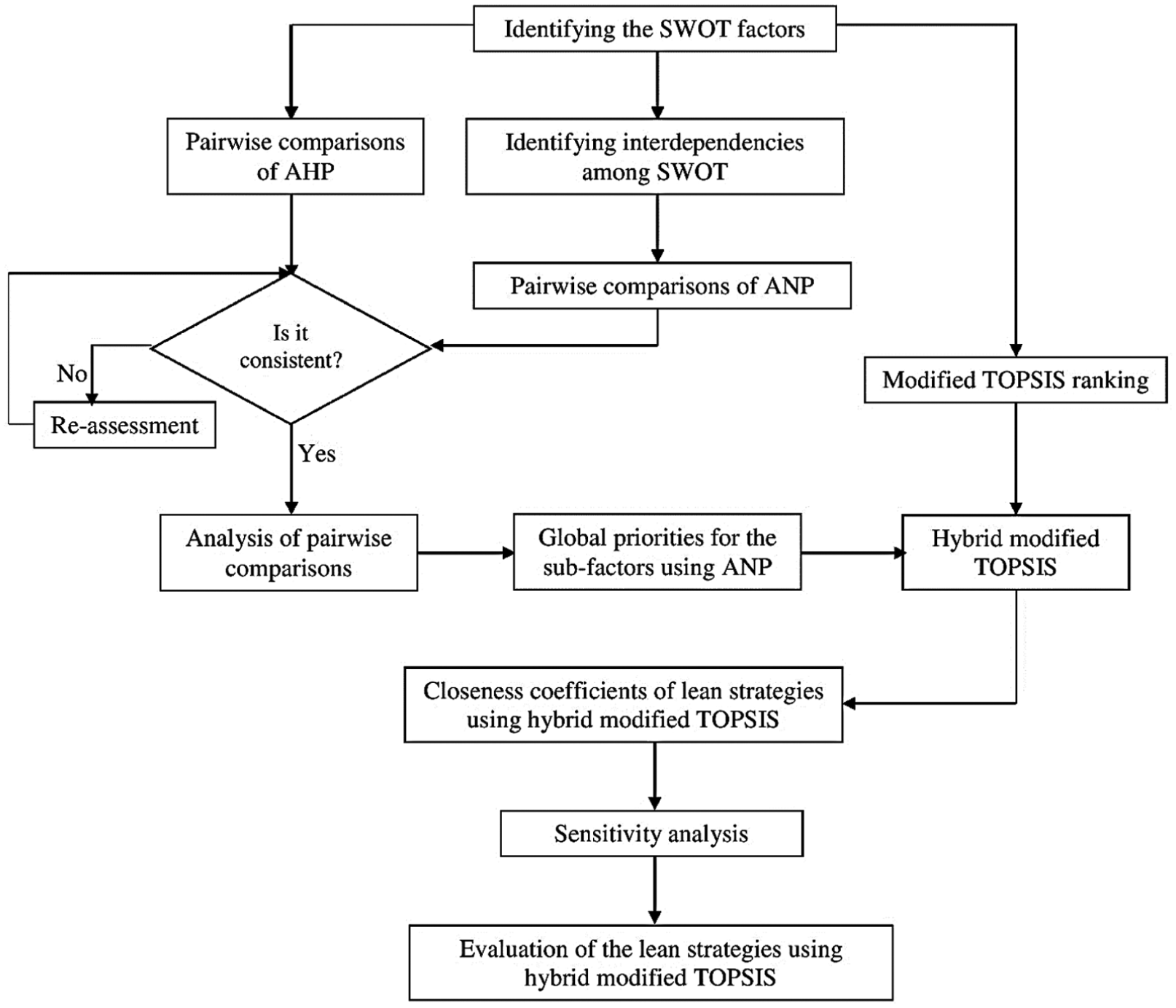
Flowchart of the proposed decision-making model.
Lean strategy evaluation framework for the foundry industry.
SWOT: strengths, weaknesses, opportunities and threats.
To implement the proposed method, three steps are recommended that are described as follows. The first step involves analysis of the organization for SWOT. In this manner, strategically important SWOT sub-factors, that is, the internal and external factors, which significantly affect the success of the organization’s future goals are determined. The lean strategies are recognized based on the SWOT sub-factors as shown in Table 2. In the second step, the priorities of the SWOT factors are analysed on the basis of the algorithm developed for determining criteria priorities. Then, according to the internal dependence between the SWOT factors, the internal dependency matrix and priorities of SWOT sub-factors are determined. In the third step, the closeness coefficients for lean strategies are computed with respect to the SWOT sub-factors using modified TOPSIS.
Evaluation of priorities of lean strategies using modified TOPSIS and ANP in the foundry industry
This section performs the remaining proposed steps involving the assessment of priorities of SWOT factors and sub-factors using the pairwise comparisons of ANP and the assessment and ranking of lean strategies using the modified TOPSIS method. Pairwise comparisons and other matrices are based on the preference validated by the case study of a foundry industry, that is, the importance of the factors and sub-factors was completed with assistance from the foundry industry. Local priority indicates the priority of an element with respect to its cluster or parent element. Global priority indicates the priority of an element with respect to the overall goal or objective. In this section, we present the equations used in evaluating priorities of lean strategies and the steps used in the evaluation process:
Step I. Calculating the independent priority for each SWOT factor: Assuming independence between the SWOT factors, a pairwise independent comparison matrix is formed between the factors with respect to the overall goal using pairwise comparison scale. The pairwise comparison matrix has been analysed as shown in Table 3, and the following priorities pertaining to the SWOT factors (
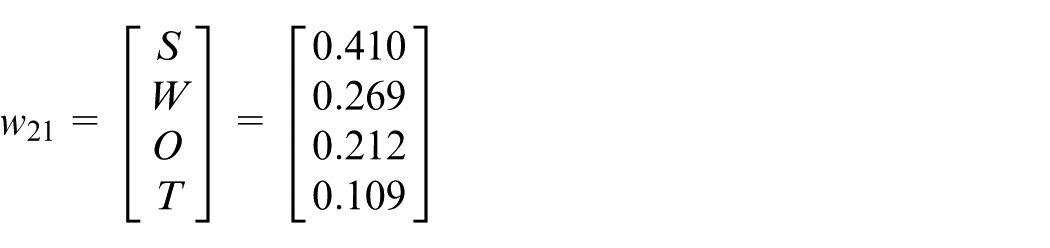
Step II. Determining the internal dependence between each SWOT factor: Since it is unrealistic to assume the SWOT factors as independent, the existence of internal dependence between these factors is modelled more realistically through the ANP approach. The pairwise comparison matrices are formed for each SWOT factor based on the internal dependencies using pairwise comparison scale as shown in Tables 4–7. The internal dependence matrix of the SWOT factors
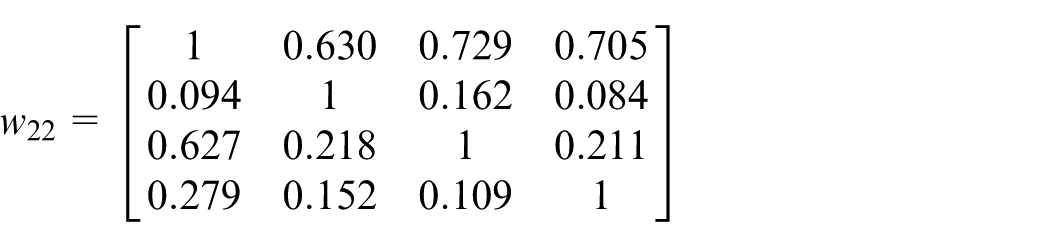
Step III. Calculating the interdependent priority of each SWOT factor: The interdependent priority

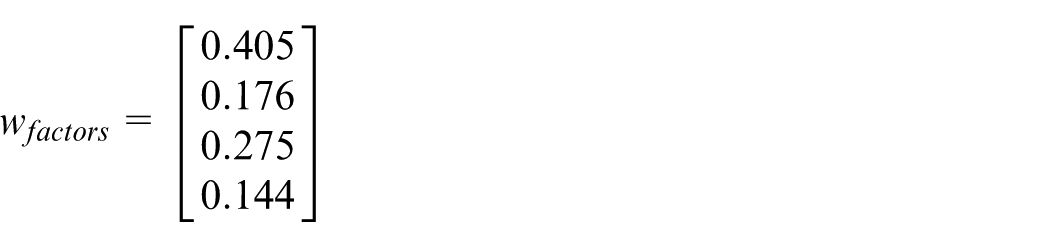
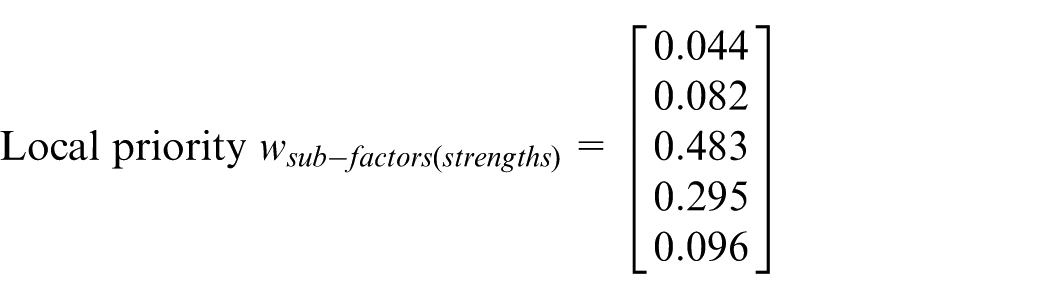
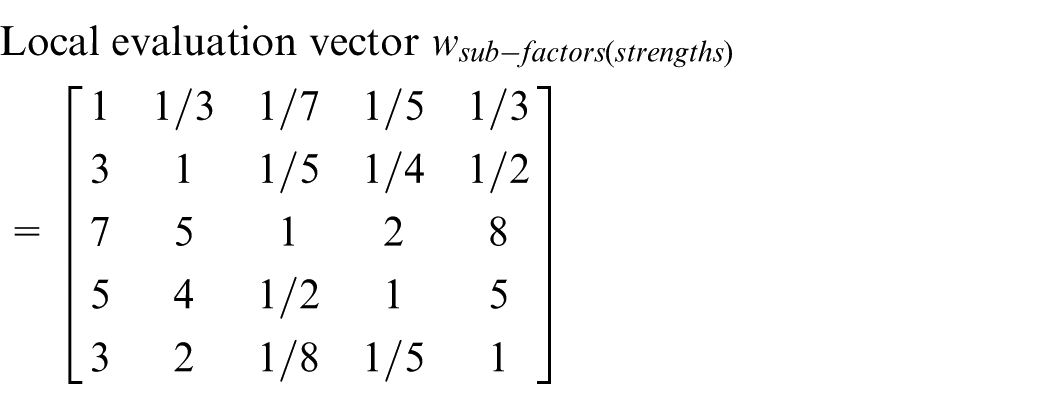
Step IV. Calculating the global priorities of the SWOT sub-factors: First, the local priorities of the SWOT sub-factors are calculated using the pairwise comparison matrices as follows
Pairwise comparison of SWOT factors with independence between them.
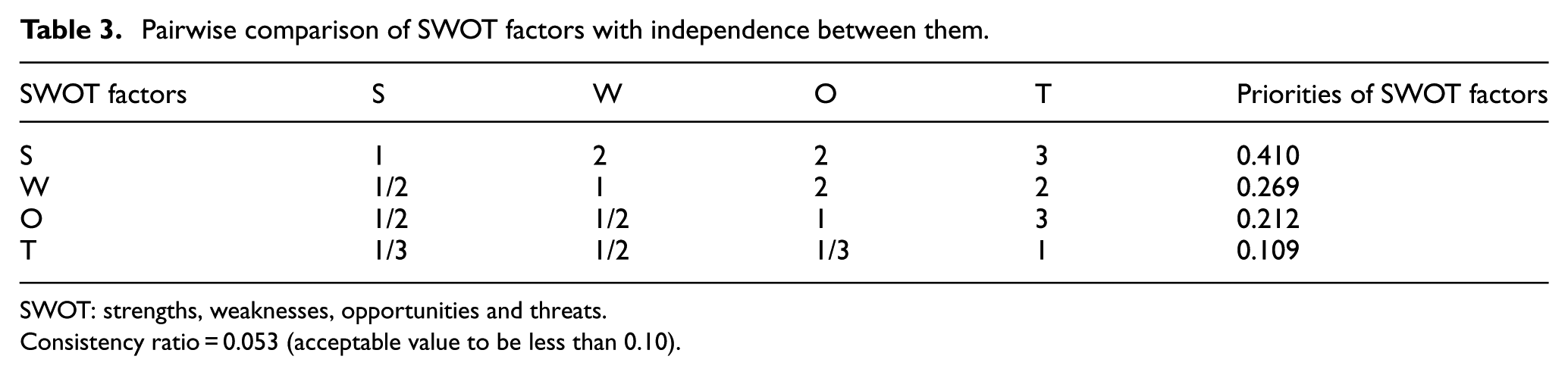
SWOT: strengths, weaknesses, opportunities and threats.
Consistency ratio = 0.053 (acceptable value to be less than 0.10).
The internal dependence matrix of the SWOT factors with respect to ‘strengths’.
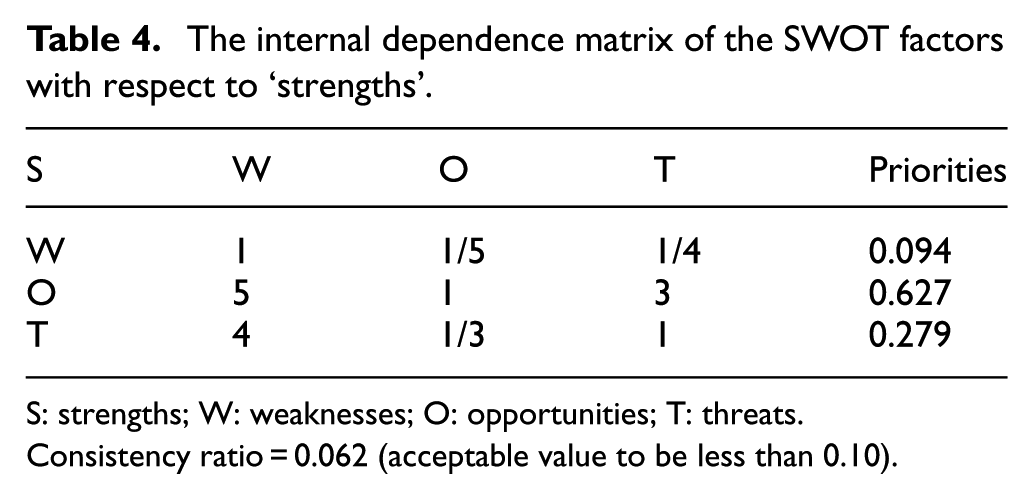
S: strengths; W: weaknesses; O: opportunities; T: threats.
Consistency ratio = 0.062 (acceptable value to be less than 0.10).
The internal dependence matrix of the SWOT factors with respect to ‘weaknesses’.
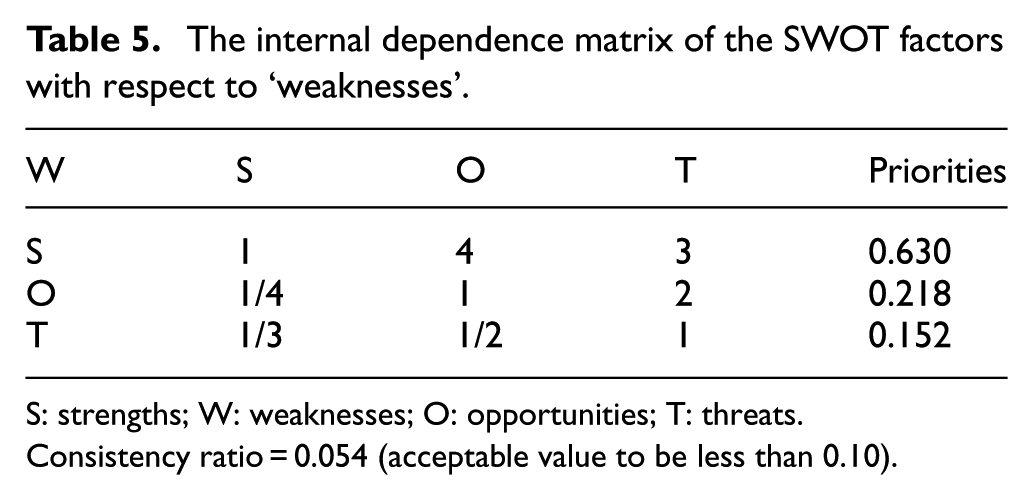
S: strengths; W: weaknesses; O: opportunities; T: threats.
Consistency ratio = 0.054 (acceptable value to be less than 0.10).
The internal dependence matrix of the SWOT factors with respect to ‘opportunities’.
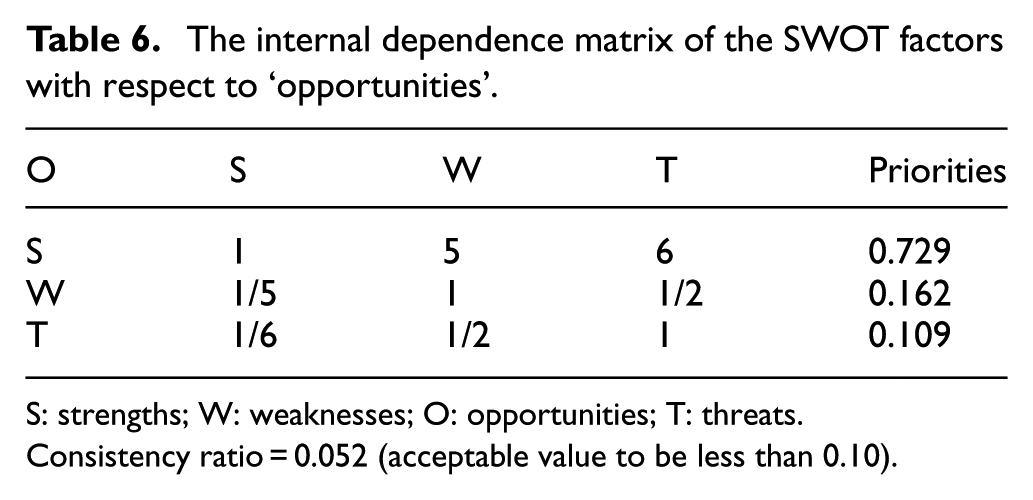
S: strengths; W: weaknesses; O: opportunities; T: threats.
Consistency ratio = 0.052 (acceptable value to be less than 0.10).
The internal dependence matrix of the SWOT factors with respect to ‘threats’.
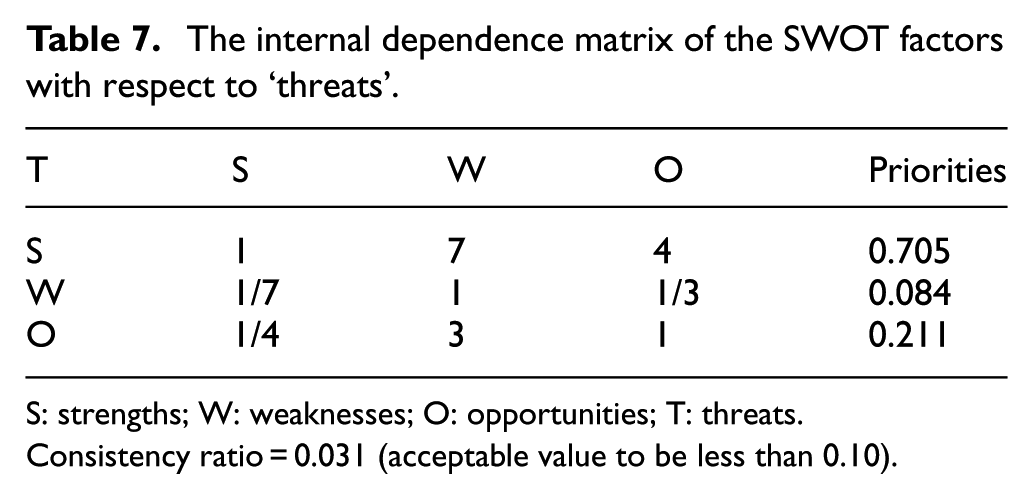
S: strengths; W: weaknesses; O: opportunities; T: threats.
Consistency ratio = 0.031 (acceptable value to be less than 0.10).
Using the same principle, the local priorities for the other SWOT sub-factors have been calculated as provided in Table 8.
Priorities of SWOT factors and sub-factors with respect to the case scenario.
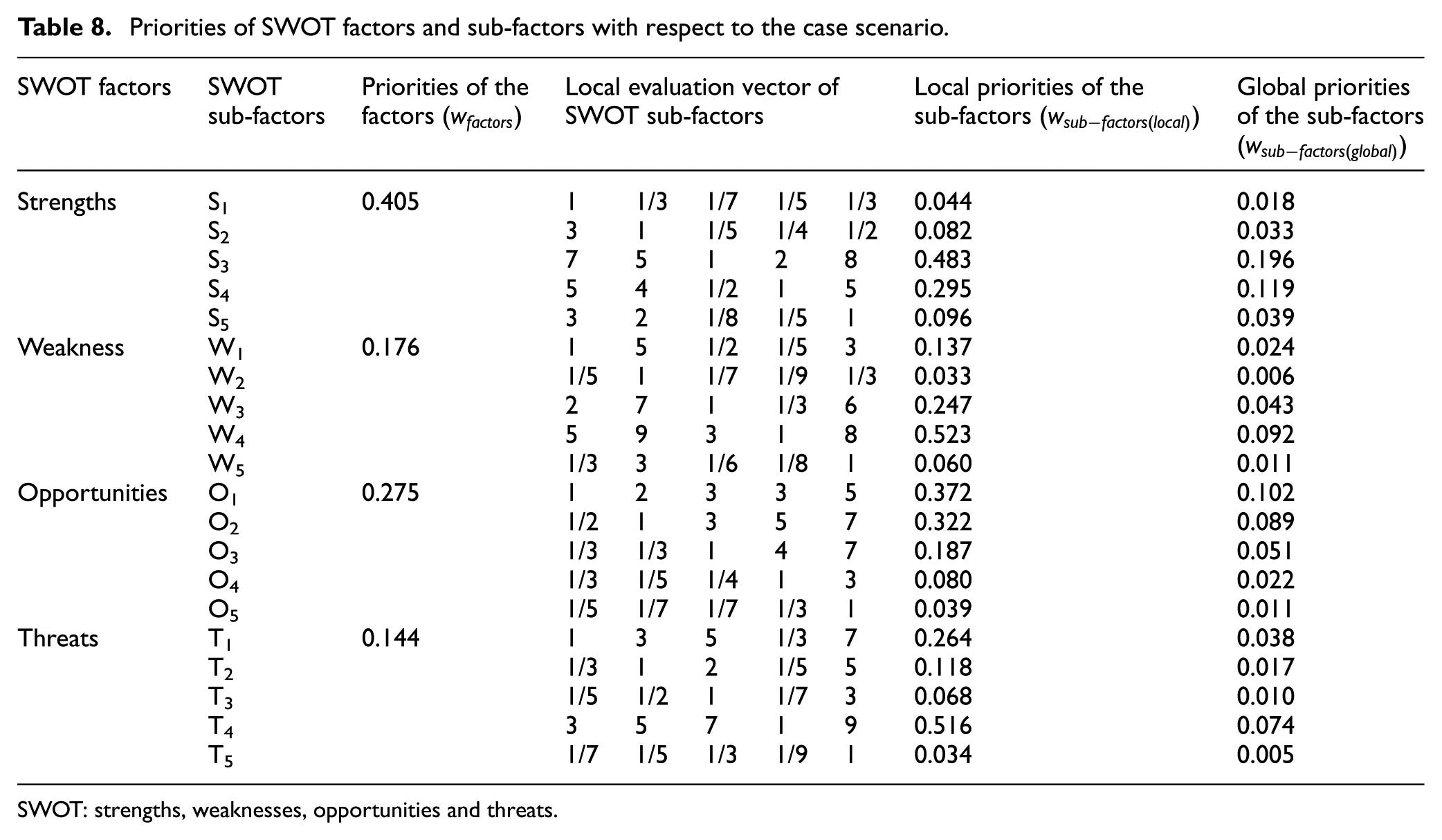
SWOT: strengths, weaknesses, opportunities and threats.
Then, the global priorities of the SWOT sub-factors


Using the same procedures, the global priorities for the remaining SWOT sub-factors have been obtained as given in Table 8.
Step V. Establishing the aggregated decision matrix: A decision matrix is established by the comparison of each identified lean strategy with respect to the SWOT sub-factors with inputs from each expert. The multiple opinions on elements of decision matrix obtained are aggregated into the group’s importance rating by taking the geometric mean, using equation (6). The aggregated ratings of the lean strategies with respect to the SWOT sub-factors were obtained as shown in Table 9.
Step VI. Calculating the normalized decision matrix: The elements of the normalized decision matrix are calculated for each element of the decision matrix using the vector normalization method using equation (7) as follows

The aggregated ratings of the lean strategies with respect to the SWOT sub-factors.
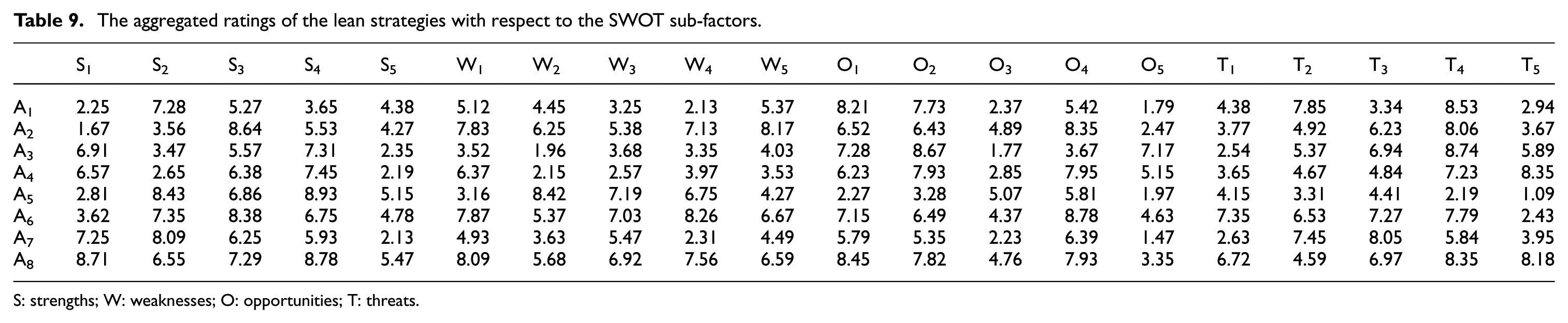
S: strengths; W: weaknesses; O: opportunities; T: threats.
Using the same procedures, the normalization of remaining elements of the decision matrix has been carried out as shown in Table 10.
Normalized decision matrix.
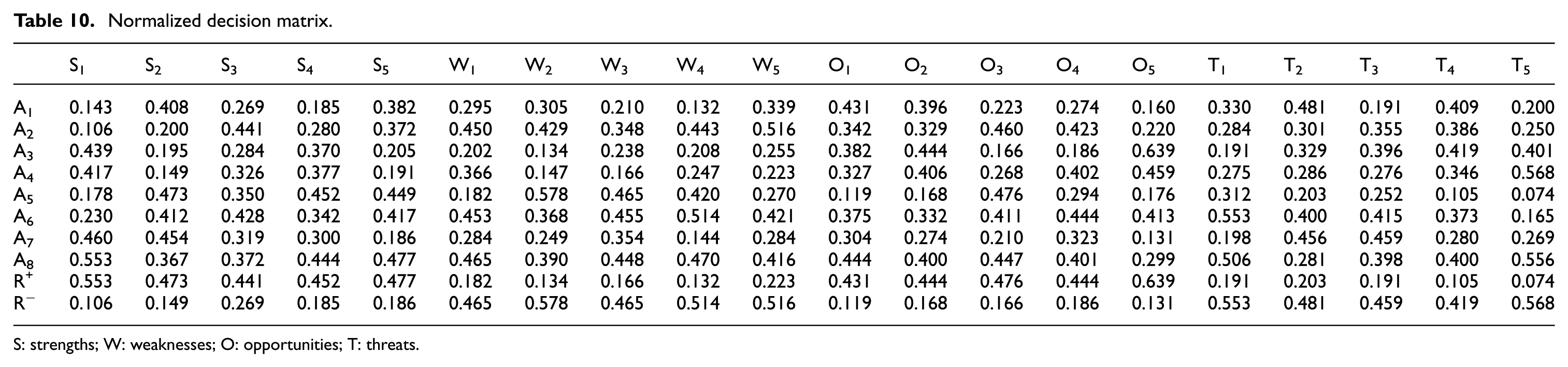
S: strengths; W: weaknesses; O: opportunities; T: threats.
Step VII. Determining the PIS and the NIS: Using equations (8) and (9), the PIS (




Similarly, using the same principle, the PIS and NIS for each SWOT sub-factors have been determined as shown in Table 10.
Step VIII. Calculating the weighted Euclidean distances of each lean strategy: The weighted Euclidean distances of each lean strategy are calculated from the PIS and the NIS using equations (10) and (11) as follows




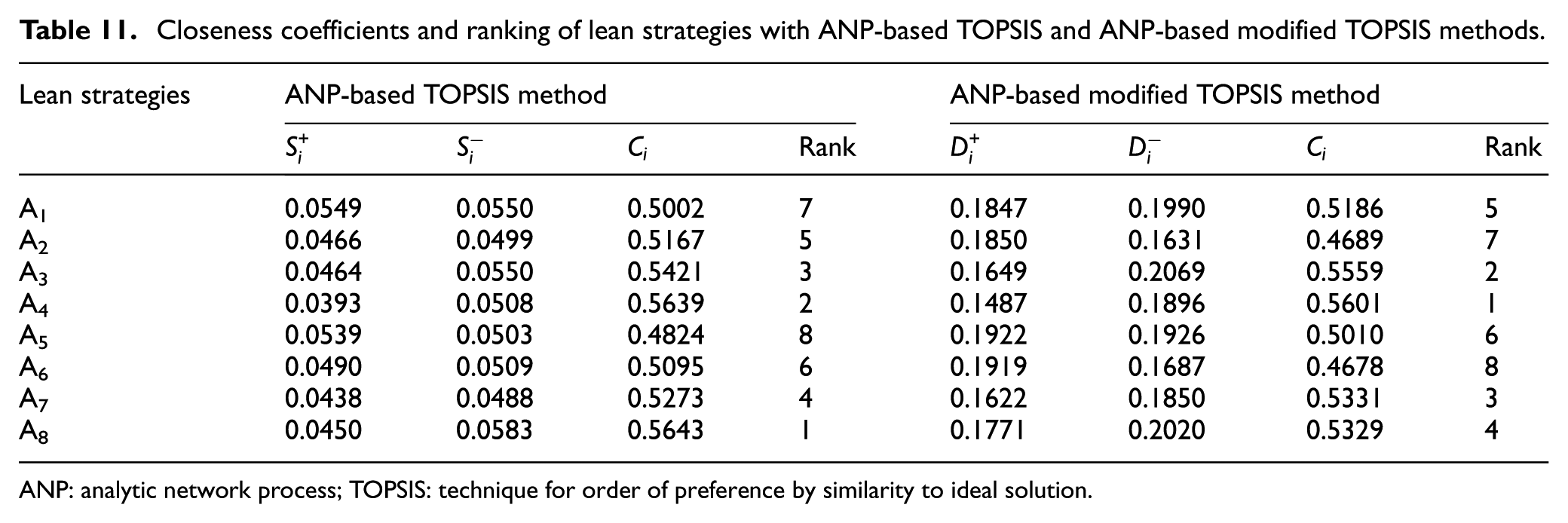
Similarly, using the same procedures, the weighted Euclidean distances of remaining lean strategies have been calculated as shown in Table 11.
Closeness coefficients and ranking of lean strategies with ANP-based TOPSIS and ANP-based modified TOPSIS methods.
ANP: analytic network process; TOPSIS: technique for order of preference by similarity to ideal solution.
Step IX. Calculating the relative closeness coefficient: The relative closeness coefficient indicates the most and the least preferable lean strategies. The relative closeness coefficient


Finally, using the same procedures, the relative closeness coefficients of other lean strategies have been calculated and are shown in Table 11.
In addition to this, the same model has been applied and analysed with the ANP-based classical TOPSIS method. To compute the ANP-based TOPSIS satisfaction values, the data obtained from the weighted decision matrix have been used. Note that the results achieved by the application of the modified TOPSIS may perhaps vary from those calculated by the classical TOPSIS method. The modified method is, however, indeed considered to provide better and more reliable results because of its analytical derivation of the weighted Euclidean distances.
Sensitivity analysis
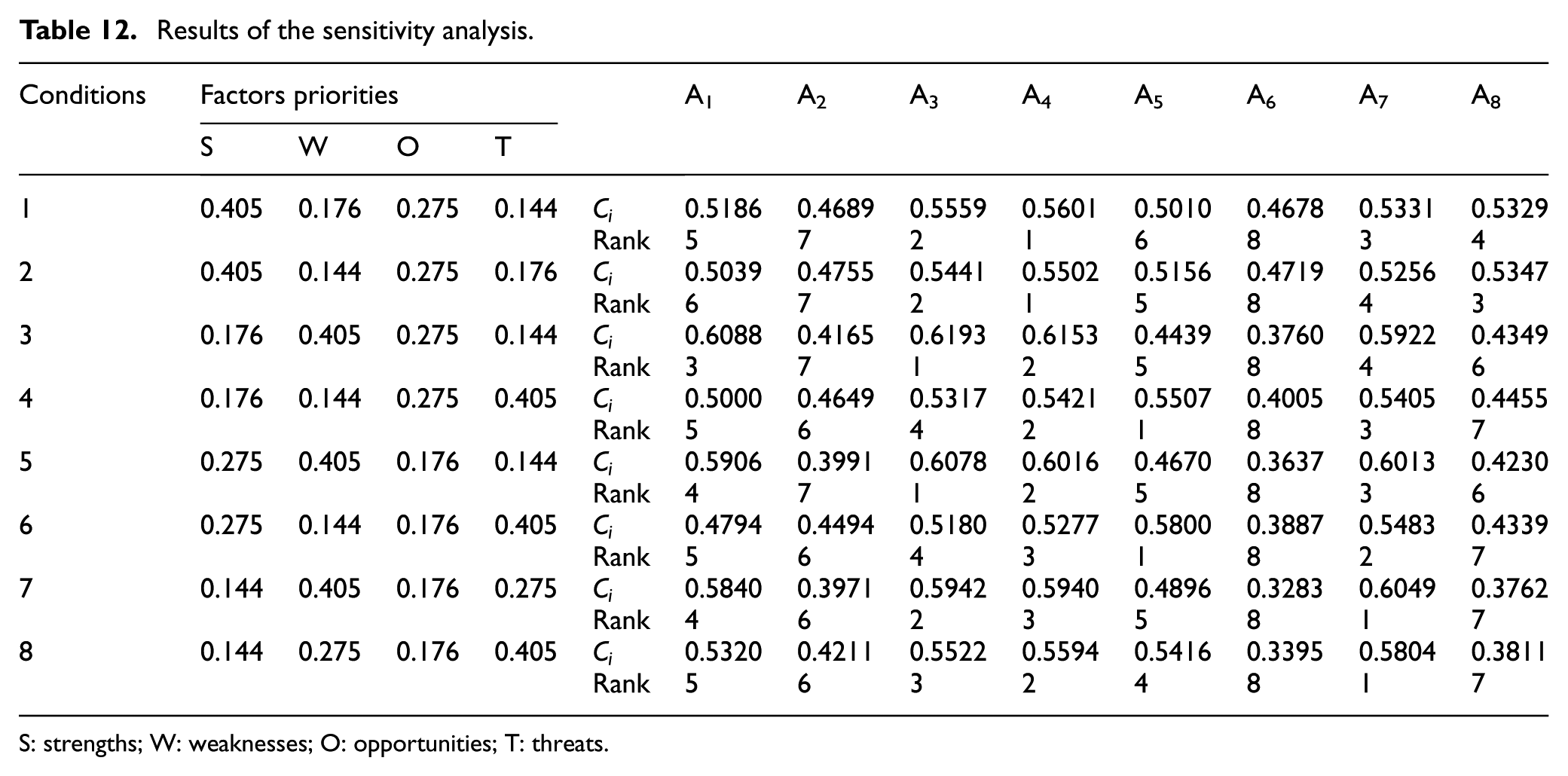
To ensure the stability of the results of our analysis, we conducted sensitivity analysis. A sensitivity analysis shows how the ranking of lean strategies responds to changes in the priorities of SWOT factors and the structure of the model. Therefore, we have exchanged each SWOT factor’s priority with another SWOT factor’s priority and as a result, 8 combinations out of a total of 24 possible combinations of four SWOT factors are considered and analysed with each combination specified as a condition. For each condition, the relative closeness to the ideal solution
As apparent from Table 12, the first condition states the original results of the SWOT analysis based hybrid modified TOPSIS methodology. A1 has the maximum
Results of the sensitivity analysis.
S: strengths; W: weaknesses; O: opportunities; T: threats.
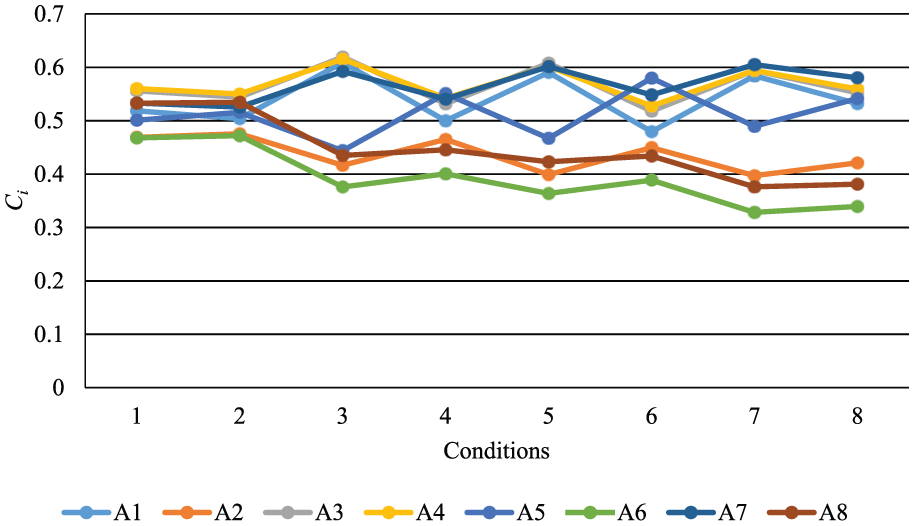
Sensitivity analysis.
Conclusion
The purpose of this article has been to evaluate lean strategies as an MCDM problem using integrated ANP and modified TOPSIS based on the SWOT analysis. This research explores and identifies sub-factors to generate a basic hierarchical model for analysing lean strategies using SWOT analysis. To find out the best lean strategy for the foundry industry, we proposed a new integrated method for the first time based on ANP and modified TOPSIS. Thus, an integrated evaluation system has been designed to provide practitioners a point of view to construct a SWOT model for determining the relative priorities of the SWOT sub-factors and to assess the lean strategies based on the sub-factors. By quantitatively comparing our method with the classical TOPSIS approach, we have shown that the proposed method successfully contributes to the body of knowledge in the development of a systematic method and enables decision makers to understand the complete evaluation process of lean strategy evaluation problem. Managerially, this article provides a novel approach to examine various lean strategies using multiple decision-making methods. Furthermore, this approach provides a more accurate, efficient and analytical decision support tool. Finally, it is recommended that managers of the manufacturing industries can utilize this model to evaluate their organization’s SWOT to prioritize the strategies for further development and higher productivity.
Regardless of the benefits summarized, there are some limitations. The future research should extend the proposed model using fuzzy sets in conjunction with ANP and modified TOPSIS–based SWOT method to capture possible vagueness and uncertainty in the human reasoning process. Moreover, other techniques such as DEA, QFD, goal programming and meta-heuristics could also be used for the evaluation process. The future research may also include the validation of the proposed method with case studies from various other manufacturing industries.
Footnotes
Declaration of conflicting interests
The author(s) declared no potential conflicts of interest with respect to the research, authorship and/or publication of this article.
Funding
The author(s) received no financial support for the research, authorship and/or publication of this article.