




Abstract
Waste Electrical and Electronic Equipment is one of the major waste streams in terms of quantity and toxicity, and a critical step in Waste Electrical and Electronic Equipment end-of-life processing is through disassembly. Compared with full disassembly, which is a sub-optimal solution due to its high operational cost, selective disassembly is more economic and practical as only selected parts with recycling potential are considered. In this article, a systematic selective disassembly approach for handling Waste Electrical and Electronic Equipment with a maximum disassembly profit in accordance to the Waste Electrical and Electronic Equipment and Restriction of Hazardous Substances Directives has been developed. First, a space interference matrix is generated based on the interference relationship between individual components in the three-dimensional computer-aided design model of Waste Electrical and Electronic Equipment. A matrix analysis algorithm is then applied to obtain all the feasible disassembly sequences through the obtained space interference matrix in a three-dimensional environment. Second, an evaluation and decision-making method is developed to find out an optimal selective disassembly sequence from the obtained feasible disassembly sequences. The evaluation takes into account the disassembly profit and requirements of the Waste Electrical and Electronic Equipment and Restriction of Hazardous Substances Directives, which regulate on recycling rates of different types of products and removal requirements of (1) hazardous, (2) heavy and (3) high-value components. Thus, an optimal solution is a selective disassembly sequence that can achieve the maximum disassembly profit, while complying with the Waste Electrical and Electronic Equipment and Restriction of Hazardous Substances restrictions based on a brute-force search method. Finally, an industrial case on Changhong liquid crystal display televisions of the type LC24F4 is used to demonstrate the effectiveness of the developed approach.
Keywords
Introduction
Due to the huge market demand and shorter usage lifecycle of electrical and electronic equipment (EEE), the mounting Waste Electrical and Electronic Equipment (WEEE) is posing a severe threat to the environment and sustainable economy. To tackle this issue, the WEEE Directive together with the Restriction of Hazardous Substances (RoHS) Directive was enacted and became a European Environment Law in February 2003. 1 They are aimed at encouraging manufacturers to provide cradle-to-grave support to recycle maximum values and reduce environmental hazardousness by reducing the amount of WEEE destined for landfill and eradicating certain hazardous substances from WEEE.
Disassembly is a key process of recycling strategies in the treatment of WEEE. Generally, the approach can be classified as full disassembly and selective disassembly. Full disassembly is to completely disassemble every single part in a waste product. On the other hand, selective disassembly aims to minimise the effort required to separate parts selected for separation or replacement. Unlike full disassembly, selective disassembly allows a partial and non-sequential disassembly procedure.2–4 In the past years, there have been many research articles published on full disassembly of WEEE. In the literatures,5–7 some detailed reviews on the full disassembly research were given. However, the high cost of disassembly has impeded the cost effectiveness of the full disassembly approach and has resulted in a research trend towards selective disassembly. Although there are a number of papers reporting research on selective disassembly, a systematic selective disassembly approach for handling WEEE with environmental and economic considerations is still unavailable and highly desirable. In this article, the focus is on the development of a systematic selective disassembly approach that can maximise the disassembly profit and meet the environmental restrictions simultaneously. The approach incorporates the environment requirements of WEEE/RoHS Directives into decision-making to ensure the restricted recycling rates of different products are achieved and all hazardous components from WEEE are removed for further end-of-life (EoL) processes. Meanwhile, the cost effectiveness of the disassembly operation is maximised by selecting the optimal disassembly planning based on the proposed evaluation and decision-making method. Figure 1 shows the main flow of the developed approach. A summary of the developed approach is given below:
A feasible solution space method is developed to generate all the candidate solutions for further evaluation and decision-making. A space interference matrix is used to represent the space relationships of components of WEEE in six directions in a three-dimensional (3D) Cartesian coordinate system. In this manner, all the space interference relationships between components of WEEE can be digitally presented and can be analysed by a matrix analysis algorithm to find out all the feasible disassembly sequences of WEEE.
An evaluation and decision-making method is developed to identify an optimised selective disassembly sequence for maximising the disassembly profit by considering the recycling rate requirement of the WEEE Directive and removal of all hazardous, high-value and heavy components from WEEE.
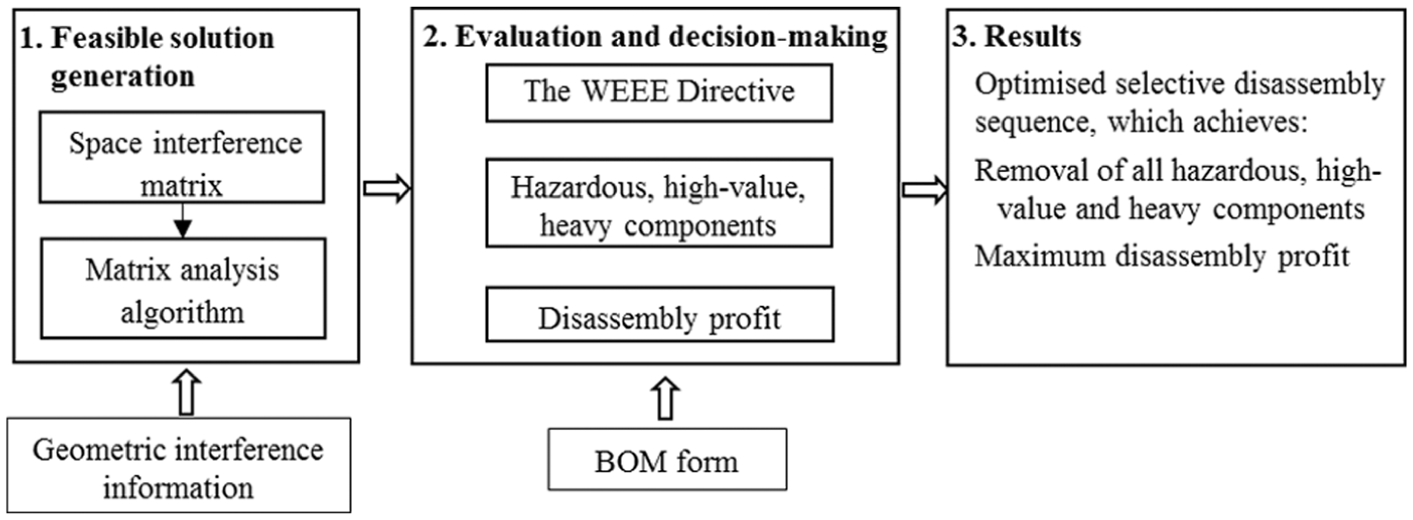
The main flow of the developed approach.
A selective disassembly optimisation system based on the above method was implemented, and an industrial case study on Changhong liquid crystal display televisions (LCD-TVs) was performed to validate the developed method. The LCD-TV is selected as the case study due to the fact that it is a typical product of EEE and occupies a significant portion of WEEE (e.g. more than 200 million units are shipped in the global market in 2014 8 ). The performance results on a LCD-TV (type LC24F4) proved the effectiveness of the developed approach.
Related research
Selective disassembly is targeting on singling out hazardous and valuable components of EoL products. Compared with full disassembly, it is a more economical approach in the practice of recycling WEEE. Recently, attention is being paid towards selective disassembly research, such as LCD-TV EoL processing. A summary of the previous work is given in Table 1, and detailed discussions are presented below.
A summary of selective disassembly and disassembly research on LCD-TVs.
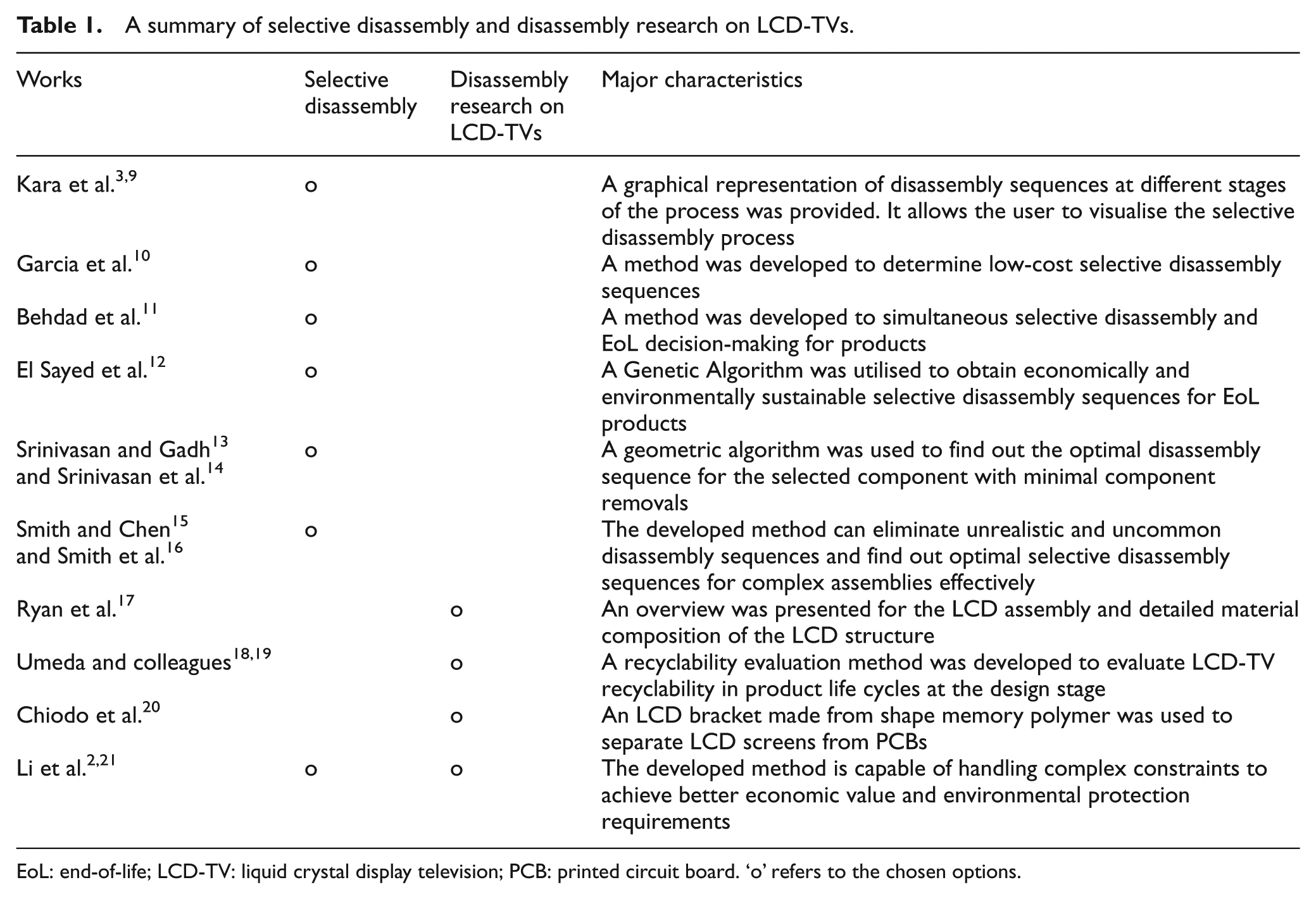
EoL: end-of-life; LCD-TV: liquid crystal display television; PCB: printed circuit board. ‘o’ refers to the chosen options.
Kara et al.3,9 developed a selective disassembly method by modifying the typical rule-based question answer method proposed by Nevins and Whitney 22 for assembly sequence generation. It provided a graphical representation of disassembly sequences at the different stages of the process, which allows the user to visualise the disassembly process. Two case studies, that is, a single-hole punch and a washing machine, were used to explain the concept and efficiency of the methodology. Garcia et al. 10 presented a method to determine low-cost selective disassembly sequences. The algorithm computes the minimum distances from the exterior components of the assembly to the rest of the components. A set of partial disassembly sequences is obtained by finding minimum spanning trees in the precedence graph. Behdad et al. 11 presented a method on simultaneous selective disassembly and EoL decision-making for products. It integrates a transition matrix with mixed integer linear programming to determine the extent to which products should be disassembled and the optimal EoL strategy for each resultant component. Two cell phone products were used to illustrate the research. El Sayed et al. 12 presented an evolutionary algorithm for generating optimal sequences for selective disassembly of EoL products. A Genetic Algorithm was utilised to obtain economically and environmentally sustainable disassembly sequences. Srinivasan and Gadh 13 and Srinivasan et al. 14 used a geometric algorithm to determine an optimal disassembly sequence for selected components with minimal component removals. The search space of the algorithm is reduced by analysing a subset of components in the assembly. Smith and Chen 15 and Smith et al. 16 presented a rule-based recursive method for finding an optimal selective disassembly sequence to increase products’ recyclability and maintainability. Based on four matrices and five disassembly rules, the method can eliminate unrealistic and uncommon disassembly sequences and find optimal selective disassembly sequences for complex assemblies effectively.
LCD-TVs are one of the most important WEEE. The requirement for recycling LCD-TVs is increasing rapidly as the huge amount of LCD-TVs is to be replaced or in the end of their useful life sooner or later. There are several papers reporting disassembly research on LCD-TVs. Ryan et al. 17 presented an overview of the liquid crystal display (LCD) assembly and detailed material composition of the LCD structure. They investigated the best approach to recycle or disassemble LCD with a hybrid system of manual and automated processes. Umeda and colleagues18,19 presented a recyclability evaluation method to evaluate LCD-TV recyclability in product life cycles at the design stage. First, it describes an EoL scenario of the product and then calculates the recyclability rate of the product based on the described EoL scenario. A case study of LCD-TVs was used, and the result shows that recyclability of LCD-TVs depends on its EoL processes and material constitution. Chiodo et al. 20 investigated the technical feasibility of removing LCD screens using the smart materials technology. An LCD bracket made from shape memory polymer was used to separate LCD screens from printed circuit boards (PCBs). Li et al.2,21 developed a particle swarm optimisation (PSO)–based selective disassembly planning method embedded with customisable decision-making models and a novel generic constraint handling algorithm. The method is flexible for customised decision modelling and is capable of handling complex constraints to achieve better economic value and environmental protection requirements. LCD-TVs have been used to demonstrate the effectiveness and robustness of the developed method. Further research is expected to develop a set of more systematic criteria to evaluate the different stages of remanufacturing in terms of environment and economy.
As mentioned in the ‘Introduction’ section, there still lacks a systematic selective disassembly approach to handle WEEE to meet the environmental and economic requirements. The work in this article is to develop a systematic selective disassembly approach to achieve better economic value and meet the environmental protection requirements of the WEEE/RoHS Directives.
Methodology and characteristics
The overview of the developed methods is presented as follows:
A feasible solution generation method is developed to find out all the feasible disassembly sequences of WEEE by analysing the space interference matrices in a 3D environment.
An evaluation and decision-making method is devised to identify the optimised disassembly sequence in achieving better economic value and environmental protection requirements.
An industrial case study on LCD-TVs is carried out to verify and demonstrate the performance of the developed methods.
The developed methods are shown in Figure 2. The details are described below.
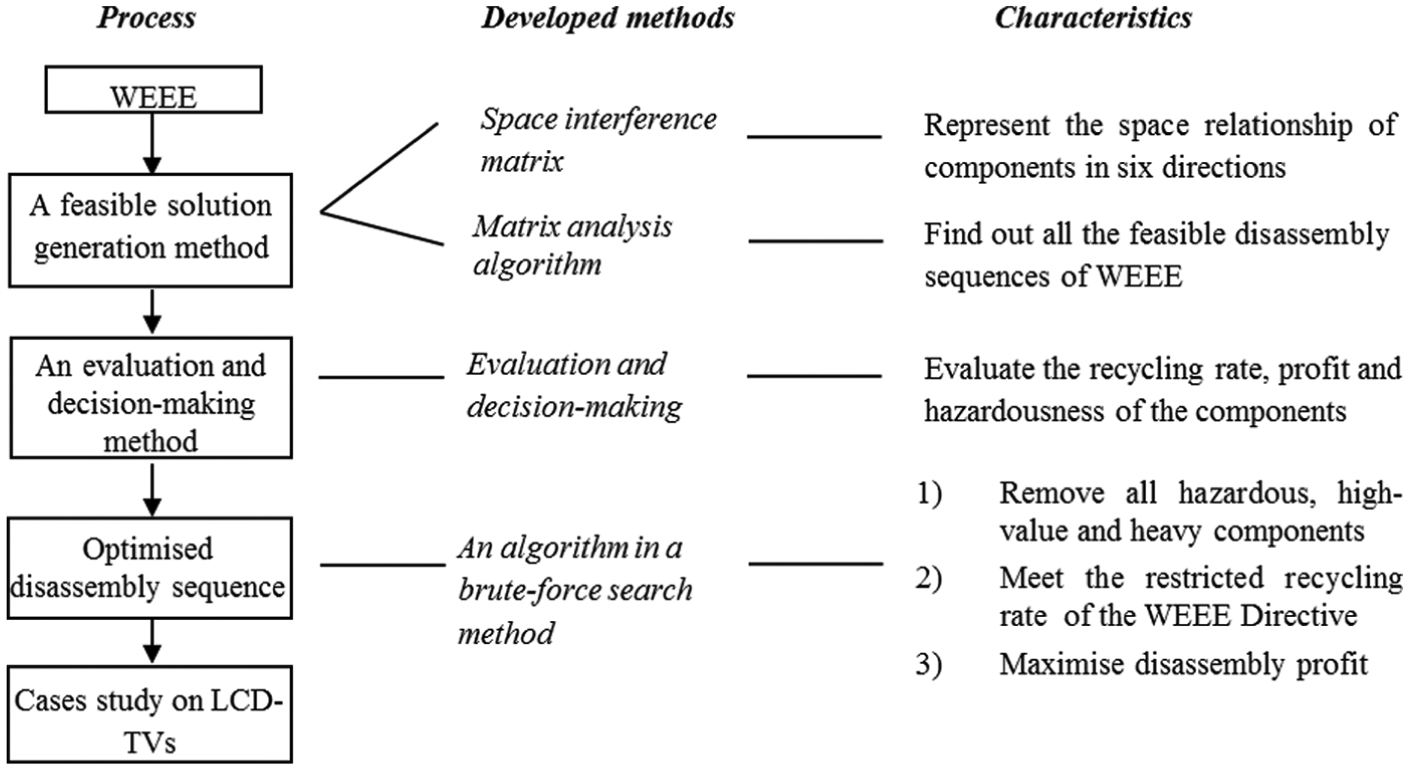
The process of the developed methods.
A feasible solution generation method
The development of the feasible solution generation method is carried out in two phases:
Phase 1 is to generate a space interference matrix based on a 3D computer-aided design (CAD) model of WEEE. It can be used to represent the space interference relationship between components of the WEEE.
Phase 2 is to obtain all the feasible disassembly sequences with the developed matrix analysis algorithm.
The details of each phase are explained below.
Phase 1 − space interference matrix
First, based on a CAD model of WEEE, row-major six space interference matrices are generated in six directions separately in a 3D environment. It can be used to represent the space interference relationship of components of the waste product
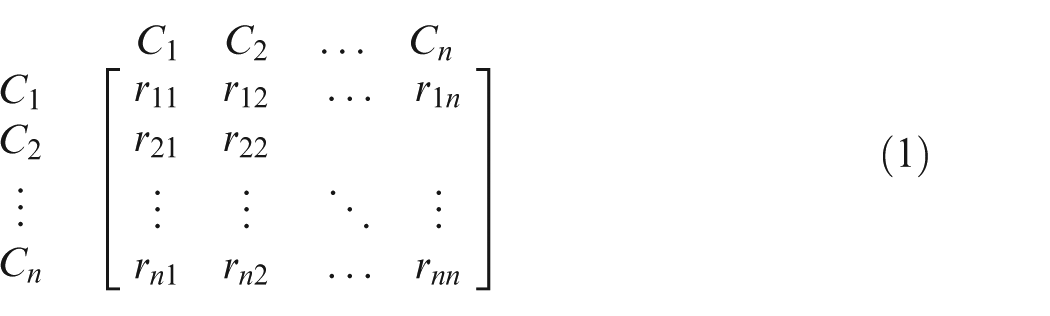
In the matrix, the element
An example is used here to explain the space interference relationship between ‘A’ and ‘B’ components (shown in Figure 3). As the component ‘B’ is in the X
+ direction of the component ‘A’, and ‘A’ is in the X
− direction of ‘B’, the element
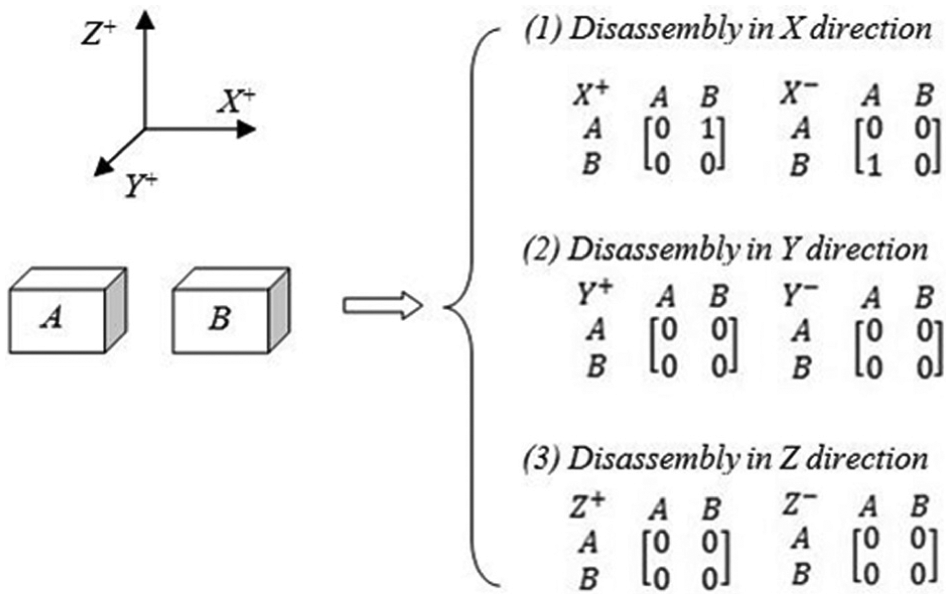
Matrices in six directions to represent the space interference relationships.
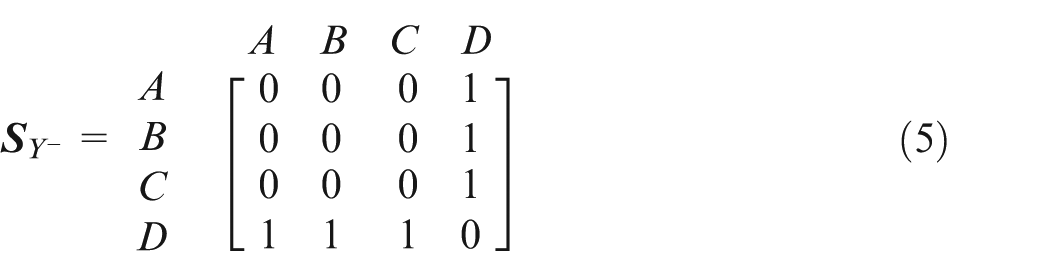
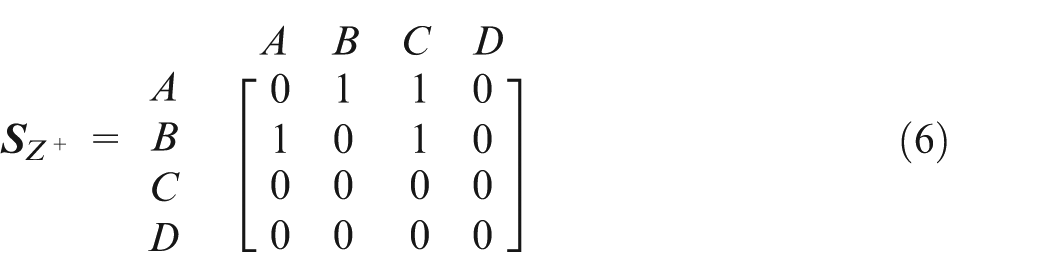
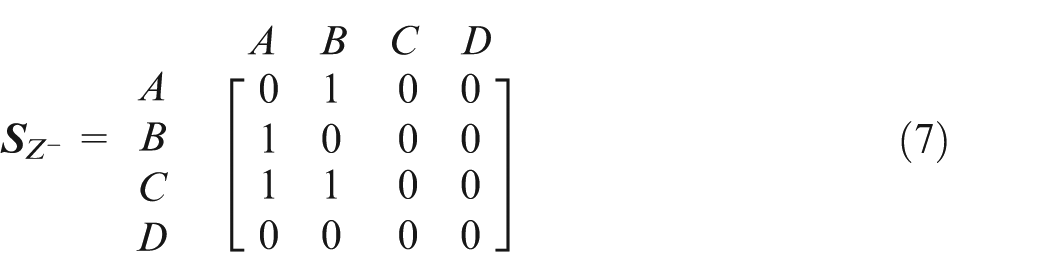
A four-component product (shown in Figure 4) will be used as an example to explain the matrix analysis method (Phase 2). The space interference matrices are first obtained as given in equations (2)–(7)
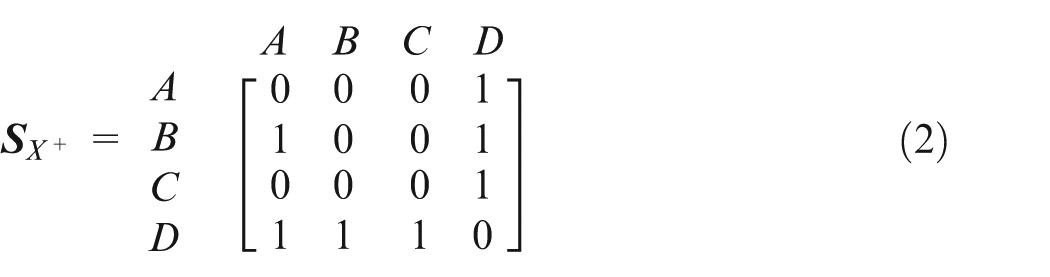
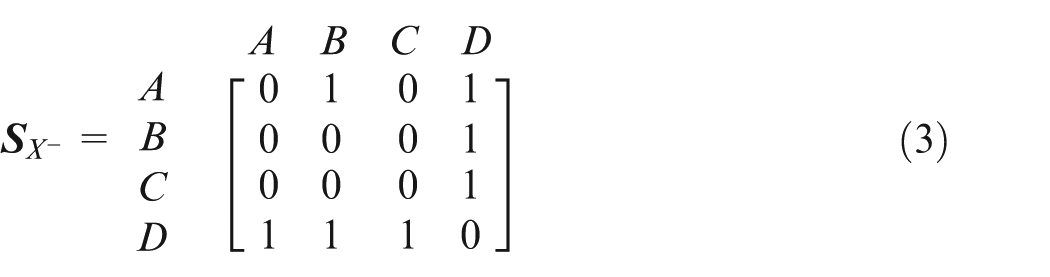
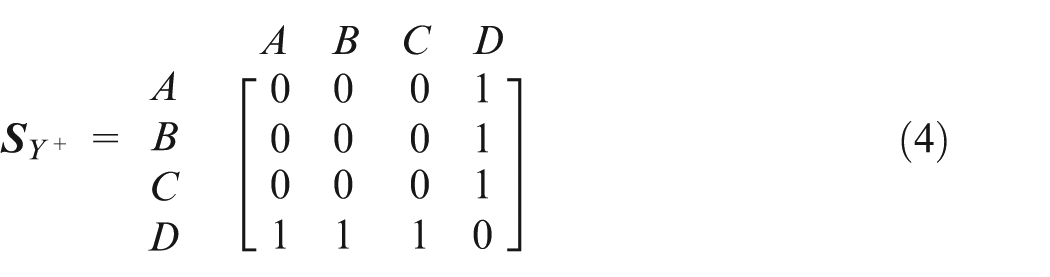
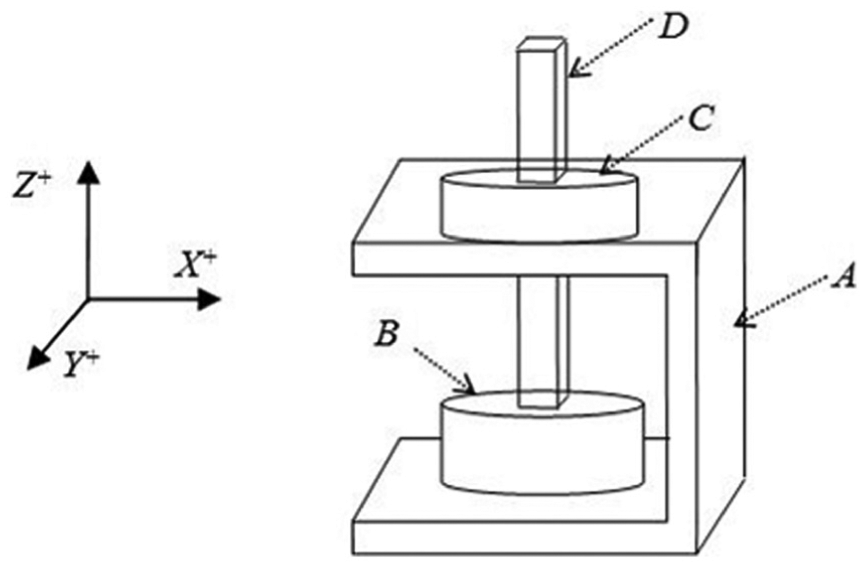
Product with four components.
Phase 2 − matrix analysis algorithm
Based on the obtained space interference matrices in six directions, a matrix analysis algorithm is then developed to obtain all the feasible disassembly sequences of the product. The aforementioned example is used here to explain the details of the developed matrix analysis algorithm. First, equation (8) is generated by combining equations (2)–(7) in six directions
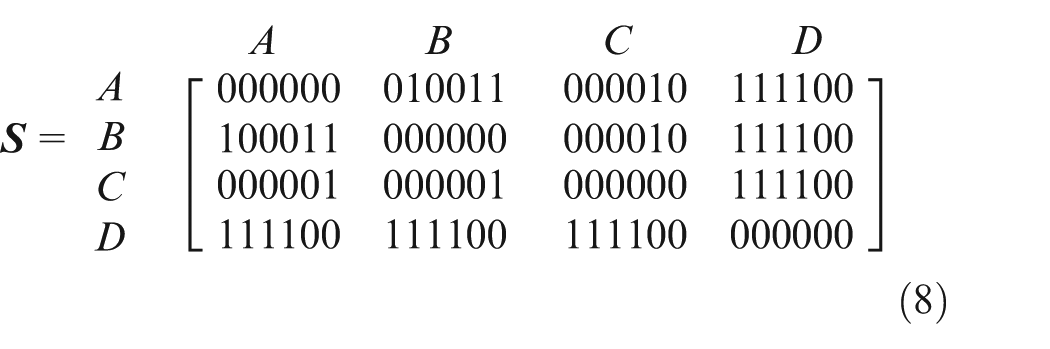
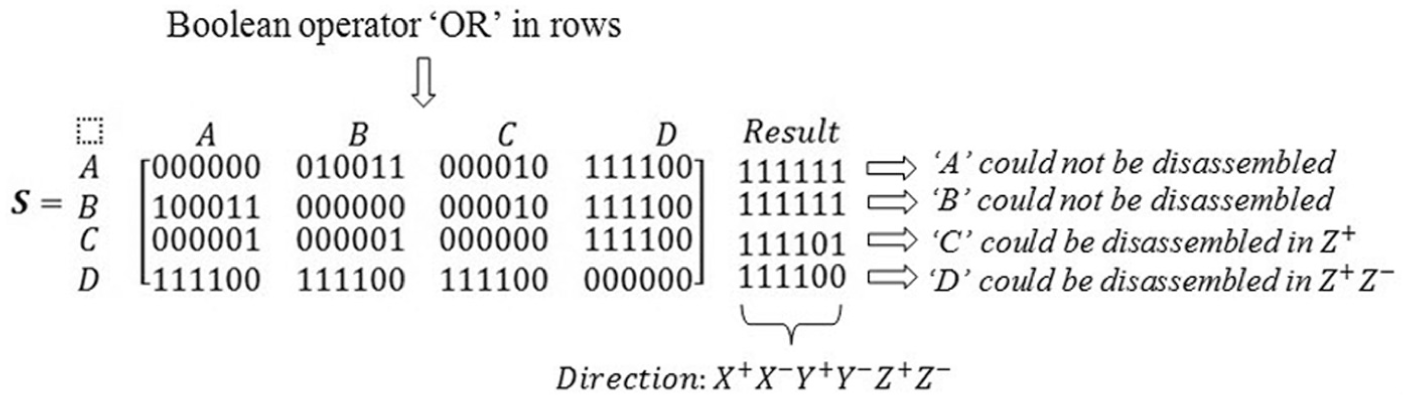
The Boolean operator ‘OR’ is used here for the above equation for each component in the row direction. For instance, in a row, if there is any ‘1’ in a direction, the final result in that direction after the ‘OR’ operation will be ‘1’. Otherwise, the final result in the direction will be ‘0’. Equation (9) is obtained as follows
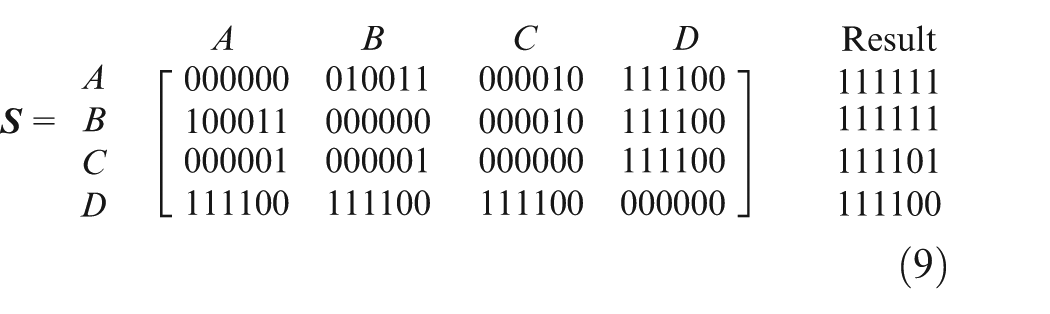
The result ‘111111’ represents the relationship between one component and all the other remaining components of the product in six directions. If the result is always ‘1’, it means the component could not be disassembled in any direction; if the result includes ‘0’, it means the component can be disassembled from that direction. The example in Figure 5 can be used to explain the concept. In equation (9), components ‘A’ and ‘B’ could not be disassembled in any direction as the results are all ‘1’; component ‘C’ can be disassembled in Z + direction as the result is ‘0’ in this direction; component ‘D’ can be disassembled in Z + and Z − directions.
Feasible disassembly sequence analysis for the product.
If component ‘D’ is disassembled in the Z + direction first, the remaining combined space interference matrix is updated as shown below
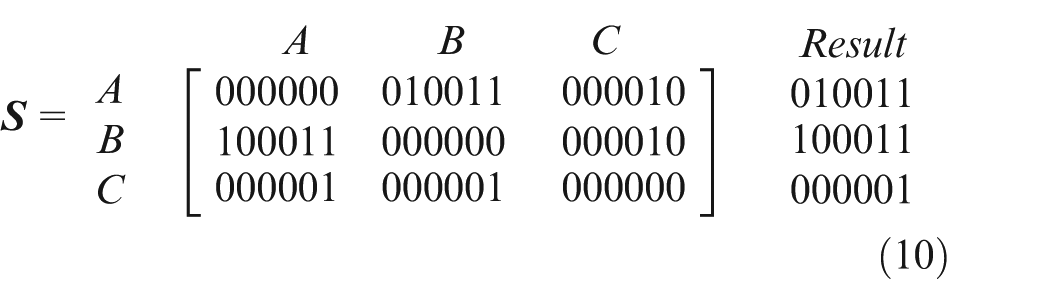
From equation (10), components ‘A’ and ‘B’ can be disassembled in three directions, and the component ‘C’ can be disassembled in five directions. If component ‘C’ is disassembled in the Z + direction, then the remaining combined space interference matrix is shown below

From equation (11), components ‘A’ and ‘B’ can be disassembled in three directions. After ‘B’ is disassembled in the Y + direction, the product has been disassembled completely. Loop the above analysis process until all the feasible disassembly sequences of the product are obtained. Based on the above analysis, the total feasible disassembly sequences for the product is 192 (30 + 30 + 30 + 30 + 30 + 30 + 6 + 6) (shown in Figure 6).
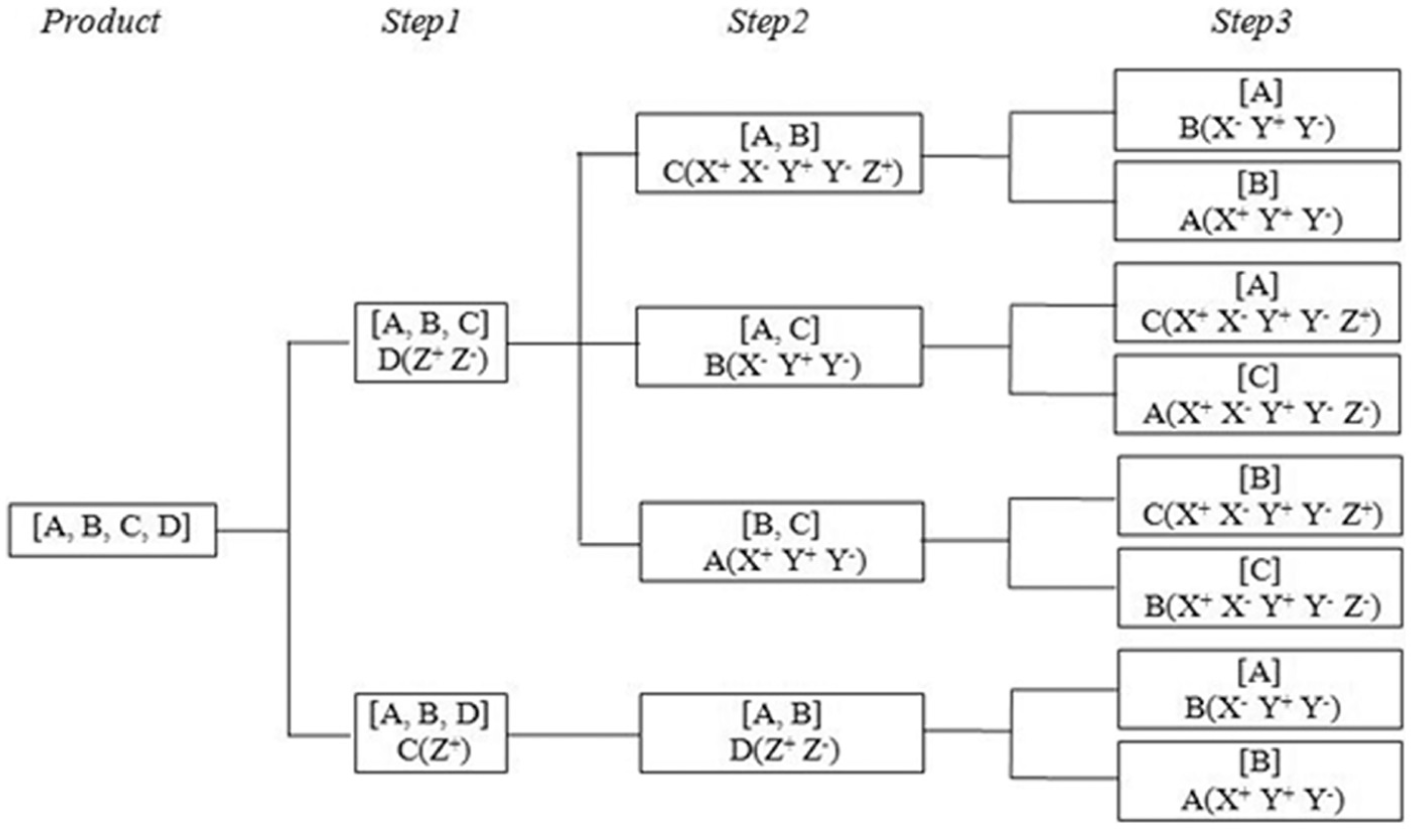
All feasible disassembly sequences for the product.
The obtained all feasible disassembly sequences with geometrical constraints are then evaluated based on the evaluation and decision-making method to get the optimised selective disassembly sequence of a product within an acceptable time. Details on the evaluation and decision-making method are explained in the next section.
An evaluation and decision-making method
According to the WEEE/RoHS Directives, the restricted recycling rate of WEEE is required to be met, and all the components containing hazardous materials need to be taken apart from WEEE for further recycling and processing. Apart from fulfilling these fundamental environmental targets, disassembly factories would also improve the disassembly profit by prioritising heavy and valued components during disassembly. Based on the above scenario, an evaluation and decision-making method is developed to selectively disassemble WEEE to meet the above requirements. It is composed by three steps: (1) to calculate the profit of the disassembly operation; (2) to identify hazardous, heavy and high-value components; and (3) to calculate the recycling rate of WEEE. Meanwhile, the developed methods are incorporated with a brute-force search method 23 to find out the optimised sequence to meet the economic and environmental requirements, including the following: (1) to remove all hazardousness, high-value and heavy components from WEEE before shredding and disposal; (2) to meet the restricted recycling rate of the WEEE Directive; and (3) to maximise the disassembly profit.
Profit calculation of disassembly operation
The profit of disassembly operation changes with the different EoL treatments of WEEE. Generally, there are five EoL options available for WEEE, as described in Table 2.24,25
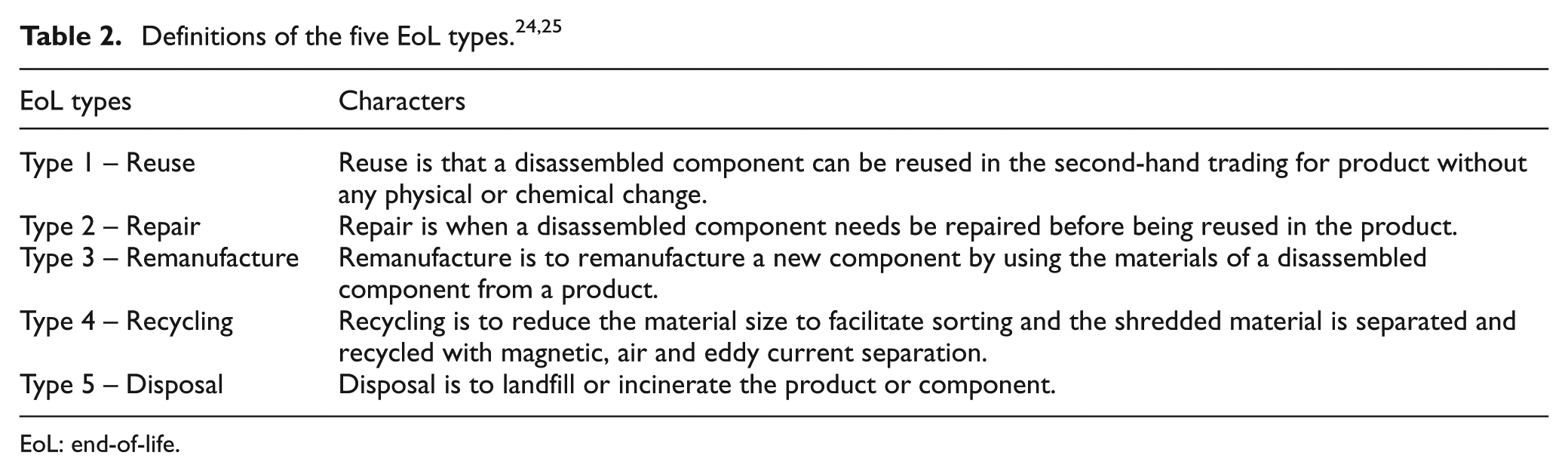
EoL: end-of-life.
The profit of the ith disassembly operation (Profit(Operi )) can be computed as follows

where
The residual value of the disassembled component of the ith disassembly operation (V(Operi ))
If the disassembled component is recycled in Type 1 or Type 2, V(Operi ) is calculated with the residual value of component in the second-hand trading market.
If the disassembled component is recycled in Type 3 or Type 4, V(Operi ) is calculated with the residual value of materials of the component.
If the disassembled component belongs to Type 5, V(Operi ) is zero as no material is recycled from the component.
Equation (13) is used to explain the above concept

where
2. The cost of the ith disassembly operation (
The result of

where



Based on the above analysis, Total Profit (TP) of a product after the disassembly operation can be computed as follows

Identification of hazardous, heavy and high-value components of WEEE
Hazardous components
According to the environment law, all the components containing hazardous materials need to be taken apart from WEEE for further recycling and processing. The hazardous components of WEEE could be identified with the RoHS Directive in Europe 26 and the Code of Federal Regulations in United States with Title 40: Protection of Environment. 27
The RoHS Directive restricts the following six substances: (1) lead, (2) mercury, (3) cadmium, (4) hexavalent chromium, (5) polybrominated biphenyls and (6) polybrominated diphenyl ether. The maximum permitted concentrations in non-exempt products are 0.1% or 1000 ppm (except for cadmium, which is limited to 0.01% or 100 ppm) by weight.
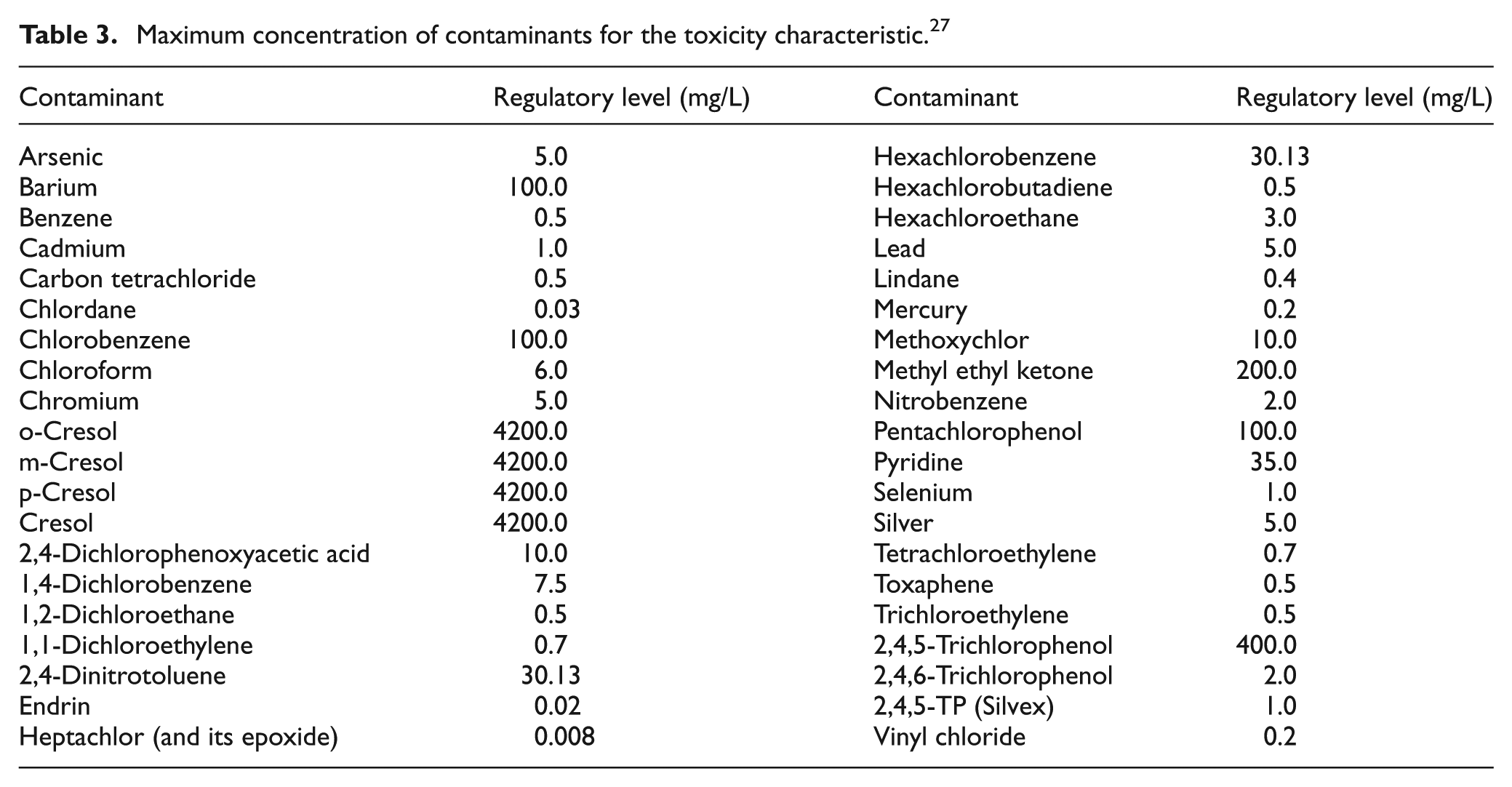
The Code of Federal Regulations with Title 40: Protection of Environment identifies the hazardousness by calculating the component that contains any of the contaminants listed in Table 3 at the concentration equal to or greater than the respective value given in this table.
Here, equation (19) is used to identify the hazardous components (

Maximum concentration of contaminants for the toxicity characteristic. 27
Some major hazardous components of WEEE are also listed in Table 4, 28 among them, PCBs and LCD screen are hazardous components in LCD-TVs.
Major hazardous components of WEEE. 28
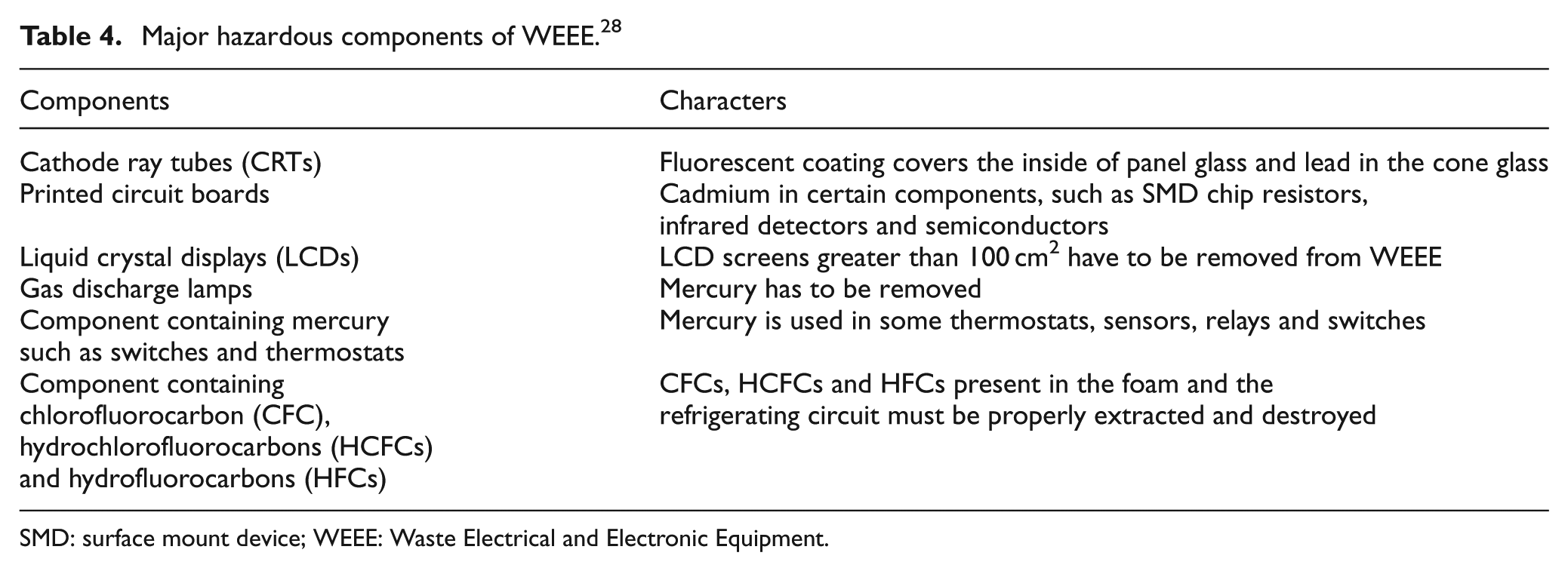
SMD: surface mount device; WEEE: Waste Electrical and Electronic Equipment.
2. Heavy and high-value components
The heavy components (


If the weight/value of the disassembled component is greater than the setting weight/value by the customer, the component is identified as heavy/high-value component.
Recycling rate of WEEE
The recycling rate (

where
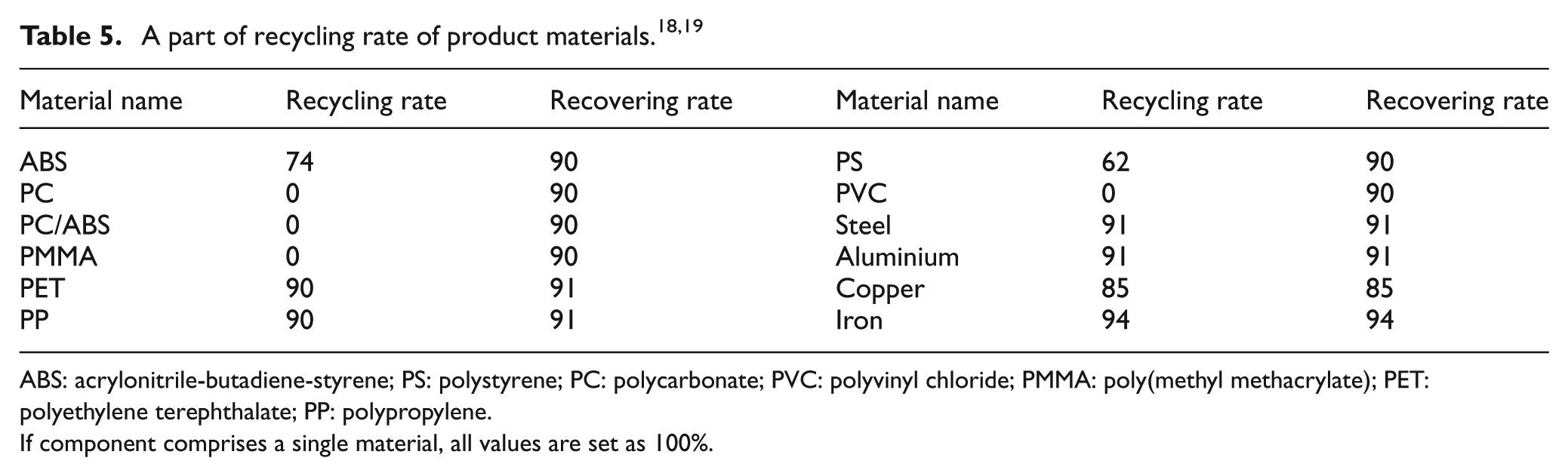
ABS: acrylonitrile-butadiene-styrene; PS: polystyrene; PC: polycarbonate; PVC: polyvinyl chloride; PMMA: poly(methyl methacrylate); PET: polyethylene terephthalate; PP: polypropylene.
If component comprises a single material, all values are set as 100%.
Categories in the WEEE Directive. 29
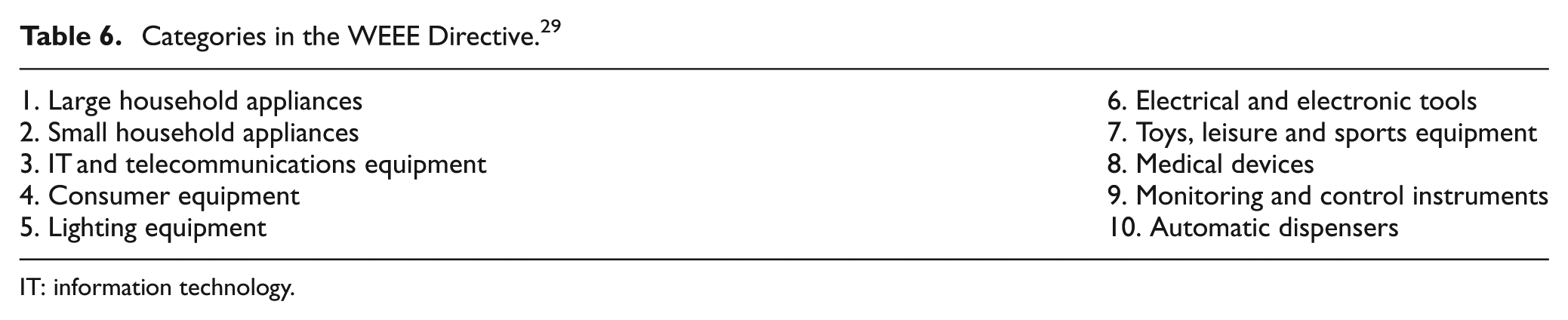
IT: information technology.
The recycling rates for different categories. 29

For instance, LCD-TVs belong to Category 4 ‘Consumer equipment’, and the restricted recycling rate of LCD-TVs is 75%, which can be obtained from Table 7. Meanwhile, the recycling rate of LCD-TVs can be calculated based on the mass of each material in components and the related recycling rate shown in Table 5.
Objective function of the selective disassembly optimisation
Based on the evaluation and decision-making method, the choice of a selective disassembly plan is then converted into a constrained optimisation problem. The constraints are represented in equations (23)–(26), and the objective function is represented in equation (27).
Remove all the hazardous, high-value and heavy components



Meet the restricted recycling rate of the WEEE Directive
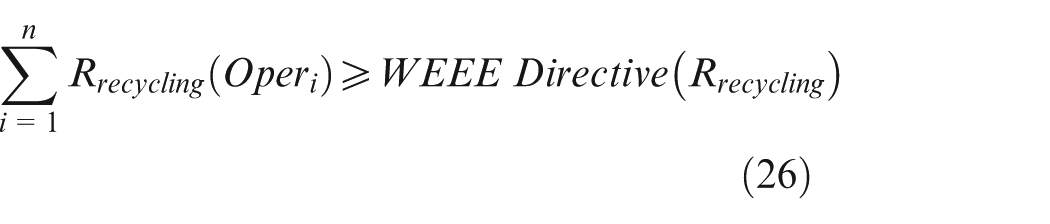
Maximise the disassembly profit

A software package was developed in Java language to obtain the feasible solution space as described in section ‘A feasible solution generation method’ and to incorporate the decision-making method for WEEE. In order to validate the effectiveness of the proposed methods (focus of this article) quickly, a brute-force search method 23 is employed initially to find out the optimised selective disassembly sequence from the feasible solution space. Although the search time of the brute-force method for LCD-TVs is affordable, when the number of components in the space interference matrices increases, the search time increases exponentially, and therefore, a more efficient optimisation method that can handle products with much more components is desirable. Further research on the aspect is ongoing.
Industrial cases study on Changhong LCD-TVs
The LCD-TVs studied here are produced by the Changhong Electronics Company, Ltd. from China, which is the biggest television producer in China. The company provides information about LCD-TVs of the type of LC24F4, such as the bill of materials, exploded view, mass of each component and the detailed assembly processes. The structure of the LCD-TV is shown in Figure 7(a) and (b). The exploded view of an LCD-TV is shown in Figure 7(c). As shown in Figure 7(d), an LCD-TV is typically assembled by three main parts: (1) base assembly part, (2) front cover assembly part and (3) back cover assembly part.
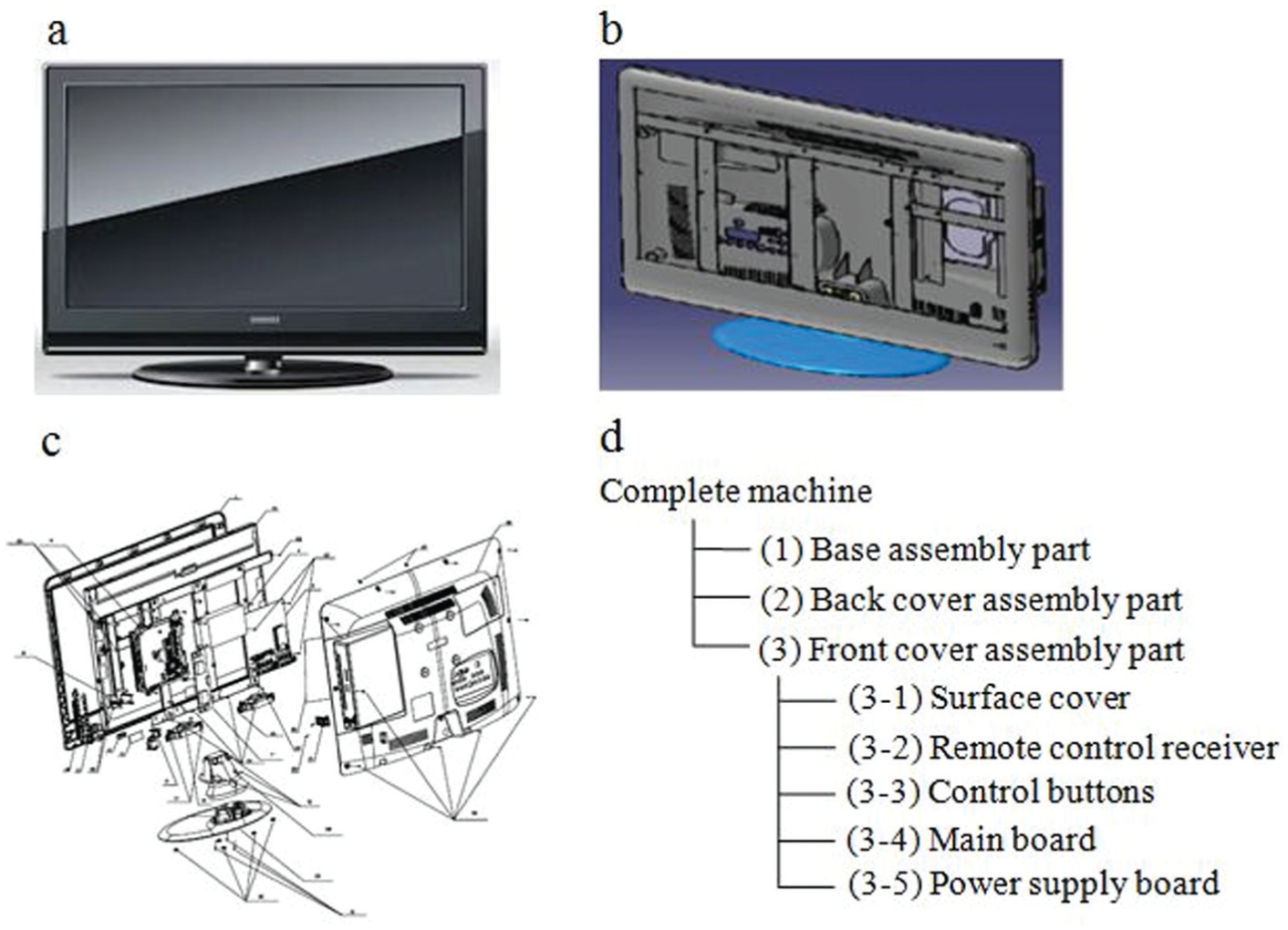
The LCD-TVs and its structures: (a) LCD-TV, (b) LCD-TV CAD model, (c) exploded view of LCD-TV structure and (d) parts of LCD-TV.
Feasible solution generation on LCD-TV
Base assembly part
The base assembly part of the LCD-TV is shown in Figure 8. It is composed of nine components: (A) metal fixing plate, (B) metal washer 1, (C) metal washer 2, (D) top metal support, (E) cylindrical metal support 1, (F) cylindrical metal support 2, (G) toughened glass seat, (H) steel plate and (I) rubber gasket. The space interference matrices to represent the base assembly part in six directions are as follows
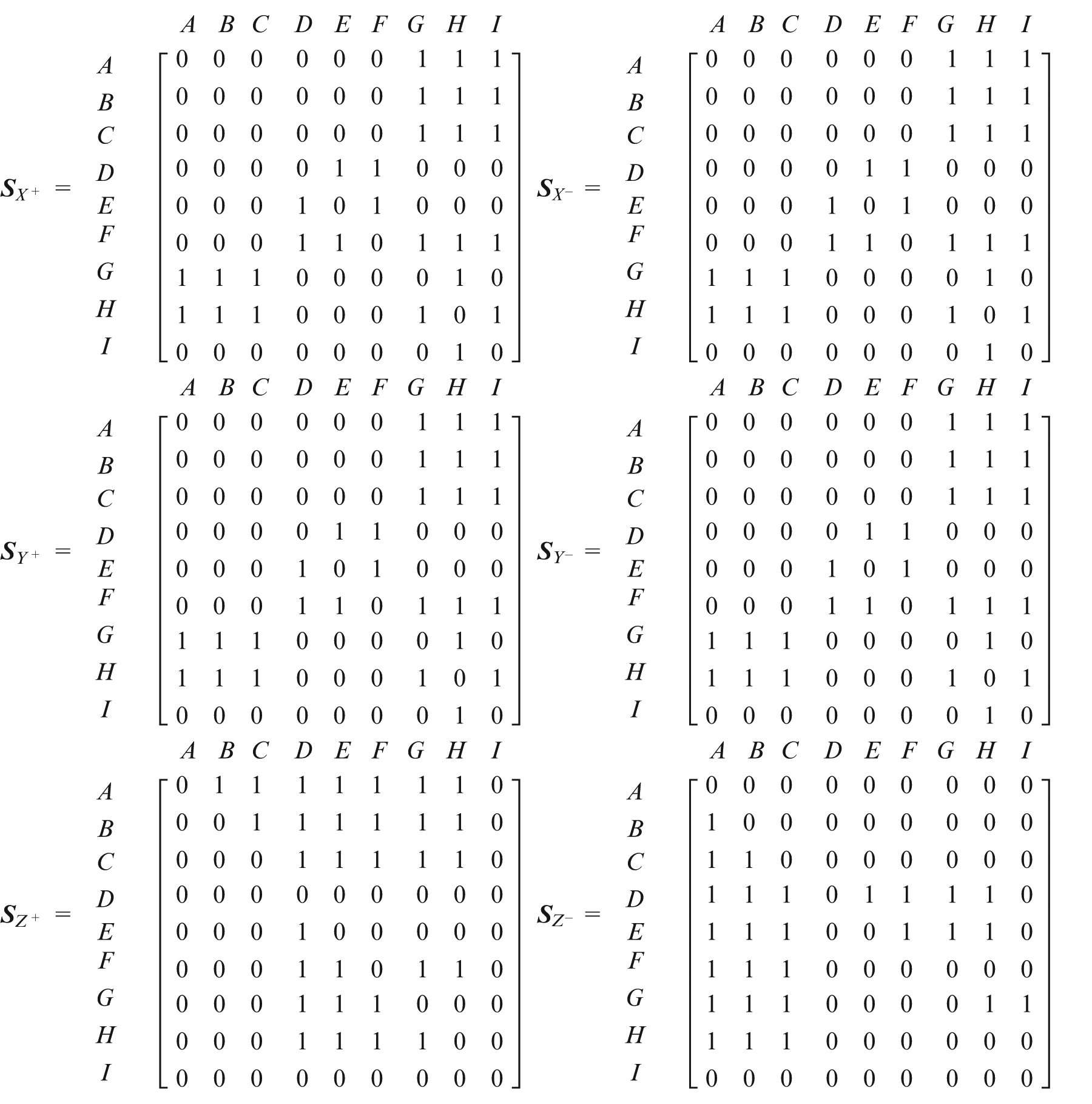
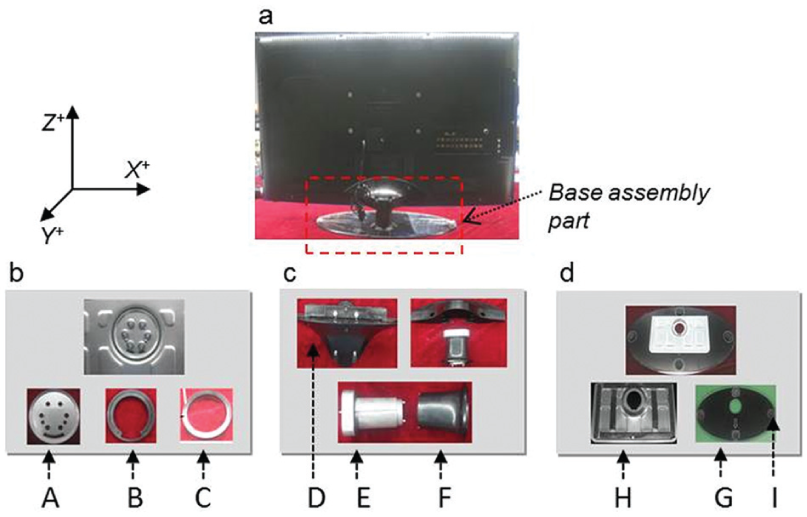
The base assembly part of the LC24F4 LCD-TV: (a) base assembly part; (b) components A, B, C; (c) components D, E, F; and (d) components G, H, I.
The space interference matrices for X+, X−, Y+, Y− directions here are the same, as the base assembly part is a concentric structure along the Z direction so that a component cannot be removed in any direction along the XOY plane if it is surrounded by another component on the same plane. After combining the above six matrices and using Boolean operator ‘OR’ in rows, the obtained result is as follows
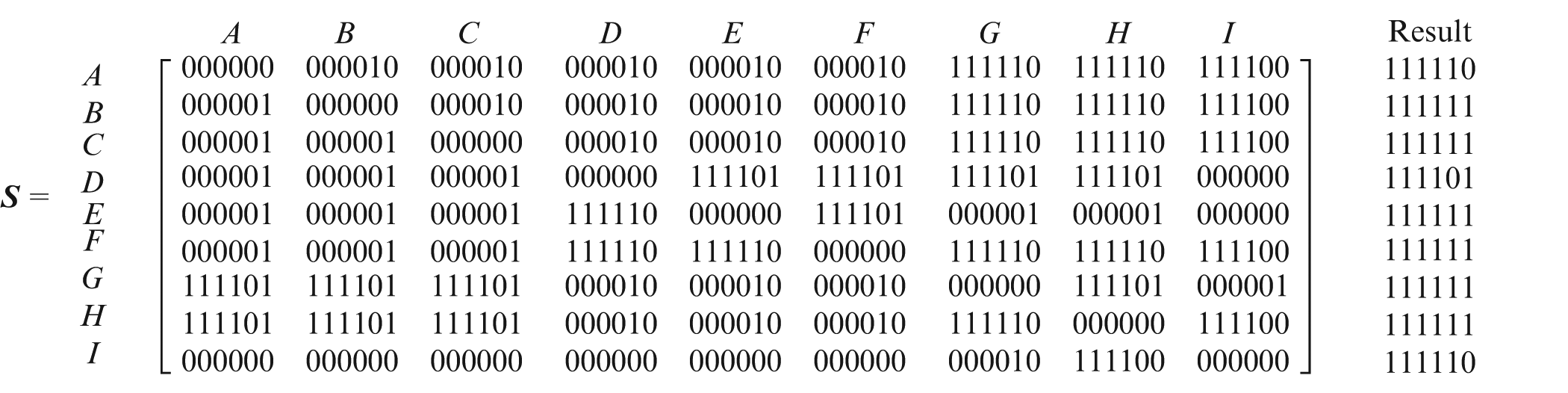
Based on the developed matrix analysis algorithm in section ‘Phase 2 − matrix analysis algorithm’, there are totally 918 feasible disassembly sequences for the base assembly part.
Front cover assembly part
The front cover assembly part of the LC24F4 LCD-TV is shown in Figure 9. It is composed of 11 parts: (J) control button, (K) power switch, (L) side loudspeaker, (M) control receiver board, (N) positive loudspeaker, (O) power supply board, (P) main board, (Q) metal board, (R) metal mounting plate, (S) surface frame and (T) LCD screen.
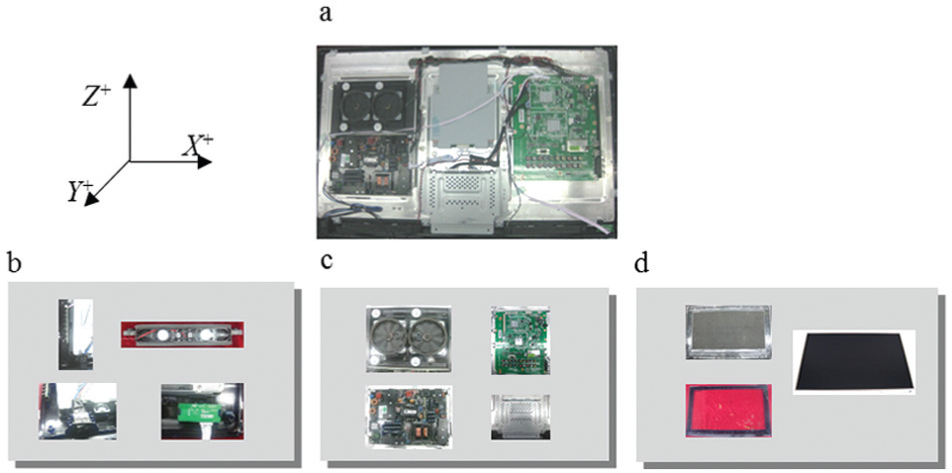
The front assembly part of the LC24F4 LCD-TV: (a) front assembly part; (b) components J, K, L, M; (c) components N, O, P, Q; and (d) components R, S, T.
The space interference matrices to represent the front cover assembly part in six directions are shown below
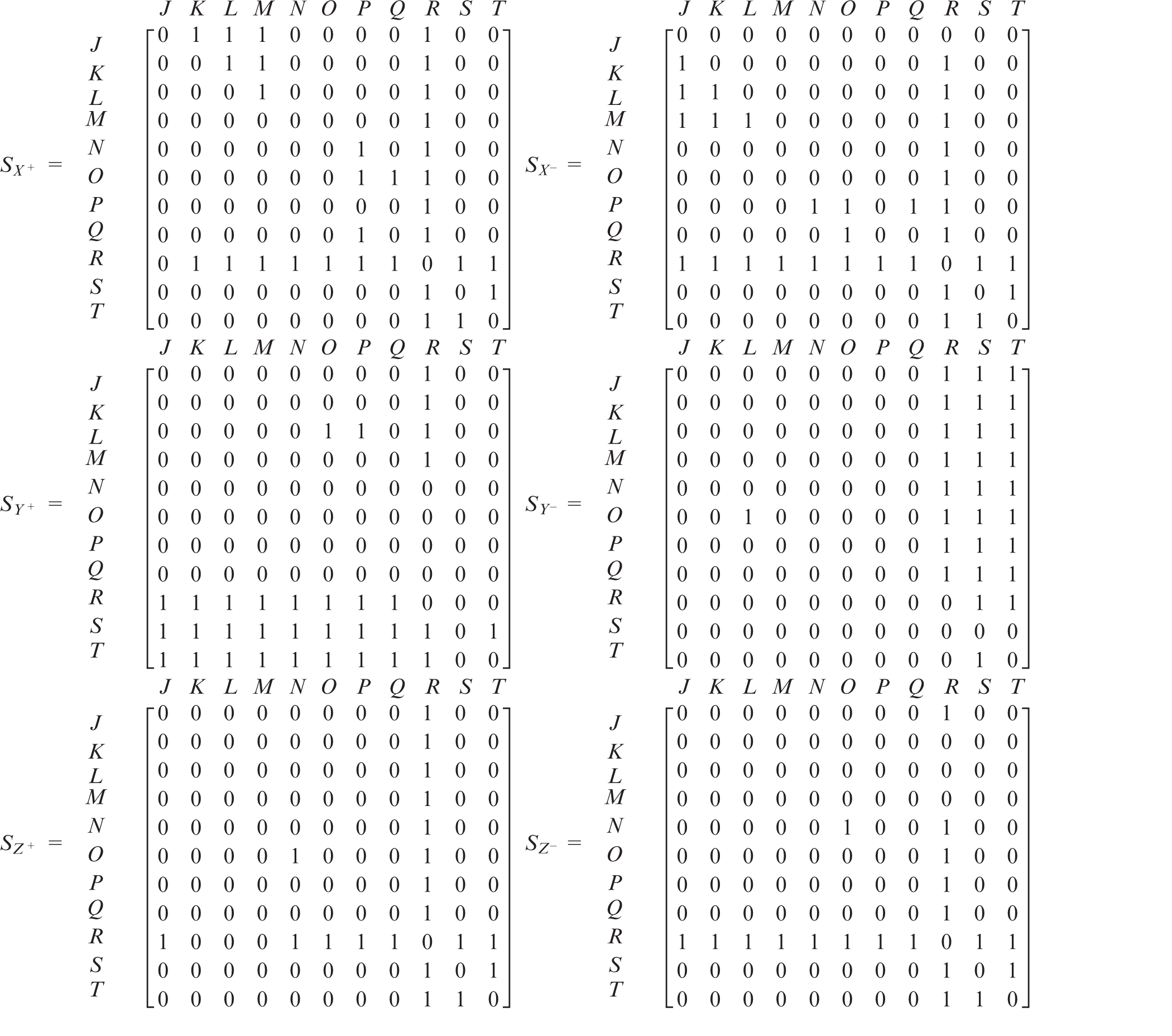
After combining the above six matrices and using Boolean operator ‘OR’ in rows, the obtained result is shown below
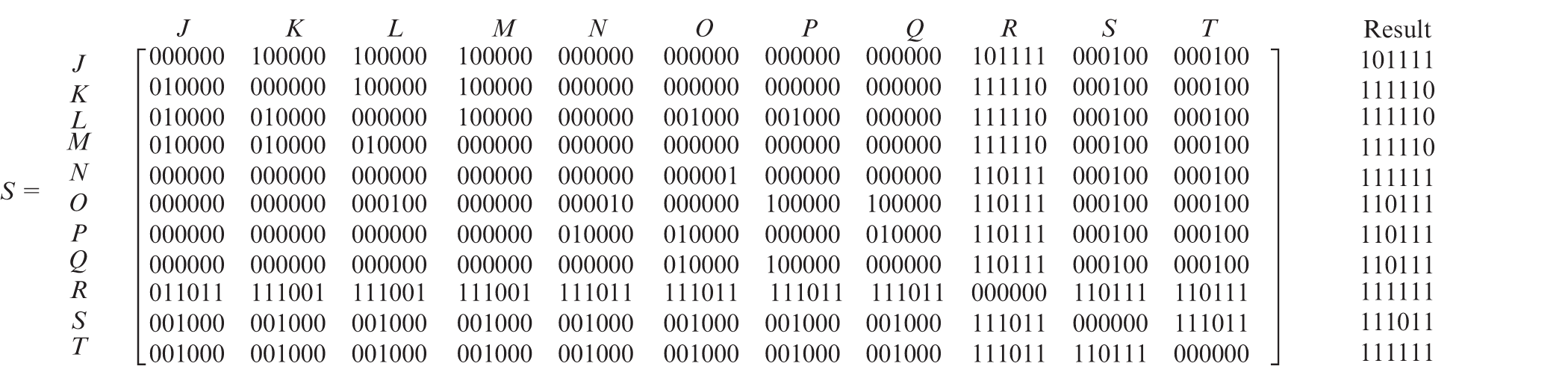
Based on the developed matrix analysis algorithm, there are a total of 7,096,320 feasible disassembly sequences for the front assembly part.
Back cover assembly part
The back cover assembly part of the LC24F4 LCD-TV is composed of three parts: (U) back cover, (V) cover plate and (W) support (shown in Figure 10).
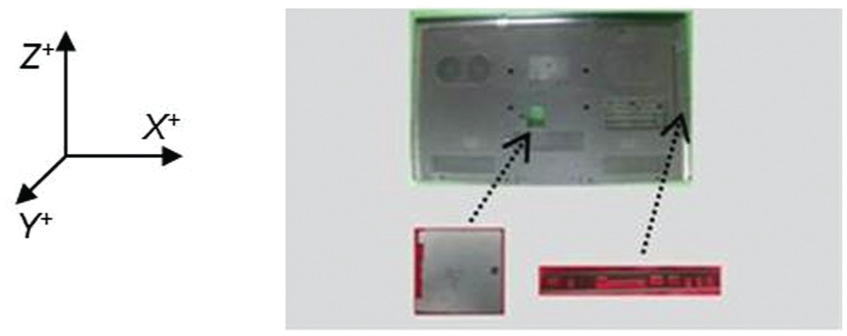
The back cover assembly part of LCD-TV.
The space interference matrices to represent the back cover assembly part in six directions are shown below
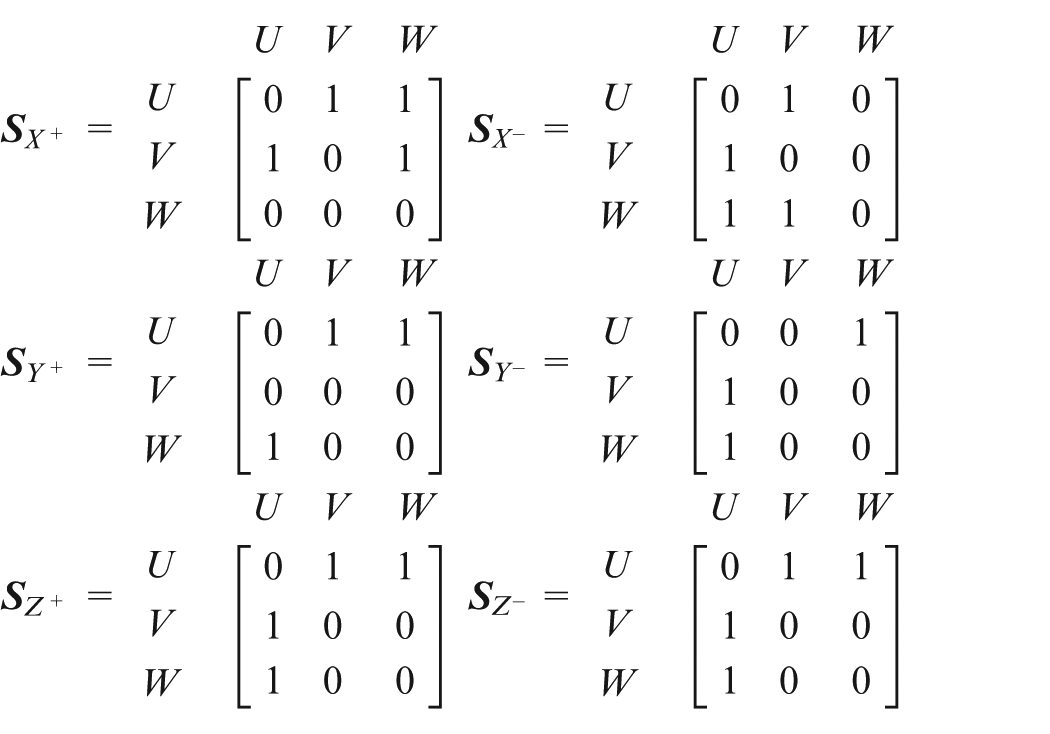
The combined matrix can be obtained as follows
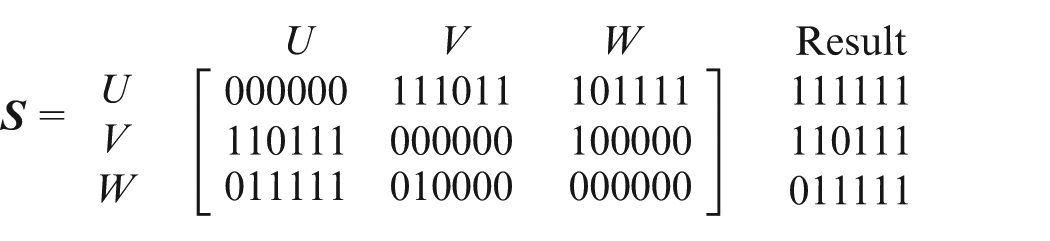
Based on the developed matrix analysis algorithm, the number of feasible disassembly sequences for the back cover assembly part is four.
Based on the above analysis, the number of all the feasible disassembly sequences with geometric constraints of the LC24F4 LCD-TV is 2.6058e+10 = 918 × 7,096,320 × 4 (base assembly part × front cover assembly part × back over assembly part). Compared with the theoretical full search space, which could be as large as 23! = 23 × 22 ... 2 × 1 = 2.5852e+22, the search range for a disassembly planning algorithm to find the optimised disassembly sequence is reduced by 9.9209e+11 times (shown in Table 8). It is obvious that the developed feasible solution space method can dramatically reduce the search range and obtain all the feasible disassembly sequences of the LC24F4 LCD-TV to alleviate the computational effort on the search of the optimal disassembly sequence.
Comparison between our developed method and full disassembly solution space.

Evaluation and decision-making on LCD-TVs
The components and some properties of the LC24F4 LCD-TVs provided by Changhong Electronics Company, Ltd. are listed in Table 9. The total mass of a LC24F4 LCD-TV is 5648.2 g. Among the component/material composition, the PCBs, which are mainly the main board and power supply board, loudspeaker and LCD screen, are quite complex and are composed of several different materials. Other components of LCD-TVs are usually made by a single material such as steel, aluminium, copper and acrylonitrile-butadiene-styrene (ABS).
Components and some properties of the LC24F4 LCD-TVs.
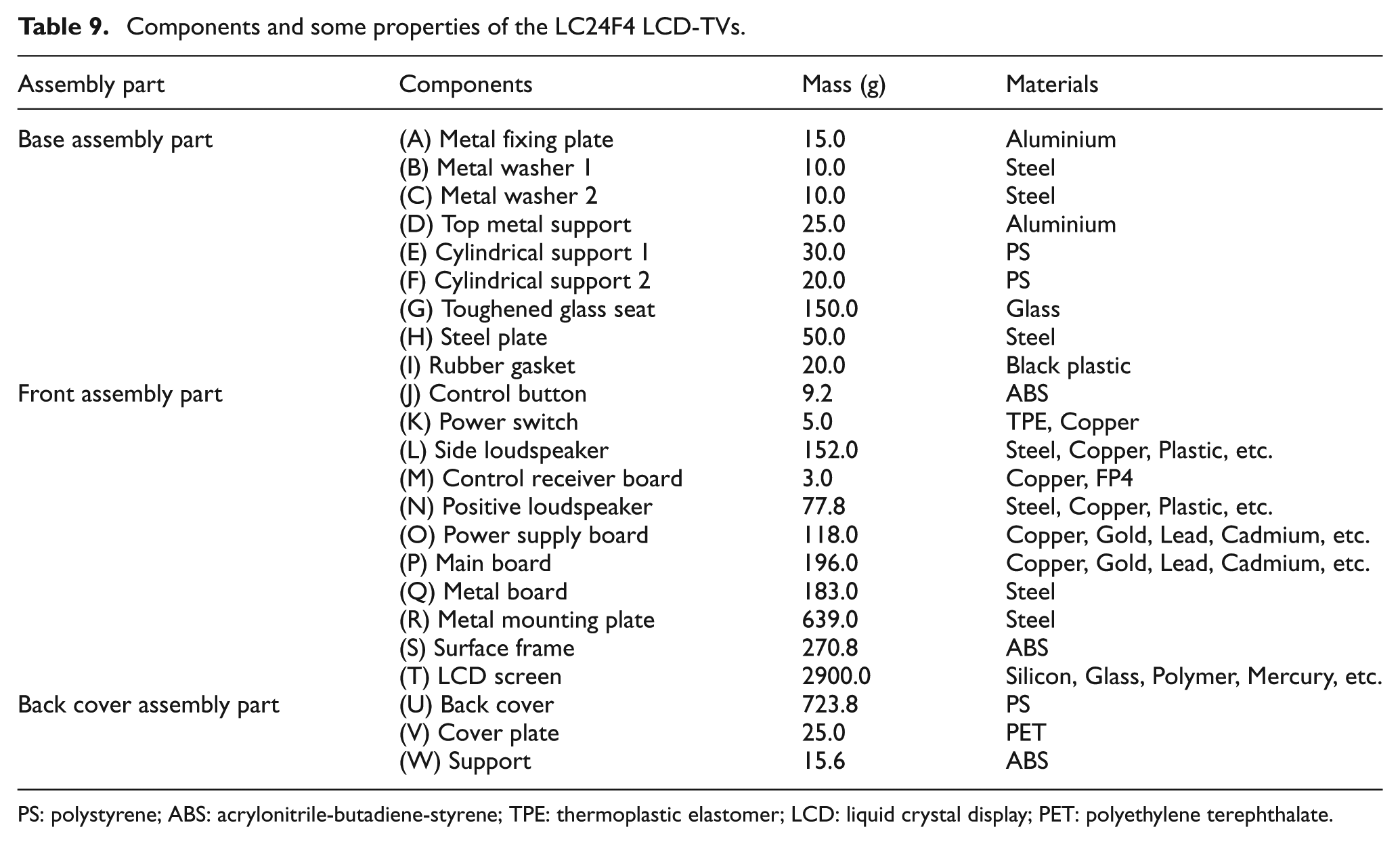
PS: polystyrene; ABS: acrylonitrile-butadiene-styrene; TPE: thermoplastic elastomer; LCD: liquid crystal display; PET: polyethylene terephthalate.
The calculation of disassembly time, value and cost of the disassembly operations and the identification of hazardous, heavy and high-value components of the LC24F4 LCD-TVs are described in the following. The results of the calculations are listed in Table 10.
Disassembly time. First, the base assembly part, front assembly part and back cover assembly part are disassembled manually to calculate the disassembly time of each component.
Disassembly cost. The disassembly cost can be calculated in equations (15)–(17). The cost of labour and factory operation are set as 150 Yuan/day and 3000 Yuan/day separately, and there are 100 workers in the disassembly factory.
Residual value. The residual value can be calculated in equation (13). All the potential values are calculated based on the values of materials of components as there is no component that can be reused and repaired in the LC24F4 LCD-TVs.
Hazardous components. The hazardous components can be identified in equation (19). In the LC24F4 LCD-TVs, (O) Power supply board, (P) Main board and (T) LCD screen are identified as hazardous as discussed in section ‘Identification of hazardous, heavy and high-value components of WEEE’, and they have to be removed for further recycling and processing.
Heavy components. The heavy components can be identified in equation (20). If the component weight is over 2.5% (141.205 g = 5648.2 × 2.5% g) of the whole mass of LC24F4 LCD-TVs, the component is identified as heavy component by the disassembly factory. Components (G) toughened glass seat, (L) side loudspeaker, (P) main board, (Q) metal board, (R) metal mounting plate, (S) surface frame, (T) LCD screen and (U) back cover are identified as heavy components.
High-value components. The high-value components can be identified by equation (21). If the potential value of a component is over 5% (1.1403 Yuan = 22.8054 × 5% Yuan) of the whole residual value of LC24F4 LCD-TV, the component is identified as a high-value component by the disassembly factory. Here, components (Q) metal board, (R) metal mounting plate, (T) LCD screen and (U) back cover are identified as high-value components.
The results of the calculations for hazardous, heavy and high-value components.
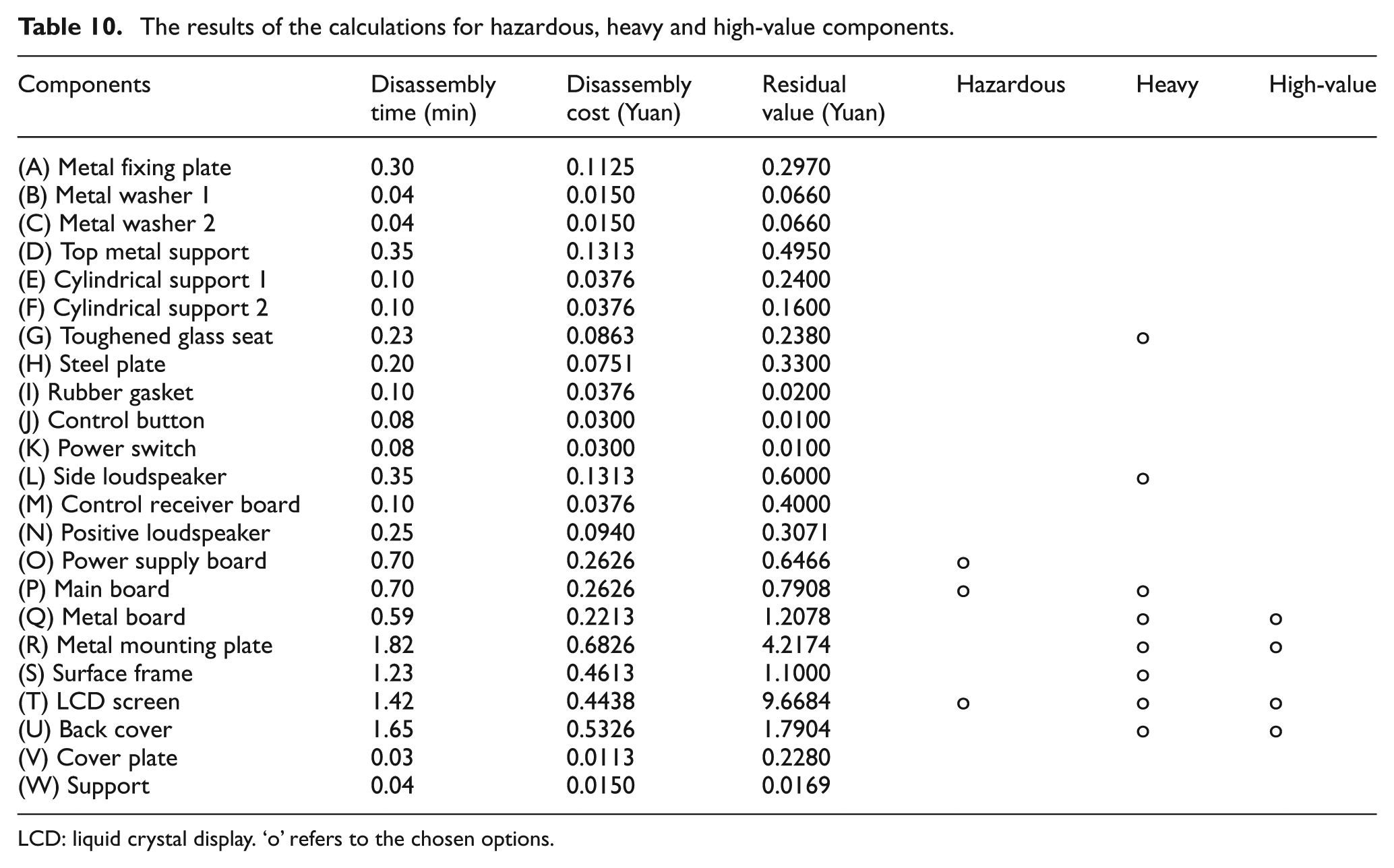
LCD: liquid crystal display. ‘o’ refers to the chosen options.
For the base assembly part, only one component (Ⓖ toughened glass seat) is required to be removed. Based on the obtained feasible solution space for the base assembly part in the previous section, Figure 11 shows the developed software and the obtained optimised sequence (ⒶⒷⒸⒽⒼ) with the maximum profit to dismantle component (Ⓖ) based on computing. The optimised selective disassembly sequences for the front assembly part and back cover assembly part are also obtained using the developed software. Table 11 shows the obtained result and the related disassembly cost.
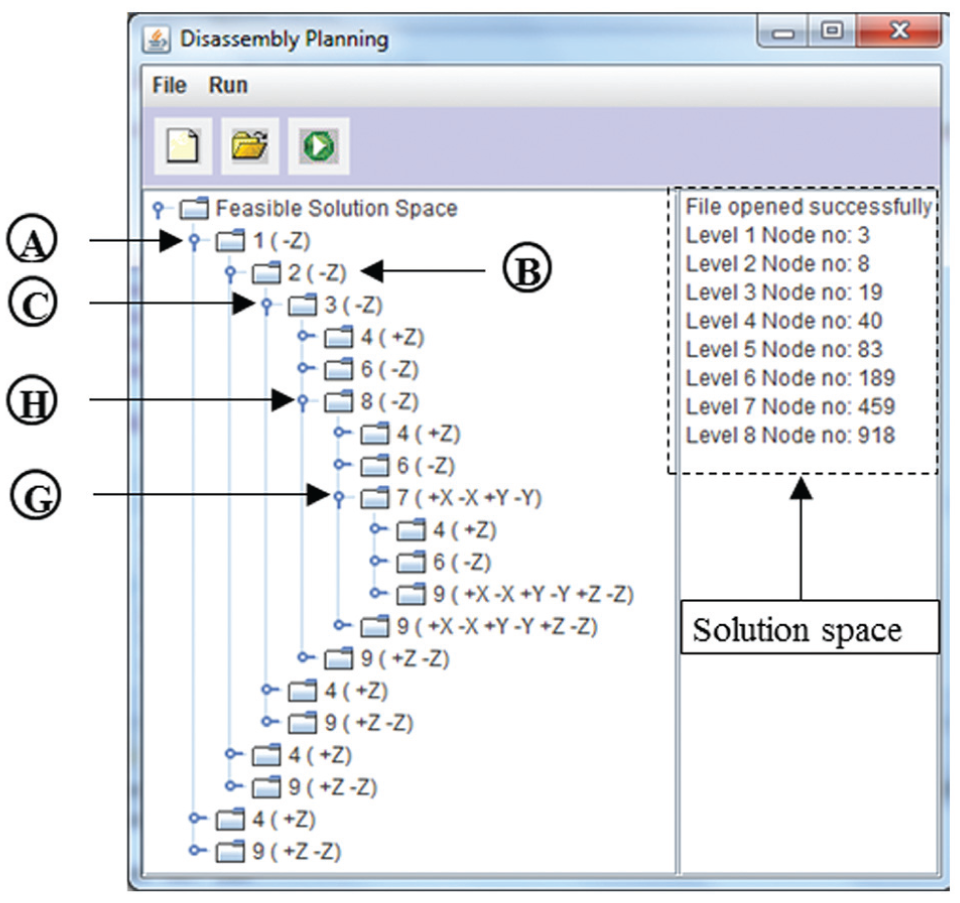
The developed software and the obtained optimised sequence.
The obtained optimal disassembly sequences for LCD-TVs.

An EoL process flow is then generated with the obtained optimal selective disassembly sequence for the LC24F4 LCD-TV (shown in Figure 12). If the disassembled component is composed of a single material, the EoL process of the component is Type 3 (remanufacture) as there is no reuse and repair components in the LC24F4 LCD-TV, and the recycling rate of the material is 100% (except glass is 80%); if the disassembled component is composed of several materials, the EoL process of the component is Type 4 (shredding), and the recycling rate of the material is different based on different separation methods. After the EoL disassembly process, the remaining components are recycled for valuable materials with EoL shredding process. In the end, all the worthless materials and components are disposed with landfill and incineration processes.
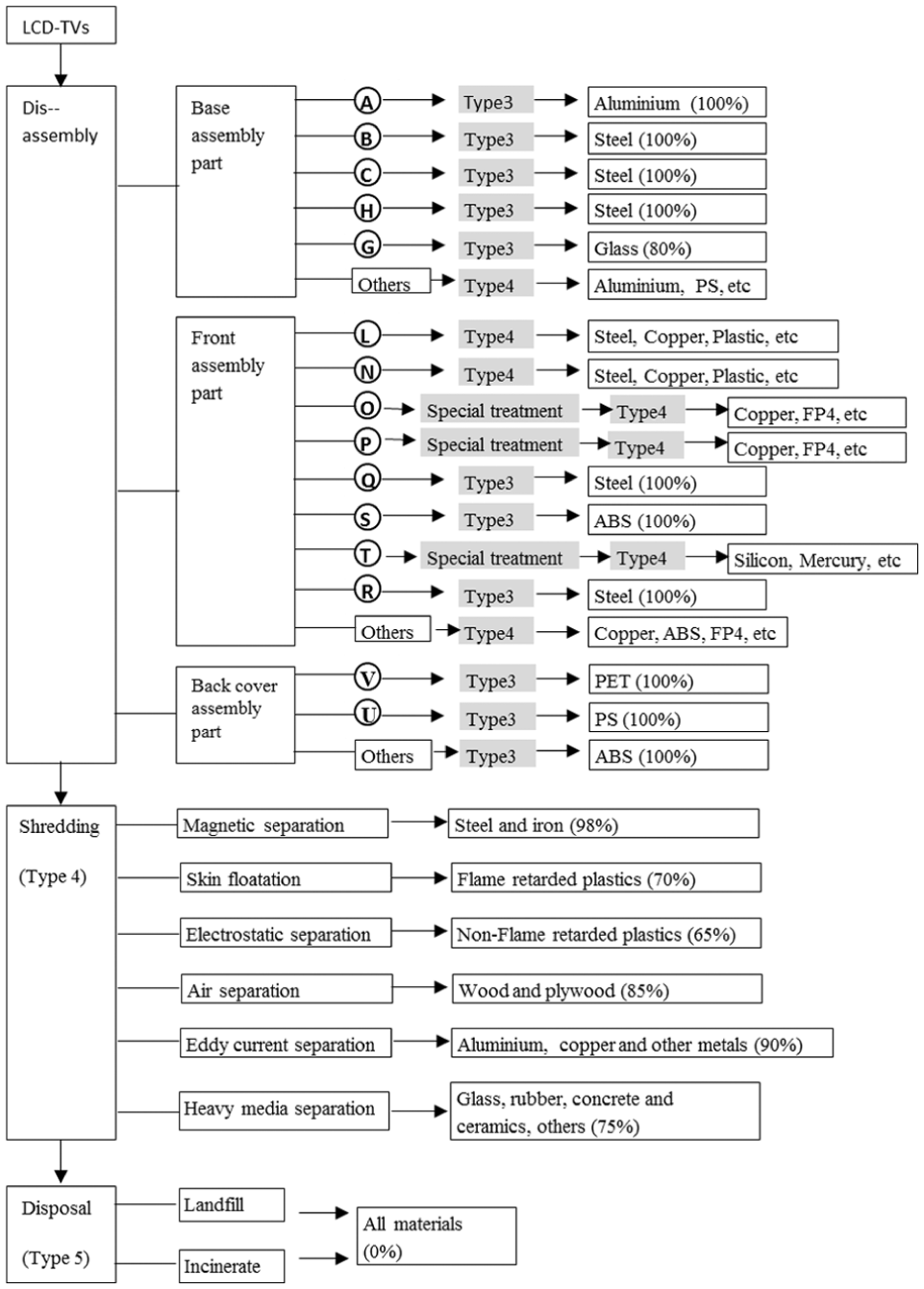
The EoL process flow for the LC24F4 LCD-TV.
Based on the above analysis, the recycling rate and the total disassembly profit of the LC24F4 LCD-TV can be calculated in the following. The results are listed in Table 12.
The recycling rate and profit of the LC24F4 LCD-TV.
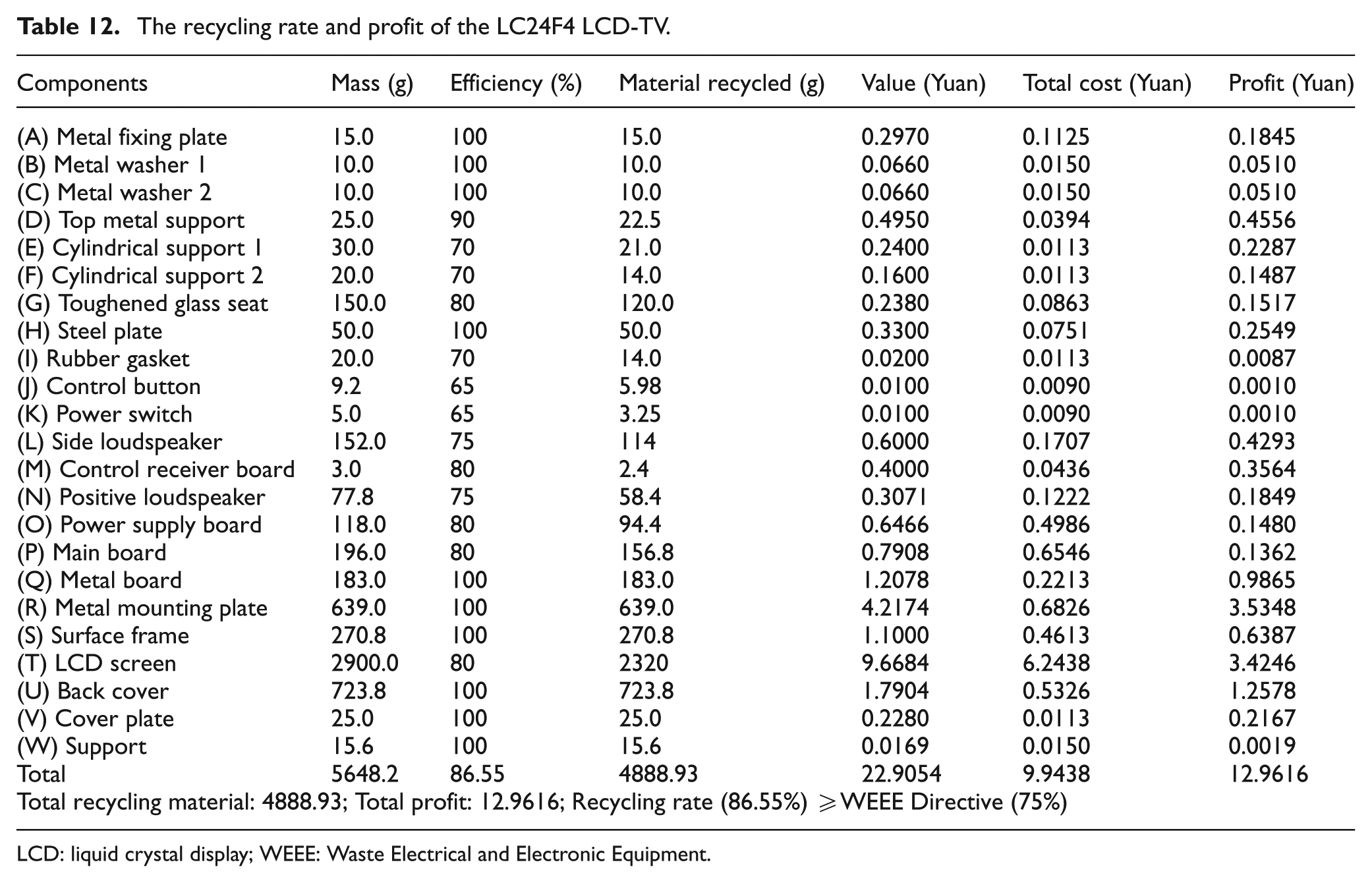
LCD: liquid crystal display; WEEE: Waste Electrical and Electronic Equipment.
The recycling rate. Based on the mass and recycling rate of different materials/components, the weights of recycled materials of each component can be calculated, and the recycling rate of the LC24F4 LCD-TV is 86.55% (86.55% = 4888.93/5648.2 × 100%).
The total disassembly profit. The total disassembly cost can be calculated in equation (14). The costs of labour and factory operation are set as 150 Yuan/day and 450 Yuan/day separately. There are 10 workers in each cleaning, repair, shredding, separation, landfill and incineration factories. The total disassembly profit is 12.9616 Yuan (12.9616 = 22.9054 − 9.9438).
After the above process, the disassembly results of the LC24F4 LCD-TV are achieved as follows:
All the hazardous, heavy and high-value components are removed, including
Hazardous components, (O) power supply board, (P) main board and (T) LCD screen.
Heavy components, (G) toughened glass seat, (L) side loudspeaker, (P) main board, (Q) metal board, (R) metal mounting plate, (S) surface frame, (T) LCD screen and (U) back cover.
High-value components, (Q) metal board, (R) metal mounting plate, (T) LCD screen, (U) back cover.
The recycling rate meets the restricted recycling rate of the WEEE Directive. The recycling rate is 86.55%, which is greater than the restricted recycling rate 75% of the WEEE Directive.
The optimised selective disassembly sequence has been obtained with the maximum profit of the disassembly operation.
Conclusion
In this article, a systematic selective disassembly approach is developed to handle WEEE to meet the environmental and economic requirements. The characteristics and contributions of the research include the following:
Space interference matrix is used to represent the space interference relationship of components in six directions of WEEE. In this manner, all the space interference relationship between components can be digitally recorded and analysed in the next step.
A matrix analysis algorithm is developed to obtain all the feasible disassembly sequences by analysing six space interference matrices in a 3D environment. It is capable of obtaining all the feasible disassembly sequences of WEEE, and the result can be used as a solution space to search for an optimised disassembly sequence within an acceptable runtime.
An evaluation and decision-making method is developed to find out the optimised selective disassembly. It is capable of removing all hazardous, high-value and heavy components from WEEE, maximising disassembly profit and meeting the restricted recycling rate of the WEEE Directive.
An industrial case study on LC24F4 LCD-TVs has been used to demonstrate the performance of the developed approach.
Footnotes
Appendix 1
Authors’ note
The article reflects only the authors’ views, and the Union is not liable for any use that may be made of the information contained therein.
Declaration of conflicting interests
The author(s) declared no potential conflicts of interest with respect to the research, authorship, and/or publication of this article.
Funding
The author(s) disclosed receipt of the following financial support for the research, authorship, and/or publication of this article: This research was carried out as a part of the CASES project which is supported by a Marie Curie International Research Staff Exchange Scheme Fellowship within the 7th European Community Framework Programme under the Grant agreement no. 294931.