




Abstract
Setting targets for engineering characteristics is common practice in the ‘house of quality’ for establishing requirements specifications. However, if deployed arbitrarily, this practice is prone to errors and can often yield irrational results. Three potential methodological problems have been identified, regarding the setting of independent targets for each engineering characteristic, setting fixed targets and cascading down targets from the system level to the component level have been identified. In this article, targets are categorised as constraints and goals because of their different implications for value trade-offs. Then, a ‘multi-attribute utility theory’ based approach is proposed, in which a system value model is developed in order to replace the setting of targets for system engineering characteristics and component value models are further derived to replace the setting of targets for component engineering characteristics. These value models enhance the traditional approach to requirements specification so that value-based requirements specifications can be developed. A case study is deployed to demonstrate the applicability of the approach in the civilian aerospace context for the development of requirements for commercial aircraft. The benefits of the proposed approach are twofold: (1) value becomes an explicit construct and (2) value can be rationally modelled and simulated in the ‘house of quality’ in order to establish value-based requirements specifications. Furthermore, identified methodological problems in terms of setting engineering characteristic targets at any level are mitigated.
Introduction
It is currently well recognised that customer-perceived value is the source of competitive advantage in the 21st century.1,2 It is desirable to establish value-based requirement specifications that are based on customers’ value perceptions, which promotes value to become an explicit construct that can be rationally qualified and quantified. Proactive and reactive application of value-based requirements specifications in the engineering design process can significantly enhance the capability of the designers to develop systems with higher value, as perceived by customers. This, in turn, is likely to translate into sustainable competitive advantage of the manufacturers that apply the proposed approach.
The ‘house of quality’ is a conceptual map that can be used to derive requirements specifications from customer needs based on competitive, technical and cost considerations.3–5 The derived requirements specifications are typically text-based with some quantified targets, and they are usually stored and managed using various Commercial Off the Shelf (COTS) software such as IBM DOORS or Microsoft Excel. Design solutions are then developed to satisfy the requirements in the specification, and trade-offs between multiple design alternatives (if applicable) are analysed in detail against these requirements.
Although the ‘house of quality’ is a useful tool for understanding customer needs and for deriving requirements specifications, it suffers from a set of metho-dological problems with respect to a tool to derive value-based requirements specifications.6–10 Especially, setting independent targets for each engineering characteristic (EC) could lead to value trade-offs between the ECs that are inconsistent with the customer value model and the system value model. Additionally, the fixed targets are unable to cope with the uncertain performance levels of ECs. In some instances, it could finally lead to a system with a sub-optimised system value when these targets are used for generating and evaluating design alternatives. In addition, when the targets of system ECs are derived into the targets of component ECs through a hierarchical flow down, it could also result in sub-optimised system designs, even though the system designs achieve all the targets. It this article, a ‘multi-attribute utility theory’ based approach is proposed to replace target setting by value models in the ‘house of quality’ towards deriving value-based requirements specifications. System value model is developed to replace targets setting for system ECs, while component value models are derived from system value model to replace target settings for component ECs.
The rest of the article is organised as follows. In section ‘Foundations’, foundations of the article are introduced, including definitions of key concepts and multi-attribute utility theory. In section ‘Methodological problems of setting targets in the ‘house of quality’, methodological problems of setting targets in the ‘house of quality’ are identified. In section ‘Substituting value models for setting targets’, a system value model and component value models are developed to encapsulate the value-based requirements specifications. In section ‘Case study’, a case study is presented. Finally, conclusions and future directions are given in section ‘Conclusion’.
Foundations
Definitions of key concepts
Definitions of a list of key concepts are given in Table 1. These concepts include value, customer value, value model and others. Definitions are given according to the development in this article. Customer value is a customer’s perceived preference for product attributes, consequences of use and purposes in use situations. Product attributes are means to influence consequence of use and consequences of use implement the purposes in use situation. Therefore, customer value is usually in different levels with means–ends relationships.
Definitions of key concepts presented in this article.
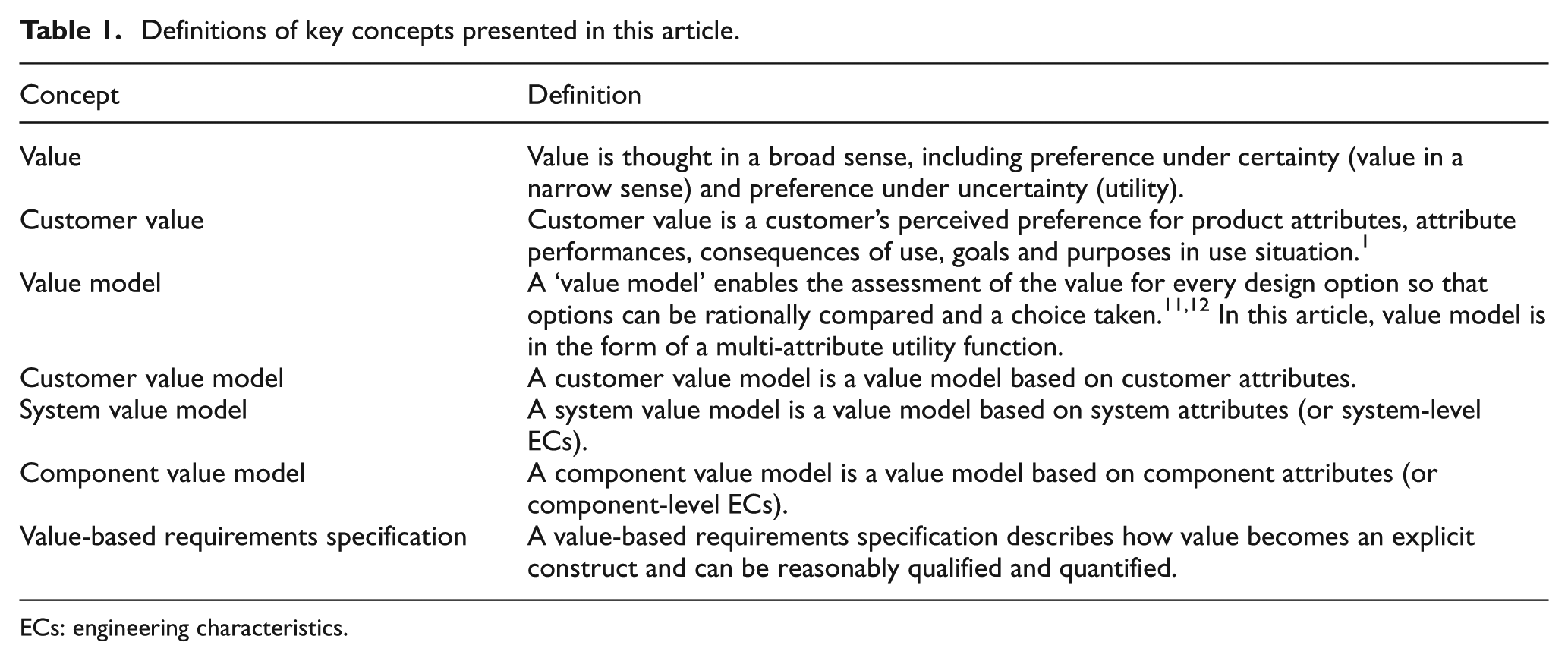
ECs: engineering characteristics.
A schema can be used to intuitively illustrate informal relationships between these concepts, as presented in Figure 1. Customer value is usually made explicit when it is expressed through customer statements, although there are some cases in which customer value should be uncovered through observation or other means. These initial customer statements are then transformed into customer needs that are independent from any particular solution developed to address them. 13 Customer needs are then transformed into system requirements and in turn into component requirements. All these together represent a traditional requirements specification for system development. A value-based requirements specification enhances traditional requirements specification with three kinds of value models: customer value model, system value model and component value models. A customer value model is a particular value model constructed from a set of customer attributes while customer attributes are attributes for measuring the attainment of customer needs. A system value model is derived from a customer value model by combining the customer value model together with function forms of customer attributes that are functions of system-level ECs. Component value models are further derived from the system value model, which are value models based on component attributes. These value models make value as explicit construct in the requirements specification, so that value can be reasonably modelled and simulated.
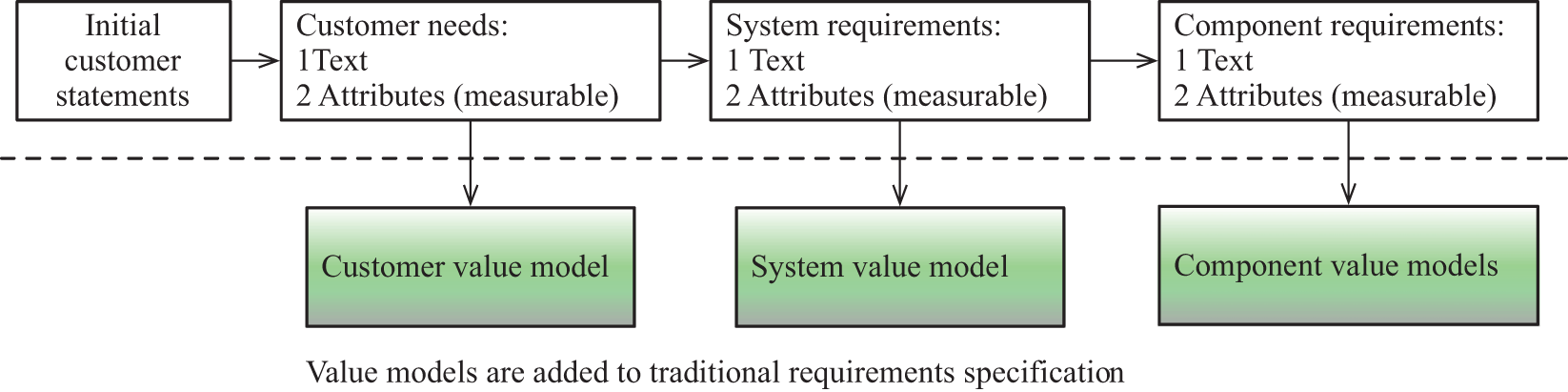
Informal relationships between the concepts.
Multi-attribute utility theory
Multi-attribute utility theory is a systematic approach for composing a set of usually conflicting attributes with different incommensurable units into one common unit, which is called the utility. It helps customers to think hard about various value trade-offs and about the risk attitude towards uncertainty in achieving these attributes. 14
Given a set of
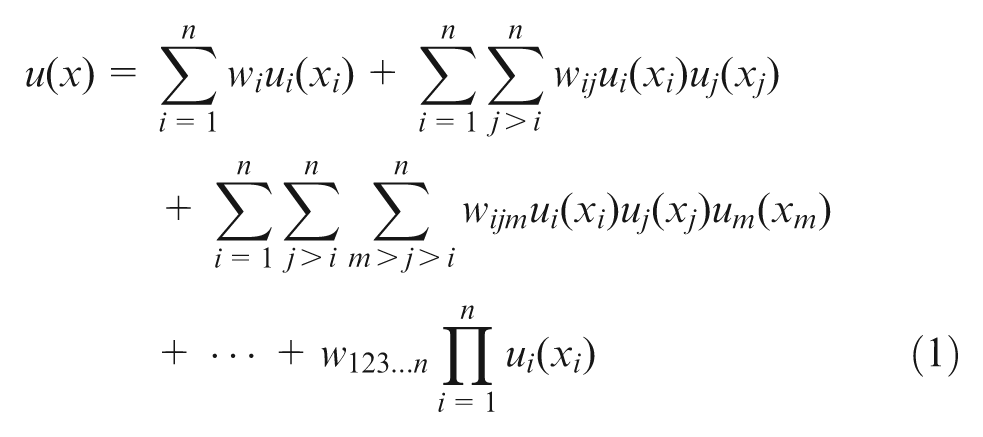
is appropriate to compose the attributes together in order to derive their utility. Here,
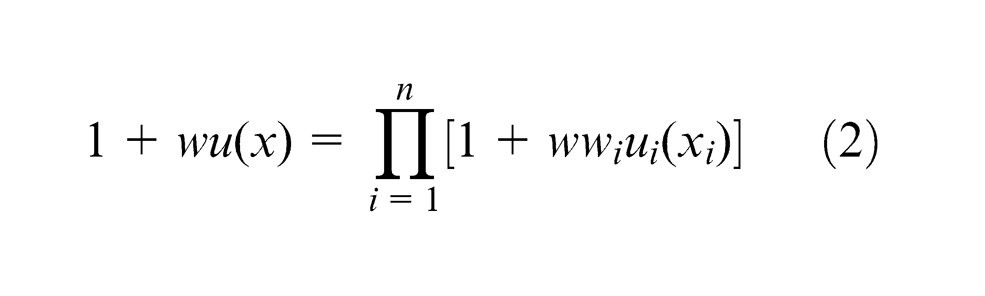
when mutual utility independence holds among
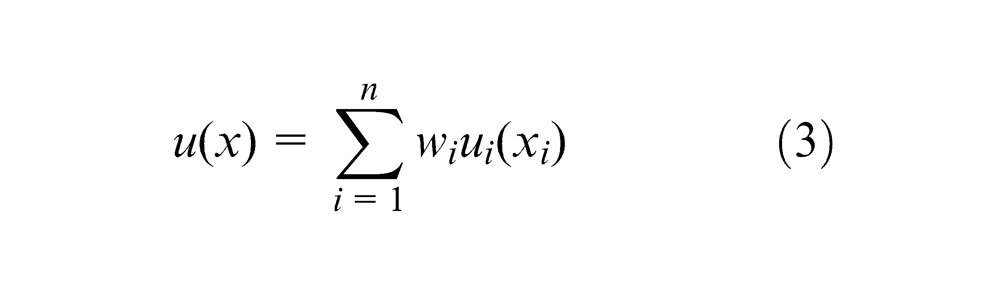
Multi-attribute utility theory is employed as the theoretical foundation for developing value models in this article.
Methodological problems of setting targets in the ‘house of quality’
The structure of ‘house of quality’ is shown in Figure 2.
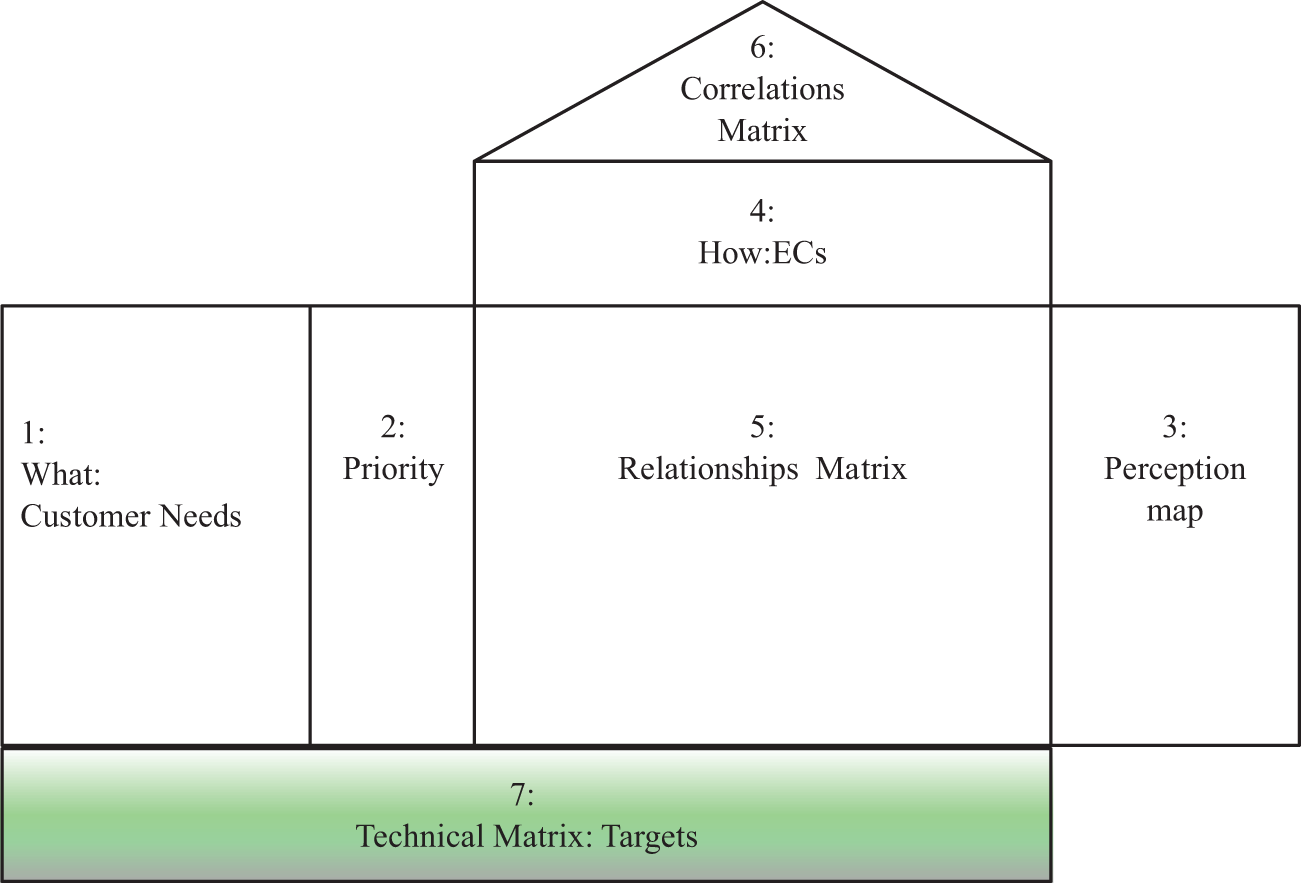
The structure of the ‘house of quality’.
In step 7 of ‘the house of quality’ as shown in Figure 2, targets are usually independently set for each EC. For example, ECs and their targets of one cordless drill may be ‘tool mass should be 1.25 kg’, ‘battery mass should be between 0.2 and 0.4 kg’ and ‘work output should be more than 25 kJ’, respectively. These targets represent acceptable or ideal measures for ECs to be achieved by design alternatives.
4
There are also cases that targets only mean ideal fixed threshold to be achieved.
3
In this article, targets include acceptable measures (constraints) and ideal measures (goals). A goal is an ideal level of an EC for orientation of preference, which is either achieved or not. One alternative that fails to achieve one or more goals may still be acceptable. A constraint defines an acceptable level of an EC and unacceptable design alternatives are eliminated. Setting constraints imply special value judgment that if an alternative fails to achieve one or more constraints, it is unacceptable even if the alternative had perfect achievement in other ECs. Usually, there are five types of targets,
4
including no smaller (
One of the methodological problems stems from independently setting targets for each EC. It can lead to value trade-offs between ECs inconsistent with the customer value model or the system value model. For example, assume customers consider only two ECs when they evaluate and select a cordless drill, these are as follows: (1) ‘work output should be larger than
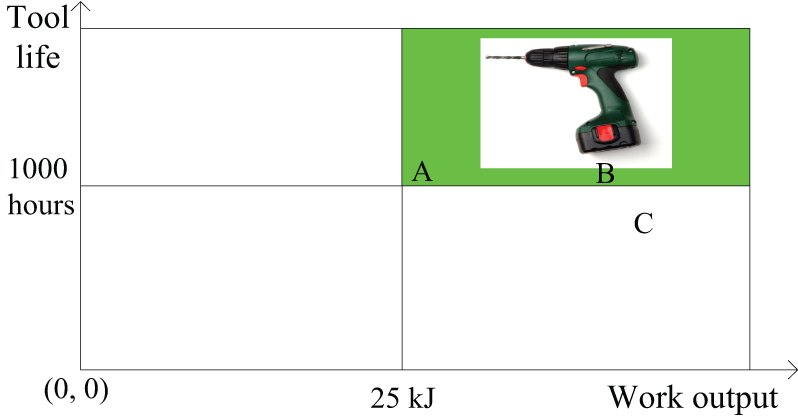
Target region with two ECs.
According to this target setting, any cordless drill whose performance of these two ECs is within the target region is satisfactory, and any cordless drill whose performance of these two ECs is outside of the target region is unsatisfactory. For example, point A (
Assume an indifference curve between these two ECs has been elicited from the customer as presented in Figure 4. All points in the curve then have the same perception of value to the customer. For example, the customer will be indifferent between point B (
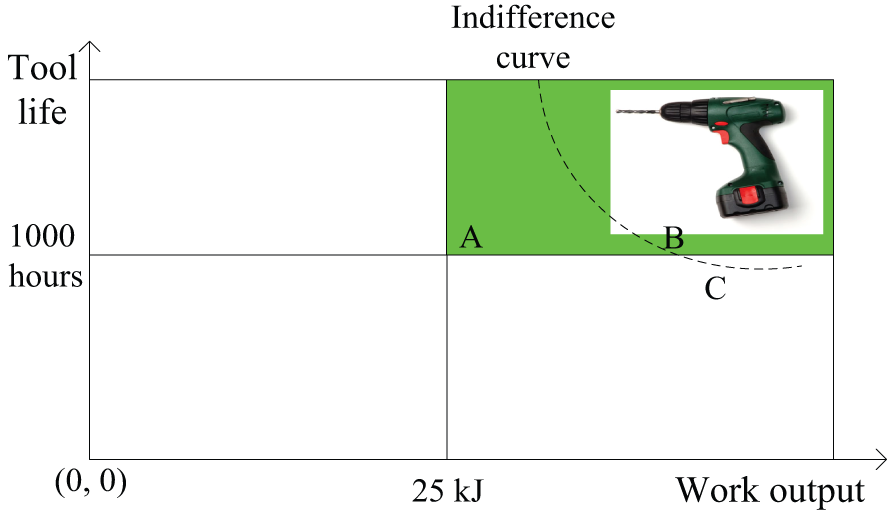
Target region with two ECs and their indifference curve.
These two observations of setting targets seem contradictory. They represent two kinds of value trade-offs: compensation and non-compensation. There is not any compensation among the ECs when the targets are constraints, while there is compensation among the ECs when the targets are goals. Great attention should be paid to verifying whether the targets are real constraints or goals.
The second methodological problem of setting targets is that it fails to resolve the situations when the design alternatives have uncertain achievement of ECs and/or when targets of ECs are uncertain. For example, if a cordless drill has a
In addition, when targets are reasonably set according to customer value, competitive advantage and technical capability for system-level ECs, they are usually used for deriving targets of component-level ECs. Specially, when the targets of system-level ECs are the sum of targets of component-level ECs, such as mass, cost, volume and power consumption, a budget allocation process is used. This process may tend to be irrational. A hypothetical example can illustrate the problem, and similar examples can also be found about preference conflicts.
11
An originally allocated aircraft wing target with regard to cost and mass is
Flowing down the targets of system-level ECs to targets of component-level ECs sets constraints to the development of components. When these constraints are used, the design space is then constrained. And the final design that satisfies the targets might not be optimised in terms of value. Different aspects of components’ design also influence targets setting in the component level. That is, in different components’ design, to achieve the same level of improvement in one attribute, different compensations in other attributes need to be made.
Therefore, traditional practice of setting targets in the ‘house of quality’ at least suffers from three kinds of possible methodological problems: (1) setting independent targets for each EC may lead to irrational design decisions, (2) setting fixed targets for ECs fails to resolve uncertainty in performance of ECs and uncertainty in targets themselves and (3) deriving targets of system-level ECs into targets of component-level ECs tend to result in sub-optimal design solutions.
Substituting value models for setting targets
In this section, a multi-attribute utility theory–based approach is proposed to resolve or avoid the aforementioned methodological problems in the house-of-quality. More precisely, a system value model is developed to compose a set of system-level ECs, which enable meaningful value trade-off between ECs and resolution of uncertainty. Component value models are derived from the system value model as a substitute for setting targets for component-level ECs.
However, developing a system value model directly from system-level ECs is always difficult for the following two reasons:
It could result in double counting. For example, there are usually a set of ECs provided by manufacturers, say, torque, horsepower and acceleration for cars. 15 Means–ends relationships among them are verified after performing an initial means–ends analysis. Torque and horsepower are the means to influence the achievement of acceleration. Therefore, an additive function form as a conjoint measurement to compute value is problematic, resulting in double counting the importance of torques and horsepower. In fact, it is difficult to verify possible independence assumptions between ECs, and it will be difficult to identify special utility functions for modelling their relationship with value. From this view, the weighted sum of ECs as a way to calculate customer satisfaction in the ‘house of quality’ might also be problematic.
It needs three steps to perceive meaningfully value of special performances of ECs. ECs are usually the means the designer use to influence the achievement of customer needs that are the fundamental reasons of customer in the interests of system development. And, it is much easier for customers to perceive the value of customer needs. Therefore, a sophisticated three-step process is needed to assess a single-attribute utility function over ECs. First, the influence relationships between an EC and customer needs are established. Single-attribute utility functions over customer needs are then assessed. Finally, these two kinds of functions are combined together to establish the single-attribute utility function over the EC. However, it is not so trivial to judge the quantitative influence of one EC on a specific customer need when a set of ECs has influence on that customer need.
In order to avoid these difficulties, a system value model is derived from a customer value model that is a multi-attribute utility function of customer attributes. However, different procedures of assessment are needed for the case of goals and constraints. It is then necessary to clearly distinguish one from the other at first. Some heuristic questions can be useful for this task:
Whether it is a real constraint that cannot be violated or it is a desirable goal that is exciting if it is achieved?
Asking value trade-offs questions. For example, if a target of one performance criterion is finally achieved with a very small deviation, could this deviation be offset by a much higher achievement in another performance criterion? If it is not possible, this indicates a real constraint.
Asking the original source of a target. Does it come from external organisations, regulatory bodies, government policies, current legislature or decision maker’s subjective preference? If it comes from outside with compelling characteristics, it is a real constraint.
After carefully questioning, goals and targets are separated into two different sets, which should be used differently. All the targets can be deleted and are not used in value models and optimisation to reflect the flexibility of requirements if they all are finally verified as goals, but they are still stored and maintained for validation, verification and other purposes. If this is the case, a three-step procedure to develop a system value model is the following:
1. A customer value model is developed based on customer needs. Assume customer needs have been carefully identified by performing means–ends analysis and part–whole analysis,9,12 and assume there is one attribute for each lowest-level customer need in a hierarchy of customer needs.
2. Concurrently, a function form is established for
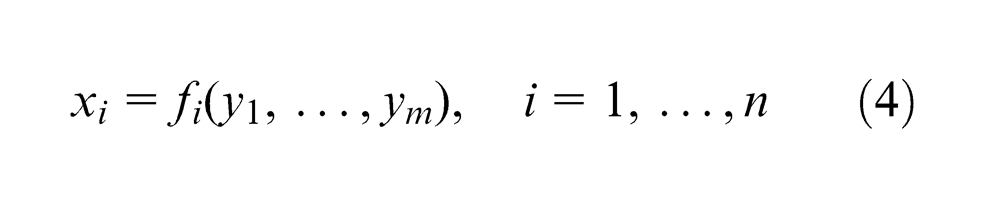
where
The relationship matrix in the house quality is usually used to model the influence relationships. However, it oversimplifies the relationships with linear functions and only focuses on the first-order effects. In order to model the interactions between ECs and second-order effects, a second-order model is introduced as an appropriate approximation to equation (4), which is very flexible and works well in solving real response surface problems.
17
For the case of
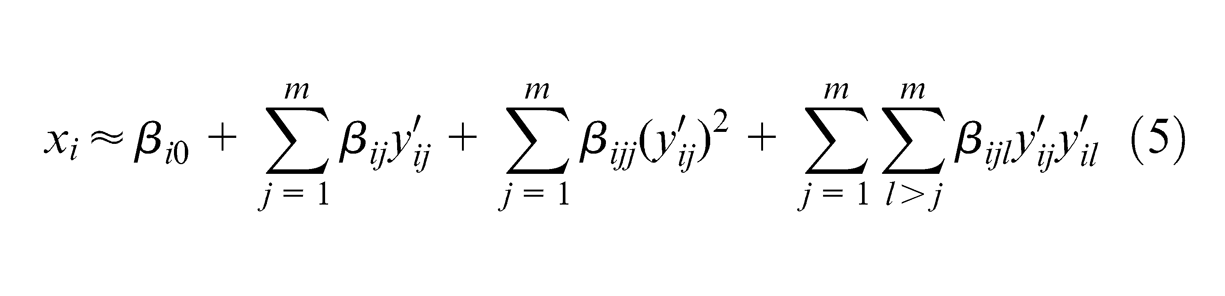
Here,
3. A system value model is found by combining together the customer value model developed in step 1, and the function forms developed in step 2 gives
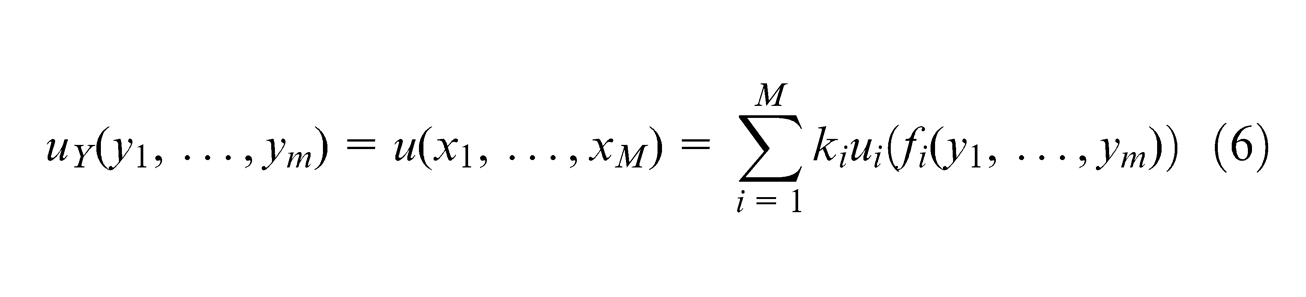
However, if some of the targets are finally verified as constraints, the first step of the procedure will then be different and the second and third steps are the same. Even if means–ends and part–whole analysis were carefully performed, the assumption of additive independence may not be satisfied, because joint distribution of attribute utility is apparent in customer’s preference. Therefore, additive function form is not appropriate as a utility function to compose together the set of customer attributes. Independence assumptions should be carefully verified for identifying special utility functions. Usually, a multi-linear function form will be appropriate as a utility function in this situation. While the assessment procedure for multi-linear function form is the same as in the literature,
14
there are still two further points that can make a difference. One is about the single-attribute utility function over the attribute with constraint, which may change from a range utility function into a step utility function. Assume in this case the constraint for
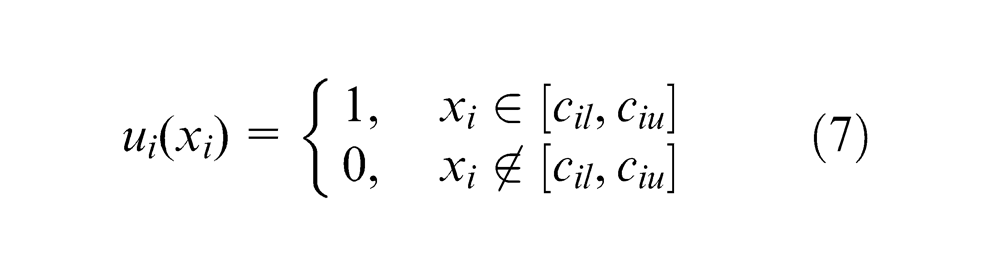
The other is that
After a system value model is developed through application of these three steps, an optimisation study is finally deployed, which is to optimise expected utility of design alternatives.
However, if a system value model replaces targets of system-level ECs, then it is naturally expected that component value models replace targets of component-level ECs. Component value models are then derived from the system value model through sensitivity analysis, which can mitigate the third methodological problem and there is no need to flow down targets of system-level ECs to targets of component-level ECs.
Assume the system has a set of
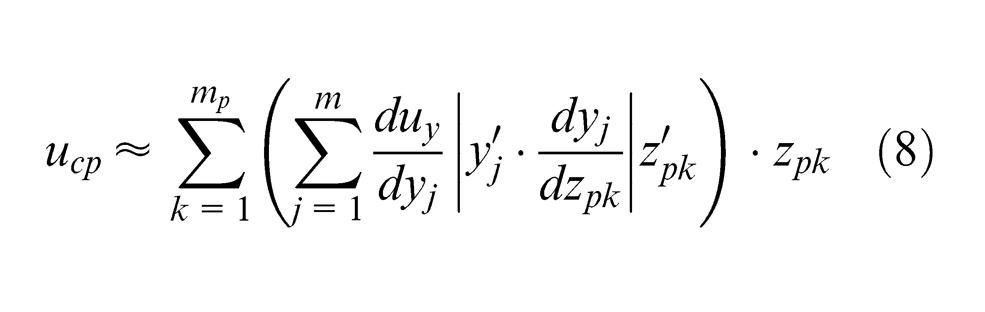
or equivalently by
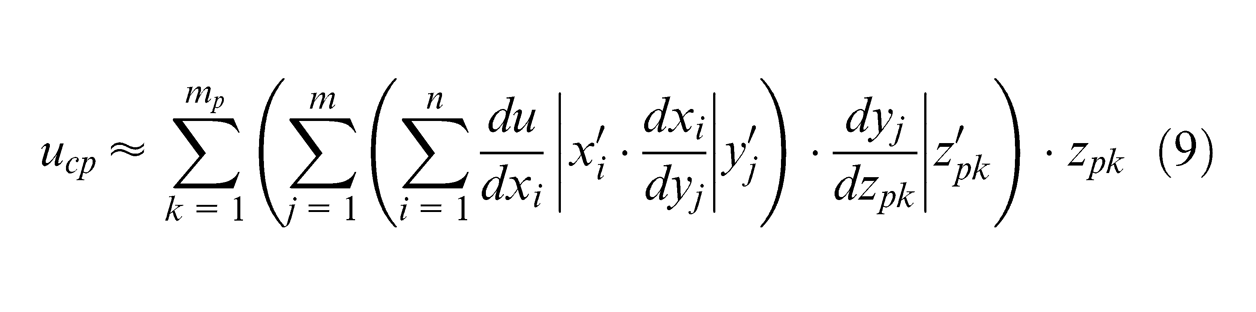
which replaces targets of component-level ECs of the component
These value models are integrated into traditional requirements specification and a value-based requirements specification is established. The main benefits of the approach and value-based requirements specifications are the following:
Value becomes an explicit construct that can be qualified and quantified to some extent enabling value modelling and simulation.
The methodological problems in the ‘house of quality’ are mitigated.
Value-based requirements specifications are used for evaluating design alternatives, which helps selecting one or a subset of design alternatives with high value to customers. It is a reactive way of using value-based requirements specifications. Value-based requirement specifications can also be used for designing for value in the life cycle of products. Important value dimensions and value drivers are identified as pointers for designing. It is a proactive way of using value-based requirements specifications.
Case study
Context
In commercial aircraft development programmes, systems engineering processes and standards are widely used. However, they do not address ‘value’ in much detail in the requirements engineering stage. 19 Losing a holistic, value-focused viewpoint is also obvious in the aircraft design and evaluation process.20,21 For example, when the aircraft design alternatives are in a target region of the solution space that is given by the independently set targets for top-level aircraft requirements, aircraft design alternatives are traditionally evaluated in terms of recurring and non-recurring cost by aircraft manufacturers, and direct and indirect operating costs by the airlines or other operators. Therefore, it naturally eliminates the design alternatives that are outside of the target regions but with higher multi-dimensional value as perceived by customers (and in fact by other external and internal stakeholders). Furthermore, a design alternative that lies in the target region and achieves best results in terms of lowest costs may not be the alternative that offers the highest overall value, because in this case no value trade-offs were conducted that were based on multiple value dimensions. Value models in this case study are developed to revise this situation as a complement to traditional requirements specification.
Application
A process underlying the house of quality has been systematically deployed in our case study and customer needs, ECs and their relationship matrix have been elicited, which were inputs for the application of the proposed approach. A customer (an airline company) is currently interested in purchasing a number of long- and medium-range commercial aircrafts for its intended routes. A simplified set of three airline needs is identified: (1) maximise profitability, (2) maximise maintainability and (3) comply with emission standards and airworthiness authorities’ directives and safety requirements. Correspondingly, attributes for measuring each customer need are as follows: (1) X
1: surplus value measured in 2012 million dollars, (2) X
2: mean maintenance man-hours per flight hour and (3) X
3: yes or no, respectively. More surplus value is preferred than less, and an increasing utility function
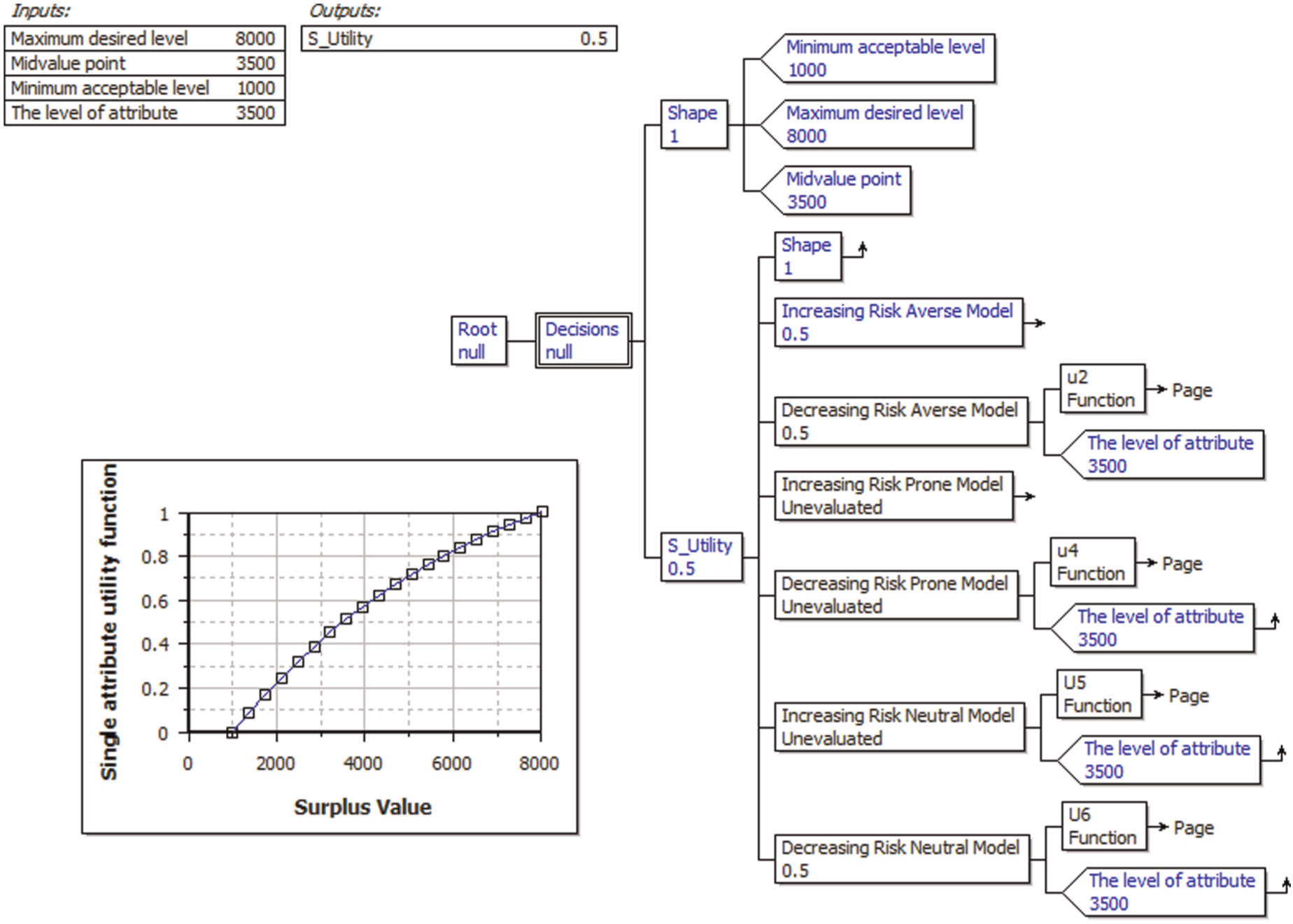
Utility function over surplus value.
After verifying the independence relationships between these three attributes, a multi-linear utility function similar to equation (1) is appropriate as a multi-attribute utility function. And the weights
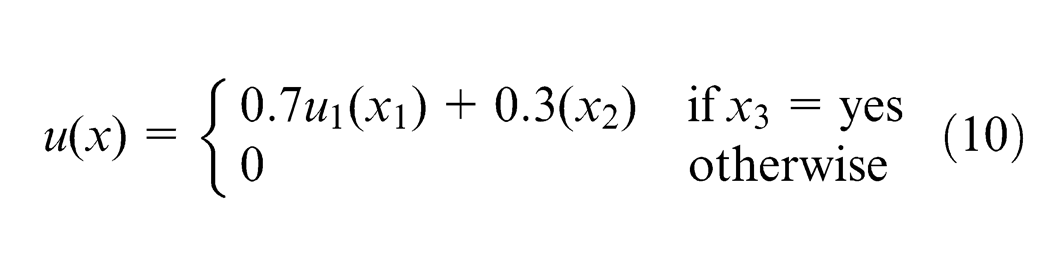
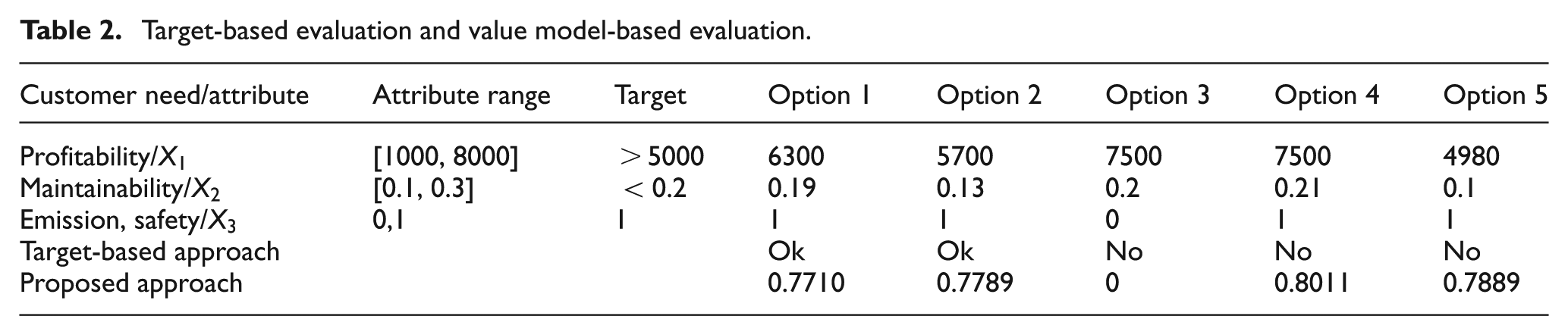
An evaluation of five alternatives using the airline value model is then carried out. The approach distinguishes goals and constraints first, and only reserves real constraints of emission and safety in the value model. This quickly eliminates option 3 and reduces the set of alternatives to options 1, 2, 4 and 5, as shown in Table 2. The performances of these four options are entered into the airline value model that provides the value for each of the options. Options 4 and 5 are identified as the most favourable options. However, they slightly violate the given targets and would have been eliminated directly had a target-based evaluation been applied. This approach then allows to search in a broader solution space and to find alternatives with higher value to airlines.
Target-based evaluation and value model-based evaluation.
With this value model, it is possible to identify a list of 11 aircraft top-level requirements (system ECs)
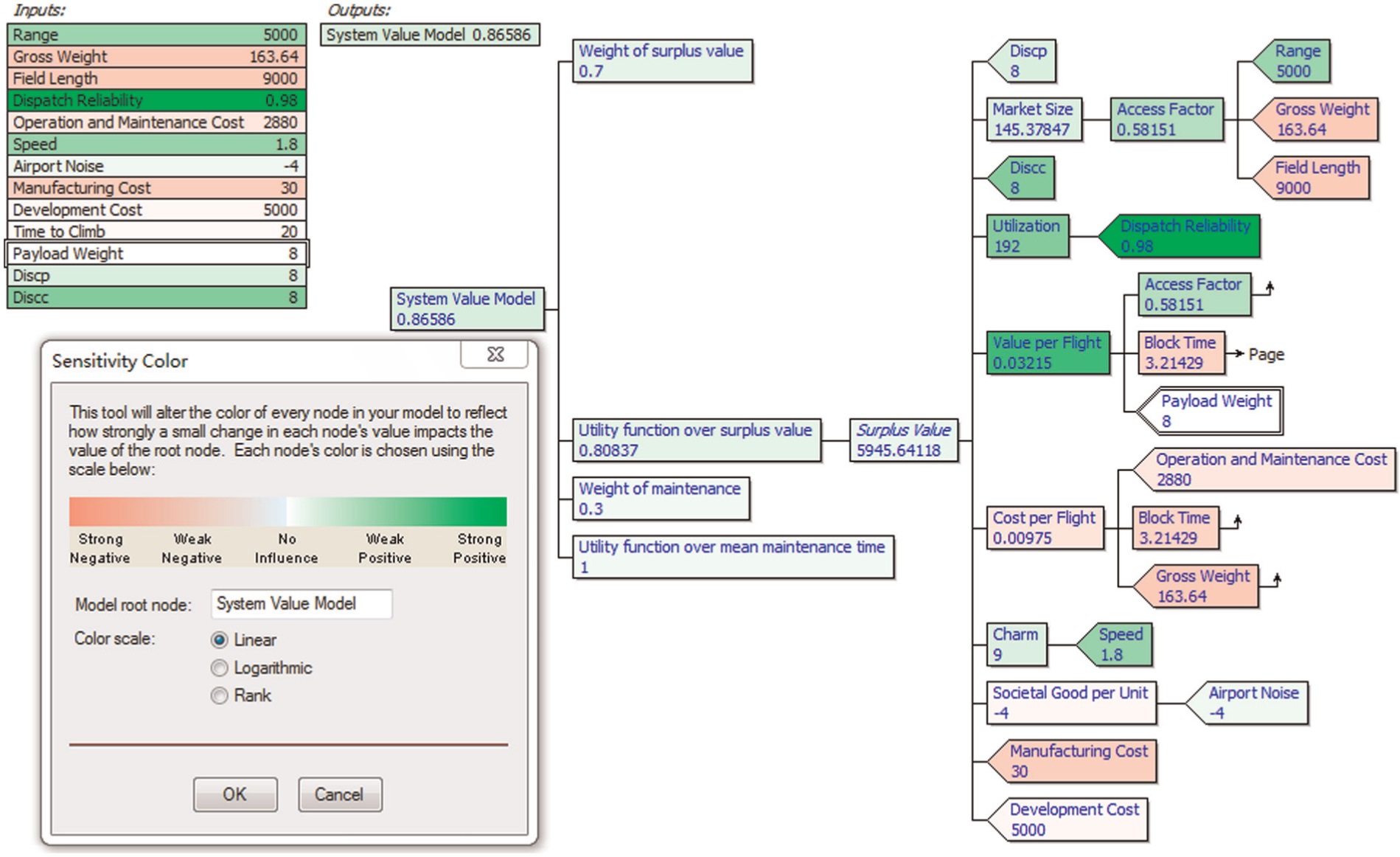
The system value model of a commercial aircraft.
While traditional fixed targets are unable to resolve uncertain achievement of system ECs, system value model is more appropriate. When performance of ECs is uncertain with respective probability distributions, values for the design alternatives are still measurable. For example, if ‘Dispatch Reliability’ is of a normal distribution with a mean value of 0.98 and standard deviation of 0.1, then ‘Utilisation’ will be also of a normal distribution, which finally results in an uncertain surplus value. A Monte Carlo simulation of the model as shown in Figure 7 can be easily performed.
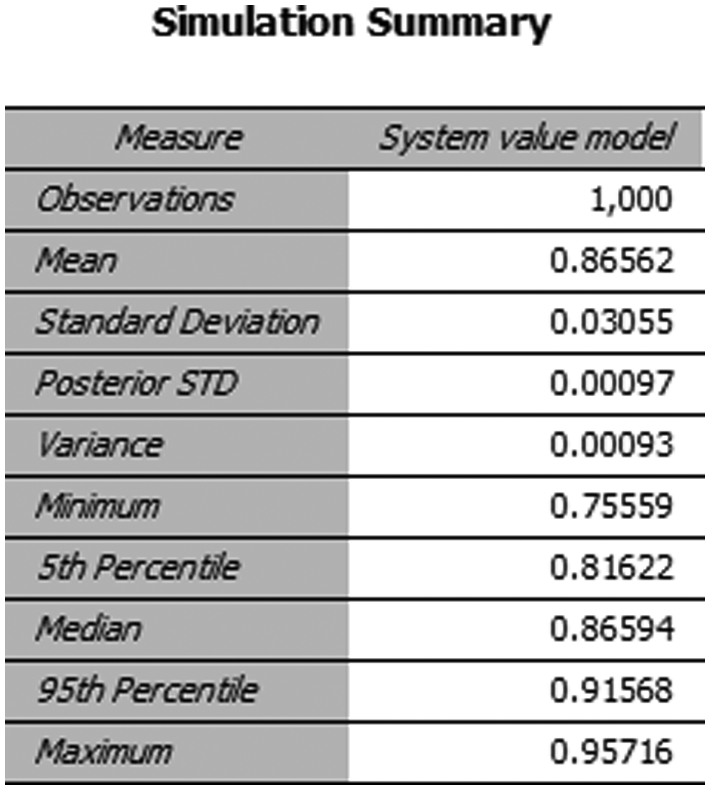
Expected utility of one design alternative.
With the aircraft system value model, component value models can be derived using equations (8) or (9). The premise is that functions between component ECs and system ECs are established through experience and response surface modelling. In this case, the functions between engine ECs and aircraft ECs are identified in order to derive an engine value model. A set of nine engine ECs that significantly influence aircraft ECs are chosen, such as ‘engine manufacturing cost’, ‘take-off thrust performance’, ‘engine weight’, ‘specific fuel consumption’ and ‘engine reliability’. The functions are in the form of

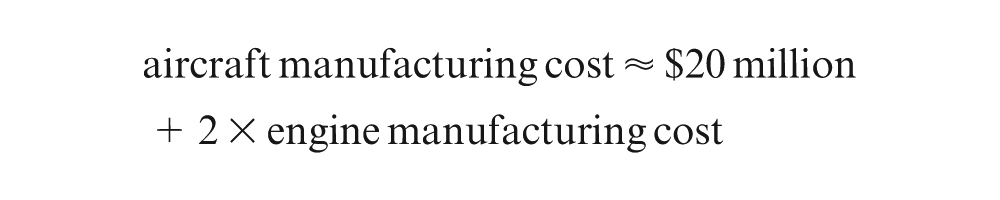
It is then straightforward to derive the engine value model by multiplying the first-order partial derives of the aircraft system value model with respect to the aircraft ECs and the first-order partial derives of aircraft ECs with respect to engine ECs. With the derived mathematical engine value model, the same procedures are used to develop engine value model in Vanguards Studio as those for aircraft value model. An engine value model derived from the aircraft system value model in the vicinity of a special aircraft design
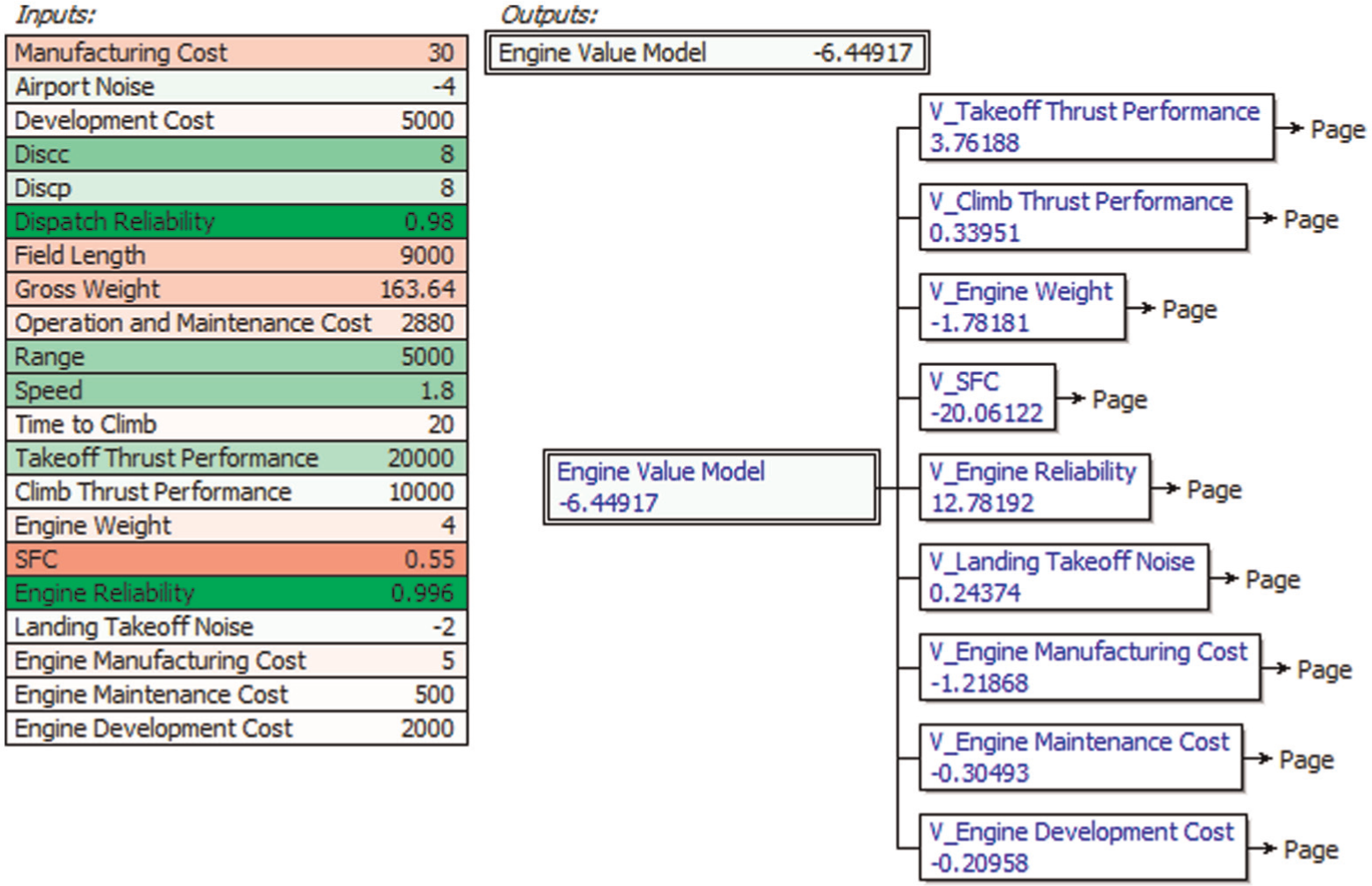
The derived engine model from the aircraft system value model.
These computerised value models will be used for generating and evaluating aircraft and engine alternatives and they are a necessary complement to traditional requirements specification. When the approach and this case study are presented to senior managers and engineers in the research and technology community that are working towards preparation of future aircraft programmes in an aircraft manufacturer, their feedback is really positive and there is a strong need for value models from the industry to provide the best possible solution to their customers. They are actually investigating and applying it at low industrial maturity in order to enhance their early conceptual work. They believe that this and other innovative approaches should be followed up because they offer high potential to improve the quality of future aircraft programmes. The suggested approach is considered as one of a small number of complementary value-related approaches that are actively followed up by a company-wide research initiative that aims to provide a mature set of value generation methodologies for a specific future aircraft programme. Furthermore, while applicability of the approach at the customer and aircraft level is obvious, it is also recognised that an application of the approach at a component level or sub-component level in an enterprise context is needed, and a comparison between the approach and requirements flowing down in real context is necessary. This work will be reported in the near future.
Conclusion
In this article, three methodological problems are identified with regard to setting targets in the ‘house of quality’. When targets are set independently for each EC, with fixed value or flowed down through a decomposition process, they may not be aligned with overall value optimisation, which cause difficulty in establishing rational requirements specifications.
In order to mitigate these three possible methodological problems of setting targets and establishing value-based requirements specifications on a theoretical foundation, a multi-attribute utility theory–based approach is proposed. A system value model is developed to replace targets. By this replacement, there is no need for setting targets like the traditional way, and probability measurement is naturally incorporated in the multi-attribute utility functions. Importantly, the system value model also provides focus and motivation for design engineers, because it provides a composition function among ECs, which can model the value influence of ECs and their value trade-offs. Another effect of this replacement is that there is no need to flow down targets of system ECs, which would bring about problems when establishing requirements specifications at component levels. Component value models are derived from system value model through sensitivity analysis, instead of the traditional process of setting targets at the component levels. These mathematical value models enable rational value modelling and simulation at the requirements development stage and during the later change management over time. It will promote value-driven design 21 to experience a transformation from merely economic-based to true multi-dimensional value-based optimisation and model-based development. This approach has potential applicability for developing complex systems of high value to customers, such as commercial aircraft, space and defence systems. However, more applications or experiments are needed to check its applicability in different contexts and corresponding comparisons between the proposed approach and the target setting approach in terms of value achievement are to be deployed.
From another perspective, setting targets is a well-recognised practice in the ‘house of quality’ and sometimes designers and customers do not feel inclined to develop sophisticated value models. It would then be useful to set targets but just to comply with rational decision-making. In the literature, equivalence between target-oriented preference function and multi-attribute utility function in certain assumptions has been presented.23,24 Therefore, targets in the house of quality can be set in a rational way, which needs to be explored in future studies.
Footnotes
Acknowledgements
The authors thank CRESCENDO WP2.2 partners for invaluable discussions during model development.
Declaration of conflicting interests
The authors declare that there is no conflict of interest.
Funding
The research leading to these results has received funding from the European Community’s Seventh Framework Programme (FP7/2007-2013) ( ) under grant agreement no. 234344, the Humanity and Social Science Youth Foundation of Ministry of Education of China (14YJCZH213) and from Northwestern Polyetchnical University (13GH 0311, RW201305, W016228).