




Abstract
Carbon footprint has become a recent global concern for the environment. The product carbon footprint is typically calculated with activity data and corresponding carbon emission factors in the product life cycle. However, due to the uncertainty of product information in conceptual design, all the existing carbon footprint models fail in conceptual design. As the decisions made during the conceptual design have extensive impacts on carbon footprint, it is a crucial issue to estimate product carbon footprint in conceptual design. This article is devoted to model carbon footprint in conceptual design. After the introduction of unascertained mathematics theory, the modeling process of carbon footprint in conceptual design based on unascertained number is proposed. The carbon footprint in conceptual design of an automatic pipe handling manipulator is used to demonstrate the proposed methodology.
Introduction
At present, global warming is a serious environment issue. 1 Derived from ecological footprint, 2 product carbon footprint or carbon emission is widely used as an environmental indicator, which refers to the emission of greenhouse gases (GHGs) in the whole product life cycle. 3 It becomes an important issue to reduce product carbon footprint to avoid global warming; thus, it is necessary to calculate product carbon footprint, which has yet no unified definition and calculation method.
Product carbon footprint is typically calculated by considering carbon emission factors and activity data, 4 including the data for the consumptions of resources and energy, and emissions. Song and Lee 5 developed a low-carbon detailed design system based on embedded GHGs emissions. Kuo 6 proposed a collaborative framework to calculate carbon footprints in the supply chain. Rotz et al. 7 provided a simple tool for evaluating GHGs emissions.
However, the current carbon footprint calculation approaches always focus detailed design stage with complete product information, and all the existing carbon footprint models fail in conceptual design. As the decisions made during the conceptual design have extensive impacts on the carbon footprint, it is important to estimate the carbon footprint with incomplete and uncertain product information at conceptual design stage.
Through Unascertained Mathematics Theory, 8 this article proposed a method to estimate carbon emission factors and activity data of product information in conceptual design. Then, this article combined carbon footprint in product life cycle with the unascertained number model, which models carbon footprint of design solutions in conceptual design.
Unascertained mathematics theory
Unascertained number
As an uncertainty modeling theory, in Unascertained Mathematics Theory,
8
unascertained number has been applied in system planning, cost estimation,9,10 and so on. It is named as reliability distribution function on interval value [a,b], denoted as
F(x) is an unabated right continuous function in (−∞,+∞);
0 ≤ F(x) ≤ 1;
When x < a, F(x) ≡ 0, when x > b, F(x) ≡ F(b) ≤ 1.
Operation rules of unascertained number
The function F(x) is a discrete distribution of unascertained numbers with
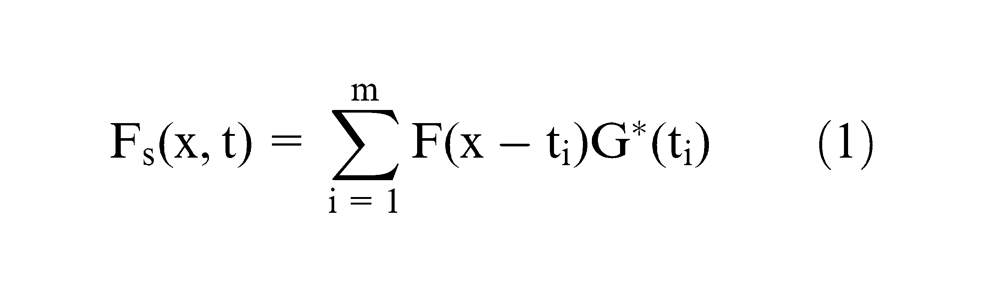
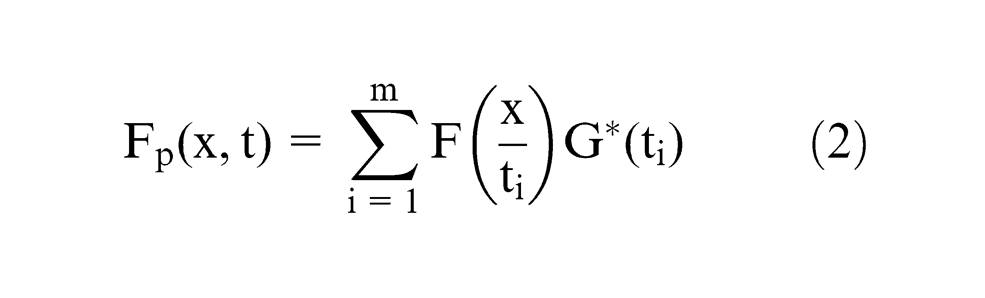
where G*(ti) is the condensation value of G(t) in ti.
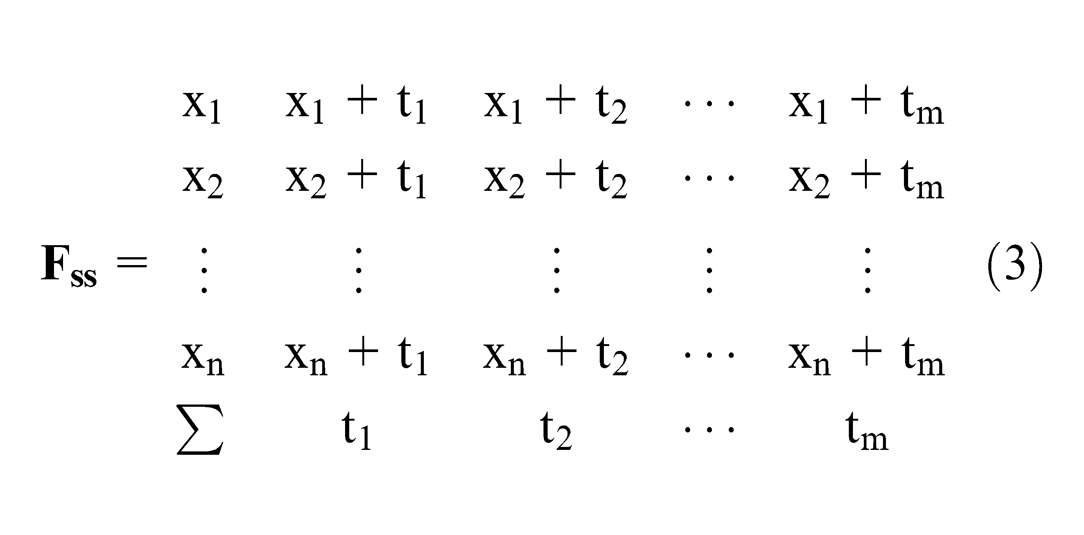
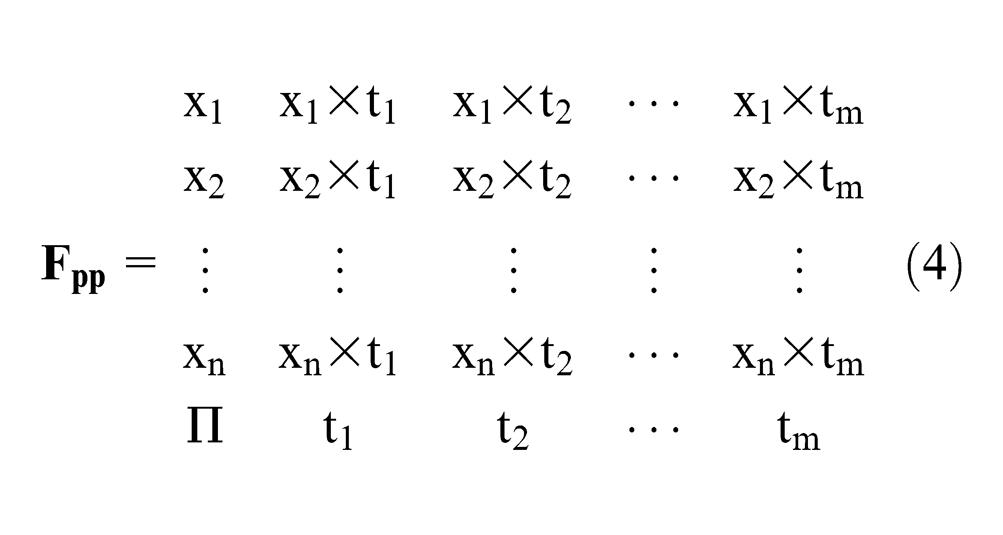
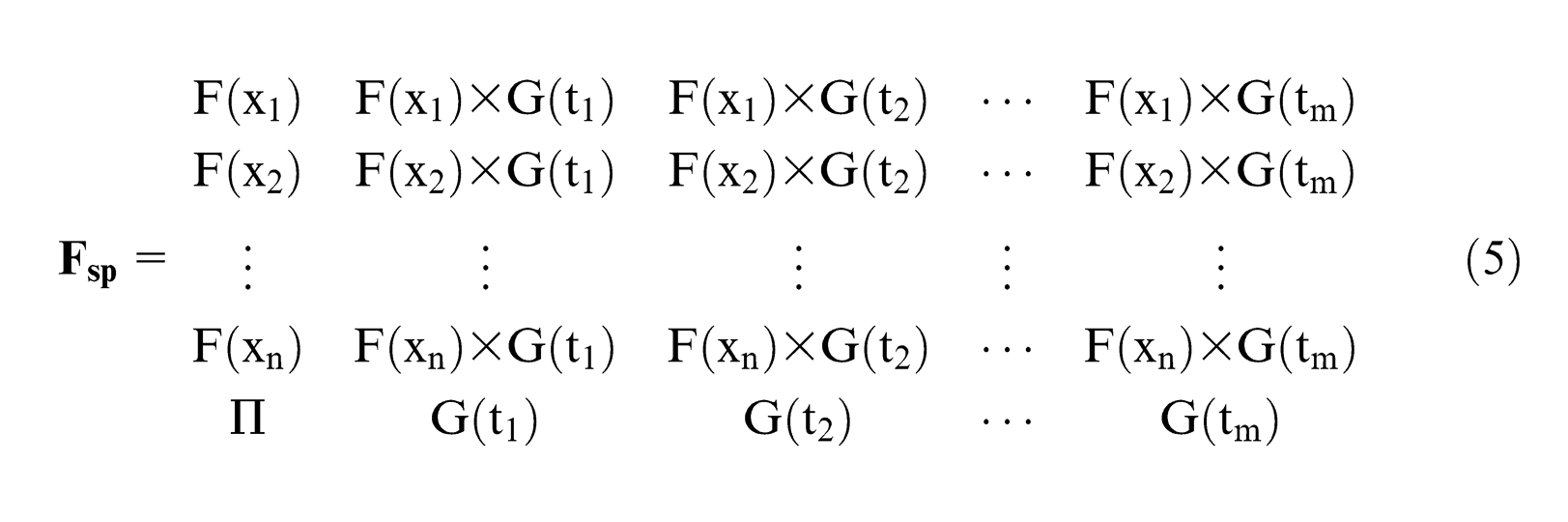
A condensation value can be obtained through a method called matrix with edge.
Modeling carbon footprint in conceptual design
Product carbon footprint for product life cycle
Product carbon footprint refers to a variety of GHGs emission in product life cycle from the acquisition of raw materials stage to manufacturing, transportation, usage, and recycle and disposal stage. 4 The carbon footprint can be evaluated by life cycle inventory (LCI)–based product life cycle assessment (LCA). LCA is based on LCI, which is a repository that includes the data for the consumptions of resources and energy, and emissions to the environment throughout the entire product life cycle. It depends on the activity data and its corresponding carbon emission factor, as follows
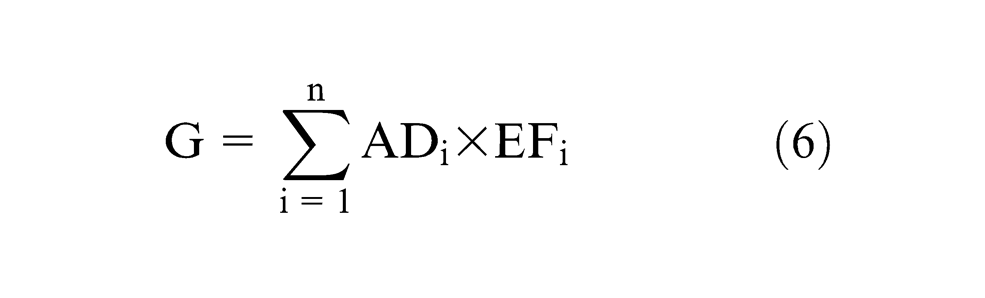
where G is carbon footprint, ADi is the ith activity data, EFi is the ith activity’s emission factor. For example, ADi might be material mass at the raw materials acquisition stage, or energy consumption at the manufacturing stage. It took carbon footprint at the raw materials acquisition stage as an example
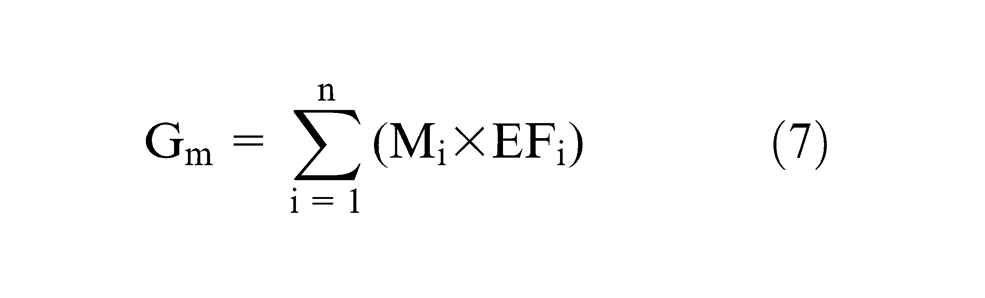
where Gm is carbon footprint at raw materials acquisition stage (kgCO2e), Mi is consumption of the ith material (kg), and EFi is its corresponding emission factor.
The carbon footprint at each stage of life cycle can be also obtained similarly. The total carbon footprint is the sum of each stage of product life cycle, as follows
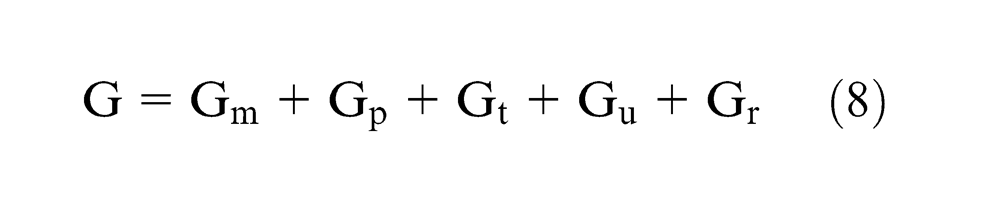
where Gp, Gt, Gu, and Gr are carbon footprint at the manufacturing, transportation, usage, and recycling stages, respectively.
Modeling process of carbon footprint based on unascertained number
It takes raw materials acquisition stage as an example to demonstrate how to model carbon footprint based on unascertained number. The data are acquired from an expert assessment database, including estimated value of experts and reliability value of each expert.
Clarify the object.
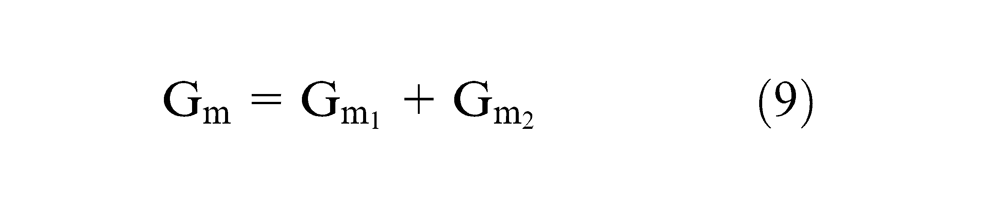
Given two materials M1 and M2, whose masses are unascertained in conceptual design. The carbon footprints of two materials at the raw materials acquisition stage are given as
Acquire expert assessment data.
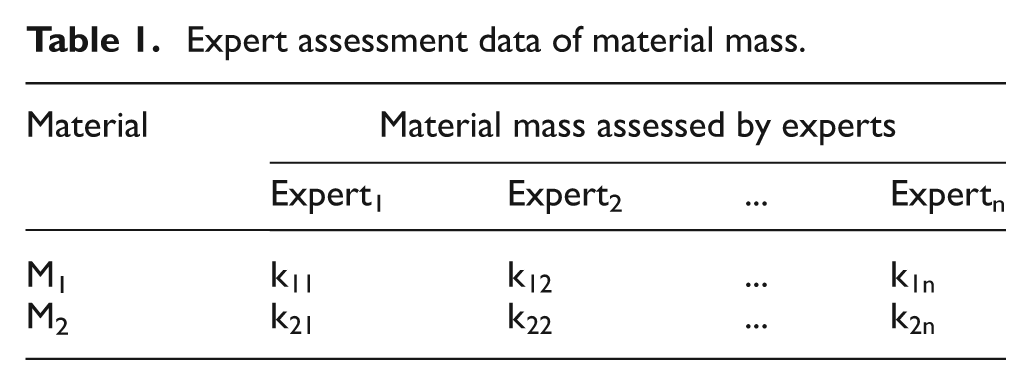
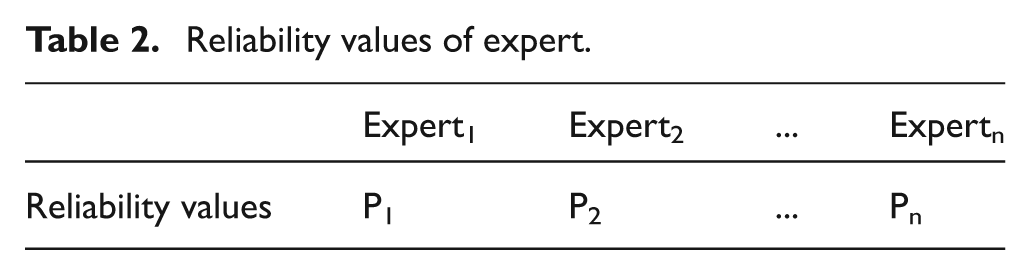
Expert assessment data are acquired from the database, shown as Table 1. The possible mass of M1 is k11, k12, …, k1n, and M2 is k21, k22, …, k2n, arranged in ascending order. Reliability values of these experts are also shown in Table 2.
Build up carbon footprint model.
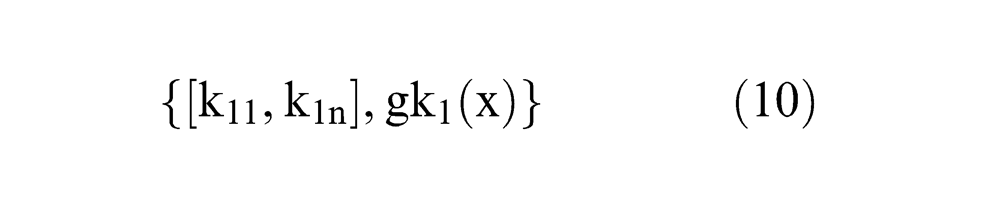
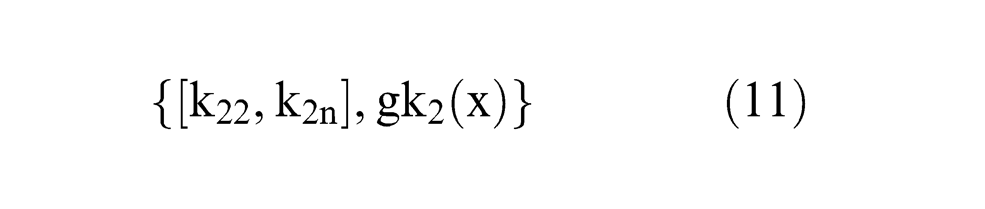
The unascertained number models of material mass are
Expert assessment data of material mass.
Reliability values of expert.
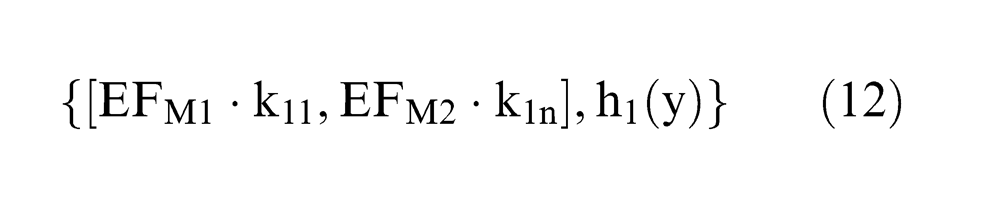
The unascertained number model for carbon footprint of two materials can be obtained by multiplying between the unascertained number model of mass and emission factor. Given ascertained emission factors of two materials are
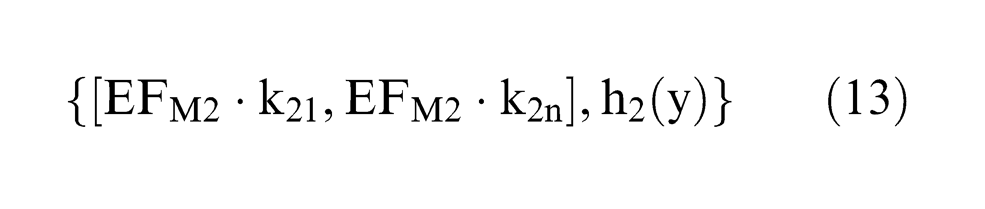
The sum of unascertained number model of carbon footprint of two materials is

The carbon footprint sum matrix with edge is as follows

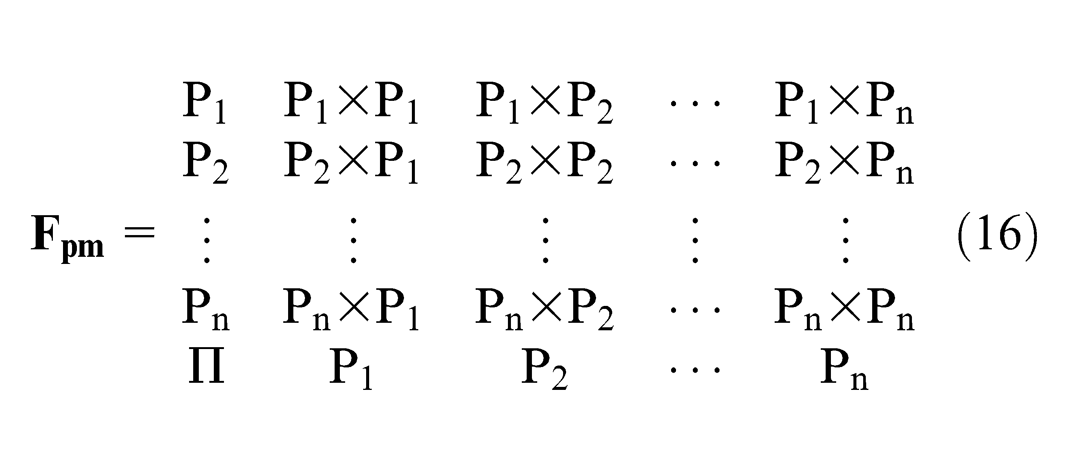
The carbon footprint reliability product matrix with edge is
In the same way, the carbon footprint model for all the stages in product life cycle may be calculated.
Application
Automatic pipe handling system is mainly used in offshore drilling platforms. An automatic pipe handling manipulator is used to lift pipe one by one from the catwalk and present them to the rig floor in this system for drilling rig.
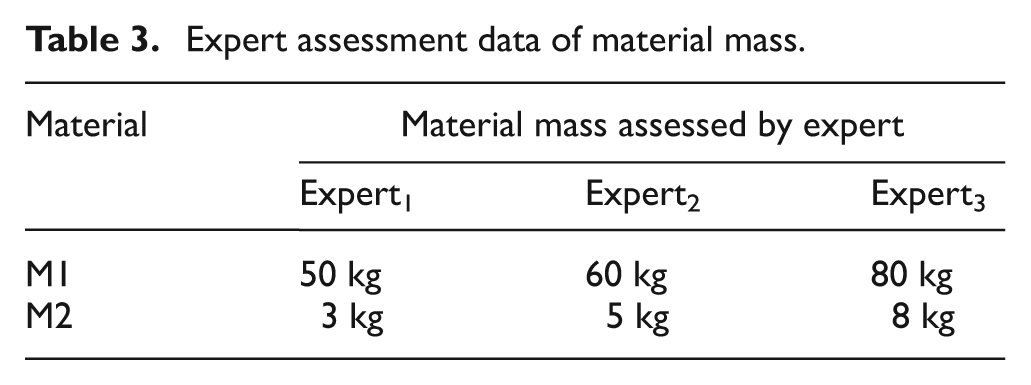
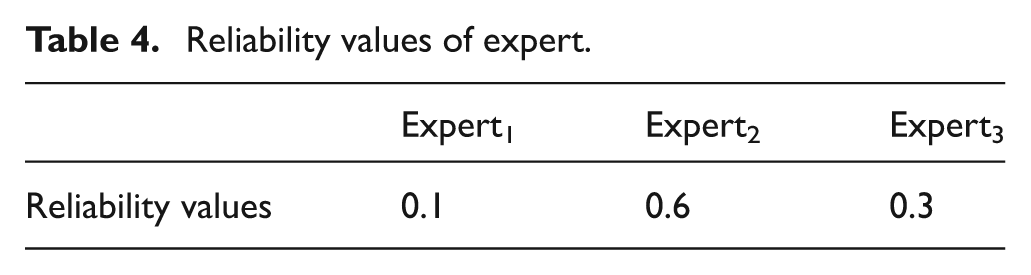
After the design solutions of manipulator were obtained, the carbon footprint of materials used in hydraulic cylinder and centralizer hand was taken as an example. Their materials are steel 45 and copper T1, with emission factors 1.99 and 6.83 kgCO2/kg, respectively. The estimated data of materials from the expert assessment database are shown in Table 3, with reliability values in Table 4.
Expert assessment data of material mass.
Reliability values of expert.
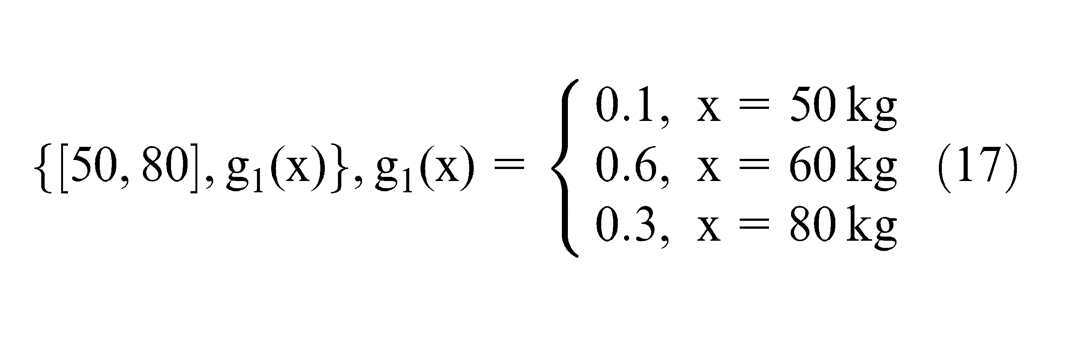
Then, the mass of 45 steel based on unascertained number is
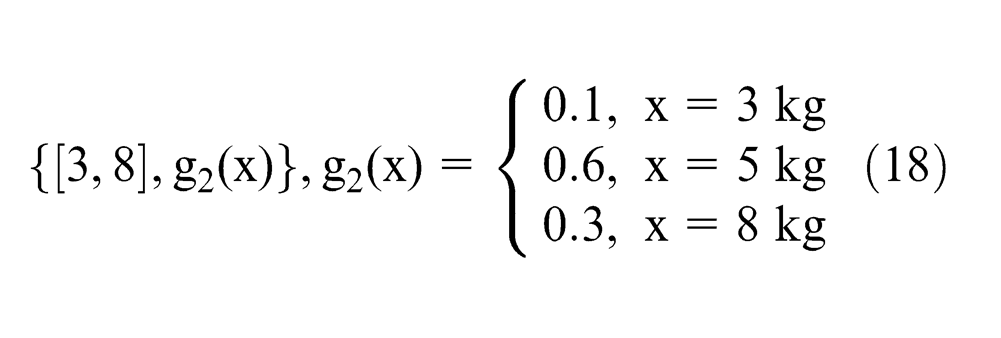
The mass of copper T1 based on unascertained number is
The unascertained number of two materials can be obtained by multiplying between the mass based on unascertained number and its carbon emission factor. The unascertained number model of steel 45 at raw materials acquisition stage is
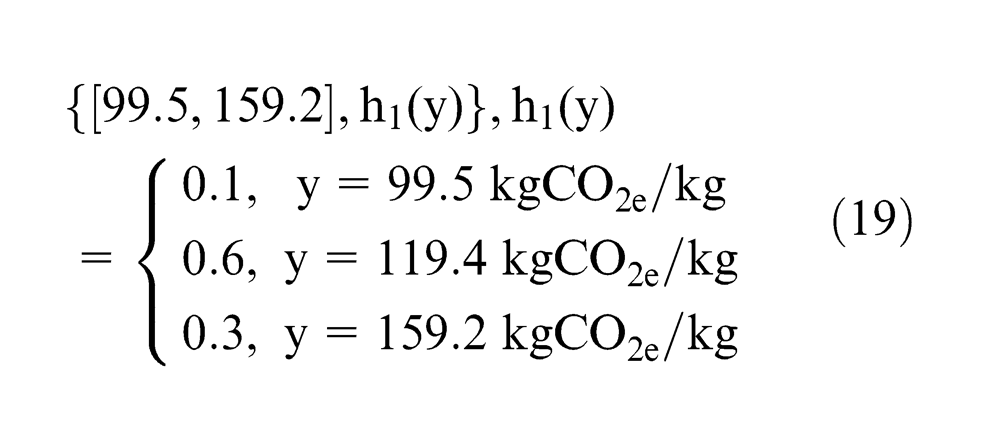
And the unascertained number model of copper T1 at raw materials acquisition stage is
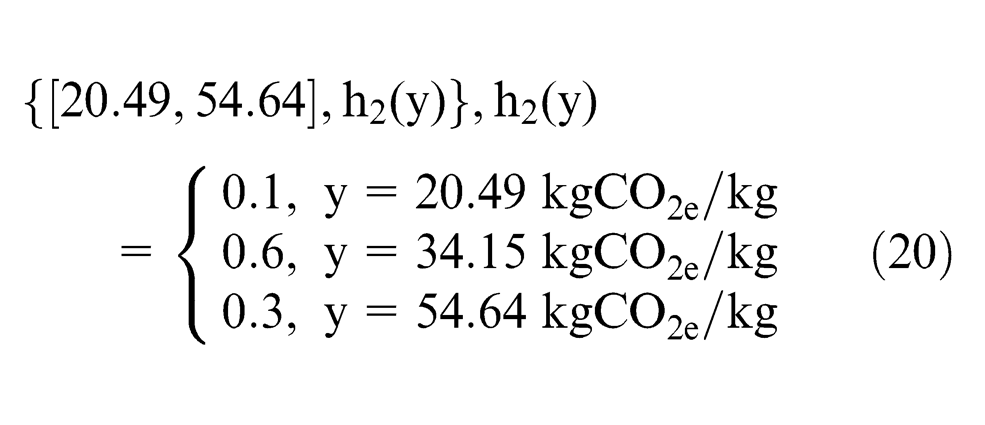
Then, the sum of unascertained numbers of above two materials can be calculated by using unascertained number addition rules.
Calculation of matrix with edge
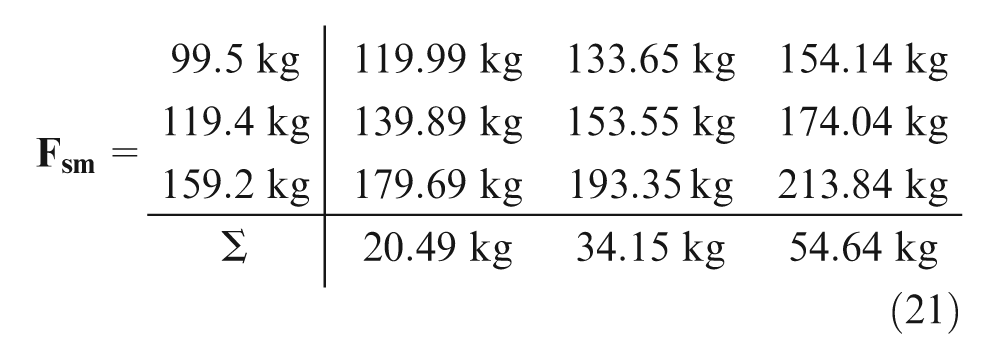
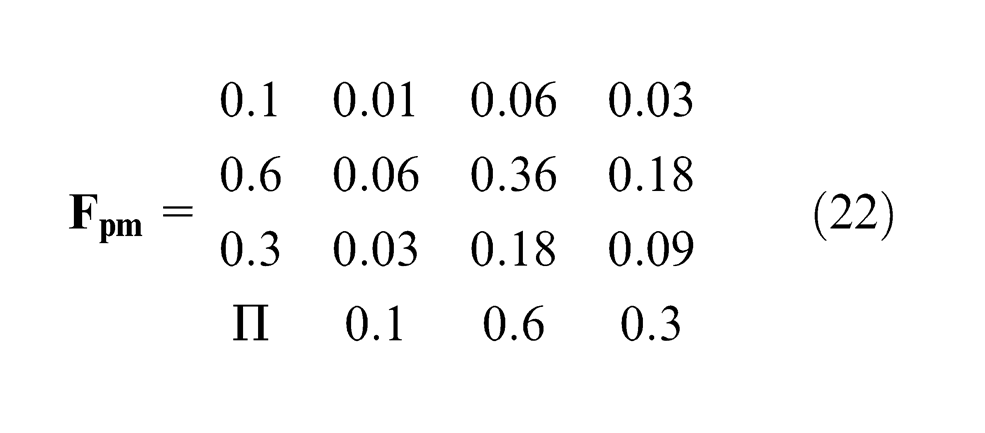
Unascertained number model of carbon footprint
According to the above results, unascertained number model of Gm can be obtained
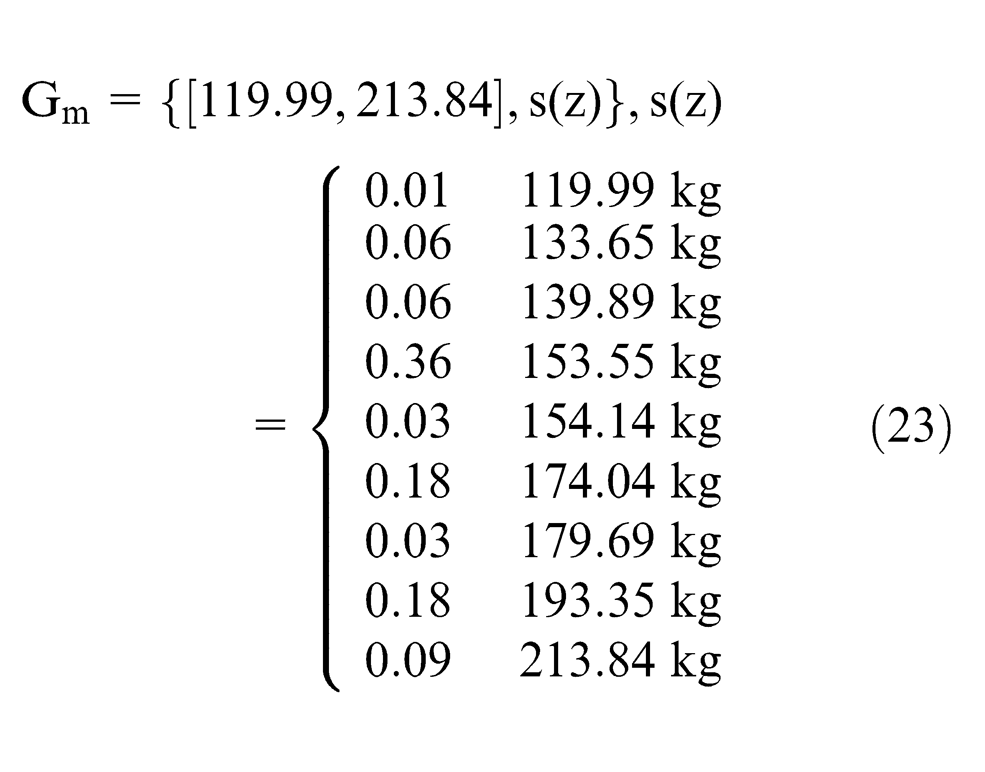
There are two methods for handling the above model. One is to select the number with the biggest reliability as the final data: 153.55 kg at raw materials acquisition stage with the reliability 0.36. The other is to obtain more concentrated interval values getting rid of the number with smaller reliability. In other words, the final data are not a simple value but an interval. The numbers with smaller reliability on both sides, such as 213.84, 119.99, 133.65, and 139.89, should be excluded. Then, a more concentrated value interval of carbon footprint can be obtained, and it is [153.55,193.35], with the reliability 0.78. This interval is the most possible interval of carbon footprint in this case.
Conclusion
This article combined carbon footprint model in product life cycle with the unascertained number model, which can model carbon footprint of design solutions in product conceptual design. The results show that the carbon footprint can be calculated effectively. The carbon footprint in the conceptual design of the automatic pipe handling manipulator is used to demonstrate the proposed methodology.
Footnotes
Appendix 1
Declaration of conflicting interests
The authors declare that there is no conflict of interest.
Funding
The work is supported by National Natural Science Foundation of China (no. 51305249), Shanghai Science and Technology Commission Project (no. 12dz1125702).