




Abstract
The design of global supply networks has evolved from traditional lowest landed cost analysis to include more strategic concepts such as how particular network configurations might support strategic and operational capabilities. An established approach to assessing operational capabilities is the maturity model methodology where the emphasis is on notions of evolution and levels of process formality. More recently, there has been a growing emphasis on sustainable supply networks, driving industrial practitioners to also address energy and resource efficiencies and waste minimisation. However, quantitative measurement approaches such as carbon footprinting beyond the firm boundary are complex and resource intensive and present significant validation challenges. This article proposes a process maturity model-based alternative to supply network carbon measurement approaches, namely, the systematic review of organisational routines and practices relevant to sustainable manufacturing. Furthermore, the incorporation of sustainability dimensions within an established supply chain maturity model architecture provides a basis for potential trade-offs. Application of the maturity model framework in 12 case studies of international manufacturing multinationals is presented, demonstrating feasibility and utility of the approach and identifying potential drivers for manufacturing sustainability linked to the industrial supply network position, including the regulatory context, and consumer sentiment.
Introduction
In more recent years, the traditional business model of competition between firms 1 has been enriched by inter-firm network perspectives of competition between business and supply networks (SNs).2,3 Effective SN management has therefore become a valuable way of securing competitive advantage and improving organisational performance.4–6 Recent research indicates that the way in which the SN is configured can impact capability and performance, and that alternative kinds of networks have different intrinsic capabilities. 7
Organisational capabilities in general refer to a firm’s capacity to deploy resources, usually in combination, using organisational processes, to derive particular outcomes. Rooted in the resource-based view,8,9 capabilities are information-based, tangible or intangible processes that are firm specific and are developed over time through complex interactions among the firm’s resources. 10 However, recent research suggests that critical resources span firm boundaries and are embedded in inter-firm routines and processes. 11
As the sustainability of industrial systems becomes a major consideration for many organisations, many authors within the industrial sustainability literature have recognised that addressing sustainability concerns requires a comprehensive view of the SN that incorporates a waste-free cradle-to-cradle (C2C) life cycle perspective.12,13
The literature exploring the sustainability of industrial systems confirms the lack of the SN perspective; notwithstanding the efforts of Seuring and Muller 14 and Gupta and Palsule-Desai 15 . A key issue that is identified is the significant challenges of extending current approaches of carbon measurement to the inter-firm context where network visibility and data collection are significant barriers. Existing measurement systems, for example, carbon footprinting, are complex and resource intensive and present significant validation challenges at the SN level. 16 Furthermore, ensuring social and environmental goals along the SN requires stronger and more flexible interaction between all firms involved, which cannot be achieved through traditional financial and operational measures. 12 Indeed, reviews of the triple bottom line (TBL) approach, expanding the traditional reporting framework to take into account social and environmental performances in addition to financial performance, have commented on the absence of SN perspectives. 17
In addressing these challenges, this article proposes a process maturity model-based alternative to SN carbon measurement approaches, namely the systematic review of organisational routines and practices relevant to sustainable manufacturing. The approach involves the assessment of levels of process formality of sustainable practices across a focal firm’s SN. Furthermore, the incorporation of sustainability dimensions within an established supply chain maturity model architecture provides a basis for potential trade-offs with other SN performance dimensions.
This article is structured as follows. First, the literature on SN capabilities and sustainable industrial systems is reviewed. Then, the research approach in terms of research stages and target outputs is described, including the development of a sustainable SN maturity model (SSN-MM). This initial maturity model is then applied in selected firms who are considered exemplars within their sector, by means of exploratory case studies, with the outputs triangulated with secondary data. A cross-sector review of the model, involving group feedback from case study respondents, is used to reflect on their sustainable SN assessments as part of cross-case comparison and the utility of the model itself. Finally, conclusions are drawn in terms of theoretical contribution, practical benefits from the application of the maturity model and potential future refinements.
Background literature
The following two bodies of the literature are considered pertinent to the aim of this article:
SN capabilities (processes and associated maturity models)
Sustainable industrial systems
SN capability
The resource-based view within the strategic management literature examines how certain capabilities, often described as organisational routines or processes, support competitive advantage. 8 The idea of process maturity, with notions of increasing formality and sophistication of organisational routines and practices, has its roots in the field of information technology management. 18 The idea of stage-wise development was adopted by Crosby 19 in the field of quality management as a benchmark for organisations on how mature their quality control processes were. 19 Capability maturity models have subsequently proliferated across a multitude of domains since the concept of maturity assessment was popularised by the Software Engineering Institute – Carnegie Mellon University. 20 It was originally introduced as a reference model for appraising software process maturity and a normative model for helping organisations progress along an evolutionary path from ad hoc, chaotic processes to mature, disciplined software processes. Subsequently, maturity models have been designed to assess the maturity (i.e. competency, capability and level of sophistication) of a selected domain based on a more or less comprehensive set of criteria. They generally use qualitative assessment or statements but may also be supported by additional descriptive accounts and also by quantitative measures.
In the domain of supply chain management (SCM), study by Srai and Gregory 4 and Srai 21 derived a descriptive classification of maturity models that could be applied to SNs.4,21 Building on a comprehensive literature review of reported supply chain processes, routines and practices and related maturity model definitions and applied in a broad range of industrial sectors, five main clusters of SN maturity were identified. As these form one cornerstone of this study, these SN capability cluster elements, namely, SN design, connectivity, efficiency, process development and product and service enhancement, are expanded later. This model itself uses five levels of network maturity to enable a sufficient level of granularity to permit differentiation between the maturity levels while avoiding unnecessary complexity and follows a robust maturity model design protocol. 21 The extension of this SN model with industrial sustainability concepts might provide an effective sustainable SN assessment approach, an alternative and/or complementary evaluation to the more data intensive, quantitative approaches of carbon footprint measurement.
Sustainable industrial systems
Sustainability in its most often quoted definition has been described as ‘development that meets the needs of the present without compromising the ability of future generations to meet their needs’.22,23 Shrivastava 24 also describes sustainability as offering, ‘the potential for reducing long-term risks associated with resource depletion, fluctuations in energy costs, product liabilities, and pollution and waste management’. Addressing the industrial sustainability agenda has been described as one of the greatest challenges over the coming decades 25 with some experts, suggesting that industry accounts for 30% or more of greenhouse gas generated by industrialised countries. 26 At the policy level, there is an evolving regulatory landscape, with aggressive energy and climate change targets that have far-reaching impact on industrial systems.
In response to these concerns, many manufacturing businesses, in particular larger multinational corporations (MNCs), are attempting to report a measure of their sustainability performance, often using third-party reporting structures, for example, the global reporting initiative (GRI). Many, however, focus on those items that can be easily addressed, especially in the area of complex multi-tier product supply chains where accurate assessment of the impact of the whole end-to-end SN is not always possible to measure.
The sustainable supply chain management (SSCM) literature aims to facilitate environmental performance, minimise waste and support cost saving through efficiency and synergy between partners. 27 Srivastava 13 defines SSCM as including product design, material sourcing and selection, manufacturing processes, delivery of the final product to the consumer and end-of-life management of the product after its useful life adopting a broader C2C perspective.
In this research, in order to build on existing SN capability architectures to facilitate future trade-off analysis, the review of the literature on SN sustainability concepts, set out in the next section and summarised in Table 1, adopts a similar structure to the models described earlier,4,21 that is, the five capability clusters of SN strategic design, connectivity, efficiency, process (including metric reporting processes), and product/service enhancement.
Literature summary of sustainable SN capabilities.
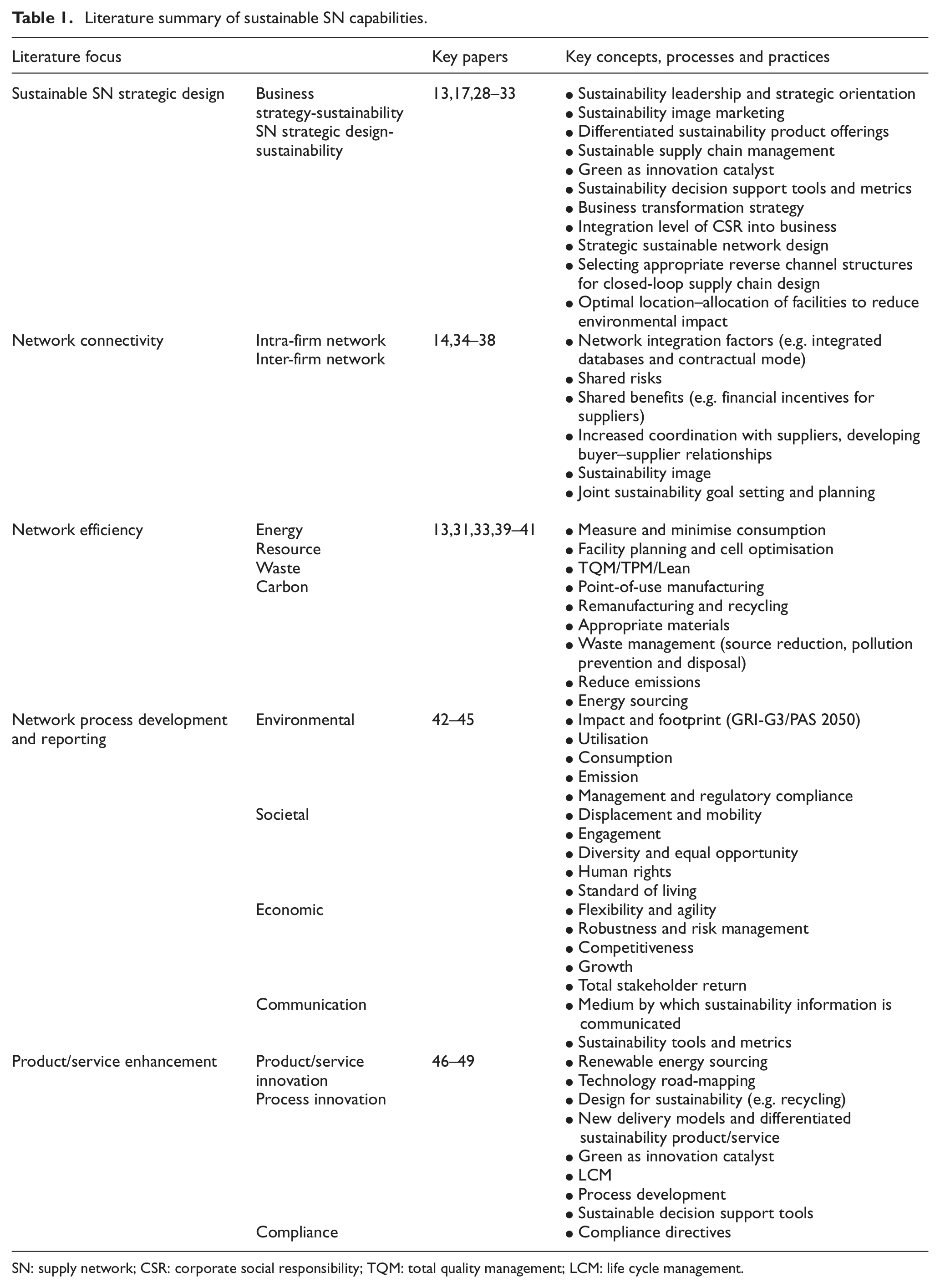
SN: supply network; CSR: corporate social responsibility; TQM: total quality management; LCM: life cycle management.
Sustainable SN strategic design
Approaches to SN design recognise the need for alignment with corporate strategy. For example, Schneidermann 28 described a green enterprise model that attempted to align strategy with process capability. Seven elements of sustainable strategy were described: focus and orientation, image marketing, superior product offering, supply chain support, leveraging ‘green’ as an innovation catalyst, leadership and engagement and decision-making processes.
Reefke et al. 17 found that the TBL approach was sub-optimally considered as a stand-alone element, not integrated with SCM and strategy. Similarly, the integration of life cycle management (LCM) in strategic decision-making requires the construction of new frameworks that enable this integration. 46 Mio 29 linked corporate social responsibility (CSR) strategy to GRI in an attempt to correlate the impact of organisational complexity on ability to generate high GRI scores. In particular, the following sustainable strategy elements were considered: materiality, stakeholder inclusiveness, sustainability context, together with reporting and communication.
Moreover, the balance between internal drivers and external factors influences SN design. Hopkins 30 classified these external factors into the following trends: increasing globalisation, logistics costs, risk, labour costs, sustainability concerns and market volatility.
The strategic SN design capability in terms of the ability to analyse the SN in terms of structure, value addition, complexity, location of own and partner assets and level of integration (both vertical and horizontal) has therefore been considered as a key strategic weapon. Such decision variables have also been examined from the sustainability perspective in the literature with additional dimensions incorporating CSR and reverse logistics opportunities (see Srivastava, 13 Savaskan et al. 31 and Georgiadis et al. 32 ).
Network connectivity
This SN capability cluster considers the ability to effectively engage, interact, integrate and communicate with key network actors (e.g. suppliers, customers and partners). Here, we consider the ‘sustainability’ relevant dimensions identified in the literature linked to the operational connectedness of SN partners.
Building on case studies of 10 exemplar firms, Pagell and Wu 34 propose ‘ensuring supplier continuity’ as one of their five sustainability constructs. This supplier continuity dimension includes decommoditisation whereby companies are actively involved in moving their suppliers out of the commodity businesses, reducing supplier risk, encouragement of supplier certification, social and environmental criteria in supplier selection, supplier development, supplier collaboration and product traceability. Examining a sample of 63 suppliers, Baskaran et al. 35 suggest a number of sustainability criteria for supplier evaluation processes including unfair competition, pollution and worker personnel related factors (working hours, employee rights, discrimination practices and use of child labour). Considering downstream factors, based on 22 customers’ perception interviews with key decision-making stakeholders, Lindgreen et al. 36 examined the challenge organisations face when attempting to understand how customers perceive environmental and social dimensions of sustainability. Isaksson and Garvare 50 assert that customers’ perceptions of a product’s social and environmental sustainability influence their purchase choice as they seek offerings compatible with their views of sustainable development. Using a survey of North American manufacturers, Vachon and Klassen 37 examined the impact of environmental collaborative activities on manufacturing performance. They focus on inter-organisational interactions between supply chain members, including such aspects as joint environmental goal setting, shared environmental planning and working together to reduce pollution or other environmental impacts.
Network efficiency
Within SNs, outcome capabilities are typically captured in terms of cost, quality, timely and dependable product/service delivery. Recent publications by Tridech and Cheng 39 have proposed the energy, resource, waste and carbon (ERWC) framework as an effective means of measuring the environmental impact of a firm at the local factory level. The primary supposition of this approach is that the sustainability impact of any plant may be described by four primary factors, namely, energy, resource, waste and carbon.
This approach is useful for identifying practical gains in sustainable processing at the process, plant, and to some degree product level and does so by proposing a set of factors centred on elements such as reducing consumption of resource, reducing machine idle time, implementing new production technologies, to drive down the overall sustainable impact of a process. As a tool to measure the sustainable performance of a network of actors, or even a small cluster of production sites operated by a single actor, the level of data required involved is significant. Exploratory studies have attempted to extend the ERWC framework to the network domain, albeit through the consideration of one element of the framework, namely, energy, and one aspect of the SN, namely, its configuration in a global automotive manufacturer in North America. 40 Table 2 extends the ERWC framework to the ‘equivalent’ network level, integrating SN and value network perspectives. SSCM dimensions have also been summarised as the critical Rs (Reduce, Reuse, Rework, Refurbish, Reclaim, Recycle, Remanufacture, Reverse logistics, etc.). 13
Extended ERWC-N framework.
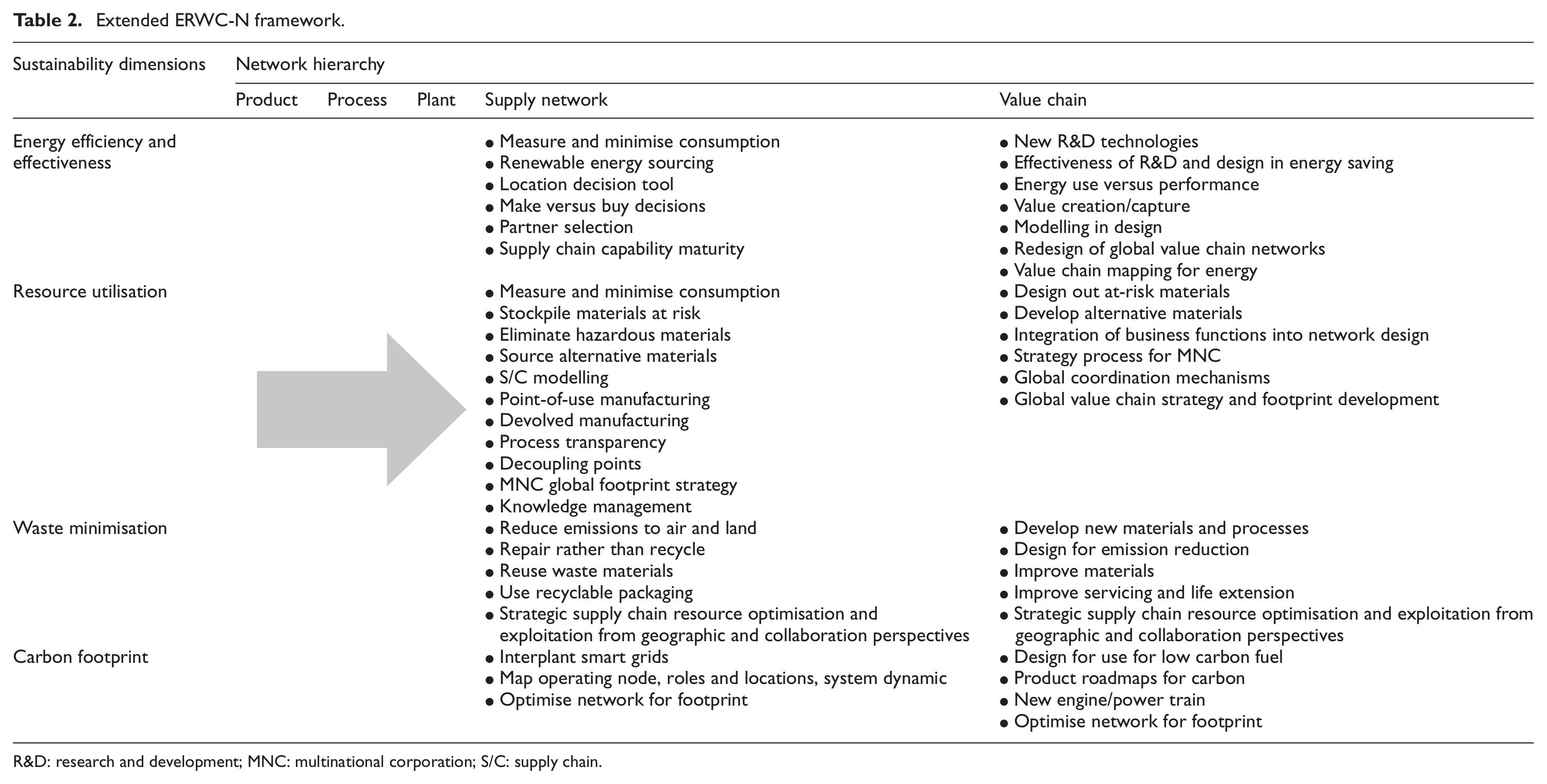
R&D: research and development; MNC: multinational corporation; S/C: supply chain.
At the plant level, lean, total quality management (TQM), LCM and other long-established techniques also help support a sustainable industrial system in a variety of ways, whereas new thinking on smart grids and renewable sourcing in both new factory builds and renovation of existing facilities also address elements of the sustainability agenda. 41
Pauli 51 developed the concept of the C2C cycle, initially within biological systems where it was used to describe the process of renewal, restoration and growth. McDonough and Braungart 52 argue that the system of C2C is a highly efficient system of metabolism and flow of nutrients in which the concept of waste does not exist. ‘It means that the valuable nutrients contained in the materials shape and determine the design i.e. form follows evolution, not just the function’ (p. 104).
Network process development and reporting
Beyond the traditional process development and continuous improvement practices, sustainability reporting is the practice of measuring, disclosing and being accountable to internal and external stakeholders for organisational performance towards the goal of sustainable development. 35
In terms of reporting of sustainability performance, the concept of the TBL is increasingly commonplace in reporting by MNCs, although the exact constituents of the environmental, societal and economic components of the TBL vary from company to company.
Environmental reporting consists of some concept of impact upon the environment, resource utilisation efficiency, total resource consumption (as opposed to that reused and recycled) and the associated emissions from industrial processes. Footprinting techniques, such as the GRI-G3 or PAS 2050, have been developed to provide frameworks for this and are gaining international acceptance. 29 Some recent publications have attempted to link TBL elements with process standardisation and science and technology with the eventual goal of producing a sustainable maturity model for manufacturing. 33
The economic element of TBL has traditionally been the most comprehensively addressed and may be understood in terms of the flexibility of demand/capacity management, the agility of the supply chain to adapt to new products and markets, the robustness to withstand risk and uncertainty and a measure of competitiveness and growth (often jointly expressed as market share). Indeed, the concept of sustainability has traditionally been interpreted in those terms by SCM literature, that is, the ability to sustain the business (see Sousa and Aspinwall 42 and Jorgensen et al. 43 ).
There has however been more limited published literature on the societal aspects of sustainability reporting, in the main due to the lack of clearly defined metrics to assess societal impact of the industrial system. Dimensions have been proposed such as measuring the growth of income for employees, the displacement inflicted on communities through operational decisions, the mobility required of human resources, engagement with local communities and an understanding of the connectivity between the industrial system and outcomes for secondary or tertiary stakeholders.
The final literature domain pertinent to reporting is that of communication – this refers to both the substance and the method or medium by which information is communicated. In particular, for sustainability communication to be meaningful and inform both external stakeholders and act as a means by which internal improvements may be driven, it must communicate accurately and comprehensively in a balanced and systematic manner and also contain a time-based element for progress or change. At a more strategic level, it should be a key component of sustainable marketing and should demonstrate how CSR is integrated into the strategy and leadership components of the corporation. It is recognised that many earlier attempts to communicate sustainable performance were in fact ‘greenwash’ of existing information. 47
Product/service enhancement
Recent literature on integrating the sustainability component into products, service and processes is extensive. Sustainability in this domain mainly acts as an innovation catalyst. For the product science and technology dimension, design for sustainability and C2C methodologies drive product design down routes that attempt to avoid reliance on scarce materials or those that are difficult to reuse. Remanufacturing of complex products such as automotive engines are now well advanced with sustainable design been seen as a new innovation catalyst driving research and development (R&D) activity. 53
Research aims and approach
The research approach is predicated on a number of assumptions:
Sustainable SNs are underpinned by identifiable processes and organisational routines.
An extended SN approach is necessary to avoid an overly narrow intra-firm analysis.
It is possible to extend current maturity models in the SN domain to include dimensions of sustainability.
Building on these, the aim of the research is to explore whether it is possible to integrate dimensions pertaining to sustainability into SN capability maturity models in such a way that enables effective assessment of sustainability activities. This sustainability assessment approach could subsequently be used in association with more performance measurement–based methods. One of the key assumptions of the work described here is that maturity models are suitable tools for measuring sustainable network practices as a precursor to delivering superior performance. This is supported by examples in the literature, in terms of that sustainable maturity models are both desirable and feasible to construct at the firm level.28,33
The framework is developed from the integration of two distinct areas of operation management research literature: SN capability assessment including maturity model development and sustainable industrial systems. The area of overlap of these research themes has been the subject of a limited number of academic studies to date and, as such, presents a fertile area for new research. The research approach is set out in Figure 1 and involves two key stages of development;
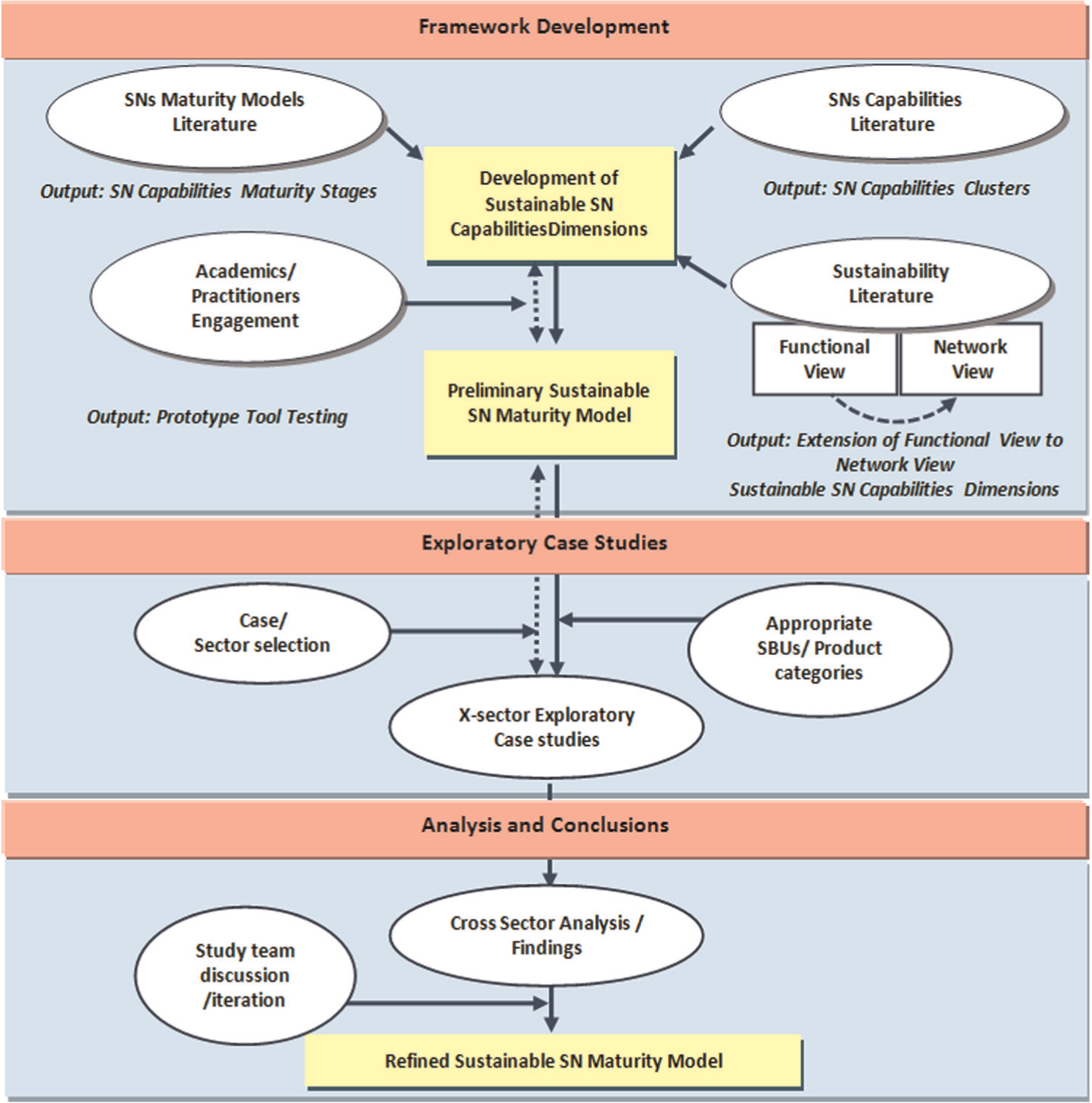
Research approach.
Framework development. From an integration of the various dimensions of the literature arising in the three research areas of SN capabilities, related process maturity models and sustainable industrial systems, an initial SSN-MM is developed. The maturity model builds on an established SN capability maturity model architecture (i.e. capability clusters and maturity stages), and the dimensions of sustainable SN capabilities pertinent to the five clusters of strategic network design, connectivity, efficiency, processes including reporting and product and service enhancement identified in the literature review. The definition for the maturity levels has also been adopted from previous models (see Srai and Gregory 4 and Srai 21 ).
Framework validation through exploratory case studies. The testing and validation of the maturity model framework within focal firm’s SNs require in-depth process maturity assessments, across the five capability clusters and associated sustainable SN dimensions. Due to the significant focal firm engagement required, and the complexity associated with the broad scope and data set to be reviewed, a case study analysis was deemed appropriate. As a research method used to generate and test theory, it is appropriately applied where research addresses exploratory questions and aims to produce a first-hand understanding of complex phenomena. 54
Verification refers to the mechanisms used during the process of framework development to incrementally contribute to reliability and validity and, thus, demonstrate the rigour of the study. The extent to which results are consistent over time and an accurate representation of the total population under study is referred to as reliability. Validity is the extent of accuracy of findings. Validity may be separated into two types, internal validity and external validity. 55 In qualitative research, however, the concepts of validity and reliability cannot be addressed in the same way as in naturalistic work. Guba 56 and Lincoln 57 proposed four criteria that should be considered by qualitative researchers in conducting trustworthy studies including credibility (in preference to internal validity), transferability (in preference to external validity), dependability (in preference to reliability) and confirmability (in preference to objectivity).
Case study protocol
This research is exploratory in nature, involving understanding and testing of the maturity model framework through case studies. Accordingly, multiple (12) exploratory case studies reported in this article support the validation elements of the research. The case studies also enabled refinements in the descriptive presentation of the sustainable SN dimensions and supported cross-case analysis.
The case study protocol developed consisted of five main stages of sampling, preparing data collection protocol including both measurement tools (e.g. questionnaire) and identification of sources of data, conducting interviews with firms’ respondents, reviewing document (secondary data) and, finally, analysing collected data and verifying process maturity assessments. The protocol complied with what Pandit 58 suggested as an overall configuration of research, emphasising the generation of theory from data.
The use of multiple data collection instruments within the research methods assisted with triangulation of data, thereby strengthening the largely qualitative outcomes of the research. Moreover, it supported the reliability and validity of the findings. The applied data collection tools include semi-structured interviews with open questions and documentation reviews. The interview template takes the form of a questionnaire against the maturity model dimensions, designed to cover each element of the SSN-MM. Interviews were conducted with a cross-functional group of senior management respondents of the focal firms, including senior supply chain and environmental lead roles.
The semi-structured interviews were conducted with the aim of gaining comparable views of competing company sustainability strategies based on emerging research into the creation of a SSN-MM. Moreover, they have led to inputs that have allowed the future refinement of the model.
Interview responses were recorded and mapped onto the SSN-MM. All interview notes were sent immediately for comment, with further analysis fed back to participants. The approach was set up to ensure that there is both a discussion and consistent output across the case study firms. While the questions designed are quite broad, the details of the maturity model were used for follow-up questions/probing and clarification.
Finally, the framework was further reviewed against secondary data from published reports. If the differences between interview scores and secondary scores were greater than half a point, the interview notes were rechecked with the participants. Accordingly, the framework descriptive elements were revised in the light of the comments, and the responses were re-plotted if appropriate on the updated version.
Following completion of the individual case study maturity model assessments, a cross-case study comparison was undertaken with representatives of the focal firms to draw out patterns in terms of the profile of results, leading practices, potential links with industry structure and undertake group reflection on the utility of the model itself.
The epistemological positioning of the research and the framework development and case study protocol used in this research meet the validity strategies suggested by Creswell and Miller 59 including triangulation, member checking and the audit trail. 59
Case selection criteria
Building theories from case studies relies on theoretical (as opposed to statistical) sampling. Given the limited number of cases that can be studied, it is important to select critical, extreme and revelatory cases, in which the phenomenon is ‘transparently observable’. 60 Furthermore, a multiple-case design is appropriate when the purpose of the investigation is theory description, theory building or theory testing. Yin 54 states, ‘Multiple-case studies should follow a replication, not sampling logic’.
Twelve multinational firms were selected that represented a range of industrial sectors that have actively invested in sustainability initiatives and practice, and expected to exhibit a relatively mature level of process development within the sector. The case studies chosen to test the SSN-MM are generally major manufacturers with complex multi-domestic footprints and with some level of published sustainability credentials (i.e. that might support advanced sustainability performance). In addition, data availability and accessibility were determinant factors in the case selection process. Each case complemented the others by replicating the findings under various conditions or by addressing different aspects of the framework. The goal was that together the set of studies will provide rich support for the phenomenon under investigation.54,60 In summary, the maturity model developed was tested in exploratory case studies that might be considered as exemplar focal firms.
Proposed SSN-MM
The requirement for accurate, repeatable and objective means for assessing sustainability performance, which enables cross-sector comparison, has been discussed. The initial framework, a simplified version of which is shown in Table 3, was derived from the integration of the three research domains described in detail in the literature review. Like the original network maturity model upon which this is based, the final output consists of five clusters with multiple (24) sub-dimensions; these sub-dimensions, however, have now evolved beyond the original descriptors and are expanded below in order to clarify definitions used. The model uses a scale of five levels of maturity, with each of the primary network domains having top-level common descriptors to ensure that the level of maturity among each of the subdomains is aligned. This aids comparison between the line items in the framework. The comprehensive version of the framework is included in Appendix 1 including definitions, descriptions and measures supporting the assessment of maturity level.
Sustainable supply network maturity model (SSN-MM).
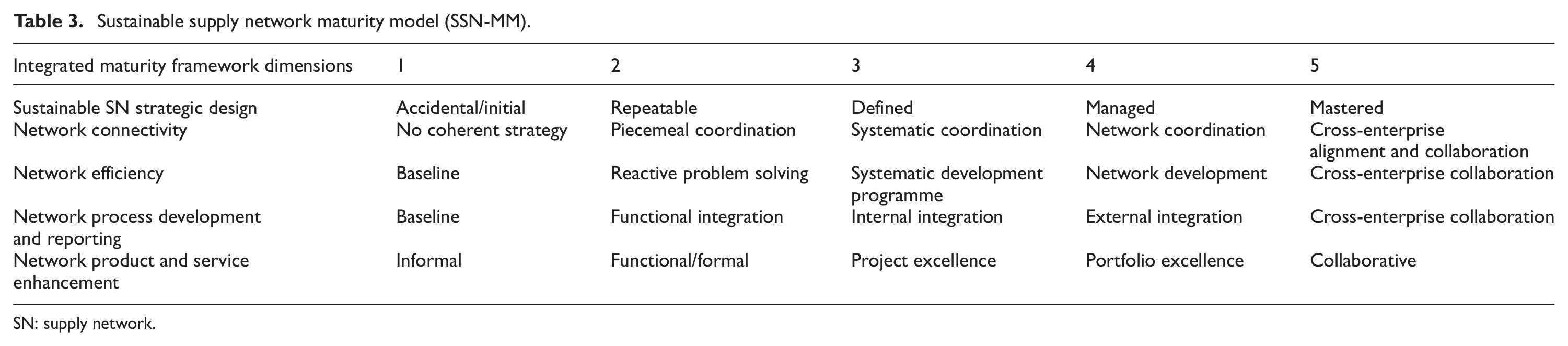
SN: supply network.
Sustainable SN strategic design
This cluster is composed of sub-elements of business strategy, customer and partner segmentation, leadership, programme and project portfolio management, supplier and partner integration strategies and strategic marketing and positioning. A mature organisation will be driven by a mutual understanding of customer requirements and a strategy to inform and co-develop these requirements. In addition, the full product life cycle and its impact across the sectors would be understood, and sustainability values embedded in leadership demonstrated by senior executives to the rest of the organisation.
Network connectivity
This domain reflects the extent to which network organisations are connected at an operational level throughout its global network of operations and manufacturing locations. Key elements are network coordination, day-to-day operations integration and business and network integration processes. The mature organisation will understand their extended value chain network and will have structurally embedded processes at the network level. Metrics and support tools will be transferable across the entire organisation.
Network efficiency
Within the network efficiency domain, the input from the extended Energy Resource Waste Carbon - Network (ERWC-N) framework may clearly be seen. This domain deals with process improvements in energy efficiency, resource utilisation, waste minimisation and carbon footprint across the networked organisation, including suppliers and distribution of products or services. Finally, it includes organisational design from a resource-based view on people capabilities. A mature organisation would be expected to demonstrate that all product and service design accounted for full life cycle sustainability footprint, and that sustainable targets were in place for all assets throughout the value chain for all ERWC elements. Organisational processes that include staff assessments and rewards would be inextricably linked to sustainability performance.
Network process development and reporting
Network process development and reporting includes traditional TBL elements as well as performance measurement processes and an element designed to assess the maturity of the communication of sustainability performance. A mature organisation would be required to demonstrate that sustainability scorecards were in place across the supply chain, that TBL (or equivalent) reporting was in place at all principal network nodes and that these were both publicly shared and independently verified. Strategic decisions would recognise the inherent trade-offs required to deliver sustainability targets.
Network product and service enhancement
This final domain of sustainable network maturity pertains to the science and technology inherent within the product and service offering of the organisation, the manufacturing (and other) industrial processes employed to produce or provide these products and the degree to which compliance of current and future regulation is built into the manufacturing systems. The mature organisation will demonstrate that R&D programmes are driven by sustainability requirements (green innovation), that state-of-the-art lean and TQM processes (or similar) are in place at all nodes of the organisation and that the strategic elements of the organisation are actively involved in the development of appropriate national and global regulatory and fiscal ecosystems.
Case studies
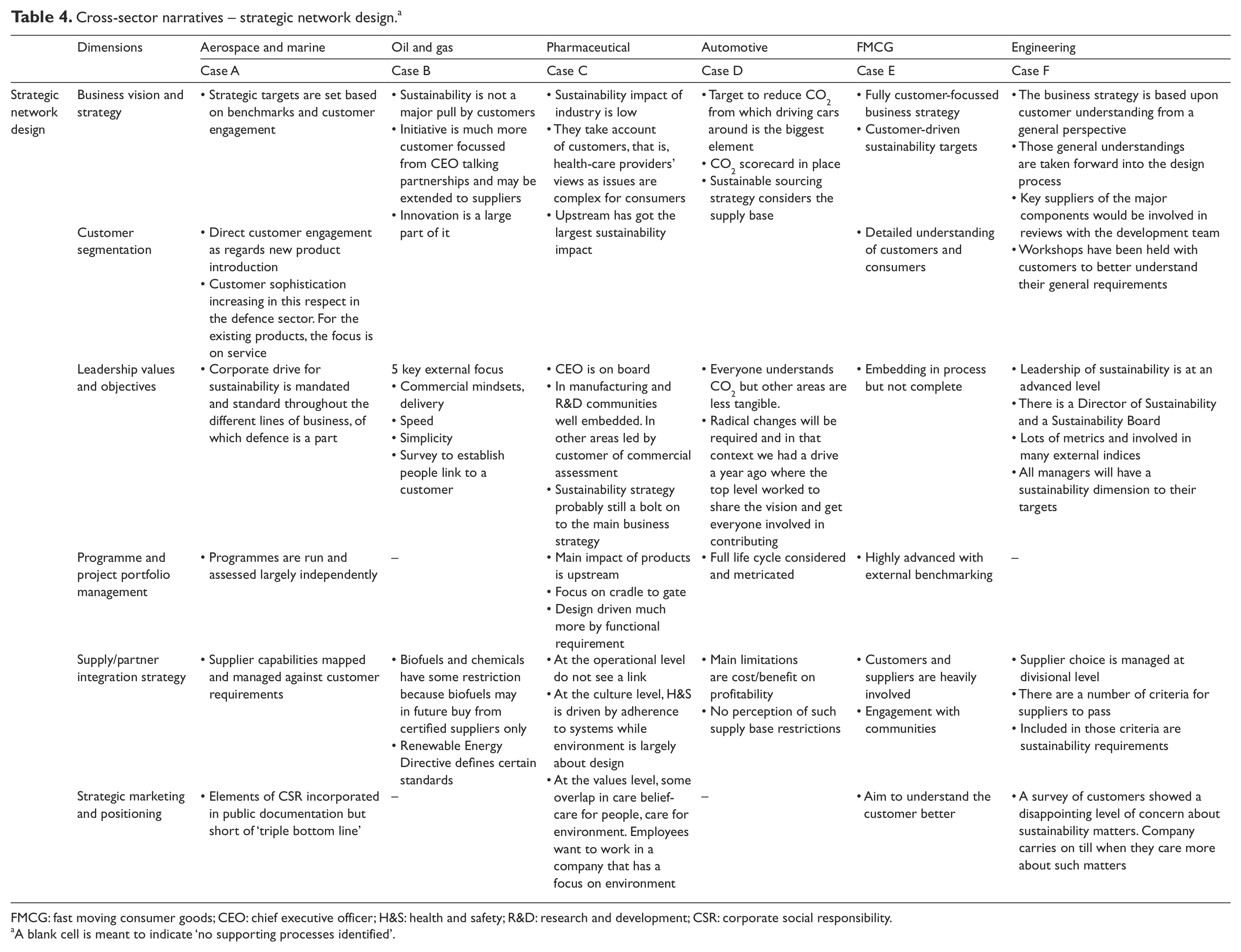
The industrial sectors from which the 12 case studies are selected include marine and aerospace, defence, automotive, oil and chemical, pharmaceutical and fast moving consumer goods (FMCG), representing a range of industrial sectors that exhibited a spectrum of maturity within their sector (moderate to advanced), driven primarily by customer and/or legislative pressure. Tables 4 and 11–14 summarises qualitative data gathered pertinent to each sustainable SN capability dimension across these cases. Table 4 explains ‘the nature of the data collection’ against the first cluster of SN design, and Tables 11–14 are included in Appendix 2. Cases A–F are demonstrated as representative of each sector studied in operational terms while investing in sustainability improvement programmes.
Cross-sector narratives – strategic network design. a
FMCG: fast moving consumer goods; CEO: chief executive officer; R&D: research and development; CSR: corporate social responsibility.
A blank cell is meant to indicate ‘no supporting processes identified’.
The classification of the cases presented is by sector in order to appreciate sectorial differences. The cross-sector comparison table also exhibits the nature of data required to be collected during the sustainability maturity assessment in these business environments.
Typical practice among cases studied involves clearly articulated, public strategy, development of decision support tools, sustainability routinely assessed against new product development processes and active influence over international regulation setting. Mature practitioners are externally focussed and additionally conduct benchmarking, cross-network optimisation and proactively market their sustainability performance.
Case A
Company A is one of the world’s leading aerospace equipment firms with major businesses in marine and energy sectors. The group has been placed on the Dow Jones Sustainability Index for six consecutive years and has held gold status in the business in the Community Corporate Responsibility Index for 2 years.
Case B
Company B is one of the global leaders active in every area of the oil and gas industry, including exploration and production, refining, distribution and marketing, petrochemicals, power generation and trading. The company spent US$2 billion on alternative energies and carbon capture and storage in the last 5 years and lowered its facilities’ greenhouse gas output by 35% between 1990 and 2009.
Case C
Company C is a major player in the pharmaceutical value chain; the company has reduced water usage 15%, air emissions by 27% and solid waste disposal by 19%. Energy usage, however, has seen a modest 5% reduction against more ambitious targets. Company management has aligned with International Organization for Standardization (ISO) 14001 and Occupational Health and Safety Assessment Scheme (OHSAS) 18001, but there is little evidence of working with customers to achieve life cycle sustainability.
Case D
Being one of the leading European automakers, the company has had a sustainability policy since 2003 and has a board-level sustainability committee. Environmental innovation is one of the company’s three strategic pillars. The company’s investment in a number of technologies has led to reduced energy usage in design, manufacture and distribution of new vehicles, as well as lightweight recyclable material and more fuel-efficient, high-performance engines.
Case E
As one of the leading multinational producer of FMCG, the company uses sustainable processes to drive growth and business benefits. The company’s sustainability activities are at the heart of its business strategy with the intent to double the size of the business while reducing its environmental impact. Initiatives are based around sustainable agricultural sourcing, climate change, water use, efficient packaging and eco-efficiency in manufacturing.
Case F
The company is the one of the largest Europe-based electronics and electrical engineering company with a stated aim of being fully compliant with all regulations before they come into force. As part of a through-life product service delivery model, a ‘Total Cost of Ownership’ was introduced with customers to provide a through-life service and support package.
Analysis
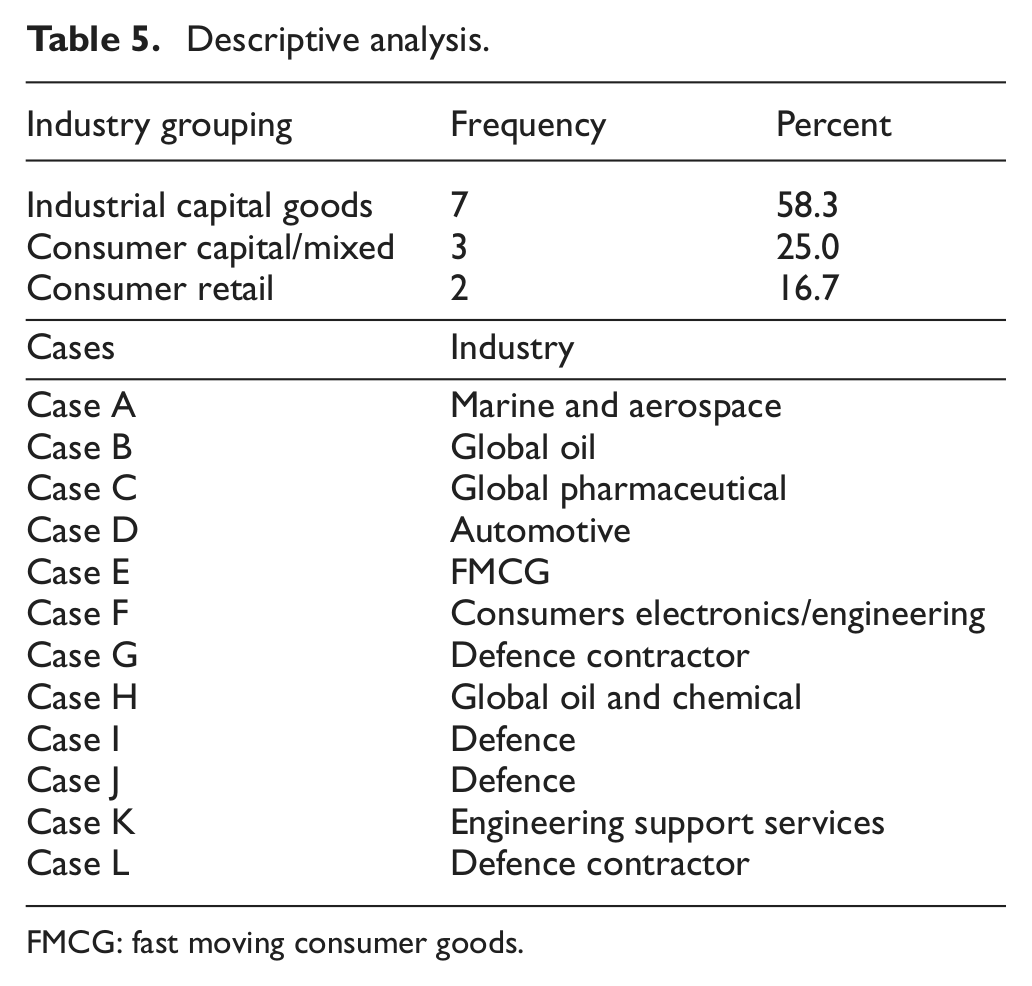
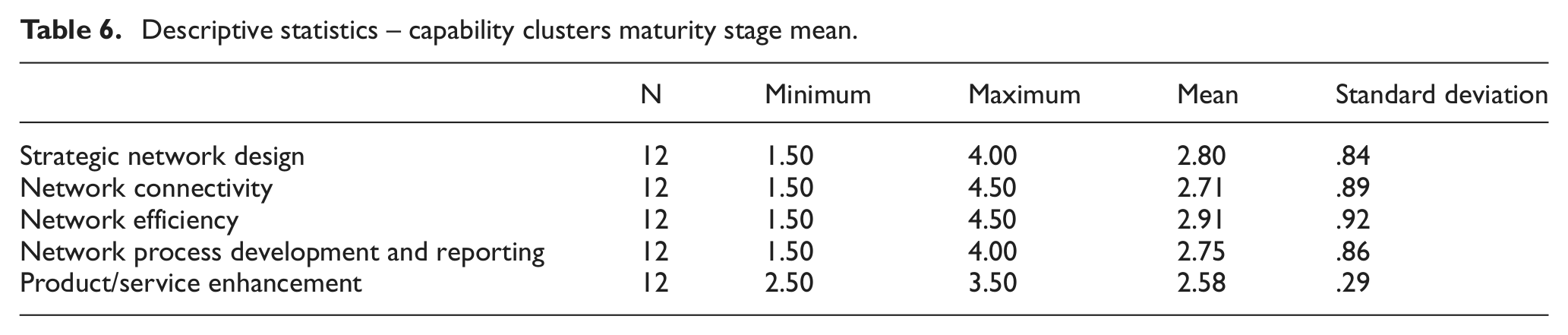
Table 5 demonstrates the descriptive analyses of 12 companies studied in terms of revenue, industry grouping and headquarters. Table 6 also details the mean value of sustainable SN capability clusters identified. As shown, while the network processes and network efficiency demonstrate the highest values, product and services enhancement presents the lowest score.
Descriptive analysis.
FMCG: fast moving consumer goods.
Descriptive statistics – capability clusters maturity stage mean.
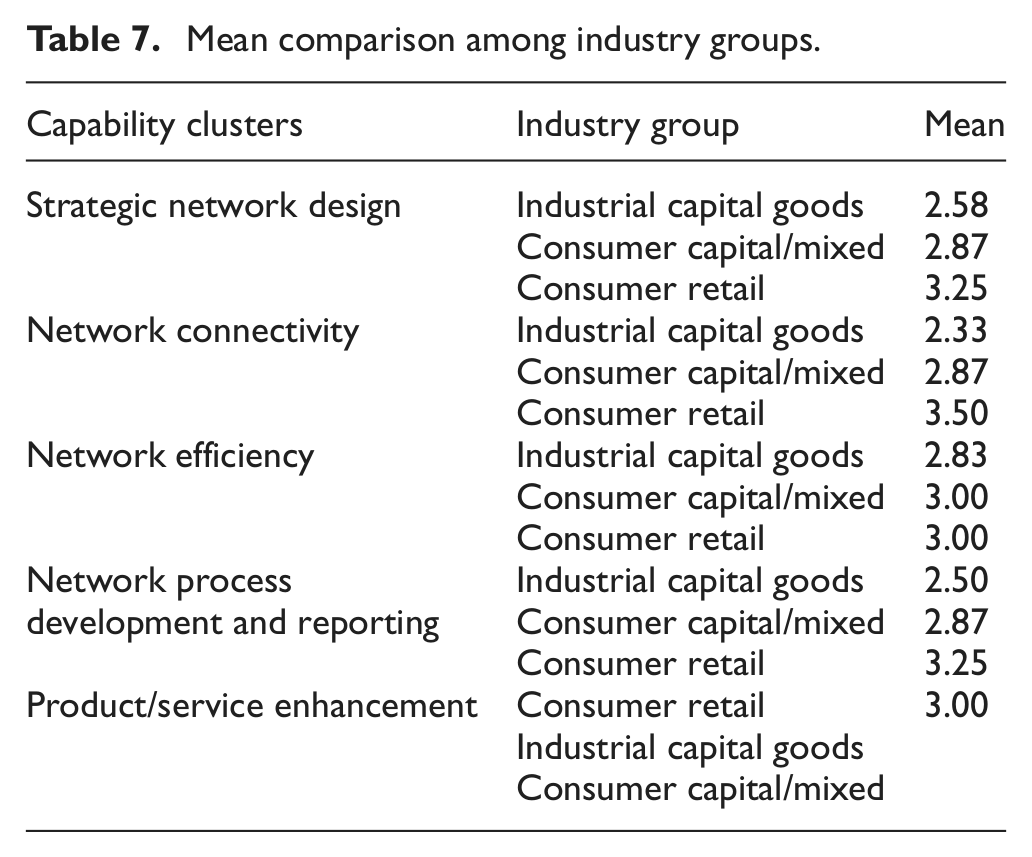
The data have been stratified for type of industrial sector. The sectors studied categorised into three groups of industrial/capital goods, consumer capital and consumer retail. All companies are MNCs that currently produce annual reports containing one of the sustainability elements described earlier (e.g. CSR and GRI-G3).
It is observed that the average maturity of sustainable network capabilities for consumer retail is always higher than that of industrial capital goods and consumer capital (Table 7). Furthermore, by performing analysis of variance (ANOVA), a significant (p < 0.05) difference is established between product/service enhancement capability maturity of consumer retailer (Tables 8 and 9).
Mean comparison among industry groups.
Post hoc ANOVA test.
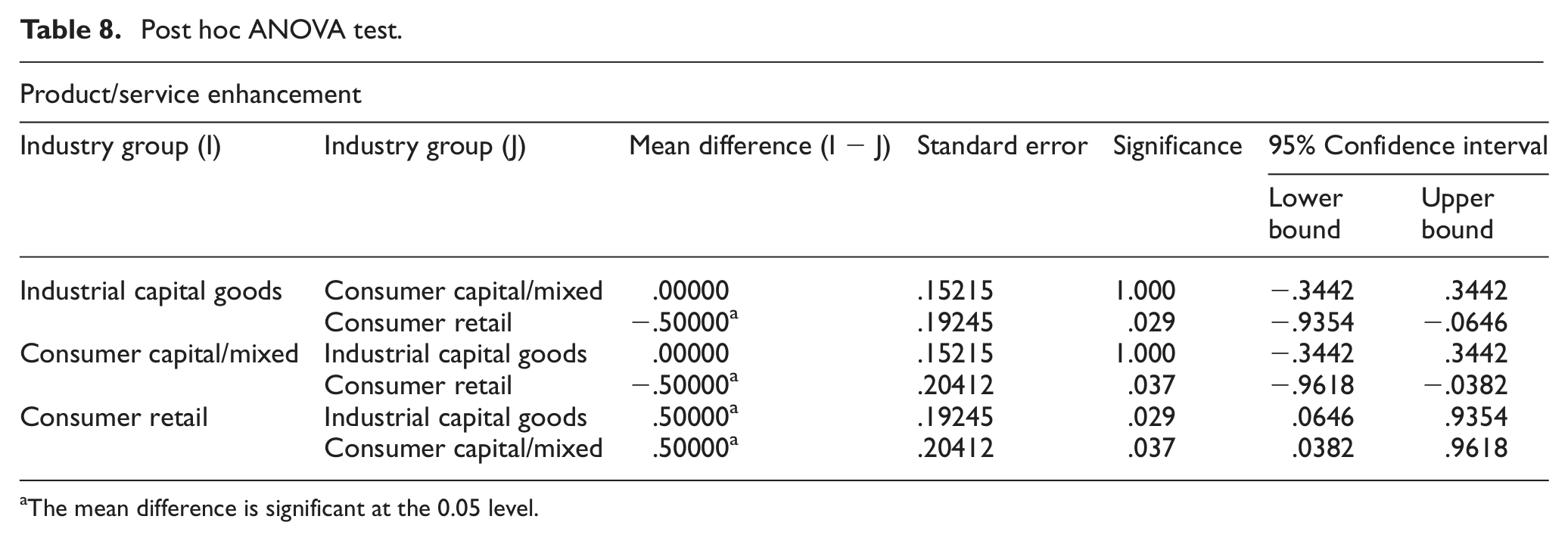
The mean difference is significant at the 0.05 level.
ANOVA test – product/service enhancement.
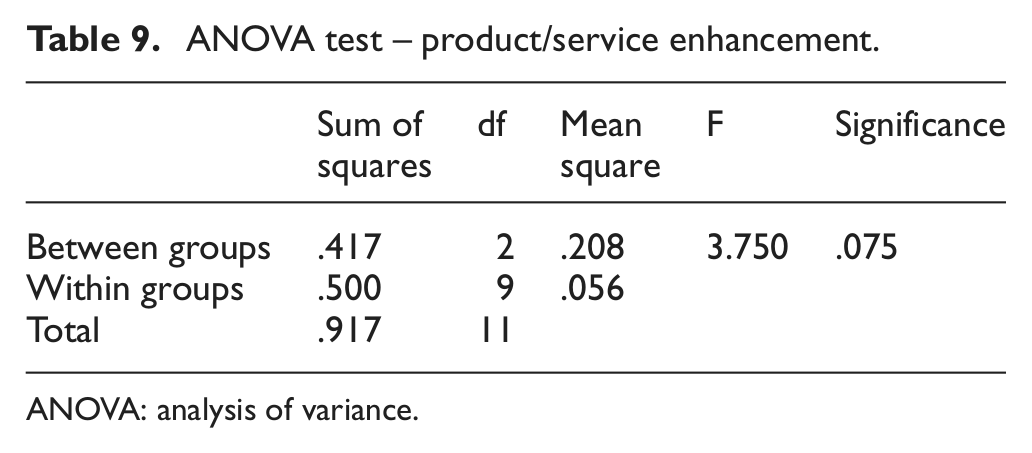
ANOVA: analysis of variance.
Discussion and conclusions
This article presents the development of a SSN-MM. Initial application of the maturity model framework in 12 case studies of international manufacturing multinationals is presented, demonstrating feasibility and utility of the approach, and identifying potential drivers for manufacturing sustainability linked to the industrial SN position, including upstream regulatory controls, and downstream consumer sentiment. Furthermore, the incorporation of sustainability dimensions within an established supply chain maturity model architecture provides a basis for potential trade-offs with other SN strategic dimensions.
The framework proposed enables a systematic analysis and assessment of practices that support sustainable operations. It adopts a network perspective and provides an alternative and complementary approach to other, more metric and measurement-centric analyses. It is attractive in that it is potentially less onerous to conduct and more meaningful to the practitioner. It is stratified into five capability clusters, derived from the literature: strategic sustainable network design, network connectivity, network efficiency, network process development and reporting and network product and service enhancement.
In order to test the reliability of proposed sustainable SN capability clusters, Cronbach’s alpha is calculated for five clusters and found to be greater than 0.7. Table 10 demonstrates the Cronbach’s alpha pertinent to each cluster.
Reliability statistics.
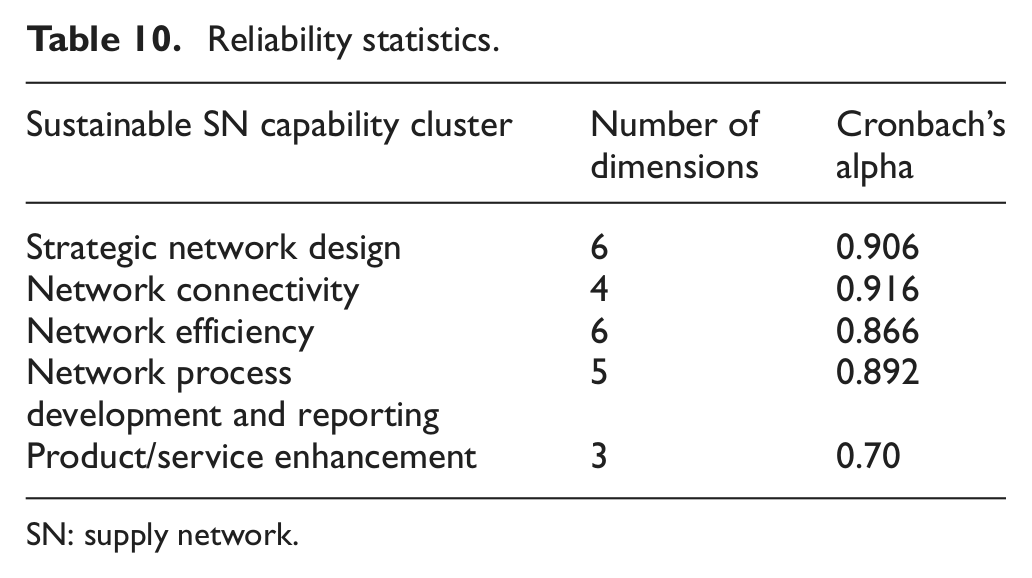
SN: supply network.
Initial results from the use of the SSN-MM in 12 case studies conducted across various sectors suggest the following:
The SSN-MM architecture enables a high-level capability cluster analysis, as well as assessments conducted at the sustainability dimension level.
The strong correlation between capability clusters used in the SN capability framework, 4 and this current framework provides potential opportunities for trade-off analysis.
Initial SSN-MM scores indicate an ability to differentiate capability across particular dimensions and across firms and that there are a range of maturities across industrial sectors with opportunities for cross-sector learning. The reliability of sustainability capability clusters is tested quantitatively with Cronbach’s alpha > 0.7.
Sectors that are more consumer-oriented appear to have a more proactive sustainability agenda. Indeed, more than one firm in the case group is seeing sustainability as a differentiator against competitors. This finding is particularly supported by the quantitative analyses conducted (ANOVA test).
Some sectors exhibit more advanced capabilities in sustainable supply chains than others driven by highly regulated environments; these may be as a result of manufacturing considerations (e.g. carbon emission during production) or product functionality driven (e.g. product safety).
The descriptors used in individual sustainability dimensions appear to be well understood by the practitioner, as indicated by the consistency of responses within firms.
From a theoretical perspective, this article suggests in a complex multi-tiered network environment that process maturity analysis can provide a more feasible approach to assessment than one based on measurement-based metrics. Moreover, the ability to integrate SN sustainability dimensions into broader SN capability dimensions enables these two aspects to be considered in a more integrated and holistic manner.
The framework itself has identified sustainable SN dimensions mapped across five capability clusters representing both functional and system perspectives of SN capability. Importance of industry type and SN position provide new contextual dimensions for manufacturing sustainability assessments. For example, within particular categories in the health-care sector, where multiple technology platforms compete within a highly disaggregated but tightly regulated value chain, 61 the SN position of the firm and its proximity to the end consumer may influence the importance it places on sustainability.
The feasibility and ability of the sustainable maturity model framework have been demonstrated in the case studies and can provide practical assessment tool for industries. In the cross-case analysis, involving representatives of the case study firms, there was good consensus on the validity of process maturity assessments. Discussions included the refinements made on the descriptive text or SN dimensions where there was good consensus on the final definition. On a separate point, discussions on the usefulness of the model (as opposed to its accuracy) centred on potential practical applications and inter-company benchmarking. On the latter, the stronger performance by those firms facing regulatory pressure and those firms influenced by consumers sentiments were identified by respondents as potential sources of advanced practices in particular areas.
Future research
The initial application of the SSN-MM framework would benefit from the testing and validation of further case studies. As a part of the validation exercise, comparison with published reports and alternative frameworks (e.g. GRI framework) may support further refinements. The adoption of common architecture with a well-established SSN-MM provides opportunities for trade-off analysis, not explored in this article.
In the strategic management literature, the relationship between capability and configuration has been explored. As discussed in this article, SN configuration appears to have some influence on drivers of sustainable practices, suggesting a configuration dimension to this research may provide further insight into manufacturing sustainability.
Footnotes
Appendix 1
Appendix 2
Funding
This research received no specific grant from any funding agency in the public, commercial or not-for-profit sectors.