




Abstract
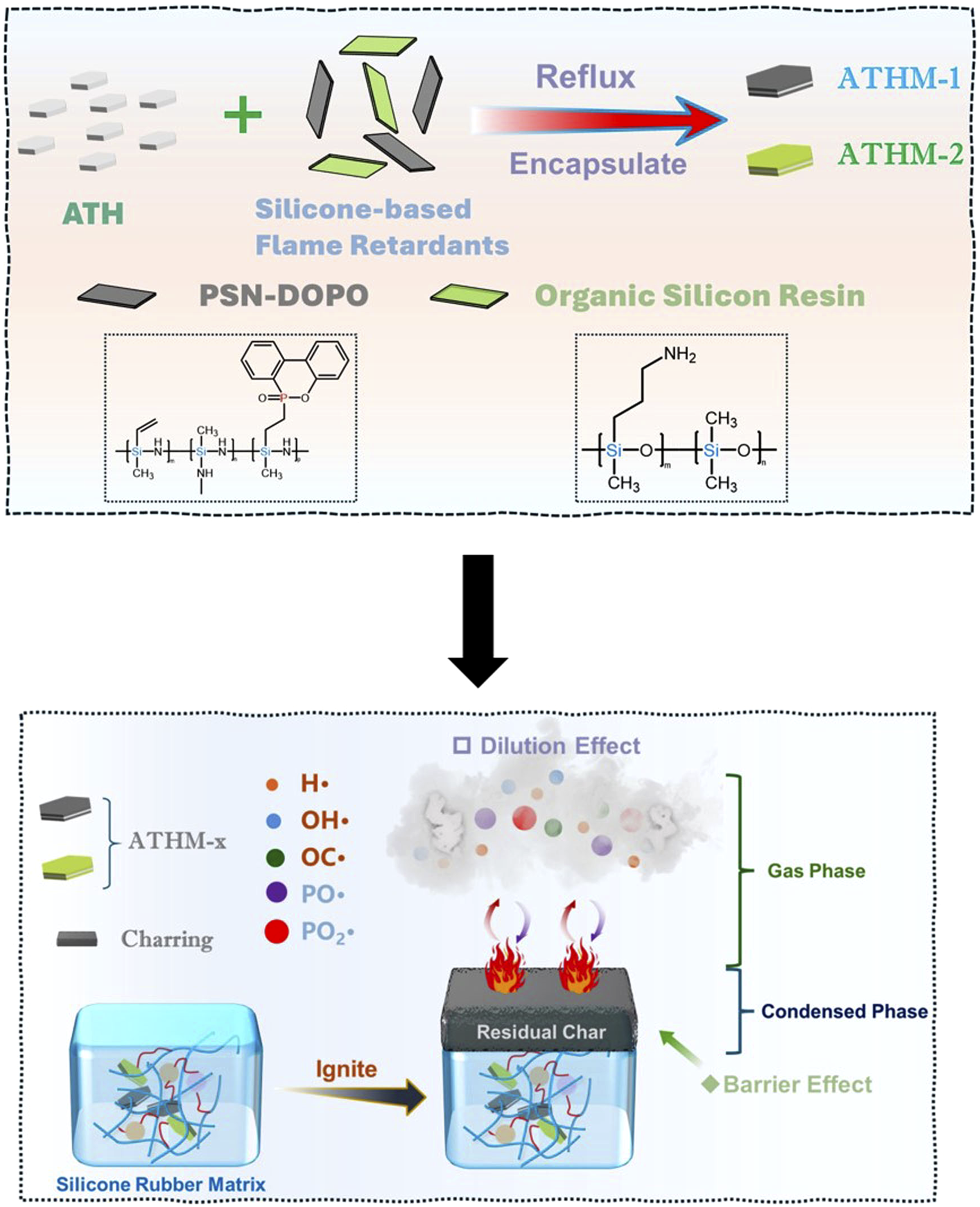
The flammability of silicone rubber restricts its application as electric materials in some scenarios such as nuclear power station. To solve this issue, this study is based on commercially available aluminum hydroxide (ATH) flame retardants. By introducing phosphorus-containing flame retardant groups into the side chains of polysilazane resins and modifying them with commercial organosilicon resins, two types of surface modified aluminum hydroxide (ATHM-x) were prepared to improve their compatibility and flame retardant effect with silicone rubber. The successful synthesis of ATHM-x was demonstrated through the structural characterization of ATH before and after modification. Studies have shown that the addition of ATHM-x not only improves the mechanical properties, especially the tensile strength, of silicone rubber but also obviously enhances its aging resistance, including aging resistance and radiation aging resistance. This ensures the stability of physical and chemical properties of the materials, especially under extreme conditions, during long-term use. In terms of flame retardancy, the modified ATH silicone rubber composite exhibited excellent flame retardancy. Taking the KE186/ATHM-2 composite as an example, it had an LOI of 31.5% and reached the V-0 level in the UL-94 vertical combustion test. In addition, the gas-phase and condensed-phase flame retardant mechanisms of silicone rubber composites have also been further explored. In summary, the modification of ATH with phosphorus-containing polysilazane and organic silicone resin significantly improved the overall performance of silicone rubber, indicating that the as-prepared silicone rubber composites have broad application prospects and reliable performance guarantees in many fields.
Keywords
Get full access to this article
View all access options for this article.