




Abstract
Between 1906 and 1909, the Austrian-born German anthropologist Richard Thurnwald undertook an expedition to Germany's Pacific colonies on behalf of the Berlin Museum for Ethnology. There he carried out a series of experimental psychological tests to investigate the mentalities and intelligence of Melanesian subjects. Due to the limitations on verbal communication, Thurnwald privileged non-verbal experiments, especially involving drawings made by his local assistants and guides. His 1913 publication Ethnopsychological Studies on South Seas Peoples reproduces some 200 of those images, which have seldom been studied since. This article examines Thurnwald's experiments in ethnopsychology through the lens of these visual materials and situates his project within larger international trends of scientific colonialism. Despite purporting to further native welfare, his application of experimental psychology to the colonial field was meant to provide solutions to the administration's most urgent problems: pacification, labour recruitment, and a declining birth rate. Yet, as this article argues, the images he collected can also be read against the grain as documents of indigenous response to German colonial rule.
Death in the jungle
A male figure leaps out at the viewer, his arms stretched outwards. Two large elongated objects hover symmetrically beside each of his hands: they are recognizable, on second glance, as rifles. To the bottom left and beneath the figure's right elbow, two smaller pistols have been added for good measure (Figure 1). The Austro-German anthropologist Richard Thurnwald encountered this image in the northern Gazelle Peninsula, New Britain, in 1907, as he was undertaking his first expedition to Germany's recently acquired Pacific colonies (Figure 2). It had been only eight years since the German Reich had assumed official administrative control of the territories from private charter companies, whose brutal and coercive methods of extracting copra, phosphates, and cacao had ultimately failed to turn a profit (Firth, 1973). The blessings of this government bail-out did not accrue to the locals: for many groups, expelled from their ancestral lands and denied access to what had been the basis for their subsistence, the damage was irreversible.
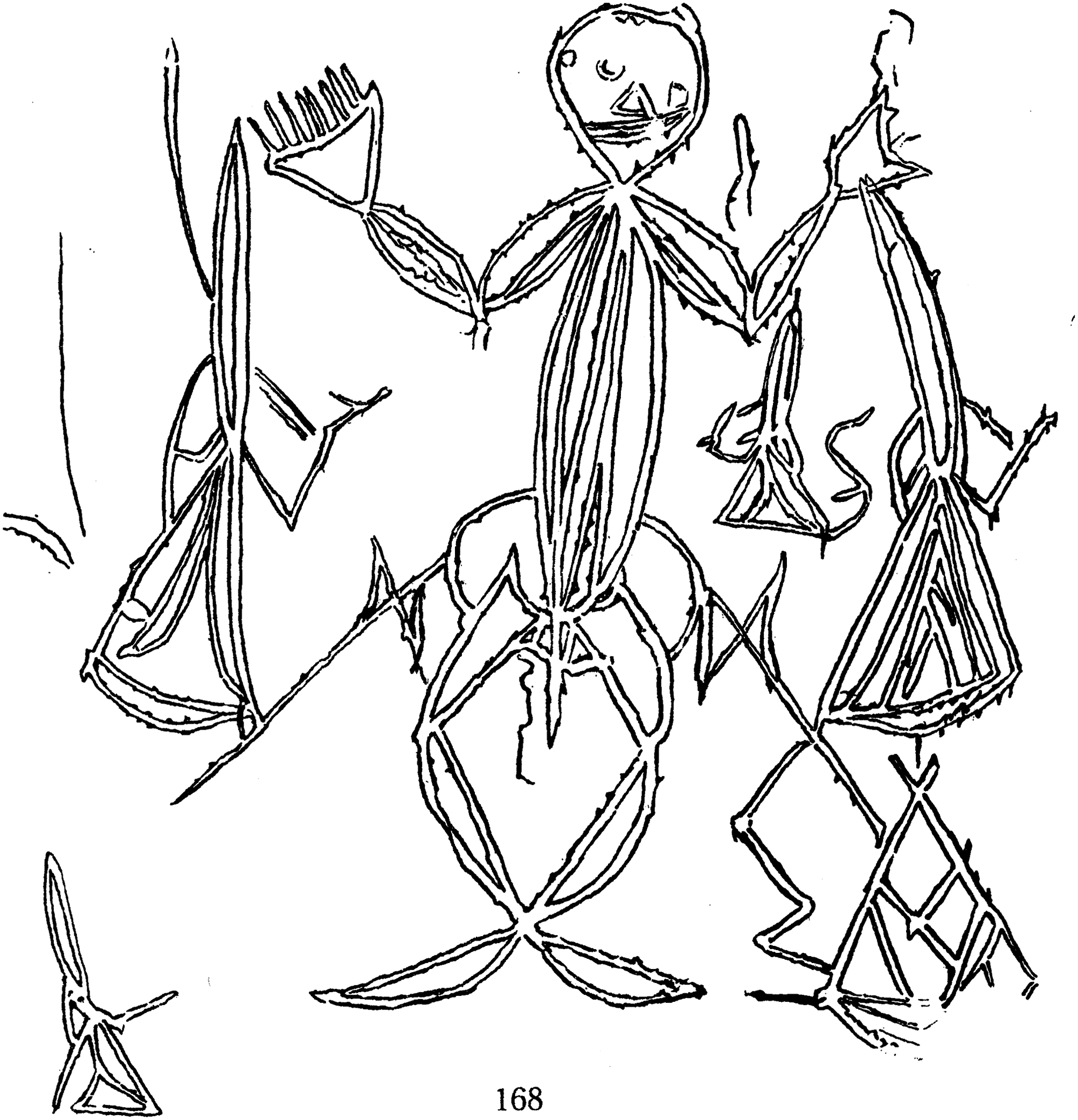
Carving of the ‘Governor’, traced by Richard Thurnwald from the trunk of an areca palm in Wairiki, New Britain, 1907 (Thurnwald, 1913: Plate 16).
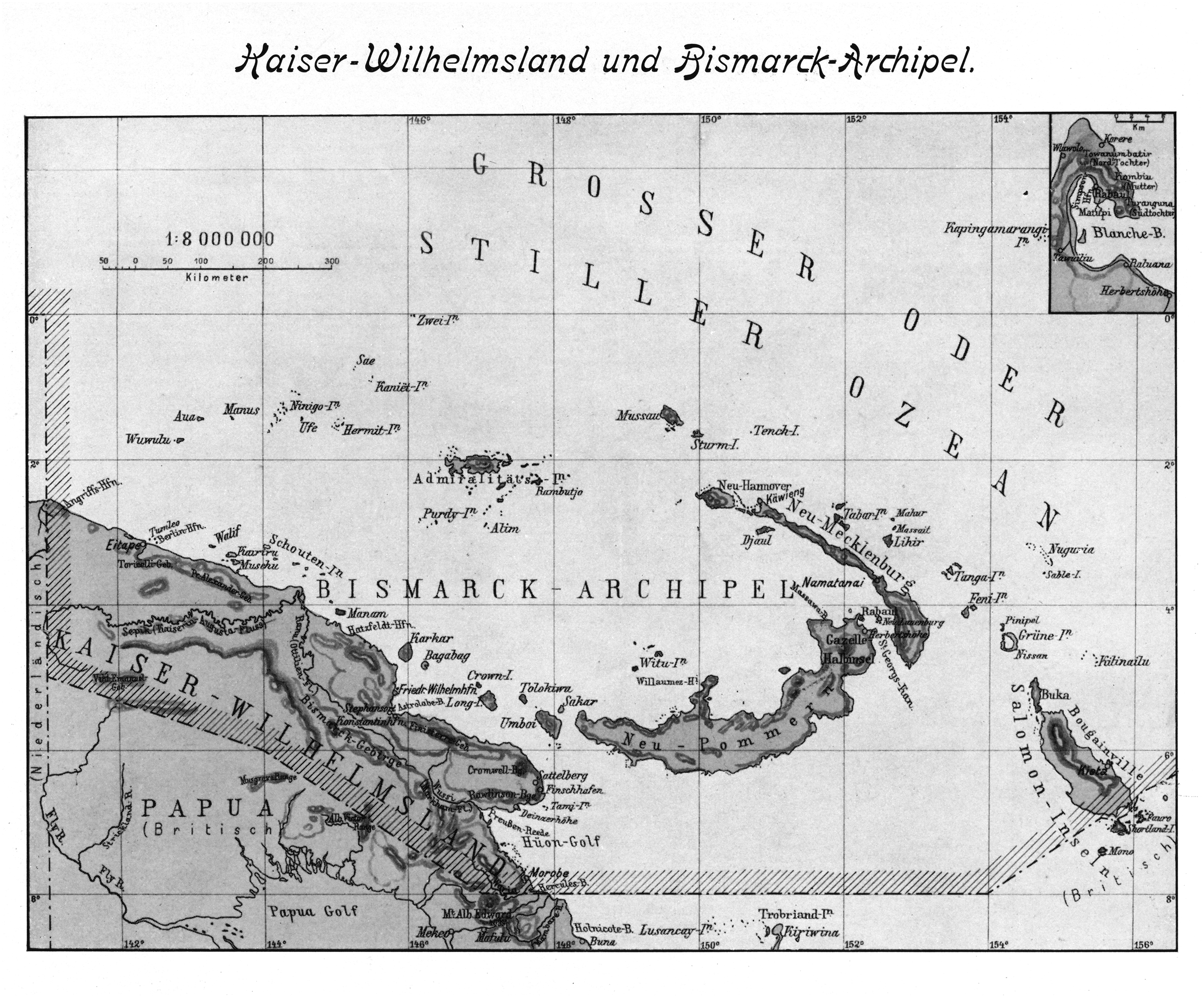
Map of the Bismarck Archipelago and Kaiser-Wilhelmsland; the dotted line indicates the territorial boundary of German New Guinea. The Gazelle Peninsula is located at the northern tip of New Britain (formerly New Pomerania; Wagner, 1911: 6).
The tree carving Thurnwald found in the Gazelle Peninsula directly testifies to the volatile relations between European settlers and local populations around the turn of the century. The man allegedly pictured there is none other than the colonial governor of German New Guinea, Albert Hahl, known for his regular exercise of police hunts to ‘pacify’ the indigenous population (Thurnwald, 1913: 68; see also Sack, 1973: 112–13). The carving refers specifically to one such ‘punitive campaign’ that took place in the Gazelle Peninsula in April 1902. In 1900, Tolai big men ToKitang and ToKilang had sold a plot of land at the foot of Mount Varzin to the German planter Rudolf Wolff, who intended to establish a copra plantation there (Neumann, 1992: 10). Tensions mounted after ToKilang accused Wolff of clearing his land and desecrating a sacred meeting place (maravot) belonging to the ingiet, an all-male secret society common to the Tolai and other neighbouring communities (Sack, 1973: 108). A few days after the planter fired shots at one of the chief's sons, his home was surrounded by hundreds of Tolai warriors, including TiKilang and the big man ToVagira, a prominent enemy of the Germans. Wolff himself being nowhere to be found, they raided his store of firearms, killing his wife and infant daughter as well as several servants. Upon receiving word of the ambush, a German district officer in Kokopo (then Herbertshöhe, the colonial capital) dispatched an armed platoon of imported plantation labourers in a retaliatory action. But he did not take into account that many of these foreign workers hailed from traditional enemy tribes of the Tolai, thus quickly turning ‘what had been a local incident into a racial campaign’ that claimed over eighty casualties. Though Governor Hahl had not personally initiated that campaign, he shrewdly exploited the raids after the fact to capture new land for settler use (ibid.: 109–10). A peace agreement was concluded only five months later, in October of that year (Hempenstall, 1978: 145–6). 1
The tensions had still barely abated when Thurnwald arrived in New Britain, some five years after the massacre. The anthropologist placed the blame for this situation squarely upon European shoulders, admonishing the colonist who came to the South Seas to earn as much as possible and wants to leave as soon as possible with as much success as possible.… In his haste and impatience, under pressure from above or outside, in the hypnotic striving for gain, the white man then disregards the feelings of the native, arouses their [sic] passive resistance, which he tries to overthrow again by asserting his authority, and piles mistake on mistake until a bloody crime [Bluttat] seals the chain of human misunderstandings. (Thurnwald, 1913: 127)
It was in pursuit of such a ‘psychological understanding’ that Thurnwald augmented his ethnographic research with the interdisciplinary approach that he called ‘ethnopsychology’. During his fieldwork between 1906 and 1909, he carried out a range of heterogeneous experiments on and with local collaborators from the outlying islands of German New Guinea. He measured their hand pressure strength and colour perception; tested their attention span, memory, association, and suggestibility; and scrutinized their linguistic articulation and visual expression (Thurnwald, 1911: 479–80). Where verbal communication was restricted, as it usually was, Thurnwald privileged non-verbal tests as more ‘objective’ indicators of ethnic mentality and individual intelligence alike, often based on the results of experimental drawing exercises. The monograph he published in 1913, Ethnopsychological Studies on South Seas Peoples: On the Bismarck Archipelago and the Solomon Islands, was the first work by a German anthropologist to apply psychological research methods to non-Europeans, and it appeared, significantly, in a leading academic journal of applied psychology, rather than ethnology (Thurnwald, 1913; see also Jahoda, 2008).
This extensive study reproduced nearly 200 drawings, carvings, and sculptures made by Thurnwald’s Melanesian subjects. Whereas earlier anthropologists had generally considered drawings made by indigenous collaborators as ethnographic sources, or mere curiosities, Thurnwald studied them as psychological data, abstracted as far as possible from cultural meaning and analysed according to a putatively universal scale of intelligence. Few of the images he gathered have been re-examined since their publication; yet, as will be shown in the following, they tell us much more today that does not fit within the anthropologist's limited interpretive frame. Indeed, by preserving the non-verbal responses of indigenous individuals to the transformation of their society, these images archive a counter-history of colonial life in turn-of-the-century New Guinea.
This article reexamines Thurnwald's experiments in ethnopsychology through the lens of these visual materials. In the following sections, I will discuss how Thurnwald's expedition took shape against the backdrop of international psychological research on non-European subjects. From there, I will focus in on the way he interpreted non-verbal source material – predominately pencil drawings made by his indigenous servants and collaborators – as indicators of intelligence. The final section considers how these ‘ethnopsychological’ practices fed into Thurnwald's broader ambitions as a colonial planner and adviser, ambitions that extend from his earliest fieldwork in the Wilhelmine period to his activities in Nazi Germany. Thurnwald's experimental enterprise was conditioned by the exigencies of colonial rule. Hence, just as indigenous carvings of gun-toting governors can be understood only in the context of plantation murders, punitive expeditions, and suppressed secret societies, the deeper significance of his ethnopsychological studies can likewise be grasped only in relation to his concrete proposals regarding native policy and labour recruitment. At the same time, looking back in the wake of New Guinea's decolonization and (partial) independence, the indigenous images Thurnwald collected can be more productively understood as unintended contributions to the visual anthropology of German colonialism.
The palm tree carving of ‘Governor Hahl’ was not a unique case in this regard, but belonged to a specific visual type found throughout the peninsula. A bamboo flute acquired in the region of the inland Taulil people depicts a local German police chief in the very same posture, down to the enormous rifles in each hand (Figure 3; see Thurnwald, 1913: 69). This is not by coincidence: according to Thurnwald's unnamed informant the flute carving had been inspired by the same punitive campaign in the summer of 1902. These pictures are united by more than just subject matter; their stylistic parallels also attest to artistic conventions shared across the region. In Ethnopsychological Studies, Thurnwald remarks how his Melanesian subjects avoided depicting human figures, with the exception of white men and ghosts (ibid.: 53). Though he does not mention it, both the colonial governor and the police chief are depicted in the style of ingiet spirits (tabaran), entities generally considered dangerous to the uninitiated (Figures 3–5). 3 By portraying the representatives of colonial power in the form of one of these maleficent spirits, the creators of these images may have been asserting the spiritual power to subdue them; ingiet magic allowed initiates not only to transform themselves into pigs, sharks, or birds, but also to kill their enemies (Neumann, 1992: 11). In 1903, the German district officer strenuously repudiated any links between the ingiet society and organized resistance to the colonial government (Koch, 1982: 14). Yet other sources show that the plot to kill Wolff and ‘wage war against the whites’ had been hatched during a meeting in an ‘ingiet place in Viviren’ (Neumann, 1992: 12).
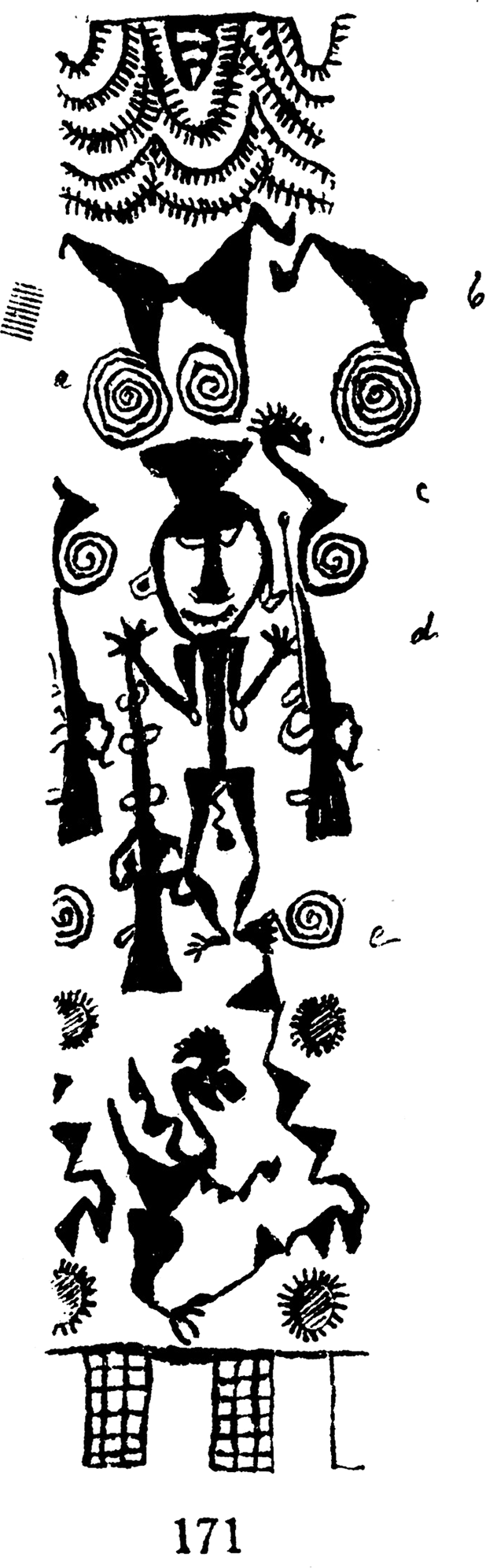
Left: Tracing of a flute carved by an unnamed Taulil artisan, depicting the ‘Police Master with two rifles’ (Thurnwald, 1913: Plate 16). Middle: Sculpture of the ancestral spirit ToBelerr, collected on the Gazelle Peninsula, artist unknown (Thurnwald, 1913: Plate 18). Right: Palm trunk drawing of ToBelerr, recorded near Mount Varzin, artist unknown (Thurnwald, 1913: Plate 14).
Ethnopsychology as a field science
Thurnwald's 1906–9 expedition took place during a moment of transition from the salvage paradigm of 19th-century ethnology to modern anthropological fieldwork. 4 He had been hired by the director of the Berlin Museum for Ethnology, fellow Viennese Felix von Luschan, with the mission of stockpiling as much of the material culture of supposedly disappearing Pacific cultures as possible (a common justification for the intense ethnological collecting in Melanesia at the time; see O’Hanlon and Welsch, 2000). In 1907 alone, Thurnwald sent over 3000 objects back to Berlin, including 750 ingiet statues (Figure 6). 5 But the anthropologist was much more interested in studying his subjects’ social organization and psychology than in extracting their objects and scrutinizing their ancestral remains. 6 Indeed, it quickly became apparent that these two assignments were at odds with one another, as bargaining over artefacts often interfered with his personal rapport with local consultants (Melk-Koch, 2000: 57). 7
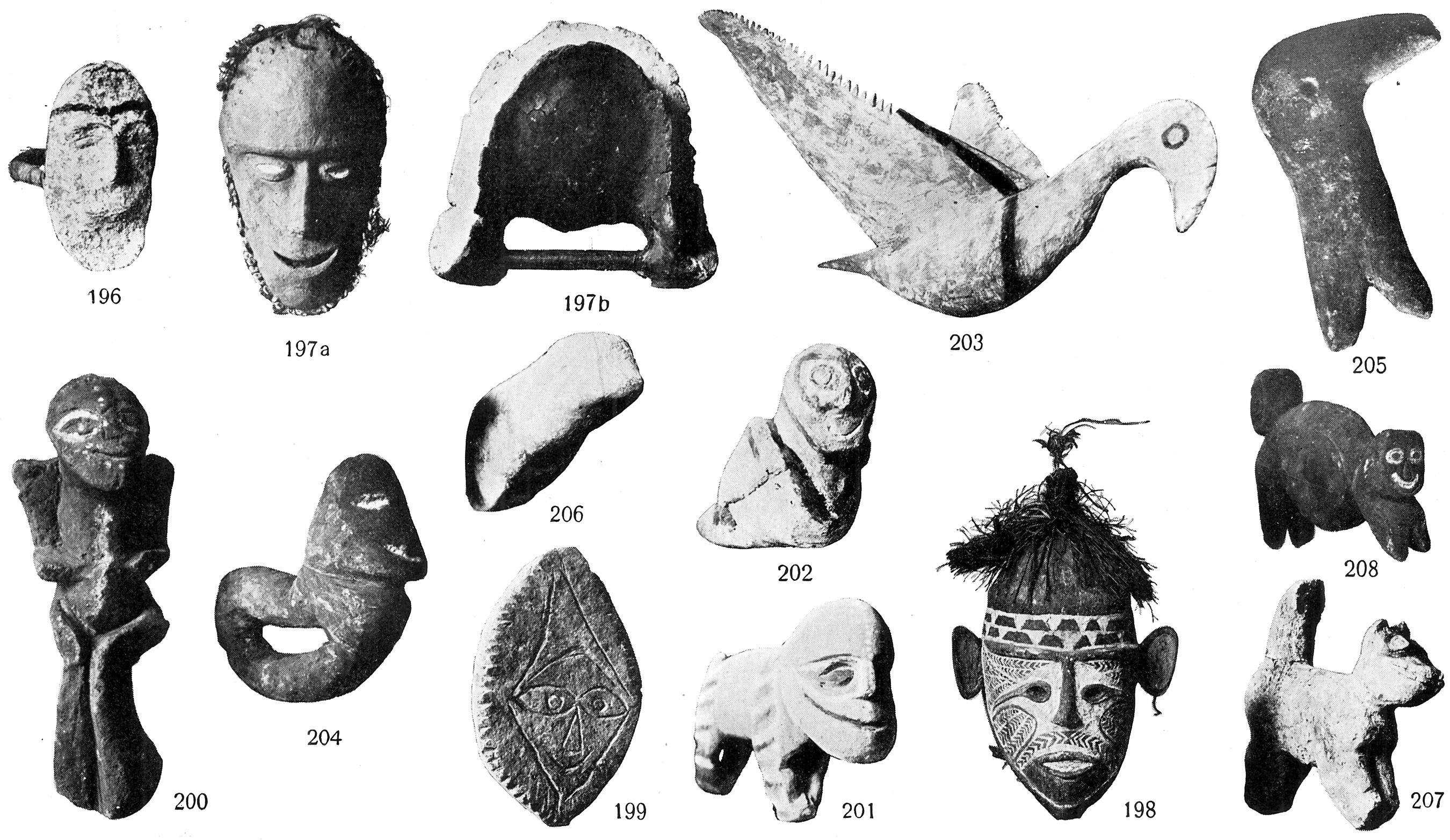
Unattributed artefacts collected by Thurnwald in the Gazelle Peninsula, including dance masks, ‘thief's charms’ (kinakináu), and stone ingiet sculptures (Thurnwald, 1913: Plate 19).
As Rainer Buschmann has convincingly demonstrated, Thurnwald's research in German New Guinea was guided not by the imperatives of museum collection, but by the exigencies of colonial rule. The same Governor Albert Hahl (Figure 1) played a pivotal role in shaping Thurnwald's research questions, down to determining the sites of his fieldwork. From the moment of Thurnwald's arrival in German New Guinea, Hahl immediately recognized a kindred spirit: not only did both men have legal backgrounds, but the Austrian native's experience in carrying out population studies in Bosnia-Herzegovina in the 1890s made him particularly ‘well equipped to discuss administrative concerns over indigenous law and population decline’ (Buschmann, 2009: 106; cf. Gingrich, 2022). Most importantly, both Hahl and Thurnwald shared the conviction that the ‘real value of ethnology was not in assembling artefacts destined for museum display cases but, rather, its application in the pursuit of colonial development’ (Stoll, 2020; cf. Buschmann, 2003: 241; Gothsch, 1983: 243). It was in this connection that Hahl encouraged Thurnwald's research on social psychology – to the chagrin of his employers at the Berlin Ethnological Museum.
Thurnwald's expedition to German New Guinea coincided almost exactly with a shift in colonial policy that gave new prominence to the sciences as a vehicle for rationalizing and modernizing the exploitation of overseas labour and resources. In 1907, partly in response to the metropolitan outcry over the fiscal cost of recent genocidal wars in Germany's African protectorates, the Kaiser's newly appointed colonial secretary, Bernhard Dernburg, articulated a new, technocratic programme of ‘scientific colonialism’ (see Buschmann, 2009: 71–3). This hasty methodological makeover linked rising profits to the more humane treatment of the ‘natives’ – who, according to Dernburg, were the ‘most economically valuable asset of the colonies’ (qtd. in Probst, 1992: 68). Thurnwald echoed this sentiment, calling ‘native workers’ the ‘most precious capital [das kostbarste Kapital]’ of the colonies (Thurnwald, 1910a: 628). 8
As such phrases make unmistakably clear, the programme of scientific colonialism was motivated not by humanitarian concerns but by economic expediencies. By 1907, the declining supply of cheap Melanesian labour was forcing plantation owners to import more expensive workers from China and South-East Asia – an eventuality with which neither the pre-colonial charter companies nor the German colonial government had seriously reckoned. Indeed, the passive resistance of locals nearly drove the German New Guinea Company to bankruptcy. Although plantation work could and did allow some young islanders to gain social prestige and accrue a handsome bridewealth, German recruiters generally had to resort to coercion, trickery, and compulsion to make local men leave their families and perform onerous, poorly paid contract labour on plantations where over a quarter of recruits died on the job due to poor sanitation and medical care (Brüll, 1995: 113). Hence it was not long before labourers in the smaller, outlying islands resolutely ‘refused to go to the place of “no kai kai, no Sunday, plenty pait, plenty die” (no food, no holidays, violence and death)’ (Waiko, 1993: 42). In 1907, Governor Hahl attempted to circumvent the locals’ passive resistance – or, not infrequently, sheer indifference – by levying a head tax on adult males; this tactic too was largely unsuccessful.
Such was the context in which Thurnwald asserted, ‘No sensible colonial policy is possible without knowledge of the life, views, thought, and feeling of the natives, especially where the white man is dependent on [their] labour’ (Thurnwald and Steinmetz, 1906: 3). Yet he took a different approach than most ethnologists to understanding the ‘native mind’. Across turn-of-the-century Europe, many observers confidently expected the recently instituted academic discipline of psychology to furnish an objective and scientific understanding of the human mind that could be applied directly to colonial issues (Probst, 1992; Wolfradt, 2021). ‘The science of mind had wide appeal in the [British] imperial context’, Erik Linstrum notes, ‘because it promised technical solutions to political problems’ (Linstrum, 2016: 1–2). In the case of Germany's short-lived colonial empire in the Pacific, Thurnwald's application of experimental psychology to the colonial field was likewise intended to deliver technical solutions to the administration's most urgent problems: pacification, labour recruitment, and population decline.
9
Influenced by the recently developed intelligence tests of Alfred Binet and Théodore Simon, as well as the differential psychology of the Hamburg psychologist William Stern, Thurnwald saw experimental psychology as a valuable means of establishing hierarchies of mental development (Thurnwald, 1912c: 17–18; see Probst, 1992: 78; Stern and Wiedmann, 1920).
10
‘How’, he asked, do certain people or groups of people react to the outside world, and how have they understood how to make themselves masters of nature?… How are these reactions expressed in the vital functions of culture?… If we answer these two questions for the certain times and peoples according to fixed psychological points of view, approximately in the way it is done in an ‘intelligence test’, we get in this way the most exact possible yardstick for the evaluation of a culture stage. (Thurnwald, 1911: 477–8)
By taking on the mantle of ‘ethnopsychology’, Thurnwald was both appropriating and reimagining the discipline of Völkerpsychologie, then most closely associated with the eminent Leipzig psychologist Wilhelm Wundt. Around 1900, Wundt abandoned the experimental psychology for which he was best known in favour of this ‘psychology of peoples’, which strove to divine the laws of higher mental function through comparative studies of language, art, myth, religion, and law. 11 Wundt's armchair approach to ethnology proved a methodological dead end, however, and Thurnwald spoke for many when he lamented that ‘of all people Wundt, the founder of experiment in psychology, avoided the [direct] investigation of the bearers of primitive cultures’ (Thurnwald, 1925: 35; cf. Thurnwald, 1929: 241–2). It was probably in an effort to distinguish his empirical methodology from Wundt's Völkerpsychologie that he opted for the more unusual German term Ethnopsychologie. As William Stern wrote in 1913, citing Thurnwald's Pacific fieldwork, ‘For past cultures, the völkerpsychologisch study of their products will naturally remain the only possible path. However, for the research of today's living primitives, an ethnopsychologisch approach is currently emerging, which is intended to be practised by explorers, missionaries, teachers in the protectorates, and consists of a combination of observation, experiment, and collection’ (Stern, 1913: 416).
On his expedition to German New Guinea, Thurnwald endeavoured to transform ethnopsychology into an experimental and applied science. Before his departure, he enlisted the help of leading figures in German experimental psychology like Stern and Carl Stumpf to develop experiments and formulate research questions for use in the field. 12 Their collaboration resulted in the 1912 publication of Proposals for the Psychological Study of Primitive People, a field guide based on the format of the British journal Notes and Queries. Where other psychologists (Lévy-Bruhl, 1926[1910]; Schulze, 1900) typically contrasted the ‘European’ mind with that of an abstract collective designated as ‘primitives’, Thurnwald aimed to go one step further: ‘The purpose of the experiments’, he writes, ‘is not only to show the differences to us Europeans, but also to determine those between individual ethnic groups: differences that are clearly felt and often emphasized, but which have hardly ever been examined more closely’ (Thurnwald, 1913: 26). Thurnwald was the first and perhaps the last to put many of these psychological ‘proposals’ into practice in the field.
This was not the first effort to apply the tools of experimental psychology to non-European subjects, however. In the introduction to his Ethnopsychological Studies, Thurnwald duly pays tribute to the pioneering Cambridge University-funded expedition to the Torres Strait, led by the biologist turned anthropologist Alfred C. Haddon in 1898–9 (Thurnwald, 1913: 13; see also Kuklick, 1991: 142–9). From their ramshackle cabin on Murray Island, Haddon's colleagues William H. R. Rivers, Charles S. Myers, and William McDougall set out to evaluate Herbert Spencer's speculation that ‘natives’ possessed superior eyesight and hearing to Europeans (according to Spencer, this was because they expended correspondingly less energy on mentation; see Richards, 1998: 137, 147). Their experimental studies of the vision, colour perception, and reaction times of some 450 Torres Strait Islanders decisively upset that Victorian commonplace. When the American anthropologist Alexander Goldenweiser extolled the virtues of experimental psychology as a means of testing ‘the psychological equipment of the “savage”’, he cited Thurnwald's studies alongside those of the Cambridge Expedition team (Goldenweiser, 1922: 8).
Yet Goldenweiser had overlooked a capital difference between these two expeditions: whereas the British investigators had dealt almost exclusively with questions of sensory physiology, Thurnwald's primary concern lay with higher mental functions – functions for which, at the time, no instrumentarium existed. 13 Hence where the data from the Cambridge expedition had been quantitative, Thurnwald's psychological observations were overwhelmingly qualitative and holistic in nature. In the retrospective appraisal of the Indonesian educator and politician Soetan Goenoeng Moelia, the German anthropologist's ‘remarks on intelligence, thought, causality, and abstraction are based mainly on personal observation and analysis of superstitions, mores and customs’, rather than data drawn from sharply defined experimental criteria (Moelia, 1933: 76). More importantly still, Thurnwald's findings ran directly counter to the Cambridge expedition's conclusion that ‘the senses and the elementary mental reactions of aboriginal man are strictly comparable to those of his white brethren’ (Goldenweiser, 1922: 8). On the contrary, Thurnwald asserted without reservation that ‘the saddest and most decayed representatives of the white species, who vegetate miserably on deserted small islands’ were ‘more active and mentally agile, more sensitive and adaptable’ than the ‘native’ (Thurnwald, 1913: 127). The Ethnopsychological Studies were as much experiments on the anthropologist's own subjectivity as on those of his subjects; and in this respect, observation and prejudice were never far apart.
From mental age to cultural stage
While Thurnwald privileged non-verbal experiments in his ethnopsychological investigations, this is not to say that he overlooked linguistic questions. He had intensively studied indigenous languages during his stays on the Gazelle Coast and in the Baining Mountains, and one of his most lasting contributions from this period was the meticulously transcribed and translated compendium of ‘songs and sagas from Buin’ (Thurnwald, 1912b). Even so, the extraordinary linguistic diversity of the islands compelled him to converse with most of his interlocutors in the local pidgin (see Melk-Koch, 1989: 88). 14 The anthropologist made no secret of his disdain for what he called Bitchin-Englisch, which he derided for lacking the ‘elaborate vocabulary necessary to investigate the deeper intellectual understandings of indigenous people’ (Buschmann, 2009: 107). Nonetheless, it is noteworthy that Tok Pisin comprises the majority of the linguistic and folkloric data discussed in the Ethnopsychological Studies (Thurnwald, 1913: 89–99).
It was precisely in order to circumvent such linguistic obstacles that Thurnwald laid stress on designing ‘experiments that depend as little as possible upon speaking’ (Thurnwald, 1912c: 25; see Stern, 1911: 105). By far the most prominent such experiment in this arsenal was what could be called the ‘drawing test’. The procedure was straightforward: Thurnwald distributed pencils and paper to his test subjects (namely, his indigenous porters and guides) and induced them to draw specific objects of their surrounding world. Occasionally, they also used pencil and paper to draw pictures for their own amusement. He collected hundreds of these pictures along with masks, decorated ritual dance shields (koka), and ingiet sculptures. By contrast with relics and artefacts, drawings were plentiful and freely available; indeed, his local collaborators often relished the technical challenge and competitive appeal of this novel form of depiction. These affordances made the pencil drawing a unique ethnographic resource.
By the time Thurnwald arrived in New Guinea, the commissioning of drawings from indigenous peoples had already developed into a venerable tradition of anthropological research. The German ethnologist Karl von den Steinen collected indigenous drawings during his 1887 expedition to the upper Xingu River in Brazil (Déléage, 2015), and later anthropologists studied the draughtsmanship of the inhabitants of the Pacific Northwest Coast (Franz Boas in 1897), the American Great Plains (James Mooney in 1902–6), central Brazil (Theodor Koch-Grünberg in 1906), and East Africa (Karl Weule in 1907; see further Mack, 2012; Brady, 2012; Sayers, 1994). In the case of Oceania Charles Seligman published numerous sketches by local consultants in his mammoth 1910 study The Melanesians of British New Guinea (see Donoghue, 2018), while Margaret Mead solicited a large number of drawings as part of her fieldwork on culture and personality in the South Pacific during the 1920s and 1930s (Figure 7; see Foerstel and Gilliam, 1992; Mead, 1932, 1946; Wittmann, 2018: 255–6). 15 As Nicholas Thomas writes, indigenous drawings had gradually become ‘part of the corpus of data generated in diverse media by ethnography, along with field notes, responses to queries, photos and moving images, audio recordings of narratives, sketch maps of settlements and gardens, and genealogical diagrams’ (Thomas, 2018a: 164). As visual documents of the ‘contact zone’ (Pratt, 1992), these drawings provided a distinctly liminal sort of data, at once both inner-subjective and intersubjective.
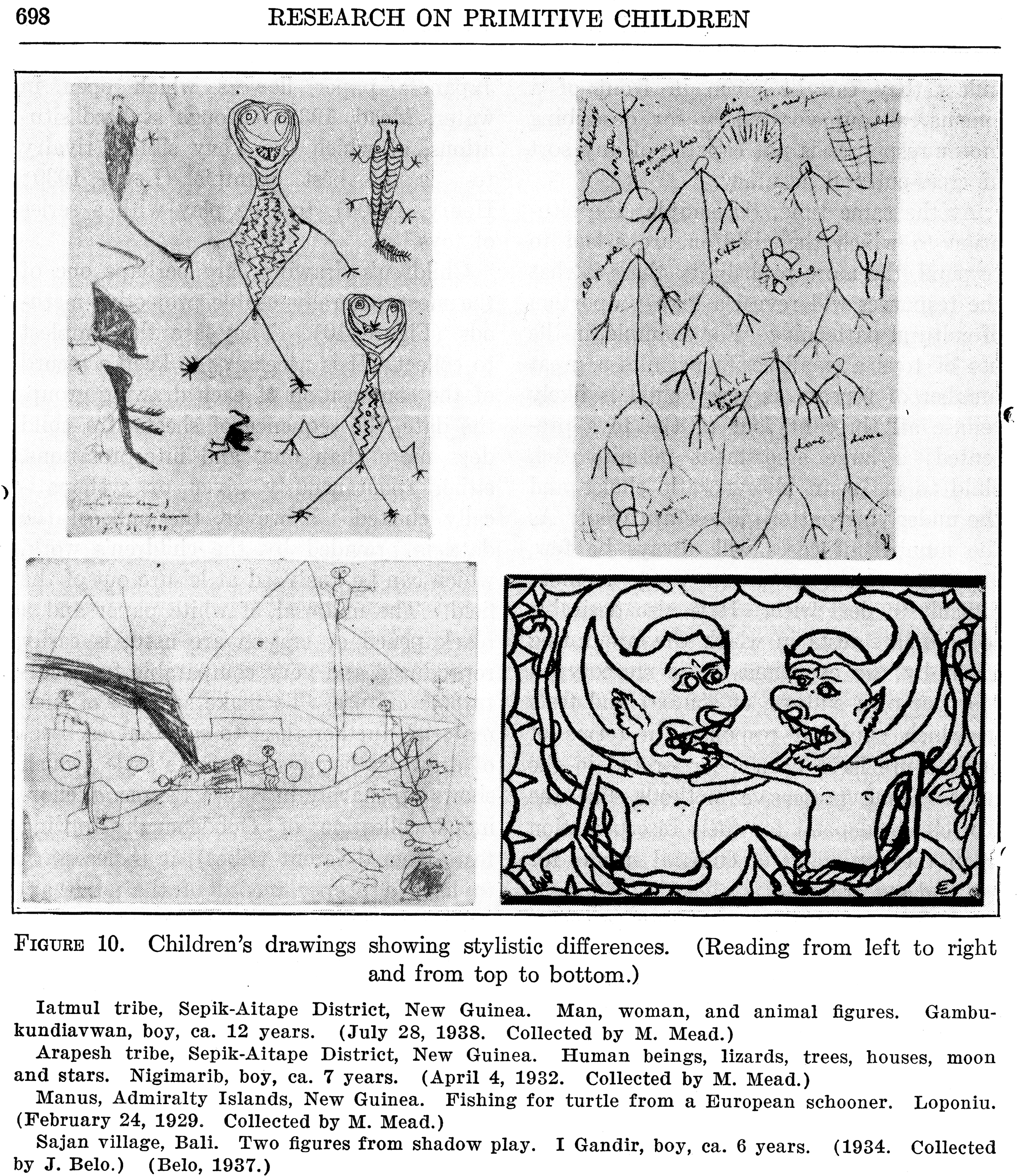
Children's drawings by children and adults in Oceania and South-East Asia (reproduced in Mead, 1946: 698).
Before Thurnwald's expedition, pictures drawn by indigenous informants were most commonly viewed as just another form of ethnological evidence. Around 120 drawings by Torres Strait Islanders are reproduced over the six volumes of the Cambridge expedition's Reports, for instance, but these ‘received little attention beyond their use in reconstructing Islanders’ culture’ and make little or no reference to European influence on local ways of life (Figure 8; Brady, 2012: 173; see also Haddon, 1912). 16 On the contrary, for Haddon and his collaborators the value of the drawings lay primarily in their representation of traditional Torres Strait Islander rituals and customs, including abandoned practices such as headhunting (Thomas, 2018b: 170).
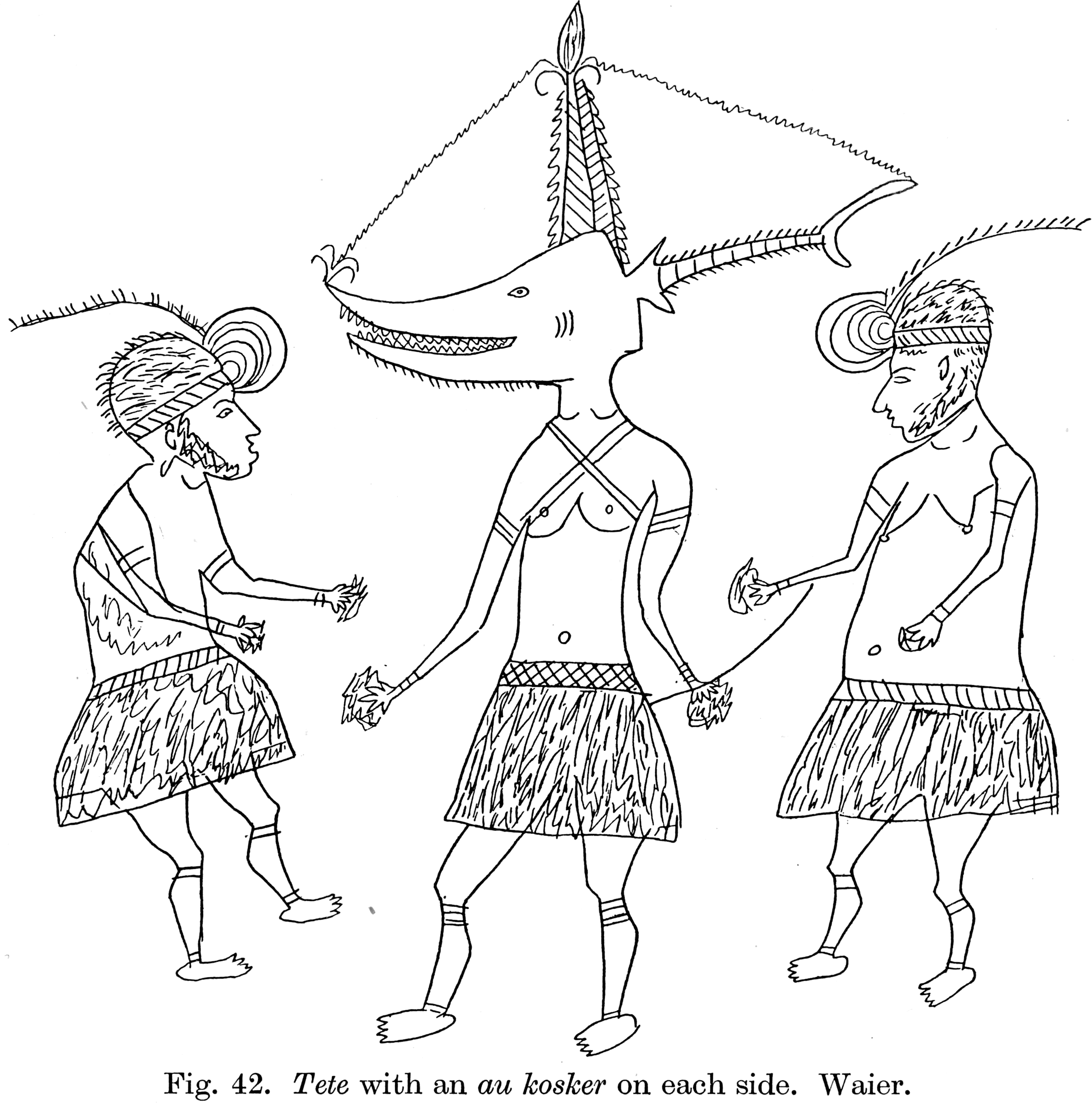
Drawing of a masked dance from Waier, Murray Islands (artist unknown, reproduced in Haddon, 1935: 371).
The experimental drawings of Thurnwald's collaborators, by contrast, directly reflect the colonial situation of their production. Thus when the anthropologist asked Tale, a man from coastal Kaiser-Wilhelmsland (northern Papua New Guinea), for a drawing of a ship, Tale drew him the New Guinea Company sailboat that had recruited him to work on a plantation in New Britain (Thurnwald, 1913: 121). Thurnwald's porter Torukia, a native of the Gazelle Peninsula, sketched a (real or imagined) scene involving a Chinese labourer, likewise in the employ of the New Guinea Company. Distinguished by his stereotypical braid and pipe, as well as a rifle, the Chinese man is shown in the vain attempt to shoot down a particularly large bird, whose beak likewise resembles a pipe, as his Melanesian wife looks on laughing (Figure 9). Like certain drawings made by Australian Aboriginal artists during the same period, Torukia's surreal and possibly satirical image reflects his conflicted response to the conditions of globalized labour and changing race relations in his homeland. 17 Yet despite his purportedly psychological orientation, Thurnwald characteristically ignores the subjective dimensions of the drawing, instead interpreting it as the fantastical product of an infantile intellect. 18 To him, the picture's disproportionately sized protagonist merely recalls the visual conventions of ancient Egyptian or Babylonian art (Thurnwald, 1913: 66).
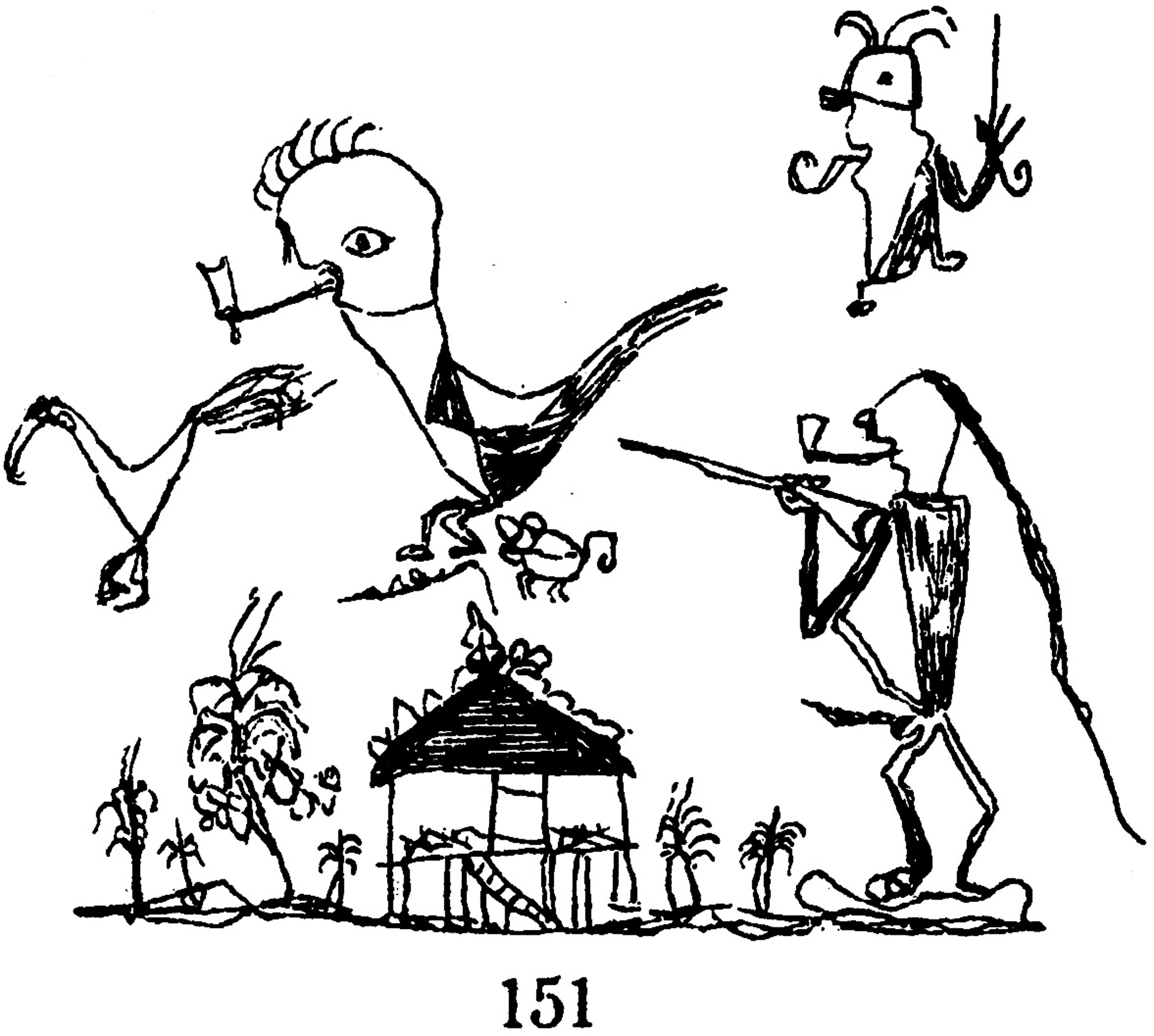
‘Unprompted’ drawing by Torukia from the Gazelle Peninsula (New Britain), December 1908 (Thurnwald, 1913: Plate 12).
Other drawing exercises were constructed more deliberately as tests of psychological faculties, memory in particular. In one such task, Thurnwald asked Torukia and Mamenga, a 17-year-old porter hailing from Manus (Admiralty Islands), to draw his tent and all of its contents: shotgun, smoked almonds, basket with ethnographic tags, pistol, tropical hat, rat traps, and so on (Figures 10–11). Thurnwald’s 1913 publication exhaustively enumerates every object in these pictures, yet makes no comment on Mamenga's unusual choice of perspectival composition (Thurnwald, 1913: 142–3). In a like manner, the anthropologist's commentary dissects each technical detail in Torukia's drawing of Hahl's steamer the Seestern, on which the latter had worked for the second officer (Figure 12). 19 This scrupulous rendering is compared favourably to the more modest picture by Molebai, who had none of Torukia's hands-on experience on board the ship (Figure 13). What were such comparisons intended to prove?
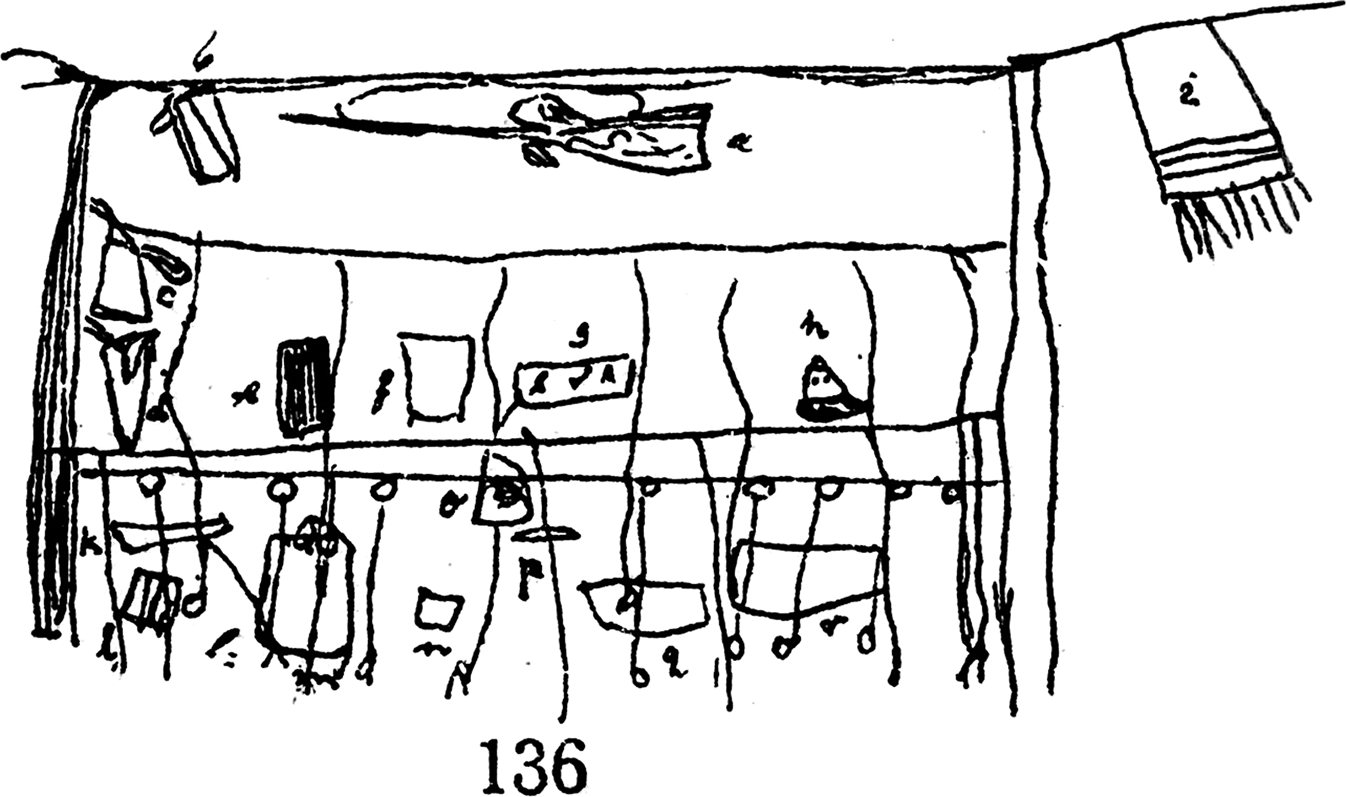
Left: Drawing of Thurnwald's tent by Torukia (Thurnwald, 1913: Plate 11). Right: Drawing of Thurnwald’s tent by Mamenga from Manus, Admiralty Islands (Thurnwald, 1913: Plate 11).
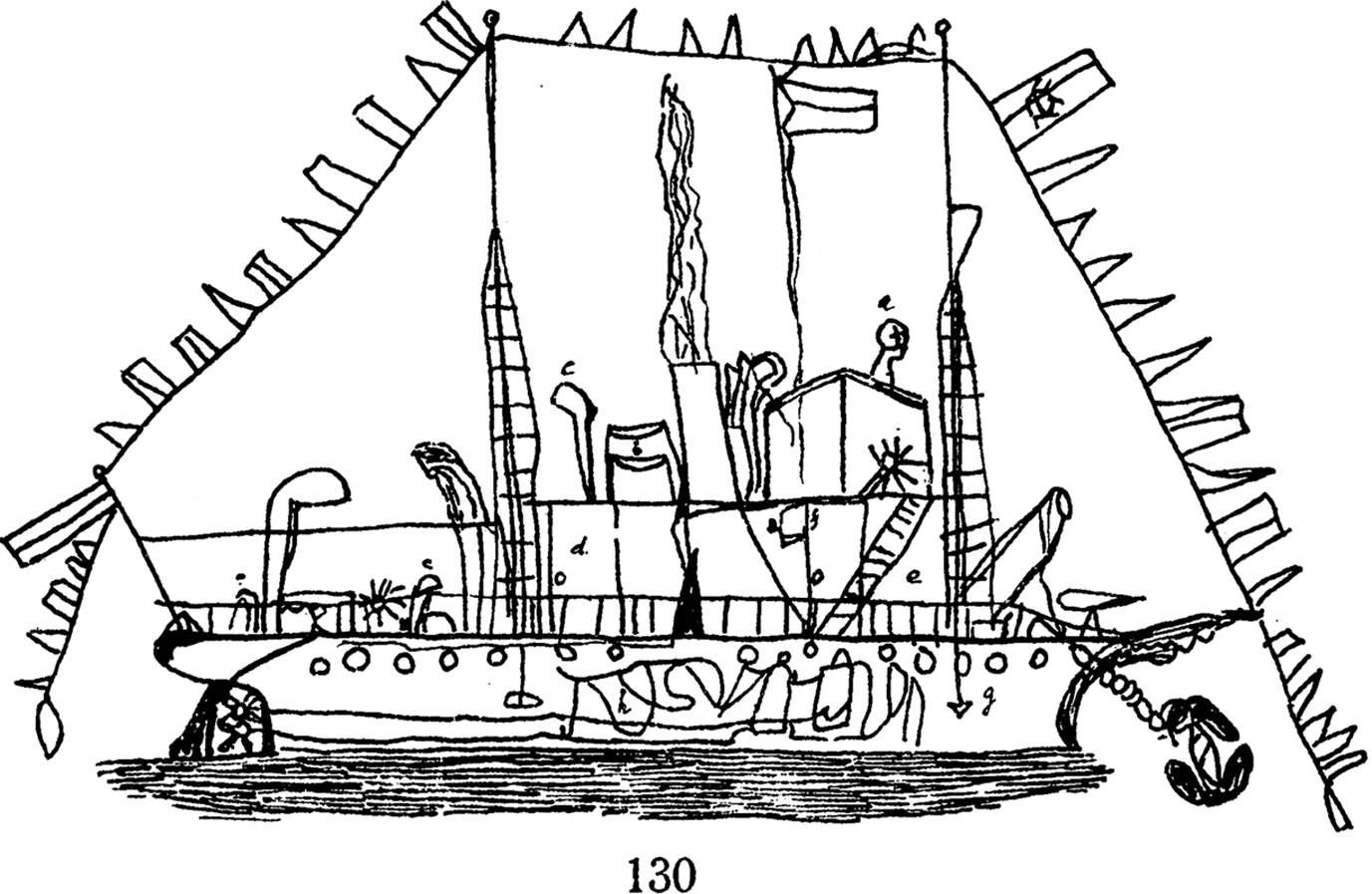
Left: Torukia's drawing of the Seestern, 27 October 1908. The Reichsflagge in the upper right corner bears an imperial eagle (Thurnwald, 1913: Plate 10). Right: Molebai from Buin, drawing of the Seestern, 27 October 1908 (Thurnwald, 1913: Plate 10).
Neither cultural meaning nor aesthetic appeal figure meaningfully in these experiments; rather, it is developmental psychology that sets the parameters by which indigenous images are judged. Like contemporary practitioners of child study in Europe and America, Thurnwald viewed drawings as literal objectifications of intelligence. He thus quotes the Hamburg museum director Alfred Lichtwark's assertions that ‘students who make the best drawings were [also] the best in science classes’ and ‘were able to communicate far more of their knowledge than the poor draftsmen’ (Thurnwald, 1913: 46). And while he preached caution around applying the methods of child psychology to indigenous adolescents and adults, Thurnwald's own statements and methods subtly reinforce the inferiorizing parallel between children and non-Europeans (Thurnwald, 1912a: 60; 1912c: 26; 1922: 226, 229).
As distinct as they are from previous anthropological applications of indigenous drawings, these experiments in visual expression can perhaps be best understood as anticipations of the so-called drawing aptitude tests developed in the 1920s (Geisthövel, 2013: 44). Such examinations correlated drawing talent to general intelligence in children as well as adults, and would go on to be implemented everywhere from US Army recruitment to immigration control at Ellis Island (Wittmann, 2018: 265, 274). Perhaps the best known of these is the ‘Draw-a-Man Test’, developed by the American psychologist Florence Goodenough (Figure 14). 20 Barbara Wittmann has elucidated how the Draw-a-Man Test consummately ‘naturalize[d] children's drawing as an index of mental development’, not least by treating ‘artifices such as proportion and perspective not as moments in the general history of art and culture, but solely as functions of mental ontogenesis’ (ibid.: 251–2). While Thurnwald hardly attempted to standardize his drawing tests to the same degree as Goodenough, he did very similarly normativize Western ‘photographic’ realism and the conventions of academic painting (Thurnwald, 1913: 63, 86), condemning any deviations as pathological or ‘underdeveloped’.
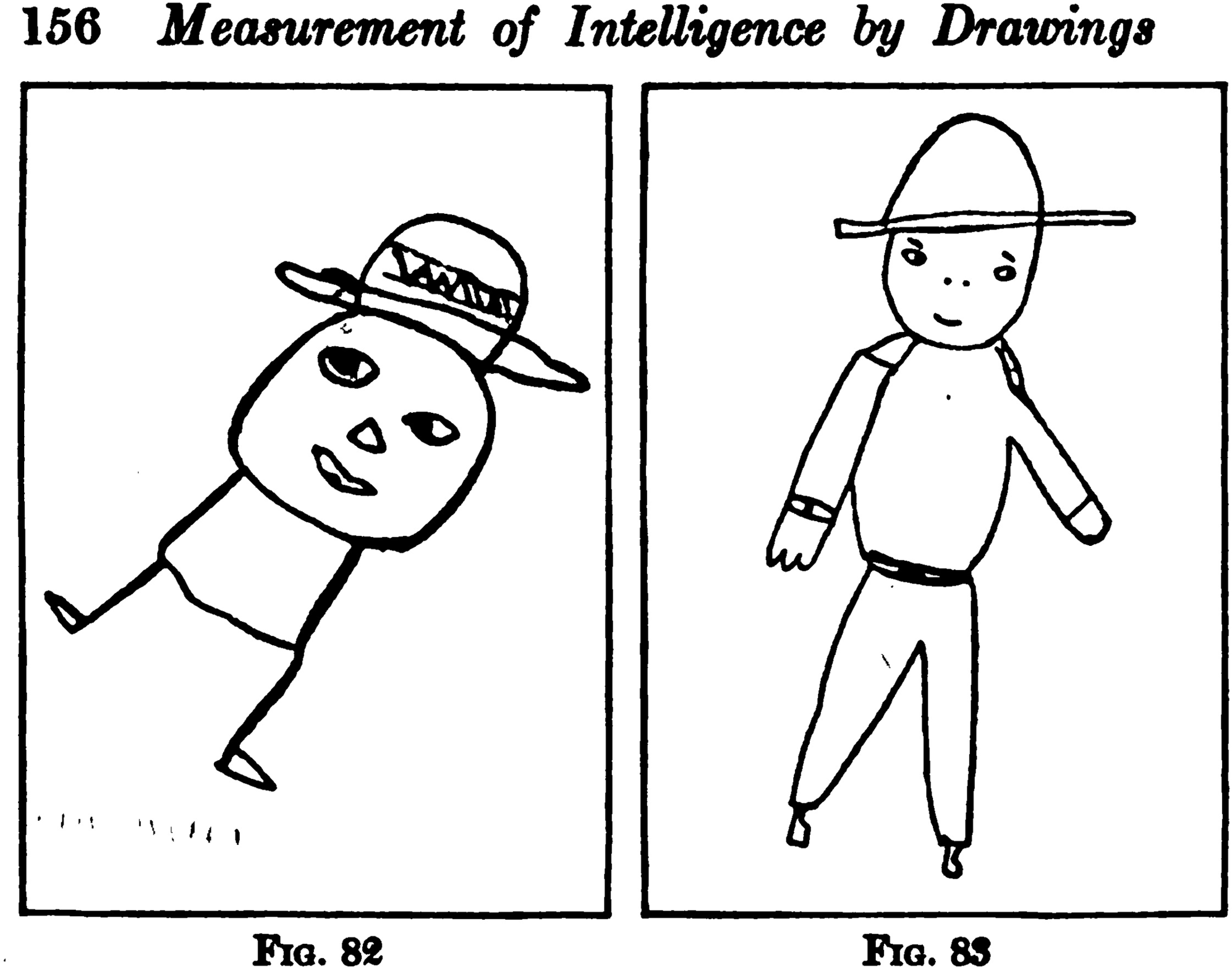
‘Draw-a-Man’ tests by an ‘Italian’ boy (aged 6 years, 4 months) and a ‘Mexican’ girl (10 years, 3 months; Goodenough, 1926: 156).
Thurnwald construed ‘the art of primitive peoples [Naturvölker]’ specifically as ‘an auxiliary to enable the expression of thoughts’ (Thurnwald, 1913: 78).
21
Employing the stage model of children's mental maturation put forward by the Munich-based educator Georg Kerschensteiner in his 1905 book The Development of Drawing Talent, Thurnwald gives an example of ‘the decomposing [zerlegend] descriptive procedure’ at work in drawings of three-dimensional shapes. One native of Buin named Bogohan, for instance, represented a cube as a series of five squares (explaining that ‘the sixth cannot be seen, since it lies on the ground’). The anthropologist took this as confirmation of a putative ‘primitive thinking’ based on concrete images instead of abstract ideas, and on ‘knowledge-based communication’ rather than realistic visual representation (Thurnwald, 1913: 51; Figure 15). The multiple elements of a drawing appear not as part of a synthetic whole, but as a sum of disconnected details. This confusion, according to Thurnwald, opens a mimetic window onto the draftsman's disordered consciousness (ibid.: 75). In this he agreed with contemporary colleagues in Germany, such as the Hamburg ethnologist Theodor Danzel: By virtue of his concrete inclinations, [the primitive] remains attached to details and does not yet recognize a unified organism in the picture, for he is not yet able to abstract from the individual, to see on the basis of an inner thought process.… The less detail the picture has, the easier it will be for him to understand it. Therefore, he recognizes rough rock drawings, but not consummate, primarily European pictures. (Danzel, 1912: 25; see Thurnwald, 1913: 80 for reference to Danzel's book)
22
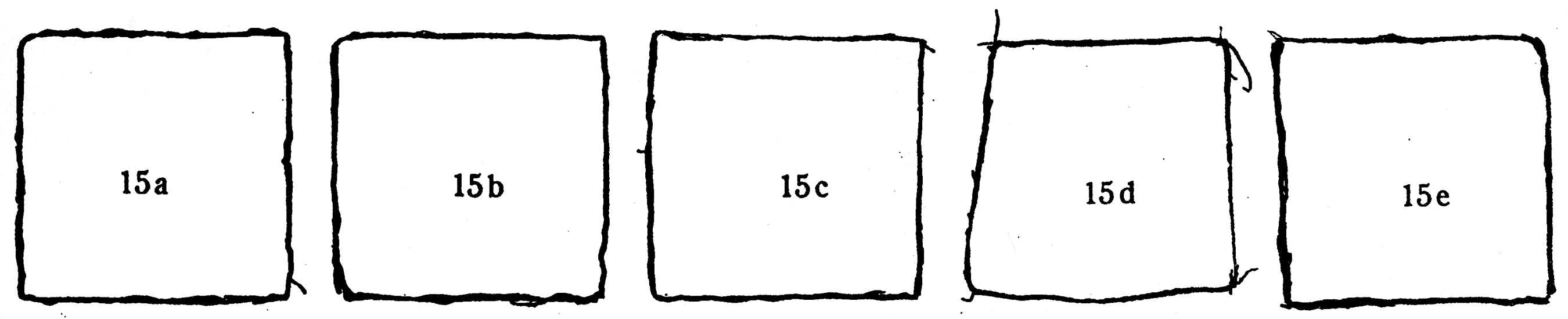
A cube drawn by Bogohan from Buka (Bougainville), 17 February 1907 (Thurnwald, 1913: Plate 2).
Psychology for domination
Especially since the discipline's reflexive turn beginning in the late 1970s, scholars have debated anthropology's role within Western colonial projects (see Asad, 1973; de L’Estoile, Neiburg, and Sigaud, 2005; Foerstel and Gilliam, 1992; Leclerc, 1972; Steinmetz, 2014). Yet the issue of psychology has seldom figured in these discussions until much more recently (Linstrum, 2016). Richard Thurnwald's psychological experiments in German New Guinea offer an instructive instance of anthropology's entanglements with broader programmes of colonial reform and development.
It should be noted at the outset that the basic psychological profile of Pacific peoples that Thurnwald reified in the idiom of empirical psychology largely preceded the experiments themselves. In fact, they serve to reaffirm some of his earliest subjective assertions about the ‘native’ mind. ‘It is only the white who has a will and pursues aims’, Thurnwald expressed in his expedition diary, ‘The native possesses only impulse, his will is weak and his intelligence poor; he is obedient and easily guided like a puppet’ (qtd. and trans. in Jahoda, 2007: 18). Writing to the eugenic psychiatrist Ernst Rüdin in 1908, Thurnwald ascribed a psychological ‘inability to adapt’ to Melanesian populations that, if taken to its logical conclusion, all but undermined the ideology of the colonial civilizing mission: ‘Why lie to oneself about an “education for work”? This would require generations and generations!’ (Rüdin, 1908: 147). 23 In short, Thurnwald embedded the most urgent issue on the colonial agenda – the refusal of local peoples to submit to plantation labour – into the neo-evolutionary discourse of developmental psychology. Yet even here, the anthropologist managed to discern a silver lining, adding that this same supposed inability to mentally adapt to new situations also made it unlikely that the ‘natives’ would revolt against their colonial overseers (ibid.: 148).
Thurnwald's ethnopsychological experiments in German New Guinea were designed to streamline the recruitment of a recalcitrant native labour force and assist in the creation of a new indigenous and mestizo ‘meritocracy’. In a 1910 article on ‘The Native Workforce in the South Seas Protectorate’, he asserts that ‘the correct utilization of the native labour force leads to the employment of each racial group according to its capability [Leistungsfähigkeit], to stratification according to its activity, to an orderly symbiosis.… This is the organization that comes with the economy of the European, whose mind [Geist] directs the muscles of the indigenous people and integrates their achievements towards his desired goals’ (Thurnwald, 1910a: 632). By elucidating the ‘different dispositions and abilities’ of ‘the Chinese, the Malayans, the Papuans, etc.’, Thurnwald aspired to apply ethnopsychological methods towards the racial restructuring of Germany's Pacific colonies (Thurnwald, 1912a: 67). As he saw it, coast-dwelling Melanesians should be employed primarily as workers and servants, the Kai people of the New Guinean mountains as soldiers, and the supposedly least intelligent inland mountain-dwelling peoples as a reliable corps of menial labourers to clear the forests. Deeming Polynesians and Micronesians constitutionally unsuited to menial physical labour, in conformity with received ideas (Thomas, 1989), he entrusted them to work in specialized crafts and trade instead (Thurnwald, 1910a: 631–2). Such prescriptions were, moreover, frequently mingled with considerations of ‘racial hygiene’: thus, following Hahl, Thurnwald insisted that women should no longer be recruited for paid labour, and specifically blamed working women for the declining birth rate in the islands (see Thurnwald, 1910a: 619–20). 24
Within these writings, ‘intelligence’ comprised the privileged category according to which ethnic groups were to be ranked and specialized (Thurnwald, 1910a: 609–10). ‘The invasion of the whites has brought with it a change in selection [Auslese]’, he asserted, particularly with regard to intelligence: Murder and manslaughter are decreasing, the strong and intellectually superior individuals are recruited for the plantations, the weaker and more stupid ones stay at home. On the other hand, the weaker but more intelligent ones seek shelter with the white man, while the strong and dull ones remain in the wilderness and are often exterminated because of their antisocial behaviour, which is now punished to a greater extent. (Thurnwald, 1913: 124)
Some historians have excused Thurnwald's colonial writings as insincere and (merely) opportunistic, contrasting them with the supposed cultural relativism of his Ethnopsychological Studies. In so doing, they risk taking the anthropologist at his word. As I have argued, a closer look at the background of Thurnwald's first Melanesian expedition makes clear that the aims of his psychological experiments were nowhere near as benign and relativistic as some seem to have believed (Probst, 1992: 71–5). Nor can one agree with earlier accounts that Thurnwald's apologies for German colonialism were ‘largely independent from his theoretical concepts’ (Gothsch, 1983: 232). On the contrary, Thurnwald's ethnopsychology was a quintessentially colonial science, combining rudimentary psychometrics with ethnological surveying in ways designed to order, discipline, and subjugate indigenous populations.
More recently, George Steinmetz has insightfully analysed Thurnwald's anomalous self-positioning as an ‘academic colonizer in the colonial field’ – a field to which he did not properly belong, ‘in the sense that he had never been employed by the government of the empire’ (Steinmetz, 2010: 23). But while this may have been true for the period from 1905 to 1910, it is also the case that the anthropologist's aggressive ‘self-advertisement’ to colonial circles paid off in at least one sense: his second expedition to the Sepik River region of New Guinea in 1912–14 received direct funding not only from the Berlin Museum for Ethnology, but also from the German Colonial Office.
It is difficult to say whether and how Thurnwald's ethnopsychological prescriptions would have been taken up, had the First World War not spelled the end of Germany's colonial empire. As it is, the impact of his 1913 study were felt mainly in the metropole, where they helped shore up various speculative architectures of the ‘primitive mentality’, from the neo-Kantian philosopher Ernst Cassirer's theories of ‘mythical thinking’ (Cassirer, 1955[1925]: 46) to the ‘comparative psychology’ of the Hamburg psychologist Heinz Werner (Gess, 2022[2013]). In his 1926 Introduction to the Comparative Psychology of Mental Development, Werner takes up Thurnwald's examples to illustrate the contrast between Western ‘objectivity’ and ‘primitive’ pictorial thinking (bildhaftes Denken). In one example, he reproduces Bogohan's decomposed rendering of a cube (Figure 15) as evidence that ‘in the primitive mentality, particulars often appear as self-subsistent things which do not necessarily become synthesized into larger entities’ (Werner, 1948[1926]: 139). Cited with striking frequency, Thurnwald’s 1913 publication became a primary source for Werner's primitivist notion of an illogical, ‘affective-motoric’ disposition shared by indigenous people, children, schizophrenics, and animals. Werner's colleague, the psychiatrist Alfred Storch, drew on Thurnwald's assertions about ‘primitive thinking’ to support similar comparisons (Storch, 1924[1922]: 5, 32; see similarly Wolff, 1947: 21–2). Thurnwald's Ethnopsychological Studies were further mined as a source for examples of identification and sympathetic magic (Oesterreich, 1917: 103, 109, 119–20), and as late as the 1980s, of ‘distortion in art’ (Derȩgowski, 1984: 25–6). 26
Psychology remained a pillar of Thurnwald's research for the remainder of his career. In 1922, he published his habilitation thesis on the ‘Psychology of Primitive Man’, and went on to teach courses on Völkerpsychologie and the ‘Art of the Primitives’ at the University of Halle (Melk-Koch, 1989: 255; Verzeichnis, 1921: 23). In the early 1930s, he conducted fieldwork in the British (and formerly German) colony of Tanganyika in East Africa, leading to what is still his internationally best-known work on acculturation and cultural change (e.g. Thurnwald, 1931, 1936, 1938). His sensitivity to the dynamics of acculturation made him something of an ideological chameleon, able to rub shoulders with anti-colonial activists in the early 1930s and propose apparently progressive policy recommendations for British Africa (Steinmetz, 2010). But after he failed to secure a long-term teaching post in the United States, the ever-adaptable Thurnwald returned to Nazi Germany in the mid-1930s, where he rapidly accommodated his research to the regime's racial politics. During this period, he mentored a number of Nazi (and later West German) anthropologists, including the influential Wilhelm Mühlmann and Eva Justin. His 1939 book Colonial Organization, based on his extensive experiences in Africa, has been aptly described as a blueprint for South African apartheid (Thurnwald, 1939; Timm, 1977). Even during this period, Thurnwald continued to write on ethnopsychology and ‘primitive thinking’, now drawing on Felix Krueger's reactionary holist psychology rather than the experimental psychology that had been more fashionable around the turn of the century (Thurnwald, 1937, 1939/40; Wolfradt, 2022).
After the German defeat in the Second World War crashed his hopes of professional glory as the colonial architect of Nazi-ruled Mittelafrika, Thurnwald reversed course and went on the defensive. ‘The reputation of ethnology was damaged by the suspicion that it was in the service of colonial propaganda’, he blustered in 1948: It was mainly representatives of other fields of knowledge who offered themselves as providers of colonial propaganda. The ethnologist is not very suitable for this, because his interest is in the life of the natives, and he usually defends their affairs, as he is often reproached by planters and merchants. (Thurnwald, 1948: 3)
Looking back over a century later, the very fact that a German anthropologist felt compelled to ‘enter the minds’ of colonized Melanesians in the first place is a testament to the successful resistance of local populations to their incorporation into plantation labour. Moments of direct testimony by the locals themselves in Thurnwald's text are as rare as they are revealing. ‘Life among you must be poor and bad’, one indigenous interlocutor tells the anthropologist, ‘otherwise you would not invade our blessed land to rob, plunder, and enslave us’ – an arresting statement that Thurnwald merely presents as an example of the absurd illogicality of the ‘primitive’ mind (Thurnwald, 1913: 122).
Indeed, what is most striking about these Ethnopsychological Studies today, aside from their rancorous racism, is what Thurnwald did not see. Although they have long been overlooked, the drawings that he viewed only as ‘intelligence tests’ can sustain very different kinds of reception in our postcolonial era. Writing about drawings made by Australian Aboriginal artists in the 1880s and 1890s, Andrew Sayers describes how ‘no-one was quite sure whether they were to be considered as art, ethnographic records, as examples of acculturation, or as ephemera’ (Sayers, 1994: 9). Yet precisely such images are necessary to augment – and, not infrequently, to counteract – the visual record of colonialism produced almost entirely by white Europeans (ibid.: 11). The drawings Thurnwald commissioned or collected from consultants in the Bismarck Archipelago and Solomon Islands can offer an entirely different range of meanings for us today: not least as documents of indigenous witness to the violent transformations of everyday life under German colonial rule.
Footnotes
Declaration of conflicting interests
The author declared no potential conflicts of interest with respect to the research, authorship, and/or publication of this article.
Funding
The author received no financial support for the research, authorship, and/or publication of this article.
