




Abstract
This paper explores the use of visual ethnographic methods as a transformative tool, facilitating a dynamic interaction between researchers, policymakers and citizens. Reflecting on the use of visual ethnographic methods as both a way of knowing and a means of communicating, the paper draws from the author’s experience producing a short visual ethnographic documentary about a community garden. Through this case, the paper explores how visual ethnographic methodologies can enable researchers to reshape relations and direct attention through multimodality, invite active engagement through opening new imaginaries, and empower citizens as active participants in policymaking processes. The study shows that visual ethnographic work can be a co-constitutive force for organizations, an interventional practice that reshapes what policymakers notice, how they feel about an issue, and what they consider possible regarding solutions. It can create new epistemological entry points, grounded in embodied, affective, and relational experiences. The paper concludes with reflections on the methodological and institutional challenges of integrating visual work into public administration research and offers practical considerations for doing so.
Introduction
The documentary Letter from the Mayor follows the citizens of Finsterwolde, a village in the North of the Netherlands, as they navigate a new participatory governance initiative introduced by their mayor. The documentary sought to empower citizens to address local issues collectively, but as the film reached policymakers, it also sparked debate about participation strategies and the extent of state control over citizen-led initiatives (van den Berge, 2014). The case of Finsterwolde illustrates a broader challenge policymakers face: ensuring that policy strategies and interventions are responsive to the lived realities of citizens, while simultaneously carrying out their responsibilities as public administrators in a work environment with its own context and milieu. To navigate these tensions, governmental organizations increasingly collaborate with researchers specializing in public administration and policy dilemmas, participatory and otherwise (Ashworth et al., 2019; Feldman et al., 2001).
However, despite the many research-policy teams and bridging efforts, it’s proven difficult for researchers to get their work understood and implemented (Holmes and Clark, 2008), and for policy makers to “cut through the mass of information and make sense of it” (Weiss, 1989: 429). This is typically referred to as the ‘policy-paradox’: an incredible amount of knowledge is produced by scientific experts, but little is effectively used for policymaking (Stone, 2022). No wonder, since academic papers often dive into specifics and technicalities, making them less suitable for the time-constrained and more practical nature of public administration (Scott et al., 2006).
In response, public administration (PA) research has increasingly embraced visualization tools to make policy information more accessible (Boxenbaum et al., 2018). Information visualization, driven by advancements in digital technologies, is widely used in policy reports, governmental dashboards, and decision-support tools (Lindquist, 2017). Much of this work remains focused on the logics of accessibility and clarity. Although data visualizations may indeed be easily digestible, they are limited in their ability to convey lived experiences, social complexities, and affective dimensions of governance (Robson, 2020).
Additionally, research dissemination should preferably go beyond researcher - policy-maker relations to include citizens as well, especially considering the growing importance of citizen participation in both PA practice and research (Hügel and Davies, 2020). Ensuring that scientific findings are comprehensible and accessible to citizens increases the research’ impact, especially concerning sustainability issues (Tucker and Farrelly, 2016). Indeed, many studies on science communication underscore the importance of narratives or stories (Czarniawska and Skoldberg, 2003) and utilizing visual mediums that convey these stories well to ensure that critical knowledge reaches and resonates with citizens (Pink, 2007).
Visual ethnography (VE) is a well-established method of ethnographic research that could offer a compelling method for PA to deal with the above-mentioned issues. It has long been recognized for its ability to engage with the sensory, affective, and embodied dimensions of social life, emphasizing narrative storytelling and embodied experience (Knoblauch et al., 2019; Pink, 2007). This method originates from anthropology and sociology, where photography and film have long been used to explore intersubjective and relational dimensions of cultural phenomena (Banks, 1995). Although the term ‘visual ethnography’ may suggest a privileging of vision, in practice it refers to audio-visual methodologies that integrate sound, rhythm, and montage as constitutive dimensions of knowledge production (Pink, 2007).
VE, rooted in lived, embodied experiences, enables a more complex and nuanced understanding of social issues (Holm et al., 2018) as the process of creating, editing, and sharing film becomes part of the ethnographic practice that generates knowledge (Pink, 2007). It preserves the depth and situatedness of ethnography while also producing outputs that are affective, accessible, and actionable. Moreover, visual ethnographic methods are especially suited to not only reach citizens, but to research with them (Baumann et al., 2020; Wu et al., 2016). As a participatory approach it can help citizens shape their own narrative, empowering them to anticipate, influence, and drive change (Boje, 1991; Wu et al., 2016).
This paper draws on perspectives of ‘the visual’ that conceptualize it as an epistemic and affective force that shapes what is seen, what is felt, and what is possible (Ewenstein and Whyte, 2007; Shao et al., 2024). It asks: How might visual ethnography expand the methodological repertoire of public administration research by integrating sensory, multimodal, and participatory ways of knowing into governance research? I thus reflect not only on how visual ethnographic methods represent or disseminate research differently but also consider how incorporating the practice of VE in research can move its audience to action (Hietanen et al., 2022; Knoblauch et al., 2019). I use a Visual Governance Framework to interpret a case study that utilizes visual ethnographic methods within environmental governance, looking at the visual as an epistemic and relational force that reorganizes attention, disrupts dominant framing, and opens space for alternative forms of knowing and acting within policy contexts. I do so by analyzing Lastly, I provide insights into the challenges and opportunities of employing this methodology within PA contexts.
Visual Governance framework
Literature in organization studies has emphasized the fundamental role of the visual in shaping how organizations perceive and interpret information and more importantly, has highlighted how the visual can also mediate meaning, power, and affect (Bell et al., 2014), shaping the way organizations act (Shao et al., 2024). Meyer and colleagues (2013) identify three central dimensions through which visuals operate in organizing: their multimodality (the capacity to combine image, text, and sound in ways that amplify meaning), affordances (the possibilities it can open for particular forms of seeing and doing), and its role in legitimation (it’s to stabilize or destabilize authority). These insights highlight that visuals are not secondary to textual or numerical forms of knowledge but central to the ways in which institutions make sense of complexity and establish credibility.
Building on this recognition, Boxenbaum and colleagues (2018) articulate the “visual and material turn” in organizational scholarship, noting how visual artifacts bring into view aspects of organizational life that otherwise remain unseen, are contradictory, or are tacitly embodied. Visuals do not merely illustrate pre-existing knowledge but provide an alternative mode of engagement with the sensory, affective, and contested dimensions of practice. In public administration research, this suggests that visual methods can surface tensions between bureaucratic order and lived experiences that textual analysis may struggle to capture.
Shao et al., (2024) extend these debates by highlighting functions of the visual as it is used in organization research, showing. When conceptualized as facets, the visual mirrors or reveals social realities, offering descriptive insights into practices and inequities. As enabler, it can facilitate dialogue and affective engagement across institutional boundaries. As a force, treating the visual as co-constituting, it is particularly well suited to address the complexities of organizational life. They conclude that “although all three approaches attend to the visual, it is only in the third conceptualization that a new visual organizational reality is enacted” (Shao et al., 2024).
Read through Shao et al.’s notion of ‘force,’ Visual Ethnographic work can actively reorganize what is thinkable and actionable, shaping institutional responses. This provides a useful framework to analyze what VE does or can do in public administration research, as well as ultimately for PA practice. The aim is not to provide a philosophical account of ‘the visual’ nor develop new frameworks regarding the analysis of visual ethnographic works. Instead, this paper works through a case study, using the theoretical conceptualizations noted in this visual governance framework, to argue that Visual Ethnography can become a co-constitutive force for governmental organizations.
Methods and case description
This paper aims to demonstrate the value of VE using a case study concerning environmental governance. It discusses this case showing how VE can enable researchers to (1) reshape relations and direct attention through multimodality, (2) invite active engagement through opening new imaginaries, and (3) empower citizens as active participants in policymaking processes. The methodological focus of this paper is not limited to how visual ethnographic works convey findings but extends to what they can do in the research process and policy encounter. The camera, editing, and viewing context are treated as constitutive of the research, shaping how knowledge emerges and how it circulates within public administration settings.
Positionality and ethics
Researcher positionality plays a role in shaping research, influencing interactions and introducing ethical considerations specific to fieldwork. In this study I occupied a position of both insider and outsider. As a Dutch person, I shared linguistic and cultural commonalities with some participants, facilitating communication and rapport, though not all participants were Dutch. Furthermore, my status as a researcher/cameraperson could influence power dynamics and representation. All participants signed an informed consent that included information on the use of the images and subsequent impossibilities regarding anonymization. Efforts were made to ensure that participants had control over how they were portrayed, for example through showing footage throughout the research. Additionally, careful attention was paid to data security, all data is stored in safe and encrypted repository. This research was approved by the Research Ethics Review Committee of (anonymized).
Because anonymity was not possible for video material, informed consent forms explicitly offered participants the option to choose the forms of circulation they were comfortable with (e.g., internal research use only, public presentations, or online dissemination). In addition, we treated consent as an ongoing, dialogic process: participants viewed draft edits, commented on their portrayal, and could withdraw scenes they were uncomfortable with at any stage. This combination of formal choice and ongoing dialogue aimed to ensure that participants retained agency over their representation and that consent extended into decisions about the visibility and afterlife of the film.
Case: Sustainable food practices through community gardening
This case study draws on my own recent visual ethnographic work within a broader research project on sustainable food policy interventions, conducted across three Dutch municipalities. As part of the project, I produced the short documentary De Vredestuin (Schelwald, 2022), based on ethnographic fieldwork in a community food garden. The film portrays how participation in the garden reshaped individuals’ everyday food practices and relationships to sustainability. It was screened for policymakers involved in the research, offering them a sensory and narrative window into the lived realities behind the data.
Analytic process
The analysis draws from multiple sources: ethnographic fieldnotes written during the filming process, observational notes from the film screening, and collaborative notes from the broader interdisciplinary research team spanning January 2022 to January 2025. The analysis of visual material in this project did not rely on a fixed coding frame but rather follows methodological traditions within visual ethnography that understand film not as data to be deconstructed, but as a relational, affective, and co-constructed form of inquiry (MacDougall, 2006; Pink, 2007; Suhr and Willerslev, 2012).
Approximately 100 hours of footage was collected during fieldwork between February and September 2022. Scene selection for the final video was guided by both theoretical relevance, focusing on footage that showed entanglements of food, community, and sustainability, as well as by participants’ own emphasis on what they deemed meaningful. The editing process functioned as an iterative and embodied analytic practice, with insights emerging through repeated viewings, collaborative reflection with the research team, and field notes written during filming and editing. Participants were involved in the process through the sharing of draft edits and open conversations about their representation.
What VE can do
Relationality and multimodality
Visual methods concern the use of audio-visual tools to disseminate research output, but also a way to do research: to document and analyze data (Pink, 2003, 2007). Filming as a research practice provides a conversational encounter wherein the researcher and the camera assume the roles of participant in the knowledge-generation process. As Pink states: “The camera is part of the intersubjectivity between researcher and informant; it becomes an integral part of their relationship and is essential to how they communicate with one another” (2007: 64).
This is exemplified in the case study, where the camera was present throughout fieldwork, but during the first few meetings it was only used when the participant wanted to showcase something on camera. This positioning transformed the camera into an extension of participants’ agency, facilitating a merging of perspectives of researcher and participant. In this way, knowledge can be co-created instead of extracted, through a shared process of framing, and reflecting. VE invites a form of research engagement that moves beyond observational ‘data gathering’, and toward a dialogic, often affectual relationship between researcher and participant (Franzen and Orr, 2016). Collaboration between the camera, researcher and participant is thus epistemic: it shapes what can be known and how it is known. In this way, VE fosters a situated, embodied, and relational form of knowledge production that is particularly suited to the complexities of research concerning social issues (Schneider and Wright, 2021).
Though deep engagement and reflexivity are not exclusive to VE, these have long been hallmarks of ethnographic research (Emerson, 2009), the tendency is to think of the use of the camera as more of an obstruction to doing fieldwork (Luff and Heath, 2012; Messier, 2019), rather than an amplifier of trust and co-creative dynamics. The case study exemplifies how the co-presence of researcher and camera created a relational space where participants spoke freely about what could be controversial topics in their municipality. For example, the protagonist of the Peace Garden talked about her critique of the neighborhood planning in her municipality. Visual ethnographic methods can thus do more than document, they can act upon the ‘ethnographic place’ (McCarthy and Muthuri, 2018; Pink, 2015). The presence of the camera and microphone reshapes relations of attention and legitimacy as it invites participants to frame their narrative and reposition themselves within it.
Immersion is also facilitated by VE’s capacity to reframe how knowledge is communicated. It translates situated, embodied experience into a format that is accessible and compelling for a wider audience, including those in policymaking positions (Pink, 2022). Research has shown that visually engaging materials increase both the legibility and uptake of complex research findings (Holm et al., 2018). Attending to embodiment and affect also shifts the central question of research dissemination. Rather than only asking how to make information accessible, we consider how to make different publics feel differently, how to move them toward action, and what qualities of VE enable such affective resonance (Knoblauch et al., 2019) (Figure 1). Still from The Peace Garden depicting participants working together cracking walnuts (Schelwald, 2022).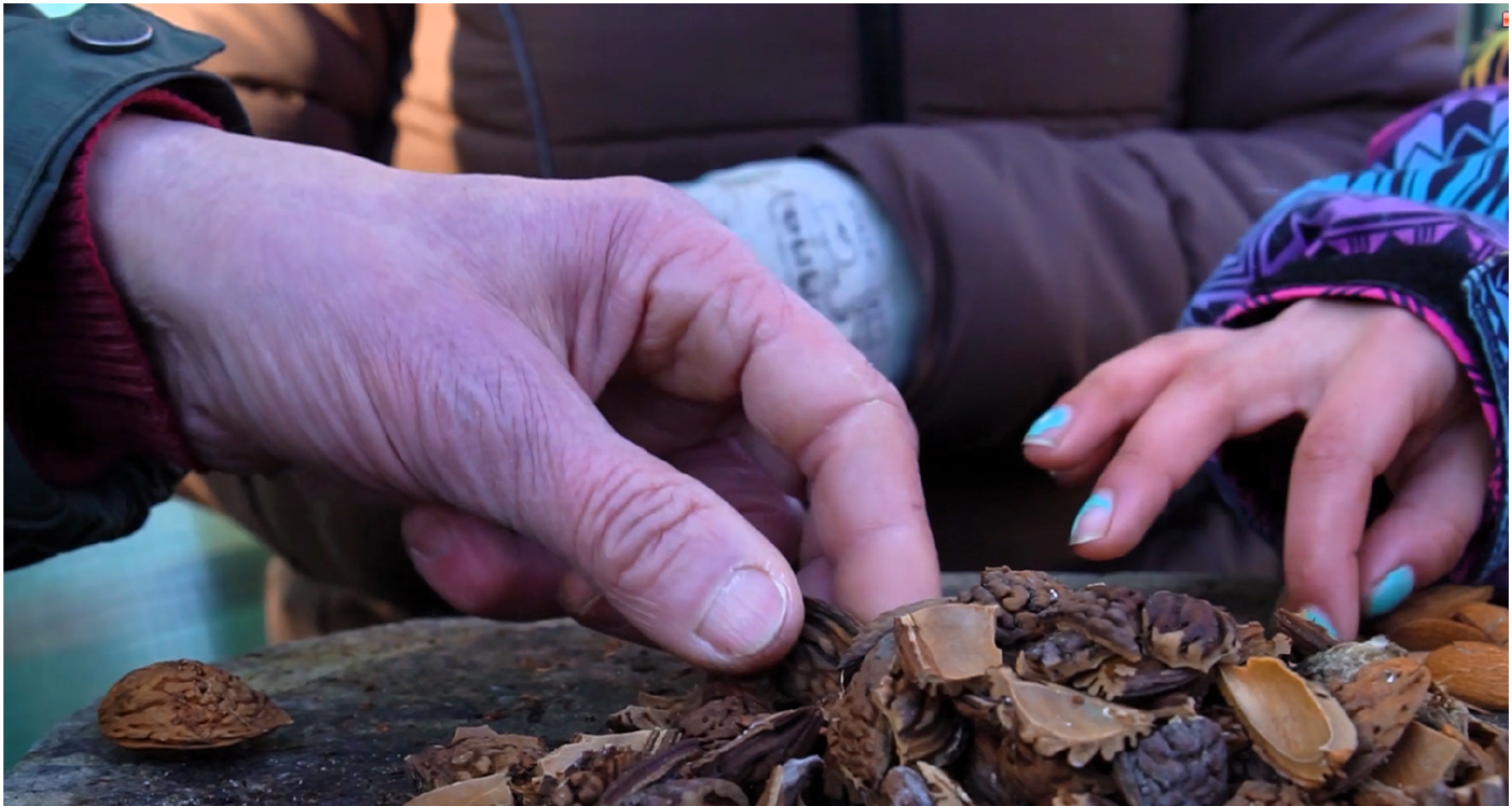
The Peace Garden, used an embodied portrayal of sustainability to encourage viewers to move beyond instrumental logic, which continues to dominate ideas on sustainability (Fischer, 2022), and to consider the everyday human experiences that shape sustainable transitions. This was conveyed through the layering of images, sounds, and rhythms. For example, a sequence of participants quietly working side by side in the garden, accompanied by the soft hustle and bustle sound of city life, created intimacy and moved the audience to the urban garden setting. The combination of soundscape, pacing, and visual framing invites the audience to attune themselves to the atmosphere of everyday food practices. As Meyer et al. (2013) emphasize, multimodality can amplify affective resonance by engaging several sensory registers at once. The film’s layered depiction of food-related practices foregrounded the emotional, cultural, and communal dimensions of food growing, aiding in the disrupting of linear, technocratic models of sustainability through multimodality.
To achieve this, montage is crucial: it is what gives film the capacity to make abstract or complex processes tangible through careful placing of images, sound, and narrative structure (Meyer et al., 2013; Suhr and Willerslev, 2013). In the context of sustainability, as in the case study, editing choices influenced how interconnected environmental, social, and material concerns were framed, determining whether they are seen as systemic challenges or isolated problems. For example, editing decisions, slow pace and ambient sounds instead of music, enhanced the embodied nature of the film, reinforcing the sensory reality. Editing of sound (including music) and image (including light, colour, framing etc.) can thus construct relational knowledge, allowing viewers to inhabit perspectives they might not otherwise access (MacDougall, 2006; Meyer et al., 2013).
Editing involves selecting, omitting, and sequencing material in ways that inherently carry ideological weight (Nichols, 2024). For example, the decision to foreground community-driven sustainability initiatives was not neutral; it reflected an epistemic commitment to understanding sustainability from the standpoint of those most affected by it. Indeed, as Rose (2022) reminds us, the camera is never a neutral device but a means of directing attention, foregrounding some practices while silencing others. Simultaneously, the film aims to avoid romantization through montage, for example with the sharp disruption of a train racing past the track right next to the community garden. This way VE offers the opportunity to portray the contradictions and limitations inherent in local responses to systemic crises (Figure 2). Train racing past the community garden site (Schelwald, 2022).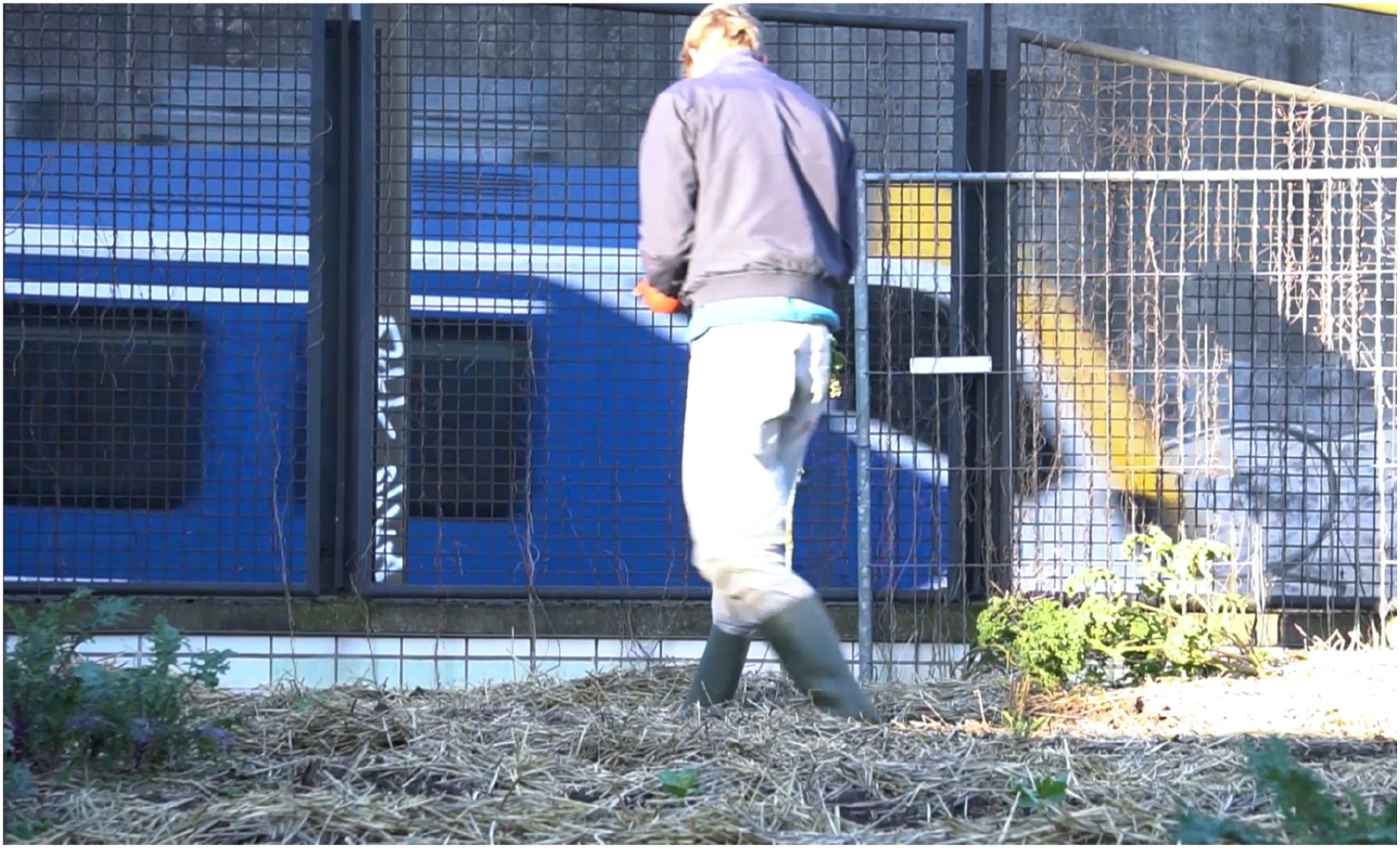
Lastly, montage is a key way in which affect is shaped in visual ethnography. As Knoblauch et al. (2019) note, VE can draw the viewer into particular ways of sensing. In the Peace Garden, sequences that moved between close-up shots of hands pressing seeds into soil, the sound of water running from a can, and wider shots of the group tending to rows of plants were used to build a rhythm of care. It emphasizes bodily effort and attentiveness to the more-than-human, encouraging viewers to sense the embodied dimension of food practices. The montage of this sequence layered textures of work and gestures, sounds of natural and man-made environment, and close shots of soil, water and hands, to bring affective qualities such as care and collectivity to the foreground.
Beyond the policy paradox
Policymakers often struggle with barriers such as time constraints, information overload, and the technical jargon embedded in research reports (Scott et al., 2006; Weiss, 1989). They prioritize information that is accessible, actionable, and immediately relevant. In the case study, a report of preliminary research results was made for the three municipalities that are part of the project. The 90-page written report, while comprehensive, turned out to be overwhelming and time-consuming. Six months after sharing, only three policymakers in the team had read the entirety of the report.
In contrast, the Peace Garden distilled one part of the research findings into a concise (6 min) and visually engaging format. Short formats like this ensure that essential information is delivered efficiently and captures attention, offering a more immediate way to construe meaning (Höllerer et al., 2013; Holmes and Clark, 2009). This aligns with Weiss’ (1989) observation that policymakers prefer to engage with relatable and visually stimulating portrayals of evidence. The immediacy of the medium in the case study allowed the policymakers to envision the possibilities and benefits of our research vividly and directly, bypassing barriers of academic jargon and providing an emotionally compelling narrative (Lefsrud et al., 2020).
In the case study this showed itself in practice. In the field dairy, the researcher writes:
“Towards the end of the presentation that we gave which included the 5-min-long documentary style video that I edited of *name participant* at the Peace Garden, one of the policy makers promptly opened his laptop and started rummaging around on it. We [the researchers] were surprised as it was a little disruptive (everyone else was still paying attention and looking at us). My colleague asked him what he was doing, and he exclaimed: “I am already looking for parcels [for the community food garden]!”
This moment marks a shift from passive reception of research findings to active engagement. The research had already been made available in a 90-page report, written in accessible language and carefully detailing the same intervention, among others. However, the ethnographic film brought this intervention to life. The documentary became a conduit to root the understanding of the issues it shows in the affective and material texture of everyday life. It invited engagement that prompted concrete policy exploration. Indeed, visual work is capable of organizing attention in institutional settings (Kaplan, 2011).
Rather than understanding the intervention conceptually, the policymaker appeared to feel its relevance, connecting the narrative to a possibility within their own professional landscape. They understood and felt the implications of giving communal solutions priority. Indeed, stories, either written or audio/visual, contain situated knowledge which can highlight and explore tensions and contradictions about issues that may have appeared more linear and straightforward to policymakers (Epstein et al., 2014). The way policymakers view an issue is rarely solved by generating more facts, since they arise not from a difference in knowledge, but a difference in frame of reference (van Buuren, 2009). This is where the visual acts as boundary object, as a shared reference point that facilitates communication across diverse social or institutional positions (Ewenstein and Whyte, 2009).
It is important to recognize that this affective impact was not simply the result of ‘showing reality,’ but of selective representational choices. By foregrounding the protagonist’s story in a concise and emotionally resonant sequence, while necessarily backgrounding other perspectives, the film guided policymakers’ attention toward a particular framing of sustainability and participation. As Rose (2022) reminds us, visual work always involves decisions about what to make visible and what to silence. Attending to this reflexivity highlights that the resonance of the film was not neutral but arises from these situated choices.
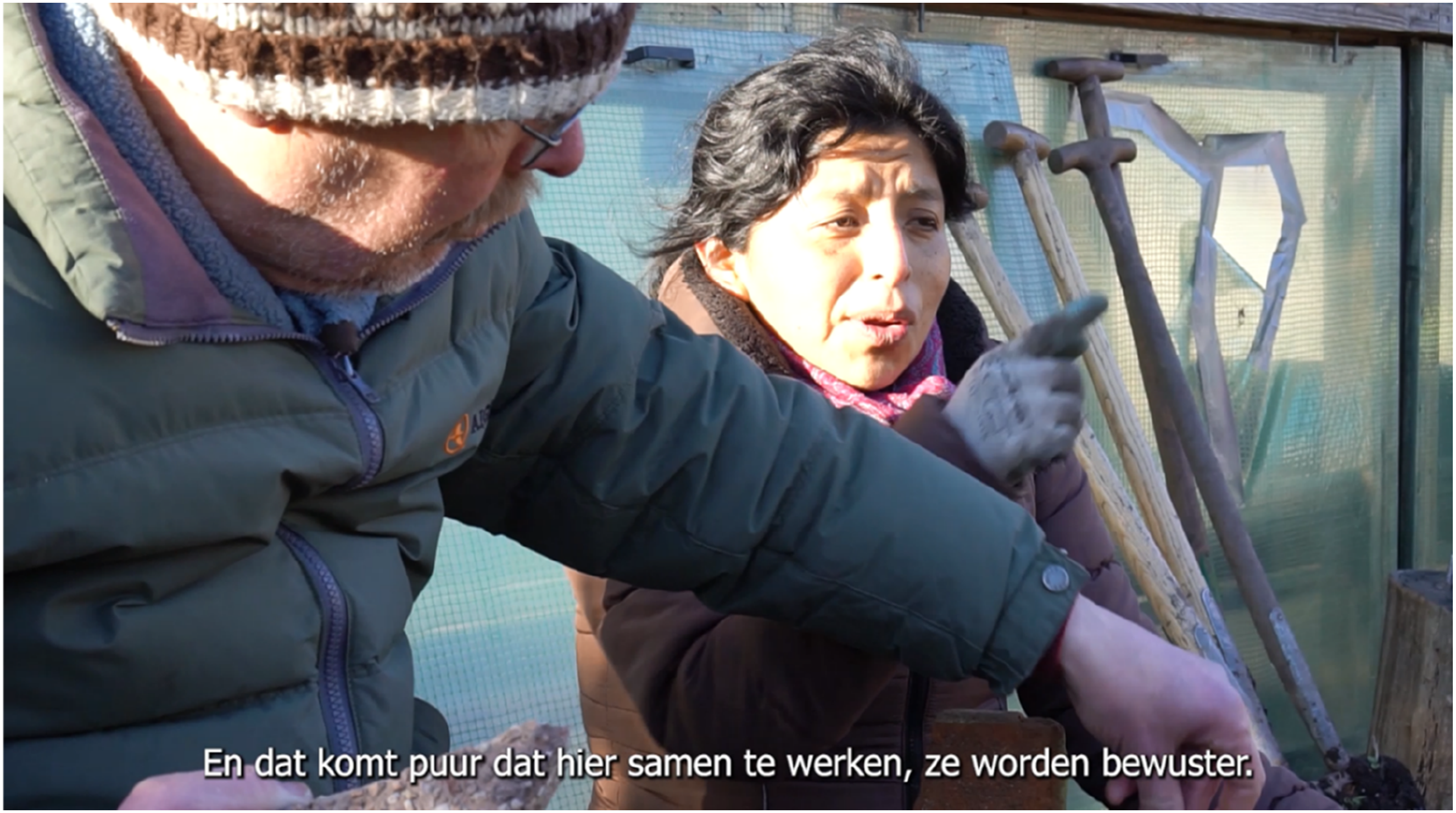
Storying the issue of food sustainability, The Peace Garden prompted to question the frames and priorities in dominant policy discourse on sustainability through humanizing and contextualizing. In this way the film enables new forms of relational knowledge and can thereby reorganize how sustainability, community, and policy possibilities are perceived (Ewenstein and Whyte, 2007; Shao et al., 2024). Drawing from Meyers and colleagues (2013) we can think of the visual here as shaping emotional and institutional receptivity. The film did not simply deliver information or supplement the report; it reorganized the affective and epistemic field in which the intervention was understood (Figures 3 and 4). The protagonist sitting around the fire with others, explaining how people get more knowledge on their food practices through the community garden (Schelwald, 2022). The protagonist saying ‘and that is purely because of working together over here.' (Schelwald, 2022).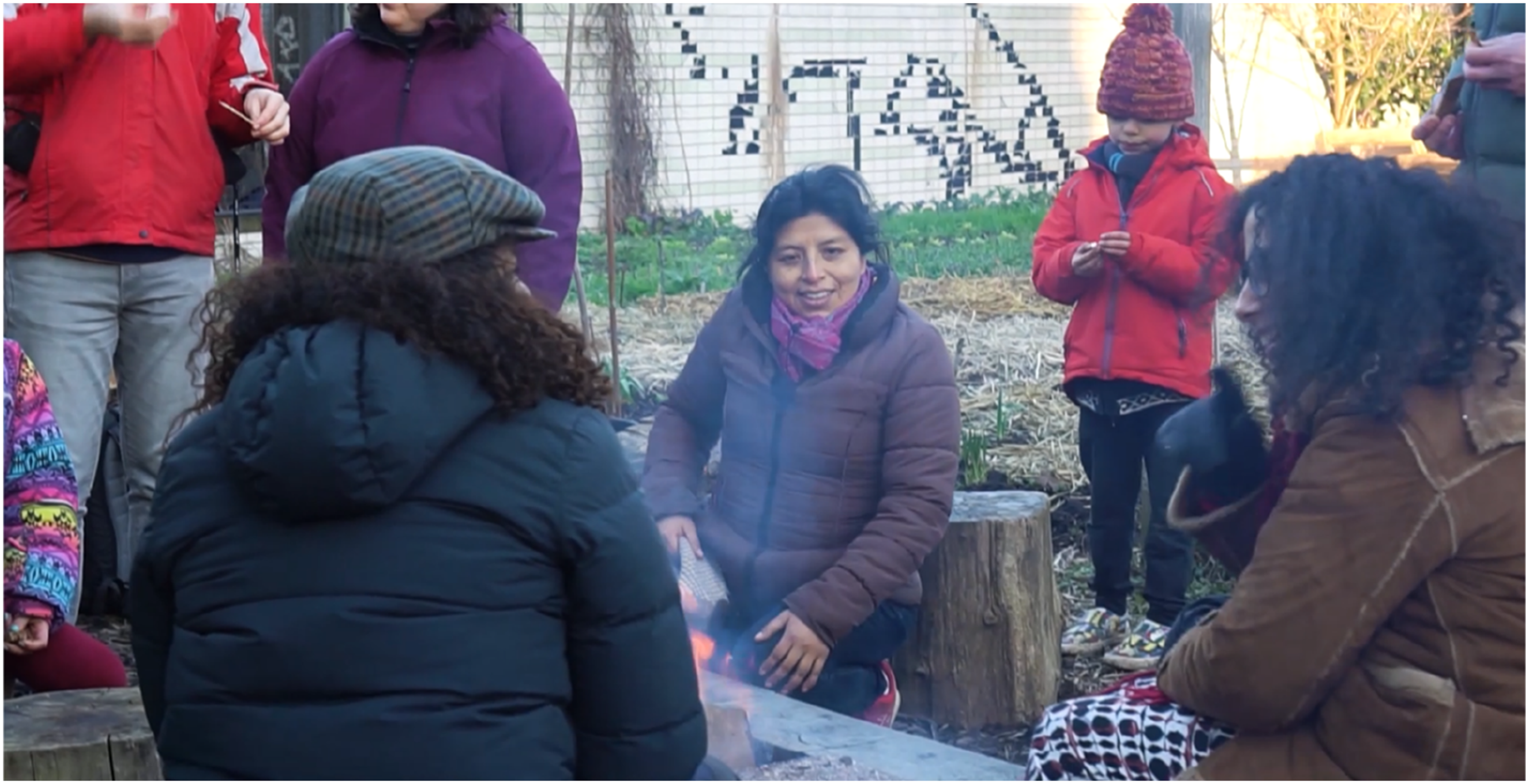
VE’s capacity to reconfigure what is visible, what is urgent, and what modes of action are conceivable can be further amplified through participatory screenings, involving stakeholders in co-interpretation (Fiske, 1994; Holmes and Clark, 2008). The shared experience of watching the film created a discussion among the researchers and policymakers that revealed new insights and interpretations. For example, in the field dairy the researcher notes that one policymaker reflected on the ‘simpleness’ of the intervention, how it seemed clearer and easier to implement after watching the film. The film helped start a discussion not just about why it is needed, but also what was needed in a practical sense, whereas before, the practical implications seemed illusive. The participatory viewing enabled the film further to become an organizing force (Shao et al., 2024), shaping what was considered thinkable and relevant in the context of sustainable food policy.
Indeed, Fiske (1994), Rose (2022) and Pink (2007) have argued that what sets visual ethnographic methods apart is a focus on not only content, creator and intention, but also its audience, including the context in which a project is presented and viewed. Likewise, Banks argues that consideration of both ‘internal and external narratives’ is necessary (2001). An image’s content embodies its ‘internal narrative’ or story, while its ‘external narrative’ encompasses the social milieu in which the image emerges, situated within the context of its viewing (Banks, 2001). This is of particular importance to the case study, as the “audiencing” (Fiske, 1994) in the context of public administration differs from contexts in which ethnographic film is generally viewed and interpreted (such as, anthropological classrooms of film festivals). The setting of including the film within a presentation and discussion about the research results and its next steps, allowed for the collective meaning-making process to foster actionable policy outcomes.
In the months following the screening, discussions with municipal officials and community members continued, and eventually a parcel of land was allocated for the creation of a community garden. However, municipal support was later withdrawn on the grounds that the number of citizens immediately committed to the initiative was considered too small. This trajectory underscores an important methodological point. The film clearly functioned as a co-constitutive force, shifting attention, prompting concrete policy exploration, and temporarily reorganizing what was considered possible within the municipal context. At the same time, the eventual withdrawal of support demonstrates the institutional thresholds that condition whether such openings are maintained. Visual ethnographic work in PA can thus be both generative and fragile. The film temporarily reorganized institutional receptivity, but that force was eventually neutralized through stubborn municipal routines ‘further down the line’. This dynamic points to a broader lesson for visual ethnography in public administration: its influence lies less in generating linear policy outcomes and more in constituting new openings and new imaginaries.
Empowering citizens
The involvement of citizens in participatory processes often ends with those citizens having limited access to the knowledge produced (Fung, 2015), a large challenge within public policy participations strategies (Epstein et al., 2014). In the case study, participants were actively shaping the narrative to convey their daily lives and the role of food within those, showing the foodscape of their hometowns the way they experience them. This was done through a participatory approach, enabling community members to articulate their experiences and priorities and translating these into a narrative accessible not only to policymakers, but also to the wider community. This way, citizens are empowered to anticipate, influence, and drive change (Boje, 1991; Wu et al., 2016).
Furthermore, the use of film as a discussion tool in the case study validated citizen perspectives, shifting their role from passive consultees to active co-creators of the film, as well as the policy advise. The field of engagement between the participants and researchers was extended, moving beyond the ‘traditional’ ethnographic place to include the production of a documentary (Pink, 2022). This process embodies Boje’s (1991) perspective on storytelling as a vehicle for agency, transforming lived realities into influential narratives. In the case study, the protagonist of the film took care to explain how they had been held back in realizing a more sustainable foodscape in their neighborhood. She initiated this conversation by asking about my current connection with local policymakers and explained how, if she were facilitated by the municipality, they could set up a community food garden, what she would need and what the benefits would be.
In line with literature on participatory photography (Jorgenson and Sullivan, 2010), the ethnographic film enhanced participants’ ability to communicate, helping them better express their concerns to policymakers. But the co-creation of visual narratives also shaped the epistemic terrain on which their claims could be recognized and acted upon. Visual ethnography here functioned as both an enabler of agency and a transformer of institutional imagination (Ewenstein and Whyte, 2009). In the context of public administration, where certain forms of knowledge tend to dominate, it is particularly useful to redistribute the architecture of what counts as relevant or credible input (Figure 5). Protagonist explains difficulties getting support from the municipality.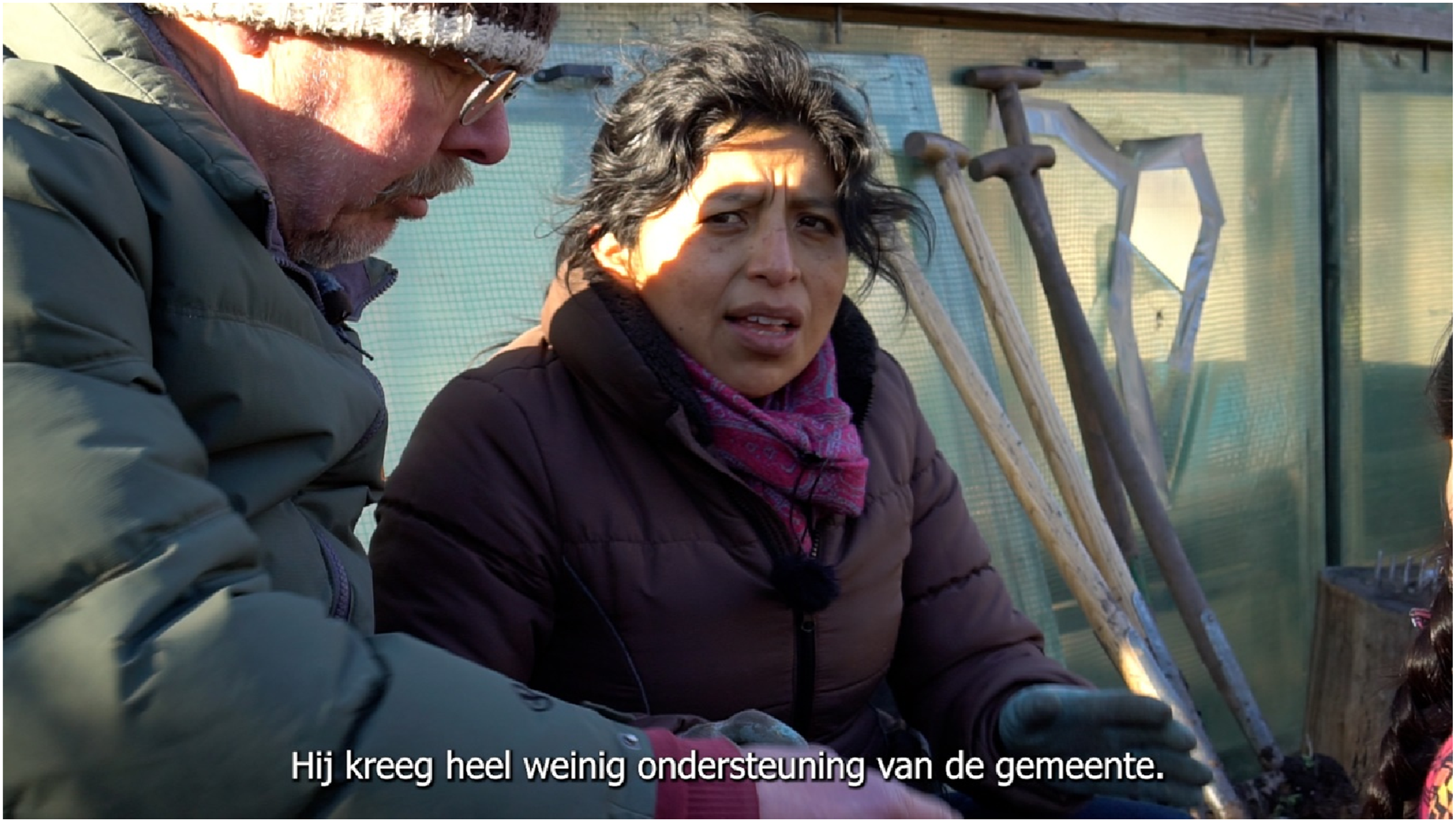
Recent studies have shown that visual storytelling can be particularly effective in bringing forward marginalized voices otherwise overlooked in policy discourse (Baumann et al., 2020). The case study underscores this point. While many of the ethnographic participants were Dutch, the film’s protagonist was not. Choosing this particular protagonist as the narrative center inevitably elevated one perspective above others. The filmmaker is thereby implicated in determining whose story is amplified and whose remains peripheral. Visual reflexivity requires acknowledging this selective amplification as part of the epistemic force of ethnographic film (Rose, 2022).
Focusing on her story helped illuminate how food practices are shaped by and shape relations of community, access, and belonging. Her reflection that “The neighborhood is not really keen [to share food]. […] That’s what I miss in the Netherlands,” highlighted broad structural issues like the absence of infrastructures for collective food practices. This helped move the conversation toward the socio-material conditions that make sustainable food practices either viable or difficult to sustain. In this way, the film not only amplified the voices of participants but also reframed the questions that policymakers were being asked to consider. Rather than asking how individuals can be nudged into more sustainable behaviors, the film asked: what kinds of foodscapes make sustainability possible, and for whom?
The visual ethnographer’s eye in PA
While the previous chapter demonstrates the potential of visual ethnographic methods to enrich PA research, this last part offers concrete recommendations to understand how such methods can be applied. Without repeating the existing ‘guides’ that explain the practicalities of doing visual ethnographic fieldwork, analyzing, and disseminating such research (see Heng, 2016; Holm et al., 2018; Rose, 2022), this chapter focusses on the specific uses for PA research. In this context, we are dealing with a specific audience, a time-constrained field, important ethical considerations, and institutional barriers and chances.
Context and audience
Visual ethnographic methods should be employed in contexts where textual or numerical representations are insufficient to convey complexity (Rhodes, 2019). As the case study showed: what textual data can make comprehensible, film can make relatable. This is particularly true in participatory governance settings where engagement with communities is essential (Galende-Sánchez and Sorman, 2021; Pink, 2017). With the rise in participatory governance projects, both in the Netherlands and internationally (Hügel and Davies, 2020), VE can facilitate the changing demands that arise with these participation strategies.
On a critical note, ensuring that visual ethnographic findings are used in a balanced and reflective manner requires critical engagement with how they are framed and communicated within PA contexts. Visuals, by their very form, foreground certain framings while pushing others to the margins, lending legitimacy to dominant narratives or institutional preferences (Hullman and Diakopoulos, 2011). Within policy settings, where visual clarity is often mistaken for analytical rigor, this can have real-world consequences, shaping what kinds of knowledge are acted upon and what kinds are ignored. This reiterates the importance of the context and audience of the film.
Whereas academic or public audiences might engage with documentary films as open-ended explorations or aesthetic experiences, policy audiences are more likely to watch with an eye toward policy implications. This has a direct effect on the way meaning is made. In the case study, the film was not viewed in isolation but embedded within a presentation and discussion about the research findings and possible next steps, which enabled a collective process of interpretation geared toward practical decision-making. In this way, the “audiencing” (Fiske, 1994) of visual ethnographic work is not just a matter of who watches, but how and why they watch, and what kinds of actions the viewing is expected to produce.
The research in the case study and the visual work that came from it was carried out with the specific audience in mind. Indeed, research indicates that ‘dissemination to policy audiences needs to consider the unique characteristics of policy makers as dissemination targets’ (Brownson et al., 2006), different from films made in the context of anthropology that are disseminated in online (experiential) journals or at film festivals. In the case study, the audience was already very familiar with the research context, creating the possibility to make a short-format film with a sensory and emotional focus, since it need not explain the entire frame of reference. Without this context, the impact of a film with little explanation of the concepts and issues could decrease. An audience of policymakers need the visual work to be consistent with their organizational climate, resources, and skills (Brownson et al., 2018).
Even though combining visual, textual, and quantitative data can provide the robust research outcomes that policymakers prefer to use (Brownson et al., 2006), these approaches are time- and resource intensive (Pink, 2007). In the case study, I was in luck to have abundant resources, resulting in a ‘focused ethnography’ (Knoblauch, 2005), an approach that compensates short-time frames with data intensity, engaging participants with clear intentions, producing large amounts of detailed video, audio and written notes that are closely analyzed to generate depth of data. These short-term yet intensive routes to knowledge can ensure relevance within policy windows. However, the first-hand involvement of the ethnographer should never be compromised in favor of shooting videographic work (Pink and Morgan, 2013).
Ethical considerations
Given the participatory nature of visual ethnographic methods, ethical considerations must be at the forefront of their application in PA research. Securing participant agency over their portrayals minimizes incidents of misrepresentation (Budig et al., 2018), and participatory filming and/or editing processes aid in this (Lomax, 2020). In the case study, this was done through showing rough edits to participants first, and giving participants influence over the montage by providing feedback. Furthermore, establishing clear guidelines prior to the ethnographic fieldwork on data collection, storage, and analysis can facilitate consistency and improve ethical standards (Banks, 1995). Specifically with regards to privacy concerns, which necessitate the development of ethical data storage solutions.
However, the applicability of existing ethics frameworks within PA faculties might fail to align with VE practice because they are not at pace with socio-technical developments (Lomax et al., 2011) or fail to align with participants’ desires to be seen and heard in research (Williams et al., 2017). Concerning the latter, within the case study, participants couldn’t remain anonymous in the ethnographic film. Blurring or cropping could greatly alter its impact as a lot of the advantages rested on the policy makers being able to relate to protagonists. Participants (happily) agreed to be recognizable, but the ethics committee had many comments on privacy.
Some scholars say this is rightly so, challenging the assumption that participants readily forgo privacy in visual works (Mok et al., 2015). Conventional research ethics frameworks cannot always offer guidance for the ethical dilemmas posed by visual methods in PA research (Kohn and Shore, 2017; Lomax, 2020), suggesting a shift in how we might understand research ethics: not solely as a matter of safeguarding privacy, but as a practice of negotiating visibility and impact. In this case, participants consented to being seen because they believed in the value of their story being shared. The ethical imperative, then, was not to erase them for the sake of compliance, but to represent them with care, accuracy, and dignity.
Conclusion
This paper has argued that visual ethnography (VE) offers more than an attractive visual output for public administration research: it is a distinctively generative method that brings together embodied knowledge, multimodal communication, and participatory practice in ways that are directly relevant to how public decisions are made. Throughout the paper I have shown how VE produces embodied knowledge through immersion, relationality, reflexivity, and participation. Using a Visual Governance Framework, it became evident that VE can be a co-constitutive force for organizations, an interventional practice that reshapes what policymakers notice, how they feel about an issue, and what they consider possible regarding solutions. The Peace Garden case has served as a working example to illustrate how VE does this.
Drawing on sensory and participatory traditions (Franzen and Orr, 2016; Pink, 2015), VE can make the multisensory texture of everyday food practices tangible. When considering what this does for public administration practice, visual organization studies show us how images can mediate meaning and legitimacy in organizations (Bell et al., 2014; Shao et al., 2024). This case study underlines that indeed, the visual can reconfigure attention within municipal decision-making and open new conversational, emotional and practical possibilities that a written report alone often cannot.
But visual ethnography is more than its visual outcome, it is a practice. Filming, editing and viewing visual ethnographic work is constitutive to the knowledge it conveys. This is precisely why it does something different and particularly valuable for PA: it aligns research with the lived, often affective, conditions in which social issues take place and public administration operates. This distinction between the visual as object and as practice matters because policy work responds to more than representation: it responds to attention, affect, and legitimacy.
VE forces these mechanisms through multimodality and montage, creating immersive affordances that make abstract problems tangible and emotionally legible. Second, VE can instantiate a shared point of reference around which policymakers deliberate. Third, when combined with participatory practices, such as co-filming or editing, draft-reviews, and screenings with discussions, VE redistributes epistemic authority. It can validate participant claims and generate policy conversations rooted in citizens lived realities. Together these mechanisms explain how VE can move its audience, cultivating new imaginaries that open pathways to action.
These potentials are not always fully utilized, and a careful conclusion must hold those limits in view. Editing is a site of unavoidable power: choices about who to foreground and what to omit shape outcomes and require reflexive justification (Rose, 2022). Ethical dilemmas around visibility, privacy, and circulation are especially acute in PA contexts where participants’ recognition may be politically sensitive (Lomax, 2020). Institutional uptake is also fragile, as different institutional thresholds can still condition whether the generated openings are maintained. Furthermore, VE is resource-intensive in time, skill, and money.
The case study also underlines the necessity of participatory approaches, demonstrating how participants’ engagement in editing and dissemination can enhance trust and impact. Additionally, meaningful engagement with stakeholders throughout the research process is crucial to ensure that insights are understood and acted upon, and that research participants’ voices are heard. Lastly, there is a need for ethical infrastructures to store and share visual data. Future research should move beyond single-case illustration to comparative and longitudinal work that documents when and how affective resonance actually translates into sustained policy change.
Overall, the inclusion of VE might necessitate a broader epistemological shift: one that acknowledges the sensory, affectual, and contextually embedded nature of PA research. VE provides a crucial means of expanding how knowledge is produced, shared, and acted upon. The future of PA research must embrace methodological plurality, recognizing that impactful policymaking depends not just on what we know, but also on how we come to know it.
Footnotes

Funding
The overarching project of which this research is a part, was partly funded by the municipalities of Albrandswaard, Barendrecht, and Ridderkerk.
Declaration of conflicting interests
The author declared no potential conflicts of interest with respect to the research, authorship, and/or publication of this article.