




Abstract
This article originates from the consideration that religion, spirituality and faith affect public administration, its configuration and its workings. Religion, spirituality, and faith are important explanatory factors and part of explanatory frameworks for several fields of inquiry in the field of public administration. Specifically, no literature review has been conducted so far about what has been written on the relationship between religion, spirituality and faith, and public administration. This study aims to fill this gap through a literature review of scholarly publications between 1960-2020. On this basis, the article identifies themes of research at the micro-, meso- and macro-level (that is, the level of individuals/people, organizations, and administrative systems respectively) about the manifold relations between religion and public administration.
Introduction
Religion, spirituality and faith may have a profound influence on public administration, its configuration and its workings (hereafter: PA), and PA may have an influence on aspects of the religious life in a given jurisdiction. To take an example at the macro level, this influence may be seen in the case of a public bureaucracy like the Directorate of Religious Affairs, the Diyanet, in Turkey. The Diyanet, a bureaucracy of the Turkish state, has been used to regulate the extent of publicness of religion – the extent to which religion permeates the public sphere; its role has changed over the years, in certain periods having operated to limit publicness, in others to expand it; it does so through a range of policy and administrative tools, like the function of drafting the Friday sermon delivered to all the mosques in Turkey, a Muslim-majority country. At different points in the history of modern Turkey this meant pushing religion towards a higher influence on the public sphere or at the opposite pushing it to the margins of the public sphere. In a similar vein but in a different constitutional, cultural, political and administrative context, France, with its interpretations of the notions of sécularité (secularity) and laïcité (laity), is another emblematic case of the mutual influence of religion, faith, and spirituality, and public administration. Laïcité is not a sterile principle in the French constitution but its application through laws bears effects potentially affecting the life of all French people. An example in this direction is the “French law on secularity and conspicuous religious symbols in schools” (law 2004-228 of 15 March 2004) commonly referred as “the veil law”, which bans the wearing of symbols or garb which show religious affiliation in public primary and secondary schools, and which sparked accusation of discrimination against the French Muslim minority. Another example of the deep interrelationships of PA and religion, faith and spirituality, focuses on the level of individuals rather than the macro-level of the relationship of the administrative apparatus and the public sphere, and it is the influence of profiles pertaining to religion, faith, and spirituality on the constitutive dimensions of Public Service Motivation (PSM), a theoretical perspective to the study of why individuals choose to work in and for the public service.
However, the significance of religion, faith and spirituality for public administration seems to have been largely overlooked in mainstream research. This may lead to neglect an important range of potential “explanatory factors” in the study of several areas of public administration research and practice - from public service motivation to bureaucratic discretion and street level bureaucracy, from organizational values to employees’ retention and job satisfaction, from the broader governance arrangements for public service delivery (role of faith-based organizations) to the literature on collaborative governance and the co-creation and co-production of public services and public value, to issues of legitimacy and accountability of PA -, thus ultimately limiting the progress of knowledge in the field of public administration.
List of themes emerging from the scientific literature.
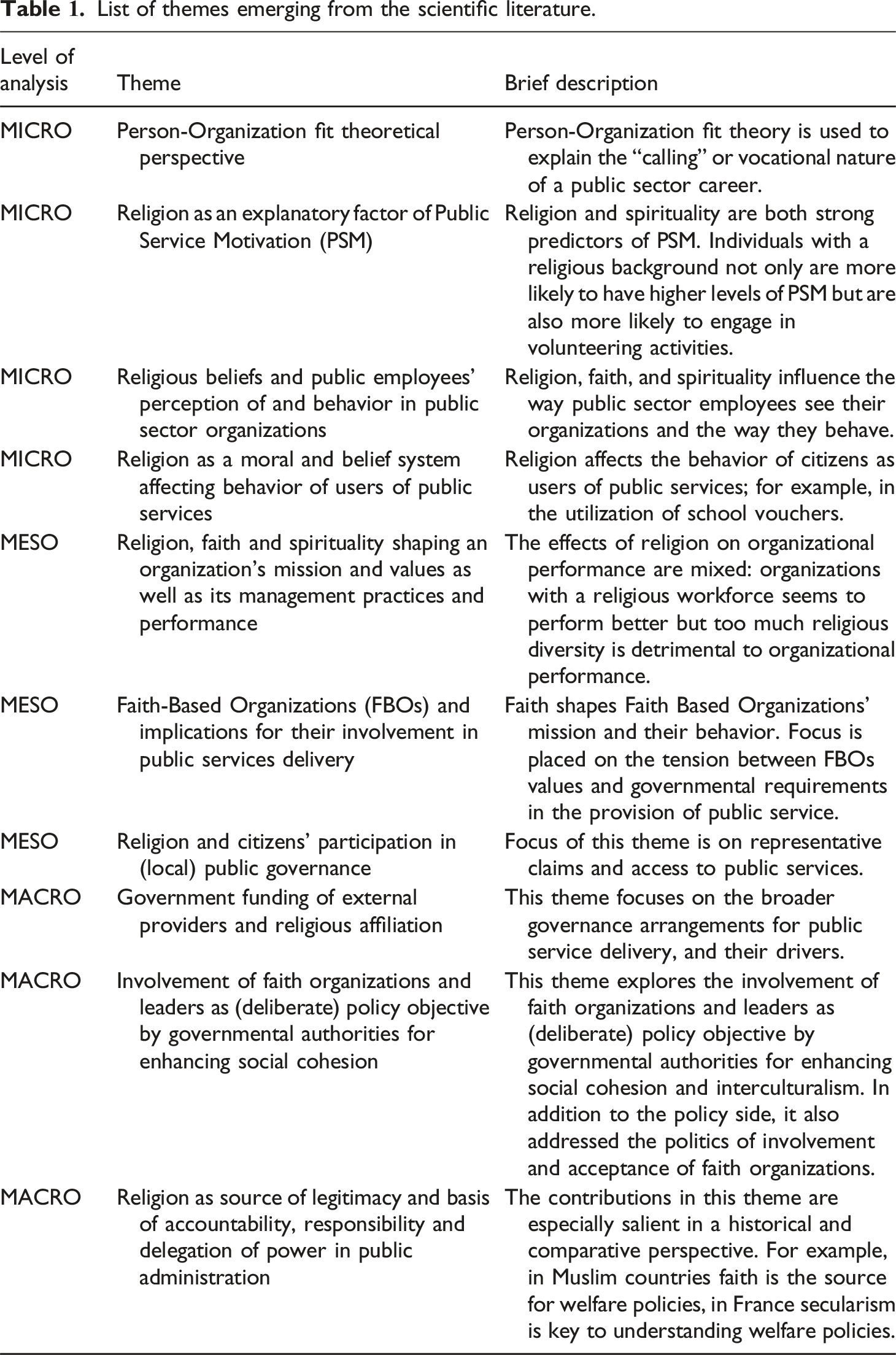
Since Wilson’s (1887) “The study of administration”, public administration has emerged as an interdisciplinary field of scientific inquiry focusing on the managerial, political, legal, social and cultural aspects of governmental institutions. Religion, spirituality, and faith shape personality as well as the cultural and societal context, and individual and cultural-societal characteristics in turn affect the political realm at large and public administration, policy and management specifically (Turner, 2013); yet, religion, faith and spirituality have been mostly overlooked thus far, at least not treated in a comprehensive way as potential sources of explanatory factors in the public administration literature, and no literature review has been conducted so far on how they affect public administration, hence the importance to consolidate “what we know” about this topic. This paper aims to fill this gap and address the question about how religion, spirituality and faith affect the workings of public administration and public services.
For the purpose of this review of the literature we have considered a number of definitions of religion, faith, and spirituality, and we employ the following definitions – quite encompassing in their remit while focused also on the social dimension, which is pertinent for a study in the field of public administration. Religion can be defined as “a set of coherent answers to the core existential questions that confront every human group, the codification of these answers into a creedal form that has significance for its adherents, the celebration of rites which provide an emotional bond to bring into congregation those who share the creed and celebration, and provide for the continuity of these rites from generation to generation.” (Bell, 1980: 333-4). We consider this definition as an appropriate one for this study, for the following reasons. First, this definition of religion combines the Durkheimian perspective on religion which “recognizes the centrality of religious practice to belief” (Turner, 1991: 243) with “a Weberian concern for the question of meaningfulness” (p. 244). Second, authoritative sociologist of religions like Turner (1991) considers this definition “comprehensive, influential and in many respects persuasive.” (p. 243). Third, this definition prevents ethnocentricity, it does not strictly relate religion to a church, and it does not reduce religion to either “biology, economic interest or irrational drives” (p. 243). Fourth, although implicitly, this definition includes both the notions of “identity”, as it states that any religious creed “has significance for its adherents”; and the notion of “organizational representation”, as it states that religion “provides for the continuity of these rites from generation to generation”. Finally, this definition of religion stems from the field of sociology: public administration is part and parcel of society, and administrative studies rely on the social sciences at large and sociology as a core discipline in this set.
As to the notion of faith, we employ the one proposed by the Encyclopedia Britannica which defines faith as an “inner attitude, conviction, or trust relating human beings to a supreme God or ultimate salvation.” (Encyclopedia Britannica, n.d.). This definition reflects one of the main characteristics of faith, which is being “relational” and “implying the trust of one upon another” (Newman, 2004: 104).
These two definitions differ from the semantics of the word “spirituality” which can defined as the “the quality or state of being spiritual or of being attached to or concerned with religious questions and values broadly conceived. The term is also frequently used in a non- (or even anti-) religious sense to designate a preoccupation with or capacity for understanding fundamental moral, existential, or metaphysical questions, especially regarding the nature of the self (or soul, or person), the meaning of life, the nature of mind or consciousness, and the possibility of immortality.” (Encyclopedia Britannica, n.d.). Therefore, spirituality is intended in a broad and loose sense, comprising all those mystical manifestations that are neither institutionalized nor organized, different in this from the definitions we employ of religion and faith.
The paper unfolds as follows: First, our methodological approach is presented. Second, we describe the identified corpus of the literature. Third, the overall findings of the review are summarized. Finally, we discuss the state of research on religion, spirituality, faith and public administration and we sketch the outline of a future research agenda.
Methodological approach
Religion, faith, and spirituality are neither well-identified nor well-studied topics in the public administration literature, hence there is an explorative and narrative thrust in this literature review. The overall thrust and methodological approach of this literature review follows the one proposed by Arksey and O’Malley (2005) for scoping reviews. Scoping reviews have been defined as a way to map “the key concepts underpinning a research area and the main sources and types of evidence available, and they can be undertaken as stand-alone projects in their own right, especially where an area is complex or has not been reviewed comprehensively before” (Mays et al., 2001: 194).
The following criteria have been used to identify studies included in this literature review. First, the so-called “grey literature” was deliberately excluded (Rothstein and Hopewell, 2009) and only peer-reviewed published articles were included. Second, all English-language peer-reviewed journals with a 2017 Impact Factor (IF) of 0.75 or greater or the top fifty English-language peer-reviewed journals in the public administration, business/management, and political science subject areas have been identified and selected. 1 Supplemental Table A in the Supplemental Materials presents the full list of peer-reviewed journals included in this review of the literature. Third, per each identified peer-reviewed journal, a systematic keyword search within the title and abstract was conducted. The keywords used for the searches were “religio*,” truncated to include derivative words such as but not limited to religion, religiosity, religious, religiously, religionism, religionist; “spirit*,” truncated to include derivative words such as but not limited to spirituality, spiritualism, spiritual, spiritualistic; and “faith”. The time frame selected for the searches was all the articles published between 1960 and July 2020. Fourth, a linguistic criterion was used for the final selection of the articles when the keywords “spirit*” or “faith” were used in the searches. Whether the meanings, according to the Oxford English Dictionary (n.d.), of the keyword “spirit” were either “the prevailing or typical quality, mood, or attitude of a person, group, or period of time” or “strong distilled alcoholic drink” and whether the meaning of “faith” was “complete trust or confidence in someone or something”, the corresponding articles were excluded because not in line with the objectives of this literature review and the aforementioned definitions of faith and spirituality.
The first three selection criteria of the search process yielded to the identification of 457 peer-reviewed journal articles. By applying the fourth selection criterion, the number of English-language articles meeting all four selection criteria was 288.
Concept-driven coding (Gibbs, 2007) has been applied to classify the selected literature. Three codes were identified based on whether the focus of each article was on the more macro level (code: MACRO-level) of the broader configuration of public governance, or at the more meso- and micro-level of the operations and delivery of public services at the organizational level (code: MESO-level) or the individual level (code: MICRO-level). The following step consisted in the subjective assessment about whether the article contributed to the field of public administration, broadly intended, or not. So, to illustrate, the paper by Perry (1997) on the antecedents of public service motivation was coded [PA = YES] and Yan et al. (2019) on socially responsible investing in the financial sector was coded [PA = NO]. 67 articles out of the 288 identified in the previous steps were identified as contributing to the field of public administration broadly intended. These 67 articles are the ones included in this literature review (Supplemental Table B in the Appendix). To increase coding reliability, each article was independently coded by the two authors (Lipsey and Wilson, 2001) both as regards the level (MACRO/MESO/MICRO) and concerning the knowledge contribution to public administration (YES or NO). All coding disagreements were discussed by the two authors and resolved thus improving inter-rater reliability (Littell et al., 2008). A total of two disagreements were discussed and resolved for the MACRO/MESO/MICRO categorization and a total of four disagreements were discussed and resolved for the knowledge contribution to public administration.
Describing the corpus of literature
Before discussing the emerging themes in the literature, data are first described. Figure 1 presents the percentages of publications included in the corpus of literature per keyword(s) used in the search process. The majority of the articles’ titles and abstracts included, or about 61 percent of the total 67 articles, contained the sole keyword “religio*” and about 21 percent both the keywords “religio*” and “faith”. The keyword “faith” alone was retrieved in about seven percent of the articles’ titles and abstracts, while the keyword “spirit*” in about four percent. Percentage of publications included per specific keyword(s).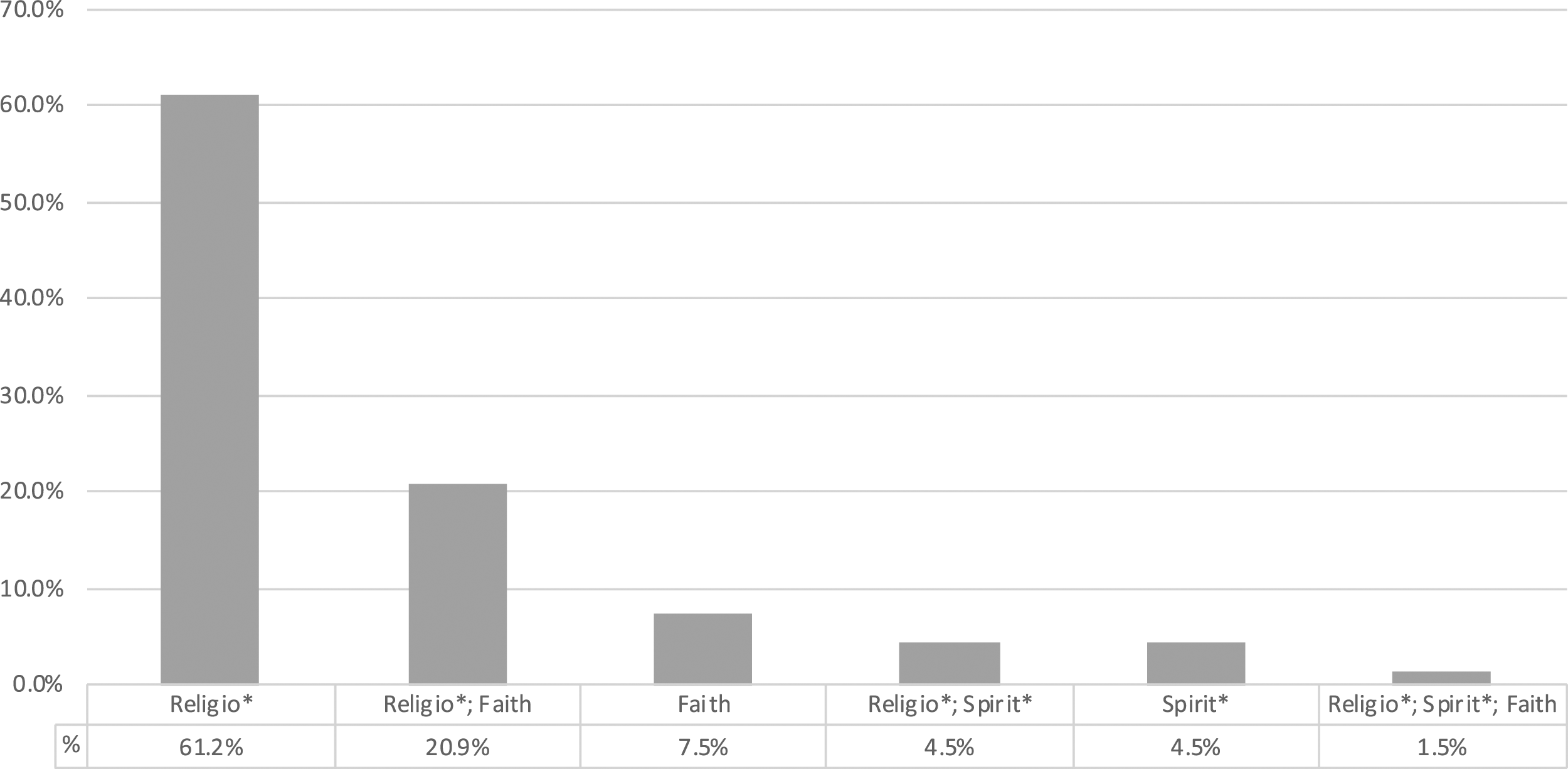
To illustrate the scholarly interests in the concepts of this review of the literature, Figure 2 shows the number of publications by decade. The first four decades saw a relatively low number of articles published that meet our review criteria, ranging from no publications in the seventies to a maximum of five publications in the eighties. A rapid increase in the interest of researchers is apparent from the early 2000s, with 30 articles published in the first decade of the new century. A small decline in scholarly interest is then observable in the following decade with a total of 23 articles published between 2010 and 2019. Number of publications per decade.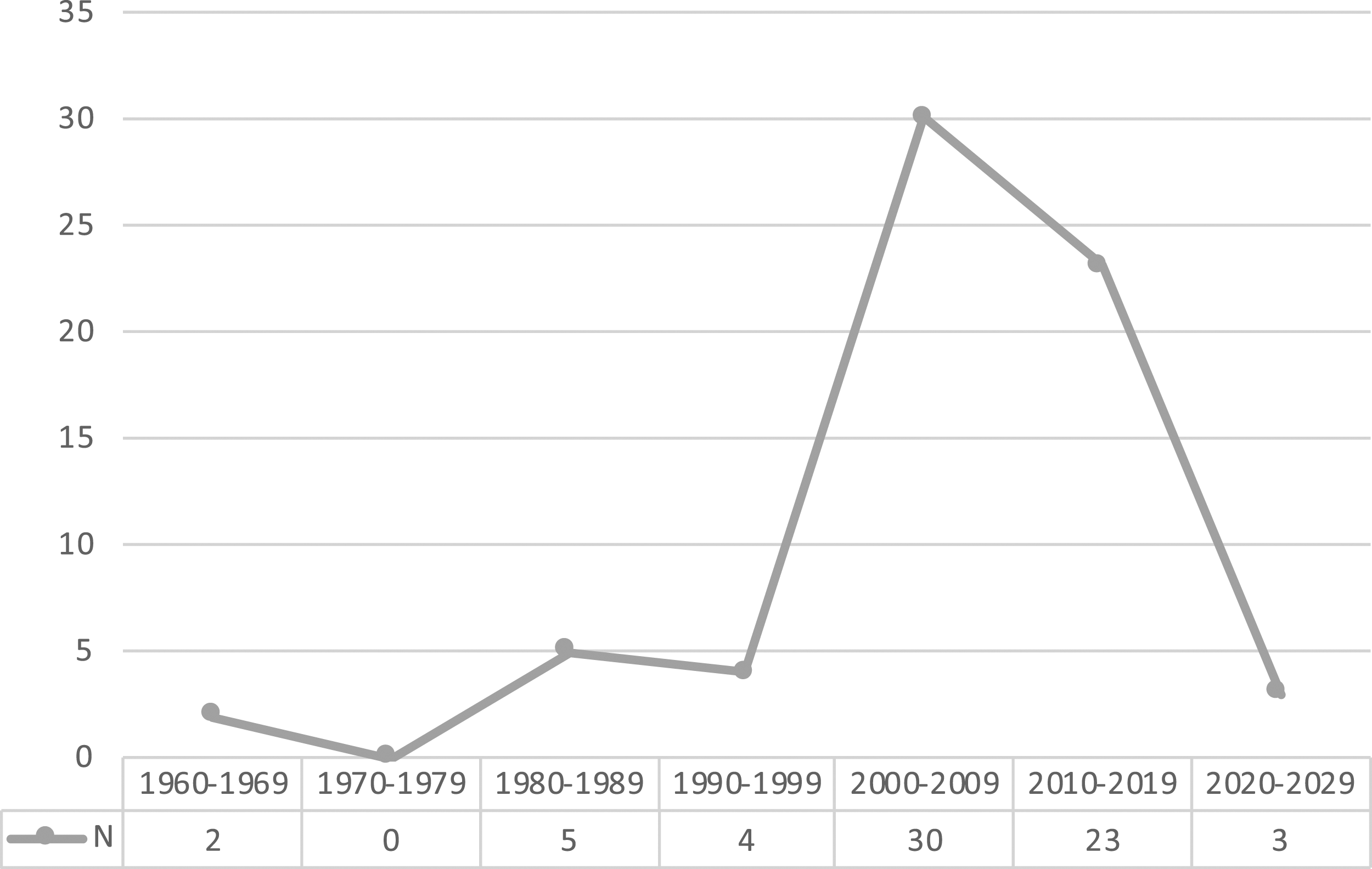
The majority of eligible articles belonged to the public administration subject area (N = 48), followed by political science (N = 12) and business/management (N = 7). As shown in Table A in the Supplemental Materials, the most prolific journals with the highest number of eligible published articles are Public Administration Review (N = 8), The American Review of Public Administration (N = 7), Journal of Social Policy (N = 7), Review of Public Personnel Administration (N = 4), and Public Administration (N = 3) in the public administration subject area; Academy of Management Review and Organization (both N = 2) in the business/management subject area; World Politics (N = 5) in the political science subject area.
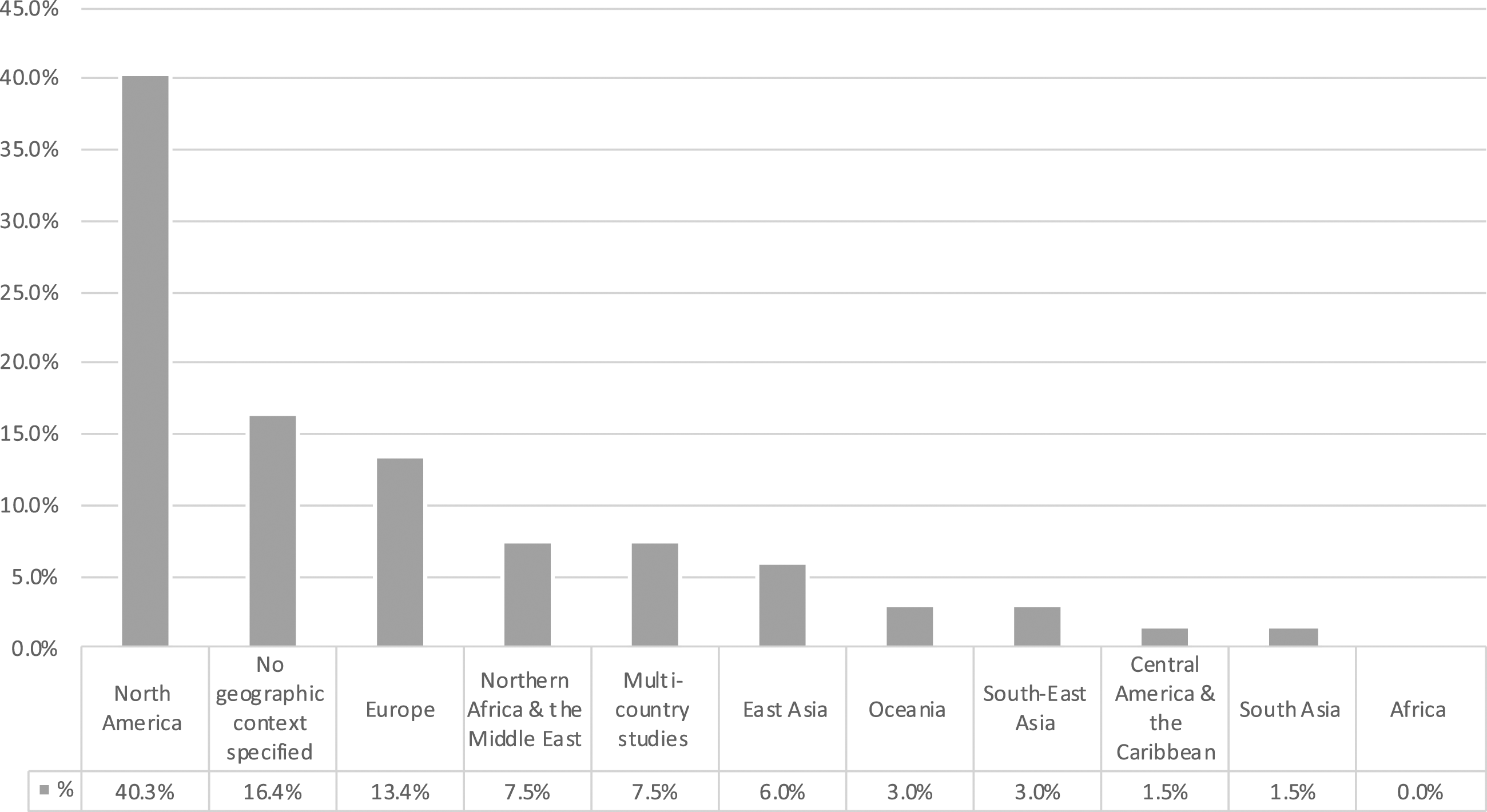
Figure 3 illustrates the way the studies included for analysis have examined religion, spirituality, and faith. As can be seen, there are three times as many empirical studies (N = 50) than theoretical studies (N = 16). Given the importance of empirical studies, it is also helpful to identify the research methods employed. As shown in Figure 3, there is substantially a balance between quantitative (N = 23) and qualitative (N = 25) studies. Only one study employed an experimental approach and only one a mixed-methods approach. Another descriptive information about the corpus of the literature is the geographical contexts that have received the most attention. As presented in Figure 4, North America and Europe comprise roughly 55 percent of the geographic contexts studied in the articles selected for this study. In addition, 7 percent of the 67 studies are multi-country studies, which, very often, compare or analyze two or more North American or European countries. Thus, it would not be inappropriate to state that the majority of studies in this review of the literature focuses on these two particular geographic contexts. Two other geographic contexts are worth to be mentioned: the first one being Northern Africa and the Middle East which represents seven percent of the studies in the sample; the second one Asia in its sub-categorization of East Asia (China, South Korea, and Japan) with four studies, South-East Asia (i.e. Indonesia) with two publications, and South-Asia (i.e. India and Bangladesh) with one study. Percentages of the types of studies of the studies employed in the review. Percentages of the geographic contexts of the studies employed in the review.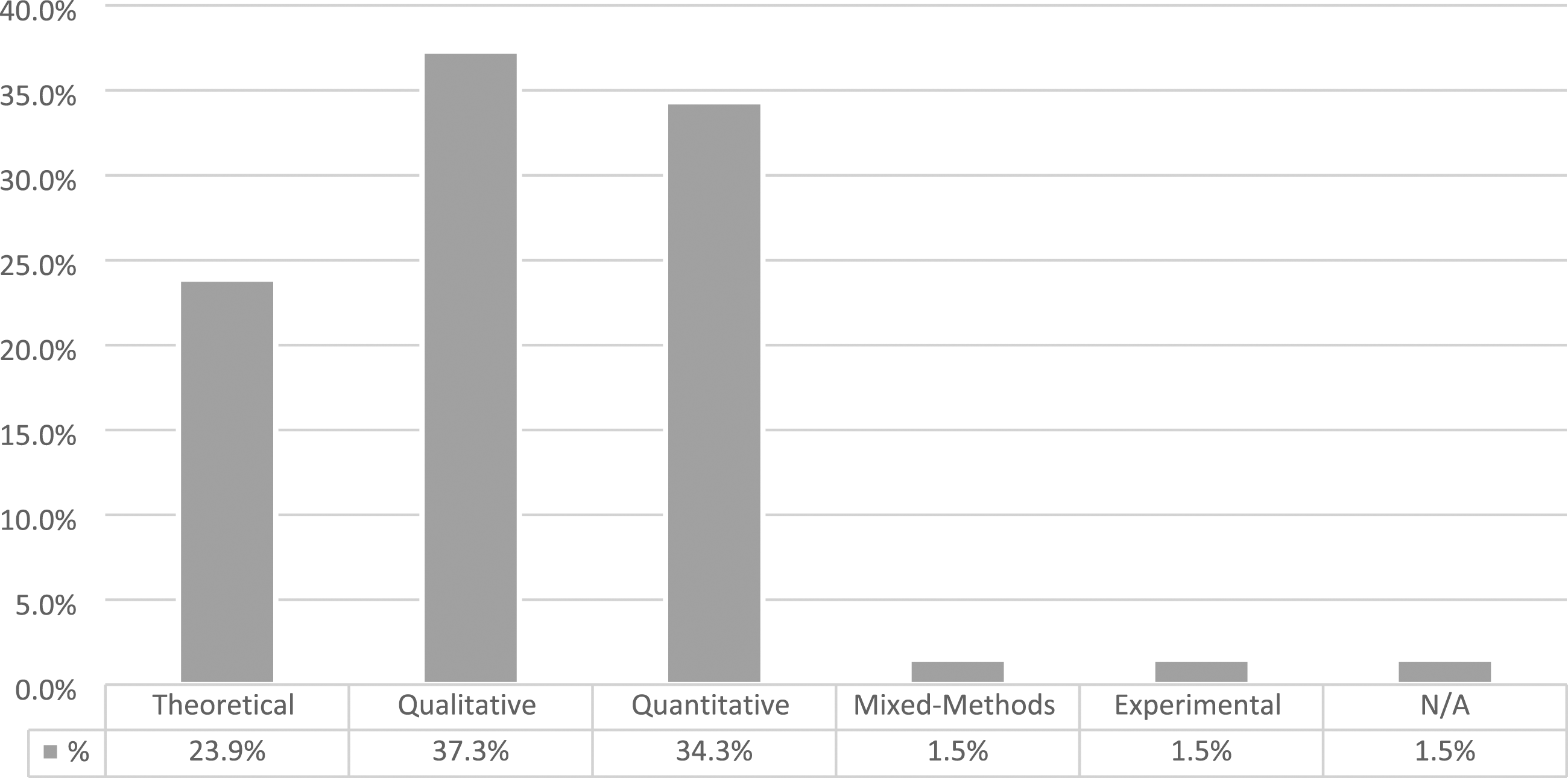
To conclude this section and to introduce the presentation of the results, a last piece of descriptive analysis of the data is reported. As shown in Figure 5, both MICRO- and MACRO-level studies represent a total of 28 percent of the articles included in this literature review. Organizational level studies (MESO-level) accounted for about 23 percent of studies. It is also interesting to note that 14 studies were double coded MICRO/MESO (N = 4), and MESO/MACRO (N = 10) thus representing multi-level studies in which multiple echelons have been studied. Percentages of coding categories of the studies employed in the review.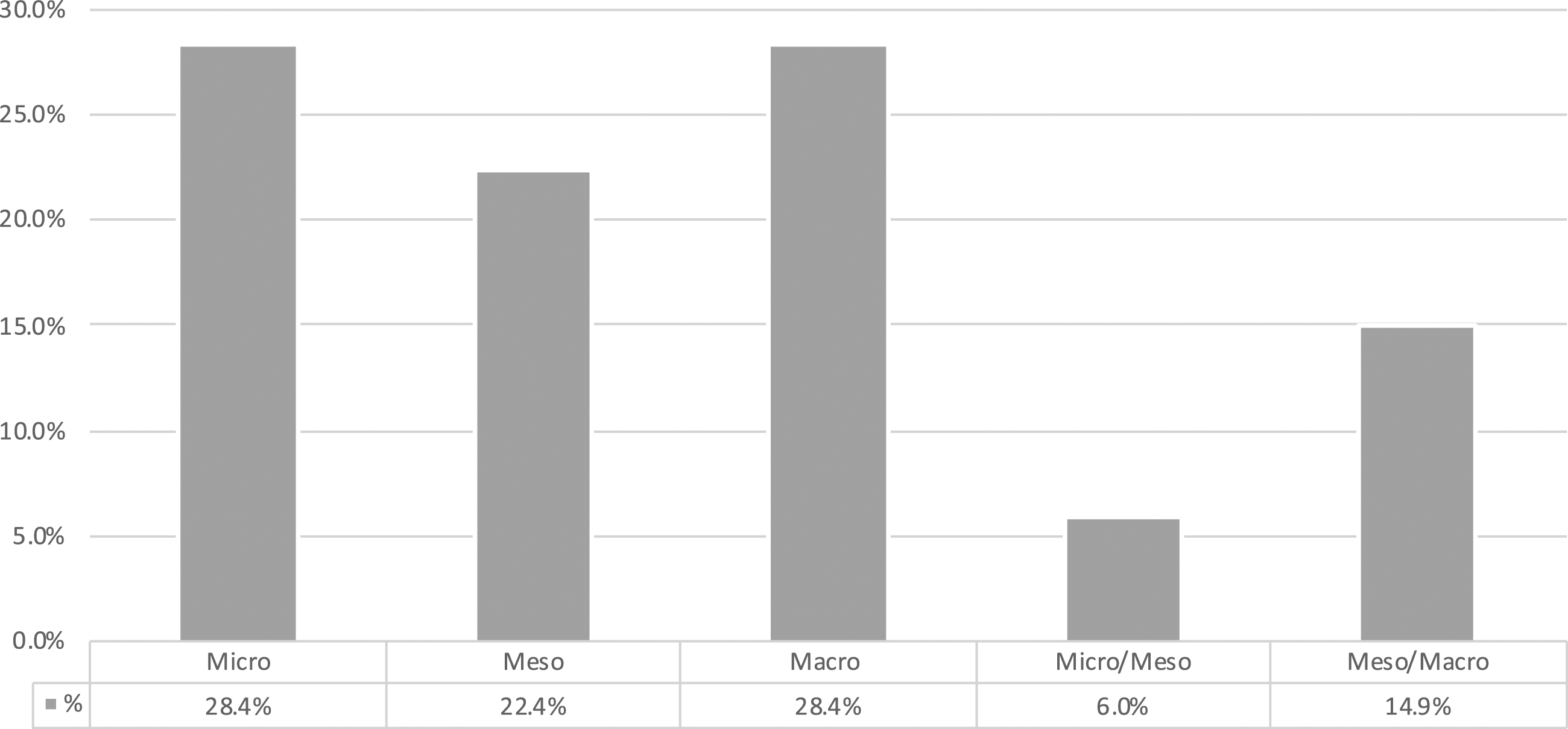
Results: Emerging themes
In this section we delineate the themes about the relationship of religion/spirituality/faith to public administration detected through our literature review. In the exposition of the themes, we follow the classification along the MICRO/MESO/MACRO level, starting from the level of individuals/people (MICRO). Supplemental Table B lists in alphabetical order the 67 articles included in this review (all of them have been used for elaborating this literature review, though only part of them are directly cited). The themes are previewed in Table 1 and discussed in the remainder of this section.
MICRO level
Themes at this level revolve around papers that consider religion, faith or spirituality for its significance as a personality system, i.e. ‘systems’ that shape personality, hence (the argument goes) behaviors, and therefore the behavior of elected and tenured officials, as well as of citizens/users of public services.
Person-Organization fit theoretical perspective
A first theme pertains to the Person-Organization fit theoretical perspective, whereby religion is seen as driver to work for the public service. Both subjects in the research by Lowery (2005) consider their “professional life to be a calling or vocation” (p. 328). One of the implications of the study “pertains to the place of religion and spirituality in public administration. The kind of deep and rich connections that the research subjects drew between their belief systems and their work as public administrators”, which, the author argues, “prompt two questions: How can we, as scholars, ignore this reality in our empirical work? And in our normative work, how can we account for the fundamental role that religion continues to play in the public sphere?” (p. 331). In a similar vein, Houston and Carwright (2007) using the 1998 General Social Survey (US) point out that “respondents in public service occupations are more likely than others to indicate a higher level of spirituality” (p. 95). Spirituality is here operationalized as belief in a transcendent life force, love and compassion, interconnectedness, and life meaning. Public servants are more likely than non-public service employees to indicate a higher level of all these four dimensions of spirituality. Houston et al. (2008) use the same survey to address two questions - how religious are public servants, and how secular are the attitudes held by public servants - and “[T]he results indicate that individuals in government-related public service occupations are more likely than those in non-public service occupation to offer higher responses” (p. 432) to the question “how religious are you?”. In addition to that, “public servants are less likely to express attitudes indicating that religion should be relegated to its own sphere” (p. 433).
Religion as an explanatory factor of public service motivation (PSM)
The second theme we identify in the approach to religion as personality system revolves around papers aimed at explaining Public Service Motivation (PSM) by encompassing religion as an explanatory factor. It is a strand of literature springing off Perry (1997): “Religious foundational beliefs are related directly to several facets of public service motivation, specifically commitment to the public interest/civic duty and compassion. People who profess the agenetic or individual worldview are anticipated to exhibit lower public service motivation than individuals who espouse a communal worldview.” (p. 184). The author concludes that PSM is likely to be affected by involvement in church activities (p.184). Continuing in the same track, Perry et al. (2008) see religious activity as an antecedent of PSM: “Religious activity is one of the strongest PSM predictors in the structural equations, and our interviews uncovered a nearly universal disposition to attribute exemplary acts to religion, spirituality, or a higher power. These sentiments tend to reflect universal values (Monroe, 1996) held by our moral exemplars. These values are likely a product of socialization and developmental processes that are not readily captured in formal quantitative models. Our interviews also suggest that powerful experiences can trigger and sustain extraordinary acts of service.” (p. 453). Lee (2012), using other methods and dataset, suggests that “public and nonprofit workers volunteer at a higher rate than for-profit workers do. When looking at specific types of volunteer organizations, however, differing patterns exist between public and nonprofit employees. Nonprofit workers are more likely to volunteer than public workers for religious and social community organizations.” (p. 114); Coursey et al. (2011) report similar findings, while a previous work by Sherman and Smith (1984) also argues about an influence of religion on intrinsic motivation.
Religious beliefs and public employees’ perception of and behavior in public sector organizations
Another theme we identify pertains to the public managers’ or employees’ view of the public sector organization and/or their role/behavior in it. Bozeman and Murdoch (2007) ask: “[D]o public managers' religious beliefs and behaviors affect their work and their work-related attitudes?” (p. 289) and test hypotheses about the impacts of U.S. public managers' religiosity on work attitudes, and “[T]he model suggests that public managers’ religiosity has significant impacts on both their work attitudes and motivations and their views about their organization and their fellow employees.” (p. 299). The chief findings of the Bozeman and Murdoch’s (2007) study are that “religious public managers tend to have a stronger orientation toward job security and a more favorable view of their organization and fellow employees.” (p. 309).
Not unexpectedly, religion is detected as influential on school principals’ views of organizational behavior (Brooks et al., 2020). In the core civil service, Pierskalla et al. (2021) find instances of discrimination within the civil service (of Indonesia) due to religious beliefs of managers.
In a different context but with a similar vein, Meriade and Qiang (2015) discuss the lingering presence of Confucian and Taoist values in shaping the selection process of public servants in China. Candidates must learn from several books the various attitudes that public officials ought to possess such as ‘be an example’, ‘develop experience’, ‘watch what you say’, and ‘be brave and honest’. These attitudes “are derived from the Confucian literature (the ‘Canonical books’) and also ancient books (the ‘Classics’) [and] there are also significant borrowings from Taoist philosophy.” (p.295). Meriade and Qiang (2015) explain that “Candidates must demonstrate their ability to reproduce in their profession as civil servant[’s] the modes of thought common to the majority of Chinese that incorporate both Confucian morality and also Taoist harmony. ‘Following your path in public action’, ‘being yin and yang in your work but also in your life’, ‘educating your feelings’ are the main precepts recommended in the literature preparing for the examination and that should make it possible, as noted by a candidate interviewed, ‘to unify personal values and public values like the yin and yang that intermingle in Chinese thought’” (p. 295).
Religion as a moral and belief system affecting behavior of citizens/users of public services
Another theme we identify concerns religion as a moral and belief system affecting behavior of citizens as users of public services. Campbell et al. (2005) investigate whether religious citizens are more likely to use school vouchers, noticing that (in the US context): “under the status quo, private education is especially appealing to Catholic and Evangelical Protestant families. [..] Families who used vouchers differed from the eligible population less in their income or education as in their religious practice. Those active in particular faith traditions may well find something lacking in the secular education provided by public schools. As long as private schools are provided primarily by religious organizations, one must expect that any voucher program will, in the first instance, be particularly attractive to such families. Since religious engagement does not vary sharply by social classes or ethnic groups, this propensity probably attenuates any skimming effects that might otherwise occur.” (pp. 537-538). Religious belonging may therefore be an influence on the behavior of public service users, at least in services sectors like education. Whether faith-based schools succeed in fostering religious values is a distinct question though, as noticed by Paterson (1965) on students at a religious school not really using its ‘religious services’.
MESO level
A second level of analysis concerns the link between religion, faith and spirituality and organizational behavior, broadly intended.
Religion, faith and spirituality shaping an organization’s mission and values as well as its management practices and performance
A first theme concerns how religion, faith and spirituality can shape an organization’s mission and values as well as its management practices and its performance. Curiously (from our standpoint), we found a very few publications addressing the link between religion and organizational performance; one is Paarlberg and Perry (2007), who query whether religion affects organizational values thence in turn affecting performance (low and high performing organizational units). Their main research question is: “can workplace values be managed?” (p. 396). Three key findings emerged from Paarlberg and Perry’s (2007) analysis. The first being that “organization[al] goals are motivating employees to the extent that such strategic goals reflect employees’ internal affective, normative, and task-oriented values, a “zone of existing values”.” (p. 396). The second one that “Middle managers play key roles in interpreting strategic values in terms of employees’ values and their everyday work responsibilities, as well as communicating and rewarding performance toward those values in ways that reflect and build on employees’ individual values. As such, middle managers play key roles as “integrators,” connecting organization strategy to employees’ functional values that derive from societal, cultural, and religious experiences.” (pp. 396-397) And finally, that “the very process of values management is a social process.” (p. 397).
Focusing on a different independent variable, Ancarani et al. (2016) analysed the impact of religious diversity on organisational performance on a sample of hospital wards from three large hospitals in Dubai and provided “evidence of a curvilinear relation between religious diversity and a measure of performance (efficiency), thus confirming that both positive and negative effects can stem from diversity. […] In particular, the inverse U-shaped relation suggests that a moderate degree of diversity adds information-elaboration capabilities and is beneficial to performance. […]” (p.754). Also in this strand is Garcia-Zamor (2003) that explains the link between spirituality in the workplace and organisational performance as it “creates a new organizational culture in which employees feel happier and perform better. Bringing together the motivation for work and the meaning in work increase retention. Employees also may feel that belonging to a work community, which is an important aspect of spirituality, will help them when things get rough in the future. Furthermore, a culture of sharing and caring eventually will reach all of the organization’s stakeholders.” (p. 361). According to the author (2003), “In such a humanistic work environment, employees are more creative and have higher morale, two factors that are closely linked to good organizational performance.” (p. 361). LeRoux (2005) queries whether religious third sector organizations are more entrepreneurial/have higher income generation orientation than non-religious ones and finds that “The logit results indicate that neither religious affiliation nor decreased revenues from private donors have a statistically significant effect on entrepreneurial response.” (p. 360).
Faith-based organizations (FBOs) and implications for their involvement in public services delivery
A number of publications focus Faith-Based Organizations (FBOs) and query how faith shapes organizational values or behavior, and the implications for the involvement of FBOs in public services delivery. This type of publications specifically focuses on what characterizes and distinguishes FBOs from other types of non-profit organizations. For example, Sapat et al. (2019) find that “there are likely to be more ties between FBOs than between FBOs and secular NGOs as local FBOs prefer collaborating most with international FBOs which in turn prefer collaborating with each other.” (p. 967). According to the authors (2019), “FBOs, given their missions, advocacy, and community outreach work, collaborate most closely with other FBOs that have similar missions, lending support to other studies that have found mission compatibility to be a significant driver of collaboration” (p. 968). Similarly, Johnsen (2014), in a study of UK homelessness services, notes that “the ‘F’ in FBO may be articulated and/or suppressed in a myriad of nuanced ways. [..] The consequence has been a blurring of the boundaries between the religious and secular such that a project’s faith affiliation (or lack thereof) is not always obvious. On many accounts, faith-based and secular service providers share more similarities than they hold differences, and differences amongst FBOs can be extreme.” (p. 426). Johnsen (2014) also points out that “any observable distinctions between faith-based and secular providers are cross-cut by agencies’ positions with regard to other dualisms, notably where they fall on continuums between ‘basic and specialist’ service type and/or ‘interventionist and non-interventionist’ approaches to service delivery.” (p. 426). In the educational sector, Ford and Andersson (2021) found that religious “schools operating as part of broader networks [Catholic diocese or Lutheran synod] are more likely to share certain fiscal characteristics than those operating independently” (p. 18). Other publications focus more on the origin and development of FBOs. In a case study examining what motivates an organization representing a religious national minority to provide social services in Palestinian society in Israel, Eseed (2020) identifies “three main factors in the development of minority religious organizations: government failure in providing services (necessary factor) and religious ideology and mobilization of political support as secondary factors. All three are grounded in the ongoing conflict between the Palestinian minority group and the state.” (p. 507). The distinctive values infusing FBOs also raise questions in relation to their involvement in the delivery of public services. Reflecting on the UK ‘Big Society’ public program of the early 2010s, Kettell (2012) considers that, “[O]stensibly based on the principles of decentralisation and empowerment, this envisions a shrinking of the state and a greater role for faith-based organisations in the provision of welfare and social services. For religious groups, involvement with the Big Society is seen as an opportunity to reverse a long-term process of waning social influence and to reshape the role of faith in the public sphere.” (p. 281).
Finally, a third group of publications target issue of conflicting values between FBOs and the government and public sectors organizations. Garland and Darcy (2009) in analyzing The Salvation Army as a provider of services in the context of the Australian government found a tension between on the one hand the mission of The Salvation Army to help the poverty-stricken Australians and on the other “the Army is forced by government contract to ‘breach’ many of these same people if they fail to meet government imposed standards of conduct.” (p.767). Finally, Biebricher (2011) in assessing the implications of FBOs delivering services in lieu of public sector organizations warns against the issues arising from “conflicting world-views and beliefs shaped by divergent traditions and discourses” (p. 1012) which FBOs may bring along.
Religion and citizens’ participation in (local) public governance
Another identified theme revolves around religion and citizens’ participation in (local) public governance. Regarding public governance arrangements and faith communities, Chapman and Lowndes (2014) explore representative claims, i.e. whether and the extent to which formal leaders are actually representative of the communities they purport to give voice to, including in their study: “national faith leaders and civil servants; local faith leaders and activists from Christian, Muslim, Hindu, Sikh, Jain, Jewish, and Baha; members of faith-based organizations; and representatives from the wider voluntary and community sector and local statutory bodies.” (p. 287). To explore the specific question of representation, Chapman and Lowndes (2014) use an experimental research design based on six vignettes. The results of their research focus on ‘the sense of representation as an emergent property, or a work in progress – something that is actively constructed, and contested, within changing policy contexts. The quality of representation in network governance is determined to a large extent by the creative agency of representatives themselves, and the giving or withholding of consent by their putative constituents. As such, the vignettes in this article help to illuminate representation-as-relationship.” (p. 288).
Focusing on the access to public services as the object of investigation, Carswell et al. (2018) study encounters with the state bureaucracy by Indian lower classes. In particular, the authors (2018) perform an ethnographic research in Tamil Nadu and Uttar Pradesh to study the “practices and meanings of time and waiting experienced by poor, low-class Dalits and Muslims in their routine encounters with the state in India [..] in order to examine the role of temporal processes in the production of citizenship and citizen agency.” (p. 597). Carswell et al. (2018) highlight two main results from this study. Both these findings reveal that that the religious variable may be well used to discriminate citizens in the access to public service. In their words, first, “while such negotiations often leave people with feelings of uncertainty, confusion and arbitrariness, the outcomes themselves are not produced in arbitrary ways. Our evidence shows […] that they are the systemic product of gender, caste and religious based forms of discrimination through which the exclusion of already vulnerable and marginalised social groups is reproduced. Waiting thus reveals itself as a quintessential tool of bureaucratic state power.” (p. 612). Second, “Our evidence shows that agency regarding claim making and citizenship remains hinged on class position and on structural inequalities of caste and religion. In rural Tamil Nadu, Dalits suffer discrimination from higher caste Hindus, while in Saharanpur Muslims often face disproportionate problems from both local Hindu state actors and national level anti-Muslim politics. Crucially, however, across both localities, poverty, caste and religion intersect with strongly gendered patterns of state–society engagement.” (pp. 612-613).
MACRO level
A third level of analysis concerns how religion, spirituality and faith shape profiles of administrative activity by governments and public bureaucracies.
Government funding of external providers and religious affiliation
One theme concerns government funding of external providers and religious affiliation. We report in this section on the scholarly works that focus the broader governance arrangements for public service delivery, and their drivers, rather than the operations of individual organizations as such. In an early study, Alkin (1966) aims to “extend understanding of the factors that determine local expenditure for schools, in order to assess the actions necessary to compensate for local deficiencies where they exist. Religion is posited as one of the factors that is an economic determinant of local expenditure.” (p. 123) and formulates the research question: “is there reason to believe that the religious composition of communities bears a relationship to the expected level of financial support for public school?” (p. 124) and “one of the findings considered significant was the regression coefficient for the Catholic group which appears consistently positive throughout all the equations.” (p. 131). Receiving public funding clearly constrains religious organizations and their autonomy and brings with it new forms of accountability (Gosset and Pynes, 2003). A more macroeconomic study by Scheve and Stasavage (2006) found that individuals who are religious tend “to be less demanding of social insurance by the state” (p. 284) with clear effects on welfare state spending.
Involvement of faith organizations and leaders as (deliberate) policy objective by governmental authorities for enhancing social cohesion
Another theme concerns the involvement of faith organizations and leaders as (deliberate) policy objective by governmental authorities for enhancing social cohesion. As Furbey and Macey (2005) in a study on government urban regeneration and neighborhood renewal policies in the United Kingdom describe the importance of the involvement of faith organizations and leaders. In particular they state that “Instrumentally, they are identified as locally significant communities offering values, resources and volunteers, not only to develop and maintain their own projects, but also to underwrite the community participation now built formally into official programmes and institutions. They are linked functionally to a particular communitarian agenda as potential agents of social cohesion. […] We have observed that many faith congregations and organisations already make a significant contribution to the ‘legitimate’ work of civil society through their own ‘regenerative’ activities in and through their involvement in official schemes.” (p. 111). One of the main contributions of the authors is that “Here religion can be said to contribute to social cohesion and ‘regeneration’.” (p. 111). However, Furbey and Macey (2005) also note that “other faith traditions ‘resist’ such engagement and develop introverted or militantly sectarian responses to, for instance, the challenges of globalisation and social diversity. Some of these responses provide disturbing reminders of the exclusive and reactionary underside of ‘community’.” (p. 111). It is not only policy but also the politics of involvement and acceptance of faith organizations that matters. Flint (2007) in an article exploring “the politics surrounding the establishment and subsequent development of a Roman Catholic state school sector in Scotland during the 20th century” (p. 252) identifies “some parallels and precedents with the contemporary emergence of a Muslim state school sector in England.” (p. 252). The author discusses “how the Scottish experience of Roman Catholic schools through the 20th century provides some indicative evidence about how key educational, social and political issues relating to Muslim schools in England may develop [..] in both situations, the politics of faith schools are linked to wider discourses around ethnicity, citizenship, social cohesion and national identity.” (p. 252). Flint (2007) concludes by “arguing that interculturalism […] requires a reconceptualisation of faith schools within a reconfigured national identity that is more cognisant of power differentials between ethnic and religious groups.” (p. 252).
Religion as source of legitimacy and basis of accountability, responsibility and delegation of power in public administration
A distinct theme concerns religion as source of legitimacy and basis of accountability, responsibility and delegation of power in public administration. These contributions are especially salient in a historical and comparative perspective: Jordan (2006) ventures into the comparison of Western and non-Western public administration: “In order to assess the explanatory potential of early and non-Western administrative studies, two texts have been chosen, both previously unanalysed in conjunction (to the best of my knowledge) from the perspective of the administrative theorist – John of Salisbury’s Policraticus and Abu al-Hassan Al-Mawardi’s Al-Akham al-Sultaniyya w’al-Wilayat al Diniyya (The Ordinances of Government). (p. 563). “By stepping back into the past, present-day students of administrative theory can trace the origins of the vilification (dragonizing) of bureaucracy and advocating for stronger systems of authoritative goal assignment (vis-à-vis law) is a real possibility. Similar conclusions advocating a stronger goal orientation in government have been advocated by scholars who have not delved into the distant past at all. Bureaucracies perform best and can contribute the most to the policy-making process when: (1) they are given clear goals by electoral institutions; (2) they are allocated adequate resources; and (3) they are given the autonomy to apply their expertise to the problem” (Jordan, 2006: p. 580). A number of papers in this category (e.g. Morgan, 2003) highlight how religion and religious traditions, mediated by the religious policy regime and the level of secularization, as well as by the configuration of political parties notably in relation to their religious inspiration, affect logics of accountability and the operations of public bureaucracies.
In the next and final section we sum up on this trajectory of inquiry about religion, faith and spirituality, and public administration, also outlining a possible research agenda for the field of public administration.
Discussion, outlook and conclusion
This article investigates the manifold relationships between religion, faith and spirituality, and public administration, providing a step forward for the integration of the formers into public administration research, by furnishing a review of the scholarly publications between 1960-2020 (in the English-language peer-reviewed journals selected as specified in the methods section).
We have identified ten themes around which it is possible to group the multi-faceted topic of the relation between religion, faith, and spirituality, and public administration. At the MICRO-level, four themes have been identified. The first theme considers religion as driver to work for the public sector. Person-Organization fit theory (see for example Judge, 1994) is used to explain the “calling” or vocational nature of a public sector career. Individuals working in the public sector seems to exhibit higher attitudes towards religion or spirituality (Houston and Carwright, 2007; Houston et al., 2008; Lowery, 2005). Closely related to this first theme is the one regarding PSM: Religion and spirituality are both strong predictors of PSM (Perry et al., 2008); individuals exhibiting a communal worldview and with a religious background not only are more likely to have higher levels of PSM but are also more likely to engage in volunteering activities (Coursey et al., 2011; Lee, 2012). Not only religion, faith, and spirituality favor a career in the public sector, but they also influence the way public sector employees see their organizations and how they behave (Bozeman and Murdoch, 2007). This includes ethical aspects of their behavior (Weaver and Agle, 2002) especially applied to the public school system (Brooks et al., 2020). The final theme addresses how religion affects the behavior of citizens as users of public services; for example, Campbell et al. (2005) discovered that religion is a stronger predictor of the utilization of school vouchers than income and educational attainment.
At the MESO-level, the review of the literature highlights how religion, faith and spirituality shape an organization’s mission and values as well as its management practices and its performance. Regarding religion and performance, the review reports some mixed results. Organizations with a religious and spiritual workforce seem to perform better (Garcia-Zamor, 2003; Paarlberg and Perry, 2007) but too much religious diversity is detrimental to organizational performance (Ancarani et al., 2016). We also identified a thread of research around FBOs, exploring what differentiates FBOs from secular non-profit organizations (Johnsen, 2014; Sapat et al., 2019) and the role of faith in shaping these organizations’ mission and their behavior and the dynamics of including FBOs in the delivery of public services. This theme also highlights tensions that may arise between FBOs values and governmental requirements in the provision of public service (Garland and Darcy, 2009). The final theme at the MESO-level revolves around religion and citizens participation in public governance, in particular focusing on representative claims (Chapman and Lowndes, 2014) and issues of access to public services (Carswell et al., 2018). This theme shows that religion, faith, and spirituality can be used to foster citizens participation and involvement in public governance (Chapman and Lowndes, 2014), but can also be very well used to impede citizens’ access to basic public services (Carswell et al., 2018). Overall, the themes at the MESO-level constitute a bridge between the themes at the MICRO-level and the themes at the MACRO-level as they seem to be permeated by both individual- and system-level elements.
At the MACRO-level, the first theme concerns governmental funding of third-party organizations in the delivery of public services at the system-level, with most cases coming from the sector of education. This theme describes how religion is a factor influencing both government spending decisions (Alkin, 1966) and citizens’ demand of public services (Scheve and Stasavage, 2006). Another theme concerns the involvement of faith organizations and leaders as a deliberate policy objective by governmental authority for the purpose of enhancing social cohesion (Furbey and Macey, 2005) or interculturalism (Flint, 2007). Religion as a source of legitimacy and basis for the design of responsibility and accountability in the public sector is the final theme we have identified. So, for example, on the one hand, faith is source for welfare policies in Muslim countries (Dean and Khan, 1997), on the other hand, secularism is key to understanding welfare policies in France (Morgan, 2003).
Overall, this review of the literature shows that religion, faith, and spirituality do influence a range of themes central in the public administration, public management and public governance literatures, whether at the level of the behavior of individuals (MICRO), at the level of organizations (MESO), or at the level of the broader configuration of public governance (MACRO). The MICRO- and MESO-levels of analysis appear to be more extensively developed in the literature than the MACRO-level. One possible explanation is that the MACRO-level may be a level of analysis that is studied more extensively within the field of disciplines (i.e., political science and international relations, sociology) which tend to frame their investigation around themes and threads which often do not encompass PA (even if this may be an overlooking of an important dimension, and more integration between these literatures and the PA literature would be welcome). A second important element of evidence emerging from this review is that the focus of the extant literature is mainly on Roman Catholicism, Protestantism, Judaism, and Islam, and on the notion of spirituality. Asian religions (i.e., Hinduism, Jainism, Sikhism, Buddhism, Confucianism, Taoism, Shintoism, and Zoroastrianism) as well as animism, druidism, shamanism, or popular religions appear to be less studied (at least in the English-language literature that has been reviewed here) in relation to their implications for PA (a recent editorial in a public administration journal focused on the Asia-Pacific region has called for bringing more systematically Asia-originated philosophies – which may be more closely intertwined to religion than in the West - into PA research, see Ongaro, 2021).
Despite an apparent growing interest on the topic of religion, faith, spirituality, and public administration over the past two decades, our review reveals issues and research questions that go unaddressed (reasons for this may range from certain interpretations of secularization dominant in the literature, at least the English-language one - as highlighted by Houston et al., 2008; Neuhaus, 1984; Shiner, 1967; Spoelstra et al., 2021 - which tend to lead to overlooking profiles of religion and spirituality, to the fact the religious dimension may fit problematically into certain epistemological approaches, like certain forms of neo-positivism, which have been in the ascendancy over the past decades). These research gaps are theoretical, methodological, and empirical in nature. In terms of theory, religion, faith, and spirituality have been overlooked as key explanatory factors however, context does matter for public administration (Pollitt, 2013; Pollitt and Bouckaert, 2017): since religion and the religious regime are an aspect of the societal, cultural, political, and administrative context which shapes public administration, public governance, and public policy and management, the relationship of religion in its social and public dimension to public administration as a field of social scientific inquiry should be further explored.
Specifically - based on the review of the literature - it seems that the scientific contributions that we have classified as pertaining to the micro-level seem to point to religion, faith, and spirituality being influential on and for PA because of the manifold ways in which they shape the motivational structure of individuals and their behavior. In the words of Turner (2013), religion, faith and spirituality are a ‘personality system’ which shapes the personality and motivations of people, and therefore also of public administrators and citizens/users of public services alike. The scientific contributions pitched (in our classification) at the meso and, especially, those that we have classified at the macro-level look at religion, faith and to a certain extent spirituality as source of value-laden, normatively charged sets of doctrines, that is, an ideational base shaping key aspects of the public sphere and the political system and therefore, as a part of it, of public governance and administration. Therefore, there are a range of reason why from a theoretical viewpoint encompassing religion, faith and spirituality may enhance the strength and comprehensiveness of theoretical frames employed for studying PA themes and problems.
From a methodological point of view, some three quarters of the studies in this literature review were empirical in nature, with an almost equal repartition between quantitative and qualitative designs. Interestingly, only one study applied mixed methods: an approach that might benefit the future development of research into this field. Notably, mixed-method approaches, if rigorously applied (Mele and Berardinelli, 2019), may be appropriate for integrating the role of context (hence religion as part and parcel of it) and providing additional evidence and explanations to complement the results of quantitative analyses (Creswell and Plano Clark, 2011). We also make a call for employing experimental designs too in this area of inquiry (although it may be queried whether such designs can capture the kind of longer-term effects and processes which are in the foreground when addressing themes involving religion, faith and spirituality, see Taylor, 1989), notably for studying those aspects of religion, faith, and spirituality at the more MICRO-level, especially to study the behavior of public sector managers and employees (MICRO-level Theme 3), a theme which may appropriately be studied with such methods.
As regards empirical gaps, a number of areas seem ripe for empirical investigation. At the MICRO-level, an area of research concerns the influence of religion on public leadership, with a particular focus on leadership styles and values-based leadership (see for example Greenleaf, 1998, 2002); a second area that would benefit from being further explored concerns how religion, faith, and spirituality affect public managers’ decision making, with the topic of administrative discretion appearing as an especially relevant topic for inquiry (see for example Vaughn and Otenyo, 2007). At the MESO-level, the inconclusive results of research so far about the effects of religion, faith and spirituality on organizational and team performance call for further inquiry into this so significant set of questions. A very cutting-edge and relevant area of research both for academicians and practitioners that would benefit of further investigation is how religion, faith, and spirituality fit in the Diversity, Equity, and Inclusion (DEI) literature (see for example, Riccucci, 2021). Another area of research may delve into the understanding of religion, power structure, and organizational politics in public sector organizations (see for example Pfeffer, 2010). At the MACRO-level, future research might theoretically elaborate and empirically test the – problematic – functions of religion as source of social cohesion and as ideational basis for the design of accountability in public administration. Finally, future research should also focus on studying the themes identified in this literature at the MICRO-, MESO-, and MACRO-level in the context of those religions that appear to be less studied, at least in the English-language literature, and especially the so-called Asian religions.
Two limitations of this review of the literature must be here addressed. First, the stringent inclusion criteria, especially in regard to the subject areas (public administration, business/management, and political science), may have prevented the inclusion of relevant articles published in adjacent subject areas (i.e., the more broad and general social science, social work, or even religious studies). Second, the deliberate exclusion of the so-called “grey literature” (Rothstein and Hopewell, 2009) may have further exacerbated the limitation highlighted above. Given the niche area of the topic, broadening the inclusion criteria and including the so-called “grey literature” might have provided a more complete sense of what is out there in the study of religion, faith, spirituality and public administration. We hope that these directions for further inquiry may be picked up by later works.
The rationale for this path of inquiry is that religion, faith and spirituality may be profoundly influential on public administration. We therefore argue it is high time for the public administration scholarly community to encompass these key areas into the study of public administration, as an integral part of it. To this end, Ongaro and Tantardini (2023) develop a theoretical framework focused specifically of the relationship between religion and PA, and they provide an organization of the available knowledge about this relationship in a book-length scholarly contribution devoted to this topic. Others might wish to develop a frame to understand more systematically the relationship between spirituality, broadly defined, and PA. Yet other scholars might consider delving into specific PA themes (the ones reported in this article or others) for which either religion or faith or spirituality (or all of them combined) are explanatory factors, or into themes about the influence of bureaucracies and their policy and administrative tools on the public dimension of religion and faith and the public sphere, or on the ways in which spirituality may develop in a given society. We hope the literature review in this article may provide a useful tool for the important undertaking of developing research on the interrelationship between religion, faith and spirituality, and PA.
Supplemental Material
Supplemental Material - Religion, spirituality, faith and public administration: A literature review and outlook
Supplemental Material for Religion, spirituality, faith and public administration: A literature review and outlook by Edoardo Ongaro and Michele Tantardini in Public Policy and Administration.
Footnotes
Declaration of conflicting interests
The author(s) declared no potential conflicts of interest with respect to the research, authorship, and/or publication of this article.
Funding
The author(s) received no financial support for the research, authorship, and/or publication of this article.

Supplemental Material
Supplemental material for this article is available online.
Note
References
Supplementary Material
Please find the following supplemental material available below.
For Open Access articles published under a Creative Commons License, all supplemental material carries the same license as the article it is associated with.
For non-Open Access articles published, all supplemental material carries a non-exclusive license, and permission requests for re-use of supplemental material or any part of supplemental material shall be sent directly to the copyright owner as specified in the copyright notice associated with the article.
