




Abstract
Traditionally, the policy sciences exhibited a paradoxical relationship to public behavior: arguing in theory that it was rational in a utilitarian sense and could be modelled as such while at the same time recognizing its irrational nature in practice without attempting to reconcile this contradiction. A recent behavioral turn among policy scholars has broken the discursive hegemony of traditional hedonic compliance-deterrence models, however, placing informal institutions such as norms, irrationalities and collective action at the center of the policy research agenda. To date there has been little theorizing of the implications of this turn for the policy-making nature of the state, as well as its extent and nature. Addressing these gaps we conduct a bibliometric review, which finds that the number of behaviorally-oriented articles on policy instruments have been increasing in number and relevance. This provides evidence of a behavioral turn in policy studies as well as documenting the emergence of a behavioral state, that is one which is more inclined to reconcile policy-making theory and practice by embracing the irrationalities of policy actors, through the creation of nudge and behavioral units across a wide range of domains, a shift in emphasis from the supply of policy to the demands of policy targets. However, the study shows the impact of this turn is geographically and sectorally uneven and will become more generalized in the future only if more states embrace this ‘turn’.
Introduction: The paradox of behavioral assumptions in the policy sciences
Within the policy sciences community, policy-making was traditionally portrayed as taking place in a reasonably well-ordered universe in which the intentions of state actions are clear, and the policy target’s behavior in response to them is ‘rational’ in a utilitarian or self-interested and self-maximizing sense. In this view, policy targets are typically assumed to act as hedonic rational-utility maximizers, calculating their gains and losses in response to policy incentives and disincentives, upon which their happiness, pleasure or pain depend; in short, to act in their own best interest when responding to government actions (Stokey and Zeckhauser, 1978). In this perfect policy world, state actors (policy-makers) adopt packages of measures intended to alter target behavior in the direction they prefer by rewarding compliant behavior and punishing non-compliance. They maintain legitimacy by allowing targets to make decisions within these constructed environments that maximize their well-being.
Working within this simple vision of policy targets, which takes for granted the fixed nature and source of their motivation, much work in the policy sciences was able to largely focus upon the supply-side of policy-making. That is, it focused upon the effective use of resources to attain policy ends without devoting a great deal of attention to the demand-side or the behavioral characteristics of policy publics (Shafir, 2012). Policy-making was thus commonly conceived of as an activity focusing on the calibrations of policy tools – such as the size of penalties or rewards – rather than upon considerations of the nature of the tools themselves and the mechanisms they activate within the target populations, or whether the appropriate type or mix of tool is being used to match the nature of compliance and cooperation required by a design situation (Capano et al., 2019; Howlett, 2018).
Somewhat paradoxically, the limitations of this approach have long been recognized within the field, as rational-agent models often failed to accurately predict people’s actual behavior (Simon, 1955). Hence, even while professing a belief in, and creating models of policy behavior based on rational utility maximization, the irrationality of publics and its implications for the scientific ambition of policy analysts have been noted from the earliest days of the policy sciences (Tribe, 1972). Banfield (1977: 20) stated it bluntly over 40 years ago: “Even if the policy scientist could know precisely what constitutes ‘good housing,’ ‘good schooling,’ and so on, he could not know (except in cases so obvious as not to need analysis) which policy alternative would yield the preferred set of consequences.”
Hence the policy sciences have always had a somewhat bifurcated existence as these two strands in the field – the unabashed and supremely confident utilitarianism of hedonic analysts and the skepticism and “muddling along” approaches of less economically-oriented scholars (Forester, 1984; Lindblom, 1959) – have co-existed. This has occasioned some discomfort, but was nonetheless never properly reconciled – so both ideas on human anthropology proceeded in parallel as the policy sciences emerged and prospered (Mintrom, 2007).
Recently however, the first strand (the rationality of behavior) has been challenged. The work of behavioral economists and students of collaborative governance, who are now at the forefront of alternative thinking about policy behavior but whose assumptions about that behavior are much less utilitarian. Preferences for tools such as policy nudges, choice architectures, the study of co-production, and the alternative logics of social norms (Pestoff, 2006), have contributed to a new focus on the actual nature of public behavior in practice, rather than in theory.
The weight of their empirical research is considerable. Insights of behavioral economists’ demonstrate peoples’ deviations from ideal-type models of rational behavior in their actual decision-making behavior, such as risk aversion and various kinds of automatic or less deliberate behavior (system 1) (Kahneman et al., 1991; Tversky and Kahneman, 1986). Work on collaborative behavior, which underlies co-production and proceeds along without evident pay-off to self-maximizing policy targets such as volunteer work (Brandsen and Pestoff, 2006), have both undermined the old paradigm of hedonic utilitarianism.
These recent efforts have engendered a large body of recent policy research on the actual behavioral effects on policy targets of various kinds of policy interventions. It has emphasized the impact of, for example, not just utilitarian calculations on the part of policy-takers, however flawed, but also of injunctive and descriptive norms (Thomas et al., 2016).
These studies chronicle events in diverse settings such as the marketplace, risk regulation, the justice system, (Majic, 2015; Rachlinski, 2011), public health (Mulderrig, 2017, 2018, 2019; Vannoni, 2019), hygiene (Grover et al., 2018; Tagat and Kapoor, 2018), food consumption (Campbell-Arvai et al., 2014; Kallbekken and Sælen, 2013; Moberg et al., 2019), and environment and energy conservation (Costa and Kahn, 2013; Momsen and Stoerk, 2014; Noonan, 2014). These stress the limits of utilitarian thinking and assumptions.
Policy targets are now accepted as being much more complex entities, with clear recognition that a range of different behaviors may be present and activated in any particular situation. This is an increasing recognition that there may be trade-offs between different tools, and the deployment of one tool can undermine another - for example, excessive efforts to monitor and collect taxes can lead to a decline in voluntary, citizenship-based compliance with tax law, upon which most tax collection regimes rely (French, 2011; Hofmann et al., 2014; Rathi and Chunekar, 2015).
This effort is now widespread and large enough to suggest that the policy sciences may have taken a “behavioral turn”. There has been rich activity in theoretical work, where new journals such as Behavioural Public Policy have joined the pantheon of academic outlets for research. But it is also true in practice as behavioral ideas have penetrated into the halls of government through the creation of multiple agencies and units promoting more precise and evidence-based analyses of policy behavior. These include a wide range of nudge and behavioral units as well as new policy labs which have attained prominence within governments over the past 5-10 years. These now influence policies everywhere from organ donations to climate change mitigation (Feitsma, 2018a, 2018b; Gopalan and Pirog, 2017; John, 2014; Leggett, 2014; Sanders et al., 2018; Wilkins, 2013; Whyte et al., 2012). They are not just about the “how” but also the “why” - inquiring into the significance and reasons for collaboration. (Kekez et al., 2018, 2019). Holger Strassheim has recently documented 81 such units (Strassheim, 2020).
This new orientation can be seen most clearly in recent scholarship on policy design where scholars have argued for more systematic analyses and understanding of the motivations of policy targets in order to allow better matching of tools and targets at the start of policy-making, rather than relying upon traditional utilitarian assumptions about compliance and defiance (Braithwaite, 2003; Chatterton and Wilson, 2014; Howlett, 2018; Pierce et al., 2014; Schneider and Sidney, 2009; Weaver, 2009a, 2009b).
These efforts have led to a call for more sophisticated understanding of behavioral issues and have been manifested in efforts to design more complex instrument mixes which combine policy tools in such a way as to address different actor’s behavior while retaining a clear central focus and aim on aspired government goals (Capano et al., 2019; Ewert, 2019a).
In short, the behavioral turn has broken the discursive hegemony of traditional compliance-deterrence models of public behavior within the policy sciences, and ameliorated the antagonistic flavor of criticisms raised by Tribe, Banfield, Lindblom and others towards the dominance of the rational-utility model in the field. Indeed, Ewert (2019a) argues that behavioral public policy holds the potential to be a “pluralist, non-deterministic and multipurpose approach” that integrates behavioral insights at every stage of the policy process, allowing us to understand, not just the behavior of policy targets but also policy makers.
This movement helps to resolve the paradox formerly characteristic of the field and strikes a new path towards behaviorally-inspired policy design and the development of what might be termed the “behavioral state,” that is, one in which securing compliance from the target policy population is informed by careful empirical research into the actual motivations of policy targets, rather than a priori assumptions of “rationality” and utilitarian calculus.
With this turn the study and informal institutions such as norms, irrationalities and the psychology of collective action and nudges are now found at the center of the policy agenda. In order to work out these elements of the behavioral turn more systematically, we carry out a bibliometric analysis which helps us better understand contemporary developments in both theory and practice. A bibliometric treatment allows us to collect “data on all activity in an area, summarize these data, and obtain a comprehensive perspective on activity and achievements” in the area of policy behavior (Pendlebury, 2009: 6–7).
The behavioral turn in the study of compliance
Given that the aim of most public policy is to invoke behavioral change in some elements of the population, compliance with government intentions has always been an important part of policy scholarship. Attaining compliant target behavior has traditionally been viewed in the policy sciences as something to be achieved through the expenditure of governing resources via substantive and procedural policy tools which are aimed at modifying or re-directing specific kinds of behavior that is congruent with government goals, aims, and ambitions (Baldwin, 1985; Howlett, 2019a, 2019b). While this overall logic remains accurate, thinking around the manner in which targets respond to government interventions has changed in recent years under the weight of the studies of behavioral economists and students of new, alternative forms of policy collaboration and co-production activity.
As discussed above, the predominant way of thinking about policy target behavior and the tools which purport to bring about such behavior has followed what can be termed a compliance-deterrence model. This model relied on several traditional utilitarian presuppositions shown to be difficult to attain in practice (Shafir et al., 1993). Policy targets were often assumed to act as simple rational utility maximizers, susceptible to manipulation by incentives and disincentives (Howlett, 2018). And the mechanism through which policy change was expected to operate is hedonic – that is, through the impact on individual behavior of the application of psychological pleasure and pain, via policy tools providing rewards for preferred behavior and punishment for defiance.
In this model, for example, taxes are simply expected to be paid by targets due to penalties for non-compliance (Braithwaite and Braithwaite, 2001; Doern and Phidd, 1988). Utility calculations on the part of individual policy targets were said to be responsible for this behavior and attention focused on the precise calibration of penalties and fines, with these set at such a level as to discourage or punish those who might seek to save money by evading taxes (Balch, 1980). However, applying this compliance-deterrence model in the real world is more complicated. Empirical studies of compliance in areas such as taxation has found that taxpayer behavior involves a normative component as well as a utilitarian one (May, 2004). Thus, even the most basic activities of governance such as collecting taxes involves not just individual hedonic behavior but considerations of issues such as the normative appropriateness or legitimacy of government activity and rule enforcement (Hargreaves Heap, 2017; March and Olsen, 1989). This is especially manifested in cases when taxes are withheld for reasons of conscience in times of war or when they are felt to be unconstitutional, or otherwise unethical or inappropriate but is always present.
One of the most active areas of research is into the reasons why economic incentives and interventions actually work, as well as the evaluation of their effects and how this can be improved by the deployment of policy tools such as information or light-touch nudges. In the case of information, for example, researchers have found that the effectiveness of this tool lies not just in the availability of knowledge and the means to distribute it but also upon the target’s belief in the accuracy of the messages and their credibility (Howlett, 2018). Similarly, the effectiveness of the use of authoritative tools such as regulations depends very much upon target perceptions of government legitimacy. Similarly tools such as incentives and disincentives achieve their ends less through a coercion matrix of encouragement and deterrence than through the willingness of subjects to be manipulated, more or less voluntarily, by financial incentives and disincentives (Howlett, 2019a, 2019b; Woodside, 1979). That is, these tools will only be as effective as targets are willing to accept financial awards or penalties from governments and to alter their behavior accordingly (Braithwaite, 2013).
In the behavioral state then, the fundamental problem of policy design is often less a matter of calibrating subsidies and fines based on a compliance–deterrence logic, than one of striving to understanding the precise basis upon which compliance is likely to occur. This in turn depends on the specific target groups, and to what extent a government enjoys perceptions of legitimacy, credibility, and competence among them. A good example of this lies in behavioral interventions relating to the environment (Byerly et al., 2018). Studies have shown a positive impact of the use of norm-based messages to alter behavior such as plastic bag usage (De Groot et al., 2013), food recycling (Linder et al., 2018), and water conservation (Bernedo et al., 2014). This is in line with previous research which found individuals to conform to group norms based on the importance of a shared social identity (Terry and Hogg, 1996). In that instance, socio-cultural context matters, as do prevailing group norms (Thaler and Sunstein, 2008). The behavioral state is also increasingly data-driven (Ruggeri et al., 2017). Such developments may well presage the emergence of an even more sophisticated “behavioral state” in which previous forms of state activity – such as the “regulatory state” – come to be replaced by more targeted and precise interventions.
The erosion of the traditional model, the rise of questions of legitimacy of policy instruments as well as new technological tools for intervention all add to a rich new agenda for policy research and practice. Some insights into the nature of current knowledge and future research directions, and how the behavioral turn is linked to the rise of the “behavioral state” can be gleaned from a systematic review of the work done on the subject. This is carried out below.
A bibliometric study of the behavioral turn in the policy sciences and policy practice
A bibliometric analysis of behavioral research in the policy sciences allows us to avoid the common pitfalls found in many knowledge utilization studies, such as availability biases (e.g. automatically studying the most prominent or productive scholars and institutions), recency effect (i.e. focusing more on recent publications), or history effects (i.e. lingering on the classic studies and outdated reputations, and not enough on emerging research) as we go about evaluating the direction and change of research and practice in the policy field. The availability of large databases such as Web of Science (WOS) and Scopus also allow data required for bibliometric analysis to be readily accessible, and across extended time periods.
A bibliometric analysis of this data allows us to evaluate the quality of knowledge generated and utilized, as publications and citations are a latent embedded recognition of the quality and influence of the research work being done. An emphasis on methodological transparency also ensures that any analysis can be easily replicated and verified, unlike more qualitative approaches. This method ultimately allows us to assess how behavioral ideas in public policy have spread geographically and by sector, detailing the manner in which both theory and practice have been affected by this movement.
Nonetheless, both WOS and Scopus databases have been found to underrepresent journals from the field of Social Sciences, as well as overrepresent journals published in English, and in countries such as the United States, the United Kingdom, the Netherlands, France, Germany and Switzerland (Mongeon and Paul-Hus, 2016). The utility of using bibliographic analysis needs to be balanced with consideration of these limitations during analysis and interpretation – other relevant research that exists might simply not be accessible due to language or availability barriers when using these two databases.
Method
The Scopus database was used in this study due to its larger journal coverage, as well as the number of journals in terms of publishing countries and language when compared to Web of Science (Mongeon and Paul-Hus, 2016).
Our search strategy focused on identifying search terms used in titles/abstracts/keywords that relate to efforts to change behavior, such as ‘behav* change’, 1 ‘behav* insight’ and ‘behav* intervention’. The influence of policy nudges and choice architecture espoused by Thaler and Sunstein (2008) is included through the selection of keywords such as ‘nudge’ and ‘choice architect*’. ‘Libertarian paternalism’, a term used to “argue for self-conscious efforts, by institutions in the private sector and also by government, to steer people’s choices in directions that will improve their lives” (Thaler and Sunstein, 2008: 5) is also selected as part of the list of keywords for the search. Keywords related to concepts studied in traditional policy literature were also included, including blame avoidance and credit claiming (e.g. ‘blame avoidance’, ‘credit claim*’ and ‘norms signal*’) (See Supplementary Material).
In order to limit the search results to behavioral insights related to policy, political science and public administration, the search results were constrained to journals with at least one of the following keywords in the journal names: ‘policy’, ‘politic*’, ‘regulation’, and ‘public admin*’. The inclusion of the ‘public instrument*’ keyword serves the same purpose.
Finally, the search was further constrained to the subject areas of Social Sciences (which, under the Scopus classification, include Arts and Humanities (ARTS), Business, Management and Accounting (BUSI), Decision Sciences (DECI), Economics, Econometrics and Finance (ECON), Psychology (PSYC) and Social Sciences (SOCI)) Some subject areas under Physical Sciences which commonly involved behavioral policy interventions were also included, such as Environmental Science (ENVI), Energy (ENER) and Earth and Planetary Sciences (EART). (Details in Annex 1).
One of the main challenges in this study concerns the definition of the term, “behavioral state.” While a search of this term in WOS and Scopus turned up more than 4,000 articles, many relate to behavior in a medical and not policy-relevant sense. In addition, there are many search results which deal only with state power and international relationships, rather than those related to policy targets. This however, is due to the relative newness of the term, rather than the paucity of research. The search strategy employed follows Sweileh (2019) to minimize false positive and false negative results.
Findings
The increased significance of behavioral policy research: More published articles each year in the field
Prima facie, evidence of a behavioral turn in the policy sciences and, correspondingly, in the policy practices it studies, can be seen in the simple rise of the quantity of research on this topic over the past two decades. The number of publications was relatively small until around 2004, after which there has been a steady increase in publications until present (155 publications in 2018) (See Figure 1). So far, 2019 statistics represent partial numbers, but the eventual numbers may exceed the 2018 total.
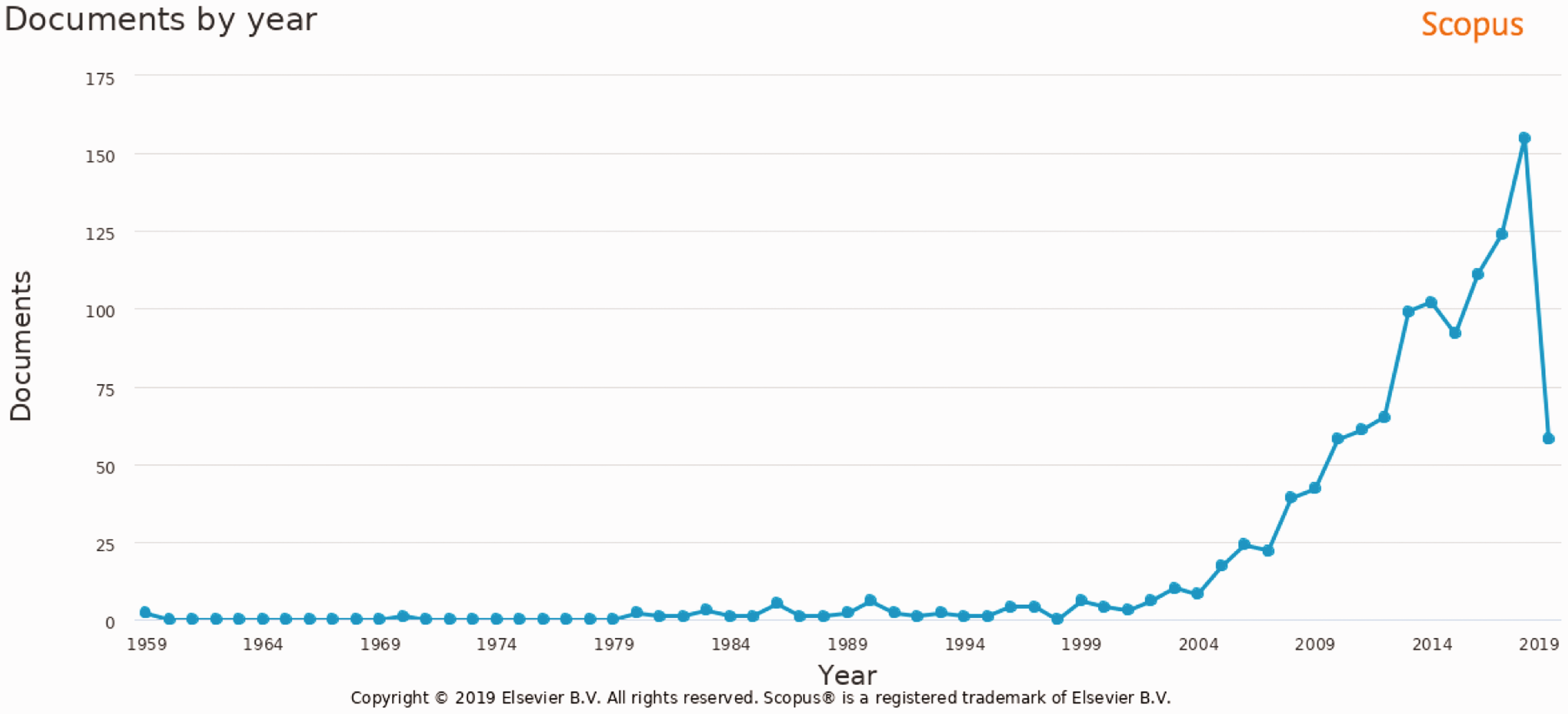
Documents per year.
The number of new journals is also indicative of the growth in this field – within the past five years, there have been at least five new journals launched at the intersection of behavior and policy. These include the Journal of Behavioral Public Administration which started in 2018, Behavioral Public Policy and the Journal of Behavioral Economics for Policy both of which started in 2017. All three are focused on publishing behavioral research which is relevant to public administration and policy. Earlier in 2015, Behavioral Science and Policy was started to focus on actionable behavioral research while Policy Insights from the Behavioral and Brain Sciences started in 2014, featured articles which link scientific findings to policy concerns.
Evidence of the behavioral turn: The increasing impact of behavioral research as seen by citation analysis
If such an increase in articles and publications is to have an effect on deliberations in the discipline, this would be shown through an increase in their impact, measurable through increases in citations. As Figure 2 shows, the retrieved documents received 22,092 citations in total, an average of 19.2 per document which is high in the social sciences. The H-index is 68 (see Figure 3).
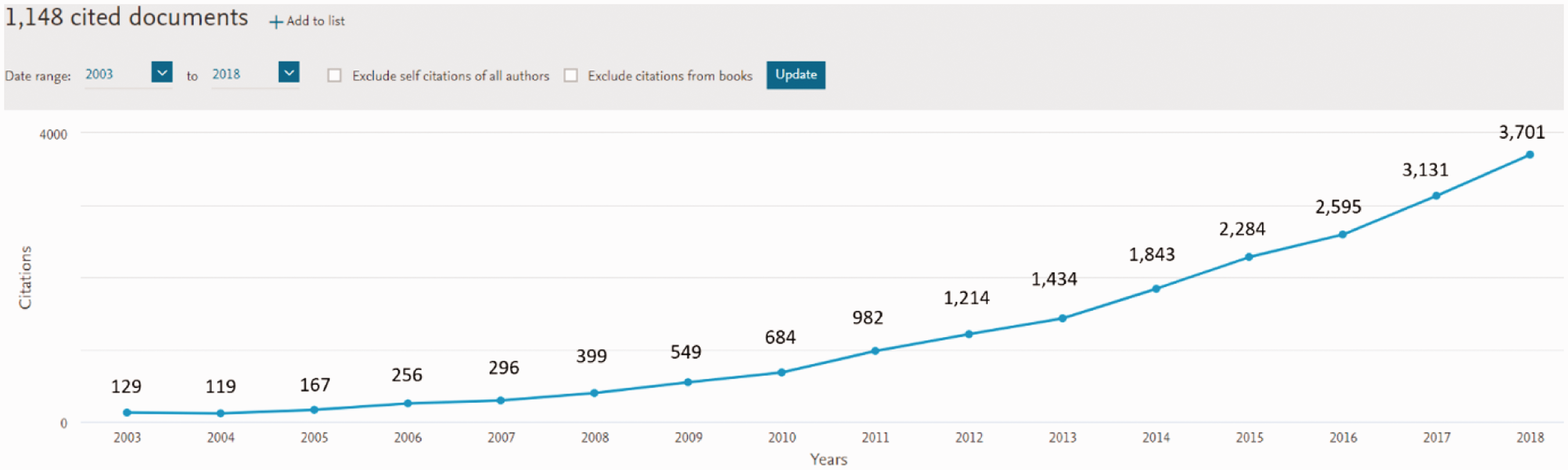
Citations per year.
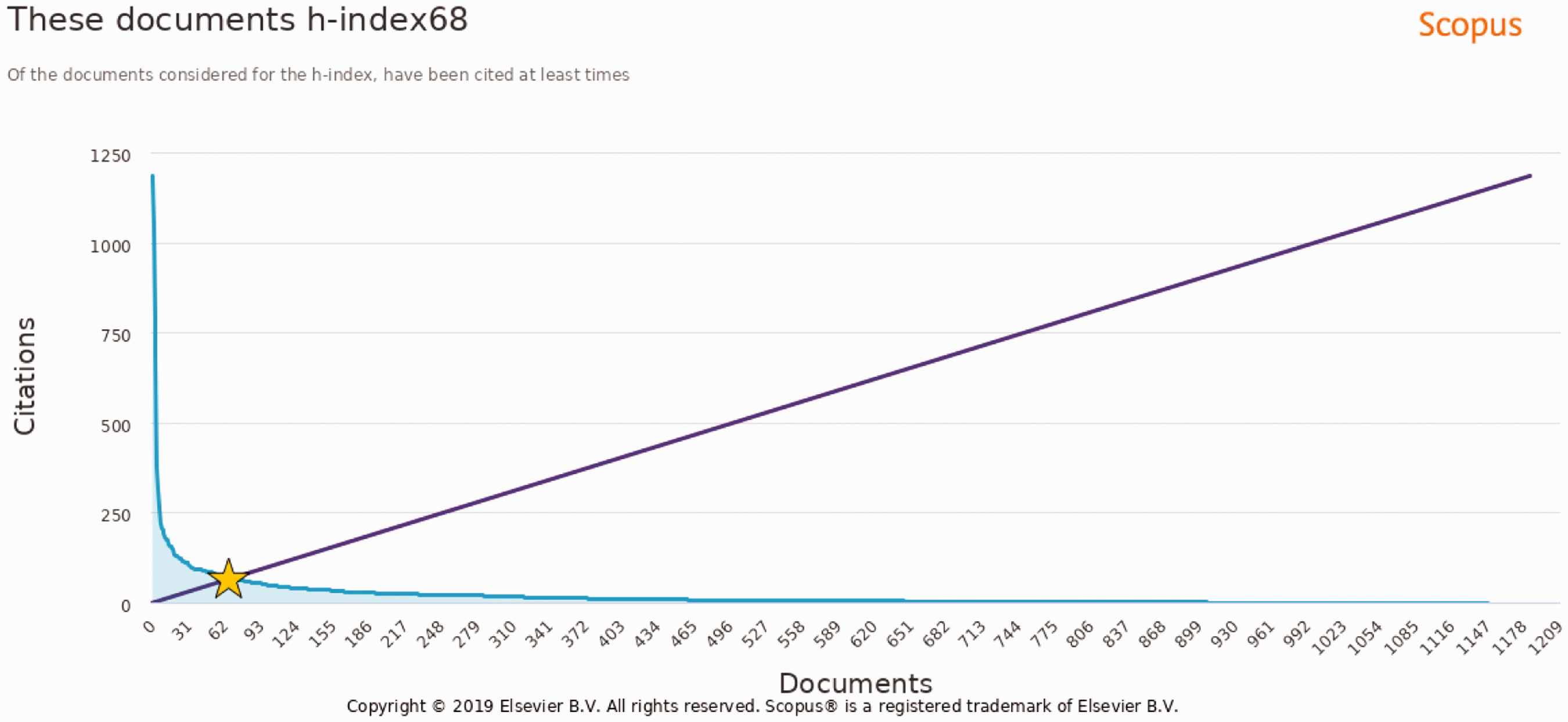
H Index.
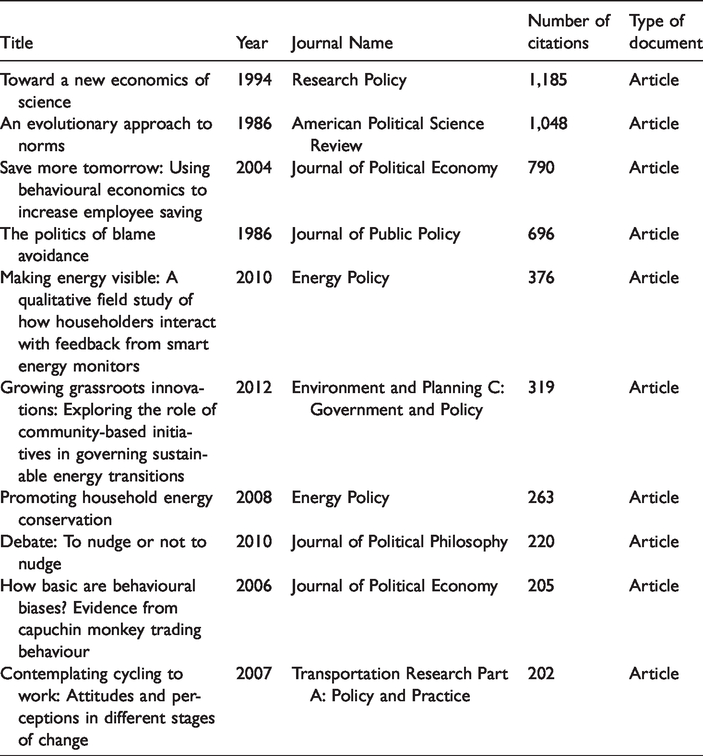
Citations range from 0 to 1,185 – with the top ten most cited articles listed in Table 1.
Ten most cited articles.
The behavioral turn and its links to the behavioral state: most frequent keywords and themes
The figures presented above provide evidence of a behavioral turn at least in so far as the community of policy scholars is concerned. Evidence of the impact of this turn on the nature of the state, however, can also be discerned in this analysis. First, the orientation of these articles – towards either theory or practice – is significant, as an emphasis on practice reflects changes not only in theory but also in the nature of contemporary state activities.
This shift can be discerned from a survey of the keywords used in the articles identified above. According to Scopus, the author keyword with the highest frequency is ‘behav* change*’ with a total of 151 mentions. This is followed by ‘behavio(u)ral economics’ (110), ‘climate change’ (67), ‘United Kingdom’/’UK’ (66), decision making (62), and ‘nudg*’ (59) (see Annex 1 for details).
While, prima facie, this suggests that practice is a key subject of inquiry, it is also the case that these keywords appear and are arranged in clusters. How these clusters relate to the theory versus practice divide is equally telling of their orientation towards shifting policy practice.
A total of ten clusters were identified by VOSviewer (although the last three clusters only have two or less items each and were discarded). Figures 4 to 7 illustrate these clusters. In each figure each color for the nodes/circles represents a cluster of keywords and the size of the circles represents the number of occurrences of the keyword.
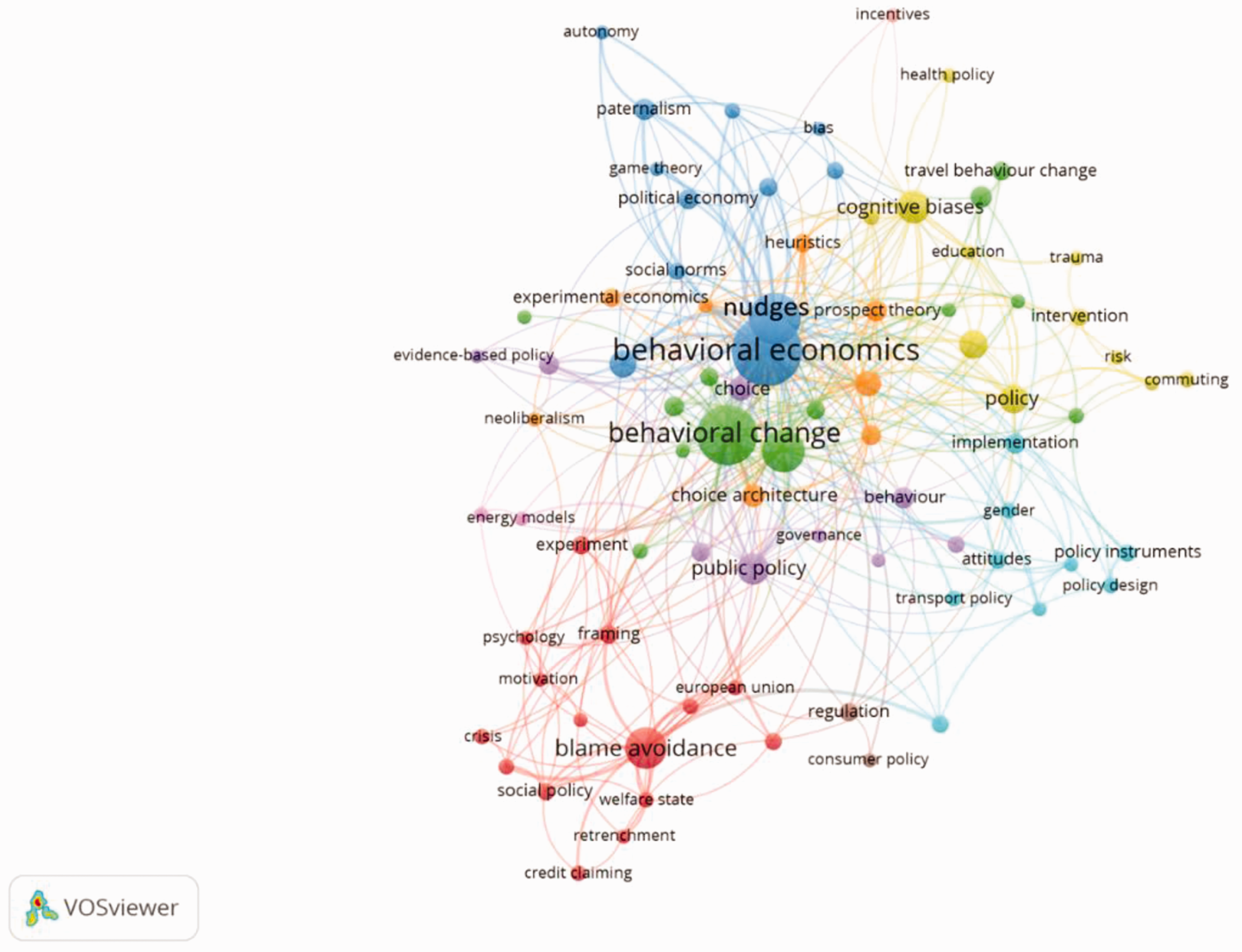
Keyword clusters for behavioral policy research.
The biggest cluster with 15 items (red nodes) centers on ‘blame avoidance’ and also includes ‘communication’ and ‘credit claiming’ suggesting that the object of inquiry was less on policy takers and policy-makers activity, per se, but upon what motivated them. The next two biggest clusters, while having fewer items, include some of the largest nodes of the map. The second biggest cluster (green nodes) has 13 items, and includes ‘behavioral change’, ‘climate change’ and ‘economics’, highlighting the significance of behavioral policy research in this key area of contemporary life and governance. The third biggest cluster has 12 items (blue nodes), and includes the largest node “behavioral economics,” as well as “nudges” and “libertarian paternalism.” These three clusters not only show us that practice is a key consideration in the behavioral turn, but also show the three emerging important elements of the behavioral state.
We discuss each of these in turn below – the motivations of the key players, the nature of compliance within a given policy context, and the issue of ethics and legitimation of behavioral interventions.
Priority issues in the contemporary behavioral state: Motivations, compliance and legitimacy
The network map in Figure 5 shows the same author keyword map as presented above, but color-coded by year of publication instead. This gives us a sense of how this field has evolved as the yellow-green nodes represent more recent work, whereas the darker purple nodes represent earlier work. Thus, for example, “nudges” as a concept has flourished relatively recently (around 2016) in the citation field, even though the first book by Thaler and Sunstein on the subject was published in 2008.
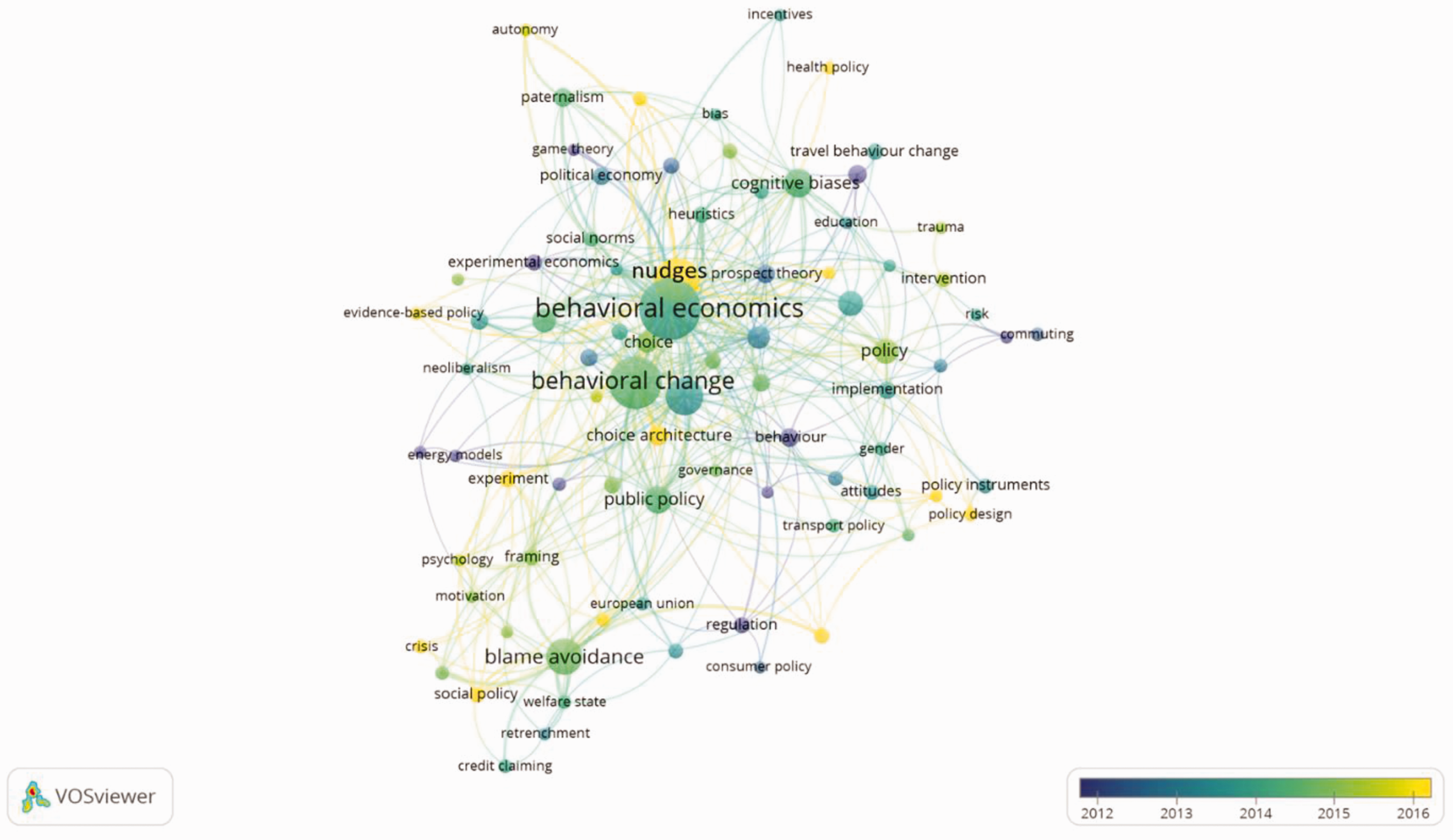
Keyword clusters for behavioral policy research over time.
Figures 6 and 7 use the same set of documents, but set a higher criterion of eight minimum occurrences in order to present a cleaner map.
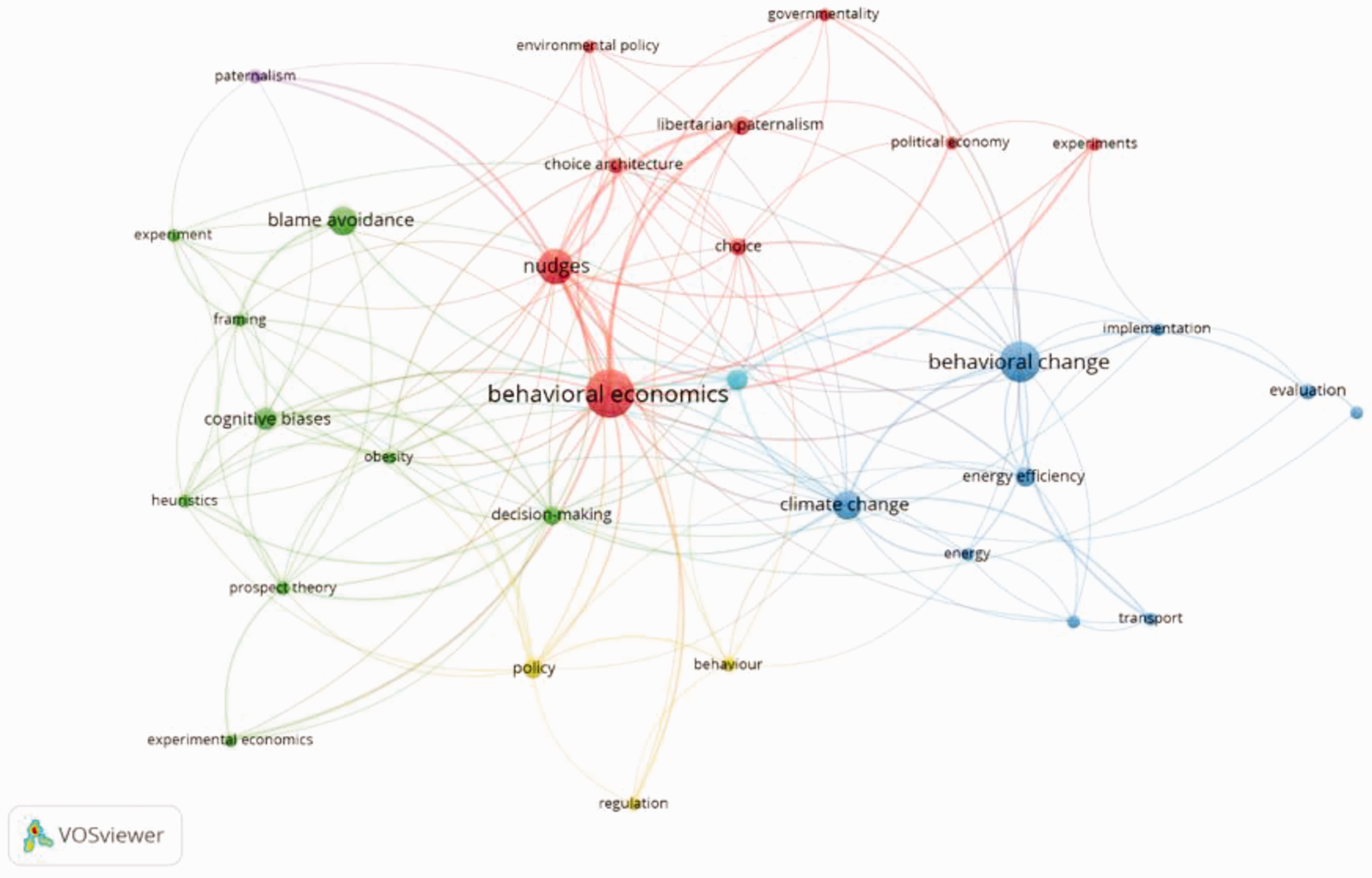
Keyword cluster map.
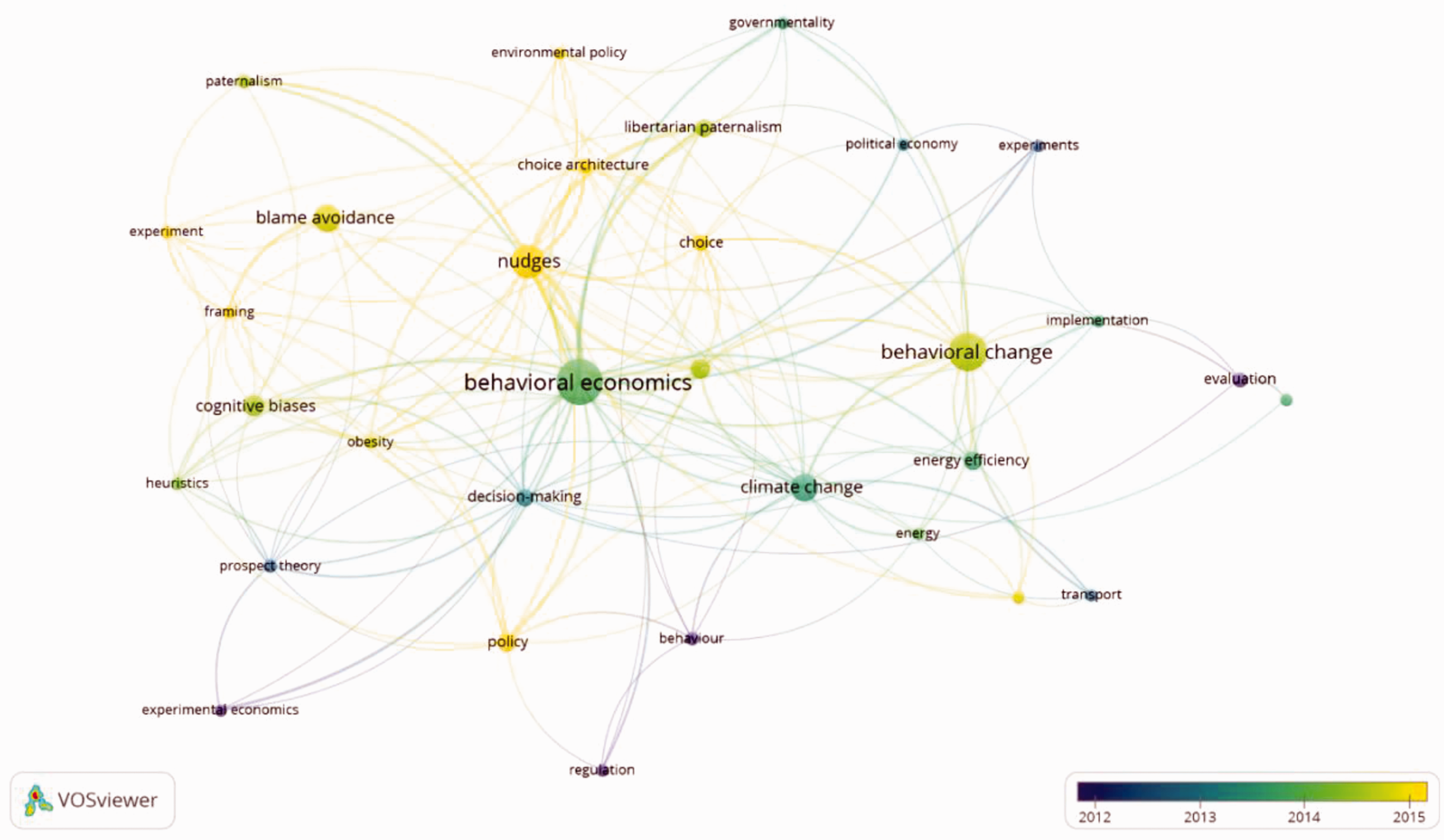
Keyword cluster map over time.
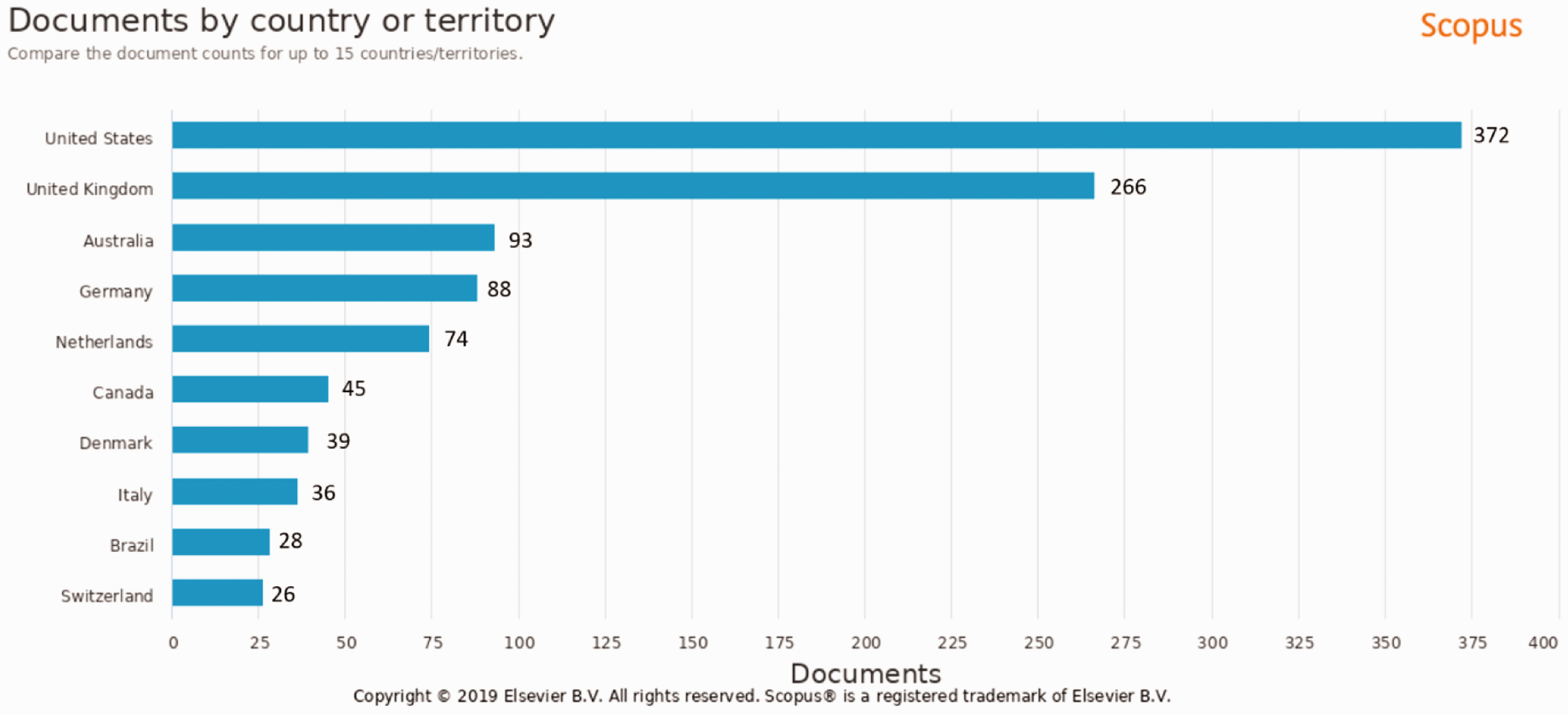
Documents by country.
The spread of the behavioral state and the behavioral turn: Most active countries
Another key issue area with the behavioral state concerns its temporal history, something that can be discerned from the geographical spread of references. If it is well entrenched then one would expect some coverage of behavior in most nations around the globe. If, on the other hand it is emerging then a pattern of leaders and laggards would be more likely, with some nations leading the charge and others in the process of catching up.
In this case the latter pattern is clear as the top ten countries in terms of contributions to the documents are listed in the chart below. As Figure 8 shows, the United States leads with 372 publications (32.4%), followed by United Kingdom (266; 23.2%), Australia (93; 8.1%), Germany (88; 7.7%) and Netherlands (74; 6.4%). There is a conspicuous lack of countries outside of US, Europe and Australia, with the highest South American country coming in ninth (Brazil, 28 publications), the highest Asian country coming in joint-thirteen (China with 21 publications), and the highest African country coming in joint-twenty-eighth (South African, with five publications).
While the Scopus database might overrepresent countries such as US and UK, this cannot fully account for the large discrepancies in numbers observed in this study (for instance, proportion of US and UK articles in the database is estimated to be 22.5% and 6.6% respectively (Mongeon and Paul-Hus, 2016), instead of the 32.4% and 23.2% found in this study).
While some of this pattern can be explained by the locations and orientations of the journals and publications examined as previously noted, it does suggest that publications in this area have begun to disseminate. There remains some distance to cover however, before the new policy behavioralism can be thought of as a truly global endeavor, meaning that in some areas a more utility-oriented policy studies and practice community can be expected to continue to prevail. An interesting finding from our bibliometric review is the relatively low number of articles coming out from explicitly paternal states such as Singapore and China, countries which construct choice architectures that constrain and direct public choice far more pervasively than in the US and UK (Schwartz and Cheek, 2017).
This conclusion is reinforced by Figure 9 which is a visualization map of research collaboration among countries with a minimum of five documents. Research collaboration is strongest between United States and United Kingdom (link strength is 20), and both nodes have high numbers of cross-nation collaboration, especially to major nodes such as Australia, Netherlands (green node just above Germany) and Germany but not outside these areas.
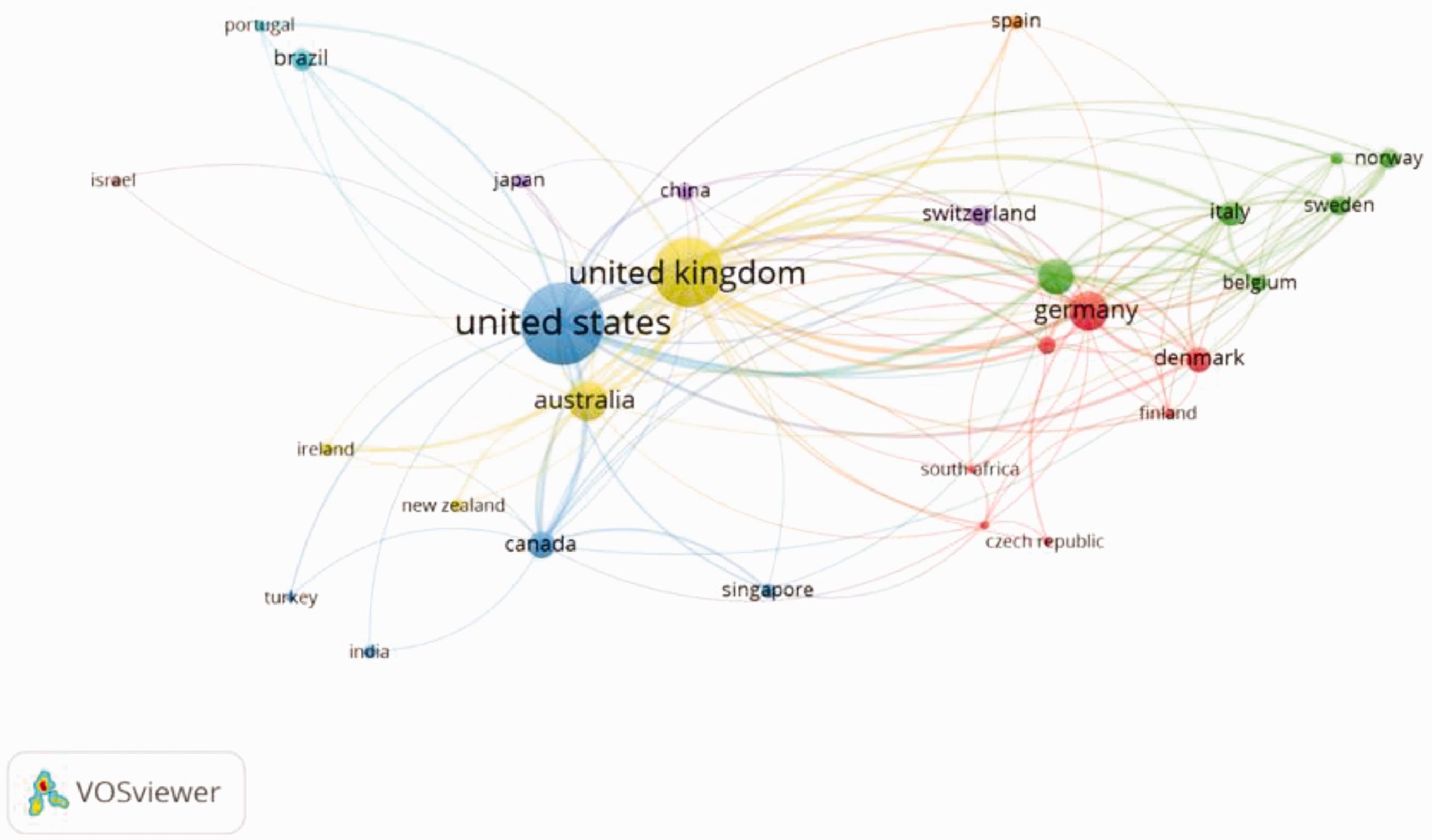
International collaborations.
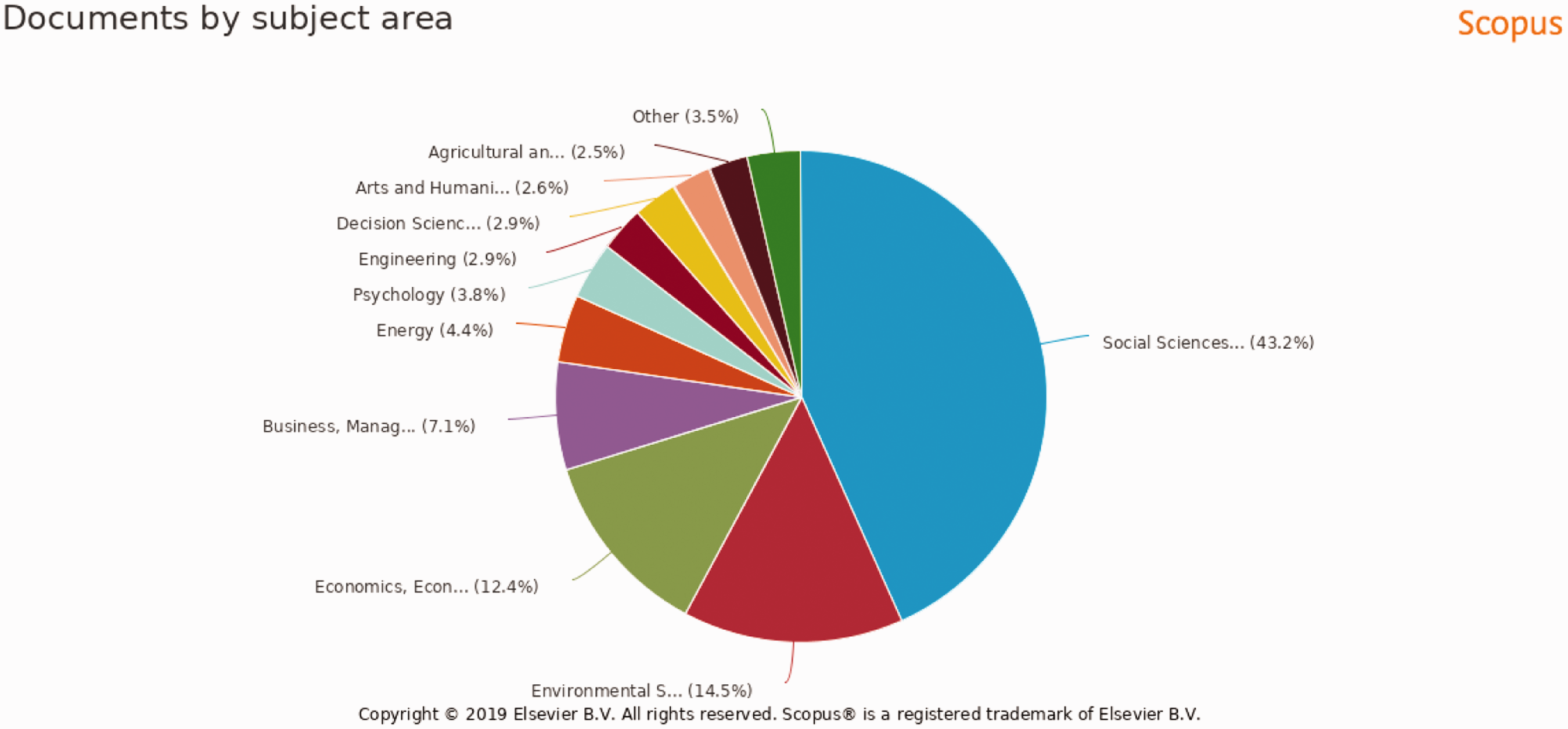
Documents by subject area.
Sectoral variation: Most active journals and institutions
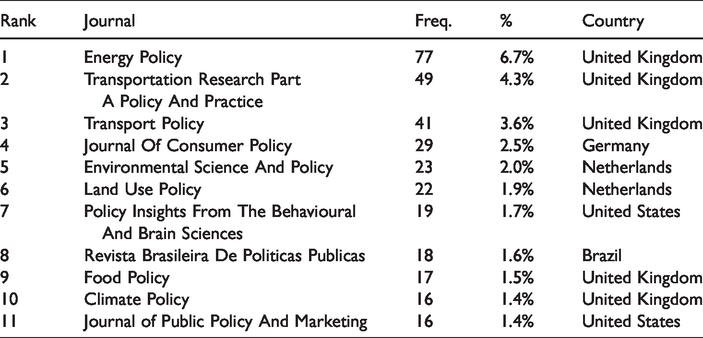
Another related issue concerns the sectoral versus national penetration of behavioral ideas into state practices. As Table 2 shows, some sectors feature a much higher frequency of appearance of behavioral results than others. Hence Energy Policy published the most articles (77; 6.7%), followed by Transportation Research Part A: Policy And Practice (49; 4.3%) and Transport Policy (41; 3.6%). The top 11 active journals are shown in Table 2. Eight of the 11 journals are based in UK or Europe. These 11 journals (out of a total of 160 journals) account for 327 articles (28.5%).
Sectoral dispersion of articles.
While it is not surprising that social sciences appear as the top subject area, the figures do allow us to make two observations. First, the high proportion (double that of the entire database) reinforces the dominance of the social sciences in terms of “behavior state/intervention” studies; second, each document has an average of 1.75 subject areas (compared to 1.22 for the entire Scopus database) (Scopus, 2017: 21). This suggests that such studies cut across multiple arenas, such as behavioral interventions in energy conservation efforts, again highlighting their penetration into multiple policy areas.
Conclusion: Theory and practice in the behavioral state
The evidence provided above illustrates how the policy sciences have moved beyond simple notions of compliance, and how state practices have followed this lead (Duesberg et al., 2014; Hofmann et al., 2014).
The findings not only suggest that the behavioral turn has penetrated into the state across a wide range of sectors, but also that the spread of behavioral interventions has been uneven across jurisdictions. That is, we have shown that the state is now taking a more active and attentive role in regulating behaviors, but further study needs to be conducted to determine how and why this is more prevalent in some countries rather than others. One possible explanation lies in the nature of the relationship between policy-makers and policy-takers. But it may also be the case that complex behaviorial interventions in some countries and sectors may pose higher risks to policy-makers than traditional ones. This is an area where there is intense activity at the moment, as indicated by the red nodes in our bibliometric analysis (the largest research cluster being on the motivations of public actors).
In both cases, however, the research suggests that behavioral labs and experimentation will remain an important policy innovation of the behavioral state. Such labs have already emerged as an important tool to work out motivations, optimal policy interventions, and designs in full-fledged behavioral states, (Lunn and Nã Choisdealbha, 2018) that will play a role in emerging behavioral states. That is, they conduct policy experiments focusing directly on the need to test assumptions of policy responses, and form an important link between theory and practice (Sanders et al., 2018) in reducing the risk involved in the adoption of “risky” behavioral innovations.
This comparative dimension of the new behavioral policy-making forms an important research subject of its own. Empirical research on labs and elsewhere, for example, has shown that citizens across a diverse range of nations generally approve of the adoption of nudges in public policy (Jung and Mellers, 2016). Regarding the geographic spread of public acceptance of behavioral interventions, industrialized Western democracies demonstrate exceptionally high approval rates, along with Brazil, Russia, and South Africa. China and South Korea are also overwhelmingly pro-nudge, with Japan being the outlier in demonstrating systematically lower approval rates, along with Denmark and Hungary (Sunstein et al., 2018).
But even the most positive populations do not approve of nudges that they perceive to be inconsistent with their interests or values (Reisch and Sunstein, 2016) nor of nudges that are perceived as having an illicit goal, such as religious or political favoritism (Sunstein, 2016). An empirical study by Sunstein et al. (2018) is indicative of the factors that affect public acceptance of nudges. The study was conducted as an online survey across eight countries, achieving representation with respect to age, gender, educational level, and region. Older people tend to favor less intrusive interventions, like information campaigns and information nudges; younger people are more likely to approve of intrusive interventions. Education has a weaker, but significant influence – the higher the number of years in school, the higher the approval level for governmentally-mandated information nudges and the lower the approval rating for subliminal advertising. As confirmed by prior literature, political attitudes only have a modest effect on approval rates of nudges.
In general, citizens in many countries are opposed to manipulation, though they may define it narrowly, applying only to areas such as subliminal advertising (Reisch and Sunstein, 2016) or visual illusions to reduce speeding (Jung and Mellers, 2016). Thus governments enjoying a high level of trust, for example, may be able to undertake actions through moral suasion while governments which do not enjoy that trust will need to employ other tools. But whether or not this high level of trust is sustained over time is a key concern, and again, continual monitoring and assessment is required to ensure that this is the case (Ewert, 2019b; Strassheim, 2019).
Be that as it may, the links between theoretically-informed practice and improved practice-informed theory in this area in the contemporary period are very clear. Unlike the earlier situation in the policy sciences, the behavioral turn sees the fundamental design problem for governments not just as a matter of calculating the range of prison sentences or fines and subsidies to levy in some policy situation, but rather, to understand the basis on which compliance is likely to occur. Three elements of the behavioral state – motivations, bases of compliance and legitimacy are all important considerations in this new policy science.
Rather than engage in the old “two-community” world of uncommunicative abstract theory and empirical observation, the behavioral turn has helped generate a merger between theory and practice which has been missing in policy studies for some time. Policy design now addresses a wide range of policy tools and is not circumscribed as it was in the past by a priori adherence to unsubstantiated utilitarian assumptions about policy behavior (Gunningham et al., 1998).
Supplemental Material
sj-pdf-1-ppa-10.1177_0952076720977588 - Supplemental material for Theorizing the behavioral state: Resolving the theory-practice paradox of policy sciences
Supplemental material, sj-pdf-1-ppa-10.1177_0952076720977588 for Theorizing the behavioral state: Resolving the theory-practice paradox of policy sciences by Ching Leong and Michael Howlett in Public Policy and Administration
Footnotes
Declaration of conflicting interests
The author(s) declared no potential conflicts of interest with respect to the research, authorship, and/or publication of this article.
Funding
The author(s) received no financial support for the research, authorship, and/or publication of this article.

Note
Supplemental Material
Supplementary material for this article is available online.
References
Supplementary Material
Please find the following supplemental material available below.
For Open Access articles published under a Creative Commons License, all supplemental material carries the same license as the article it is associated with.
For non-Open Access articles published, all supplemental material carries a non-exclusive license, and permission requests for re-use of supplemental material or any part of supplemental material shall be sent directly to the copyright owner as specified in the copyright notice associated with the article.
