




Abstract
Consider a society where the prestige of orthodox views is linked to the prestige of the elite. Heterodox individuals are less likely to express their views if other peers refrain from doing so and if the elite is prestigious. In turn, corruption by the elite is less easily detected if orthodox views dominate. We characterize equilibrium self-denial and corruption and show that an exogenous increase in the range of orthodox views may result in a decrease in the total number of individuals truthfully expressing their views. Some features of the model are shown to be compatible with US data.
Introduction
The purpose of this article is to develop a theory of equilibrium ‘political correctness’, that is, a situation whereby individuals express views which are not actually theirs because they are well-received within society (Bernheim, 1994; Loury, 1994; Michaeli and Spiro, 2015). As in any theory of conformity, individuals with politically incorrect views have to choose whether to truthfully express their heterodox view making them an outsider to society or instead to self-deny by expressing an orthodox view to be accepted by society. Peer pressure and the prestige of orthodox views are therefore decisive ingredients in this choice. What is new to our paper is that we link the prestige of orthodox views to the prestige or power of the social group representing these orthodox views (see Bourdieu and Boltanski, 1976; Susen, 2013). Infringements of the orthodoxy should be more likely the weaker the power/prestige of the elite defending these views. For instance, liberation of speech from the monopoly of experts/economists and criticism of ‘excessive’ political correctness were important themes put forward by respectively defendants of Brexit and supporters of Trump in 2016, 1 and these political movements rose after the prestige of elites was damaged by the Great Recession (Hopkin, 2020).
To illustrate the relevance of the novel mechanism that links the prestige of orthodox views to the prestige of the elite representing these views our paper answers three questions:
When will heterodox individuals express themselves in a politically correct way, if their choices only depend on what other individuals do? How will the results change in the presence of an elite that influences the prestige of the politically correct views? If more views become politically correct, will this always lead to more individuals truthfully expressing their views, and how does this depend on elite influence?
To answer the first question, we develop a benchmark model without an elite which we refer to as the simple model. In this model, all individuals simultaneously decide which view to express. They gain a benefit from expressing their view truthfully; but in case this view is not politically correct, they suffer from a reputation loss which is increasing in the proportion of self-deniers due to peer pressure. If they express a politically correct view, they gain utility from belonging to society, but this requires self-denial which entails a loss increasing in the distance between their true view and their expressed view. We show that truthfully expressing their view is a dominant strategy for all orthodox individuals, while the amount of peer pressure is crucial for the behavior of heterodox individuals. When peer pressure is low, nobody chooses self-denial at equilibrium, as being truthful generates a utility and any self-denial by other heterodox individuals would be heavily discounted due to the low peer pressure. Instead, when peer pressure becomes larger, the interaction among heterodox individuals becomes relevant, generating multiple equilibria: while no self-denial remains the best option for everybody if nobody else self-denials, full self-denial by heterodox individuals now becomes an equilibrium as self-denial by sufficiently many peers renders the expression of heterodox views more costly than self-denial.
To answer the second question, we develop our main model by adding an orthodox ‘elite’ (a dominant group) to our simple model and we link the prestige of orthodox views with the prestige of the elite. Specifically, we assume that a high level of self-denial among heterodox individuals renders orthodox views more prestigious, which in turn enhances the prestige of the elites and makes it easier for them to engage in rent-seeking activities (corruption) without being detected. At the same time, we assume that if elite members choose not to engage in corruption, their prestige is higher. To the extent to which masses care about elite behavior, better behavior by the elite translates into a higher prestige of orthodox views, and thus raises the value of self-denial for heterodox individuals. In our main model, masses and elite members move simultaneously, the former choosing which view to express and the latter whether or not to be corrupt. Since orthodox individuals always reveal their views from now on when we talk about the masses we refer to heterodox individuals only.
We show that the existence of the elite leads to two new results. Firstly, self-denial can arise as an equilibrium outcome even for low levels of peer-pressure whenever the good behavior of the elite sufficiently raises the value of self-denial. In the simple model, the externality created by self-denial when peer pressure is low is very weak and for this reason no self-denial is the unique equilibrium; instead, if heterodox individuals care about the good behavior of the elite, the latter generates individual incentives for self-denial, which increase the externality created by self-denial even for lower levels of peer-pressure. 2
Secondly, if the masses care sufficiently about the elite’s behavior and peer pressure is sufficiently high, the presence of the elite results in full self-denial becoming the unique equilibrium in situations where there was multiplicity in the simple model. Interestingly, full self-denial always holds in this case no matter the elite’s payoff from corruption, and the corruption payoff only affects the observed level of corruption characterizing the equilibrium. Specifically, if corruption pays little, full corruption is never a best reply for the elite, but at the same time the prestige of orthodox ideas stemming from self-denial lowers the corruption detection probability and generates some corruption. In turn, if corruption pays a lot, the same mechanism leads to a situation in which full adhesion of the masses to the ideas of the elite results in full corruption by the elite.
The final question we examine is how an exogenous increase in the range of socially acceptable views affects the proportion of agents expressing their views in equilibrium. Naturally, those individuals whose views have (exogenously) become orthodox can now freely express them, so initially less individuals self-deny. Consider however the situation of an individual holding a ‘very heterodox’ view: this individual was initially choosing to express her views because self-denial was too costly, as her own view was too different from any orthodox view. However, when more views become socially acceptable, her view is less distant from the limit orthodox view, she then may choose to self-denial, which in turn lowers the number of individuals expressing their views. In the simple model, we show that this second effect is always dominated and that as result a wider set of orthodox views always leads to less self-denial. This does not necessarily hold in the model with elite, as the initial fall in the proportion of self-deniers boosts the corruption detection probability, which improves the behavior of the elite, and further reinforces self-denial. When the masses care a lot about elite behavior, an increase in the range of socially acceptable views might end up lowering the number of individuals expressing their views in equilibrium.
We empirically illustrate some of the features of the model using the 2016 Survey of American Political Culture (Hunter and Bowman, 2016) conducted in August 2016 two months ahead of Donald Trump’s election. Consistently with the model, individuals who view themselves as more distant from society are more likely to believe there is a political correctness problem in the US. In addition, individuals considering that the elites are self-interested are also more likely to believe political correctness to be a problem. This is also in accordance with our model.
Our paper relates to a growing literature on political correctness. Loury (1994) shows how in the presence of norms on acceptable views within a group, the interaction between sender and receiver becomes strategic and can generate a link between ways of expression and bad qualities of senders, resulting in the avoidance of such ways of expression. Bernheim (1994) shows that if intrinsic preferences are not observable and individuals care sufficiently about status, heterogeneous individuals may all choose the same action in order to avoid being characterized as somebody with uncommon intrinsic preferences. Hallman and Spiro (2023) modified the curvature of Bernheim’s (1994) intrinsic preferences to develop a theory of hypocrisy. Morris (2001) differs from the above papers and ours in that there is a true state of the world, with the analysis focusing on the extent to which an advisor will be able or not to convey this state of the world to the policy maker when the advisor cares about his own reputation in the eyes of the policy maker. The general message of our simple model is similar to that of Michaeli and Spiro (2015) except that in the latter individuals can choose the extent to which they self-deny, implying that conformity to the social norm does not only depend on the number of self-deniers. 3
Overall, the contribution of our paper to the literature is to link the prestige of orthodox ideas and the behavior of the elites representing them, which can be related to Bourdieu’s (1979) notion of symbolic power arguing that while debates of views tend to be presented as belonging to an autonomous asocial sphere, the power of orthodox ideas is also dependent on the power of the associated dominant groups.
The remainder of the article is organized as follows. In Section 2, we analyze a simple political correctness model which is extended in Section 3 to incorporate an elite. Section 4 describes the equilibria of this full model and emphasizes the new results with respect to the benchmark. Section 5 provides an empirical illustration of the main mechanism in the model. Section 6 concludes. Most technical details are relegated to the Appendix.
A simple model
The model ingredients
Consider a society with a continuum of individuals uniformly distributed on the line


Consider first the group of orthodox individuals with



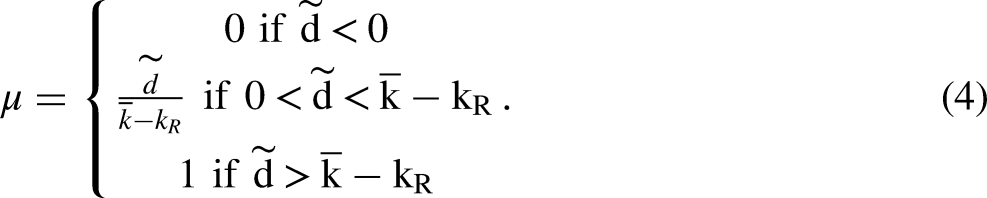

Figure 1 presents the equilibrium proportion of self-deniers
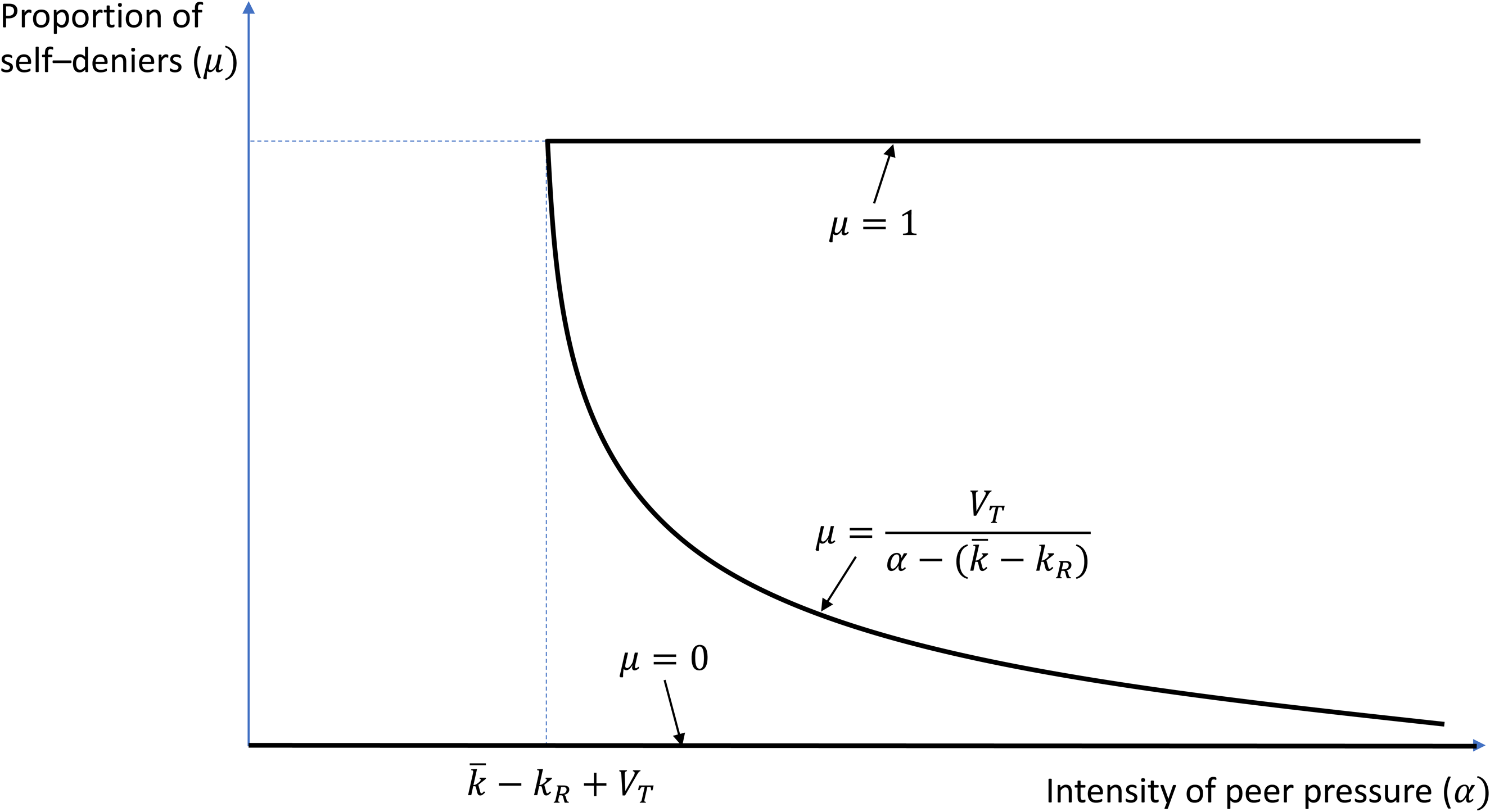
Equilibria in the simple model.
One important question is to understand whether a society encompassing an increasingly large set of views (i.e. including more views as orthodox as
In the unique interior cutoff equilibrium, as represented in Figure 2, individuals express their views if they are orthodox—corresponding to the interval

Individuals expressing their view (interior equilibrium).
As the total number of individuals who reveal their true views is given by the following equation:



Effects of a larger Overton window (interior equilibrium).
So far, we have only considered how an increase in the orthodoxy range changes the characteristics of the interior equilibrium. However, from the analysis above, we know that the change in the orthodoxy range may also affect the set of equilibria. Assume that initially
We now introduce an elite in the model. The elite are the ‘guardians’ of the orthodoxy, either because orthodox ideas originated with them or because one of their functions in society is to represent/defend these ideas. However, in terms of actions, elite members still have a choice between behaving according to socially acceptable ideas or instead misbehaving—we also refer to this for simplicity as ‘being corrupt’. We assume that elites and masses play a simultaneous move Bayesian game. We first study the behavior of each elite member, who takes the behavior of the masses and the behavior of other elite members as given.
Behavior of the elites
An elite member who chooses to misbehave enjoys a fixed payoff from corruption, but this payoff is lowered by a penalty if the misbehavior is detected. We assume the probability of detection to be smaller the more prestigious the elite is, which is itself tied up to the prestige of orthodox views to the extent to which mass members self-deny. For simplicity, we assume the detection probability to be given by the proportion of dissenters

On the other hand, elite member j derives a fixed private utility



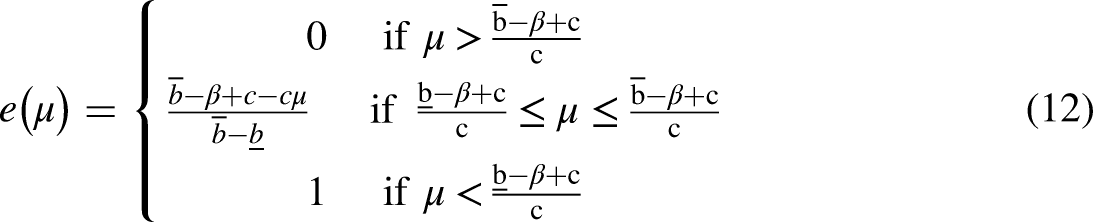
We now determine the choice of a heterodox member of the masses who takes as given the honesty level of the elite as well as the choices of the other member of the masses.
10
As in the simple model, we still assume (1) to hold, that is, expressing dissent entails a cost increasing in the number of self-deniers. However, the existence of the elite affects the value of self-denial, which we assume to be increasing in the prestige of the elite, given that a better behavior of the elites raises the prestige of orthodox views.
11
Specifically, we assume that

Equalizing (1) and (13), there is still a cutoff distance


Indeed, comparing the first branch of (15) with the first branch of (5), it appears that the equilibrium with no self-denial (
At the other extreme, the third branch of (15) represents a situation of full self-denial (
Finally, the intermediate branch of (15) indicates that there will be an interior equilibrium proportion
For
For
A Bayesian equilibrium of our model is a proportion of self-deniers and a proportion of honest elite members
As in the simple model, more self-denial raises the isolation of those that would express dissent and renders self-denial more attractive by lowering the value of being truthful, see (1). At the same time, more self-denial now generates incentives to misbehavior by the elites (lowers
Proposition 1 in Appendix B.3 fully characterizes the equilibrium when the reaction function of the masses is unique (i.e.
We now graphically present the equilibria as a function of peer pressure (
Case 1: Low corruption payoff
Consider first a situation where the payoff from corruption
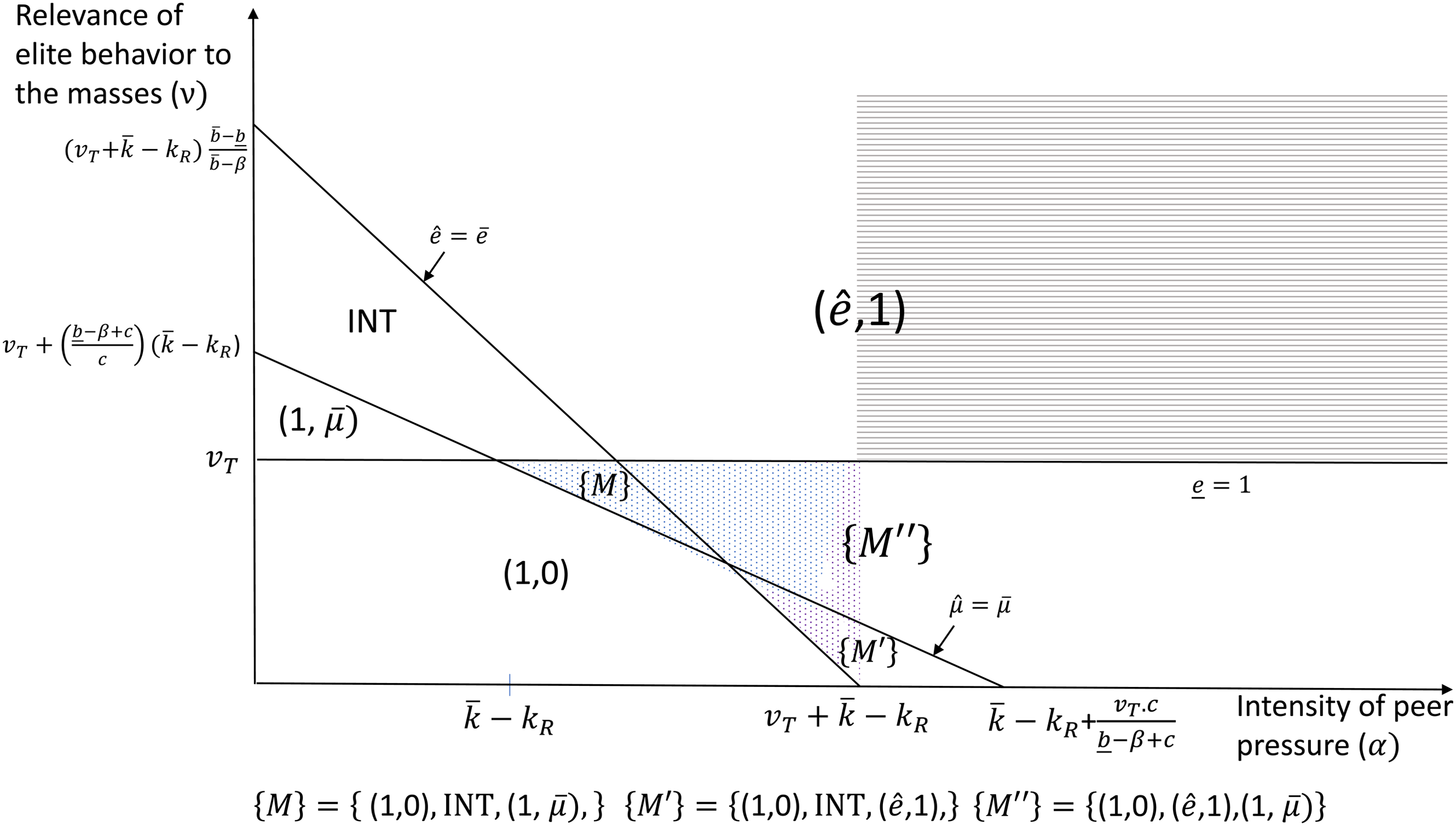
Equilibria for a low corruption payoff (
In the model without elites (corresponding to
As the behavior of the elite becomes more and more relevant to the masses, that is, v becomes positive and larger, multiple equilibria start arising also for smaller and smaller values of
At some point (for
More generally, corruption is more likely to arise whenever self-denial is higher, as higher self-denial makes it less likely for misbehavior to be detected.
Consider next a situation characterized by a larger fixed corruption payoff
Case 2-low: Small misbehavior penalty
In the case of a larger corruption payoff
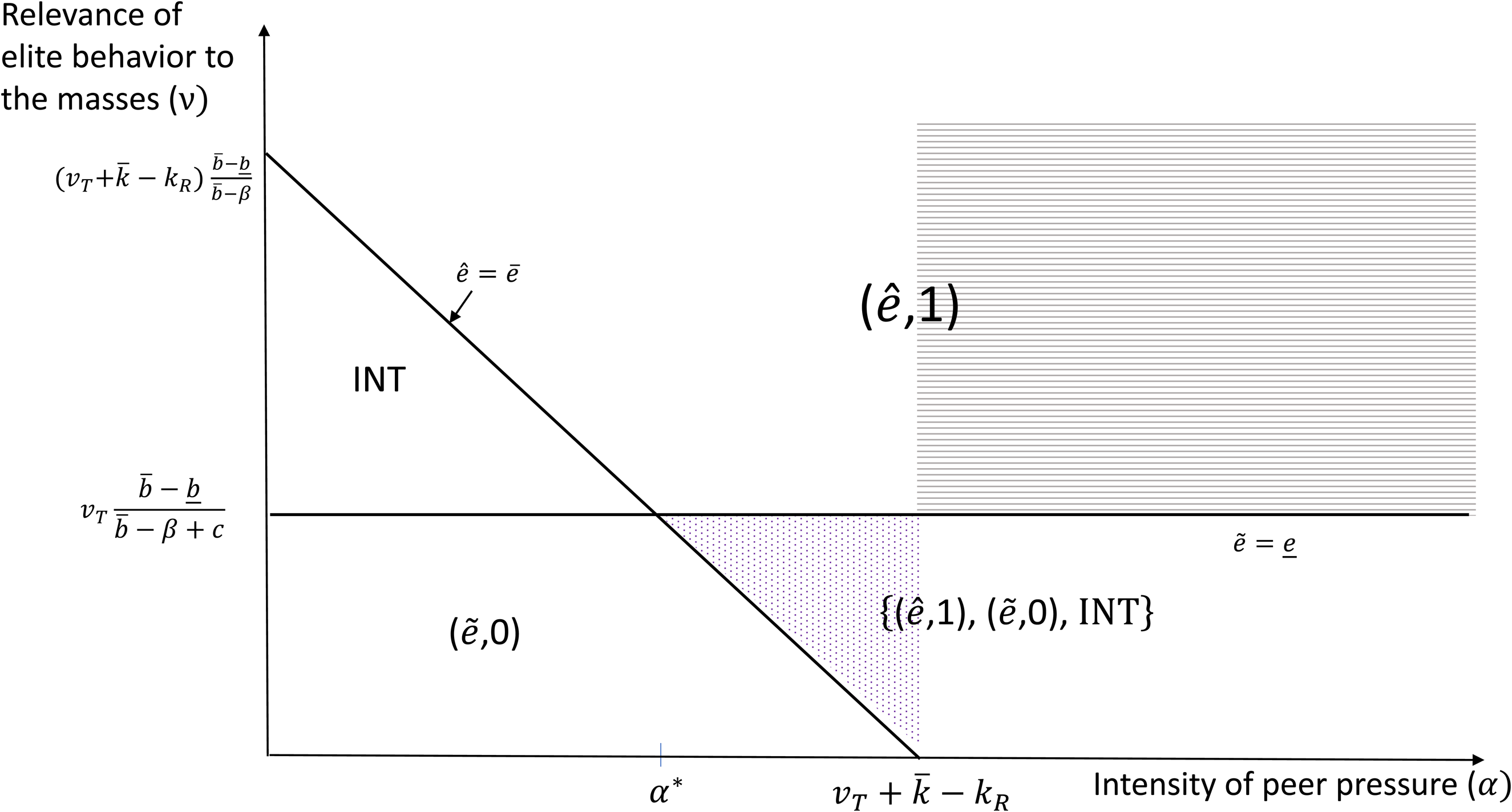
Equilibria for an intermediate corruption payoff and a low misbehavior penalty (
A large misbehavior penalty (
In terms of the presence of multiple equilibria, the main difference with respect to the two preceding cases is that, for intermediate values of the intensity of peer pressure (
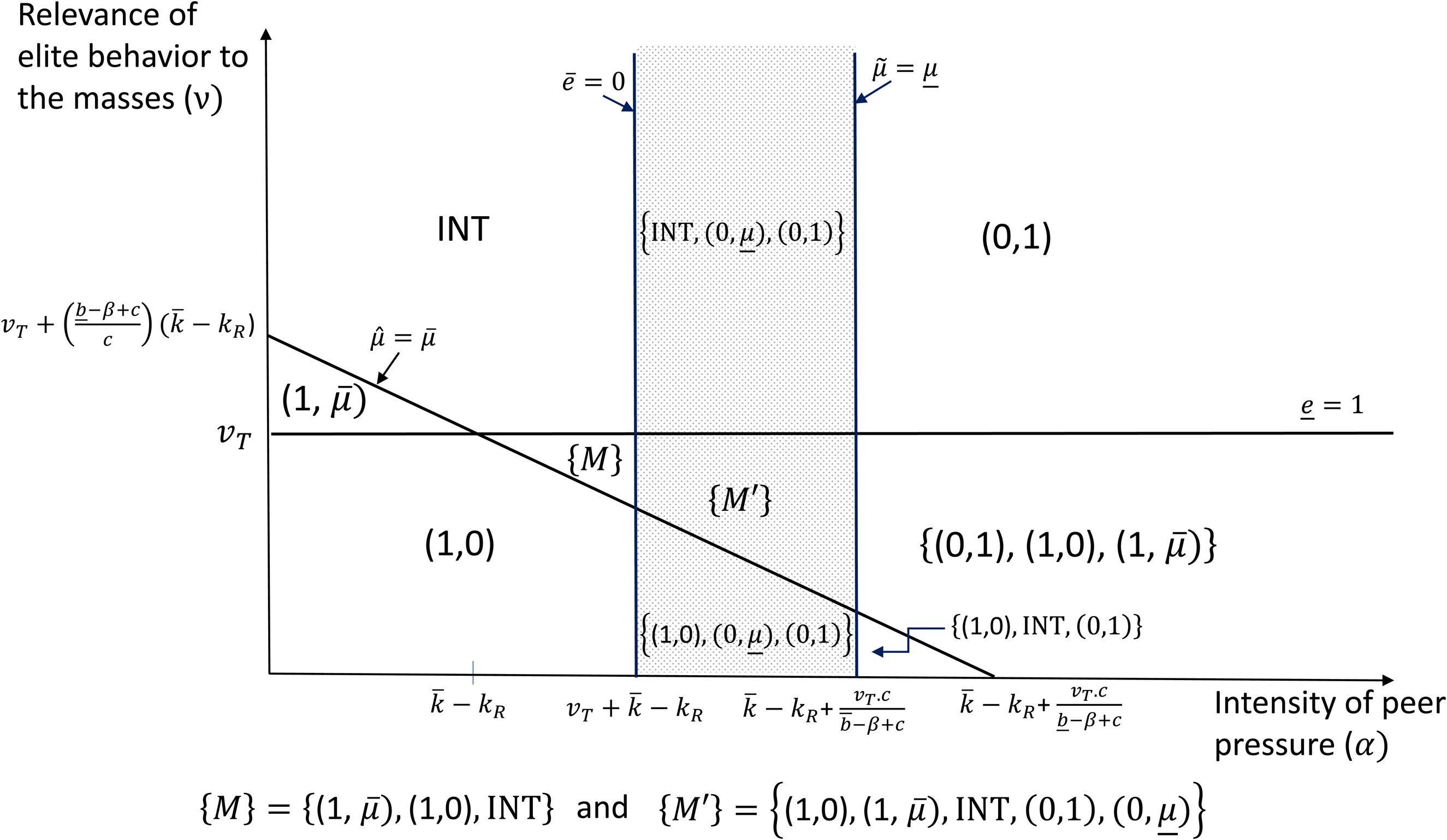
Equilibria for an intermediate corruption payoff and a high misbehavior penalty (
Finally, in the areas characterized by a unique equilibrium, there is still an equilibrium with no-corruption by the elite and no self denial by the masses in the South-West, and in the North-East an equilibrium with no honest behavior and full self-denial—this time
Finally, the case of a large corruption payoff (
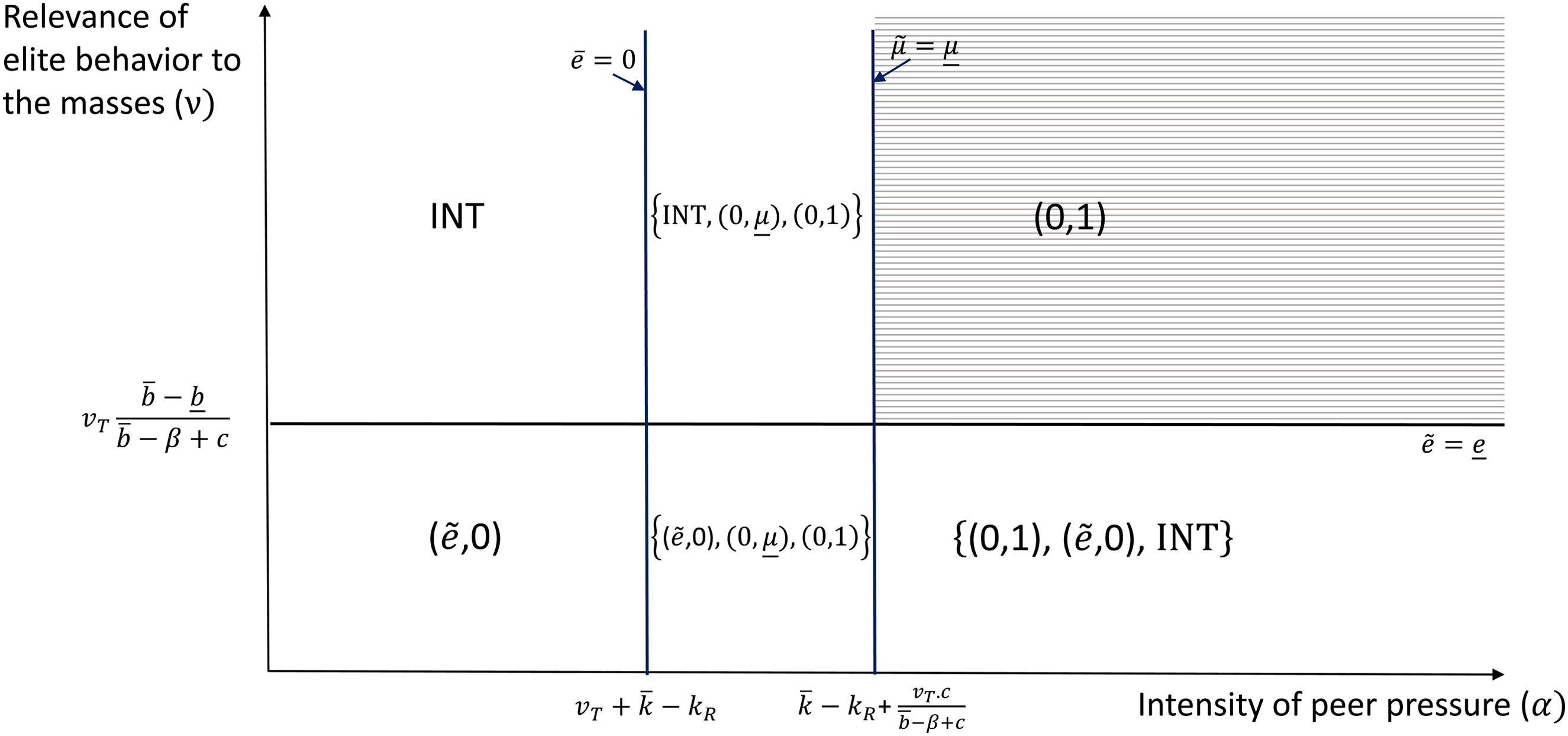
Equilibria for a high corruption payoff (
We next examine how changes in the size of the Overton window
Figure 8 represents how the total number of individuals expressing their own views at equilibrium (h) changes as the size of the Overton window (
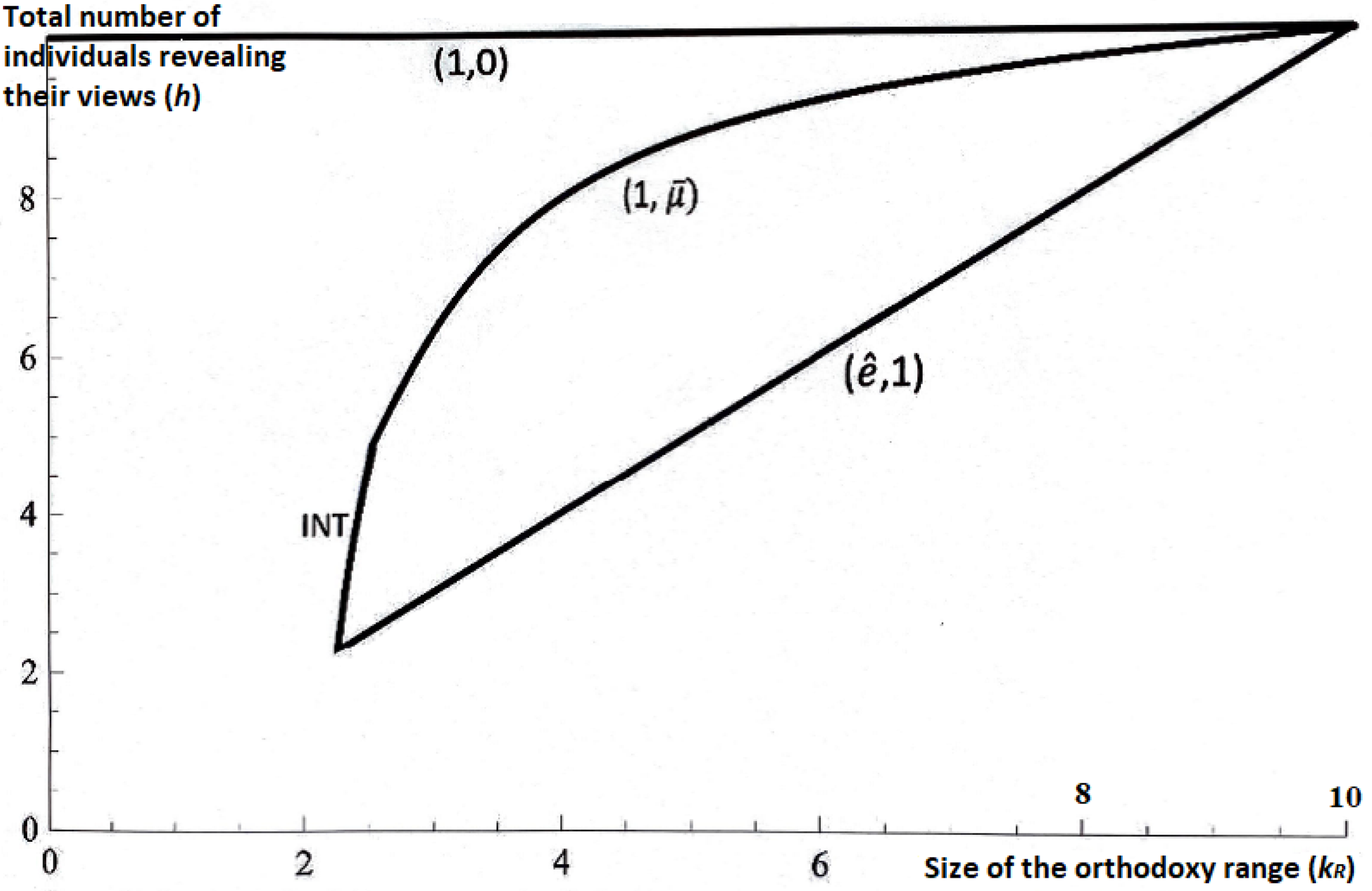
Number of individuals expressing their views depending on Overton window size, low
Instead, when the corruption payoff is low and the masses care to an important extent about the elite, that is,
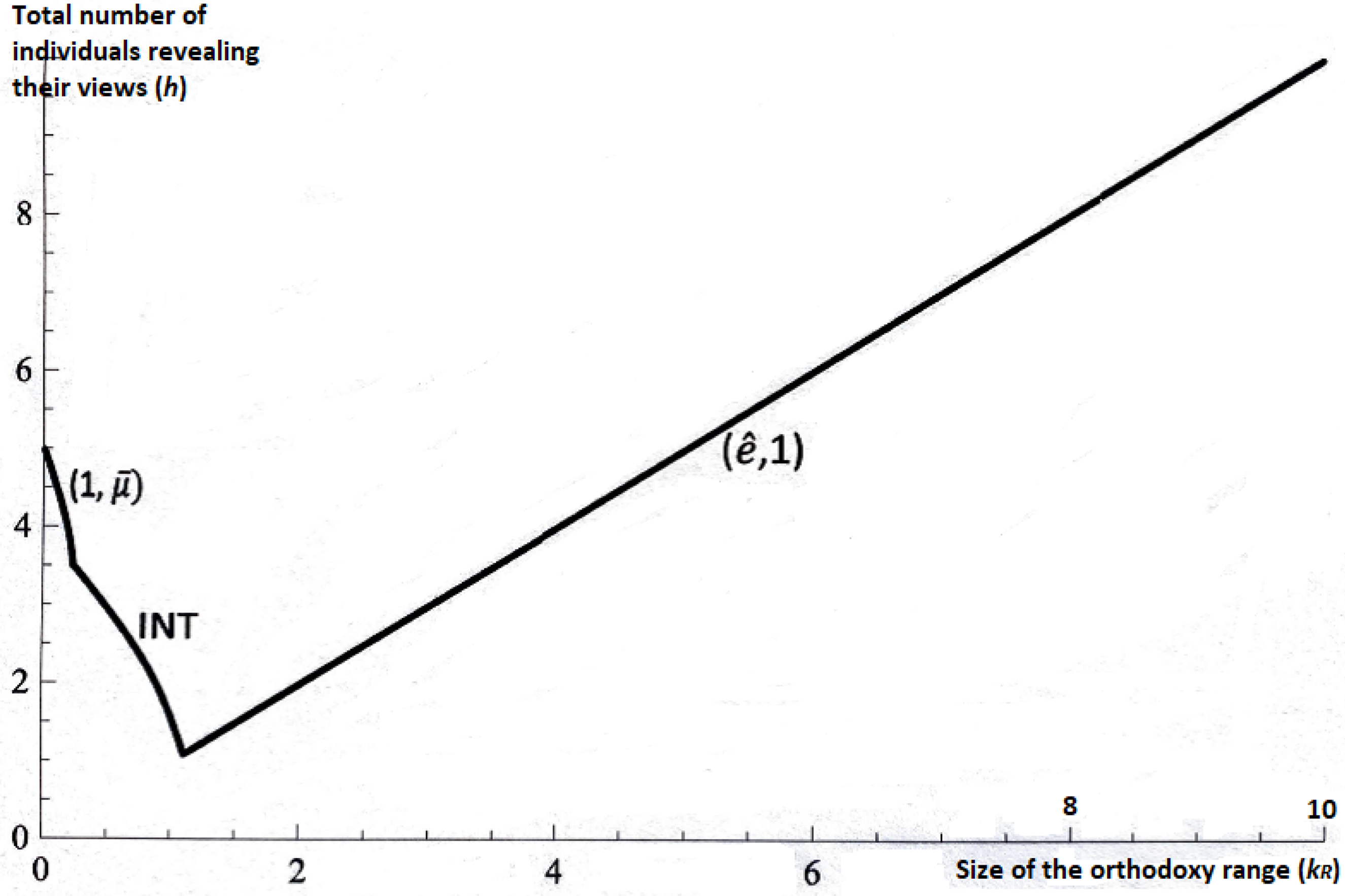
Number of individuals expressing their views depending on Overton window size, low
The next section considers some predictions of the model in light of the Survey of American Political Culture.
The 2016 Survey of American Political Culture (Hunter and Bowman, 2016) includes a question on the perception of political correctness as a problem. This survey consists of 1904 telephone interviews by Gallup on a representative sample of American adults and was performed in late August 2016, that is, two months ahead of the election of Donald Trump. Respondents were questioned about the extent to which they agreed with the statement ‘political correctness is a serious problem in the US, making it hard for people to say what they really think’ (Hunter and Bowman, 2016: 67). In the sample, 40% of the individuals completely agree with the statement, 33% mostly agree, 17% mostly disagree and 10% completely disagree.
In our model, if all views were orthodox, everybody would simply express their own view and get a payoff
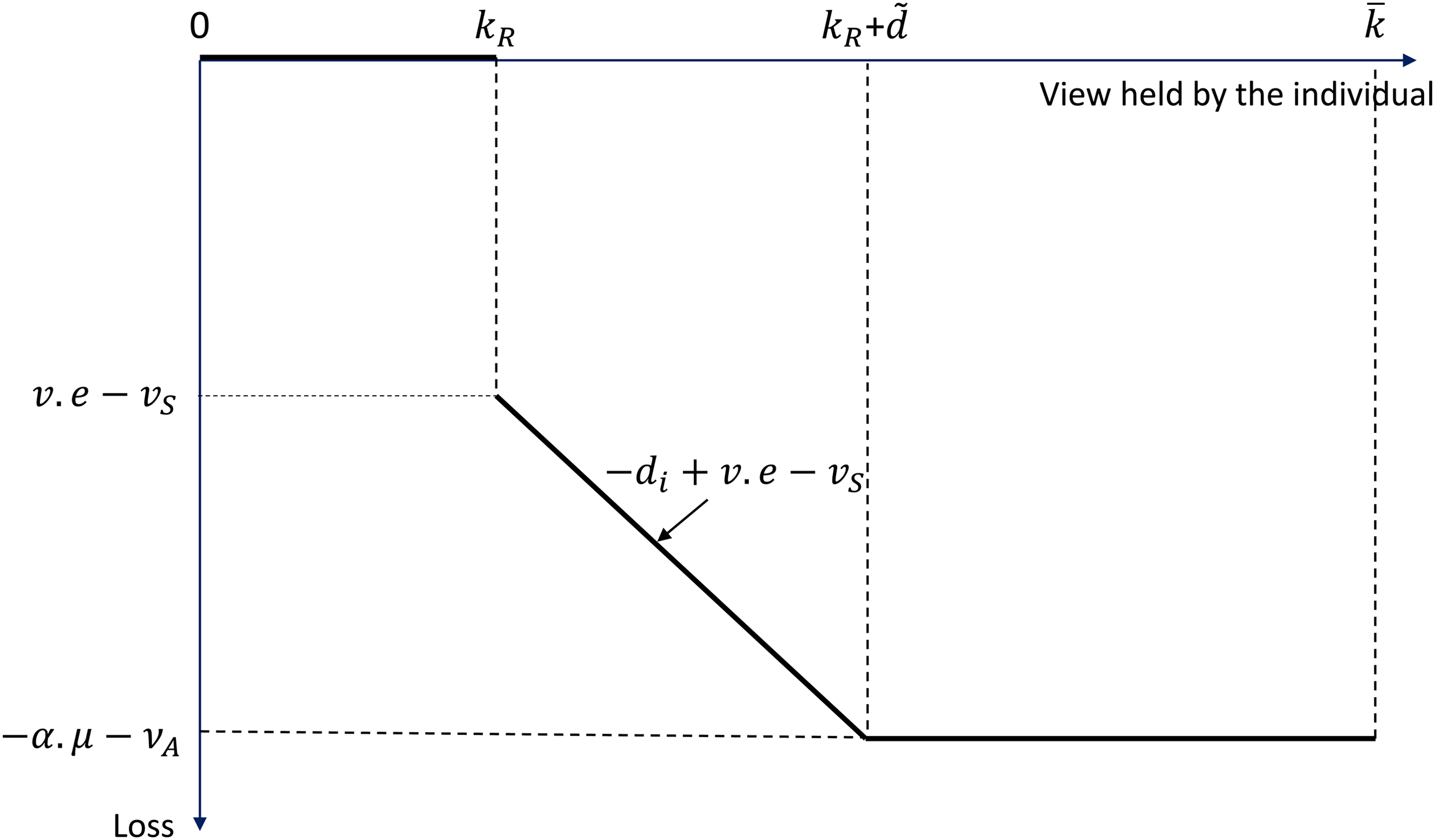
Loss to individual i associated to the existence of orthodoxy range [
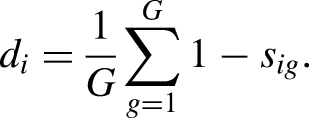
Our measure of distance of the individual i with respect to the orthodoxy range is constructed from a set of questions asking the respondent whether the beliefs and values of Americans like them are completely different, mostly different, mostly similar, or completely the same as those of different subgroups of the population. These subgroups are African Americans, Hispanic Americans, White Americans, Muslim or Islamic Americans, Conservative Christians, Non-religious people, and gays and lesbians. Specifically, let
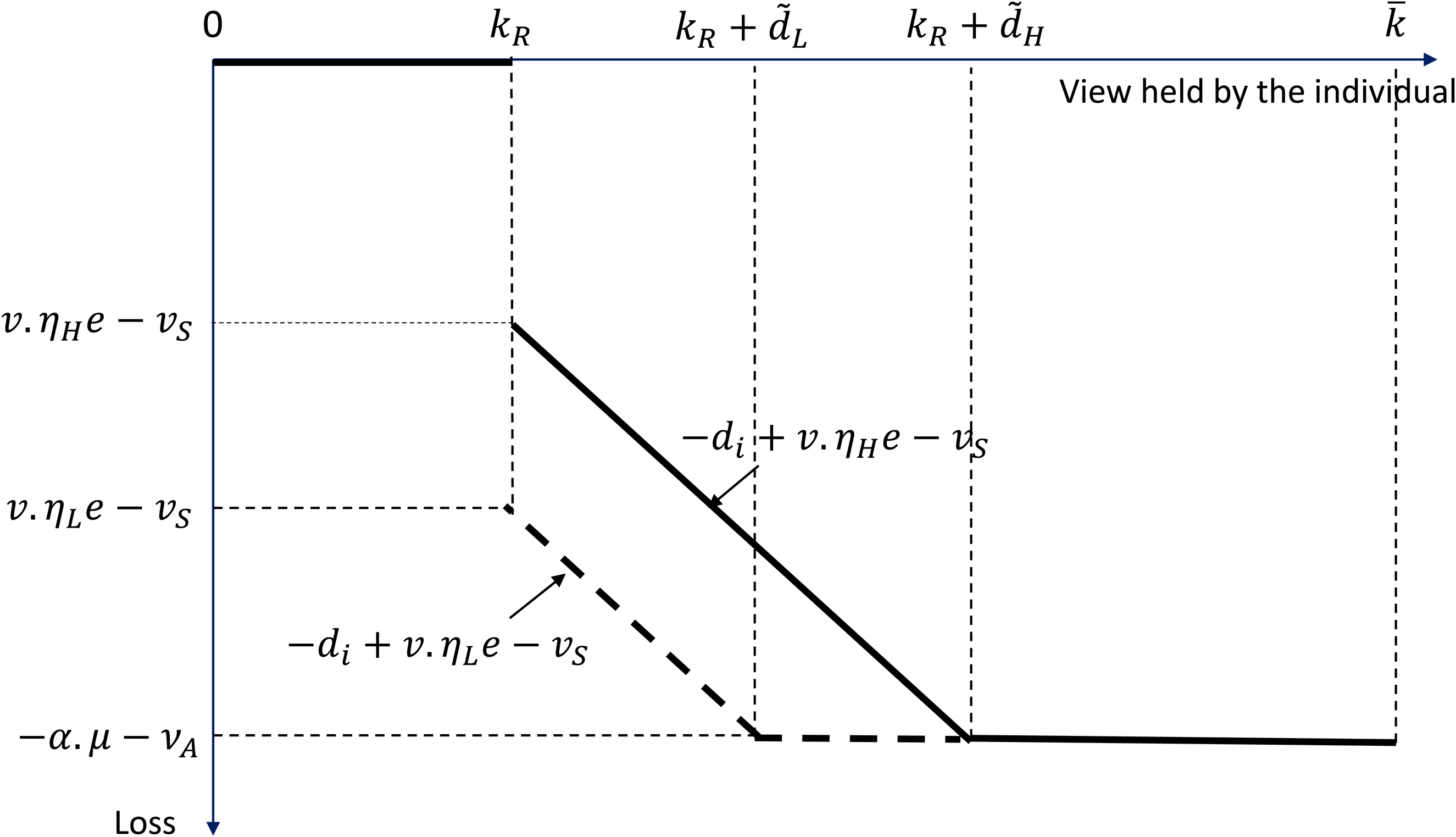
Individual loss depending on view of the elite
Note first that individuals holding a view in
In order to be able to run a binomial probit, we pull together for the endogenous variable the individuals that completely agree and mostly agree, on the one hand, and those that completely or partly disagree with the statement. For exogenous variables, we keep separate the different existing categories. Column (1) in Table 1 shows that, as predicted by the model, individuals who view themselves as more distant from society are more likely to believe there is a political correctness problem in the US. In addition, in accordance too with our model, individuals considering that the elites are self-interested are also more likely to believe there is a political correctness problem.
Determinants of the perception of the existence of a political correctness problem, Survey of American Political Culture, 2016
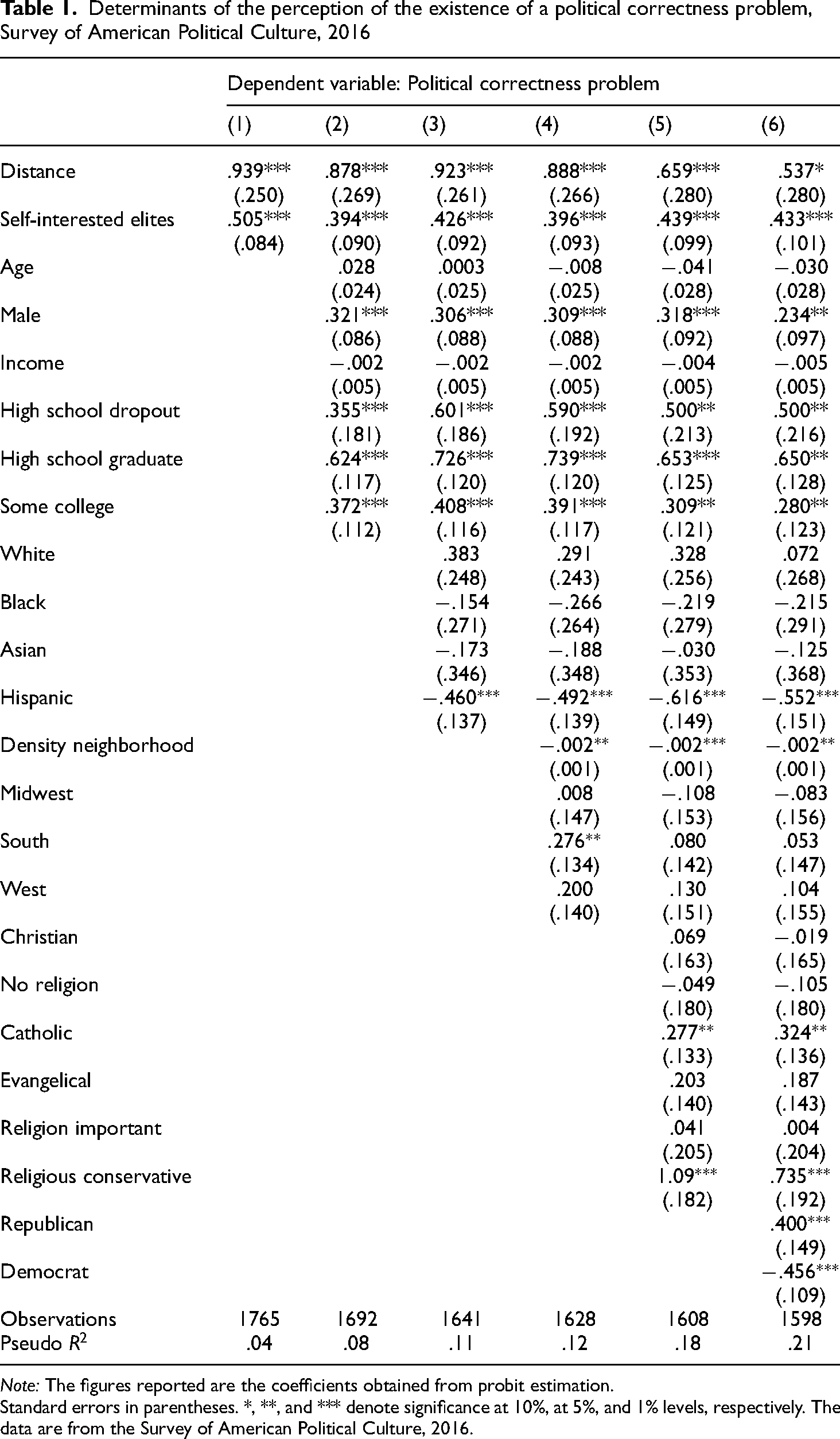
Note: The figures reported are the coefficients obtained from probit estimation.
Standard errors in parentheses. *, **, and *** denote significance at 10%, at 5%, and 1% levels, respectively. The data are from the Survey of American Political Culture, 2016.
Interestingly, columns (2) to (6) show the se two results to be robust to the introduction of additional variables. Specifically, in column (2), we introduce age, gender, income, and the education level. While income and age do not seem to play a role, males and individuals with less than college education 19 are systematically more likely to consider there is a political correctness problem. In turn, race is introduced from column (3) and the only significant coefficient is a systematically lower perception of a political correctness problem by Hispanics. From column (4), individuals living in neighborhoods with a higher density are shown to systematically have a lower perception, while no significant regional effect is generally found. In columns (5) and (6) different variables on the religious beliefs/attitudes to religion are introduced, and both Catholics and individuals perceiving themselves as conservatives in terms of religion believe the problem to be more acute. Finally, and unsurprisingly, column (6) shows that individuals declaring to be Republicans (resp. Democrats) are more (resp. less) likely to perceive the existence of a political correctness problem.
If the views individuals hold are partly based on their own experiences or interests, and group belonging is correlated with specific experiences or interests, one would expect that an association is made between having certain views and belonging to a certain group. For this reason, this paper argues that the prevalence of political correctness cannot be fully understood if one abstracts from considering that the prestige of orthodox ideas is partly linked to the prestige of the elites perceived as representing them.
Specifically, while in a standard model self-denial is unlikely when peer pressure is low, the link with elite prestige makes self-denial a possible equilibrium outcome. Conversely, full self-denial becomes the unique equilibrium when the masses care sufficiently about the behavior of the elite in situations in which self-denial is just one of the possible outcomes in the standard model. In addition, we show that exogenous increases in the range of socially acceptable views do not necessarily imply anymore that a larger set of views are actually expressed at equilibrium.
Our model considers a linear distribution of views and assumes that heterodox views are only located at one extreme of the distribution. An extension of the model where heterodox views are situated at both ends of the distribution might be useful as in some cases observed changes in the Overton window may imply that formerly ‘very’ orthodox views become heterodox, as implied for instance by the cultural backlash theory (Norris and Inglehart, 2019).
Footnotes
Acknowledgements
We would like to thank Antonio Cabrales, Jonathan Hopkin, Julie Mallet, Simon Susen, two anonymous referees, the editor (Torun Dewan) and seminar participants at Kingston University, City University of London, the African Meeting of the Econometric Society (Rabat), NICEP Conference Nottingham and ETH Zürich Workshop on Democracy for helpful comments and discussions, as well as James Hunter and Carl Bowman from the UVA Institute for Advanced Studies for sharing the data on their 2016 Survey of American Political Culture and the Gallup Organization for fielding the study. J Ortega thanks the Department of Government and the European Institute at the LSE for their hospitality while revising this paper.
Declaration of conflicting interests
The author(s) declared no potential conflicts of interest with respect to the research, authorship, and/or publication of this article.
Funding
The author(s) disclosed receipt of the following financial support for the research, authorship, and/or publication of this article: Spanish Agencia Estatal de Investigación, through the Severo Ochoa Programme for Centers of Excellence in R&D (Barcelona School of Economics CEX2019-000915-S); from the Spanish Ministry of Science, Innovation and Universities through project PGC2018-097898-B-100 MCIU/AEI/FEDER, EU; from the Government of Catalonia under project 2017 SGR 1571 AGAUR Generalitat de Catalunya and from the Spanish Ministry of Science and Innovation through research project PID2021-126209OB-I00 funded by MCIN-AEI/10.13039/501100011033 and by ERDF A way of making Europe.

Appendix A. Increase in the orthodoxy range in the simple model
It is easy to show that