




Abstract
Why is criminal law enforcement increasingly punitive, despite that the situation has improved for decades? This paper investigates this question from the perspective of political misinformation. To this end, we develop a law enforcement model with political competition and examine how political parties’ campaigns affect voters’ perceptions of crime and equilibrium law enforcement policy. In a political campaign stage, we show that one political party has an incentive to overstate the severity of crime, while the other party has an incentive to correct voters’ beliefs. However, although the two parties attempt to change voters’ beliefs in opposite directions, we find that the total effect of a political campaign is more likely to drive both parties’ policies in a harsh direction.
Introduction
For decades, developed countries have witnessed an increase in the punitiveness of law enforcement, as evidenced by both the incarceration rate and the severity of penalties (Lacey et al., 2018). One notable case is the phenomenon of mass incarceration in the United States, which denotes a substantial surge in the incarceration rate, defined as the number of inmates per 100,000 residents. Initially, the disparity between the United States and other developed countries in incarceration rates was not particularly pronounced. However, starting in the 1970s, the United States underwent a striking escalation in its incarceration rate, which peaked around 2010. While there has been a recent decline in the incarceration rate, attributed in part to the pandemic, decreasing property crime rates, and shifts in prosecution and sentencing practices (Pew Research Center, 2021), the United States still maintains the highest incarceration rate globally (see Table 1). 1
Incarceration rate in developed countries (prison population rate per 100,000).
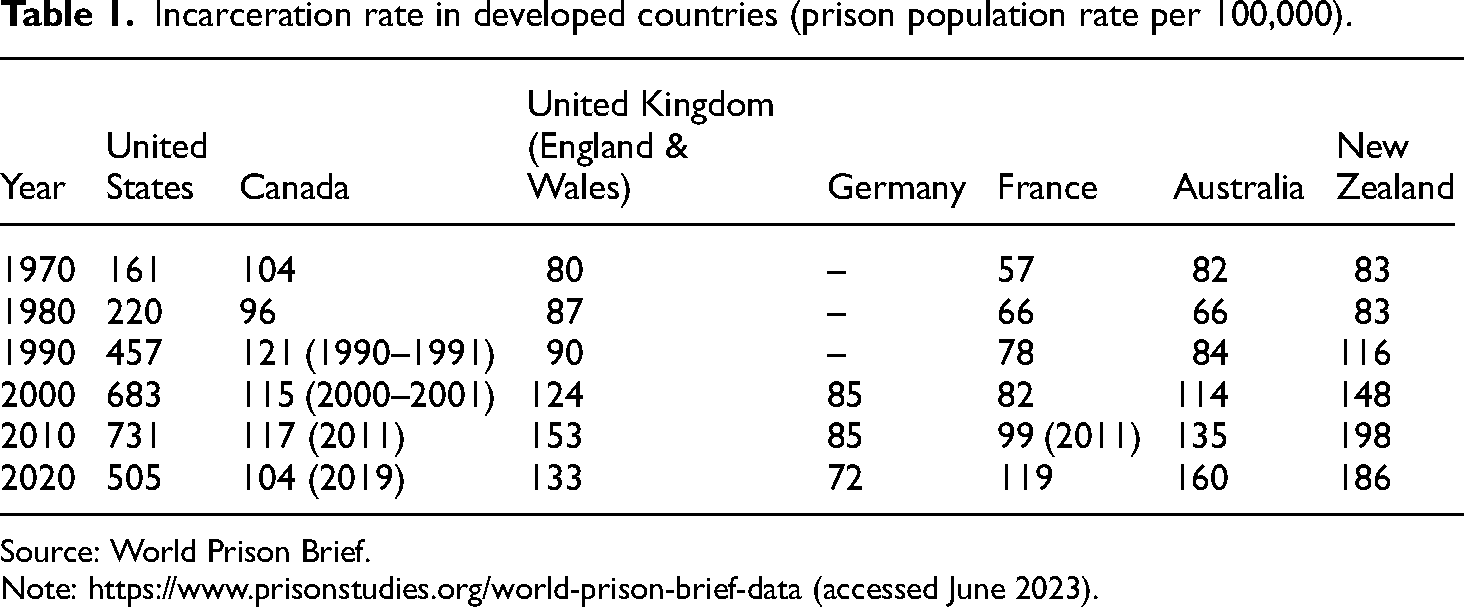
Incarceration rate in developed countries (prison population rate per 100,000).
Source: World Prison Brief.
Note: https://www.prisonstudies.org/world-prison-brief-data (accessed June 2023).
Scholars have long debated the reasons for this trend, including rising crime rates, race, illegal drug use, and inequality (Barker, 2009; Campbell et al., 2015; Enns, 2014, 2016; Gottschalk, 2006, 2016; Jacobs and Jackson, 2010). Among several reasons, Enns (2014, 2016) argues that mass incarceration largely reflects a political response to the public’s rising punitiveness. By using a longitudinal measure of the public’s support for being tough on crime and controlling for other factors, he shows that the public’s punitiveness has been a primary determinant of mass incarceration.
Why has the public become so punitive? One hypothesis is that the political discourse drives voters’ misperceptions about the crime situation. Several surveys show that many people believe that the crime rate is rising, despite that the situation has improved for decades. For example, a Gallup survey in 2022 shows that 78% of US adults believe that crime is up from the previous year, which does not match reality. 2 3 Additionally, Ramirez (2013a,b) shows that the presidential framing of crime, especially the punitive tone of presidential statements, increases the public’s punitive sentiment. Jacobs and Jackson (2010) argue that law-and-order campaign appeals by Republicans are the most plausible reason for the public punitive sentiment and the rapid increase in US imprisonment rates. Survey results may also support this idea. For example, in the 2016 presidential election, Donald Trump argued that the crime situation was becoming severe and blamed undocumented immigrants for committing crimes and causing violence. The survey results show that 78% of Trump supporters believed that crime had worsened but that only 37% of Clinton supporters did, which indicates that political discourse may affect voters’ perceptions of crime (Pew Research Center, 2016). Furthermore, the aforementioned Gallup survey also highlights a partisan disparity in the perception of the crime situation. Specifically, 73% of Republicans responded that there was an increase in crime compared to the previous year in their local area, whereas only 42% of Democrats shared the same perception.
However, even if voters’ perceptions and attitudes are malleable, it remains unclear why political campaigns enhance the public’s punitive attitude and lead politicians to implement harsh law enforcement. In the 2016 presidential election, for example, Trump emphasized the seriousness of the crime and the need to implement harsh enforcement, but Clinton instead emphasized the problem of mass incarceration and the need to reform the criminal justice system, including easing mandatory minimum sentences for offenders (Hill and Marion, 2018). If each party emphasizes the crime situation in different directions—one party overstates the situation, but another party attempts to correct it—it is unclear why the total effect of political campaigns leads to the public’s punitive attitude and punitive law enforcement policy. Are there any factors that foster punitiveness underlying the political process?
To address this question, this paper develops a law enforcement model incorporating political competition and examines the influence of political parties’ campaigns on voters’ perceptions of criminal harm and the resulting equilibrium law enforcement policy. Our model incorporates political parties, voters (i.e. victims), and criminals. Specifically, we assume that voters’ marginal disutility increases with respect to the harm caused by crime, which is the standard assumption in the law and economics literature (Becker, 1968; Stigler, 1970). In a political context, we employ two theories: the first is a probabilistic voting model (Lindbeck and Weibull, 1987; Persson and Tabellini, 2002). The second is an issue ownership theory that assumes that one party has accumulated reputation/expertise on a certain issue, enabling them to more efficiently implement a policy on this issue (Petrocik, 1996). Then, we allow parties to manipulate voters’ beliefs regarding the severity of crime harm through political campaigns. Consequently, uninformed voters, who lack sufficient information about the crime situation, adjust their beliefs based on the extent of each political party’s campaign.
We demonstrate that in equilibrium, the party with issue ownership on policing crime has an incentive to exaggerate the severity of criminal harm, while the opposing party has the incentive to rectify this misinformation. However, despite the parties’ contrasting strategies of misinformation and correction regarding the crime situation, we discover that the overall effect of political campaigns tends to steer both parties’ law enforcement policies toward harsher measures than in the absence of a political campaign.
The mechanism behind our main result comes from the combination of probabilistic voting and the assumption of increasing marginal disutility of voters regarding criminal harm. In an equilibrium, certain groups of voters become excessively fearful of harm through manipulation, while others become relatively less concerned about crime. Consequently, one might intuitively anticipate that these opposing effects of information manipulation cancel each other out. However, within this model, voters experience an increase in marginal disutility as the level of harm escalates. Therefore, the impact on the group of voters exhibiting greater fear outweighs that of the group with lesser fear. Under the probabilistic voting model, politicians respond to the average payoff of voters. As the total effect of political campaigns raises the average voter’s disutility due to crime, the resulting law enforcement tends to be punitive, even when the campaigns of both parties manipulate voters’ perceptions in opposing directions to the same extent. This mechanism can be more intuitively explained as follows: since voters are risk averse, they are more influenced by discourse suggesting that ‘crime rates are rising and growing more severe’ than by ‘crime rates are declining and becoming less severe.’
Adopting a theoretical perspective from the law and economics literature, this paper has a similar motivation to the Beckerian law enforcement model, for example, Becker (1968), Garoupa (1997), and Polinsky and Shavell (2000), and its extension to exploring effects of self-interested law enforcers, for example, Stigler (1970), Friedman (1999), Garoupa and Klerman (2002), and Yahagi (2018). In particular, this paper can be seen as an extension of law enforcement models with political competition such as in Langlais and Obidzinski (2017), Mungan (2017), Obidzinski (2019), Friehe and Mungan (2021), and Yahagi (2021). The most similar contribution is Langlais and Obidzinski (2017), who applies the Downs model with certainty to investigate the impact of political decision-making processes on law enforcement policies.
In the current paper, we extend these models in three ways. First, different from the Downs model with certainty used in Langlais and Obidzinski (2017), we employ a probabilistic voting model (Persson and Tabellini, 2002; Lindbeck and Weibull, 1987) to avoid a median voter equilibrium. 4 Second, we incorporate issue ownership by parties, which means that one party has a reputation for competence in handling a particular issue (Petrocik, 1996; Petrocik et al., 2003; Krasa and Polborn, 2010). In our setting, one party has a reputation for competence in policing crime, which appears to be well aligned with reality. 5 As a result of those settings, we obtain a divergence of equilibrium policy. Third, to investigate the effect of political misinformation, we incorporate a campaign competition stage, where political parties attempt to manipulate voters’ perceptions of crime. The idea is similar to the model of campaign finance (Baron, 1994; Grossman and Helpman, 1996; Meirowitz, 2008) and the model of priming (Amorós and Puy, 2013; Aragonès et al., 2015; Egorov, 2015; Dragu and Fan, 2016; Denter, 2020). In the campaign stage, we show that the two parties attempt to change voters’ perceptions in opposite directions.
Additionally, the current paper has a similar motivation to the literature investigating the effect of fake news/misinformation in the political arena (Hochschild and Einstein, 2015; Allcott and Gentzkow, 2017; Guess et al., 2018; Grossman and Helpman, 2023). From a theoretical perspective, the current paper can be seen as applying the model proposed by Grossman and Helpman (2023) to the law enforcement context. Grossman and Helpman (2023) develop a political competition model with imperfect information in which both parties can misinform voters and investigate when political behavior diverges. Unlike Grossman and Helpman (2023), we focus on the role of misinformation/information in law enforcement, especially to explain the cause of rising punitiveness. Furthermore, we explain the parties’ incentive to manipulate voters’ perceptions from a different perspective—issue ownership—and characterize the campaign competition between the parties.
Finally, strands of the literature investigate the cause of mass incarceration from historical and empirical perspectives (Barker, 2009; Campbell et al., 2015; Enns, 2014, 2016; Gottschalk, 2006, 2016; Jacobs and Jackson, 2010; Lacey et al., 2018). From a theoretical perspective, Mungan (2017) has a similar motivation to ours and investigates the cause of overincarceration from the perspective of disenfranchisement law. The current paper investigates a similar question to that of Mungan (2017) from a different perspective—political misinformation/information.
The remainder of this paper proceeds as follows. Section 2 explains the model and the behavior of each player. Section 3 shows the equilibrium of the game and explains how political misinformation affects the equilibrium law enforcement policy. Section 4 discusses the empirical implications of our model. Section 5 presents a conclusion and discusses directions for future research.
Before presenting the details, we will provide an overview of the model. There are three types of players: political parties, voters, and criminals.
There are two political parties
In stage 3, voters vote for the party that provides a higher utility. There are two types of voters: informed and uninformed voters. Informed voters have correct information about the harm of crime, and their beliefs are not affected by a political campaign. On the other hand, uninformed voters have a prior perception of crime with an upward bias over the actual value. 7 Additionally, their beliefs are malleable and affected by a political campaign.
In stage 4, the party that obtains more than half of the votes will win, and potential criminals choose whether they will commit a crime based on the implemented law enforcement policy.
The timing of the game can be summarized as follows:
Stage 1: Political parties announce a law enforcement policy Stage 2: Political parties choose a misinformation/information level Stage 3: Voters vote for the party that provides a higher utility. Stage 4: The party that obtains half of the votes will win and implement the proposed policy. Potential criminals choose whether they will commit a crime under the implemented law enforcement.
The equilibrium concept is subgame perfect Nash equilibrium, and we focus on the pure strategy equilibrium. In the following subsections, we will explain each player’s behavior in detail.
Criminals
There are potential criminals who consider whether to commit a crime under the implemented law enforcement policy
Note that it is not obvious that harsh law enforcement (i.e. an increased
Additionally, unlike the combined law enforcement and political competition model proposed by Langlais and Obidzinski (2017), we assume that voters and criminals are different groups, that is, potential criminals do not have voting rights. 8 The examples of potential criminals in this setting are disenfranchised ex-convicts, undocumented immigrants, and interregional criminals. 9
Voters
There is a continuum of voters who are negatively affected by crimes. To simplify the following discussion, we assume that the pool of voters is normalized to one. The utility function of voters is written as
Since the increasing marginal disutility of criminal harm is a crucial assumption for our results, we add some comments. The increasing marginal disutility assumption has a long tradition in Beckerian law enforcement models (Becker, 1968; Stigler, 1970). The assumption means that society (and individuals) will be more concerned with major crimes than minor crimes. For example, regarding crimes against property, the assumption means that the theft of $1,000 is more than twice as harmful as the theft of $500. This result is implied by the diminishing marginal utility of income (Stigler, 1970). The increasing marginal disutility assumption is also used in the immigration policy literature (Llavador and Solano-García, 2011). In this case, the assumption means that society believes that immigrants will generate social conflict, xenophobia, and insecurity, and the marginal negative social impact is assumed to be increasing in the number of immigrants.
By using the fact that 
There are two political parties,
Note that in this paper, we assume political competition with a one-dimensional policy space. However, the literature regarding issue ownership theory (Amorós and Puy, 2013; Aragonès et al., 2015; Egorov, 2015; Dragu and Fan, 2016; Denter, 2020) considers a multidimensional policy space and investigates how parties’ issue ownership of different policies affects the incentives of political campaign spending and the electoral results. In Appendix A, we extend our model into a multidimensional setting and show that the main result of our model does not change under an additional condition.
Next, we will explain stage 2: parties’ political campaigns. The main idea is similar to Grossman and Helpman (2023). In this model, we assume that uninformed voters’ prior belief on harm from crime
We assume that the probability of voters being exposed to party
Then, the payoff function of political party 
As a final remark, we would like to discuss the interpretation of the political competition in our model. In this paper, we consider a two-candidate presidential or congressional election. Within this interpretation, although political parties cannot directly implement law enforcement, we assume that candidates have the ability to influence the capacity for investigation, prosecution, and incarceration through budgetary appropriations. Furthermore, candidates can impact incarceration rates by defining crime criteria and imposing sentencing requirements through federal or state laws. Under this framework, we simplify the discussion by abstracting from how law enforcement agencies react to political decision-making. However, several papers reveal that political pressure can affect the implemented law enforcement policy (Levitt, 1997; Huber and Gordon, 2004; Dyke, 2007; Berdejó and Yuchtman, 2013; McCannon, 2013; Bandyopadhyay and McCannon, 2014, 2015; Nadel et al., 2017). Therefore, the notion that the two-candidate presidential or congressional election and the proposed platforms influence actual law enforcement policy does not appear unrealistic.
On the other hand, another interpretation of the electoral competition in this model could be a two-candidate election for sheriff or district attorney. In fact, several empirical studies have investigated how elections for sheriff and district attorney affect law enforcement (Thompson, 2020; Krumholz, 2020; Okafor, 2021). However, despite the potential applicability of this interpretation, we will adopt the interpretation of a two-candidate presidential or congressional election. This is because we are focusing on the scenario where candidates influence voters’ perceptions of crimes through political campaigns and discourse, which seems to align more closely with a two-candidate presidential or congressional election than an election for sheriff or district attorney.
Law enforcement level that maximizes voters’ utility
As a benchmark, we calculate the ‘utility-maximizing’ law enforcement level in this subsection. Note first that optimal policy varies depending on the cost efficiency of each party. Intuitively, if
Furthermore, there are two possibilities for the definition of a utility-maximizing policy: (i) calculating the policy that maximizes the voters’ utility, including the uninformed voters’ upward bias
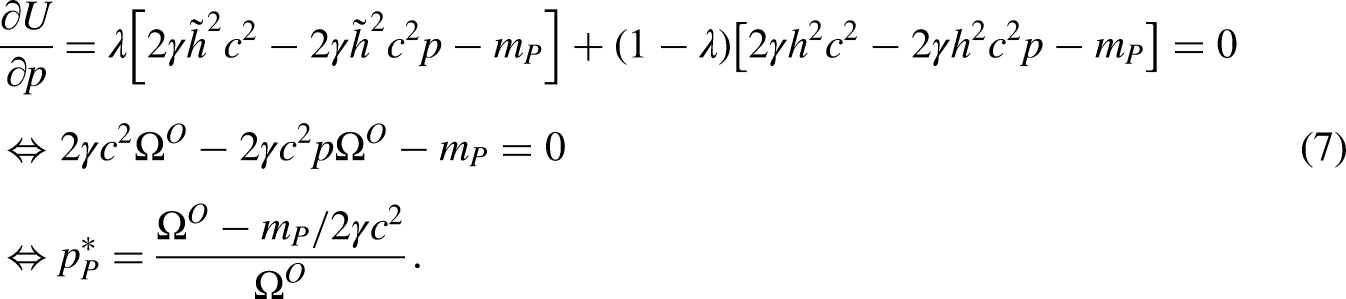
Based on the definition, we obtain the following result by differentiating total utility with respect to
The optimal law enforcement policy for voters, denoted as
In the proposition,
Note that the perception of criminal harm for uninformed voters is 

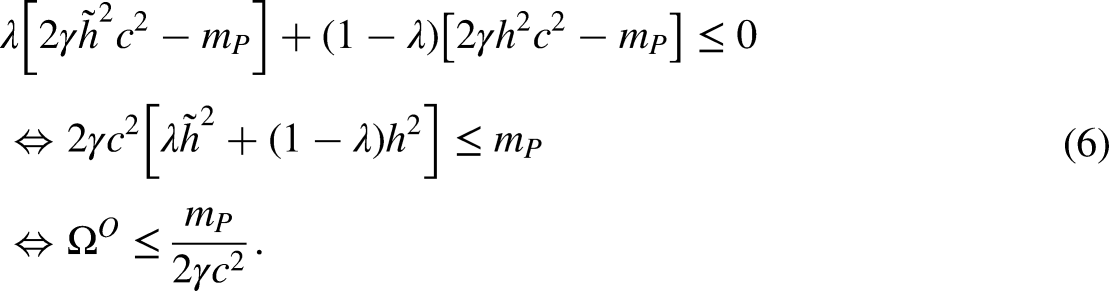
Next, we consider voting behavior. As noted above, we use a probabilistic voting model such as those in Lindbeck and Weibull (1987) and Persson and Tabellini (2002). Suppose that 
In the following discussion, we suppose that 

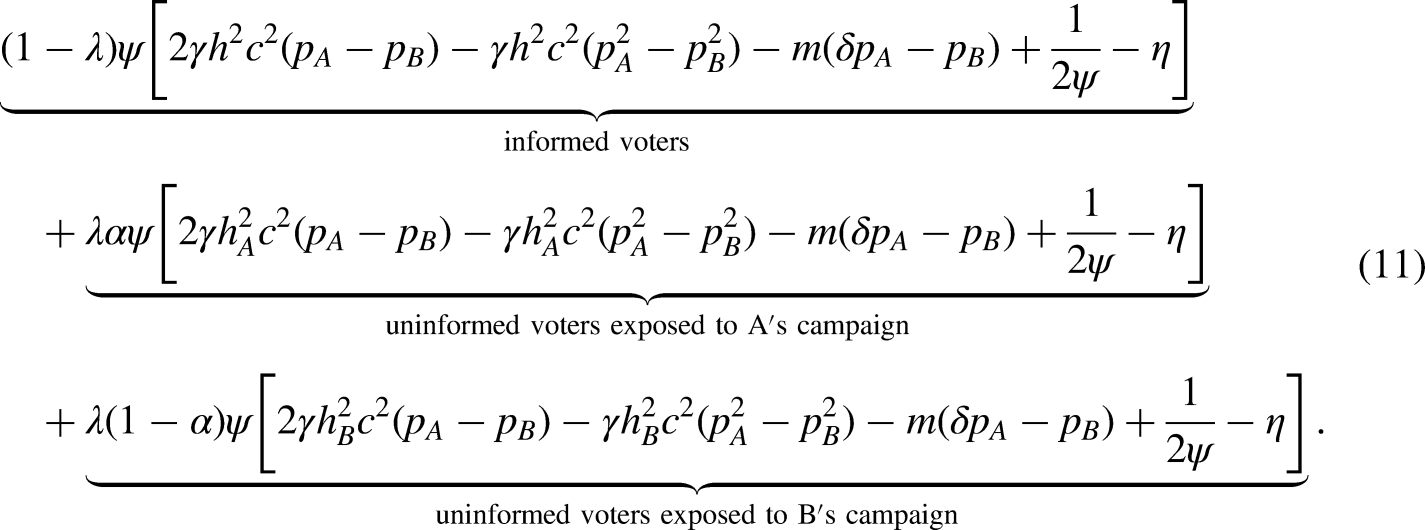
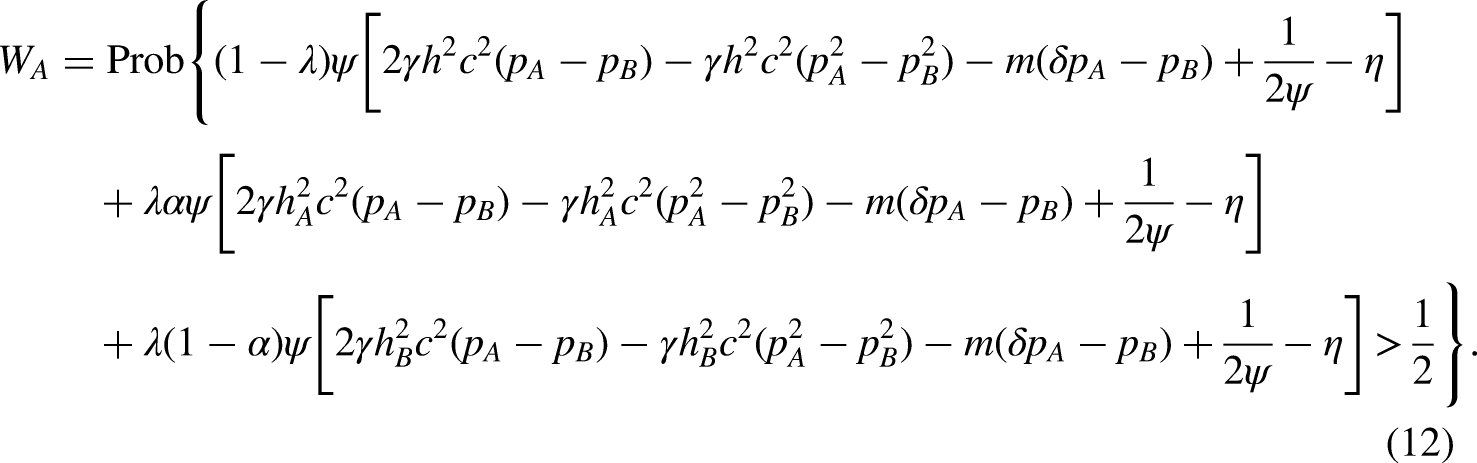
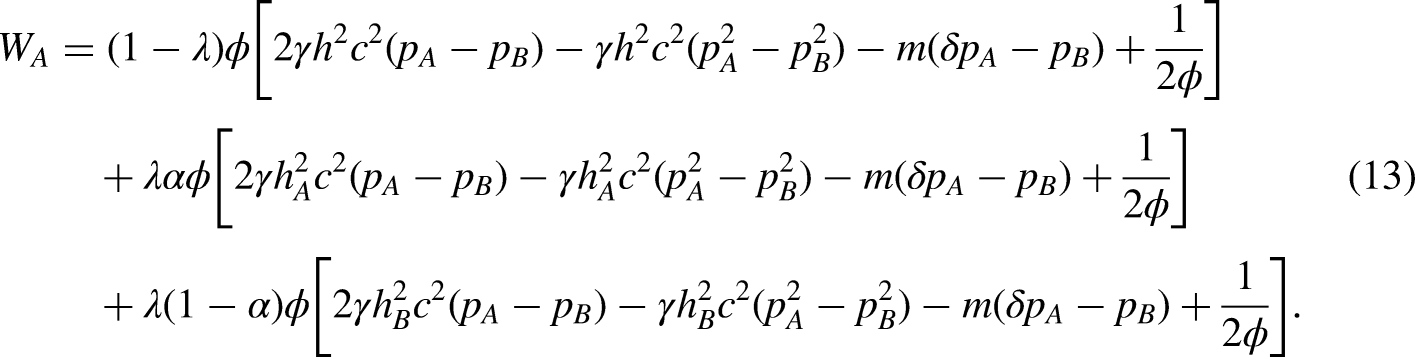
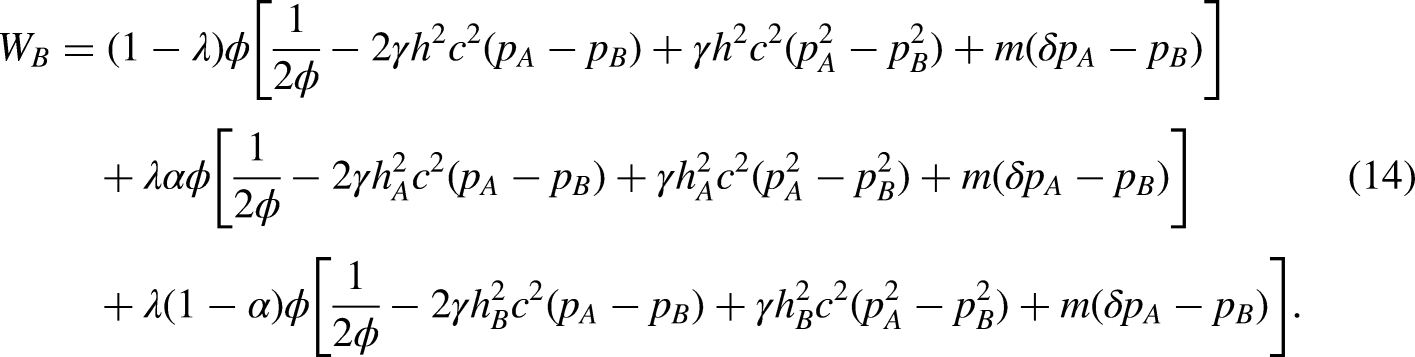
Next, we will show the subgame perfect Nash equilibrium of this game by using backward induction. Since we already analyzed stage 4 (criminal behavior) and stage 3 (voting behavior) in the previous subsections, we will begin the analysis from stage 2. In stage 2, each political party chooses the direction of misinformation/information
In the equilibrium of stage 2, party
Note that 

Before proceeding to the next step, we would like to emphasize that the underlying mechanism driving this result shares similarities with the fundamental findings of studies that investigate the manipulation of issue salience in political campaigns (Amorós and Puy, 2013; Aragonès et al., 2015; Egorov, 2015; Dragu and Fan, 2016; Denter, 2020). According to these papers, a party that possesses issue ownership in a particular area is interested in amplifying that issue’s salience (i.e. the weight of importance) through political campaigning. In our model, instead of directly manipulating the weight of interest in a specific issue, political parties manipulate the perception of criminal harm. When voters perceive criminal harm to be substantial, they believe that addressing crime becomes more crucial. Conversely, if voters perceive criminal harm as less significant than anticipated, they assign greater importance to another political issue. Consequently, if party
However, one may question how issue ownership can be modeled without considering multiple dimensions, as several theory papers that discuss issue competition (Amorós and Puy, 2013; Aragonès et al., 2015; Egorov, 2015; Dragu and Fan, 2016; Denter, 2020) adopt multidimensional policies. For instance, in those papers, one party possesses issue ownership in a specific policy area, while the other party has ownership in a different policy area. On the other hand, in our model, issue competition works within a one-dimensional context as follows: party
To ensure the robustness of our findings, we will also demonstrate in Appendix A that our results remain unchanged even if we expand our model to incorporate a multidimensional context.
Next, we will investigate the equilibrium in stage 1. The winning probability of 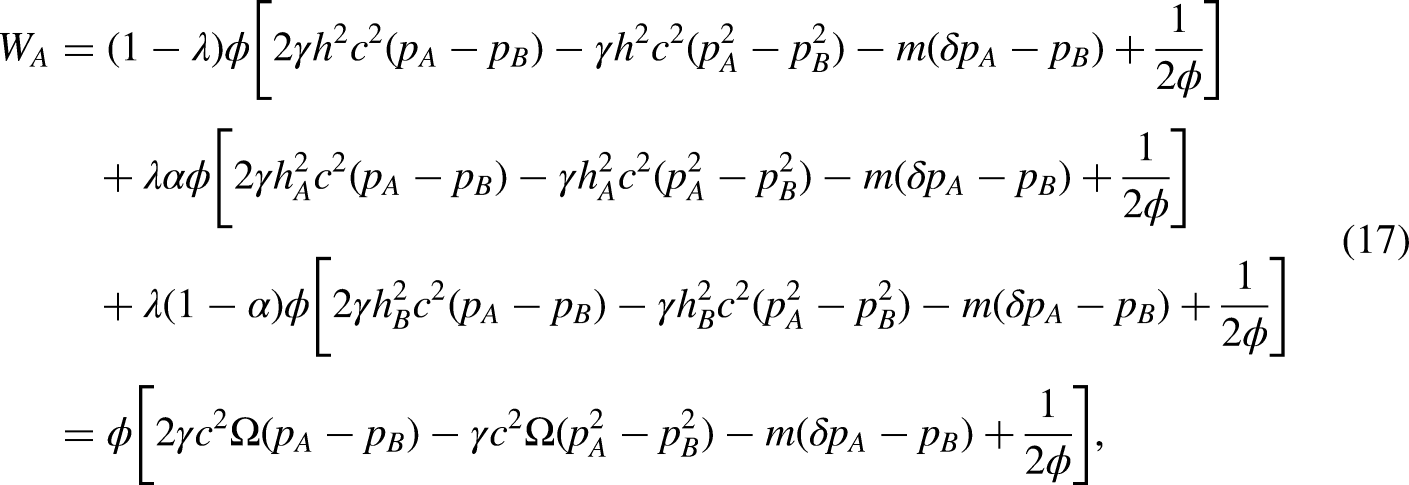

In a political competition (stage 1), party
Since
Let us consider the case of party 
Next, let us consider case (ii). Since 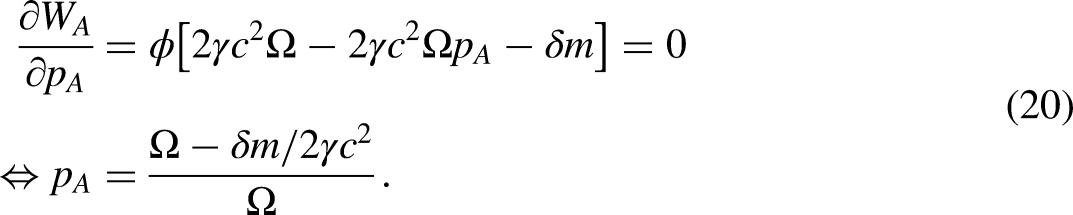
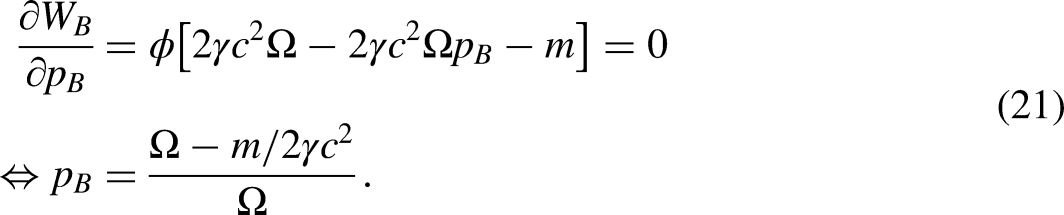
Before discussing the implications of this result, we would like to discuss the difference between Grossman and Helpman (2023) (hereafter GH) and our findings. GH also discovers policy divergence along with misinformation without assuming issue ownership. In GH, policy divergence arises from the interaction between sequential moves of political parties and the characteristics of misinformation, where parties can announce false states of the world to uninformed voters. Specifically, in GH, the incumbent proposes the platform first, followed by the challenger. Then, if the challenger has an advantage in influencing uninformed voters’ beliefs, they are motivated to shift their policy position away from the incumbent. Due to the challenger’s greater impact on uninformed voters, it announces a policy opposite to the incumbent’s and promotes a false state of the world aligned with its policy, seeking to divert votes from the incumbent. This setting allows policy divergence without issue ownership, but it does not have a pure-strategy equilibrium when parties simultaneously announce their policies.
In contrast to GH, our model introduces policy divergence through issue ownership. One party always proposes a higher probability of arrest (harsh law enforcement) due to its cost advantage in policing crimes. This policy divergence leads to the polarization of political misinformation, similar to GH. Our model offers two advantages over GH. First, policy divergence and the polarization of political misinformation occur even without the assumption of sequential policy proposals as in GH. Second, our model makes an empirical prediction regarding which party has an incentive to overstate/understate the state of the world (e.g. severity of criminal harm) during a political campaign, which is not evident in GH (see Proposition 3 in GH).
Next, we investigate the impact of political misinformation/information on the equilibrium platforms. By differentiating 

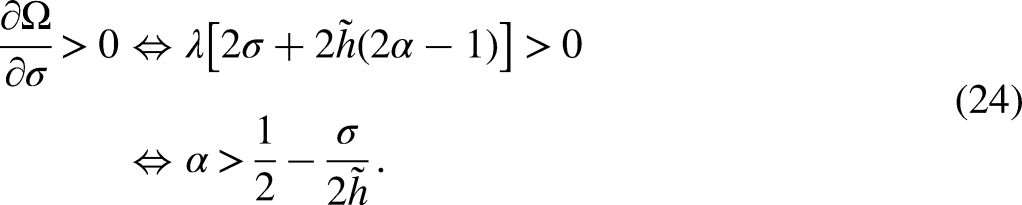
Suppose that
The mechanism behind this result stems from the combination of the probabilistic voting model and the assumption of voters’ increasing marginal disutility concerning the harm caused by crime, a standard assumption in the law and economics literature, as explained in Section 2.2.
To illustrate this, consider a simple example. Suppose that there are only uninformed voters, and half of them are exposed to party
In a probabilistic voting model, political parties respond to the average voter’s utility. In this simplified scenario, the average voter’s utility can be calculated as:
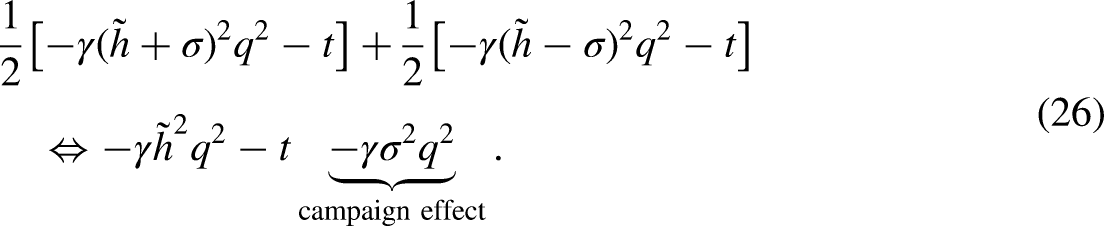
In this simple example, we assume that exactly half of the uninformed voters are exposed to each party’s political campaign. However, as long as the number of uninformed voters exposed to party
Figure 1 shows how political misinformation/information affects the equilibrium platform. Here, we set
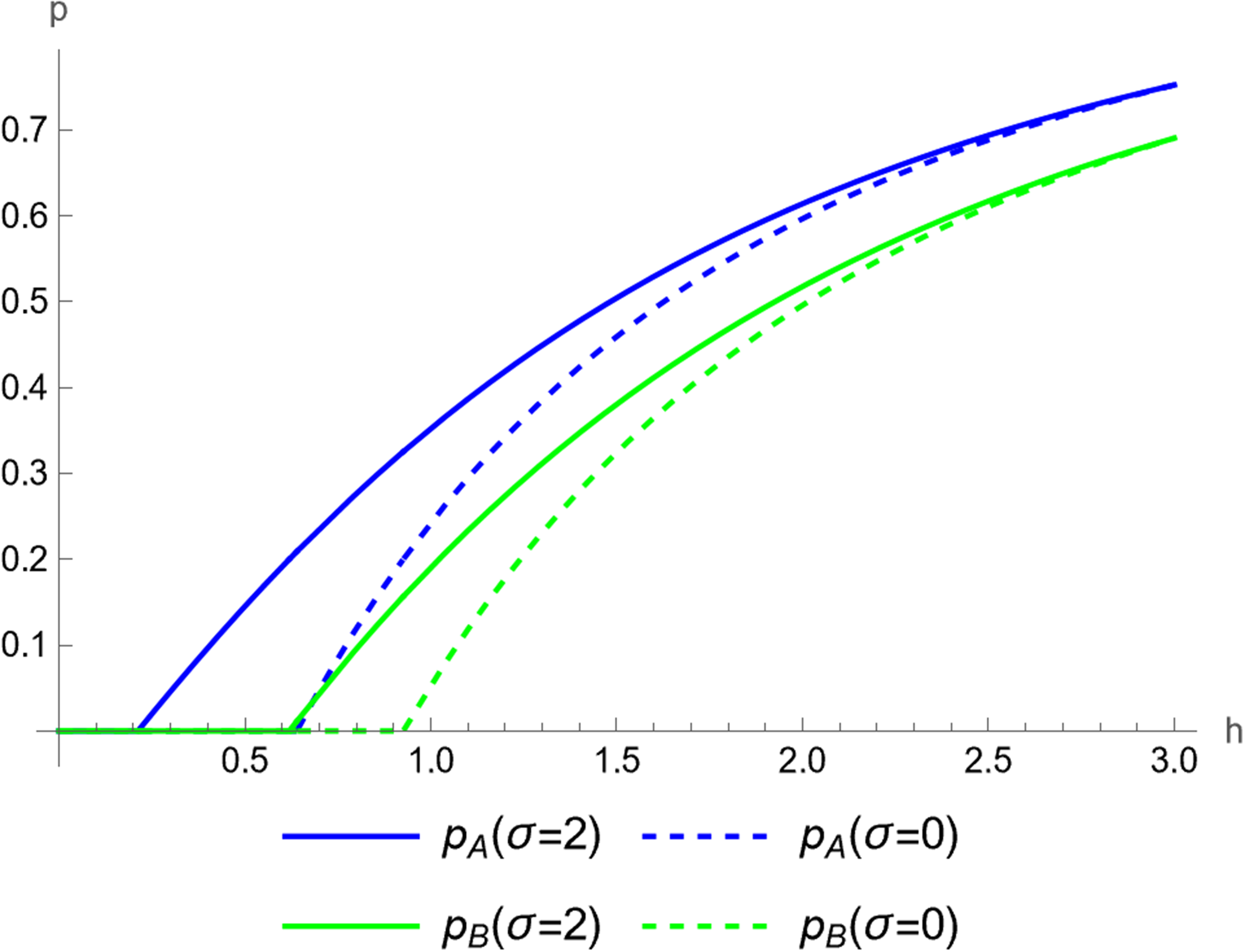
The effect of misinformation on the equilibrium platforms. Note: In this graph, we set
Figure 2 shows how the distortion of law enforcement happens to depend on the misinformation/information level
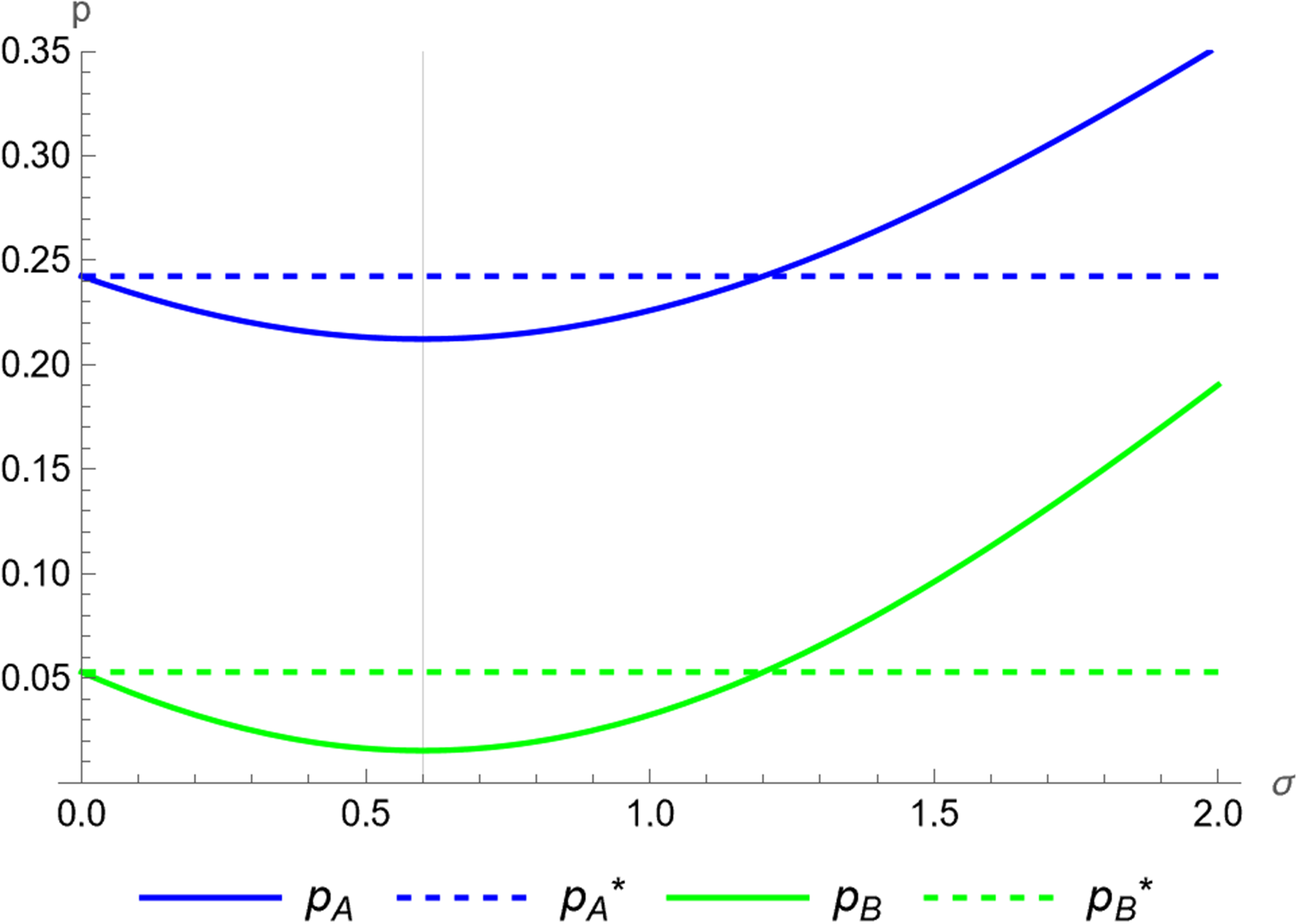
Utility-maximizing policy and equilibrium platform. Note: In this graph, we set
We would like to highlight three points. First, if 

Second, if
Third, and most important, if
Finally, we would like to discuss the condition that harsh law enforcement will increase the incarceration rate. An increase in the probability of arrest, denoted by
Let us define the incarceration rate in our model. Note that the number of potential criminals violating the law is
Since the total population is 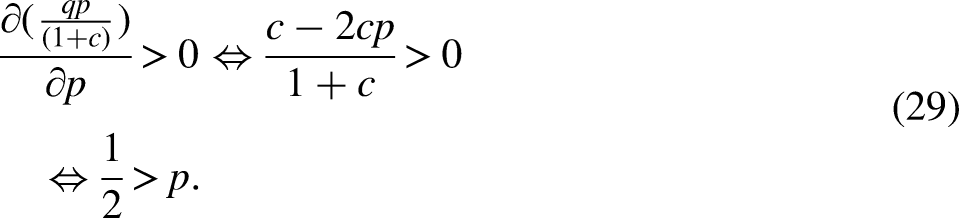
Suppose that
In equilibrium, for example, when the marginal cost of law enforcement
Although the actual probability of arrest varies depending on the type of crime, it does not appear to be as high as one might think. For instance, in the US in 2018, Baughman (2020) estimated the true arrest rates (known crimes compared to the arrest rates for those crimes): 80.95% for murder, 37.41% for aggravated assault, 15.38% for robbery, and 6.77% for burglary.
Furthermore, Baughman (2020) demonstrates that the overall true arrest rate in the US in 2018 was 10.57%, which is lower than expected. Additionally, the conviction rate would be lower than the arrest rate since not all arrests result in conviction (Baughman, 2020).
Corollary 1 states that the impact of harsh law enforcement on the incarceration rate varies depending on the type of crime and its arrest/conviction rates. However, it seems reasonable to argue that harsh law enforcement leads to higher total incarceration rates because the probability of arrest does not appear to be very high for most crimes and satisfies the condition of Corollary 1. 15
Finally, we summarize how other parameters affect the equilibrium platforms. First, the proportion of uninformed voters 
Second, the size of the potential criminal group
Third, if 
In this section, we would like to discuss the empirical implications of our model by referring to empirical research on the related topics.
First, our model predicts that a political party with issue ownership on policing crime has an incentive to overstate the situation to align with its advantage. This appears to be an intuitive argument—if voters believe that the crime situation is dire, they will be more inclined to depend on the party that has competence in handling the situation. Therefore, if voters’ beliefs and perceptions are malleable, the party with issue ownership has a strong incentive to incite voters’ punitive attitudes toward crime. Although it is not stable (Holian, 2004), the conventional view is that Republicans have issued ownership of policing crime in the United States (Petrocik, 1996; Petrocik et al., 2003). Thus, Republican presidents often seem to overstate the crime situation. The most extreme example may be the false arguments advanced by Donald Trump. For example, in 2016, Donald Trump claimed that ‘the US murder rate was the highest it’s been in 45 to 47 years,’ but this was not true. 16 Although potentially not as extreme as in this example, politicians may mislead voters’ perceptions of crime by emphasizing the agenda even when the crime rate is decreasing. For example, Republican presidents are often said to incite the voters’ punitive attitude by combining law-and-order appeals with racial problems (Mendelberg, 2001; Weaver, 2007; Jacobs and Jackson, 2010). However, this is anecdotal evidence. A more serious empirical investigation is needed to check the plausibility of the hypothesis.
Second, our model predicts that issue ownership leads to divergence in law enforcement policy. Specifically, our model predicts that the party with a reputation for handling crime tends to propose harsher law enforcement than the other party. Several studies have examined the relationship between harsh law enforcement and the partisan effects of political parties. For instance, Gerber and Hopkins (2011) reports that cities electing Democratic mayors allocate a smaller proportion of their budget to public safety, an area with significant local discretion, than cities with similar characteristics electing Republican or independent mayors. Furthermore, several studies show that policy divergence may exist even in the election of district attorneys. For example, Krumholz (2020) demonstrates that the election of a Republican district attorney, as opposed to a Democratic district attorney, resulted in a 6% to 8% increase in total sentenced months and new prison admissions per capita during the four years following an election where a majority of district attorneys ran unopposed. Additionally, Okafor (2021) finds that being in a district attorney election year contributed to higher total prison admissions per capita and total months sentenced per capita, with larger effects observed in Republican counties. On the other hand, there is also research that presents different viewpoints. For example, Thompson (2020) investigates elections for sheriffs and demonstrates that Democratic and Republican law enforcers make similar choices regarding immigration enforcement. Therefore, further empirical investigations are necessary to comprehensively understand situations where partisan differences arise in law enforcement.
Third, our model predicts that political discourse regarding the crime situation leads to harsh enforcement, even when the same amount of effort is devoted to correcting voters’ perceptions of misinforming them. There is some evidence that political discourse may lead to misperceptions by citizens. For example, using a survey on the US Social Security program, Jerit and Barabas (2006) show that citizens mistakenly believe that Social Security will run out of money because politicians frequently refer to pessimistic assessments of its financial future. Esberg and Mummolo (2018) demonstrate that elite partisan cues enhance citizen misperceptions of crime and diminish confidence in the official data. On the other hand, there is some empirical research that investigates the effect of corrective information. Larsen and Olsen (2020) report that if citizens are continually supplied with correct information about burglary rates, this can reduce the misperception of the prevalence of burglaries. On the other hand, Nyhan and Reifler (2010) show that corrective information sometimes fails to reduce misperceptions about politics, especially when people are ideologically biased. However, to the best of our knowledge, the aggregate effect of political misinformation/information about crime situations remains unclear. To assess the plausibility of our prediction, more rigorous empirical research is needed.
Finally, our model predicts that it is challenging to avoid harsh law enforcement to the extent that voters’ beliefs about the crime situation are pliable. If this prediction is correct, our results may suggest the importance of improving voters’ prior knowledge of the facts. As Esberg and Mummolo (2018) show, if people have sufficient knowledge of the facts, political discourse is less likely to manipulate their beliefs. However, if they do not, it is difficult to avoid the distortion of law enforcement policy. In the current paper, this corresponds to a decrease in the percentage of uninformed voters
Conclusion
This paper provides a formal framework to explain why law enforcement policies have become harsher despite that the crime situation has improved for decades. Our model provides the following explanation: in political competition regarding the issue of criminality, the party that has an advantage in policing crime has the incentive to overstate the severity of the crime, and the other party has the incentive to correct voters’ beliefs. This political misinformation/information makes some voters believe that the crime situation is worse than reality, while other voters’ belief approaches reality. However, voters’ punitive attitudes are more likely to be incited rather than appeased; the former outweighs the latter effect, leading the average voter to demand harsher law enforcement.
There are several potential research topics that are relevant to the current paper. First, our model might be applied to various law enforcement settings, including the regulation of companies’ activities. In the context of political competition, climate change emerges as a critical issue, and political parties consider regulating companies’ actions accordingly. One party may manipulate the issue by providing misinformation about climate change to suit its advantage, while the other party may argue for more lenient regulation and attempt to manipulate voters’ beliefs in line with its intentions. Exploring how these political campaigns influence resulting regulations for companies could be an intriguing area for future research. Second, our model assumes that voters and criminals are different groups. Although this assumption may be valid when law enforcement applies to major crimes, it does not address minor criminal cases, such as speeding tickets and double-parking. In those cases, offenders (criminals) can affect law enforcement through voting, so the equilibrium platforms may change. To investigate those minor crime cases in our model, we would have to modify them to address more general settings. Third, our model assumes that the probability of voters being exposed to a party’s campaign is independent of the voters’ partisanship. However, in reality, campaign effects and partisanship may be correlated. To investigate that case, future research will need to generalize the model. Fourth, in the campaign competition stage, we do not explicitly consider media outlets’ behavior. However, in reality, media outlets’ behavior may influence the effectiveness of a political campaign. Additionally, media outlets have a crucial effect on voters’ perceptions. Future research will require a model that explicitly incorporates media outlets’ behavior. 17
Finally, in this paper, we do not intend to argue that the mechanism we provide is the only explanation for the increasing punitiveness of law enforcement. However, we believe that the model sheds light on a new perspective to explain modern penal society.
Footnotes
Acknowledgements
We thank Koichi Suga, Yasushi Asako, Tsuyoshi Adachi, the anonymous reviewers, and the editor for their helpful comments and suggestions.
Declaration of Conflicting Interests
The authors declared no potential conflicts of interest with respect to the research, authorship, and/or publication of this article.
Funding
The authors disclosed receipt of the following financial support for the research, authorship, and/or publication of this article: This work was supported by Waseda INstitute of Political Economy (WINPEC) and JSPS KAKENHI Grant Number JP22K13413.

Appendix A: Multidimensional policy space
In this paper, we consider political competition involving a single policy dimension, specifically law enforcement policy. We make the assumption that one party (referred to as party
However, the existing literature on issue ownership theory and campaign contests (Amorós and Puy, 2013; Aragonès et al., 2015; Egorov, 2015; Dragu and Fan, 2016; Denter, 2020) assumes a multidimensional policy space, where each party possesses issue ownership in different policy areas. These studies investigate how variations in issue ownership affect the strategies of political parties. Consequently, one might question how our one-dimensional model aligns with the discussion on issue ownership.
In this appendix, we expand our model to incorporate a multidimensional setting and explore its impact on our main result. Through this extension, we demonstrate our implicit assumption in the main sections that party
Let us consider the simplified version of our model. Suppose that there are only uninformed voters and they are divided into two groups: group
There are two political issues. The first is law enforcement policy, that is, the probability of arrest
Then, each party solves the following constrained maximization problems:
Next, we define the utility function of voter
The timing of the game is the same as in the main sections.
Stage 1: Political parties announce a law enforcement policy Stage 2: Political parties choose a misinformation/information level Stage 3: Voters vote for the party that provides higher utility. Stage 4: The party that obtains half of the vote will win and implement the policy. Potential criminals choose whether they will commit a crime under the implemented law enforcement.
Under those settings, we will check the equilibrium policy. First, we will calculate the winning probability of each party. Suppose that the parties propose






To see this, consider the optimization problem of party
In other words, party
On the other hand, even if party
Finally, we would like to show that the implication of Proposition 4 (i.e. the political campaign leads to harsh enforcement) remains unchanged even in a multidimensional case. By differentiating
Appendix B: Endogenous campaign contest
In this appendix, we will show that the probability of exposure to each party’s campaign
Suppose that the probability that voters are exposed to
Note that if
The amount of campaign spending determines the probability with which voters are exposed to a party’s political misinformation/information.
20
Since the political campaigns impose a cost of
Under the endogenous version of the probability of exposure to a political campaign, Proposition 2 changes in the following way.
As a result, even if we assume that the probability of exposure to party