




Abstract
Background
There is pressure on healthcare organizations to provide high-quality care to all patients while innovating the way care is delivered. As they take on the challenge of delivering high-quality, innovative services, any gains made tend to stall before a radical change impacts key outcomes given the difficulty in sustaining innovations over time.
Methods
A systematic search was performed in 5 electronic databases using the PRISMA structure that resulted in 1313 articles, of which 260 were duplicated, leaving 1053 articles. After reading their abstracts, 877 had an inadequate scope for analysis because they did not deal with research on the sustainability of innovations. After a full assessment of the remaining 176 articles, only 10 studies met the inclusion criteria with the snowball strategy generating one additional paper, leading to 11 empirical studies. A theoretical discussion and the proposition of a framework were used to analyze the data.
Results
Studies in university hospitals shed light on determining sustainability factors of innovations not yet fully explored such as the meaning given by individuals to innovation, culture, partnerships, and multidisciplinary collaboration, which complement the literature. This research sought to contribute to the dialogue between management theory and practice in studies on the sustainability of health innovations based on experiences observed in university hospitals. Health managers can verify how sustainability relates to the challenges presented and identify a path that helps them overcome the limitations imposed on the process. The literature shows that the understanding of sustainability as a mediating dimension can collaborate in sustained innovations in order to allow managers to identify actions related to the individual-organization dimension that may be compromising the process and thus act in a more efficient, assertive way in determining the factors that sustain ongoing innovations.
Conclusions
A relevant point is that innovation sustainability needs to be an objective to be achieved where managers/individuals must incorporate this perspective of innovation continuity since the beginning of the process, otherwise this may represent a greater propensity for discontinuity. This analysis can potentially be applied in university hospitals, but it can also be applicable to other types of hospitals and public or private institutions as long as it is an organization that adopts, implements, and seeks to sustain innovations in service delivery.
Introduction
he economic challenges and the growing demands of an aging population have intensified the imperative to innovate in the area of health. 1 As organizations pursue the challenge of providing innovative, high-quality services, any gains made tend to stop before a radical change impacts key results given the difficulty in sustaining innovations over time. 2 Studies that discuss the sustainability of innovations can contribute to this issue, but advances imply in further understanding how to sustain innovations effectively and what the concept of sustainability really means.3,4 There is a recurrent increase in research on implementation, but scientific attention is limited with regard to understanding and improving the sustainability of health innovations. 5
Sustainability seeks to make innovation a routine until it reaches obsolescence, which makes it a key element of implementation models.6,7 Among the approaches that surround the idea of sustainability, there are two that are most recurrent. One is considered the final objective of the intervention and is linked to its outcome.7,8 The other is the concept of sustainability as a process.4,5,9 Choosing to assess, monitor, or plan for sustainability over time rather than just looking at it after implementation may indicate a shift in sustainability perspectives. However, experts reinforce the importance of collecting data after the implementation phase to assess the continuity of the activities or results of the initiative and to determine whether sustainability has actually been achieved. 10
Implementation is not synonymous with sustainability. Implementation is related to the initial process of incorporation and using interventions within institutional settings, while sustainability refers to the continuity of these interventions over time, institutionalized in contexts and with the necessary capacity to support service delivery. 11 The perspective on sustainability being a phase after implementation or a process highlights the need for an adequate understanding of what sustainability is before an approach is applied given that while some approaches aim to sustain results, others aim to influence and promote actions over time. This point is central as the objectives and potential outcomes of the approaches must be understood to ensure that people are able to realistically assess what they want with the intervention initiated. 10
To date the vast majority of research in this area has focused on the early adoption and implementation of innovations rather than their sustained use.4,5,7 Furthermore, even less attention has been paid to promoting the sustainability of the intervention in hospitals as most studies have focused on public and community health settings. 12
Hospitals are complex service providers and health system hubs. The sustainability of innovations in hospitals is fundamental because of the resources invested, the benefits, and the losses incurred when efforts are wasted. In addition, they are “combinative providers of diverse and dynamic services, able to go beyond their own institutional boundaries by becoming part of larger networks of healthcare provision, which are themselves diverse and dynamic,” which involve inter-hospital agreements on sharing equipment and community health networks (p.818). 13 This hospital concept allows us to look at innovation in a differentiated approach based on the service and on the relationship with those who need to have their needs met. Thus, innovation in hospitals cannot be seen only as related to the sum of manipulated technologies, 13 but rather considered “a novel set of behaviors, routines, and ways of working that are directed at improving health outcomes, administrative efficiency, cost effectiveness, or users’ experience and that are implemented by planned and coordinated actions” (p. 582). 6
Among the few studies dedicated to understanding the sustainability of innovations in hospitals, there is even a larger gap in studies that specifically deal with university hospitals. These hospitals are considered the main hospitals in the world linked to universities and are recognized as centers of teaching, assistance, and of producing knowledge where innovation is frequent. 14 They are also reference spaces in spearheading scientific knowledge and increasingly demonstrate the importance of practices capable of being extended across the health system. 15 In addition, the choice of university hospitals in this research was based on the hospitals that would be more likely to present innovations since they are seen as true innovation laboratories.16,17
Alexander et al. 18 highlight the importance of evidence-based research that helps health managers in assessing strategies to improve the performance of organizations. From this perspective, there may be interesting contributions in the context of university hospitals to shed light on the discussion on the sustainability of innovations in the dialogue between researchers and health managers. Thus, so as to contribute to the dialogue between management theory and practice in the context of university hospitals, this study aims to answer the following questions: 1) How has sustainability been defined/understood in studies on innovation actions in university hospitals? 2) What are the determining factors for the sustainability of innovation actions in university hospitals?
To answer these questions, a systematic literature review was carried out with a focus on empirical research aimed at verifying the sustainability of innovations in university hospitals. Two aspects were considered in the articles raised from the systematic review: 1) how university hospitals understand the sustainability of innovations in their hospital environments from the theoretical and conceptual approach verified in their experiences; and 2) the factors that have a role in the context of university hospitals and that influence the sustainability of innovations. A framework raised from the theoretical field was proposed in an attempt to illustrate what has already been perceived in the literature in the area. The analysis of the systematic review articles based on this model made it possible to complement it based on the experiences of university hospitals. The theoretical understanding of sustainability in university hospitals was based on the work of Moore et al. 3 and Lennox et al., 10 and the determining factors to sustain innovations in the context of these hospitals were verified according to the experiences reported in these studies.
Background
Implementation is considered the critical period between the decision to adopt the innovation and the routine use, which reinforces the urgency of research that seeks to understand the needs of those involved and bring significant findings to real-world clinical and political environments.19,20 The policies adopted may never be put into action and the technologies used may not be used properly, which shows the organizational challenge in creating conditions for bringing innovation. 19
The literature on sustainability presents several nomenclatures for the concept, which can lead decision makers not to identify the sustainability of the innovation implemented. Some definitions presented in the literature for the concept of sustainability are as follows: Institutionalization - “Researchers may no longer be able to identify a specific “program” because the program activities have become a part of the organization’s core services” (p. 325) 8 ; “Establishment of a new practice, program, or clinical intervention that becomes the norm within an organization or other setting, such as a particular community”; Routinization - “Establishment of a new practice at an individual level”; Adaptation or Evolution - “Change in the nature of programs, implementation strategies, and individual behavior in response to changes in the broader ecological context”; Maintenance - “Maintenance of behavior change at the individual level pertains to whether the implementer is following the recommendations of the evidence-based program, guideline, or practice” (p. 4–6). 3
In view of the lack of a comprehensive definition of the concept, Moore et al. 3 proposed a definition to help implementers think about what they hope to support at the individual level, at the organization/system level, and at the level of intervention outcomes. Thus, the authors presented a comprehensive definition of sustainability that involves five constructs: 1) after a defined period of time, 2) the program, clinical intervention, and/or implementation strategies continue to be delivered, and/or 3) individual (doctor/patient) behavior change is maintained, 4) but the program and individual behavior change can evolve or adapt, while 5) it continues to produce benefits for individuals/systems. 3
Lennox et al. 10 proposed four approaches related to the meaning of sustainability to discuss the concept more clearly and objectively, namely: 1) sustainability seen as the final stage of the intervention’s life cycle; 2) a non-linear process where change, adaptation, and uncertainty are expected; 3) a continuous and dynamic process that occurs throughout implementation; and 4) a process where things can return to normal (homeostasis) or adapt to the environment in order to survive.
However, what is the path to sustainability? Challenges related to adapting to the intervention, adapting to the context, training, and leadership contribute to establishing sustainability.9,12,21 Aarons et al., 7 when proposing a conceptual model on implementing evidence-based practices in public sectors, presented in the sustainability phase the importance of public-academic collaboration during implementation efforts.
Successful partnerships can take different forms, but there are key elements in this dynamic that should include empowerment of community participants, frank discussion of questions and concerns from all stakeholders, and building trust for identifying and valuing the needs of everyone in this context. This dialogue can contribute to increased sustained interventions by providing a mechanism for ongoing engagement, problem solution and resolution, funding for sustainability, and ongoing technical support. 7
Urquhart et al. 4 discuss that ongoing benefits may depend on adaptation to ensure sustainability relevance and fit. This highlights the importance of the dynamic nature of the intervention and its implementation strategy to accommodate evolving needs, contextual circumstances, and evidence. Program managers often believe that the availability of external funding is the main factor leading to sustainability, but while funding sources may be necessary for sustainability, funding is often not the only influence on these outcomes as an institutionalization of the intervention and ongoing external financial support through donations, voluntary services, or support can be seen as donors. 9
Given this circumstance, this study proposes a model that can dialogue and show managers the determining factors to sustain innovations in contexts where there are innovative practices present in the institution. The gap observed in the literature regarding the sustainability of innovations 12 added to the importance of dealing with the scarcity of resources in the face of increasing demands 22 and the complexity of hospital management 23 show the relevance of this research.
The heterogeneity of the services offered by hospitals, especially university hospitals as they are also responsible for the practical training of future health professionals,23,24 highlights this complexity due to the existence of multiple dimensions within each of these organizations. 25 In addition, the techno-economic network view of hospital services deserves to be highlighted since there is an interaction between heterogeneous actors in developing a hospital product, which allows convergence to the influence of science and technology on equipment, medicines, laboratory procedures, and training of professionals working in the hospital. 26 In this way, we propose a model that is useful to explain the concept of sustainability of innovations and to show some determining factors for the context of sustainability of innovations from an individual and organizational perspective in hospital institutions. It is expected that there will be a contribution in the literature in the area and dialogue with managers by showing situations in which the sustainability of innovations becomes possible from empirical studies carried out in university hospitals considered a reference in innovation practices.
Methods
A systematic literature review was carried out to identify studies that could help answer the problem question proposed in this research. The search and analysis of the material collected were carried out in November and December 2020. The indexed databases searched were Biblioteca Virtual em Saúde (BVS), Pubmed, Ebsco, Scopus, and Web of Science. The choice for these databases was due to the relevance they have in research in the areas of management/administration and health. The search was restricted to academic articles published in scientific journals that contained keywords selected and identified in previous publications in order to cover as much significant literature on the topic as possible. The strategy for retrieving the information needed from the databases also involved using MeSH (Medical Subject Headings) related to vocabulary synonyms used to index articles for PubMed and of DeCS (Descritores em Ciências da Saúde), which uses concepts organized in a hierarchical structure that allows running a search on broader or more specific terms. 27 This strategy was used so that the terms that best reflected and answered the research questions were raised.
Search strategy used in each database.
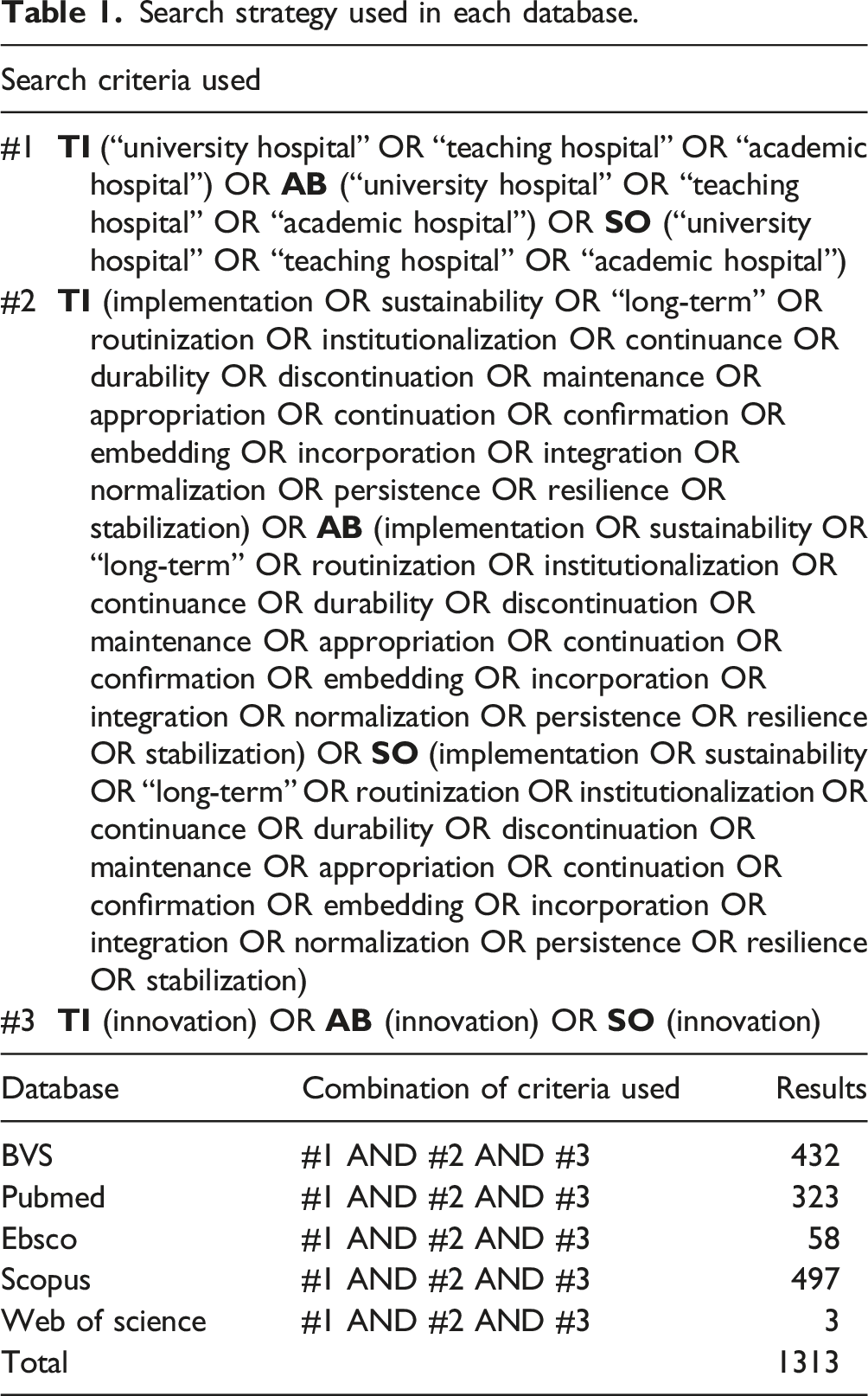
As can be seen in Table 1, of these 1313 articles, 260 were duplicates, leaving 1053 articles. There was no restriction regarding the year of publication. In order to find studies that could rescue empirical research that had supported innovations in university hospitals, it was decided to work with articles that aimed at the stage of sustainability and its understanding through empirical studies.
In this sense, the inclusion criteria established were as follows: articles that evaluated sustainability from examining the continuation of activities and the benefits of the implementation phase; studies that considered the term sustainability; articles in which there was a report of data collected on the situation and/or influences on the sustainability of the health program; articles that mentioned a period after the implementation of innovations in the studies. Theoretical articles, gray literature, and those that did not have an empirical experience developed in university hospitals were excluded from the research. Studies that did not discuss a specific intervention or program were also excluded as they did not meet the objective of this study. Studies in which sustainability was not a specific concern were also not included in the selection.
Of the 1053 articles remaining after removing the duplicates, 877 had an inadequate scope of analysis because they did not address research on the sustainability of innovations. Reading the abstract and introduction of the 176 remaining studies made it possible to perceive that another 166 articles did not deal with empirical research carried out in university hospitals or did not deal with research related to the sustainability of innovations and, in this case, they were considered inadequate. This process resulted in 10 studies, and the snowball strategy generated an additional article, resulting in 11 empirical studies that were analyzed in this review, as shown in Figure 1 based on the PRISMA flowchart. Diagram of selection and evaluation based on the PRISMA flowchart.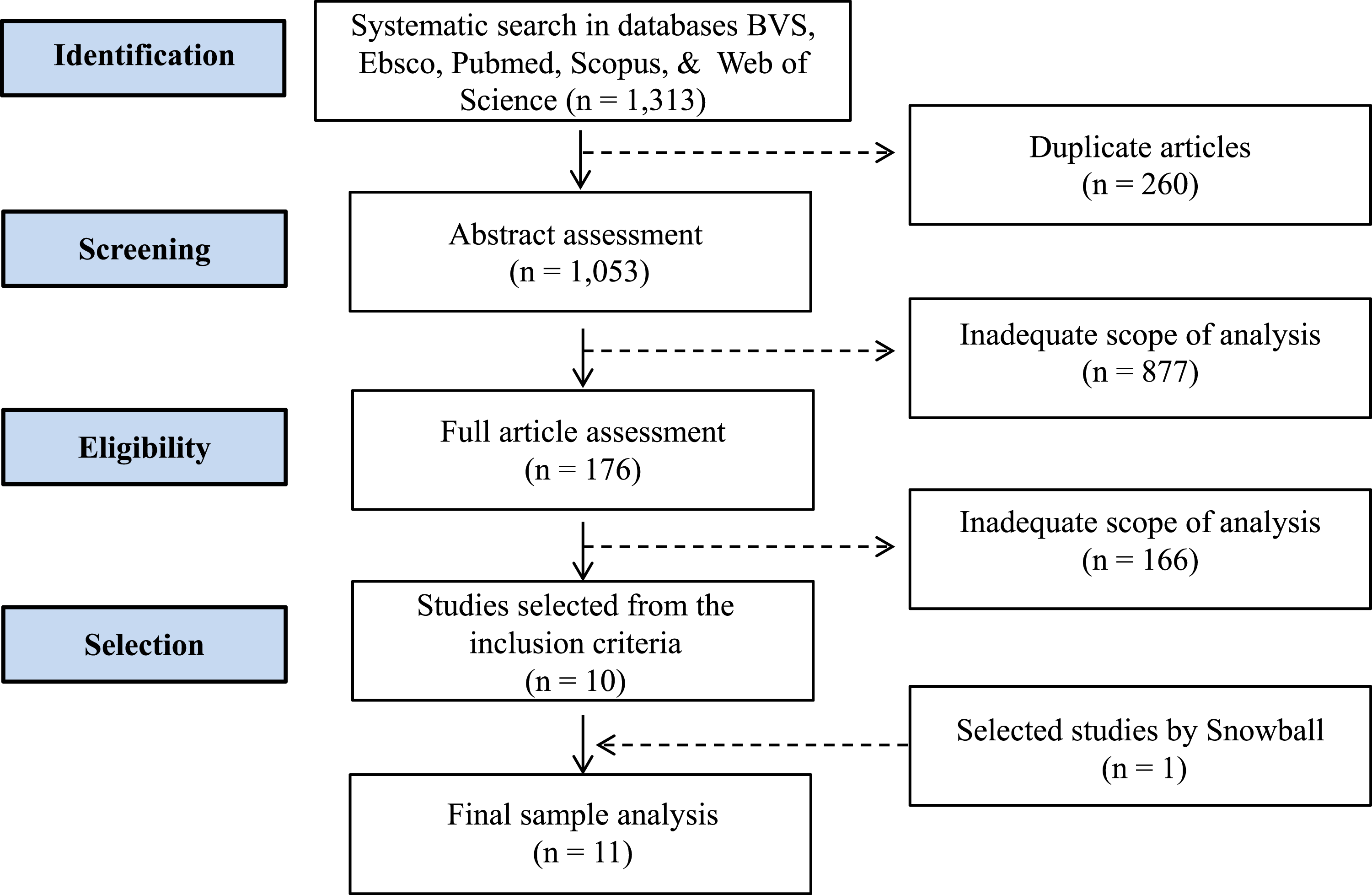
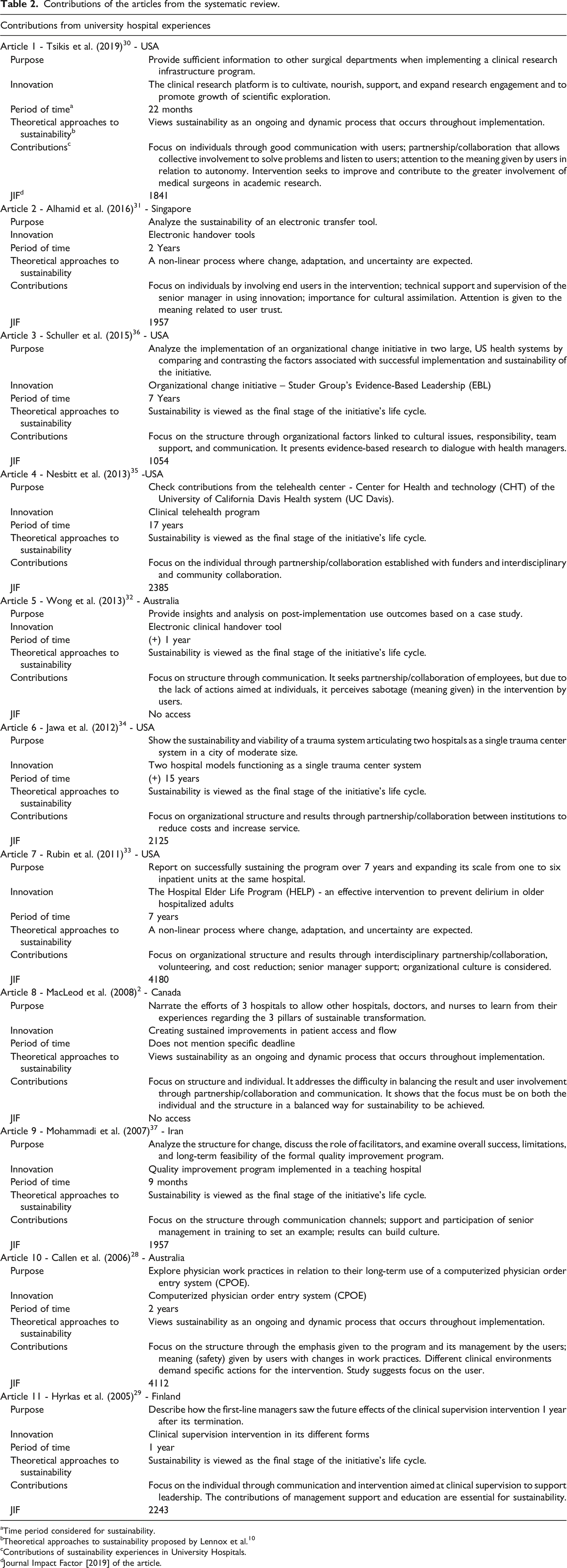
The information from the 11 studies selected in this review was extracted to a Microsoft Excel spreadsheet using the Zotero software and grouped into the following categories: reference/year/country; purpose; the innovation sustained; period of time considered in sustainability; theoretical approaches to sustainability; contributions from sustainability experiences in university hospitals; and the impact factor of the journal in which the study was published. The journal impact factor was verified to evidence the quality of the publications analyzed in this review. It was possible to access the impact factor of 9 articles, which allowed an average corresponding to 2428 in relation to the studies.
Results
The studies are within a time period from 2005 to 2019 and were mostly carried out in the US. They pointed to the need to plan for sustainability before implementation so that the intervention survives potential difficulties and achieves a sustained use, while also most of them mentioning user satisfaction when innovation was maintained in the organization. The studies portrayed both the importance of an adequate organizational structure that allows users to put the innovation into practice and the influence of individuals to sustain it. The determining factors to sustain the most recurrent innovations in the experiences of university hospitals were as follows: the meaning given by the individual in the interventions and, in this case, a factor associated with the user2,28–33; partnerships between institutions, so multidisciplinary collaboration2,30–36; and a culture2,31,32,36,37 more focused on the organization’s actions. However, ongoing technical support and top management attention also appeared in studies as examples of organization-related sustainability factors that focus on structure.31,33–36
Regarding the definition of sustainability proposed by Moore et al., 3 to help managers think about what they hope to sustain at the individual level, at the organization/system level, and at the intervention results level, the studies presented the constructs addressed in the theory of sustainability according to the level they intended to sustain. Only one article addressed the need to balance the search for results and focus on user involvement, as observed in MacLeod et al. 2
Sustainability has different aspects in its concept and in this study we systematized the different definitions so that the understanding of sustainability could be identified in the factors that determine it, that is, in individuals and in the organization since it could be noticed that the understanding is related to the challenges linked to individuals and/or the organization. Experiences in university hospitals showed the central role of routinization for the sustainability of a given innovation to occur since the individual appears in studies as a decisive factor to sustain innovations without disregarding the importance of factors linked to the organization that often influence the behavior of users. The articles complemented each other by realizing that the focus on structure raised some difficulties overcome in experiences in which individuals received greater attention in the implementation and consequent sustainability of innovations.
Studies in university hospitals have shed light on determining factors for the sustainability of innovations that have not yet been fully explored, such as the meaning given to intervention by individuals, partnerships and multidisciplinary collaboration, and culture, which complement the literature presented in this study. Partnerships can be developed with voluntary work, which was considered extremely important for the sustainability of innovations in these hospitals and capable of considerably reducing the organization’s costs. Volunteering was also mentioned in the literature by Scheirer, Dearing 9 with Rubin et al. 33 showing the results linked to financial gains with cost reduction, the satisfaction of patients and professionals involved in the intervention, in addition to a noticeable improvement in providing the service with a shorter stay of the patient in the hospital and greater availability of beds for care. Furthermore, factors related to partnerships/collaboration were verified in situations where there was training and an education plan with community colleges,33,35 collaboration and support between institutions, 34 senior management support allowing team interaction and communication, which are all fundamental points for sustainability 2 and for the multidisciplinary collaboration present in the hospital environment.30,36
Culture in this context was identified in most studies and considered decisive for the sustainability of innovations. Schuller et al. 36 showed that effective communication with leaders allowed employees to understand the change allowed by innovation. Knowing how change can affect them makes them realize the benefits that can be achieved and can align employee support and buy-in to goals to sustain innovation. Poor communication or inadequate information can lead users to experience interpersonal and organizational conflicts that make them resist change. Inadequate communication was identified in Wong et al., 32 which made it difficult for the user to follow the innovation correctly.
An organization’s failures in communication and training actions caused employees not to understand the purpose of the change in some cases, and without adequate training they cannot make use of the innovation correctly.28,31,32 The sum of these situations triggered factors linked to the meaning given to the intervention by the user. Thus, employees felt impaired in their autonomy, lost confidence in the leadership, had their professional security was compromised so they developed a series of imaginary barriers such as difficulty and resistance in accepting an intervention for altering a culturally established practice within the organization.
In the classification of articles referring to the conceptual approach proposed by Lennox et al., 10 which is one of the theoretical bases for analyzing the articles resulting from the systematic review, three articles treated sustainability as a continuous and dynamic process, two as a non-linear process, and six presented sustainability as a final stage in the life cycle of intervention. This result makes sense as a change in sustainability perspectives can be seen from studies that seek to assess, monitor, or plan sustainability over time rather than just look at it after implementation.
Contributions of the articles from the systematic review.
aTime period considered for sustainability.
bTheoretical approaches to sustainability proposed by Lennox et al. 10
cContributions of sustainability experiences in University Hospitals.
dJournal Impact Factor [2019] of the article.
In this sense, the studies mentioned the period as a key factor to consider sustainability, but suggested that the result of innovation may occur during or after implementation. For this reason, the experience presented by Mohammadi et al. 37 with a period of 9 months was considered in the analysis. Experiences in university hospitals emphasize the result of innovation and not the time elapsed after implementation as preponderant information for the effective sustainability of innovations. An important point in the analysis has to do with the perception that when the focus of actions to sustain innovation was only on the structure without considering the influence of the individual, the organization had problems related to individuals that had been overcome in studies in where the focus of actions was on individuals.
Thus, Table 2 presents an overview of the articles that resulted from the systematic review with the information present in each article. The “contribution” point in Table 2 shows managers where the focus is of the actions on the sustainability of the innovations experienced at the university hospital, whether on the organization or on the individual, so that they can objectively identify possible similarities in the institutions where they work and act accordingly to mitigate the barriers that impede the sustained innovations.
Discussion
University hospitals are important innovation laboratories with a heterogeneity of actors and services for providing health services to the population, while also being responsible for training health professionals.16,17,23–26,38 Because they are such complex institutions, university hospitals can be an important example of a research locus to be extended to other less complex institutions, but equally lacking in attention to the sustainability of innovations. This research seeks to establish a dialogue between academics and health managers based on experiences observed in university hospitals, given the importance of researchers communicating directly with managers in activity.
The studies analyzed in the systematic review presented interesting information about the context of sustainability of innovations that can be easily identified by managers so that corrective actions can be applied. This information was understood as factors resulting from the action of individuals and the organization that should be given special attention in view of the potential for sabotage and barriers to sustaining innovations. Thus, factors linked to individuals such as acceptance, perceived relevance, proper use, and leadership present users to the managers as important actors responsible for the sustainability of innovations. The determining factor “meaning” was considered a finding of this research that allowed good and bad experiences in the hospital institutions to be analyzed. So, managers must be aware of aspects that surround the innovations implemented that can influence their sustainability. For example, changes in work practices that occur when the user does not know how to use them properly can generate constraints that lead to inappropriate use. Linked to this aspect but on the opposite side is also the user’s satisfaction in relation to innovation since in this case the understanding is linked to the perceived challenges, autonomy, and the valorization of the professional identity. Based on factors related to individuals, managers need to pay more attention to employees in the context of innovation sustainability as people will respond to the innovation implemented based on how they translate these interventions.
The factors perceived in the actions of the organizations such as partnerships, communication, technical and financial support, voluntary collaboration, and training can clearly act on the factors linked to the individuals to help in the continuous use of the implemented innovation. Factors related to partnerships, multidisciplinary collaboration, and culture were very recurrent in the experiences of university hospitals and were also considered to be findings in this research. This is because institutional “partnerships” were verified in university hospitals and reinforced with what the research literature in different hospital institutions had already found. The factors “multidisciplinary collaboration” and “culture” also deserve attention from managers as the support of senior leadership, interaction, communication, and team insertion are essential to sustain innovations. In fact, the “culture” factor allows sustainability to be thought of since adopting the innovation, which can help in the process. When sustainability is not an objective, innovation may be more prone to discontinuity. The determining factor “culture” also allows for a greater sense of responsibility on the part of individuals and collective involvement. Thus, a suitable combination for thinking about the sustainability of innovations is the focus on results and team involvement. Uncoordinated actions can harm the process of making innovation a reality in the institution’s daily life.
The determining factors observed from the action of individuals are linked to the concept of sustainability in the perspective of routinization or maintenance, while the factors resulting from the performance of the organization can allow sustainability in the conceptual perspective of institutionalization or adaptation. When managers understand what is happening in their organization, such as routinization or institutionalization through conceptual understanding, then they can pay more attention to the perspective with less occurrence so that they can enhance and increase actions to sustain innovations.
In this way, the analysis of the literature resulted in proposing a framework that shows how managers can visualize the dynamics that occur in organizations to sustain innovations, as shown in Figure 2. Framework with the contribution of university hospital constructs.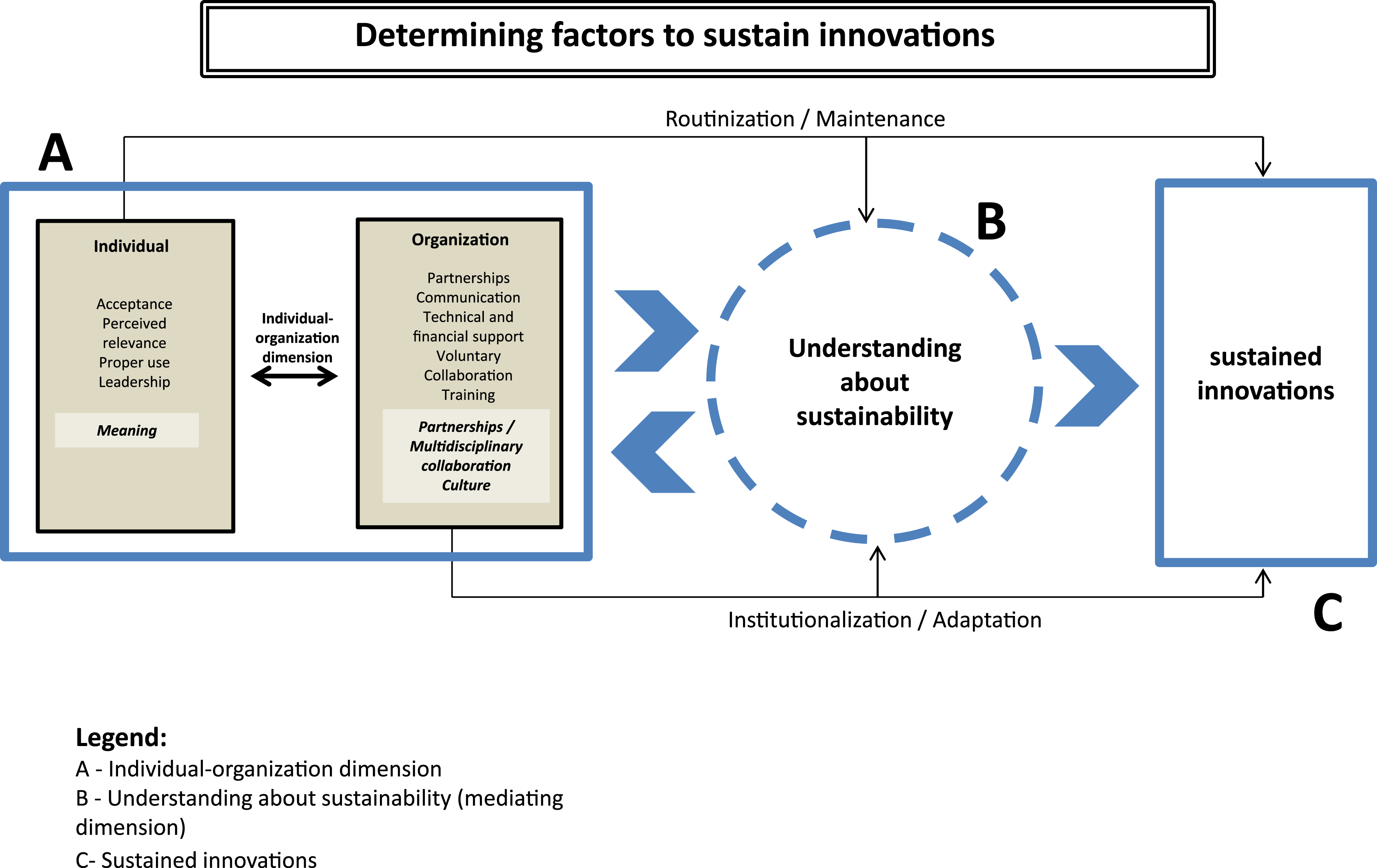
In this model, the dynamics to sustain innovations involve two dimensions: the action of the individual/organization, shown in Figure 2 in “Box A”, and the mediating dimension on understanding about sustainability represented by “Circle B”. Both will be responsible for sustained innovation as presented in “Box C”. Understanding sustainability influences the individual/organization dimension as it is essential to know the meaning of something that is intended to become a daily practice in the organization. This is the reason why there is a link between these dimensions, indicating that understanding sustainability can become a determining factor in being able to sustain innovation. As verified in Lennox et al., 10 the objectives and results must be understood to ensure that people are able to realistically assess what they want with the intervention initiated.
“Box A”, which presents the action of the individual and the organization, is linked to the dimension understanding about sustainability (“Circle B”) and “Box C”, which shows sustained innovation from the theoretical and concepts perspective observed in the literature. In these perspectives, it is possible to verify at one moment the action of individuals as a preponderant factor to sustain innovations and at other times the conduct of the organization. Thus, routinization and maintenance are used to identify sustainability in contexts where individuals act with greater influence on sustainability. Institutionalization and adaptation, on the other hand, are related to actions in which the organization played a key role, such as using the organizational structure to maintain training and reaffirm the importance of sustaining innovation. Therefore, at certain times there may be an emphasis on the action of individuals or on the action of the organization since they are not equated. In this case, managers can assess the urgency of interfering in the individual-organization dimension (Box A) depending on the contextual characteristics of the hospital’s managerial/organizational scenario.
It is necessary to realize that individuals and organizations are mutually interconnected and there is no way to verify sustainability by isolating their actions. In addition, the factors for determining the sustainability of innovations are associated with these two actors and often a factor linked to the individual occurs due to negligence on the part of the organization such as communication and management support. The literature shows that understanding sustainability as a mediating dimension can collaborate in sustained innovations in order to allow managers to identify actions related to the individual-organization dimension that may be compromising the process to sustain innovation and thus act in a more efficient, assertive way for determining factors to sustain ongoing innovations. In this sense, the lack of an adequate understanding of the dynamics of sustaining innovations allows the emergence of determining factors that can influence the sustainability of the innovations implemented, which explains the double arrow between “Box A” and “Circle B”. Another important point is that the dimension represented by “Circle B” is a mediating dimension that associates the understanding about sustainability with the increase in the possibility of sustaining innovations. However, this does not only suggest this possibility of sustaining innovations given that there may be sustainability of innovations in interventions where there is no understanding of this stage. This is represented in the framework by the arrows that go directly from “Box A” to “Box C” pointing to sustained innovations without understanding sustainability.
With regard to individuals, the following aspects can be mentioned as critical factors: acceptance, proper use of the intervention, perceived relevance, and leadership. According to the literature, people’s acceptance of the intervention and its proper and committed use are essential for it to overcome the implementation phase and be inserted into the company’s daily life. 12 In this case, the impact of the organization’s action can be seen because if there is no adequate training, the individual will not be able to make correct use of the innovation, which can compromise sustainability. 9 Individuals need to perceive relevance in what is altering their routines. The factors linked to the organization (partnerships, communication, continuous technical and financial support, training, and voluntary collaboration) will allow an adequate environment for effective sustainability as innovations can represent changes in what was already established by standards. In this sense, the organization can contribute by providing ways to adjust actions that guide the sustainability of the innovative intervention. The perspective of understanding sustainability and its determining factors from individuals and the organization can contribute to identifying faster the problems associated with sustainability that are not so perceptible to managers at first.
In this study, we established the most cited factors in the studies of university hospitals (meaning, partnerships, multidisciplinary collaboration, and culture) as constructs inserted in the framework of Figure 2 in order to collaborate with the literature and bring light to managers on some difficulties to sustain innovations. These factors are highlighted in the framework and are fundamental to understanding sustainability as they include in their definitions a range of situations in which they can be verified. The constructs are as follows: Meaning – symbolic representation given by the individuals in the environment in which they are inserted, which is represented by autonomy, trust, security, and imaginary barriers; Partnerships/collaboration – articulations and relationships established to achieve an objective, which is verified in volunteering and multidisciplinary collaboration; Culture – agreements and practices established within the organization that shape and establish the actions of individuals, which is perceived in communication, responsibility, information sharing, and team adherence.
By bringing more clarity and understanding about the determining factors to sustain innovations, the constructs observed in university hospitals change the perception of actions focused only on results. These constructs seek to mitigate the action of factors linked to the organizational structure and individuals. Here it is clear that it is essential to think about and drive the sustainability of innovations with a focus on the individual-organization dimension and understanding about sustainability. Our contribution also occurs when considering the amplitude of the actions perceived in the constructs and their relationship with understanding sustainability. Understanding what is happening in the dynamics of innovation sustainability and being able to identify what is happening at the moment, whether it is institutionalization or routinization, can be fundamental for correct and effective actions to be taken in time to circumvent problems and transform the intervention into everyday sustained use.
Conclusion
This research sought to contribute to the dialogue between theory and managerial practice in studies on the sustainability of health innovations based on experiences observed in university hospitals. Health managers can verify how sustainability relates to the challenges and identify a path that helps them to overcome the limitations of the determining factors observed in the dimension where individuals and the organization often act influenced by a limited understanding about sustainability. A very important point refers to the role of leadership and managers in innovation sustainability. There is some mature discussion about the influence of champion leaders on the sustainability of innovations, but a focus on people can allow preparing potential leaders and building an organizational culture can bring favorable changes related to innovations.
Literature points out that managers do not consider health services research as part of their arsenal of information, nor do they look to this field as a source of best practices and/or information that would help them manage their organizations more effectively. 18 So, to help in this scenario, managers can use the framework proposed to understand how actions, whether isolated or combined, applied by all actors within the hospital institution can influence the sustainability of innovations. The results of this study also reinforce an important discussion observed as a research gap in the scientific field related to the sustainability of innovations. In a time of deep and rapid changes added to the increase in the use of technologies and innovations in providing health services, it is imperative for innovation to be a part of the organization’s daily life.
This research seeks to understand the needs of those involved and bring discoveries that help in decision making. The organizational challenge of creating conditions for using innovation can be managed more objectively when the process to sustain innovations is understood. When there is no perception of the determining factors observed in the individual-organization dimension, the technologies employed may not be used properly, which leads to the loss of various investments. In this way, actions that seek to contribute to the increase of sustained interventions by providing a mechanism for continuous involvement, problem solution and resolution, and continuous technical support are fundamental. For sustainability to be verified over time, it is necessary to overcome other issues that involve internal and external factors to the organization.
After addressing the determinants of innovation, we sought to answer another objective of this study, which is to verify the understanding of sustainability of innovations in university hospitals. In view of the framework proposed, it was found that the sustainability of innovations has been understood in these hospitals by looking at the individual in interaction with the organization to achieve results and sustain innovations. Hence the idea of balancing results with involvement and perhaps this is the main point of sustainability because if the focus is on innovation and on the determining factors for it to be sustained, the results may be neglected, which can cause damage to the intervention and the possible discontinuation of the innovation.
A relevant point in the results is that the sustainability of innovation needs to be an objective to be achieved, that is, managers/individuals must incorporate this perspective of the continuity of innovation since the beginning of the process, otherwise this may represent a greater propensity for discontinuity.
It is also important to highlight that this research shows understanding about sustainability as a fundamental mediating factor since the more clarity there is about understanding the sustainability of innovations, greater will be the propensity for sustained innovations. This does not mean that there is only this path. There may be situations in which the individuals/managers involved in the process do not understand the sustainability of innovations, but sustained innovations still occur in the organization. However, based on our model, we intend to encourage managers to further explore the possibilities that the mediating dimension on understanding the sustainability of innovations allows.
It is noteworthy that there are no determining factors to support more specific innovations for regular hospitals or other health sectors. This framework can be applied as long as there is the prerogative of innovative practices in place. Therefore, this analysis can potentially be applied to university hospitals, but is also applicable to other types of hospitals and public or private institutions as long as it is an organization that adopts, implements. and seeks to sustain innovations in service delivery.
In view of this, we recognize that performing a cutout only with university hospitals is a limitation that needs to be highlighted in this research. However, it should be mentioned that the topic of sustainability of innovations is infrequent and looking at a locus considered to be innovative could facilitate and expand the results of the systematic literature review given that they are complex hospitals in an important research context.
Finally, despite the rigor established in the search performed in the databases, there was little material for final analysis that was within the inclusion criteria and locus of the research, which may have brought losses to the final result. It is suggested that new research can verify the sustainability of innovations in university hospitals from the constructs pointed out in this study to discuss the determining factors arising from the individual-organization dimension and from understanding the sustainability of innovations.
Footnotes
Declaration of conflicting interests
The author(s) declared no potential conflicts of interest with respect to the research, authorship, and/or publication of this article.
Funding
The author(s) received no financial support for the research, authorship, and/or publication of this article.
