




Abstract
The increasing prevalence of problematic smartphone use and academic procrastination among vocational students has raised concerns about academic functioning in Technical and Vocational Education and Training (TVET) institutions. This study examines the associations among smartphone addiction, academic procrastination, self-efficacy, and academic achievement among automotive engineering students in Kenyan TVET institutions. A cross-sectional survey approach, was employed on 509 students through validated self-report instruments from Kenyan TVET institutions. The findings indicate strong associations between self-efficacy and academic achievement, as well as between smartphone addiction and academic procrastination, while academic procrastination shows a weaker association with academic performance. Self-efficacy fully mediated the effect of academic procrastination and partially mediated the effect of smartphone addiction on achievement. The study offers insights that may inform student support strategies and pedagogical practices within vocational education. The findings are relevant to educators and policymakers concerned with student engagement and academic functioning in TVET contexts.
Introduction
Smartphones in classrooms can improve learning but may also distract and negatively impact academic performance (Merchán Tamayo et al., 2024). Their multifunctionality, including mobile phone and computing capabilities, has driven global adoption (Elamin et al., 2024), particularly during the COVID-19 crisis, for remote work and studies (Mokhtarinia et al., 2024). Recently, the use of smartphones has become a necessity; with high ownership rates among university students, providing them greater self-efficacy (Li et al., 2024).
For younger generations, smartphones are an integral part of their daily lives and academic work (Sapci et al., 2021). Smartphones, though beneficial in many ways, such as improving communication and information accessibility (Onjewu et al., 2024), or study related usage (Abbasi et al., 2021), also pose risks of addiction. Affordable prices and the rapid expansion of mobile networks have increased student ownership and dependence, potentially resulting in addiction (Parasuraman et al., 2017). Smartphone addiction, as a form of behavioral addiction, involves excessive, uncontrollable use that disrupts daily routines, relationships, and professional activities. Researchers identified five components of addiction that individuals may experience (Sunday et al., 2021; Sussman and Sussman, 2011): craving, obsession, fleeting satisfaction, negative consequences, and loss of control, also emphasizing feelings of withdrawal, mood regulation, tolerance, and conflict. Despite common features with substance use disorders, no standardized diagnostic criteria exist to determine smartphone addiction which require criteria listed in the Diagnostic and Statistical Manual of Mental Disorders (DSM-5) (Panova and Carbonell, 2018).
Studies highlight widespread internet and smartphone (often interrelated) addiction among students across Africa (Zewde et al., 2022). Prevalence varies by country: Egypt and Saudi Arabia report 46–50% mild addiction among students (Anwar et al., 2022), Ethiopia reported 53.6% internet addiction (Amano et al., 2023), and Ghana reported 58.5%, 23.0%, and 14.9% severe, moderate, and mild nomophobia (Essel et al., 2021). Tanzania reports a 31% internet addiction rate, driven by prolonged usage (Mboya et al., 2022). A common feature of these studies is that digital addiction has a detrimental effect on students’ mental health and their engagement in learning activities, study focus, and overall academic performance. A study among university students at Africa International University in Kenya reported that psychological distress increased smartphone addiction (Wanjiru et al., 2025). Although a random sample of students in selected universities in Kiambu County, Kenya showed a prevalence of smarthphone use as high as 82.7% (Wambua et al., 2025), we know much less about smartphone addiction detected by validated scales. Especially, research gaps persist in Kenya’s TVET (Technical and Vocational Education and Training) sector, with limited studies exploring this phenomenon, particularly regarding the role of smartphone addiction in specialized fields, such as automotive engineering. TVET in Kenya forms relevant part of the country’s education system, which is upwardly moving, providing the necessary skills and knowledge applicable in several sectors for both employment and entrepreneurship (Achuodho and Piko, 2024). For TVET students in technical fields, such as automotive engineering, smartphones are essential for accessing educational information and learning tools for skill development. However, while smartphone use supports learning, its negative effects on academic life remain underexplored among Kenyan TVET students. Moreover, little is known about how smartphone addiction relates to academic procrastination and perceived academic performance within this context, or the role of self-efficacy in these relationships. Therefore, to address this gap, the present study examines the relationship between smartphone addiction, academic procrastination and achievement, and investigates the mediating role of self-efficacy, providing insights that contribute to improved academic outcomes and program effectiveness. By focusing on this underrepresented population, the study seeks to contribute context-specific evidence to inform student support strategies and vocational education practice.
Literature review
Younger university and college students face a greater vulnerability to smartphone addiction, due to higher new technological adoption, exposing them to a greater likelihood of excessive reliance; especially those with lower income and unemployed individuals are more likely to be addicted to smartphones (Alotaibi et al., 2022). While smartphones are beneficial for learning, it features compulsive behaviors and attention deficits that hinder education and daily functioning, their excessive use can disrupt focus and academic performance, leading to increased procrastination (Chen and Lyu, 2024). Academic procrastination, characterized by consistently delaying tasks despite potential consequences, is prevalent among students (Kim and Seo, 2015). Determinants such as academics, gender and age may influence these tendencies (Yan and Zhang, 2022). Males tend to procrastinate more than females in general and academic profiles, while procrastination tendencies do not vary according to socioeconomic status or educational background (Lu et al., 2022). Excessive smartphone use heightens the levels of procrastination, by which important academic tasks become delayed (Kutluay and Karaca, 2025). Further, smartphone addiction may exacerbate procrastination, which can have cascading effects on academic success (Marino et al., 2021).
Academic achievement is one of the important indications of students’ success. Both empirical studies and systematic reviews confirmed the negative association between smartphone use and academic performance (Amez and Baert, 2020; Baert et al., 2020; Domoff et al., 2020; Hawi and Samaha, 2016). Further, in China both smartphone addiction and academic procrastination significantly impair student academic achievement by reducing study time and efficiency, and the quality of task completion, leading to poorer grades (Tian et al., 2021; Zhang and Zeng, 2024). These issues are particularly detrimental for TVET students who must balance rigorous practical skill development and employability with academic demands (UNESCO, 2023), as demonstrated by Kenya’s automotive engineering performance deficits (Kenya National Examinations Council, 2019). Research in Australia and Iran among 279 students of medicine, and a diverse university sample of 261 students indicates that self-efficacy, influencing motivation and learning strategies (Hayat et al., 2020; Honicke et al., 2023), may mediate these relationships, suggesting its potential as an intervention target for improving vocational education outcomes in Kenyan institutions. Understanding these relationships in vocational training and education settings, such as those in Kenya’s TVET institutions, is critical for improving academic outcomes in this context.
The mediating role of self-efficacy
Self-efficacy, based on Bandura’s social cognitive theory, refers to one’s belief in their ability to perform specific tasks and achieve desired outcomes (Bandura, 1977). Research on student self-efficacy has drawn more attention in the past years regarding its role in academic motivation, procrastination and achievement. Understanding the determinants of academic achievement in higher education contexts is a priority for improving learning skills. Self-efficacy, i.e., one’s belief in task-specific capabilities and the capacity to achieve desired outcomes, critically influences academic achievement (Basileo et al., 2024; Figueiredo et al., 2024; Honicke et al., 2023). While a great number of studies include specific self-efficacy, e.g., academic, learning, research, social, etc., we know less about the role of general self-efficacy in relation to these association. While academic self-efficacy tends to decrease with age in science subjects, and its relationship with academic level varies across studies (Hinduja et al., 2024), this study examines general self-efficacy, as smartphone addiction impacts broader life domains (emotional regulation, time management, and cognitive focus) beyond academics.
Limited evidence is available about the mediating role of self-efficacy in the link between smartphone use academic performance. One quantitative study of 518 volunteered students in Turkey found that academic self-efficacy, as a partial mediator as well as a moderator, can reduce the negative effects of phubbing, such as academic procrastination (Parmaksız, 2023). In another quantitative study conducted in a college of science in a public University in Southeast China among 483 participants, revealed that smartphone addiction negatively predicted the students’ academic self-efficacy. This study further showed that smartphone addiction has a direct predictive effect on students’ academic procrastination and an indirect predictive effect via academic self-efficacy after controlling for age, gender, and academic year (Li et al., 2020). A cross-sectional study from 1514 university students on distance education in Türkiye did not find a significant relationship of general self-efficacy with smartphone addiction, but it had a positive effect on student engagement within the online learning environments in distance education (Kokoç and Göktaş, 2025). Among Spanish and Mexicam youth (N = 561) aged 14–20 years in a quantitative study, there was a negative correlation between self-efficacy and smartphone addiction (López-Mora et al., 2021). A study employing a survey questionnaire method carried out among university students in China (N = 2278), revealed that problematic smartphone use had significant negative effects on self-efficacy (Li et al., 2024).
Besides, several studies have reported on a negative association between self-efficacy and academic procrastination (Ziegler and Opdenakker, 2018). A recent quantitative study among Chinese undergraduates (N = 1269) found that smartphone addiction was indirectly linked to academic procrastination, mediated by self-efficacy (Zhao et al., 2025). A significant negative correlation was also justified between academic procrastination and self-esteem, and also with general self-efficacy among 237 Spanish nursing students (Brando-Garrido et al., 2020). Among Malaysian university students, the finding indicated that procrastination tendencies did not affect the student’s academic performance, but there was a negative relationship between self-efficacy and the students’ academic procrastination (Bakar and Khan, 2016).
In the present study, self-efficacy is conceptualized as a potential mediator to examine whether it statistically accounts for the association between smartphone addiction, academic procrastination and academic achievement. A mediating role implies that self-efficacy may statistically account for this association. This assumption aligns with evidence showing that smartphone addiction and being prone to procrastination can determine self-regulation and confidence, which are critical to task completion and academic success (Al-Abyadh et al., 2024; Li et al., 2020; Ziegler and Opdenakker, 2018). Given the study’s focus on examining indirect associations between smartphone addiction and academic achievement, a mediating framework is considered more appropriate than a moderating approach, which would instead test variations in association strength (i.e., implying that self-efficacy alters the strength or direction of the relationship).
The present study
Technical and Vocational Education and Training (TVET) is an essential component of postsecondary education that gives students the skills and competencies they need for both employment and entrepreneurship (Achuodho et al., 2025). TVET in Kenya forms part of the education system in the country, which is upwardly moving, providing the necessary skills and knowledge applicable in several sectors. Its development is closely related to changes in socioeconomic priorities and development goals over the years (Achuodho and Piko, 2024). Following Kenya’s independence in 1963, the government recognized the critical role of TVET in nation-building and economic transformation. The Ominde Commission (1964), established to restructure the education system, recommended the expansion of technical training to meet the demands of a modernizing economy. Consequently, technical institutions and other vocational training centers were established to provide skills for the growing industrial and service sectors (Simiyu, 2009). The necessity for a competent workforce in these important industries led to the expansion of TVET programs to include courses in business, engineering, and agriculture at this time (Kitainge, 2004). Kenya’s TVET system had difficulties in the late 20th century, such as a lack of finance, out-of-date curricula, and a social belief that academic courses were more important than vocational education (UNESCO & UNEVOC, 2010). These concerns were brought up in the Kamunge’s Report (1988), which recommended changes to improve TVET’s calibre and applicability. Due to budgetary limitations and other conflicting educational priorities, the implementation of these proposals remained sluggish. While many institutions found it difficult to retain skilled trainers and maintain facilities, the TVET sector saw relatively little development in the 1990s.
Lately, the government has improved TVET through infrastructure funding, collaborating with private-sector stakeholders, and integrating technology through initiatives, with the ultimate goal of making programs relevant and increasing graduate employability, thereby resolving the persistent skills mismatch in the labor market (UNESCO, 2023). However, the performance of engineering courses like automotive engineering at Kenya National Examinations Council (KNEC) has been below average ever since (Kenya National Examinations Council, 2019). Compared to other courses Automotive Engineering appears last on the column with the least percentage passes. For instance, the cumulative performance of students in different courses in the last 5 years has shown that a Diploma in Social Development obtained 84.7% pass, a Diploma in Food & Beverage obtained 87.1% pass, a Diploma in Business Studies obtained 72.8% and a Diploma in Engineering (DEE, DAE and DME) obtained 28.4% pass (Kenya National Examinations Council, 2019). This implies that students do not perform very well in engineering courses and this type of poor performance could have important implications. A particularly critical factor shaping students’ performances in these courses is self-efficacy or students’ beliefs in their capacity to succeed in academic tasks. Self-efficacy shapes the level of motivation and resilience of students in challenging areas of study like engineering (Power et al., 2024). Low self-efficacy, together with external factors like smartphone addiction and academic procrastination, may result in a high extent of poor academic outcomes. Therefore, it is important to examine the interaction of these variables, especially within TVET settings, for an explanation of underperformance in the programs of engineering.
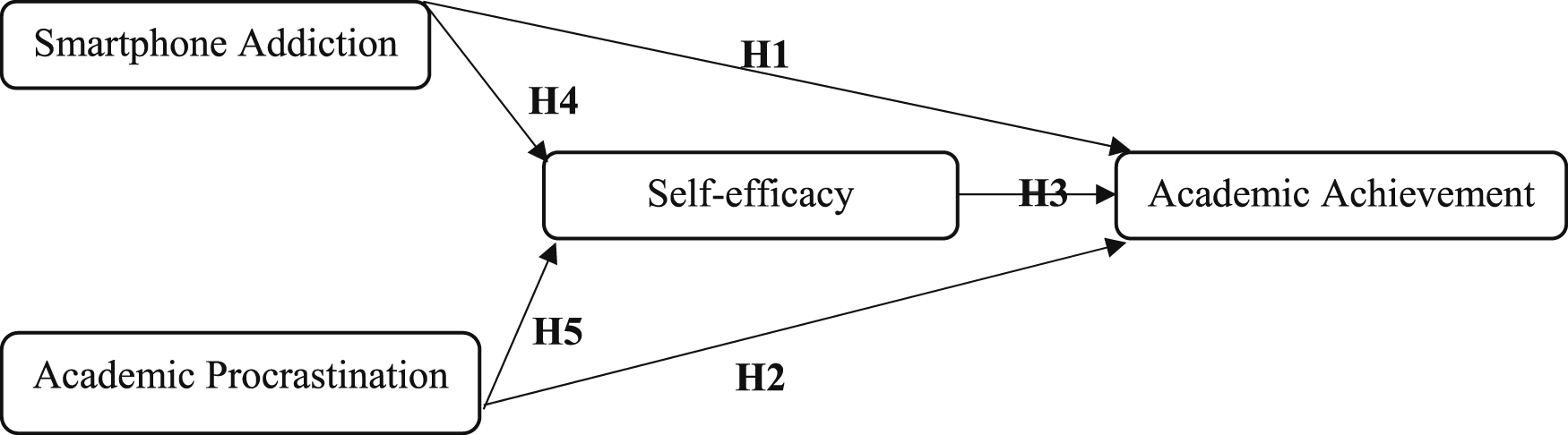
While the connection between smartphone addiction, academic procrastination and academic achievement is well established, the broader academic consequences and the potential mediating role of general self-efficacy remain understudied. This study examines these relationships among Kenyan TVET automotive engineering students, aiming to inform targeted interventions and improve student performance and vocational training outcomes in this context. The present study tested the following hypotheses (see Figure 1): The hypothetical path model.
Methods
Participants and procedure
The study was carried out from March to September 2024 to examine the role of smartphone addiction, self-efficacy, and study procrastination in academic achievement among automotive engineering students in Kenyan TVET colleges. The study employed a cross-sectional design within the quantitative method approach. Data were gathered through an electronic questionnaire on Google Forms. Before participating, students were provided with an informed consent form that explained the study’s aims, the voluntary nature of participation, confidentiality assurances, and the option to withdraw at any time without repercussions. The research was conducted following the ethical standards outlined in the Declaration of Helsinki. The research protocol was reviewed by the Institutional Review Board of the Doctoral School of Education, University of Szeged, Hungary, and received ethical approval (Ethical approval no. 20/2023, approval date: November 24, 2023).
To obtain an adequate sample, stratified random sampling was employed, focusing on automotive engineering students from several public TVET colleges in Kenya. The strata included institution type and geographic location. The target population consisted of approximately 1500 students, from which a sample of 509 students aged 18 to 35 years (M = 23.21 years, SD = 3.84) was ultimately recruited. Males made up the majority at 91.3%, reflecting the gender imbalance typical in motor vehicle-related vocational programs. The overall response rate to the questionnaire was 97%, with very few missing data. This sample adequately reflected the overall demographic profiles of Kenyan TVET automotive engineering students. The majority were from the low-to middle-income bracket, aligning with the socioeconomic background of the TVET sector. Despite the homogeneity of the single occupation and the all-male sample, the data still provide a good representation of the study population with regard to age, level of training, and socioeconomic environment.
The online survey link was shared through institutional email lists and student WhatsApp groups managed by departmental heads and class representatives. All items from the four standardized psychometric instruments were combined into a single Google Form, which participants completed in one sitting at their preferred time and location. Students were asked to respond honestly and independently, with clarifications provided as needed via email or WhatsApp. The questionnaire would take 10–15 min to complete. Participants had the right to withdraw and return at a later time if they so desired, without compromising the anonymity and agency of the process.
Measures
Four validated psychometric measures were used in the present study, namely the General Self-Efficacy Scale, Academic Performance Scale, Smartphone Addiction Scale – Short Version (SAS-SV), and Academic Procrastination Scale. In Panayide’s opinion (Panayide, 2013), acceptable alpha values can be higher than 0.70 in instances of low item intercorrelations and multidimensionality, provided that the scale has a sufficient number of items.
Smartphone Addiction Scale – Short Version (SAS-SV)
To measure smartphone addiction, the study used the Smartphone Addiction Scale—Short Version (SAS-SV) developed by Kwon et al. (2013). The 10-item inventory assesses smartphone addiction or compulsion tendencies, e.g., “The people around me tell me that I use my smartphone too much.” The response is on a five-point Likert scale, ranging from 1 (strongly disagree) to 5 (strongly agree). The inventory was very internally consistent with a Cronbach’s alpha of 0.899.
Academic performance scale
Academic achievement was assessed using the Academic Performance Scale developed by Birchmeier et al. (2015). The scale consists of 10 items rated on a five-point Likert scale (1 = strongly disagree to 5 = strongly agree) and captures students’ perceived academic functioning and engagement rather than objective performance indicators. Sample item: “I enjoy homework and activities because they allow me to improve in each subject.” The scale was reliable with a Cronbach’s alpha of 0.918.
Academic procrastination scale
Academic procrastination was evaluated through the Academic Procrastination Scale developed by Yockey (2016), which consists of five items. The instrument assesses behavioral tendencies of procrastination on academic assignments using a five-point Likert scale, ranging from 1 (strongly disagree) to 5 (strongly agree). One example item is: “I put off projects until the last minute.” High instrument reliability was yielded with a Cronbach’s alpha of 0.863.
General self-efficacy scale
Self-efficacy, being a psychosocial determinant, was measured by Schwarzer and Jerusalem’s General Self-Efficacy Scale (Schwarzer and Jerusalem, 1995). The 10-item scale measures individuals’ perceived ability to handle unforeseen events and adversity, as well as their ability to solve problems. The study employed general self-efficacy rather than academic self-efficacy, as the research focus extended beyond task-specific academic beliefs to broader self-regulatory and behavioral processes, including procrastination and smartphone use. Within social cognitive theory, general self-efficacy represents a cross-domain motivational resource that shapes persistence and behavioral regulation, making it theoretically appropriate for the present model (Bandura, 1977). An example is: “I am confident that I can deal efficiently with unexpected events.” They are rated on a five-point Likert scale, ranging from 1 (not at all true) to five (exactly true). The scale had high internal reliability with a Cronbach’s alpha of 0.910.
Data analysis
Data analysis proceeded in three phases using SPSS version 26.0. First, descriptive statistics and Pearson correlation coefficients were established to investigate the relationships of the study variables. Next, multiple regression analyses were conducted to test the direct and indirect effects of the predictors on academic achievement. To examine mediation effects, Hayes’ PROCESS macro (version 4.0; Model 4) was employed instead of the Baron and Kenny (1986) causal steps approach. This approach involved estimating the direct, indirect, and total effects within a single analytical framework, using ordinary least squares regression and bootstrapping procedures. The significance of the mediation effect was determined based on bias-corrected bootstrap confidence intervals (5000 resamples) for the indirect effect, rather than relying on stepwise regression criteria. An indirect effect was considered significant when the 95% confidence interval did not include zero. Model fit for each regression was assessed using standard indicators, including the coefficient of determination (R2), adjusted R2, and F-statistics. Statistical significance was determined at p < 0.050.
Results
Descriptive statistics and bivariate associations
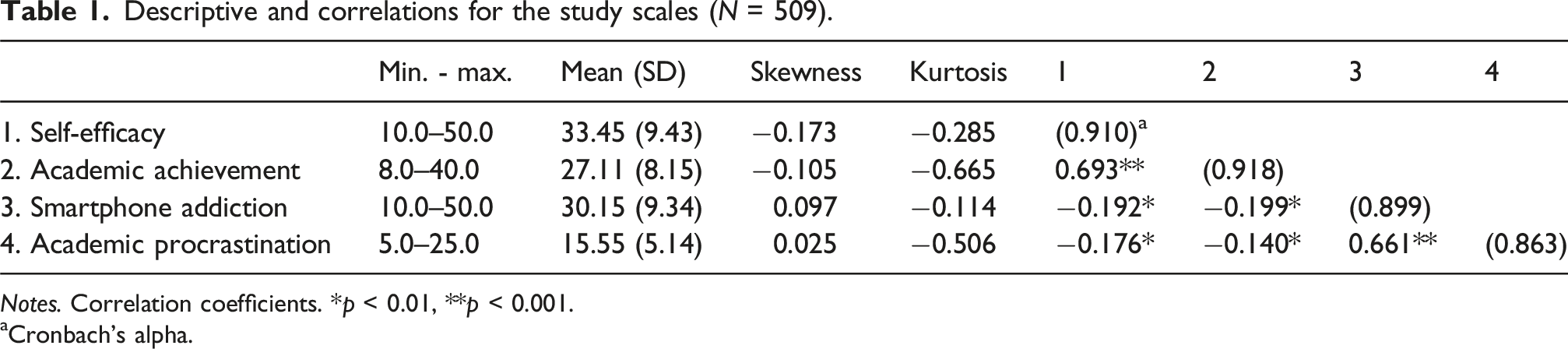
Descriptive and correlations for the study scales (N = 509).
Notes. Correlation coefficients. *p < 0.01, **p < 0.001.
aCronbach’s alpha.
Pearson correlation analysis revealed significant relationships among the study variables: self-efficacy showed a strong positive correlation with academic achievement (r = 0.693, p < 0.001), while smartphone addiction was positively associated with academic procrastination (r = 0.661, p < 0.001) and negatively related to both academic achievement (r = −0.199, p < 0.01) and self-efficacy (r = −0.192, p < 0.01). Additionally, academic procrastination demonstrated negative correlations with self-efficacy (r = −0.176, p < 0.01) and academic achievement (r = −0.140, p < 0.01). The findings indicate that greater self-efficacy correlates with improved academic performance, whereas increased smartphone addiction relates to greater procrastination and poorer outcomes. Therefore, H1, H2 and H3 have been validated.
Multiple regression analysis
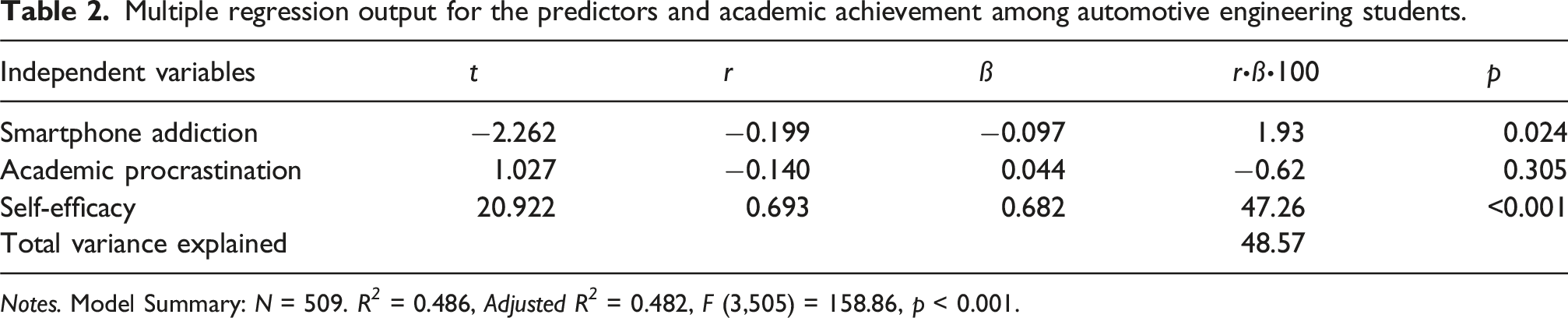
Multiple regression output for the predictors and academic achievement among automotive engineering students.
Notes. Model Summary: N = 509. R 2 = 0.486, Adjusted R 2 = 0.482, F (3,505) = 158.86, p < 0.001.
In terms of each predictor, smartphone addiction revealed a statistically negative significant relationship with academic achievement (β = −0.097, t = −2.262, p = 0.024). Academic procrastination did not prove a significant predictor of academic achievement (β = 0.044, t = 1.027, p = 0.305). On the other hand, self-efficacy appeared as a strong positive predictor (β = 0.682, t = 20.922, p < 0.001), indicating that higher levels of self-efficacy are strongly associated with higher levels of academic achievement. Therefore, H3 has been again validated in this model.
Mediation analysis
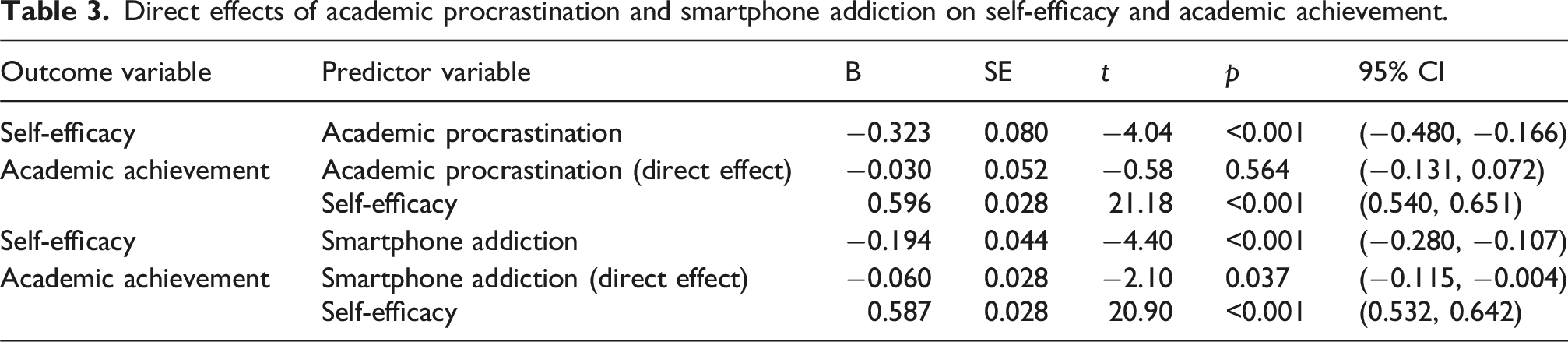
Direct effects of academic procrastination and smartphone addiction on self-efficacy and academic achievement.
Bootstrapped indirect effects of academic procrastination and smartphone addiction on academic achievement via self-efficacy.

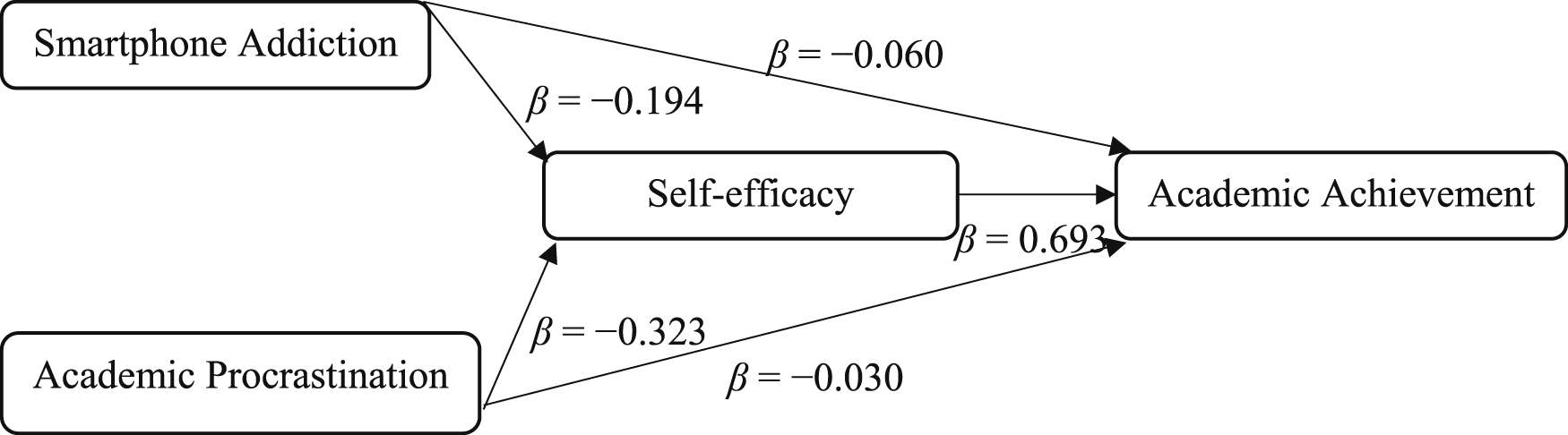
The mediation model for the study. Note. Academic achievement serves as the outcome variable, smartphone addiction and academic procrastination as predictors, and self-efficacy as a mediator.
Summary of findings
The results support four of the five proposed hypotheses, establishing self-efficacy as a central mediating mechanism. Specifically, a significant negative relationship was found between smartphone addiction and academic achievement (H1), while self-efficacy demonstrated a strong positive relationship with achievement (H3). Critically, mediation analyses confirmed that self-efficacy fully mediates the negative effect of academic procrastination on achievement (H5), whereas it only partially mediates the effect of smartphone addiction (H4), which retains a significant direct negative effect. The hypothesized direct negative correlation between academic procrastination and achievement (H2) was not supported in this mediation model, as its effect was entirely indirect via self-efficacy.
Discussion
This investigation examined the interrelationship between smartphone addiction, procrastination, and self-efficacy in influencing academic achievement among Kenyan TVET automotive engineering students. Using SPSS 26.0, we examined direct and indirect effects, with a particular focus on the mediating role of self-efficacy, as outlined in five hypotheses. Results are interpreted within the framework shown in Figure 2 and the existing literature. While objective indicators such as GPA were not available, self-reported academic performance has been shown to correlate moderately to strongly with objective achievement measures and is widely used in educational and psychological research, particularly when institutional records are inaccessible. Importantly, academic performance is theoretically meaningful within social cognitive frameworks, as students’ self-evaluations of their academic functioning influence motivation, persistence, and self-regulatory behavior (Basileo et al., 2024).
The analysis revealed a moderate negative association between smartphone addiction and academic achievement, indicating that increased smartphone addiction is linked to reduced academic achievement, similar to previous studies (Amez and Baert, 2020; Anwar et al., 2022; Baert et al., 2020; Domoff et al., 2020; Essel et al., 2021; Hawi and Samaha, 2016). These results are in line with previous findings that excessive technology overuse interferes with academic distraction, e.g., structured learning routines (Dontre, 2021). Previous investigations also confirmed that smartphone addiction might have disruptive influences on learning dedication, academic achievement, relationship formation, and overall success (Figueiredo et al., 2024; Tian et al., 2021). This may be due to smartphone addiction or overuse, fragmenting attention, reducing cognitive control, and fostering avoidance behaviors, all of which play a role in procrastination and poor academic outcomes. In TVET context, all these may hinder the development of practical skills requiring concentration and hands-on practice, which are closely linked to graduate employability. Further research in the TVET context is needed to clarify the mechanisms involved: it is possible that some smartphone applications, such as those offering technical learning resources, industry news, or career search sites, can, to a certain degree, mitigate some of the damaging influence of smartphone use as well. Nonetheless, it is essential to acknowledge that certain smartphone activities, such as accessing educational resources, technical learning platforms, and industry updates, may partially mitigate some of the damaging influence of smartphone use in TVET settings.
The current study revealed a significant negative relationship between academic procrastination and academic achievement which aligns with earlier studies (Kutluay and Karaca, 2025; Marino et al., 2021; Tian et al., 2021). Literature also indicates that distractions, such as social media, games, and irrelevant online content, may cause delays in completing academic tasks, thereby perpetuating tendencies toward procrastination (Albursan et al., 2022; Jin et al., 2024). However, the regression model, when other variables were taken into account, did not identify academic procrastination as a significant predictor of academic achievement when other variables were taken into account, suggesting a complex interaction between these factors. Another study did not find a relationship between procrastination and student’s academic performance (Bakar and Khan, 2016). While earlier studies on procrastination has been considered it as a dysfunctional behavior, leading to negative consequences, such as delay in deadlines, academic failure or dropout (Delgado-García et al., 2025), other studies suggest to differentiate between active (adaptive) and passive (maladaptive procrastination) (Kim et al., 2017). The active form of procrastination may hold a purposeful intention to delay in order to get a better outcome. Our measurement of procrastination does not make such a difference, so future studies should clarify this association. Procrastination for automotive engineering students, especially those in TVET programs, can have tangible consequences. The practical, project-based nature of such programs further indicates that procrastination can directly hinder the development of essential practical skills and timely engagement in important learning activities.
Self-efficacy proved to be the most potent contributor to academic achievement in the regression analysis, with a significant positive correlation identified in this study model. These findings are in concordance with previous research results (Basileo et al., 2024; Figueiredo et al., 2024; Honicke et al., 2023). Based on the literature, students generally exhibit high confidence in their abilities, believing they can overcome challenges, manage unforeseen situations, and achieve their goals (Al-Abyadh and Abdel Azeem, 2022). General self-efficacy fulfills the students’ basic psychological needs, such as autonomy, competence and motivation, which can contribute to success in learning (Basileo et al., 2024). Self-efficacy plays a role in initial execution of the task, influencing the relationship between demanding tasks and achievement development over time (Honicke et al., 2023). This significant connection points to the importance of self-belief in the academic progress of TVET automotive engineering students. In TVET colleges, where practice and hands-on skills are paramount, higher self-efficacy can encourage students to persist with challenging tasks, enhance problem-solving skills, and develop resilience in learning activities. This is particularly relevant because learners with higher self-efficacy tend to set more challenging targets, employ more effective learning techniques, and remain motivated despite obstacles. Thus, self-efficacy enhancement interventions may serve as a critical component in enhancing academic performance in TVET students (Kurtovic et al., 2019).
The most important finding of this study proposed that self-efficacy partially mediates the link between smartphone addiction and academic achievement. Namely, smartphone addiction demonstrated a notable negative direct effect on academic achievement, with self-efficacy playing a crucial role in explaining the link between smartphone addiction and academic success. This aligns with previous findings that smartphone addiction has negative consequences in the field of academic performance (Amez and Baert, 2020; Baert et al., 2020; Domoff et al., 2020; Hawi and Samaha, 2016). Despite it is now a well-known evidence, the desire to compare oneself with others may lead to excessive smartphone use and dependence (Piko et al., 2025). The significant negative relationship between smartphone addiction and self-efficacy indicates that smartphone use can directly influence the students’ self-confidence. Previous studies also demonstrated that that higher smartphone addiction is associated with lower academic (Li et al., 2020) and general self-efficacy (López-Mora et al., 2021). Barakat also found that college students with greater levels of smartphone addiction felt less confident in their academic abilities (Barakat, 2024). While certain aspects of smartphone activities, such as accessing educational content, may be beneficial (Abbasi et al., 2021), smartphone use can be detrimental for several executive functions, such as inhibition, attention, cognitive flexibility, and decision-making (Warsaw et al., 2021). In addition, excessive smartphone use, especially usage of social media, can negatively impact self-esteem (Li et al., 2019).
Although academic procrastination showed a slight negative bivariate association with academic achievement, it did not prove a significant direct predictor but when self efficacy was introduced in the model, its indirect effects on achievement became significant. Therefore, the present study confirmed that self efficacy fully mediated the the negative effect of academic procrastination on achievement. This finding is inline with a previous study demonstrated that self-efficacy mediated the relationship between academic procrastination, satisfaction, and performance (Tian et al., 2021). Procrastinators often have lower self-efficacy, which diminishes their confidence in self-regulation and academic success (Kurtovic et al., 2019; Li et al., 2020). However, as mentioned above, procrastination can be both adaptive and maladaptive depending on its purpose (Kim et al., 2017). In addition, students with strong self-efficacy may be more self-assured about their capability to handle challenging tasks, which fosters proactive engagement with academic responsibilities, despite procrastination tendencies. Future studies should further investigate these associations, particularly in the culturally specific TVET context.
Strengths and limitations
The present study aims to provide automotive engineering students in the TVET sector with much-needed insight into the specific challenges and experiences of this group. The study examines the interconnection between smartphone addiction, self-efficacy, academic procrastination, and academic performance to gain a deeper understanding of their relationships. Grounded in relevant theoretical frameworks and existing literature, the research provides a solid foundation for interpreting the results. The findings have practical significance for educators, policymakers, and students, underscoring the demand for focused strategies to mitigate smartphone addiction, enhance academic self-efficacy, and promote responsible technology use.
Despite these strengths, the results should be interpreted in light of certain limitations. First, the cross-sectional design limits the ability to infer causality or track the dynamic process of relationships among variables over time. Second, the specific attention given to automotive engineering students within the TVET sector might restrict the applicability of the findings to other academic disciplines in the education sector. In addition, the study sample was predominantly male, reflecting the gender composition of automotive engineering programs within the TVET sector. While this enhances contextual relevance for this field, it may limit the generalisability of the findings to female students or to vocational disciplines with more balanced gender representation. Third, potential confounding determinants, such as socioeconomic status, family background, and individual learning styles, were not fully accounted for, which may have influenced the observed relationships. Notably, these determinants could play a significant role in TVET. To address these limitations, the study therefore recommends that further research should: conduct longitudinal studies to investigate the causal links between the variables over time; conduct experimental studies to examine the causal impact of interventions aimed at addressing smartphone addiction, enhancing self-efficacy, and reducing procrastination; engage in qualitative research using focus group discussions and interview schedules to explore students’ experiences and perspectives more deeply. The study should also adopt a mixed-methods approach to provide a more comprehensive understanding of the phenomenon and explore the influence of contextual determinants, such as cultural background, socioeconomic status, and learning environment, on the relationships between the variables. Nevertheless, future research may also benefit from incorporating domain-specific academic self-efficacy alongside general self-efficacy to examine whether these constructs differentially mediate relationships between behavioral factors and academic outcomes.
Conclusion
The most relevant finding revealed a strong positive link between self-efficacy and academic achievement, underscoring the significance of self-confidence in achieving academic success. Additionally, the study indicated that self-efficacy partly mediates the relationship between smartphone addiction and academic achievement. This finding suggests that among the negative consequences of smartphone addicition on academic achievement, its negative impact of one’s feeling of self-efficacy can be an explanation. The lack of direct and indirect link between procrastination and academic achievement needs further exploration, drawing attention to the need of differentiate between adaptive (active) and maladaptive (passive) procrastination. Based on the findings we recommended organizing workshops and seminars on responsible smartphone use, digital literacy and well-being, and the risks associated with excessive use of smartphones (Yuan et al., 2024). Designating technology-free zones within the learning environment would be also necessary to ensure better focus and minimal distraction. Early intervention strategies should be implemented to identify and support students who struggle with procrastination. We hope that these solutions will help the TVET institutions ensure a caring and conducive learning environment, enabling each student in this area of automotive engineering to excel academically, attain better well-being, acquire the necessary skills, and become employable.
Footnotes
Acknowledgements
The authors acknowledge the participants who took part in this research.

Ethical considerations
The study was conducted in accordance with the Declaration of Helsinki. The study protocol was approved by the Institutional Review Board of the Doctoral School of Education, University of Szeged, Hungary (Ethical approval no. 20/2023, date of approval: 24 November 2023).
Consent to participate
Participants’ informed consent was obtained on the online platform of the survey.
Author contributions
Hamphrey Ouma Achuodho: Writing – original draft, Writing – review & editing, Project administration, Investigation, Methodology, Formal analysis, Visualization, Data curation. Bettina Franciska Piko: Writing – review & editing, Validation, Conceptualization, Project administration.
Funding
The authors disclosed receipt of the following financial support for the research, authorship, and/or publication of this article: This work was supported by the University Research Scholarship Programme (EKÖP) Fund, #EKÖP-24-3-SZTE-63. Article Processing Charges were covered by the University of Szeged Open Access Fund, Grant ID: 8477.
Declaration of conflicting interests
The authors declared no potential conflicts of interest with respect to the research, authorship, and/or publication of this article.