




Abstract
There is a pressing need to increase the number of STEM graduates within the U.S. and to ensure those graduating with STEM degree are retained in workforce. The shortages within STEM fields impact global competitiveness, economic growth, and employability of the population. Academic institutions have varying initiatives to expand the pipeline of STEM students but it has been difficult to measure how these initiatives translate into workforce outcomes. This article explores the ties academic experience with workforce perceptions and outcomes of STEM graduates across the State of Texas to understand the landscape of STEM student lived experiences in industry, focusing on both retention and preparedness. A sub-focus of this article was to understand differences in outcomes and experiences of STEM students participating in a specific initiative, the Houston-Louis Stokes Alliance for Minority Participation programming, an NSF-funded STEM retention program, graduates and their non-LSAMP peers in the STEM workforce. This landscape analysis utilized a survey (n = 1743) of Texas graduates to understand undergraduate experiences, graduation metrics, job sector representation, salary data, retention trends, and workforce preparedness. Our recommendations and findings help identify areas in which industry and higher education can better collaborate to potentially improve STEM retention and workforce preparedness.
Keywords
Introduction
The U.S. labor market has seen a great disruption post the COVID-19 pandemic, being referred to as ‘The Great Resignation’ and ‘The Great Reshuffle’, in which millions of workers have quit their jobs while simultaneously moving to different fields/roles (Ferguson, 2023). In the fields of Science, Technology, Engineering, and Mathematics (STEM), workforce demand remains high and the retention of both STEM students and workforce participants are integral components of such. Globally, there is a pressing shortage in the STEM talent pool, and the U.S. is no exception, where there is an expected shortage of STEM workers of up to 3.5 million people by 2025 (Lazio and Ford, 2019). STEM fields are major drivers of economic growth and global competitiveness, and STEM workforce participants support this through technological advancements, scientific progress, innovation, research, and alike (National Science Board, 2021). The STEM retention gap is a critical factor to be address in both achieving workforce diversity and focusing on the skills gap in the STEM sector (Estrada et al., 2016; Okrent and Burke, 2021; Patrick et al., 2022).
STEM retention in higher education relates to both academic and non-academic factors. Academic factors related to STEM retention include foundational course-work preparedness/access, critical thinking skills, problem-solving abilities, and a strong foundation of STEM concepts, among other facets (Leong et al., 2021; Wang, 2015). Non-academic factors include engagement in STEM, a student’s sense of belonging in STEM, mentorship opportunities, among other factors (Bonsangue et al., 2018; Strayhorn, 2018; Treisman, 1992).
STEM retention in the workforce relates to various issues, some of which are general retention issues in the workplace and others being centered directly on the specific STEM fields (Chen, 2013; Patrick et al., 2022). The most prevalent issues related to STEM workforce retention include lack of representation, through the lack of diversity across the fields, and unfair work environments (Brown, 2016; Kahn and Ginther, 2017).
Other issues impacting the STEM pipeline include the declining interest in science by young people and the aging scientific workforce (Riegle-Crumb et al., 2019). These gaps create challenges for industries due to the potential loss of knowledge and are exacerbated by the aforementioned retention issues. This study focuses on the lived experiences of STEM graduates across the State of Texas to better understand the landscape of the STEM workforce and the workforce perceptions and experiences in hopes to uncover how IHE’s can best support students entering the STEM workforce.
H-LSAMP description
The retention and persistence rates among underrepresented minority (URM) students in STEM has prompted STEM intervention programs at the collegiate level (Clewell et al., 2005; Estrada et al., 2016). There are various barriers that URM students face when it comes to collegiate success, including inadequate academic preparation, financial struggles, unwelcoming campus climates, among other facets (Hurtado et al., 2010; National Science Foundation, 2019; Patrick et al., 2022; Strayhorn, 2018). As part of a national intervention to reduce racial inequalities in STEM degree achievement, the Houston-Louis Stokes Alliance for Minority Participation (H-LSAMP) was established in 1998 across numerous universities within Texas. Nationally, LSAMP has had positive results for URM students in STEM over the past several decades with regards to graduation and retention (Hicks, 2007; National Science Foundation, 2017).
The H-LSAMP alliance currently consists of five institutions of higher education that focus on collaborative learning communities (CLC), academic supports such as peer-led tutoring and learning, faculty mentorship, dedicated communal space, student research experiences, and other retention-based program components found to be beneficial to minority STEM students (Ghazzawi et al., 2022; Preuss et al., 2021). The H-LSAMP institutions use the CLC model to promote academic success, increase persistence levels, and improve the sense of belonging among students (Bonsangue et al., 2018; Drew, 2011; Treisman, 1992). The intention of the H-LSAMP is to improve graduation and persistence rates of underrepresented minority students in STEM, which prevails through efforts to support students academically, through both engagement and support systems. In this study we aim to take a deeper look at how H-LSAMP participants are faring in the workforce compared to their non H-LSAMP STEM peers to understand the longer term patterns of STEM retention programs.
Despite the research on H-LSAMP students and their course and graduation outcomes, there is limited research on workforce outcomes and workforce preparation perceptions of H-LSAMP graduates in the workforce in addition to STEM graduates generally. As such within this study we intend to explore the following overarching research questions: (1) What is the current landscape of STEM retention pipeline from education to industry for H-LSAMP graduates and non H-LSAMP graduates? (2) What are the primary factors that affect retention in an academic STEM pathway and in the STEM workforce for H-LSAMP graduates and non H-LSAMP graduates? (3) What are primary facets of the workforce for which H-LSAMP and non H-LSAMP graduates feel unprepared?
Literature review
With a pressing need to understand STEM retention and preparedness through the lens of student outcomes and perceptions (Sithole et al., 2017), this literature review aims to examine the existing research on the workforce retention and climate of STEM professions, with a goal of improving the alignment between STEM education and demands of the modern workforce. Literature depicts the importance of surveying students’ perceptions, highlighting that these perceptions can influence academic decisions and change (Nguyen et al., 2021). Students have indicated that career preparation is the primary factor for attending college (Cass et al., 2011). Which corresponds with the increasing college-degree requirements for many jobs (Carnevale and Rose, 2015). Research indicates that although students are drawn to study STEM, they also face challenges in their STEM education (Chen et al., 2018; Gasiewski et al., 2012).
Retention in STEM pathways is based on both both higher education retention and workforce retention. The rigorous coursework in STEM can be daunting, leading to academic pressures/stress, in addition to some students struggling to see the practical applications and real-world relevance of their studies in coursework that focuses more on theory. Coursework preparation in foundational mathematics and science course specifically contribute to early attrition (Aulck et al., 2017; Bressoud, 2021). Another prevailing STEM retention issue in collegiate programs is the lack of clear pathways within specific STEM degree plans (Maltese and Cooper, 2017; Seymour and Hewitt, 1997). Moreover, an academic program may have a very clear pathway – such as biology pre-medicine – but the low attrition rates and low medical school acceptances push students to have to discover non-medical disciplines and pathways (Chang et al., 2020).
Professionally, STEM fields are presently underrepresented by both underrepresented minorities (URM) and women, with women making up 28% of the STEM workforce and black and Latinos making up eight and 10% respectively (U.S. Bureau of Labor Statistics, 2022), albeit these groups each making up a larger portion of the overall workforce. URM and female students are faced with stereotypes, biases, and limited access to resources that contribute to the gender and ethnic disparities in both STEM education and the workforce (Chetty et al., 2014; Grosmman and Porche, 2013; Lazio and Ford, 2019). Women and students of color have experienced negative social experiences, through sexism and racism respectively, even during internship experiences which in turn influenced their postgraduation trajectories (Park et al., 2022).
Deming and Noray (2019) theorized that the retention challenges in the STEM workforce are in part due to ‘unstable career footing’ for many STEM graduates. In a national study, researchers found that nearly 40% of STEM degree holders never enter a STEM profession and over 30% who enter the STEM field leave before they turn 40 (Deming and Noray, 2019). Analyzing why employees left the technology industry specifically, researchers found that unfair work conditions were touted as the primary reason, which created issues of discrimination and lack of career advancement opportunities (Kapor Center, 2017). These issues in the workforce itself are particularly key for women and people of color leaving the field. Women, specifically, have experienced intimidation from male superiors and harassment from male peers, which is exacerbated by the lack of representation of women in STEM fields (Kahn and Ginther, 2017; U.S. Bureau of Labor Statistics, 2022).
Scholars claim that STEM workforce shortages are dependent on sector (Camilli and Hira, 2019; Xue and Larson, 2015) and that the rapid pace of technological change has created skills gaps in the workforce resulting in shortages (Deming and Noray, 2019; IBM, 2019). The STEM skills gap has been reported globally, particularly that the technological advancements within STEM require that STEM workers be constantly trained and developed as their current skills become increasingly superseded (Christo-Baker et al., 2017; Zaza et al., 2020). Beyond STEM, employers have generally criticized workforce readiness and skill deficiencies of university graduates entering the job market (Sayed, 2023; Waite and McDonald, 2018).
This study focuses on both the retention landscape and workforce preparedness in STEM from the perspective of those in the workforce specifically. The intent is to identify areas in which industry and higher education can better collaborate to potentially improve STEM retention and workforce preparedness. Through this landscape analysis we will also take a more intensive look at differences in retention and preparedness of H-LSAMP participants, who are primarily URM graduates, compared to their peers in the workforce.
Methodology
Instrumentation
This study utilized a mixed-methods approach through the use of an anonymous, self administered on-line survey. The quantitative aspect provided numerical insights while the qualitative aspect provided depth and context to the findings, allowing for an enriched overall interpretation of the data. Surveys were disseminated based on records of STEM graduates across five universities in the State of Texas. A survey was deemed the most appropriate mechanism for data collection as it allowed for efficient and systematic collection of quantitative and qualitative responses. The survey instrument questions were reviewed by eight researchers and/or program staff across the five universities of interest. Slight modifications were made based on the review. The survey was organized into seven topic areas, consisting of questions related to undergraduate experiences, graduation outcomes, workforce outcomes and STEM retention, workforce preparedness, graduate education pursuit, LSAMP connection to workforce/education outcomes, and demographics. The survey instrument included Likert-scale questions, ranking questions, selection questions, and open response questions. In most questions there was an opportunity for respondents to add notes/context to their response or identify an alternative response. Due to the extensive size of the survey the full result tables are available upon request.
Analytical strategy
Data from the survey instrument were analyzed through descriptive statistics and inferential analysis. Statistical measures such as averages, range of responses, percentage of respondents, cross-tabulations, etc. Were computed to describe and summarize the data and make inferences on the survey sample. Open-ended questions allowed respondents to provide more detail through qualitive responses, which were coded using grounded theory in which themes were extracted from the responses (Xu and Zammit, 2020), allowing themes to emerge organically from the responses. These were then cross-referenced with the emergent themes from the literature review comparing responses with the established knowledge in the field, to provide an inclusive understanding of the findings.
Descriptive statistics and study sample
Demographic characteristics of survey respondents.
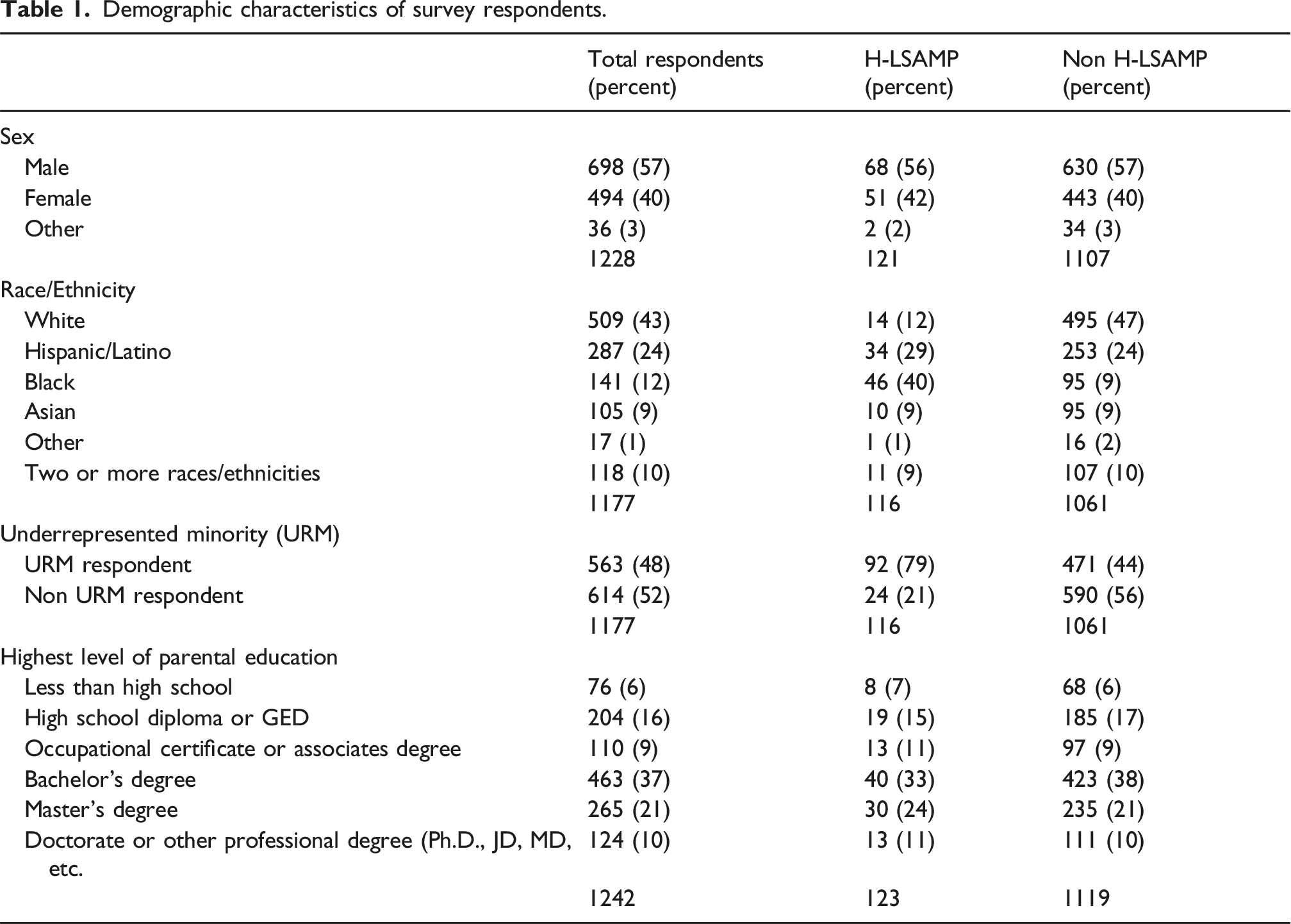
In terms of demographics, 40% of the entire sample was female, albeit the women only representing 28% of the STEM workforce, as per the U.S. Bureau of Labor Statistics (2022). The H-LSAMP specific demographics were very similar to the non H-LSAMP in terms of gender but differed substantially based on race. In terms of underrepresented minorities (URM), we included Hispanic/Latino, Black, Other, and those who indicated two or more races as part of this count. Of the H-LSAMP sample, 79% were URM compared to only 44% of the non H-LSAMP sample. In terms of highest level of parental education, we classified responses based on the highest level – thus if respondents indicated one parent has a high school diploma and the other had a master’s degree, we counted this as master’s degree in our dataset. These results depicted that 22% of the respondents indicated their parents’ highest level of education was a high school diploma or less and another nine percent indicated their parents’ had an occupational certificate or associates degree, thus over a quarter of the respondents were first-generation 4-year college students.
Results
To understand the landscape, we explored the trajectory of students from their undergraduate experiences, such as their declared majors, GPA, hours and jobs worked during school, etc. In addition to their graduation outcomes, beginning experiences in the workforce, current jobs, sectors, and salaries, time in the STEM workforce, graduate studies, among other facets. We analyzed these components by disaggregating H-LSAMP respondents from non H-LSAMP respondents.
RQ1: What is the current landscape of STEM retention pipeline from education to industry for H-LSAMP graduates and non H-LSAMP graduates?
To best understand the retention pipeline of STEM students into the workforce, we first evaluate characteristics of students’ differing undergraduate experiences through understanding how much students worked during their baccalaureate pursuits. Figure 1 depicts the number of hours worked per month, on average, during undergrad. When looking at those students who worked over 80 hours per month, equating to an average of 20 hours per week or more, 18% of H-LSAMP students were in this category compared to 27% of non H-LSAMP students. When analyzing the hours worked during undergrad by race, we found considerably similar results for URM and non URM respondents with regards to the time spent working during undergrad. Hours worked while in undergrad.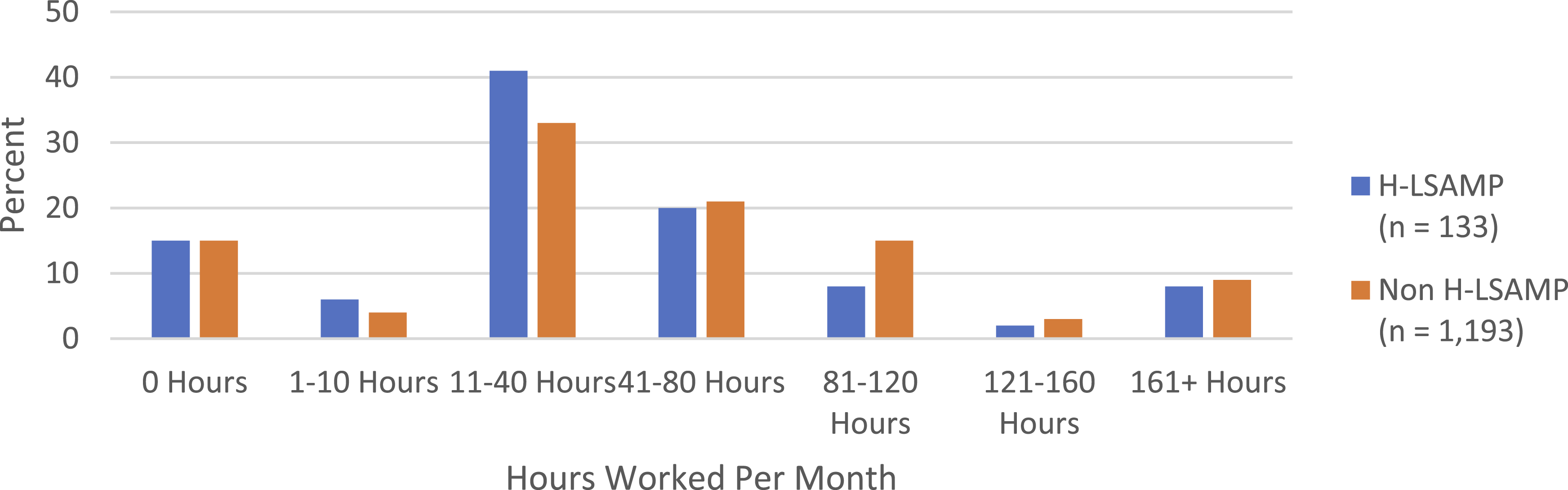
Jobs worked while in undergrad.
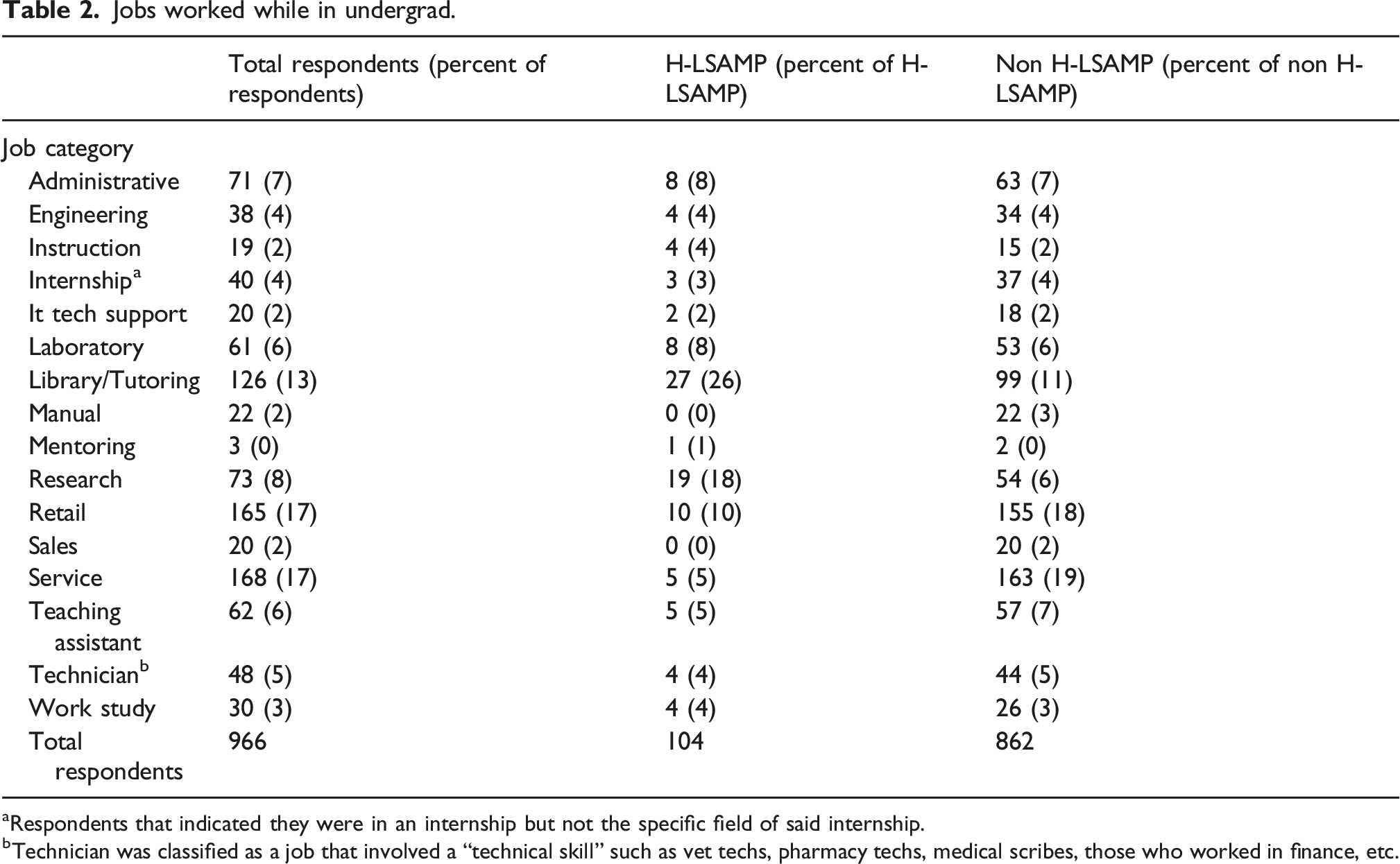
aRespondents that indicated they were in an internship but not the specific field of said internship.
bTechnician was classified as a job that involved a “technical skill” such as vet techs, pharmacy techs, medical scribes, those who worked in finance, etc.
Graduation.

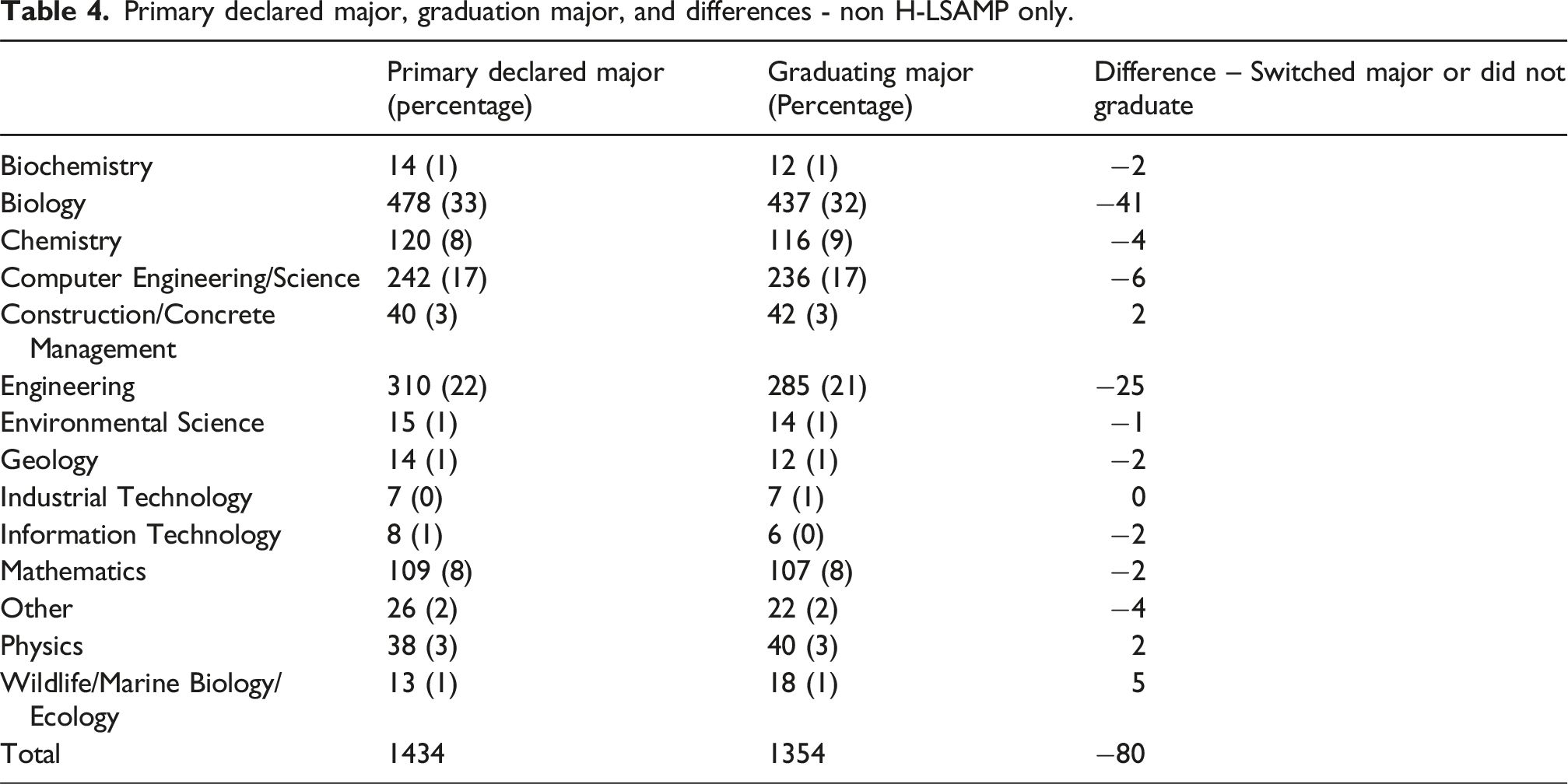
Primary declared major, graduation major, and differences - non H-LSAMP only.
Primary declared major, graduation major, and differences - H-LSAMP only.
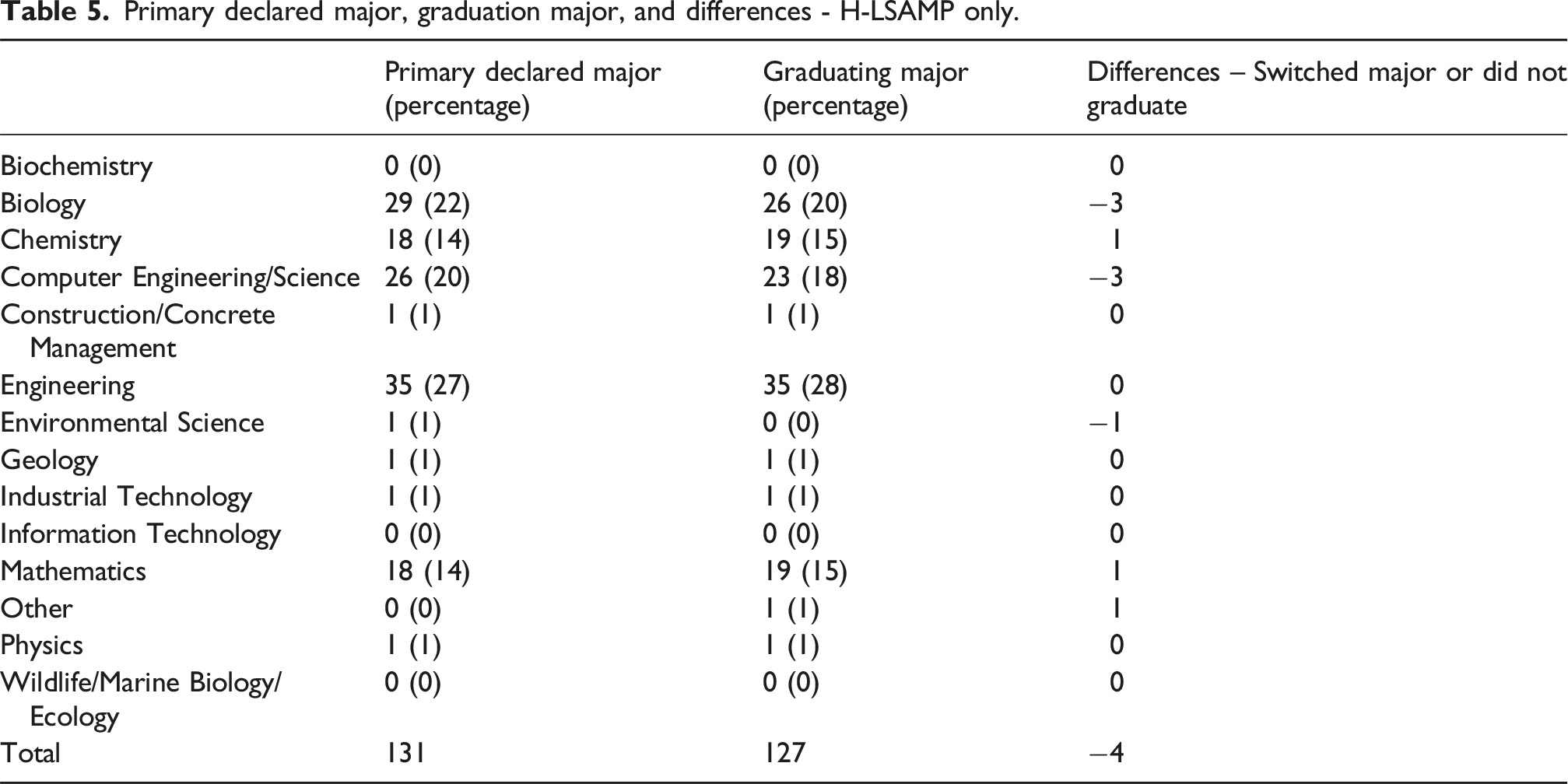
The most prominent changes or drops in major were in the realms of biology and engineering, specifically for non H-LSAMP students, where 80 students switched majors out of STEM or did not graduate. More specifically, 478 non H-LSAMP students were declared biology majors during the majority of undergrad, however only 437 graduated with a biology degree, which shows that 41 non H-LSAMP students switched from biology to another non-STEM major or did not graduate. In exploring the data further, we found that 14 of the 41 students switched majors and graduated, while 27 did not graduate. Similarly, this sample included 310 non H-LSAMP students who were primarily declared as engineering majors during undergrad, while only 285 graduated, we found that 16 of the 25 students switched majors into a non-STEM field, while nine did not graduate. We will explore reasons in which respondents did not graduate in research question 2.
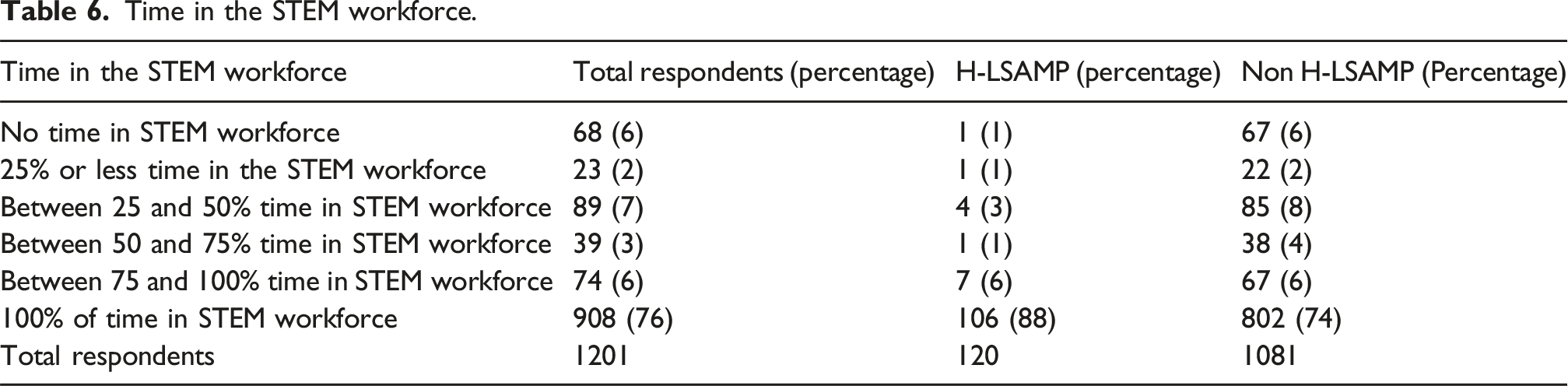
Time in the STEM workforce.
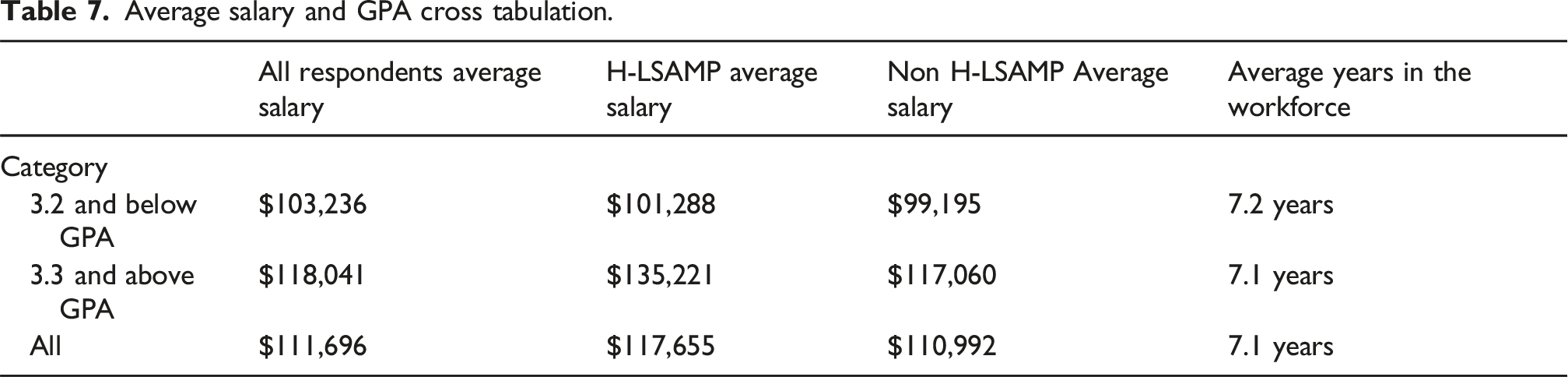
Average salary and GPA cross tabulation.
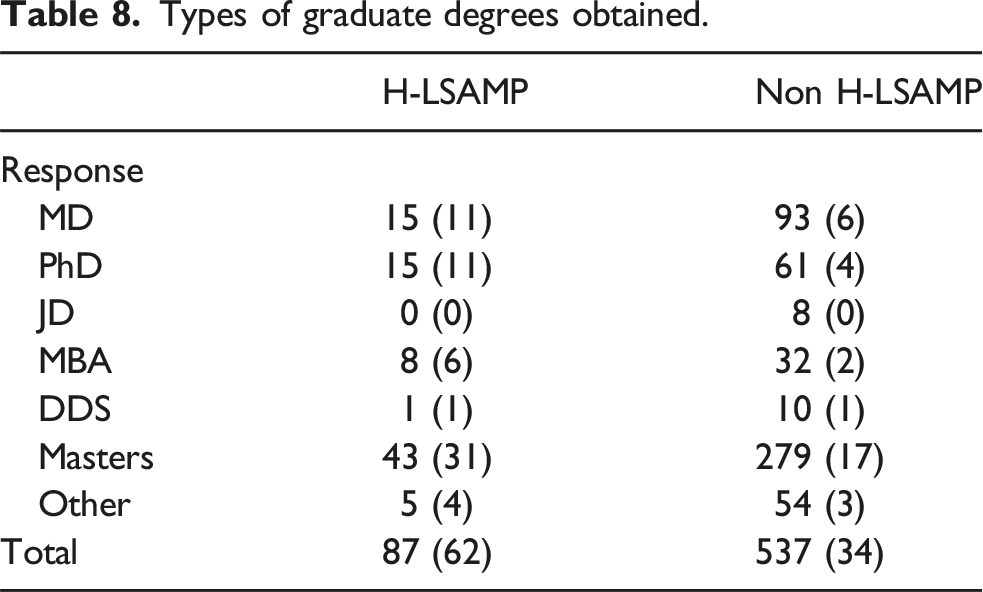
Types of graduate degrees obtained.
RQ2:What are the primary factors that affect retention in an academic STEM pathway and in the STEM workforce for H-LSAMP graduates and non H-LSAMP graduates?
Retention in school
To evaluate the primary factors that affect retention in both the STEM academic pipeline and the STEM workforce pipeline, we explored the responses from respondents who did not graduate and the reasons associated in addition to the respondents who left or never entered the STEM workforce and why. Albeit the majority of the respondents were university graduates and this study focuses more on retention in the workforce, 35 respondents did not graduate and indicated ‘taking care of siblings’, followed by ‘major not being a good fit’, ‘academic struggles’, and the ‘financial burdens of staying in school’ were the primary reasons for not graduating.
Retention in the workforce
Retention in STEM career.
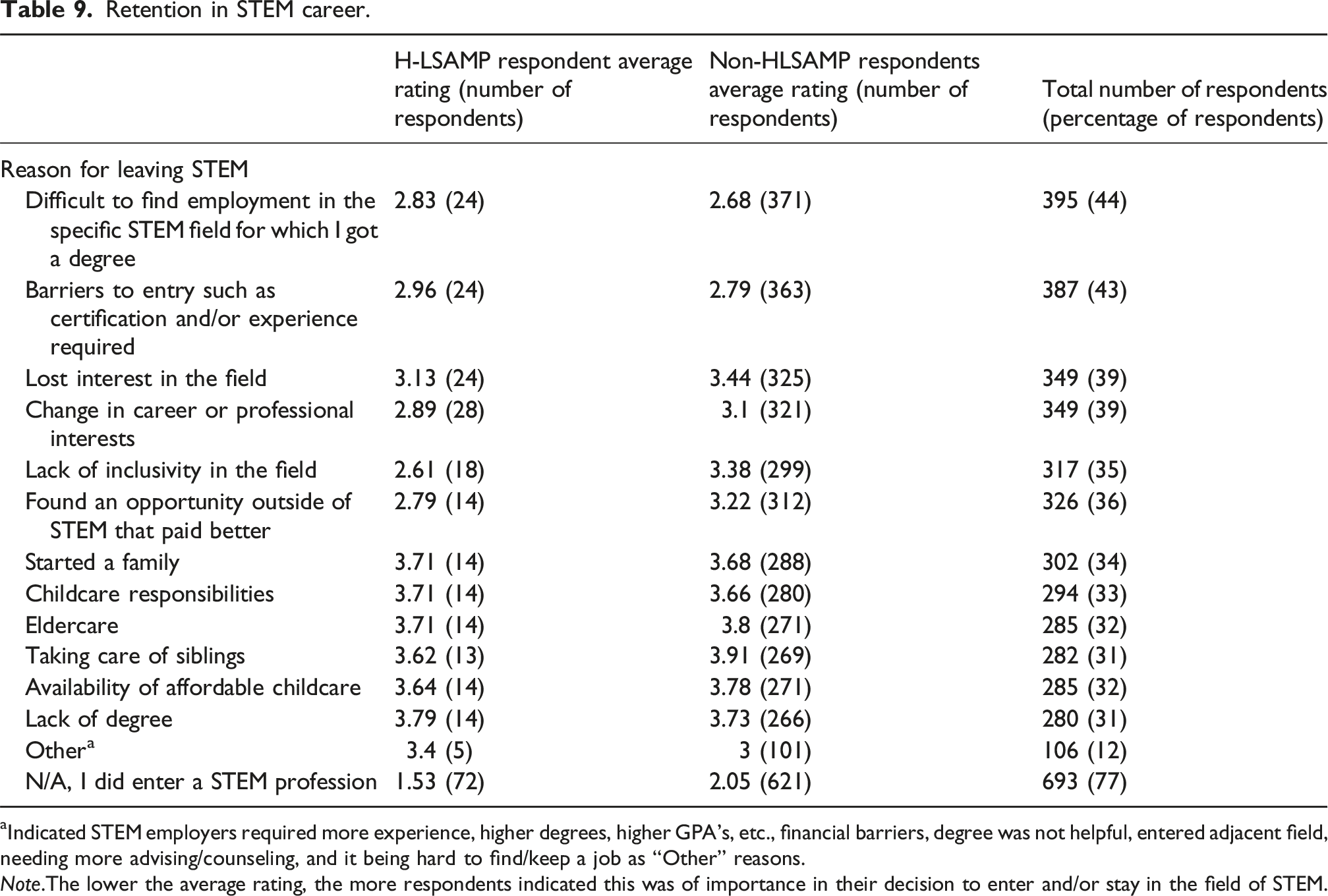
aIndicated STEM employers required more experience, higher degrees, higher GPA’s, etc., financial barriers, degree was not helpful, entered adjacent field, needing more advising/counseling, and it being hard to find/keep a job as “Other” reasons.
Note.The lower the average rating, the more respondents indicated this was of importance in their decision to enter and/or stay in the field of STEM.
Workforce retention by subgroup
Taking a deeper look at how family responsibilities related to retention in the STEM workforce, we assessed how men and women and URM and non-URM respondents fared with this regard and found that 23-25% of women did not enter or left STEM at some point due to family responsibilities, such as starting a family, childcare responsibilities, eldercare, taking care of siblings, and/or the availability of affordable childcare, compared to 20-22% of men. Comparatively, the differential was wider between URM and non-URM respondents. Between 26 and 28% of URM respondents left STEM at some point or did not enter due to the aforementioned family responsibilities, compared to between 20 and 22% of non-URM respondents.
RQ3: What are primary facets of the workforce for which H-LSAMP and non H-LSAMP graduates feel unprepared?
Aspects of the workforce graduates felt unprepared for.
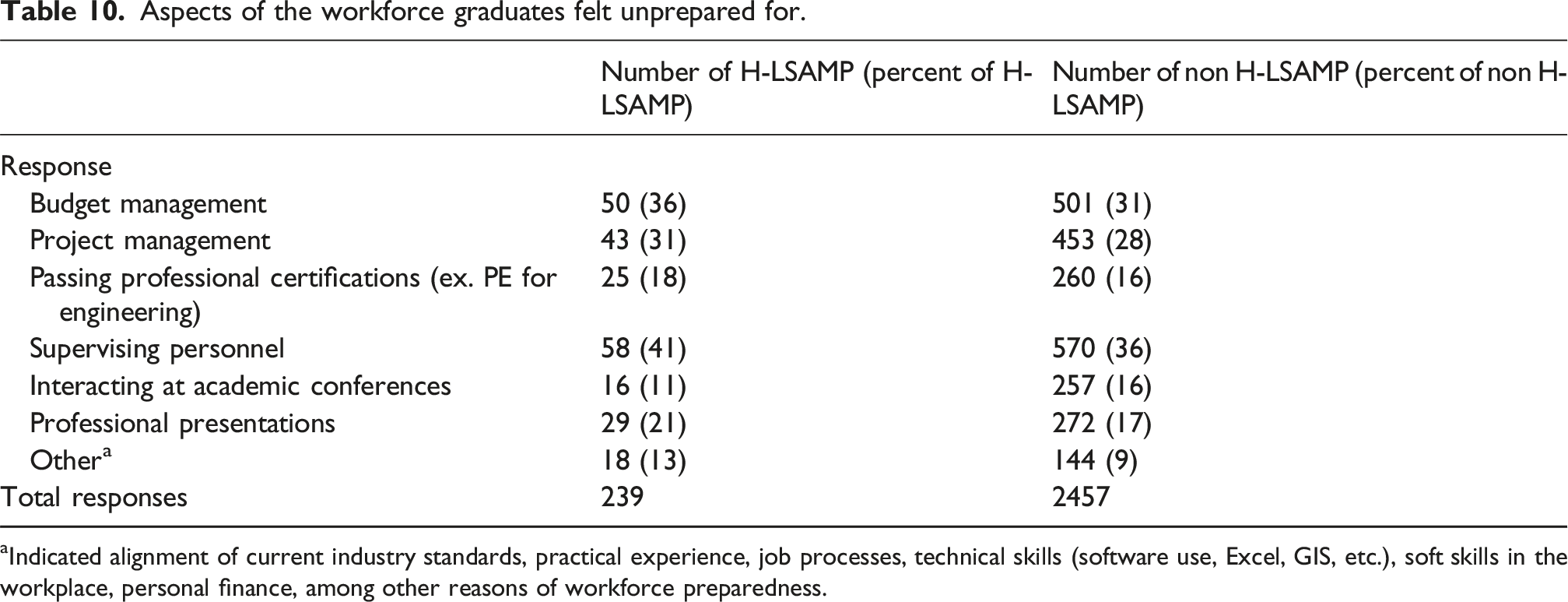
aIndicated alignment of current industry standards, practical experience, job processes, technical skills (software use, Excel, GIS, etc.), soft skills in the workplace, personal finance, among other reasons of workforce preparedness.
Some specific comments from participants related to workforce preparedness included: “not enough computer science in biology, everything needs programming skills nowadays,” and “use of scientific equipment that wasn’t outdated,” and “needing practical coding,” and “field work consistent with industry standards,” and “current programming languages at the time, C++ and assembly, were dated even before graduation,” and “education was mostly theoretical. I understand the calculus behind electrical engineering, but coming out of school, I did not know anything about the equipment and devices that are actually used for electrical distribution.” Other comments included “coursework was not sufficient for the fields I worked in post graduation. Science today is not simply biology, everything requires bioinformatics skills that were not offered or required for my major,” and “real world application, also use of computer programs such as Excel and Blue Beam would have been extremely helpful.” These responses depict the need for academic experiences to incorporate more up-to-date equipment/software and practical experiences to mimic real-world dilemmas, which may require more collaboration with industry to determine those and/or ensure there are real-world exposure to the changes in the field.
Various graduates commented they felt unprepared related to soft skills, primarily including networking, navigating workplace politics, negotiating, stakeholder engagement, communications, etc. Specific comments were made on needing “basic life skills such as tax, personal finance, how to achieve emotional balance in work, navigating workplace disputes,” “career exploration and finding work that aligns with my degree,” and “being knowledgeable about the variety of jobs in the field as I feel many students just hyper focused on the developer jobs, and being knowledgeable about just the current tools that are used.” These responses depicts two differing needs that span beyond STEM, (1) being that students need basic and soft skills as part of their academic training and (2) students need more career exploration opportunities. One respondent summarized a broad issue within the education to workforce pipeline that corresponded with several other responses: There are very few opportunities for students who do not pursue a Master's degree, and internships are not a required part of graduating. In general, you learn a lot about subjects but are entirely unprepared for the working world unless you have been personally coached on what to do. Naturally, most students (especially those who don't come from families with professional backgrounds) have no idea what to expect. You are supposed to get a job, but nobody will hire you without prior experience.
Further research with regard to the differing workforce tracks and graduate sentiments will be important to understand the nuances among different sectors and their needs. One respondent in the field of oil and gas specified that they felt “burnout, low career prospects, monotony, constant layoffs, high stress, low pay, [and] no advancement opportunities.” These sentiments may or may not be specific to these fields but exploring the intersections between unpreparedness and job sector will be an important follow up to this study to understand the disparities.
Discussion & recommendations
The STEM workforce continues to become a larger component of the United States workforce. From 2011 to 2021, the percentage of workers in STEM occupations increased from 22% to 24% of the total workforce (National Science Board, 2024). STEM workers have reported lower rates of unemployment and higher wages than their educational peers (National Science Board, 2024). Despite this growth, disparities in racial and ethnic groups among STEM employees across the nation persist (National Science Board, 2021, 2024; Zhou et al., 2023).
Within this study we assessed both the distinctions between H-LSAMP graduates and non-H-LSAMP graduates, in terms of STEM workforce outcomes, and general trends in the STEM retention pipeline. We found that several differences between H-LSAMP respondents and non H-LSAMP respondents. H-LSAMP respondents generally worked less hours per month during college, likely due to the emphasis on financial support within the H-LSAMP in hopes to ensure students focus on their academic pursuits without facing too many financial burdens and hardship. Furthermore, H-LSAMP respondents were more likely to participate in work experiences that were more aligned with their coursework and STEM pathways. H-LSAMP graduates generally had better cumulative GPAs, suggesting potential advantages from collaborative learning experiences and academic supports. With regards to workforce retention and higher education, we found that H-LSAMP graduates were retained in the STEM workforce at a statistically significant and higher rate, and had nearly double the percent of graduate degrees compared to non H-LSAMP graduates.
Generally, we found that graduates have difficulty finding employment in the specific STEM fields in which they had a degree for, in which one graduate specified that “most companies don’t actually want to hire a physics major, [I] was only able to find a job because of my computer science classes.” We also found that barriers to entry such as certification and/or experience requirements were obstacles for many respondents, as articulated by one respondent that “a lot of the jobs require a certain amount of experience to sit for certification for jobs in labs.” When analyzing differences between URM and non-URM graduates, we found that a higher rate of URM respondents left STEM at some point or did not enter due to the family responsibilities.
We also explored how graduates felt unprepared for certain aspects of the workforce, in which the most predominant aspects were supervising personnel, budget management, technical skills, soft skills, and alignment with industry standards. Some graduates also expressed the need for practical skills, updated equipment/software, and real-world experiences in their education. Graduates expressed a need for basic life skills such as personal finance, tax management, emotional balance, and navigating workplace disputes. They also highlighted the importance of career exploration, understanding various job opportunities, and staying up to date with industry tools and trends. Based on our findings we developed specific recommendations for academic institutions and industry partners in the workforce:
Recommendations for academic institutions
• Coursework and pedagogy should incorporate experiential learning and embeds industry-relevant skills to bridge the gap between education and workforce readiness. This requires collaborative curriculum refinement on an ongoing basis by industry representatives and university faculty. • Surveying and partnering with industry representatives to understand what software’s, tools, and skills need to the most focus in the academic settings. As one graduate in this study depicted “the degree needs to be more focused on practice. Add one project based course on the basics of HVAC, machine design, and systems engineering.” As industry requirements and needs change, it will be important for even freshman students to mentally prepare for specific changes in the field. An example would be if specific coding languages are becoming more and more obsolete in the workforce, it’s important for universities and students to know and prepare for these industry shifts. • Developing and/or providing access to workforce readiness course on STEM technical skills such as budget/grant management, project management, understanding and passing professional certifications, interacting/presenting at conferences, etc. This course could be an elective or a workshop series, and could be a potential event to collaborate with other collegiate departments, such as business, communications, etc. • Creating more bilateral research shadowing and/or conducting opportunities. Universities with large enrollments cannot typically offer every STEM student lab research experience, thus it’s integral to support this pipeline through the connections with industry. Research exposure and experience enhances students’ practical skills and readiness for the STEM workforce (Linn et al., 2015; Lopatto, 2010).
Recommendations for industry partners in the workforce
• Increasing the number of entry-level rotational programs that do not require 3-years of experience, as several respondents indicated. Through a rotational program and scaled onboarding approach, companies can allow entre-level STEM workers to learn about systems, processes, and technical expertise within differing high-need departments. These programs should ensure subject matter expert (SME) knowledge sharing among tenured employees occurs with new staff, to aid in the dissemination of institutional knowledge. • Offering more internships, co-ops, apprenticeships, shadowing opportunities, etc. To increase exposure for students pursuing STEM pathways. Supportive learning environments that expose students to STEM fields and strengthen connections between academia and industry, which increase STEM student retention rates (Estrada et al., 2016; Maltese and Cooper, 2017). As one graduate reflected “in hindsight I now know that my degree alone holds no weight, and had I been able to take advantage of internships or research opportunities I may have gained relative knowledge to obtain a job in the STEM field.” • Increasing mentorship and role model opportunities on college campuses. Effective mentorship can help shape student perceptions, experiences, and skills in STEM, and can foster a sense of belonging/confidence for URM students (Sandrone, 2022; Strayhorn, 2018) • Offering pre-employee bootcamps/trainings that can serve as both an avenue to attract talent and a way to create company-specific ‘certifications’ that expose students to industry knowledge that their universities may not teach specifically.
This study compared workforce outcomes and perceptions of H-LSAMP and non-HLSAMP STEM graduates to best understand the current STEM workforce landscape and how industry/education can better align. Despite the positive findings of H-LSAMP graduates, survey respondents who depicted challenges in finding STEM employment attributed this to certification and experience requirements. STEM graduates expressed feeling unprepared for certain workforce aspects, highlighting the need for more practical experiences in college and updated equipment/software based on industry standards. This study’s recommendations pertain to how academic institutions can better align with industry requirements/standards and how industry partners can be more involved in the STEM pipeline through earlier exposure and integration.
Footnotes

Funding
The authors disclosed receipt of the following financial support for the research, authorship, and/or publication of this article: Division of Equity for Excellence in STEM (2409022) and Texas Southern University.
Declaration of conflicting interests
The authors declared no potential conflicts of interest with respect to the research, authorship, and/or publication of this article.