




Abstract
Makerspaces are becoming increasingly popular due to their capacity for hands-on learning, innovation, collaboration, and the democratisation of technology. While numerous studies have explored makerspace users, they have largely focused on contexts within the Global North or China, leaving a significant gap in understanding the demographics and experiences of individuals who frequent these spaces in the Global South. The paper addresses this gap by understanding the factors influencing the motivations and satisfaction levels of an emerging community of makerspace users in India. Employing a cross-sectional survey methodology, data from 51 participants were collected via an online questionnaire and analysed using descriptive statistics and multivariate linear regression. Key findings indicate that access to specialised tools, expert guidance, and opportunities for personal and professional development are significant motivators for makerspace usage. Users expressed high satisfaction with the learning opportunities and resources provided. The study concludes that makerspaces play a crucial role in supporting innovation and professional growth in the Indian context, suggesting that policymakers and educators should consider these insights to enhance the effectiveness and reach of makerspaces, thus promoting broader innovation ecosystems. Future research should aim to include a more diverse participant pool to validate and expand upon these findings.
Introduction
Makerspaces, along with related innovation spaces like fabrication laboratories (fablabs), are increasingly acknowledged as platforms for nurturing creativity and innovation, while also equipping young people with the skills necessary for careers in STEM fields (Davidson and Duponsel, 2021; Rayna and Striukova, 2021; Sharma, 2021; Pettersen et al., 2020; Dreessen et al., 2016). A rising interest in do-it-yourself (DIY) practices and related creative activities has further highlighted the importance of these spaces for public engagement (Ensign and Leupold, 2018; Sarpong et al., 2020). Initially prominent in advanced regions of the world, the emergence of makerspaces—often referred to as the maker movement (Dougherty, 2012)—is now gradually gaining momentum in low- and middle-income as well as emerging countries. These spaces are also increasingly being established in various settings, such as schools, libraries, universities, museums, hospitals, and corporations (Irie et al., 2019; Rieken et al., 2024; Svensson and Hartmann, 2018; Wilczynski, 2015). Makerspaces and fablabs are similar in that both provide collaborative environments with shared access to specialised tools and technologies, supporting innovation and practical experimentation. However, fablabs are generally part of an international network founded by MIT, following a specific Fab charter and equipped with a standard set of digital fabrication tools, often emphasising education and local manufacturing (Troxler, 2016). In contrast, makerspaces are more diverse in their scope, varying widely in focus, purpose, and resources, and are not bound by the same formal standards (Mersand, 2021). In this paper, we use “makerspace” as an umbrella term for all collaborative open spaces, including fablabs, to ensure consistency.
Makerspaces, defined as shared, openly accessible environments, offer tools and digital fabrication technologies essential for design and prototyping tasks (Kohtala, 2018). Commonly available resources in these spaces include 3D printers, laser cutters, CNC machines, and CAD software, alongside traditional hand tools and sewing machines (Halbinger, 2018; Smith, 2017). These resources enable widespread community engagement in innovation, leading to the recognition of makerspaces as ‘third places’ that democratise access to complex technologies (Beltagui et al., 2021; Cattabriga, 2020; Smith, 2017). Given their role in involving citizens and the public in the innovation process, these spaces have garnered substantial interest from governments and have been integrated into public policies aimed at enhancing regional innovation (Fu et al., 2022; Zhao and Zou, 2021).
Despite significant interest in makerspaces and similar innovation spaces, most of the scholarly literature originates from the global north or more developed regions of the world. Notably, China stands out as the sole non-Western country contributing significantly to our understanding of these spaces, providing insights into their emergence and factors promoting their development from a non-Western perspective (Bolli, 2020; Fu, 2021; Fu et al., 2022). In contrast, research from nations in the global south predominantly focuses on qualitative analyses of the dynamics within these spaces, their operations, governance, and their role in community building (ElHoussamy and Rizk, 2020; Haldar and Sharma, 2022; Li, 2023). There is a noticeable gap in research exploring the demography and motivations of users in non-Western countries outside of China.
This paper seeks to bridge this gap by conducting a survey of users or makers in India to study their usage of makerspaces and the factors influencing their motivation and satisfaction. Makers are defined as individuals who utilise these spaces for projects related to innovation and entrepreneurship (Li and Gao, 2021). Consequently, this study addresses the following questions: RQ1: What is the socio-demographic characteristics and user experiences of makers in India? RQ2: What are the principal motivation factors and the level of satisfaction among makers for using makerspaces in India, and what factors influence these motivations and satisfaction?
This paper uses a quantitative approach to explore the characteristics, motivations, and satisfaction levels of makerspace users in India. The primary method for collecting data involved a structured survey, designed to gather data of demographic details, motivational elements, and levels of user satisfaction. The survey incorporated a combination of closed-ended questions for quantitative analysis and open-ended questions to capture more nuanced responses. A total of 51 responses were obtained from participants, spanning a broad range of ages, educational backgrounds, and professional sectors. These responses were subsequently analysed using statistical tools to identify patterns and insights pertinent to the research questions outlined above.
The remainder of the paper is structured as follows: Section 2 establishes the theoretical background, presenting the foundational concepts and previous research related to this study. Section 3 explains the methodology employed in this paper, including the design of the survey and the analytical techniques used. Section 4 details the results of the analysis, presenting the findings from the data collected. Section 5 interprets these results, discussing their implications within the broader context of makerspace usage and impact. Finally, Section 6 summarises the key findings and suggests policy implications and avenues for future research.
Theoretical background
Makerspaces are contemporary infrastructure for innovation, providing public access to specialised tools and technologies for fabrication (Halbinger, 2020). Their origins can be traced back to the DIY movement of the 1960s and 1970s, which emerged as a countercultural response to industrialisation, emphasising self-sufficiency, practical skills, and a critical stance against commodified technology (Kohtala et al., 2020). Influenced by various counter-cultural movements, political expressions, and the involvement of government-supported vocational education facilities, makerspaces have become centres for creative production and the exploration of materials and concepts (Sipos and Franzl, 2020; Cuartielles Ruiz and Sáez, 2020). Gradually, these spaces have developed into collaborative workshop environments that supply tools and equipment for creative projects and experiential learning (Kouame et al., 2019).
A contemporary makerspace consists of a “complex ecosystems involving the intersections of human capital, social relations, materiality and place”, all of which contribute to creativity and innovation (Budge, 2019). There are documented instances of makerspaces where community members have developed innovative products such as 3D printers, mobile software, and medical devices for emergencies like COVID-19 (Corsini et al., 2021; West and Kuk, 2016; Zakoth et al., 2024). As such, these spaces are significant in stimulating a grassroots culture of creativity and have a profound impact on innovation (Bolli, 2020; Ensign and Leupold, 2018). Makerspaces also effectively enhance consumer-led innovation and its diffusion, with those involved showing higher rates of such activities compared to individuals who work on innovations at home (Halbinger, 2018). Moreover, these spaces support entrepreneurial efforts through the development of skills and self-efficacy (Hui and Gerber, 2017).
Although makerspaces originated in non-academic settings, their potential for providing hands-on learning and skills development was quickly recognised by educational institutions, which began incorporating them into academic environments. Many technical institutes have established makerspaces on their campuses to support their engineering design programs (Wilczynski, 2015). These academic makerspaces encourage students to learn and experiment outside traditional classroom settings (Burke, 2015). However, due to the presence of advanced digital tools and technologies, challenges such as the need for specialised staff and managing the balance between group instruction and individual exploration remain persistent (Wong and Partridge, 2016). Beyond educational settings, makerspaces are also found in corporate offices, hospitals, and museums. In corporate environments, these spaces facilitate employee discussions and collaboration with users on prototypes (Browder et al., 2023; Rieken et al., 2019), in hospitals clinicians use them to develop innovations that directly improve their practices (Svensson and Hartmann, 2018), and in museums and libraries, they function as centres for public education (Moorefield-Lang, 2015; White et al., 2021).
Makerspaces have been integrated into regional and national policies to support innovation and creativity (Sharma and Haldar, 2023). With a focus on building grassroots communities and supporting innovative initiatives, countries such as China have taken a leading role in incorporating maker culture into their public policies (Bolli, 2020; Fu et al., 2022; Zhao and Zou, 2021). Similar trends are observed in Italy, where makerspaces are included within regional innovation systems, receiving economic assistance and promotional support from local authorities (Cattabriga, 2020). These facilities are recognised for contributing to economic development by promoting entrepreneurship, aiding small businesses, and providing training and skills development (Van Holm, 2017). Despite the benefits, makerspaces have faced criticism concerning issues of access and sustainability. For example, challenges in ensuring accessibility for people with disabilities have been noted, and many makerspaces are perceived as predominantly engaging white, male, middle-class participants (Andrews and Boklage, 2024; Hedditch and Vyas, 2023; Steele et al., 2018). Furthermore, sustainability in resource use is often deprioritised in these spaces, which are characterised by high resource consumption (Klemichen et al., 2022; Kohtala, 2018; Smith and Light, 2017).
Makerspaces within the Indian context have been rarely studied, primarily due to their relatively recent emergence within the Indian innovation ecosystem and their limited spread compared to technologically advanced regions globally. Most makerspaces in India are an urban phenomenon, primarily located in cities such as Bengaluru, which is recognised as the technology and innovation hub of the country (Haldar and Sharma, 2022). These spaces provide prototyping support to startups and attract communities interested in experimentation and the exploration of digital tools (Sharma, 2024). Some of these communities have played a crucial role during crises, such as the COVID-19 pandemic, by mobilising to address health emergency needs, including the production of face masks and oxygen concentrators (Corsini et al., 2021). Makerspaces in India also reflect a blend of traditional and modern practices, for example, supporting the development of bamboo-based innovative designs (Soman and Chorasia, 2021). Moreover, their impact on primary education has been demonstrated through increased student engagement and the effective facilitation of open-ended learning (Sheffield and Koul, 2021). Consequently, makerspaces in India are now being recognised for their contribution to innovation, knowledge management, and the integration of new pedagogical approaches (Ahmad et al., 2017).
Several studies examine and discuss the factors that motivate people to innovate generally, including their use of makerspaces and participation in their communities (Bhaduri & Kumar, 2011; Collier and Wayment, 2018; Hausberg and Spaeth, 2020; Hynes and Hynes, 2018; Kwon and Lee, 2017; Mounde et al., 2020; Shen and Wang, 2024; Xiao et al., 2023; Yang et al., 2023; Özkil et al., 2020). Individuals who utilise these spaces are commonly referred to as makers, and research has shown that makers are driven by both intrinsic and extrinsic motivations. Enjoyment appears to be the intrinsic motivation, while some are financially motivated to create economic value from their innovative outputs (Yang et al., 2023). Yang et al. (2023) found that economically motivated makers are more likely to engage in exploitative innovation, whereas those with social motivations tend to engage in exploratory innovation. In the ICT sector, makers are mainly driven by extrinsic motivations, with intrinsic motivations showing no significant influence on their activities (Kwon and Lee, 2017). Thus, studies have categorised makers based on their motivations, identifying creative makers, who are more like hobbyists and hackers motivated by non-economic rewards, whereas entrepreneurial makers are primarily motivated by financial incentives (Xiao et al., 2023).
The values driving makers’ motivations are also seen as diverse. Shen and Wang (2024) identified self-direction, including autonomy in making and creativity, as the most dominant value influencing makers’ motivations. Their study also stresses hedonism and benevolence as significant motivators, with makers often seeking enjoyment and aiming to contribute to the welfare of their communities (Shen and Wang, 2024). Research also indicates that makers are drawn to use makerspaces for creativity, making, and social interaction, as the support provided by these spaces meets basic psychological needs such as autonomy, competence, and relatedness (Han et al., 2017). The conducive environment for innovation and dissemination, including access to tools and training, reducing innovation costs, and promoting a culture of information exchange and collaboration, motivates members to engage in makerspace activities (Halbinger, 2018). The collaborative engagement among users, either in pairs or groups, significantly impacts their learning outcomes and contributes to a sense of belonging, potentially influenced by the social and cultural dynamics within these spaces (Nadelson et al., 2019).
Studies also emphasise makers’ preferences for makerspace environments, particularly regarding design elements that attract participants. In their study on makerspaces in higher education, Hynes and Hynes (2018) found that students preferred environments that were organised, tidy, and exhibited higher coherence. Female students in their study showed a preference for organised and less intimidating spaces. Participation in maker activities has been found to contribute to subjective well-being among young adults, as the maker identity is linked to higher subjective well-being through opportunities for social connection and creativity (Collier and Wayment, 2018). Academic makerspaces further provide students with opportunities to explore innovative teaching and learning methods, engage in hands-on prototyping, and enhance their practical skills and group work abilities (Özkil et al., 2020).
Prior research provides details on the sociodemographic of the makers. For instance, in terms of age groups, it is evident that makerspaces are especially popular among youth and students, while adults in creative and technical professions also frequent these venues to advance their personal and professional projects or to acquire new skills (Li and Todd, 2019; Rayna and Striukova, 2021). Furthermore, some studies indicate a growing interest among seniors who visit these places to interact with new and advanced technologies (Carucci and Toyama, 2019; Lazar et al., 2021). Regarding gender, multiple studies have identified a significant gender disparity, with males predominantly using makerspaces (Bean et al., 2015; Eckhardt et al., 2021). However, many makerspaces are working to enhance inclusivity for females through female leadership, inclusive policies, women-centred activities, and safe facilities, crucial for attracting diverse participation (Rahman and Best, 2023). The educational background of makerspace users is notably high, with many having at least a master’s degree and typically coming from fields related to technology, design, or the arts (Smith, 2017).
Much of the existing knowledge on makers motivations and preferences regarding makerspaces and their operations is derived from studies in the Global North and China. Research on makerspaces in other regions like Latin America, South Asia, and Africa is notably limited. To address this research gap, we conducted a survey of makerspace users in India, aiming to understand the maker dynamics in this context. In the next section, we will discuss our methods for conducting this survey.
Methods
Data collection
The study used a cross-sectional survey design to examine user demographics, motivational drivers, and levels of satisfaction with various facets of makerspace use by individuals in India. Data collection was done through an anonymous online questionnaire where individuals aged 18 and above who had used a makerspace in India were invited to participate in the survey. The questionnaire was distributed using several channels: it was emailed to managers and founders of makerspaces with a request to share it further among users, and it was promoted through professional networks on LinkedIn, as well as Indian makerspace and fablabs community groups on WhatsApp and Discord. Despite the efforts to engage a broad and diverse section of the maker community in India, the study encountered significant challenges in achieving a high volume of responses. Ultimately, 51 participants contributed to the survey. The response rate was moderate, reflecting the inherent difficulties in engaging a diverse range of makers across India. The online distribution methods such as email campaigns and social media promotions might not have effectively reached all potential participants. Moreover, the anonymity provided by the online questionnaire, while necessary for ethical considerations, may have reduced the sense of urgency or personal relevance required for higher participation rates. It is important to acknowledge that the limited sample size of 51 respondents places clear constraints on the generalisability of these findings to the broader maker community in India which is still growing. The results, therefore, should not be interpreted as a definitive representation of the entire community, but rather as a preliminary snapshot that captures insights from an emerging segment of this growing community. The maker movement in India is still in its formative stages, and these findings offer an early look into the demographics, experiences, motivations, and satisfaction levels of the participants who responded.
The data from the survey was collected with ethical consideration, ensuring the privacy and anonymity of all participants. The questionnaire did not include any questions requesting names, contact details, or any other information that could serve as an identifier, thereby ensuring that individual respondents cannot be traced. Moreover, the survey did not include any questions related to sensitive personal data categories, such as race, caste, or ethnic origin, political views, religious or philosophical convictions, trade union membership, health, sexual orientation or sex life, genetic data, biometric data, or legal offences. Informed consent was obtained from all participants through a clear statement at the beginning of the survey outlining the voluntary nature of participation, confidentiality, and anonymity of responses.
Questionnaire design
Prior quantitative studies into the attitudes, motivations, and influencing factors of makerspace use formed the basis of our review to design the survey instrument (Collier and Wayment, 2018; Hausberg and Spaeth, 2020; Kwon and Lee, 2017; Shen and Wang, 2024; Xiao et al., 2023; Yang et al., 2023; Özkil et al., 2020). The questionnaire was updated with new questions related to the use of makerspaces. The survey comprised questions spanning several domains: 1) usage of and motivations for visiting makerspaces, 2) networking and collaboration opportunities, 3) exchange of knowledge and issues surrounding intellectual property, 4) effects on personal growth, and 5) levels of personal satisfaction. It also captured socio-demographic data of the respondents relevant to this analysis, including age, gender, geographical location, highest educational qualification, and current professional engagement. The section on makerspace usage and motivations included queries regarding the duration of use, sources of information about makerspaces, frequency of visits, and accessibility in terms of distance.
The motivational factors driving users to engage with makerspaces were assessed through various measures such as ‘access to specialised tools and equipment’ and ‘availability of expert guidance or mentorship’, which respondents rated using a five-point Likert scale from 1 (‘not at all important’) to 5 (‘extremely important’). The dimensions of networking, collaboration, and knowledge sharing, along with intellectual property concerns, were explored through inquiries into whether the makers had collaborated on projects with other users, established any professional connections via makerspaces, or found that their makerspace experiences had led to career advancements. Questions also addressed their familiarity with intellectual property rights, experiences of related challenges, contributions to open source projects, and their preference for the open sharing of innovations. Furthermore, the impact on personal development was assessed by asking if their experiences in makerspaces had led to any personal or professional accomplishments, or if these experiences had influenced changes in their personal or professional goals. Finally, the component of personal satisfaction was measured using a Likert scale for various aspects such as satisfaction with the learning opportunities provided, satisfaction with the networking and collaboration opportunities, and satisfaction with the equipment and resources available. These aspects were rated on a five-point Likert scale ranging from 1 (‘very dissatisfied’) to 5 (‘very satisfied’).
Data analysis
The data was analysed using both descriptive statistics and regression. Descriptive statistics were presented as frequency distribution, percentage of respondent, mean, and standard deviation. To assess the impact of key sociodemographic variables on the motivational factors for using makerspaces and satisfaction levels with various aspects of makerspace experiences, multivariate linear regression analysis was done. This method provided a comprehensive understanding of how variables such as age, gender, years of experience with makerspaces, frequency of using makerspaces, and prior DIY experience interact to influence motivation and satisfaction with the makerspace usage in India. The analysis was conducted using SPSS version 29.
Findings
Descriptive statistics
Demographic breakdown of survey respondents (n = 51).
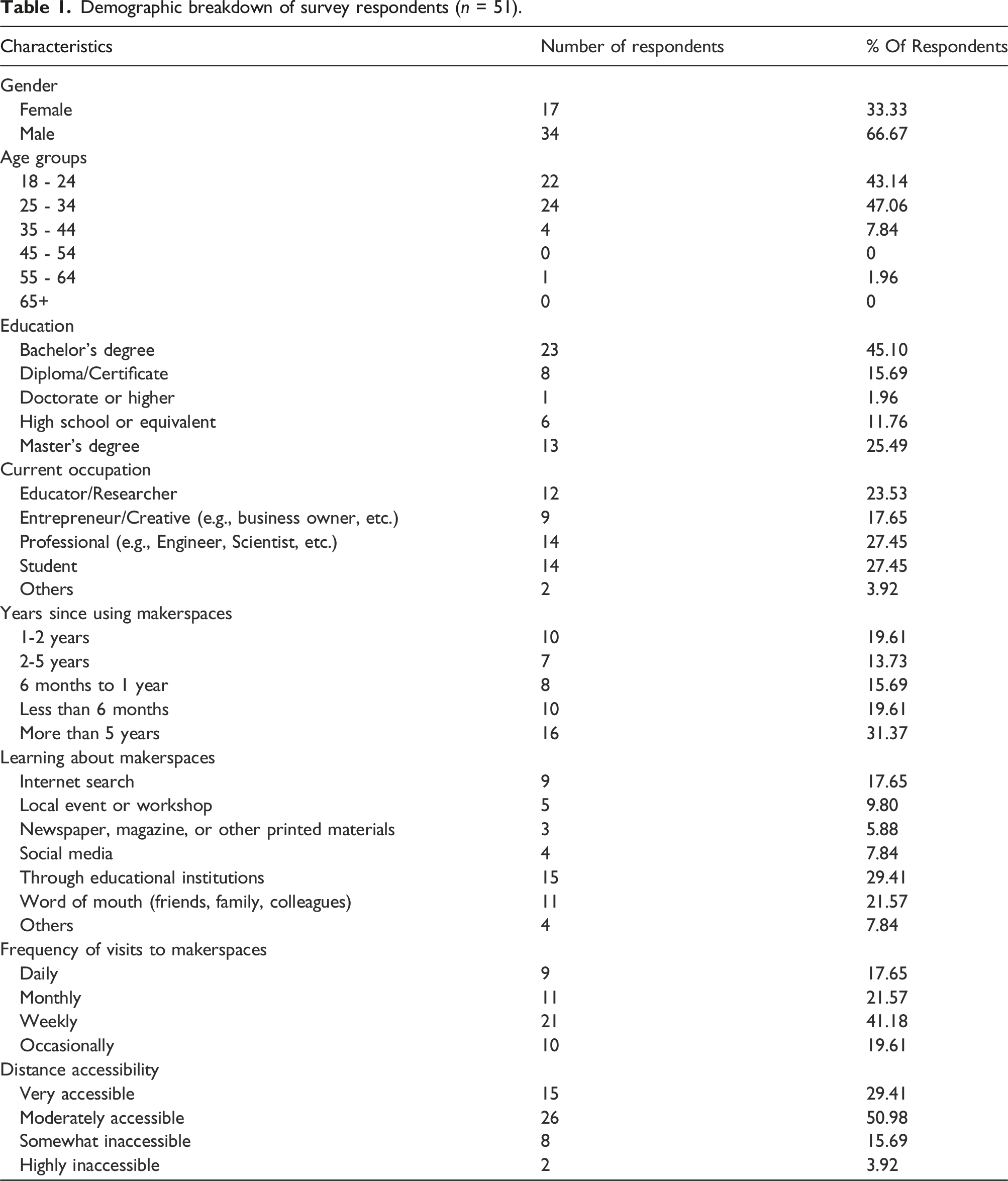
When examining occupation, professionals (27.45%) and students (27.45%) made up the largest categories, followed by educators and researchers (23.53%), and entrepreneurs or creatives (17.65%). This suggests that makerspaces may serve as an important resource for both professional development and educational purposes. The relatively high proportion of students shows the role of makerspaces as important environments for learning and innovation, particularly in higher education settings. Years of experience using makerspaces revealed another interesting factor which is users with over 5 years of experience (31.37%) were the largest group. This suggests that long-term engagement with makerspaces might be a key element in their effectiveness, with sustained participation potentially leading to deeper skill development and greater innovation outcomes. Interestingly, new users (those with less than 6 months or 1–2 years of experience) were also a substantial portion (19.61% each), indicating a steady influx of new participants who could be nurtured as long-term users.
How respondents learned about makerspaces was also interesting. Educational institutions were the most significant source (29.41%), underlining the importance of formal education settings as critical channels for introducing individuals to these spaces. Word of mouth (21.57%) was also a notable contributor, showing the influence of personal networks and peer influence in expanding makerspace participation. Frequency of visits offers insight into how often these spaces are utilised. Weekly visitors made up the largest group (41.18%), indicating that regular access might be crucial to maximising the benefits of makerspaces. Monthly and occasional visitors accounted for 21.57% and 19.61% of the sample, respectively, while 17.65% visited daily, suggesting a varied but strong engagement pattern among the respondents. Regular use, particularly weekly or more, could be considered a factor in driving meaningful engagement and outcomes from makerspace participation. Accessibility to makerspaces was largely rated as either moderately accessible (50.98%) or very accessible (29.41%), indicating that while access is generally perceived as positive, there is room for improvement. For 15.69% of respondents, makerspaces were somewhat inaccessible, and 3.92% found them highly inaccessible, which might present a barrier to broader participation.
Users experience responses.
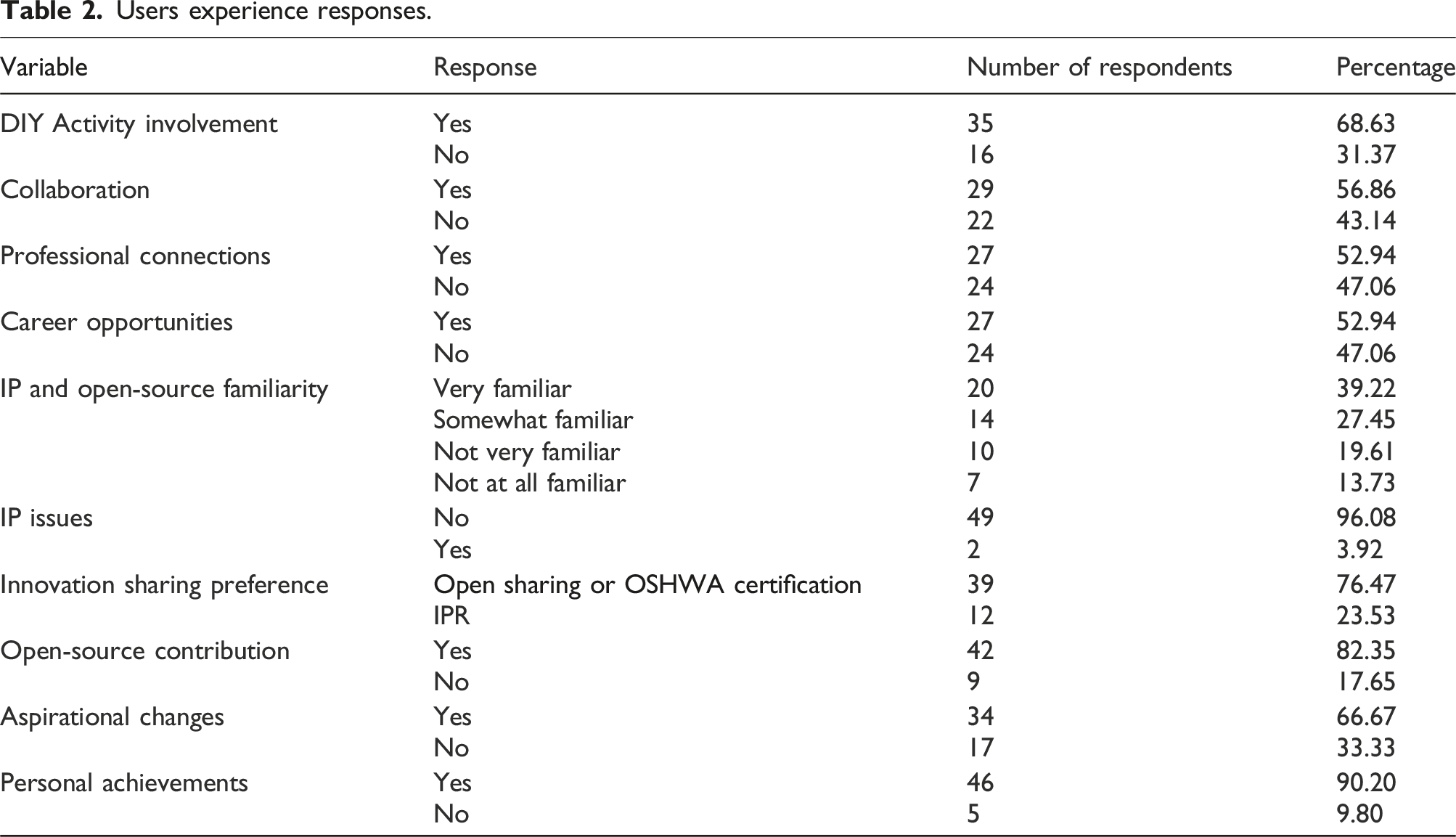
Professional connections and career opportunities both provide important insights also. Over half of the respondents (52.94%) noted that makerspaces have helped them form professional connections, while the same proportion believed that participation has opened up career opportunities. These findings point out the potential of makerspaces as not only creative hubs but also as networking environments that can facilitate career development, especially in fields related to technology, innovation, and entrepreneurship. When examining familiarity with intellectual property (IP) and open-source concepts, 39.22% of respondents were very familiar with these topics, and 27.45% were somewhat familiar. However, 33.34% were either not very familiar or not at all familiar, indicating that there is a notable portion of makerspace users who may benefit from further education or support in these areas. Given the importance of IP and open-source knowledge in creative and entrepreneurial endeavours, increasing familiarity with these concepts could be a critical area for maximising innovation potential.
IP-related issues did not seem to be a major concern for most respondents, with 96.08% indicating they had not encountered IP challenges. This suggests that the majority of users navigate these spaces without significant legal complications, although a small percentage (3.92%) did report IP-related issues, which may require attention in order to ensure that makerspace participants are protected and informed. Innovation sharing preferences provide further insights into makerspace culture, with 76.47% of respondents favouring open sharing or licensing under the Open Source Hardware Association (OSHWA) certification. Only 23.53% preferred Intellectual Property Rights (IPR) protections. This strong preference for open sharing suggests that makerspaces foster a collaborative and open-source-oriented mindset, which can be seen as a key driver of innovation and community building within these spaces. A large majority (82.35%) of respondents reported contributing to open-source projects, reinforcing the open innovation ethos observed in makerspaces. The 17.65% who had not contributed to open-source projects represent a smaller segment of the population, possibly indicating opportunities to engage more users in these collaborative efforts.
Lastly, the influence on personal and professional aspirations is noteworthy, with two-thirds of respondents (66.67%) stating that their involvement has reshaped their goals, signifying that makerspaces are not merely physical spaces for project work; rather, they serve as environments that promote profound personal growth and career redefinition. Finally, personal achievements were reported by 90.20% of respondents, with only 9.80% stating they had not achieved personal milestones. This high rate of personal achievement underscores the effectiveness of makerspaces as environments that promote growth, creativity, and accomplishment, making it a critical factor in maintaining participant engagement and satisfaction.
Responses related to motivational variables in makerspace usage.
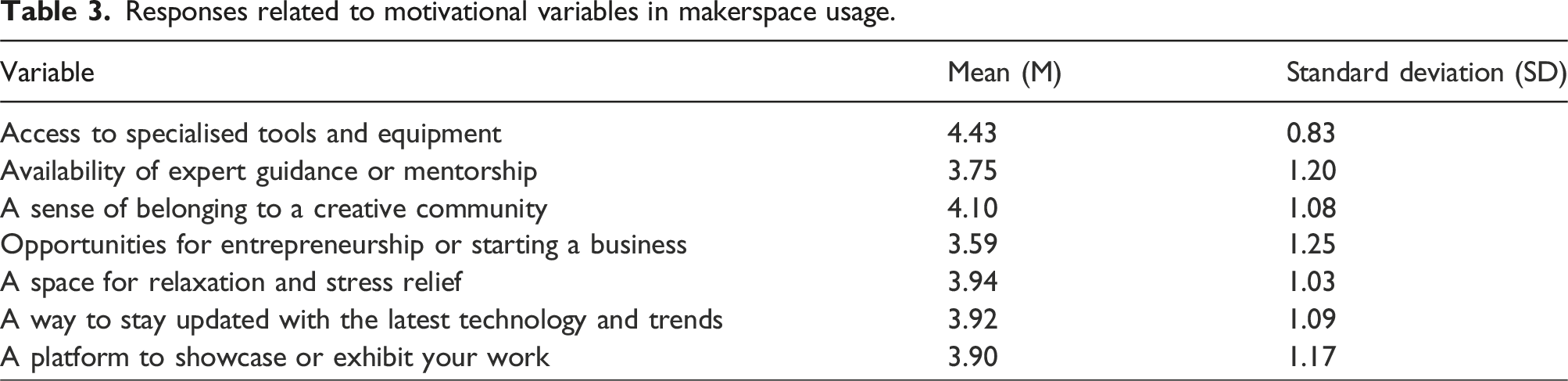
The availability of expert guidance or mentorship scored slightly lower, with a mean of 3.75 (SD = 1.20), indicating that while it is important, it may not be as central to the motivation of all users. The higher standard deviation suggests that there may be variability in the perceived importance of mentorship, possibly depending on the individual’s experience level or goals within the makerspace. For some, expert guidance is likely crucial for learning and development, while others may be more self-driven or reliant on peer learning. A space for relaxation and stress relief with a mean of 3.94 (SD = 1.03), indicates that beyond its practical uses, makerspaces also serve as a space for emotional and mental well-being. Many users view the makerspace as a place where they can unwind, reflecting the importance of maintaining a welcoming and relaxing environment as a potential factor for user satisfaction and retention. Staying updated with the latest technology and trends (M = 3.92, SD = 1.09) and having a platform to showcase or exhibit work (M = 3.90, SD = 1.17) were both rated similarly, emphasising that many users see makerspaces as valuable hubs for staying relevant in their fields and showcasing their creative outputs. This indicates that the makerspace’s role in providing exposure to emerging trends and offering opportunities for recognition is a key aspect of its appeal.
Satisfaction levels with various aspects of makerspace experience.
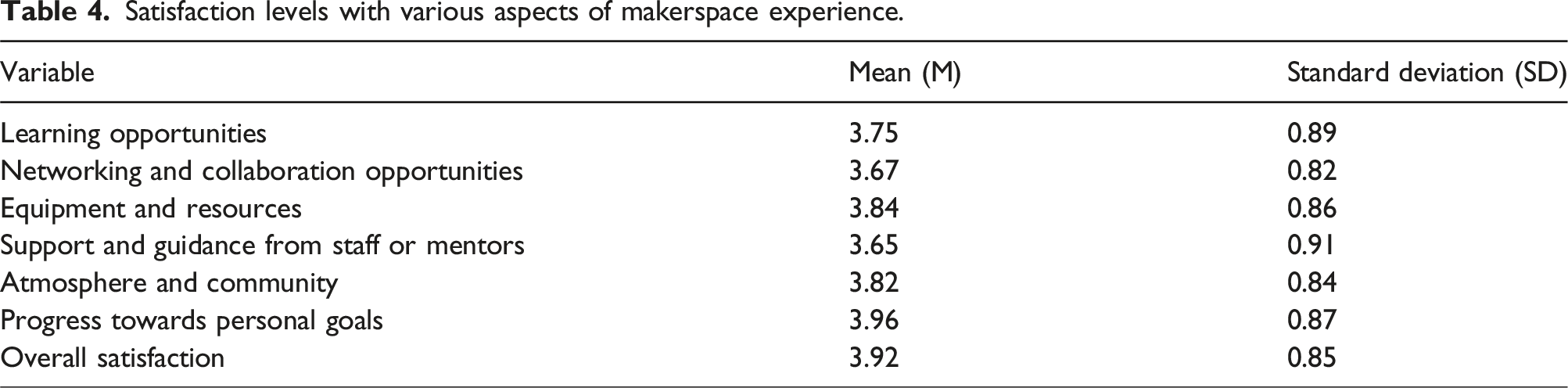
Satisfaction with the atmosphere and community is similarly positive with a mean of 3.82 (SD = 0.84). This reflects the importance of the makerspace’s social environment and the sense of belonging it builds. A welcoming and supportive community can greatly enhance the user experience by providing inspiration, peer learning, and collaboration opportunities. Learning opportunities also score relatively well, with a mean of 3.75 (SD = 0.89), indicating that many users find the makerspace conducive to acquiring new skills and knowledge. Although not the highest-rated variable, learning opportunities remain an important factor, particularly for users looking to expand their expertise in specific areas. Networking and collaboration opportunities had a slightly lower mean score of 3.67 (SD = 0.82). While still relatively positive, this suggests that some users may feel there is room for improvement in terms of connecting with others and forming collaborations. Given that collaboration is a hallmark of makerspaces, enhancing networking opportunities through structured events, workshops, or digital platforms may strengthen this aspect and improve overall satisfaction.
Support and guidance from staff or mentors received the lowest mean score of 3.65 (SD = 0.91). While generally positive, the wider standard deviation suggests more variability in user experiences with mentorship and support. This could indicate that some users feel they are not receiving enough guidance or that the level of support varies across staff or mentors. Addressing this could involve training staff to provide more consistent guidance, offering more structured mentorship programs, or increasing the availability of expert support, all of which could significantly enhance satisfaction in this area. Finally, Overall satisfaction is rated highly, with a mean of 3.92 (SD = 0.85). This reflects the general contentment of users with their makerspace experience and suggests that the services, resources, and environment provided by the makerspace meet the expectations of most users. A relatively narrow standard deviation further emphasises that satisfaction levels are stable across the user base.
Key determinants of motivations for using makerspace
Multivariate regression results for determinants of motivations to use Makerspace.
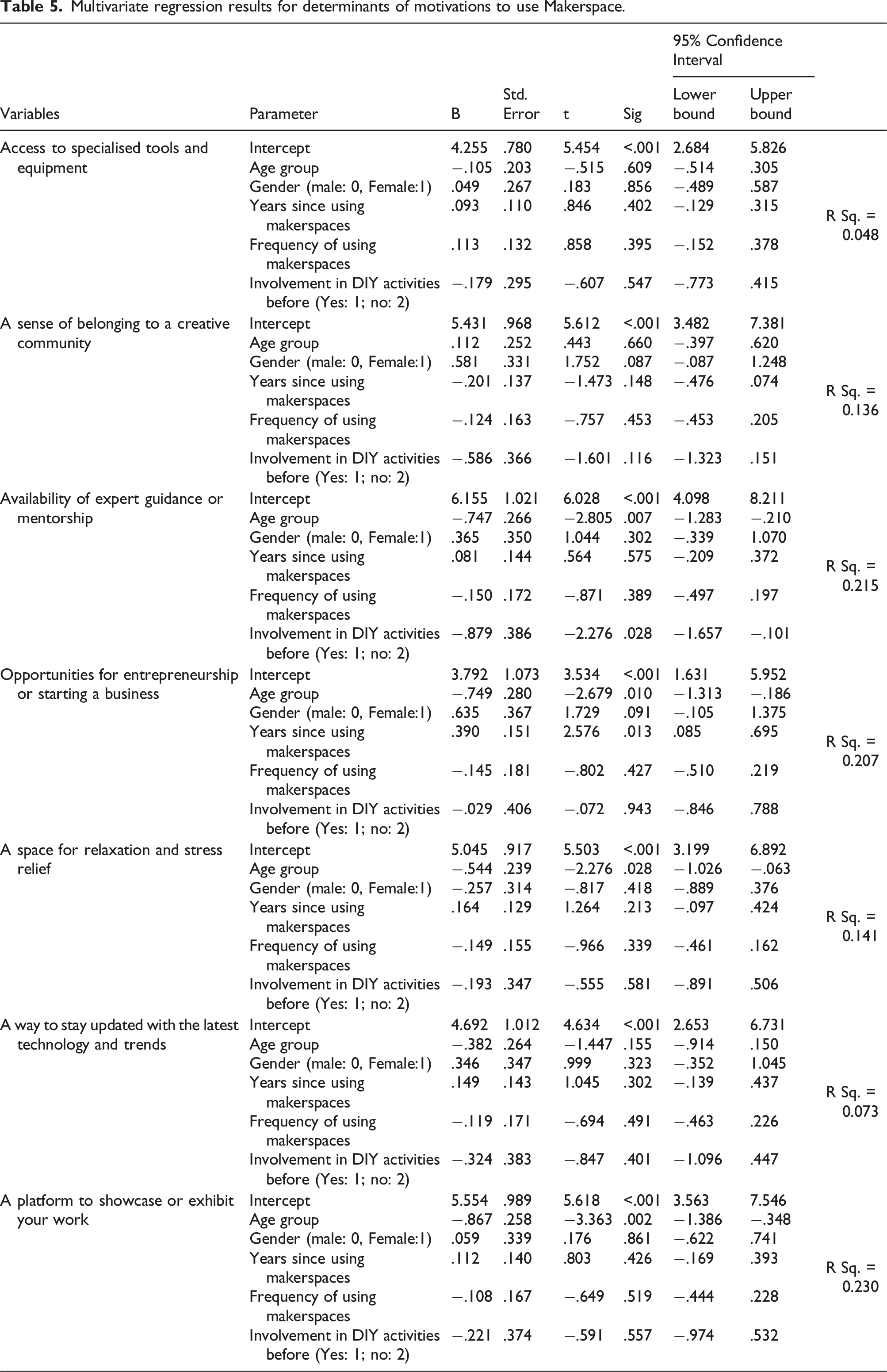
For opportunities for entrepreneurship or starting a business, both age (B = −0.749, p = .010) and years since using makerspaces (B = 0.390, p = .013) significantly influence this motivation, with older users less likely to be motivated by entrepreneurial opportunities and long-term users more motivated to engage in entrepreneurship. The model explains 20.7% of the variance (R2 = 0.207), indicating that sustained involvement in makerspaces builds entrepreneurial development. This suggests that makerspaces play a crucial role in business incubation, particularly for long-term users. A space for relaxation and stress relief is significantly influenced by age (B = −0.544, p = .028), with younger participants more likely to value makerspaces for relaxation. The model explains 14.1% of the variance in this motivation (R2 = 0.141). This generational difference in usage suggests that younger users may be drawn to the balance of creativity and relaxation offered by makerspaces, emphasising the need for environments that support both productivity and well-being. Finally, a platform to showcase or exhibit work is significantly influenced by age (B = −0.867, p = .002), with younger users more likely to see makerspaces as opportunities for recognition. The model explains 23% of the variance (R2 = 0.230), indicating that showcasing work is a key motivator for younger participants. This underscores the importance of offering exhibition opportunities to maintain engagement and recognition, particularly for younger makers.
Key determinants for satisfaction levels with using makerspace
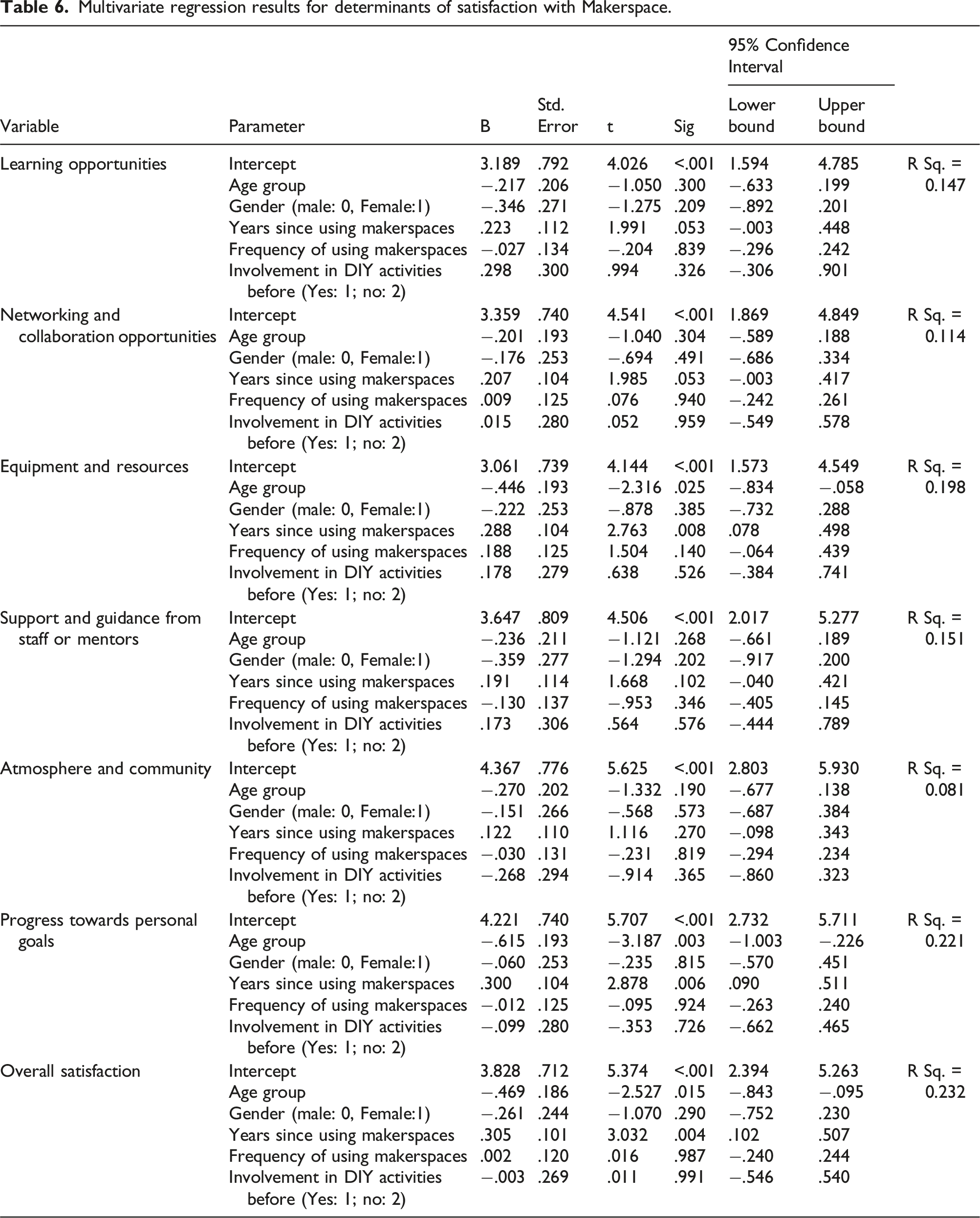
Satisfaction with learning opportunities showed near significance for years since using makerspaces (B = 0.223, p = .053), suggesting that longer-term users tend to be more satisfied with the learning opportunities provided by makerspaces. The overall model explains 14.7% of the variance in satisfaction with learning opportunities (R2 = 0.147), though other demographic factors, such as age and gender, were not significant. For networking and collaboration opportunities, a similar pattern emerged, with years since using makerspaces approaching significance (B = 0.207, p = .053). This indicates that users with more experience in makerspaces are more likely to be satisfied with the collaboration opportunities. However, the model explains only 11.4% of the variance (R2 = 0.114), suggesting limited predictive power. Satisfaction with equipment and resources showed significant relationships with both age group and years since using makerspaces. Older participants were less satisfied with the available equipment (B = −0.446, p = .025), while users with more experience were more satisfied (B = 0.288, p = .008). The model explains 19.8% of the variance (R2 = 0.198), suggesting that age and experience are important factors in shaping satisfaction with equipment availability.
Multivariate regression results for determinants of satisfaction with Makerspace.
Discussion
The sociodemographic composition of makerspace users in our study in India largely aligns with global patterns while also exhibiting some regional differences. The predominance of young adults aged 18–34, with backgrounds in higher education, supports previous findings that makerspaces are popular among youth and students, particularly those in creative or technical fields (Li and Todd, 2019; Rayna and Striukova, 2021). This trend can be attributed to the alignment of makerspaces with the learning needs and aspirations of younger generations, who seek hands-on, experiential opportunities beyond traditional academic environments. However, unlike studies documenting the growing engagement of older adults in makerspaces (Carucci and Toyoma, 2019; Lazar et al., 2021), the representation of older age groups in Indian makerspaces remains minimal. This may be due to cultural norms or accessibility barriers that limit engagement among older adults. Our study also identifies a gender disparity, with nearly two-thirds of respondents being male, consistent with international studies that observe male-dominated participation in makerspaces (Bean et al., 2015; Eckhardt et al., 2021). This gender gap underscores the need for more targeted efforts to promote inclusivity within makerspaces.
The motivations of Indian makers share many similarities with those found globally, particularly regarding the importance of access to specialised tools, opportunities for learning, and a sense of belonging to a creative community (Halbinger, 2018; Han et al., 2017). In our study, access to tools and equipment was rated as the highest motivator, reflecting the unique value that makerspaces provide in granting access to specialised or otherwise inaccessible resources. Furthermore, the strong emphasis on community aspects highlights the cultural significance of social belonging in India, aligning with the collectivist orientation commonly observed in Indian society. This finding contrasts with some studies of makerspaces in technologically advanced regions, where individual autonomy is more frequently emphasised (Shen and Wang, 2024). Notably, our study also found that while opportunities for entrepreneurship were moderately motivating, they did not rank as highly as factors such as creativity and stress relief. This contrasts with studies on makerspace users in other regions, where makerspaces are closely integrated with regional innovation systems to promote entrepreneurship (Van Holm, 2021; Cattabriga, 2020; Fu et al., 2022). This variation may be attributed to challenges within the broader entrepreneurial ecosystem, such as limited funding opportunities for startups, or it may indicate that the focus of Indian makerspaces is more on skill development rather than immediate entrepreneurial outcomes.
One of the most notable findings was that makerspaces in India significantly influence personal and professional aspirations, with two-thirds of participants in our study reporting changes in their goals as a result of their involvement. This highlights the transformative role that makerspaces play in supporting career development, informal education, and personal growth, particularly within the Indian context, where formal education tends to be more rigid and theory-focused. The opportunities for hands-on experimentation and open-ended learning provided by makerspaces serve as an important complement to traditional educational approaches (Ahmad et al., 2017; Sheffield and Koul, 2021).
Our study indicates a high level of user engagement with others on projects, showing the collaborative nature of makerspaces, which is consistent with previous findings that makerspaces strengthen social learning and collective problem-solving (Nadelson et al., 2019). However, we also observed relatively lower satisfaction with networking opportunities compared to other aspects, suggesting that despite the evident collaboration, barriers to formal networking may exist within Indian makerspaces. These barriers could stem from differences in socio-economic backgrounds, levels of experience, or differences in communication and collaboration styles. Addressing these barriers is crucial to enhancing the collaborative potential of makerspaces and promoting broader knowledge exchange among diverse participants. An interesting finding from our study was the strong preference for open sharing of innovations and the high level of involvement in open-source projects, which aligns with the fundamental ethos of makerspaces as open, community-driven spaces (Troxler et al., 2020). This also reflects the values of community welfare and accessibility, which are prominent within Indian innovation communities at the grassroots level (Kumar and Sharma, 2024). These findings are consistent with international studies indicating that makerspaces generally favour open-source principles over traditional IP protections (Halbinger, 2018; Smith, 2017).
Our findings indicate emergent patterns regarding the accessibility of makerspaces, with only 29.41% of users rating them as highly accessible. Given that most makerspaces in India are concentrated in urban areas (Haldar and Sharma, 2022), there is a clear need to expand these spaces to semi-urban and rural regions to ensure broader access. The results also suggest that sustained engagement with makerspaces positively influences satisfaction with personal progress and entrepreneurial opportunities, echoing findings by Hui and Gerber (2017), who noted that regular involvement promotes skill development and entrepreneurial mindset. However, the lower motivation among older users regarding entrepreneurial opportunities suggests gaps in support structures for late-career innovators. Addressing these gaps through targeted mentorship programs or partnerships with startup incubators could boost the entrepreneurial potential of makerspaces, similar to how such initiatives have been supported in regions with strong policies (Sharma and Haldar, 2023). Another significant emergent pattern is the role of makerspaces as environments for relaxation and stress relief, with respondents rating this factor relatively high. This finding aligns with previous studies that link participation in makerspaces to enhanced well-being and subjective satisfaction (Collier and Wayment, 2018).
Conclusion
The paper analysed responses of 51 users of Indian makerspaces, aiming to assess the demographic characteristics and to identify factors influencing their motivation and satisfaction levels regarding various aspects of makerspace use. The study finds that makerspaces in India currently attract a young, educated population that actively participates in both creative and collaborative endeavours. Access to specialised equipment, expert guidance, and a cooperative environment are identified as central resources that promote the personal and professional growth of users. The findings further indicate a predisposition for DIY activities among most makerspace users prior to their engagement with these facilities, suggesting that such spaces are particularly appealing to those inclined to creativity and innovation. Similarly, the study shows a positive correlation between the duration of makerspace use and an enhanced perception of entrepreneurial opportunities. Regarding satisfaction levels with various aspects of makerspace engagement, the results show that younger users express greater satisfaction with the resources provided, which facilitate their development both personally and professionally. Consequently, this paper finds the patterns of use, motivational drivers, and satisfaction rates among makerspace users in India, thus offering insights from a non-Western perspective by showcasing the operational dynamics of these innovation hubs within the Indian context.
The findings show significant sociodemographic disparities in makerspace participation that have implications for policy and practice. The gender imbalance, with two-thirds of participants being male, points to the need for targeted initiatives to enhance female participation. Policies could include gender-specific workshops, promoting female leadership in makerspaces, and providing mentorship for women to create a more inclusive environment. Similarly, the low engagement from older adults suggests a gap that can be addressed by designing age-friendly workshops and providing opportunities that appeal to senior citizens. The concentration of makerspaces in urban areas necessitates policies aimed at expanding these spaces to peri-urban and rural regions to bridge the accessibility gap. Investment in community-driven makerspaces in underserved areas, along with partnerships with local educational institutions, could ensure wider participation across different socio-economic backgrounds. To support older participants, who report lower motivation for entrepreneurial opportunities in makerspaces, policies could focus on strengthening mentorship networks and partnerships with regional incubators. To further contextualise these recommendations across different regions in India, it is important to recognise the varied socio-economic and cultural factors at play. In rural areas, targeted outreach and awareness campaigns could help raise interest in makerspaces and similar innovation spaces, particularly among groups that have traditionally been excluded, like marginalised communities. Collaborating with local governance bodies and community organisations will be crucial to address specific regional needs and foster a sense of community ownership. Moreover, adapting training programs to reflect local economic activities, such as agriculture or handicrafts, could enhance the relevance of these spaces, thereby encouraging broader community engagement.
The study acknowledges certain limitations and identifies opportunities for future research. First, it is important to acknowledge that the sample size of 51 respondents presents limitations in terms of the generalisability of the findings to the broader maker community in India. Therefore, these results should be considered as indicative rather than representative of the entire Indian maker community. The moderate response rate reflects the challenges of engaging a diverse range of makers and underscores the need for cautious interpretation of the findings, as they may not fully capture the diversity of the entire Indian context. Moreover, considering that the maker community is rapidly evolving, these findings should be viewed as a snapshot of the current landscape, which may shift as the community continues to grow and diversify. Second, the study used a survey for data collection, which may have overlooked the depth of understanding that qualitative methods such as interviews and observational techniques can offer. Addressing these themes in subsequent studies could provide a more holistic view of the makerspace landscape in India.
Future studies on makerspaces in India could explore several distinct themes to build on the findings of this study. First, expanding the demographic scope is crucial to address gender imbalances and the low engagement of older adults. Future research should also account for diverse socioeconomic and regional backgrounds to offer a more representative understanding of the maker community. Second, studying accessibility and regional disparity can provide insights into how makerspaces can be extended beyond urban areas to enhance inclusivity even in peripheral regions. Research on barriers and facilitators in rural contexts would be particularly valuable. Third, examining entrepreneurial support and skill development is important, especially to understand how mentorship and partnerships can influence the entrepreneurial aspirations of makers. Last, future research could explore the community dynamics and well-being, exploring how and to what extent participation in Indian makerspaces contributes to personal development and social cohesion.
Footnotes
Acknowledgement
The authors express their gratitude to each participant who contributed to this survey, especially those from remote regions. Special thanks are also extended to the managers and founders of various Indian makerspaces/fablabs for their assistance in disseminating the online questionnaire within their communities.
Declaration of conflicting interests
The author(s) declared the following potential conflicts of interest with respect to the research, authorship, and/or publication of this article: The second author of this paper has been associated with a makerspace, but her contribution to this study, including its design, was strictly in her role as a PhD researcher. Participants were drawn from multiple makerspaces across India to ensure a broad and unbiased sample. This research was not conducted for personal or financial gain, and no benefit to her makerspace is intended. Data interpretation and analysis were conducted objectively, ensuring no influence from her business affiliation.
Funding
The author(s) disclosed receipt of the following financial support for the research, authorship, and/or publication of this article: This work was supported by the HORIZON MSCA Postdoctoral fellowship awarded to GS; Grant number: 101067429.
