




Abstract
To reach the desired level of university–industry collaboration (UIC) in Sub-Saharan African (SSA) countries, specific strategies and operational mechanisms are needed. For this, an in-depth understanding of the specificities of the context concerning the UIC influencing factors is necessary. Such an understanding is still limited in SSA. This study evaluates industry’s perception regarding UIC and its stimulating mechanisms using unique primary data collected from 125 agro-processing companies operating in Rwanda. Data on companies’ preferences for stimulating mechanisms were collected using a discrete choice experiment (DCE). The findings indicate a low level of perceived value from current UIC activities. The most hampering challenges are related to the fact that students are not well prepared to take part in collaboration activities and to irrelevant research outputs. Companies’ preferences regarding stimulating mechanisms are mainly the provision of financial incentives for instilling commitment, the use of an external independent company as a form of UIC governance and building trust using the provision of high-quality graduates and research. The study draws on industry preferences to make recommendations on the best way to stimulate UIC in developing countries.
Keywords
Public attention on how to trigger university–industry collaboration (UIC) has been growing in the past two decades (Outamha and Belhcen, 2020; Plewa et al., 2015), as many countries have shifted from an economy based on natural resources to a knowledge-based economy. However, despite this increased attention, many Sub-Saharan African (SSA) countries are still struggling to lift these types of linkages to a desirable level of practice (Nsanzumuhire et al., 2021; Zavale, 2017). Previous literature on UIC has identified several barriers that preclude interactions between academia and industry. Many stem from the differing organizational backgrounds between firms and universities (Sjöö and Hellström, 2021), often resulting in firms’ unfavorable perception of academics and their proposed services (Schultz et al., 2020) and a low demand for university knowledge (Bonaccorsi, 2016; Zavale, 2017). Understanding industry’s perception and preferences, and creating a favorable positioning of academic services vis-à-vis industry needs can hence be considered the best mechanism to trigger academia–industry interactions (Walters and Ruhanen, 2018).
Most previous studies on firms’ perceptions have focused on the firms’ intention to engage with academics (e.g. El Hadidi and Kirby, 2017; Zavale, 2017), the antecedents to collaboration and the UIC process (e.g. Johnston and Haggins, 2018; Schultz et al., 2020; Sjöö and Hellström, 2021; Schillebeeckx et al., 2015) or the barriers faced (e.g. Bruneel et al., 2010; Walters and Ruhanen, 2018). Considering that most of these studies are based on ex-post collaboration experience, the knowledge produced is more applicable to contexts in which UIC is already well-practiced, especially since, according to Schillebeeckx et al. (2015: 1494), “deriving antecedents of tie formation ex-post can only partially illuminate ex ante motives and preferences”. Particularly for countries with lower interactions between academia and industry (i.e. requiring ex-ante UIC mechanisms), there is still a gap in knowledge about industry’s perception of the effectiveness of mechanisms to trigger UIC. Using a randomized control trial design, Giones (2019) studied the effect of staff training as a policy intervention on their intentions to collaborate. But considering only one type of intervention in isolation can distort stated perceptions since, in real life, policy interventions are composite and are contingent on many contextual constraints, obliging policymakers to operate trade-offs between possible alternatives (Schillebeeckx et al., 2015; WHO, 2012).
This study attempts to cover this gap in knowledge by analyzing firms’ perceptions of the current collaboration status and effectiveness of potential policy mixes for triggering UIC. More specifically, the study provides an in-depth understanding of perceived value from current UIC activities, the extent to which identified challenges impede collaboration and the perceived importance of and preferences for different mechanisms of fostering company commitment, UIC governance and trust. In so doing, the paper contributes to the existing literature in two ways. First, the study proposes an ex-ante approach to the issue of UIC effectiveness in developing countries. Such a novel approach shifts the debate on UIC in SSA from the tendency to dwell on the low level of and barriers to UIC in this region (Zavale and Schneijderberg, 2020) to a proactive action-research approach geared to improving the situation. Second, by assessing firms’ perceptions of current UIC practices and desired stimulating mechanisms, the study provides a better understanding of the industry demand for UIC, especially for developing countries, therefore enabling the mismatch between firms’ demand for UIC and universities’ capability to satisfy it to be addressed (Kruss et al., 2012; Zavale, 2017; Zavale and Macamo, 2016).
The remainder of the paper is organized as follows. We first discuss the context of and justification for the study on Rwanda; then we review related literature focusing on the major UIC mechanisms as well as the drivers of UIC. Thereafter, we present the research methodology used, followed by a description of the findings. We end with a discussion of the findings and a conclusion.
Study context and necessity for UIC in Rwanda
Rwanda is a landlocked country located in the Great Lakes region of central Africa, between Uganda, Burundi, the Democratic Republic of Congo and Tanzania. With an economy based mostly on subsistence agriculture, Rwanda is currently classified among the low-income countries, but through its long-term development plan, Vision 2050, the government of Rwanda seeks to transform the economy into an upper-middle-income, then high-income economy by 2035 and 2050, respectively (MINECOFIN, 2020). To attain those targets, a sustained double-digit economic growth rate is required. In the fiscal year 2020/21, the GDP growth rate at current market prices was 9.3%, to which the services sector had contributed 47%, and the industry sector only 19% (NISR, 2021a). The agriculture sector, employing around 70% of the active population, contributed only 26%. The agro-processing sub-sector (food and beverages), considered the second-largest industrial sector in Rwanda’s economy after the construction sector, contributed around 5%. It is also important to note that, according to the National Institute of Statistics of Rwanda (NISR, 2021b), the total number of enterprises operating in Rwanda is 226,359, of which 99.8% are small and medium-sized enterprises (SMEs). Moreover, the majority of these enterprises (92.6%) are in the informal sector (NISR, 2021b).
For Rwanda to effectively contribute to the global value chain (Shepherd and Twum, 2018), an economic transformation geared to transitioning the population and economy from subsistence agriculture to industry and high-skilled services is needed (Yongabo and Göransson, 2020). Such a transformation requires industry to enhance its competitiveness and the quality of its products, mainly through improvement in companies’ innovation capability. So far, the government’s efforts in this regard include, among others, enhancement of science, technology and innovation (STI) through the National Council for Science and Technology (NCST); fostering domestic industry through the Made in Rwanda policy; and creating and supporting industry-monitoring organs like the Rwanda Food and Drugs Authority (RFDA), the National Industrial Research and Development Agency (NIRDA) and the Rwanda Standards Board (RSB) (Yongabo and Göransson, 2020). However, despite all these efforts, some innovation-related aspects still need improvement and the domestic industry needs to increase its competitiveness regionally and internationally (MINICOM, 2017; Shepherd and Twum, 2018). For instance, a report from the NCST conducted in 2020 on the status of STI indicated that 25% of the surveyed institutions had a firm-level capacity for innovation (NCST, 2021a). The report showed also that communication-related technologies were the most adopted technologies (by 31.3% of the surveyed firms), followed by design, engineering and manufacturing (7.4%). Processing, fabrication and assembly technologies were reported as the least adopted (by only 3.8% of the surveyed firms). In the same line, a Rwanda National Research and Experimental Development Survey, also conducted by the NCST, revealed that the government dominated R&D activities. In fiscal year 2018/2019, the government’s R&D expenditure was 63.58% of the total R&D expenditure. In terms of investment in R&D, in the same fiscal year the government invested up to 58% of total R&D funds while 24.6% came from foreign funds. Only 6.2% came from firms (NCST, 2021b).
Compared to the status of STI in emerging and developed economies, these statistics indicate an unfavorable STI status, inadequately supporting innovation and technology development and therefore necessitating the adoption of improvement mechanisms. The two reports from the NCST highlighted the need to foster interactions between industry and higher education institutions (HEIs) as a mechanism of enhancing knowledge exchange. The same recommendation is made by the World Bank, arguing that “… creating incentives for researchers to develop and adapt innovations that benefit industries in Rwanda can help Rwanda to reap the maximum returns to local innovation” (World Bank, 2019: 27).
By addressing the effective mechanisms to foster interactions between academia and the agro-processing industry, this study lays the foundation for responding to these recommendations. Our motivation to focus on the agro-processing industry was twofold. First, food processing is a knowledge-intensive industry, thus relying on innovation and technology transfer for growth and prosperity. Second, according to Kowalski et al. (2015), agriculture and foodstuffs constitute the area through which Africa is currently engaging in the global value chain but with less advanced manufactured products. With enhanced collaboration between the agro-processing industry and academia, companies, especially SMEs, would improve their innovation capabilities, therefore becoming more competitive nationally and internationally. Indeed, as advanced by Collier et al. (2011), the best strategy to foster innovation and technology development, especially for SMEs with little means to conduct their R&D internally, is through collaboration with HEIs. The results from this study are hence instrumental in setting context-specific policies for the enhancement of such collaborations for Rwanda and for similar contexts in low-income countries, especially those characterized by a predominance of subsistence agriculture and a high government ambition to contribute effectively to the global value chain.
Review of related literature
The literature has uncovered several factors influencing UIC practice, but often from a reductionist approach. Rybnicek and Königsgruber (2019) grouped them into four categories: (1) institutional factors (resources, structure, processes, etc.); (2) relationship factors (communication, commitment, trust, culture, leadership support, etc.); (3) output factors (objectives, knowledge and technology transfer); and (4) framework factors (environment, distance, intellectual properties, contracts, etc.). Some of these factors, like trust and commitment, are part of inter-organizational social capital and factors like the UIC structural and policy frameworks can be conceived at the macro or meso level. As such, the two types of factors can be considered in designing policy interventions to stimulate UIC at country or industry level. Other factors, such as communication, staff competencies, staff motivation towards UIC, willingness to change, company resources and managerial capability are applicable only when designing stimulating strategies at an institutional level. It is argued also that the influence of these factors is context-dependent (Eun et al., 2006; De Fuentes and Dutrénit, 2012; Rajalo and Vadi, 2017).
Considering this contingent nature of UIC factors, we argue that the reductionist approach often used hinders the understanding of how those influencing factors interact among themselves and how they are affected by the conditions surrounding UIC. We propose to use system thinking and contingent theories as the conceptual models for this study. Contrary to the reductionist approach, the systems thinking approach “focuses attention on the whole, as well as on the complex interrelationships among its constituent parts” (Laszlo and Krippner, 1998: 11). It allows for a better understanding of the relationship between a phenomenon’s variables and predicting their outcomes (Arnold and Wade, 2015). Therefore, systems thinking theory and by extension the resulting contingency theory are suitable for studies attempting to empirically assess specific patterns of UIC in developing countries (Zavale and Schneijderberg, 2020). Since this study focuses on mechanisms of triggering UIC, we start this section by briefly discussing the extant knowledge on the UIC formation process. Thereafter we focus on the literature related to key policy interventions for stimulating UIC: (1) trust-building, (2) instilling companies’ commitment to UIC and (3) UIC governance mechanisms in the form of boundary-spanning structures.
University–industry collaboration formation process
Doz et al. (2000) identified three UIC formation pathways (emergent, embedded and engineered). The emergent form of UIC stems from changes in the environment, a common interest and similar views and other perceived complementarities among potential members. The embedded form of UIC develops spontaneously from existing strong social ties without necessarily shared interests or mutual interdependences. Lastly, the engineered UIC is the one triggered by a third party, either a UIC lead expert (Champenois and Etzkowitz, 2017), a technology transfer office (TTO), or a hybrid autonomous organization (HAO) (Villani et al., 2017). An HAO can be organized as a specialized non-governmental organization (NGO), an existing NGO with a mandate to facilitate UIC or a government innovation organizer. These forms of boundary-spanning agents are meant to create a boundary space in which UIC takes place, to catalyze, build trust and engage meaningfully with participants, and align strategies and processes of the involved parties. The boundary space, trust and strategies alignment as well as all the other outcomes from boundary spanning actions may lead to the creation of conditions for further emergent UIC, with partners building on discovered common interests and complementarities to engage in more collaboration initiatives. For academia–industry linkages to be effective, especially in the emergent and engineered formats of UIC, specific strategies and operational mechanisms must be put in place (Liew et al., 2012).
Mechanisms for building trust between industry and academia
Trust is considered a fundamental factor of UIC due to its capacity to attenuate cultural differences between university and industry and thus remove or attenuate conceptual distance and other barriers to collaboration (Hemmert et al., 2014; Tartari et al., 2012). It can be understood as the willingness of one person (or organization in general) to increase their vulnerability to the actions of another person (or organization) whose behavior is beyond their or its control (Kim et al., 2004). Different ways of building trust between companies and academia can be highlighted. Harris and Lyon (2013) propose, in the case of building trust from scratch, the use of mechanisms like networking (working together, openness and putting oneself at risk from others, etc.) as well as contractual safeguards to reduce uncertainty about delivery of the promised contributions of knowledge and expertise (Johnston and Haggins, 2018). Another factor considered as a foundation for trust-building, especially when establishing new relationships, is partner reputation (Bstieler et al., 2014; Hemmert et al., 2014), linked by Johnston and Haggins (2018) to firms’ perceived credibility of HEIs. That credibility is defined as the extent to which an HEI is thought likely to deliver on its promises and propose innovative solutions usable by firms. More specifically an HEI’s credibility will be evidenced by (1) its knowledge and expertise that are appropriate to UIC activity; (2) its comprehensive knowledge of a given field; and (3) its ability to apply knowledge to solve the firm’s problem. In the same line, Schultz et al. (2020) link planning intensity as a formal control to shared perceptions of R&D project innovativeness. They contend that this type of control helps to establish a certain level of transparency which in return prevents fraud and misconduct and enhances mutual trust.
University–industry collaboration governance modes
Since collaboration between university and industry implies crossing disciplinary, institutional and other cultural boundaries between partners (Harris and Lyon, 2013), collaboration governance, geared to spanning boundaries between the two institutions, constitutes a foundation for UIC enhancement. To describe models of the governance of knowledge transfer, Geuna and Muscio (2009) focused on the institutionalization of knowledge transfer activities. This allowed them to distinguish between governance based on personal relationships (termed the “old governance” model) and governance based on a formal structure (referred to as “institutionalized governance”). Similarly, the literature on boundary-spanning mechanisms, which constitute the main purpose of UIC governance, indicates that the boundary-spanners can either be individuals (Champenois and Etzkowitz, 2017) or specialized organizations (Lee, 2014; Villani et al., 2017). The latter may take the form of TTOs, university incubators (UIs), collaborative research centres (CRCs) or HAOs (Lee, 2014; Villani et al., 2017). While HAOs may be public or private organizations, TTOs, UIs, and CRCs are often part of the internal structure of the HEI.
Mechanisms for instilling company commitment
According to Awasthy et al. (2020), a strong commitment of companies to UIC is a significant factor in fostering successful collaboration with academia. Instilling firms’ commitment must therefore be considered among the key policy interventions to trigger UIC, especially in SSA since the low level of UIC in most African countries has been linked to a lack of will and support on the part of the leadership (Outamha and Belhcen, 2020). “Commitment” in this sense can be understood as a consistent engagement in UIC activities (Becker, 1960). To bring companies to consistently engage in UIC, government incentives such as tax incentives, R&D research grants, matching grants or innovation vouchers have been proposed (Guimón & Paunov, 2019). But, as argued by Guimón (2013) and Schillebeeckx et al. (2015), in many developing countries government grants are less appealing to firms, “because they either do not feel the need to collaborate with universities, are not ready to match the funds with internal resources, or find the grant application process too complex” (Guimón, 2013: 5). According to Giones (2019), such incentives may be considered as mechanisms to address the presence of resource limitations and lack of collaboration capabilities as a barrier to UIC engagement. Giones (2019) also considers the training of firms’ staff as an effective mechanism for sensitizing and modifying firms’ perceptions and motivations.
Summary of possible interventions for proposed key stimulating mechanisms.
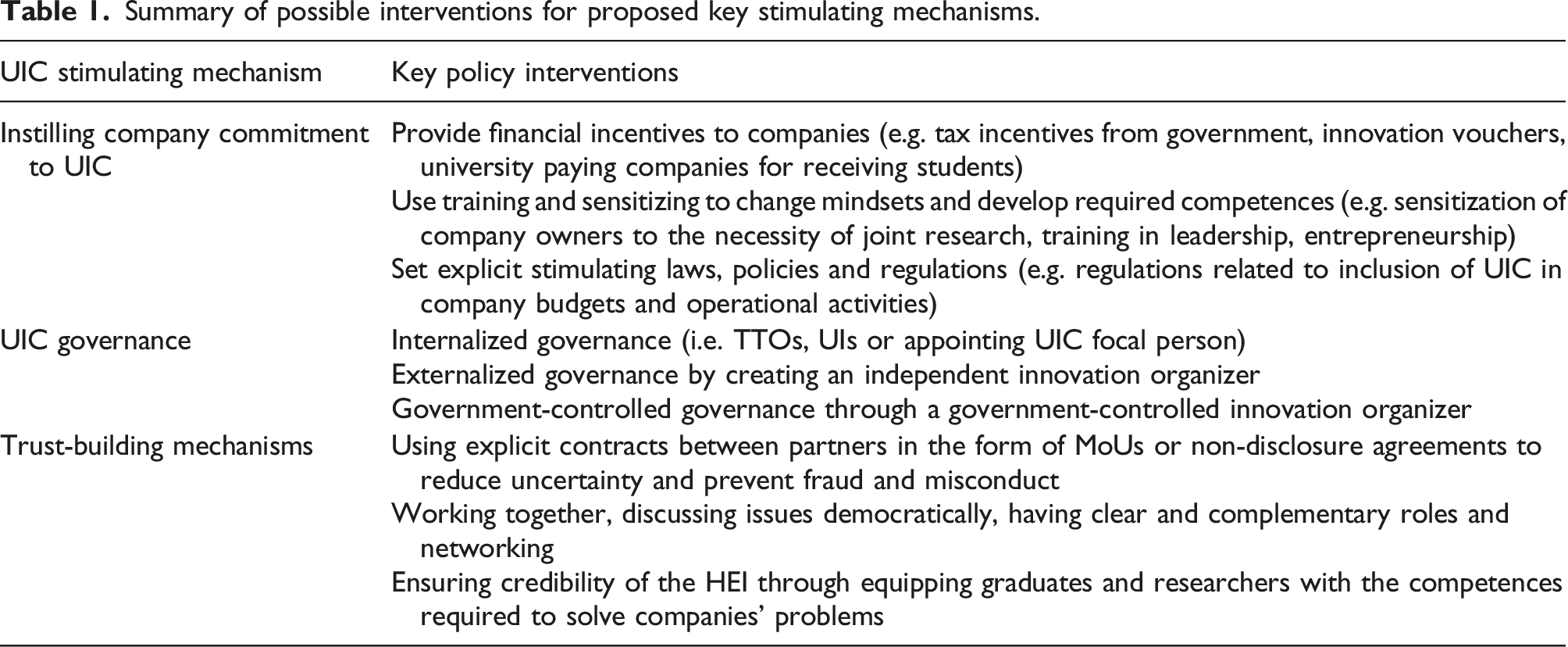
Considering the systemic and contingent nature of UIC influencing factors (Eun et al., 2006; Nsanzumuhire et al., 2021), these identified mechanisms and key policy interventions should be implemented concomitantly as a mix of strategies, not as stand-alone interventions: they are interconnected and implementing one sets the stage for the realization of the others.
Methods
This study aims to identify industry’s perceptions regarding UIC and its stimulating mechanisms for a low-income country in SSA. We posit that policy interventions to stimulate UIC at the country or industry level can be conceived as a mix of the mechanisms of trust-building, instilling company commitment and spanning boundaries between actors as presented in Table 1. We then assess firms’ perceptions of the effectiveness of potential mixes of policy interventions for stimulating UIC. For this, we use the Discrete Choice Experiment (DCE) methodology on unique primary data collected in a cross-sectional survey of agro-processing companies operating in Rwanda.
The DCE was originally developed in marketing research to analyze preferences for new products and is also referred to as the vignette methodology (Wason et al., 2002). However, because of its advantages several other studies (e.g. Hoyos, 2010; Pepermans and Rousseau, 2021; Yang et al., 2021) used it in other domains. It stems from utility maximization theory and rationality, which assumes that “when faced with a set of possible consumption bundles of goods, [consumers] assign values to each of the various bundles and then choose the most preferred bundle from the set of affordable alternatives” (Ryan et al., 2008: 14). However, contrary to the traditional utility maximization theory, which assumes homogeneous goods and a quantitative utility, the DCE focuses on attributes as determinants of utility (Lancaster, 1966), therefore allowing both quantitative and qualitative utility to be assessed using the DCE methodology. According to Ryan et al. (2008) and Hauber et al. (2016), the DCE theory assumes that the latent utility for an alternative in any given choice set can be expressed by:

The DCE is mainly used by policymakers in matters related to designing optimal packages or policy options to induce actors to engage more in a given intervention. In UIC studies, its use as a methodology to evaluate industry’s perception of UIC stimulating mechanisms is original. To the best of our knowledge, only Schillebeeckx et al. (2015) have used it to assess the effect of personal aspiration gaps (defined as individuals’ perceptions of whether they are ahead of or behind peers on their career trajectory) and relational capability (measured by the networking skills, openness to collaborate and network awareness) on collaboration preferences. Yet, according to Mangham et al. (2008), the DCE is increasingly applied in low- and middle-income countries to consider a range of policy concerns. Its advantages over other methodologies of eliciting preferences often used in the literature on UIC lie in the fact that it allows operating trade-offs between a variety of attributes of strategic choices (Schillebeeckx et al., 2015).
The set-up of the DCE questionnaire
Attributes and attribute levels.
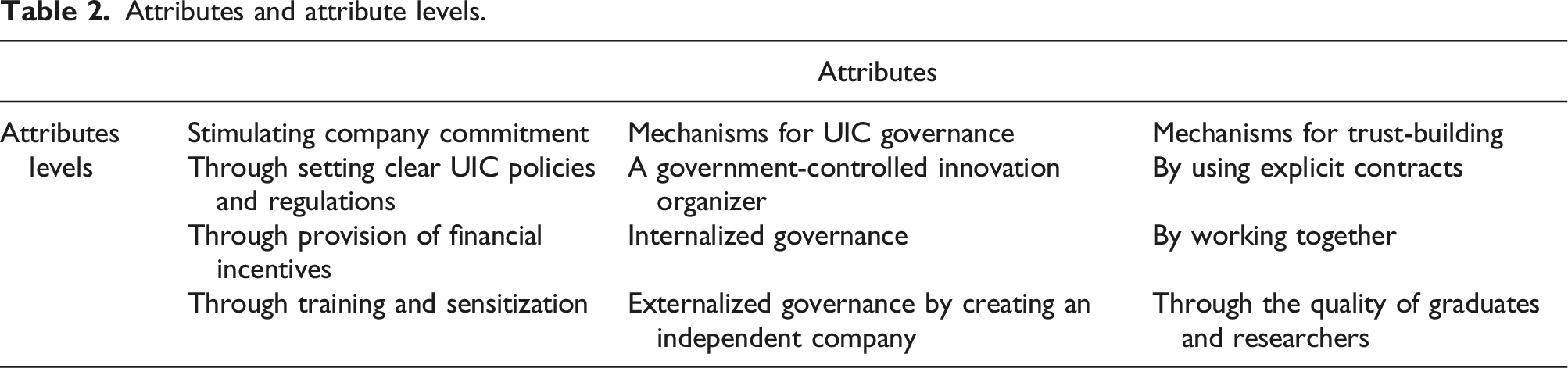
From the attributes and attributes levels, 16 choice sets were generated using orthogonal design in SPSS software. To meet the assumption of independence of the alternative choices (Mangham et al., 2008), choice sets were randomly presented to the respondents in pairs, in the form of two scenarios of UIC-stimulating mechanisms. The task for respondents was then expressed as follows: “In the next set of questions, different scenarios of generic stimulating strategies are drawn by combinations of the aspects in the previous question. In total eight pairs of scenarios are proposed. For every pair of scenarios presented below, you are requested to choose the one you think would be more effective than the other in stimulating collaboration between agro-processing companies and HEI.”
Sample choice-set as presented in the DCE section of the questionnaire.
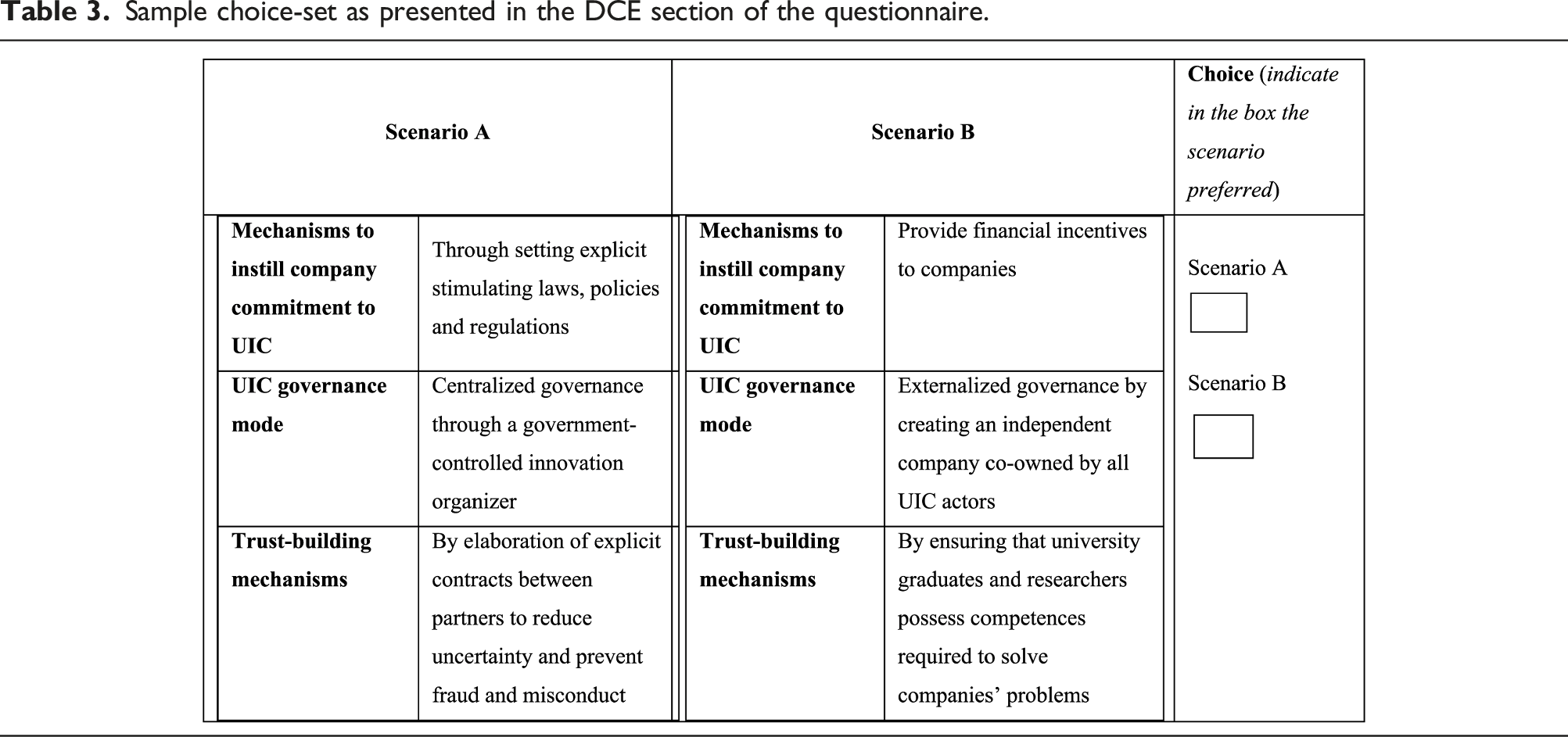
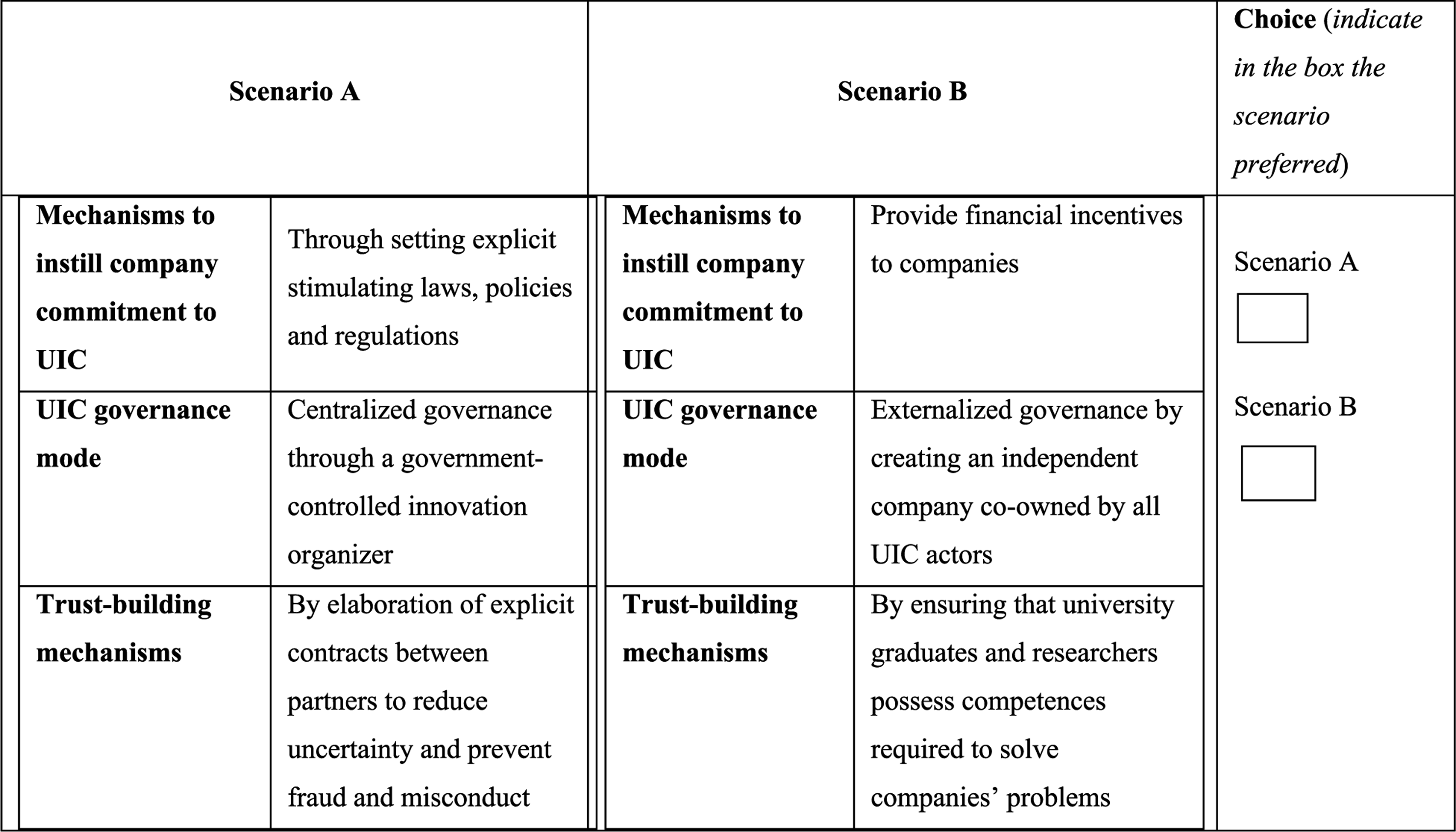
Eight pairs of scenarios were formed and, since the questionnaire was online, the “force response” option was set to ensure that respondents did not skip any pair presented without making a choice. Appendix C presents the 16 choice sets used in the questionnaire. The coding of choice sets and respondents’ choices used a dummy coding approach (Hauber et al., 2016), as indicated in Appendix B.
Before using the DCE, we evaluated the current collaboration status by assessing the value obtained by companies from UIC activities, the extent to which existing challenges impeded collaboration and the perceived importance of each considered mechanism. This prior situation analysis had two purposes: for data collection, the questions on situation analysis served as warm-up questions needed to create contextual cues to reduce hypothetical bias in the stated preferences (Schläpfer and Fischhoff, 2012) and, for data analysis, data from the situation analysis provided the baseline information needed for interpretation of the companies’ preferences.
Data collection
Characteristics of companies surveyed.
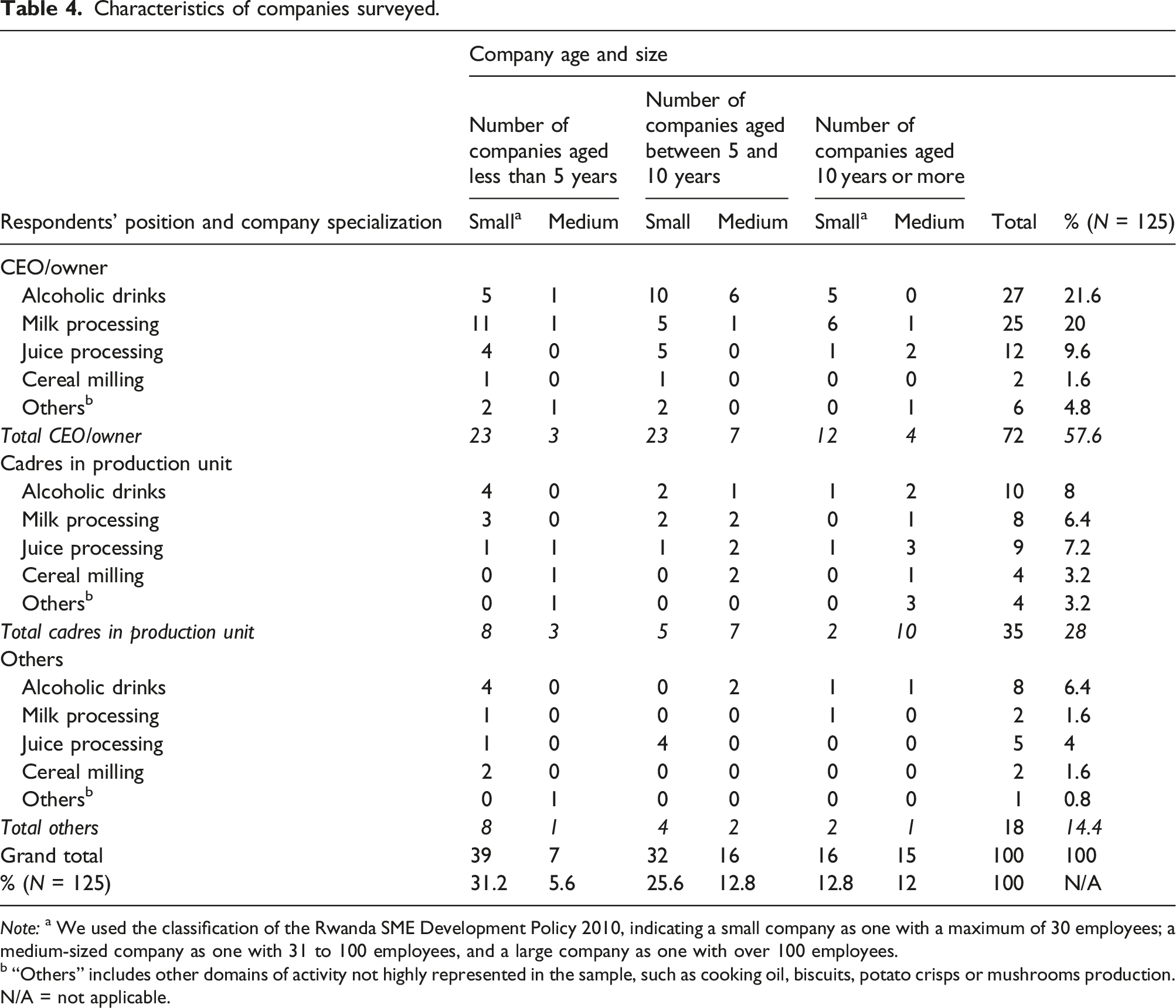
Note: a We used the classification of the Rwanda SME Development Policy 2010, indicating a small company as one with a maximum of 30 employees; a medium-sized company as one with 31 to 100 employees, and a large company as one with over 100 employees.
b “Others” includes other domains of activity not highly represented in the sample, such as cooking oil, biscuits, potato crisps or mushrooms production. N/A = not applicable.
Data analysis
Data from the DCE questions were analyzed using random-effects logistic regressions. The outcome variable was the respondent’s choice while the predictor variables were the different attribute levels.
The regressions are therefore based on the following model:
Where Pr(Choice) is the probability of choosing a scenario,
Before performing random effects regressions, we first calculated the rate of occurrence of each attribute level in the choices of respondents. We then identified three attribute levels (one per attribute) that were preferred by respondents (i.e. being present in chosen scenarios more than others). Those attribute levels were therefore omitted in the subsequent regressions, and were considered as references in analyzing the regression results.
To perform the random effects regression, we first ran the regression with the main effects only and then we assessed the interaction effects. In the latter case, we first introduced all the hypothesized interaction variables; then we iteratively used a backward stepwise regression by removing less significant variables until we found the regression model with a better fit. To evaluate the contribution of the interaction variables in the regression results we used the Wald test for only the five significant interaction variables in the model. The test produced a p-value equal to 0.0153, which implies that the null hypothesis stipulating that the five variables are simultaneously equal to zero is rejected. This means that the inclusion of the tested variables creates a statistically significant improvement in the fit of the model.
Results
The results from this study are presented in two parts: (1) results related to companies’ perceptions of the current collaboration practices and (2) results on the companies’ perceptions of desired stimulating mechanisms.
Companies’ perception of the current collaboration
Value obtained by companies from current collaboration activities
To identify the extent to which the different collaboration activities added value to their company, respondents were asked to rate the value obtained from each activity they engaged in by selecting either ‘very valuable’, ‘valuable’, ‘moderately valuable’, or ‘not valuable at all’. Generally, results indicate that companies perceive no or moderate value from the collaboration activities they engage in. More specifically, by considering the value attached to each activity we can cluster them into three groups. First, there are activities such as receiving students for industrial attachment and receiving students for a field study that a high majority of respondents find valuable. Second, there are activities that a high majority of respondents rate as not valuable at all. These include participating in developing curricula (60.78%), delivering curricula (50.11%) and other short-term activities such as workshops, meetings and conferences (55.32%). The third cluster is made up of activities with a less pronounced trend in respondents’ views – that is, those rated either very valuable, valuable or not valuable at all but with a low percentage. They include using academia for consultancy (found very valuable by 38% of respondents), lab testing (found moderately valuable by 34.62%) and collaborative research and staff exchange (found not valuable at all by 36.54% and 46.51%, respectively). Descriptive statistics details can be found in Appendix C.
Evaluating companies’ aspiration to engage in more collaboration
The results indicate that companies aspire to engage more in industrial attachment and the use of HEI laboratories for testing services. Staff exchange and company participation in curriculum delivery are the least desired. Companies specializing in alcoholic drinks are highly interested in using HEI laboratories, while those specializing in cereals processing are highly interested in receiving students for internships. Other features are that milk processing companies show a high interest in using HEI laboratories while other miscellaneous companies (specializing in processing cooking oil, biscuits, mushroom production, etc.) have a high interest in using HEI laboratories, engaging in joint research, consultancy from academia and participating in developing curricula. Figure 1 presents a visualization of the companies’ aspirations to engage in different activities. The vertical axis represents the percentage currently not engaged in the indicated collaboration activity but aspiring to engage in it. Proportions of companies aspiring to engage in indicated collaboration activities.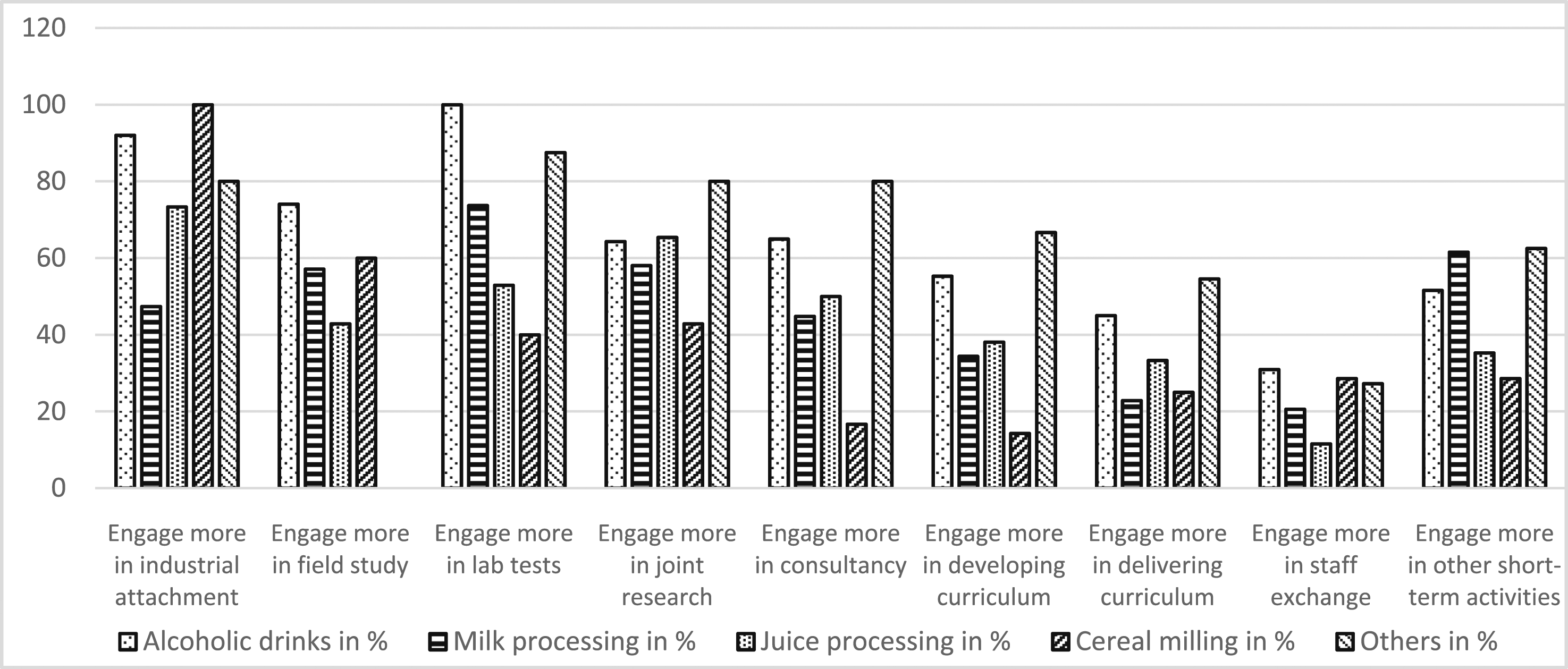
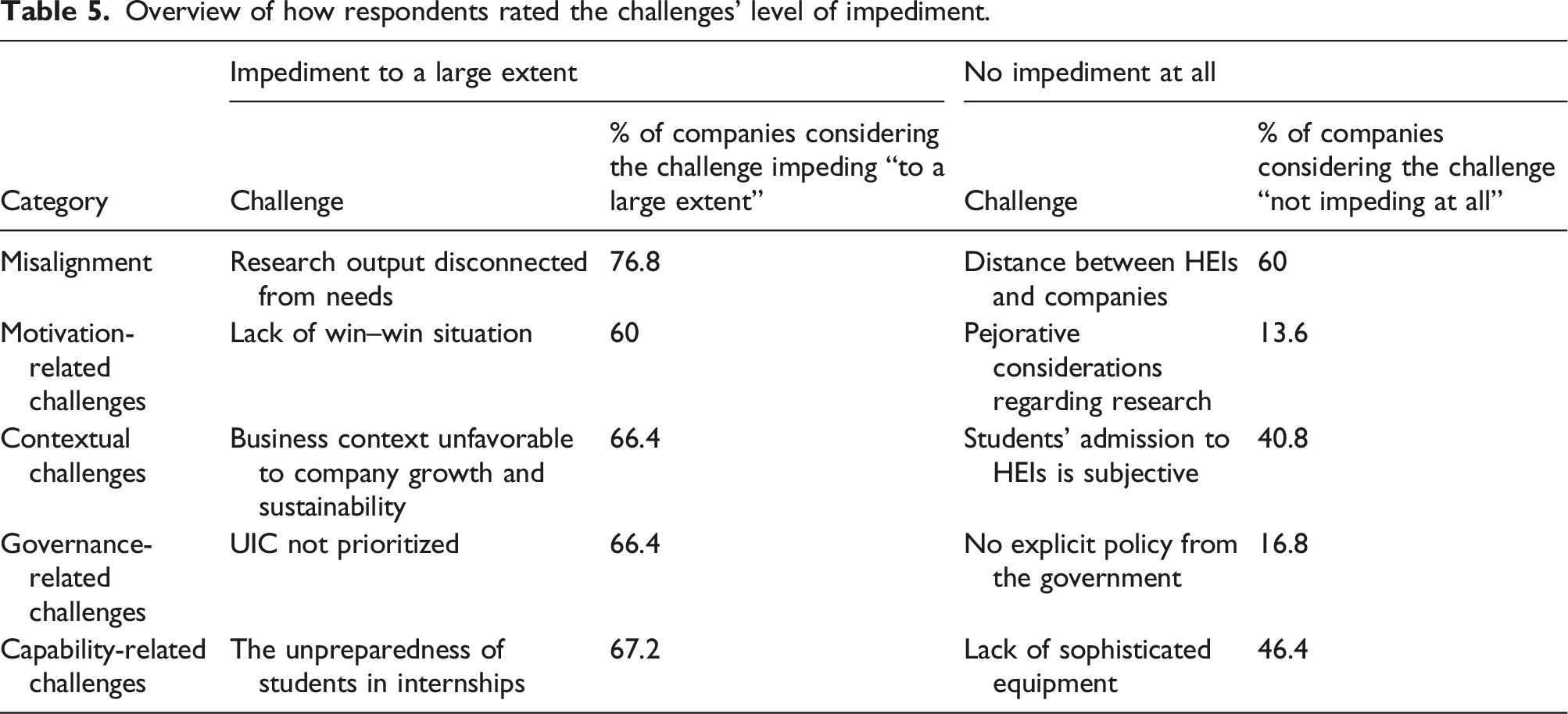
Assessing the impediment level for identified challenges
Overview of how respondents rated the challenges’ level of impediment.
Companies’ perceptions of the importance of and preferences for UIC stimulating mechanisms
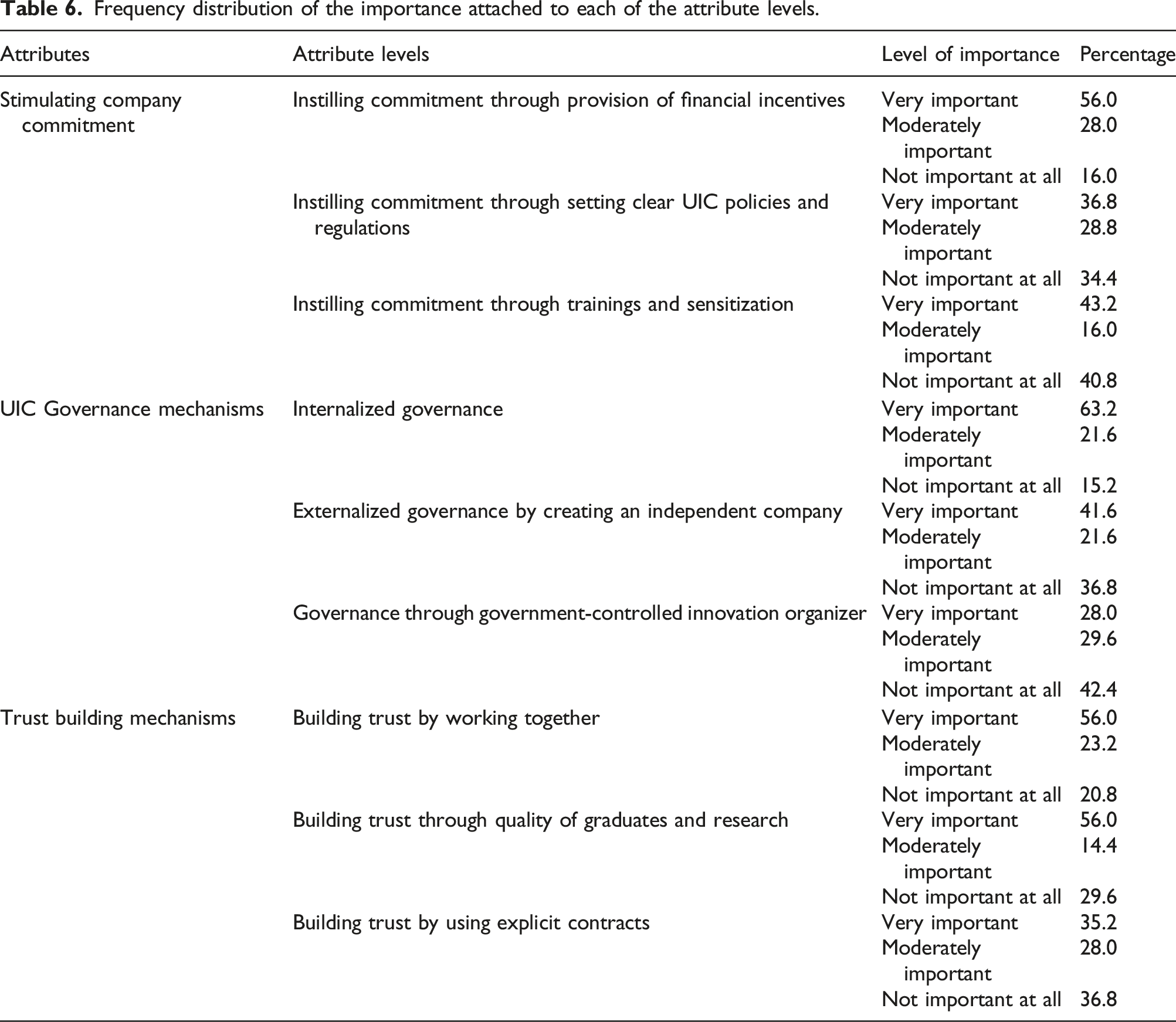
Importance attached to attributes and attribute levels
Frequency distribution of the importance attached to each of the attribute levels.
Companies’ preferences for UIC-stimulating mechanisms
As indicated previously, before performing random effects regressions on the DCE data, we first calculated the rate of occurrence of each attribute level in the choices of respondents and then we used the three most preferred attribute levels (one per attribute) as the pivot in the regression and the interpretation of results. From the results, presented in Appendix E, the three attribute levels with the highest occurrences in the respondents’ choices, and therefore considered the most preferred, were: (1) fostering commitment through the provision of financial incentives; (2) UIC governance through externalized governance; and (3) building trust through the quality of graduates and research.
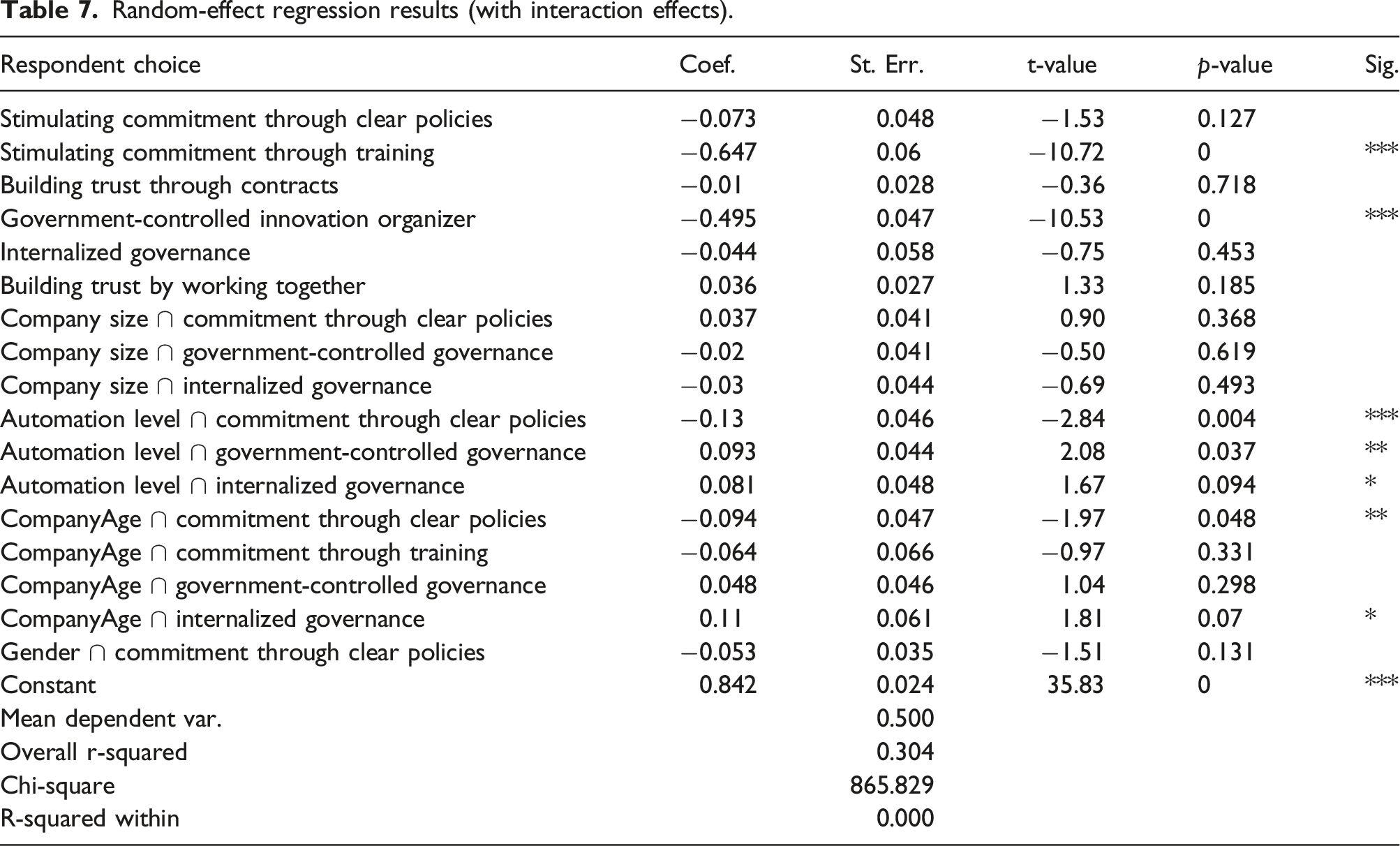
Random-effect regression results (with interaction effects).
Discussion
Previous studies on UIC have argued for understanding industry’s perception of UIC and positioning academic services and products to respond to their needs as the best mechanism for triggering collaboration (Walters and Ruhanen, 2018), especially since firms’ interest and commitment are considered key success factors in UIC (Rybnicek and Königsgruber, 2019). However, a gap in knowledge persists concerning industry’s perceptions of the effectiveness of potential policy interventions to trigger UIC, especially for developing countries in SSA. This study aims to fill this gap by assessing firms’ preferences for mixes of potential mechanisms for instilling company commitment, organizing UIC governance and building trust between UIC actors, using unique primary data from a sample of 125 agro-processing companies.
The findings indicate that companies perceive no or moderate value from most of the collaboration activities. This probably explains the weak status of collaboration and the reported low commitment of firms (Outamha and Belhcen, 2020). The only activities that companies found highly valuable were receiving students for industrial attachments and field study, while contributing to curriculum development, participating in curriculum delivery and participating in other short-term activities were judged as “not valuable at all”. This finding may be interpreted as resulting mainly from a short-term perspective in companies concerning the relationship with academia and its expected benefits. Such an attachment to short-term benefits was confirmed by the expressed high preference for financial incentives as an effective mechanism for instilling company commitment to collaboration. Combined with the fact that other short-term activities (conferences, informal information sharing) were also rated as not valuable, we can interpret companies’ interest in engaging with academia as motivated by not only short-term but also tangible benefits. The low value attached to other short-term activities (conferences, informal information sharing) and consultancy contradicts findings from previous studies in developing countries. For instance, a study by Arza and Vazquez (2010) on the relative effectiveness of different channels in Argentina revealed that firms ranked traditional channels (publications, conferences and exhibitions, hiring graduates) and service channels (consultancy, staff exchange and informal information exchange) as first and second in importance, respectively. Zavale (2017) also found that traditional channels followed by service channels were more intensely used by firms in Mozambique, but also in Uganda and Nigeria. Both studies reported a high linkage between these channels and the short-term production benefits for firms. For Rwanda, the low valuation of short-term channels can be explained by the inadequately skilled labor force of the local industry, especially SMEs (NCST, 2021a, UNIDO, 2020) and its resulting low absorptive capability, creating difficulties in recognizing and valorizing embodied knowledge (Arza and Vazquez, 2010; Bonaccorsi, 2016).
On the other hand, the reported high value from industrial attachment and field visits confirms the results of Bekkers and Bodas Freitas (2008) indicating that “students working as trainees” is among the knowledge transfer channels rated as very important by both industry and academia. This valuing pattern is also reflected in findings on companies’ aspirations to engage in more activities, which revealed that a large majority of companies aspire to engage in industrial attachment and to use HEIs’ laboratories for sample testing. The latter activity was selected more by companies specializing in alcoholic drinks while the former was selected more by those specializing in cereal processing: a plausible explanation is that, currently in Rwanda, companies specializing in alcoholic drinks are required by the RFDA and RSB to follow strict quality guidelines in their manufacturing and packaging processes (RFDA, 2019a). The high interest in engaging in industrial attachments manifested by cereal processing companies may reflect the fact that these companies are often in need of cheap labor and are, compared to other specializations, considered less risky (Government of South Australia et al., 2018; RFDA, 2019b) with regard to the safe employment of interns.
The results indicate that the most impeding challenges are: (1) research output disconnected from the market conditions, (2) the unpreparedness of students who undertake internships, (3) a business context unfavorable to company growth and sustainability, (4) UIC is not prioritized and (5) lack of a win–win situation. On the contrary, challenges that are not impeding at all include: (1) the distance between HEIs and companies, (2) a lack of sophisticated equipment and (3) subjective admission to HEIs. Various comments can be made about these findings. The first two impeding challenges confirm the findings of Ssebuwufu et al. (2012) indicating that the quality of education and a low research capacity are among the main reasons for a weak UIC in SSA. These constraints affect HEIs’ ability to deliver on innovative solutions, thereby reducing companies’ perception of their credibility which in turn jeopardizes companies' trust and willingness to engage in UIC (Johnston and Haggins, 2018; Schultz et al., 2020). The third and fourth challenges were both identified during the qualitative study conducted in the preparation of the DCE. According to the qualitative study, the unfavorable business context is due, for instance, to the existence of a monitoring and evaluation (M&E) system (from the RFDA or RSB) that is more punitive than learning-oriented and to the copy-and-paste culture embedded in the short-term orientation of entrepreneurs. The identification of an unfavorable business context as a highly impeding challenge is confirmed by consideration of the creation of an enabling environment among the pursued goals of different policies adopted in Rwanda, such as the Industry Development Policy (MINICOM, 2011), the STI Policy (NCST, 2020) and the Revised Intellectual Property Rights Policy (MINICOM, 2018). Respondents in the qualitative study also explained that some companies did not engage in research or other UIC activities because they considered the cost in time and money unaffordable and because company owners had many other (urgent) issues to address so that research and UIC were not considered to be priorities. We refer to these challenges as “UIC activities not prioritized”. That this challenge is among the most impeding is confirmed by the findings of Nsanzumuhire et al. (2021), who also reported that a lack of interest from companies was among the most important barriers to UIC perceived by academic staff.
Another observation is that all the major impeding challenges are context- or capability-related, while the challenges that constitute no impediment are all related to physical infrastructure or procedural mechanisms. With such a pattern, it can be argued that UIC in Rwanda is significantly challenged by the country’s context, which in turn can be linked to social capital conditions such as familiarity, trust, a common understanding and a long-term commitment to collaboration from the leadership (Capaldo et al., 2016; Philbin, 2008, 2012). Al-Tabbaa and Ankrah (2016) discuss three dimensions of social capital (structural, relational and cognitive). The structural dimension is associated with the strength of ties among members of a community that allow them to share information easily. The relational dimension concerns resources like trust, mutual obligation, shared norms, etc., generated through interaction among the actors. The cognitive dimension relates to resources such as a common interest and a common understanding among the actors. Al-Tabbaa and Ankrah (2016) argue that the dynamics of these three dimensions establish the conditions for facilitating the collaborative process by reducing the intensity of the barriers.
The results from the DCE indicate that the preferred mechanisms (i.e. those appearing most frequently in the chosen scenarios) are: (1) fostering commitment through the provision of financial incentives, (2) UIC governance through externalized governance (by creating an independent company) and (3) building trust through the quality of graduates and research. A comparison with results from the ranking made previously, using the traditional Likert scale approach, indicates that the combination of attribute levels in the DCE led respondents to trade off the already perceived importance of internalized governance and building trust by working together. The preference for financial incentives aligns with the explanation of Giones (2019) about the use of incentives as policy interventions in the case of resource limitations, because a large majority of agro-processing firms are small companies with fewer financial resources to spare for UIC. The regression results revealed also that, in the scenarios in which the three highly preferred attribute levels were not present, respondents’ choices were negatively affected by stimulating commitment through training and sensitization and UIC governance through government-controlled innovation organizers. This preference pattern contributes to a better understanding of industry’s perception of what would work in strategies to stimulate academic–industry interactions (Walters and Ruhanen, 2018), therefore allowing the formulation of adapted mechanisms to trigger firms’ engagement in UIC (Rybnicek and Königsgruber, 2019). For instance, rather than simply trying to create projects that train academic staff or company members, it would be more effective to propose tax incentives and UIC voucher programs that guaranteed direct financial incentives. The Government of Rwanda, through the NCST, has launched the National Research and Innovation Fund, by means of which HEI researchers are granted funds for research proposals involving collaboration with industry (NCST, 2021c). But the effectiveness of such programs in enhancing companies’ commitment to UIC is questionable since, according to Guimón (2013) and Schillebeeckx et al. (2015), government grants are less appealing to firms “because they either do not feel the need to collaborate with universities, are not ready to match the funds with internal resources, or find the grant application process too complex” (Guimón, 2013: 5).
Investing in teaching methodologies that enhance the quality of graduates and enhancing the research skills of academic staff would increase company trust in an HEI more than trying to put in place Memoranda of Understanding or other forms of collaboration contracts. This argument is supported by previous studies, especially in marketing, which link perceived quality to customer trust (e.g. Bisimwa et al., 2019; Eisingerich and Bell, 2008; Prameka et al., 2016). However, while most of these studies consider perceived quality as a determinant of customer trust, Dzimińska et al. (2018) argue that trust is a vital determinant of a quality culture in HEIs. Therefore, Nsanzumuhire and Groot (2020) argue, the problem of a low quality of education observed in some developing countries and its impact on UIC enhancement constitute a vicious circle. Indeed, where there is low-quality education, companies are not only unable to find competent employees (which would increase their absorptive capacity), but their trust is also affected. On the other hand, without trust and proper interactions between academia and industry, it becomes impossible to build a sustained quality culture. To escape from this vicious circle, it is imperative to consider an engineered UIC formation process (triggered by an external entity), as opposed to an emergent formation (Doz et al., 2000).
Considering the preferred mechanisms, we can argue that companies are motivated by short-term benefits rather than long-term innovation-oriented benefits. This aligns with the identified aspiration to engage in receiving students for industrial attachments, field visits and using HEI laboratories for sample testing. Indeed, according to Arza (2010), when companies are motivated by obtaining short-term economic benefit, they tend to favor engagement in traditional channels. This focus on “tangible” benefits rather than long-term innovation and growth can be explained in two ways. On one hand, the preference for “tangible” benefits is associated with the fact that companies generally perceive no or little value from the current collaboration activities and therefore have less confidence in the possibility of obtaining growth-related results from interaction with HEIs. On the other hand, the preference for short-term benefits may be a result of challenges reported in the Rwandan business context, making the managerial environment too turbulent for local company owners to be able to afford long-term strategic thinking. For instance, in the qualitative study conducted before the survey participants revealed that one of the main challenges to UIC was the punitive monitoring and evaluation practiced by the concerned governmental institutions. This leads companies to feel overburdened by stringent regulations and monitoring requirements and to focus all their efforts and attention on meeting those requirements rather than thinking about other growth-related projects. We can also associate this argument with the fact that government-controlled governance was found to affect negatively the preference for given scenarios. The low preference for policies as a mechanism to stimulate commitment for companies aged less than 10 years lends further support to our argument, because such companies are the most monitored by the government in the awarding of the required certifications. Similarly, we can interpret the negative effect of stimulating commitment through training and sensitization as an indication that companies do not recognize a lack of awareness and skills as a UIC hindering factor. In other words, contrary to the findings of Giones (2019), the respondents view training and sensitization as ineffective in instilling company commitment because the lack of commitment is caused by other factors, among which are the business context and the unfavorable social capital.
Analysis of the interaction effects reveals that companies that are not automated tend to prefer UIC governance through a government-controlled structure and internalized governance. Considering that a majority of these less automated companies are young firms with few resources, their preference for the involvement of the government in the organization of collaboration is probably associated with their financial limitations as well as the expectation of opportunities that might accompany government projects. This was also confirmed by the significance of the interaction between company age and instilling commitment through setting clear policies and regulations. This relationship between company age and company preferences aligns with the findings by Eom and Lee (2010) and Giuliani and Arza (2009) that company age constitutes a driver of collaboration.
Conclusion
Study limitations and suggestions for further research
Three limitations to this study should be reported and can be used to suggest further complementary studies. The first limitation is that this study did not consider in its scope the understanding of the inter-organizational social capital in Rwanda as a fundamental factor in the initiation and development of the academia–industry relationship (Al-Tabbaa and Ankrah, 2016). Therefore, to further understand the mechanisms for stimulating collaboration, an in-depth analysis of Rwanda’s context is needed to design adapted mechanisms for the creation of a conducive inter-organizational social capital. A second limitation stems from the possible bias associated with the use of stated choices rather than revealed choices for the evaluation of preferences. Although some studies, such as those by Urama and Hodge (2006) and Khattak et al. (1996), have shown that there is no divergence between revealed and stated preferences, others, like that by Hoyos and Riera (2013), could not demonstrate convergent validity between the two. Schläpfer and Fischhoff (2012) demonstrate through meta-analyses that stated preferences can be consistent if researchers ensure that the task presented to the respondent is familiar and there are more informative contextual cues. Since most of the respondents in this study had limited experience in academia–industry interactions, two strategies were adopted to produce task familiarity and contextual cues. Before the section with the DCE in the questionnaire, we used warm-up questions to assess the perception of the current status of collaboration and the level of importance attached to each attribute level using a traditional Likert scale format. Moreover, in addition to the written explanations in the questionnaire, respondents were provided with live explanations about the method and what was expected of them at the beginning of the DCE section. However, conducting a study with respondents experienced in UIC could better optimize the hypothetical bias associated with stated preferences (Schläpfer and Fischhoff, 2012). Further studies might therefore adopt a longitudinal approach to enable assessment of the revealed choices that naturally possess the two conditions for improved consistency of preferences. A third limitation relates to the sample size. As a result of the heterogeneity of the participating companies, some predictor variables did not produce statistically significant coefficients. This is probably a consequence of the low number of companies involved. Further research could therefore consider larger samples to ensure more convergence of preferences among participants.
Concluding remarks
The intention of this study was to develop an understanding of the agro-processing industry’s demand for collaboration with academia by first evaluating the perception of companies with regard to current collaboration and, second, by identifying their preference for UIC stimulating mechanisms. The findings indicate that companies generally perceive little or no value from most collaboration activities and this constitutes a demand-related issue to be addressed by HEIs. The most impeding challenges are the quality of research and the unpreparedness of students who undertake internships, which explain the reason behind the low value of UIC expressed by companies. In such a context, company preferences for UIC-stimulating mechanisms were for fostering commitment through the provision of financial incentives, UIC governance through externalized governance and building trust through the quality of graduates and research. Stimulating commitment by the use of training and sensitization and ensuring UIC governance through governmental innovation organizers were judged not effective as UIC-stimulating mechanisms since they tended to negatively affect respondents’ choices. All these findings lead us to conclude that agro-processing companies in Rwanda have a negative perception of UIC which is associated with the lack of capacity of HEIs to produce high-quality graduates and relevant research output that meet companies’ growth and profitability needs. This is exacerbated by a turbulent business environment, forcing company owners and managers to constantly deal with challenges in a reactive manner rather than adopting proactive strategies for the future, including investing in research and development initiatives. To stimulate UIC, it is important to use an engineered approach of UIC formation – that is, entrusting the triggering role to an external independent organization (judged the most effective form of UIC governance). Such a triggering role can be taken either by independent companies co-created by HEIs and interested private companies or by international development NGOs. In both cases, the mandate would be to take up the boundary-spanning role and put in place mechanisms for the creation of the inter-organizational social capital necessary for the future development of emergent forms of UIC.
Footnotes
Acknowledgements
The researchers are grateful for the financial support provided by the University of Leuven (HIVA) through the VLIROUS program and the Belgian Development Cooperation. They are also thankful to the anonymous reviewers of this paper for their remarkable contribution to its quality improvement.
Declaration of conflicting interests
The author(s) declared no potential conflicts of interest with respect to the research, authorship, and/or publication of this article.
Funding
The author(s) disclosed receipt of the following financial support for the research, authorship, and/or publication of this article: This research received financial support from VLIROUS program and Belgisch Ontwikkelingsagentschap.

Appendix A
Pairs of choice sets used in the DCE Note: Each choice set represents a pair of scenarios presented to respondents to choose the most effective one in stimulating UIC.
Choice sets
Scenarios presented to respondents
Attributes and attribute levels
Stimulating company commitment
Mechanisms for UIC governance
Mechanisms for trust building
1
Scenario A
Setting clear academia–industry collaboration (AIC) policies and regulations
Government-controlled
Through explicit contracts
Scenario B
Provision of financial incentives
Specialized office or focal person
Through explicit contracts
2
Scenario A
Training and sensitizing
Specialized office or focal person
By working together
Scenario B
Provision of financial incentives
Independent company
Through quality of graduates and researchers
3
Scenario A
Provision of financial incentives
Government-controlled
By working together
Scenario B
Setting clear AIC policies and regulations
Government-controlled
Through explicit contracts
4
Scenario A
Provision of financial incentives
Government-controlled
By working together
Scenario B
Setting clear AIC policies and regulations
Independent company
By working together
5
Scenario A
Setting clear AIC policies and regulations
Independent company
By working together
Scenario B
Provision of financial incentives
Government-controlled
By working together
6
Scenario A
Through training and sensitizing
Independent company
Through explicit contracts
Scenario B
Setting clear AIC policies and regulations
Specialized office or focal person
Through quality of graduates and researchers
7
Scenario A
Training and sensitizing
Specialized office or focal person
By working together
Scenario B
Provision of financial incentives
Independent company
Through quality of graduates and researchers
8
Scenario A
Provision of financial incentives
Independent company
Through explicit contracts
Scenario B
Setting clear AIC policies and regulations
Government-controlled
Through explicit contracts
Appendix B
Dummy coding used in the set-up of the UIC dataset
Choice sets and scenarios
Choice sets
A
B
C
D
E
F
G
H
Scenarios
1
2
3
4
5
6
7
8
9
10
11
12
13
14
15
16
Attributes levels
Instilling commitment through setting clear UIC policies and regulations
1
0
0
0
0
1
0
1
1
0
0
1
0
0
0
1
Instilling commitment through training and sensitization
0
0
1
0
0
0
0
0
0
0
1
0
1
0
0
0
Instilling commitment through provision of financial incentives
0
1
0
1
1
0
1
0
0
1
0
0
0
1
1
0
Building trust by using explicit contracts
1
1
0
0
0
1
0
0
0
0
1
0
0
0
1
1
Building trust by working together
0
0
1
0
1
0
1
1
1
1
0
0
1
0
0
0
Building trust through quality of graduates and research
0
0
0
1
0
0
0
0
0
0
0
1
0
1
0
0
Governance through government-controlled innovation organizer
1
0
0
0
1
1
1
0
0
1
0
0
0
0
0
1
Internalized governance
0
1
1
0
0
0
0
0
0
0
0
1
1
0
0
0
Externalized governance by creating an independent company
0
0
0
1
0
0
0
1
1
0
1
0
0
1
1
0
Appendix C
Views of respondents with regard to value obtained from collaboration (N = 125) Note: The figures shown in bold in the last column indicate the high percentage of response per channel and per value categories.
Channel
Value obtained from collaboration
Small
Medium
Total (%)
Total (%, excluding not applicable cases)
CEO/owner (%)
Cadre in production unit (%)
Other (%)
CEO/owner (%)
Cadre in production unit (%)
Other (%)
Industrial attachment
Very valuable
3.23
1.61
0
1.61
0
0.81
7.26
9.68
Valuable
19.35
4.03
4.84
4.03
7.26
0.81
40.32
Moderately valuable
4.84
1.61
0.81
2.42
0.81
0.81
11.29
15.05
Not valuable at all
6.45
1.61
3.23
2.42
2.42
0.00
16.13
21.51
Not applicable
12.10
3.23
2.42
0.81
5.65
0.81
25.00
NA
Field study
Very valuable
5.60
2.40
0.80
0.80
0
0
9.6
16.90
Valuable
12.00
3.20
4.00
4.00
7.2
1.6
32
Moderately valuable
1.60
0.80
1.60
1.60
0.8
0
6.4
11.27
Not valuable at all
2.40
1.60
0.80
1.60
2.4
0
8.8
15.49
Not applicable
24.80
4.00
4.00
3.20
5.6
1.6
43.2
NA
Lab testing
Very valuable
1.60
0.80
0
0.00
0.8
0
3.2
7.69
Valuable
7.20
0.00
2.4
2.40
0.8
0
12.8
30.77
Moderately valuable
2.40
4.80
1.6
3.20
2.4
0
14.4
Not valuable at all
6.40
1.60
0.8
2.40
0
0
11.2
26.92
Not applicable
28.80
4.80
6.4
3.20
12
3.2
58.4
NA
Collaborative research
Very valuable
1.60
0.80
0
0.00
0.8
0
3.2
7.69
Valuable
5.60
0.00
0.8
1.60
0.8
0
8.8
21.15
Moderately valuable
2.40
4.80
1.6
3.20
2.4
0
14.4
34.62
Not valuable at all
8.00
1.60
2.4
3.20
0
0
15.2
Not applicable
28.80
4.80
6.4
3.20
12
3.2
58.4
NA
Using academia in consultancy
Very valuable
3.20
0.80
0
4.80
4.8
1.6
15.2
Valuable
4.80
0.80
2.4
0.80
0.8
0
9.6
24.00
Moderately valuable
1.60
0.80
1.6
0.00
0
0
4
10.00
Not valuable at all
5.60
4.00
1.6
0.00
0
0
11.2
28.00
Not applicable
31.20
5.60
5.6
5.60
10.4
1.6
60
NA
Develop curriculum
Very valuable
0.00
0.00
0.8
0.00
0.8
0
1.6
3.92
Valuable
1.60
0.00
0.8
0.80
2.4
0
5.6
13.73
Moderately valuable
2.40
1.60
2.4
1.60
0.8
0
8.8
21.57
Not valuable at all
12.80
4.00
1.6
4.80
0.8
0.8
24.8
Not applicable
29.60
6.40
5.6
4.00
11.2
2.4
59.2
NA
Delivering curriculum
Very valuable
1.60
0.00
0
0.00
0
0
1.6
4.44
Valuable
1.60
0.80
1.6
2.40
1.6
0
8
22.22
Moderately valuable
4.00
1.60
0.8
1.60
0
0
8
22.22
Not valuable at all
7.20
4.00
3.2
0.80
2.4
0.8
18.4
Not applicable
32.00
5.60
5.6
6.40
12
2.4
64
NA
Staff exchange
Very valuable
2.40
0.00
0
1.60
0
0
4
11.63
Valuable
0.80
0.80
0.8
0.80
0.8
0
4
11.63
Moderately valuable
4.00
1.60
1.6
2.40
0.8
0
10.4
30.23
Not valuable at all
7.20
3.20
3.2
0.80
0.8
0.8
16
Not applicable
32.00
6.40
5.6
5.60
13.6
2.4
65.6
NA
Other short-term activities
Very valuable
4.00
0.00
0
1.60
0.8
0
6.4
17.02
Valuable
0.80
0.80
0.8
0.00
0.8
0
3.2
8.51
Moderately valuable
2.40
0.00
3.2
1.60
0
0
7.2
19.15
Not valuable at all
8.00
5.60
2.4
2.40
1.6
0.8
20.8
Not applicable
31.20
5.60
4.8
5.60
12.8
2.4
62.4
NA
Appendix D
Frequency of distribution of companies on the extent of impediment caused by challenges
Category
Challenge
Extent of impediment
Percentage of companies (N=125)
Misalignment-related challenges
Difference in timing
To a large extent
44
To a moderate extent
19.2
No impediment at all
36.8
Lack of platform for collaboration
To a large extent
62.4
To a moderate extent
28
No impediment at all
9.6
Lack of information on one another
To a large extent
50.4
To a moderate extent
32.8
No impediment at all
16.8
Distance between HEIs and companies
To a large extent
20.8
To a moderate extent
19.2
No impediment at all
60
Research output disconnected from needs
To a large extent
76.8
To a moderate extent
19.2
No impediment at all
4
Motivation-related challenges
Lack of win–win situation
To a large extent
60
To a moderate extent
30.4
No impediment at all
9.6
Staff workload affects commitment
To a large extent
40
To a moderate extent
46.4
No impediment at all
13.6
Pejorative considerations regarding research
To a large extent
32.8
To a moderate extent
53.6
No impediment at all
13.6
Contextual challenges
Business context unfavorable to company growth and sustainability
To a large extent
66.4
To a moderate extent
30.4
No impediment at all
3.2
High cost of laboratory consumables
To a large extent
47.2
To a moderate extent
23.2
No impediment at all
29.6
Issues of trust between actors
To a large extent
64
To a moderate extent
25.6
No impediment at all
10.4
Low level of infrastructure
To a large extent
38.4
To a moderate extent
37.6
No impediment at all
24
Some government institutions are not effective
To a large extent
49.6
To a moderate extent
40.8
No impediment at all
9.6
Tendency to devalue locally made products
To a large extent
56
To a moderate extent
36.8
No impediment at all
7.2
Students’ admission is subjective
To a large extent
21.6
To a moderate extent
37.6
No impediment at all
40.8
Governance-related challenges
No explicit policy from the government
To a large extent
52.8
To a moderate extent
30.4
No impediment at all
16.8
Inadequate support for UIC activities
To a large extent
50.4
To a moderate extent
48.8
No impediment at all
0.8
Poor follow up of MoU
To a large extent
42.4
To a moderate extent
43.2
No impediment at all
14.4
Poor management of internship
To a large extent
63.2
To a moderate extent
32
No impediment at all
4.8
UIC not prioritized
To a large extent
66.4
To a moderate extent
32.8
No impediment at all
0.8
Capability-related challenges
Lack of entrepreneurial or cooperative skills
To a large extent
56.8
To a moderate extent
38.4
No impediment at all
4.8
Lack of sophisticated equipment
To a large extent
14.4
To a moderate extent
39.2
No impediment at all
46.4
Lack of qualified staff
To a large extent
43.2
To a moderate extent
37.6
No impediment at all
19.2
HEIs lack adequate materials
To a large extent
59.2
To a moderate extent
35.2
No impediment at all
5.6
The unpreparedness of students in internships
To a large extent
67.2
To a moderate extent
29.6
No impediment at all
3.2
Worries about information theft
To a large extent
58.4
To a moderate extent
29.6
No impediment at all
12
Appendix E
Descriptive statistics results for the attribute levels by choice of respondent
Attributes
Attribute levels
Existence of the level in the choice set
Option chosen
Total
No
Yes
Stimulating company commitment
Through setting clear UIC policies and regulations
No
600
650
1250
Yes
400
350
750
% of yes
53
47
100
Through training and sensitization
No
692
933
1625
Yes
308
67
375
% of yes
82
18
100
Through provision of financial incentives
No
708
417
1125
Yes
292
583
875
% of yes
33
67
100
Mechanisms for UIC governance
A government-controlled innovation organizer
No
491
759
1250
Yes
509
241
750
% of yes
68
32
100
Externalized governance by creating an independent company
No
760
490
1250
Yes
240
510
750
% of yes
32
68
100
Internalized governance
No
749
751
1500
Yes
251
249
500
% of yes
50
50
100
Mechanisms for trust building
By working together
No
615
634
1249
Yes
385
366
751
% of yes
51
49
100
Through quality of graduates and researchers
No
824
677
1501
Yes
176
323
499
% of yes
35
65
100
By using explicit contracts
No
561
689
1250
Yes
439
311
750
% of yes
59
41
100