




Abstract
The ‘gig economy’ encompasses a wide range of jobs, platforms and workers. In this article, we provide the first quantitative evidence in support of the model of job quality developed by Wood et al. that predicts divergence across local and remote platform work. Specifically, we find that remote platform work entails significantly better pay, more flexibility, greater influence over how to do the job, a greater sense of doing useful work, better health and safety, less pain, and less work-related insecurity. In contrast, local platform work entails greater organisational influence and less physical isolation. We explain these disparities by considering how divergent organisational forms emerge across the local/remote divide as a result of specific differences in platform technologies and worker skills.
Introduction
Platform work in the gig economy takes a wide variety of forms, ranging from data entry to food delivery. One important dimension by which work in the gig economy differs is whether digital platforms intermediate paid work locally (Deliveroo, Uber, TaskRabbit, Amazon Flex, etc.) or remotely (Upwork, Fiverr, etc.) (Huws et al., 2016; Umney et al., 2024; Vallas and Schor, 2020; Wood et al., 2018, 2019a; Woodcock and Graham, 2020). Locally undertaken platform work requires workers and customers to be physically proximate to each other. This includes: delivering food, packages and messages; driving passengers to locations (often referred to as ridehailing); and handyperson work. In contrast, remote platform work entails digital labour such as data entry, graphic design and writing, which can be delivered remotely over the Internet. Despite a growing consensus regarding the role worker characteristics, such as dependency, migration status and gender, play in shaping platform worker experience, the evidence of local/remote variation is less conclusive (Joyce et al., 2023). This article, therefore, sets out to answer the following question: In what ways does the job quality of local and remote platform work differ?
To shed light on how work experiences differ across the local/remote divide, this article makes use of a strategically targeted non-probability sample of UK platform workers recruited via advertising on Facebook/Instagram and Upwork (N = 510). Although our data are unable to produce population-level estimates due to unknown representativeness, these data do enable us to investigate within-population relationships, which, uniquely, allow us to shed light upon the degree to which workers have shared working experience across the UK gig economy. To narrow down our field of enquiry, we focus our interest on working experiences of ‘job quality’. We do so for three reasons. First, job quality entails those aspects of jobs that have been demonstrated to be central to health and wellbeing, and are therefore of clear substantive importance. Second, a large body of evidence exists concerning how job features are connected to worker wellbeing. Third, it provides a clear conceptual distinction between job quality and those worker characteristics that may influence but are distinct from job quality per se, such as workers’ backgrounds, personal circumstances and institutional settings (Burchell et al., 2014; De Bustillo et al., 2011; Eurofound, 2012; Felstead et al., 2019; Green, 2006; Piasna, 2023).
By investigating job quality in the UK gig economy, this article makes two important contributions. It makes a substantive contribution by identifying the ways that local and remote platform work differs in job quality across the UK gig economy. It makes a theoretical contribution by providing an explanation of the differing job quality experiences of remote and local platform workers with reference to organisational forms, technological affordances and skill-based bargaining power.
Job quality and the gig economy
There are many theories of employment and job quality. In this article we follow Gallie, Green, Felstead and colleagues (see, for example, Eurofound, 2012; Felstead et al., 2019; Gallie et al., 2018; Green, 2006) in focusing on the features of the job as described by incumbents, and not the nature of the employee (e.g. child labour) of the labour market (e.g. employment protection legislation or the level of unemployment) or labour platform (as in the Fairwork principles (Graham et al., 2020)). In other words, we are here focused on job characteristics and not the individual, organisational or institutional features that shape them and their importance (Eurofound, 2012). However, the nature of the gig economy makes it difficult to generate the robust sampling necessary for traditional survey techniques and most research that attempts to unpack variation in platform work is, therefore, qualitative. This is problematic, as while such research has proven invaluable for uncovering important themes in worker experiences and for generating theoretical insights, it struggles to unpick differences due to small sample sizes. Moreover, the few extant quantitative studies have largely been hampered by adopting a traditional survey methodology that is ill-suited for a small and hard-to-reach population. As a consequence, these studies frequently result in samples that are too small for multivariate analysis and thus render meaningful investigation of differences between groups difficult (e.g. Chartered Institute of Personnel and Development [CIPD], 2017; Lepanjuuri et al., 2018). Alternatively, some quantitative researchers have adopted a case study approach focused on particular platforms or sectors, but, as a result, they are unable to consider differences across the types of work in the gig economy (e.g. Berger et al., 2019; Griesbach et al., 2019; Maffie, 2020).
Nevertheless, a body of evidence has begun to emerge, which identifies some platform worker characteristics as crucial determinants of job quality. For instance, dependency on platform work has been identified as a key individual worker characteristic that influences experiences of dissatisfaction, autonomy, schedule control, access to work, hourly wages and precarity (Glavin and Schieman, 2022; Goods et al., 2019; Ravenelle, 2019; Schor et al., 2020, 2023). Recent scholarship has also stressed the centrality of migrant status to experiences of job quality (Kowalik et al., 2024; Van Doorn et al., 2023) and gendered differences in pay (Berg et al., 2018), precarity (Gerber, 2022), tasks and hours (Wood et al., 2019a) and health and safety (James, 2022). Yet evidence regarding the role of the gig economy sector is more contradictory.
It is generally recognised in the academic literature that an important sectoral division exists in the gig economy between digital platforms that intermediate paid work locally (Deliveroo, Uber, TaskRabbit, Amazon Flex, etc.) and those that intermediate paid work remotely (Upwork, Fiverr, etc.) (Huws et al., 2016; Umney et al., 2024; Vallas and Schor, 2020; Wood et al., 2018, 2019a; Woodcock and Graham, 2020). Locally undertaken platform work requires workers and customers to be physically proximate to each other. This includes: delivering food, packages and messages; driving passengers to locations (often referred to as ridehailing); and handyperson work. In contrast, remote platform work entails work such as data entry, graphic design and writing, which can be delivered remotely over the Internet. Although both remote and local platform work is made possible by the use of platform-based ‘algorithmic management’, whereby the direction, evaluation and disciplining of workers is at least partially automated, differences in work type and organisation mean that the use of algorithms varies across remote and local platforms (Kellogg et al., 2020; Lee et al., 2015; Wood, 2021).
Joyce et al. (2023) argue that the clear differences between local and remote platform work tends, however, to be overlooked by researchers when making conclusions regarding worker experiences in the gig economy. Joyce et al. (2023) point out that this is especially problematic as the sector is likely to have important consequences for job quality. Indeed, the Fairwork project highlights that local and remote platforms often differ significantly in their work polices (for example, compare remote platform ratings (Fairwork, 2023a) with UK local platform ratings (Fairwork, 2023b)). As a consequence, Joyce et al. (2023) argue that there has been a tendency not to account for, or even acknowledge, the significantly varying conclusions reached concerning job quality in different sectors. For example, Joyce et al. (2023) highlight that while Wood et al. (2019a) emphasise that platform work entails high levels of autonomy and potential spatial and temporal flexibility, Kellogg et al. (2020) describe it as entailing an ‘algorithmic cage’. Joyce et al. (2023: 149) go on to comment that ‘it is striking that such clearly divergent views . . . have not prompted more vigorous exploration of differences. Instead, there is a problematic tendency for important differences to be hidden.’
Explaining job quality differences in local and remote platform work
Wood et al. (2019a) combine insights from Kalleberg (2011), Monteith and Giesbert (2017), Mullan and Wajcman (2017), Rubery and Grimshaw (2001) and Silver (2003) to develop a model (Figure 1) of job quality that predicts variability in job quality according to the interplay of two factors: technology and power. 1 Therefore, this model predicts that distinct organisational forms (and thus job quality experiences) will exist in the gig economy when technologies diverge and/or workers differ in their power ‘collectively or individually, to obtain an advantaged position in the stratification system’ (Kalleberg, 2011: 31).
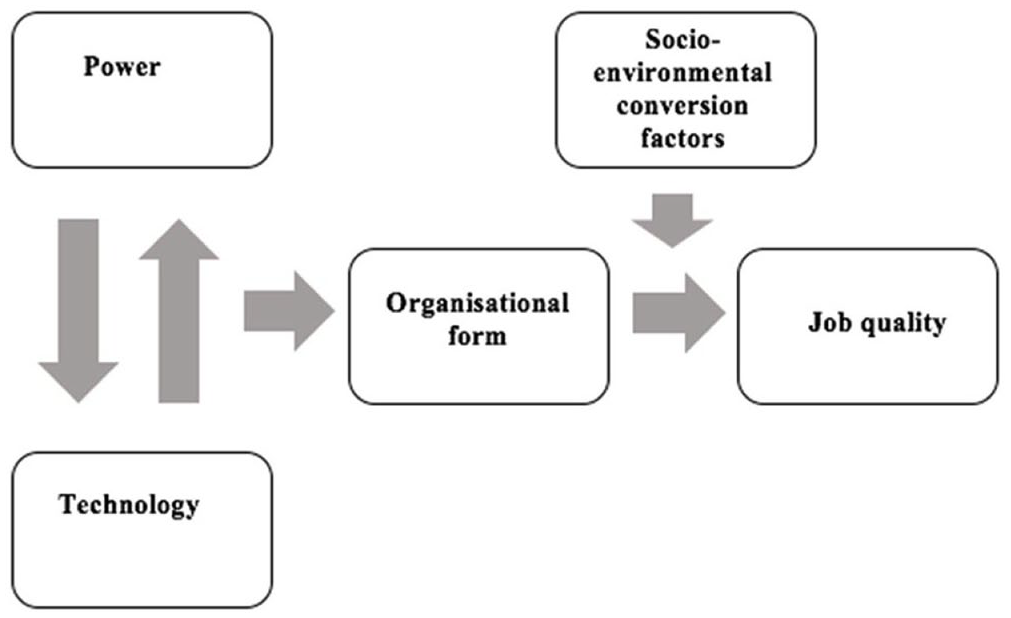
The job quality model of Wood et al. (2019a).
A key source of power for workers is the scarcity of their skills, which determines their ‘marketplace bargaining power’ (Silver, 2003; Wright, 2000). Remote platform work tends to entail more specialised and non-routine problem-solving tasks that require skills such as computer programming, graphic design, marketing, language skills, computer literacy and communication skills (Cedefop, 2020). The data entry tasks that are often referred to as crowdwork, microtasking or clickwork being a notable exception (Wood et al., 2019a), but such work makes up only a small percentage of platform work (Pesole et al., 2018; Stephany et al., 2021). In contrast, local platform work tends to entail routine manual labour involving general skills, such as driving and cycling tasks (see, for example, Pulignano et al., 2023). Additionally, while both remote and local platform work entail the use of platforms, these technologies differ in potentially important ways. Delivery and ridehail platforms tend to entail tighter, more direct forms of algorithmic management (Howcroft and Bergvall-Kåreborn, 2019; Wood, 2021; Wood and Lehdonvirta, 2021). For instance, delivery and ridehail platforms tend to: (1) directly match workers with customers; (2) determine the exact rate that workers are paid; (3) direct workers in how they complete their tasks (i.e. what route they take, how they drive and interact with customers); and (4) use rating systems to discipline or deactivate poor performing workers. Additionally, in the case of food delivery, platforms often dictate workers’ schedules (Wood, 2021).
Conversely, remote gig work platforms enable transactions to take place across vast geographies without requiring proximity between workers and clients (Woodcock and Graham, 2020). Remote work platforms only indirectly shape working conditions by determining the level of competition on the platform while workers remain formally free to choose their clients, tasks and rates. Moreover, rather than deactivating poor performing workers, these remote labour platforms tend to algorithmically filter work on the basis of metrics (Wood, 2021; Wood and Lehdonvirta, 2021, 2023; Wood et al., 2019a).
Therefore, given differences in market bargaining power and the deployment of algorithmic management technologies, job quality divergence across the remote/local platform work divide is to be expected. Specifically, local platform work is expected to generally display worse job quality than remote platform work due to its more routine skill requirements and tighter algorithmic management.
Empirical evidence of sectoral variation in job quality
Despite theoretical expectations that job quality diverges across the local/remote divide, the empirical evidence is inconclusive and often contradictory. For instance, Wang et al. (2022) find that UK platform workers experience worse mental health and life satisfaction due to loneliness and financial precarity, but there are no significant differences between local and remote platform workers. However, this study is limited by including only a few job quality measures. In contrast, two non-peer-reviewed quantitative studies have found that industry differences do exist in terms of pay but find different industries are the best and worst paying, with Lepanjuuri et al. (2018) finding that couriers are the best paid and the CIPD (2017) finding the opposite. However, neither Lepanjuuri et al. (2018) nor the CIPD (2017) attempt multivariate analysis, which is necessary to control for confounding factors. Moreover, these studies include only a limited number of questions related to working conditions and are focused more on satisfaction with aspects of the work rather than the degree to which platform work entails the presence of objective job features. One study that does include more measures of working conditions is that of Glavin et al. (2021) who find that Canadian platform workers experience elevated levels of powerlessness and loneliness, and that ridehail workers experience significantly higher levels of both compared with remote workers. Moreover, as financial strain does not fully explain these findings, Glavin et al. (2021) attribute them to technological differences in algorithmic management. In contrast, Pesole et al. (2018) find local platform workers experience less routine work and fewer tight deadlines than remote workers.
Case studies also indicate further possible dimensions of divergence. For instance, studies of remote platform work have highlighted the high levels of autonomy and discretion as well as work intensity and insecurity that such workers experience (Wood et al., 2019a). In contrast, qualitative research on delivery platform work finds that these workers experience working time flexibility and some discretion but that their autonomy is constrained by the opaque algorithmic management used by food delivery platforms (Goods et al., 2019; Shapiro, 2018; Veen et al., 2020). These findings from the US and Australia build on earlier US ridehail research (Lee et al., 2015; Möhlmann and Zalmanson, 2017; Rosenblat and Stark, 2016) that emphasises the manner by which platforms use algorithmic management and information asymmetries to achieve soft control over workers. Moreover, Heiland (2022) highlights how access to profitable working times acts as an important element in the control of German delivery platform workers. Based on mixed methods research on Chinese delivery work, Sun et al. (2021) go so far as to argue that the extent to which algorithmic control is wielded over workers by platforms means that this work is best understood as ‘sticky labour’ rather than ‘flexible labour’. Moreover, Drahokoupil and Piasna (2019) find that while Belgian platform delivery workers largely feel they have control over the pace of their work, nearly 40% feel they are working under pressure and just over 20% that the work has a negative impact on their health and is stressful.
To summarise, the extant literature is inconsistent regarding sectoral job quality, with Wang et al. (2022) finding no differences across the local/remote divide, Lepanjuuri et al. (2018) and the CIPD (2017) reporting contradictory findings regarding pay and Glavin et al. (2021) noting that ridehail workers experience greater powerlessness and loneliness than remote platform workers – with this being attributed to technological differences in algorithmic management. However, Pesole et al. (2018) find local platform workers experience less routine work and fewer tight deadlines than remote workers. Moreover, case study research is suggestive of differences in terms of autonomy, discretion and flexibility. Therefore, the present article makes use of a novel empirical approach to investigate how local and remote platform work job quality differs in the UK gig economy.
Methods
Taking inspiration from the Shift Project (Schneider and Harknett, 2022), we used an innovative strategic sampling method. This approach was necessary as the population of UK platform workers is hard to reach and thus no robust sampling frame exists. Moreover, its likely small size means that the use of national population-level surveys would result in very small sample sizes. In this situation, Lehdonvirta et al. (2021) highlight the innovative use of online surveys as a means for undertaking exploratory or policy-relevant research that would not otherwise be possible.
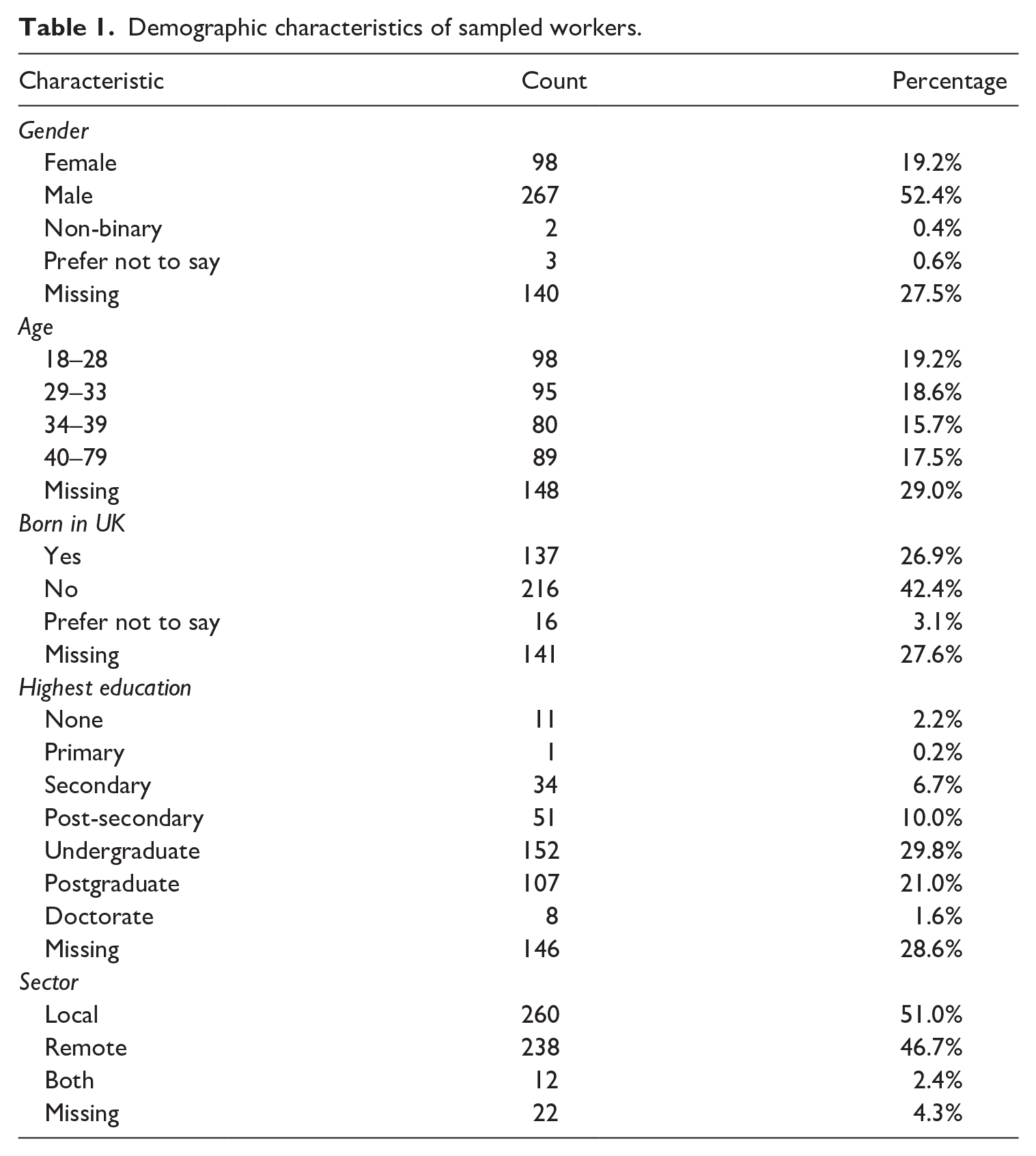
Between March and June 2022, we surveyed 510 UK gig economy workers (257 local platform workers; 253 remote platform workers) (see Table 1). The survey could be completed in English, Bengali, Polish, Portuguese or Spanish (having taken advice from several relevant organisations on the language most commonly used by UK platform workers). Where possible, to ease comparison with existing quantitative research, we based our questions or survey items on established social surveys (see below). Improvements were made to the wording of the questions based on the feedback provided during the piloting. An advantage of fielding a survey specifically designed for platform workers is that it enables the wording to be subtly altered and the questions to be piloted with platform workers to ensure they are relevant for this population. The research received ethical approval from the University of Bristol Research Ethics Committee. Data are available upon request.
Demographic characteristics of sampled workers.
Previous quantitative research has demonstrated the potential for using platform-based adverts to effectively sample remote platform workers (see, for example, Davies et al., 2020; Martindale and Lehdonvirta, 2023; Wood et al., 2019a, 2019b, 2023b). For this project we therefore followed this proven approach and recruited 253 remote platform workers from Upwork – a leading remote work platform. To do this we listed our survey as a job on the platform and in line with quotas for task and gender derived from the International Labour Organization’s (ILO) Online Labour Index (Stephany et al., 2021). Those who completed the survey were compensated with a £10 payment (there is now a considerable literature in the social sciences on the advantages and disadvantages of paying respondents, and no clear evidence on which provides higher quality data (see, for example, Krause, 2021). Checks on the data demonstrated robustness and the small number of cases that showed evidence of being completed with undue haste were removed. Specifically, following quality checks, responses with implausibly short completion times were excluded from the analyses (n = 34), leaving a minimum of 3.5 minutes (median 17). Checks on the remaining sample for respondents simply selecting the first available answer revealed no suspicious activity. For example, on the two survey items requiring the most time only 2% and 1% of workers selected the first three options, respectively, and none did so on both.
Accessing local platform workers (without the support of platform companies) is more challenging as such platforms do not provide a means to directly contact workers. Therefore, to generate our targeted sample of local platform workers, we advertised our survey directly to UK workers active on Facebook/Instagram. The use of platform advertising features allowed us to directly target our survey at users who, for example, listed their interests as ‘Uber Eats’, ‘delivery (commerce)’, ‘Uber (company)’, ‘Drive with Uber’, ‘Taxi Driver’, ‘Hybrid electric vehicle’, ‘TaskRabbit’, ‘Care.com’ or ‘Airtasker’; their employer as ‘Deliveroo’, or their job title as ‘delivery’, ‘Taxi Cab Driver’ or ‘Car Driver’ (as the major remote platforms were not listed as either ‘employers’ or ‘interests’ by Facebook Ad Center at the time of our research this was not a viable means of recruiting such workers and thus we followed the proven approach outlined above). Users matching these interests, employer or job titles were targeted with bespoke adverts designed for delivery, ridehail and domestic platform workers. Facebook/Instagram Ads were used to reach 1.2 million people, of whom 15,500 people clicked through to the survey landing page. By doing so we were able to collect data from 257 local platform workers who primarily worked on the dominant platforms in food delivery and ridehail in the UK: Deliveroo, Uber Eats and Uber.
We make no claims for the representativeness of our findings as the sampling methodologies used in the collection of data likely introduce biases into the sample. Before discussing these issues in more depth, we note that recent research has found that the type of online surveying techniques we have used here are ‘not statistically or practically different [from online panel samples] on relevant attitudinal and behavioural characteristics’, which are otherwise in widespread use (Lehdonvirta et al., 2021: 150). Moreover, Lehdonvirta et al. (2021) highlight the utility of innovative online surveys as a means for undertaking exploratory or policy-relevant research that would not otherwise be possible, such as in the case of smaller, newer and hard-to-reach populations. Our aim, therefore, is to provide an exploratory comparison of job quality between different types of platform labour with a sample that enables us to control for a range of demographic characteristics. The potential for using such data to investigate within-sample differences in this way has been demonstrated by the US retail research of the ‘Shift Project’ (Schneider and Harknett, 2019, 2022; Storer et al., 2020), as well as US delivery platform work (Griesbach et al., 2019; Milkman et al., 2021) and remote platform work (Martindale and Lehdonvirta, 2023; Wood et al., 2023b).
Problems of representativeness exist at both the platform- and worker-levels. Among local platform workers, respondents were only recruited via Facebook/Instagram; among remote workers, only on Upwork. However, an advantage of using Facebook/Instagram advertising is that use of these social media platforms is so widespread that self-selection into the sampling frame is of minor concern (Schneider and Harknett, 2019). Recent estimates indicate that approximately 71% of adults in the UK were active on Facebook at the time of the survey (Battisby, 2019) and are not especially stratified by demographic characteristics (Greenwood et al., 2016). Moreover, Upwork has by far the largest market share globally and in the UK for remote platform work. Therefore, our respondents work in the preponderant mainstream of remote platform work.
At the level of workers, our use of an incentivised click-through advert in recruiting local platform workers likely introduces biases into our results; for example, for those more interested in completing surveys and those attracted to the iPad prize. Nevertheless, such a strategically targeted ‘river’ sample (whereby respondents are recruited while they are online doing something else, such as checking their social media) is a low cost means of achieving good coverage across conceptually important categories, such as remote or local platform work, migrant or UK born, male or female, younger or older, and more or less-well educated. By doing so we are able to highlight where outcomes are unlikely to be influenced by such characteristics due to the absence of substantial differences. Conversely, this approach allows us to identify outcomes that are more likely to be sensitive to the actual makeup of the platform worker population.
Key measures
We fielded an online survey that collected data on job characterises, working conditions, wellbeing, political values and behaviour, collective organisation and action, communication, preferences for labour rights and policy interventions, and demographics. The survey first asked the following screening questions to ensure the respondent was a platform worker:
1) Thinking about the past month, which, if any, of the following have you done in order to make money using a website, platform or app? (tick all that apply)
– Carried passengers in your vehicle (e.g. taxi rides)
– Delivered food and drink from restaurants and food outlets to people
– Provided courier services (e.g. package and postal deliveries, messenger services, etc.)
– Performed manual tasks (e.g. cleaning, decorating, building, home fixtures and repairs, pet-sitting, etc.)
– Performed non-manual tasks (e.g. web and software development, writing and translation, accounting, legal and admin services, marketing and media, audio and visual services, etc.)
– None of these
2) For these services or tasks, are the payments made to you through the website, online platform or digital app that you use to find work?
Further questions were then asked to identify what type of platform work was undertaken and in what quantity. These initial questions were adopted from the Understanding Society (University of Essex, Institute for Social and Economic Research, 2021) and COLLEEM (Pesole et al., 2018) surveys.
We use the highly influential and well-validated model of job quality that has been developed and modified over the years by Gallie, Green, Felstead and colleagues (see, for example, Felstead et al., 2019; Gallie et al., 2018; Green, 2006; Green et al., 2022). We therefore investigate job quality in terms of pay, autonomy and discretion, flexibility, useful work, 2 organisational influence, insecurity, work intensity, health and safety, and physical isolation. In addition, we have added other items that might be particularly pertinent to the nature of platform work, such as isolation at work, based on the European Working Conditions Survey (Eurofound, 2022) and the iLabour survey (Wood et al., 2023b). The demographic questions were taken from the British Social Attitudes (BSA) survey (Butt et al., 2022).
Controls
To understand whether differences in job quality across the remote/local divide are more likely the result of compositional factors identified in the existing literature or differences in technology and power that Wood et al. (2019a) have highlighted, we use multivariate analysis to control for worker sex, migration status, educational attainment and dependency on platform work.
Dependency on platform work has been identified as a key individual worker characteristic that influences experiences of dissatisfaction, autonomy, schedule control, access to work, hourly wages and precarity (Glavin and Schieman, 2022; Goods et al., 2019; Ravenelle, 2019; Schor et al., 2020, 2023). We therefore control for the percentage of workers’ total earnings that they derive from platform work. Recent scholarship has also stressed the centrality of migrant status to experiences of platform worker job quality (Kowalik et al., 2024). We therefore control for whether respondents were born in the UK or not. Likewise, we control for respondents’ gender, which has been shown to be a key determinant of pay (Berg et al., 2018), precarity (Gerber, 2022), tasks and hours (Wood et al., 2019a), and health and safety (James, 2022). Finally, we control for education as higher education has been found to reduce bad job characteristics (Kalleberg et al., 2000).
Given the limitations of our non-probability river sample, it was necessary to adopt an exploratory approach to the analyses, which used both descriptive statistics and multivariate regressions. Therefore, we do not attempt formal hypothesis testing and we are mindful of our ability to make inferences to the population of UK platform workers (Lehdonvirta et al., 2021). But in the spirit of EDA (Exploratory Data Analysis – see, for instance, Marsh and Elliott, 2008), we attempt to develop some fertile directions for future research. Although our data are unable to produce population-level estimates due to unknown representativeness, these data do enable us to investigate within-sample relationships and are therefore adequate for the purpose of this article.
Findings
Since few extant studies examine job quality across the UK gig economy, we present our descriptive statistics for job quality in both remote and local platform work and then discuss the results of our multivariate analysis. As we are interested in whether differences exist across the remote/local divide rather than the size of the resulting coefficients, we simply discuss whether particular findings were significant or not rather than presenting the regression tables, which are instead included in the online appendix.
Uniformity in local and remote platform work
Autonomy: Influence over what tasks are undertaken
The objective autonomy of a job refers to the opportunities to directly and independently exercise skill, discretion, control, initiative and judgement while possessing opportunities for direct participation in one’s work and is widely understood as central for meaningful work (Gallie, 2019; Halldén et al., 2012; Laaser and Karlsson, 2022). We collected data on two ways in which local and remote platform workers might experience autonomy when carrying out their tasks: influence over what tasks are undertaken and influence over how tasks are undertaken. Our survey respondents reported substantial autonomy (Figure 2). In fact, comparing our findings to the 2017 Skills and Employment Survey (Gallie et al., 2018) suggests that, relative to workers using similar skills, both local and remote platform workers experience greater autonomy. 3 In terms of personal influence over what tasks are undertaken, we find 86% of remote workers experiencing a great deal or a fair amount of influence over what tasks they do, relative to 72% of local workers. However, this difference is not statistically significant.
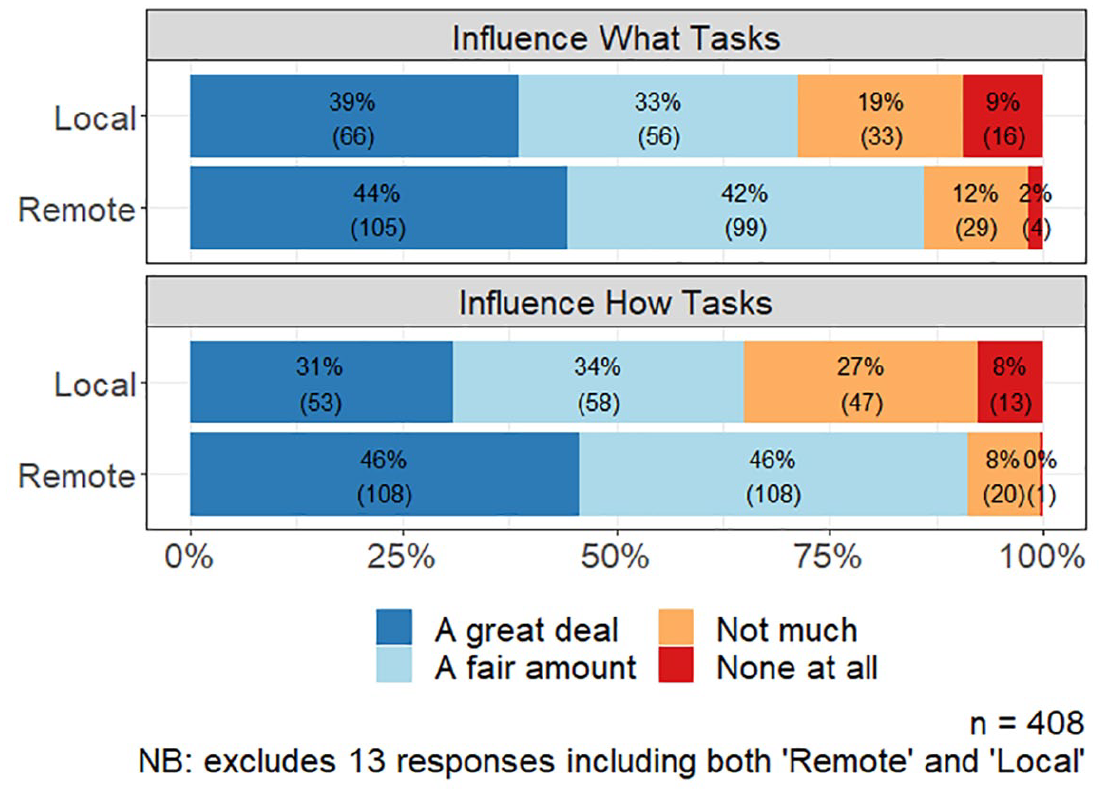
How much influence do you personally have on . . .
Work intensity
Intense working is a widespread feature across the UK labour market (Green et al., 2022) and, as can be seen in Figure 3, this is also the case for both remote and local platform work. In fact, there was only a 5% difference in the number of local and remote workers saying their work involved working to tight deadlines at least three-quarters of the time but local platform workers were much more (18 percentage points [pp]) likely to say that they worked to tight deadlines all the time. However, the difference in work intensity is not statistically significant in our multivariate analysis.
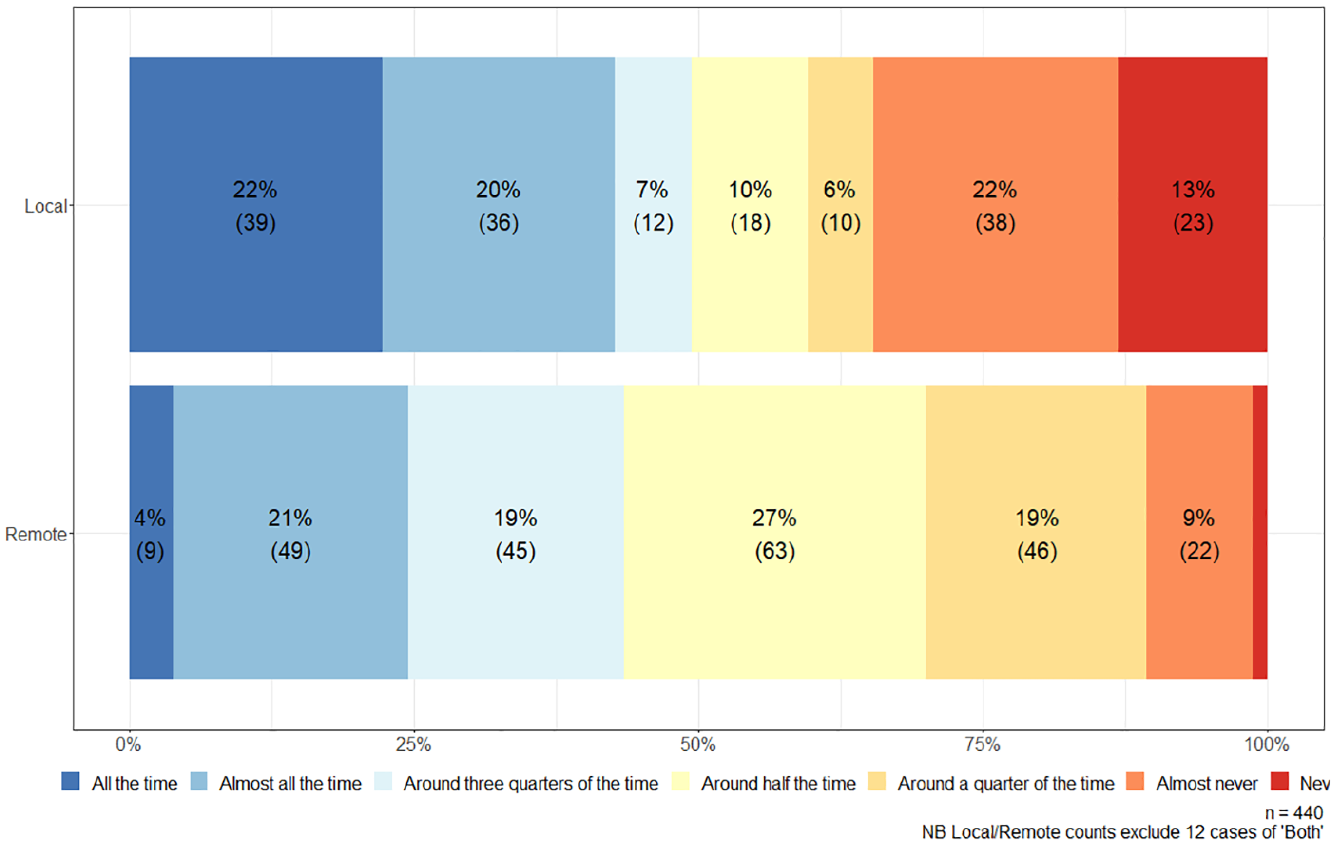
How often does your job involve working to tight deadlines?
Job insecurity
Our survey uncovered very high levels of insecurity among our respondents in terms of both feeling there was a chance of losing their ability to make a living and becoming unemployed as well as other types of work-related insecurity (Wood and Burchell, 2018). There was little difference in how likely local and remote platform workers thought it was that they would lose their ability to make a living on their main platform (44% vs 38%) or how worried they were about receiving unfair feedback that impacts their future income (which Wood and Lehdonvirta (2023) highlight as an important and prevalent dimension of insecurity for platform workers) (Figure 4E). In our multivariate analysis, neither of these two insecurity measures yielded significant differences between local and remote platform workers.
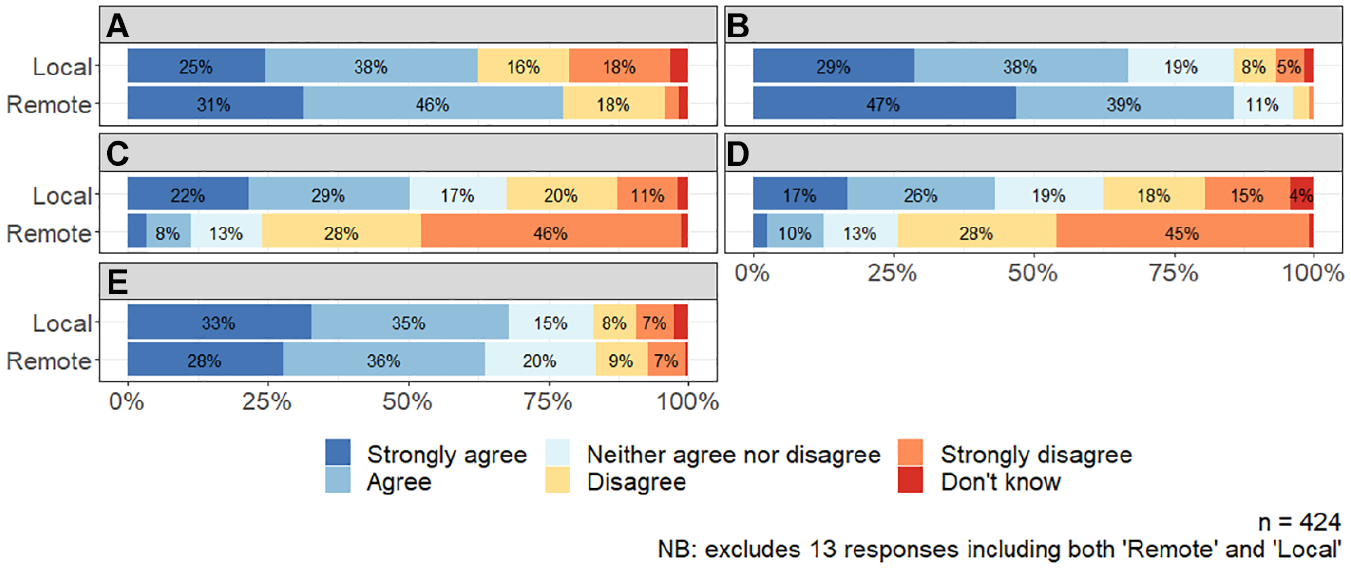
Agreement/disagreement with survey items: (A) decide start time; (B) useful work; (C) risk health & safety; (D) pain due to work; and (E) fear unfair feedback.
Variation in local and remote platform work
Pay
The gig economy workers in our study reported low pay, with their real gross hourly pay (i.e. what they earned on average per hour including waiting times before tax and other deductions) often being below the minimum wage. Hourly pay was on average 20% higher in the remote gig economy (median = £10) than in the local gig economy (median = £8). That pay is better in remote platform work is supported by our multivariate analysis, as the association is significant after controlling for demographic characteristics. One factor contributing to our respondents’ low rates of hourly pay was that they reported spending significant amounts of time logged on to their platform and waiting for, or looking for, work (median remote = 4 hours; local = 10 hours). The statistical significance of this difference in unpaid waiting time disappears when controlling for dependency on their platform income. The now significant positive association between unpaid waiting time and dependency implies that workers who derive a greater proportion of their earnings from platform work do so by working a larger proportion of unpaid hours, and this is more characteristic of local platform workers.
Flexibility
Our respondents frequently responded that it was easy for them to take time off to deal with personal or family matters and to decide the time they start and finish work. As can be seen in Figure 5, remote platform workers are around 15 pp more likely to say that it is not difficult for them to take an hour or two off during working hours to take care of personal or family matters (86% vs 70%). A greater percentage of remote platform workers can also decide the time they start and be reasonably confident of having work to undertake (77% vs 63%) (Figure 4A). Both differences are statistically significant in our multivariate analysis.
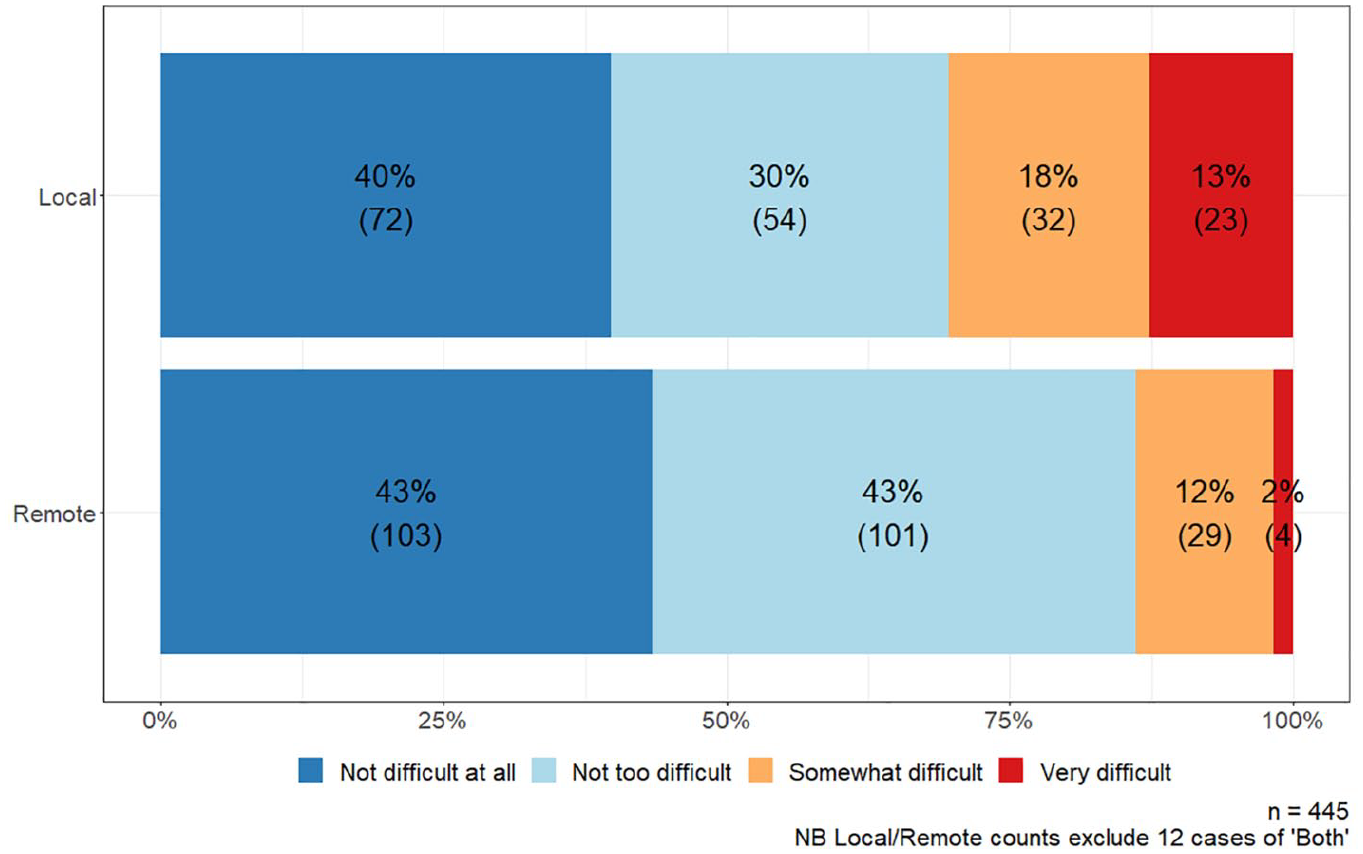
Would you say that for you arranging to take an hour or two off during working hours to take care of personal or family matters is . . .
Autonomy: Influence over how tasks are undertaken
As highlighted above, local and remote platform workers did not significantly differ in terms of influence over what tasks are undertaken. However, we also collected data on another dimension of autonomy: influence over how tasks are undertaken (Figure 2). Here we find levels of autonomy do differ markedly according to whether respondents were undertaking remote or local platform work. Ninety-two percent of remote workers experienced a great deal or a fair amount of influence over how they are to do tasks, relative to 65% of local workers. Moreover, this much larger difference in influence over how tasks are undertaken is statistically significant in our multivariate analysis
Useful work
As can be seen in Figure 4B, both remote and local platform workers overwhelmingly felt they were doing useful work, but remote workers were substantially (19 pp) more likely to do so. This large difference is statistically significant in our multivariate analysis.
Organisational influence
As can be seen in Figure 6, most of our respondents felt that they would not have any say in decisions that changed the way they went about their work. There was little difference between local and remote platform workers in terms of the magnitude of those who felt they were unlikely to have a say (53% vs 59%); however, local workers were somewhat more positive regarding the prospects for definitely having a say as opposed to remote workers who were more likely to feel that it would depend on the situation. This more positive view of local platform workers is statistically significant in our multivariate analysis.
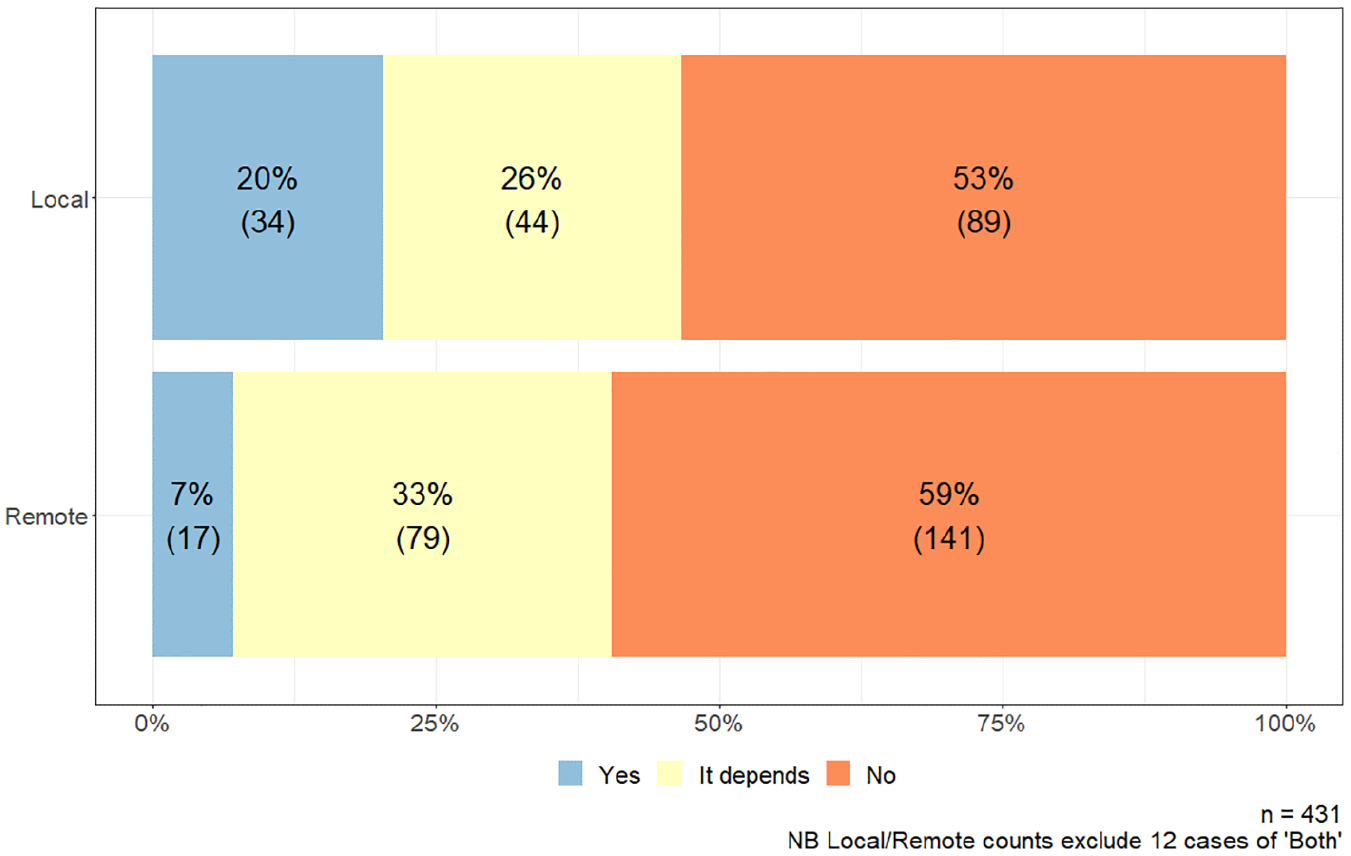
Personal say in decisions that change the way you go about your work.
Job status insecurity
The similar levels of job and reputational insecurity experienced by local and remote platform workers were documented earlier. However, Gallie et al. (2017: 37) highlight the importance of what they term ‘job status insecurity’, which ‘relates to anxieties about the threat of loss of valued features of the job’, such as pay, voice, skill and working time. It is when looking at insecurity beyond fears regarding job and income loss that differences between local and remote platform workers become apparent. As can be seen in Figure 7, local platform workers experienced markedly higher rates of insecurity regarding pay, voice, skill and working time. Local workers were 16 pp more likely to be anxious regarding their future pay; 34 pp more likely to be anxious about having less say over how their job is done; 18 pp more likely to be anxious about it becoming more difficult for them to use their skills; and 25 pp more likely to be anxious regarding unexpected changes to hours. All these differences are statistically significant in the multivariate analysis. Additionally, as suggested by Schor et al., (2020) and Glavin and Schieman (2022), dependency increases all these forms of insecurity apart from skill insecurity.
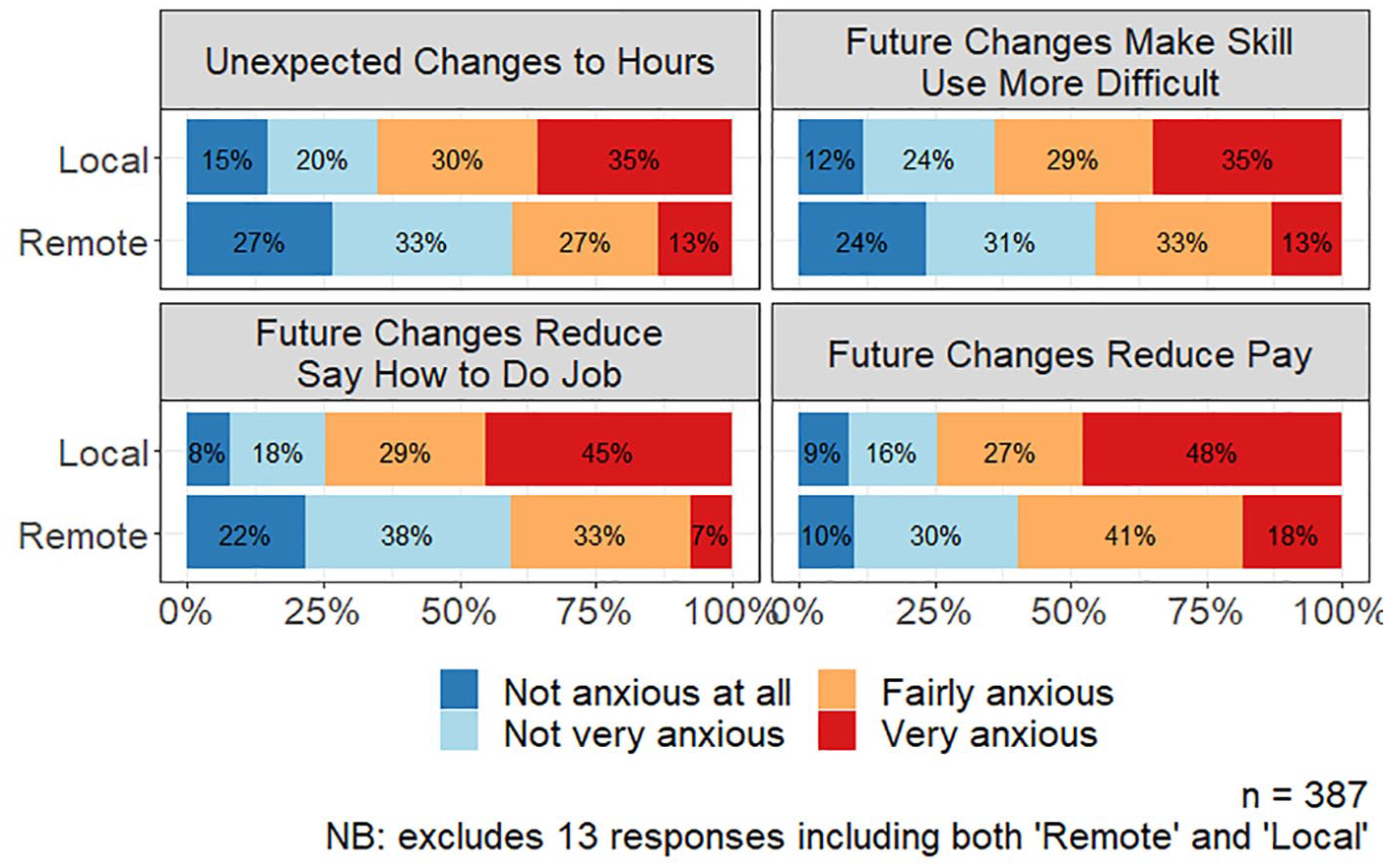
To what extent are you anxious about . . .
Health and safety
The perception that workers are putting their physical health and safety at risk is one area where we find the largest divergences in experience between remote and local platform workers. Local platform workers were nearly five times as likely to feel they were risking their physical health or safety (51% vs 11%) and more than three times as likely to report that they experience pain as a result of their work (43% vs 13%) (Figure 4C and 4D). Unsurprisingly, these large differences are statistically significant in our multivariate model.
Isolation
As can be seen in Figure 8, remote workers were markedly more likely to be physically isolated from other workers than those in the local gig economy, with 75% rarely or never interacting in this way with other workers compared with 48% of local workers. This difference was also statistically significant in our multivariate analysis.
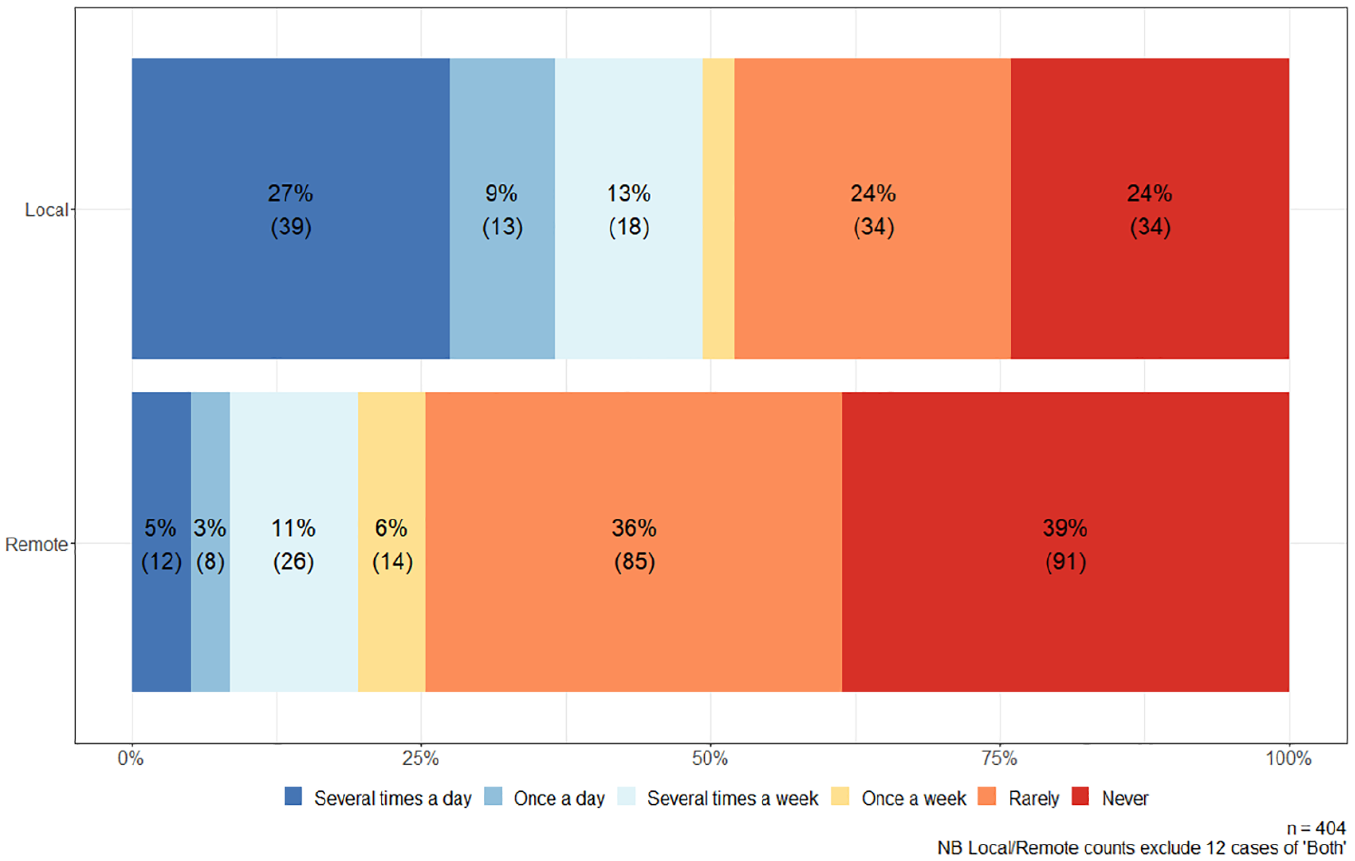
Face-to-face communication with other platform workers.
Discussion and conclusion
Where our findings offer a major empirical contribution is in finding very marked differences in job quality between remote and local platform work. Although remote platform workers reported better job quality than local platform workers on many measures (better pay, more flexibility, more influence over how to do their job, greater sense of doing useful work, better health and safety, less pain and less work-related insecurity), local platform workers, nevertheless, experienced more organisational influence and less physical isolation. This is surprising as the attempts by remote platforms to provide their workers with more voice, highlighted by Gegenhuber et al. (2021), have not been very effective. Thus, the various ways in which job quality for the remote and local platform workers differs are complex. This evidence suggests that the problems facing remote and local platform workers are very different. Therefore, accounts that are sensitive to variety in platform work are needed in contrast to homogenising accounts of ‘the gig economy’. Indeed, job quality research that fails to disaggregate these workers is likely misleading as differences between remote and local workers may cancel each other out or tend only in one direction if only specific aspects of job quality are assessed. Nevertheless, that we were not able to detect meaningful differences between remote and local platform workers in influence over the content of job tasks, work intensity, job insecurity and reputational insecurity suggests that there are some technological affordances that override differences in work and scarcity of skills.
Moreover, while some of our findings are in line with the general picture painted by extant research regarding platform working conditions, they contradict other studies in important ways when it comes to how remote and local platform work differ or not. In particular, our findings that local platform workers experience greater pay and physical isolation is at odds with Wang et al. (2022), who find that there are no differences across the local/remote divide in terms of loneliness or financial precarity. Our findings also contradict those of Lepanjuuri et al. (2018), who find that remote platform workers receive worse pay than those undertaking delivery work. Moreover, our findings that remote platform workers experience greater influence over how tasks are undertaken and that local and remote platform workers do not differ significantly in work intensity contradict the findings of Pesole et al. (2018), who find that local platform workers experience less routine work and fewer tight deadlines than remote workers. Finally, our findings contradict those of Glavin et al. (2021), who find that delivery platform workers experience greater loneliness than remote workers. We find that it is remote platform workers who are more physically isolated.
There are, therefore, two major implications for future research: one prescriptive, the second exploratory. First, when discussing findings, researchers should be careful to distinguish between workers in the local and remote platform economies and be clear which elements of job quality they are investigating. Second, though we have demonstrated considerable differences between remote and local platform workers, this may not be the only relevant way to distinguish between platform workers. Research should seek to assess whether, for example, job quality varies along other dimensions. For example, job quality within remote and local platform work is likely to vary at a more granular level in line with industry and task differences.
The major theoretical contribution of this article is to support and elaborate the model of job quality proposed by Wood et al. (2019a) by uncovering potential ways in which specific differences in technological affordances and power interact to shape job quality in platform work. Our findings indicate that job quality in platform work does indeed result from organisational forms shaped by the interplay of technology and power. Specifically, local platforms deploy a tighter form of algorithmic management in which delivery and ridehail platforms tend to directly match workers with customers, determine the exact rate that workers are paid, direct workers in how they complete their tasks (i.e. what route they take, how they drive and interact with customers) and operate high levels of digital surveillance and discipline via rating systems that ‘deactivate’ poor performing workers (Wood, 2021). Additionally, local platform work entails general manual labour, such as driving and cycling tasks (Pulignano et al., 2023). Our findings suggest that this combination of weak bargaining power and tighter algorithmic management leads to an organisational form, which, from a job quality perspective, is significantly worse in many regards compared with that of remote platform work. In particular, local platform workers tend to experience worse pay, less flexibility and autonomy, a lower perception of undertaking useful work, and greater anxiety regarding their future pay, such as skill use and hours. Local platform work also poses significantly more of a health and safety risk and causes greater pain than remote platform work.
However, our findings also highlight the need to avoid reductionism, whereby local platform work is always considered to have worse job quality than its remote counterpart. The organisational forms adopted in local and remote platform work also differ substantially in one further important regard due to differing technological affordances. While the algorithmic management of remote platforms is looser and less direct, it does effectively enable transactions to take place across vast geographies without requiring proximity between workers and clients (Wood et al., 2019b). As a result, this technology creates an organisational form in which workers can be highly physically isolated from one another and from the platform company for which they are working. This in turn can leave them struggling more than local platform workers to influence the decisions made by platforms that impact their work. Indeed, the role of team leaders and low-level managers in the labour process of delivery work (Herr, 2025; Ivanova et al., 2018) and the on-boarding process in ridehail (Bloodworth, 2018), has been highlighted in extant qualitative research. In contrast the absence of such communication opportunities has been highlighted as a source of frustration among remote platform workers. For example, Wood and Lehdonvirta (2021) document that the only communication channels available to these workers are customer service ones due to the platform companies’ insistence that they are not workers. This finding expands those of Wood et al. (2023a, 2023b) and Martindale et al. (2024) that gig economy workers desire voice and representation via trade unions and platform-based works councils by highlighting that this would be especially beneficial for those undertaking remote platform work (see, also, Graham and Wood, 2016).
As such, our findings are consistent with recent studies of platform work that stress the importance of technology (specifically platform design and algorithmic control) (Glavin et al., 2021; Pulignano et al., 2023) and skill-related bargaining power (Pulignano et al., 2023) in determining platform labour working conditions. However, our findings contradict the small number of existing studies that have attempted to assess differences between remote and local platform workers: (1) Wang et al. (2022) who find that there are no significant differences in job quality across local/remote platform work; (2) Lepanjuuri et al. (2018) who find that remote platform work is the less well-remunerated type of platform work; and (3) Glavin et al. (2021) who find that local platform workers experience greater loneliness – perhaps suggesting that this finding is specific to the Canadian context. The divergence of our findings from extant studies potentially reflects the fact that our novel exploratory method enabled us to field a large range of job quality measures and to subtly tailor them specifically for platform work.
Overall, this study lends credence to the importance of moving beyond homogenising accounts that assume a set of unified experiences in the ‘gig economy’. This article brings into focus an alternative in which the gig economy is understood as encompassing platforms exhibiting a wide range of organisational forms. This diversity is the result of a variety of business models that require the deployment of distinct technologies to effectively mobilise and organise the labour of specific workers who embody differing levels of bargaining power.
Supplemental Material
sj-docx-1-wes-10.1177_09500170251336947 – Supplemental material for Beyond the ‘Gig Economy’: Towards Variable Experiences of Job Quality in Platform Work
Supplemental material, sj-docx-1-wes-10.1177_09500170251336947 for Beyond the ‘Gig Economy’: Towards Variable Experiences of Job Quality in Platform Work by Alex J Wood, Nicholas Martindale and Brendan J Burchell in Work, Employment and Society
Footnotes
Acknowledgements
We are grateful to Dr Shuting Xia for her work carrying out data collection. We are also thankful for the financial support the Gig Rights Project received from the British Academy (grant: SRG2021∖210344) and the University of Bristol Business School. Finally, our advisory project partners were especially generous with their time. Their input was vital for the design of the survey instrument, and they also provided us with substantial comments on this report. In particular, we would like to thank Mary Towers and Tim Sharpe at the TUC, Uma Rani at the ILO, Simone Cheng, David Taylor, Gill Dix and Heather Taylor at Acas, Fabian Wallace-Stephens at the RSA and Jonny Gifford at the CIPD. We would also like to thank Lina Dencik for her comments on an early draft. The findings of this article were presented at the BUIRA, SASE and WES conferences and the final article has benefited from comments from audience members as well as the journal’s three anonymous referees and editor.
Funding
The authors disclosed receipt of the following financial support for the research, authorship, and/or publication of this article: British Academy, grant/award number: SRG2021∖210344.
Ethics statement
Research was performed on humans/animals and received ethical approval from the Bristol University School of Management Research Ethics Committee. Data are available upon request.

Supplementary material
The supplementary material is available online with the article.
Notes
References
Supplementary Material
Please find the following supplemental material available below.
For Open Access articles published under a Creative Commons License, all supplemental material carries the same license as the article it is associated with.
For non-Open Access articles published, all supplemental material carries a non-exclusive license, and permission requests for re-use of supplemental material or any part of supplemental material shall be sent directly to the copyright owner as specified in the copyright notice associated with the article.
