




Abstract
Little is known about how the use of ride-hail apps (e.g. Uber, Lyft) affects drivers’ propensity to engage in risky behaviours. Drawing on labour process theory, this study examines how algorithmic control of ride-hail drivers encourages risky driving (i.e. violating road safety rules, carrying weapons). Furthermore, the theory of work precarity is used to explain why multiple jobholders (MJHers), who work for ride-hail companies, drive taxis and hold other jobs, may be more likely to take risks while driving due to income insecurity and erratic work hours. The hypotheses are tested in a sample (N = 191) of ride-hail drivers, taxi drivers and MJHers. The results suggest that MJHers are more likely to engage in risky driving in comparison to ride-hail and taxi drivers. Theoretical, practical and policy implications are discussed.
Introduction
Risk is synonymous with precarity (Kalleberg and Vallas, 2018), especially for gig workers whose work is characterized by short-term contracts and self-employment (Ashford et al., 2018). Gig workers face an abundance of risk, not only because of their status as self-employed contractors with limited legal, financial and social protections (Dubal, 2017; Kaine and Josserand, 2019), but also because of how their work is managed. Many gig workers are managed solely by smartphone applications, the most ubiquitous being ride-hail platforms (Purcell and Brook, 2022), which connect private-vehicle drivers with passengers (Rosenblat and Stark, 2016). Such platforms usher in their own set of risks for workers, including the persistent threat of being deactivated from accessing the app and thus prevented from earning an income (Burrell and Fourcade, 2021). Wood and Lehdonvirta (2021) call this particular form of precarity ‘algorithmic insecurity’.
It has been proposed that common ways for gig workers to cope with the anxiety, insecurity and uncertainty associated with these precarious roles are to take on multiple jobs (Campion et al., 2020; Ilsøe et al., 2021), or by ‘adopt[ing] protective strategies to defend themselves’ (Kalleberg and Vallas, 2018: 2). These hedging behaviours also represent a tangible response to the very real health and safety risks associated with ride-hail driving (e.g. accidents, injury; Crain et al., 2020). Over 80% of ride-hail drivers have reported safety concerns about their work, including fear of theft and physical assault (Rani et al., 2021). Drivers are frequent victims of physical assault (McClarty, 2021), robbery (Clark, 2021) and homicide (Smythe, 2021). Not only is the exposure to risk a concern for ride-hail drivers, but these precarious contexts may heighten their awareness of and motivation to manage such risk. Indeed, rather than refusing a potentially dangerous passenger and risking deactivation from the ride-hail app, many ride-hail drivers carry weapons such as mace to protect themselves (Chun, 2020; Ladegaard et al., 2022).
Concerns have also been raised by the public about the safety of ride-hailing (e.g. Acheampong, 2021; Chaudhry et al., 2018). Among the top concerns associated with ride-hailing, passengers have reported that they are worried the technology would distract drivers and increase the risk of an accident (Chalik Law, 2018). These fears are not unfounded. A recent study conducted by the International Labour Organization across 100 countries indicates that 79% of professional drivers reported feeling stressed about their work, and many felt pressured to speed (Rani et al., 2021). Unsafe behaviours, such as speeding or carrying weapons (e.g. brass knuckles), are risky in that they can lead to accidents (e.g. Berneking et al., 2018; Rosenblat and Stark, 2016) and potential harm to passengers and drivers. While many drivers are engaged on more than one platform at a time (Malin and Chandler, 2017), little is known about the safety/risk implications for people with multiple jobs or gigs (i.e. those who hold another job in addition to driving for ride-hail and taxi companies). It is this latter group, which are labelled as multiple jobholders (MJHers) in this study, that may be even more likely to engage in unsafe behaviours while driving irregular hours to earn an income at the expense of important rest and recovery. The aim of the current study is to understand the personal risks taken by different types of drivers to manage the uncertainty associated with precarity: do ride-hail drivers, taxi drivers or MJHers take the most risks on the road? Why?
Recent research indicates that road accidents are the greatest hazard for drivers in the gig economy, followed by safety and harassment concerns (Gregory, 2021). Therefore, the focus in this study is on two forms of risky behaviours that professional drivers may engage in: (a) blatantly unsafe behaviours such as driving when very tired; and (b) carrying weapons (e.g. pepper spray, guns), especially when driving into unfamiliar neighbourhoods or picking up intoxicated passengers. This research builds on the results of a recent qualitative study, which found that drivers who used ride-hail apps engaged in unsafe driving behaviours such as speeding because they felt increased time pressure (Christie and Ward, 2019).
This study makes several important contributions to the literature on the gig economy. First, this study is a response to recent calls for research (e.g. Ashford et al., 2018) to compare workers who have similar job descriptions yet different employment relationships (e.g. gig workers managed by smartphone apps and workers in similar occupations not managed by apps). Second, by differentiating between two forms of alternative employment, gig workers with one type of gig (i.e. driving) and those with multiple gigs (i.e. MJHers), the study contributes more nuanced findings to the growing literature on alternative employment arrangements, a future direction proposed by Spreitzer et al. (2017). Finally, MJHers are included in this study in recognition that many research samples are insufficiently representative of today’s working population, in which many workers hold more than one job (Bergman and Jean, 2016) – in some cases up to seven jobs at one time (Smith and McBride, 2021). In fact, Smith and McBride (2021) refer to MJHers as ‘the forgotten workers’ because these individuals tend to be excluded from research and ignored in policy development. This study of MJHers in multiple forms of precarious work also draws attention to job quality, which Kalleberg (2020) notes is a major concern.
Presented below are study hypotheses and theoretical frameworks. Socioeconomic theories of the capitalist labour process (e.g. see Gandini, 2019; Smith, 2015 for a review) and precarity (e.g. Kalleberg, 2009; Rubery et al., 2018) are applied to illustrate that the behaviour of exploited and precarious workers may be a result of decisions made under threat of job loss, insecure income or lack of choice. These frameworks illustrate why workers may take risks (i.e. unsafe driving, carrying weapons) at the expense of their own safety. First, a comparison of professional drivers in the United States, where a majority of the study’s sample resides, is provided to give additional context for the analysis.
A comparison of different types of drivers
According to a McKinsey global report (2016), 20–30% of workers around the world are engaged in some form of gig work; a majority use gig work to supplement their primary income. To illustrate, prior to driving for Uber, many individuals already hold another part-time or full-time job, and keep this job while also driving for Uber (Hall and Krueger, 2018). Over 26 million individuals worldwide have employment arrangements such as this out of financial necessity (McKinsey Global Institute, 2016).
One global ride-hail company, Uber, operates in over 10,000 cities around the world (Uber, 2022b). The number of drivers on the road who drive for ride-hail companies far exceeds the number of taxi drivers. For example, in New York City, there are over 78,000 vehicles on the road driving for ride-hail companies, in comparison to only 13,500 taxis (De Blasio and Jarmoszuk, 2020). The majority of taxi drivers in the United States operate and lease fleet vehicles from taxi companies or owners (Occhiuto, 2017), and pay a fixed weekly or daily lease rate (Angrist et al., 2021). In contrast, ride-hail drivers use their own vehicles.
One of the most important differences between taxi and ride-hail drivers is how they are managed. Not only do ride-hail apps assign work by connecting drivers to passengers (which is the only legal means by which ride-hail drivers can pick up passengers and obtain fares), but they also evaluate and reward drivers (Davis and Sinha, 2021). The algorithm uses data (e.g. passenger feedback and ride-acceptance rates) to decide whether drivers may continue to use the app or whether they will be deactivated by the company (Lee et al., 2015). For instance, ride-hail companies monitor driver acceptance rates (Rosenblat, 2018), and drivers have only 15 seconds to decide to accept potential fares (Uber, 2019a). In addition, drivers may be temporarily or permanently suspended if they receive low ratings from passengers (Uber, 2019b).
In contrast, drivers who work for traditional taxi companies obtain fares through multiple means, including street hails, a dispatcher, or a taxi app that allows passengers to hail a taxi and pay electronically (Calo and Rosenblat, 2017). Taxi apps are primarily designed for passenger and driver convenience (e.g. cashless payment, promotional discounts) and do not replace human managers or dispatchers. Taxi drivers typically have information about the potential trip destination prior to accepting passengers, meaning they can make informed assessments about the fare profitability and safety. Furthermore, while taxi passengers do have avenues to submit complaints about drivers, such as through customer satisfaction surveys or hotlines (Sam Schwartz Engineering, 2019), customer complaints do not typically lead to drivers being immediately dismissed – as is often the case for those driving for ride-hail companies. Instead, complaints about taxi drivers tend to follow due process and are normally investigated by a human representative at a dedicated government agency (e.g. the LA Department of Transportation).
Passenger fees for ride-hail and taxi vehicles operate in approximately the same manner: drivers receive a base fare, plus additional compensation for distance travelled and per minute (Calo and Rosenblat, 2017). In some cases, drivers will receive surge rates during high demand times or in busy locations. The mean hourly wage for taxi drivers in the United States is US$14.45 (Bureau of Labor Statistics, 2021); in comparison, gross hourly earnings for ride-hail drivers is approximately US$21.07 before a 20–25% commission taken by the ride-hail company for each fare received (Cook et al., 2021). Net hourly earnings for ride-hail drivers are projected to be anywhere from US$11.77 (Mishel, 2018) to US$14.85 (Henao, 2017). For taxi drivers who lease vehicles from companies, no additional fees are taken from driver fares aside from paying the daily or weekly lease amount (Angrist et al., 2021). Ride-hail drivers must also pay expenses such as gas, vehicle repairs, maintenance and insurance (Davis and Sinha, 2021; Hall and Krueger, 2018; Henao, 2017). Insurance companies may also charge high rates for hybrid insurance policies (i.e. personal and commercial coverage), leading ride-hail drivers to forgo purchasing these policies and therefore incurring personal liability in the event of an accident (Dubal, 2017). While taxi drivers may pay expenses such as gas (Angrist et al., 2021), many do not have to pay for insurance (Henao, 2017).
There are also demographic differences between ride-hail and taxi drivers. For example, in the United States, approximately 52% of taxi drivers are white in comparison to 60% of ride-hail drivers (Kooti et al., 2017). Ride-hail drivers are on average younger than taxi drivers; the largest age category of ride-hail drivers in the United States is 30–39 years old, while the largest age category of taxi drivers in the United States is 50–64 years old (Hall and Krueger, 2018). Over 83% of taxi drivers are men in comparison to approximately 73% of ride-hail drivers (Cook et al., 2021).
When it comes to passenger demographics, ride-hail platforms may predominantly serve younger passengers with higher socioeconomic status (Rayle et al., 2016) and those who are more highly educated (Clewlow and Mishra, 2017). A majority of passengers only hail ride-hail vehicles when going out socially, to avoid driving after drinking, to get to the airport or when out of town (Clewlow and Mishra, 2017; Henao, 2017). Because there is a large supply of ride-hail drivers on the road, passengers may also be more likely to hail a ride-hail vehicle than order a taxi. Indeed, research indicates that, on average, the wait time for a ride-hail vehicle is less than three minutes in comparison to a 15-minute wait for a taxi (Rayle et al., 2016).
Theoretical framework and study hypotheses
Algorithmic management, control and resistance
Control, resistance and exploitation are key elements of the capitalist labour process (see Smith, 2015 for a review); these elements help frame an understanding of individuals whose work is mediated by digital labour platforms (Gandini, 2019). Control over the labour process for these workers is achieved in two key ways: management by algorithms (i.e. algorithmic management; see Bérastégui, 2021 for a review) and management by consumers (e.g. Cameron, 2022; Gandini, 2019). Smartphone apps are the point of production where customers and workers interact, and the only means through which many gig workers can receive payment for their labour. Consumers provide inconsistent ratings to workers, and opaque algorithms programmed into the app determine whether workers may continue to use the app and earn income (Cameron and Rahman, 2022). Some gig workers, such as ride-hail drivers, also experience continuous monitoring via smartphone apps, which significantly limits worker autonomy, and leads to increased insecurity and anxiety (Wood, 2021). This study considers how such control mechanisms influence driver behaviour by drawing on the literature on algorithmic management and worker resistance.
Governments and platform companies alike have touted the benefits of gig work as something new and exciting – gig work creates opportunities, freedom and autonomy – while obscuring unequal power relations and exploitation of workers (Shibata, 2020). Indeed, when ride-hail apps first became available, many existing taxi drivers made the switch to drive for companies like Uber and Lyft, with the promise of greater flexibility, autonomy and quick earnings (Johnston, 2021; Rosenblat, 2018). However, drivers soon discovered that they were exploited further – they had to work more hours to make the same amount of money, and often earned less than they had as taxi drivers (Johnston, 2021). Drivers traded more traditional forms of management for the draw of having ‘no office and no boss’ (Uber, 2022a), only to experience heightened control over their labour (Purcell and Brook, 2022). One of the main goals for companies such as Uber and Lyft is to ensure there are enough drivers on the road to easily meet passenger demand (Hua and Ray, 2018) and provide cheap rates to passengers (Raz, 2018). There is minimal consideration of working conditions or pay for drivers. In contrast, drivers are dependent on the apps to earn their income, and often feel that algorithms are designed to work against this goal (Cameron, 2022; Uzunca and Kas, 2023).
Scholars have begun to assess workers’ experiences under algorithmic management (e.g. Burrell and Fourcade, 2021; Purcell and Brook, 2022; Vasudevan and Chan, 2022), noting that algorithmic management is unpredictable (Levy and Barocas, 2018) and that workers may not trust algorithms (Cameron and Rahman, 2022). Algorithmic management involves gamification, or ‘the application of game design elements, such as competition, reward, and the quantification of user behaviour, in non-game contexts’, to assert control over workers’ behaviour (Purcell and Brook, 2022: 399). Elements of gamified labour can be seen in rewards programs offered by ride-hail companies, such as Uber Pro (Uber, 2020a) or Lyft Rewards (Lyft, 2020). For example, to unlock Gold, Platinum or Diamond tiers of Uber Pro, which provide rewards such as previewing potential rider destinations prior to accepting fares (drivers normally accept ride requests without knowing the destination: Rosenblat and Stark, 2016), drivers must first achieve high acceptance rates (i.e. 85% or higher) in addition to a lower than 5% cancellation rate, and an average rating of 4.85/5 stars from passengers (Uber, 2020b). Furthermore, higher ratings by passengers equate to higher pay (Gandini et al., 2016), and workers are often concerned with how to ‘feed the ratings’ (Gandini, 2019; Purcell and Brook, 2022), such as by supplying customers with water or candy (Cameron, 2022). Some customers may even expect drivers to ‘barrel through’ yellow lights to get to a destination on time when they are in a hurry (Cameron and Rahman, 2022: 46), making it highly plausible that drivers would engage in such risky behaviour to maintain their ratings.
Managerial control and worker resistance are inextricably linked (Gandini, 2019; Vinthagen and Johansson, 2013). It is not surprising that workers inevitably find ways to resist manipulative forms of control (Wood, 2021), which Cameron (2022) refers to as playing games, and which Maffie (2023) describes as ‘becoming a pirate’. Digital labour platforms are designed in a way that obscures or ‘invisibilizes’ managerial control and isolates workers (Gandini, 2019), making it harder for these individuals to engage in overt forms of resistance such as unionization (Das Acevedo, 2016). Therefore, drivers may be more likely to engage in more subtle everyday behaviours, such as risky driving, to ‘both survive and undermine repressive domination’ (Vinthagen and Johansson, 2013: 4). Indeed, Ackroyd and Thompson (1999) refer to these subtle everyday actions as organizational misbehaviour; such behaviour is motivated by the desire for autonomy and agency at work. As such, workers may develop strategies to achieve a measure of autonomy over their work (Anwar and Graham, 2020), and manage the uncertainty and anxiety experienced by algorithmic control (Chan, 2022). Maffie (2023) reports that drivers find ways to resist control by building relationships with passengers and illegally arranging rides with these individuals outside of the ride-hail app. Vasudevan and Chan (2022) also describe how Uber drivers engage in work games, such as shuffling – that is, evading passengers at pickup locations so that passengers are charged a US$5 late fee by Uber (which drivers collect). These examples illustrate the lengths that drivers may go to earn an income and to thwart the coercive control of algorithmic management. This study argues that subtle forms of control inherent in algorithmic management manipulate ride-hail drivers into engaging in more risky behaviours.
Hypothesis 1a: Drivers who work for ride-hail companies will engage in more risky driving behaviours than will drivers who work for taxi companies.
Uber and Lyft drivers engage in ‘defensive labour’ practices because they feel unsafe (Ladegaard et al., 2022). Some drivers even install their own dash-cams ‘to achieve the kind of accountability they don’t get from Uber’ (Rosenblat, 2018: 140). If ride-hail drivers experience an assault or harassment by passengers, they are instructed to call the police themselves and then email the ride-hail company about the incident (Schwendau, 2017); they do not receive any assistance from the ride-hail company (Bellon, 2020). Indeed, in her qualitative interviews with female Uber drivers, Rosenblat (2018) discovered that passengers who sexually harass drivers are not banned from using the app. Some drivers have also reported that notifying the company of an incident may lead to suspension or deactivation from the ride-hail app if a driver’s car has been vandalized (Cdub2k, 2020). For these reasons, this study proposes that ride-hail drivers incur the potential risks associated with carrying weapons because the alternative is worse (i.e. suspension or deactivation from the app) and because it is made clear to drivers that they will likely not receive any support from the ride-hail company in the first place.
Hypothesis 1b: Drivers who work for ride-hail companies will be more likely to carry weapons than drivers who work for taxi companies.
Multiple jobholding and precarious work
As alluded to earlier, workers are more likely to engage in multiple forms of employment when their primary gig is also precarious (i.e. insufficient income and hours: Conen and Stein, 2021). Low-skill, low-income MJHers are highly active on online labour platforms such as Uber (Ilsøe et al., 2021). These platforms not only maintain the segmentation of MJHers into the peripheral labour market, which is characterized by unstable work and low pay (Reich et al., 1973), but actually exacerbate the precarity experienced by these workers (Ilsøe et al., 2021). This logic may seem counterintuitive, but Campbell (2022) argues that the influence of additional income sources such as other jobs is not always straightforward. If gig workers are also employed in other forms of low-wage work, this may indeed lead to greater precariousness for the worker, as they ‘juggle the competing imperatives of multiple jobs characterized by low pay rates, insufficient work and fluctuating schedules and earnings’ (Campbell, 2022: 121). A similar experience for MJHers is expected in this study as they ‘juggle’ at least two forms of low-wage work (ride-hail driving and taxi driving) in addition to working in a third (potentially) equally low-paying job. Indeed, two or more precarious gigs do not equate to one stable job (Conen and De Beer, 2021); MJHers may be dependent on up to seven different jobs, which are often low paying and unstable (Smith and McBride, 2021).
Platforms such as Uber and Lyft, which allow workers to choose when and where they log in to the app, make it easier for individuals to engage with several platforms at once or work in several different jobs (i.e. MJHers). However, platform companies also encourage drivers to work harder and longer (e.g. by promising bonuses for completing a certain number of rides: Rani et al., 2021). Therefore, workers managed by algorithms often work irregular hours, and experience sleep deprivation or exhaustion (Wood et al., 2019). These negative consequences may be exacerbated further for MJHers, who are at risk of ‘drowsy driving’ accidents (Berneking et al., 2018: 683). Indeed, MJHers are at greater risk of workplace accidents and injuries than single jobholders (Koranyi et al., 2018).
Individuals who are working more than one job and who therefore already have limitations on their work availability may be forced to work when they should be recovering. This lack of recovery time leads to increased stress and decreased performance (Nahrgang et al., 2011; Sliter and Boyd, 2014). Recovery periods are described as ‘experiences during leisure time that provide the opportunity to unwind from work’ (Sonnentag et al., 2008: 674), and typically occur during evenings and weekends. These recovery periods allow individuals to recuperate from job stressors and demands and to restore their energy. Insufficient recovery time presents several health and safety concerns, such as physical aches and pains (Ding et al., 2020), mental health problems (Sato et al., 2020) and accidents (Vedaa et al., 2019). Workers may not only be putting their own safety at risk, but they may also be risking the safety of others. For example, insufficient breaks between shifts and working night shifts are associated with accidents, near accidents and falling asleep on the job in a sample of nurses (Vedaa et al., 2019). Owing to the precariousness of their work, MJHers may be more likely to have fewer breaks and more night shifts than other professional drivers; thus, this study proposes that the safety risks for these drivers will be more pronounced.
Hypothesis 2a: MJHers will engage in more risky driving behaviours than will drivers who work for ride-hail companies or taxi companies.
The lack of direct access to human interaction as a result of algorithmic management results in drivers assuming greater responsibility for their own safety while driving (Almoqbel and Wohn, 2019). This effect may be even more pronounced for MJHers who log in to these apps during off time, such as late at night when drivers face more risks due to intoxicated passengers (Almoqbel and Wohn, 2019). MJHers may experience additional threats to their safety due to driving at odd hours and may be compelled to carry a weapon to protect themselves from the potential threat imposed by intoxicated passengers. This study proposes that MJHers will be more likely to carry weapons than both taxi and ride-hail drivers due to their work schedules and the added risk of driving more threatening passengers at night.
Hypothesis 2b: MJHers will be more likely to carry weapons than drivers who work for ride-hail companies or taxi companies.
Methods
Sample and procedure
The data were based on a convenience sample of 365 drivers, recruited in person (N = 21) and via Qualtrics, an online panel (N = 344). These sub-samples were combined into one overall sample because no significant differences were found between the two sub-groups. The use of online panels, such as that used in this study, have been shown to exhibit validity and reliability estimates that compare favourably with conventionally sourced data (Walter et al., 2019). Twenty-seven participants were removed from this initial sample because they incorrectly responded to attention-check questions.
To compare different types of drivers, participants were classified into three categories – taxi drivers, ride-hail drivers and MJHers – based on the percent of monthly income received from each type of job. Those classified as taxi drivers and ride-hail drivers reported that 100% of their monthly income was received from taxi driving or ride-hail driving, respectively. Participants were placed into the MJHers category if they engaged in taxi and ride-hail driving in addition to another job. Participants who were not MJHers but who did not drive exclusively for taxi or ride-hail companies were excluded from the study (N = 147); that is, 40 participants who drove for taxi and ride-hail companies, 85 participants who drove for ride-hail companies while holding another job and 22 participants who drove taxis while holding another job. Very different groups were created purposely to ensure that a comparison could be made on the characteristics relevant to this study, rather than identifying every possible work configuration. The result is three mutually exclusive categories: taxi drivers (N = 41), ride-hail drivers (N = 47) and MJHers (N = 103). Indeed, extreme cases often provide deeper insight into phenomena of interest (Flyvbjerg, 2006) and comparative approaches allow researchers to gain a greater understanding of the underlying mechanisms that contribute to outcome variance (Bechky and O’Mahony, 2016).
The final sample consisted of 191 participants (100% male), 182 of whom were based in the United States (95%) and nine who were from Canada (5%). The mean age of participants was 35.31 (SD = 10.64). The average length of driving experience was 11.88 years (SD = 9.05) and the average number of hours worked per week at all jobs was 40.04 (SD = 13.27). The average monthly driving income was US$2388.85 (SD = $1927.94).
A comparison of the three different types of drivers indicated the following: the mean age of taxi drivers was 41 (SD = 11.49), compared with approximately 35 and 33 for ride-hail drivers (SD = 10.46) and MJHers (SD = 9.57), respectively. Taxi drivers had on average approximately 15 years of driving experience (SD = 9.91), in comparison to ride-hail drivers (SD = 9.90) and MJHers (SD = 7.82), who had 13 and 10 years of experience, respectively. Taxi drivers also reported working more hours per week on average (M = 44.56; SD = 14.49) in comparison to ride-hail drivers (M = 37.06; SD = 10.05) and MJHers (M = 39.49; SD = 13.70).
Measures
Monthly driving income
Participants were asked to report their income from driving a taxi or ride-hail service in the previous month. Because nine participants were Canadian, their income was converted into US dollars.
Risky driving behaviours
Participants were asked how often they engaged in five different risky activities related to driving their taxi/car while on duty. These items were each measured on a 5-point scale (1 = never; 5 = often). Items included: ‘run a red light’; ‘turn across a busy road, even when there is a small chance of collision’; ‘keep driving even though you are very tired’; ‘do an illegal U-turn’ and ‘change lanes without checking properly for vehicles in other lanes’. Each item involves a different behaviour. Because an increase in one of the behaviours increases overall risky behaviour even when there is no change in the other behaviours, this is indicative of a formative construct (Bollen and Lennox, 1991).
Weapons
Participants were asked to indicate what type of weapons they carried. A list of seven weapons was provided: tire iron, bat/club, knife, gun, screwdriver/wrench or other tool, chain/brass knuckles and pepper spray. Participants were given the option to select as many options as applied to them. An ‘other’ option was provided whereby participants could indicate if they carried another weapon that was not on the list. As with the risky driving behaviours, a composite measure was not created for these seven weapons, as it was more informative to preserve their unique nature in the analyses.
Results
Descriptive statistics and preliminary analyses
Overall means, standard deviations and correlations among the variables can be found in Table 1. Descriptive statistics for each of the three types of drivers (taxi drivers, ride-hail drivers and MJHers) can be found in Tables 2 to 4.
Overall means, standard deviations and correlations.
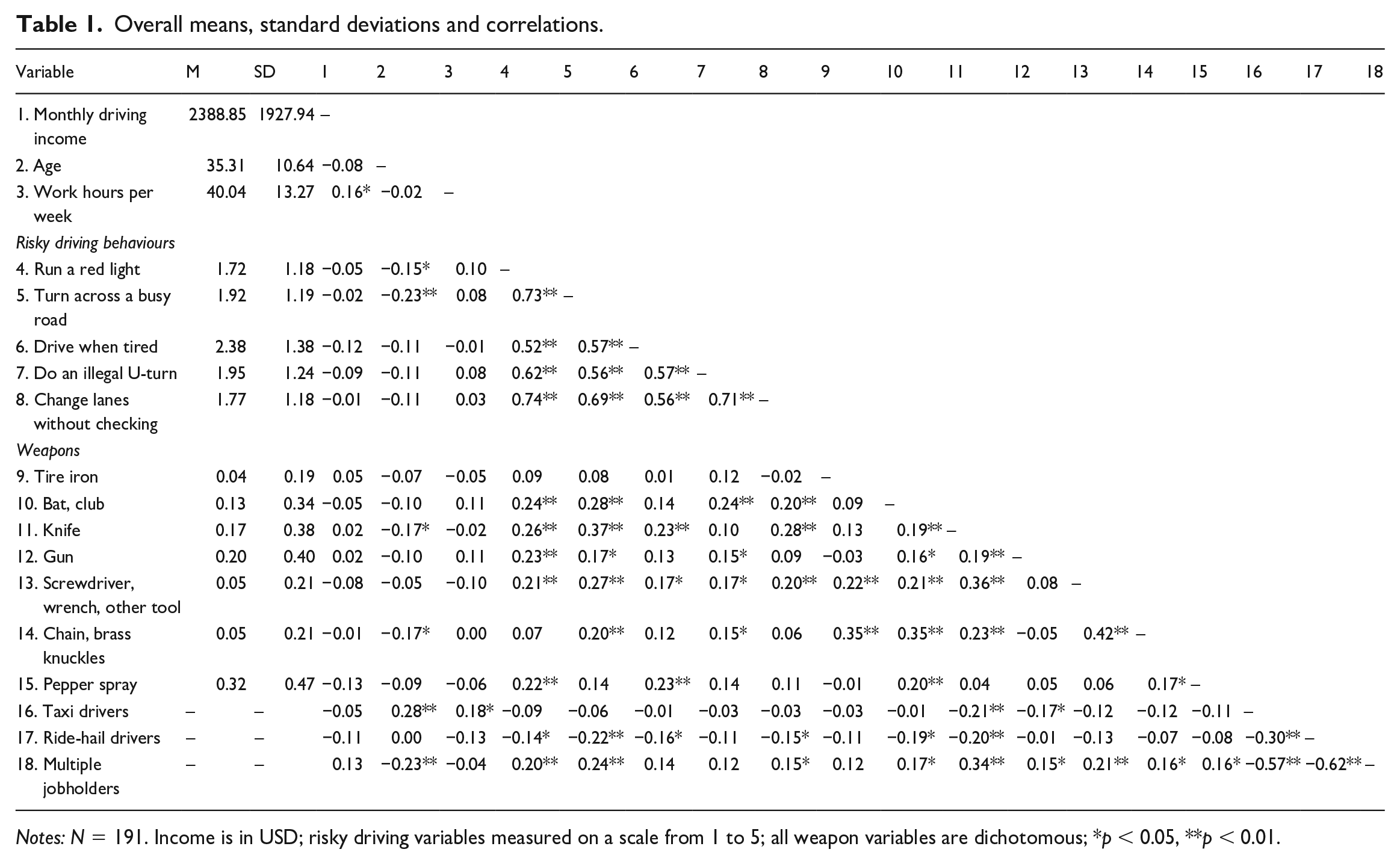
Notes: N = 191. Income is in USD; risky driving variables measured on a scale from 1 to 5; all weapon variables are dichotomous; *p < 0.05, **p < 0.01.
Means, standard deviations and correlations for taxi drivers.
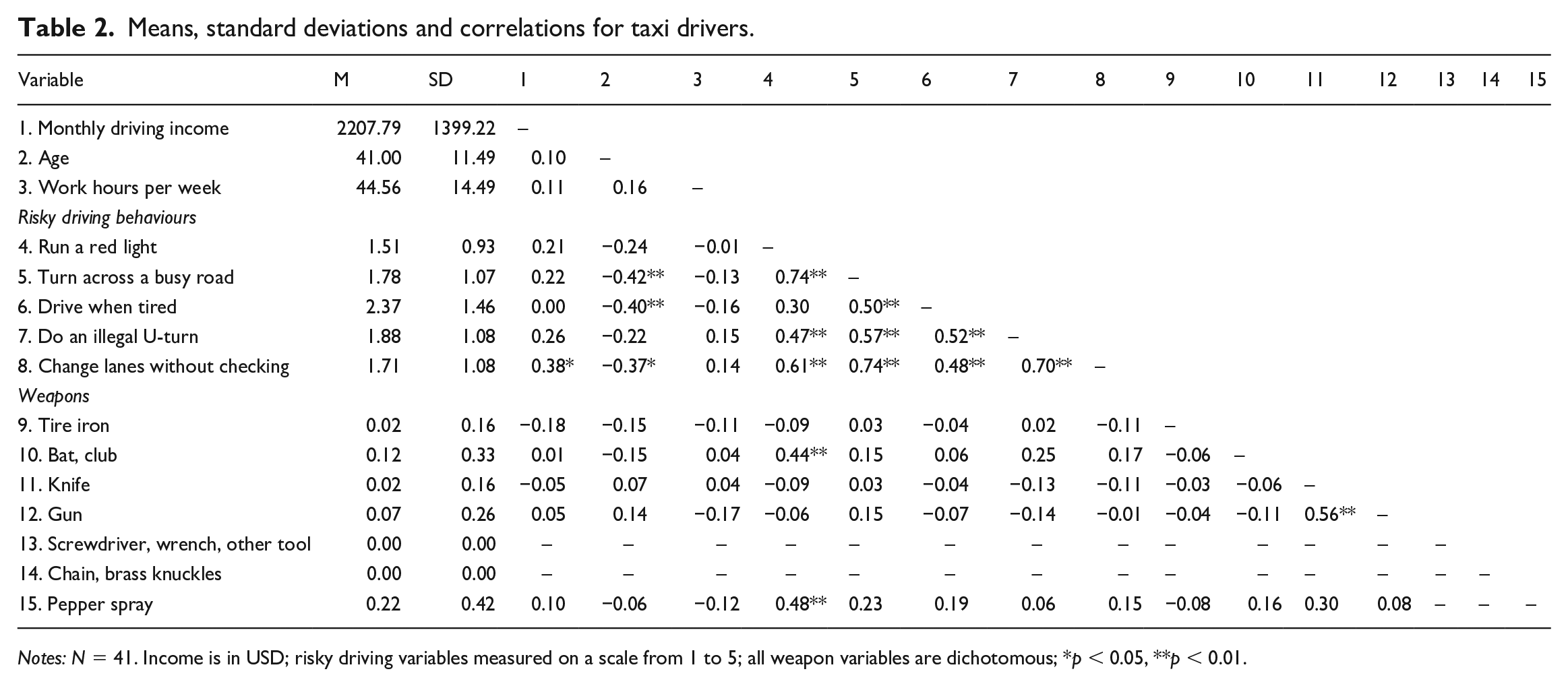
Notes: N = 41. Income is in USD; risky driving variables measured on a scale from 1 to 5; all weapon variables are dichotomous; *p < 0.05, **p < 0.01.
Means, standard deviations and correlations for ride-hail drivers.
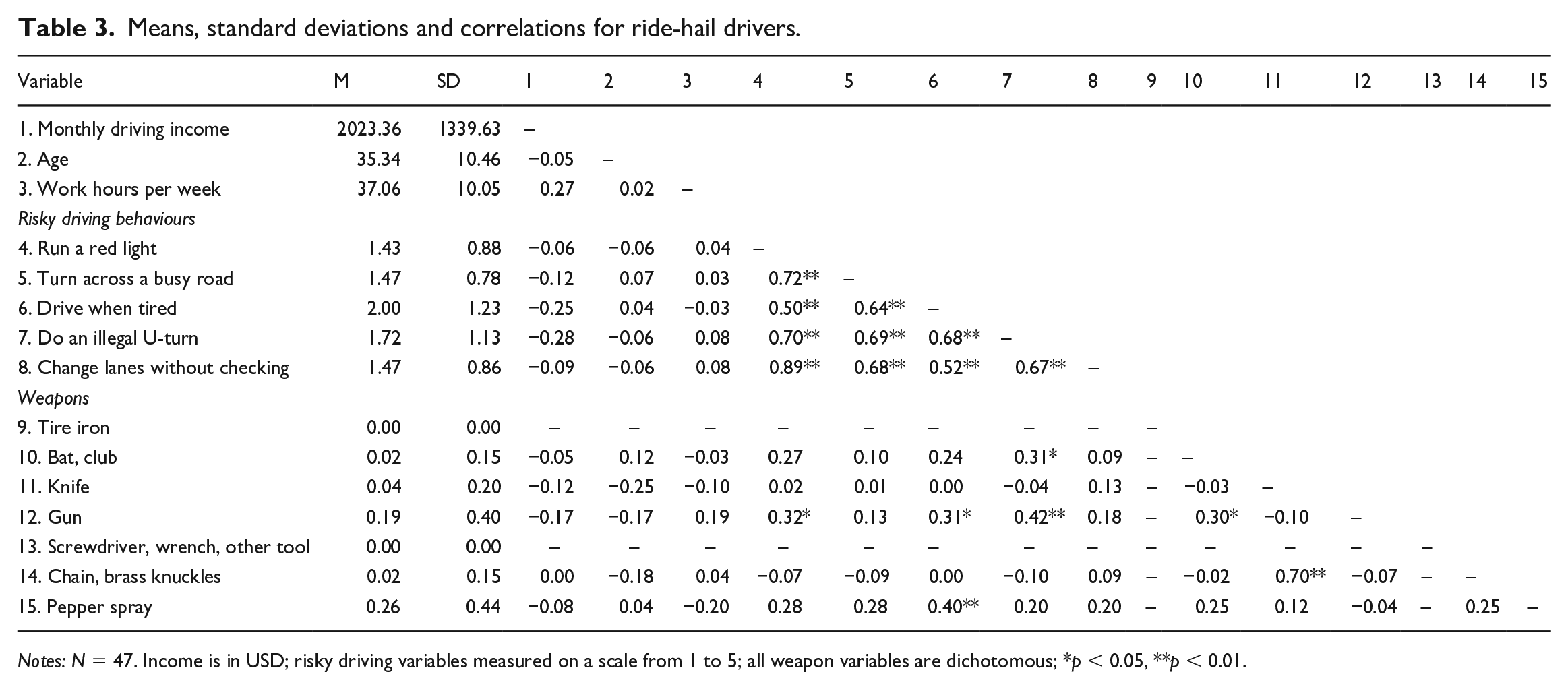
Notes: N = 47. Income is in USD; risky driving variables measured on a scale from 1 to 5; all weapon variables are dichotomous; *p < 0.05, **p < 0.01.
Means, standard deviations and correlations for multiple jobholders.
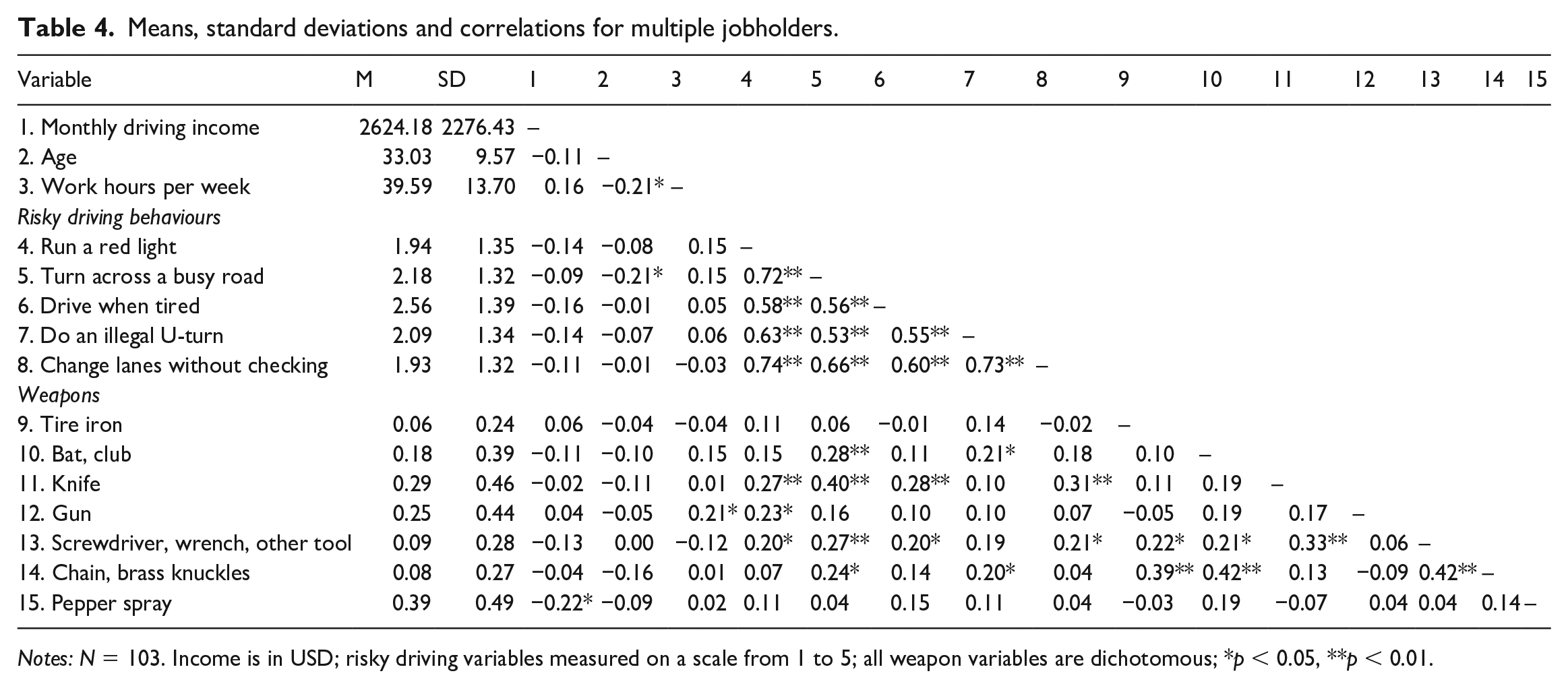
Notes: N = 103. Income is in USD; risky driving variables measured on a scale from 1 to 5; all weapon variables are dichotomous; *p < 0.05, **p < 0.01.
Approximately 25% of drivers reported driving when very tired ‘usually’ or ‘often’. This statistic is concerning, considering the increased likelihood of accidents due to fatigue (Berneking et al., 2018). Furthermore, 32% of drivers reported carrying pepper spray; even more alarming, approximately 20% of drivers reported carrying a gun or a knife, both of which have potentially lethal consequences.
As can be seen in Table 1, the overall means for risky driving behaviours indicated that drivers are most likely to drive when tired or do an illegal U-turn and are most likely to carry pepper spray or a gun. The risky driving behaviour with the highest mean for MJHers was ‘drive when tired’, followed by ‘turn across a busy road’ (Table 4). The most frequently carried weapon by MJHers was pepper spray, followed by a knife. In contrast, ride-hail drivers and taxi drivers were most likely to drive when tired, followed by make an illegal U-turn. The most carried weapon for ride-hail drivers was pepper spray, followed by a gun, while taxi drivers were more likely to carry pepper spray, followed by a bat or club (Tables 2 and 3).
Hypothesis testing
To test the hypotheses, an initial one-way MANOVA was used to assess observed differences in the criterion measures with type of driver as the grouping variable. Bartlett’s test of sphericity was statistically significant (approximate chi squared = 2633.19, df = 77, p < 0.01), indicating that the correlations of the dependent variables were sufficient to support the MANOVA. The multivariate effect of type of driver was statistically significant, Pillai’s trace = 0.22, F(24, 344) = 1.78, p < 0.05, 1 – Wilks’ lambda = 0.21, demonstrating that type of driver accounts for a small but significant proportion of the multivariate variance. In light of the multivariate effect, the univariate F test was interpreted.
Results of the univariate tests indicated that there was a statistically significant effect for the following variables: run a red light, F(2, 182) = 3.31, p < 0.05; turn across a busy road, F(2, 182) = 6.14, p < 0.05; bat/club F(2, 182) = 3.65, p < 0.05; knife, F(2, 182) = 11.95, p < 0.05; and screwdriver/wrench/other tool, F(2, 182) = 3.22, p < 0.05 (Table 5). Levene’s test revealed that these dependent variables (i.e. run a red light, turn across a busy road, bat/club, knife, screwdriver/wrench/other tool) violated the assumption of homogeneity of variance; thus, a Tamhane T2 post hoc test was used.
ANOVA comparisons for study variables.
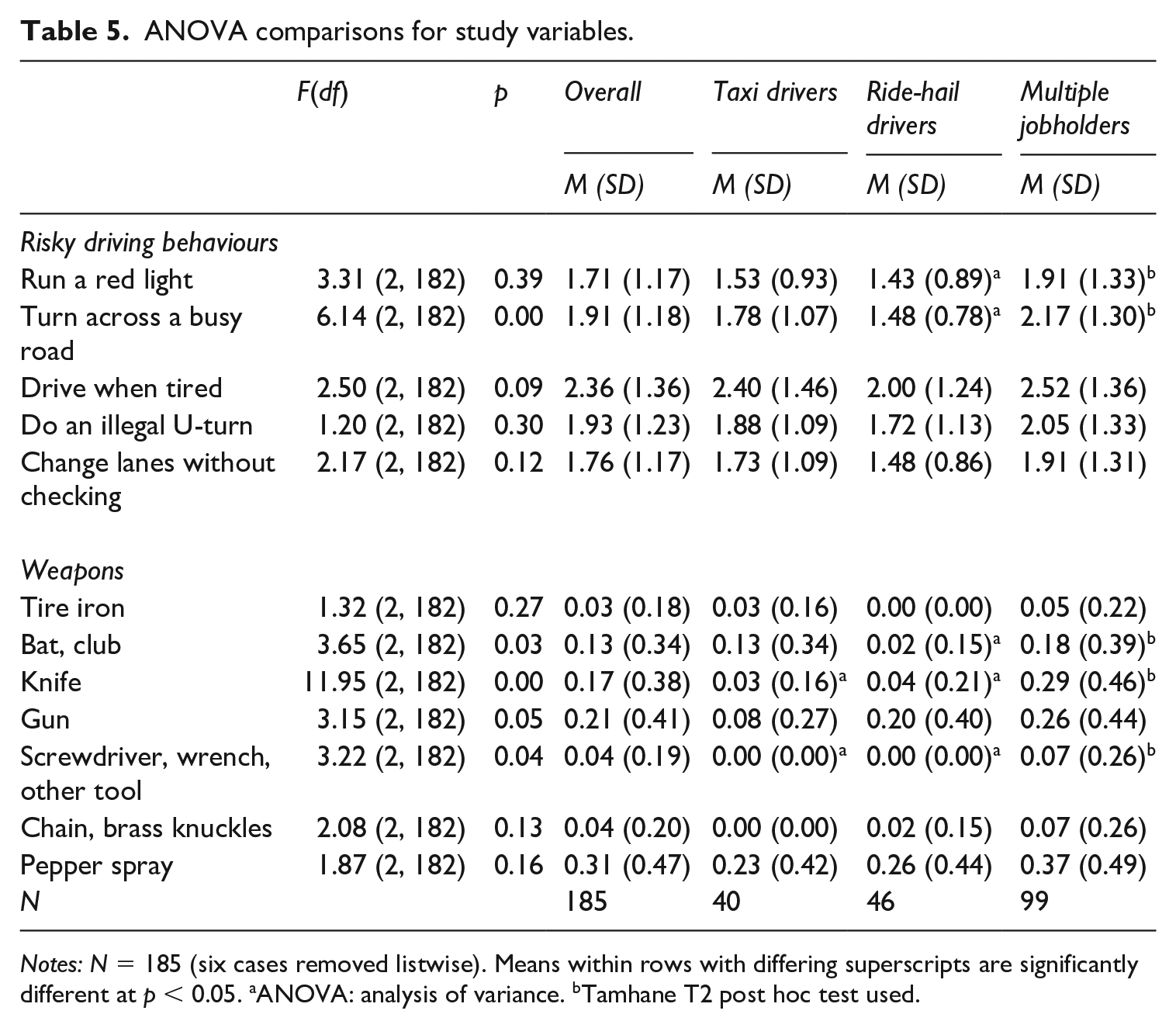
Notes: N = 185 (six cases removed listwise). Means within rows with differing superscripts are significantly different at p < 0.05. aANOVA: analysis of variance. bTamhane T2 post hoc test used.
The first hypothesis, which stated that ride-hail drivers will engage in more risky driving behaviours (H1a) and will be more likely to carry weapons than taxi drivers (H1b) was not supported. Post hoc comparisons indicated there were no significant differences across the two types of drivers regarding risky driving behaviours or possession of weapons (Table 5). The second hypothesis (H2a), which stated that MJHers engage in more risky driving behaviours than taxi and ride-hail drivers, was partially supported for both behaviours: running a red light and turning across a busy road. Post hoc comparisons demonstrated that MJHers were significantly more likely to run a red light and turn across a busy road compared with ride-hail drivers. H2b was supported for all weapons: bat/club, knife and screwdriver/wrench/other tool. The MJH group were more likely to carry a bat/club than ride-hail drivers and more likely to carry a knife or screwdriver/wrench/other tool in comparison to taxi drivers and ride-hail drivers (Table 5). Overall, as predicted, the results of the ANOVA indicated that MJHers are more likely to engage in risky driving behaviours and more likely to carry weapons compared with both taxi and ride-hail drivers. In summary, the findings provided support for H2b, and partial support for H2a, but not for H1a and H1b.
Discussion
The current research confirms that gig work is an inherently ‘risky’ business (Kaine and Josserand, 2019: 485), especially for those using ride-hail apps. This study sought to understand the risks taken by different types of drivers as well as some of the ways that drivers mitigate the risks associated with work precarity. The findings connect to the literature on work precarity and recovery by suggesting that due to low income or lack of hours, MJHers may be more likely to take on several precarious gigs and spend less time recovering from work or taking breaks, which leads to risky driving (i.e. running a red light and turning across a busy road). Furthermore, results suggest that MJHers may experience more threats to their safety while on the road and thus carry weapons such as knives to protect themselves. Although there were no differences in risky driving behaviours between taxi drivers and ride-hail drivers, MJHers were significantly more likely to take risks.
This study makes several important contributions to the research literature on the gig economy. First, this study responds to Ashford et al.’s (2018) call for research to compare workers with similar job descriptions who have different employment relationships. Second, by differentiating between two forms of alternative employment, gig workers with one type of gig (i.e. ride-hail drivers) and MJHers, this study offers more nuanced findings to the growing literature on alternative employment arrangements (Spreitzer et al., 2017). Finally, the inclusion of MJHers in this study reflects the dramatic growth of the gig economy, where it is common for gig workers to be engaged in multiple jobs or to be working on several online platforms simultaneously (Spreitzer et al., 2017).
Theoretical implications
This study makes several theoretical contributions. First, this study extends our understanding of how precarity influences worker behaviour, particularly for MJHers in the gig economy. Findings from the current study indicate that labour platform workers engaged in three different jobs or gigs are more likely to take risks on the road than those with only one type of gig (i.e. taxi or ride-hail drivers). Wood and Lehdonvirta (2021) suggest that labour platform workers experience precarity as a result of reputational rating systems and argue that we need to achieve a greater understanding of how these workers respond to such insecurity. The current study illustrates that the increased precarity associated with MJH may push some workers to take risks to gain income and reduce the insecurity they experience. Findings from the current study also provide valuable insight into the consequences of reputational rating systems and how workers may try to mitigate the risk of unemployment by taking other risks that they view as less harmful but may have equally serious consequences. Thus, risky behaviours are closely linked to precarity and exposure to risky employment conditions.
Second, this study bridges the literature on precarity and work recovery to illustrate their combined influence on risk-taking and safety at work. MJHers, particularly those who work at three or more jobs, may not have the luxury to take breaks from work. These individuals often take on multiple gigs out of necessity. Owing to the flexibility of logging in to an online platform such as Lyft, MJHers may drive during off-time when they are tired and have reduced attention and awareness, leading drivers to take more risks and get into accidents (Berneking et al., 2018). In the current study, this was evidenced in the higher likelihood of risky driving behaviours for MJHers. Research in this area is nonexistent, although the substantial rise of the gig economy (Spreitzer et al., 2017) makes this topic highly relevant. In fact, Sonnentag et al. (2017) argue for the evaluation of recovery periods for non-standard workers, such as self-employed individuals, to understand how and when recovery is attained for these workers. The present study further highlights the importance of that endeavour in light of the health and safety risks associated with lack of recovery for such a precarious group of workers. In addition, safety is a particularly important issue, which has received little attention in the gig economy literature (Dillahunt et al., 2017).
Third, this study advances an understanding of the gig economy by comparing platform-mediated work to more conventional forms of work. This study’s side-by-side comparison of workers engaged in the same occupation demonstrates an important similarity between ride-hail and taxi drivers: they are equally likely to engage in risky driving behaviours. Ride-hail organizations present themselves as different from the traditional taxi industry and promote the flexibility of working and earning via an online platform (Phung et al., 2021). However, flexibility may only be afforded to part-time drivers. Hua and Ray (2018) suggest that full-time taxi and ride-hail drivers may not have such privilege. Full-time taxi and ride-hail drivers often identify as non-white male immigrants who work full-time out of financial necessity, and their participation in the professional driving industry is a reflection of larger patterns of capitalism, racialization and discrimination (Hua and Ray, 2018). Holtum et al. (2022) articulate a similar argument in their study on migrant and non-migrant Uber drivers in Australia. Migrant drivers relied more heavily on income from Uber and did not benefit from the flexibility of the platform in the same way as non-migrant drivers. Furthermore, migrant workers had less trust in Uber to protect and support drivers and were less likely to report safety incidents. The findings from the current study suggest that full-time ride-hail and taxi drivers do indeed behave differently than part-time drivers (i.e. MJHers). Scholars should delve deeper into the distinctions between part-time and full-time workers both within and across similar occupational categories.
Finally, findings from the current study shed light on the influence of algorithmic control on worker behaviour, suggesting that the relationship between algorithmic control and worker resistance may be more nuanced. If migrant workers are driving full-time for a ride-hail company with few other work prospects (Hua and Ray, 2018), they may be reluctant to engage in resistance behaviours because it would jeopardize their only opportunity for work. This may offer an explanation as to why full-time ride-hail drivers in the current study did not engage in more risky behaviours than full-time taxi drivers. Additionally, some workers may be subject to the vagaries of algorithmic control more than others. For example, MJHers who drive part-time for ride-hail companies may be more susceptible to gamification strategies, such as bonus schemes, which encourage driving during odd hours (Rani et al., 2021), because these workers may be more in need of income (Ilsøe et al., 2021). Further investigation into the influence of algorithmic control on worker behaviour is warranted.
Limitations and future research
Although the current study provides insight into unsafe driving behaviours, the findings should be interpreted with the following limitations in mind. First, this study relied on self-reported data. While self-reported measures are appropriate for this context, participants may have underestimated the frequency in which they engage in risky driving behaviours. That being the case, capturing driver experience through self-reported measures provided insight into the factors that contributed to driver behaviour. This study’s findings were limited to more salient indicators of risky driving and weapon use. The next steps in this line of inquiry should expand the scope of measures, including mechanisms that either mediate or offer boundary conditions, such as having drivers report their work schedules and rest periods. Future research could also investigate underlying mechanisms that lead to these behaviours, such as drivers’ experience of risk.
Although cross-sectional data are often criticized for their inability to establish causal primacy (Liu, 2008), this study’s hypotheses were comparative rather than causal in nature. However, as understanding of the underlying processes and moderating conditions improves, an important next step would be to tease out causal relationships in further empirical studies. Future research should extend these findings to other occupational settings and groups of workers, especially in industries where risky behaviour directly impacts the public, such as health care or construction. Further, the research data are from participants in the United States and Canada. Replication of this research in other parts of the world may be useful for comparison.
Finally, this study relied on a somewhat smaller sample size given the need to reach a specialized research population – people who, by definition, rarely have time to participate in research studies. That said, the value of testing these and other hypotheses with data from a larger sample of gig workers is appreciated. Rose-coloured euphemisms are often used to embellish the notion of gig work (Stewart and Stanford, 2017). The current study highlights the need for research to provide a more realistic understanding of working in the gig economy.
Practical and policy implications
There are important policy-related implications of the research findings. First, the current study illustrates that gig workers may have similar experiences to other low-wage workers in the same occupation, despite differences in how they are managed. Srnicek (2017) argues for gaining a deeper understanding of how platforms operate and the influence these platforms have on workers and worker behaviour. Future researchers should adopt a similar approach to comparison. However, patterns of worker exploitation still appear in existing forms of work and should not be overlooked. For example, in their study on migrant workers in Northern Ireland, Potter and Hamilton (2014) describe subtle exploitation and control similar to that used in gig work. Migrant workers were drawn to the idea of making more money than they were making in their home country, but ended up working unpaid overtime, making well below minimum wage and experiencing terrible working conditions. Regulations that have been put in place to improve working conditions, such as the introduction of a minimum wage for gig workers (Subramaniam, 2022), should also be extended to those in similarly precarious conventional forms of employment that have so far been overshadowed by the rise of the gig economy.
Second, the findings highlight the importance of greater employment protections in the professional driving industry to address worker precarity and support recovery, both of which may contribute to risky driving behaviours. Existing regulations may not be sufficient to support (and may even hinder) recovery for drivers. For example, taxi drivers in the United States have reported that they may be fined for being more than 12 feet away from their vehicles, making it less likely that they will stop and get out of their vehicles to take a break or rest (Murray et al., 2019). Drivers may also be reluctant to take breaks because they will miss fares and lose income. Rubery et al. (2018) argue for greater protections in the form of income and hours-of-work guarantees, which would not only address worker precarity but would also encourage workers to take breaks. Applying such policies within the professional driving industry would also allow drivers to be more selective about the types of passengers they pick up and where. If drivers feel unsafe in unfamiliar locations or drivers are hesitant to pick up intoxicated passengers, they can refuse a ride without losing money, rather than having to carry a weapon to protect themselves.
Finally, on a broader level, the findings illustrate that greater steps need to be taken to address precarity in all forms of work. The segmentation of MJHers into the peripheral labour market may be a result of existing social inequalities that make it harder for workers to gain access to permanent positions and important resources (e.g. benefits, promotion opportunities: Van Dijk et al., 2020). Thus, while interventions that are targeted specifically at digital platforms (e.g. Uber) may provide workers with some agency, such approaches do not address the larger issues of social inequality and precarity that exist in many forms of work, and may be the reason why some workers are pushed into digitally mediated work in the first place (Schaupp, 2022; Van Dijk et al., 2020). Larger scale policy approaches, which may allow workers to refuse precarious work (Rubery et al., 2018), such as a universal basic income (Standing, 2017), merit further investigation. Such reforms may also challenge existing approaches that exacerbate and legitimatize social inequalities (e.g. meritocratic practices: Van Dijk et al., 2020) and normalize precarity (e.g. welfare conditionality: Rubery et al., 2018), impacting the quality of work and life.
Footnotes
Acknowledgements
We gratefully acknowledge Anne St-Amand for her help in facilitating this research. We would also like to acknowledge the following students for their help with data collection: Chanchal Bhandari, Zhou Chen, Hufriya Kateli, Daniel McLean, Megan Murphy, Sumana Naidu, Gina Nguyen, Monika Pobiedzinski, and Samson Yeung.
Funding
The authors disclosed receipt of the following financial support for the research, authorship, and/or publication of this article: We would like to acknowledge the financial support provided for this project by the Canada Research Chair program (228414) and McMaster University.
