




Abstract
This article provides new insights into the intersection of gender and ethnic inequalities in the solicitors’ profession. Using administrative records spanning the entire population of practising solicitors in England and Wales, we analyse structural changes over successive cohorts of solicitors and identify four distinctive employment profiles: high-street solicitors, city solicitors, corporate fast-track and in-house. We show how solicitors with single or multiple characteristics associated with disadvantage are located in different employment profiles and how this changes over time. Demonstrating originality and the value of an intersectional analysis, we find that while ethnic stratification within solicitor careers decreases, stratification by gender remains constant. We find that in a period of rapid expansion, minority ethnic men become much better integrated into the most prestigious career profile in the profession – the corporate fast-track – compared with white women who are both earlier entrants to and numerically dominant in the profession.
Introduction
The scope and endurance of complex inequalities is one of the most important challenges facing contemporary societies. In trying to understand and alleviate inequalities, an intersectional perspective is vital (Hill Collins, 2019). Elite professions are sites of profound and unequal power relations and so too persistent inequalities in terms of class, gender and ethnicity (Ashley, 2021; Kay and Gorman, 2016; Padavic et al., 2020; Rivera, 2012; Tomlinson et al., 2013). Yet they are also frequently aligned with social mobility projects (Ashley and Empson, 2017; Laurison and Friedman, 2016). This study focuses on enduring inequalities in career profiles in one such profession, the solicitors’ profession. Legal work varies in terms of status (area of practice and corporate or private client focus), geographical location and work demands, which creates a rich context in which to examine occupation stratification and inequalities. In England and Wales – the geographical focus for this article – the solicitors’ profession has increased 10-fold over the last 50 years and with its expansion, women and minorities have made significant inroads into many practice areas. Women have been the majority of new entrants to the profession since 2000 and, as of 2018, women outnumber men as registered practising solicitors (TLS, 2019). In the context of the rapid growth and significant demographic change, we ask, first, what is the gender and ethnic composition of career profiles in the legal profession and how, if at all, have these changed over time? Second, to what extent have women and minorities integrated into prestigious profiles dominated by white men? Finally, in terms of intersectionality, we ask how do characteristics of gender and ethnicity interact over time?
To address these questions, we draw on a unique and extensive dataset – the employment records for the entire solicitors’ profession of England and Wales, 1970–2016. We ask how solicitors with single or multiple characteristics associated with minority status/disadvantage (women and minority ethnic status) follow more or less prestigious career profiles over time. As a result, we produce a carefully nuanced account of evolving career profiles in the solicitors’ profession and the intersectional characteristics of gender and ethnicity of those occupying them. This is important because despite increased diversity at the point of entry into the labour market, career experiences and outcomes between men and women of different ethnicities continue to be shaped in various ways by gender norms, education, class, culture and discrimination (Archer, 2011; Ashley, 2010; Muzio and Tomlinson, 2012; Patel et al., 2022; Sommerlad, 2020). Therefore, we make a significant contribution to the study of inequality in the professions by charting the relative success of white and minority ethnic women compared with minority ethnic men in the profession. We find that in a period of rapid expansion, minority ethnic men become much better integrated into the most prestigious career profile in the profession – the corporate fast-track – compared with white and minority ethnic women. This is noteworthy, particularly in terms of white women, who were earlier entrants to the profession and are numerically dominant in the profession.
Gender, ethnicity and intersectionality in professional careers
Gender and ethnic segregation are enduring features of most labour markets (del Rio and Alonso-Villar, 2015; Wright, 2014), and progression remains challenging for many individuals from marginalized and under-represented backgrounds (Ashley, 2022; Sommerlad, 2020; Stainback and Tomaskovic-Devey, 2009). In managerial and professional occupations, white men are more likely to receive job offers than women and minorities (Kay and Gorman, 2016; Rivera and Tilcsik, 2016), and more likely to be routed towards the most prestigious and better remunerated jobs (Bolton and Muzio, 2007; Gorman, 2005; Muzio and Tomlinson, 2012; Reskin and McBriar, 2000). There have been significant demographic changes in the composition of many professional occupations, and this applies in the legal profession (Aulakh et al., 2017; Tomlinson et al., 2019). Despite constituting the largest proportion of new entrants to the profession, women solicitors continue to experience patterns of vertical stratification and horizontal segmentation as they are more likely to be in salaried (rather than ownership) positions and in less prestigious specialisms such as family law (Bolton and Muzio, 2007, 2008; Sommerlad, 2002). Similar patterns are visible in terms of ethnicity – those from minority ethnic backgrounds tend to hold fewer positions of influence and leadership in large organizational hierarchies, and often work in smaller, less lucrative firms and specialisms, and with less privileged or powerful social networks relative to white men (Kay and Gorman, 2016; Sommerlad, 2020).
One manifestation of this is the clustering of minority lawyers in ethnic firms, which are focused on serving a predominantly ethnic client base, often in relatively deprived inner-city areas (Menkel-Meadow, 1989; Wald, 2007). Thus, while at an aggregate level the solicitors’ profession is more diverse, there has been less change in leadership of the largest firms undertaking corporate-based specialisms than one might anticipate. This is despite a clear and well-articulated business and ethical case, and professed commitment to overcome discrimination and promote inclusion and social mobility among such firms (Ashley and Empson, 2013; Webley et al., 2016).
It is important to recognize that women and ethnic minority professionals are knowledgeable experts in their field and exert agency in their career decisions (Archer, 2011; Crompton and Harris, 1999; Tomlinson et al., 2013; Webley et al., 2016). Yet we argue that there has been something of an agentic turn in career studies (Rodrigues and Guest, 2010), which has come at the cost of relative neglect of analysis of the structural dimensions of careers in professional occupations. In other words, insufficient attention has been paid to the environmental conditions within which individuals operate, and how the career routes available change over time.
In addition, while some studies provide a nuanced analysis of gender and ethnic stratification in relation to prestige, power and promotions (Castilla, 2008; Leicht, 2008; Stainback and Tomaskovic-Devey, 2009), overall, there has been much less quantitative analysis on how gender and ethnicity intersect to affect professional careers and the relative positioning of women and men of different ethnicities. This is an important observation since intersectionality scholars convincingly argue that the lived experiences of individuals and communities cannot be adequately captured by analysis of one social characteristic, an approach termed ‘single-axis’ analysis (Hill Collins, 1993, 2019; McBride et al., 2015). Instead, scholars of intersectionality aim to understand ‘the complexity that arises when the subject of analysis expands to include multiple dimensions of social life’ (McCall, 2005: 1772). Within intersectionality research, a central concern is for analysis of both inter and intra-group differences (McBride et al., 2015), recognizing that the interpenetration of complex inequalities can be reinforcing or contradictory (Acker, 2006), parallel and interlocking, and at times, but not always, oppositional (Hill Collins, 1993).
Concerned with integrating social characteristics to better understand complex human relations and inequalities in organizations, occupations and societies (Acker, 2006; Walby et al., 2012), intersectionality theory facilitates analysis to go beyond single-axis accounts of inequality and better reflects the multiple intersecting and complex ways individuals experience their working lives and opportunity structures. McCall’s (2005) seminal work illuminates the potential for categorical and quantitative approaches to explain and interrogate differences and inequalities in labour markets, promotions and pay gaps (Mandel and Semyonov, 2016; Woodhams et al., 2015). A key contention is that social categories carry privileges or penalties, and their intersection promotes or hinders the life chances of particular groups or individuals, while at the same time certain characteristics may carry more powerful or enduring advantage or disadvantage relative to others (Tomlinson et al., 2019). It is in line with this approach to intersectionality that we analyse our data in the context of a heavily stratified, elite profession.
Structural dimensions of professional careers
In this study, we think of professional careers as distinctive employment profiles taking place over time, differing in terms of the demographic characteristics of individuals occupying them, their promotion opportunities and prestige (proxied by geographical location and area of specialism). The emphasis on profiles assumes institutionalized structures with clearly delineated occupational boundaries that lead to path dependency in career outcomes. Dlouhy and Biemann (2018) apply the path dependency principle in relation to careers showing how career decisions are informed by the accumulation of occupationally specific forms of human capital, which channels the career actor into a path that is increasingly costly to break away from or reverse. While their focus is on inter-occupational mobility, path dependency might usefully apply to intra-occupational stratification and mobility within occupations and professions, particularly in those with distinct specialisms and segments such as the legal profession (Heinz and Lauman, 1982; Sommerlad et al., 2020). For example, within a highly specialized profession, it is increasingly difficult or unlikely for individuals to move between specialisms, for the same reasons noted above, such as the loss of specialized human capital, but also due to differences in the status, value or prestige associated with different specialisms (Bolton and Muzio, 2008). Similarly, in a hierarchical occupation such as the solicitors’ profession, boundaries might constrain movement between large corporate firms, mainly located in the City of London, and regional high-street firms, as these present radically different types of work and clients as well as associated cultural norms.
Heinz and Lauman (1982) divide the legal profession into two distinct hemispheres: corporate and personal. The former comprises large law firms and elite lawyers working for corporate clients on commercial matters and the latter of small local firms assisting individual clients with routine legal problems. Faulconbridge and Muzio (2021) divide the legal profession into distinct sub-fields, each with their own institutions, norms and cultures. Importantly, they show that careers tend to develop within rather than across sub-fields; thus, where one enters the legal field largely dictates how their careers unfold over time and where they will eventually end up. Sub-fields are not equal but offer differences in status and financial returns, with the corporate sub-field at the top of the hierarchy.
Careers in the legal profession
Traditionally, recruitment and progression practices in elite firms assumed the form of an ‘up-or-out’ promotion tournament first pioneered by elite law firms in New York (Galanter and Palay, 1991; Sherer and Lee, 2002). Associates were placed on a ‘partnership track’ where they received expert mentoring and training for a fixed term, after which they compete with fellow associates for a small number of partnership positions. Assessments are based on candidates’ relative ranking within the cohort rather than absolute performance. Those who were successful became co-owners of the firm, the benefits of which included job security, professional status and ‘a lifetime of steadily increasing earnings unmatched . . . in the other learned professions’ (Galanter and Palay, 1991: 42). Those successful in reaching partnership, even as the profession diversified in terms of gender and later ethnicity, remained disproportionately white men (Kay and Gorman, 2008, 2016; Wilkins and Gulati, 1996).
From its historical origins in Wall Street law firms, the up-or-out tournament spread to become associated with professional service firms (PSFs) of all types (e.g. accounting, management consulting), geographies and size (Malhotra et al., 2010). Despite its pervasiveness, it has been argued that this model has been reformed in recent years due in part to the changing career expectations and aspirations of young professional workers. There is evidence that some associates are sceptical of partnership as the ultimate career objective and are satisfied with other roles outside of the traditional partnership track (Malhotra et al., 2010: 1397; Galanter and Henderson, 2008). Indeed, as Sommerlad et al. (2020) note, in-house legal departments in large global corporations are a route through which solicitors may experience a highly successful legal career, which may not require the time-intensive demands of the up-or-out partnership track in a corporate practice. These roles are thought to be an attractive alternative for those who cannot or do not want to experience a lifetime of high intensity, long hours and unpredictable work demands. In-house roles vary and some will require leadership of large teams and specialist technical skills, in high-pressure contexts, while others less so, but overall are thought to offer greater predictability in terms of working time and intensity. Similarly, Malhotra et al. (2010) found that the up-or-out system is now complemented by alternative career paths, as firms introduce new positions of permanent employment for associates who do not reach partnership.
These changes have been witnessed at a time when the profession has become increasingly diverse in terms of gender and ethnicity and may enable a wider range of opportunities for those pursuing legal careers. The question though remains as to how those with different demographic characteristics fare in terms of integrating into prestigious career profiles at a time of rapid expansion within the profession. We address this question with an empirically unrivalled dataset spanning the entire population of practising solicitors in England and Wales. In what follows, we describe the data, analytical strategy and present empirical findings.
Methodology
Operationalizing employment profiles
To capture employment profiles in the solicitors’ profession, we operationalize careers using Gunz and Mayrhofer’s Social Chronology Framework (2017), which is highly relevant to the dual focus on the structural profile of careers in the solicitors’ profession and the diversity characteristics of those occupying them. Gunz and Mayrhofer (2017) argue the study of careers involves the application of three distinct perspectives: entity (the career actor); space (social and geographical); and time. The combination of these three factors is particularly relevant in a stratified profession such as the legal profession in England and Wales where solicitors have very different types of opportunities in relation to the progression, specialization and location of their careers (Tomlinson et al., 2013, 2019). Time is also central to our analysis as both historical and chronological aspects of time are critical in studies of work and life histories and therefore careers too. In our study, we refer to the wider historical timeframe in which the diversity of the profession takes place, and then focus more empirically in terms of the career profiles of solicitors during the course of their working lives.
Data
Commissioned by the Solicitors Regulation Authority (SRA), we were given unique access to the anonymized employment records and diversity characteristics of 179,888 solicitors in England and Wales spanning the entire population of solicitors between 1970 and 2016 (various sensitivity checks to ensure selective attrition bias is not present in the dataset are reported in the online supplementary Appendix). The data were generated in accordance with a legal requirement for aspiring and practising solicitors to apply for a certificate of practice and to register on the roll. Solicitors are obliged to fill in an online questionnaire through a secure mySRA portal when applying for admission and then every year thereafter when renewing their certificate. The electronic form requests information on the most recent position occupied by solicitors, distinguishing between partners, non-partners and those doing in-house work as well as solicitors’ socio-demographic characteristics including gender, ethnicity, sexual orientation, religion and disability. In addition, the SRA keeps records of the year of first registration for solicitors in the database, a detailed classification of the type of legal work pertaining to solicitors’ most recent positions, alongside the geographical location of firms’ headquarters.
These data are by far the most complete and accurate employment records of solicitors in England and Wales, which allow, for the first time, a dual emphasis on the changing demographic and structural composition of the profession, and with it the opportunity to empirically investigate patterns of gender and ethnic stratification over time.
Measurements
We apply each of the three career characteristics (being, space and time) to establish career profiles of practising solicitors. The ‘being’ aspect assumes emphasis on the occupant of the legal career, and in particular their gender and ethnicity. We measured career progression as the probability of progressing to partner level or doing in-house work using a categorical measurement that distinguishes between partners, non-partners and in-house solicitors. Our concern with the space or the socio-geographical dimension in which careers take place focuses on the social status and geographical structure of solicitors’ firms. Social status was captured by the practice area where we distinguish more prestigious and lucrative commercial law from private client work. The geographical structure was measured by a dichotomous variable separating central London-based firms and regional-based firms.
To capture the temporal dimension and demonstrate how legal careers change, we split the solicitors’ population into successive cohorts using the information on when solicitors first registered on the roll. We established five generational cohorts, each spanning a decade from the 1970s onwards. The focus of this article is on the analysis of four cohorts, given that solicitors in the 2011–2016 cohort had below the average time to progress to partner level (we report empirical results where we expand our analysis to include the recent 2011–2016 cohort and further sensitivity checks in the online supplementary Appendix).
A detailed overview of measurement scales with corresponding descriptive statistics across the successive cohorts of solicitors is reported in Table 1.
Descriptive statistics.
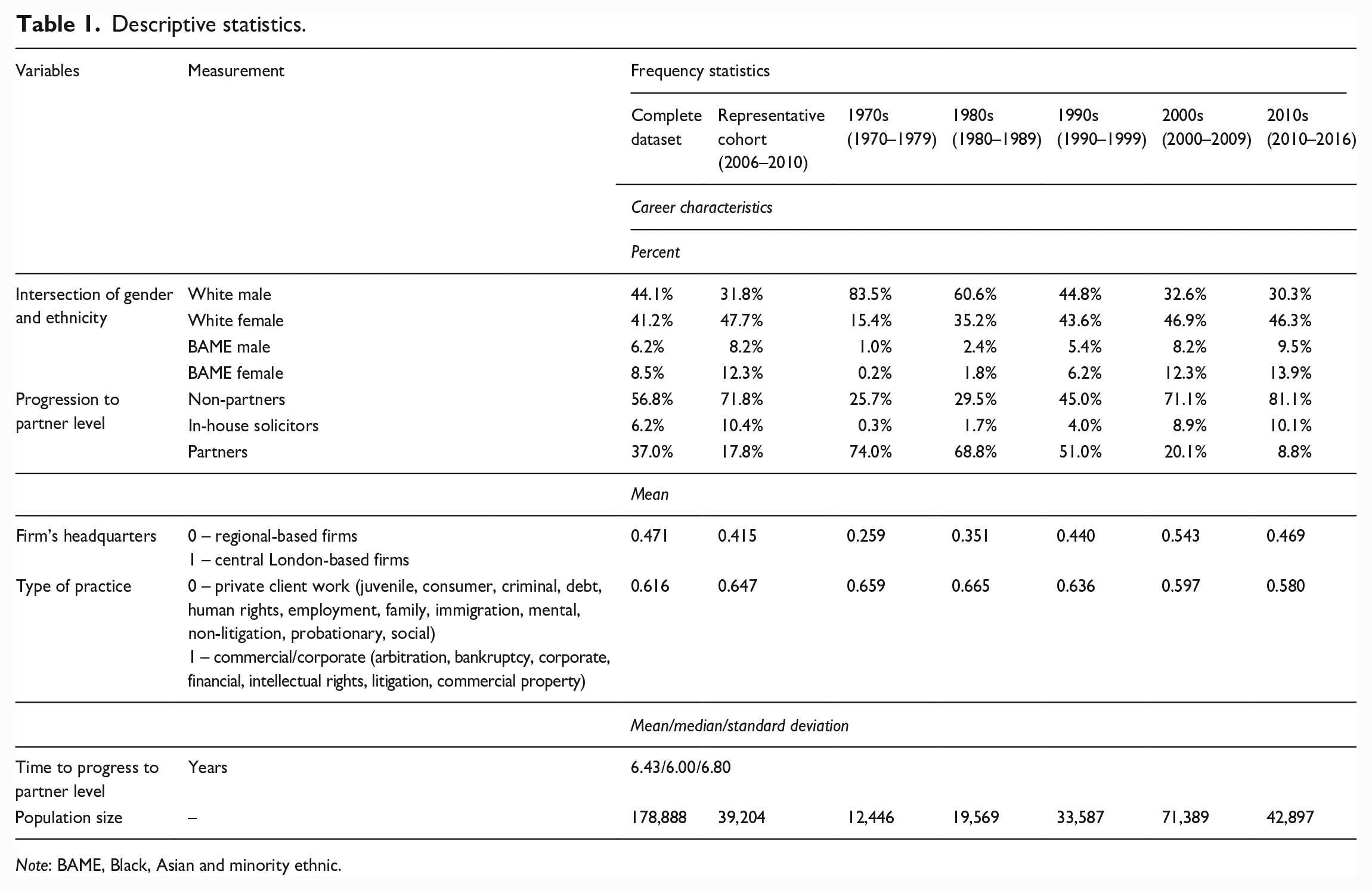
Note: BAME, Black, Asian and minority ethnic.
Method
We employed Latent Class Analysis (LCA), a type of mixture modelling that identifies statistically different subgroups in a heterogeneous population, to establish career profiles in the legal profession. LCA is a data reduction technique that groups units of analysis into clusters where the number of clusters is not known in advance. The use of data-driven techniques enables us to leverage the explanatory potential of the SRA data, which is consistent with an exploratory, data-focused turn in quantitative scholarship (Valizade et al., 2022, 2023). Specifically, we can establish career profiles associated with the demographic characteristics in the profession (gender and ethnicity) and unearth the structural transformation of legal careers by showing longitudinal changes in the composition of career profiles.
LCA begins with fitting a baseline one-cluster model, testing the assumption of population homogeneity. Having rejected the homogeneity assumption (for that, a one-cluster solution ought to be inadequate to the empirical data), researchers fit multiple latent class models, increasing the number of classes by one at each step. The optimal number of classes is selected by comparing model-fit indices. We employed the Bayesian Information Criterion (BIC), Adjusted Bayesian Information Criterion (ABIC) and entropy R-squared, where the former two are comparative indices signifying information loss attributed to the model and the latter is a metric of the quality of class separation.
We applied two procedures to assign solicitors into latent classes: modal and proportional assignment. Modal assignment uses the largest posterior probability score to allocate individuals. The proportional assignment algorithm estimates posterior probabilities of belonging to each established class and subsequently expands the data by storing such probabilities for every case in the sample. The outcomes of these two procedures were virtually identical. Because a central assumption of the local independence of indicators is rarely satisfied in practice, we fitted the initial latent class model to identify factors with the highest bivariate residuals and then adjusted the main model by specifying these factors as jointly dependent.
Results
Descriptive statistics
In what follows, we report descriptive statistics to give an overall account of how the solicitors’s profession changed over time. Table 1 shows that while white men remain the largest demographic group in the profession, since the 1990s there have been more new female entrants than male (Figure 1). Figure 1 plots the share of male, female and minority ethnic solicitors entering the profession by year of registration, evidencing significant changes in the demographic composition of the legal profession. Following decades of white male dominance, in the early 1990s the number of female entrants to the profession matched that of males. Since then, there has been a feminization of the solicitors’ profession to an extent that, by 2016, 61.3% of new entrants to the profession were women. In congruence with our data, the Law Society finds, in 2018, female solicitors outnumber males in the solicitor population for the first time (TLS, 2019). The share of minority ethnic solicitors increased too – they are technically overrepresented compared with their UK population share (18%). In 2016, solicitors of minority ethnic origin accounted for 26% of new entrants. In the wider population of England and Wales, 80.5% identify themselves as White British; the two largest minority populations are Asian, notably of Indian and Pakistani backgrounds (7.5%), and Black ethnic groups (3.3%) (ONS, 2016).
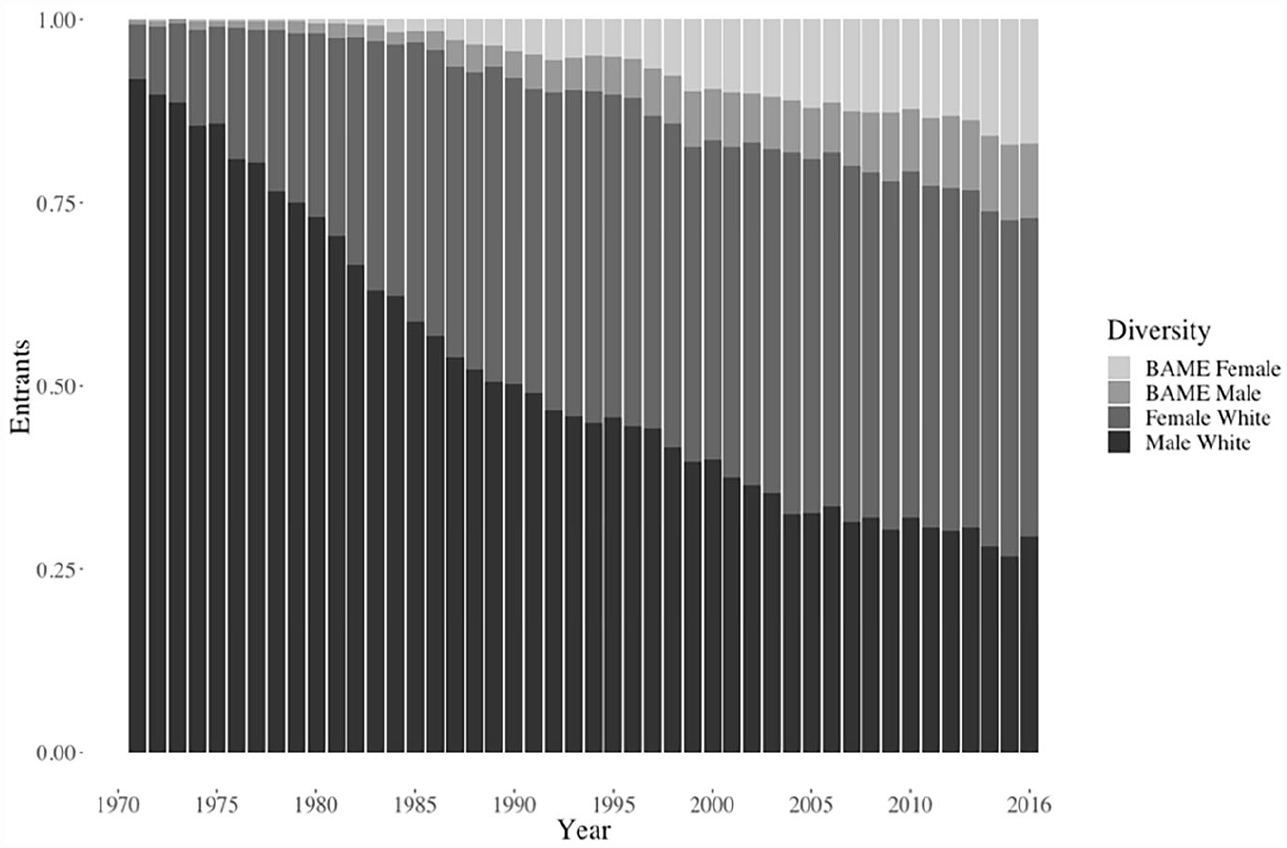
The distribution of new admissions to the roll by gender and ethnicity.
Figure 2 looks at the population of partners by gender, ethnicity and the first registration date as a solicitor. It shows the composition of partnership and how it changes over time. Two observations are worth noting. First, though the composition of partnership is changing, most notably in the past decade, and it is becoming more representative of the solicitors’ population, white men remain the largest demographic group, accounting for roughly 50% of the population of partners in the legal profession. Second, gender more so than ethnicity predicts reaching partnership: white and minority ethnic men fare much better in the profession in terms of promotional prospects than do white and minority ethnic women. The latter finding is significant in itself. Very few studies have been able to provide robust evidence on the promotional prospects of solicitors in terms of both gender and ethnic status and the relative significance of each characteristic. Given white women have entered the profession in equal numbers to white men since the early 1990s and the rise in minority ethnic entrants is a much more recent phenomenon, these data confirm that while entry to the profession may no longer be a significant barrier to women, progression to partner is a much more challenging process. Yet significant change is also observable: differences between the demographic groups gradually reduced over time, which is most visible among those admitted to the roll between 2000 and 2010.
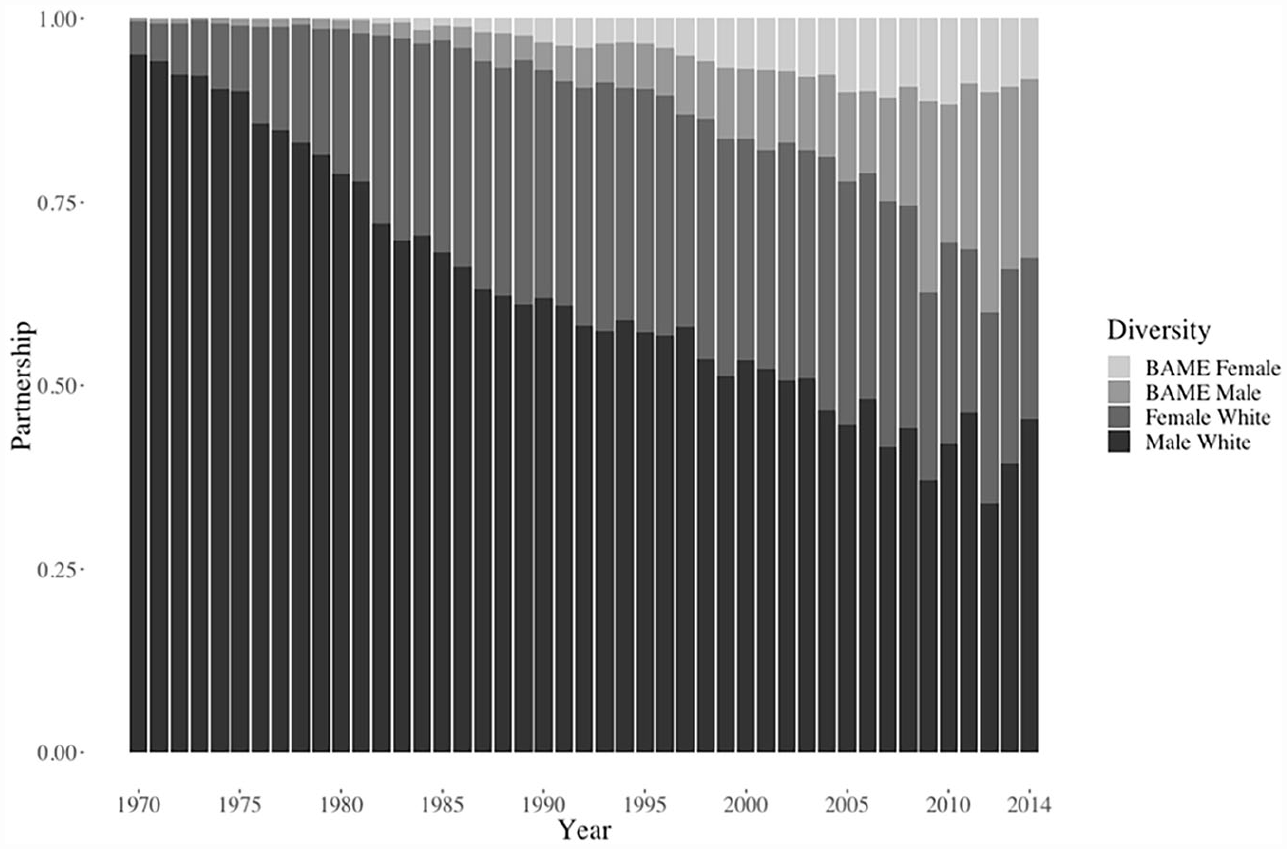
The gender and ethnic composition of partners by registration date.
Figure 2 illustrates how gender rather than ethnicity has a greater impact on chances of progressing to partner. From the mid-1990s, white women comprise an equal share and from 2000 a majority share of new entrants to the profession. For several decades there has been around five times more white female entrants than minority ethnic male entrants, yet since 2008 they held a similar proportion of partnerships. While both have increased their share of the profession and of partnerships in law firms, the process of entering the profession and success measured by partnership is visibly accelerated and striking for minority ethnic male solicitors, both in comparison with white women and with minority ethnic women. Minority ethnic women are a larger share of entrants, but a significantly smaller proportion of those reaching partnership status.
Evidence presented points towards an ongoing diversification of the legal profession with convergence between white male and minority ethnic male solicitors in terms of reaching partnership. The fundamental questions underlying these descriptive statistics are the extent to which career profiles in the legal profession remain heavily stratified by gender and ethnicity and if, with the rapid growth and ongoing diversification of the profession, there are enduring gender and ethnic career profiles. We now turn to these questions.
Career profiles in the solicitors’ profession
We first established the representative career profiles in the legal profession. We applied LCA to practising solicitors who were registered on the roll in 2006–2010. The rationale for that was twofold. First, employment records before 2006 may be incomplete and though it is unlikely to affect class membership, our aim was to establish the most accurate contemporary career profiles drawing on complete records describing the whole population of solicitors in England and Wales. Second, it takes about six years for an average solicitor to progress to partner level (over 80% of partners in our data achieved partnership status with seven years’ post-qualification experience regardless of their demographic characteristics). Those registered on the roll between 2006 and 2010 had above the average time to progress to partner level. Sensitivity analysis in relation to this cohort, including detailed comparisons with alternative specifications, can be found in the online supplementary Appendix.
LCA generated four distinctive career profiles, which differ in terms of: career progression probability (progression to partnership or in-house work); solicitors’ demographic characteristics; geographical location of the law firm’s headquarters (central London or regional-based firms) and size of the firm; and type of practice (private client or corporate law work). We have named these: high-street solicitors (accounting for 35% of the solicitor population); city solicitors (33% of solicitors); corporate fast-track (22% of solicitors); and in-house (10% of solicitors). We describe each of these below.
Table 2 reports predicted solicitors’ diversity characteristics and career outcomes across the four profiles. The lower portion of the table contains fit indices (BIC, ABIC, entropy and classification error) for the optimal and alternative outputs (starting from a baseline one-class model through to six latent classes). The model with four latent classes returned the lowest BIC and ABIC (as illustrated in Figure 3), the highest R-squared entropy and the lowest likelihood of misclassification. The output with four latent classes was conceptually more adequate than alternative solutions with fewer or more career profiles (detailed comparisons with alternative specifications can be found in the online supplementary Appendix).
Representative career profiles.
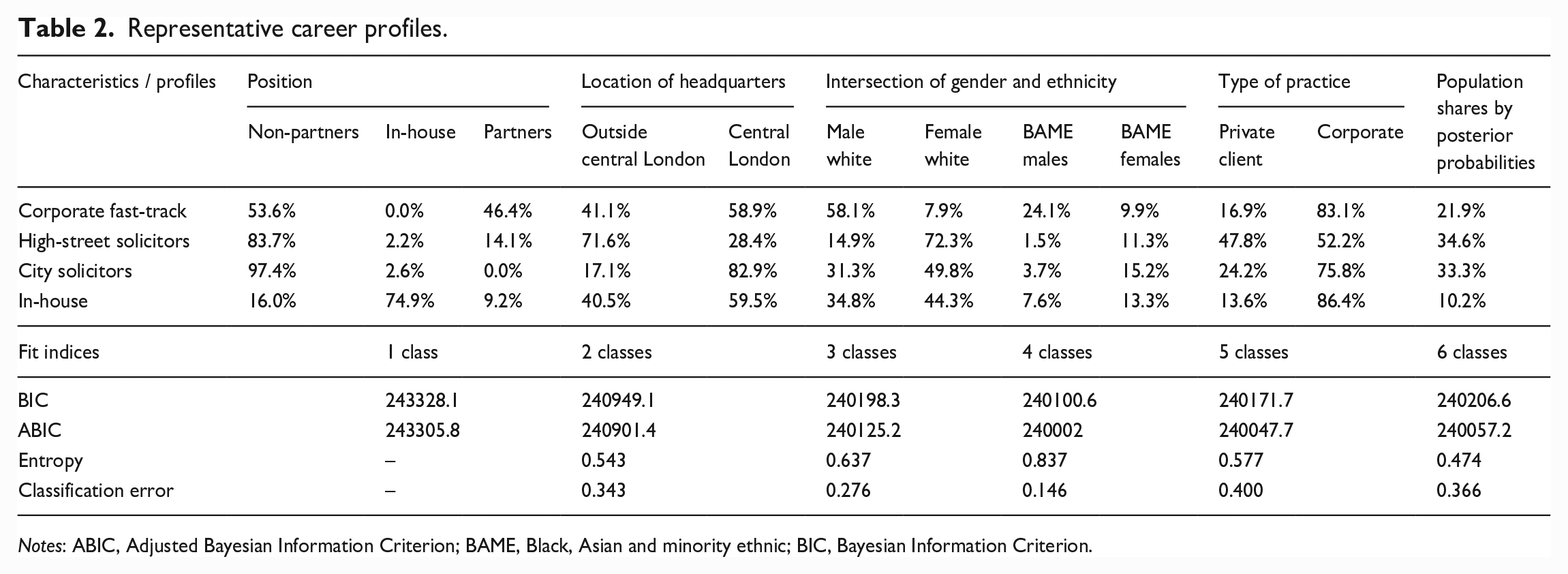
Notes: ABIC, Adjusted Bayesian Information Criterion; BAME, Black, Asian and minority ethnic; BIC, Bayesian Information Criterion.
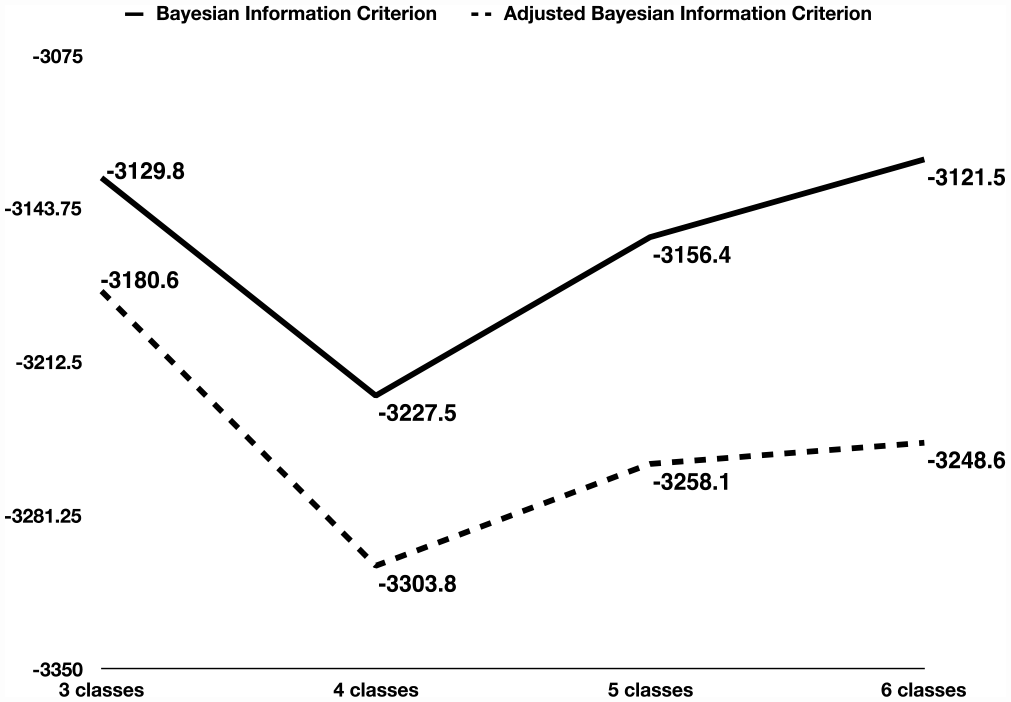
Comparative fit indices.
High-street solicitors
This group of solicitors tend to work in small, regional firms doing a significant share of private client work. They are likely to be a more modestly remunerated career profile in the profession, and may feel the impact of declining conditions at work due to cuts in legal aid and other adverse regulatory and funding changes. They provide legal services defined as ‘retail’, ‘personal’ or ‘high-street’; for example, conveyancing, wills, probate, family law, migration and so forth. Essentially, these solicitors service the legal needs of individuals (private clients) and small businesses. Solicitors populating the high-street profile have a high probability of working in firms based outside of central London. This is a career type associated predominantly with female solicitors, and these solicitors have a low probability of progression to partnership.
City solicitors
The city solicitors’ career profile involves commercial law in central London-based firms. This group of solicitors also has a low chance of progression to partnership within the standard timeframe. This type of legal career is likely to be well paid but subject to high demands in terms of working hours and workloads; for example, in terms of billable hours. Some city solicitors might be located in niche and small and medium-sized firms undertaking private client work while others undertake corporate work. This career type is female dominated and is densely populated by minority ethnic females. This profile reflects the feminization of and persistent discrimination within the profession: women are making in-roads into the profession but not reaching partnership in the same numbers as men, instead being routed towards permanent senior associate (non-partner) roles (such as principal solicitors). It may also relate to emerging evidence about more recently qualified solicitors not perceiving partnership as the pinnacle or end goal of their career but at the same time it might also represent deeply entrenched gender and ethnic (intersected) bias in the promotion process. Minority ethnic men are much less likely to be located in this career profile than women.
Corporate fast-track
Solicitors populating the ‘corporate fast-track’ career have a strong probability of working for central London-based firms. They are likely to be working in international, city or large national law firms with a premium UK and overseas client base. Those solicitors located outside central London are likely to be in key regional city locations with a strong presence of professional services. The corporate fast-track is a white, male-dominated career profile with significant chances of attaining partnership in commercial areas of law. In this career type, minority ethnic males outnumber female solicitors of both white and minority ethnic origin. A low probability of women populating this type of career demonstrates how progression to partnership in large corporate firms remains male-dominated, evidenced also through the descriptive statistics reported above. This male gender-based advantage is also clearly visible in the minority ethnic solicitor population. That said, it is important to note that while minority ethnic men are proportionately much more likely to locate in this career profile than minority ethnic women, and more so than white women, they do still comprise a small proportion of solicitors in the wider population, and particularly of those operating in large commercial firms and areas of practice.
In-house
In-house solicitors tend to undertake corporate work that is typically available in central London and large regional cities where large organizations’ head offices are located. Overall, this is a white and female-dominated career profile (though the share of white men is also significant) characterized by work undertaken by solicitors who tend to work for private or publicly listed corporations who have their own legal counsel in-house. Research indicates that women may find in-house work more compatible with sustaining a legal career as these positions may have greater predictability in terms of working hours, client demands and (after hours) schedule. However, these are technically demanding jobs, especially when involving a large legal team, and the intensity of work will vary depending on industry and sector. As such, this is a sustainable alternative to a partnership career and also one that may hold considerable prestige given the size and status of some large global corporate organizations’ in-house legal teams (Sommerlad et al., 2020).
Gender and ethnic stratification of career profiles over time
To determine how legal careers have changed over time in terms of their gender and ethnic composition, we estimated latent class models for the successive generational cohorts of solicitors. Drawing on the outcomes of LCA, we looked at changes within and between career profiles. The Duncan segregation index (DI), a measurement of occupational segregation, was used to estimate the overall gender and ethnic segregation of legal careers. In a perfectly equal labour market, DI takes the value of 0; that would mean no association between career profiles and solicitors’ gender and ethnic characteristics. DI=1 signifies a perfectly unequal labour market wherein career profiles are defined purely on the basis of gender and ethnicity (e.g. one profile is populated solely by white men, the other by minority ethnic women). To estimate gender and ethnic diversity within career profiles we used the Gini–Simpson diversity index, known in the sociological literature as Blau’s index, which shows the extent to which a single demographic group (e.g. males/white solicitors) dominates a career profile. The higher the index, the more likely it is that females and minority ethnic lawyers are equally represented (Harrison and Klein, 2007).
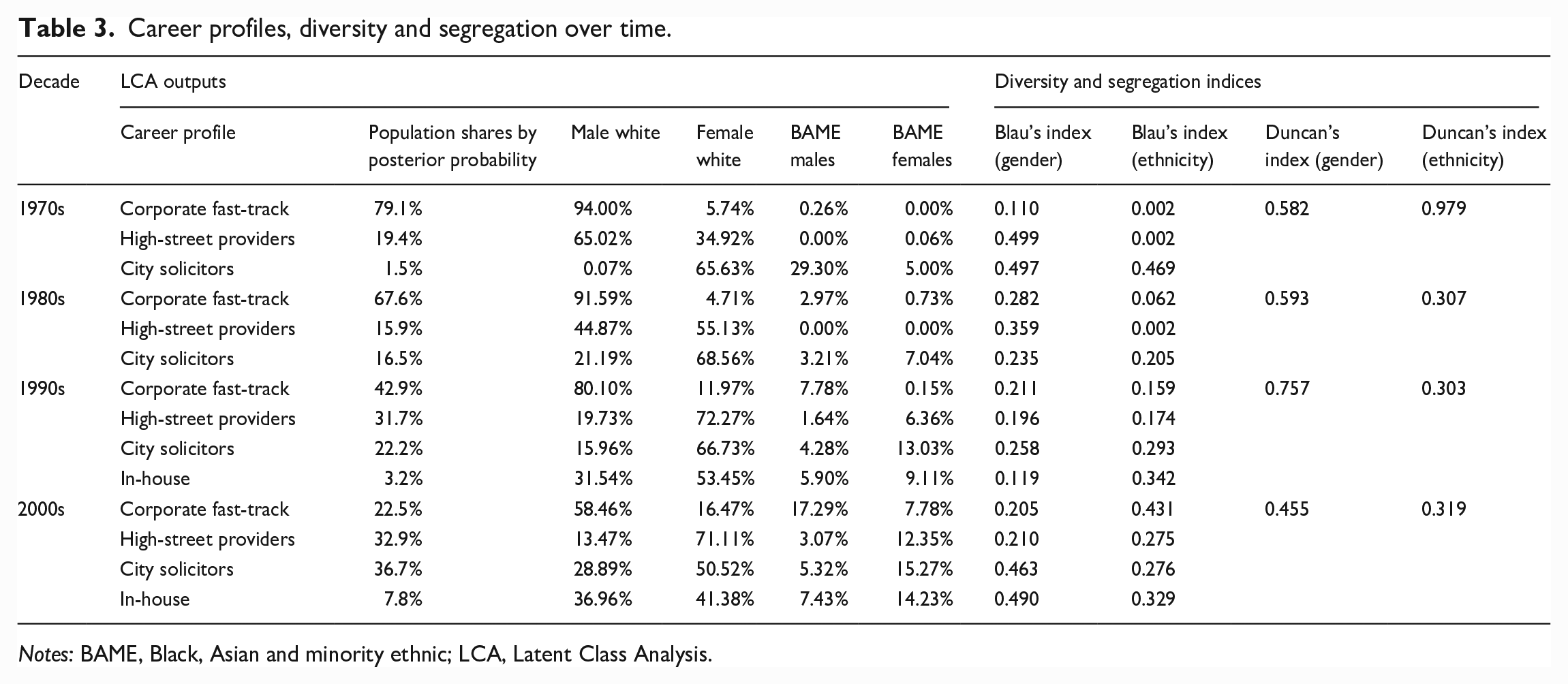
Complete LCA outputs for every cohort can be found in the online supplementary Appendix. For brevity, we report a snapshot of the model estimates in Table 3, which contains the predicted gender and ethnic composition of career profiles, projected shares of career profiles in the solicitor population, Blau’s index and the DI.
Career profiles, diversity and segregation over time.
Notes: BAME, Black, Asian and minority ethnic; LCA, Latent Class Analysis.
The key emerging tendency from our analysis of the successive cohorts of solicitors is that as the profession grows rapidly in terms of new entrants, legal careers become increasingly stratified and more competitive. The corporate fast-track profile has contracted in size relative to other profiles – in the 1970s, it characterized the career profile with 79% of the solicitor population, whereas, in the 2000s, it accounts for just 22% (Table 3). This decline in the most prestigious career profile was accompanied by an increasing share of the less prestigious high-street and mid-ranked city solicitor profiles and the emergence of the in-house profile in the 1990s. The dwindling share of the most established career profile (the corporate fast-track) on the one hand and the rise of in-house legal practices on the other hand reflect a well-documented decline of traditional law firm models (TLS, 2019).
Against this backdrop, the question remains as to whether the profession has become more diverse in terms of the gender and ethnic composition of the career profiles. Looking first at the overall segregation of legal careers (using DI), we found major differences between the patterns of gender and ethnic segregation (Figure 4). Gender segregation followed an inverse U-shaped trend: as the number of new female entrants increased significantly in the 1970s to 1990s, legal careers had become more gender segregated. By the 1990s, DI increased to 0.757, which means that to achieve gender parity, 75.7% of women would have had to move out of their current career profile. In contrast to gender, the ethnic segregation of legal careers decreased sharply in the 1980s and has stayed relatively stable since then, perhaps owing to a more balanced distribution of minority ethnic solicitors across the career profiles.
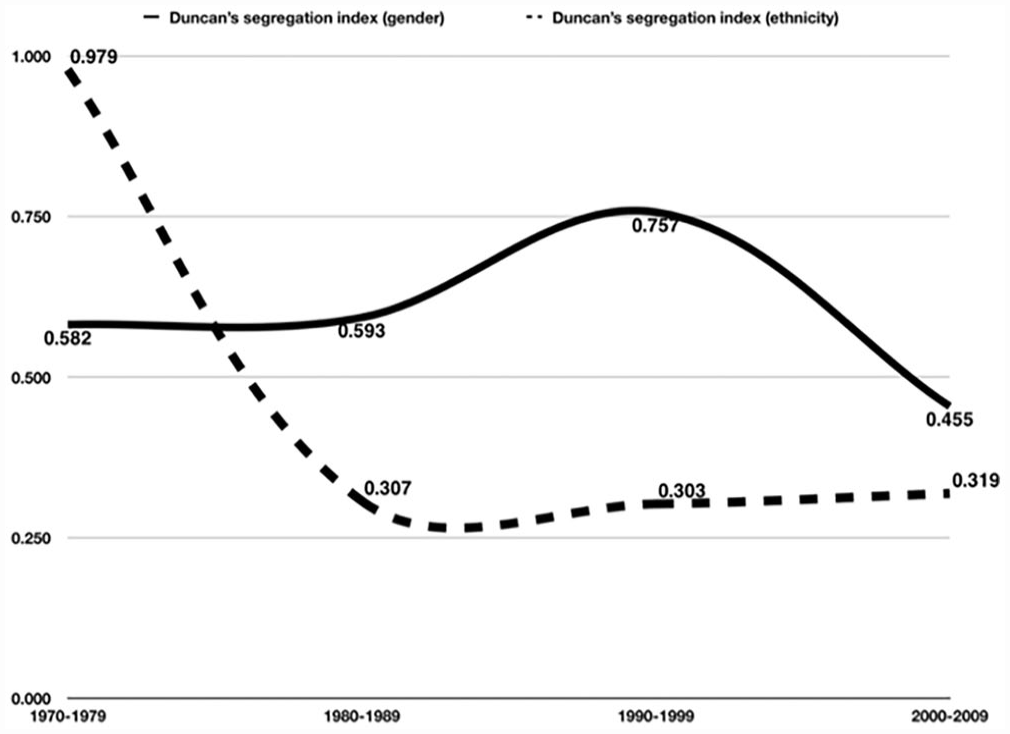
Duncan’s segregation index (by successive cohorts of solicitors, gender and ethnicity).
Blau’s index further documents profound differences between the gender and ethnic composition of career profiles. For instance, over decades, the high-street profile has become more diverse in terms of ethnicity but not gender (Figure 5). The profile is heavily skewed towards women, who have populated it over time and remain the largest demographic group.
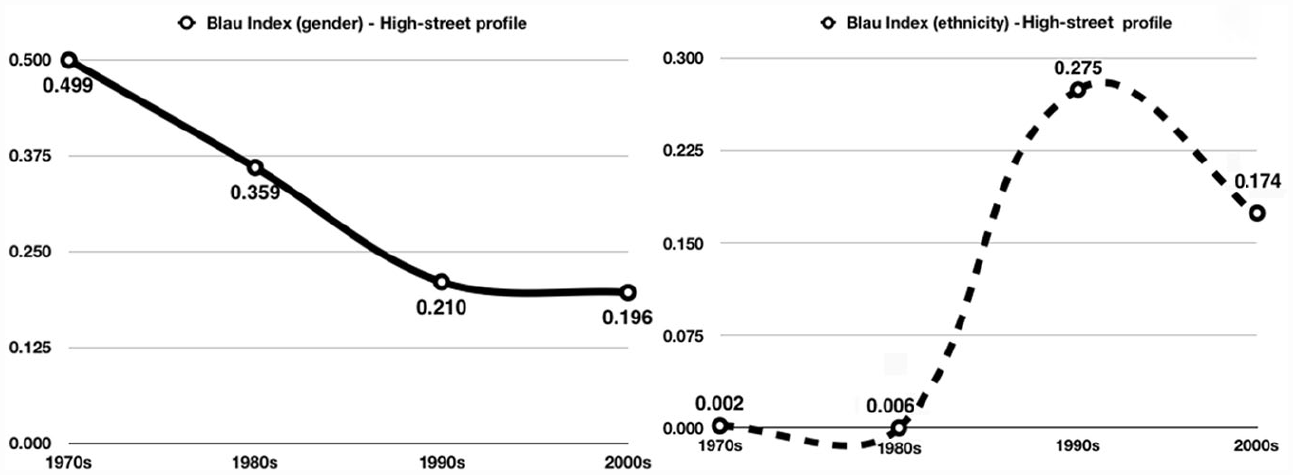
Blau’s index of diversity by successive cohorts of solicitors (high-street).
The most significant structural transformations affected the corporate fast-track and city solicitor profiles. The corporate fast-track profile followed an inverse U-shaped pattern (Figure 6, left panels): after an initial increase in the 1980s (note, in the 1970s, the corporate fast-track profile was almost exclusively populated by white males), progress stalled until the 1990s when the number of new female entrants equalled that of males. The pattern for the city solicitor profile was the reverse, in that we observe increasing gender diversity in the 1990s and 2000s. The dynamic was different regarding ethnic diversity. While the ethnic diversity of the fast-track profile has been increasing noticeably since the 1970s (Figure 6, right panels), it has gained traction in the city solicitor profile only in the past two decades.
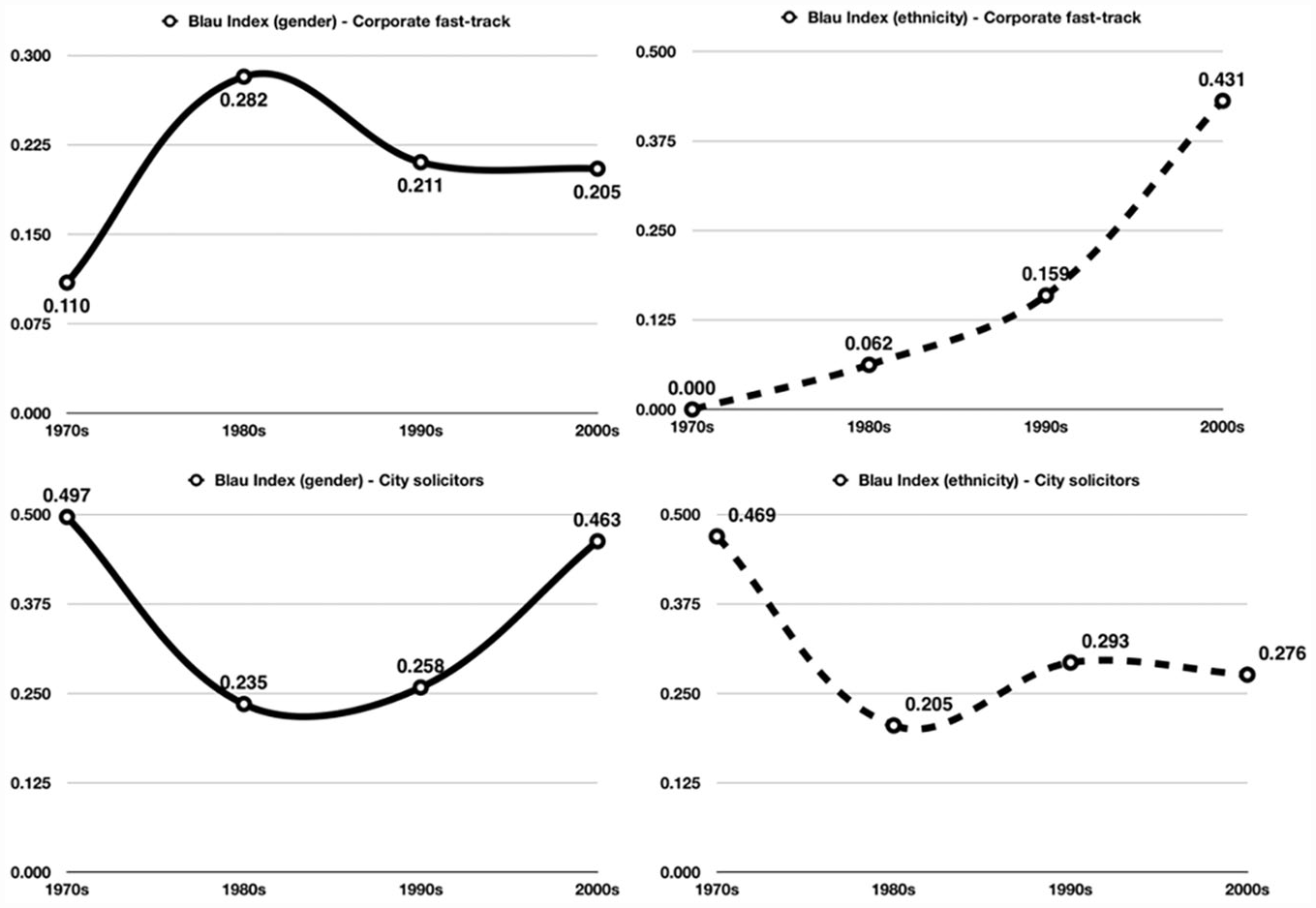
Blau’s index of diversity by successive cohorts of solicitors (corporate fast-track and city solicitors).
A closer look at Table 3 suggests that these profound differences between the patterns of gender and ethnic diversity within career profiles over time occurred because new female entrants were much more likely to cluster in less prestigious profiles (e.g. high-street) than to make inroads into the corporate fast-track profile. Legal careers became more gender balanced in the 2000s, attesting to a more balanced profile for women as female solicitors of white and minority ethnic origin started permeating the corporate fast-track profile. In the 2000s, the predicted share of white and minority ethnic female solicitors entering the corporate fast-track profile was approximately 24%. At the same time, minority ethnic men fared particularly well in terms of making inroads into the corporate fast-track profile while maintaining a high presence in the city solicitor profile. Having initially clustered into an emerging city solicitor profile, by the 2000s minority ethnic men had become the second largest demographic group in the corporate fast-track profile behind white men. As a result of these transformations, the city solicitor career profile – one in which there is less chance of promotion to partnership – has become the most representative career profile in terms of its diversity composition. White men have increased their representation here, alongside an established high proportion of white women and the more recent presence of minorities. Indeed, this career profile most accurately captures the diversity characteristics of the entrants to the profession from mid-2000 onwards.
Discussion and conclusions
We analysed the stratification of the solicitors’ profession in England and Wales, identifying four distinct career profiles and the diversity characteristics of solicitors associated with them over time. Our study contributes to the literature on careers in professional occupations through an intersectional analysis, and in doing so provides new insights into the impact of gender and ethnic inequalities intersected in the solicitors’ profession over five decades using sophisticated techniques and an unparalleled dataset.
The unique contribution of this study is twofold. First, we know from studies of intersectionality that minority ethnic women often endure both ethnic and gender disadvantage and marginalization (Crenshaw, 1989). Our research confirms this and goes further to illuminate how white women and minority men fare relative to each other in competition for the most advantaged career track jobs in the legal profession. Second, through an analysis spanning five decades, we demonstrate how the gender and ethnic composition of career profiles have changed over time. Historically, white men were best placed to secure fast-track careers. A first step towards greater diversity occurred in the 1980s with a substantial proportion of white female entrants. From the 1990s, we see a gradual influx of minority ethnic solicitors as the proportion of white males, who had previously dominated admissions, declines in share. Our analysis also shows that in a period of rapid expansion, the city solicitor profile that contains some elements of prestige, but affords much lower probability of progression, has grown considerably and now mirrors the gender and ethnic composition of new entrants. The diversity of the city solicitor profile may reflect the investment in diversity programmes and initiatives, which tend to be more pronounced in London and large city-based firms (Ashley, 2010, 2021; Laurison and Friedman, 2016), and have a greater impact on diversity in terms of entry to a firm rather than progression within it.
What is most stark is the relative status of white women and minority ethnic men. Despite female solicitors having a more established profile in the profession and dominating entry to the profession to the extent that they outnumber minority ethnic male solicitors five to one, they are much less likely to route onto fast-track careers leading to partnership in prestigious areas of corporate practice. As such, gender is a more significant factor in stratification and (dis)advantage. Overall, from a structural perspective, our data indicate that firms’ intensity of preference to promote men to partnership is stronger than it is for partners to be of white ethnicity.
Enduring gender stratification accords with the notion of ascription bias or queue theory, whereby firms give men the first chance at the best jobs, then turn to women when they cannot attract enough qualified men (Reskin and McBriar, 2000; Reskin and Roos, 1990). This also links to the notion of a male ideal worker (Acker, 2006) prevalent across many professions and national contexts (Cohen et al., 2021). Indeed, that white women and, later, minority ethnic women, were simultaneously integrated into the profession and marginalized within it, is consistent with empirical research that claims gender penalties are often more pervasive and enduring than ethnic penalties (Mandel and Semyonov, 2016; Tomlinson et al., 2019).
However, this does not fully explain the success story of minority ethnic men who are particularly well integrated into prestigious career profiles relative to white women. In general, minority men may hold greater potential for cultural, political and economic assimilation than women. It is also important to acknowledge diversity and intra-group difference within the minority ethnic male population. Studies demonstrate that Indian and Chinese men are more likely to enter and progress within law firms due to a combination of socio-economic background (Archer, 2011; Ashley and Empson, 2017; Tomlinson et al., 2013, 2019), education profile, cultural fit and upbringing (Webley et al., 2016), and resultantly are more often located in these more prestigious career profiles (Platt, 2005). Furthermore, it is widely accepted that women’s conflict between work and family commitments lies at the heart of their less likely advancement and that organizational leaders perpetuate this narrative to explain lack of progression, particularly in demanding and inflexible work environments (Padavic et al., 2020). Other studies show that the combination of domestic and family roles intersects with established patterns of labour market attachment, and as maternity impacts differently for minority ethnic women in their careers and advancement (Mandel and Semyonov, 2016; Tomlinson et al., 2019). If leaders (disproportionately white middle class men) hold strong work–family views and expectations about what women of different ethnicities choose to prioritize in terms of their career and working lives, this may also explain why minority men progress more quickly than white women to partnership.
The structural analysis of careers revealed four distinct career profiles. Three profiles – corporate fast-track, city solicitor and high-street solicitors – are visible from the 1970s, with the in-house profile emerging in the 1990s. As the profession expands rapidly, we document a substantial decline in the proportion of the corporate fast-track careers, relative to other profiles. That is, in relative terms, fewer solicitors experience elite fast-track careers now than in previous decades. In contrast, the in-house and city solicitor career profiles have grown in size and share. To reiterate, the city solicitor profile, which represents a mid-ranking type of career with some elements of prestige (practising corporate law in large, central London-based firms), but a low probability of progression to partner level, has seen the steepest rise throughout the 1980s to 2000s. Currently constituting around a third of the solicitor population, it has become almost perfectly representative demographically of new entrants to the profession. The rise of the ‘mid-ranking’ city solicitor profile and decline of the most prestigious corporate fast-track profile can be partially explained by the transformation of business models within law firms (Faulconbridge and Muzio, 2021; Sherer and Lee, 2002) and possibly diversity programmes now common in large corporate firms (Ashley, 2022). As a route to enhanced profitability and partner income, firms have increased leverage by greatly expanding the number of associate solicitors (as seen in the city solicitor profile) while stabilizing the number of partners (observed in the fast-track profile). Furthermore, in response to diversity management imperatives, lifestyle preferences and profitability considerations, firms have also begun to move away from the up-or-out promotion system and to create non-partnership career tracks (Galanter and Henderson, 2008). This then implies that the demarcation between the corporate fast-tract and city solicitor profiles is a matter of targeted recruitment and promotion policies at firm-level, which may be discriminating (Ashley, 2022). Given partners are overwhelmingly male and associates predominantly female, this likely contributes to explaining some of the patterns we observe in our dataset.
The solicitors’ profession is a highly dynamic and stratified occupation and as such a key site for sociological research on work and employment. Given the changes in structure, demographics and its expansion over the past five decades, it remains a relevant and important site for insights into gender, ethnic and wider social inequalities and particularly intersectional research on career mobility.
Supplemental Material
sj-docx-1-wes-10.1177_09500170231159608 – Supplemental material for Gender and Ethnic Intersectionality in Solicitors’ Careers, 1970 to 2016
Supplemental material, sj-docx-1-wes-10.1177_09500170231159608 for Gender and Ethnic Intersectionality in Solicitors’ Careers, 1970 to 2016 by Danat Valizade, Jennifer Tomlinson, Daniel Muzio, Andy Charlwood and Sundeep Aulakh in Work, Employment and Society
Footnotes
Funding
The authors disclosed receipt of the following financial support for the research, authorship, and/or publication of this article: This work was funded by the Solicitors Regulation Authority (SRA).
Supplementary material
The supplementary material is available online with the article.
References
Supplementary Material
Please find the following supplemental material available below.
For Open Access articles published under a Creative Commons License, all supplemental material carries the same license as the article it is associated with.
For non-Open Access articles published, all supplemental material carries a non-exclusive license, and permission requests for re-use of supplemental material or any part of supplemental material shall be sent directly to the copyright owner as specified in the copyright notice associated with the article.
