




Abstract
This article contributes to the literature on persistent gender inequalities in the labour market by investigating gender role attitudes in Germany and their association with labour market behaviour. Based on the German Panel Study ‘Labour Market and Social Security’ (PASS), longitudinal analyses are applied to examine the influence of gender role attitudes and the household context on various employment states. The results reveal that gender role attitudes are crucial for labour market behaviour and that there are differences among women and men in different household contexts. Whereas single men and women do not differ significantly in their employment probabilities, women in couple households are less active in the labour market than their male counterparts. Furthermore, differences in employment are largest in couples with children. Among women, differences in full-time employment by household context become smaller when these women hold egalitarian attitudes.
Keywords
Introduction
Educational expansion in Germany over the last several decades and the integral part that employment now plays in women’s lives have led to an increase in dual earner couples and educational homogamy (Blossfeld and Timm, 2003; Kollmeyer, 2012). However, while women’s participation in the labour market has been continuously increasing in recent decades, there remain considerable gender differences regarding working hours, earnings and job quality (Weinkopf, 2014). Furthermore, family obligations still play a more important role for women than for men, with maternal employment increasing to a lesser degree than employment of childless women and mainly involving part-time employment (Trappe et al., 2015). Germany, therefore, is a case in point for the recent trends in gender relations in the labour market and in society, which internationally have been called ‘stalled’ (England, 2010) or ‘incomplete’ (Esping-Andersen, 2009) regarding the advancement of gender equality. As in many industrialized countries, the German labour market is characterized by a gap between the educational and economic resources of women, on the one hand, and their labour market behaviour, on the other hand. One important factor contributing to the persistence of the traditional division of paid and unpaid work may be gender role attitudes. Gender role attitudes or gender ideologies (Davis and Greenstein, 2009) represent individual views on gender relations in society and different spheres of society (the labour market, family, politics) and have received increasing attention in sociological research (Grunow et al., 2018; Khoudja and Fleischmann, 2018; Knight and Brinton, 2017; Nitsche and Grunow, 2018; Platt and Polavieja, 2016; Valentova, 2013). However, previous literature on gender role attitudes has faced several data limitations, and thus, previous studies were often either cross-sectional or focused primarily on limited outcomes, such as labour market entries and exits, or were restricted to women in couple households. Furthermore, relevant household context information is only used as a control variable in panel studies.
This article contributes to the literature by investigating gender role attitudes in Germany and their role in labour market behaviour in a more comprehensive way. This study applies a longitudinal perspective and provides insights on the interactions among gender, household context and gender role attitudes with respect to different employment states. Furthermore, these analyses extend previous longitudinal findings that have focused on liberal welfare states (UK and US) to Germany, a continental European and more conservative welfare state.
The analysis relies on the representative German Panel Study ‘Labour Market and Social Security’ (PASS, Panel Arbeitsmarkt und Soziale Sicherung), which included specific questions on gender role attitudes in four waves. The article presents descriptive findings on the distribution of gender role attitudes in Germany and their determinants, including longitudinal data on the stability of these attitudes at the individual level. Next, the association of gender role attitudes and labour market behaviour is analysed in a series of regression analyses. To address endogeneity between these two aspects, longitudinal information is used to estimate the effects of (previous) gender role attitudes on current labour market participation.
Theoretical background
Gender role attitudes – Concept and previous research
International research has shown that there remain gender differences in labour market participation, which restrict mothers in particular to part-time employment, and that the sharing of paid work, housework and care in couples remains unequal (Steiber and Haas, 2010; Uunk et al., 2005; Van der Lippe et al., 2011). Some authors suggest gender role attitudes as one possible explanation (Schober and Scott, 2012; Stam et al., 2014). Embedded in the discussion on the slowing of the gender revolution, Goldscheider et al. (2015) and Sullivan et al. (2018) argue that further equality is slowly evolving because attitudes are slow to change due to cohort replacement.
Gender role attitudes are beliefs and concepts concerning the social roles best suited to men and women (Davis and Greenstein, 2009). These attitudes can apply to different spheres, such as the public or private sphere (Constantin and Voicu, 2014), and include different dimensions, such as the primacy of the breadwinner role; the belief in separate gendered spheres; beliefs about working women and relationship quality, motherhood and the feminine self; household utility; and the acceptance of male privilege (Davis and Greenstein, 2009). This article will focus on the relationship between gender role attitudes and labour market behaviour and therefore includes attitudes about working mothers, the household division of labour, and the male breadwinner model.
Attitudes as psychological concepts in general and gender role attitudes in particular can be incorporated into models of economic behaviour (Akerlof and Kranton, 2000; Uunk and Lersch, 2019). Attitudes can influence the utility or desirability of alternative courses of action, such as joining the labour market or taking on care responsibilities in the household. Together with individual labour market resources, opportunities and constraints rooted in the household context (Blau et al., 2014; England and Farkas, 2017) and the institutional context, attitudes should contribute to explaining female employment behaviour and the gender division of paid and unpaid work.
Gender role attitudes can be conceived of as being both formed during socialization (Bolzendahl and Myers, 2004; Cunningham, 2001; Platt and Polavieja, 2016) as well as, to a certain degree, responsive to experiences of employment or motherhood in adult life (Berrington et al., 2008; Bolzendahl and Myers, 2004; Schober and Scott, 2012). Evidence suggests that parental education and one’s own education, parental attitudes and behaviour, religiosity and employment are associated with gender role attitudes (i.e. Farré and Vella, 2013; Fernandez and Fogli, 2009).
Previous literature investigating gender role attitudes has been based on cross-sectional or time series data, often focusing on the composition of gender ideologies in comparative cross-national studies, and has shown a trend towards more egalitarian gender roles (Grunow et al., 2018; Knight and Brinton, 2017; Lee et al., 2007; Scarborough et al., 2019). Attention has been paid to macro-level associations of countries’ gender role attitudes and female labour force participation (Uunk, 2015) as well as individual-level associations of gender role attitudes and housework or female employment (Fortin, 2005; Kangas and Rostgaard, 2007; Nitsche and Grunow, 2016; Uunk et al., 2005). As Fortin (2005: 420) argued, while there is a strong cross-sectional association between attitudes and labour market behaviour, longitudinal studies are better suited by using lagged attitudes to prevent ex-post rationalizations and to obtain a better understanding of the direction of causality.
A few longitudinal studies that exist for the US (Corrigall and Konrad, 2007; Cunningham, 2008) and the UK (Berrington et al., 2008; Kan, 2007; Schober and Scott, 2012; Uunk and Lersch, 2019) find positive effects of women’s egalitarian gender role attitudes on employment. Two studies on the Netherlands yield mixed evidence: Stam et al. (2014) showed that women with more traditional gender role attitudes are less likely to enter and more likely to exit the labour market and decrease their working hours, while Khoudja and Fleischmann (2018) did not find an association between women’s gender ideology and women’s work hours.
However, the majority of the previous longitudinal studies exhibited a rather narrow perspective by focusing on specific groups, such as women who in most cases were married or cohabiting, already had a child or were transitioning to motherhood. That said, men were rarely considered in these studies, at least as long as they were childless. Furthermore, information on family status was often used only as a control variable in multivariate analyses. Hence, this article contributes to the literature in two ways. First, it broadens the perspective and compares men and women in different household contexts. Second, it provides insights regarding the interactions between the different gender-household constellations and gender role attitudes towards different employment states.
Female employment – The German case from an international perspective
In addition to a long-term perspective, it is also important to consider the cultural and institutional context. There is a large body of literature showing how the national context, in particular the welfare state, political regulations and cultural norms, may create or reinforce structural and normative gender inequalities (Hook, 2010; Orloff, 1993; Pfau-Effinger, 2005).
One strategy towards gender equality is the promotion of female employment according to an adult worker (Lewis, 2001) or universal breadwinner (Fraser, 1994) model with women as citizen-workers (Orloff, 1993). While this is per se a fruitful strategy, it is problematic if the normative assumptions underlying policies are not in line with actual practices and preferences of women who, particularly when they are mothers, face particular barriers to employment, are only secondary earners and have primary responsibility for care work (Lewis, 2001).
Cross-national studies reveal that national practices and policies have a high impact on the gendered division of labour in couples (i.e. Cooke, 2006; Hook, 2006, 2010; Neilson and Stanfors, 2014). The provision of public childcare is associated with higher female employment (Kangas and Rostgaard, 2007; Uunk et al., 2005) and less housework for women (Hook, 2010). The provision of parental leave time for the father can promote a more equal division of paid and unpaid labour in couples (DeRose et al., 2019).
Another factor that might be restricting full employment of women is national and individual preferences and attitudes towards gender roles, which are also engrained in national policies. Regarding individual preferences, Hakim (2000) argued that women differ in the extent to which they see themselves as committed to a working or family career. Although Hakim’s preference theory has been criticized for underestimating structural constraints (Kan, 2007), the impact of family policies on individual women’s employment might be limited when they are not in accordance with women’s attitudes towards their role in the family and the labour market (Hakim, 2000).
Against this background, Germany is an interesting case because recent policy reforms represent a substantial orientation towards an adult worker model (Lewis et al., 2008). In contrast, elements of familization remain present in European as well as German family policies (Daly, 2011), leading to an ambivalent composition of societal gender ideologies and family policies (Ostner, 2004). Germany could, therefore, be considered as a representative example of European welfare states that introduced elements to promote female employment into family policies that traditionally see women and the family as primarily responsible for care work.
In Germany, women have caught up with men in educational attainment, and their labour force participation rate has continuously increased. However, despite increasing female labour market participation, the work volume of women increased only slightly over the last decades, leading to one of the highest proportions of female part-time workers in the EU (Wanger, 2015), and there remain considerable gender differences regarding working hours, earnings and job quality (Weinkopf, 2014).
The ambivalent family policies are generated through the joint taxation system and other extensive entitlements reinforcing the traditional male breadwinner model and emphasizing mothers’ roles as caregivers and secondary earners (Esping-Andersen, 1999; Gangl and Ziefle, 2009), which weakens mothers’ positions in the labour market. Furthermore, there is still a lack of private and public childcare facilities, especially for infants. Moreover, even for older children, childcare services often do not cover all hours of the working day (Krapf, 2014).
On the contrary, gender equality has been a political aim for over 40 years, and improving female and maternal employment is an important objective. Especially in the recent past, family policies support both maternal employment and paternal engagement in parenting activities through high public investments in increasing childcare services for children under the age of three years and through a major reform in 2007 of the parental leave policy, which introduced two ‘daddy months’ for new fathers (Zoch and Hondralis, 2017).
The former political separation between East and West Germany and the underlying differences in socialization are still visible in differences in gender role behaviour (Rosenfeld et al., 2004; Trappe et al., 2015) and attitudes. Although there has been an overall trend towards more egalitarian attitudes, traditional gender role attitudes are more pronounced in West Germany than in East Germany (Bauernschuster and Rainer, 2012; Lee et al., 2007).
Previous literature using gender role attitudes in Germany has so far concentrated on the gendered division of family responsibilities and how the structures present in partnerships become manifestations of gender roles (Grunow et al., 2012). For example, there is evidence that starting a family often leads to a (re-)traditionalization of the division of labour in partnerships (Grunow et al., 2012; Kühhirt, 2012; Schulz and Blossfeld, 2006), resulting in females’ withdrawal from the labour market. The only longitudinal studies on gender role attitudes in Germany analyse the impact of gender role attitudes on the division of housework and care among couples (Nitsche and Grunow, 2016, 2018).
The results emphasize the importance of the family background as it shapes the employment decision. Accordingly, there are several theoretical arguments predicting how paid and unpaid work is distributed within couples. For example, the New Home Economics assumes that even with a minimal income advantage of one partner, a specialization logic is set in motion in which the person with the higher income devotes himself or herself entirely to the labour market, while the other person does the housework and childcare (Becker, 1981). Although the theory is basically gender neutral, it is often assumed that a woman has a comparative advantage for housework and therefore concentrates on the household while her male partner concentrates on the labour market. Dynamic additions to the quite static division are provided: first, by the argument of the added worker effect, which refers to the increased labour supply of individuals in response to unemployment of their partner (Bradbury, 1995); second, bargaining theory assumes that the distribution of paid and unpaid work is constantly being renegotiated between the partners and is determined by their resources and opportunities in the labour market (Ott, 1992). An example of an opposing argumentation is the deviation neutralization thesis (e.g. Brines, 1993). According to this thesis, norms and role attitudes in partnerships can motivate economically inefficient divisions of labour in which female main earners also take on the main burden of housework in order to compensate for the existing role deviation.
The different theoretical arguments illustrate the importance of the family background when analysing the unequal distribution of paid and unpaid work in couples. This article examines these arguments and analyses the overall distribution of gender role attitudes and their determinants by empirically investigating whether gender role attitudes influence employment, and if so, how the effect differs between men and women in different household contexts.
Data and methods
To address the research questions empirically, the German Panel Study ‘Labour Market and Social Security’ (PASS), which has been conducted by the Institute for Employment Research (IAB) since 2007, is used. 1 PASS consists of a representative sample of more than 10,000 individuals and their households. The sample is restricted to respondents aged 15 years or older (excluding students and pensioners). In addition to central information on individual and household characteristics, four specific items on gender role attitudes were included in waves 1, 2, 5 and 8 (for more information on PASS, see Trappmann et al., 2019):
a) A woman should be ready to reduce her working hours to spend more time with her family.
b) It is rather nice to have a job, but what most women want is a home and family.
c) A working mother can have an equally warm relationship with her children as a stay-at-home mother.
d) It is a husband’s duty to earn money, the wife’s duty to take care of home and family.
The respondents were asked to rate these statements on a 4-point scale: ‘1. Strongly agree’, ‘2. Somewhat agree’, ‘3. Somewhat disagree’ and ‘4. Strongly disagree’.
In the first step of the analysis, a variable of gender role attitudes (gender role score) that includes the four single items is generated (item ‘c’ is reversed). The measurement model and exploratory factor analysis indicate one latent dimension of gender role attitudes. The one-dimensional model shows a very reasonable model fit (RMSEA = 0.051; TLI = 0.976; CFI = 0.992) and reliability (Cronbach’s alpha = 0.673). The variable values range from –1.11 to 0.73, with a mean of 0 and a standard deviation of 0.44. Higher values indicate more egalitarian gender role attitudes.
The analytical strategy to answer the research questions is as follows: First, group differences are shown using mean comparisons, and the determinants of role attitudes are tested by applying multivariate linear regression models. The individual gender role attitudes by gender and household context are predicted based on interaction effects in those models.
Second, to test whether gender role attitudes are determinants of labour market behaviour of men and women, a distinction is made among different employment states: full-time employment (> 30 hours per week), part-time employment, marginal employment, unemployment and non-employment (i.e. being a homemaker, on parental leave or inactive for other reasons). To address the different states appropriately, a multinomial model is estimated. 2 Owing to space limitations, only the results of the two most relevant outcomes, full- and part-time employment, are shown. The other results are available in the online supplementary material (Table A3).
Additionally, whether the association of gender role attitudes towards employment differs among different population subgroups based on household context is tested by including interaction effects.
Control variables in all multivariate models are: gender, place of residence (East or West Germany), household context (single, single parent, childless couple, couple with children), migration background (no migration background, 1st generation, 2nd generation), education based on the CASMIN (Comparative Analysis of Social Mobility in Industrial Nations) classification, age and receipt of unemployment benefit II, a means-tested minimum income benefit.
Previous research has shown that the association between attitudes and employment behaviour can be subject to endogeneity and reverse causality when measured at the same point in time (Fortin, 2005). Therefore, attitudes and behaviour should be measured at different points in time to understand the long-term effects of attitudes on behaviour (Corrigall and Konrad, 2007).
For these reasons, a longitudinal sample is used that includes respondents for whom there are measurements of gender role attitudes and labour market participation at different points in time. This sample includes those respondents who either participated in waves 2 through 5 or 5 through 8, and thus, two measurements that are four years apart from each other are generated. The lagged variables of gender role attitudes are then used to estimate the association with the employment status. In addition, the stability of gender role attitudes between the two measurements is analysed.
The sample is weighted longitudinally using the cross-sectional weight for the first of the four waves and multiplying it with the three consecutive probabilities of participation in the next wave (for descriptive sample statistics, see online supplementary Table A1). Moreover, clustered standard errors are estimated to adequately capture the nested data structure (several waves per respondent).
Results
Distribution and determinants of gender role attitudes in Germany
Figure 1 displays the mean values of the gender role attitudes from the pooled PASS data of waves 1, 2, 5 and 8 differentiated by gender and region. As expected from the differences in cultural background and socialization, East German respondents showed more egalitarian gender role attitudes than West Germans. This trend is true for all four single items as well as the gender role score, which is multiplied by 10 to reveal differences in the mean values between groups. In contrast to regional differences, gender differences are less pronounced, particularly regarding the gender role score, where no significant differences between male and female respondents can be found. However, regarding the single items, women showed more egalitarian attitudes than men for two of the four items (b and d).
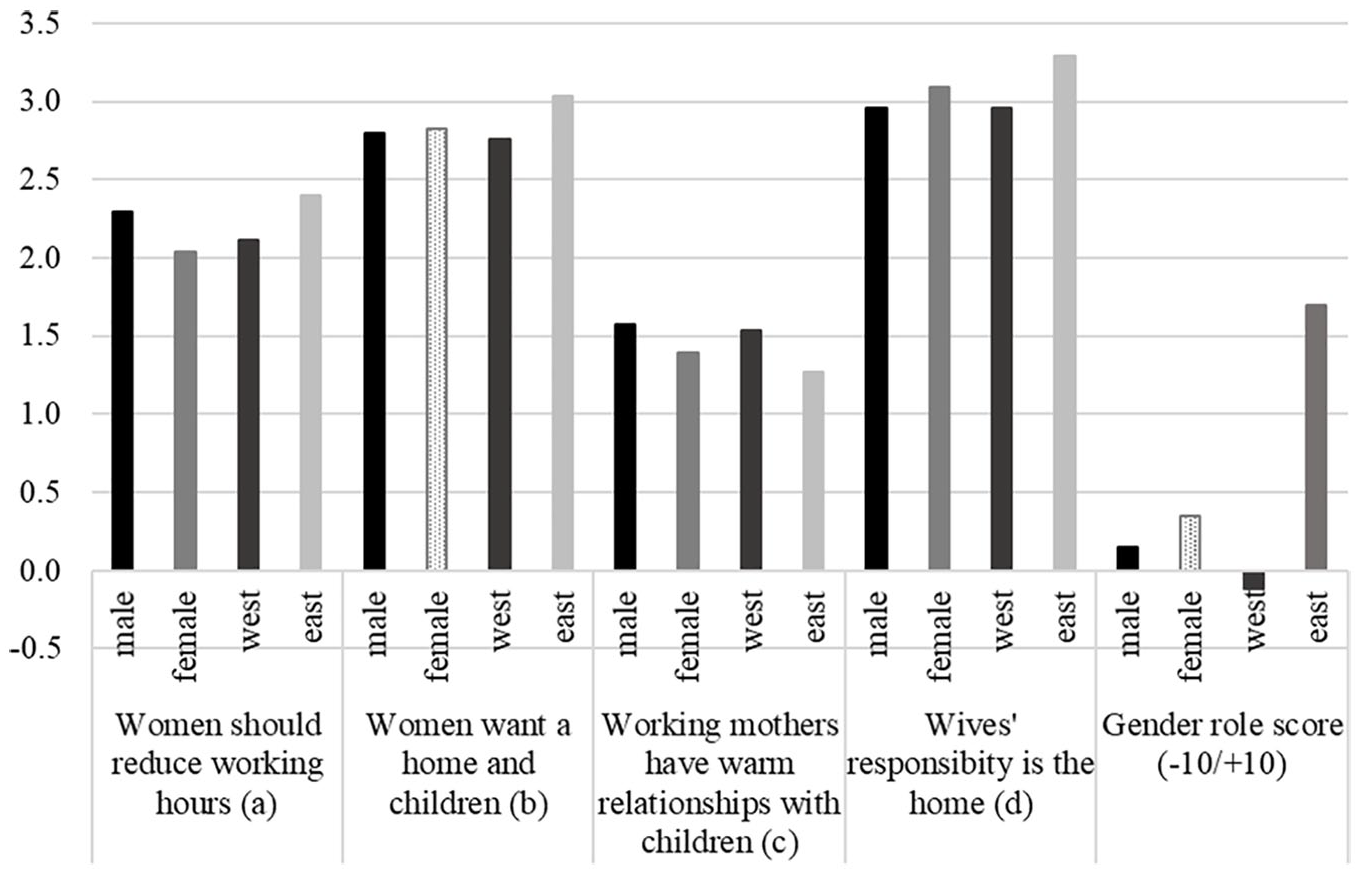
Mean values of gender role attitudes by gender and region in Germany.
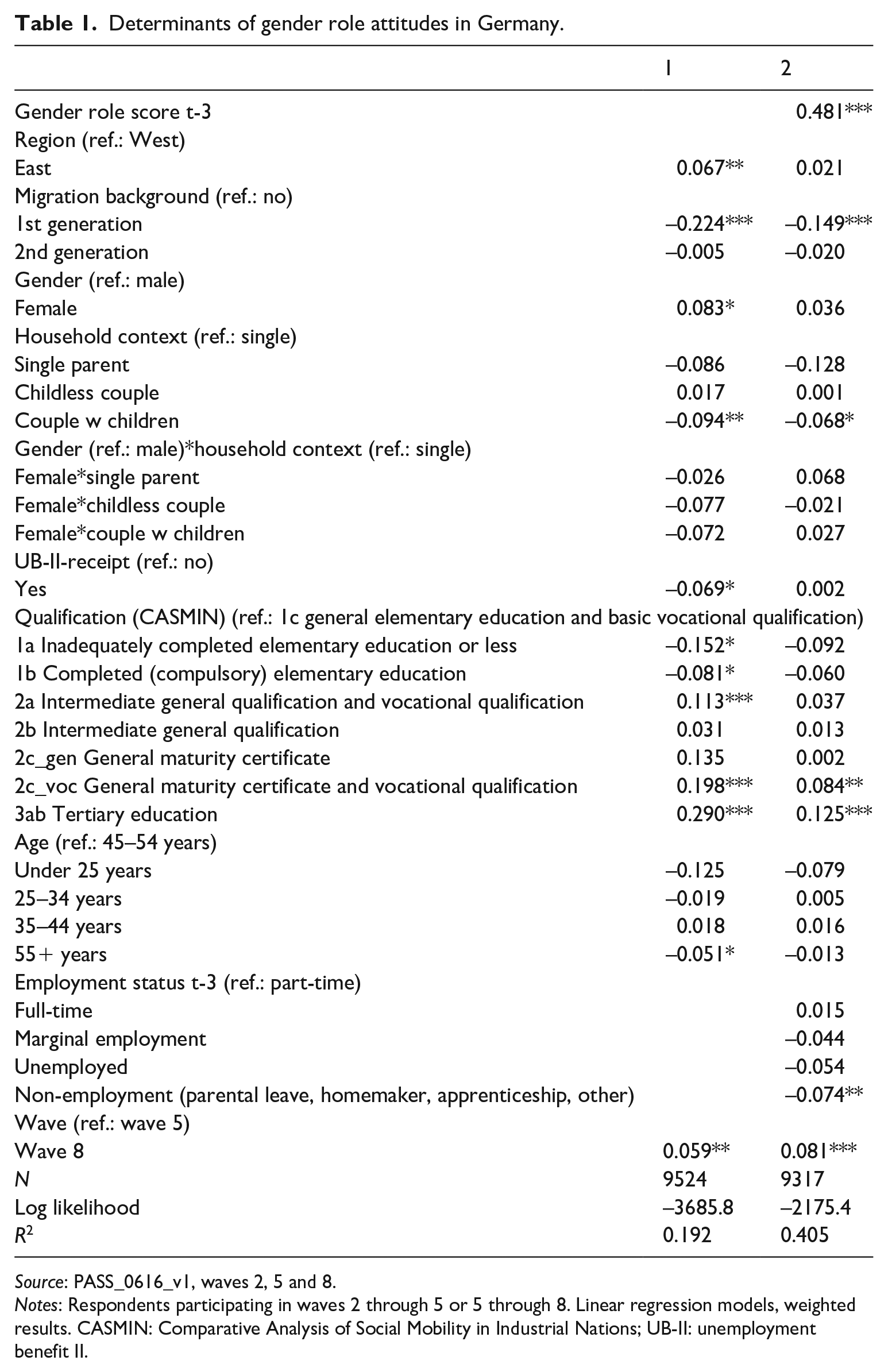
In the following, results from regression models show how gender role attitudes were associated with the covariates (Table 1). Model (1) includes the covariates (see ‘Data and methods’) as well as an additional interaction effect of gender and household context. In Model (2), the lagged gender role attitudes at time t-3 and the lagged employment status at time t-3 are additionally controlled for.
Determinants of gender role attitudes in Germany.
Source: PASS_0616_v1, waves 2, 5 and 8.
Notes: Respondents participating in waves 2 through 5 or 5 through 8. Linear regression models, weighted results. CASMIN: Comparative Analysis of Social Mobility in Industrial Nations; UB-II: unemployment benefit II.
The results reveal that the regional differences regarding gender role attitudes held true when controlling for other covariates. Specifically, East German respondents held more egalitarian views than did West Germans if the lagged attitudes were not controlled for. Furthermore, migration background and qualification were significantly associated with gender role attitudes in all models. For example, 1st-generation immigrants had less egalitarian attitudes than those with no migration background and 2nd-generation immigrants and respondents with higher qualification levels revealed more egalitarian attitudes.
The associations of gender and household context with gender role attitudes are ambiguous. Contrary to the descriptive findings, the model not controlling for the lagged gender role score exhibited a significant gender difference, such that, in general, women had significantly more egalitarian attitudes than men. As expected from the literature, respondents in couple households with children generally displayed less egalitarian gender role attitudes than respondents from other household contexts. The interaction effect of gender and household context based on Model (1) is presented graphically in Figure 2, which displays the predicted gender role scores of the eight groups by gender and household context. The results show that men and women in couple households had very similar gender role attitudes. Furthermore, respondents in couple households with children showed significantly less egalitarian attitudes than singles and men and women in couple households without children. Among single respondents and single parents, women tended to display more egalitarian attitudes than their male counterparts, albeit the differences were not significant.
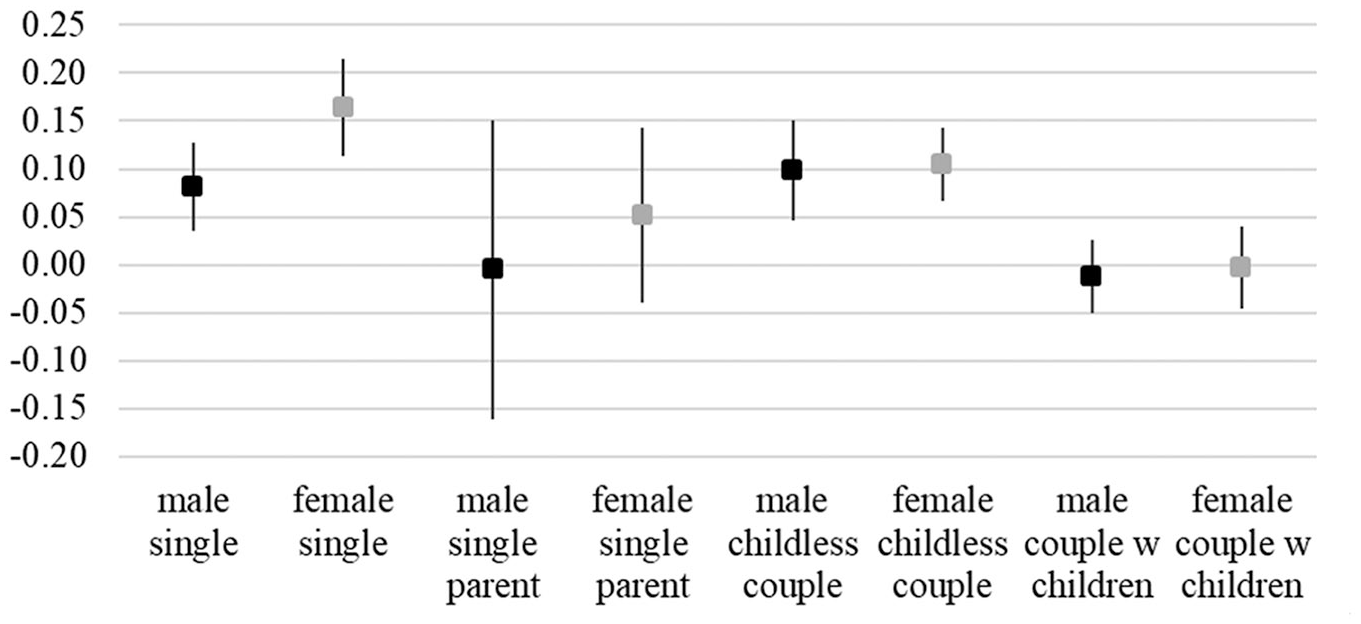
Estimated gender role score by gender and household context.
The remaining covariates of Model (1) in Table 1 are also significantly associated with gender role attitudes: respondents in low-income households, measured by the receipt of unemployment benefit II, held less egalitarian gender role attitudes than non-recipients. Respondent age is non-linearly associated with gender role attitudes: middle-aged men and women held the most egalitarian attitudes. Furthermore, the coefficient of the survey year (wave) indicates a time trend towards more egalitarian gender role attitudes.
However, when analysing intrapersonal time trends, our results indicate that gender role attitudes are remarkably stable over time. Model (2) shows a highly significant and substantial regression coefficient for the lagged attitudes. 3 The introduction of lagged attitudes also substantially reduces the importance of the other covariates. Compared to Model (2), only migration background and qualifications as well as the time trend remain significant predictors of gender role attitudes.
The association with lagged employment status is also significant. Employed respondents held more egalitarian attitudes than those not holding (regular) employment. This finding indicates that it is worthwhile to analyse gender role attitudes as determinants of labour market behaviour, which will be done in the following section.
Gender role attitudes as determinants of employment
Figure 3 (and online supplementary material: Table A2) presents the results of the multinomial regression analyses and shows the probability of respondents’ full-time and part-time employment as a function of individuals’ gender role attitudes as well as their individual and household characteristics.
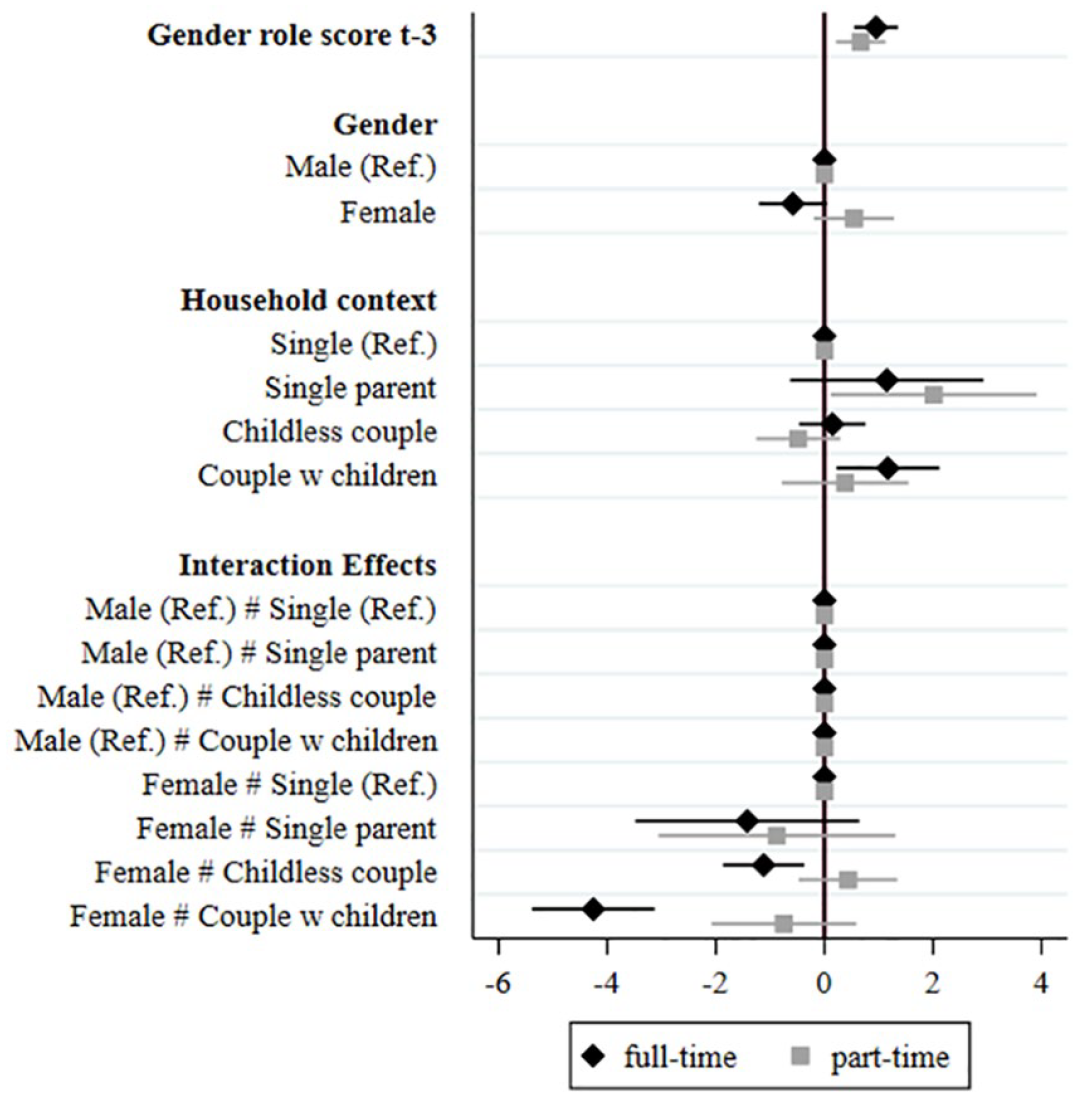
Determinants of full-time and part-time employment in Germany.
The main result of these analyses is that gender role attitudes indeed determine employment, shown by the positive and significant effect of the gender role score. This finding indicates that the more egalitarian the gender role attitudes were, the higher the probability of being employed both full-time and part-time.
However, when distinguishing between women and men (Figure A1 and Table A2 in the online supplementary material), it becomes apparent that the effect of gender role attitudes on full-time employment was only driven by women, for whom the effect was highly significant. For men, there was no significant effect on full-time employment. In contrast, there was a significant positive effect of gender role attitudes on part-time employment for both men and women. However, previous studies have not found an effect regarding men (Corrigall and Konrad, 2007; Fortin, 2005).
In addition to the effects of the gender role score, full-time and part-time employment probabilities were higher for the better educated respondents. Furthermore, women living in East Germany have higher probabilities of full-time employment.
The different effects of household context for women and men in Figure 4 as well as the interaction effect of gender and household context in Figure 3 reveal the importance of the family background for employment. Among men, there were no differences between either household contexts or employment probabilities, which were higher for fathers than for men without children. Among women, mothers in couple households with children had by far the lowest probability of being employed full-time, but women in couple households without children were also less likely to be employed full-time than single women.
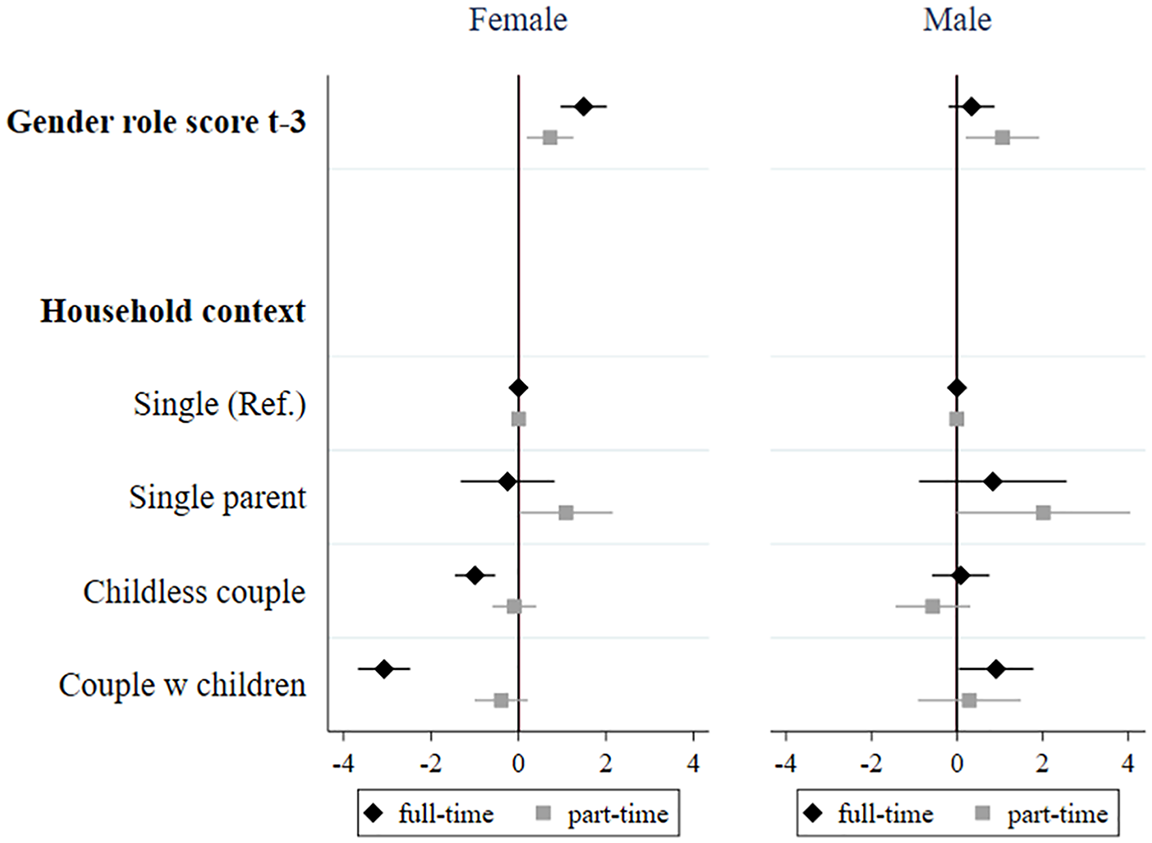
Determinants of full-time and part-time employment in Germany by gender.
To facilitate the interpretation between men and women, Figure 5 displays the predicted probabilities of employment for eight subgroups differentiated by gender and household context based on Figure 3.
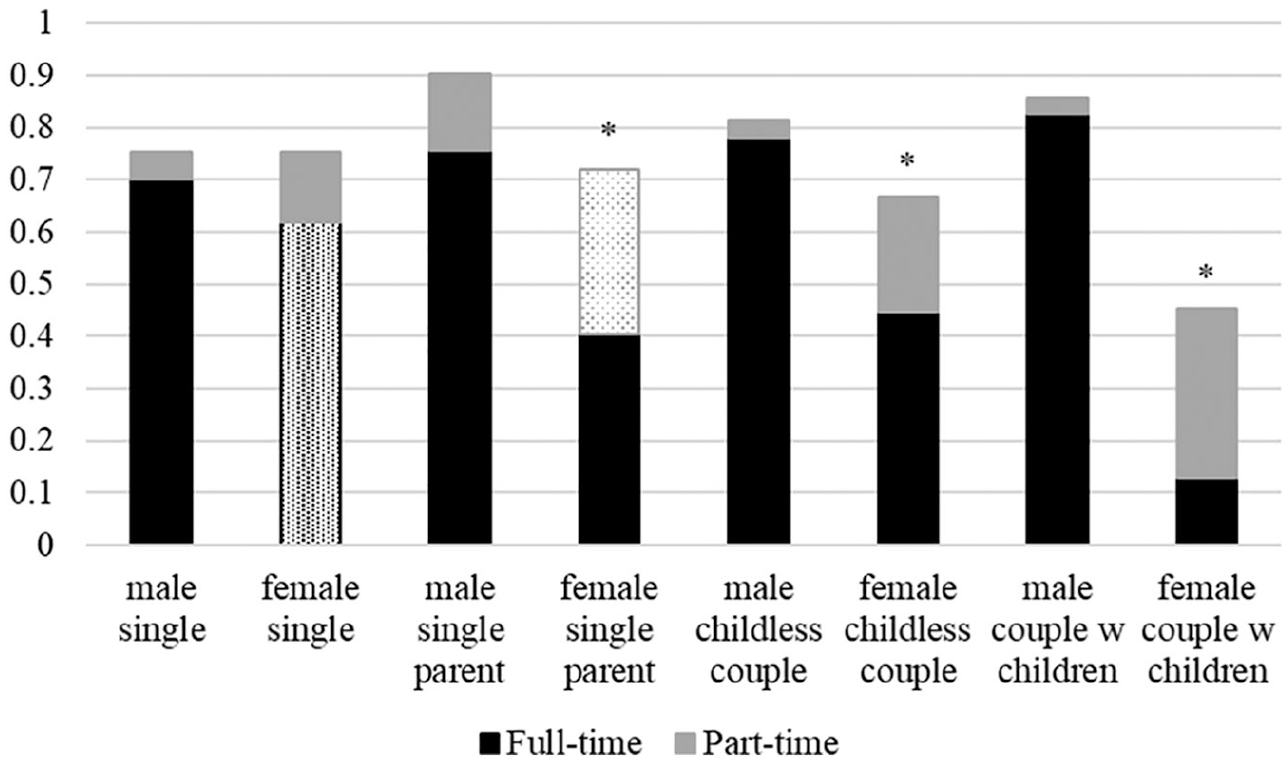
Estimated probability of regular employment by gender and household context.
The results indicate that single men and women did not differ significantly in their full-time and overall employment probabilities, but women were more often employed part-time. Gender differences became apparent when respondents had a partner and/or children. For instance, single fathers were more often employed in total and full-time, whereas women with partners with and without children were less likely to be employed in total than men in the same household contexts. This difference is due to large differences in full-time employment, which more than compensate for the higher probabilities of part-time employment for women. These findings point to a very different role of the household context for men and women.
The observed picture of pronounced gender-specific labour market participation in couples seems to be at odds with the gender role attitudes held by men and women in Germany, which did not differ by gender within household contexts. This discrepancy might exist because gender role attitudes affect employment more among women than among men. This was observed particularly for full-time employment, where there was no effect of gender role attitudes for men. In addition, the role of gender role attitudes for women might be different in relation to household context. Gender role attitudes should be most relevant for employment participation if women live with a partner and/or children because, in this context, these attitudes about the proper roles of men and women become important, whereas this issue should be of less relevance if women live alone.
This latter assumption is tested by including a triple interaction of the gender role score with gender and household context (Table A4 in the online supplementary material). The interaction effect is shown in Figures 6 and 7 for full-time and part-time employment, respectively. These figures show the estimated probabilities of employment for women differentiated by household context and gender role score.
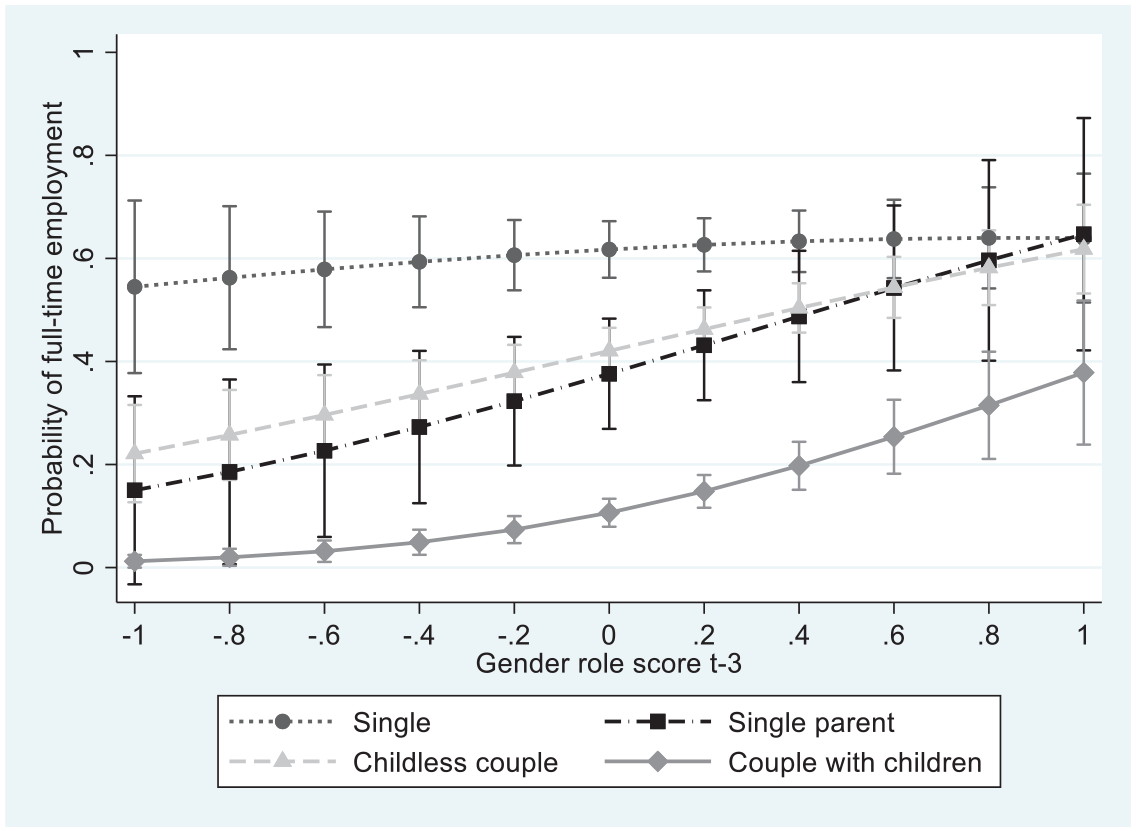
Estimated probability of full-time employment by gender role score and household context – women.
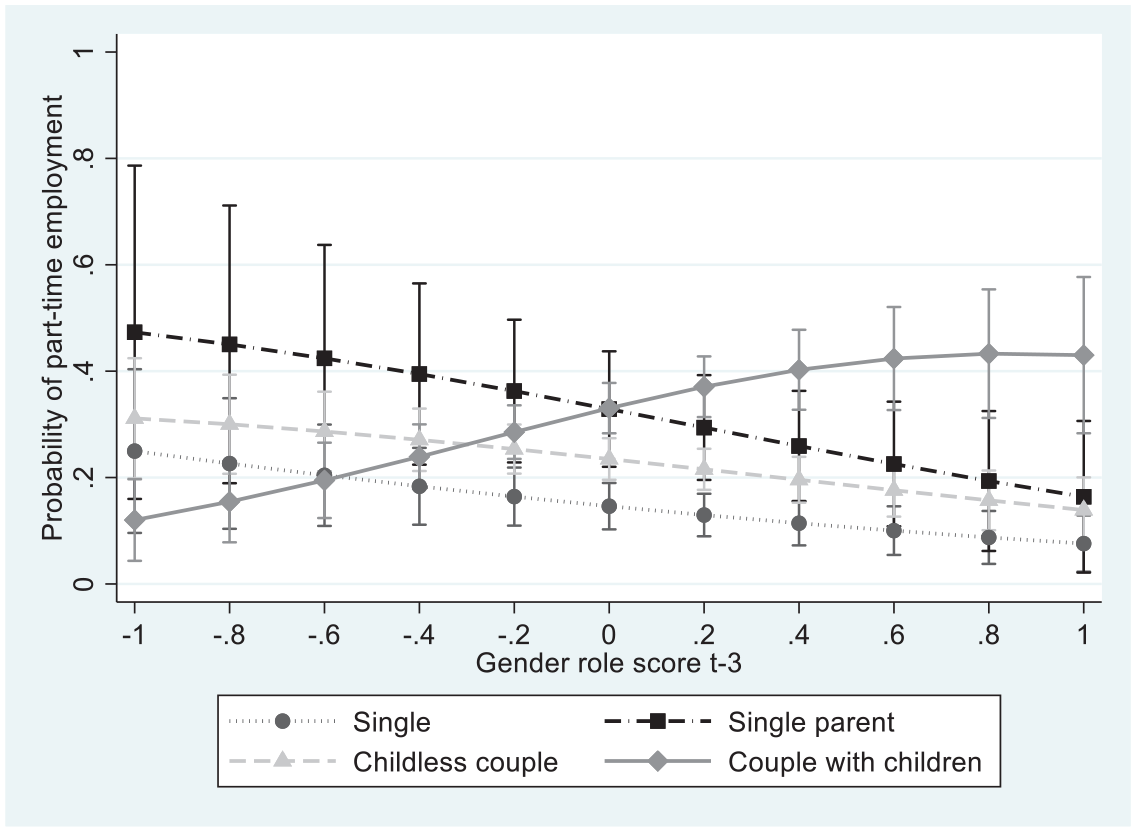
Estimated probability of part-time employment by gender role score and household context – women.
The almost horizontal dotted line in Figure 7 indicates that the probabilities of full-time employment of single women are not affected by gender role attitudes. For women in the other household contexts, more egalitarian gender role attitudes tend to be associated with higher probabilities of full-time employment. The employment probabilities of women in couple households with and without children and single mothers were significantly lower than those for single women when they had pronounced non-egalitarian gender role attitudes. The more egalitarian the attitudes became, the smaller the differences in employment probabilities were among household contexts. The result of these differentiated effects is that while there were strong differences in full-time employment probabilities by household context for women with less egalitarian gender role attitudes, there were only minimal differences among women with very egalitarian attitudes. Mothers with partners, however, differed from childless women with partners and single mothers as their employment probabilities were lower in the middle region of the distribution of attitudes. Furthermore, in contrast to previous studies, which focused on the effect of gender role attitudes for women with partners, we find that more egalitarian attitudes are associated with the full-time employment of single mothers.
However, for part-time employment, a different pattern was observed. It was only among women in couple households with children that the probability of part-time employment increased with more egalitarian attitudes. The three lines for women in other household contexts indicated a decrease in probabilities of part-time employment when their attitudes were more egalitarian, but these differences were not significant. Thus, the differentiation of the effect of gender role attitudes according to the extent of employment participation and the household context of women revealed that part-time employment was an important choice for mothers in couple households even when they exhibit egalitarian attitudes.
Conclusion and outlook
As this study analyses the role of gender role attitudes as an important aspect of gendered labour market behaviours in Germany, it provides insight regarding the relationships among gender, household context and gender role attitudes on different employment states.
The results based on the German Panel Study ‘Labour Market and Social Security’ (PASS) reveal that individual characteristics, such as qualification or migration background, as well as the household context, are relevant determinants of gender role attitudes. Analyses of intrapersonal time trends by including lagged attitudes indicate that gender role attitudes are remarkably stable over time. The reason for the slow pace in changes in attitudes is that cohort replacement is a major driver of attitude change (Lee et al., 2007).
The results regarding the influence of gender role attitudes on employment probabilities of men and women reveal that the more egalitarian the gender role attitudes are, the higher the probability of women being employed. While these findings are consistent with previous results from other countries, the differentiation of the effect of gender role attitudes based on employment status, gender and household context identified in this study reveal interesting results. For example, with respect to men, there is no effect of attitude on full-time employment, albeit there is an effect on part-time employment. Furthermore, the attitudes moderate the lower probabilities of full-time employment for women with partners and/or children. The probability of full-time employment increases, however, for single mothers and women with partners when their attitudes are more egalitarian. While this effect seems to be less for mothers with partners, for this group only, the probability of part-time employment increased with increased egalitarian attitudes.
The findings of this analysis can contribute to the understanding of female employment participation. The overall effect of individual gender role attitudes is similar to the ones found in studies from countries with a comparable institutional setting as, namely, the Netherlands (Khoudja and Fleischmann, 2018; Stam et al., 2014) and the UK (Kan, 2007; Schober and Scott, 2012; Uunk and Lersch, 2019). While these studies focused on (mostly partnered) women only, the results presented here add insights into the interplay between gender, gender role attitudes and household context. Possible consequences for policies supporting female employment may also apply to other countries with non-egalitarian gender role attitudes in the population and elements of familization in family policies.
More egalitarian gender role attitudes contribute to lowering the gender-specific employment gap for single mothers and partnered women both with and without children. This potential is limited, however, when considering the full-time employment of mothers in partnerships. While for highly egalitarian mothers part-time employment is also an option, those with moderately egalitarian attitudes are less likely to be employed full-time compared to single mothers and childless women with a partner.
When promoting maternal employment, the expansion of childcare infrastructure is a prerequisite, and thus, continued investment in public childcare facilities is appropriate to enable employment for those in the upper half of the distribution of gender role attitudes. However, extensive childcare infrastructure must also be able to accommodate full-time employment, which is still underdeveloped in countries such as Germany, the Netherlands and the UK. Furthermore, it is not a sufficient means to increase female and maternal employment in general since women with less egalitarian gender role attitudes have the lowest employment probabilities, irrespective of whether they have children. These women could be what Hakim called ‘family-centred’, who might be only marginally affected by further investments in opportunities to reconcile work and family (Hakim, 2000).
Another aspect to consider is that the division of household and childcare responsibilities may not only be a result of gender role attitudes but may also be reinforced by opportunity structures and (anticipated) inequalities in the labour market, intra-household differentials in bargaining power or earnings potential. In this case, political measures should help to reduce gender inequalities in the labour market and thus provide incentives for women to work and to increase male involvement in household and care activities. Concerning the latter, the finding that more egalitarian attitudes among men are associated with a higher probability of part-time employment might indicate a first step in this direction, given that the data had not revealed such an association since the 1990s (Corrigall and Konrad, 2007; Fortin, 2005). Hence, it would be relevant to complete the second half of the gender revolution (Goldscheider et al., 2015) and could be a move towards a caregiver parity model (Fraser, 1994). However, the prerequisite for this condition is a rethink at the macro-structural level, as it has been shown that elements of familization remain present in European family policies (Daly, 2011), and labour market and activation policies partly still consider women as dependents of their partner/husband (Ingold and Etherington, 2013).
The present analyses, however, have some methodological and data limitations. The association between attitudes and employment can be subject to endogeneity and reverse causality when measured at the same point in time. Thus, the applied analyses used panel data on previous gender role attitudes and employment status to reduce this problem. Nevertheless, the results cannot be interpreted causally. Unfortunately, the gender role attitudes in this data set were not measured in every wave; however, the analyses show that individual gender role attitudes are quite stable over the four-year observation period. For a deeper understanding of the interdependency of gender role attitudes and labour market behaviours, the development of individual gender role attitudes over a longer time and at major life events should be investigated.
Supplemental Material
sj-docx-1-wes-10.1177_09500170211011318 – Supplemental material for Gender Role Attitudes and Labour Market Behaviours: Do Attitudes Contribute to Gender Differences in Employment in Germany?
Supplemental material, sj-docx-1-wes-10.1177_09500170211011318 for Gender Role Attitudes and Labour Market Behaviours: Do Attitudes Contribute to Gender Differences in Employment in Germany? by Torsten Lietzmann and Corinna Frodermann in Work, Employment and Society
Footnotes
Acknowledgements
The authors thank Arne Bethmann, participants of the 2018 Congress of the European Society on Family Relations and three anonymous reviewers for their helpful comments. Any remaining errors are our own.
Funding
The authors received no financial support for the research, authorship, and/or publication of this article.
Supplementary material
The supplementary material is available online with the article.
Notes
References
Supplementary Material
Please find the following supplemental material available below.
For Open Access articles published under a Creative Commons License, all supplemental material carries the same license as the article it is associated with.
For non-Open Access articles published, all supplemental material carries a non-exclusive license, and permission requests for re-use of supplemental material or any part of supplemental material shall be sent directly to the copyright owner as specified in the copyright notice associated with the article.
