




Abstract
Young people are facing challenges in transitioning to housing autonomy because of changes in labour market conditions in recent years. This article explores the effects of youth unemployment and non-standard employment on the likelihood of leaving the parental home. We adopt a dynamic modelling approach, and use data from a large longitudinal British survey covering the years 2009–2014. We find that unemployment and part-time work, but not the duration of the contract, have a negative effect on the likelihood of obtaining housing autonomy. We also find that past as well as anticipated unemployment have significant negative effects, which suggests that the decision about whether to move out depends on the individual’s longer-term labour market trajectory. The analysis also reveals gender differences in part-time work, but not in unemployment once we take into account unobserved time-invariant heterogeneity.
Introduction
Leaving the parental home and achieving housing autonomy has become a more protracted process in recent years. Even in countries such as the UK, where young adults have traditionally exited the parental home early, the prevalence of co-residence with parents of young adults has increased over the past two decades (Berrington et al., 2009).
This transition cannot be considered independently from the structural context in which it takes place, particularly that of the labour market, which has changed considerably in recent years. First, unemployment rates have increased disproportionately among the young. Over the course of the last recession, unemployment in the UK was over 35% among 16–17-year-olds and was 17% among 18–24-year-olds, compared to just under 6% among other age groups (Bell and Blanchflower, 2010). While youth unemployment has declined modestly in recent years, it remains high and sensitive to business cycle fluctuations (McTier and McGregor, 2018). Moreover, when they are employed, young workers are increasingly hired into non-standard forms of employment. Even before the 2008 financial crisis, permanent and full-time employment has been declining while temporary and part-time employment has been growing (Lewis and Heyes, 2017). Although temporary employment is less common in the UK than in some other countries, the prevalence of other types of non-standard work, such as part-time and short-term part-time contracts, is above the OECD (Organisation for Economic Co-operation and Development) average (OECD, 2019).
Recent studies emphasise that unemployment and non-standard employment are related to a range of outcomes, including financial hardship, lower job satisfaction and poorer mental health (Lewchuk et al., 2008; McGann et al., 2016; Park and Kang, 2017; Warren, 2015). However, research on the effects of achieving housing autonomy among young people has been surprisingly limited, even though housing autonomy marks the point at which individuals take control of their own consumption and financial decisions (Arnett, 1997), and is often a pre-condition for family formation (Holdsworth and Elliott, 2001). Moreover, the effects of housing autonomy can spill over to other family members (Tosi and Grundy, 2018). Thus, understanding how labour market changes affect the ability of young adults to leave the parental home is highly relevant for understanding the broader impact of economic uncertainty on society.
The few studies that explore this relationship rely on cross-sectional analyses, or treat the transition to independent living as a one-off event by applying event-history models (Becker et al., 2010; Berrington et al., 2009; Jacob and Kleinert, 2007; Wolbers, 2007). This article considers the effect of unemployment and non-standard forms of employment on the probability of achieving housing autonomy among young adults using a new longitudinal dataset and extends this literature in a number of ways. First, drawing on sociological and economic theories on how employment uncertainty affects transitions among young people, we consider the role of past and anticipated employment conditions to gain insights into the longer-term mechanisms that shape this relationship. The empirical part of the article follows up on these theoretical ideas by applying a dynamic modelling approach to housing autonomy. Second, thanks to the longitudinal nature of the data and the detailed information about changes in employment contracts across time that we use, our article explicitly accounts for a range of non-standard employment forms, including full-time permanent, full-time temporary, part-time permanent and part-time temporary work. Third, our analysis employs panel data methods to control for time-invariant individual unobserved factors that may have confounded the relationship in previous cross-sectional studies. Finally, this article provides evidence for the UK, where research around non-standard employment and housing autonomy has been particularly scarce. Since this relationship is likely to vary across institutional contexts (Barbieri and Scherer, 2009; Bonney, 2005; Gallie et al., 2017), studying it in the specific context of the British labour market, which has relatively weak employment protection and lower labour market segmentation (Gebel, 2010; Scherer, 2004), is particularly interesting.
Previous literature
Unemployment
Sociological contributions to the literature on transitions to adulthood view decisions to leave the parental home in the context of broader macro-structural shifts, such as the growth in worldwide interconnectedness, the acceleration of technological advances and the intensification of cross-border exchanges (Blossfeld and Mills, 2010; Buchholz et al., 2008). Indeed, leaving the parental home and establishing one’s own household requires substantial economic resources (Ermisch, 1999). Following the 2008 financial crisis, unemployment among young people increased. Since paid work is the main source of income for young people, their relatively high levels of unemployment may have limited their chances of achieving housing autonomy (Aassve et al., 2001; Jacob and Kleinert, 2007).
Evidence on the impact of unemployment on leaving the parental home is scant. The few existing studies on this topic find that unemployment has a negative effect on housing autonomy. However, as most of these studies rely on cross-sectional and retrospective data or data covering small population subgroups (Berrington et al., 2009; Wolbers, 2007), they tend to suffer from selectivity and representativeness issues.
Non-standard employment
Following the deregulation of labour markets in recent years, non-standard forms of employment, such as temporary and part-time contracts, have become increasingly widespread (Lewis and Heyes, 2017). Previous research has raised concerns about how growth in these non-standard forms of employment is affecting housing autonomy among young people (Blossfeld and Mills, 2010; Buchholz et al., 2008). According to economic theory, having a highly variable income is likely to discourage housing autonomy (Fernandes et al., 2008). As having a non-standard employment contract is associated with actual or perceived income instability, the increased prevalence of non-standard forms of employment could make it more difficult for young adults to leave the parental home. Studies show that young people who start their careers with non-standard contracts are at higher risk of losing their jobs and of experiencing consequent income losses (McTier and McGregor, 2018), and that part-time employment is associated with low and instable income and poor employment prospects (Kalleberg, 2011; Lewchuk, 2017; McGovern et al., 2004). Furthermore, other studies find substantial gaps in perceived job security between permanent and temporary workers (Inanc, 2015).
Despite these strong theoretical arguments, the empirical evidence on the impact of non-standard forms of employment on housing autonomy is limited and inconclusive. Using macro-level country data and micro-level data for Italy in the mid-1990s, Becker et al. (2010) find that perceived job insecurity has a negative effect on youth housing autonomy. Wolbers (2007) finds that flexible employment had a negative effect on the probability of leaving the parental home among European university graduates. However, Baranowska-Rataj (2011) detects no relationship between the type of employment contract and residential independence among Polish young people. Overall, the effect of non-standard forms of employment on housing autonomy remains unclear.
Dynamic considerations
The impact of employment uncertainty on people’s key life course decisions may depend on the duration and persistence of their experiences of insecurity (Chan and Tweedie, 2015; Kreyenfeld, 2009), particularly when a transition requires them to have substantial economic resources, such as leaving the parental home. Previous research suggests that young people’s careers often involve repeated and prolonged spells of unemployment and non-standard forms of employment (Gagliarducci, 2005; Månsson and Ottosson, 2011). The accumulation of such experiences may drain the economic resources and hamper the housing autonomy of young people over the longer run. Thus, any currently observed relationship between labour market status and housing autonomy could be driven by past episodes of unemployment and non-standard forms of employment. Furthermore, if we assume that young people behave rationally by weighing the benefits of housing autonomy against the costs, it is also likely that they will respond to anticipated employment conditions and the associated future income uncertainty by postponing the decision to move out (Fernandes et al., 2008).
So far, scholars have paid surprisingly little attention to how accumulated experiences of labour market insecurity or possible anticipation effects influence housing autonomy. Jacob and Kleinert (2007) do find that unemployment duration and previous unemployment experiences have a negative effect on housing autonomy. However, their analysis does not consider the effect of past experiences of non-standard employment forms, nor the role of future expectations.
The moderating role of gender
The degree to which labour market conditions affect housing autonomy may vary by gender. Previous research shows that compared to men, women are socialised to place less value on economic power (Ridgeway and Correll, 2004), are more closely supervised in the parental home and given much less autonomy (White, 1994), are more involved in household chores, and are expected to provide more care for other family members (Lachance-Grzela and Bouchard, 2010). Moreover, for women, moving out is often related to union formation. Thus, women are more likely than men to pool economic resources with a partner or to rely completely on their partner’s income (Buck and Scott, 1993). These observations suggest that women tend to leave the parental home earlier than men, and might be inclined to do so regardless of their own employment status.
Previous empirical evidence regarding gender differences in the effects of labour market experiences on housing autonomy has been mixed, with some studies reporting no clear differences between men and women (Jacob and Kleinert, 2007; Wolbers, 2007) and others finding stark gender differences (e.g. Aassve et al., 2001; for Italy). Overall, whether having a certain type of job or experiencing certain employment conditions affects young men differently than women remains unclear.
Summing up, how unemployment and non-standard employment affect housing autonomy is still not well understood. This study provides new evidence on these issues by addressing the following research questions:
What is the impact of unemployment and non-standard forms of employment on housing autonomy among young people?
What is the impact of past and anticipated employment experiences, and how do they mediate the contemporaneous effects of unemployment and non-standard forms of employment?
To what extent do these effects vary by gender?
Data and methods
This study used data from the first six waves of the United Kingdom Household Longitudinal Study: Understanding Society (UKHLS). The data contain information on 40,000 households interviewed in the first wave in 2009. All members of these households aged 16+ were then interviewed annually until 2014. The initial sample is reassuringly similar to census estimates. As is the case for any longitudinal study, there was some attrition in the UKHLS over time, with 52% of respondents still participating after six years (Lynn and Borkowska, 2018). Table A1 in the online appendix provides summary statistics for the sample.
An individual was considered to have housing autonomy if he/she was living apart from his/her parents (biological or otherwise) or grandparents. To measure unemployment and non-standard forms of employment, we used information on respondents’ current employment status and grouped it into the following categories: employed on a full-time permanent basis (base category); employed on a full-time temporary basis; employed on a part-time permanent basis; employed on a part-time temporary basis; unemployed; in full-time education; engaged in care-related activities (maternity leave or looking after the home); and other.
We also included as control variables age and age squared, an indicator for being married, an indicator for having children under age 16, ethnicity, and regional and wave dummies. The sample was restricted to young people aged 18–35.
To estimate the effect of employment status on housing autonomy, we started with a linear probability model (ordinary least squares; OLS) with robust standard errors clustered at the household level. Becoming unemployed or being in non-standard employment, however, is unlikely to happen at random. Labour market opportunities and decisions to leave the parental home may be co-determined by unobserved factors such as cognitive and non-cognitive skills, personality traits or lifestyle preferences (Arnett, 1997). For instance, young people’s parental background may influence both their labour market chances and housing autonomy. Young people from less privileged social classes typically face a higher risk of unemployment and precarious employment (Kiersztyn, 2016). Moreover, the socio-economic status of their parents may affect young people’s opportunities for acquiring or renting a flat (Iacovou, 2010). It is therefore important to account for these unobserved confounding sources of youth disadvantage that the simple OLS model fails to consider. To do this, in the next step, we estimated fixed-effects models that control for time-invariant unobserved characteristics of young people.
Empirical results
We started with an analysis of the relationship between employment stability among young people with different forms of non-standard employment, and the probability that the unemployed will obtain paid work. Tables 1 and 2 provide descriptive evidence on the employment dynamics among men and women, respectively. The transition rates among men showed that permanent full-time employment was very stable, with over 90% of young men with permanent contracts having the same employment status, and just 3% becoming unemployed within one year. Consistent with previous research (Gebel, 2010; Scherer, 2004), we observed significant mobility from full-time temporary employment to full-time permanent employment (55%), with just 8% becoming unemployed within one year. The transition rate to full-time permanent employment was lower among those in part-time permanent employment (43%) and in part-time temporary employment (40%). The risk of becoming unemployed was relatively low among part-time permanent employees (4%), but was quite high among part-time temporary employees (14%). Furthermore, compared to other forms of non-standard employment, part-time permanent employment had a high level of persistence from one year to the next (37%), while part-time temporary employment was more likely to be associated with a transition to full-time education (12%). Overall, for men in non-standard employment, having a part-time job, particularly if it is temporary, was associated with a lower likelihood of securing a permanent job and a higher risk of unemployment. On the other hand, having a full-time temporary job was more likely to lead to permanent employment. While many full-time temporary workers also ended up unemployed within a year, their risk of unemployment was lower than that of part-time temporary workers.
Employment transitions: men.
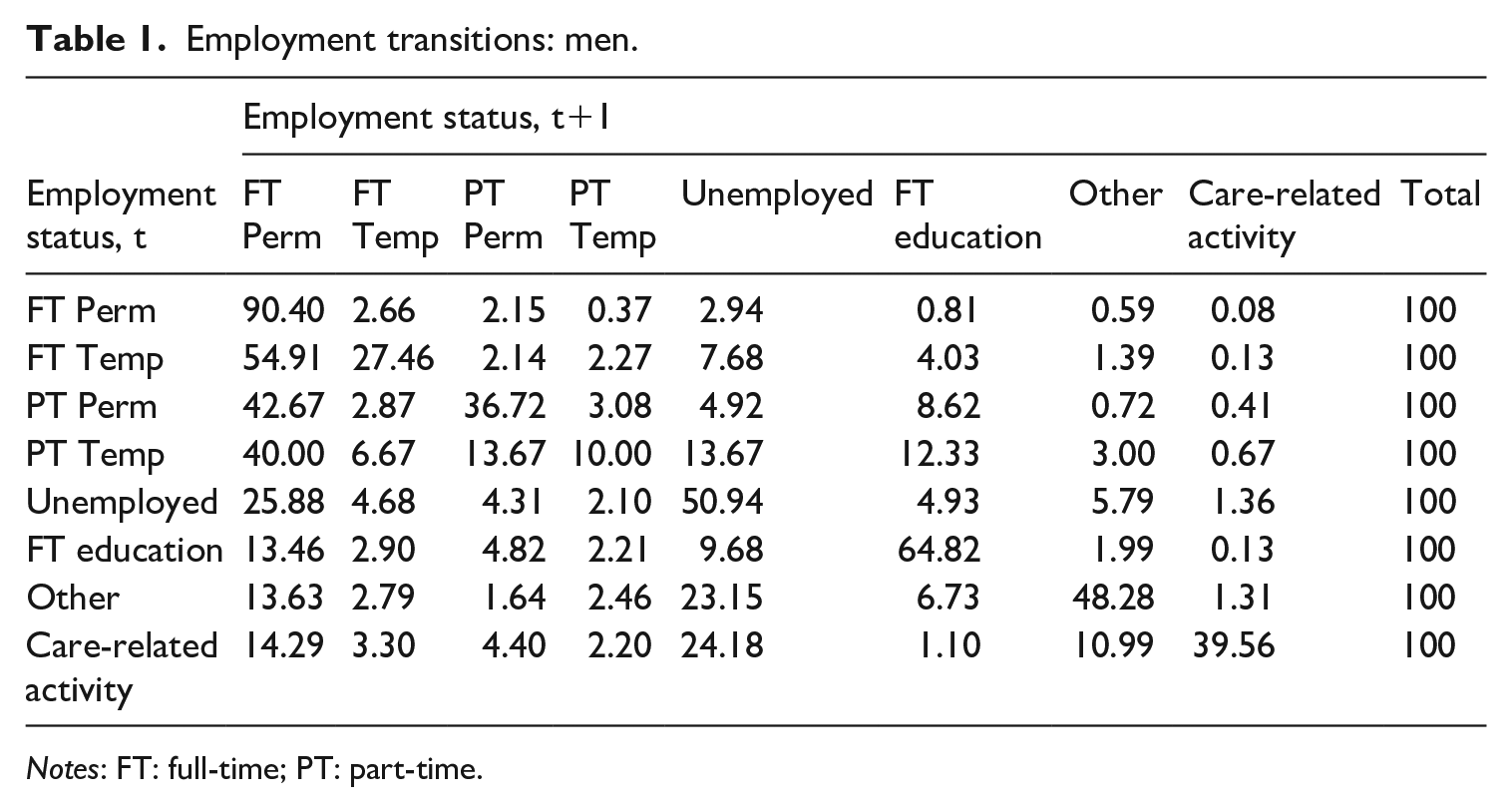
Notes: FT: full-time; PT: part-time.
Employment transitions: women.
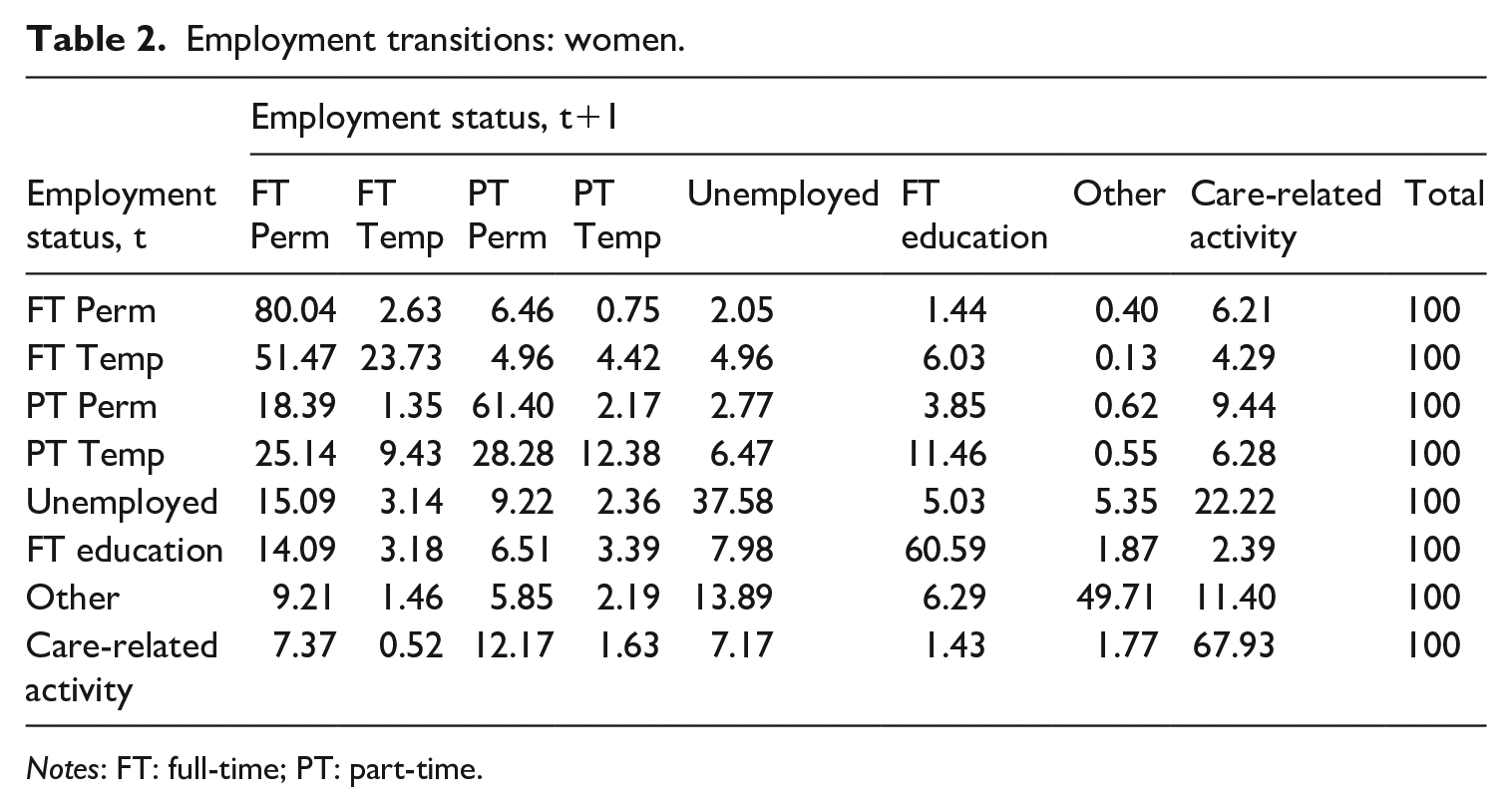
Notes: FT: full-time; PT: part-time.
Only 26% of young unemployed men transitioned to a job with a permanent contract. Thus, the chances of getting a permanent job were much lower for unemployed young men than for those who have any kind of job, including non-standard forms of employment. Approximately 51% of unemployed individuals would still be unemployed one year later. This indicates that despite the perception that the UK labour market is highly mobile, unemployment among young men is very persistent.
The transition rates for women displayed slightly different patterns. Women in full-time permanent employment were highly likely to stay in full-time employment within a year (80%) and the risk of becoming unemployed was 2%. Thus, they had less job stability than men. Among female full-time temporary employees, the probability of transitioning to a permanent job was 51%, and the risk of becoming unemployed was 5%. More substantial gender differences were observed in the transition routes from part-time positions. The proportions of female part-time permanent and part-time temporary employees transitioning to full-time permanent employment were 18% and 25%, respectively; that is 24 and 15 percentage points lower than those of their male peers. Hence, among women who work part-time, the chances of getting a permanent job were lower than those among men, but the risk of becoming unemployed was also lower, at 3% for those in permanent employment and at 6% for those in temporary employment. Women were more likely than men to move into care-related activities. Furthermore, among women in temporary part-time employment, the one-year transition rate to permanent part-time employment was higher than it was among men (28% compared to 7%), while the transition rate to full-time education was comparable (12%). Overall, it seems that compared to men, women were more likely to be in part-time employment, much less likely to move from part-time to full-time permanent employment, and more likely to transition to care activities.
Unemployment was also persistent among women, but to a much smaller extent than among men. Approximately 38% of unemployed women were unemployed after one year. However, this is not because women tended to transition to full-time permanent employment; indeed, unemployed women were less likely than unemployed men (15%) to secure a permanent full-time job. Instead, the lower persistence of unemployment among women was related to their greater propensity to become carers and to accept permanent part-time employment.
Next, we turn to the regression analysis. Table 3 presents the evidence on the contemporaneous effects of employment status on the probability of housing autonomy. We carried out the analysis separately for men and women and used three different model specifications: a pooled OLS model without control variables, a pooled OLS model with controls and a fixed-effects model with time-varying control variables.
Employment status and housing autonomy.
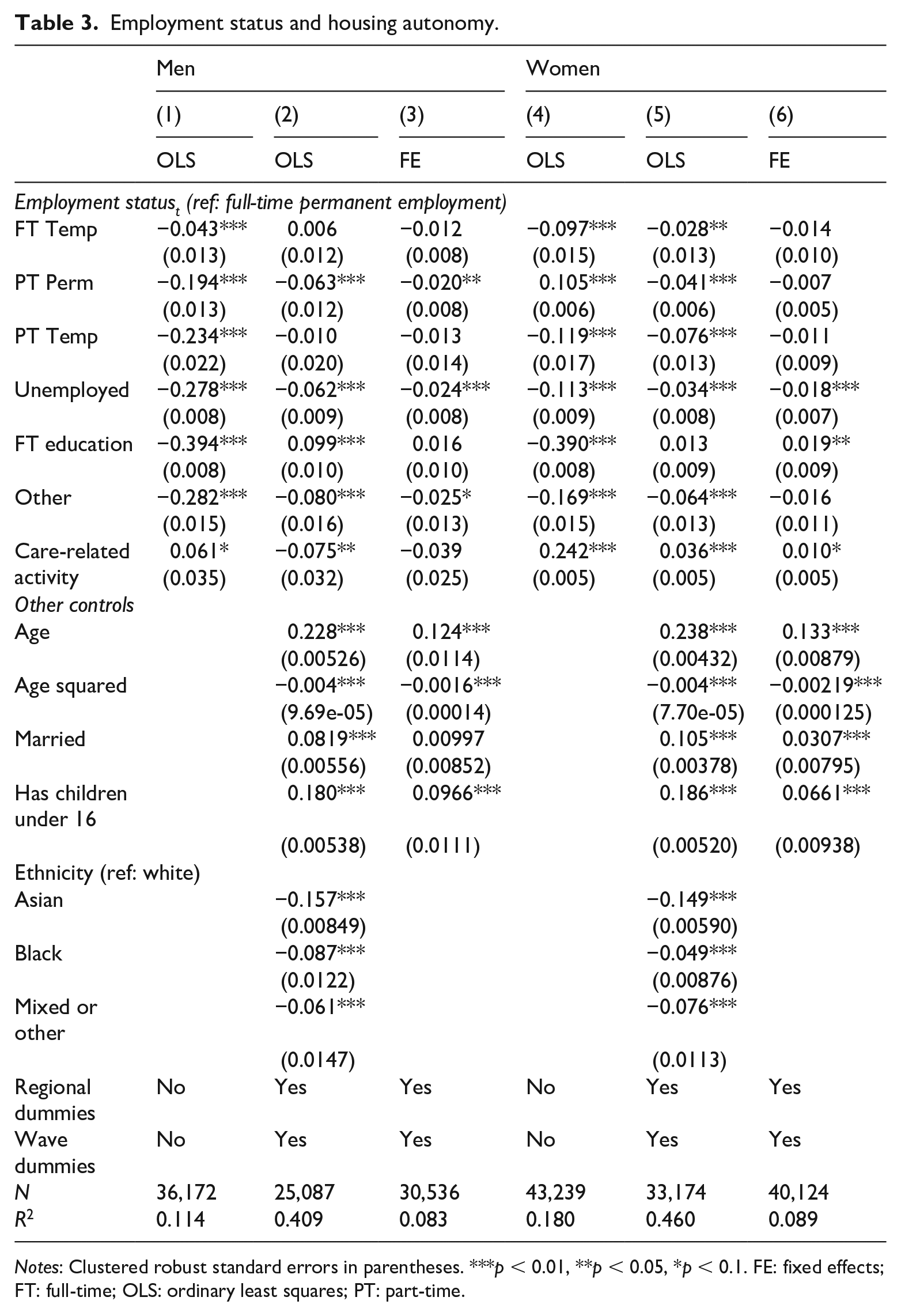
Notes: Clustered robust standard errors in parentheses. ***p < 0.01, **p < 0.05, *p < 0.1. FE: fixed effects; FT: full-time; OLS: ordinary least squares; PT: part-time.
In the first model, unemployment and non-standard employment among men had a negative statistically significant effect on the probability of housing autonomy compared to full-time permanent employment. The reduction in probability was 28 percentage points for unemployment, 19 percentage points for part-time permanent employment, 23 percentage points for part-time temporary employment, and weaker – at closer to four percentage points – for temporary full-time employment.
After we controlled for observable characteristics in the second specification, the effects of full-time temporary and part-time temporary employment lost statistical significance. On the contrary, the effects of unemployment and permanent part-time employment were still negative and statistically significant but were reduced to six percentage points.
When we further accounted for the unobserved time-invariant characteristics of young men in the fixed-effects specification, the effects of unemployment and permanent part-time employment, although they remained statistically significant, became even smaller, at closer to two percentage points. While, therefore, young men in permanent part-time employment and unemployment were still less likely than their peers with full-time permanent jobs to achieve housing autonomy, their disadvantages would be substantially overstated if we did not account for the unobserved characteristics.
Among women, the estimates from the simple OLS model without controls showed a negative and statistically significant association between unemployment and some forms of non-standard employment on the probability of achieving housing autonomy. More specifically, the reduction in probability was 11 percentage points for unemployment, 10 percentage points for full-time temporary employment and 12 percentage points for part-time temporary employment. On the contrary, the association between permanent part-time work and housing autonomy was positive in this specification. Although this positive correlation is counterintuitive, it was explained by the lack of any confounding factors in this model.
Indeed, when we controlled in the next specification for observable characteristics like age, ethnicity, family structure and place of residence, some of the associations changed. The effect of permanent part-time employment turned negative. The effect of unemployment and other forms of non-standard employment remained negative and statistically significant, but became smaller in magnitude.
When we also accounted for unobserved time-invariant heterogeneity, the effect of unemployment remained statistically significant, but was reduced to around two percentage points, and thus became comparable to that among men. The effects of all non-standard employment types on the other hand became smaller and lost significance. Thus, among women, the negative association between non-standard types of employment and housing autonomy was explained by unobserved factors.
The results showed that when examining housing autonomy among young people, it is important to control for time-invariant unobserved factors. Therefore, in the following, we continue our analysis with the use of fixed-effects models.
Next, we examined whether the impact of contemporaneous employment status was robust to accounting for past experiences of unemployment and non-standard employment up to the two previous periods (Table 4).
Employment status and housing autonomy: lagged effects.
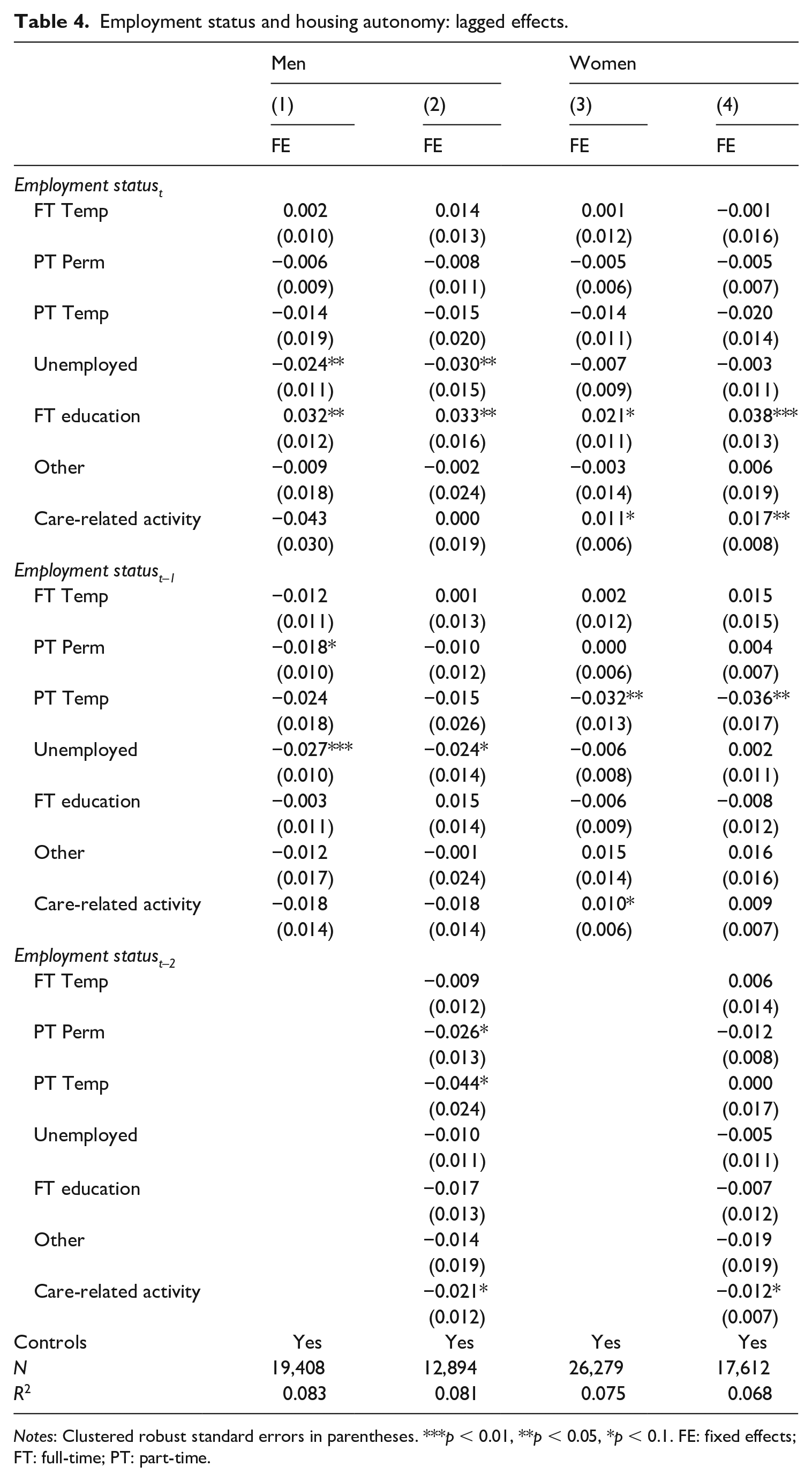
Notes: Clustered robust standard errors in parentheses. ***p < 0.01, **p < 0.05, *p < 0.1. FE: fixed effects; FT: full-time; PT: part-time.
Among men, after controlling for past labour market experiences, the effect of part-time permanent employment became statistically insignificant, and the respective one-period and two-period lagged effects were significant at the 10% level. These results suggest that the effects of part-time employment on housing autonomy operate through past experiences, which can have long-term effects. This may be because young men with lower chances of securing a stable full-time job may be more likely to accept a part-time job as a route to employment. At the same time, these young men may have fewer accumulated resources that would allow them to leave the parental home.
Among young men, the effect of contemporaneous unemployment remained negative and statistically significant, and it did not become smaller. The one-period unemployment lag was also significant and of a similar magnitude as the contemporaneous effect. Thus, both contemporaneous and past unemployment had significant and strong effects on housing autonomy, indicating that, for men, reductions in income due to both current and past experiences inhibit housing autonomy.
The effects on housing autonomy of contemporaneous full-time temporary employment, as well as the one-period and two-period lags, remained statistically insignificant. These results provide further evidence that the duration of the contract does not restrict housing autonomy among young men. The two-period lag on part-time temporary employment was statistically significant, albeit at the 10% level, which implies that there may be some longer-term lagged effects.
Among women, the effect of unemployment on housing autonomy lost statistical significance as we added the lags to the model. This may be because unemployment is less persistent among women, and their careers preceding unemployment are more heterogeneous. Hence, controlling for past employment experiences among women ‘explains away’ the effects of contemporaneous unemployment on housing autonomy. This could be related to past experiences of part-time temporary employment, as the one-period lagged part-time temporary employment was significant, and had a negative effect on housing autonomy of 3.5 percentage points. Hence, while part-time temporary employment did not have immediate negative effects on housing autonomy among women, it did have negative lagged effects.
Finally, we tested whether anticipated future unemployment or non-standard employment affect housing autonomy and the contemporaneous labour market status effects (Table 5).
Employment status and housing autonomy: lead effects.
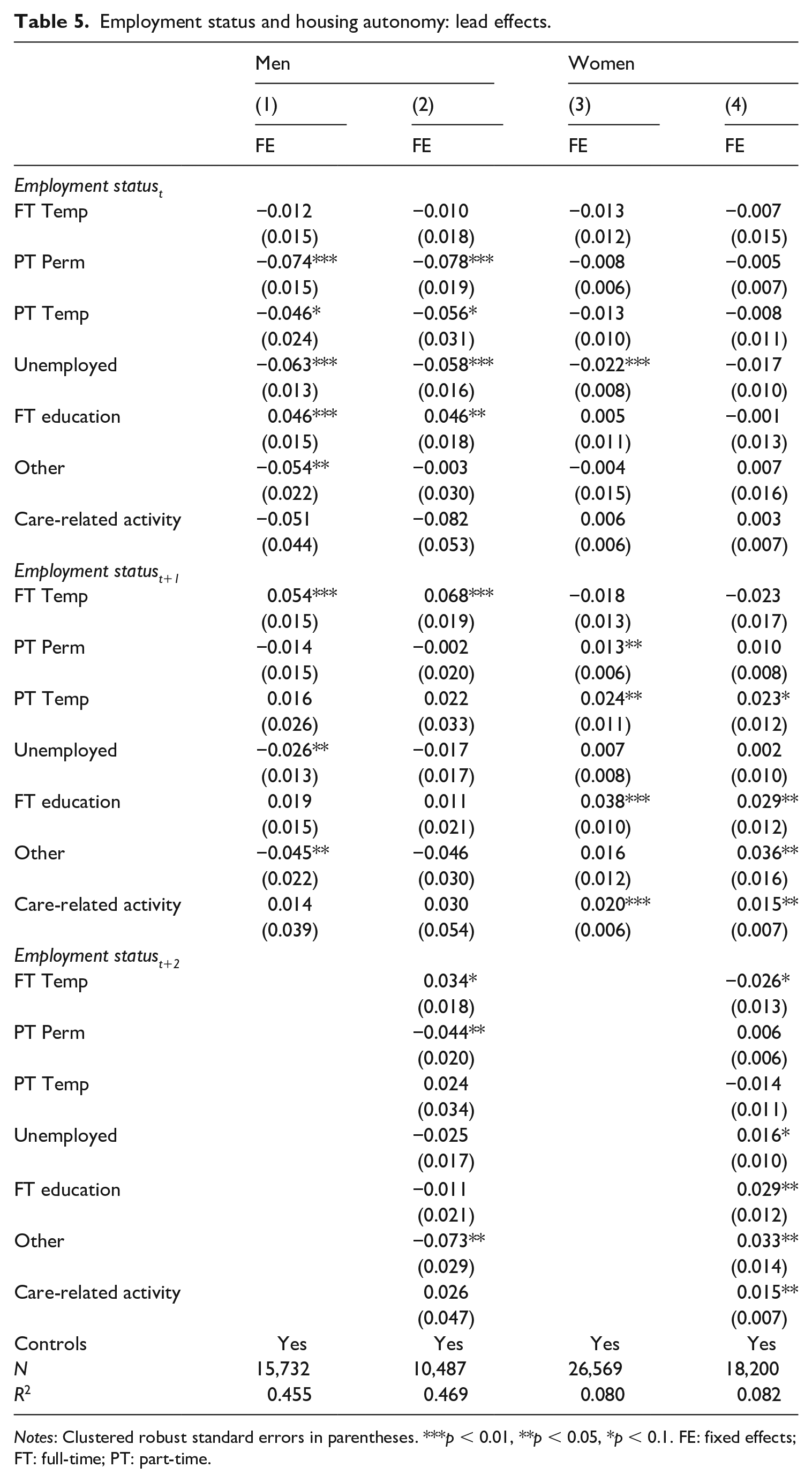
Notes: Clustered robust standard errors in parentheses. ***p < 0.01, **p < 0.05, *p < 0.1. FE: fixed effects; FT: full-time; PT: part-time.
Among men, we found a negative impact of a one-period unemployment lead, which suggests that anticipated job losses may have a negative impact on decisions to leave the parental home. At the same time, we observed a positive effect of both the one-period and two-period leads in full-time temporary employment among men, which are indicative of a complex interdependence between employment transitions and decisions to leave the parental home. We can speculate that leads in full-time temporary employment are associated with starting a new job, which could involve changing the place of residence. Indeed, our descriptive evidence on the patterns of transitions between different labour market statuses indicated that men in full-time temporary jobs had rather high rates of transitions to full-time permanent positions that promote housing autonomy. Hence, overall, the lack of negative effects of contemporaneous full-time temporary jobs and the positive effects of leads in these jobs may suggest that men tend to believe that having these types of jobs will help rather than hinder their employment career – which should, in turn, increase their propensity to leave the parental home.
Controlling for leads in labour market status changed the effects of part-time permanent and part-time temporary employment on housing autonomy among men. After controlling for anticipated changes in employment status, the effects of part-time employment became (more strongly) negative. One possible explanation for this finding is that while for some men, part-time employment is a route to more stable employment (in our descriptive analysis, this is the case for 40–43% of male part-timers), for others, part-time employment is a route to unemployment or to other non-standard employment contracts. After we control for this heterogeneity in employment prospects, our measures of contemporaneous part-time employment no longer capture the impact of anticipated career trajectory. Instead, they mainly capture the effects of reduced income associated with part-time employment. Hence, the negative effects of contemporaneous part-time employment become stronger in models controlling for the heterogeneity of anticipated labour market transitions among part-timers.
Among women, one-period leads in both part-time permanent and part-time temporary employment had a positive and statistically significant effect on housing autonomy. Again, if having a part-time job is a common way for young women to start a labour market career, finding a new job may encourage them to leave the parental home. Otherwise, however, part-time employment does not facilitate housing autonomy. In the specification with two-period leads, the first lead on part-time temporary employment is still positive, but the effect of full-time temporary employment two periods ahead is negative, and that of unemployment is positive. Therefore, the anticipation of temporary employment over the longer term may be impeding housing autonomy among women. However, unemployment, part-time employment and an anticipated transition to full-time education or care activities are all related positively to housing autonomy among women.
Discussion and conclusions
The labour market careers of young people have become volatile and uncertain in recent years. In this study, we investigate the effects of this instability on the decision to leave the parental home in the UK context. Drawing on insights from theories on the role of accumulated and anticipated employment instability, we take a dynamic and longitudinal perspective. This approach highlights not only the contemporaneous effects, but the effects of past and anticipated labour market experiences. It also distinguishes the role of social selection into unemployment and non-standard employment.
The results show that unemployment is strongly associated with reduced chances of achieving housing autonomy. This finding confirms the hypotheses derived from theories on the role of economic resources in housing autonomy (Ermisch, 1999; Jacob and Kleinert, 2007), and shows that unemployment does indeed limit the chances that young adults will live independently. However, the longitudinal analysis reveals that these effects are much smaller once observed and unobserved heterogeneity are accounted for, suggesting that previous cross-sectional analyses likely overestimate the negative effects. Furthermore, we find that the effects of unemployment are comparable among men and women. These results add to the evidence from previous studies, which find no stark gender differences in the effects of unemployment on leaving the parental home (Jacob and Kleinert, 2007; Wolbers, 2007), except in conservative countries such as Italy (Aassve et al., 2001). The failure, however, to find gender differences challenges the assumption that paid work shapes the life choices of men, but plays a less important role for women (Ridgeway and Correll, 2004).
Similarly, most of the effects of non-standard employment forms turn out to be driven by social selection rather than social causation. Still, the type of employment has some gender-specific effects. Being in permanent part-time employment has negative effects on housing autonomy among men, but not among women. This finding can be interpreted in light of previous research on part-time employment in the UK, which indicates that it is often used to reconcile work and family duties (Bonney, 2005). Our own findings on employment transitions are in line with the argument that, among women, part-time employment often directly precedes or follows involvement in care activities. At the same time, care duties usually emerge after changes in family status, such as becoming a partner or a parent, which are often related to leaving the parental home. Indeed, the negative effect of part-time employment among women becomes insignificant when we account for both observable and unobservable characteristics. Although we can only speculate about the sources of such unobserved factors, lifestyle preferences regarding work–family balance are likely to be among them.
However, the effect of permanent part-time employment among men is not entirely explained by individual heterogeneity. This finding is in line with other evidence from the literature that structural job-related factors are more important than individual characteristics in explaining income differentials between full-time and part-time jobs (Nightingale, 2019). Our own analysis of employment transitions shows that permanent part-time employment is indeed very persistent over time, and that among young men, transitions to full-time permanent employment are relatively rare. We can thus think that young men are faced with limited full-time employment opportunities, and are, as a result, forced into part-time employment, which in turn, is associated with higher wage penalties (Nightingale, 2019; O’Dorchai et al., 2007).
Temporary part-time employment on the other hand, has no significant impact on housing autonomy among men or women. Although there are no gender differences in that respect, the selection mechanisms appear to be different for men and women. Among men, the likelihood of achieving housing autonomy is fully explained by characteristics such as age, ethnicity, family structure, and place of residence. It is possible that men without family obligations and with diverse ethnic backgrounds are more likely to be in temporary part-time employment – characteristics that also increase the probability of living with their parents, as our regression results show. 1 Indeed, in assigning social housing, the UK welfare system prioritises people with children, who are more likely to be women. Furthermore, combining part-time paid work with education is common in the UK (Lewis and Heyes, 2017), and, as the transitions analysis shows, a significant proportion of this group moves to full-time education. This is also typically associated with leaving the parental home, a transition that could be picked up in our analysis by age. The same observable characteristics help explain part of the effect among women as well, but unobserved factors that lead to selection into care activities seem to play an even bigger role.
Similarly, we do not find evidence that temporary full-time jobs have significant negative effects. Differences in housing autonomy are explained by selection processes, which, as in the case of temporary part-time employment, differ by gender. After we control for age, family structure and ethnic background, the association between full-time temporary employment and housing autonomy among men turns out to be spurious. These characteristics also affect the probability of housing autonomy among women, but to a lesser degree than among men. Instead, selection among women is mostly related to unobserved factors, which are likely to include parental background or lifestyle preferences.
While these findings do not provide support for the most general predictions of theories on the role of employment uncertainty in transitions among youth (Blossfeld and Mills, 2010; Buchholz et al., 2008; Fernandes et al., 2008), they are consistent with previous research on the consequences of temporary employment specifically in the UK. These studies show that in the context of the flexible British labour market model, temporary employment does not necessarily lead to entrapment effects in young people’s careers (Gebel, 2010; Scherer, 2004). The notion that temporary employment does not always imply a lack of stability is also supported by our transition analysis, which shows that more than half of young adults with temporary jobs become permanent employees within just one year. We can therefore argue that in societies where temporary contracts are a common route to more stable employment, the insecurity associated with the risk of losing the source of income is perceived as similar, regardless of whether the job is temporary or permanent; therefore, the type of contract does not have a strong impact on housing autonomy. It is indeed possible that liberal economies with fewer employment protections, such as the UK, can achieve a better balance of flexibility and security (Muffels and Luijkx, 2008).
Finally, both past and anticipated experiences of unemployment and non-standard employment are found to affect housing autonomy. These findings suggest that the decisions to move out depend on the whole labour market trajectory, as well as on young people’s expectations regarding their employment chances. This evidence adds to theoretical and empirical research on how early career experiences affect life course decisions and the long-term prospects of young people (Chan and Tweedie, 2015; Gebel, 2010; Jacob and Kleinert, 2007; Kreyenfeld, 2009; Scherer, 2004). Our results extend this literature to account for housing autonomy, and provide empirical support to theoretical predictions that anticipated labour market trajectories play a role in this decision (Fernandes et al., 2008).
One limitation of the analysis is that we define housing autonomy solely on the basis of sharing a household with parents or grandparents. This approach is in line with those adopted in previous research (see, for example, Berrington et al., 2009) and deals with both leaving and returning to the parental home, instead of assuming that the departure is irreversible. We are, however, aware that there are many different types of accommodation with different funding and living arrangements that are likely to influence the nature of transitions, and, consequently, the overall experience of achieving housing autonomy. It is, for example, possible that for certain types of accommodation, which are more difficult to attain, such as homeownership or single living, the effects of labour market conditions are larger than they are for sharing accommodation or renting. Since our analysis does not capture different living arrangements, we may have missed such heterogeneous effects. We consider these questions a potential avenue for exploration in future research.
Still, our findings contribute to a broader ongoing debate about the nature of non-standard forms of employment, and the degree to which they imply insecurity. The effects of employment instability on individual life chances are not well understood (Hollister, 2011). Some studies have been quite pessimistic about the broader impact of labour market developments on individual life courses (Kalleberg, 2011; Standing, 2011). However, a growing body of research has called for a more careful approach to assessing the consequences of non-standard employment forms for a number of reasons (Fevre, 2007). First, employment instability and its consequences may vary across institutional contexts and countries (Balz, 2017; Barbieri and Scherer, 2009; Gallie et al., 2017). Second, perceived and experienced insecurity may differ substantially not only across, but within, groups of workers with specific types of employment contracts (Gallie et al., 2017; Reichelt, 2015). Finally, some studies have pointed out that certain non-standard employment forms are not necessarily ‘bad jobs’ – at least not in the UK (Gebel, 2010; Scherer, 2004). Our results add to this debate by indicating that while the correlations between non-standard forms of employment and housing autonomy are strong, the relationship between full-time temporary employment and the housing autonomy of young people in the UK is either indirect (i.e. operating through past experiences that shape contemporaneous employment chances) or spurious (i.e. driven by observed and unobserved characteristics of young people). However, the impacts of other forms of employment or unemployment are unlikely to be moderated by the institutional and economic contexts of the UK. Our analysis shows that unemployment across both genders and permanent part-time employment among men still have persistent and longer-term effects. These trends call for policy initiatives that facilitate housing autonomy among young adults.
Supplemental Material
WES-Mar-2019-ARTC-095.R2_Appendix-converted – Supplemental material for The Impact of Unemployment and Non-Standard Forms of Employment on the Housing Autonomy of Young Adults
Supplemental material, WES-Mar-2019-ARTC-095.R2_Appendix-converted for The Impact of Unemployment and Non-Standard Forms of Employment on the Housing Autonomy of Young Adults by Katerina Gousia, Anna Baranowska-Rataj, Thomas Middleton and Olena Nizalova in Work, Employment and Society
Footnotes
Acknowledgements
We are grateful to three anonymous referees for their constructive feedback on earlier drafts of this article. At the time of publication, Thomas Middleton was working for the Competition and Markets Authority (CMA). The views expressed in this article do not necessarily reflect those of the CMA.
Funding
The authors disclosed receipt of the following financial support for the research, authorship, and/or publication of this article: this research is supported by grant no. 2017-02385 from the Swedish Research Council. This project has received funding from the European Union’s Horizon 2020 research and innovation programme under grant agreement no. 649496.

Supplementary material
The supplementary material is available online with the article.
Notes
References
Supplementary Material
Please find the following supplemental material available below.
For Open Access articles published under a Creative Commons License, all supplemental material carries the same license as the article it is associated with.
For non-Open Access articles published, all supplemental material carries a non-exclusive license, and permission requests for re-use of supplemental material or any part of supplemental material shall be sent directly to the copyright owner as specified in the copyright notice associated with the article.
