




Abstract
The current scoping review synthesizes the literature on interventions targeting anxiety in individuals with a learning disability (LD). Specifically, the review identifies types of interventions, outcomes, and barriers to or facilitators of implementation of interventions by school staff. The available literature was analyzed using a descriptive numerical and qualitative thematic analysis. A total of 22 peer-reviewed articles comprising 21 studies were included. Three types of interventions based on focus, goals, and intervention methodology were identified: therapeutic, academic, and combined approaches. Four intervention outcomes emerged: a decrease in anxiety, improvements in learning and academic performance, positive changes in self-perception, and increased social skills. Barriers and facilitators to successful intervention implementation included components that contributed to the outcome (e.g. individualizing intervention or having key stakeholders involved). Overall, however, studies lacked details regarding implementation of interventions, outside of the research context.
Scholars, clinicians, policy leaders, and educational specialists have developed terminology to define the challenges individuals experience when learning and acquiring skills (Grünke & Cavendish, 2016). For individuals with a learning disability (LD), this has generally been described as a failure to respond to general classroom instruction and targeted intervention, and to meet the academic standards necessary to develop the knowledge and skills required in fundamental academic subjects (Büttner & Hasselhorn, 2011; Fletcher et al., 2013, 2018). The prevalence of LD varies depending on the location and definition used. For instance, Al-Yagon et al. (2013) analyzed LDs across 10 countries and found that the prevalence ranged from 1.2% to 20.0%, suggesting heterogeneity of LD due to diversity in definition, criteria, and cultural standards. Such heterogeneity, in turn, influences educational policies that the support students with LD receive (Al-Yagon et al., 2013).
Anxiety and Learning Disabilities
Approximately 70% of students with LD report higher anxiety than those without LD (Mammarella et al., 2016; Nelson & Harwood, 2011; Vieira et al., 2023). Students with LD who experience anxiety also demonstrate negative self-perceptions and persistent learning difficulties (Brunelle et al., 2019; Mammarella et al., 2016; Metsala et al., 2017; Novita et al., 2019; Wiener, 2004). Further, a negative relationship between anxiety and academic performance has been noted in both the math and reading performance of students with LD (Caviola et al., 2019; Francis et al., 2019; Hossain et al., 2021). The higher rates of anxiety in the school setting (Aro et al., 2022) and academic underperformance (Bizier et al., 2015; Cortiella & Horowitz, 2014) experienced by students with LD may be explained by the reciprocal theory proposed by Carey et al (2016), which suggests that poor academic performance and learning challenges trigger anxiety. The anxiety, in turn, further impairs performance, creating a negative cycle (Carey et al., 2016; Jansen et al., 2013; McArthur, 2022). Researchers have suggested that anxiety may be more closely associated with learning difficulties than depression due to their bidirectional relationship (Vieira et al., 2023).
The negative cycle between academic underperformance and anxiety impacts the social-emotional well-being of students with LD. For example, academic underperformance has been found to reduce one's belief in the ability to perform well academically, lead to feelings of helplessness, and decrease effort put into schoolwork (Baird et al., 2009; Klassen, 2010; Zuppardo et al., 2020). Additionally, students with LD often experience fewer positive interactions with peers, behavioral problems, and low self-esteem due to heightened internalizing problems. Problems with peers, for example, are common due to poor language skills, difficulty with emotion recognition, low self-esteem, and poor problem-solving skills within social contexts (Bizier et al., 2015; Elksnin & Elksnin, 2004; Metsala et al., 2017). Considering the difference in anxiety experienced by students with LD versus those without LD (Mammarella et al., 2016; Nelson & Harwood, 2011), researchers have stressed the importance of supporting students with LD by decreasing anxiety to alleviate demands on cognitive processes (Hord et al., 2018; Rose et al., 2015).
In this discussion of anxiety in individuals with LD, an intervention is identified as any strategy used to modify anxiety-promoting behavior or feelings of anxiety (American Psychiatric Association, n.d.). Due to the prevalence of socio-emotional challenges among students with LD, researchers have emphasized the need to address emotional challenges and academic difficulties in interventions (Aro et al., 2022).
Some researchers have found anxiety interventions for students without LD to demonstrate effectiveness in reducing anxiety symptoms (Carpenter et al., 2018; Fisak et al., 2023, 2011; Neil & Christensen, 2009; Newby et al., 2015; Stockings et al., 2016; Werner-Seidler et al., 2017). Others have examined anxiety interventions for developmental disabilities, such as autism spectrum disorder (Adams et al., 2019; Delli et al., 2018; Hillman et al., 2020; Kester & Lucyshyn, 2018; Rosen et al., 2016; Vasa et al., 2014), attention-deficit/hyperactivity disorder (ADHD) (Baweja & Waxmonsky, 2018; Halldorsdottir & Ollendick, 2014; León-Barriera et al., 2023), and intellectual disabilities (Dagnan et al., 2018; Fynn et al., 2023).
Generally, students with disabilities are underrepresented in the literature on social-emotional learning interventions (i.e. promoting skills to manage emotions, build positive relationships, and make empathetic and responsible decisions). As a result, researchers are calling for subgroup analyses to better understand the outcomes of universal social-emotional learning interventions for students of differing disability types (Cipriano et al., 2023; Daley & McCarthy, 2021).
To date, four reviews (Livingston et al., 2018; Maughan & Carroll, 2006; Mugnaini et al., 2009; Wilmot et al., 2023) and three meta-analyses (Francis et al., 2019; Nelson & Harwood, 2011; Vieira et al., 2023) have been conducted of the internalizing problems of individuals with learning challenges. Although these studies substantiate that individuals with LD experience more internalizing problems than controls, they did not examine or evaluate interventions that could support these individuals. Reviews of anxiety interventions are important because they identify aspects of intervention implementation that can impact effectiveness, such as program duration, participant age, gender, and program type (universal vs. targeted). Although the association between anxiety and LD has been widely investigated, there is a gap in knowledge about interventions addressing anxiety experienced by individuals with LD. The present scoping review was conducted to start filling this gap in the literature.
Current Study
This scoping review examined interventions targeting anxiety for students with LD. Considering the negative impact of anxiety and the significant amount of anxiety individuals with LD experience, it is important to understand the effects of interventions and how they target the unique needs of individuals with LD to help guide evidence-based interventions.
To address the objectives of the current scoping review, the following research questions were examined:
What are the different types of interventions for individuals with LD that target anxiety? What are the outcomes of the identified interventions? What are the barriers to and facilitators that affect the implementation of interventions?
Methods
Design
Frameworks outlined by Arksey and O’Malley (2005) and Levac et al (2010) provided a guide to identifying and summarizing relevant information for the current scoping review. The five steps delineated by Arksey and O’Malley (2005) in conducting a scoping review are as follows: (a) identify the research question(s); (b) identify relevant studies; (c) select relevant studies through multiple screening phases; (d) gather and synthesize data; and (e) combine and report results. A key distinction from systematic reviews is that scoping reviews do not require a quality assessment of the included studies and focus on a holistic understanding of the literature (Arksey & O’Malley, 2005). The Preferred Reporting Items for Systematic Reviews and Meta-analyses for Scoping Reviews (PRISMA-ScR) was used to optimize reporting (Tricco et al., 2018).
Search Strategy
PsycINFO 1806-Present (Ovid) and ERIC (ProQuest) databases were consulted to investigate the literature on interventions targeting anxiety for individuals with LD. The keywords used during the search included (anxiety OR anxieties) AND (“learn* disab*” OR “learn* difficult*” OR “learn* disord*” OR dyslexi* OR dysgraphi* OR dyscalculi*). Boolean operators such as “and” and “or” were used to ensure inclusivity, specifically regarding LD terminology. Keywords for the literature search were selected in consultation with McGill University's librarian liaison associated with the Department of Educational and Counselling Psychology. The database searches were conducted on June 12, 2023, at which time the complete list of articles was extracted and assembled in Endnote X20 software. In total, 511 articles were obtained from the databases, and 467 remained after duplications were removed in Endnote X20.
Study Selection
The process of selecting studies was carried out in two stages: Titles and abstracts were screened followed by a full-text screening. Undergraduate and graduate researchers involved in the study received training from the first author before each step to ensure consistency and accuracy in the selection process.
Inclusion and Exclusion Criteria
The first level of screening involved reviewing titles and abstracts to determine if the articles met the following inclusion criteria: (a) the article was from a peer-reviewed source; (b) the article was written in English; (c) the author(s) included primary source data; (d) the author(s) discussed interventions addressing anxiety; (e) the author(s) reported a standardized measure (e.g. Reynolds & Kamphaus, 2004, Behavior Assessment System for Child – Second Edition; BASC-2) or qualitative descriptions of anxiety (e.g. physiological symptoms anxiety); and (f) the author(s) discussed students with a diagnosis of LD being included in the intervention.
Articles were included if they explicitly stated that participants were diagnosed with LD (e.g. diagnosis by authors, previously by other professionals, or participant(s) identified as having LD diagnosis in the school system) or met predetermined requirements (e.g. psychoeducational measures). An intervention was identified as any strategy used to modify anxiety-promoting behavior or feelings of anxiety in individuals with LD (American Psychiatric Association, n.d.). Articles were excluded if (a) the author(s) did not explicitly refer to individuals meeting specific LD diagnostic requirements (exclusion applied to individuals with poor academic performance or academic difficulty due to external problems such as disadvantaged youth); (b) the findings were based on secondary source data (e.g. review or meta-analysis); and (c) the article qualified as grey literature (e.g. conference papers and dissertations).
The first-level screening of titles and abstracts was completed utilizing Rayyan software (Ouzzani et al., 2016), which identified 416 relevant articles that aligned with the exclusion criteria. The second screening level re-applied the inclusion and exclusion criteria to review the full text of each of the 51 articles. As a result of this process, 22 articles representing 21 studies (two articles from the same authors described the same intervention, participants, and reported similar outcomes) were deemed eligible for analysis and data extraction (see Figure 1 for an outline of the screening process).
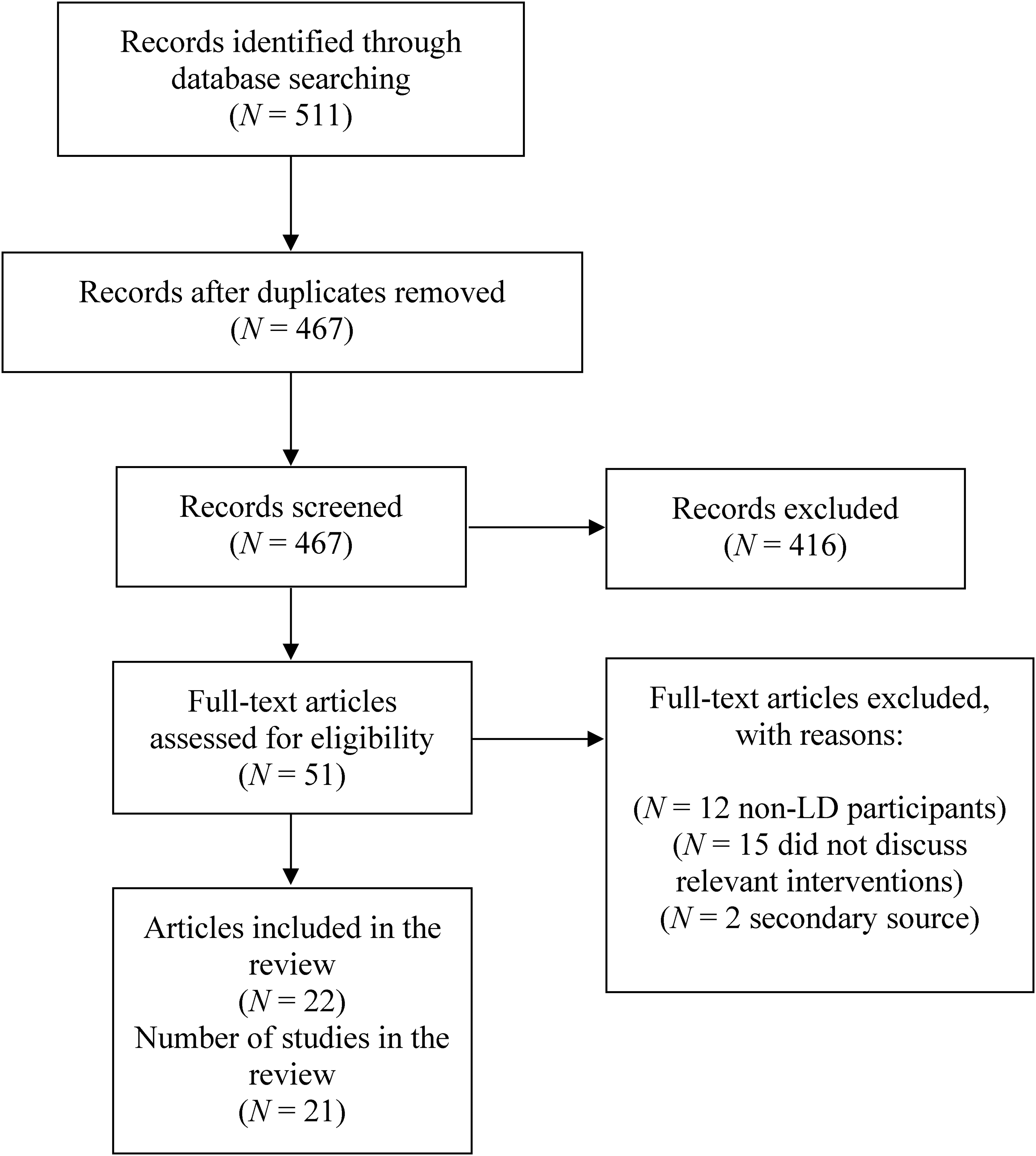
PRISMA flowchart describing the study selection process.
Data Extraction and Analysis
The extracted data were compiled in Microsoft Excel, facilitating comparison and detection of trends. The author(s), title, publication year, perspective of outcomes (e.g. self-report or teacher report), criteria used to identify LD, country, study design, study objectives, research design, description of intervention (including methodology, duration, and context), framework, general outcomes, and reported barriers and facilitators were extracted from the included articles. (See Tables 1 and 2 for a description of the included articles.)
Description of Included Articles.
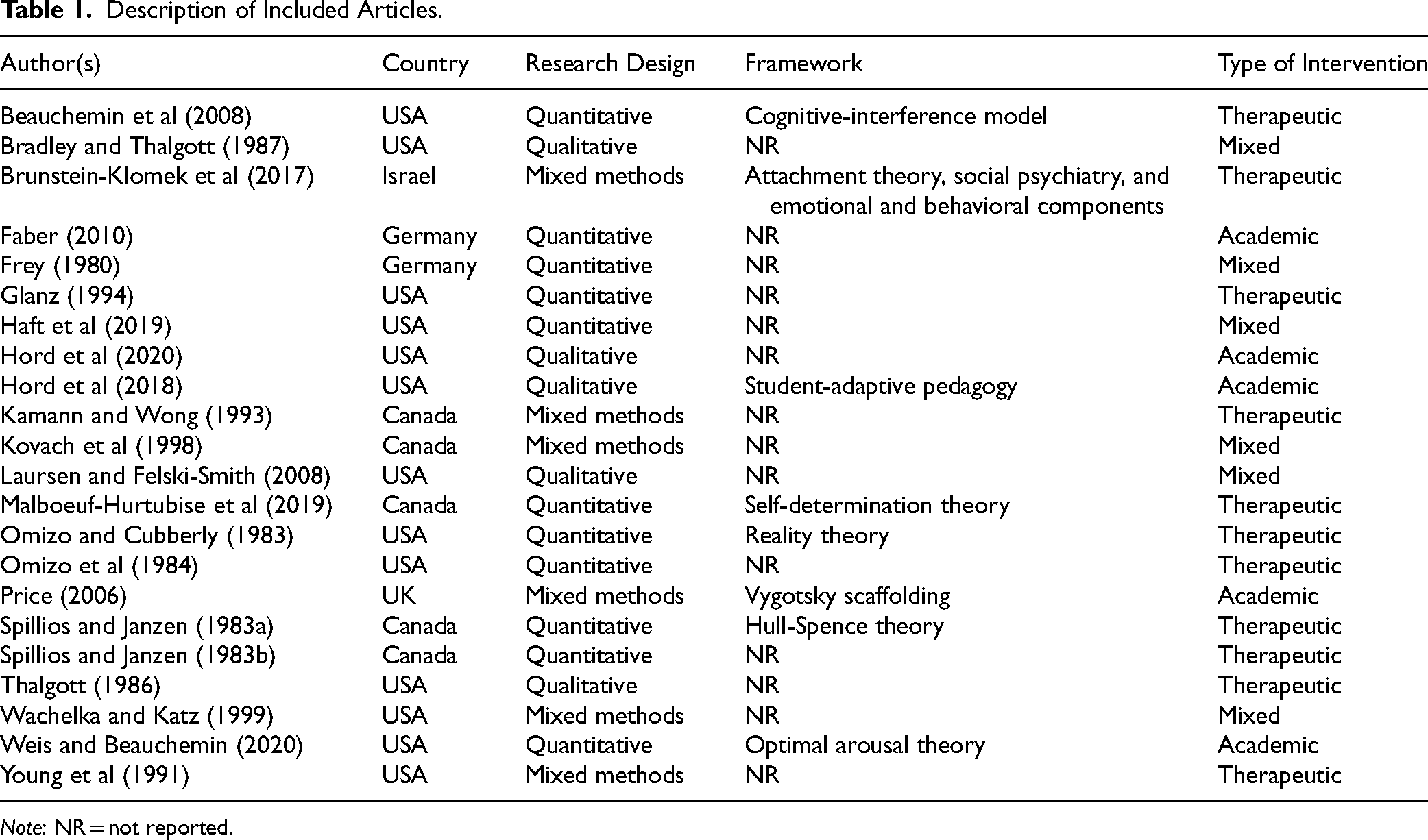
Note: NR = not reported.
Description of Interventions.
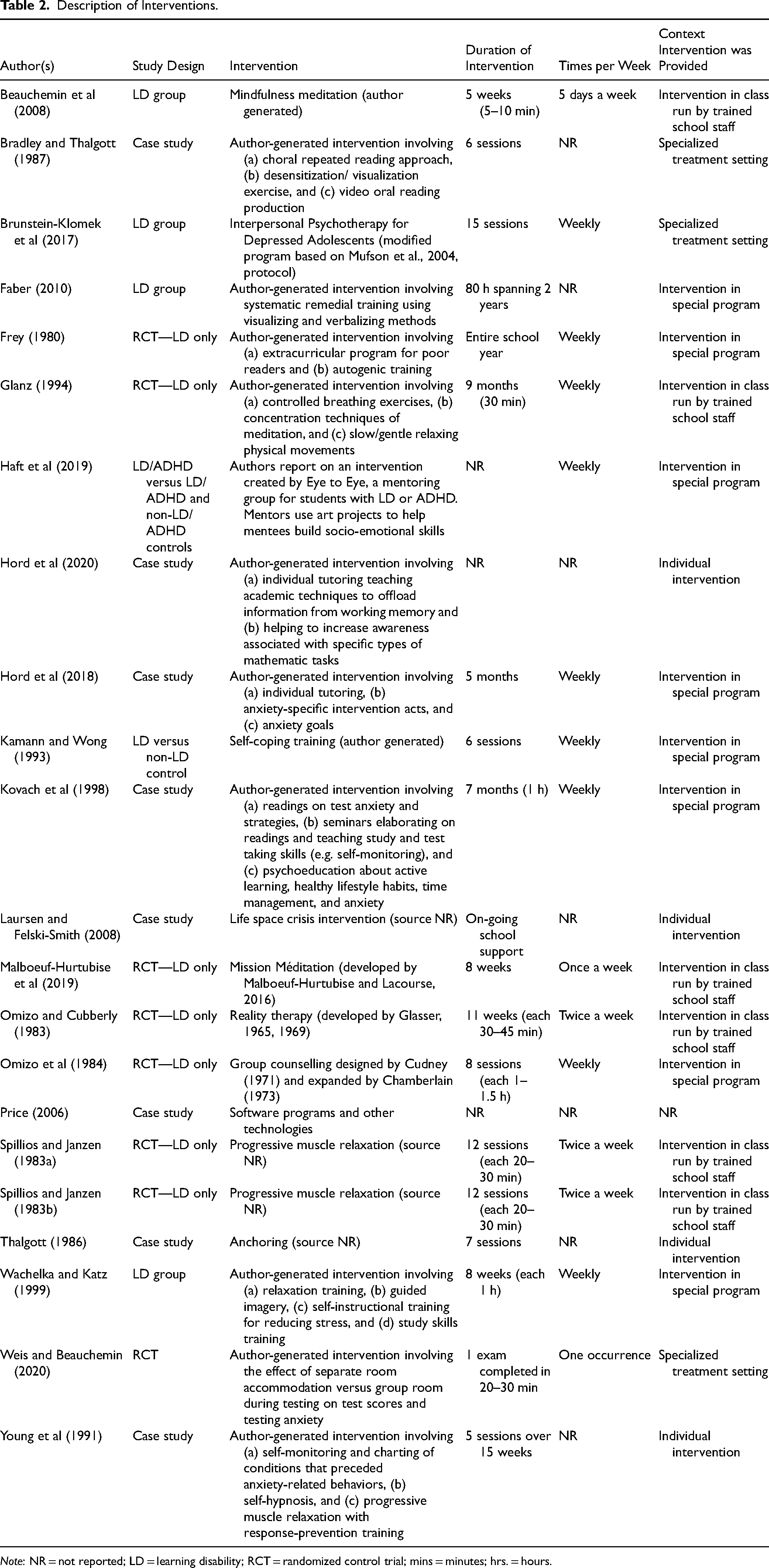
Note: NR = not reported; LD = learning disability; RCT = randomized control trial; mins = minutes; hrs. = hours.
A descriptive numerical analysis and a qualitative thematic analysis followed the methodological structure recommended by Levac et al (2010) to clarify the scoping review process. A descriptive numerical analysis summarizes and communicates extracted information through percentages to describe the characteristics of the included studies. Braun and Clarke's (2006) guidelines were followed for the qualitative thematic analysis. The procedure for conducting a thematic analysis involves six steps: (a) fully understanding the data through detailed reading; (b) generating initial codes that label elements of the data; (c) identifying themes that capture critical information; (d) reviewing themes to ensure they accurately reflect the data; (e) defining the themes to convey the essence of the data; and (f) communicate the synthesized results based on the research objectives and questions (Braun & Clarke, 2006, 2012).
Results
The findings of the current scoping review will be presented in a descriptive numerical summary analysis and a qualitative thematic analysis. Finally, facilitators and barriers to interventions targeting anxiety for students with LD will be discussed.
Descriptive Summary
The publication years of the included articles ranged from 1980 to 2023. Most were published in the United States of America (62%), followed by Canada (19%) and Germany (10%). Two articles were from the United Kingdom and Israel. The authors of 10 studies (45%) disclosed the theoretical frameworks used to guide the interventions.
The most common study designs were quantitative (42.86%), followed by mixed-method designs (28.57%) and qualitative designs (28.57%). In terms of the styles of data collection, a majority were case studies (38%). Randomized controlled studies (33%) were the next most common, with interventions provided only to individuals with LD (24%) and interventions provided to individuals with LD and control participants without LD (5%) being the least common. All articles included the perspectives of individuals with LD either through quotes from participants or responses on questionnaires. Some articles included perspectives from intervention providers such as clinic interns or school psychologists (24%), teachers (10%), and only one article reports parents’ observations (5%). The age of individuals involved in the intervention programs ranged from 8 to 20 years of age; however, ages were not disclosed in all studies.
The interventions were provided in a variety of settings, the most common interventions being in the classroom by trained school staff (i.e. teacher, school psychologist, or counsellor) (30%) and in specialized programs (35%). Interventions provided in a specialized program occurred outside of the classroom, whereby the students attended the program to receive the intervention (i.e. during extracurricular hours or after-school programs). Individual interventions (10%) and interventions at specialized treatment settings occurring outside of the school setting (such as in a mental health clinic or a tutoring center) (25%) were less common; one article was a retrospective report of interventions.
The interventions were categorized into three groups based on the intervention focus, goals, framework, and treatment methodology: therapeutic, academic, and combined approaches. Most of the interventions were therapeutic (52%) in nature, meaning they focused on reducing anxiety through relaxation, psychoeducation, and other stress-management techniques. Another 24% of the studies focused on academic performance (i.e. reading interventions or tutoring) to develop confidence in areas of academic difficulty to decrease anxiety. The remainder of the studies took a combined approach (24%), implementing academic and therapeutic techniques to address anxiety (refer to Tables 1 and 2 for a detailed list of interventions).
Thematic Analysis
A thematic analysis was conducted on the methodology and outcomes of the interventions discussed in the 21 reviewed studies. Several themes were identified and will be discussed separately in the following by intervention methodology (i.e. assessment of anxiety, type of intervention, duration and frequency) and outcomes. Finally, facilitators and barriers to implementing interventions targeting anxiety for students with LD will be discussed.
Intervention Methodology
Type of Intervention
As stated above, the interventions were diverse, and through thematic analysis, they were differentiated based on the focus, goals, framework, and treatment methodology. The therapeutic interventions focused on teaching specific skills to manage feelings of anxiety, such as mindfulness meditation, visualization of pleasant thoughts, relaxation exercises (e.g. deep breathing or gentle physical movements); psychoeducation (e.g. understanding the meaning of disability or irrational beliefs); enhancing positive self-statements; role-play to practice skills; and identification and controlling of negative thoughts (refer to Table 2 for a list of intervention summaries for each article). Of the therapeutic interventions, eight used a single technique (e.g. progressive muscle relaxation) and four combined techniques, such as the program by Price (2006), which involves breathing exercises, meditation, and relaxing physical movements.
Interventions focused on academic remediation aimed to help students improve their learning, as academic underperformance was theorized to be the underlying cause of anxiety. Studies, therefore, focused on core subjects, such as mathematics (Hord et al., 2018), reading, and writing (Faber, 2010; Price, 2006). Some researchers also investigated the benefits of class and test-taking accommodation (e.g. extra time for exams and dictation software; Price, 2006; Weis & Beauchemin, 2020), visual aids, scaffolding teaching methods, and skill training in the specific subject (Faber, 2010; Hord et al., 2018). Finally, the studies that implemented a combined approach (both academic and therapeutic techniques) incorporated therapeutic skills training within the context of the academic tasks to help the student learn how to apply the techniques simultaneously and effectively. For example, Wachelka and Katz (1999) combined study skill training and therapeutic skills (i.e. relaxation, psychoeducation, and desensitization) practiced in a mock exam simulation.
In all studies, the researchers addressed anxiety, but in some instances, anxiety was a piece of a general social-emotional learning intervention. Of the 22 studies, seven (31%) presented social-emotional learning interventions that addressed self-esteem (Haft et al., 2019; Malboeuf-Hurtubise et al., 2019; Omizo et al., 1984; Wachelka & Katz, 1999); feelings of depression (Haft et al., 2019); social skills (Beauchemin et al., 2008; Brunstein-Klomek et al., 2017; Haft et al., 2019); and self-concept as a learner (Brunstein-Klomek et al., 2017; Omizo et al., 1984; Omizo & Cubberly, 1983; Wachelka & Katz, 1999). With the exception of Haft et al (2019), the other six social-emotional learning studies found improvements in reports of anxiety. However, it is difficult to determine the reason for the improvement in reported anxiety in general social-emotional learning interventions because of the broad goals of the intervention (e.g. promoting skills to manage emotions and build positive relationships).
Duration and Frequency of Intervention
Nine interventions were conducted weekly (Brunstein-Klomek et al., 2017; Frey, 1980; Glanz, 1994; Haft et al., 2019; Hord et al., 2018; Kamann & Wong, 1993; Kovach et al., 1998; Omizo et al., 1984; Wachelka & Katz, 1999); three were conducted sessions twice a week (Omizo & Cubberly, 1983; Spillios & Janzen, 1983a, 1983b). The weekly and twice-a-week interventions spanned from 1 to 43 months. Unfortunately, only three studies reported the length of time for each intervention session, which made it challenging to compare intervention duration. Only one intervention was provided every day of the week (Beauchemin et al., 2008), perhaps because it had the shortest session length (5–10 min each day). Beauchemin et al (2008) noted that teachers reported effortlessly implementing the short intervention within the classroom setting.
Fifteen of the 22 articles stated the total number of sessions offered or the total duration of all the sessions. This may be due to some authors describing individual experiences (i.e. case studies) that focused on the participants’ experience as a whole, except for Faber's (2010) case report. The case study design concentrated on the experience of the intervention and the outcomes rather than a detailed methodology that can be replicated across participants. Nevertheless, not having complete information regarding the duration of the intervention creates challenges in comparing interventions and understanding the outcomes of time spent learning and honing skills. To see a complete summarised comparison of intervention duration across studies, refer to Table 2.
Measurement of Anxiety
A majority of the studies (68%) used self-report questionnaires to measure anxiety. This included measures that provide a general rating of anxiety (e.g. Reynolds & Kamphaus, 2004, Behavior Assessment System for Child – Second Edition; BASC-2); anxiety in relation to academic stimuli (e.g. Sarason et al., 1960, Test Anxiety Scale for Children); and manifestations of anxiety (i.e. frequency of positive/negative self-talk; Kamann & Wong, 1993). The remainder of the studies (32%) used qualitative observations by clinicians or researchers who provided the intervention and self-reports from individuals with LD. The qualitative self-reports of anxiety from individuals with LD were derived from transcripts of the intervention, after which researchers coded themes that indicated changes in anxiety.
Intervention Outcomes
Outcomes were reported as measured in the following areas: decrease in anxiety, improvement in academics, time, self-perception, and social skills.
Decrease in Anxiety
Most studies (73%) reported a positive change in anxiety symptoms following the interventions. Similar results were observed across age groups; 71% of elementary and middle school students and 75% of high school and undergraduate students experienced reduced anxiety. Studies that reported a decrease in anxiety in individuals with LD were reported through various measures, such as qualitative self-report measures, standardized questionnaires (e.g. Reynolds & Kamphaus, 2004, Behavior Assessment System for Child – Second Edition; BASC-2), and behavioral observations from service providers.
Following the intervention, participants in those studies were able to manage their anxiety by using the skills they had been taught and noted a decrease in general anxiety symptoms (Beauchemin et al., 2008; Faber, 2010; Kamann & Wong, 1993; Laursen & Felski-Smith, 2008; Omizo et al., 1984; Omizo & Cubberly, 1983; Young et al., 1991). The techniques and skills taught to address anxiety symptoms varied depending on the intervention framework and study goals. Some participants reported that anxiety no longer interfered with their daily lives, indicating that they could apply the skills and techniques they were taught outside of the intervention setting (Beauchemin et al., 2008; Young et al., 1991).
In addition to general anxiety symptoms, results of the examined studies demonstrated a decrease in academic-related anxiety such as subject-specific anxiety, test anxiety, and school avoidance (Bradley & Thalgott, 1987; Brunstein-Klomek et al., 2017; Frey, 1980; Glanz, 1994; Hord et al., 2018; Kovach et al., 1998; Price, 2006; Thalgott, 1986; Wachelka & Katz, 1999). These observed decreases in anxiety across studies were associated with other benefits, most frequently improvements in academic performance (56%).
Six studies did not report positive changes in anxiety after the intervention (Haft et al., 2019; Hord et al., 2020; Kamann & Wong, 1993; Spillios & Janzen, 1983a, 1983b; Weis & Beauchemin, 2020). For example, after an intervention consisting of providing test accommodations, Weis and Beauchemin (2020) found that students who performed poorly were more likely to report anxiety, suggesting a negative cycle between anxiety and academic performance. Based on the lack of evidence found for test accommodations, Weis and Beauchemin (2020) recommended referring students with test anxiety to mental health professionals for evidence-based interventions. The progressive relaxation intervention by Spillios and Janzen (1983a, 1983b) might not have been sufficiently sensitive to provide a notable change in anxiety. The absence of change in anxiety in Spillios and Janzen (1983a, 1983b) studies might be due to the therapeutic intervention only targeting physical aspects of anxiety, whereas other studies found success when incorporating both relaxation and other techniques such as psychoeducation or meditation (e.g. Glanz, 1994; Wachelka & Katz, 1999; Young et al., 1991).
Some studies found positive changes; however, it is unclear if there is a link to anxiety. For instance, Hord et al (2020) suggested that the participants in their case study became more aware of their anxiety and used academic techniques to mitigate the negative impact of anxiety (e.g. short-term memory), but they did not mention a change in anxiety. Instead, although the authors discussed the impacts of anxiety on the participants with LD, the study focused on the experience of the participants and how the tutoring supported their academic learning. Kamann and Wong (1993) assessed coping with math anxiety by evaluating changes in positive and negative self-talk. However, there was no clear link between increased positive self-talk and reduced math anxiety since math anxiety was not evaluated after the intervention, only performance in mathematics. While Haft et al. (2019) reported improvements in depression and self-esteem, no change in anxiety was found during the peer mentor intervention. This lack of change in anxiety might be due to the participants’ anxiety being in the normal range pre- and post-intervention. Additionally, the interventionists used social-emotional learning objectives to explore strengths and challenges associated with participants’ LD and ADHD. However, Haft et al. (2019) did not specifically target anxiety.
Improvement in Academics
Improvements in academic performance were found in 45% of the included studies, even in studies that did not specifically target academic difficulties by teaching techniques to help students manage their anxiety in an academic situation (Beauchemin et al., 2008; Brunstein-Klomek et al., 2017; Kamann & Wong, 1993; Thalgott, 1986; Young et al., 1991). In addition to improvements in math and spelling test scores, there was also growth in academic competencies such as reading fluency and a reduction of errors (Bradley & Thalgott, 1987; Faber, 2010; Frey, 1980; Spillios & Janzen, 1983a, 1983b).
A distinct finding related to academic outcomes was that the interventions aided participants’ working memory capacity. This was attributed to reduced anxiety and the provision of academic supports (e.g. visual aids), which alleviated strain on participants’ working memory, allowing them to process information more efficiently (Hord et al., 2018; Price, 2006).
Time
Complementary to the progress in academic performance, researchers also noted that students needed less time for studying and taking tests and, as a result, were able to engage in more recreational and social activities (Price, 2006; Wachelka & Katz, 1999; Young et al., 1991). Similarly, Kovach et al (1998) reported students developed healthier lifestyle habits such as increased exercise because they were spending less time on academic tasks. This was possible through an intervention that taught strategies to manage anxiety and time more efficiently. For example, the intervention taught time-management skills for studying and ways to deal with procrastination.
Self-perception
Researchers noted improvements in participants’ self-perceptions, most commonly improvement in confidence and self-concept as competent learners. The intervention provider (i.e. teacher or clinician) reported confidence by observing the participants display more enjoyment or relaxed behaviors (e.g. speaking clearly, sitting attentively, less frustration) when exposed to anxiety-provoking situations after the interventions. Furthermore, researchers reported that participants demonstrated increased engagement and eagerness to participate in previously stressful situations. Researchers also reported that when students’ anxiety felt manageable, it was associated with increased feelings of confidence in their abilities, preparedness, and sense of control (Bradley & Thalgott, 1987; Hord et al., 2018; Price, 2006; Thalgott, 1986; Wachelka & Katz, 1999; Young et al., 1991). Confidence was explicitly addressed in interventions that aimed to reduce self-defeating behaviors (Omizo et al., 1984) and improve academic performance through remedial supports (Bradley & Thalgott, 1987; Hord et al., 2018). Haft et al (2019) found a positive impact on self-esteem when younger students (in elementary and middle school) with LD had a mentor relationship with high school students who also had an LD.
In addition, some researchers noted that participants’ concept of themselves as capable learners improved after the intervention. Such interventions included academic (i.e. tutoring; Hord et al., 2018); therapeutic (i.e. teaching coping statements, counseling group addressing self-defeating behaviors, and anchoring skills; Kamann & Wong, 1993; Omizo et al., 1984; Thalgott, 1986); and a mixture of both (i.e. progressive muscle relaxation, psychoeducation, guided imagery, and exam preparation strategies; Wachelka & Katz, 1999). Researchers reported that participants had improved attitudes toward school, were more actively engaged, and appeared more relaxed or joyful during academic tasks after the interventions (Bradley & Thalgott, 1987; Hord et al., 2018; Kamann & Wong, 1993; Omizo et al., 1984; Thalgott, 1986; Wachelka & Katz, 1999). A participant's growth of confidence and perception of being a capable learner were often associated with the subsequent development of future goals and aspirations. Specifically, participants reported an “I can” attitude through setting goals and discussing their future educational objectives (Hord et al., 2018; Omizo et al., 1984; Omizo & Cubberly, 1983).
Social Skills
A less common but prominent theme was promoting participants’ social skills through intervention. Intervention service providers reported that participants were more outgoing and responsive to others after this type of intervention (Beauchemin et al., 2008; Bradley & Thalgott, 1987; Brunstein-Klomek et al., 2017). In Bradley and Thalgott's (1987) case illustration of youth with social anxiety, the researchers reported that the participant began to meet with friends more frequently and reported fewer feelings of loneliness after the intervention. Researchers associated participants’ improvements in socialization with improved confidence and the reduced feelings of anxiety (Beauchemin et al., 2008; Bradley & Thalgott, 1987; Brunstein-Klomek et al., 2017). Haft et al (2019) also found that participants in the peer-mentor intervention program developed positive interpersonal relationships (i.e. ability to relate to others and enjoy interactions), which could be a protective factor for students with LD.
Barriers and Facilitators
In terms of barriers to intervention, authors reported students not being committed to the intervention approaches (Bradley & Thalgott, 1987), techniques needing to be modified for students (Bradley & Thalgott, 1987; Kamann & Wong, 1993), disruptions when intervention was provided in a group setting (Frey, 1980), and the potential of social desirability response bias influencing self-report results on the socio-emotional questionnaires (Haft et al., 2019). Some intervention techniques were difficult for participants to employ, which led to increased anxiety (Hord et al., 2018). However, in general, authors did not report or hypothesize barriers to intervention delivery, instead focusing on the outcomes and efficacy of the interventions.
In terms of facilitators, researchers noted inclusion and active involvement of other support systems in the participants’ lives (e.g. family and school support staff) as aiding intervention success (Brunstein-Klomek et al., 2017; Faber, 2010; Young et al., 1991). For example, Young et al (1991) reported that the involvement of parents could facilitate practicing intervention skills at home. In contrast, Bradley and Thalgott (1987) noted benefits when the school provided opportunities for students to excel. Providing interventions in a group format was reported to be a cost-effective tool in addition to being an efficient format for teaching skills to students (Beauchemin et al., 2008; Omizo & Cubberly, 1983). Moreover, having elements that could be generalized into other areas of the student's life was beneficial in reducing overall anxiety (Bradley & Thalgott, 1987; Thalgott, 1986). For instance, Thalgott (1986) noted that the use of anchoring, a therapeutic relaxation technique that creates an association between a stimulus and a positive feeling and/or mental image, could be used in various contexts without the participants drawing attention to themselves.
Researchers also noted that benefits were dependent on the intervention provider. For example, intervention providers sensitive to the participant's anxiety prompted adaptation of materials to help decrease their anxiety (Bradley & Thalgott, 1987), such as providing intervention skills that could be taught with minimal training (Haft et al., 2019; Omizo & Cubberly, 1983), relaxation-based interventions that could help teachers feel calmer before lessons (Frey, 1980), and providing low-cost materials for the intervention that was accessible in most schools (Bradley & Thalgott, 1987; Haft et al., 2019). Furthermore, researchers identified flexible and targeted intervention methods to help meet the unique needs (both academic and emotional) of the participants, such as one-on-one interaction with the intervention provider, even in a group format (Bradley & Thalgott, 1987; Hord et al., 2018; Spillios & Janzen, 1983a; Young et al., 1991). Similar to the barriers previously discussed, 32% of articles did not state facilitators to intervention delivery; instead, the focus was on elements within the intervention that contributed to the outcome.
Discussion
The goal of the current scoping review was to summarize and compare the outcomes of interventions targeting anxiety for students with LD. Components of the interventions, relevant outcomes for participants with LD, and the various facilitators and barriers to implementing interventions were identified. With an estimated 70% of students with LD reporting more anxiety than students without LD (Mammarella et al., 2016; Nelson & Harwood, 2011), there is a need to address emotional challenges, such as anxiety through interventions in school settings (Aro et al., 2022). Identifying aspects of interventions that target anxiety can guide future implementation based on the evidence in the literature, specific to individuals with LD.
Overall, the articles in this review discussed interventions targeting anxiety for individuals with LD across various study designs, types of interventions, treatment methodology, and intervention contexts. However, the articles suffered from a number of limitations, such as the limited diversity of countries in which the studies originated, with a majority coming from North America. Additionally, only six of the 21 studies were published in the last 10 years, signifying the need for more current research. Further, fewer than half of the studies discussed a theoretical framework (47%), suggesting the need for researchers to delineate said theories to guide future research (Adom et al., 2018). When researchers explained their theoretical framework, it helped to define the underlying mechanisms of anxiety, which were subsequently targeted in their interventions (Beauchemin et al., 2008; Brunstein-Klomek et al., 2017; Hord et al., 2018; Omizo & Cubberly, 1983; Price, 2006; Spillios & Janzen, 1983a).
Research Question 1
The first research question explored the different types of interventions targeting anxiety for individuals with LD. Interventions were categorized based on focus, goals, framework, and treatment methodology. Three types of interventions were identified therapeutic (e.g. focused on reducing anxiety through relaxation, psychoeducation, and other stress management techniques), academic-focused (e.g. reading interventions or tutoring), and a combined approach implementing both academic and therapeutic techniques to address anxiety.
The results of the review highlight the importance of including elements of academic support in the intervention for students with LD, with academic and learning difficulty being a dominant source of their anxiety. However, compared to research examining the efficacy of interventions for anxiety in a general population, the current scoping review found less diversity of interventions targeting anxiety for individuals with LD. For instance, other interventions (e.g. internet-based therapy, interpersonal-emotional processing, and acceptance-based therapy) have been found to provide support and reduce anxiety within the general population, but these have yet to be explored with individuals with LD (Bolognesi et al., 2014; Gulliver et al., 2012; Mayo-Wilson et al., 2014; Vøllestad et al., 2012). Even when considering the emphasis on academically relevant interventions, some techniques, such as biofeedback, have not been investigated in the LD population (Von Der Embse et al., 2013).
In addition to the type of intervention, implementation methodology varied. Duration and frequency were explored to compare the differences and similarities in intervention implementation. Overall, interventions were regularly scheduled, with 48% occurring weekly or twice a week, which spanned several months. Unfortunately, only three studies (14%) reported the length of time for each intervention session, and 15 of 22 studies (68%) reported a total number of intervention sessions, which made it challenging to compare interventions. Intervention settings and the range of providers also differed across interventions. Different settings, such as general classrooms, clinics, or specialized programs, offer unique environments and resources that can influence the effectiveness of interventions for students with LD and anxiety (e.g. classroom groups being an efficient format to teach skills). The experience and training of the intervention providers can impact how interventions are delivered and received (e.g. brief training for teachers). Future researchers should clearly outline the intervention methodology for replication and practical implementation. Furthermore, diversity in intervention components, for example, an emphasis on multiple versus single skills, can contribute to how well interventions address students’ specific needs and the success of the programs.
Research Question 2
The second goal of the scoping review was to compare the general outcomes of the interventions. The thematic analysis revealed four main themes: a decrease in anxiety, improvement in academics, changes in self-perception, and development of social skills. Overall, the interventions demonstrated a positive direction; six studies (28%) reported no change in anxiety after the intervention. Studies that did not find changes in anxiety reported other benefits, such as improvements in self-esteem and increased awareness of anxiety. However, the limitations of these studies indicate a need for interventions that provide individuals with a variety of supports to address anxiety, such as relaxation, cognitive restructuring skills, and psychoeducation about anxiety and LD (Haft et al., 2019; Hord et al., 2020; Kamann & Wong, 1993; Spillios & Janzen, 1983a, 1983b; Weis & Beauchemin, 2020). Additionally, evidence for which intervention is most beneficial for decreasing anxiety in individuals with LD could not be evaluated in the present review due to the heterogeneity of the means used to measure anxiety.
Some interventions not only impacted anxiety but also participants’ social-emotional experiences. In particular, providing anxiety management skills to decrease the stress and worry in academic situations facilitated students’ ability to focus on their academic tasks and to process information more efficiently (Hord et al., 2018; Price, 2006). Moreover, the improvements in learning, academic performance, and decrease in anxiety related to positive changes in participants’ perceptions of themselves. Specifically, individuals with LD who had positive changes in self-perception became more confident in their abilities and perceived themselves as competent learners (Bradley & Thalgott, 1987; Hord et al., 2018; Price, 2006; Thalgott, 1986; Wachelka & Katz, 1999; Young et al., 1991). With this growth of confidence and perceived proficiency, students with LD developed more ambitious goals and aspirations (e.g. considering postsecondary opportunities) than before the intervention (Hord et al., 2018; Omizo et al., 1984; Omizo & Cubberly, 1983). Improvements in socio-emotional areas (e.g. confidence) are important since students with LD struggle with peer relations and with their self-esteem (Bizier et al., 2015; Elksnin & Elksnin, 2004; Metsala et al., 2017).
Research Question 3
The final research question sought to identify the barriers and facilitators that impact the implementation of interventions. Identified barriers were all related to the intervention program, such as lack of participant engagement (Bradley & Thalgott, 1987), modification of intervention skills (Bradley & Thalgott, 1987; Frey, 1980; Hord et al., 2018; Kamann & Wong, 1993), and disruptions in group settings (Frey, 1980). Facilitators, in turn, addressed intervention methodology such as implementation of generalized skills (Bradley & Thalgott, 1987; Thalgott, 1986), intervention training that is easy to learn (Omizo & Cubberly, 1983), and meeting the unique needs of participants (Bradley & Thalgott, 1987; Hord et al., 2018; Spillios & Janzen, 1983a; Young et al., 1991). The only barrier/facilitator to interventions that extended beyond program methodology was the benefits of active involvement of other systems in the participants’ lives (e.g. family and school) (Brunstein-Klomek et al., 2017; Faber, 2010; Young et al., 1991). Overall, the literature lacked coverage of systemic and practical applications of intervention delivery outside of the research context (e.g. administrative supports/demands and guidelines for practice).
Limitations
The exclusion of grey literature (e.g. dissertations and conference papers) was determined based on issues surrounding the heterogeneous quality of grey literature (Mahood et al., 2014). However, grey literature can provide insight for systematic and scoping reviews by minimizing the effects of publication bias of peer-reviewed literature, which may exaggerate the impact of intervention efficacy and limit the diversity of findings (Hopewell et al., 2007; Mahood et al., 2014; McAuley et al., 2000). If future research includes grey literature, a quality appraisal should be accompanied in the review (Mahood et al., 2014).
The current study aimed to provide a broad understanding of the current literature on interventions targeting anxiety for individuals with LD. The results indicate that heterogeneous measures of anxiety and intervention methods were used. As heterogeneity is problematic when interpreting intervention outcomes, researchers need to explore the precise causes of heterogeneity further as it relates to study design, measures used, and study quality. For example, Pigott and Shepperd (2013) recommended documenting all aspects of interventions (e.g. components, delivery methods, and contexts) that can help clarify sources of heterogeneity and enhance the interpretability of findings. By understanding nuanced findings, researchers and practitioners are better informed of the conditions that lead to effective interventions (Pigott & Shepperd, 2013).
Implications
The current scoping review has the potential to raise awareness about key issues concerning anxiety intervention implementation and outcomes for individuals with LD. Raising awareness about interventions to help individuals with LD and who experience anxiety can guide support services in developing effective interventions. Given the higher rates of anxiety experienced by individuals with LD, it is important for support service providers to implement appropriate interventions (Beauchemin et al., 2008; Roer-Strier, 2002).
The findings of the current scoping review demonstrate several benefits of implementing interventions that target anxiety difficulties in individuals with LD, such as increased confidence, lessened anxiety, and improved academic learning. Furthermore, the findings highlight the importance of employing multiple methods to address anxiety symptoms for individuals with LD. Specifically, academic remediation appears to complement and support anxiety-targeted interventions (Bradley & Thalgott, 1987; Frey, 1980; Hord et al., 2018; Kovach et al., 1998; Laursen & Felski-Smith, 2008; Price, 2006; Wachelka & Katz, 1999), most likely due to the prevalent learning challenges that individuals with LD face (Bizier et al., 2015; Cortiella & Horowitz, 2014). However, most of the interventions included in the current scoping review lacked details regarding implementation of interventions, which limits the understanding of how these interventions can be effectively implemented outside of the research context. To that end, Mendelson et al (2013) recommended examining the administrative supports/demands of interventions, the perspective of intervention facilitators and partners (e.g. parents and teachers), participant engagement (e.g. did they enjoy the intervention or find it useful), and in-depth discussion with institutions about guidelines and training practicality. Future research should enhance the identification of barriers to and facilitators of intervention implementation when creating and evaluating interventions and not solely report outcomes.
Conclusions
In conclusion, the findings of the current scoping review identified several positive outcomes for individuals with LD after receiving an intervention targeting anxiety and highlighted the need to address the unique needs of individuals with LD. The findings emphasize the variety of intervention methods that can be applied to manage anxiety symptoms for individuals with LD, such as mindfulness, relaxation exercises, psychoeducation, enhancing positive self-statements, academic remediation, and access to class and test-taking accommodations. Despite the positive results of the current scoping review, however, gaps in our understanding of interventions targeting anxiety for individuals with LD remain. Notably, research is needed to understand the barriers and facilitators in implementing interventions to foster effective interventions.
Footnotes
Author Note
Sophia Blackburn is a volunteer and is not affiliated with a university.
Declaration of Conflicting Interests
The authors declared no potential conflicts of interest with respect to the research, authorship, and/or publication of this article.
Funding
The authors received no financial support for the research, authorship, and/or publication of this article.
