



Abstract
In this article, we analyse the most popular stories that circulated on WeChat public accounts concerning personalized experiences of COVID-19 in China during the first three months of 2020. Among these non-fictional online writings, we probe into ‘individual’ and mediated experiences with the coronavirus in China by questioning the visualizations and discourses of these stories and their producers, as well as the concomitant emotions they invoked. Parallel to the changing situation of the pandemic, we observe a diachronic evolution of emotions, from fear and doubt to (nationalist) pride. While articulating personalized experiences of the pandemic from disparate perspectives, the stories invariably built on, and were shaped by, the workings of the WeChat public account platform (公众平台) as evidenced by its content moderation logic and political economy. The analysis shows that emotions, rather than facts, propel the popularity of these stories. The measures taken by the state are mostly applauded, and only sometimes questioned; tragic memories are rewritten, and a political and economic order is consolidated.
In the first months of 2020, everyday life in China was turned upside down. Being under lockdown from 23 January, Chinese citizens relied heavily on social media for updates on what was going on, as well as to entertain themselves and pass their time, while their government used social media extensively to communicate to its citizenry. 1 In this article, we probe into online mediated experiences with the SARS-CoV-2 virus in China. We do so by analysing the circulation of stories and related visualizations, as well as the concomitant emotions they evoked, during the first three months of the crisis – from January through March 2020. We zoom in on the WeChat public account platform (公众平台), 2 which has become a ‘super-sticky’ social media platform that permeates every aspect of the everyday lives of Chinese citizens. 3 Analysing the 1500 most popular stories that circulated on the WeChat public account platform, and closely reading a selection of 111 of the stories, we were struck by the strong emotional under- and overtones; we became increasingly aware that the value of news stories may be less about informative content than about emotional responses and sharing. Whereas concerns in journalistic and academic discourses in the West proliferate around fake news – a phenomenon partly enabled by digital technologies – our observations direct us away from issues of factuality and truth, towards the more subjective notions of emotions and belonging. 4 This observation resonates with the ‘emotional turn’ in journalism studies. 5
Our analysis shows how the deep commercialization of WeChat public accounts propels the circulation of highly emotive and personalized kinds of stories. These stories amplify the rapidly changing popular sentiments surrounding the unfolding of the crisis, and while they are orchestrated by commercial parties rather than directly by the Chinese Communist Party (CCP), they clearly strive to stay within the limits of the permissible. Our analysis shows how they consequently resonate with, rather than contradict, the official narratives. 6 The emotional turn we observe is not so much an example of citizen journalism, nor is it a case of a new modus operandi of official journalism. Instead, we read it as a further intensification of the commercialization and platformization 7 of news production in China. The empirical core of this article lies in the analysis of: (1) the interfaces of the WeChat public account platform, a popular platform for user-generated news and entertainment content; and (2) 111 non-fictional stories, based on which we show how, during a span of three months, emotions morphed from fear, horror, and panic, towards resilience, solidarity, and doubt, and finally, to hope, vindication, and pride. This transformation of emotions is a move from inward feelings about China to outward comparisons with the world, especially the West, that is the United States and Europe. The regime of censorship, in tandem with the logic of platform capitalism, propels this movement towards a deeply nationalistic structure of feeling. 8 While our analysis focuses on the content and the production logic of the stories, in which we aim to unravel the nexus of platformization, commercialization, and political control, in the conclusion we propose further studies towards the possible emergence of affective publics, which would require further audience analyses.
WeChat public accounts and the emotional turn in journalism studies
As a ‘super-sticky’ and ‘mega’ platform in contemporary China, WeChat has grown ‘into a one-stop gateway to more than 20 functions’, 9 from basic social networking to making payments, hailing a taxi to ordering food, and from subscribing to user-generated content to accessing a vast number of mini-programs. Instead of discussing the platformization of Chinese culture, or the ubiquity of WeChat, our study focuses on the WeChat public account platform where the stories included in our analysis were produced, posted, and circulated. 10 Similar to Facebook Page, as noted by Kaiping Chen et al., the WeChat public account platform serves as a ‘a quasi-standalone interface’ for account holders (including individuals, government institutions, media, and enterprises) to disseminate news, services, and entertainment information. 11
As our empirical analysis shows, the various features of monetization and the prevalent censorship of WeChat public accounts deeply impact the style of storytelling and give rise to the production of ‘emotional journalism’. As illustrated by the stories about personalized yet commodified and censored Chinese experiences of COVID-19 in the public accounts that we studied, the sensational style of writing and the wide use of imperfect visuals echo both the underlying emotions of Chinese individuals during the pandemic and the state's call for unity, stability, and nationalism. It is this interplay of the state, the commercial platform, and ‘individual’ narratives that produces and actualizes the articulation and evolution of emotions on WeChat and the functionality of its public accounts.
‘Emotion’ refers to how media moves audiences, as well as how it informs them.
12
To which we hasten to add, ‘feeling’ is also a repository of information, and that the two can thus not be easily separated.
13
During our analysis we were struck by the strong emotional under- and overtones of the messages. This proliferation of emotional stories online resonates with a global trend in journalism studies that has been coined as the ‘emotional turn’. In the words of Karin Wahl-Jorgensen and Mervi Pantti: The attention to emotion in journalism studies, however, is a relatively recent development, sustained by the concurrent rise of digital information technologies that have accentuated the emotional and affective everyday use of media, as well as the increasing mobilisation, exploitation and capitalisation of emotions in digital media.
14
The hitherto lack of studies on emotions in journalism can be ascribed to ‘journalism's allegiance to the model of liberal democracy, and the associated ideal of objectivity and focus on rational communication’. Like Wahl-Jorgensen and Pantti, what inspires us is not to suggest a major paradigm shift, but rather, to open up the study of social media and journalism in China to the role of emotions, and to question ‘which emotions gain purchase in the public sphere, why, and with what consequences’, 15 and additionally, how various textual and visual techniques are deployed to produce these emotions, and how these are linked to the political economy and the workings of WeChat public accounts. The unfolding of the COVID-19 pandemic in China in the most read stories posted on these public accounts in the first few months of 2020 provides, as we hope to show, a unique prism to study this nexus of platformization, commercialization, and political control.
Methods
To explore the production of emotions on individual WeChat public accounts, our empirical research consists of two parts: first, an analysis of the technical, commercial, and regulatory logic of its public account platform and a textual and visual analysis of the non-fictional stories posted there. First, we used the walk-through method used in app studies 16 to explore the technical logic of the WeChat public account platform in the user interface. This analysis is complemented by secondary sources on WeChat's censorship and one in-depth interview with a Shanghai-based multi-channel network manager, who specializes in public account advertising and monetization.
Second, we mined GSdata, a leading database run by the Chinese data analytic platform Qingbo Big Data Technology (清博智能), to collect the top 500 viewed articles of the month on WeChat's public account platform from January through March 2020, the period when China was heavily hit by the pandemic. After excluding reposted articles as well as those unrelated to the pandemic, we arrived at 111 articles, which were manually selected from the total corpus of 1500. They included original stories and commentaries posted on various WeChat public accounts. Via NewRank, an independent data analytic platform, we conducted metadata analysis of these selected accounts (number of followers, average readers, number of posts, etc.) to further shed light upon the commercial logic of the public account platform. The stories collected from these accounts articulate personalized experiences of the pandemic from disparate perspectives, shaped nonetheless by the particular logic of content moderation on the WeChat public account platform as previously mentioned. To analyse the data, we conducted a close reading of both textual and visual content to ascertain the changing pattern of emotions expressed by these stories during the three months under study.
At the first level of close reading, six recurring themes emerged from these 111 stories: the dire situation in Wuhan; the dedication and sacrifice of Chinese individuals (especially medical workers); the lack and donation of medical and survival supplies; mutual assistance among Chinese citizens; the state's lockdown measures; and the global spread of the pandemic. These six themes are not surprising; what intrigues and concerns us is how such themes were being articulated, with what kind of emotional implications, and how these were shaped by the specific workings of the WeChat public account platform. Our second level of close reading showed how doctors and health workers, again as expected, attracted most of the attention. At the same time, we also identified the experiences of other professionals, including Chinese officials and civil servants (21 articles), patients (7 articles), and ‘ordinary’ individuals (44 articles), such as policemen, wet market vendors, migrant workers, students, and elderly retirees. Together, these stories represent and reproduce the practice and emotions of individuals from different social and professional backgrounds, while under circulation and monitoring by the public account platform. The third level of our close reading illustrated the ways these mediated individual experiences constitute the production of emotions, how various stories on WeChat public accounts mobilized the social into fearful, angry, united, resilient, and finally hopeful and proud subjects in the face of the COVID-19 crisis. This change in emotion is crucial, and this is what we will elaborate on in the following sections. While our analysis was on a month-by-month basis, we do not want to suggest that emotions can be clearly demarcated on a temporal line. The main thrust of our analysis was to foreground the change itself, to tease out how visual and textual representations were turned into different emotions, and how these representations, together with the WeChat platform's technical and commercial features, helped sustain the political status quo in the face of a medical and social crisis.
The logic of the WeChat public account platform
Developed by Tencent in 2011, the WeChat public account platform serves as the technical back-end for online content producers, who can use it to create, edit, and distribute various forms of content (including articles, images, sound, and videos) and interact with subscribers and end-users. To access the content posted on the platform, end-users can either subscribe to various public accounts or read shared articles in their WeChat Moments (朋友圈, literally ‘circle of friends’; similar to Facebook's Timeline) or groups – the two main social networking features on WeChat. What distinguishes the WeChat public account platform from other popular Chinese social media, such as SinaWeibo and Douyin, is the fact that it identifies itself as a platform for long and news-like articles. As described on its webpage, a WeChat public account ‘provides organizations and individuals a new way to disseminate information to users’ and its various channels are ‘similar to newspapers and magazines offering news information and entertainment’. 17 Together with WeChat Moments and groups, WeChat public accounts have turned the platform into one of the most used tools for Chinese ‘citizen journalism’. 18 Given that for decades journalism and news production in China have been dominated by state-controlled media, the WeChat public account platform at least facilitates the participation of a large number of Chinese individuals in news production.
It would be a mistake, however, to view the WeChat public account platform and its citizen journalism as merely emancipatory. On the one hand, the business model of the platform fits neatly into the large platform ecology of WeChat and business interests of its proprietor Tencent. Registration of a user requires a Chinese Identification Number and Chinese mobile phone number. Users can post only once per day, eight articles at a time. In terms of monetization, WeChat public accounts with over 500 subscribers can open the ‘traffic master’ (流量主, meaning the owner of web traffic revenue) service, offering various advertising options for creators. Aside from those provided by the platform itself, creators can also access third-party data provided by analytic companies, such as NewRank and Qingbo Big Data Technology, which all have their own online advertising marketplaces for WeChat public accounts. On the creator's interface of a WeChat public account, creators can have access to various types of users’ (subscribers and readers of each post) personal data, such as their demographic and geolocational information, and various interactive data on users’ online practices (time, frequency, number, growth, source, etc.). This online traffic is ‘the primary asset’ of any account on the WeChat public account platform, determining how much revenue they will generate through the aforementioned advertising options. For example, on NewRank's online marketplace the price of an advertisement starts from RMB 0.3 per view. 19 A public account named Webmaster Feng's Home (WeChat ID: fgzadmin), which produced several articles collected for this study, posted eight articles every day and managed to obtain around 300,000 daily views (Figure 1). Translated into potential advertising revenue, one single advertisement can bring in over RMB 90,000 (€11,000) per day – an estimate based on NewRank's model. 20 As our metadata analysis shows, the 111 articles collected for the study were created by 54 WeChat public accounts, 36 of which have over 1 million active subscriptions. Most of these public accounts were created before 2015, and the average views per article posted by these public accounts is over 50,000. 21 According to He Yang, a Shanghai-based WeChat multi-channel network manager, these public accounts are mostly registered as individual accounts but have a strong focus on monetization and advertising. Sometimes labelled as ‘marketing accounts’ (营销号), these public accounts usually have their own production team and produce ‘easy-to-read’ articles and commentaries on trending news to generate as many views and as much traffic as possible. Thus, whilst the stories they post come across as ‘individual’, they are in fact part of a commercial logic, in which the personal and the emotional are used as tools to generate more clicks. When we refer to ‘the author’ in the following textual analyses, it is important to remember that these authors are not really individual authors, but rather commercial and professional social media creators.
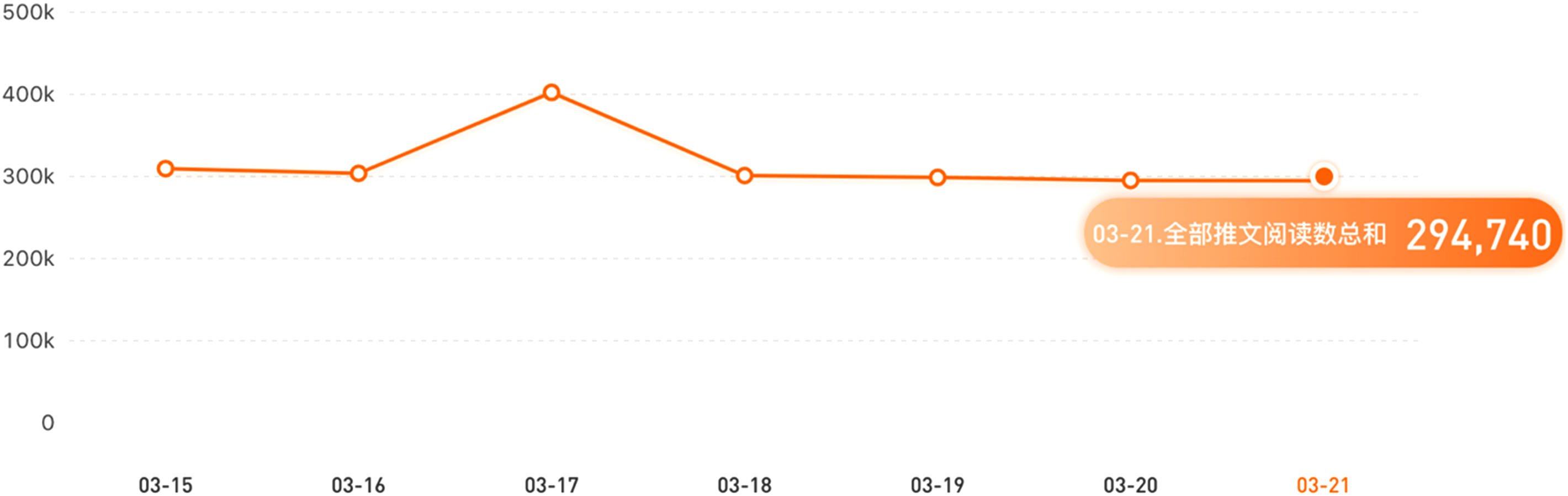
The average daily views of Webmaster Feng's home. Source: Data are available at NewRank's website, https://newrank.cn/new/?account=fgzadmin, accessed 13 August 2021 [registration required].
Aside from the commercial logic, the WeChat public account platform is also guided by politics: as with any platform in China, WeChat negotiates the censorship measures of the state. David Gitter shows how the CCP propaganda apparatus managed the COVID-19 crisis in the first few months of 2020 by ‘shielding central leadership from blame, guiding public opinion via censorship and dissemination of positive narratives, and promoting foreign origin theories to absolve domestic responsibility’. 22 According to the recently renewed Provisions on the Administration of Internet User Public Account Information Services, all Internet service providers are responsible for ‘the security of user-generated content and information’ and should ‘strictly monitor the content posted by public users and take immediate measures when they discover the dissemination of unlawful information’. 23 In practice, WeChat moderates the content of its articles by blocking previously published articles with certain keywords. For example, according to the reports published by the Citizen Lab at the University of Toronto 24 during the COVID-19 outbreak in China, WeChat extensively censored over 2000 keywords related to the coronavirus, including both critical and neutral messages. The keywords covered criticism of the government, rumours, and speculative messages. As revealed by the Citizen Lab, 25 from December 2019 to mid-February 2020, WeChat increasingly restricted mention of the name ‘Li Wenliang’, the Wuhan doctor widely acclaimed as the ‘whistle-blower’ of COVID-19, but who was punished by the local authorities, and later died from the disease himself. Besides Li Wenliang, keywords related to criticism of the government's early strategies for information disclosure and of the Red Cross organization's poor response during the lockdown in Wuhan were also blocked. On the other hand, as COVID-19 eventually spread around the globe, censored keywords also covered country-specific issues related to the pandemic. In particular, the Citizen Lab highlighted censored keywords related to international relations and showed that words associated with US–China relations were blocked more than any other topics. 26 As a result, editors of WeChat public accounts had to constantly conduct self-censorship, revising and deleting parts of their article, in order for the article to be successfully published. 27 This systematic self-censorship resulted in editors’ internalization of the invisible regulations that govern public information, as well as in their alignment with the discourse of the state.
The mixed forces of censorship and monetization deeply impact the style of storytelling and give rise to the production of ‘emotional journalism’ on the WeChat public account platform. As Yan Wu and Matthew Wall argue, WeChat has become a space ‘where political discussion can be readily reported, where the tone of current affairs coverage is often sensationalized, and where the reliability of content can be difficult to discern’. 28 In the following sections, we analyse the ways in which individual experiences of the pandemic were reported on WeChat public accounts, how these writings and visuals are emblematic of the important role that emotions play, and how this is nurtured by the platform logic analysed.
January: Fear, anxiety, and panic
Although the new virus had already been reported by local hospitals, the Chinese Centre for Disease Control and Prevention, and the World Health Organization in December 2019, it was not until January 2020 that news of a highly contagious disease started sending shock waves through the country. 29 The number of WeChat public accounts reporting the outbreak rose rapidly, while more and more stories appeared about the deteriorating situation in Wuhan and the difficult living conditions of ordinary people. The new coronavirus was then transformed from a medical term into a public issue that concerned everyone's lives, in which feelings of fear, anxiety, and uncertainty were time and again articulated, both in words as well as in images.
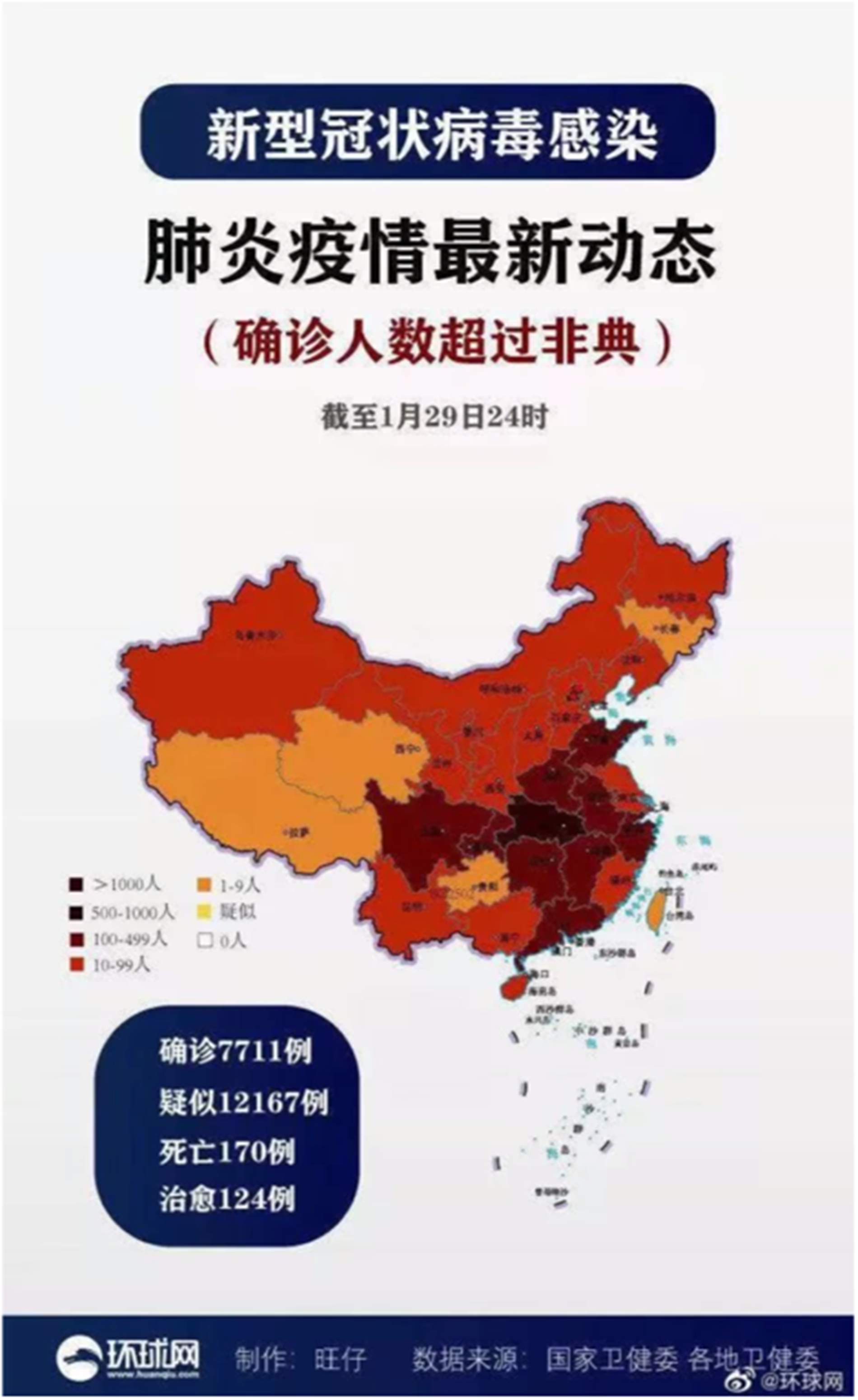
A map of infection rates in China on 29 January 2020. Source: 武汉封城第8天: 这14条朋友圈,早该被曝光了! (The eighth day after Wuhan lockdown: These 14 WeChat Moments should have been posted much earlier!), 30 January 2020, https://mp.weixin.qq.com/s?__biz=MjM5OTYwOTM0Nw==&mid=2650097954&idx=1&sn=127d8a7a049e0b1514f875e88ffadc53&scene=0, accessed 17 January 2021.
One visual device frequently used during January was a map of China indicating which parts of the country were most infected (Figure 2). Based on data provided by the National Health Commission, the maps depicted the density of provincial infection cases using a colour scale ranging from white to red or even black – the darker the colour, the greater the danger. The popular medical WeChat public account hosted by DXY.cn (丁香园) created an interactive map allowing users to view data on cumulative infections, deaths, and cured cases, by province or chronology. 30 One article, using a bold green font, stated: ‘Nine days ago, the number was 291. Nine days later, the number became 7711.’ 31 This simple arithmetic presentation was sufficient to sound the alarm for the threatening, multiplying number of cases, emphasizing succinctly how quickly the disease was spreading. The author continued, ‘During this month, the first thing most people do in the morning is to check the daily updated number.’ Such a turn from hard statistics to quotidian life was also a turn from objective fact to subjective experience, from something out there to something among us. It was no longer about the virus alone, but ordinary people living with the virus. In the same article, the author also used a map from 29 January showing shades of red covering all provinces throughout China. The corresponding text explained that ‘just this morning, the first case of corona was diagnosed in Tibet’. The last piece of white on the map was declared ‘fallen’ (沦陷), a term predominantly deployed to describe enemy occupation in wartime, a linguistic manoeuvre to evoke urgency and intensity, and the impression of a nation under siege. The spread of the virus was rendered tangible in both number and colour – a deepening red. The latter embodies a strong emotional dimension, drawing viewers affectively into the danger of the new virus. It not only produces knowledge about the disease, but more importantly, it produces anxiety and fear.
In the same period, online narratives started capturing the unprecedented urban experience during the Wuhan lockdown. On 23 January, the city (official pop. 11 million) entered a stringent regime in which stores were closed, traffic halted, and residents quarantined at home. In the article ‘What happened to the people in Wuhan after the lockdown?’, images vividly represented real-time situations when highway entrances were shutting down, railway stations were subjected to police control, and streets were being disinfected (Figure 3).
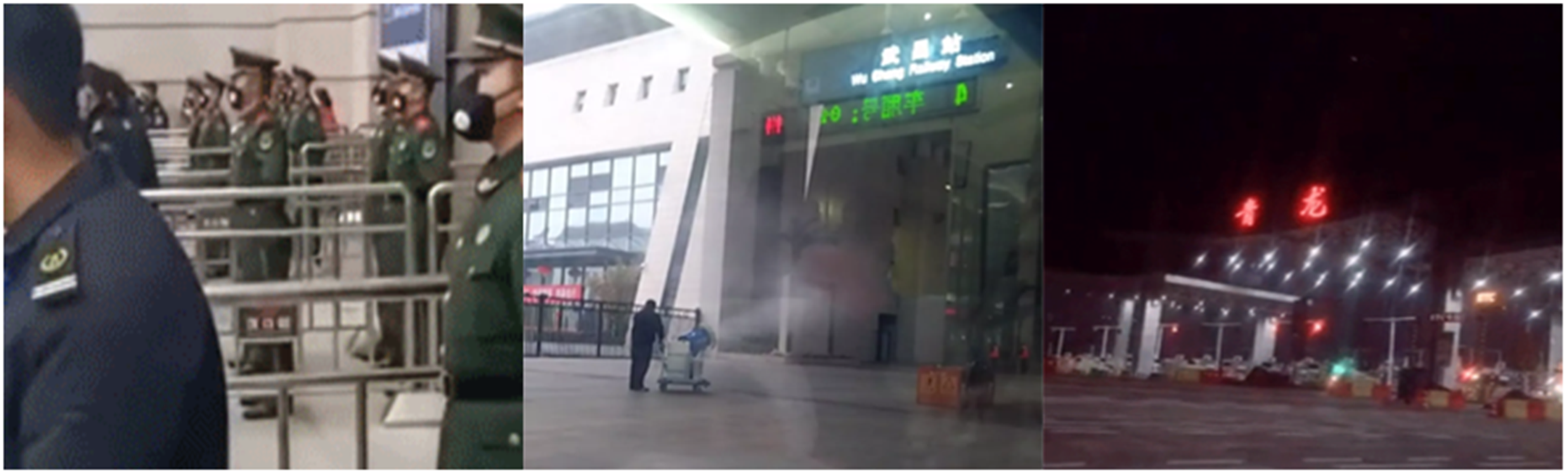
Screenshots depicting the Wuhan lockdown. Source: 武汉封城后,武汉人怎么样了? (What happened to the people in Wuhan after the lockdown?), 23 January 2020, https://mp.weixin.qq.com/s?__biz=MzA4OTI5NDMyNw==&mid=2651727353&idx=1&sn=a2be93d2e9e3313bbd2dc0e04d33b664&scene=0, accessed 13 August 2021.
The city was empty. In one video, we see a huge traffic jam caused by Wuhan inhabitants rushing to leave the city in a last-minute attempt to escape the lockdown. The shaky style of recording, together with the big characters superimposed on the video, convey a sense of chaos, urgency, and DIY media reporting. In stark contrast, the emptiness of the city is eerie and alienating. As the video post comments, ‘Only one or two passengers in the street … it is a completely different world from the usual crowded scene.’ The article includes a short video from Douyin – its remediation adds to the construction of authenticity of the report – to demonstrate the ‘surprisingly lonely atmosphere’ of the city with millions of residents. The user exclaims, ‘For the first time in over 20 years, I heard such a clear sound of birds chirping.’ The reference to emptiness and silence was only to be expected; what was remarkable was how the author explained this emptiness and silence. Instead of linking both to the lockdown measures or to the authorities, the author zoomed in on the city's people, on individuals’ fear of the virus: ‘Wuhan people … rarely go out. Because going out means huge risks. After all, the outbreak is still going on … and no one dares to take the risk.’ Again, the transformation of the city was framed less as a result of administrative apparatus than as an effect of the subjective experience of COVID-19. The author commented, ‘I don't dare to say that the corona virus is scarier than you think. I just want to remind you, please be prepared for it. Because it is really uncontrollable.’ Instead of portraying a scenario where the lockdown measures were enforced precisely to contain the virus, the story and its visual supplements accentuated the danger of the virus, its rapid spread, and the great difficulty of containing it.
Another striking, rhetorical juxtaposition of images presents the empty city alongside overcrowded supermarkets and hospitals. The author cites numerous posts on SinaWeibo and other social media platforms, using individuals’ experience to foreground the stressful lives of Wuhan residents during the pandemic. Multiple images and short videos portrayed the hustle and bustle of supermarkets: crowds with everyone wearing masks, empty shelves, hands frantically reaching out and grabbing food. The visualization and mediation suggest that the images were recorded spontaneously using mobile phones, shaking while the filmers were walking – some bearing the identification of SinaWeibo users, suggesting an act of reposting – all pointing to the ‘reality’ as experienced at the moment by ordinary individuals. Both the amateurism and the remediation are crucial for producing immediacy and on-siteness. Meanwhile, media reports about hospitals in Wuhan also appeared in the articles in the form of animated images or screenshots. The narratives of busy, crowded hospitals were created through photographic displays: equally crowded hospitals with people wearing masks; patients on intravenous infusions on benches in corridors, due to a lack of space; doctors wearing protective gear carrying out consultations, drawing blood, and taking temperatures; and with scenes outside showing tents set up to cope with the increasing number of patients. Similarly, the visual effect is that of a smart phone video. Together with filming with shaky hands and playing at double speed, the article posted reinforces the emotional aspect: rendering the authenticity of the reposted materials unquestionable, with the seemingly non-professional visual representations effectively contributing to the production of emotions of panic, anxiety, and fear.
While this holds the potential for critique, what we observed from the stories we analysed was a legitimization process. This sense of panic, anxiety, and fear, in turn fed into a general understanding of and support for the restrictive policies such as lockdown, home quarantine, and mask wearing. The exposure of dreadful situations juxtaposed with calls for resilience and solidarity became more prominent in February.
February: Solidarity and resilience
After the lockdown was imposed in Wuhan on 23 January, and especially after the news that Beijing was summoning medical teams from other provinces to support Wuhan, fear, anxiety, and panic gradually morphed into solidarity and resilience during the subsequent weeks: to contain the virus, ‘we’ should all unite, follow the health protocols, and respect those heroic medical workers. Among the 36 articles covering stories of medical experts and health workers, most depicted them as national heroes who sacrificed their time and energy, even their lives, saving their patients. This positive twist may well have been orchestrated by the CCP, just as Gitter reports how ‘early February saw the Cyberspace Administration of China … order its local branches to crack down on independent Internet reporting and stick to Beijing's script’. 32
In an article posted on 25 January, the author shows pictures of health workers all over the country signing agreements to join medical teams to support Wuhan. 33 Upon hearing the news about the outbreak, Wu Xiaoyan, a nurse who was already on her way home for Chinese New Year, immediately switched trains and went back to Wuhan, with the reasoning that ‘I haven't got married and don't need to take care of children. While everyone is fighting [against the virus], I can spend a good New Year in the battlefield.’ In another story, a nurse who voluntarily joined the team is quoted as saying ‘If I can cure one patient, then there is less risk of my kids getting infected.’
Similar pictures, stories, and quotations went viral on WeChat and other Chinese platforms. Aside from ‘ordinary’ health workers, more authoritative and well-known doctors and medical experts, such as Zhong Nanshan and Zhang Wenhong, there were also recurring figures. We encountered similar versions of the same story: how Zhong Nanshan, the 83-year-old expert who led China's expert team to contain the SARS epidemic in 2003, resolutely went to Wuhan to investigate the situation when most people were attempting to flee the city. We saw a personalization process unfold; by attributing a story to specific figures, people with a name, a face, gender, and age (83!), its emotional impact is intensified.
This personalized sense of collective solidarity ushered in the emotion of resilience that became prominent in February. Take, for example, Figure 4, a close-up of someone purported to be a doctor. From its settings of tone, shade, and depth of field, the observer feels that the photo was taken in the portrait mode of a mobile phone. With the subject of this portrait being captured from a top–down angle, the image provides a snapshot of what was happening. Its aesthetics evokes a sense of emotional intimacy, as if the viewer is actually taking the picture.
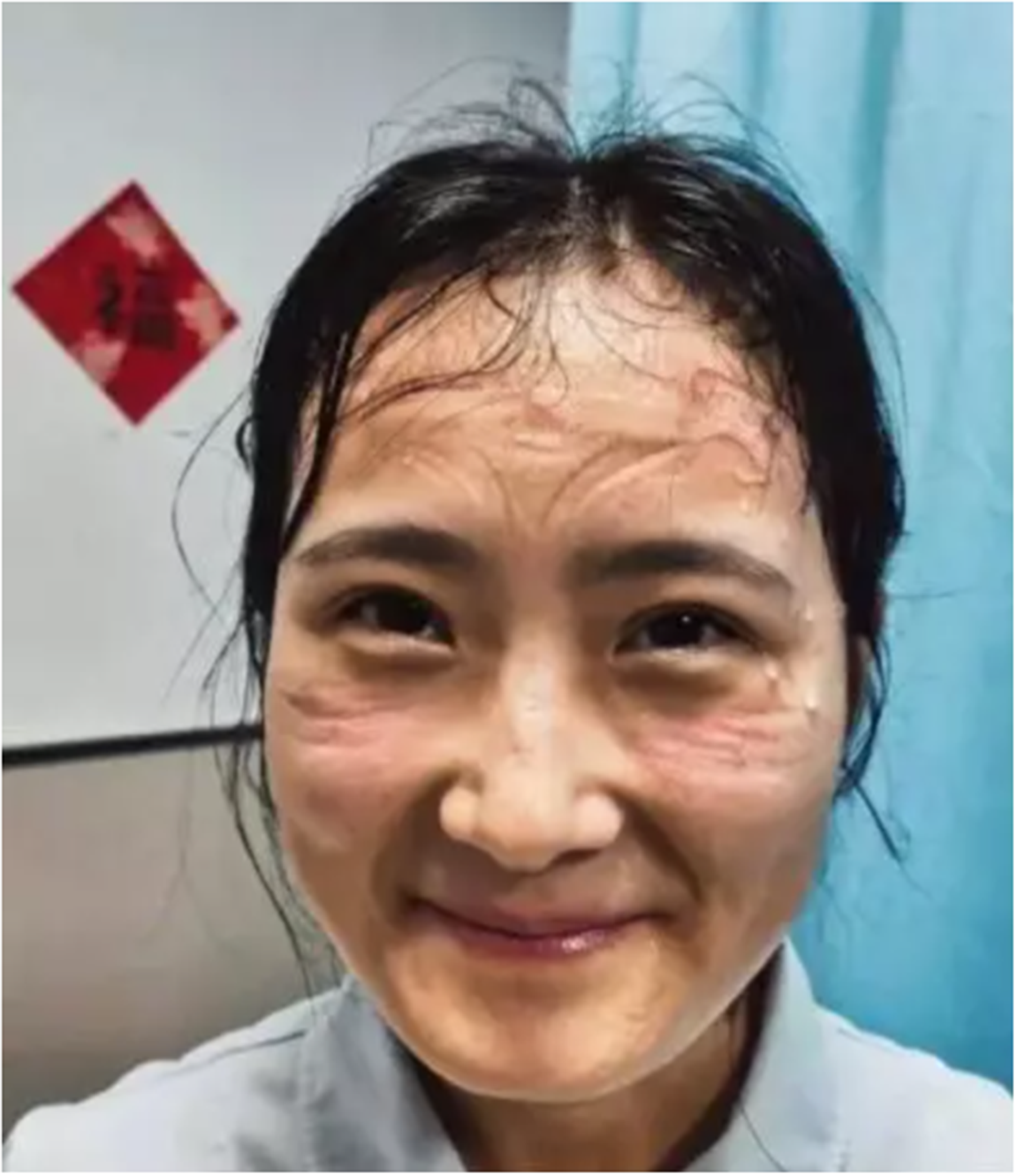
‘I don't dare to read doctors’ posts’ I. Source: ‘我不敢看医生的朋友圈 …’ (‘I don't dare to read doctors’ posts on WeChat Moments …’), 12 February 2020, https://mp.weixin.qq.com/s?__biz=MzAwMDI5OTI1OA==&mid=26528 90582&idx=1&sn=cf0771593ec51e71325a6cf4aaa191a2&scene=0, accessed 13 August 2021.
In the photograph, the doctor's face is so close to the camera that it forces the viewer to notice every detail: her hair, dampened by sweat, looks untidy; her skin shows clear marks – a result of prolonged wearing of a surgical cap, goggles, and mask; and sweat droplets are running down her cheeks. We see someone in action, and the camera captures the moment when the doctor has finally removed her goggles and mask after a long day's work. The visual elements – dampened hair, criss-crossed marks, and droplets of sweat – emphasize the physical exhaustion of the doctor. This is, however, not the end of the story, because we can also see how her exhaustion distinctly contrasts with her bright eyes and smile, conveying a tenderness and composure presumably generated by a heroic act of devotion. It portrays resilience in a time of crisis.
In addition to health workers, people from other professions and ordinary citizens also featured in the most popular online narratives. In one article describing the living conditions in Wuhan, food couriers, construction workers, and convenience store operators are praised for being cooperative and dedicated, ‘sacrificing the precious opportunity of a family reunion during the Chinese New Year’ to ‘help out with logistics in the war against the virus’. 34 For example, a 42-year-old retired soldier, with 5 tons of vegetables donated by his fellow farmer villagers in Henan Province, drove to Wuhan on Chinese New Year's Eve. Shanghai residents donated tasty snacks, cakes, and bubble tea to local hospitals and factories in North-East China, and worked overtime to produce and deliver medical supplies to Hubei, the most affected province, where Wuhan, the epicentre, is located. Celebrities such as Han Hong, a popular Chinese singer, and several business entrepreneurs actively volunteered to organize donations and deliver supplies to Wuhan. Light-hearted stories also documented how some online classes of primary schools turned into comedy shows in which old-fashioned teachers, unfamiliar with digital tools, made funny mistakes. 35 While the lockdown meant that most Chinese people were stuck at home, it also brought some comic relief with videos of people counting sunflower seeds or vehicles on the highway to kill time; imagining themselves on a sunny beach holiday while lying on their couch in the living room; and arguing with their mother or partner over trivial matters.
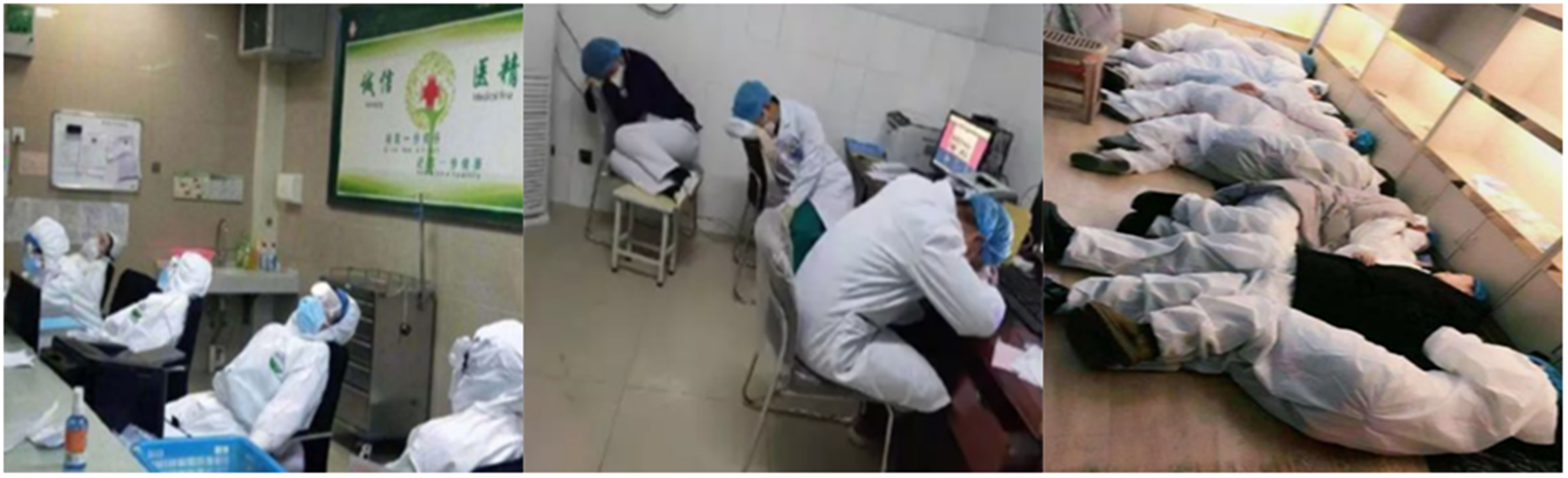
Compared with the earlier stories analysed, Chinese individuals were now depicted as less frightened, but dedicated and heroic, and thus more resilient. Stories, often written in hyperbolic language, were complemented by ‘imperfect’ or low-fi visual content, such as screenshots of posts on WeChat public accounts, photographs taken on phones, and reposted news photos or cartoon drawings. The immediacy and urgency thus evoked were intended to enhance the emotional dimension, particularly of people working very hard to combat the virus. We see medical workers resting wherever they could (Figure 5). We are invited into moments of authenticity and privacy, feeling at once their exhaustion and dedication, and wishing them a good rest before they resume their shift.
‘I don't dare to read doctors’ posts’ II. Source: See Figure 4, ‘我不敢看医生的朋友圈 …’.
This strong sense of resilience is vividly illustrated in another article, in which a boy whose parents joined a medical team in Wuhan cried in front of the camera (Figure 6). It feels bad to stay alone at home. I’m lonely. Then how do you deal with it? Take a deep breath.

A boy in front of the camera. Source: 疫情面前,如果你熬不下去了,请看看他们. … (In the face of the pandemic, if you cannot endure the difficulties, please take a look at them. …), 6 February 2020, https://mp.weixin.qq.com/s?__biz=MjM5MDMyMzg2MA==&mid=2655584322&idx=1&sn=cfa85c4ecf20f 581b22fb4445768fd54&scene=0, accessed 13 August 2021.
In the same article, a young couple working in a local hospital is seen hugging each other, and the composition of the image suggests it was captured by a CCTV camera (Figure 7). Wearing heavy protective suits, the couple did not recognize each other in the beginning. The author commented: Our safety is built on the separation of numerous small families. If you and your loved ones are separated because of the pandemic, then we have to wait patiently, because on the front line of the battle, there are people, who also have loved ones, suffering even more. Be patient and we will see our partners. A couple, working at a local hospital, hug when they recognized each other.
Source: See Figure 6, 疫情面前,如果你熬不下去了,请看看他们. … May your tragedy awaken a sense of shame, responsibility and nobility May the wrongdoers be willing to admit their mistakes May they stop fighting for credit and blame … May officials be more responsible, like dignified scholars, like statesmen with style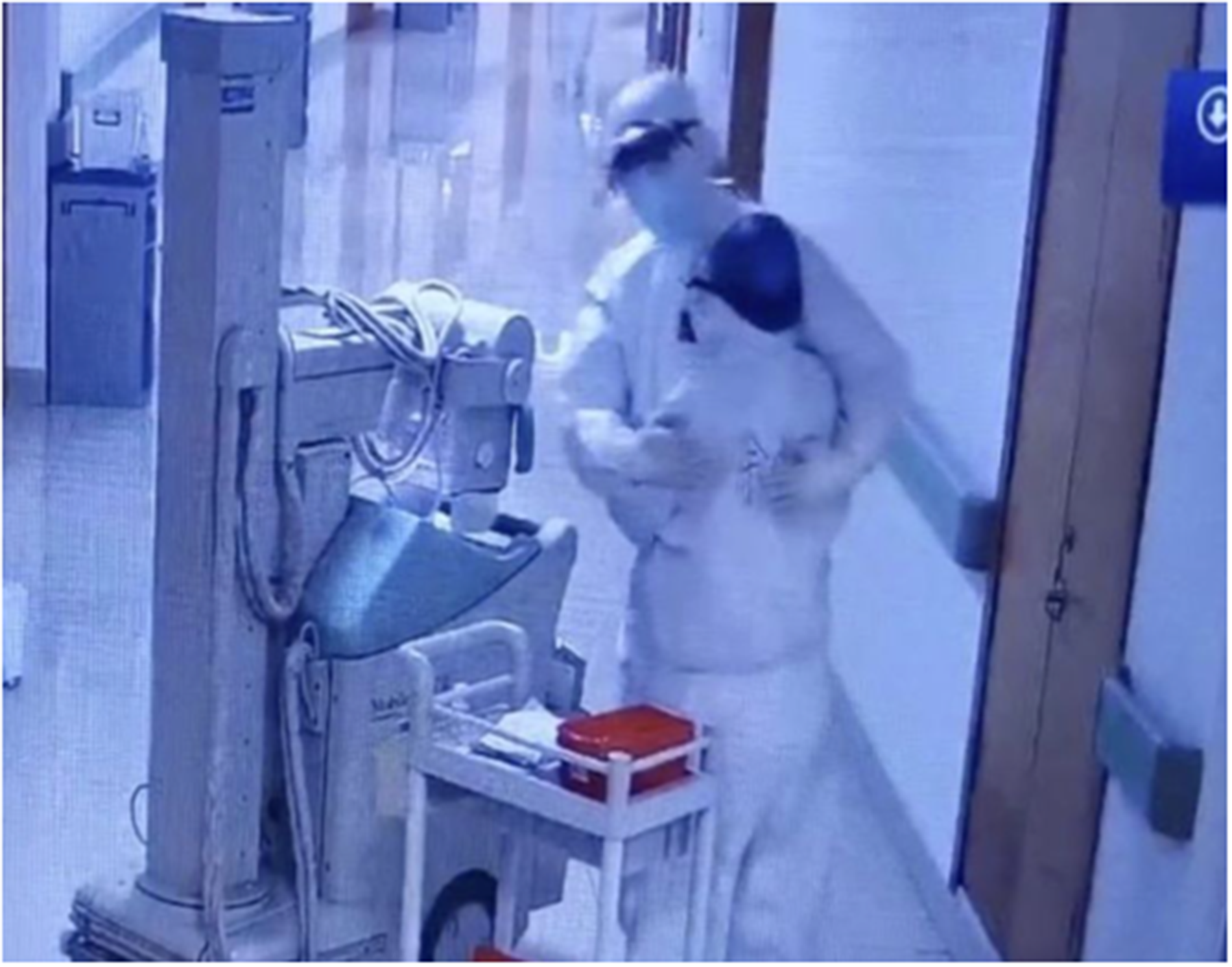
Here the authorities are being reprimanded, albeit in a mild tone. As research has shown, soon after the circulation of news surrounding Li Wenliang, censorship intensified significantly. 38 In summary, if fear was the foremost and perhaps most intuitive emotion elicited by the virus, then it was solidarity and resilience that followed in February.
March: Hope, vindication, and pride
While the first two months of our analysis saw expressions of fear, despair, and anger, morphing into resilience, unity, and also doubt, the third month of 2020 ushered in a sense of vindication and national pride, churning and turning collective mischief and elation into a sense of hope. The emotional change indexed the more uplifting news that in China the spread of the virus finally seemed to be decreasing. In addition to posting stories directly citing this success of crisis management, the WeChat public accounts under analysis also started to shift their focus from domestic China to overseas, especially the United States and Europe. In fact, from the most widely read stories we analysed, the most popular sentiment was not so much about China's success story, but rather the failure of the West. 39 Stressing, with hints of sarcasm, that the outbreak was only just beginning there, the stories in effect increasingly reframed the issue of the pandemic as a global concern. In particular, they were fond of making comparisons with China's most prominent Other – the United States. This act of comparison boosted and renewed people's self-confidence with a release of vindictive feelings towards other nations. And this happened with different degrees of national pride. Manifesting a milder form of nationalism, one article reported how global celebrities spent their time in quarantine. 40 The images, ranging from the Backstreet Boys and Tom Hanks to Madonna and Prince Charles, depicted the stars sheltering, many of them in their luxury mansions. Both glamorous and mundane images, we see Arnold Schwarzenegger riding his bike in a garden and playing with his ponies, and Madonna writing on a typewriter, insisting on the importance of ‘being creative’ in these difficult times. The images were often retrieved from the Twitter or Instagram accounts of the stars, attesting, on the one hand, to how censored media content still finds its way into Chinese households through remediation, and on the other, to the ways that Western stars seem to speak to the Chinese popular imagination as being spoiled, extravagant, and totally beyond the reach of the harsh realities faced by the rest of the world. If Western stars are like that, Western societies must be the same.
This story illustrates the general emotional response to the West. While Western stars posted their images intending to underscore their resilience and hope for a better future, Chinese renditions and remediations question their good intentions, their ignorance and arrogance, and their conspicuous show of affluence. The author writes about Brian Littrell, member of the Backstreet Boys, as follows: ‘Brian is wearing LV pyjama pants to laugh at those who are dying’. The author also refers mockingly to the private basketball court of rapper Drake, and the crocodile pets of Jennifer Lopez. The author cites the critique by netizens that ‘their isolated life in a mansion or luxury yacht must be very “difficult”, I really do not know how they “survive”!’ 41 This popular post on a WeChat public account goes on to observe that for the first time in two years, Queen Elizabeth and Prince Philip were living together in the same castle. The ironic undertone remains throughout the article, as if noting, somewhat mischievously and elatedly, how badly they are doing, and how well Chinese citizens are actually doing. The hapless West compares poorly with a hopeful China. The cheerful lives of American and UK celebrities and royals in quarantine are mocked and the celebrities themselves are turned into laughing stocks, thus fostering a sense of cultural difference and subsequently national pride. When the author concludes with the line ‘Spring is in the air and it's looking better and better, have fun and see you all next week’, the public is encouraged to share the winner's smile: those strange American celebrities, look at them. The tabloid, gossipy style of the report, quickly jumping from one celebrity to another, further strengthens the mischievous, ironic emotional undertone.
One popular story, posted on 30 March, assumes a more cosmopolitan perspective, in the sense of critiquing both China and the rest of the world. The text is written as a witty, fluent, and rhetorical poem, thus strengthening the emotive impact. It is a very long poem, in which the writer expresses how he realizes that not only China but all countries have failed to respond adequately to the pandemic
42
: When the novel coronavirus was spreading in China The whole world was laughing at China The quality of Chinese citizens is low The quality of Chinese officials is low But it was not until after the novel coronavirus spread around the world that I realized that It turns out that people all over the world share the same qualities
The author then reflects upon news images that are interspersed throughout the poem, thus interlacing the poetic and reflexive with the real and tangible. Images of empty supermarkets are used to drive home the universal experience of panic buying and real scarcity that not only affected China. The naivety with which European governments responded to the virus threat is also mocked: When China was fighting the epidemic They spent all their energy on laughing at China As a result, the most opportune moment to prevent the epidemic was missed You don't know the pain until the whip falls on you
Then the poem moves on to politicians, such as Boris Johnston, asserting that ‘the world's bureaucrats are the same’. The comparison continues, claiming how a lockdown in Wuhan is read by the New York Times as a violation of human rights, while a lockdown in Italy is praised as protecting Europe. The poem concludes with a critique of the West: Foreigners like to say that Chinese people have no quality We Chinese ourselves also think that Our quality is really inferior to that of Europeans and Americans But this new epidemic has made us see clearly that The quality of Europeans and Americans is just the same Many Europeans and Americans are not even as good as us
The discourse of suzhi (素质, roughly translated as quality or calibre) is brought into the narrative to debunk the pervasive idea that the West is the best. This popular text performs a rhetorical trick: shifting from how badly they treat us, to how we are equally bad, and finally to how good we are. It does so not by argumentation, but by moving us emotionally. Look, what the pandemic shows is not only how governments around the world fail, but also that China may have done better.
If the aforementioned text and images embody a mild form of pride, even a more complex expression of hope, other popular articles we gathered are more blatantly nationalistic. One article carries a strong emotive, angry undertone, relating the incidents of violence against Chinese people in other parts of the world, generally assumed to be in the aftermath of attributing the virus to China and the Chinese.
43
Using screenshots of newspapers from the Western world as ‘proof’, the article claims that The Wall Street Journal published an article titled ‘China is the real sick man of Asia’, using the pneumonia epidemic to smear China. … A Canadian media outlet, The Province, even wrote ‘China virus’ on its front-page headline. … A French newspaper has a ‘yellow warning’ on its front page in big letters.
The text continues by listing actual cases of racist abuse in different cities in the West – cases that, of course, also disturbed and enraged overseas Chinese communities around the world.
This feeling of anger is, not surprisingly, connected to the century of humiliation described in another article, entitled ‘This is a world war sweeping the globe’.
44
The opening line of this article claims, in a quite bombastic way, how ‘weakness and ignorance are not obstacles to survival, but arrogance is’. It then moves on to present a brief history of the ‘century of humiliation’, which started with the Opium Wars.
45
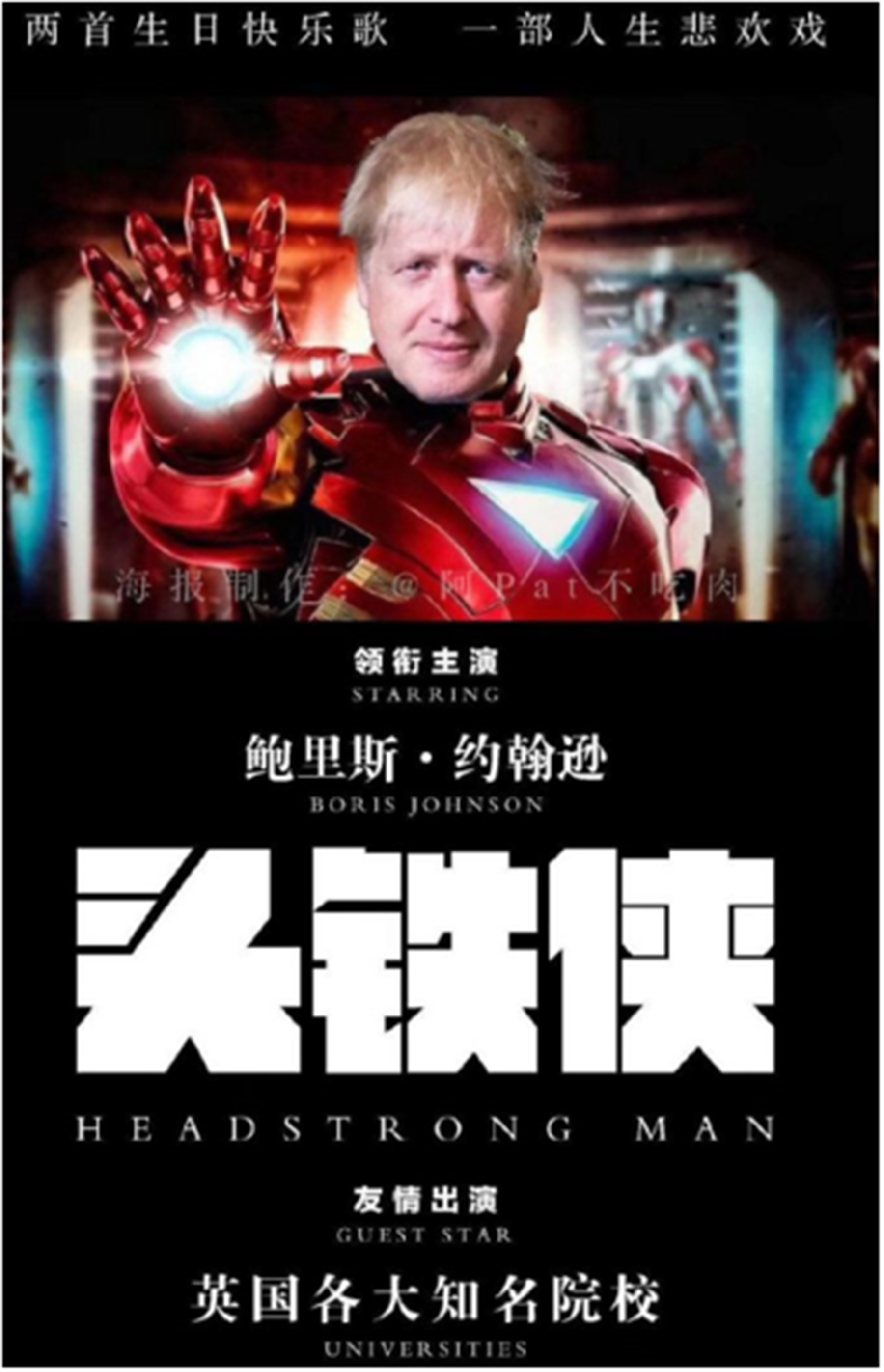
Very quickly, the article morphs from this well-known narrative of national humiliation to what we noted earlier in other stories: a new chapter of vindication, pride, and hope. It goes on to explain how poorly nations such as the United States, the United Kingdom, and even Singapore have performed during the pandemic. Statistics, growth curves, and news reports are cited to demonstrate the severe situation in the United States and Europe, and their inefficient response to the pandemic. In contrast, the article claims that ‘the outbreak in China has been subsiding’ and, more importantly, ‘the Chinese model is the only way to contain the coronavirus!’. The narrative is interspersed with memes, screenshots, and statistics. The writer criticizes Boris Johnson for being careless and refers to a television show; the author writes that According to a British television report, Boris was saying many days ago he had visited people infected with the novel coronavirus and shook hands with every positive confirmed patient. This is to prove to the nation that the novel coronavirus is not scary and to show off his courage and responsibility as the Prime Minister.
A meme is added in which Boris Johnson is caricatured as ‘Headstrong Man’, a wicked appropriation of the Marvel comic book hero Iron Man. Here, Hollywood merges with a UK politician in global geopolitical mockery, announced on a poster advertising an imaginary film (Figure 8). We can almost see people clapping and cheering, not for a hero but for a joker.
A meme of Boris Johnson as ‘Headstrong Man’. Source: 美国航母沦陷,英国首相确诊,新加坡模式崩溃,这是一场席卷全球的世界大战. (American aircraft carriers were [crippled by COVID-19], British Prime Minister was tested positive, Singapore model has failed, this is a world war sweeping the globe), 29 March 2020, https://mp.weixin.qq.com/s?__biz=MzU5MzcyMzc2OQ==&mid=2247490587&idx=1&sn=5edfa4a629d037f14054392ca204a564&scene=0, accessed 14 August 2021.
Apparently, the early fear and anxiety was now replaced by a sense of pride, echoing the biopolitical nationalism noted by Jeroen de Kloet, Jian Lin, and Yiu Fai Chow, who argue that ‘the geopolitical entities [China in this case] that control the “best” are being celebrated and praised, and those that fail to control are looked down upon’. 46
By the end of the month, this self-confident nationalism became apparent, as indicated clearly in the title of the article: ‘China is saving the world! The United States is unable even to fend for itself! The world has really changed!’
47
The article also refers to the Chinese blockbuster film Wandering Earth, celebrated as China's first sci-fi movie, but criticized for being fake and not as good as the ‘real’ Hollywood. But how swiftly things can change, the author observes: now it is China that sets the best example. As the author writes: The world has really changed! China has taken on the role of a responsible world leader The United States, however, has become a self-centred country
The highly infectious coronavirus has posed a severe threat to public health and the normal life of every citizen throughout the world. Together with the pandemic, as we have illustrated so far, there was also an ‘infodemic’; more than facts and information, it was emotions that predominated in the most-read stories on the WeChat public account platform. The production of these emotions, as shown in this article, was by no means a mere result of fact-based journalism but was implicated in the political economy of WeChat public accounts. Sensational language meets the logic of platform capitalism, while the regime of censorship contains this emotional journalism within a ‘safe’ range, dovetailing with the state's management of the Internet and public voices.
Conclusion
We end by fast-forwarding a year after the unfolding of the COVID-19 crisis in China. An exhibition opens in Wuhan, commemorating those who lost their lives and celebrating the successful fight against the virus led by the CCP. The exhibition is free yet the hall is empty, according to a report in a Dutch newspaper. 48 Instead of focusing on the suffering of the people, the exhibition celebrates the army, doctors, local leaders, and above all the CCP. The report on the unpopular exhibition is printed alongside an interview with renowned Wuhan-based documentary maker Ai Xiaoming. She argues for a monument in Wuhan against forgetting, so that the voices of the victims will not be forgotten. ‘Otherwise’, she says, ‘only the narrative of the government will remain.’ In line with her own documentaries, Ai appeals for a focus on the stories of individuals, because such individual stories will open up history, produce more memories, and help to counter the dominant stories as told by the CCP.
What we have witnessed in our analysis, however, is how personalized stories are abundantly being reposted via WeChat public accounts. In these stories, emotions, rather than facts, are the driving force. The form of mediation – shaky camerawork, hasty, imperfect, and reportage-style images and stories, and texts presented as poems – evokes a sense of vitality, immediacy, and intimacy. While we agree with Ai that more individual stories should be told to avoid forgetting what has happened, we have also witnessed how such individual stories are time and again orchestrated in the art of nation-state maintenance. And as we have shown, these stories are produced not so much by individual authors but rather by commercialized WeChat public accounts with the aim of generating online traffic and revenue.
Embedded in the platform logic of WeChat public accounts, we identified an evolution of emotions underlying these analysed stories: feelings of fear, anxiety, and panic gradually morphed into solidarity and resilience, subsequently turning the inward-looking outwards, especially towards the Western world, feeding into feelings of hope, vindication, and pride. This paved the way for outbursts of biopolitical nationalism and, subsequently, vaccine nationalism across the world. 49 While voices of dissent (as in the tragic case of Li Wenliang) may emerge, they are bound to be folded back into a much more pro-government discourse, partly by the forces of censorship, partly by the logic of platform capitalism, and partly by the power of nationalist netizens. 50 We know that we are risking accusations of cultural exceptionalism, and we do want to posit that similar forces can be seen in other parts of the world, on different but like-minded platforms. What sets China apart, however, is the ubiquity of the WeChat platform in combination with the political economy of its underlying infrastructure, which includes the profound reach of the state. 51 With profit-making as the underpinning logic of social media platforms, in tandem with a regime of censorship that tirelessly monitors and filters discontent, the incorporation and erasure of any dissenting voice and emotion may not seem surprising. What our research has exposed, however, following the emotional turn in journalism studies, is the urge to probe into the production of emotions on social media in China. Quite simply, we should document and examine how the virus, social media, and the existing powers work through emotions.
A question for future research is how such stories and the interactions aroused by these stories constitute a public, and whether such a public holds the potential for resistance. In her study on the political potentials of Twitter, Zizi Papacharissi argues that ‘media do not make or break revolutions, but they do lend emerging, storytelling publics their own means for feeling [emphasis added] their way into the developing event, frequently by making them a part of the developing story’. 52 For example, Twitter produces publics that ‘evolve beyond the conventional mode of rational thought and deliberation. As affect mini-worlds, they invite a publicness that is politically sensitized yet generally dismissive of normatively defined political consciousness.’ 53 But on the WeChat platform and in China, a revolution did not happen; on the contrary, the period from April 2020 onwards, one that falls beyond our analysis, has witnessed an increasing support and celebration of the CCP's success in containing the virus. As Bruce Dickson concludes, ‘What might have undermined popular support for the CCP instead created support for it and strengthened popular doubts about the suitability of democratic government for China.’ ‘The CCP not only survived COVID-19, but its position may have even been strengthened by it.’ 54 Why is this? Where are the political potentials of emotions produced and circulated on WeChat public accounts? What is the role of individual users in this online public? Informed by our analysis, we argue for further studies into the public, to include and understand this front of potentiality, and its limitations.