



Abstract
Despite insufficient attention, children have the right to a quality educational environment that respects their need for privacy and is designed with their participation. The study aims to seek how to design better private space in kindergarten with the help of the children’s perspective. Spatial typologies created by scrutinizing kindergarten environments have been submitted to children’s evaluation. In the participatory study conducted in one private kindergarten in Turkey, 20 children aged 5 to 6 have conveyed their thoughts through drawings, group and individual interviews. Data analysis shows that private spaces that have escape holes, allow personal choices, formable, relate its form to confidence and imagination, and provide comfort, support children’s privacy needs. Design proposals for spatial typologies have been developed to contribute to academic and practical fields by discussing the impact of this issue on child development.
Introduction
Participatory approaches, which gained prominence following the United Nations Convention on the Rights of the Child (1989), recognized that to understand children’s needs, their perceptions and experiences must be understood, and they must be given the opportunity to share their own experiences (UNCR, 1989; Holmes, 2005). The necessity of children’s participation in research processes for the development of educational environments that support early childhood development and reveal the opportunities they desire has been emphasized in several studies (Hart, 1994; Kim, 2017; Kjørholt, 2002). However, it has also been criticized that there has been little research into listening to children’s voices to improve the spatial quality of these environments (Clark, 2010; Economidou et al., 2023; Ghaziani, 2008).
One of the important spatial requirements in kindergartens is that children can find or create space when they need for privacy (Lowry, 1993; Skånfors et al., 2009). The provision of spaces for privacy in kindergartens contributes to the discovery of the child’s abilities (Ota et al., 1997), spatial autonomy (Proshansky and Fabian, 1987), emotional development (McGibben, 2017; Nissen and Hawkins, 2010; Wolfe, 1978), the formation of autonomy, identity, and self-esteem (Erikson, 1993; Harvey, 1990; Sanoff, 1995; Wheeler, 2004), the protection of mental and psychological health (Lowry, 1993), the strengthening of social relationships, the increase of self-confidence (Laufer and Wolfe, 1977; Rieh, 2020), and the development of concentration and self-discipline (Lynch, 2017). These spaces are also places where adults have many childhood memories (Dovey, 1990; Rieh, 2020). However, it is noted that the importance of these places, which are very valuable in children’s inner world, is neglected in kindergartens (Burke, 2016; Olds, 2001; Wolfe and Rivlin, 1987; Zeegers et al., 1994). The few child-centered researches that have focused on this issue have addressed aspects related to how to design better these space for children by observing children’s play behavior (Corsaro, 2017; Corson et al., 2014; Kirkby, 1989; Lowry, 1993; Lynch, 2017; Skånfors et al., 2009), their impact on their social and emotional development (Corson and Colwell, 2013; Sandseter and Seland, 2016), the emotions with which they are made meaningful and how they are perceived and experienced (Corson et al., 2014; Green, 2011, 2015), and the ways in which they can be created (Colwell et al., 2016; Maxwell et al., 2008). However, as far as the authors are aware, the studies do not present the typology of these spaces - a systematic classification of types of space - and do not evaluate these spaces from children’s perspectives. In order to fill this gap, this research aims to create typologies of private spaces in kindergartens for the first time and to identify themes that reflect children’s perspectives by focusing on how children evaluate the quality of private space typologies defined in kindergartens.
The research seeks to answer the following questions: Can typological diversity be defined by examining the private space designs created in kindergartens?, Can preschool children’s preferences and interests differ with respect to the created space typologies?, Can the criteria that are important for them in the design of these spaces be achieved through children’s reflections on private space alternatives?
Background: Private spaces in kindergartens
Kindergartens are generally designed for children to be kept under constant supervision in a safe confinement (Zeegers et al., 1994), to participate in collective activities designed to promote their social development and to follow daily schedules planned by adults (Corsaro, 2000; Lynch, 2017). Thus, children find themselves in a highly stimulating environment over which they have no control. If the child is exposed to more stimuli than he/she wants, he/she feels a strong need for privacy to escape from intense play or conflict, or to adapt to a new activity that he/she has not yet discovered (Lowry, 1993; Olds, 1987). Privacy can be achieved by the child having some control over the physical environment (Altman, 1976). However, when it is understood that privacy is a broader concept than the child being alone, the child’s need for supervision and privacy can be balanced. Four types of privacy can be defined: auditory, visual, territorial and total. To ensure auditory privacy, children seek out environments where they can control access to information, where they can share secrets with their friends, and where they can engage in quiet activities (Olds, 2001). Furthermore, Corson and Colwell (2013) state that secrets are associated with private spaces, which supports the importance of auditory privacy. As Appleton (1975) has argued in his Prospect-Refuge theory, environments that offer opportunities to observe (prospect) without being seen (refuge) provide visual privacy by giving children choice and control over the physical environment. Children make connections between private spaces and the game of hide and seek, where visual privacy is inherently valuable (Corson et al., 2014; Day, 2007). In addition, the fact that children hide in places where they can be seen by their teachers, but in a way that they can control, highlights the importance of the balance between supervision and privacy (Colwell et al., 2016). Territorial privacy refers to having one’s own special place or controlling access from outside to protect shared activities (Olds, 2001). Children may use their private space alone or with a few close friends to read, play quietly or just talk (Corson et al., 2014; Sobel, 2002). Children seek privacy to protect the play organization they have created in their private spaces (Corsaro, 2017; Skånfors et al., 2009). In addition, children tended to find or create special places that they felt were their own, which strengthened their sense of place attachment (Rieh, 2020). Total privacy is when the child is left completely alone. Therefore, spaces in kindergartens, which can be designed by changing different spatial parameters, should serve various purposes by satisfying the four types of privacy (Olds, 2001).
Overstimulated children sometimes use a variety of withdrawal tactics while still in the group, such as refusing to talk to peers, being unresponsive, or reading, rather than finding or creating a physical space to escape the situation (Skånfors et al., 2009). However, the provision of rich play equipment and spatial diversity in kindergartens, both indoors and outdoors, helps children to find their private space (Colwell et al., 2016; Lynch, 2017). Several studies looking at different directions of privacy suggest that children use under stairs, upstairs, soft enclosed seats, small window seats, niches, platforms, hiding places, corners, in a box or barrel, passageways, forts, huts, tree or bush houses, and behind natural landscape elements as their private space (Burke, 2016; Day, 2007; Hart, 1979; Moore et al., 2019; Olds, 2001; Osmon, 1971; Sobel, 2002). In kindergartens, spaces for privacy can be created by designing the shapes of the structural components (e.g., walls, hedges) that define the space (Day, 2017). It was also observed that children constructed their private spaces using tables, chairs, cushions, loose objects (e.g., stackable blocks, tyres, cardboard boxes) and organic landscape elements (e.g., straw bales, bushes, weeds) (Colwell et al., 2016; Day, 2007; Maxwell et al., 2008; Osmon, 1971).
Method
Review of previous projects
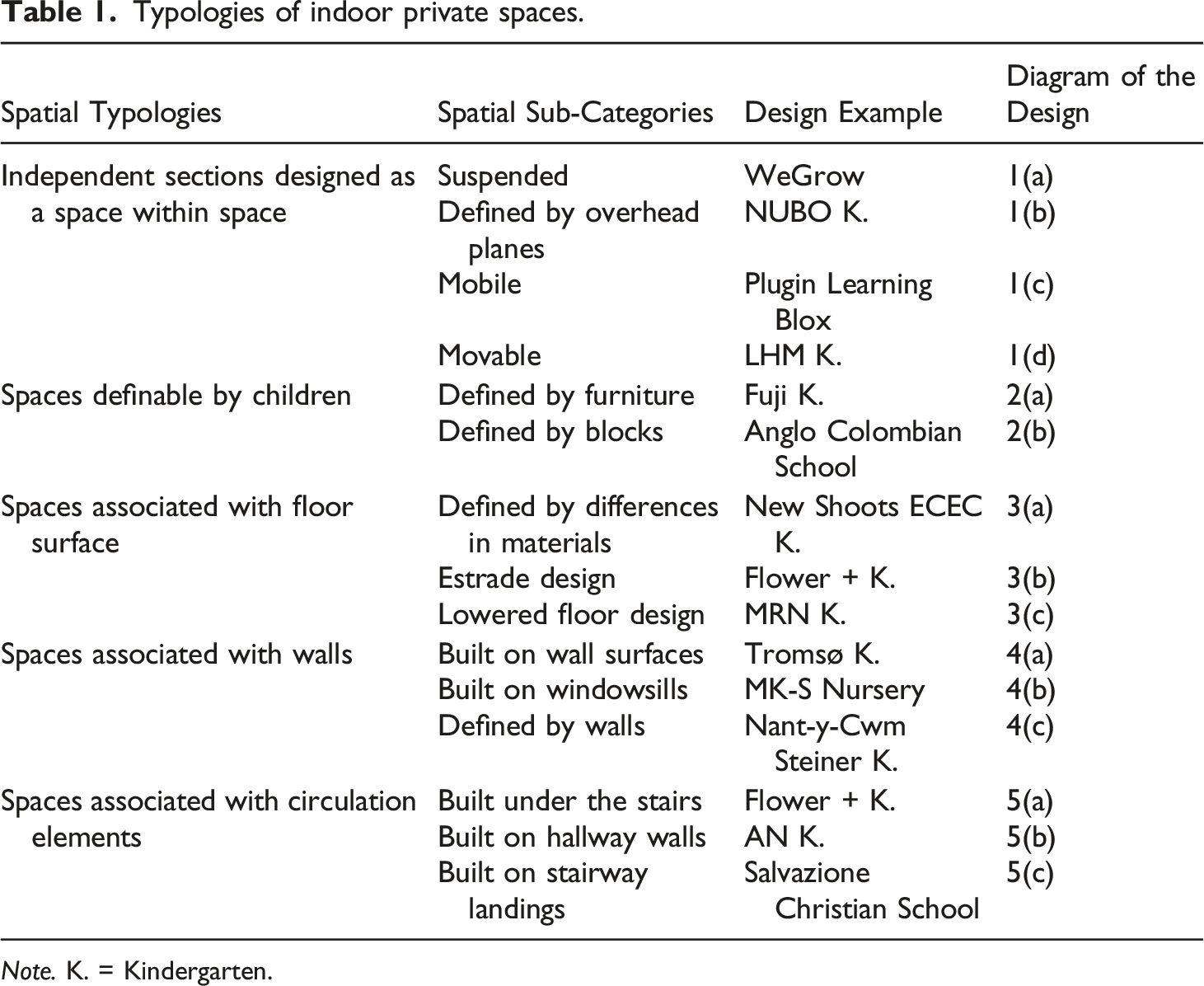
Typologies of indoor private spaces.
Note. K. = Kindergarten.
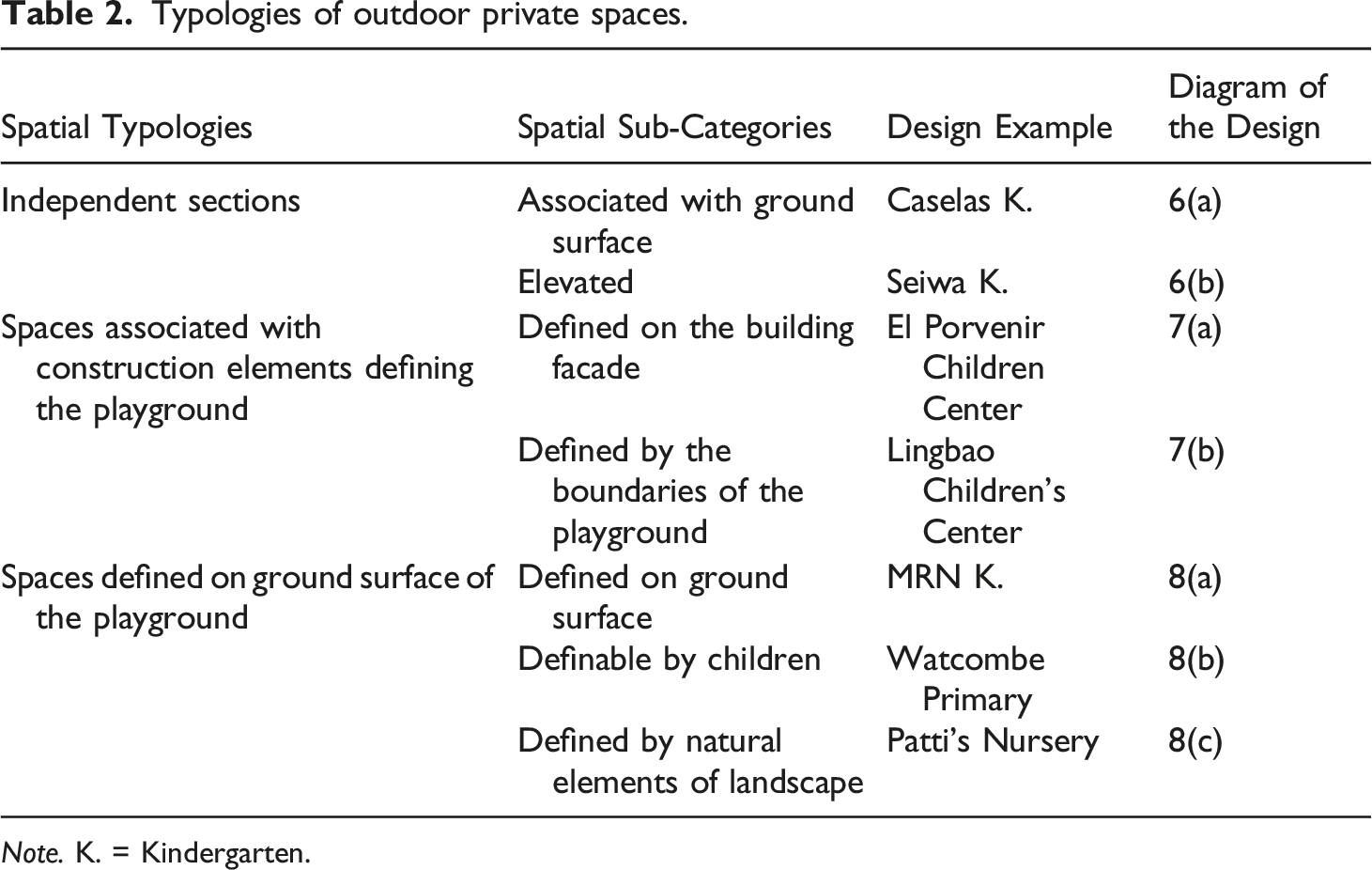
Typologies of outdoor private spaces.
Note. K. = Kindergarten.
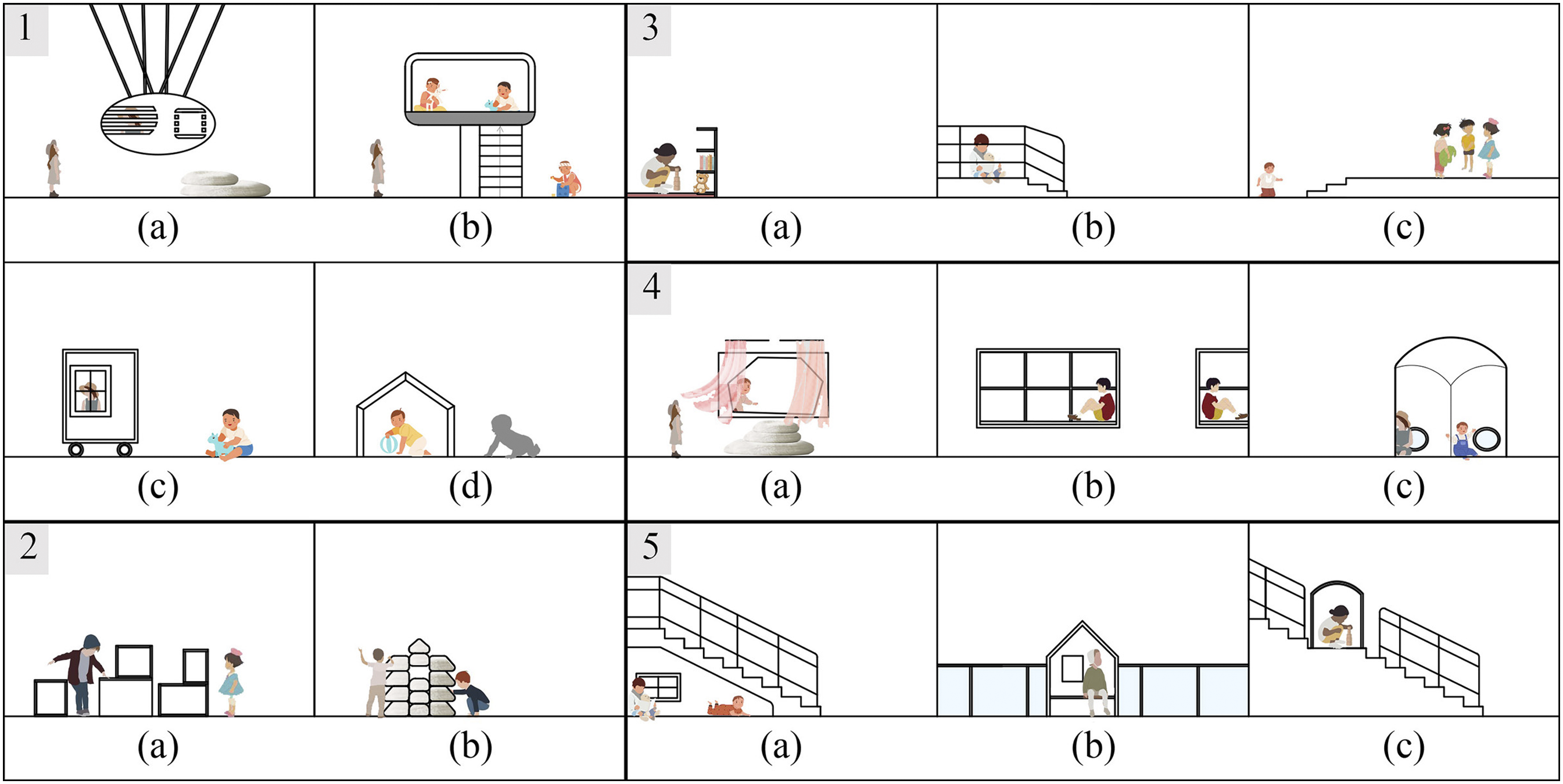
Diagrams of indoor private space typologies.
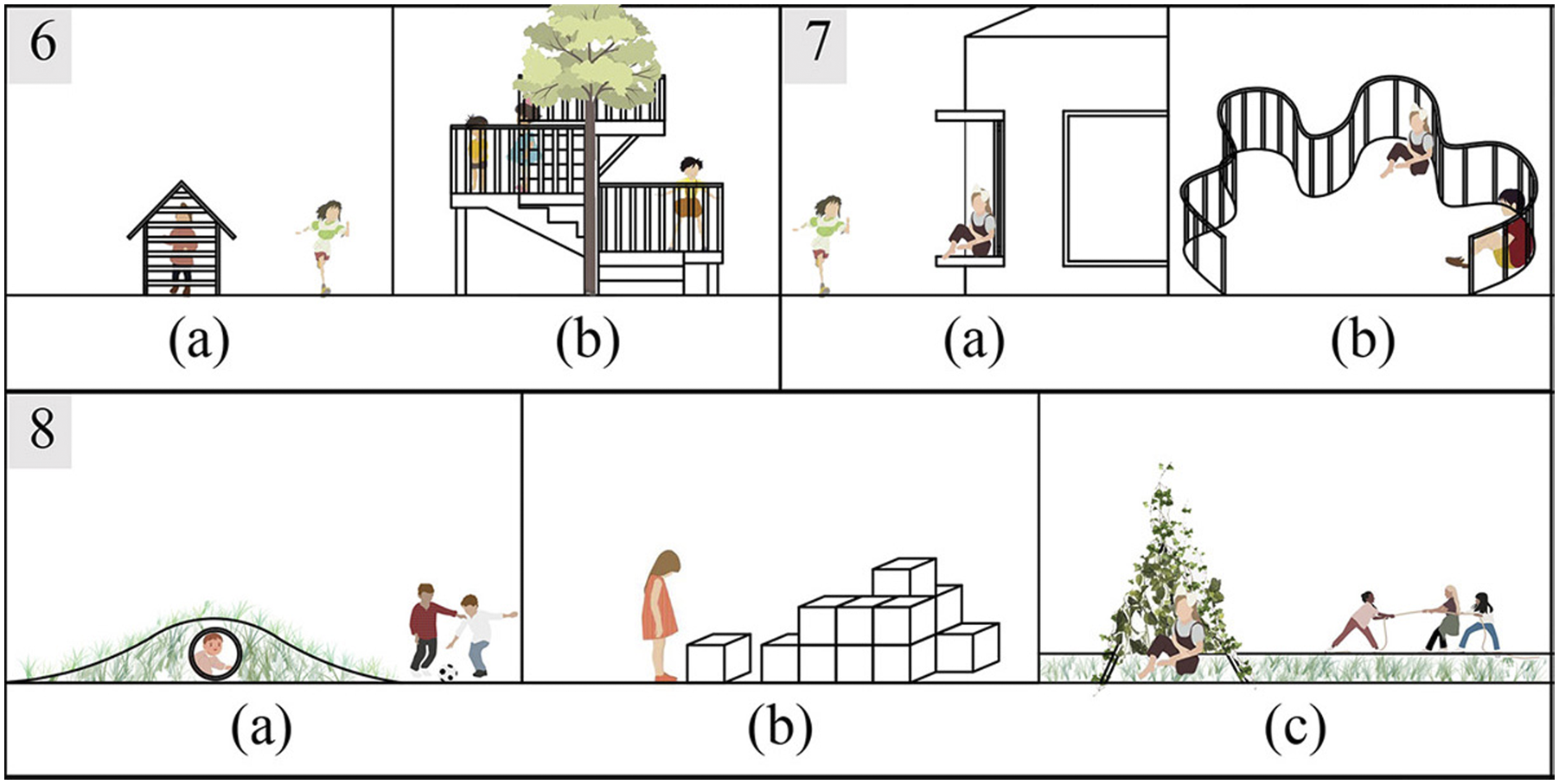
Diagrams of outdoor private space typologies.
Study design
Providing participatory environments where children can share their thoughts and experiences about the design of kindergartens supports the protection of children’s rights by creating a democratic process (Correia et al., 2019). This process contributes greatly to children’s learning and development and supports children’s strong sense of belonging to the place (Lansdown, 2005). In this study, participatory research was conducted to explore children’s thoughts and suggestions about the design of private spaces in kindergartens. As experts in their own lives, children can easily express their needs, opinions and suggestions and offer different perspectives to researchers (Clark, 2004; Hill, 2006). They are also aware of concepts such as secrecy and privacy and have the competence to draw the spaces they associate with these concepts (Corson et al., 2014).
Participants
Participants for this study were chosen by criterion sampling, which is a purposeful sampling method. 20 students (11 girls, 9 boys) aged 5–6 years from Private Tuna Çakır International Montessori Kindergarten, applying the Montessori educational method, in the central district of Bursa, the fourth largest city in Turkey were chosen. The required permissions to refer to the name of the school in the study was obtained.
Procedure
The researcher observed and interacted with the children in the playground and classrooms for 10 h over 2 days prior to the interviews, as a close relationship with children enhances their narrative skills (Nicolopoulou and Weintraub, 1998). The research process was designed with the children’s competence in mind. Two specialists in child development and education, who also work as teachers in the kindergarten, were consulted and their advice shaped the final structure of the study. The interviews were regularly scheduled, conducted during free play time, and lasted 4 days. The study was carried out in the kindergarten’s painting atelier, which contained all the materials and furniture needed for drawing, as well as the projector to show the images to the children.
This research consisted of four phases. First two stages covered indoor private spaces and last two stages covered outdoor private spaces. First and third stages comprised group interviews with photos, and the second and fourth stages comprised individual interviews where the children were asked to draw pictures. These processes give children the opportunity to express their thoughts visually and verbally (Pyle, 2013). Group interviews allow children to brainstorm with their peers, whereas individual interviews help timid children to express themselves (Holmes, 2005). During group interviews, photographs of design samples provided in Table 1 for each category were first shown one by one and then collectively. In the first case, the children were encouraged to express their opinions and suggestions by asking them semi-structured simple open-ended questions such as “Would you like to hide it in here? Would you like this area to be your special place? Please tell me why you like or don’t like it here? What would you need to change here to make it your private space?”. Subsequently the photographs were shown to the children collectively and they were asked to pick their favorite private space and provide the reason for their choice. This activity was designed to encourage active participation in group interviews by simulating a game in which children could raise their hands to express their opinions.
It is essential that children are first informed about a particular issue so that they can express their views on it (Sheat and Beer, 1989). Therefore, during group interviews, the children were first presented with samples of private space designs which they had probably never seen before. Only those photographs which could attract the attention of the children and which they could easily comprehend were presented to them. The duration of group interviews varied depending on the level of attention of the children, but on the average each category took 20–25 min to complete and each group interview lasted approximately 2 h.
In the second stage the children were asked to draw sketches of private spaces that they would like to have in their kindergarten, without imposing a time limit. The children’s explanation of their drawings gives the researchers a new perspective, helping them to see what they could not see before (Thomas and O’kane, 1998). The individual interviews were therefore conducted either in private sections of the classrooms, separated by partitions, or in places indicated by the children. Each individual interview lasted 4–5 min.
Ethics
Ethics board approval was obtained from appropriate bodies of the author’s for conducting this research study. Participant information sheets were handed out to the administrators, teachers, parents of the children, and their informed consents were obtained. Then, it was explained to the children that their views were important in making kindergartens better, and their consents for participation were obtained. Children are told that their participation has a real impact on the development of their kindergarten and that their views will be taken into account.
Data analysis
Data analysis was conducted using an inductive method. The interviews that were recorded by consent of the children were later meticulously transcribed in full, paying attention to intonation and pauses, and reviewed subsequently. Children were coded C-1, C-2, C-3…C19, C20 to cover their identities. The specialist who edited the interview details to increase the validity and reliability of the study was involved in the research process as a coder. The researcher and the specialist have read the data first to familiarize themselves with the data. In the second reading round they have started generating codes. Consistency was ensured by analyzing the complementary aspects of the codes, which were formed by the different perspectives of the researcher and the specialist. Then a third round of reading was made to group associated codes together and seek for themes. Five different themes were obtained from the categories comprising grouped codes. Themes were reviewed twice. Themes included design proposals for improving the designs of private spaces in kindergartens. The researcher constantly asked herself critical questions throughout the study to understand whether the matching of codes with children’s expressions was correct or not. We aimed at minimizing the active role of the researcher within the context of reflexive thinking. Moreover, methods such as peer review, methodological and investigator triangulation, avoidance of researcher bias, external audit trail and rich, thick descriptions were used to enhance reliability of the study (Marshall and Rossman, 2011).
Results
The findings from the four stages of the research are presented below under separate headings.
Group interviews (photo-interview): Indoor findings
Children’s preferences for their indoor private spaces.
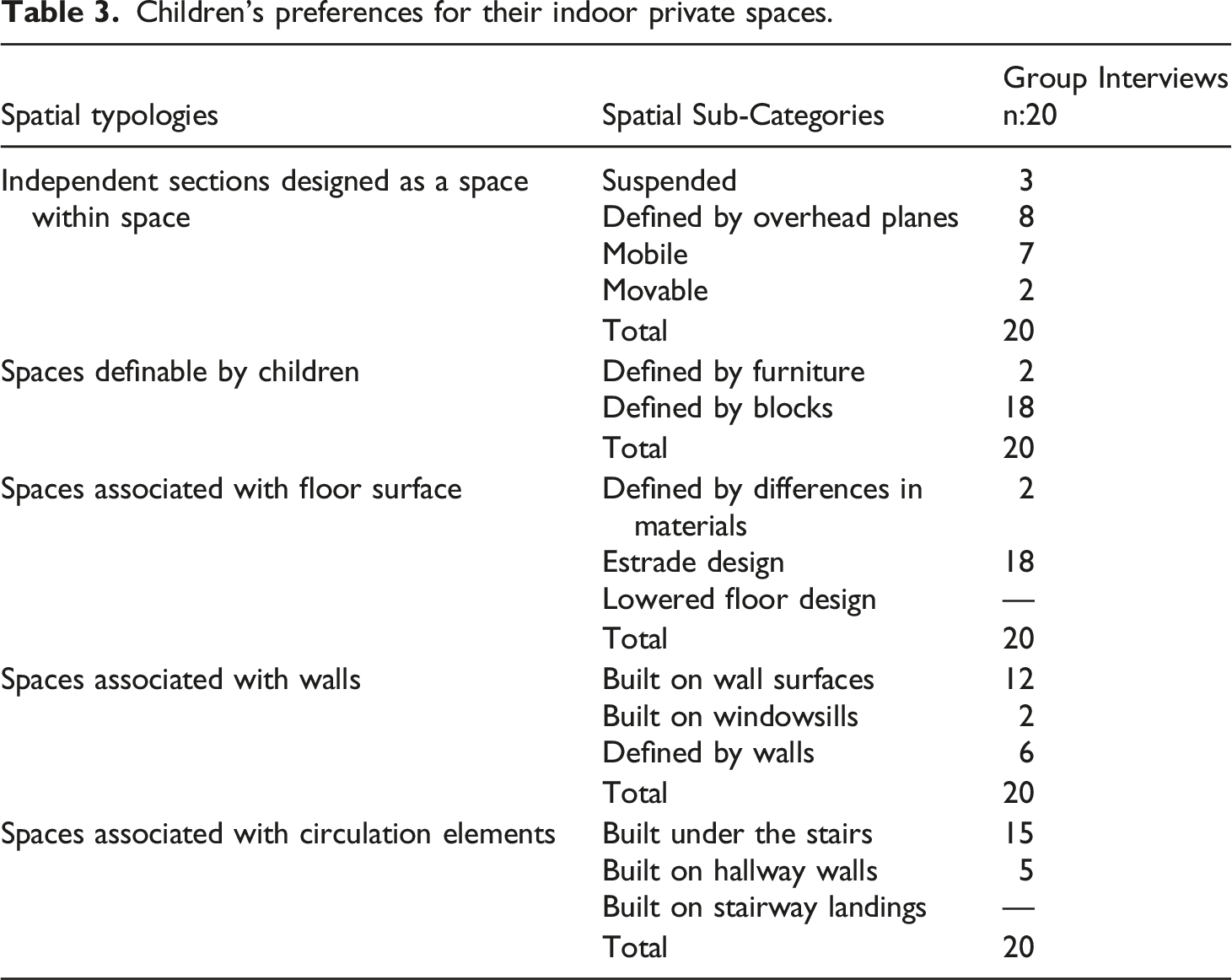
Independent sections designed as a space within space
Children’s expressions comments indicate that spaces defined by overhead planes are preferred because they allow for quiet play activities by providing auditory privacy, while mobile spaces are preferred because they provide freedom of choice by giving the opportunity to move continuously.
C1: I can put my dolls to sleep there. I can easily get their pillows and duvets over there (Defined by overhead planes).
C13: These are cool, like rail systems. I made a railroad trip with my family. The train took us everywhere. We played many games on the way. It can be fun to do the same here (Mobile).
Spaces definable by children
The children were happy to create their private spaces but this option was preferred less, as the children thought that spaces defined by furniture might be too heavy for them due to their size.
C7: These might come in handy when I want to hide. But they are too big, they can’t be lightweight, so I do not like
them.
Spaces associated with floor surface
An example of the comments of the children on the estrade, which is the most preferred space in this category, is provided here below.
C13: It is fun here. There is a slide here, I can sit on top of it when I’m tired.
Spaces associated with walls
The children’s expressions show that they prefer the spaces built on the surface of the wall because they allow them to change clothes as they wish, and the spaces defined by the walls offer various escape options.
C6: I could hide in there. Change my clothes. Surprise everyone (Built on wall surfaces).
C16: It has a cavity which enables me both to observe the surroundings and run away, that is, if it is not raining outside of course, otherwise I would get soaked (Defined by walls).
Spaces associated with circulation elements
One of the comments, suggesting that spaces that are built under the stairs are preferred because they serve as hideouts for the children, is provided here below.
C6: This is the perfect hideout spot. There is also a window in addition to the stairs. I can run anywhere if somebody disturbs
me.
Some comments by the children contain statements suggesting that spaces built on stairway landings are perceived as noisy by them, urging them to set a boundary on such spaces.
C15: It is all out in the open, there is nowhere to hide. Besides a lot of people pass through hallways.
Children’s drawings and individual interviews: Findings on indoor spaces
This section comprises drawings sketched by the children depicting their private spaces and their narratives during individual interviews. The suggestions made by the children were matched with the corresponding space in the relevant category and noted at the end of their narratives. What they saw during group interviews have triggered their imagination, urging them to elaborate on various alternative spaces that are suitable for different game scenarios and privacy needs (Figures 3–6). None of them has sketched any drawing regarding the main category “Spaces Associated with Circulation Elements”.
C17: This is a swing. Like the nest we saw in the first photograph. This man is throwing harmful things. But I can fight the man by seeing where evil comes from in my nest (green) (Suspended).
C13: This egg protects me like a shield. Its head turns into a dragon's head and breathes fire (red) when someone disturb me. Its thorns (green) scare away intruders and help me see my surroundings (Suspended).
C7: I sketched a doll area. I will play downstairs with my friends as I wish and go upstairs as soon as I am bored (Defined by Overhead Planes).
C15: I sketched a car that looks like a space shuttle. A monster throws balls everywhere but I can pass through them in my vehicle which protects me (Mobile).
C8: This is a shoe, but it is a large shoe. I will get in it and walk around silently. No one will recognize that it is me. Just like a fairy tale hero (Mobile).
C14: There is a dark (Black) box house here. There is also a blue hall connecting all the rooms and protecting us from the sunlight even (Movable).
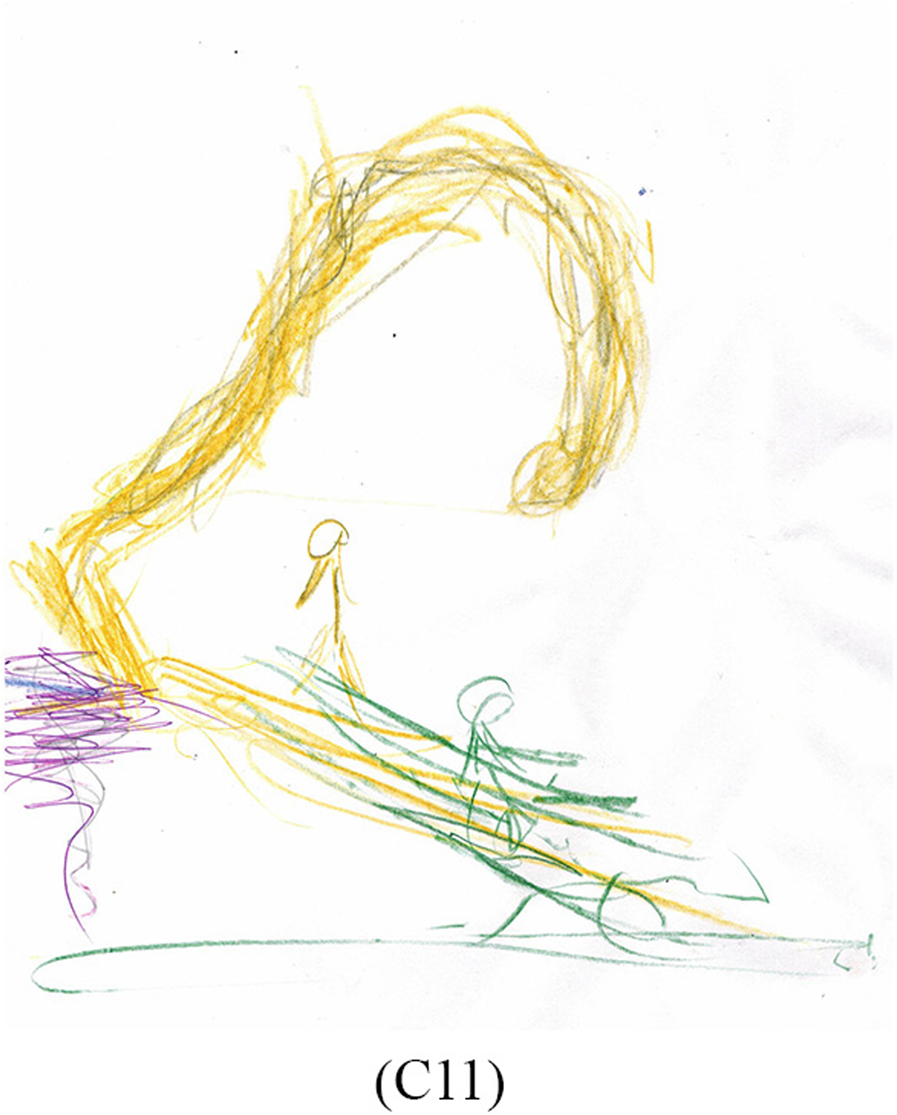
Drawings related to independent sections designed as a space within space. Drawings related to spaces definable by children. A drawing related to spaces associated with floor surface. Drawings related to spaces associated with walls.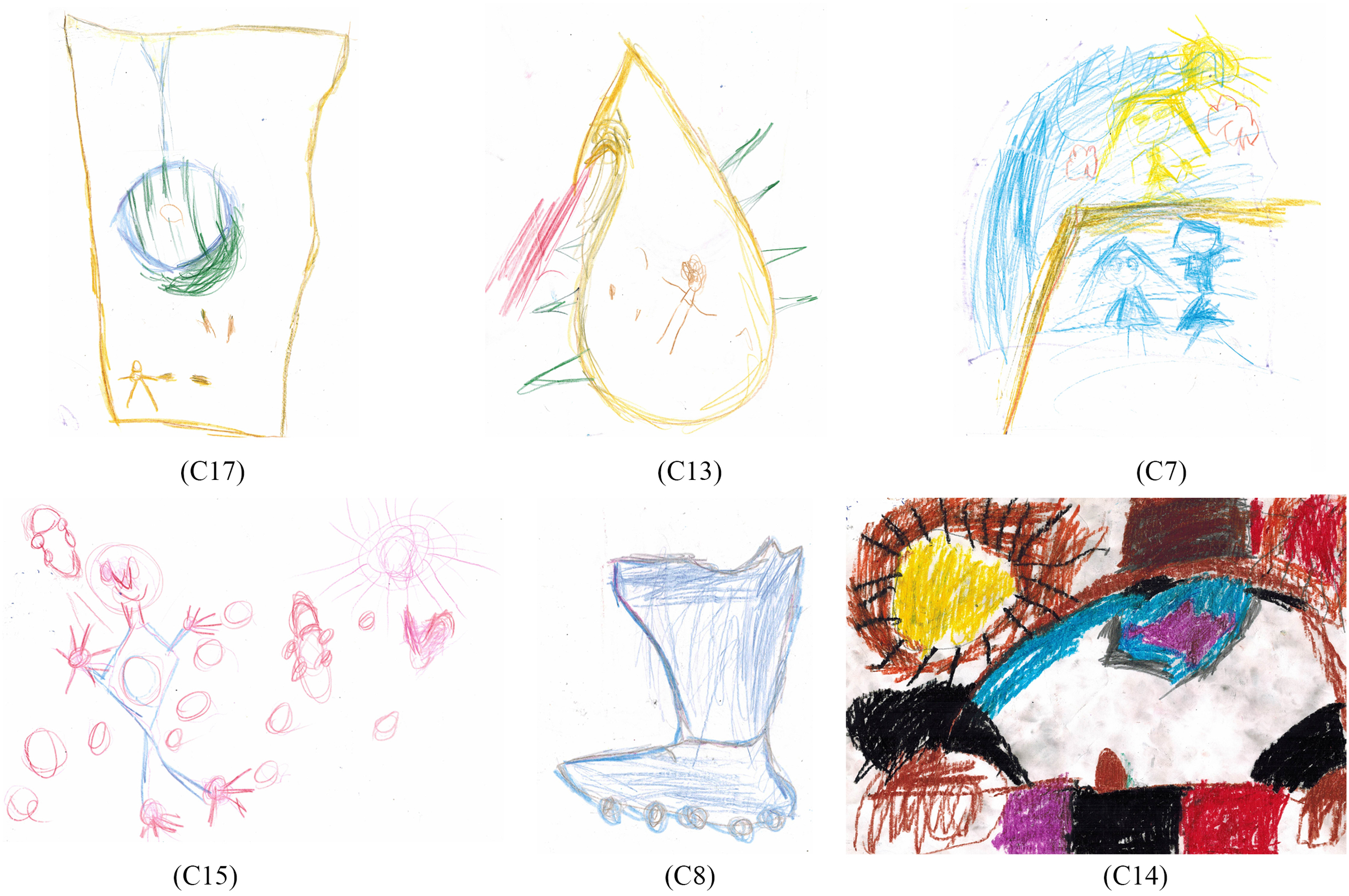
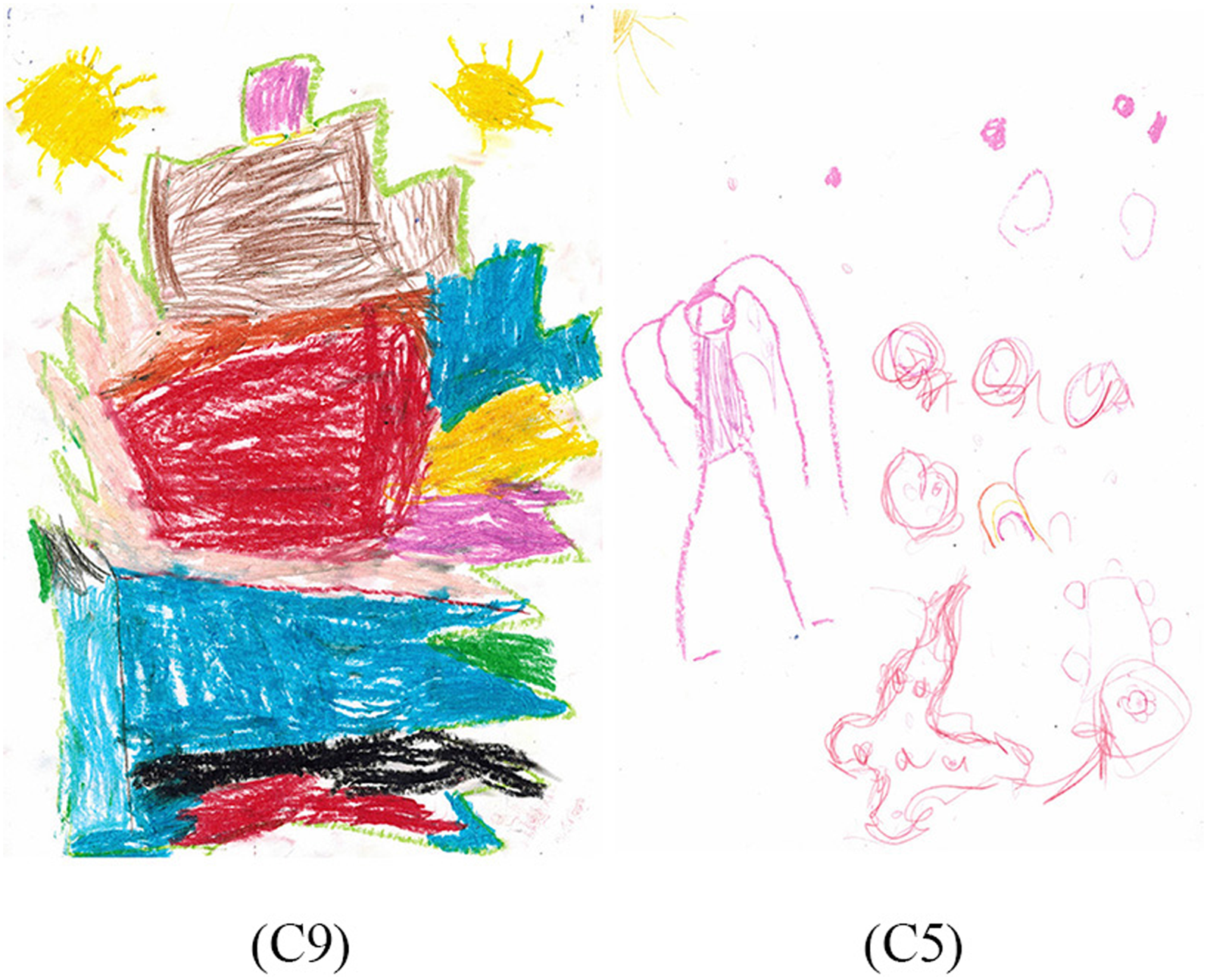
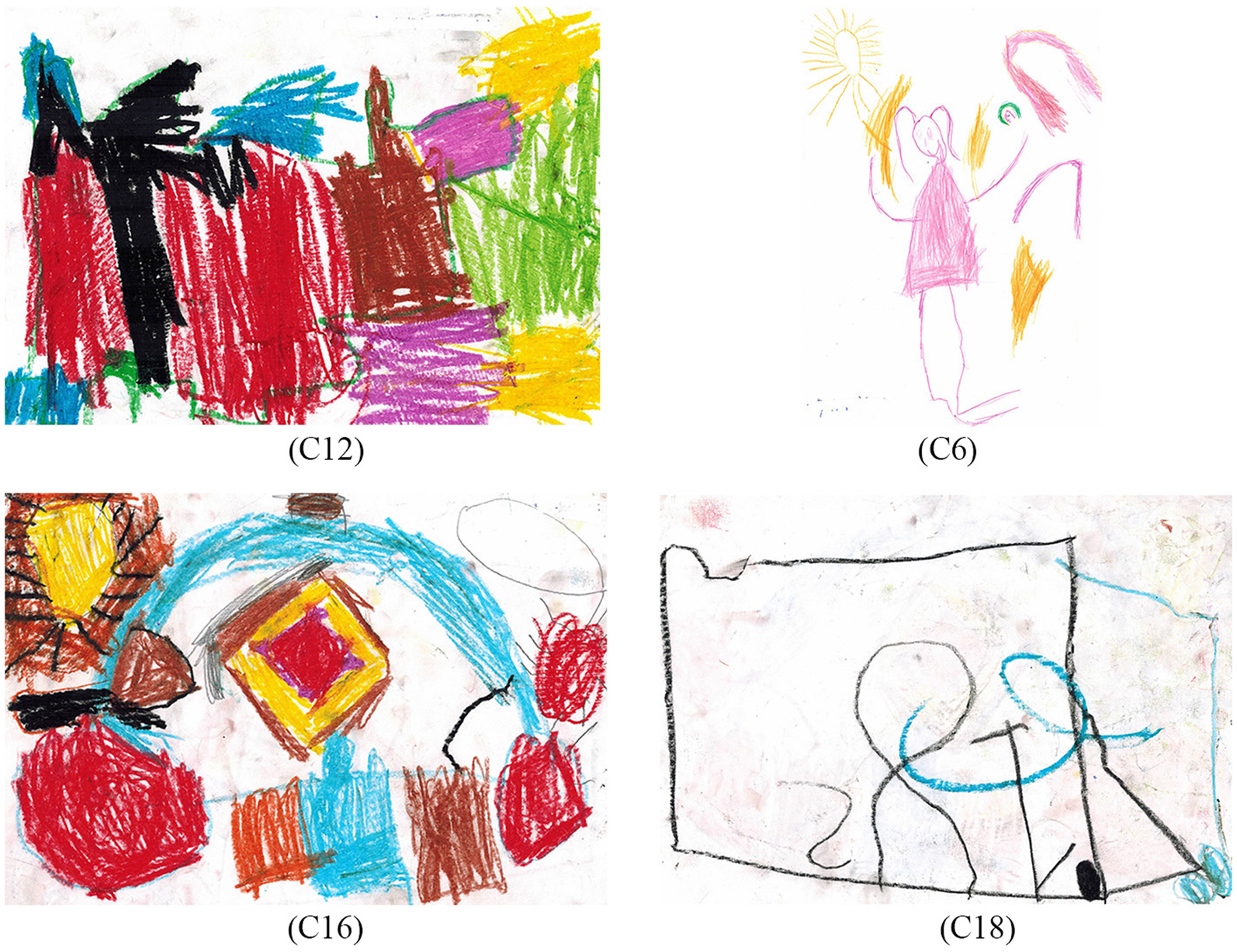
Suggestions depicted in the drawings related to spaces defined by children (Figure 4) are similar to those depicted in drawings related to spaces defined by blocks.
C9: I sketched a fortress. I am going to build a tower with the blocks. A fortress, in which I can hide, will protect me. My fortress has all the colors I
like.
C5: There are soft balls here, I can shape them however I like. I can play with my friends if I want, but if I don’t, I can make figures like this and hide
them.
C11: I sketched a playground with a slide. I will go upstairs when I get bored or when I want to take a rest. Look, this shield (yellow) will protect me from the evil (Estrade design).
C12: I sketched a wall with a red curtain. There are evil witches (black) charging at the curtain but the blue sections do not allow them (Built on wall surfaces).
C6: The round sections represent inside of the wall (pink) and the yellow things are my clothes. I can get inside them to change my dress any time I like (Built on wall surfaces).
C16: This is a curved wall; I sit on the corners to watch around. It has a lot of holes (red), I can get out from any hole I like (Defined by walls).
C18: Walls of the classroom are curvy; they wrap around and protect me. But there is an escapeway (blue) that I use whenever I get bored or disturbed (Defined by walls).
Group interviews (photo-interview): Findings on outdoor spaces
Children’s preferences for their outdoor private spaces.
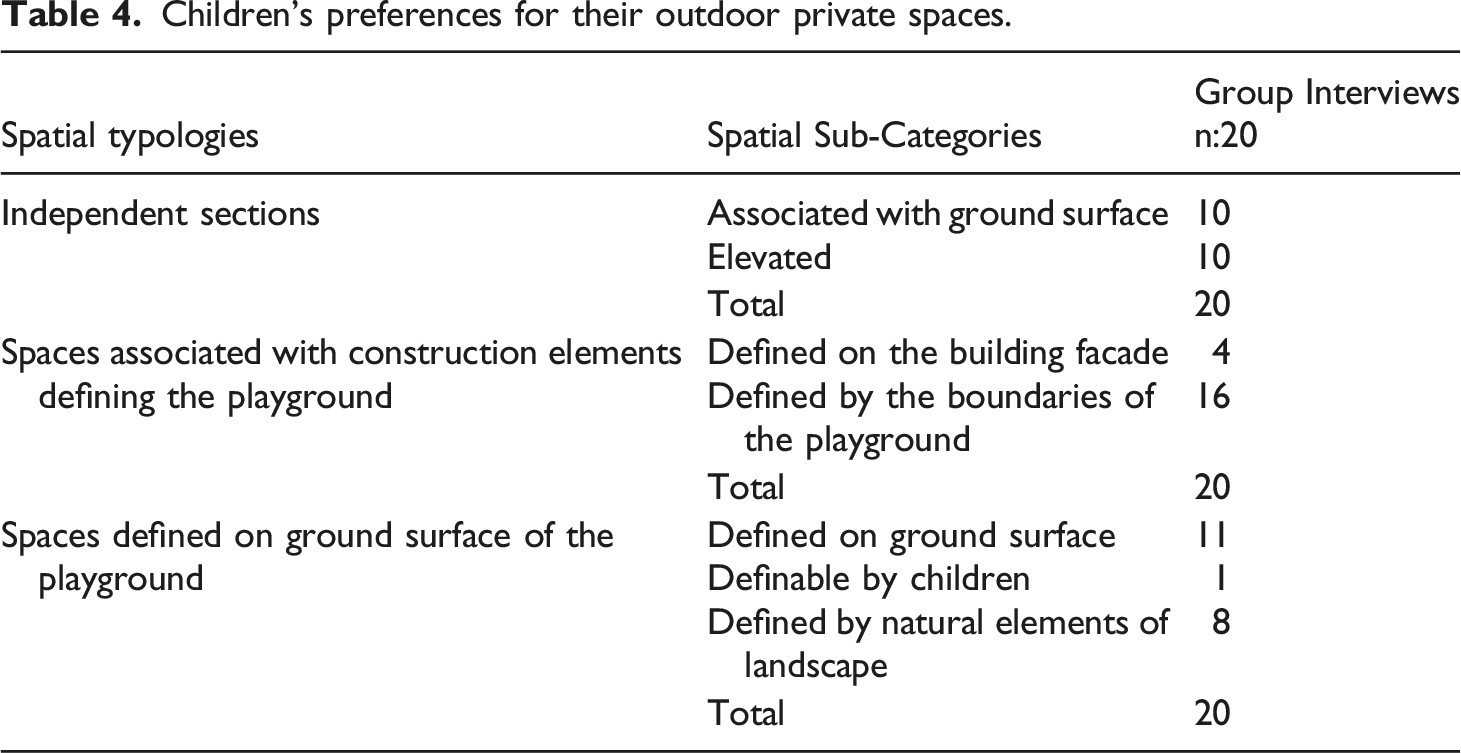
Independent sections
The children were equally interested in both options in this section. The spaces associated with the ground surface reminded them of a game they had played before.
C5: Our teacher sometimes lets us play cops and robbers when we go outside to play. It will be cool to hide in here when playing cops and robbers.
Some comments by the children contain statements suggesting that they prefer elevated spaces because they think such spaces will help them make a free choice in line with their needs.
C6: I will hide under the staircase. That place perfectly suits me, it is both compact and sturdy to make me feel safe. It will also protect me from the
wind.
C5: I would like to set up a swing here (Pointing at the landing). I can go there and ride on the swing whenever I like. No one can see me there. I will be a bird flying up in the
sky.
C16: I would go all the way to the top and hide in there. I could even take a nap there.
Spaces associated with construction elements defining the playground
The children are interested in niches defined by the boundaries of the playground because such spaces allow freedom of choice and wild imagination.
C9: It is curling and wavy like the ocean. I can hide anywhere I like. I take a dive when swimming in the ocean so no one can see
me.
C13: It is like a maze; it would be fun to hide in
here.
Spaces defined on ground surface of the playground
One of the comments by the children, showing interest in spaces defined on ground surface of playgrounds and containing suggestions regarding those spaces is provided here below.
C15: I can escape through everywhere. But I wish there were another hatch leading to the ground.
Some other comments suggest that children like to hide behind plants they grow, by taking all the responsibility, and have an eye for aesthetics.
C9: I would like to hide in here. But these plants do not have flowers. I would like them to have colorful and nice smelling flowers.
C17: My father and I have planted many trees. I hide behind them. Thus, I enjoy
it.
Some children have expressed their dissatisfaction that they might be required to handle too many heavy materials to define and build their private spaces outdoors.
C4: These seem to be heavy; I need to have a lot of friends to handle them. But what good will hiding do then?
Children’s drawings and individual interviews: Findings on outdoor spaces
C10: I sketched huts to hide from dwarfs. Look, dwarfs are flying. They are trying to locate us. But this (pointing at the hut) will protect us (Associated with ground surface).
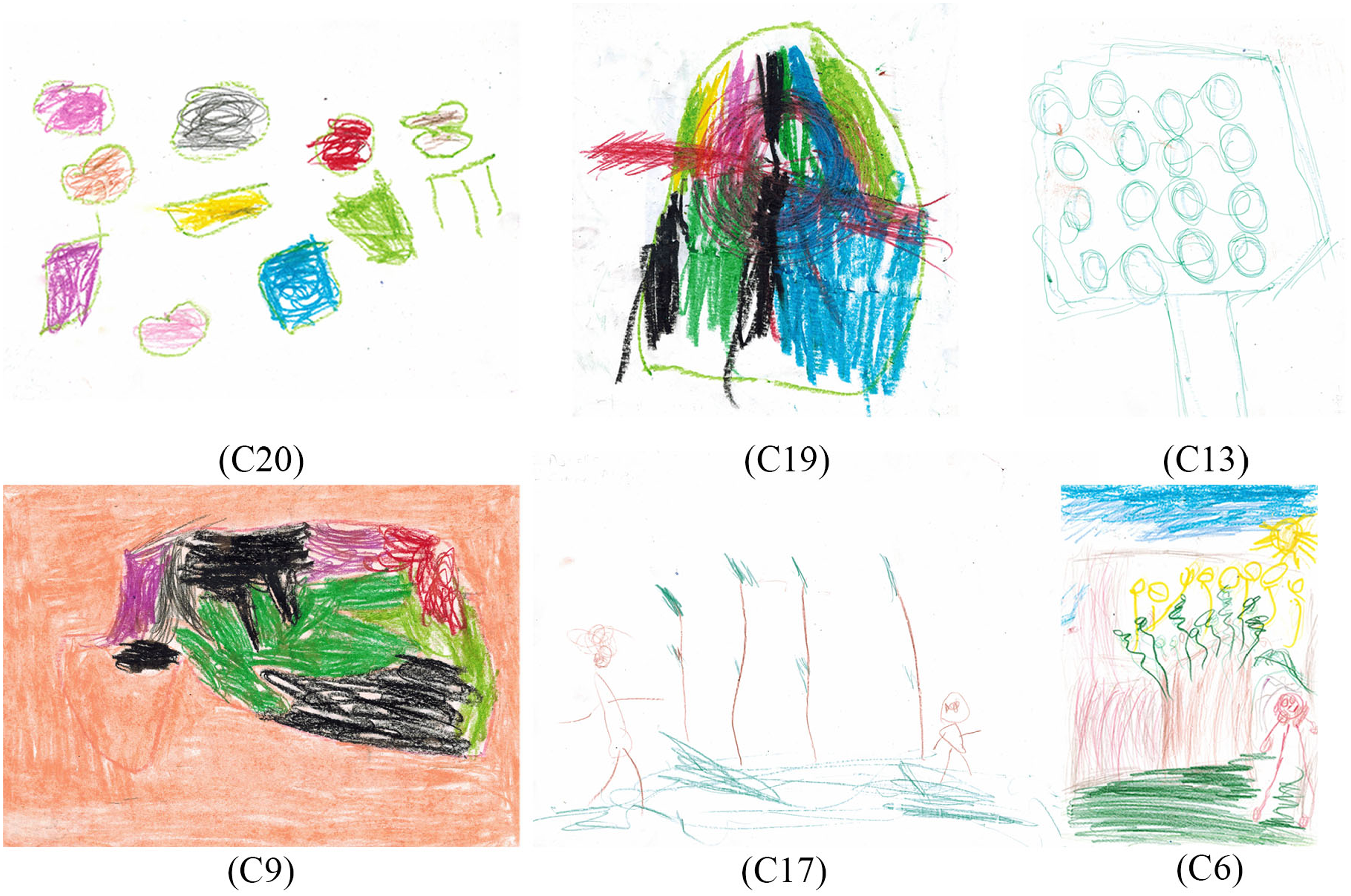
C20: I sketched a lot of pipes in diverse colors and shapes. There is even one shaped like a butterfly. I would like to hide in the colored ones (Defined on ground surface).
C19: I sketched a huge escape hatch opening down in the middle of a colored sandpit (Defined on ground surface).
C13: I sketched green pipes in our playground. I sketched the way through the pipes like a maze. I will be able to escape following this route (Defined on ground surface).
C9: I sketched colorful plants to hide behind like my mother’s big flower (Defined by natural elements of landscape).
C17: I sketched the trees. I planted with my father. I hide behind them (Defined by natural elements of landscape).
C6: I would like to hide behind plants. They smell nice and they would protect me (Defined by natural elements of landscape).
The children’s drawings and narratives include different alternatives related to examples other than those in the category of spaces associated with construction elements defining the playground (Figure 7 and 8). A drawing regarding independent sections. Drawings related spaces defined on ground surface of the playground.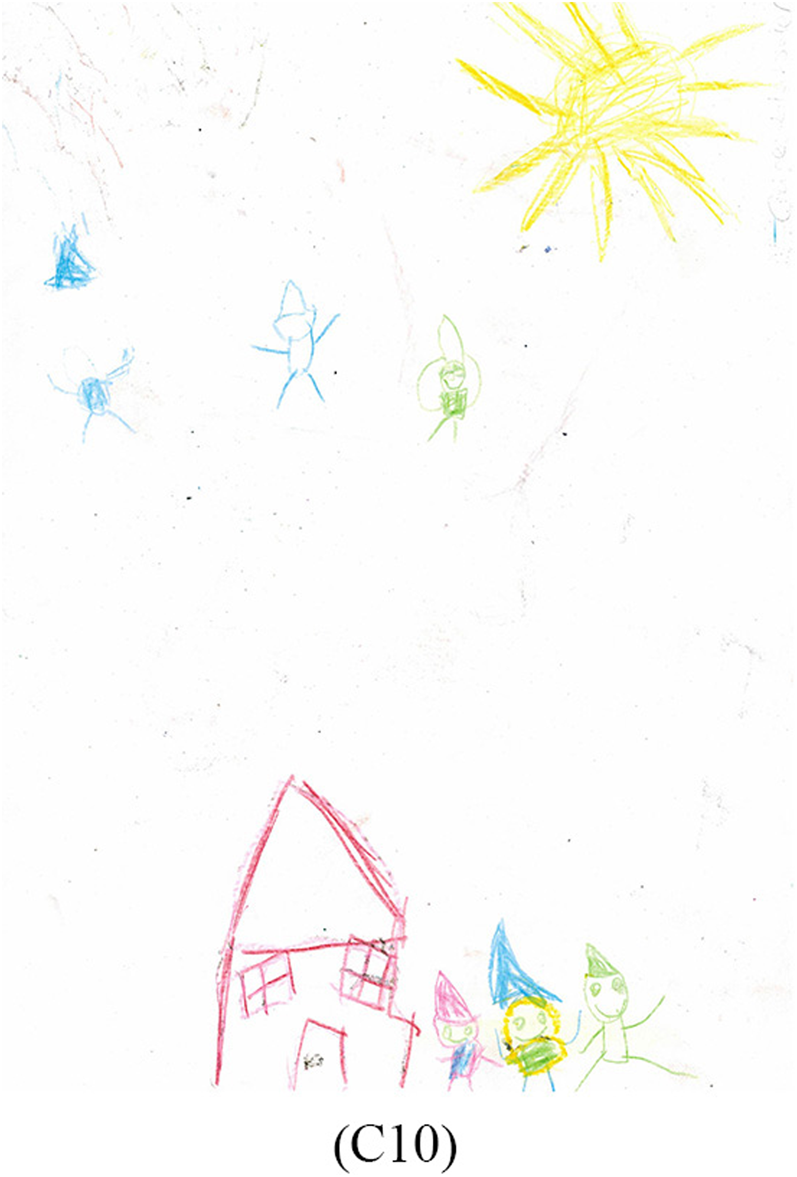
Discussion
As a result of the analysis of the data collected in this study, the factors affecting the quality of private spaces have been grouped into five different themes.
Escape holes
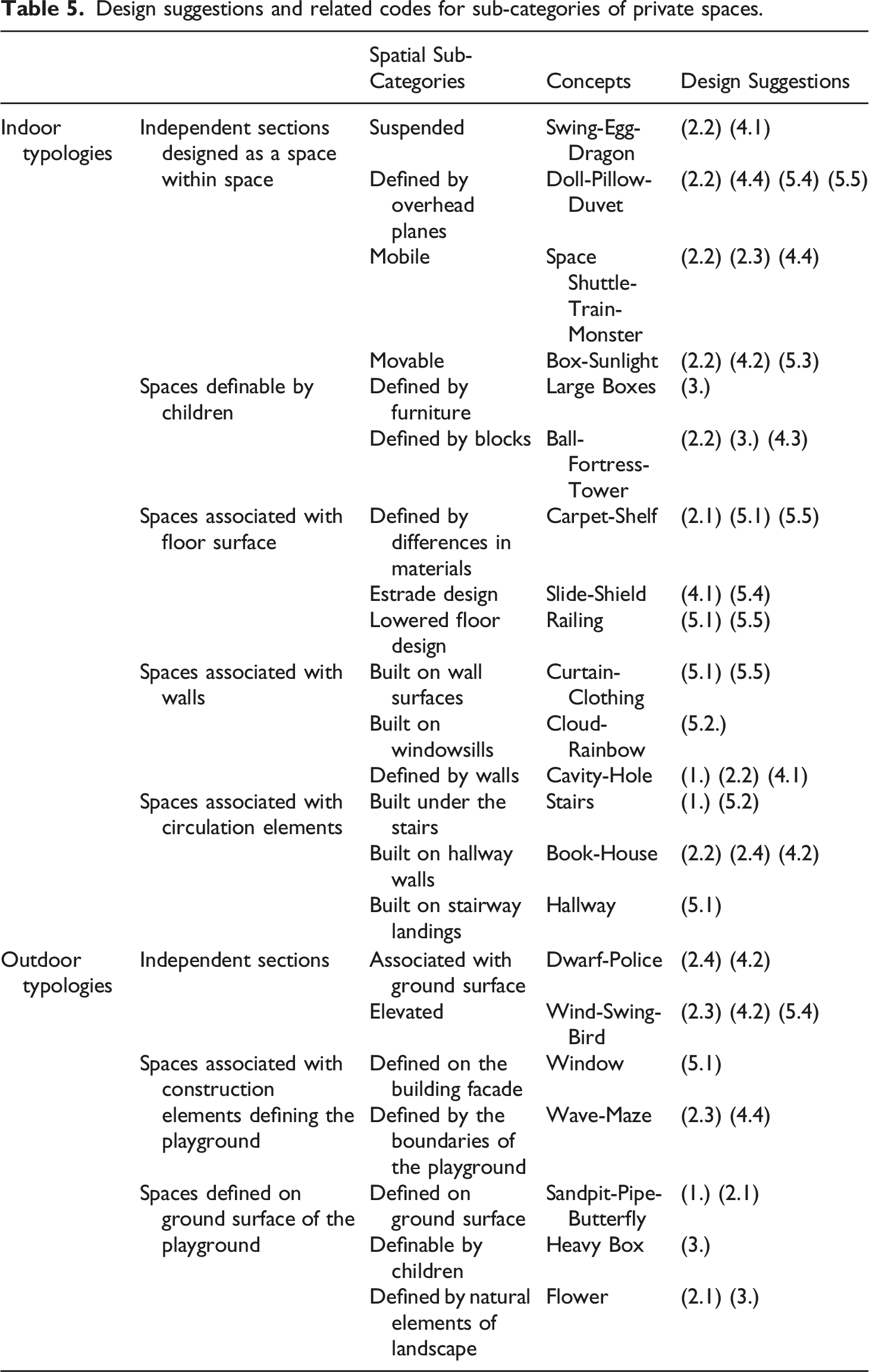
The main reason for children to pay close attention to spaces associated with wall surfaces and circulation elements indoors and spaces associated with the building facade and ground surface outdoors might be that all these spaces have many escape holes. In their narratives children have emphasized the windows, doors, staircases, and other structural transitional elements. Furthermore, one of them wished for another escape hatch leading under the ground in the category of outdoor spaces, reflecting the need for escape holes. Osmon (1971) reports that children enjoy lingering in transitional elements between individual spaces, such as doors, windows and stairs and use these spaces when they want to get away from their environment. Consequently, providing escape holes (1.) in private space designs, helping children to escape to when they feel threatened might encourage them to continue playing cheerfully.
Personal choices
It is ponderable that the main reason for private spaces to meet various needs, to offer many choices, to provide children with the capacity to observe (prospect) without being seen (refuge) and to feature spatial qualities such as color, fragrance, or form, is that they allow for personal choices. It can be argued that children prefer spaces defined by differences in materials indoors and elevated independent sections outdoors because those spaces allow for various quiet play activities. Spaces defined by boundaries of the playground, offering more choice, are preferred more than others as they allow for freedom of choice. Ota et al. (1997) report that feeling free in their private spaces help children to easily convey their emotions and ideas which they are reluctant to express, and to enjoy their time. Many children have sketched pictures of spaces defined on ground surfaces and made suggestions regarding such spaces, supporting this finding. Independent sections designed as a space within space indoors and spaces associated with ground surface or defined by natural elements of landscape outdoors are preferred by children because they provide them with the capacity to observe (prospect) without being seen (refuge). In his Prospect and Refuge theory, Appleton (1975) suggests that environments providing people with the capacity to observe (prospect) without being seen (refuge) nurture the feeling of security. Children’s using loose materials to build their private spaces or sketching a ghost shoe that could be seen by nobody else, in the mobile sub-category, can be construed as examples supporting this theory. Narratives regarding spaces defined on ground surface of the playground suggest that children wish to personalize their private spaces with spatial qualities such as color, form, and fragrance of their liking. Erikson (1993) reports that spaces that children dominate by creating their inner world improve the sense of autonomy. Thus, designing private spaces that may be personalized by children (2.1), that provide them with the capacity to observe without being seen (2.2), that offer many choices (2.3), and that allow them to perform various quiet play activities (2.4), is essential for the development of the children.
Formability
A preschooler who is not sufficiently informed about his/her surroundings feels the need to create a private space, the rules of which are set by him/her (Wheeler, 2004). Narratives by the children suggest that the possibility to dominate and form the space positively affects their choices. Harvey (1990) reports that children usually attach to the spaces they associate with the concept of domination and use them for quiet play activities. Consequently, using materials that can be formed by the children (3.) when designing private spaces might help meeting their privacy needs.
Form perception
The children associate private spaces in certain forms with confidence and intimacy. Day (2007) reports that preschoolers are attracted to objects with curved surfaces which are large enough for them to get into, that reflect their mother’s womb in their subconscious mind, and use them as their private space. The children also suggest that suspended spaces as well as spaces defined by walls are perceived as safe and sheltered spaces with their curved surfaces. One of the children, who has sketched a picture with reference to the elevated floor sub-category, has added a curved surface to the space calling it a “shield”, supporting the connection between curved surfaces and the sense of confidence. Findings of the study suggest that in addition to curved forms, spaces in the form of a simple house also attract the attention of children and have a positive impact on their choices. The child who has sketched his private space that protects him against external threats in the form of a house in reference to the sub-category of independent sections associated with ground surface outdoors may be shown as an example of this tendency. Preschoolers leaving the comfort of their home for the first time when they start kindergarten, encounter spatial dimensions they have never experienced before, leading them to create private spaces where they can build a world of their own (Read, 2007). In their cognitive map children are capable of establishing a dimensional relationship with the basic house form in the same way they establish a dimensional relationship with their home environment. Kirkby (1989) argues that structures such as fortresses, castles, towers, and ramparts remind children of concepts like protection, hiding and privacy. Children’s describing these forms when narrating the spaces, they have sketched might support this argument.
Private spaces need to be intimate as well as nurturing children’s sense of confidence and privacy. When children see their strong imagination reflected in the physical environment, the situation seems sincere to them and they take ownership of the space (Tadjic et al., 2017). Some of the children have stated that the spaces defined by boundaries of the playground resembled ocean waves and some others have sketched suspended independent sections in various forms like dragons, balls, or eggs, suggesting an association between private spaces and imagination. Therefore, in the design of private spaces in kindergartens, the use of curve (4.1), simple house figure (4.2), castles, fort, ramparts (4.3) and the determination of various forms that serve the rich imagination of children (4.4), can support the function of the space.
Comfort
The children suggest that creature comforts in private spaces, affecting visual, tactile, and aural senses, might alter their preferences on using such spaces. Some children have considered the curtain as a restrictive element when commenting about spaces built on wall surfaces, and it can be argued that they did not prefer the lowered floor design probably because it does not feature any visually restrictive elements. The following narratives suggest that the children have tried to find a solution to the unavailability of restrictive elements by making recommendations regarding these spaces.
C3: I can move my dolls there and I can pile up the duvets. I can make a fortress with them. No one would be able to see me
then.
In addition to the need for boundaries in private spaces to provide visual comfort as recommended by the children in their narratives, it might also be argued that these spaces have views of aesthetic natural landscapes which have a sedating effect. Furthermore, it can also be argued that children are sensitive to luminosity and thus prefer dim environments to hide in. Harrison (1996) reports that active and private spaces should be separated by clear visual boundaries that could easily be perceived by children and there should be a distance in between these two spaces to ensure aural comfort. Spaces defined by overhead planes indoors or elevated independent sections outdoors were preferred by the children mostly because they thought that it will not be noisy out there. Furthermore, children like to have soft surfaced objects such as pillows or duvets in those spaces which might be an indication of the importance they attach to tactile comfort. Availability of sand, green spaces or soil outdoors also supports tactile comfort (Prescott, 1987). Therefore, setting visual boundaries clearly (5.1), providing views of aesthetic natural landscapes (5.2), taking into consideration that obscurity is an important factor for the children in their search for a hideout (5.3), providing aural comfort (5.4) and providing playing objects with a soft touch (5.5) when designing private spaces in kindergartens will ensure that necessary creature comforts are provided, supporting proper use.
Conclusions
Design suggestions and related codes for sub-categories of private spaces.
Children show great interest in private spaces that stimulate their imagination and want them to be in kindergartens. It can be argued that these spaces which stimulate imagination also support development of creative thinking. Offering numerous alternatives under the framework of the examples defined in this study, to the children in kindergartens rather than standardized monotype solutions, by taking into consideration their strong intention to use private spaces for various purposes, might also support development of children. It is believed that this study, with its approach to understanding children’s perspectives and various design suggestions, can contribute to academic studies by guiding practitioners in the design of private spaces in kindergartens.
Footnotes
Acknowledgements
We thank child development specialists for their contribution to analyzing the research data. We would also like to thank children for participating, educators, kindergarten management for contributing this research.
Declaration of conflicting interests
The author(s) declared no potential conflicts of interest with respect to the research, authorship, and/or publication of this article.
Funding
The author(s) received no financial support for the research, authorship, and/or publication of this article.
