




Abstract
In this empirical research, I investigated 16 kindergarten children’s perspectives on their friendships at school in a super-diverse classroom in Canada. A cultural-historical perspective and a “pedagogy of friendship” conceptual framework were drawn on in this research. In the study, the kindergarten children created drawings of their valued friendships. These visual representations revealed the importance of outdoor play and engagement as the catalyst for their development of authentic and valued peer friendships.
Keywords
Introduction
The purpose of this study is to examine children’s perspectives on friendship in a super-diverse kindergarten classroom in Canada. In the study, the following research questions are addressed: “In what ways are children developing friendships in a super-diverse kindergarten context in Canada?” and, “What can children’s conversations while drawing reveal about their conceptions of friendship?” The premise of this study is that there may be potential for engaging young children in conversations about their drawings to develop a deeper understanding of their understandings of friendship in a diverse, multicultural kindergarten classroom.
Across Canada, kindergarten is both compulsory and mandatory, and enrollment is dependent on the region of Canada in which the child resides. Throughout the country, Kindergarten programs are for four- and five-year-old children. In this study, the kindergarten participants were all 5 years old at the beginning of the study and lived in a region of Canada where kindergarten is compulsory and is a full day program that draws on a play-based approach (Government of British Columbia, 2019). Schools situated in super-diverse urban environments are defined by the complexity of varied ethnicities and socio-economic status, and according to Vertovec and Nowica (2014), have the potential to be one of the few sites to facilitate friendships between children from different social class and ethnic backgrounds. Iqbal, Neal and Vincent (2017) contended that school is a key site in which individuals learn to negotiate public social worlds by interacting, forming opinions, engaging in practices, and co-existing with others.
Super-diverse classrooms in urban centers throughout Canada are quickly becoming the norm, as Canada’s welcoming and open immigration policies, especially in recent years, have led to a diverse multicultural society that has strengthened and added to the country’s social and cultural richness (Statistics Canada, 2018). It is therefore not surprising that schools with diverse social, ethnic, and economic populations are becoming more common, and that this area of research has only been more recently examined (e.g., Wessendorf, 2014). In this study, insight on how culturally, linguistically, and economically diverse children socialize and develop friendships in their first year of formal schooling is shared.
Young Children’s Friendships
Beginning in early childhood, children’s relations with other children are differentiated in terms of the time spent with one another and certain characteristics of their interaction (Hartup et al., 1988). Gottman (1983) posited that cooperation and reciprocity emerge early in young children’s social worlds, and these interactions are relevant to “becoming friends.” Research on children’s socialization and children’s development of friendships has revealed the importance of collective, communal activity in the way children negotiate, share, and create culture with each other (Corsaro, 1992, 2011; James et al., 1998). In his foundational work on children’s socialization and friendships, Corsaro (1992) found that the role of dramatic play in children’s peer cultures is important for their social development as play enables children to consider how different people act in social situations and how they relate to each other.
Several researchers have suggested that children’s positive interactions with each other and the coordination of play are evident in early friendships (Park and Waters, 1989; Youngblade et al., 1993). Howes (1996) added that successful early friendships in young children are often centered on collaborative dramatic play, which provides an element of intimacy to the relationship, and Dunn (2004) contended that friendship is significant to children’s quality of life.
Although children’s development of friendships is significant to their social and emotional development, few studies (e.g., Merewether and Fleet, 2014) have examined the role of friendships in young children’s school lives and their perceptions on these friendships. To date, only a small number of studies have occurred with young learners that have examined children’s peer cultures and friendships (Hollingsworth and Buysse, 2009; Howes, 1996). The findings from these studies revealed that children’s friendships at school significantly affect children’s social and emotional competency, as well as their academic progress. However, children’s friendships have been a somewhat neglected area of research when children enter a formal school context, as the issue of friendship becomes less of a priority for researchers and teachers due to focusing on children’s academic progress (Carter and Nutbrown, 2016).
Theoretical and Conceptual Framework
Although there is a growing body of literature that analyzes friendships in early childhood settings (Corsaro, 1985), there is less literature on the ways that children who enter into new social situations in a new country form friendships in their first years of schooling. In this study, I draw on Vygotsky’s (1987, 1994) cultural-historical perspective, which addresses the socio-historical and cultural nature of the human mind, which offers a new perspective when theorizing friendship (Adams, 2016). An important premise of this theoretical framework is the focus on the relationships children develop with their environment and with others within that environment. This perspective highlights the importance of the individual and the collective, where each experience is social first and then, with developing consciousness, becomes an individual experience for the child.
This study also draws on a “pedagogy of friendship” conceptual framework (Carter and Nutbrown, 2016). A pedagogy of friendship conceptual framework addresses how educators can support children’s peer cultural practices (Carter and Nutbrown, 2016). This can be achieved by valuing children’s abilities to make and maintain friendships, which supports their holistic development, and by providing time and space for children to develop agency in relation to developing friendships. Carter and Nutbrown (2016) posited that a pedagogy of friendship framework consists of three components: practitioner knowledge in relation to peer culture and friendship, acknowledging what children value in relation to making and maintaining friendships, and practitioners providing time and space for children’s friendships to develop.
Together, these perspectives provide a framework for examining children’s friendships in a super-diverse, urban classroom. Vygotsky’s theoretical framework, with its emphasis on culture, social interaction, context, and meaning as central to learning and development, is particularly relevant to understanding how diverse children most effectively learn and develop social relationships. Building on that perspective, the pedagogy of friendship framework provides a space to listen and focus on children’s friendship experiences at school, which can enhance educators’ understanding of children’s social interactions, learning, and well-being.
Methodology
In this study, a qualitative phenomenological approach was adopted to gain a deeper understanding of the phenomenon of friendship from children’s perspectives. Phenomenology focuses on the “lived experiences of people encountering a phenomena and how they interpret these experiences” (Bogdan and Biklen, 2003: 48). This methodological approach was used to acquire a richer understanding of the phenomenon of friendship from children’s viewpoints (Creswell, 2007). Todorova (2011) posited that this approach to data collection urges researchers to “listen and understand…collaboratively” (p. 37).
This methodology was also chosen because it can be designed to be enjoyable for children and ensures that children are recognized as the experts on their lives (Pearce and Bailey, 2011). By examining the specific experiences of 16 children shared through their drawings of friendship, a closer examination of what these children experienced led to a “collective essence” (Moustakas, 1994) of the children’s realities.
Ethical Considerations
Prior to this study, I had engaged in a 4-year research project at the same school with a different group of children focused on their understandings of diversity and identity. I was therefore a familiar person in the school community and had developed a professional relationship with the school principal and the primary teachers. Prior to the kindergarten children starting school, the principal invited me to attend the spring kindergarten orientation. During the orientation, he introduced me to the incoming kindergarten families where I explained the purpose of the study and the children’s potential involvement in the research. During the meeting, the families were also encouraged to ask any questions about the research. In September, consent forms, approved by the Human Research Ethics Board at my university, were sent home with the children as well as a one-page overview of the study. All of the children’s parents provided their written consent. I also asked each child, with translation support from the English as an Additional Language teacher, if they would like to be involved in the study.
Acquiring consent from the kindergarten students was based on an approach to assent as an ongoing process (Cocks, 2007), requiring the researcher to be attentive to the responses of the children. In adopting this approach with young children, I acknowledged the importance of all forms of communication with children, non-verbal, as well as verbal, and let the children know that they could withdraw from the research at any time. At the beginning of the study, I met with all the children, with their teacher present, to provide details about the study, explain their role in the research, and ask if they had any questions. At that time, all the participants provided their assent by either nodding, putting up their hand to indicate their willingness to be involved in the study, or by verbally telling me that they would like to be involved in the research.
Before the individual data collection sessions with each research participant, I again asked each child if they would like to continue participating in the research project. Although power dimensions are inevitable in research with young children, the basis of providing informed assent centers on access to sufficient and appropriate information to support an informed decision for children (Kirk 2007). In this study, all the research participants were given pseudonyms to protect their anonymity.
In the following section, the use of participatory data collection methods in this study is outlined. The use of participatory methods has been well documented in research studies with children and aims to be ethically sensitive to children because it cedes some of the control over the research to participants (Alderson, 2001; Christensen and James, 2008; Kellett, 2010; Sinclair, 2004; Wadsworth 2001). In this study, I also draw from the Mosaic Approach (Clark and Moss, 2011), which draws on multimodal methods, values children as agents in their own lives, and focuses on children’s lived experiences.
This approach to data collection links to Article 12 of the United Nations Convention on the Rights of the Child (United Nations, 1989), which addresses the importance of children’s participation in matters that concern them. This perspective aligns with the child participatory research movement which has brought new understandings of children’s views, experiences, values, and competencies to the forefront (Alderson, 2012), and which aims to elicit children’s “authentic voice” (Spyrou, 2011) and achieve deep participation with young children in research (Kesby, 2007).
Methods
Drawings
The inclusion of children’s opinions on their lives through visual methods, such as drawing, has become more prominent in recent years and creates possible spaces for the agentic child to emerge through the use of such research methods (Scherer, 2016). Specifically, drawings can help children make sense of the world, and express their thoughts and feelings in relation to a particular phenomenon (Carter and Nutbrown, 2016). Visual methods can also assist in minimizing the power relationship between adult researchers and children (Holliday et al., 2009; Mannay, 2010). At the conclusion of my observation visits over a 10-month school year, I spent 2 days at the school where I held individual 15-20 minute sessions with each child During these sessions, the children shared their conceptions of friendship by discussing their drawings. These data collection sessions took place in June, and by that point in the year, all the children’s conversational English language skills were proficient and they were able to share their thoughts on their drawings. Each child was asked the following question: “Can you draw a picture of what you like to do at school with your friends?”
In this study, the narratives developed around the drawings enabled the children to explore and communicate their understandings (cf. Einarsdottir et al., 2009). This method also aligns with the work of Einarsdottir and Harcourt (2011) who posited that drawings can be used to address a specific question with children or to inquire about children’s valued play episodes with a friend.
Observations and Participant Observations
Throughout the research period, the intent of my observations was to acquire insight into the children’s development of friendships in a super-diverse classroom, and to document the activities and learning experiences that appeared to support the children’s friendships. Throughout the 10-month study, I spent 10 full-days in the classroom, and accompanied the children outside during the 20-min morning recess period and the 40-min outdoor play period after their lunch.
When visiting the children’s school, I also often assumed the role of a participant-observer as I was frequently invited by the children to join their play. Taylor and Dorsey-Gaines (1988) argued that critical to the success of field research is the special role researchers develop and maintain as participant-observers. Yin (1994) contended that participant-observations are frequently used in anthropological studies of different cultural groups in everyday settings, and several researchers (e.g., Dyson, 1997, 2003; Fassler, 1998; Kendrick, 2003; Matthews and Kesner, 2003) have utilized participant-observations when conducting research studies with young children.
Throughout my visits to the classroom, the goal of my observations was to acquire insight into the children’s emerging friendships at school, including their thoughts on their friendships shared through drawings. In addition to the classroom, the children also spent time outdoors on their school playground and in the forested area of the schoolyard. All of my observations were recorded on my laptop computer once the school day concluded. Sketches of the playground, the forest environment, and the children’s personal anecdotes were also included in a journal. During the study, I recognized that my presence in the children’s worlds may have motivated them to create play narratives or engage in other forms of meaning making that might not otherwise have been produced or used by them in their play (Kendrick, 2003) and I took this into account during my observations and analysis.
Data Analysis and Interpretation
In this study, three phases of data analysis occurred linked to the two research questions: “In what ways are children developing friendships in a super-diverse kindergarten context in Canada?” and, “What can children’s conversations while drawing reveal about their conceptions of friendship?” As I analyzed the data, I strived to present an authentic and holistic “story” through my analysis of the data focused on children’s understandings of friendship through their conversations about their drawings.
In the first phase of analysis, the data from the study’s first research question was analyzed. This question required an identification and examination of the children’s practices in the classroom and outdoors at school. To determine the types of practices and experiences the children had, I observed numerous experiences in their school lives. This information was then coded and categorized through the use of a constant comparison method of analysis (Glaser, 1978).
A constant comparison method of analysis requires the researcher to (1) look for key issues, recurrent events, or activities in the data that can become categories for focus; (2) collect data that provides many instances of the categories and reveals the diversity of the dimensions under these categories; and (3) write about the categories in an attempt to describe and account for all the instances in the data, including the discovery of social processes and relationships (Glaser, 1978). The process of identifying, defining, and refining the codes and categories enabled me to develop a strong conceptual understanding of the research participants’ experiences in relation to their developing friendships at school.
In the second phase of data analysis, the study’s second research question was addressed and analyzed. To do this, I coded the individuals the children mentioned in each child’s drawing, as well as the environments they focused on, which revealed where their friendships fostered. In this phase of the analysis, I returned to the cultural-historical theoretical perspective that guided this study.
Once the data were coded, individual profiles of each child were created to capture and acknowledge the children’s multiple realities of friendship, and categorized the information into emerging significant themes (Moustakas, 1994). These analysis procedures addressed the inquiries guiding the study that focused on the ways the children developed friendships at school and the children’s views on their friendships.
In the final phase of data analysis, phase three, Yin’s (1998, 2003) concept of pattern matching was used, which recognizes the unique patterns or themes evident in the data from each research participant before themes across all the individual participants are presented. In this phase of the analysis, dominant overarching themes evident in the data in relation to each child participant were outlined.
Findings
From September to June, I visited the classroom every month to develop a sense of familiarity and trustworthiness with the 16 children and the kindergarten teacher. The school was located in a mountainous and forested area, and the outdoor space included a spacious playground with swings, a climbing structure, and wooden benches. There was also a large forested area with cedar and fir trees, and an outdoor classroom with stone stools and tree stumps. During each visit, I followed the same routine of arriving at the school 15 minutes before the instructional period began to visit with the teacher and learn about any new events or activities that would be taking place that day. Once the day started, I participated in all aspects of the children’s experiences at school (e.g., recess, visiting the library, and physical education classes in the gymnasium).
The school population had a significant enrollment of linguistically, culturally, and economically diverse immigrant children and this diversity was reflected in the composition of the kindergarten classroom. The school population was also representative of the community surrounding the school as many of the families in the neighborhood had emigrated from diverse parts of the world—specifically the Middle East and Asian countries. The kindergarten teacher involved in the study was Caucasian and had 30 years of teaching experience in primary classrooms in the same school district.
In the kindergarten classroom, nine of the 16 children were born in countries outside of Canada—Iran, South Korea, the Philippines, China, Syria, and Taiwan. These children entered kindergarten speaking their homes languages and received English language assistance from the English as an Additional Language teacher. Over the duration of the 10-month study, all of the children who received support from the language teacher developed English language conversational skills and were able to understand directions and tasks within the first 4 months of school. As is common in additional language acquisition, the children seemed to understand English before they were comfortable speaking the language. In the kindergarten classroom, the promotion of the children’s English language development took place in a supportive, play-based environment through predictable routines and specific daily activities and learning experiences (e.g., counting, singing, rhyming, play centers, and outdoor play).
Of the 16 children in the classroom, seven children were Caucasian whose home language was English, two children spoke Korean, and three spoke Mandarin—all of whom were from high socio-economic families. In addition, two children spoke Farsi, one spoke Arabic, and one child spoke Tagalog and were from low socio-economic families.
The curriculum in the classroom was largely play-based, as was the children’s unstructured outdoor engagement (20-min morning recess period and 40-min afternoon play period); however, blocks of time in the morning were also devoted to core aspects of the kindergarten curriculum, such as language arts, science, and art education. Based on my conversations with the kindergarten teacher, her definition of play was broad, encompassing a wide category of social games, pretend games, games involving playing with objects, and indoor and outdoor play (Pellegrini, 2005; Wood and Attfield, 2005). During my time in the classroom, it was evident that the children’s play, both in and out of the classroom, was largely child-led. The teacher rarely engaged in their play or provided guidance on the trajectory of their play. She also shared the importance of providing a physical and social space where children can develop their own friendships in authentic ways, and she did not force children to play with peers in the class whom they did not naturally gravitate towards.
Children’s Communication and Play Interactions
Throughout the study, the children’s need to communicate with each other using different symbol systems (e.g., gesture and body movement) was evident due to the diversity of languages represented in the classroom, particularly in the first 4 months of the school year. As the year progressed, identifiable friendship groups appeared to develop due to the children’s shared play interests in the classroom and in the outdoor space. These observations were confirmed by the children’s drawings and descriptions of their valued friendships at school. Based on my observations and participant-observations, 14 of the children seemed to have consistent and close friendships with children in the class who were from different ethnic and linguistic groups.
In the classroom context, the children’s friendships developed through play, which enabled them to collaborate, bond, and problem solve with each other. Their shared play experiences in the classroom included building wooden block structures, playing with Lego, playing house in the dramatic play area, reading books together, and engaging in a range of arts-based open-ended activities.
Although the children consistently engaged in indoor play, their collaborative engagement outdoors seemed to be the catalyst for their cross-cultural friendships. The outdoor space appeared to provide the students with a place where they could develop trust with each other, and collaborate on imaginative games that included rules and the negotiation of new rules that seemed to be understood by all the children. As I observed the children in the outdoor space, and was asked by the children to participate in their games and play, I noticed that specific children consistently gravitated to one another, and that these relationships frequently crossed cultural, economic, and linguistic differences.
Children’s Drawings
During the individual drawing sessions with the children, each child shared their perspectives on their friendships. The following drawings and narratives reflect the most significant themes that emerged from the coding of the data. During each individual session, the children were asked the same question: “Can you draw a picture of what you like to do at school with your friends?” This enabled me to inquire insight on their unique perspectives on friendship and their valued shared experiences with their peers. In the following drawing (Figure 1), Mohammed, a child from Iran, revealed his interest in playing with his three close friends in the school’s forest and the outdoor classroom. One of his friends was from South Korea, one was from China, and the other child was Canadian-born and Caucasian. I like playing with Kevin, Alex, and Hwan. Every time we’re outside we jump on rocks and play tag. I don’t like being “it” - I like running away from my friends. I like doing this every day at school. I’ll do this next year too! I like my friends because we have so much fun outside and we can do what we want. They (Kevin, Alex, Hwan) are good runners—so our games go really fast! Mohammed's drawing.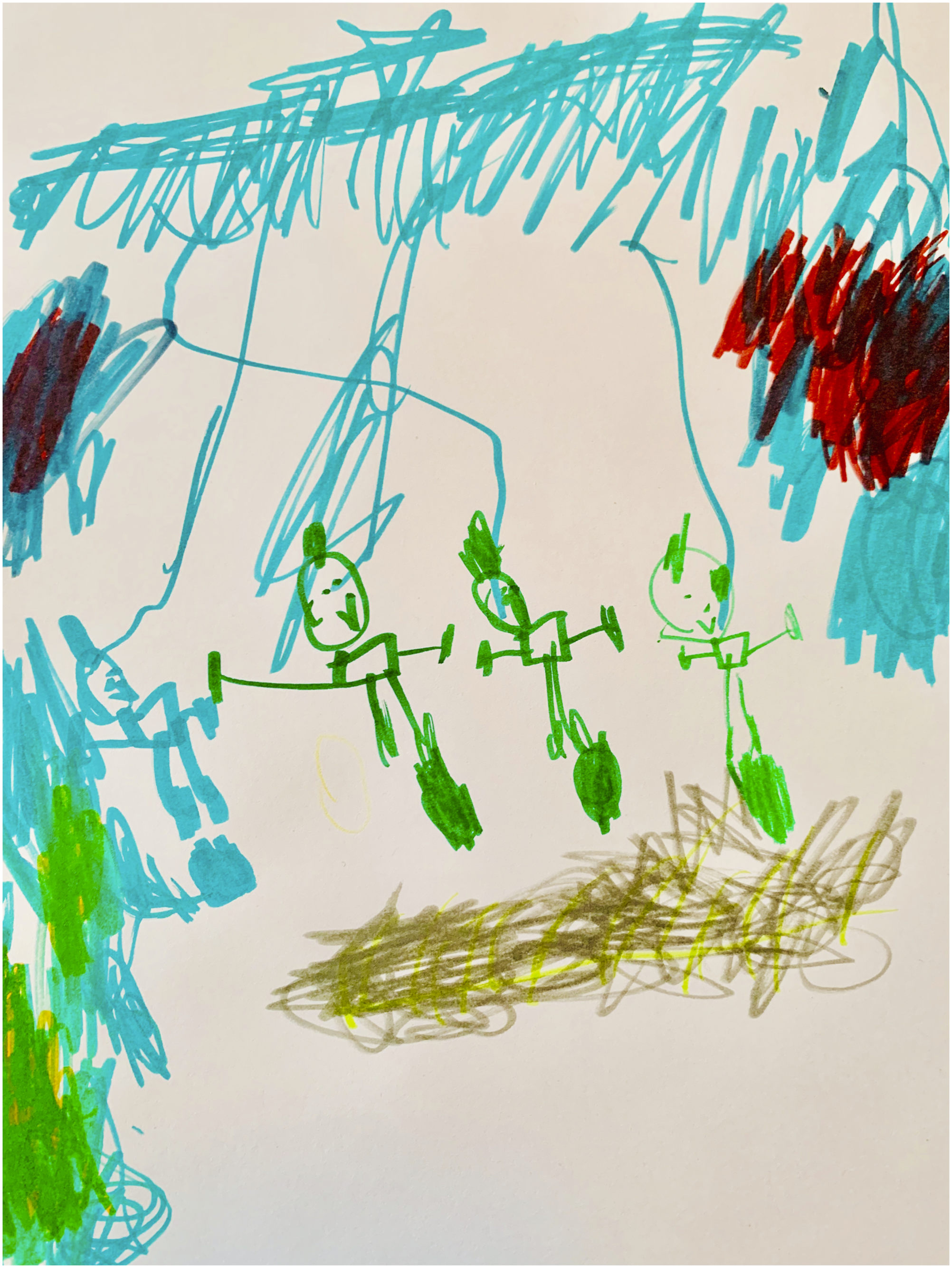
From the early months of school, I observed these four children develop a peer group that was based on their shared interests, particularly their play outside during the two recess periods. Their play consistently included running, catching, jumping, and hiding, and included the constant negotiation of rules as they engaged in these activities. Outdoor play provided this peer group with opportunities to collaborate, alter games that they initiated and were invested in, and enjoy each other’s company. My observations of the children’s play also revealed the importance they placed on activities that they produced and shared with each other during play.
In the study, 12 of the 16 children created drawings of their interactions with their friends in the outdoor spaces at school. Many of these children equated those spaces (e.g., playground and forest) with providing them and their friends with opportunities to engage in play that mattered to them. These components seemed to resonate with the children in relation to the development of their friendships—particularly when they were outdoors.
Another child, Megan, a Canadian-born Caucasian child, created a drawing of herself and several of her peers in the forested area of the playground. Several months prior, the region had received its first snowfall, a rarity for that part of Canada. The addition of snow and ice to the outdoor space provided the children with a bonding experience that they often nostalgically reflected on during the year (Figure 2). This is the day we had snow at school—the 1 day, and then it was gone! I loved playing in the snow and sliding down the hill in the forest. I made some of the boys playing on the hill and you too (researcher). Then I made me sliding down the hill with my friends—that’s Anna, Li, Brie, and Claire. We got a bit wet, especially our pants, but it was so much fun. I wish it would snow every day because I would love it. I like my friends because they like recess too. I like playing with them at centers inside and at free play, but outside is just better. Megan's drawing.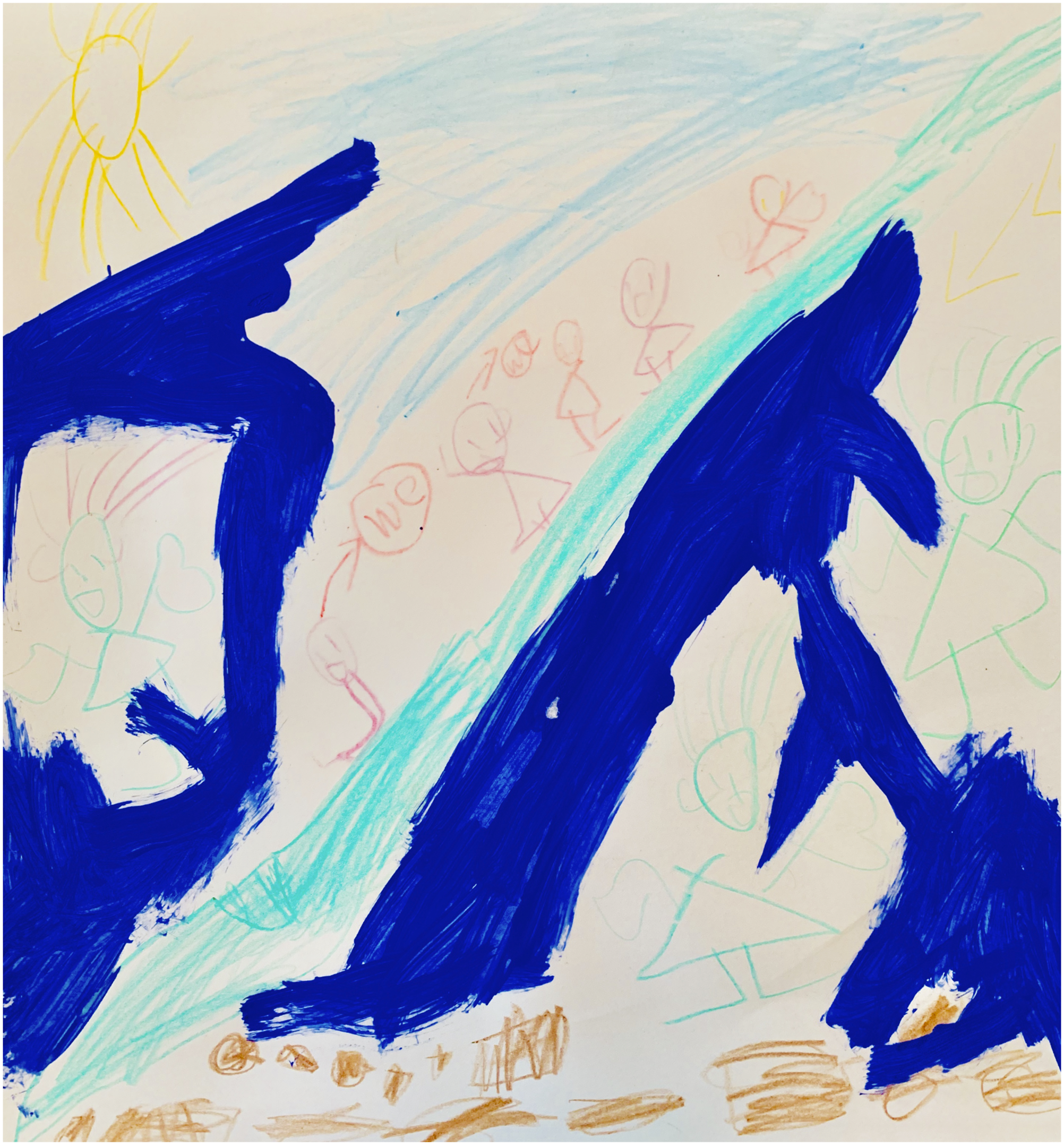
In that drawing, Megan described a play episode with her friends, all of whom represented a range of cultural, linguistic, and economic diversity in the kindergarten classroom. However, this appeared to make no difference to their friendships, the type of play they engaged in, and their joy in sharing this unique experience. Diversity also appeared to be understood as ordinary or commonplace in this study. Although the children may have noticed the diversity of each other, there was no mention of these differences by the children in relation to their friendships throughout the study.
The concept of “best friends” was another key theme in the data. The children’s understanding and use of the term “best friend” was potentially attributed to the children having agency in the classroom and the outdoor space, and being able to naturally and authentically form friendships with other children who shared their interests. The drawing below provides a snapshot of Joshua’s friendship with his best friend, Kang (Figure 3). We really like going on the slide. We have our snack outside first and then we get to play before the other kids get outside for recess - so we get to go on the slide first. Sometimes I go first, and sometime Kang goes first. I like him because he’s funny and he makes me laugh—he’s my best friend. I play Lego with him inside too—he’s actually a really good builder. Joshua's drawing.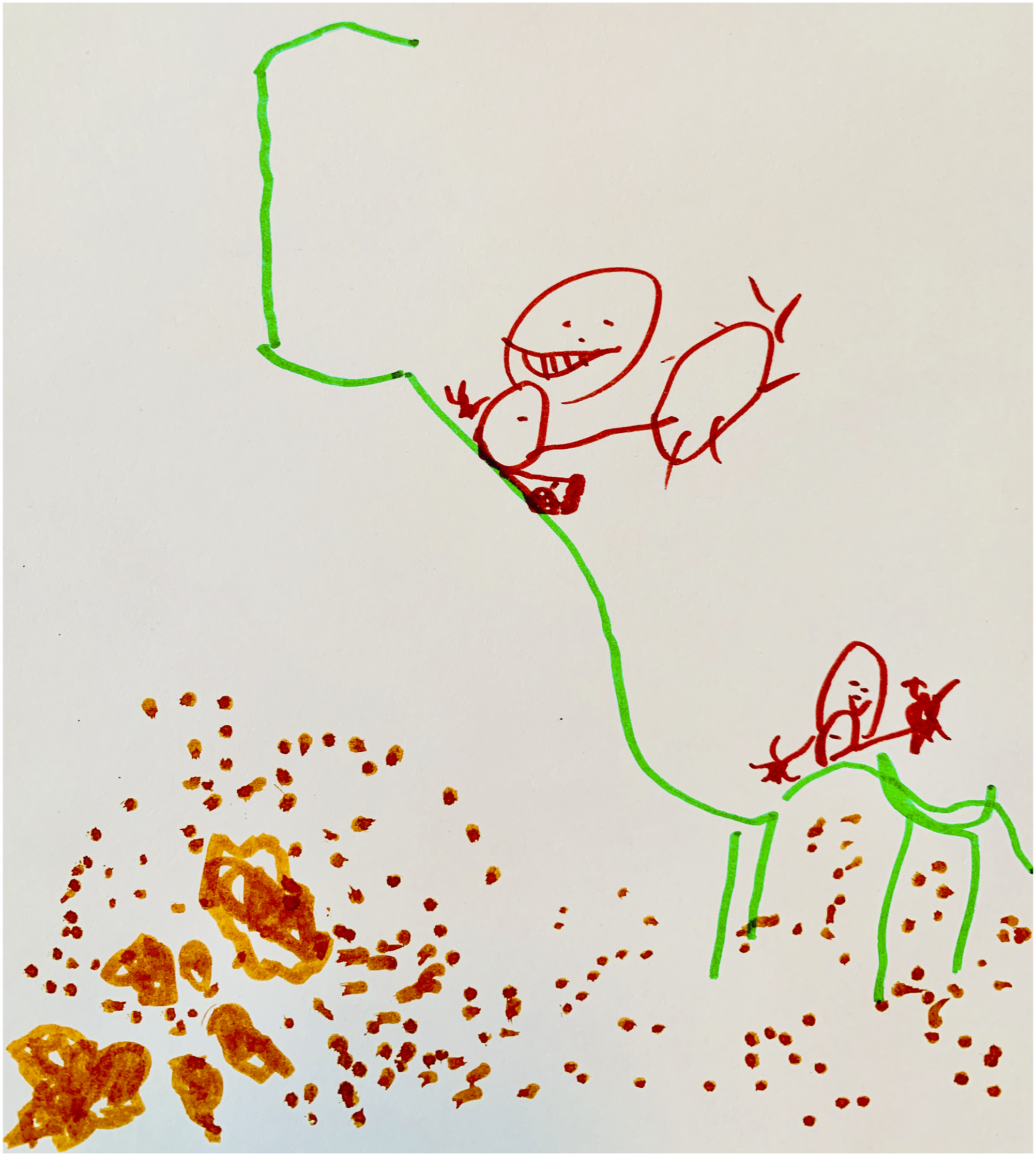
Additional children also referred to having a best friend. For example, Eun Jung created a drawing of herself and her best friend, Amira. Eun Jung was from Korea and Amira was from Iran. In the following drawing, Eun Jung made a picture of her and Amira when they first see each other in the morning on the school playground (Figure 4). It’s me and Amira at school in the morning. We come with our moms and we both have baby sisters. I usually get there first, and then Amira comes. We both like purple so we wear purple pants and shirts a lot—but sometimes we wear different colours too. That’s me (pointing to the person coloured with the purple marker) and the other person is Amira. I like playing with her because we like the same things—like My Little Ponies and colouring. She’s my best friend of all my friends. Eun Jung's drawing.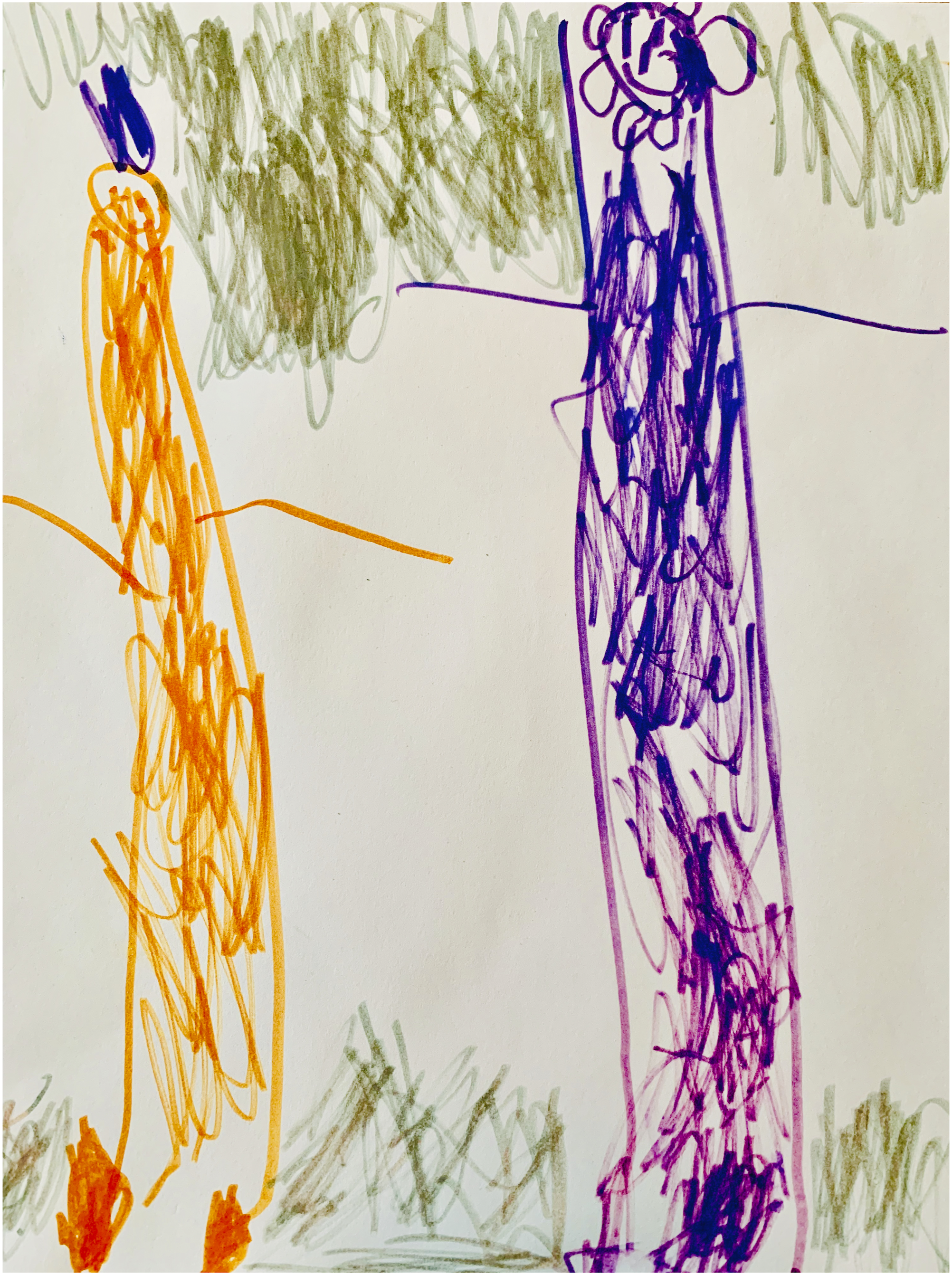
Based on Eun Jung’s description of the drawing, it was evident that commonalities in and outside of school mattered to this child in relation to the type of friend that she connected with in the kindergarten classroom. Having younger siblings, arriving at school at approximately the same time every morning, and enjoying the same toys and learning activities seemed to solidify her friendship with Amira, which was grounded in shared lived experiences and interests. The importance of common, shared experiences played a key role in the children’s development of best friends. As the children socialized with each other, the bond of similar familial structures and mutual interests enabled the children to create meaningful cultures with each other.
Discussion
In this study, the first research question focused on the ways that children developed friendships in a super-diverse kindergarten context. During my visits to the school, it was evident that the children’s developing friendships took place largely through play, both indoors and outdoors, which enabled them to collaborate and problem solve with one another. The autonomy they received during those times also enhanced their capacity to maintain and preserve their play narratives and play spaces. This finding is similar to the findings from previous studies that examined children’s valued peer relationships at school (Markstrom and Hallden, 2009; Skanfors et al., 2009), specifically, how children valued the precious times they were able to engage in play at school. This finding also supports the work of Hinde (1992), who argued that children need time and space to share their experiences in primary classrooms and to establish and nurture their friendships. Hinde added that the emotional and social aspects of friendships are formed through shared activities and interactions over time.
Throughout the study, the outdoors in particular had a significant impact on the children’s development of friendships. While outside, the children engaged in running and chasing games, and imaginative games, all of which were social, and evolved over several observation sessions. Thompson and Thompson (2007) articulated that children’s social interaction outdoors tends to lend itself to sustained periods of play, thus encouraging children to get to know each other and what they and others like and dislike; learn “rules” of play; learn how to problem solve; and, manage conflict resolution. Hyvönen (2011), who examined children’s play in Finnish primary schools, revealed that outdoor time, particularly “recess” is very important for practicing friendship and for “being together in harmony” (p. 59). This was evident during each data collection session, as the children happily engaged with each other, and created pretend games where they could move across large areas (Merewether, 2015).
The second research question centered on what the children’s conversations about their drawings revealed about their conceptions of friendship. Drawing provided the children with an opportunity to express their everyday experiences of friendship at school, and positioned them as experts on their own lives, particularly in relation to knowing what friendship means to them (Carter and Nutbrown, 2016). Drawing also provided the children with a means of encoding their experiences (Baron, 1984), and by verbally explaining their drawings, they were able to draw on two modes—art and language, which are “embedded in distinct ways of conceptualising, thinking, and communicating” (Kress, 2000: 195).
The children’s discussions about their drawings revealed that although there was significant diversity in the children’s classroom (and outside of the classroom in their local neighborhood), this did not seem to influence their peer friendships, as the children had identifiable friendship groups and best friends that crossed cultural, linguistic, and economic realities. Based on the children’s descriptions of their drawings, they seemed to successfully develop relationships with each other without any major conflict or evidence of racialization or othering (Weller and Bruegel, 2009). The children’s development of friendships at school reflects Wessendorf’s (2014) term, “commonplace diversity,” which argues for a phenomenon where individuals routinely experience ethnic difference and how this is viewed positively and as unexceptional. This understanding supports the data in the current study, as emerging friendships across ethnicity, and to a lesser extent, social class were present amongst several of the children.
As revealed in this study and in the supporting research (e.g., Iqbal et al., 2017; Vertovec and Nowica, 2014), young children’s socialization and development of friendships with culturally, linguistically, and economically diverse peers is taking place in contemporary classrooms and is becoming more commonplace in schools worldwide due to increased global movement. This study also uncovered that young children want to share their perspectives on their social lives and peer groups at school, and that using a visual method, such as drawing, can provide an authentic mode of communication for children to share their views on their valued friendships. In this study, the children’s discussions about their drawings on school-based friendships have unrealized potential for teachers in regards to understanding how children can use a visual method of communication to make sense of, and represent, their valued friendships at school.
Conclusion
The ways in which young children navigated diversity, particularly in relation to developing meaningful friendships at the onset of their formal schooling, revealed that young children have tremendous capacity to develop strong friendships in their formative years, and that these friendships transcend what are often thought to be barriers or incompatible differences. Due to the children being provided with time and space to develop peer friendships, and having autonomy to choose their own play partners, the children were able to authentically develop relationships (Carter, 2021; Carter and Nutbrown, 2016). Most significantly, the young children appeared to view diversity as an ordinary part of their everyday lives in a super-diverse kindergarten setting as they made sense of their worlds and valued friendships.
Although this study included a relatively small participant group, I argue that this design was necessary to be able to develop an understanding of the nuances of friendships as the children navigated their peer cultures in their first year of school in a diverse sociocultural context. The children’s visual representations of their friendships and conversations about their representations also provided a graphical form of representation that is generally “under-valued and under-represented” within institutional settings to ascertain young children’s views (Anning, 2003: 5). Finally, due to the changing global landscape, future research focusing on how young children develop friendships in culturally, linguistically, and economically super-diverse classrooms is needed to provide a broader perspective on children’s socialization in contemporary classrooms.
Footnotes
Declaration of conflicting interests
The author(s) declared no potential conflicts of interest with respect to the research, authorship, and/or publication of this article.
Funding
The author(s) received no financial support for the research, authorship, and/or publication of this article.
