




Abstract
The aim of this article is to focus on how children perceive their time spent in organised out-of-school activities in Finland and establish whether these activities provide an arena for children’s leisure. The article is based on two empirical studies, one on after-school activities and another on school sports clubs at the elementary school level. The most meaningful features for children were found to be time to play freely with friends and taking part in designing activities. Out-of-school activities are supervised and controlled because of various societal and educational requirements. The tension between children’s views and institutional requirements is discussed.
Keywords
Introduction
Children’s experience is often overlooked when organising their leisure. Furthermore, legislation, different recommendations and institutional practices fundamentally affect children’s experience of childhood by way of building and regulating their lives from the adult point of view (Andresen et al., 2011; see also Frønes, 2009). The aim of this article is to focus on how children perceive their time spent in organised out-of-school activities in Finland and establish whether these activities provide an arena for children’s leisure. The article focuses on two empirical studies of younger children (aged 7–13) exploring children’s worlds by focusing first on after-school activities (Eskelinen) and then on targeted school sports clubs (Lehto), collectively referred to here as organised out-of-school activities.
The article relies on new social studies of childhood that understand children as active and independent social actors, as a part of society and its structure and culture, by ‘being’ a child rather than ‘becoming’ an adult (James et al., 1998; Prout and James, 1997; Qvortrup, 2004). The theoretical starting point is Mayall’s (2002) approach to ‘the child as an agent, as a participatory in constructing knowledge and daily experience’ (p. 22). The data were produced with children, as the premise of our research is that children are the best experts reflecting on their everyday life. Children’s views are crucial for research, as children construct their own childhood (James and James, 2012; Mayall, 2002). However, childhoods are increasingly spent in organised institutional environments, which make children’s lives more and more protected, controlled, and organised (Strandell, 2013). In fact, the line between leisure and education has become blurred (Mayall, 2002), and freedom of movement and free play are turning into luxury (Dahlberg, 2009; Strandell, 2012, 2013; Thomson and Philo, 2004). All this might cause the tension between what children actually want and the institutional and societal requirements. Therefore, we ask how children perceive their time spent in out-of-school activities and how the activities on school premises perform as an arena of children's leisure.
We recognise children’s everyday life, focused on leisure, as being constructed and formed in children’s mutual relations as well as in the relations between children and adults in diverse institutions (Alanen, 2009; James et al., 1998; Mayall, 2002). As a consequence, available spaces and places have an impact on how children experience and construct their leisure (Holloway and Valentine, 2000; Smith and Barker, 2000). Leisure is described as free personal time (Frønes, 2009), as in play. It is seen as an arena for children’s meaning-making, emotional sharing and creativity in their everyday lives with peers (Corsaro, 2005; Frønes, 2009). In previous Finnish leisure studies (e.g. Määttä and Tolonen, 2011; Myllyniemi, 2009), adolescents experience free personal time as free time (unstructured leisure), time with self-selected activities and company, freedom, refreshment, and rest. Younger children’s leisure is mostly formed around play and games. Play is commonly seen as a child-oriented activity initiated by children in which fun seems to be the main constituent (Howard et al., 2017; Øksnes, 2008). Play functions also as an arena for children in exploring their power and agency (Kane et al., 2013), for instance, in a form of minor political activity in their everyday worlds (cf. Karlsson, 2018; King, 1982; Lester, 2013; Salo, 2010). In activities organised by adults, however, children’s play is rarely just pure fun, as frequent interruptions and fragmented time cause loss of joy (Pieper, 2009) due to institutional practices and orders, for example (cf. Karlsson, 2018; Smith and Barker, 2000). Furthermore, when play is integrated with learning (see Kane et al., 2013; Lager, 2016), it can lose its freedom and spontaneity and become an obligatory activity (Stebbins, 2005; see also Haglund and Anderson, 2009; King, 1982). However, even if an activity entails obligations, such as in organised leisure, it can still provide pleasure and fulfilment (Stebbins, 2005). In this article, we understand organised leisure on school premises as voluntary activity, free time from school work, which may consist of instructed and uninstructed recreational, hobby-related activities.
After-school programmes are known to have a positive effect on students’ academic, social and behavioural skills (Fredricks and Simpkins, 2013; Holmberg and Börjesson, 2015; Mahoney et al., 2005), but they are also criticised for their seriousness and goal orientation (Berg and Peltola, 2015) and tendency to detach children from the rest of society into territories and institutions of their own (Alanen, 2009; Smith and Barker, 2000; Strandell, 2013). The socio-pedagogical approach has been more or less consistent with the out-of-school settings (Kane et al., 2013; Mayall, 2002; see also Lager, 2016), which are generally provided by municipalities with state support and regulation (Øksnes et al., 2014) and have a long history in the Nordic countries (Elvstrand and Närvänen, 2016). Lately, Sweden and Denmark have established a professional platform for leisure-time pedagogy, while Finland, Iceland and Norway lag behind in that area (Haglund, 2015; Pálsdóttir, 2010). Kane et al. (2013) draw attention to the tension between children’s agency in play and the constraints of after-school childcare. The tension between certain aspects of governance and voluntariness for children as well and the concept of leisure and its consequences as interpreted and understood by teachers in everyday practice are discussed, for example, in Hjalmarsson (2013) and Hjalmarsson and Löfman Hultman (2015), whereas Elvstrand and Närvänen (2016), Haglund (2015) and Saar (2014) shed light on children’s opportunities to handle and influence the activity in after-school setting.
Considering how widely out-of-school activities are provided in Finland (in almost every school and municipality), studies in this field are surprisingly sparse. Forsberg and Strandell (2007) take a critical approach to the topic of discussion around organising children’s free time. Strandell (2012, 2013) examines after-school activities mostly from the childhood management perspective, whereas Metsäpelto and Pulkkinen (2012, 2014) investigate how extracurricular activities organised as part of the school-based programme benefitted children’s socioemotional development and school achievement. What is more, Finnish research on leisure has focused on organised leisure activities often covering hobby groups and more specifically the frequency, type and contents of hobbies of age groups 13 and above (e.g. Myllyniemi, 2009; Myllyniemi and Berg, 2013; Stenvall, 2009; Syrjäläinen et al., 2015). This article’s viewpoint of younger children, in particular, in addition to its focus on Finnish out-of-school activities still remains relatively little studied.
Out-of-school activities in Finland
Out-of-school activities are defined as leisure activities supporting the growth of children and young people while acknowledging their needs and abilities (Finnish National Board of Education (FNBE), 2011; Ministry of Education and Culture (MEC), 2016). Both after-school activities and school clubs are voluntary and extracurricular (BEAA 1136/2003; MEC, 2016). There is a moderate fee for after-school activities, whereas school clubs are free of charge. After-school activities are intended for Grades 1 and 2 (children 7–9 years old) and for special-needs children in Grades 1 through 9. The activities are available on school days, up to five hours a day, when time is allocated for snack, homework, rest, instructed activities, and free play indoors or outdoors. (BEAA 1136/2003; FNBE, 2011). School clubs are intended for children in comprehensive school (Grades 1 to 9), and activities are approximately one hour in length, usually organised once a week, and typically revolve around one theme that may be sports, arts and crafts, choir, band, chess, drama, and so on (BEA 628/1998; FNBE, 2014). In this article, after-school activities were instructed by supervisors who have (at a minimum) taken an after-school activity instructor course (FNBE, 2011), whereas school club leaders were elementary school teachers with master’s degrees. Furthermore, club teachers were school employees, while after-school activity instructors worked for private service providers.
Data and methods
Children’s viewpoints are highlighted here in two separate empirical studies to obtain a broader view of the subject in question (cf. Kane et al., 2013). Eskelinen’s study is a visual ethnography of after-school activities, in which children took photographs of their supervised afternoons. Lehto’s research comprises a case study of targeted school sports clubs. The studies are presented in this specific order due to the children’s ages: first 7–9 years old (Eskelinen) and second 9–12 years old (Lehto) covering the whole Finnish elementary level from Grades 1 through 6.
After-school activities
In the visual ethnographic data presented (Eskelinen), children were asked to photograph what they usually did during the time they were engaged in after-school activities and also to photograph their favourite places and places (or spaces) they disliked. The data were produced with children in Grades 1 and 2 (and some children in Grades 3, 5 and 6) (124 altogether) in three different groups on after-school activities in a metropolitan area for approximately 4–5 weeks apiece. Each child would photograph one whole afternoon, and four digital cameras were in use simultaneously. The number of pictures varied; the majority of the children took 10–40 photographs (the data consisted about 5000 photographs in all).
Visual research methods are used because they can provide unique insights into children’s everyday life. Children often photograph things that are meaningful to them (see, for example, Pink, 2007). Barker and Smith (2012) argue that the interpretation of photographs should be undertaken with children to ensure that children’s own views are recognised. Using the photo elicitation method (Harper, 2002), the images were viewed and discussed afterwards together with each photographer in turn. Photo elicitation is an interview method in which visual images (usually photographs) are the basis of a discussion. As a collaborative process, it creates a more equitable relationship between the researcher and the participants (Harper, 2002; Pink, 2007). Eskelinen asked children to freely tell about images they shot and their content. In addition, there were conversations about topics such as: ‘What do you usually do during the after-school activities? What would you like to do if you were allowed to choose freely? What kind of activities would you yourself organise if you were a supervisor?’ In the end, photographers were asked to choose ‘the top five images’ best representing their afternoons and one image they would later receive in print. The photographs taken by the children and the picture-stories (the children’s reflections on the images) formed the core of the analysis, which has been interlaced with ethnographic writing starting with participant observations during the fieldwork (see Lappalainen, 2007). In this article, particularly ‘the top five images’ (620 photographs altogether) were scrutinised to determine what (and to what extent) the children photographed and how they narrated the images.
Targeted school sports clubs
The data for the qualitative case study of the targeted school sports clubs (Lehto) were gathered with children in Grades 3–6 in five such clubs. School children with no organised sports hobby and who were thought to be in need for social or motor skills support as well as health-promoting physical exercise were invited to school sports clubs by teachers and a school nurse. The size of the clubs varied from 10 to 35 children with one to two school teachers per club. The data were gathered by using the empathy-based stories method (Wallin et al., 2019). The children (51 altogether) were asked to fantasise and write about what might have happened in the school sports club to have caused a child to feel either sad or joyful afterwards. Later, 21 additional children from the same five sports clubs were interviewed based loosely on the results of the earlier writing task.
Lehto subsequently conducted a qualitative content analysis on the data (Elo and Kyngäs, 2008) starting by data-based reading and by bringing up children’s expressed views and experiences on five different sports clubs. The data reading was directed by a quest for children’s pleasing experiences in targeted sports clubs. Children’s responses to interview questions were arranged according to the context the child was referring to the sports club, physical education (PE) class, recess, leisure, or home and family. Next, the expressions were regrouped by identifying descriptions of physical activity experiences and forming subcategories of them. These subcategories were merged into four larger ones: relation to the teacher, relation to other children of a sports club, possibility to influence, and safe and relaxed atmosphere. Children’s brief written stories (which were summed up) were used to supplement information in the above-mentioned categories. While the interviews did not contain many negative comments about the sports clubs, the feeling of fear that children may encounter during PE situations or in PE groups arose in these written stories.
Ethical and practical notions
Taking account of the age of the participating children in the two studies, the permission of both the children and their custodians was requested. To secure the anonymity of participating children, we used pseudonyms. However, in photographs anonymity was more complicated. Therefore, we selected the photographs considered safe to publish very carefully. At present, the modified appearances of the children, having matured into young adults, naturally protect their anonymity. Participation in sports clubs, where children get invited to by certain criteria, is a sensitive matter. A study may reveal the special orientation of a sports clubs; therefore, the researcher has to be sensitive but cautious not to present a child merely as protected (James and James, 2012) but also as an agent (Mayall, 2002). The notion of voluntariness to participate in targeted sports clubs might also be jeopardised when a teacher, who is often seen as an authority figure by children, personally invites children to the club.
Letting children use cameras and discuss their own pictures provided them an opportunity to narrate their doings and preferences, or places or things they did not like. Some of the children seemed to be simply empowered or thankful for the opportunity to take photographs and talk about them with an adult. While most children took great pleasure in using cameras, some returned their cameras almost immediately. In institutional environments, children may lack access to some desired environments for photography (see Barker and Smith, 2012), such as a nearby forest. Photographs also tend to be strongly framed and therefore may offer only a limited view into children’s worlds. Large number of photographs and the photo elicitation method compensate these drawbacks. The method of empathy-based stories is well suited for studying the participants’ perceptions regarding a specific topic (Wallin et al., 2019). The information value of written stories, however, was more modest than expected, because the writing task was demanding to some of the younger children even though the method had gone through preliminary testing.
The practical challenge in both studies was time and place availability, since the children were in the middle of their busy out-of-school activity routines and because of the high background noise in the audiotaped conversations at times. An additional challenge was the researchers’ limited time to write down field notes. Even if the focus of this study was to bring forth children’s views, the moral responsibility of interpreting the study results ultimately lies with the researchers.
Results
Focus on children’s views on after-school activities
The data comprise a significant number of images of children’s interactive play: running, skipping, playing football, playing on swings, hanging out or standing by a fence with friends, and posing for the camera with different facial expressions and gestures. The children took photographs of their school surroundings both indoors and outdoors, such as toys they played with, board games, paintings and posters, wallpaper, notes with pictures, various signs including their own drawings, and elements of nature. The children also took pictures of their supervisors but relatively few photographs of themselves participating in the supervised thematic activities.
The schedules were often fairly tight during the after-school activities, and the children’s freedom to move around was restricted and controlled due to regulations and space availability (see Eskelinen, 2012). On the other hand, the children with cameras were allowed to move around more freely, for instance, photographing in a gymnasium storage, whereas in a normal situation they would have been under supervision the entire time. For the most part, the children took photographs when they had free activity time (non-instructed time) but less so in situations such as waiting in line, having a snack, or during instructed activities. Children enjoyed seeing what kind of photographs other children had taken, and they chatted together about where they could take ‘a good picture’. They seemed to be present and embodied (cf. Salo, 2010), particularly when photographing themselves or when posing for a friend with a camera. Photography in itself became a kind of game (cf. Änggård, 2015) in which children experimented with and discovered different ways of taking pictures.
When viewing the images, the children said that what they favoured most during their after-school activities was playing freely with their friends. ‘To be able to chill with friends or play freely in the gym’ and ‘to play with friends whatever game comes into mind’ were mentioned as their favourites (see Image 1). What the children missed was more ‘free’ time – time to play and be with their friends uninterrupted by too many supervised activities. Children expressed a wish for more opportunities for adventure with peers outside the school yard (see Image 2). Some of the children desired (more) flexibility in compliance with the rules. They also valued opportunities to influence the activities they were engaged in. Instructed activities might have interrupted children’s own play, as one of the children describes, ‘What usually happens is that just when we are having fun, we have to start doing that [instructed activity]’ (Timo, Group 3). Parallel notions have been expressed, for instance in Swedish (Elvstrand and Närvänen, 2016) and Australian (Simoncini et al., 2015) studies, in which children favoured activities that could be carried out with less adult supervision, such as free, unstructured play (see also Øksnes, 2008).
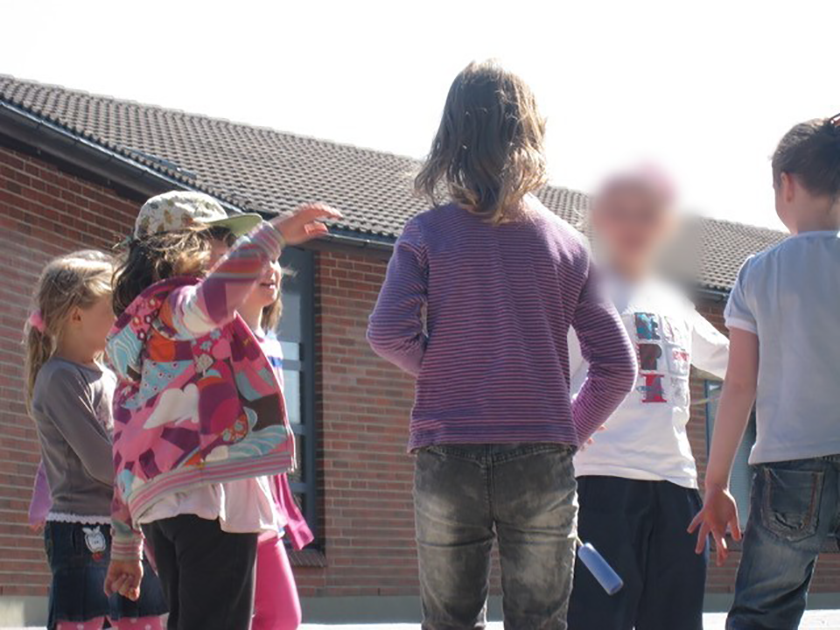
Play is about to start.
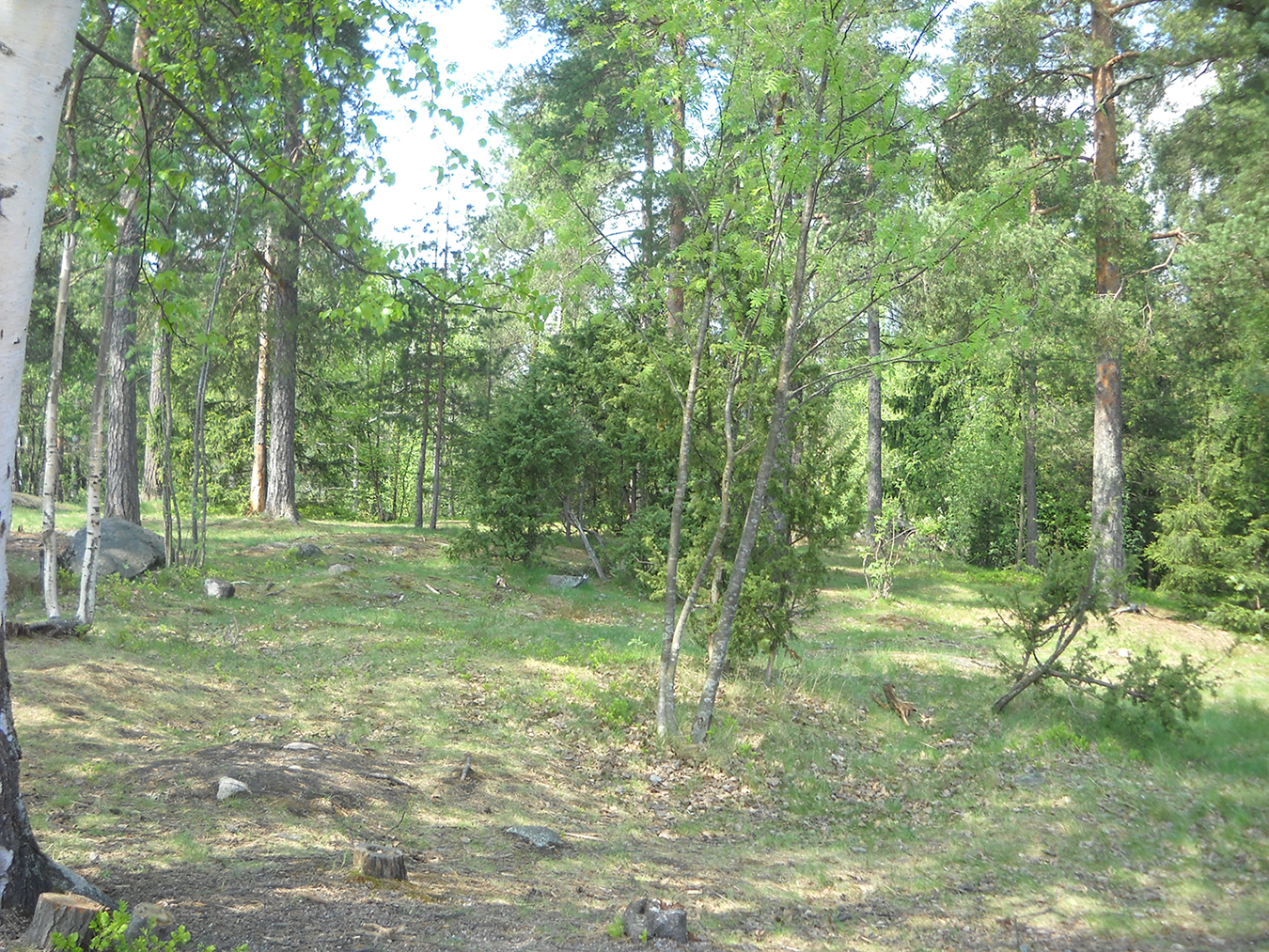
Even though there was a small forest bordering each school, its use was restricted, and playing there was always supervised.
‘The top five images’ revealed what kind of things children liked and what they used to do during the supervised afternoons. An image of a friend posing for the camera is the most common image in the visual data. Nevertheless, friends are often an important part of the narrative, even in photographs that do not depict any of them. One of the children, for example, chose an image of a drawing made by her friend, ‘as we are used to, like, drawing [together]’ (Nina, Group 1). Fredricks and Simpkins (2013) have also shown that being with friends and making new friends are primary motives for joining and remaining in after-school programmes, but negative peer interactions can also be a cause to drop out (cf. Øksnes, 2008).
Time spent in after-school activities was often described as pleasant. For instance, Pauli (Group 1) described that ‘I have such a good time in here that I don’t wanna leave’. When he was asked why he enjoyed it so much, he answered by saying: ‘That gym, and then a little those friends, and that “bomb shelter” [the school air-raid shelter had been turned into a fairly comfortable space for after-school activities], and then –I am really good at drawing!’ In line with the data, the study of Simoncini et al. (2015) show that children generally like to spend time in after-school centres, because they can hang out and play with their peers and decide what they want to do, at least within adult parameters. Moreover, the after-school activities have been shown to provide dedicated spaces and time for children and resources for play that are more plentiful than those available at home or at school (Simoncini et al., 2015). Similarly, Pauli would probably have been able to draw even if he had gone home after school, but then again, he would not necessarily have had access to the kind of drawing materials he had in the after-school activities or friends to draw with (see Image 3).
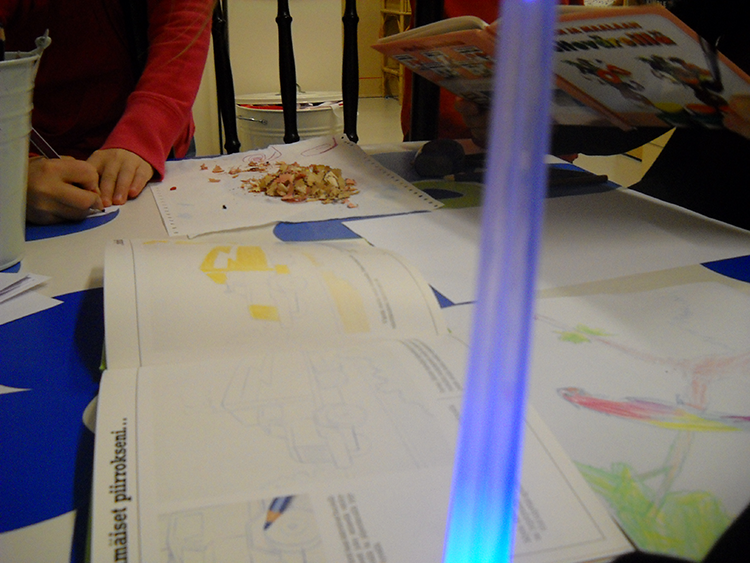
Drawing together was highly appreciated by many.
The nature of after-school activities is often functional, since the opportunities for learning are valued (Haglund and Anderson, 2009). The photographs disclosed that children may have had a pleasurable time doing their homework, as they were allowed to collaborate and interact with their peers during this time. For example, Nina accounts, ‘It is nice to do homework with friends. It is boring at home alone’ (see Image 4). Some photographs also revealed a sense of a residual time, when after-school activities become merely a safe place or ‘a station’ (see Eskelinen, 2012; Haglund and Anderson, 2009), somewhere between the school and home, where children are looked after. This could occur particularly during the last activity hour in the afternoon, when majority of friends have already left. Pieper (2009) pointed out that this type of waiting time is more like killing time and boredom and directly related to inability to enjoy leisure. All in all, even though there were some functional obligations or sense of residual time, children found the activities mostly pleasurable. After-school activities seem to form an integral part of children’s everyday life.
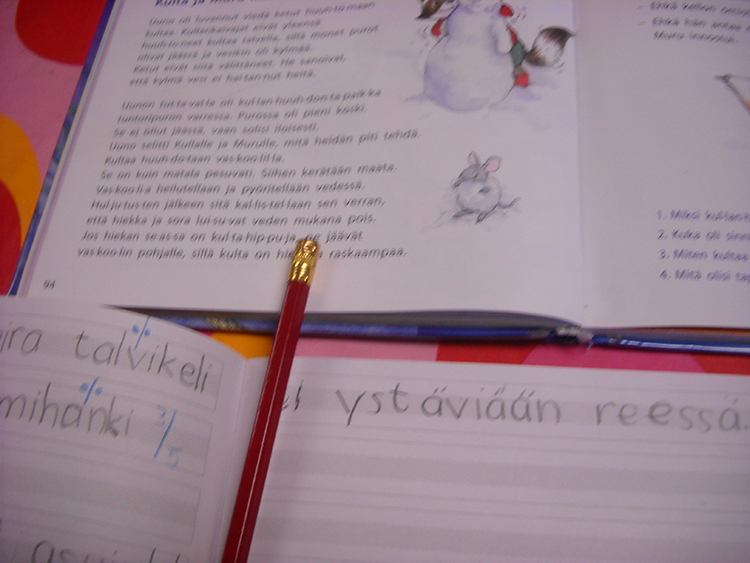
Doing homeworks can be fun with peers.
Focus on children’s views on targeted school sports clubs
School clubs are typically open for all children who wish to participate, although often those who choose to do so are already active during their leisure whereas those who might need support do not. It is untypical to invite children to the school clubs. In this article, the sports clubs were used as a tool to nurture children’s self-confidence, promote engagement in an active lifestyle and support peer relations to make school more attractive to children (see Lehto, 2018). When studying the targeted school sports clubs, Lehto asked children to describe what they liked about the clubs and what they would have changed if they could. In order to assist children in describing the nature of the club activities, Lehto also asked them what they would have transferred from the sports club to the school’s PE classes and vice versa. Three key thematic, partly overlapping, areas were identified in the children’s narratives: the playful nature of the activities, democratic practices and the significance of other participants. The children described the activities in the targeted school sports clubs in an extremely positive way, such as ‘fun’, ‘enjoyable’ and ‘exciting’.
The children of the study found the physical games that formed the core content of the sports clubs particularly enjoyable. Games played for fun were also the most frequently mentioned activity that the children would have transferred to PE classes in the school setting. The delight and enjoyment children derived were shown by Noonan et al. (2016) to have an immediate, concrete and substantial impact on children’s engagement in the activity. Despite the game-oriented nature of the club programme, competitiveness did not seem to be in focus as much as during school hours: ‘At the sports club, activities are not taken as seriously as in the PE class’, said 10-year-old Ville. In addition, the leisurely pace in physical activities and games seemed to please the children: ‘In sports clubs, one doesn’t have to rush around like in PE, where you have to run and hit the ball all the time’ (Jiri, 10 years). The competitive aspect of physical games in PE seems to have been replaced by playful and peaceful atmosphere in the clubs.
The use of democratic methods and practices seems to support children’s positive experiences. Teachers took the time to pause and listen to the children. The children were given opportunities to express their ideas aloud to everyone. Miia (10 years) said, ‘We can take turns deciding what to play. If someone can’t come up with anything, then somebody else can suggest a game. We teach each other new games and then the teacher tells us about some games as well’. Like Miia, the majority of the children revealed in the interviews how they volunteered to suggest games and worked together to design the club programme. The children valued the greater freedom of choice they enjoyed in the targeted sports clubs compared to school PE classes. Nevertheless, they still expressed a wish for even more opportunities to take part in the designing process. This is in line with a study where children described that the opposite of leisure is ‘when everybody decides for you and when something is compulsory’ (Øksnes, 2008: 156). When children are given opportunities to choose and influence the content of the activities, the time spent engaged in those activities is seen as safe (Syrjäläinen et al., 2015) and pleasurable leisure time (Haglund and Anderson, 2009; Øksnes, 2008; Stebbins, 2005). Besides enhancing enjoyment, peer support has been shown to have a significant influence on engaging in physical activity and adding greater meaning to the activity (Noonan et al., 2016).
Having a friend or classmates invited to the same sports club seemed essential for children’s attendance. They had accepted the club invitation because their friends had been invited, too, or they had missed a club day because their peers had also been unable to attend. On the other hand, some of the interviewees acknowledged that had they known what a pleasurable place the club was, they would have joined even without friends. All in all, the targeted sports clubs were described as fun moments spent in the company of like-minded friends and peers engaged in physical activity. When talking about ‘fun’ in sports clubs, children were referring to friends and peers, possibilities to express one’s opinion and playful atmosphere. Since the children were invited to the targeted sports clubs based on certain criteria, it can be assumed that they shared similar attitudes towards physical activity. They appeared to approach physical activities with the same degree of seriousness, whereas in a regular PE class the degree of seriousness varies more. Berg and Peltola (2015) also showed how divisions might emerge in PE settings between the children who are ‘serious players’ (exercising in organised sports activities in their leisure time) and the ones who are beginners in a particular sport, or physically active on their own, independently with friends. Applying Stebbins’ (2007) approach towards serious leisure pursuits, children’s ways of approaching physical activity in the targeted sports clubs resembled casual leisure. They did not seem to be intent upon practicing to attain a specific skill or for a special event, or at least this was not emphasised. Instead, enjoyment was highlighted. Those children who adopt a casual attitude towards physical activities can easily be overshadowed by ‘serious players’. Furthermore, sharing a similar attitude against engagement in activity has been shown to be a strong driver for friendship selection not only among small children (Lehto et al., 2012) but also among adolescents (e.g. Noonan et al., 2016).
Having the feeling of a safe and comfortable atmosphere seems to be an important criterion for a pleasant club experience. Most children recounted in their empathy-based stories, written anonymously, that physical activity settings can involve an element of fear in general. A boy wrote in his story what might upset him in the club: ‘There was too much pressure in the club. When we were playing baseball and I caught the ball but failed to act, others complained…You are blamed even for being slow’ (A boy in club E). Such fears were mainly connected to name-calling after letting the team down or failing at a task, for instance. Fear of an injury due to being shoved in rough physical games was also expressed. Both in the interviews and written stories, however, the children stated that they did not experience fear in the targeted sports clubs (apart from some random jostling cases). These findings are supported by a study among Grade 6 children in PE classes, where experiencing fear was more common among physically inactive children than physically active ones (Haanpää et al., 2012). It seems that the sports clubs have been successful in creating a leisurely, confidence-boosting, and safe atmosphere for the invited children enabling them to express their opinion, participate in activities at an unhurried pace, or sometimes even step out of a game, and providing them with the time and opportunities for social interaction.
Discussion
We sought to examine children’s views about their time spent in organised out-of-school activities and to establish whether these activities provide an arena of children's leisure. Many positive emotions were found to be attached to play and games, whereas negative emotions emerged if playing was limited (cf. Howard et al., 2017). Particularly, time for playing freely and spontaneously with friends, playfulness in guided physical activities and possibilities to design games were the most meaningful and also more desired features for children. Besides playing, doing things without a rush and at one’s own pace seemed to make activities pleasurable. However, out-of-school school activities also perform as a residual or functional time characterised by shortage of actual free time during the activity, limited choices or children’s lack of opportunity to influence on how to spend their time (cf. Holloway and Pimlott-Wilson, 2014; Stenvall, 2009). In these types of circumstances, children may not consider participation in out-of-school activities as leisure.
The nature of out-of-school activities is affected by teachers’ and supervisors’ pedagogy (cf. Lager 2016), daily routines and the physical premises in use. Possibilities and abilities of adults to give space for children’s own active efforts is critical. It seems like personal time for children was easier to allow by teachers than by supervisors. It is notable that the after-school supervisors came to work on ‘borrowed’ territory on school premises, which required extra vigilance. The school club teachers, on the other hand, were in a familiar environment, and the clubs seemed to have quite loose boundaries with less academic responsibility and more relaxed implementation of regulations. Moreover, the special Quality Criteria (MEC, 2012) for school clubs – considered as children’s leisure time – emphasise the teacher’s opportunities to expand their teaching skills and support for the teacher–child relationship. In the after-school activities (MEC, 2012), instead, the emphasis of Quality Criteria is on the professional responsibility of the supervisors in bringing up children, which may force rigid regulations.
Children’s leisure activities are formed by the pressures of their predicted future, not by their social and cultural autonomy (Frønes, 2009). We see that this kind of investment thinking easily treats children as becoming adults, future citizens rather than beings here and now (see Lester, 2013; Qvortrup, 2004; Strandell, 2013). Institutions regulating ‘normal childhood’ create both activity opportunities and restrictions for children (Holloway and Valentine, 2000; Prout and James, 1997). In our study, restrictions were manifested in the form of tight and overlapping schedules, limited or extended length of activities, delimited spaces and playing arenas, and controlled atmosphere – all of which affected the nature of out-of-school activities. On the other hand, children perceived many pleasurable features such as peer relationships, safe environment, and access to gear and materials that are not available at home, use of a gym, and opportunities to have a sport hobby. Despite the ‘obligatory elements’ and the fact that the out-of-school activities of our study were arranged in school facilities, they were conceived as more of a leisure pursuit than an extension of school work.
Children’s organised leisure deserves more discussion. For instance, in our article, fulfilment of voluntariness – one of the features of leisure – is not obvious and might actually be illusory, since children’s participation in out-of-school activities is more or less decided by adults. Should organised leisure activities be called leisure at all? Mayall (2002) revealed that children value free time highly, especially when it offers opportunities to step out of everyday life and adult control into the world of play (see also King, 1982; Øksnes, 2008). What is more, the same activity can be experienced as leisure or non-leisure to a different degree, depending on the day, and leisure also seems to have a multitude of meanings for children (Øksnes, 2008; cf. Veal, 2017). In this article, organised out-of-school activities do not fulfil all children’s expectations and desires on leisure. Restrictions, regulations, objectives or instructed activities limit voluntariness and freedom. Therefore, out-of-school activities can be seen as a liminal space between dominant spaces: school work and children’s genuine free time.
The contribution of this article is to direct a discussion to the nature of childhood in organised leisure. We want to emphasise that it is essential to ask children about their views on everyday life and take their opinions seriously. Based on our findings, there should be less concern about ensuring that leisure is utilised in a proper and effective manner. In order for children’s time to be truly their own, out-of-school activities should not be taken too seriously or expected to function in accordance with far-reaching objectives. The nature and quality of supervised activities, play and children’s mutual relationships in particular are a field that might benefit from further research. In the future, the focus should be on the research of effective ways to take children’s views into consideration when planning and executing out-of-school activities.
Footnotes
Declaration of conflicting interests
The author(s) declared no potential conflicts of interest with respect to the research, authorship and/or publication of this article.
Funding
The author(s) received no financial support for the research, authorship and/or publication of this article.
