




Abstract
Symphony orchestras (SOs) face financial and legitimacy challenges, from unstable revenue to shifting stakeholder expectations. Grounded in dynamic capabilities theory, we investigate how innovation strengthens nonprofit SOs’ financial sustainability. Using survey data from 131 North American SOs, we test a model where environmental intelligence and external partnerships shape product and process innovation, affecting financial outcomes. Results indicate environmental intelligence alone does not generate innovation but depends on partnerships for resource access and action. Furthermore, process innovation enhances financial outcomes, whereas product innovation yields no immediate return. Necessary condition analysis shows innovation is required for high financial performance. Overall, findings highlight that innovation in mission-driven, resource-constrained settings is deliberate and depends on leadership and partnerships to balance artistic and managerial logics. We contribute to nonprofit and arts management research by clarifying SOs’ innovation pathways, offering practical implications for managers and policymakers to strengthen financial sustainability across the performing arts and nonprofit sector.
Keywords
Introduction
Long described as “museums of music,” symphony orchestras (SOs) face the dual challenge of preserving centuries-old traditions while sustaining contemporary relevance. Their programming has continued in recent decades to rely heavily on the 18th- and 19th-century European canon, reinforcing perceptions of elitism and alienating younger and more diverse patrons (Pompe & Tamburri, 2024; Sigurjonsson, 2010). In parallel, the concert experience and its social conventions are frequently perceived as inaccessible, especially relative to abundant and readily available entertainment alternatives (Herman, 2019). These legitimacy pressures compound well-documented financial vulnerabilities: declining subscriptions, weakening donor and sponsor support, escalating costs, and recurring crises leave even prestigious ensembles operating precariously close to collapse (Herman, 2019; Pompe et al., 2013). In North America, this fragility is evident in bankruptcies—from the Philadelphia Orchestra (2011) to the Kitchener-Waterloo Symphony (2023)—and prolonged labor disputes such as the Detroit Symphony strike (2010–2011) and the Minnesota Orchestra lockout (2012–2014). A key structural driver of this instability is “Baumol’s Cost Disease” (Besana, 2012; Ma & Liu, 2024), which constrains productivity gains in labor-intensive performance settings as wages rise faster than revenues. The pandemic further exposed these weaknesses by shuttering concert halls, collapsing ticket revenues, and revealing limited digital infrastructure (Fristoe & Longacre, 2024; Vales et al., 2025). While some SOs experimented with digital streaming and new audience engagement models, this period highlighted variation in organizations’ capacity to adapt (Herman, 2019)—motivating the present study’s focus on the capabilities that enable innovation under shifting expectations and constraints.
Building on Wijngaarden et al.’s (2019) conceptualization of innovation in creative industries, we define innovation in SOs as encompassing not only complete newness in occasional breakthroughs but also continuous renewal through incremental recombination of artistic, operational, and social elements to achieve new or enhanced societal impacts. Because SOs are mission-driven nonprofits, such innovation is pursued amid heterogeneous stakeholder expectations—stewardship of the orchestral tradition and artistic excellence alongside community-serving goals (e.g., education and broader access) and financial viability. These demands surface as competing institutional logics: unlike for-profit firms that innovate primarily to maximize competitive advantage, SOs must balance an artistic logic with a managerial/market logic that emphasizes efficiency, accountability, and responsiveness to audiences—as core mission beneficiaries—and to funders (Glynn & Lounsbury, 2005). Product innovations—such as repertoire diversification, interdisciplinary collaborations, and digital streaming initiatives—are commonly framed as ways to broaden audiences, while also creating the risk of unsettling loyal patrons. Process innovations—such as informal concert formats, flexible ticketing, and digital audience engagement—are associated with improved accessibility and operational efficiency, but they typically require cultural change. Taken together, innovation in SOs is less about novelty per se than about navigating tensions among tradition and renewal, mission and market, and differing stakeholder expectations in ways that protect artistic integrity while strengthening financial sustainability.
Against this backdrop, we introduce a framework for understanding how the innovation development process operates as a dynamic capability within SOs. Drawing on Teece’s conceptualization (Teece, 2007; Teece et al., 1997), we integrate the micro-foundations of sensing, seizing, and reconfiguring to explain how SOs can systematically identify new opportunities, leverage external collaborations, and realign organizational resources to produce innovative outcomes. Specifically, we conceptualize environmental intelligence as a sensing capability that allows SOs to systematically monitor and interpret the trends, opportunities, and uncertainties in their external environment. We position external partnerships as a seizing capability, which enables SOs to access and leverage complementary resources, expertise, and technologies through collaboration and value co-creation with private firms, government agencies, and other nonprofits. Finally, we identify product and process innovation as the tangible manifestation of the reconfiguring capability, reflecting SOs’ ability to adapt and realign their resources, structures, and processes in response to external changes. Our proposed framework underscores the interconnectedness of these foundational capabilities of the innovation development process and their impact on SOs’ financial performance.
To test this framework, we use survey data from 131 North American SOs and employ structural modeling complemented by necessary condition analysis (NCA). Our study contributes to nonprofit scholarship in three ways. First, it advances research on innovation by situating SOs—a sector where artistic mission, financial precarity, and legitimacy crises collide—as a revealing case for theorizing adaptation under constraint. Second, it refines dynamic capabilities theory by demonstrating how sensing, seizing, and reconfiguring operate in a mission-driven, resource-constrained setting: environmental intelligence alone does not translate into innovation unless it is converted into action through seizing mechanisms, notably external partnerships that enable both product and process innovation. This extends assumptions from for-profit contexts by highlighting collaboration-enabled implementation under dual artistic and managerial logics. Third, it identifies boundary conditions for the innovation–performance link, showing that process innovation is more closely associated with financial performance than product innovation. In doing so, the study also offers practical insights for SO leaders, funding agencies, and policymakers, while reframing SOs not as endangered “museums of music” but as adaptive institutions capable of reimagining their role in contemporary civic and cultural life.
Literature Review
Contemporary Challenges Facing SOs
Nonprofit organizations face especially complex strategic challenges due to their mission-driven objectives, hybrid funding structures, and reliance on diverse stakeholders, which distinguishes them from their for-profit and public-sector counterparts (Burde et al., 2017; Mato-Santiso et al., 2021). They grapple with reconciling financial viability with social missions, with stakeholders including individual donors, corporate sponsors, and funding agencies increasingly demanding efficiency, transparency, and impact (Schubert & Boenigk, 2021; Stockenstrand & Ander, 2014). Meanwhile, competition from better-resourced for-profit actors further complicates service delivery (Sharp, 2018). These tensions are especially salient in the arts and cultural sector, where traditional art forms have faced funding reductions, inconsistent national policies, rising operating costs, and disruptions linked to shifting governmental priorities and economic downturns (Daniel, 2019). The COVID-19 pandemic highlighted these vulnerabilities, shuttering venues, freezing tourism, and cutting revenue streams, while exposing structural weaknesses such as limited digital infrastructure and overreliance on live programming. Within this landscape, performing arts organizations have become emblematic of this fragility (Fristoe & Longacre, 2024; Giusti, 2024).
For more than a century, SOs have navigated recurring tensions between stewarding a rich artistic heritage and responding to shifting economic and audience conditions (Doering, 2013). While these pressures are long-standing, they have intensified in recent decades due to declining subscriptions, shifting donor priorities toward other social causes, and diminishing government funding (Herman, 2019; Pompe & Tamburri, 2016; Pompe et al., 2013). In addition, SOs are significantly affected by “Baumol’s Cost Disease,” where their labor-intensive performances cannot become more efficient over time, while their wages must still rise to keep pace with those of other industries (Besana, 2012; Ma & Liu, 2024; Rebelo & Rebelo, 2025). High-profile bankruptcies and near-bankruptcies, such as the Louisville Orchestra (2010), Honolulu Symphony (2010), Philadelphia Orchestra (2011), Syracuse Symphony Orchestra (2011), New Mexico Symphony Orchestra (2011), Green Bay Symphony Orchestra (2015), and the recent Kitchener-Waterloo Symphony (2023), alongside prolonged labor disputes such as the Detroit Symphony’s 6-month strike (2010–2011) and the Minnesota Orchestra’s 15-month lockout (2012–2014) underscore the sector’s ongoing precarities. Simultaneously, SOs contend with declining public relevance and legitimacy, as prior work links audience disengagement to perceived social conventions, abstract programming, and readily accessible entertainment alternatives (Herman, 2019; Sigurjonsson, 2010).
These challenges motivate examining whether and how SOs’ innovation-related capabilities support adaptation and financial sustainability in changing 21st-century civic and market contexts (Fristoe & Longacre, 2024; Giusti, 2024; Herman, 2019).
Innovation in SOs
According to the Oslo Manual (OECD/Eurostat, 2018, p. 20), “An innovation is a new or improved product or process (or a combination thereof) that differs significantly from the unit’s previous products or processes and that has been made available to potential users (product) or brought into use by the unit (process).” While the arts and cultural sector is lauded for its innovative potential, a shared conceptualization of innovation remains elusive. Traditional STEM-centric metrics (i.e., Science, Technology, Engineering, and Mathematics) fail to capture the distinctive forms of innovation that this sector offers. Wijngaarden et al. (2019) propose three conceptualizations of innovation in creative industries: (a) innovation as complete newness (e.g., radical technological breakthroughs), (b) innovation with a social impact (focused on societal relevance), and (c) innovation as a continuous process of renewal. In this paper, we argue that innovation in the SO context encompasses not only singular, grand breakthroughs but also the constant, incremental recombination of new and existing artistic, operational, and social elements, aimed at achieving both new and enhanced societal impacts.
The for-profit management literature distinguishes several innovation typologies, including radical versus incremental, product versus process, and technological versus administrative. These typologies are relevant to SOs but require adaptation to reflect their artistic and operational mandates. In SOs, constraints on securing and allocating long-term funding can limit the capacity to undertake more transformative change. They are also accountable to donors and must navigate the consequences of operational failures, which in turn influence how they perceive and pursue innovation opportunities. As a result, most innovations by SOs, and more broadly by the performing arts organizations, tend to be incremental or continuous rather than radical (Garrido & Camarero, 2010). Among these typologies, the distinction between product (i.e., goods and services) and process innovation is especially relevant for SOs because it differentiates externally oriented innovations from internally oriented ones (Damanpour & Gopalakrishnan, 2001).
Product innovation refers to changes in SOs’ core artistic offering, including musical content (e.g., new compositions) and its artistic form of presentation to audiences (e.g., interdisciplinary works). This includes expanding the established musical canon by commissioning and premiering new works, programming pieces by underrepresented composers, and integrating interdisciplinary elements such as dance, theater, or visual media into performances (Daniel, 2019). A historical example is the Sacramento Symphony’s “World-View Music Festival,” which celebrated diverse cultural traditions, such as African American, Asian American, Latin American, Jewish, and Greek music (Kotler & Scheff, 1997). More recently, product innovation in SOs extends to specialized digital content, such as video series exploring classical works or new art forms that integrate artificial intelligence (AI)-generated content, holograms, and avatars for immersive experiences (Ma & Liu, 2024; Vales et al., 2025; Vidican-Teohari et al., 2025). Some professional SOs have also adapted their musical offerings to include music from popular culture, including selections from video games, television, and film (Haines, 2024; Okazaki, 2020). This expansion of repertoire not only alters the music being played but also influences how concerts are presented, with visual enhancements such as lighting and screen projections used to elevate the overall experience (Bergstrom & Lotto, 2016).
Process innovation, by contrast, refers to changes in how the SOs operate internally, deliver their artistic offerings (i.e., the delivery mechanism rather than the underlying art form), and structure the audience experience (Daniel, 2019). This includes transforming the concert experience through adopting informal dress codes, permitting snacking, offering casual lectures, and introducing diverse ticketing schemes (Hume et al., 2006; Mangset et al., 2012). Process innovation also includes shifting performance venues, such as moving concerts into public spaces, which changes accessibility, atmosphere, and audience interaction, while leaving the repertoire itself unchanged. Historical examples include the Sacramento Symphony’s “Jeans and Beer” series, where musicians, audiences, and guest artists performed in casual attire, and audiences were encouraged to snack (Kotler & Scheff, 1997); the London Philharmonic’s “Classical Spectacular,” which transformed traditional concerts into multisensory experiences by incorporating lasers, sing-alongs, and pyrotechnics (e.g., cannons in the 1812 Overture) (Reeves, 2020); and the BBC Proms’ removal of seating to allow audience mobility (Mencarelli & Pulh, 2006). The rise of digital distribution, especially live streaming of concerts to global audiences, has expanded accessibility and reach and reflects a major process innovation that was accelerated by the pandemic (Vales et al., 2025).
Innovation Challenges in SOs
SOs face significant challenges in developing their innovation strategies, commonly rooted in a core tension between two conflicting logics: the artistic logic symbolizing the perspective of SOs’ commitment to producing “the works of art, for the sake of art itself” and the managerial/market logic promoted by funding bodies and supporting associations’ tendency toward formalization, accountability, and efficiency (Glynn & Lounsbury, 2005; Herman, 2019). The very nature of SOs’ “products” is deeply tied to tradition and artistic integrity, creating a conflict between preserving the classical canon and introducing new, diverse, or popular works to attract new audiences (i.e., product innovation). Critics of managerial/market logic argue that this approach frames audiences as “consumers,” leading to “reductive” innovations that prioritize audience size and fiscal health over artistic merit. This not only dilutes the SOs’ mission but also risks alienating their loyal subscribers (Sigurjonsson, 2010). Eltham (2013) further critiques this “soft innovation” conceptualization, arguing that defining innovation solely by market success overlooks the complex, noneconomic value of artistic creation.
As a result of this artistic logic, SOs’ programming remains dominated by 18th- and 19th-century European composers, positioning them as “musical museums.” While the inclusion of composers of color, women, and contemporary composers has increased between 2015 and 2024 (Deemer & Meals, 2024), they continue to struggle to gain lasting prominence, with a high attrition rate for contemporary pieces (Pompe & Tamburri, 2024). In addition, many SOs suffer from institutional inertia, where deeply entrenched cultures stifle innovation and encourage adherence to tradition (Pompe & Tamburri, 2016; Stanbridge, 2007). Financially secure SOs tend to be more inclined to defend traditional repertoires, as their legitimacy usually derives from symbolic cultural capital rather than financial capital (Stockenstrand & Ander, 2014). In addition, cultural policies that favor larger, less innovative SOs also limit the production of new works (Eltham & Verhoeven, 2020). Yet, while conservative programming can boost short-term attendance, it also harms long-term audience engagement and sustainability (Stanbridge, 2007; Teohari et al., 2020). Ironically, SOs with the most robust historical traditions can be among those that struggle the most, while newer, more innovation-oriented SOs tend to fare better (Herman, 2019).
These tensions suggest that innovation in SOs is not simply a matter of programming choices but depends on organizational capabilities that enable adaptation under competing logics and resource constraints. In the next section, we draw on dynamic capabilities theory to theorize how environmental intelligence and external partnerships shape product and process innovation and, in turn, financial performance.
Innovation Development Process: A Dynamic Capability Perspective
Since Teece’s pioneering work in the 1990s, the theory of dynamic capabilities has been widely used to explain why organizations experience diverse long-term survival and growth rates (Teece et al., 1997). Rooted in the resource-based view, this theory highlights an organization’s capacity to integrate, develop, and reconfigure its resources to navigate ever-changing external environments and secure a sustained competitive advantage. While ordinary capabilities support core operational routines, dynamic capabilities focus on organizational change and renewal processes. These change-oriented “orchestration” processes are underpinned by three micro-foundational capabilities (Teece, 2007): (a) sensing—scanning and interpreting the external environment to detect and identify threats and opportunities, (b) seizing—acquiring and mobilizing the resources to address these sensed threats and opportunities, and (c) reconfiguring—transforming or recombining existing resources to create and implement new products, processes, and business models or to enhance their capacity and performance. While dynamic capabilities theory has been extensively applied in for-profit settings (e.g., Benner, 2009; Magistretti et al., 2021; Pavlou & El Sawy, 2011; Piening & Salge, 2015; Slater et al., 2014), it also provides a useful framework for examining how nonprofit organizations, including SOs, navigate uncertainty and pursue mission-driven innovation.
We conceptualize SOs’ innovation development process—whether in their products or processes—as a dynamic capability with three foundational elements that enable them to systematically adapt to external changes (Wijngaarden et al., 2019). Specifically, we position environmental intelligence as the foundation for sensing capability, enabling SOs to identify and interpret changes and opportunities in their external environment. External partnerships represent seizing capability, facilitating the translation of environmental intelligence into actionable strategies and initiatives. Finally, product and process innovation serve as the tangible outcomes of the reconfiguring capability, reflecting how resources and competencies are adapted to align with shifting external conditions. By examining how SOs integrate and leverage these capabilities, we provide a clear pathway for how they can systematically drive innovation to enhance their financial performance.
Sensing Capability: Environmental Intelligence
Sensing capability refers to an SO’s ability to actively scan and monitor trends and uncertainties within its external environment, detect potential threats and opportunities, and understand their implications for growth and artistic relevance (Teece, 2007). Environmental intelligence forms the very foundation of this capability. It involves the systematic collection, thorough analysis, and strategic dissemination of external data to inform key decisions across an SO’s programming, production, and other functions (Cadogan & Diamantopoulos, 1995). In our model, environmental intelligence provides the information base that enables SOs to recognize emerging needs and translate them into innovation.
Environmental intelligence is especially vital for SOs given their intricate relationships with diverse stakeholder groups (Camarero & Garrido, 2012; Teohari et al., 2020). By understanding the evolving needs, preferences, and values of these stakeholders, SOs can effectively align their strategies with the changing cultural and economic landscape (Jayawardhana et al., 2024). Unlike for-profit entities, SOs, similar to other performing arts organizations and the broader arts and cultural sector, typically face less direct intra-sector competition. This means that peer organizations and professional associations become invaluable sources of external knowledge, offering insights into best practices and audience trends (Voss & Voss, 2000). Furthermore, an SO’s environmental intelligence strategy is shaped by its mission, which prioritizes long-term artistic and social impact. While this mission presents opportunities for adaptation, it can also introduce limitations when responding to external trends (Vidican-Teohari et al., 2025).
The external environment is an essential source of knowledge for developing new or adapted offerings. Product innovation depends on identifying, acquiring, and integrating external knowledge with internal capabilities (Glynn, 1996). In SOs, pressures to offer inclusive and socially relevant products heighten the importance of understanding multiple stakeholder groups; environmental intelligence can help identify emerging audience interests, anticipate challenges, and uncover significant opportunities for developing creative programming and outreach strategies that directly address evolving social needs (Camarero & Garrido, 2008, 2012; Makridis, 2024). For example, environmental intelligence can surface growing interest in immersive or digitally mediated music experiences among younger audiences—an interest that became more salient during and after pandemic-era disruptions—alongside expectations from critics and funders that shape perceived legitimacy. In this way, intelligence provides an input into designing interactive concert formats that align artistic aims with stakeholder expectations. Accordingly, we hypothesize:
Environmental intelligence plays an important role in process innovation within SOs. By systematically gathering and analyzing stakeholder information, SOs can identify opportunities to optimize their operations and align internal processes with external realities (Makridis, 2024; McDonald et al., 2021). This knowledge can support workflow improvements, more effective resource allocation, and enhanced service delivery (Choi, 2014). In turn, process innovation informed by environmental intelligence enables SOs to secure more funding and maximize their artistic impact (Macedo & Carlos Pinho, 2006; Makridis, 2024). For example, environmental intelligence can inform process changes such as refining marketing and communications workflows, adjusting ticketing and pricing practices, and improving digital engagement with audiences. Accordingly, we hypothesize:
Illustrative Example
The Seattle Symphony’s market research program, launched in 2015, shows how environmental intelligence can inform both product and process innovation. To engage “new urban cultural consumers” in downtown Seattle, within a period of strong regional growth, the orchestra introduced three new informal concert formats, including “Sonic Evolution,” blending classical music with local band styles; “Untitled,” featuring challenging 20th- and 21st-century chamber music in an intimate, club-like setting; and “Untuxed,” offering shorter versions of classical concerts. Follow-up post-performance surveys and focus groups provided insights, leading to adjustments that were associated with a 40% attendance increase (2016–2017 vs. 2015–2016). The orchestra also invested in digital marketing by hiring a digital marketing manager and added a corporate and concierge accounts manager to reach new audiences in downtown. In addition, it implemented a “Surprise and Delight” program for new subscribers, in which staff members greeted patrons by name, resulting in a higher renewal rate of 41% for greeted patrons in the 2016–2017 season, compared with 29% for those not greeted. Together, these strategic adjustments contributed to a rise in ticket sales (Dobrzynski, 2018).
Seizing Capability: External Partnerships
Seizing capability refers to an SO’s readiness to mobilize resources to capture value from recognized opportunities, thereby strengthening its ability to innovate (Magistretti et al., 2021). Innovation in SOs, as in other performing arts organizations, is inherently knowledge-intensive, requiring specialized artistic, technological, and programmatic expertise. Given their frequent limitations in internal capacity, SOs must strategically forge and sustain relationships with external partners to access complementary resources and competencies and effectively seize innovation opportunities (Faludi, 2015; Fristoe & Longacre, 2024; Love et al., 2014). These collaborations facilitate both product and process innovation.
Facing substantial constraints in funding and specialized internal capabilities, many SOs rely on external partnerships to access critical expertise, resources, and diverse perspectives that support the development of novel artistic offerings, such as innovative concert formats, digital experiences, or educational platforms (Choi, 2014; Rebelo & Rebelo, 2025). Collaborations with arts organizations, technology firms, educational institutions, and corporate sponsors can facilitate skill development (e.g., digital production), knowledge acquisition (e.g., audience analytics), and technological advancement (Kolk et al., 2010). Prior research links partnerships to greater experimentation, risk-taking, and idea exchange among artistic and administrative staff, strengthening an organizational culture supportive of innovation (Vidican-Teohari et al., 2025; Woo et al., 2023). By leveraging external connections, SOs can also free up and more efficiently reallocate internal artistic and administrative resources toward additional co-innovation opportunities and a broader range of new artistic or service offerings (Feilhauer & Hahn, 2021; Sanzo-Pérez, Álvarez, et al., 2015). For example, partnerships with technology companies can support digitally mediated concert experiences (e.g., virtual or immersive formats), creating an entirely new artistic product that expands access for global audiences. Similarly, collaborations with educational institutions can support interactive educational concert series that diversify programming and strengthen community engagement. These innovations not only enhance artistic output but also increase SOs’ visibility, enabling quicker introduction of new offerings to wider audiences (Sanzo-Pérez & Álvarez-González, 2022) and strengthening sectoral influence, securing vital external support for the artistic mission (Austin & Seitanidi, 2012). Accordingly, we hypothesize:
Beyond new offerings, SOs also use external partnerships to support ongoing operational improvements and process-related changes that refine internal operations for greater efficiency. Such collaborations reflect routine organizational choices about how activities are coordinated across internal and external resources. By integrating external knowledge and new technologies, SOs can improve service delivery, optimize resource utilization, and streamline operations (Chen & Graddy, 2010). For instance, partnerships with data analytics companies can support refinements to subscription models and marketing strategies using audience-behavior insights. Similarly, collaborations with venue management partners can support improvements in concert-hall operations and backstage coordination. Although partnerships entail coordination costs and potential mission-related trade-offs, they can also help “unlock” internal resources (e.g., musicians’ time, rehearsal space) and redeploy them more efficiently toward artistic operations and resource utilization, supporting more streamlined and effective processes (Sanzo-Pérez, Álvarez, et al., 2015). Accordingly, we hypothesize:
Illustrative Example
The San Francisco Symphony’s SoundBox initiative shows how an SO partnered with for-profit sectors to support innovation. Launched in 2014, the orchestra created an intimate, flexible space adjacent to their main concert hall as the experimental performance venue for SoundBox, aiming to reimagine the classical music experience with immersive visuals and dynamic lighting. This initiative drew on collaboration with technology experts in video design, lighting design, and robotics, as well as companies such as Dolby Laboratories, facilitating the integration of advanced technology into artistic presentations.
The dynamic capabilities of sensing and seizing are interdependent, and neither is sufficient on its own to generate performance gains (Helfat & Peteraf, 2009). For SOs, environmental intelligence supports sensing by identifying evolving audience preferences, technological advancements, or philanthropic trends, but sensing alone does not drive innovation unless the organization can mobilize resources to act on those insights (Teece, 2007). Because resource constraints can limit SO’s capacity to gather and convert intelligence into action (Modi, 2012), external partnerships represent a critical seizing mechanism for bridging this gap. Partnerships expand the organizational knowledge base and provide complementary resources, expertise, and social capital needed to evaluate and implement emerging opportunities. For instance, environmental intelligence can surface opportunities for new offerings (e.g., digital concert experiences or community-specific programming) or operational improvements (e.g., data-driven marketing optimization), while partnerships can supply the funding, technological capabilities (e.g., in virtual reality production), and access to broader networks to realize these innovations (Austin & Seitanidi, 2012). In effect, by supplementing internal capabilities, these partnerships enhance SOs’ ability to seize opportunities, thereby strengthening their overall innovation capacity. Accordingly, we hypothesize:
Reconfiguring Capability: Innovation
Reconfiguring capability encompasses an SO’s ability to transform its artistic resources, operational processes, and performance models in response to sensed and seized opportunities (Teece, 2007). Beyond ad hoc problem-solving, innovation serves as a reliable reconfiguring capability that strategically and continuously aligns, recombines, and coordinates both internal artistic and external complementary resources and capabilities to seize windows of opportunity and adapt to the evolving external environment (Benner, 2009; Magistretti et al., 2021; Pavlou & El Sawy, 2011; Piening & Salge, 2015; Slater et al., 2014).
Strategic product innovation enables SOs to enhance their financial performance by developing offerings that meet evolving stakeholder needs (Finley & Sathe, 2022; Jayawardhana et al., 2024; Richardson & Kelly, 2024). Through new concert formats, educational programs, or digital solutions, which are commonly codeveloped with organizations possessing complementary capabilities, SOs can expand their patron base and attract increased donor and sponsor support to generate both earned revenue (ticket sales, digital subscriptions) and unearned income (donations, sponsorships) (Barczak et al., 2006; Hume et al., 2006; Hume & Mort, 2010). Such innovations also enhance their artistic reputation, attracting support from funders who value engagement and innovation (Ranucci & Lee, 2019). The Berliner Philharmoniker’s Digital Concert Hall, launched in 2009, stands out as a prime example of product innovation, creating an entirely new revenue stream by offering high-definition live streams and an extensive archive of performances to a global audience (von Bernstorff, 2014). Accordingly, we hypothesize:
Process innovation similarly contributes to SOs’ financial performance by optimizing their operations. Implementing best practices, leveraging new technologies, and introducing processes that aim to improve service delivery, optimize resource utilization, and streamline internal operations can yield cost savings and realize productivity gains (Ma & Liu, 2024; Rebelo & Rebelo, 2025; Vidican-Teohari et al., 2025). These advancements enable SOs to better meet stakeholder expectations, enrich the patron experience, and foster increased engagement and support, all of which contribute significantly to their financial health (Benjamin, 2021; Finley & Sathe, 2022). For example, both the Louisiana Philharmonic Orchestra and the Winnipeg Symphony Orchestra launched custom mobile applications in 2023, which significantly enhanced audience engagement by providing digital tickets, personalized content, and streamlined donation prompts. The Winnipeg Symphony Orchestra specifically reported stronger opt-in rates, especially among younger patrons, and increased engagement before and after performances. Similarly, the Louisiana Philharmonic Orchestra views its app as a vital lifeline to its audience, essential for sustaining connections and fostering loyalty in a rapidly changing world (InstantEncore, 2025). These operational enhancements serve dual purposes: they not only improve organizational efficiency but also signal to potential funders that the SO utilizes its resources effectively to maximize both artistic and social impacts (Huarng & Hui-Kuang Yu, 2011). Consequently, they help attract increased financial support from donors and institutions that prioritize operational effectiveness (Tinkelman & Mankaney, 2007). Taken together, we hypothesize:
Figure 1 demonstrates our proposed conceptual framework.
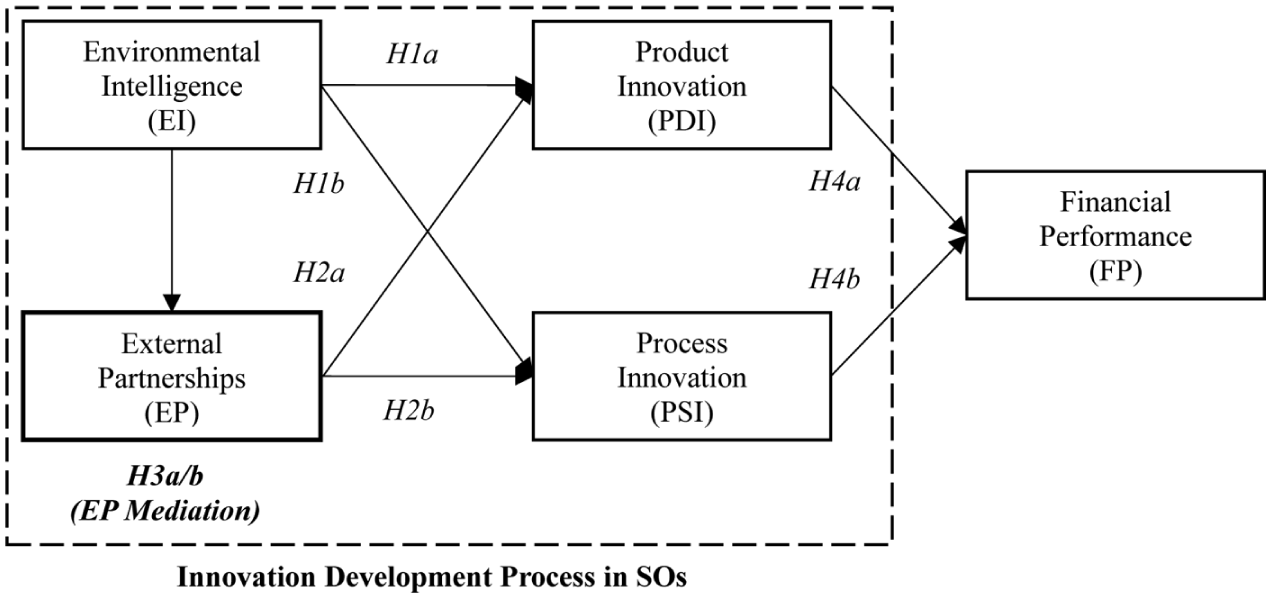
Conceptual Framework.
Method
Sample and Measures
To empirically test the proposed conceptual model, we conducted a survey of 422 noncommunity SOs across Canada and the United States in 2019. The sampling frame was constructed from comprehensive membership lists from the League of American Orchestras and Orchestras Canada, which together cover the majority of SOs in North America. This approach ensured inclusion of SOs with varying sizes and ages, thereby enhancing representativeness. The survey was administered by mail (Canada) and email (United States). To maximize accuracy and response, we implemented a three-stage follow-up process. First, preliminary phone calls were made to verify contact details and identify appropriate respondents. Second, follow-up calls were used to introduce the study and encourage participation. Finally, a reminder round of phone calls was made approximately 2 weeks after initial distribution.
A total of 131 SOs participated, yielding a 31% response rate. Table 1 summarizes the demographic characteristics of the sample. To mitigate key informant bias, the survey was directed at top managers who possess in-depth knowledge of organizational strategies and operations and typically maintain close relationships with their audiences (Gainer & Padanyi, 2005).
Demographics of Respondents.
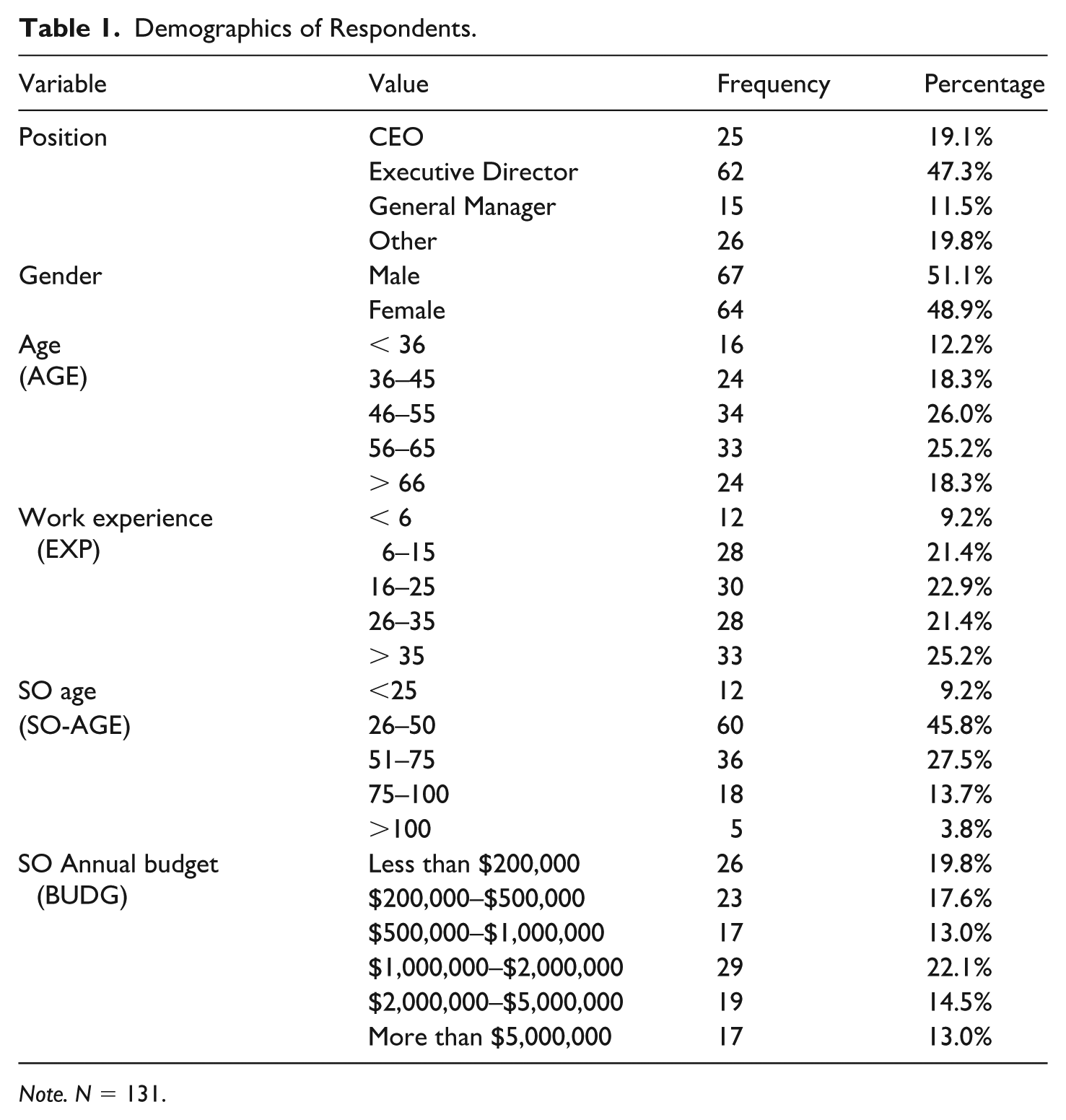
Note. N = 131.
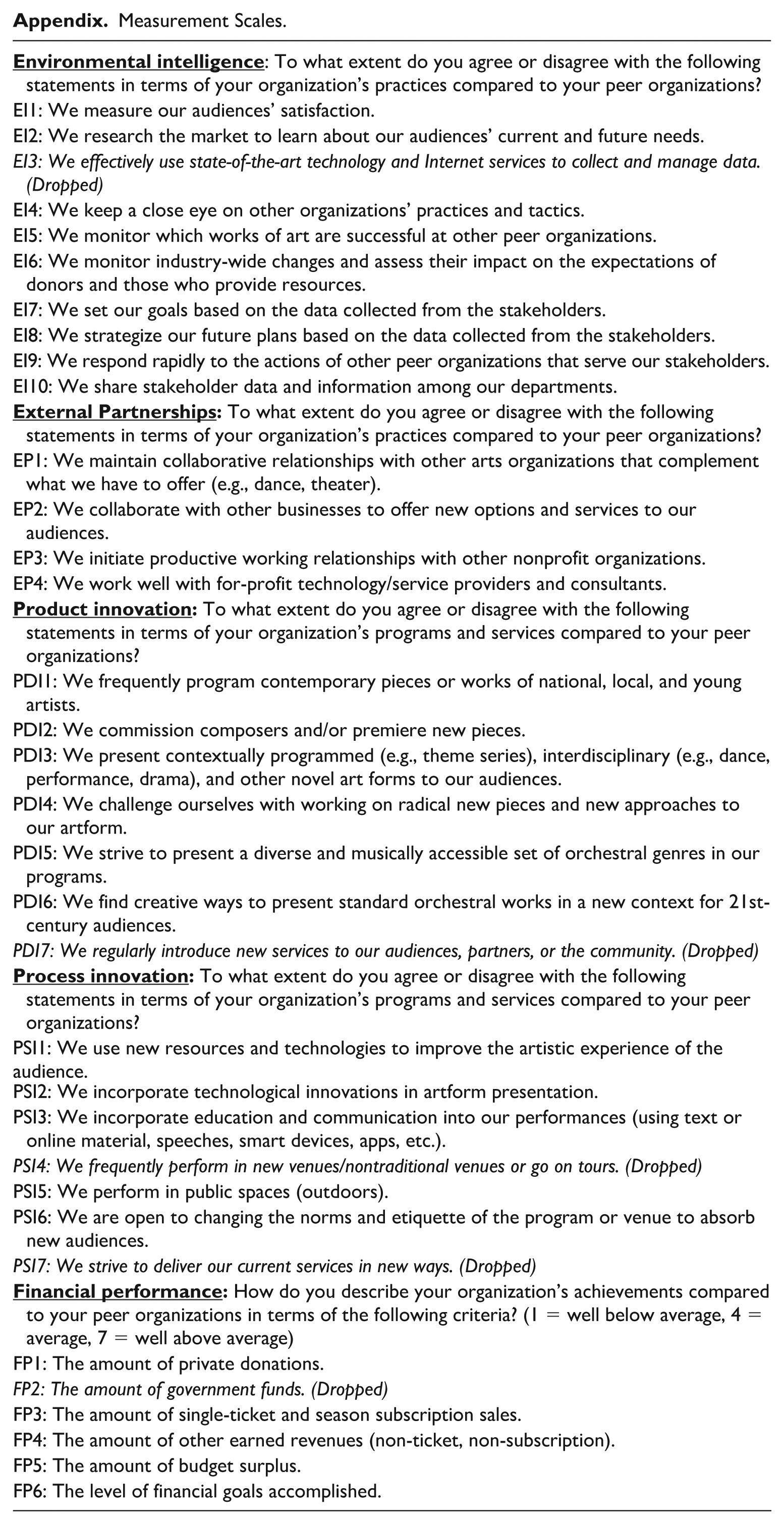
The survey instrument used in this study consisted of 29 items, each measured on a 7-point Likert-type scale (the appendix). The scales measuring environmental intelligence, external partnerships, and financial performance were adapted from established measures in the arts management literature and tailored to the context of our study (Camarero & Garrido, 2008; Gainer & Padanyi, 2005; Voss & Voss, 2000). Empirical research on product and process innovation in performing arts organizations, including SOs, remains sparse, and existing studies focus mainly on innovation in artistic productions (e.g., performances and concerts) rather than on process innovation. To bridge this gap, we developed two new seven-item scales for measuring product and process innovation in SOs. These scales were informed by prior research on innovation in the performing arts organizations (Camarero & Garrido, 2008; Hume & Mort, 2010; Sanzo-Pérez, Álvarez-González, et al., 2015; Voss et al., 2008) and supplemented with insights from case studies and publicly available reports documenting real-world examples of innovation in SOs (e.g., Boyle, 2003; Brown, 2004; Mehta, 2003; Ravanas, 2008).
To account for potential confounds, we included respondent demographics (gender, age, and work experience) as well as SO characteristics, including age (SO-AGE) and annual budget (BUDG, a proxy for SO size), as control variables in the model. The existing studies show that nonprofit organizations’ size and age can influence their innovation and financial performance in different—and sometimes opposing—ways: larger and older organizations tend to have greater resources, financial stability, and institutional legitimacy, but they can also exhibit structural inertia that constrains innovation; smaller or younger organizations tend to be more agile, yet more resource-constrained (e.g., Kadyrova & Shapira, 2024; Liu & Kim, 2022; Stockenstrand & Ander, 2014; Ye & Gong, 2021). Including these controls allows us to account for their potential influence when estimating the relationships among capabilities, innovation, and financial outcomes. Finally, a five-item scale for measuring social desirability was included in the questionnaire; the results confirmed that respondents were not overly influenced by the phenomenon while responding.
Before the first wave of data collection, the survey instrument was validated with a panel of four SO music professionals. Their feedback on the questionnaire content, wording, terminology, and clarity was used to create an improved version of the instrument.
Data Analysis and Results
We developed and tested the proposed conceptual model and associated hypotheses using survey data from 131 North American SOs. We used partial least squares structural equation modeling (PLS-SEM) to analyze the model (Hair et al., 2019). The sample size of 131 complete responses was sufficient for this analysis, as the recommended minimum is 10 times the maximum number of independent variables regressed on each dependent variable in the model (Chin, 2010). Overall, the results provide support for the model and largely support the hypothesized relationships, as detailed below.
Measurement Model
The measurement model evaluation assessed the reliability, convergent, and discriminant validity of the study’s multi-item measures. Five items were dropped during validation due to low factor loadings or cross-loading on other constructs (the appendix). As shown in Table 2, all constructs indicated internal consistency and composite reliability values within or above the recommended thresholds (Hair et al., 2019). Convergent validity was confirmed as all item loadings were greater than 0.60, and the average variance extracted (AVE) values exceeded the 0.5 threshold, demonstrating that each scale captures at least 50% of its variance from the construct it measures (Chin, 2010). To assess discriminant validity, we compared the square root of each construct’s AVE to all inter-construct correlations (Fornell & Larcker, 1981). As shown in Table 3, the AVE square roots (diagonal values) exceeded all correlation values (values in other cells), confirming sufficient discriminant validity (Chin, 2010; Hair et al., 2019).
Measurement Model Evaluation.
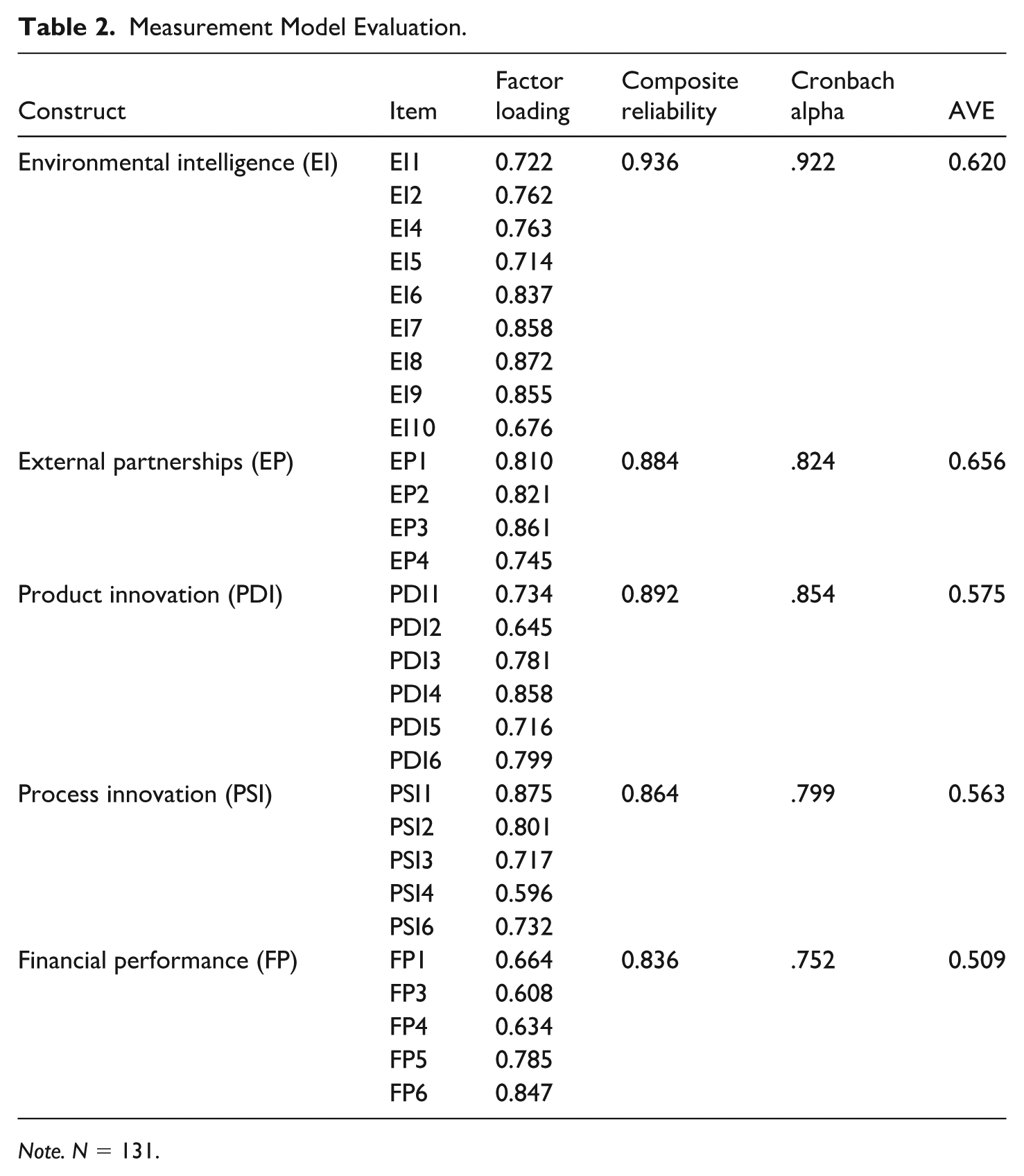
Note. N = 131.
Descriptive Statistics and Correlations.
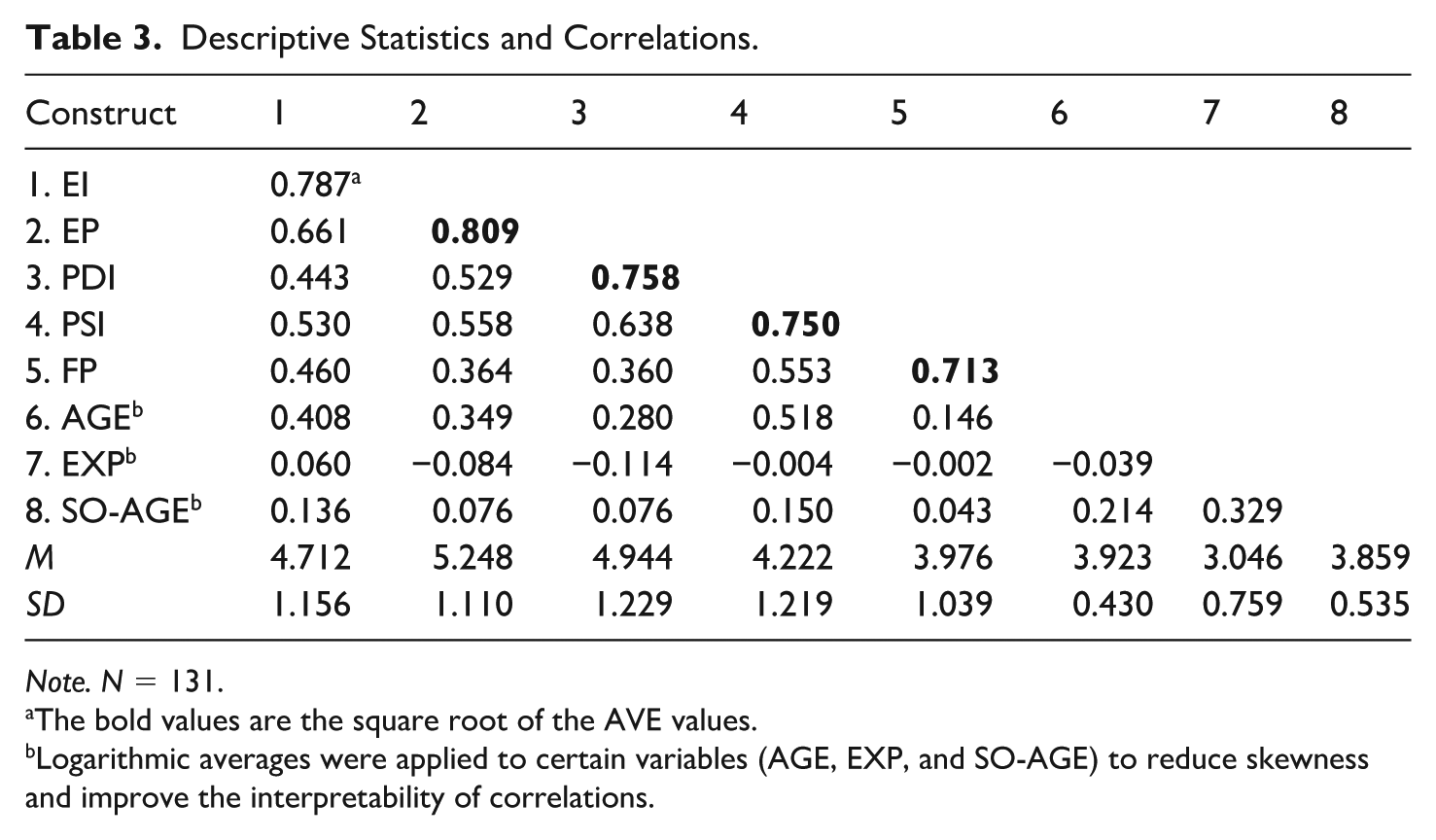
Note. N = 131.
The bold values are the square root of the AVE values.
Logarithmic averages were applied to certain variables (AGE, EXP, and SO-AGE) to reduce skewness and improve the interpretability of correlations.
Structural Model
The structural model evaluation analyzes the relationships between environmental intelligence, external partnerships, innovation (product and process), and financial performance. All constructs are operationalized as survey-based latent variable scores; therefore, we describe results as associations among the measured constructs, estimated via PLS-SEM. The coefficients of determination (R²) reveal that the hypothesized model explains a meaningful proportion of the variance in key outcomes: 29.6% for product innovation, 35.8% for process innovation, and 30.6% for financial performance. In addition, cross-validated redundancy (Q²) values (0.170 for product innovation, 0.201 for process innovation, and 0.156 for financial performance) establish the predictive relevance of the hypothesized model. Together with the R² values, which indicate a robust model fit, these nonzero Q² values validate the model’s effectiveness in capturing and predicting performance outcomes.
Beyond evaluating the inner model, this analysis offers a broader view of the relationships among constructs, including estimated path coefficients and their significance levels, which are derived through bootstrapping. As illustrated in Figure 2, and supporting H1b and H2b, higher levels of environmental intelligence and stronger external partnerships (as measured) are positively associated with SOs’ process innovation (
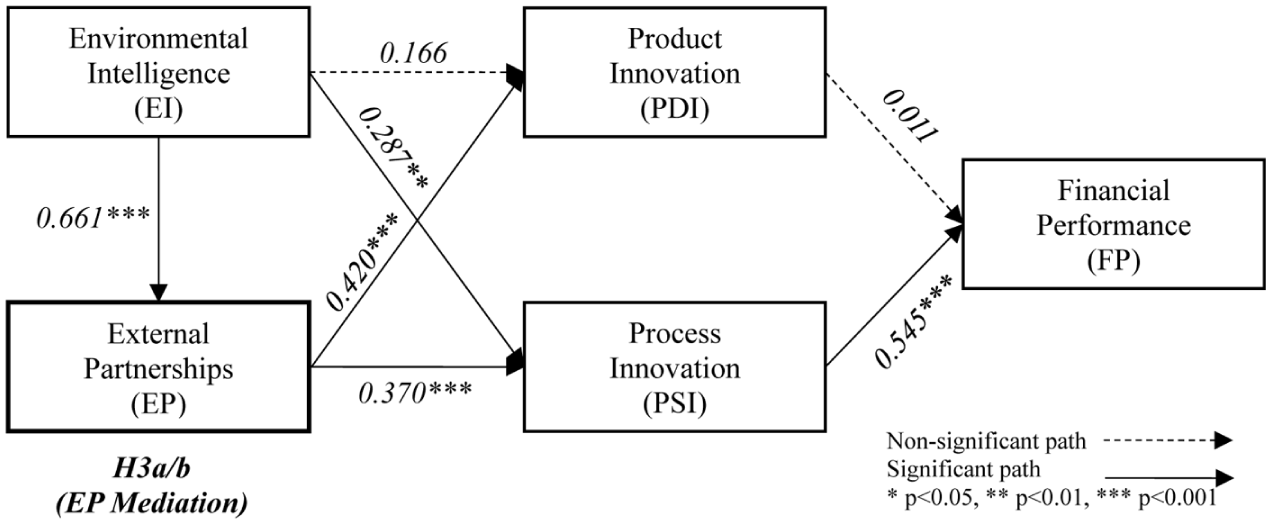
Structural Model Evaluation.
To test the H3a/H3b mediation effects, we used the lavaan package in R (Rosseel, 2012). The analysis reveals significant indirect effects of environmental intelligence on both product innovation (
Overall, the results support the hypothesized effects for process innovation (H1b, H2b, H4b) and the partnership–product innovation link (H2a), whereas H1a and H4a are not supported; Table 4 provides a complete summary of hypotheses supported.
Structural Model Results.
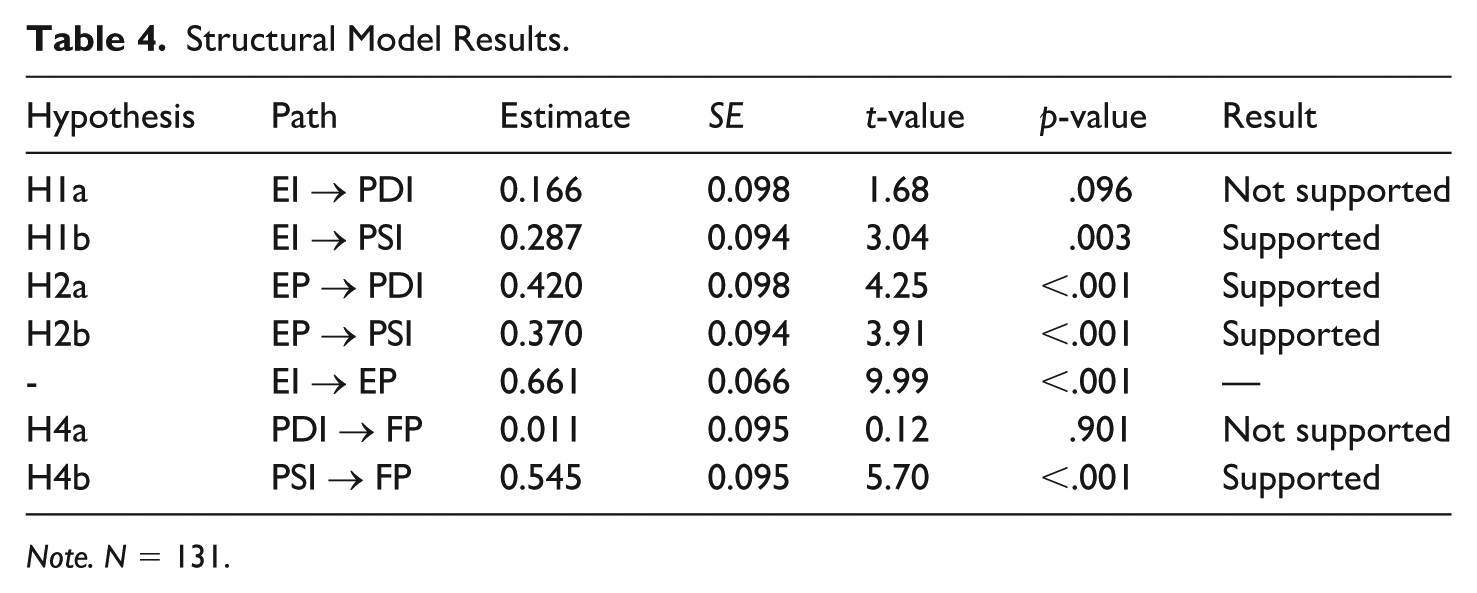
Note. N = 131.
To assess the robustness of the structural model, we incorporated control variables in the original model. SO size was proxied by annual budget, which was treated as a categorical variable. The results yielded no significant effects on financial performance (all|t| < 1.25, p > .215) and the core paths remained stable and consistent with original model which reinforce the confidence in our findings. This suggests that the SO size is not a primary driver of financial performance relative to the effects of the innovation capabilities modeled in this study. Similarly, respondent age and gender exhibited nonsignificant associations with financial performance. In contrast, respondent work experience (β = 0.26, p < .01) and SO age (β = 0.16, p < .05) both showed positive and statistically significant effects on financial performance, suggesting that accumulated operational know-how and the transgenerational continuity of the firm contribute to superior performance outcomes. Taken together, the control variable block contributed meaningfully to the model, explaining a moderate share of financial performance variance (R² = .39).
Necessary Condition Analysis
We conducted NCA to determine whether environmental intelligence, external partnerships, and innovation are essential prerequisites for achieving financial performance outcomes in SOs. NCA is a robust methodological tool to identify necessary conditions within datasets (Dul, 2016). Unlike traditional linear functions employed in PLS-SEM, NCA distinguishes necessary conditions by analyzing the scatter plot areas between dependent and independent variables. It determines nondecreasing stepwise linear lines known as the ceiling envelopment-free disposal hull (CE-FDH) and ceiling regression-free disposal hull (CR-FDH) to delineate these relationships. Conducting NCA on statistically significant relationships can elucidate the necessary conditions that must be satisfied for a significant effect to materialize. Moreover, applying NCA to nonsignificant relationships remains insightful, as it can uncover the necessary conditions required to achieve specific levels of the desired outcome variables.
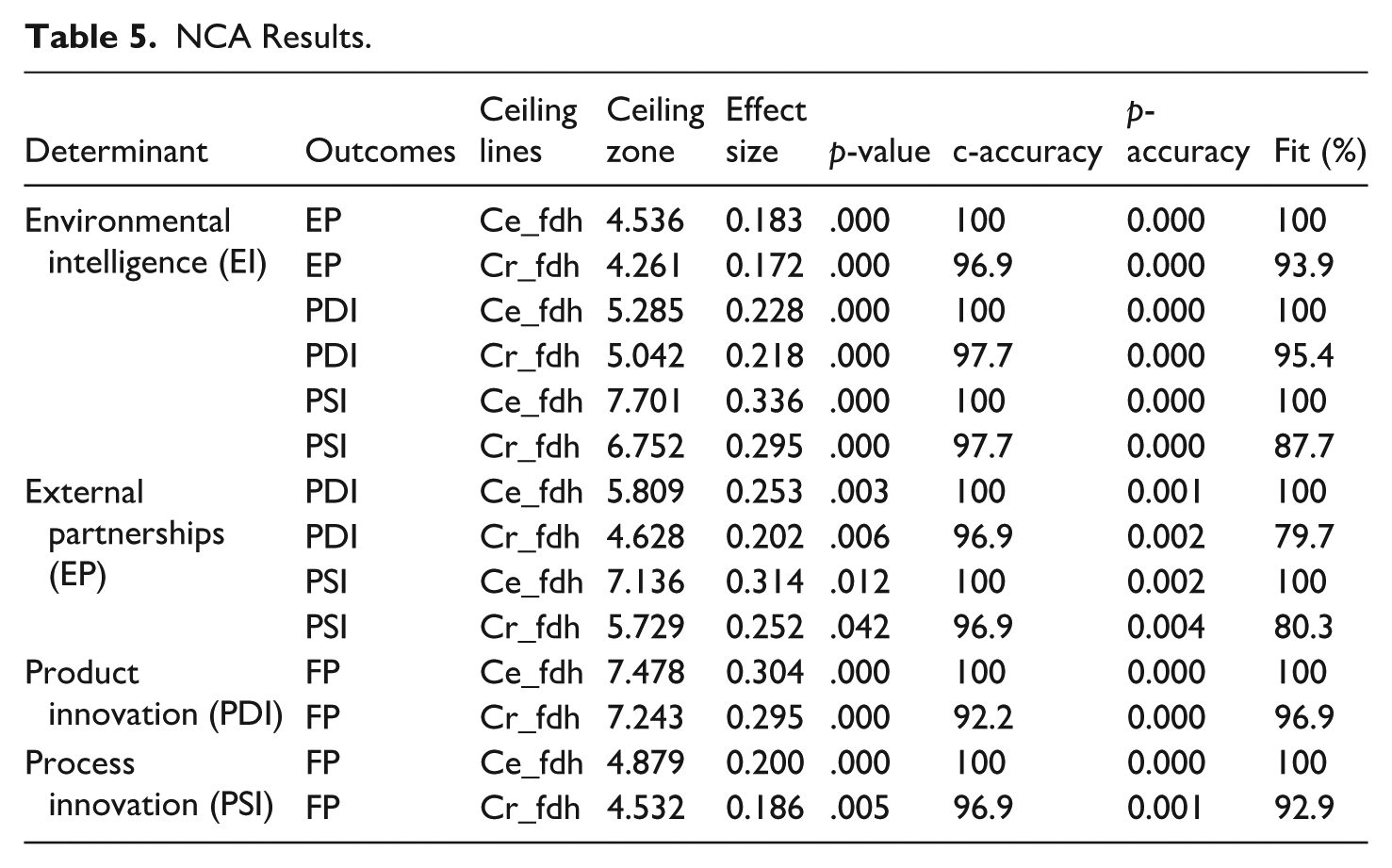
Table 5 summarizes the NCA results for each determinant–outcome pair, reporting necessity effect sizes (d), permutation-test p-values, accuracy, and model fit, whereas Figure 3 plots the corresponding CE-FDH and CR-FDH ceiling lines. The results indicate that environmental intelligence is a necessary condition (in the NCA sense) for achieving higher levels of external partnerships (d = 0.183 CE-FDH; d = 0.171 CR-FDH; p < .001) and for achieving higher levels of both product and process innovation (product: d = 0.228 CE-FDH and 0.218 CR-FDH; process: d = 0.336 CE-FDH and 0.295 CR-FDH; p < .001). External partnerships also emerge as a necessary condition for higher levels of product and process innovation (product: d = 0.253 CE-FDH and 0.202 CR-FDH; process: d = 0.314 CE-FDH and 0.252 CR-FDH; p ≤ .042). Finally, both product and process innovation are identified as necessary conditions for higher financial performance (product: d = 0.304 CE-FDH and 0.295 CR-FDH; process: d = 0.200 CE-FDH and 0.186 CR-FDH; p ≤ .005). Interpreted descriptively, these ceiling patterns indicate that in our sample, observations at the upper range of the outcome variables are not present unless the corresponding condition reaches sufficiently high values.
NCA Results.
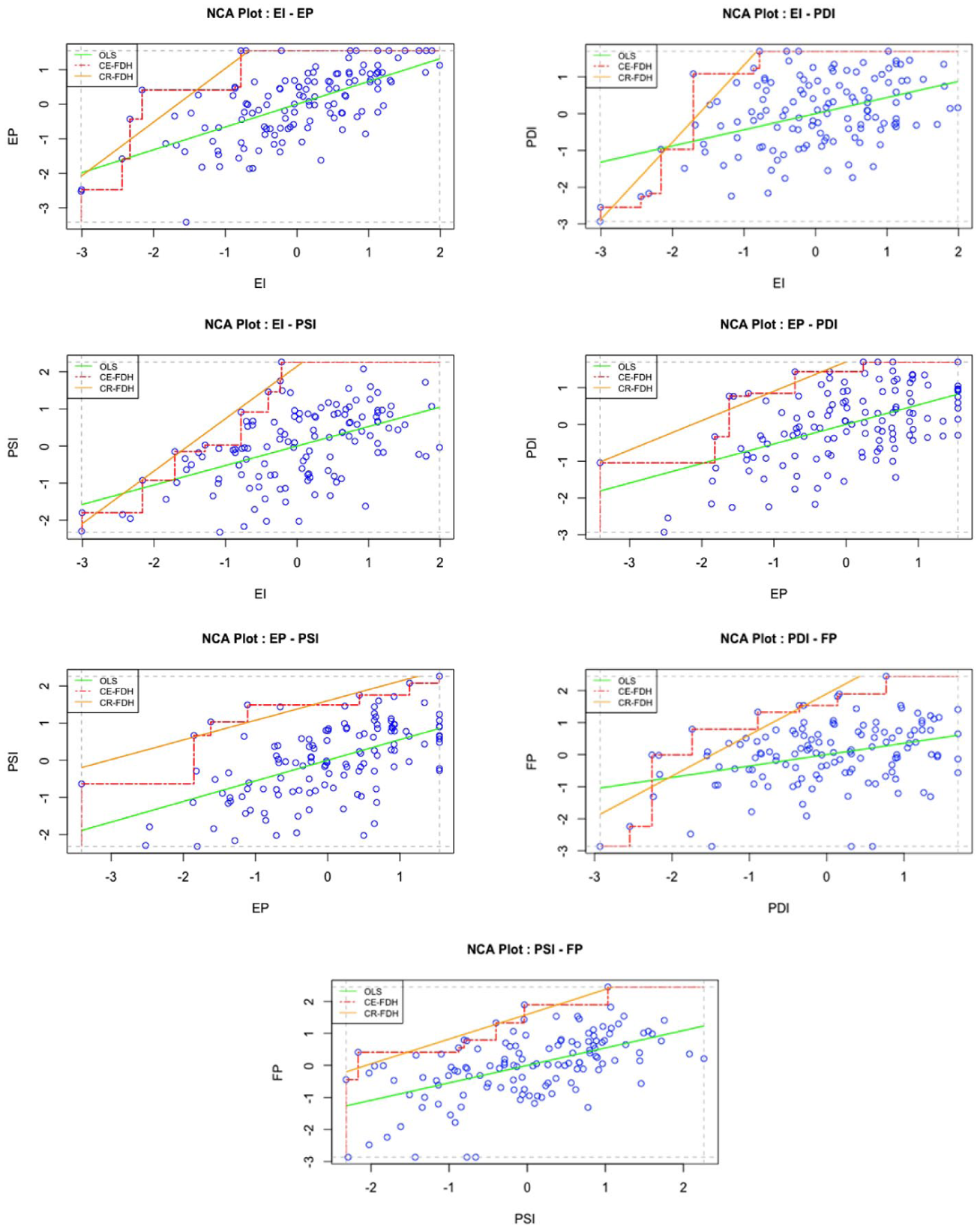
NCA Plots.
In NCA, the ceiling zone (CZ) is the empty area above the ceiling line, and the necessary effect size is computed as
NCA Bottleneck Analysis.
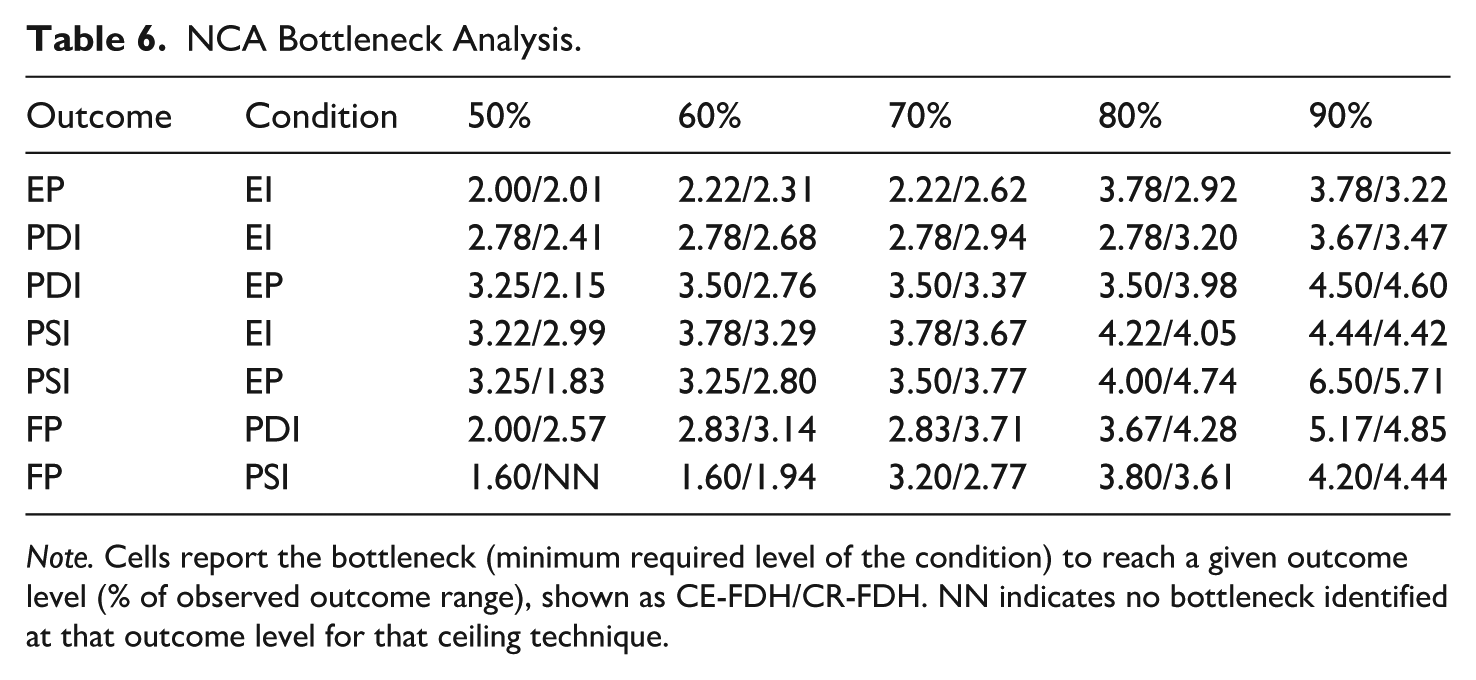
Note. Cells report the bottleneck (minimum required level of the condition) to reach a given outcome level (% of observed outcome range), shown as CE-FDH/CR-FDH. NN indicates no bottleneck identified at that outcome level for that ceiling technique.
Supplemental Analysis Using Objective Financial Performance Measure
To validate the subjective, survey-based operationalization of the financial performance construct and to address concerns of common method bias, we conducted a supplemental analysis. This involved re-estimating our structural model using objective, accounting-based data. We collected financial information from the publicly available tax filings of 119 SOs (91% of the survey sample; N = 131). From each filing, we extracted total revenue and averaged it across the 2016 and 2017 fiscal years to align with the survey period and reduce year-to-year volatility. Total revenue was log-transformed to normalize its distribution and allow coefficients to be interpreted as elasticities. We then re-estimated the structural model using logged total revenue as an objective indicator of financial capacity/resource inflow, and re-estimated the original survey-based model on the same 119 observations to enable direct comparison.
Both models retained the original structural framework. All four reflective multi-item scales demonstrated high internal consistency (Cronbach’s alpha: .795–.935; Dillon–Goldstein’s rho: 0.861–0.935) and convergent validity (AVE: 0.559–0.659). The survey-based model explained 32.1% of the variance in financial performance in this restricted sample, whereas the revenue-based model explained 20.1%. Across both specifications, process innovation remained a statistically significant positive predictor of financial outcomes, providing a conservative robustness check that the main inferences are not driven by common method variance. Full results are reported in Table 7 based on 5,000 bootstrap resamples with bias-corrected confidence intervals.
SEM Models With Subjective versus Objective Measures of Financial Performance.
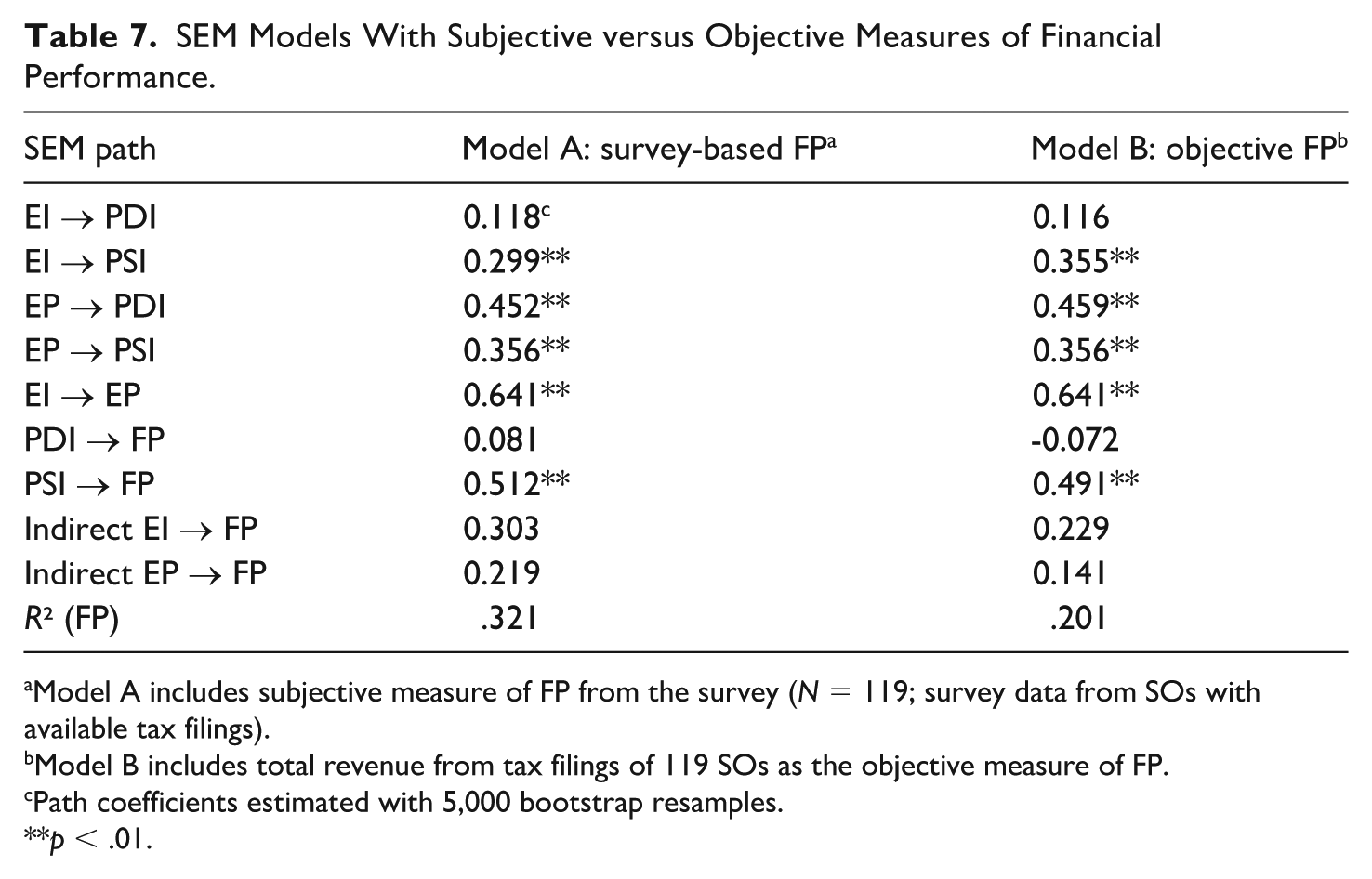
Model A includes subjective measure of FP from the survey (N = 119; survey data from SOs with available tax filings).
Model B includes total revenue from tax filings of 119 SOs as the objective measure of FP.
Path coefficients estimated with 5,000 bootstrap resamples.
p < .01.
Discussion
Theoretical Contributions
This study makes four key contributions to the literature on innovation in SOs and, more broadly, performing arts organizations. First, although research on arts and cultural nonprofits emphasizes resource constraints (Stockenstrand & Ander, 2014), financial precarity (e.g., Fristoe & Longacre, 2024), and legitimacy challenges (e.g., Herman, 2019), it rarely specifies the organizational capacities that enable sustained adaptation. Similarly, the nonprofit innovation literature highlights the value of collaboration and experimentation (Jaskyte, 2020; Kadyrova & Shapira, 2024), yet it tends to assume conditions more flexible than those faced by mission-driven arts and cultural organizations. This study addresses these gaps by demonstrating that cultural nonprofits such as SOs translate environmental scanning and partnerships into concrete innovation pathways, which in turn enhance their financial performance. In doing so, we respond to the growing calls for targeted evidence on innovation under resource and managerial constraints, especially within nonprofit performing arts organizations (e.g., McDonald et al., 2021), and extend nonprofit adaptation theory to contexts where dual artistic and managerial logics must coexist.
Second, this study contextualizes and empirically validates the micro-foundations of dynamic capabilities (Teece, 2007) by showing how sensing, seizing, and reconfiguring operate in a mission-driven, resource-constrained setting. Specifically, the proposed innovation development process for SOs demonstrates how environmental intelligence (sensing) enables them to anticipate external challenges, while external partnerships (seizing) provide them with access to critical resources necessary to transform insights into actionable strategies. Product and process innovation manifest in reconfiguring capability, with only process innovation driving immediate efficiency gains and financial outcomes. In addition, we show that environmental intelligence alone is insufficient unless acted upon through seizing mechanisms—most notably external partnerships—challenging for-profit assumptions that internal capabilities are sufficient.
Third, the survey results advance research on resource-constrained innovation (Agarwal et al., 2016) by establishing external partnerships as a necessary mechanism for fostering innovation in such contexts. While previous studies in the for-profit sectors have established a link between partnerships and innovation (e.g., Kim & Lui, 2015; Roper et al., 2017), our findings demonstrate that for SOs, partnerships are not merely advantageous but essential for translating environmental insights into action. These findings nuance existing theory by highlighting collaboration-enabled implementation as a boundary condition rarely acknowledged in for-profit studies.
Fourth, our survey evidence positions environmental intelligence as a key driver of strategic partnerships, shaping how SOs, as well as other multi-stakeholder organizations, identify, form, and leverage external collaborations. By enabling organizations to scan, interpret, and respond to external pressures—such as regulatory changes, donor expectations, and evolving community needs—environmental intelligence performs as a compass to empower SOs to enhance their internal processes and achieve operational efficiencies in the right direction (Vidican-Teohari et al., 2025). Surprisingly, however, environmental intelligence is not directly associated with product innovation. While SOs can independently leverage environmental insights to refine their internal processes, they need to rely on external collaborations to develop new offerings. One explanation is that new offerings in SOs are frequently shaped by mission stewardship and artistic considerations, which can weaken a one-to-one translation of external signals into product changes (Richardson & Kelly, 2024). In addition, resource constraints limit the extent to which SOs can invest in sustained experimentation, market validation, or development work needed to convert external insights into new products. Consistent with this interpretation, our NCA results indicate that environmental intelligence is a necessary (but not sufficient) condition for higher levels of product innovation, implying that some baseline level of environmental intelligence must be present, even if product innovation typically materializes through complementary mechanisms such as external partnerships that provide resources, expertise, and channel (Austin & Seitanidi, 2012). Taken together, these findings suggest that environmental intelligence functions primarily as an enabling condition that supports partnership formation and, through partnerships, the translation of external insights into new offerings.
Finally, our study identifies a nuanced distinction in the financial implications of product versus process innovation in SOs, extending research on financial performance in resource-constrained organizations (e.g., De Massis et al., 2018; Devalkar et al., 2017). In our data, process innovation is positively associated with SOs’ financial performance (Ma & Liu, 2024; Rebelo & Rebelo, 2025; Weerawardena & Mort, 2012), whereas product innovation shows no immediate financial association. This pattern suggests a boundary condition in the innovation–performance relationship: process innovation aligns with near-term efficiency gains and financial outcomes, whereas product innovation is more likely to generate artistic or reputational benefits with potentially delayed financial returns. This interpretation is consistent with Barczak et al. (2006), who note that nonprofit new product development frequently prioritizes social objectives and long-term impact over short-term gains, and with work highlighting SOs’ mission-driven focus on artistic value (Herman, 2019; Sigurjonsson, 2010). Overall, these findings challenge assumptions of uniformly positive effects across innovation types common in for-profit research and call for a more differentiated view of innovation in mission-driven, resource-constrained organizations.
Beyond mission priorities and longer horizons, the lack of immediate financial return from product innovation can also reflect structural and organizational mechanisms common in nonprofits. Because nonprofit offerings have historically been financed partly by third parties (e.g., donors, sponsors, governments) rather than priced primarily through beneficiaries’ willingness to pay, organizations face weaker incentives and capabilities for systematic beneficiary/customer insight, evidence-based iteration, and market validation (Hersberger-Langloh, 2025). In turn, product innovations can be introduced without sufficiently strong feedback loops to demonstrate demand, refine value propositions, or translate new offerings into earned revenue (Campbell et al., 2012; Rowat & Seabright, 2006). Furthermore, resource constraints and reliance on government grants, earmarked donations, and other short-term funding cycles can limit their ability to scale new offerings quickly, further diminishing immediate financial impact (Stockenstrand & Ander, 2014; Stühlinger & Hersberger-Langloh, 2021). Finally, the inherent challenges in evaluating the long-term success of new artistic offerings also complicate efforts to sustain financial outcomes from product innovation. Together, these conditions help explain why product innovation does not translate into financial outcomes (at least in the short-term horizons)—whereas process innovation represents a lower-risk, cost-effective strategy for SOs (Boyle, 2003; Rebelo & Rebelo, 2025).
Complementing the net-effect results, the NCA findings indicate that higher financial performance is not observed in our sample unless minimum levels of both product and process innovation are present, even though only process innovation shows a significant positive association with financial performance in the structural model. Together, these findings point to the value of distinguishing between net effects and necessary conditions when interpreting innovation–performance dynamics in resource-constrained, mission-driven organizations and are consistent with calls for ambidextrous innovation portfolios in arts organizations that balance process improvements with longer-horizon product development (Eltham, 2013).
Practical Implications
This study offers valuable insights for SO managers navigating an increasingly volatile landscape. From economic fluctuations to shifting social values, SOs benefit from systematically scanning and interpreting external trends such as regulatory changes, technological advancements, and evolving audience and funder expectations to anticipate challenges and identify opportunities for innovation. In our findings, environmental intelligence is not directly associated with product or process innovation unless it is activated through seizing mechanisms, notably external partnerships. For SO leaders, these findings point to the value of institutionalized routines (e.g., regular market research, dedicated partnership roles, and investments in digital infrastructure) that support both product and process innovation. Strategic collaborations with other performing arts institutions, businesses, or community stakeholders can provide funding, expertise, or technology that support the development of new offerings and enhance the operational processes. Although we examine SOs, these capability-based mechanisms (environmental intelligence, partnerships, and innovation) are likely relevant to other arts and cultural nonprofits facing similar tensions between mission stewardship, market pressures, and resource constraints.
Our results suggest that process innovation is more strongly linked to short-term financial outcomes than product innovation in resource-constrained arts organizations. Streamlining operations through digital transformation, more effective resource allocation, or cost-saving measures can enhance efficiency and resilience. At the same time, product innovation remains crucial for long-term adaptability and mission fulfillment. In practice, many SOs already pursue these approaches—for example, commissioning new repertoire, piloting interdisciplinary productions, and experimenting with digital service formats—to align offerings with evolving stakeholder values and societal expectations.
Our findings also underscore the role of funding agencies and policymakers in fostering innovation and financial stability in the arts and cultural sector. In this context, prioritizing support for environmental intelligence by funding capacity-building initiatives such as training and applied research can strengthen organizations’ ability to anticipate and adapt to external change. Equally, agencies should incentivize collaborative projects by offering grants and creating networking opportunities that bring together cultural institutions, private firms, academic partners, and community organizations. By supporting balanced innovation portfolios (encompassing both process and product innovations), funders and policymakers can help ensure that individual organizations achieve immediate financial resilience while the sector as a whole remains strategically positioned for long-term adaptability and social value creation. One policy-relevant approach is targeted grant programs that explicitly reward process improvements (e.g., digital ticketing, operational efficiency projects) alongside longer-term investments in product innovation (e.g., commissioning new works, interdisciplinary programming).
Limitations and Future Research
While this study makes important contributions, several limitations suggest avenues for future research. First, the cross-sectional design of the survey data restricts causal inference regarding the relationships among environmental intelligence, external partnerships, innovation, and financial performance. Although this approach offers useful insights, it does not fully capture the dynamic processes and decision-making involved in fostering innovation. Future research using longitudinal or panel designs could offer a richer understanding of how these factors evolve over time as organizations respond to shifting external conditions.
Second, because the data come exclusively from North American SOs, the findings should be interpreted with caution when generalized to SOs in other regions. Funding models, cultural policies, and audience dynamics differ across Europe, Asia, and other contexts and can shape different innovation pathways and financial outcomes. Future research can replicate or extend our model in international settings to assess how context-specific factors condition the dynamics we identified in this study.
Third, while our focus on SOs offers a clear lens into innovation under constraint, caution is warranted when extending these findings to other performing arts organizations or the broader arts and cultural sector, as SOs face a distinctive set of challenges given their high fixed costs, heavy reliance on ticket sales, and dependence on philanthropic and public funding. Nevertheless, several of the tensions faced by SOs (e.g., balancing mission stewardship and market pressures, and using partnerships to access complementary resources) are common across arts and cultural nonprofits. Future research could replicate and extend this work in other performing arts settings, which share many of these structural vulnerabilities but also exhibit meaningful differences in revenue models, audience dynamics, and innovation strategies (e.g., opera companies, theaters, or dance ensembles). Beyond the performing arts, comparative studies across the broader arts and cultural sector—and eventually the nonprofit sector more generally—could clarify which insights are context-specific to SOs and which have wider applicability (Kim, 2017).
Fourth, the study does not account for internal organizational factors such as leadership, culture, or staff capacity that are likely to shape the effectiveness of external intelligence and partnerships in driving innovation. Exploring these dynamics could yield a more holistic picture of the conditions that enable SOs and other performing arts organizations to achieve financial stability through innovation. Fifth, while the analysis highlights external partnerships as a critical seizing capability, it does not consider the quality, governance, or specific types of partnerships that drive outcomes. Future studies might compare different models (such as public–private collaborations, inter-nonprofit alliances, or partnerships with technology firms) to determine which configurations are most conducive to innovation and improved performance.
Finally, this study does not explicitly examine the institutional logics that shape how SOs, and by extension performing arts and other arts and cultural organizations, approach innovation. These organizations balance competing imperatives, such as financial sustainability, artistic integrity, and community impact. Future research could investigate how organizations navigate these tensions, particularly in balancing process and product innovation, and whether some strategies create synergies between artistic and financial goals while others require trade-offs.
Conclusion
This study demonstrates how SOs, operating under resource constraints and dual artistic–managerial logics, translate environmental intelligence and external partnerships into concrete innovation pathways. Using survey data from 131 North American orchestras, we show that process innovation enhances financial performance, while product innovation does not yield immediate returns. These findings advance nonprofit and arts management scholarship by clarifying how dynamic capabilities function in mission-driven, resource-dependent organizations, and by distinguishing the short-term impacts of different types of innovation. Practically, they provide actionable guidance for orchestra leaders and policymakers seeking to strengthen financial sustainability through innovation.
Footnotes
Appendix
Measurement Scales.
| EI1: We measure our audiences’ satisfaction. |
| EI2: We research the market to learn about our audiences’ current and future needs. |
| EI3: We effectively use state-of-the-art technology and Internet services to collect and manage data. (Dropped) |
| EI4: We keep a close eye on other organizations’ practices and tactics. |
| EI5: We monitor which works of art are successful at other peer organizations. |
| EI6: We monitor industry-wide changes and assess their impact on the expectations of donors and those who provide resources. |
| EI7: We set our goals based on the data collected from the stakeholders. |
| EI8: We strategize our future plans based on the data collected from the stakeholders. |
| EI9: We respond rapidly to the actions of other peer organizations that serve our stakeholders. |
| EI10: We share stakeholder data and information among our departments. |
| EP1: We maintain collaborative relationships with other arts organizations that complement what we have to offer (e.g., dance, theater). |
| EP2: We collaborate with other businesses to offer new options and services to our audiences. |
| EP3: We initiate productive working relationships with other nonprofit organizations. |
| EP4: We work well with for-profit technology/service providers and consultants. |
| PDI1: We frequently program contemporary pieces or works of national, local, and young artists. |
| PDI2: We commission composers and/or premiere new pieces. |
| PDI3: We present contextually programmed (e.g., theme series), interdisciplinary (e.g., dance, performance, drama), and other novel art forms to our audiences. |
| PDI4: We challenge ourselves with working on radical new pieces and new approaches to our artform. |
| PDI5: We strive to present a diverse and musically accessible set of orchestral genres in our programs. |
| PDI6: We find creative ways to present standard orchestral works in a new context for 21st-century audiences. |
| PDI7: We regularly introduce new services to our audiences, partners, or the community. (Dropped) |
| PSI1: We use new resources and technologies to improve the artistic experience of the audience. |
| PSI2: We incorporate technological innovations in artform presentation. |
| PSI3: We incorporate education and communication into our performances (using text or online material, speeches, smart devices, apps, etc.). |
| PSI4: We frequently perform in new venues/nontraditional venues or go on tours. (Dropped) |
| PSI5: We perform in public spaces (outdoors). |
| PSI6: We are open to changing the norms and etiquette of the program or venue to absorb new audiences. |
| PSI7: We strive to deliver our current services in new ways. (Dropped) |
| FP1: The amount of private donations. |
| FP2: The amount of government funds. (Dropped) |
| FP3: The amount of single-ticket and season subscription sales. |
| FP4: The amount of other earned revenues (non-ticket, non-subscription). |
| FP5: The amount of budget surplus. |
| FP6: The level of financial goals accomplished. |
Declaration of Conflicting Interests
The authors declared no potential conflicts of interest with respect to the research, authorship, and/or publication of this article.
Funding
The authors disclosed receipt of the following financial support for the research, authorship, and/or publication of this article: University of Manitoba /Social Sciences and Humanities Research Council (UM-SSHRC) Explore Grant # 50644 to Sara Hajmohammad.

Ethical Considerations
This study was approved by the Psychology/Sociology Research Ethics Board at the University of Manitoba (Protocol #P2019:024; HS22655) on March 1, 2019.
Data Availability Statement
The dataset analyzed during the current study is available from the corresponding author upon reasonable request.