




Abstract
Autonomous (self-managed) volunteering offers opportunities for organizations and those who desire to give time independently. However, we lack empirical studies on this emerging phenomenon. This study explores the case of DigiVol, a successful autonomous, online volunteering program, with a mixed-methods approach involving interviews and a large-scale survey of active and nonactive volunteers. We identified factors related to the retention of autonomous volunteers, including values, motivational functions (Volunteer Functions Inventory [VFI]), perceived organizational support, satisfaction, and commitment. “Understanding” was positively correlated to active volunteering, while “career” was negatively correlated. None of the tested basic human values (benevolence, universalism, self-direction) related to active volunteering. Perceived organizational support had no impact, but satisfaction and affective commitment did. This article contributes to our understanding of this novel phenomenon while offering implications for practice and directions for future research.
Post-COVID, volunteering declined in many countries, with Australia losing one-third of its volunteers (Davies et al., 2021), while digital platforms and working remotely increased (Koolen-Maas et al., 2023). As many nonprofit organizations (NPOs) struggle to maintain a sufficient volunteer workforce, identifying opportunities for autonomous volunteering can support individuals and organizations (Alony et al., 2020). As organizations and volunteers increasingly seek opportunities to engage online independently (Trautwein et al., 2020), offering self-led, autonomous volunteering is vital.
As autonomous volunteering is insufficiently explored, we define it as giving time voluntarily to help others in a self-directed and self-managed way (with no need for synchronous interaction with staff) on one’s own time and pace. It can be done online or face-to-face, formally or informally. Indeed, one common way to volunteer autonomously is through online volunteering, which enables people to donate their time remotely, regardless of the volunteer’s location (Cox et al., 2018). Autonomous volunteers might learn the roles and tasks online and perform them virtually. Autonomous volunteering can be performed as formal volunteering, which is typically organized through NPOs, or as informal volunteering, meaning that it is independently initiated by individuals within their communities (Yang & Liu, 2023). It offers the flexibility young, busy people seek, often differing from “conventional” volunteering (Wilson, 2012).
While there is ample research on online and formal/informal volunteering, the unique phenomenon of autonomous volunteering is yet to receive the academic attention it deserves, particularly given its critical implications for NPOs. Its self-led nature can increase the ability to attract and retain volunteers (Haski-Leventhal et al., 2019) and expand volunteers’ contribution to their organization and society (Alony et al., 2020). Volunteers’ independence in managing their enrollment, training, and work can conserve NPOs’ limited resources (Kim & Peng, 2018). While online and traditional volunteering may still include interactions with peers and managers, autonomous volunteering is done by oneself. It can appeal to young people, who typically prefer texting to face-to-face communication (Harari et al., 2020) or those with social anxiety (Handy & Cnaan, 2007), neurodiversity (Nieto et al., 2015), or other conditions. Conversely, it lacks interpersonal contact and the social benefits of “conventional” volunteering (Gray & Stevenson, 2020).
Therefore, this study aims to enhance our understanding of the emerging phenomenon of autonomous volunteering and explore the experiences of autonomous volunteers. We sought to understand the individual and organizational factors associated with the engagement and retention of autonomous volunteers and address the following questions: What factors relate to the retention of autonomous volunteering? How do active and nonactive autonomous volunteers differ in their experiences?
To answer these questions, we employed a mixed-methods study at the Australian Museum in Sydney, which offers autonomous volunteering online within its DigiVol program. Based on hundreds of survey responses and over 40 interviews with active and nonactive autonomous volunteers, we explored what makes volunteers active for longer.
The study makes three main contributions. First, it presents, defines, and measures autonomous volunteering, an emerging phenomenon and concept in volunteering that is absent from academic research. Specifically, this article explores factors related to the retention of such volunteers and sheds light on the differences between active and nonactive volunteers. Second, this article utilizes a comprehensive research design to expand our knowledge of motivations and values related to volunteering, particularly autonomous. Third, based on a unique, successful case study, this article offers critical implications for NPOs interested in increasing their voluntary workforce.
Literature Review
Research on online autonomous volunteering is scarce, lacking a clear definition and characteristics of this form of giving time. While autonomous online volunteers can participate in citizen science projects, Wikipedia, or digital activism (Baytiyeh & Pfaffman, 2010; Haklay et al., 2021), the term “autonomous volunteering” is not mentioned in publications on these activities. Only a few articles refer to autonomous volunteering, usually as a spontaneous response during disasters, and as “nonregistered, self-organized and self-governed groups” (Ishkanian & Shutes, 2022, p. 397). As autonomous volunteering often occurs in online environments, and given the lack of empirical research on autonomous online volunteering, we draw on related studies on online volunteering and autonomous work.
Online Volunteering
Online volunteering (or digital, virtual, e-volunteering) is the voluntary contribution of time to benefit others through online platforms (Liu et al., 2016). It offers key advantages, including convenience, flexibility (Mukherjee, 2011), effective time use, and reduced barriers (Seddighi & Salmani, 2018). Seen as more accessible, it enables NPOs to reach diverse volunteers across locations and abilities (Ackermann & Manatschal, 2018). Often autonomous, it involves self-led, unsupervised tasks where volunteers find roles, access resources, and contribute independently (Ellis, 2010). Given its self-driven nature, motivation is central to recruitment and retention.
Ample literature on volunteer motivation differentiates between altruistic and self-centered motives (Wilson, 2012), showing that the motivation to join an organization is not always identical to the motivation to remain and engage in the organization (Faletehan et al., 2021). While motivations are generally consistent across in-person and online contexts (Cox et al., 2018), online volunteers may be more driven by self-centered motives like career benefits (Silva et al., 2018), the desire to learn, and reduced participation costs (Cox et al., 2018). Altruism (Baruch et al., 2016) and social connection, when in-person giving is unavailable (Baruch et al., 2016), also play a role. According to the Volunteer Functions Inventory (VFI; Clary & Snyder, 1999), volunteering fulfills one or more of six motivational functions: values, understanding, enhancement, career, social, and protective. Understanding, values, and enhancement were the most vital motivators among young people volunteering online (Ramadhia & Arfensia, 2023).
Volunteering is also driven by personal values, defined as beliefs about preferable modes of conduct or end-states (Rokeach, 1973). Values guide motivation and moral decisions, and Schwartz (1992) grouped them into four categories: openness to change (self-direction and stimulation values) versus conservation values (security, conformity, tradition) and self-enhancement (achievement, power, hedonism) versus self-transcendent values (benevolence, universalism). The latter, including benevolence and universalism, is closely linked to volunteering (Hitlin, 2003).
Online volunteering also faces unique challenges, such as complex websites, poor internet access, outdated technology, and unresponsive host organizations (Filsinger & Freitag, 2019; Mukherjee, 2011). Lack of contact and slow replies can leave volunteers feeling isolated and discouraged (Feng & Leong, 2017).
Autonomous Work
While employee autonomy is gaining attention (Arunprasad et al., 2022), fully autonomous employment remains rare and under-researched. Related concepts include autonomous teams and remote work. Autonomous teams—small groups managing their tasks—mirror autonomous volunteering (Appelbaum & Batt, 1994). Their success depends on individual, team, and organizational factors (Magpili & Pazos, 2018), including initiative, commitment, and delegation skills (Banai & Reisel, 2000). Their self-management skills, like self-regulation, motivation, and effort, enhance performance (Magpili & Pazos, 2018; Millikin et al., 2010), while their overreliance on management hinders it (Bazirjian & Stanley, 2001). Their task-related skills also support autonomy, collaboration, and flexibility (McNair et al., 2011; Powell & Pazos, 2017). Despite increased attention to employee autonomy (Arunprasad et al., 2022), pure autonomous employment is still understudied, and only some concepts are discussed: autonomous, self-directed teams and remote work.
Autonomous, self-directed teams are “small groups of employees who have day-to-day responsibility for managing themselves and their work” (Appelbaum & Batt, 1994, p. 61), like autonomous volunteering. Magpili and Pazos (2018) found that the outcomes of such teams are affected by individual, team, and organizational factors.
Remote work, although not always autonomous, offers greater control over time and location (Arunprasad et al., 2022), like online volunteering. It can enhance autonomy and focused work (Galanti et al., 2021), with benefits like better work–life balance, reduced stress, and higher engagement (Fatima et al., 2024). However, it can also lead to stress and work–family conflict (Shirmohammadi et al., 2022). Through technology, human resource management, and leadership, structured support helps remote workers succeed (Arunprasad et al., 2022).
Hypothesis Development
Extensive research has examined the association between several individual factors, including volunteers’ motivational functions and values; organizational constructs such as perceived organizational support, satisfaction, and commitment; and outcomes such as engagement and the intention to quit. We developed our hypotheses of autonomous volunteering based on this research. Figure 1 presents our conceptual model, outlining the key variables of interest and their hypothesized relationships as detailed below.
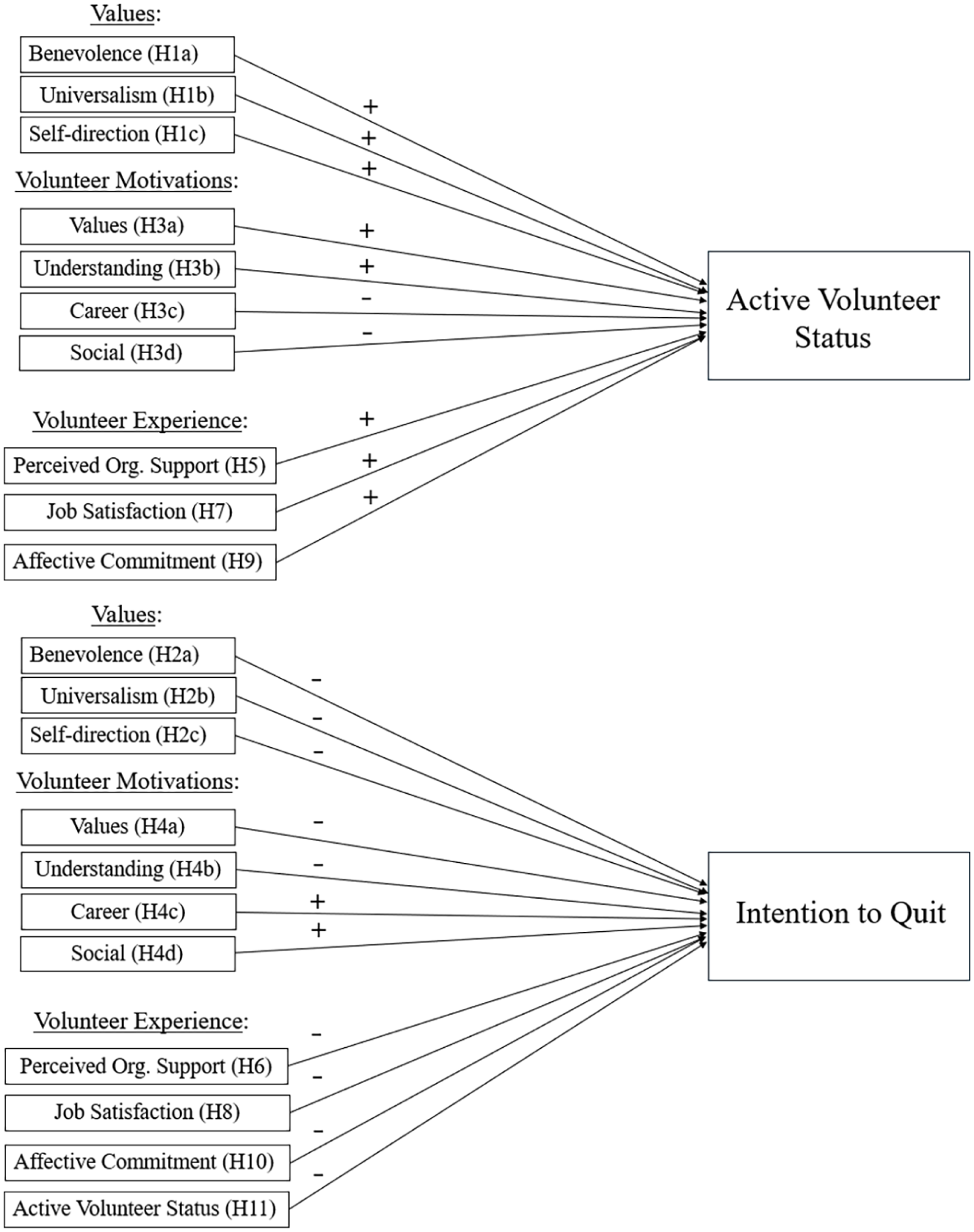
Conceptual Model.
Values and Autonomous Volunteering
Exploring Schwartz’s (1992) basic human values, research correlated volunteering and the benevolence and universalism values across 23 countries (Plagnol & Huppert, 2010; Schwartz et al., 2017); among university students from the United States (Daniel et al., 2015); and among Muslim youth environmental volunteers (Rahman et al., 2021). However, some self-enhancement values (power and achievement) and openness to change values (stimulation and hedonism) were negatively associated with helping behaviors (Daniel et al., 2015). Benevolence and self-direction correlated with volunteering, while self-enhancement and conservation values negatively correlated with volunteering (Ariza-Montes et al., 2017).
In addition, “openness to change” values, particularly self-direction (independent thoughts and actions), are relevant to autonomous work (Sagiv & Schwartz, 2022; Schwartz, 1992). Hall et al. (2018) found that self-directed people were likelier to seek autonomous careers. Sagiv (2002) demonstrated a correlation between self-direction and autonomous (artistic and investigative) career interests. Another study showed that self-direction was prevalent among people choosing investigative occupations (Knafo & Sagiv, 2004). Self-direction also significantly correlated with volunteering (Wondimneaw & Adal, 2023) when volunteering was perceived as an autonomous choice. Notably, most prior studies were cross-sectional, limiting the findings’ ability to show a causal relationship, meaning that even when values significantly predicted volunteer commitment, it does not prove that being motivated by values causes a volunteer to be satisfied and committed (Zhou & Kodama Muscente, 2023). We therefore hypothesize the following:
Motivation Functions and Active Autonomous Volunteering
Studies on volunteering and VFI found two motivational functions strongly associated with volunteering outcomes. The values function is strongly related to several outcomes, including online (Ramadhia & Arfensia, 2023) and episodic volunteering (Dunn et al., 2016). A meta-analysis of volunteering studies found that the values function was associated with volunteer satisfaction and commitment (Zhou & Kodama Muscente, 2023), youth volunteering attitudes (Cho et al., 2018), and satisfaction among faith-based volunteers (Erasmus & Morey, 2016). Similarly, the understanding function was related to volunteering in several studies on volunteering attitudes and behavior among young (Cho et al., 2018) and online volunteers (Cox et al., 2018; Ramadhia & Arfensia, 2023). Based on the associations of values and understanding functions with volunteering, we hypothesize:
By contrast, career and social functions have been negatively associated with volunteering. Cox et al. (2018) found a negative association between career function and volunteering among online volunteers. “Career” was the second-lowest influence on volunteer satisfaction and commitment (Zhou & Kodama Muscente, 2023) and the third-lowest motivator among online volunteers (Ramadhia & Arfensia, 2023). Similarly, social function weighed the lowest among motivational functions (Zhou & Kodama Muscente, 2023) and the lowest motivation among online volunteers (Cox et al., 2018; Ramadhia & Arfensia, 2023). Therefore, we hypothesize that:
Volunteering Functions and Intention to Quit
Values and understanding functions had the strongest negative association with the intention to quit. A meta-analysis found that the values function strongly affected the intention to continue volunteering (Zhou & Kodama Muscente, 2023), predicting online volunteers’ retention (Cox et al., 2018). The understanding function had the second-strongest effect on volunteers’ intention to continue (Zhou & Kodama Muscente, 2023). Stukas et al. (2015) demonstrated that volunteers driven by values and understanding functions reported lower turnover intentions. Consequently, we hypothesize the following:
By contrast, Stukas et al. (2015) found that career and social functions increased the likelihood of quitting. Similarly, Alkadi et al. (2019) and McCabe et al. (2007) showed that career and social functions drove initial volunteer participation but led to disengagement and higher turnover intentions. Silva et al. (2018) and Asghar (2015) found similar results among online volunteers. Newton et al. (2014) found the same, suggesting that volunteers motivated by the career function leave once their career-related goals are met. Hence, we hypothesize that:
Perceived Organizational Support
Perceived organizational support refers to employees’ belief that their organization values their contributions and cares about their well-being (Rhoades & Eisenberger, 2002). Research links it to volunteering and engagement (Fairley et al., 2013; Ngah et al., 2022) and higher retention (McBey et al., 2017). Perceived organizational support is associated with active, committed volunteers (Dwiggins-Beeler et al., 2011; Vecina et al., 2012). In corporate settings, it boosts volunteering likelihood and frequency (Lup & Booth, 2019). A German survey found it positively related to engagement and negatively to quitting intentions (Traeger et al., 2023). Hence, we hypothesize:
Volunteer Satisfaction
Job satisfaction (the overall positive evaluation of one’s role and conditions) relates to the intention to continue volunteering (Cho et al., 2020). Ngah et al. (2022) found a correlation between satisfaction and volunteer retention when led by servant leaders. Dwiggins-Beeler et al. (2011) showed that volunteers’ job satisfaction was related to their retention and intention to remain in the organization. Cho et al. (2020) connected satisfaction and the intention to continue volunteering at cultural events. Bang (2015) found that volunteers’ satisfaction was associated with their intention to stay. Thus, we hypothesize that:
Affective Commitment
Organizational commitment—a psychological state reflecting the employee–organization relationship—influences emotions and retention (Meyer & Allen, 1991). Of its three forms, affective commitment, or the emotional attachment to the job and organization, has the strongest impact. It is positively associated with active online volunteering (Bothma, 2020) and long-term volunteer engagement (Faletehan et al., 2021). Volunteers with high affective commitment feel a duty to stay with the organization (Boezeman & Ellemers, 2008). When directed to service recipients, it is negatively correlated with the intentions to quit (Valéau et al., 2013). We therefore hypothesize:
Mediation Analysis: Active Volunteering, Job Satisfaction, and Intention to Quit
Volunteers’ job satisfaction has been shown to mediate the relationship between active volunteering and the intention to quit. Job satisfaction mediated the significant relationship between volunteer active engagement and their intention to stay (Aboramadan et al., 2019). Ngah et al. (2022) demonstrated that job satisfaction mediates the relationship between servant leadership and volunteer retention, similar to Cho et al. (2020) and Benevene et al. (2018), who identified a mediating effect of volunteer job satisfaction and other volunteer management variables and their intention to stay. Therefore, we hypothesize that:
Figure 2 presents a conceptual diagram illustrating the hypothesized mediation model.
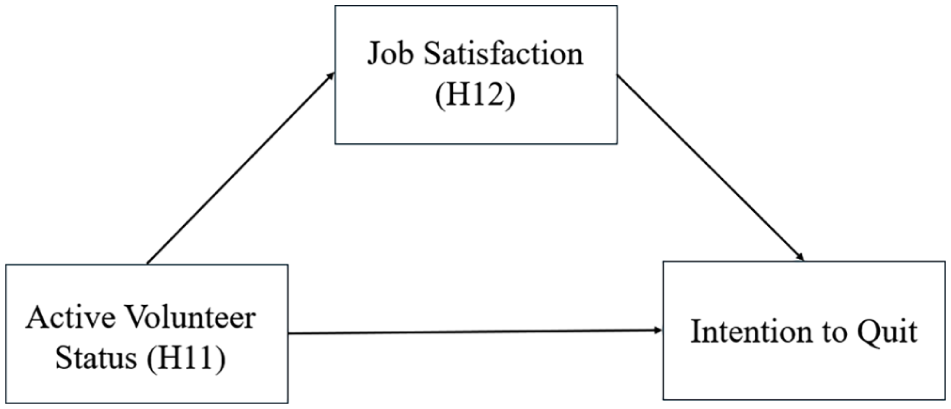
Conceptual Model for Mediating Role of Job Satisfaction on the Effect of Active Volunteer Status on Intention to Quit.
Method
Our research questions were: What factors relate to the retention of autonomous volunteering? How do active and nonactive autonomous volunteers differ in their experiences? To address them and test the above hypotheses, we adopted a case study approach to generate “an in-depth, multi-faceted understanding of a complex issue in its real-life context” (Crowe et al., 2011, p. 1). The Australian Museum’s DigiVol case offered a rich example of autonomous volunteering and access to a large sample of such volunteers.
We employed a convergent mixed-methods design, integrating quantitative and qualitative approaches. The online survey provided quantitative data, exploring differences between active and nonactive autonomous volunteers by demographics, values, motivations, and organizational experiences. Qualitative data were collected via interviews to provide insights into the volunteers’ psychological processes, including their perceptions, narratives, and underlying processes of joining and staying active (or not) at DigiVol. This mixed-methods approach offered a deeper understanding of the studied phenomenon (Creswell & Plano Clark, 2017).
The Studied Organization: The Australian Museum
The Australian Museum, established in 1827, started in 2011 a leading online volunteering platform, DigiVol, to digitize and publish its scientific collection. DigiVol is Australia’s most extensive and awarded citizen science program—globally recognized for digitizing and preserving cultural institutions’ collections (Flemons & Berents, 2012). It is replicated by prominent institutions, including Kew Gardens and the Smithsonian Institute (Alony et al., 2020). The volunteers train online before extracting data from the Museum’s collections, and more experienced volunteers validate contributions. In 2024, DigiVol had 60 on-site volunteers (photographing artifacts) and over 15,000 registered online volunteers, with only 600 regularly active.
Procedure
In 2021, the Museum invited DigiVol volunteers to participate in a voluntary online survey. This survey received 512 responses, of which 306 were complete (59.8%). Survey respondents were invited to further participate in semi-structured interviews to share their experiences and stories (Morgan, 2013). We conducted 42 interviews with 31 active and 11 nonactive volunteers, lasting 30–60 minutes. As data from the survey accumulated and preliminary insights emerged, we adjusted our interview questions. Saturation was reached as no new themes emerged in the last few interviews.
Data and Measures
Dependent Variables
The dependent variables of interest include active volunteer status, operationalized as a binary variable (1 = currently an active volunteer; 0 = not an active volunteer), and intention to quit. Active volunteers were defined as anyone entering data in the last 6 months. Intention to quit was captured by asking respondents to indicate their level of agreement with a series of five questions (1 = strongly disagree, 5 = strongly agree). An example statement is, “I have no intention of leaving DigiVol in the near future.” Respondents’ scores on these five questions were averaged to generate a score for intention to quit (Cronbach’s α = 0.91).
Independent Variables: Values and Motivation
For values, we examined three different values: self-direction, benevolence, and universalism. These were measured using Schwartz’s Value Inventory (Schwartz, 1992), in which respondents were asked to rate the level of importance they placed on each value (1 = very unimportant, 5 = very important). Motivations were measured using a condensed 20-item version of the VFI (Clary et al., 1998) to measure respondents’ scores on the six motivational functions: values, understanding, enhancement, protective, social, and career. The volunteer literature includes several studies that use this version (e.g., Ramadhia & Arfensia, 2023), shown to preserve the instrument’s validity while improving its feasibility. All six functions of the VFI demonstrated acceptable or higher reliability in our study (Values: Cronbach’s α = 0.77; Understanding: Cronbach’s α = 0.75; Enhancement: Cronbach’s α = 0.89; Career: Cronbach’s α = 0.94; Social: Cronbach’s α = 0.79; Protective: Cronbach’s α = 0.89). Although we hypothesized significant main effects for only four motivational functions (career, social, values, and understanding), we included all six in our models, treating the remaining two functions (enhancement and protective) as controls.
Independent Variables: Perceived Organizational Support, Job Satisfaction, and Affective Commitment
Perceived organizational support was measured using Eisenberger et al.’s (1997) scale, asking respondents to rate their agreement with eight items (1 = strongly disagree, 5 = strongly agree), such as “My organization really cares about my well-being.” Scores were generated by taking the average of all responses (Cronbach’s α = 0.77). Affective commitment was measured using Meyer and Allen’s (1991) commitment scale. Respondents rated their agreement with six items (1 = strongly disagree, 5 = strongly agree; Cronbach’s α = 0.69), such as “I really feel as if this organization’s problems are my own.” Scores were generated by taking the average of all responses. Overall satisfaction with the volunteer role was adapted from Eisenberger et al.’s (1997) scale (Cronbach’s α = 0.88). Respondents rated their level of agreement with 12 items (1 = strongly disagree, 5 = strongly agree), such as “All in all, I am very satisfied with my current role at DigiVol.” Scores were generated by taking the average of all responses.
Demographic Variables
We also included several individual-level demographic variables shown to influence volunteering behaviors and perceptions in the literature (Biddle & Gray, 2023; Wilson, 2012). These include gender (0 = female, 1 = male, 2 = other/nonbinary); age (measured continuously in years); employment status (0 = currently employed either part-time or full-time; 1 = currently not working or unemployed; 2 = retired); and educational attainment (0 = high school diploma; 1 = trade qualification/apprenticeship/certificate, associate’s, or some college; 2 = bachelor’s degree; 3 = postgraduate degree or higher). We included the binary variable active volunteer status as a control variable in our models, using intention to quit as the dependent variable to further account for the potential relationship between these two variables.
Sample
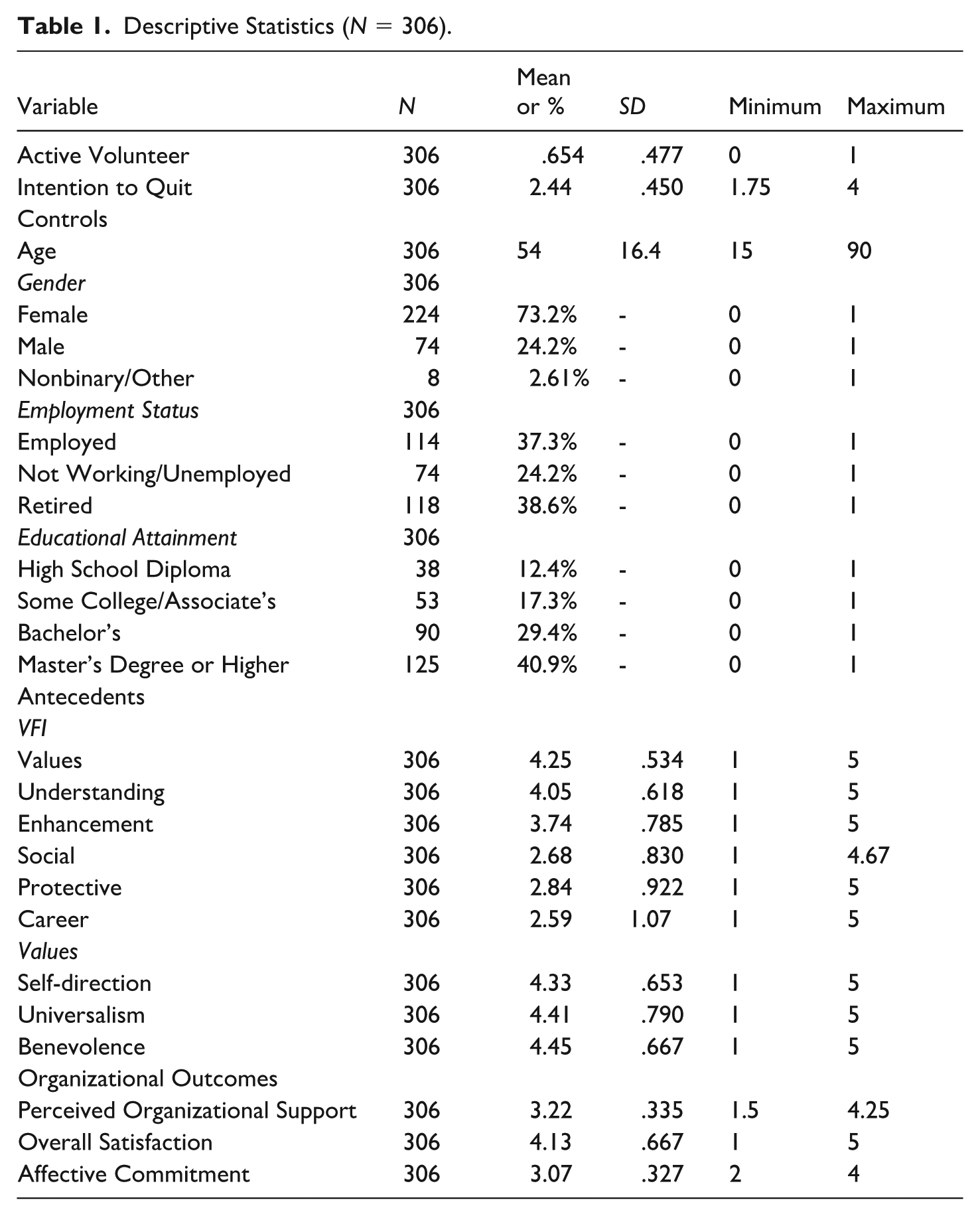
Among the analytic sample (n = 306), 65.4% were active volunteers in the last 6 months. The mean age was 54, and the sample was predominantly female (73.2%, 24.2% male, and 2.6% nonbinary), a similar rate to the one reported by the United Nations (UN) in 2018 for Australia, with 63% of volunteers overall being females (United Nations Volunteers, 2018). As for employment, the not working or unemployed group was the smallest (24.2%), while the currently working and retired groups were nearly equivalent in size (37.3% and 38.6%, respectively). Most respondents had tertiary education, with 29.4% holding a bachelor’s degree and 40.9% holding a postgraduate degree or higher. Table 1 reports the descriptive statistics.
Descriptive Statistics (N = 306).
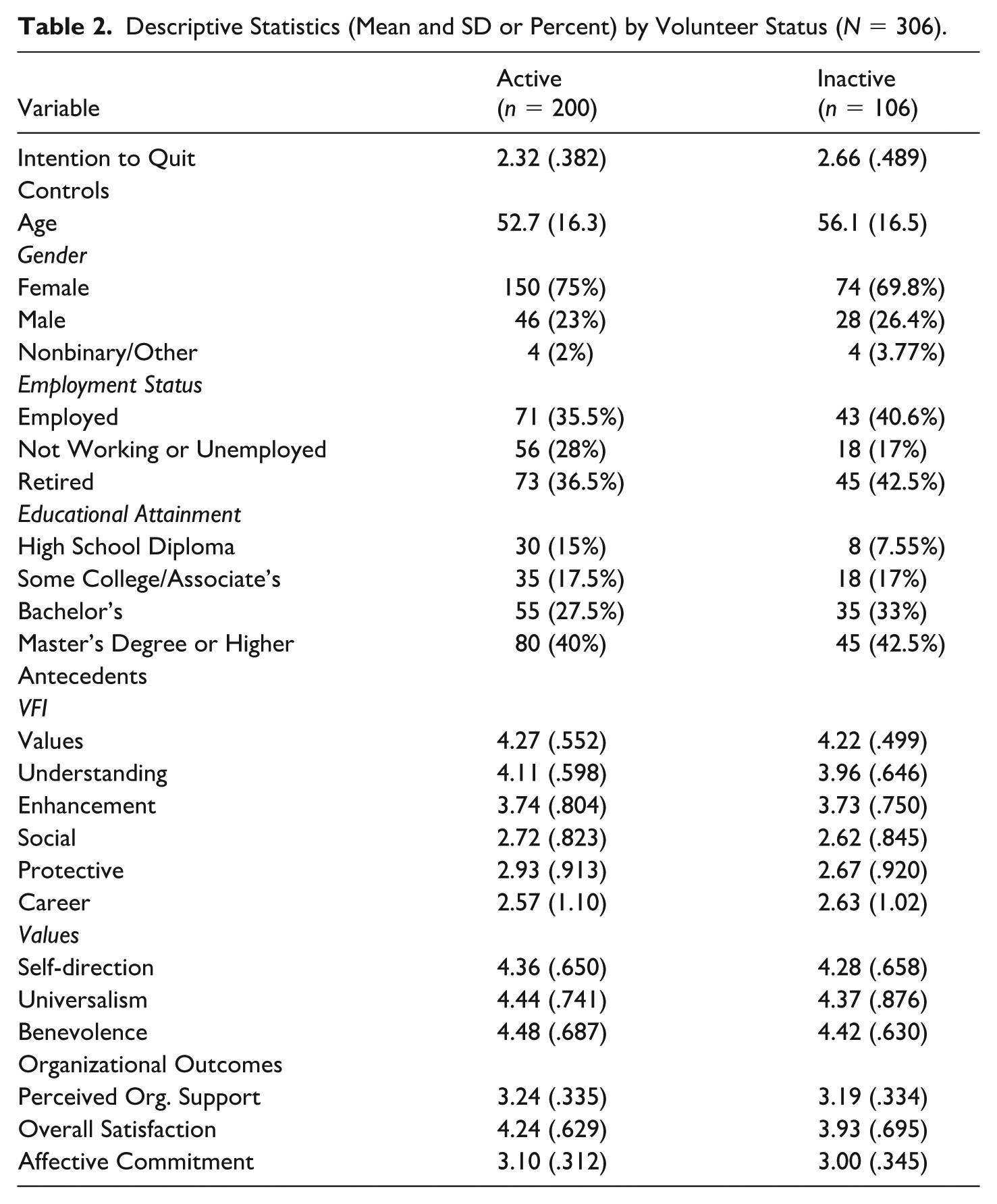
To further illustrate the differences between subgroups within our analysis, Table 2 presents the descriptive statistics broken down by current volunteer status (active vs. inactive).
Descriptive Statistics (Mean and SD or Percent) by Volunteer Status (N = 306).
Data Analysis
Quantitative data were analyzed using Stata 18. We cleaned and coded the data and used listwise deletion to eliminate cases with missing data. We then examined the descriptive statistics of all variables to be included in the models. We used logistic regression to analyze the binary outcome variable, active volunteer status, and linear regression with robust standard errors to analyze the continuous outcome variable, intention to quit. We utilized a stepwise regression approach to run three models, allowing us to compare the three models to determine whether there was significant improvement between models and how different groups of variables contributed to the overall variance explained by the models.
In qualitative data, all interviews were recorded and transcribed using Zoom, with automated transcripts corrected by the interviewers to ensure accuracy. Like Dury et al. (2015), we used a hybrid approach of inductive and deductive thematic analysis, where excerpts were coded into pre-defined variables (e.g., motivational functions, barriers), and additional themes emerged in an inductive analysis. These were checked by two authors independently. Subsequently, similar themes were clustered and organized into thematic categories (Neuman, 2011). One researcher used NVivo12 to categorize themes related to motivations, benefits, current volunteering facilitation, barriers, and connection to DigiVol. All authors then checked and finalized themes and related quotes.
Findings
The study examined factors related to the retention of autonomous online volunteers. We present our findings alongside our hypotheses, integrating quantitative and qualitative evidence to explain the results. Tables 3 and 4 present the stepwise results for the logistic regression for being an active volunteer and the linear regression for participants’ intention to quit, respectively. In both cases, the fully saturated models with all variables (Model 3) indicated a significantly better fit over preceding models (Models 1 and 2); therefore, we focus our presentation of the findings on interpreting the fully saturated models.
Logistic Regression: Active Volunteer Status, Stepwise Results (N = 306).
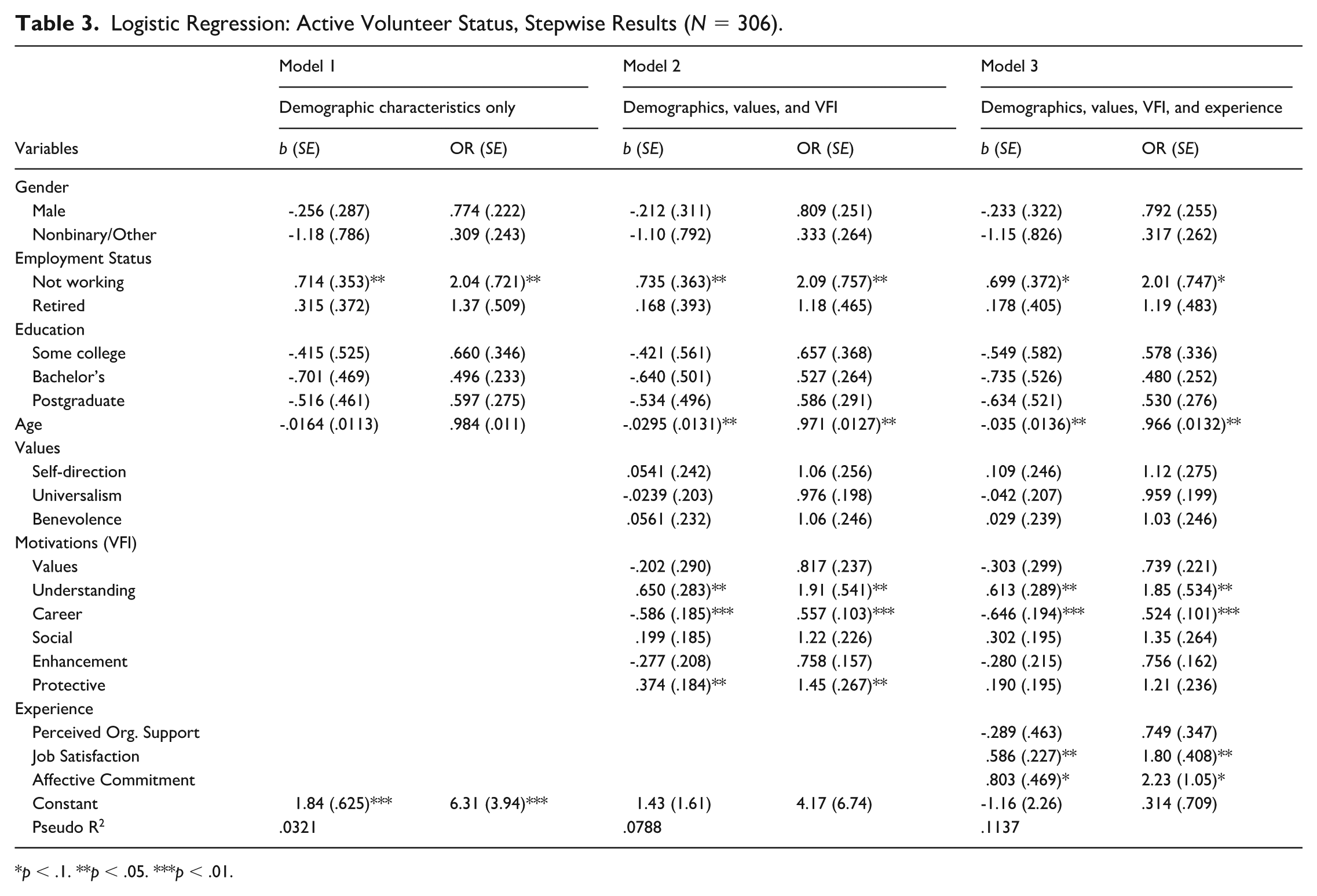
p < .1. **p < .05. ***p < .01.
Linear Regression: Intention to Quit, Stepwise Results (N = 306).
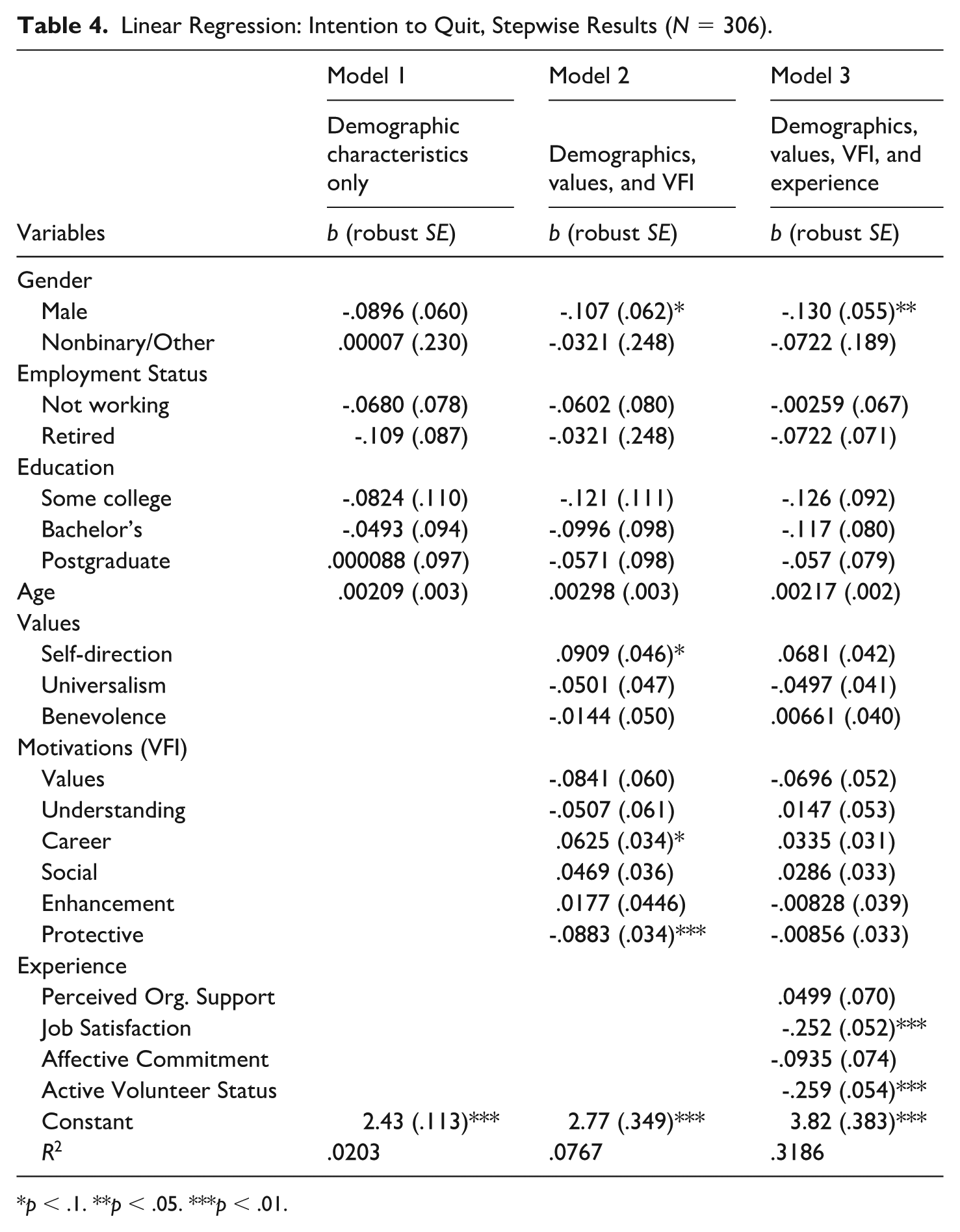
p < .1. **p < .05. ***p < .01.
H1 and H2: Values
We hypothesized that several values (benevolence, universalism, and self-direction) would be positively associated with the likelihood of being an active volunteer and negatively associated with intentions to quit. However, as shown in Table 3, no significant relationships existed between these values and being an active volunteer. Therefore, hypotheses H1a, H1b, and H1c were not supported. Similarly, as shown in Table 4, none of these three values were significant predictors of individuals’ intention to quit, meaning H2a, H2b, and H2c were not supported.
H3 and H4: Motivational Functions
In examining motivational functions, we found that understanding was a significant positive predictor of being an active volunteer (odds ratio [OR] = 1.85, SE = .534, p < .05), indicating that a one-point increase in score on this function is associated with an 85% increase in the likelihood of being an active volunteer. This finding supported H3b. Career function was a significant negative predictor of the likelihood of being an active volunteer (OR = 0.524, SE = .101, p < .01), indicating that a one-point increase in score on “career” is associated with an approximately 48% decrease in the likelihood of being an active volunteer and lending support to H3c. Social function and values function had no significant association with active volunteering, meaning H3a and H3d were not supported. Concerning the intention to quit, none of the motivational functions were significant predictors in the model. Thus, H4a, H4b, H4c, and H4d were not supported.
H5 and H6: Perceived Organizational Support
We investigated the influence of experience variables on participants’ status as active volunteers and turnover intentions. Concerning perceived organizational support, no significant relationships were found. Therefore, H5 and H6 were not supported.
However, the qualitative data shed light on the importance of organizational support, showing that while volunteers may take support for granted, a lack thereof can undermine their experience. For example, a lack of feedback left some volunteers wondering about their competence and if their work was effective and impactful, leading to nonactive volunteering:
There wasn’t any feedback at the time [. . .]. I felt like I could be doing this wrong and don’t know it. I could be skewing the feeders for what I do, and I didn’t know whether I was or not. (female, nonactive volunteer, interview)
For autonomous volunteers, organizational support often manifests in how well the system enables them to work independently. Various systems developed by DigiVol supported autonomous volunteering, including online training, support, and validators’ feedback. However, we found that deficiencies in these systems resulted in a lack of perceived support and perceived competence, frustration, and quitting.
H7, H8, H9, and H10: Job Satisfaction and Affective Commitment
Overall satisfaction was significantly and positively related to the likelihood of being an active volunteer (OR = 1.80, SE = .408, p < .05), supporting H7, and was a very strong negative predictor of intention to quit (b = −.283, SE = .054, p < .001), providing strong support for H8.
Affective commitment was also significantly and positively related to the likelihood of being an active volunteer (OR = 2.23, SE = 1.05, p < .1), supporting H9. Conversely, the model’s relationship between affective commitment and intention to quit was insignificant. Therefore, H10 was not supported.
Qualitative evidence of affective commitment and intention to continue is related to interest in the tasks, ease of completion, and a sense of contribution, as illustrated by the following comments:
I realized that organizations like DigiVol exist to give you experience where you can learn about different cultures, not be confined to where you live. I enjoyed it, so I intend to continue as long as it’s okay with DigiVol. (female, active volunteer, interview)
Mediation Analysis
Being an active volunteer (a measure of engagement) and the intention to quit (a measure of future engagement/retention) are related yet distinct factors, especially for autonomous volunteering. Therefore, we hypothesized that active volunteer status and intention to quit would be significantly associated. We included active volunteer status in our linear regression models where intention to quit was the dependent variable. Table 4 shows that being an active volunteer was significantly and negatively related to intention to quit (b = −.259, SE = .054, p < .001), such that being an active volunteer is associated with a .259-point reduction in the score on intention to quit, relative to the reference category of being an inactive volunteer. Thus, H11 was supported.
To further investigate the relationship between these two variables and better understand the mechanisms through which they are connected, we hypothesized that job satisfaction would mediate this relationship. In a mediation model containing all other independent and control variables, we found that job satisfaction partially mediated the relationship, explaining about 26.4% of the effect of being an active volunteer on the intention to quit, leaving 73.6% to be explained by other mechanisms. Table 5 presents the results of our mediation analysis. Thus, H12 was partially supported.
Mediation Analysis Results: Active Volunteer Status on Intention to Quit Through Overall Job Satisfaction (Fully Saturated Model).
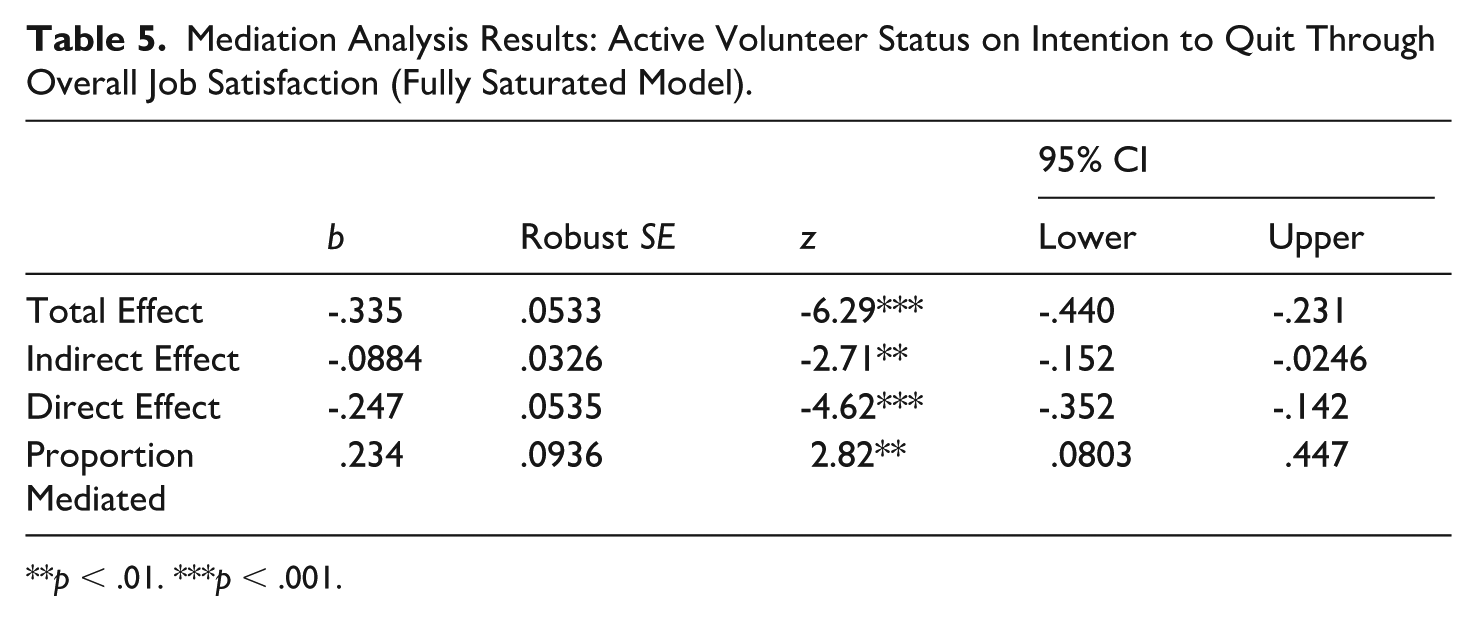
p < .01. ***p < .001.
Control Variables
Some individual-level controls were also significant in our analysis. As shown in Table 4, identifying as male was negatively associated with the intention to quit (b = −.130, SE = .055, p < .05), indicating a .13-point decrease in score on intention to quit relative to the reference category of identifying as female. We also found that both age and employment status were significant predictors of the likelihood of being an active volunteer. As shown in Table 3, age was a significant negative predictor (OR = 0.966, SE = .0131, p < .05), indicating that for every 1-year increase in age, there is a corresponding 3% decrease in the likelihood of being an active volunteer. In terms of employment status, being currently unemployed or not working was a significant positive predictor of the likelihood of being an active volunteer (OR = 2.01, SE = .747, p < .1). Compared to the reference category of currently employed, individuals who were not currently working or unemployed were approximately two times more likely to be an active volunteer with DigiVol.
Figure 3 presents our conceptual model with a summary of the supported hypotheses.
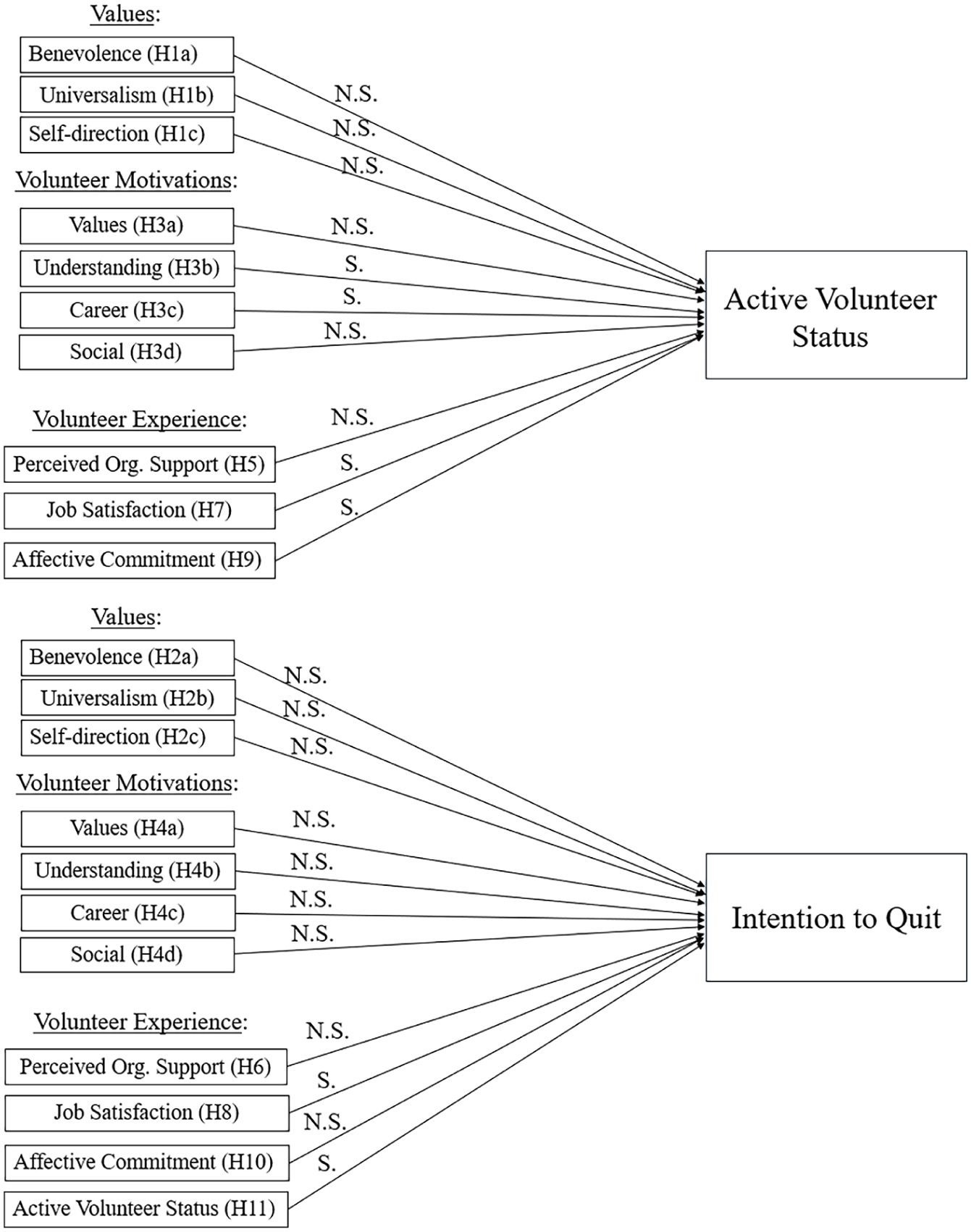
Conceptual Model With Quantitative Findings (S. = Supported, N.S. = Not Supported).
Qualitative Themes
In addition to the insights from the survey, the qualitative data analysis identified three main themes: flexibility and independence, connection, and participants’ skills and knowledge.
Flexibility and Independence
DigiVol participants reported several motivations uniquely relevant to online autonomous volunteering. Such volunteering appealed to participants’ sense of self-direction and autonomy: “The immediacy is good, the fact that it’s anytime; and you can take it any place (male, active volunteer, interview)” and “I’m in control, I’m my boss” (male, active volunteer, interview).
The freedom to choose one’s tasks, their timing, their duration, and the completion pace provided an apparent experience of autonomous volunteering and supported retention:
It’s very flexible. No one’s telling you what you have to do or when you have to do it. You’re free to choose your own work. (female, active volunteer, interview) I can do whatever I want whenever I feel like it and enjoy it whenever I do it. I don’t see any reason why I would stop. (male, active volunteer, interview)
The remote and self-directed aspects of the autonomous online environment also provided volunteers with a way to avoid unwanted elements of connecting with the organization:
You can work at your own time and rate. You’re still learning new skills, but you don’t get sucked into the old office politics and bad managers. (male, active volunteer, interview)
Connection and Meaning
Some volunteers described their relational motivations to join and continue with DigiVol, expressing that, despite being online, it provided them with a sense of affiliation to a community working toward a shared goal:
I think that’s an extraordinary community. I like the collaborative aspect of it, the efforts of the many going into the one [outcome]. (female, active volunteer, interview) You’ve got an amazing community. I can’t imagine how big the community is. There’d be 4000 photos up on DigiVol, and they’ll be done in 6 or 8 hours. It’s just an extraordinary community. (male, active volunteer, interview)
Many new volunteers initially gravitated to DigiVol because of COVID lockdowns, reporting improved well-being due to volunteering during isolation: “I had never thought of volunteering online until the pandemic came along” (female, active volunteer, interview); “Joining DigiVol was always more about my wellness—being locked down has been a real drag. DigiVol was a wellness outlet for me” (male, active volunteer, interview); “We went into lockdown, but with DigiVol you could feel you’re helping something, and you could do it from home” (male, active volunteer, focus group).
Contribution to the greater good also served as a connection source, as mentioned by many interview participants. It included the sense of contributing to the community or doing something beneficial, helpful, and meaningful to others: “Volunteering for DigiVol [gives a] sense of doing something meaningful” (female, active volunteer, interview); “I’m doing something worthwhile for the community” (male, active volunteer, interview); “Part of it is knowing that there’s going to be someone who will use these records at some point” (female, active volunteer, interview).
Skills and Knowledge Development
Participants’ skills played an essential role in their decision to volunteer for DigiVol, as having the skills required for this volunteering role was an attractor. Participants wanted to contribute by making use of their existing skills: “I’m used to researching, so I thought I could use what I’ve learned in my degree to help out here” (female, active volunteer, interview) and “research support is something I’m really familiar with” (female, active volunteer, interview). In other words, online volunteering can enhance people’s self-efficacy and the belief that they, too, can volunteer.
Another aspect of skills in autonomous volunteering done online is technological savviness and the capacity to work independently. Several volunteers clarified that these specific skills increased their confidence: “I’ve been happy to work by myself on a project if I feel confident” (male, nonactive volunteer, interview).
Skills were also cultivated through DigiVol’s online tutorials, support systems, and forums. They were reliable sources of help, mutual support, and advice when volunteers could not complete their tasks. These helped to enhance volunteers’ capability and retention:
The tutorials are really good and well set up. It makes it easier for the volunteer. If I found something I couldn’t decipher, I could refer that to the chat forum, and somebody would help. (male, active volunteer, interview)
When the platform worked well, it instilled a sense of confidence in DigiVol systems and fostered the volunteers’ sense of confidence in their capability to contribute:
Everything was so straightforward, even I could follow it. The technology always worked fine. That makes you feel that [. . .] competent people dealing with [this work] know how to support you. (female, active volunteer, interview)
In addition, some survey responses indicated career as a motivator for joining DigiVol:
I struggled to find opportunities in science at my early career stage, and this seemed like a great place to start. (female, active volunteer, survey) When I started, I hoped to find a website similar to DigiVol that pays. (female, active volunteer, survey)
However, a lack of feedback left some volunteers wondering if what they were doing was effective and impactful, leading to attrition, as stated by nonactive volunteers:
I got to the stage where I thought: I don’t know if my efforts are useful, so I’ll go into something else. (female, nonactive volunteer, interview)
Discussion
As people increasingly work independently from home (Barrero et al., 2023) and NPOs struggle to recruit and retain volunteers (Nesbit et al., 2024), autonomous volunteering offers promising pathways to accomplishing tasks by self-reliant volunteers. While some empirical articles on autonomous online volunteers exist, none define the term or measure it. Understanding why and how people volunteer remotely and independently is critical for the future of volunteering. To explore this emerging phenomenon, our mixed-methods study approach (Crowe et al., 2011) allowed us to examine autonomous volunteering more deeply and from different angles, focusing on factors related to retention and engagement by comparing active and nonactive volunteers in DigiVol.
Contrary to our hypotheses that benevolence and universalism values would predict active volunteering (Plagnol & Huppert, 2010; Schwartz et al., 2017) and that self-direction would be as crucial for autonomous volunteering as it has been for autonomous work (Sagiv & Schwartz, 2022), these values did not predict active volunteering. This finding contradicts previous studies on volunteering, including online (Cox et al., 2018; Hitlin, 2003). Because value scores were high for both active and nonactive volunteers in our sample, it is possible that simply enrolling as volunteers might satisfy them (Hitlin, 2003; Oostlander et al., 2014).
We explored the motivations of autonomous volunteering to stay active (Faletehan et al., 2021). We found that the understanding function was critical to keep autonomous volunteers active and retained. According to Clary et al. (1998), volunteering permits new learning experiences and opportunities to exercise knowledge, skills, and abilities. Our research shows that autonomous volunteering, particularly in citizen science, enhances such abilities, allowing volunteers to develop skills, resulting in active volunteering and reduced intention to quit (Haivas et al., 2012). Our sample comprises a high percentage of educated females who might be particularly interested in skill development and enhancing their understanding of science (United Nations Volunteers, 2018).
Conversely, as hypothesized, the career function was negatively associated with active volunteering and positively associated with the intention to quit. While career enhancement can be seen as a self-centered motivation (Silva et al., 2018), which might drive people to volunteer for longer and add it to their resume (Clary et al., 1998), literature shows that among VFI constructs, it tends to be negatively associated with retention (Alkadi et al., 2019; Stukas et al., 2015). By career, Clary et al. (1998) refer to the opportunity to use volunteering to enhance one’s paid work, such as by creating new applicable and transferable skills or new job options. However, participants did not perceive autonomous volunteering as enhancing their careers. This is notable, particularly as this was volunteering in science-related tasks, which could be impressive on one’s resume.
Furthermore, our findings show that autonomous volunteering is unique, as demonstrated by the insignificant role of perceived organizational support (Ngah et al., 2022). While such support can be critical in maintaining formal volunteers (Fairley et al., 2013), volunteering autonomously, separately from the NPO, may diminish the prominence of perceived organizational support (Eisenberger et al., 1997). However, the qualitative data show that when support systems and technology fail, people feel frustrated and consider quitting. Therefore, it is critical to offer effective systems even if volunteers do not perceive them as organizational support. Once more, it is possible that our unique sample of highly educated and mostly female participants contributed to this result and that volunteers who participated in the survey might be capable and confident enough not to need organizational support.
Fourth, we found that satisfaction and affective commitment matter to autonomous online volunteers, similar to the literature on conventional volunteering (Zhou & Kodama Muscente, 2023), with H7, H8, and H9 fully supported. Even when autonomous, volunteers must feel satisfied with their role. However, affective commitment was not related to intention to quit (H10 unsupported), perhaps as inactive volunteers who are committed still want to remain part of the system. Notably, in autonomous volunteering, one can do “quiet quitting”—remain in the system but not engage with the tasks—as the effort involved in formal quitting may be greater than staying.
Self-Determination Theory
While we did not initially use self-determination theory (SDT, Ryan & Deci, 2000) when designing this study, applying it to the findings retrospectively helps interpret them, showing how autonomous volunteering could address needs and support intrinsic motivations (Haivas et al., 2012). SDT posits that intrinsic motivations, driven by needs and values, are more potent than extrinsic ones (Ryan & Deci, 2000) while detailing three psychological needs that drive us: autonomy (freedom, flexibility), competence (skills, self-efficacy), and relatedness (connectedness, affiliation). Volunteering can meet all SDT needs (Haski-Leventhal et al., 2019; Millette & Gagné, 2008): autonomy, as individuals typically freely engage in activities that align with their values and interests (Oostlander et al., 2014); competence needs by enabling volunteers to acquire new skills (Haivas et al., 2012); and relatedness via meaningful relationships with beneficiaries, peers, or community members (van Schie et al., 2019).
Our study shows that autonomous volunteering can fulfill SDT needs by involving self-directed choices about where, how, and why to engage (Haski-Leventhal et al., 2019). When individuals volunteer autonomously, they experience a sense of volition and personal agency, motivated independently by external stimuli (Ryan & Deci, 2000). Naturally, it supports the need for autonomy but also competence via the understanding function (Clary & Snyder, 1999), which, as our study shows, increases retention and active volunteering when met. However, the significant difference between autonomous and conventional volunteering can be attributed to relatedness (Ryan & Deci, 2000), since volunteering on one’s own addresses social needs less. No element of relatedness—neither the VFI social function nor perceived organizational support—correlated with active volunteering or the intention to quit in our study. Social interactions did not matter, showing that autonomous volunteers have different expectations. Furthermore, qualitative data showed that relatedness was addressed by the implied sense of belonging to a greater community. The implications are that autonomous online volunteering could be more suitable for people who prefer to avoid social interactions while volunteering, such as people with social anxiety (Handy & Cnaan, 2007) or neurodiversity (Nieto et al., 2015).
In summary, our most significant contribution is presenting the fast-increasing phenomenon of autonomous volunteering, which has yet to be conceptualized or examined by empirical research. We identify several factors related to the retention of autonomous volunteers. In addition, we highlight how the volunteer experience can subsequently shape volunteers’ likelihood of being active and their intentions to quit.
Limitations and Suggestions for Future Research
Although this article offers some novel contributions to the volunteering literature, it also has limitations, necessitating further research. First, this research was based on one organization and country. Although this setting was critical for studying autonomous volunteering, more research is needed in additional countries and organizations. Notably, our sample focused on autonomous volunteers, as “conventional” volunteers were too few in DigiVol. While it is challenging to locate NPOs with a large pool of both, future studies should attempt to compare the differences between autonomous, conventional, and nonvolunteers by collecting data across several organizations or by including questions about autonomous volunteering in population-level surveys of volunteering (Biddle & Gray, 2023).
Furthermore, our sample comprised a relatively high percentage of educated females. Diverse samples are essential for further understanding this phenomenon. Similarly, while we have included both active and nonactive volunteers, our nonactive sample was limited. Additional studies can address these gaps using surveys, focus groups, and interviews. Longitudinal research could explore how autonomous volunteering might change, including long-term outcomes, retention, and engagement.
Furthermore, we relied on self-report data from surveys and interviews, with no access to administrative data about actual volunteer participation. Future studies on autonomous volunteering could overcome this limitation by using administrative data on volunteering (Walk et al., 2019). Given the partial mediation of job satisfaction and volunteer retention, further research could examine how valuable it is to maintain an extensive database of loosely connected/affiliated volunteers, if such data should be filtered based on satisfaction levels (if measured), and how volunteer managers can re-activate inactive autonomous volunteers, particularly those who previously indicated general satisfaction with their experience.
Finally, we initially aimed to use several frameworks and ask as many questions as possible while balancing the need to respect participants’ time. The relevance of SDT only emerged following data analysis. Given its importance in explaining our findings, we suggest using valid scales and measures to explore autonomous volunteering in future studies.
Implications for Practice
The study offers several implications for practice. First, NPOs and companies that promote employee volunteering should identify roles and tasks suitable for autonomous volunteering and offer them to current and prospective volunteers.
Second, autonomous volunteering can address people’s need for autonomy and competence, per SDT. NPOs can develop platforms for autonomous volunteers to connect and socialize to address all three SDT needs and increase engagement and retention. Volunteers should be surveyed to understand their preferences and what they wish to gain from their experience to meet their diverse needs and interests.
Finally, to allow people to volunteer autonomously, the entire volunteer management process must be online, from information, application, selection, and training to task performance, support, recognition, and social connection. While our quantitative data showed no impact on perceived organizational support, the qualitative data demonstrated that well-functioning systems played a critical role in retaining volunteers.
Conclusion
This study is the first to explore the emerging phenomenon of autonomous volunteering. It demonstrates who is more likely to be active in such volunteering (younger and not currently employed), their primary motivations (understanding), and the role of satisfaction and affective commitment in helping them remain active. Conversely, we found no impact for values previously connected to conventional volunteering (benevolence, universalism) or autonomous work (self-direction). Further research is required to shed more light on this novel way of volunteering.
Footnotes
Acknowledgements
The authors thank the Australian Museum and Macquarie University for generously supporting this research with an Enterprise Partnership Scheme grant. We also thank all the Australian Museum, and particularly Paul Flemons and Adam Woods, for initiating this study, and we thank the volunteers who participated in the interviews, focus groups, and survey. We express our gratitude to our research assistants (Amrita, Mary, Syed, and Mirabelle) for their valuable work. We would also like to thank the NVSQ editor and the two reviewers who helped us to improve our manuscript with their helpful comments and feedback.

Funding
The authors disclosed receipt of the following financial support for the research, authorship, and/or publication of this article: This research was funded by the Australian Museum and Macquarie University via an Enterprise Partnership Scheme grant.
Declaration of Conflicting Interests
The authors declared no potential conflicts of interest with respect to the research, authorship, and/or publication of this article.
Data Availability Statement
The unidentified data that support the findings of this study are available from the corresponding author, Professor Debbie Haski-Leventhal, upon reasonable request.