




Abstract
This study explores motivations and barriers to social action in children from economically disadvantaged communities, through the lens of Construal Level Theory. Results from a qualitative study involving 40 children in the United Kingdom (engaged and non-engaged in social action) suggest that a concrete, place-based understanding of social action (low-level construal) and intrinsic motives drives children to engage. An abstract and decontextualized understanding of social action (high-level construal) and concrete responsibilities such as caring for family (low-level construal) often hinders engagement. Contrary to expected trends, motivations to engage in social action are more associated with intrinsic benefits. Social identity needs act both as motivators (disproving negative views about children) and as barriers (maintaining a sense of “coolness”). Our study contributes to knowledge by suggesting that a place engagement approach, which embraces low-construal aspects and is “closer to home,” may help both motivating and overcoming barriers to child volunteering in economically disadvantaged communities.
Introduction
Involving young people in voluntary activities is key, as creating a habit early on could lead to individuals’ continuous engagement with social action throughout their life course (Mills & Waite, 2017) and, perhaps more importantly, to these individuals having better life chances, careers, and overall wellbeing (Bang et al., 2020; Holliday, 2018; Shantz et al., 2019). However, youth engagement seems to be decreasing (Piatak & Mikkelsen, 2021), with less than 4 out of 10 young people in the United Kingdom engaged in social action activities (Bratsa et al., 2020). The proportion decreases when looking at lower socio-economic groups, who are less likely to engage in social action (Bratsa et al., 2020). Engaging young people from these groups not only benefits them personally, but also benefits the organizations they volunteer for. Participation in volunteering activities also empowers them to take part in the transformation of their own communities, bringing together individual and societal development (Vertonghen et al., 2017). Ultimately, engagement with this type of activities and the benefits volunteers could get from it might reduce their chances of unemployment or living in poverty (UK Parliament, 2021). As the reasons behind this recurrent pattern of lower volunteering in socio-economically challenged communities are unclear, a better understanding of why, or why not, young people in lower socio-economic groups tend to engage in social action activities is needed. Furthermore, despite the growing interest in youth social action, there is almost a complete absence of research that focuses on children’s (people under 18 years) understanding of motivation and engagement with social action (Nordstrom et al., 2022). This gap in the literature is worrying, especially since developing habits at such a young age seems critical to future outcomes benefiting both the individual (i.e., improving wellbeing, developing moral values) and society/the environment (through more probable engagement with social action; Bang et al., 2020; Hart et al., 2006).
Social action refers to behaviors people engage in not only for their own benefit, but for the benefit of the communities they are part of (Snyder & Omoto, 2007), volunteerism being the most common type of social action (Penner, 2004). More specifically, youth social action is defined as activities that young people “can do to make a positive difference to others or the environment” (Step Up to Serve [SUS], 2020b, para. 2), including fundraising, campaigning, and volunteering activities such as helping people outside the family (Birdwell et al., 2013). The importance of social action activities and their benefits have been largely acknowledged by government bodies and intergovernmental organizations around the world (Department for Digital, Culture, Media and Sports, 2016; UNV, 2020), as well as by academia (Benenson & Stagg, 2016; Chinman & Wandersman, 1999; Melkman et al., 2015), with some authors seeing social action as the blend between volunteering and activism for positive change (Marzana et al., 2012).
This study followed a qualitative approach, aiming to inductively explore child social action by conducting focus groups with children (those under the age of 18) from lower socio-economic groups, with the interlinked aims of (a) comprehending what children understand by social action and (b) understanding why children in these groups are or are not engaging in social action, which links to the motivations and barriers underpinning their behavior. In doing so, this study addresses recent calls in the literature for further study of the motivations driving children to engage in social action (Gil-Lacruz et al., 2016; Y. J. Lee, 2020; Nordstrom et al., 2022; Shantz et al., 2019), and the necessity of unpacking the knowledge/strengths of low-income volunteers and their communities, instead of just focusing on what they are lacking (Benenson & Stagg, 2016). This study also answers recent calls in the field of social action and volunteering literature for more research that explores issues from a volunteer perspective, and hence more qualitative research with volunteers (Jiang et al., 2019; Nordstrom et al., 2022; Same et al., 2020).
We aim, therefore, to provide a much-needed child-centric and inclusive view of social action and its drivers. There are also important implications for theory and practice, as the results of this study could inform our understanding of these concepts with children, as well as providing guidance to local and national governments, nongovernmental organizations, and schools when aiming to encourage children from lower socio-economic groups to engage in different volunteering activities. Through our conversations with children, we found that they are mainly driven to engage in social action by intrinsic motives. Interestingly, social identity considerations seem to both enable and hinder the adoption of social action practices. Children from economically disadvantaged communities currently engaged are aware and concerned that they are perceived negatively by other groups, and motivated to engage in social action to overcome these perceptions, while those non-engaged often want to maintain a sense of “coolness” with peers through inaction. By exploring social action through the lens of Construal Level Theory (CLT), and understanding construals as the way a person perceives and interprets a particular situation, we find that children’s motivations and barriers to social action are often concrete and place-based, that is, at a low level of construal, while those not engaging in social action often have an abstract and vague understanding of social action, that is, high level of construal. We, therefore, propose that it would be useful to take a place engagement approach to both overcoming barriers and encouraging social action. In the next section, we offer a brief review of the literature on youth and child social action, to then explain our methods of data collection and data analysis. Findings of our qualitative study are presented next, and then discussed in relation to the existing literature. Our article then acknowledges the limitations of the study and introduces ideas for future research, before presenting our concluding remarks.
Literature Review
Motivations and Social Action
Extant literature has explored the motivations driving people to engage in social action activities, with most research focused on volunteering (Carlo et al., 2005; Clary et al., 1996; De Clerck et al., 2021; Vázquez et al., 2015), fundraising (Grant, 2008; Kelly et al., 2014), and campaigning (Bolderdijk et al., 2013; Thøgersen & Crompton, 2009). Across existing studies in these areas of activity
While most scholars agree that volunteers are driven by a combination of different motivations (see Bocsi et al., 2017; Haski-Leventhal & Bargal, 2008), authors offer different views on what type of motivations are dominant. Dunn et al. (2016), for instance, talk about “helping others” and “socializing” as common motives. Lanero et al. (2017) argue that volunteers mainly engage because of instrumental motivations (e.g., provide a service in the community, change the things that go wrong in society), while Cox et al. (2018) agree with previous research (e.g., Stukas et al., 2016) in that the main motives to engage in voluntary activities are related to value expression and understanding. While providing granular breakdowns of the factors that enable and act as barriers to volunteering, theorists such as Demir et al. (2020) consider whether motivators are intrinsic (associated with the activity itself, such as enjoying the activity or benefiting others) or extrinsic (that comes as a result of the activity, such as status or job prospects). Research on motivations in young adults, however, suggests that the reasons to get involved in voluntary actions are moving from altruism to being more individualistic, self-oriented, and extrinsic in character (Hustinx, 2010; Hustinx & Lammertyn, 2003; Vázquez et al., 2015). More specifically, research has shown that young adults belonging to “Generation Z” (Seemiller & Grace, 2018) are mainly motivated to engage in voluntary activities by extrinsic benefits such as the opportunity to learn and obtain career prospects (Cho et al., 2018). Although some authors argue that despite “modern motivations” (Bocsi et al., 2017) such as career development, skills development, or status are gaining importance, new young generations tend to also be motivated by a combination of extrinsic and intrinsic motives, such as helping others (Bocsi et al., 2017). While it would not be unreasonable to suggest that similar trends could be found among children, whether they are motivated mainly by extrinsic reasons is unclear.
What seems clearer is that motivations to engage in volunteering change as we move across age groups (Gaskin, 2004) and, as such, it is crucial to understand what is driving children to engage in this type of behavior, and to understand this in relation to well-established theories of motivation, considering for instance extrinsic and intrinsic factors.
Social Action in Economically Challenged Communities: The Importance of Habits and Barriers
There is much research which suggests that pro-social and anti-social behaviors seem to be intergenerational in that they can be passed from one generation to another. In terms of positive behaviors, research suggests that children are more likely to develop pro-social skills if their parents show caring behaviors (Williams & Berthelsen, 2017). The trend is similar in the volunteer context, as a child is more likely to volunteer if their parents also volunteer (Mainar et al., 2015; Perks & Konecny, 2015), which at the same time helps children build habits.
Research suggests that those with higher income and status are more likely to volunteer (Dean, 2016; Hackl et al., 2007; Rotolo & Wilson, 2012). This might be because of higher levels of awareness of social issues, or as a result of having more social contacts, family history, and social norms related to volunteering (Musick et al., 2000). Higher family socio-economic status influences young adults and children’s predisposition to volunteer (Mainar et al., 2015), allowing “privileged” youth to get a better sense of their own class, learn about class inequality, and increase their commitment to social justice (Kawecka Nenga, 2011).
However, intergenerational transmission of behaviors could also be related to negative issues, such as social deprivation, substance abuse, and crime (see, e.g., Bradshaw, 2005; Mellody, 2002; Van de Rakt, 2008). Children in economically disadvantaged communities often face stigma and negative reputation, with reduced life and job prospects (UK Parliament, 2021). This trend may also play out in terms of volunteering, as less affluent groups only account for approximately 30% of the total of young adults engaged in social action in the United Kingdom (Bratsa et al., 2020). According to Dean (2016), the reasons why people from lower socio-economic groups do not engage in social action relate to their lack of “habitus” in relation to voluntary activities, as these are not things they would normally do. This assumption, however, is based on views collected from volunteer recruiters, instead of from the young people themselves. Regarding reasons why these groups engage, Brewis et al. (2010) mention employability motives, while Bradford et al. (2016) talk about “unintended volunteering.” In their view, young adults and children in these communities do not engage in social action because of specific reasons, but through engagement in community programs, which then lead to volunteering opportunities.
In terms of barriers to engage in youth and child social action, lack of awareness about opportunities to participate (Hill et al., 2009) and lack of time (Knibbs et al., 2019) seem to be the biggest obstacles. However, barriers might be more salient in economically disadvantaged communities, as there are fewer volunteering opportunities in these areas, which translates into a reduced number of opportunities to participate in social action (Davies, 2018b). Among these groups, a lack of interest, and the fact that “it never occurred to them,” play a key role in non-engaging (Knibbs et al., 2019). Furthermore, lack of resources in youth organizations and lack of support from schools seem to aggravate the lack of engagement (Davies, 2018a). Benenson and Stagg (2016) argue that one way to engage individuals from lower socio-economic groups in social action involves linking the support to their communities with the improvement of their lives. By focusing on assets (social, cultural, human, and political), the benefits individuals could get by engaging could be more evident.
Little is known, however, about how children in economically disadvantaged communities perceive these issues and how they influence subsequent social action or inaction. From the literature reviewed above, it seems reasonable to posit that habits (both good and bad) often seem to pass from one generation to the next, and that the norms in homes and communities are learned and continued from a young age. Indeed, much of the research reviewed in this section could be used to make similar arguments: if young people in economically disadvantaged areas do not experience social action in their homes and their communities, how can they reasonably be expected to pick up the habit? While our study does not compare children from families with a history of volunteering to those without, we include this point because it seems that encouraging children to volunteer may result in them passing on these habits to future generations.
What Makes Children Different: The Importance of Construal and Place
As stated before, there is a particular current lacuna in the literature regarding motivations of children to engage in social action, in particular children coming from lower socio-economic groups. To the authors’ knowledge, only Davies (2018a, 2018b) actually involves children living in these communities as research participants. While Davies’ studies offer valuable insights and explore some of the reasons children volunteer, they are focused primarily on barriers rather than motivations. As such, one key finding from the studies is that children do not volunteer so that they can avoid the negative social stigma from peers. As the title of the Davies’ (2018b) article: “We’d get slagged and bullied” suggests, it seems that children are motivated to maintain some kind of social identity with peers by not volunteering. While this is a very interesting and important finding, it makes it even more intriguing to explore more deeply positive aspects of why children volunteer in economically disadvantaged communities, as these remain relatively under-explored when compared to barriers. Children are also different developmentally from adults and young adults, and being more cognizant of these differences provides an opportunity for researchers to gain better insights.
It is important, therefore, to consider what makes children different from adults and young adults in general, and to explore how this may influence engagement with social action, as children might not necessarily think about jobs and skills development as young adults do. Studies in child and developmental psychology signal that children may be more influenced by their family and home life than an adult population (see, e.g., Boyd & Bee, 2019). Put simply, these developmental psychologists argue that most children start their development at home, and to a young child this often represents a dominant experience of their world. Children are often yet to have a broader experience of travel, and thus the home and the local community can often become a critical influence in guiding norms and habits. One way this can be explained is through the lens of CLT (Trope & Liberman, 2010), which argues that individuals perceive concepts or situations based on mental abstractions (construals) and on how psychologically distant they are. Distant concepts and events—high-level construal—tend to be more abstract, while psychological closeness (“me,” “my community”)—low-level construal—is more concrete and “closer to home.” There is evidence that individuals in general are more influenced by concrete low-level construals than abstract ones. For instance, people are more likely to donate to local instead of global causes (Grau & Folse, 2007), and prefer organizations that use concrete messages when talking about sustainability (Z. Lee et al., 2024). This might be explained by the fact that proximity to a familiar setting (i.e., the family, the community) leads to personal benefits, such as trust and well-being (Beckes & Coan, 2011). Engagement with activities at “closer to home” settings allows individuals to “fit” (Englert et al., 2020) and “bond” with places (Giuliani, 2003). This preference for low-level concrete construals might be stronger in children than adults, as children tend to have relatively more experience of the home and local community, and less experience of the broader world (see Boyd & Bee, 2019).
It is interesting to reflect on how the notion of place has emerged as an encouraging way to better understand social behaviors and their origins (McKeever et al., 2015). In terms of construal, place can be low level and more concrete (e.g., my home or my town) or high level and more abstract (e.g., my country or the world). However, recent theorists have suggested it is the low-level and more concrete notion of place which offers much promise, with context and community influencing opportunities for social behaviors to happen (McKeever et al., 2014). Indeed, it seems that encouraging local place-based behaviors could lead to higher levels of commitment (Ryan et al., 2023), helping volunteers to build positive habits and continue volunteering when they are older (Dawson et al., 2019). The influence of place and construal is under-explored in the context of child volunteering. However, the natural link between CLT and place (being low level/concrete or high level/abstract) means that they may emerge as useful lens through which the motivations and barriers to child social action could be better understood.
In summary, we hope that our research can inform the extant literature reviewed above in terms of better understanding three key aspects: (a) Does the trend for more extrinsic than intrinsic motivation in relation to volunteering and social action established in young adults hold true in children (particularly those living in economically disadvantaged communities)? (b) What can we learn about habits and norms in relation to social action in a child sample? (c) How can CLT and place engagement approaches help better understand the motivations and barriers to child social action?
Method
The United Kingdom has a long history of youth volunteering (Brewis, 2011). However, engagement in volunteering activities among younger people and children is still low, and the hours young people spend volunteering are steadily decreasing. For instance, volunteering among 16 to 24 years old in England decreased from 23% in 2020 to 17% in 2021 (UK Government, 2023), while a similar pattern was found in Scotland, where the percentage of young people engaged in formal volunteering decreased from 49% in 2019 to 37% in 2022 (Volunteer Scotland, 2023). This reality led to the creation of Step Up to Serve (SUS), a U.K.-based charity (supported by the U.K. government) that coordinated the #iwill campaign, aimed to make meaningful social action part of life for 10 to 20 years old across the country (SUS, 2020a). For the purpose of this study, we partnered with SUS (who helped with the recruitment of participants and with the ethical procedures needed for the completion of the data collection), and focused our study on exploring the views of children living in economically disadvantaged communities. This particular group was chosen because their engagement is even lower than in more affluent areas (Bratsa et al., 2020), and it is in these communities where we can find more children and young people reluctant to engage in volunteering (Bratsa et al., 2020).
Data Collection
This research was completed following a qualitative approach, commonly used in volunteering research (see McNamee & Peterson, 2016; Nordstrom et al., 2022). Six focus groups were conducted with children coming from lower socio-economic groups (according to household’s Social Grade 1 ), recruited through SUS partners (schools and youth centers attended by the children). Focus groups were found to be an appropriate method to use in this study because a group setting might help children explain their views and experiences more easily (Kitzinger, 1995), while it might also make them feel more comfortable and it might favor self-disclosure (Krueger & Casey, 2014). More specifically, we collected data in three different cities in the North West, North East, and South East of England. These cities were chosen by SUS to provide a variety of views across different locations. Two focus groups were conducted in each city; one focus group focused on understanding the views of children engaged and the other one focused on children non-engaged in social action. Children were recruited by SUS partners based on whether they self-reported being engaged in social action or not.
The focus groups were conducted by one member of the research team who had experience working with children (as an educator). She was able to build rapport with the children at the beginning of the focus groups, using ice-breaker games as a way to encourage participation and engagement (Sasan et al., 2023). Focus groups were conducted following a semi-structured approach, combining open questions with the use of projective techniques. Specifically, photo elicitation tools (Harper, 2002) were used with the aim of further unpacking the way children understand social action. For this purpose, participants were presented with five photos which for SUS represent social action and which were related to lifeguarding, elderly care, helping less able kids, charity shop work, and helping with canal conservation (litter picking). They were then asked to choose which of those activities best represented social action and to answer several questions in relation to the activities chosen (questions related to feelings and motivations). The use of photo elicitation allowed children to discuss different levels of meaning in relation to social action (Glaw et al., 2017), explaining further their understanding of the concept and the drivers and constrainers of their volunteering behavior. During the focus groups, some questions were asked using an indirect and neutral approach, for example, what do you think motivates someone like you to engage in social action? (Nederhof, 1985), with the aim of minimizing social desirability bias.
In total, 40 children were recruited to participate in the study, following a purposive sample approach (Robinson, 2014). They were aged 10 to 17 years old (average age was 14), 27 of them were female and 13 of them male. The fact that more females volunteered to take part in the study could be explained by results of previous research, suggesting that females are more likely to engage in voluntary activities (Gil-Lacruz et al., 2016; Sarre & Tarling, 2010), even in younger age groups (Karniol et al., 2003). From the total sample, 19 of them were engaged in social action and 21 of them were non-engaged.
The focus groups for engaged and non-engaged were conducted separately, lasting for an average of 40 minutes and were audio-recorded, after consent was obtained from both the participants and their parents/legal guardians.
Data Analysis
The narratives collected through the focus groups were transcribed (given each participant a number to help with the analysis process, e.g., Participant 1 = P1), and then analyzed through inductive thematic analysis (Braun & Clarke, 2022), following the coding stages proposed by Gioia et al. (2013). The first stage of the data analysis included the reading of the focus groups’ transcripts and the development of initial categories emerging from the data, classified as first-order concepts (similar to the open coding process proposed by Strauss and Corbin (1998). Next, similarities and differences across concepts started to be identified, while concepts began to be explored conceptually. Several iterations between the data and existing literature, and discussions between the research team, led to the development of more concrete dimensions (or second-order themes, according to Gioia et al. (2013)). The final stage of data analysis culminated with the development of our aggregate dimensions, the higher level of classification of our data, which complete our data structure and serve as organizing principles of our findings. An illustration of the approach followed when analyzing the data is provided in Figure 1.
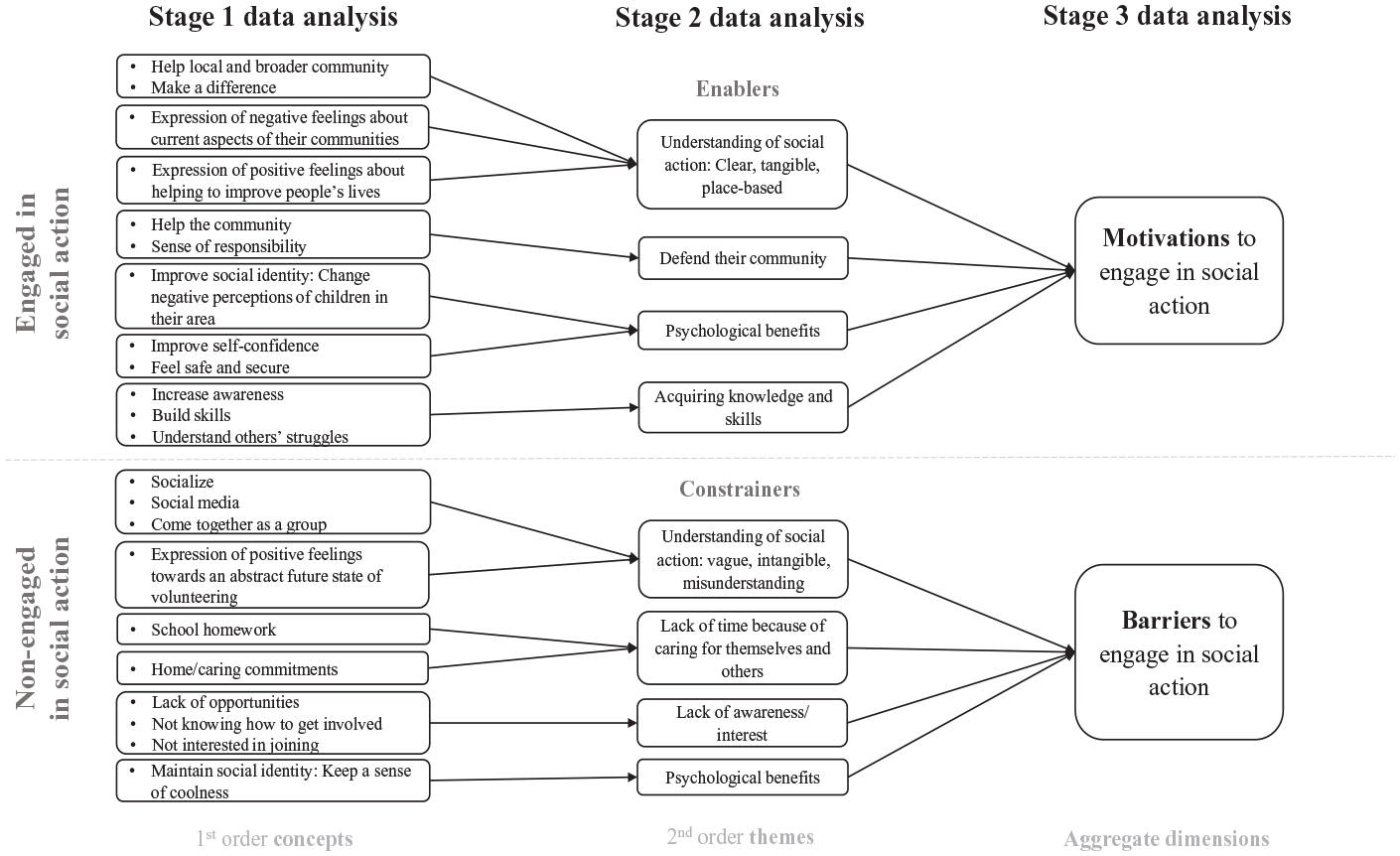
Approach to Data Analysis.
Findings
The findings from the data are discussed in relation to the two groups of participants (engaged and non-engaged) and two main themes: enablers of social action and constrainers of social action. Findings in relation to these dimensions are presented below. 2
Enablers of Social Action: Understanding and Motivations to Social Action
Understanding of Social Action
The narratives provided by those currently engaged in social action suggest that this group is motivated to engage in social action by both intrinsic and extrinsic motivations, although intrinsic motives seem to be dominant. First of all, the way those engaged understand and feel toward social action might work as an enabler of their volunteering behavior. The definitions given by the engaged are more closely related to traditional definitions of social action, including keywords such as “community,” “helping,” “making a difference,” “volunteering,” and “change.”
When you say social action; it makes me think of doing something that impacts the people in the community and volunteering and fundraising. (P28, Female, 13 years old, engaged) Helping and sharing ideas for your . . . your place. (P8, Male, 14 years old, engaged)
Those currently engaged felt a mixture of both positive and negative feelings toward social action and social action activities, although negative feelings seem to be impacting more directly their behavior. They have positive feelings about helping to improve people’s lives through social action, but negative feelings about current aspects of their communities—such as the anti-social behavior of others (i.e., those littering), which leads them to do social action for their communities, their place.
I feel angry because (having litter around) is not fair to the people who are living [. . .] like for example Castle Green. (P32, Male, 11 years old, engaged) (Helping people) is quite cool. But I am afraid it is also like kind of like upsetting when you are going around to all of these places . . . helping these people. (P31, Male, 11 years old, engaged)
Thus, it could be argued that those currently engaged interpret social action as related to a specific place and in relation to an action that is very concrete and contextualized (e.g., people littering the canal), eliciting negative feelings toward what needs to change in their communities. A specific place and a concrete action, together with negative feelings toward a current state (i.e., of their towns/communities), might drive those engaged to act and engage in social action.
Defend Their Community
Defend their community also emerged from the data as a key theme. Most of those engaged in social action explained that helping their community is important to them, and is a motivation driving their behavior. They believe not enough people seem to care or help, so they feel they have a responsibility.
The reason I was doing it is because I did not see much people helping out the community [. . .] only a little bit of people are helping doing it, but not that much. (P32, Male, 11 years old, engaged) You learn responsibility [. . .] like you get that responsibility and you get kind of like power or something, like you get that kind of power to help people and to spread out what we can do to help young people within your community. (P6, Male, 14 years old, engaged)
Psychological Benefits
Psychological benefits are also motivating children to engage. Some children in economically challenged communities do not engage in social action just to “help” the community, but to improve their own reputation as children living in those communities. This becomes salient in relation to their own identities, as they seem very aware of the negative views attached to them and they have a desire to show that this perception is wrong. Through social action, these children are defending their own social identity as children from these communities, being driven by a willingness to prove people wrong.
If you go on the streets many people would think that young people like us, we do have a bad reputation and it is all like changing the reputation that we have [. . .] I do not know, they just have a certain feeling that we are not . . . but there are genuine people like us who actually want to help, um, but I think just to make a change to people (the way people see us), that is the main reason (I am engaged in social action). (P28, Female, 13 years old, engaged) There is not a lot like a lot to do in Sunderland, to do with youth work, and I think there should be a lot more, because like it (social action opportunities) gets kids off the street from like crime and stuff like that. And it gets them like building their confidence, making new friends and like trying to make the right choices to better themselves for like their future, rather than just going down maybe the same path as what their families went down. (P19, Female, 16 years old, engaged)
Other psychological benefits such as improving self-confidence and self-enhancement were also mentioned by some participants.
It gives you a lot of confidence [. . .] it does make you feel good about yourself. (P30, Female, 13 years old, engaged) It has just like helped us gain our confidence a lot and helped us talk to people and that. (P15, Female, 13 years old, engaged) You are doing something that is positive, so it does have a positive impact on you. It has a positive impact on how other people perceive you. (P30, Female, 13 years old, engaged)
Interestingly, participants also mentioned that they would join volunteering groups because it made them feel secure.
It is like somewhere to go, like you do not want to roam on the street like all night and you just go there and like have a chilled few minutes and just talk. (P1, Female, 16 years old, engaged) Yeah, it is safer (replying to the previous participant’s comment). (P5, Female, 13 years old, engaged)
Acquire Knowledge and Skills
Finally, some children are motivated by the desire to acquire knowledge and skills (extrinsic motivations), such as building up skills and getting the experience needed to improve their CVs.
(What do you think would motivate people your age to engage in social action?) I think maybe telling them that in the future it will benefit them, so if they are looking for a job or anything like that, they can put it on their CV, they can get those kind of skills to help them in the future. (P17, Female, 16 years old, engaged)
Some participants mentioned that they engage or would engage in social action to understand the problems of those living in difficult situations. One could argue that this could be motivated by an extrinsic motive, that is, learn something new, something else to add to a CV, or by an intrinsic motive, such as understand better their situation so they can be of more help.
(I understand social action as) to help people like when they have a sticky situation, like to understand what they are thinking. (P1, Female, 16 years old, engaged)
Overall, extrinsic motives, such as psychological benefits and acquiring knowledge and skills, are influencing the behavior of the children currently engaged. However, the narratives suggest that the main reasons why they engage in social action are related to intrinsic motivations, a desire to defend their communities, and an understanding of social action practices that is place-based and “closer to home.”
Constrainers of Social Action: Understanding and Barriers to Social Action
Understanding of Social Action
When analyzing behavioral barriers of those currently non-engaged in social action, one could observe that, contrary to what happens with the engaged group, the non-engaged understanding of social action and how they feel about it might actually constraint their engagement. Many participants from this group show a less clear understanding of social action, often linked to spending time together with others (not necessarily helping a cause) and using keywords when defining social action such as “socializing,” “social media,” and “coming together.”
(To me, social action means) coming together as a group and like playing games. (P13, Male, 12 years old, non-engaged) (To me, social action means) to go out to places and discover new things and like talk to people and just like get involved with other people. (P35, Female, 12 years old, non-engaged)
Those non-engaged did not express any negative feeling toward social action, but positive feelings in relation to a future unrealized state (i.e., how they would feel if they would volunteer). Thus, a more abstract view of social action (i.e., “help,” without a specific context) may evoke positive feelings, but not necessarily action.
(If I would volunteer) I think I will do the elderly ones (helping the elderly) because like, it is quite like, once you have done it you feel like good about yourself. (P36, Female, 13 years old, non-engaged) People would recognize you and even go “Ahh, do you see that girl, she comes from that home and she has done this for her community” [. . .] It would made me a lot happier as well. (P39, Female, 12 years old, non-engaged)
Lack of Time
As highlighted in previous studies, lack of time seems to also be a significant barrier for children in economically disadvantaged communities to engage. Participants mentioned that school commitments take their time away from social action, but interestingly there are other activities such as caring for others (i.e., family, friends) that impede their participation.
Honestly, I don’t have like a lot of time to . . . many siblings that I take care of and help out when my mum is out. I am mostly here (in the youth center) to get away from all the pressure from school and stuff like that, and I only come here to chill (instead of engage in social action). (P13, Male, 12 years old, non-engaged)
If these “closer to home” types of voluntary behaviors were broadly recognized as social action, children as the one quoted above could start building habits, triggering further engagement.
Lack of Awareness/Interest
Many participants also referred to both a lack of awareness of opportunities (and how to get involved) and a lack of interest, topics that could be seen to be closely related.
Ok, my reason (for not being involved) because I do not really know . . . I do not know how to get involved, but, I do not know I do not know much about it. (P39, Female, 12 years old, non-engaged) (Would you like to engage in social action? Maybe in the future?) Not really, it is just something that I don’t really want to do. (P25, Male, 16 years old, non-engaged)
Psychological Benefits
Finally, participants mentioned psychological benefits of not being engaged in social action, such as “maintaining coolness” among peers, as apparently social action is not seen as a “cool” activity to engage with. This is an interesting barrier to acknowledge, as even those engaged are aware this psychological barrier is hindering the behavior of some children in their communities.
People take the mic out of people (who do social action), like we make fun of people. If someone our age (does social action) . . . if people in school find out what they are doing, they would usually go “oh, but why are you doing that? what is wrong? why aren’t you spending your Saturdays partying or something?” (P22, Female, 15 years old, non-engaged)
Overall, as it happens with other types of pro-social behaviors, lack of time and awareness/interest are among the barriers impeding children to engage in social action. However, the existing narrow definition of social action (which excludes voluntary activities “closer to home”) and children misunderstanding of it seem to be the biggest barrier of engagement.
Our findings suggest that a concrete, place-based understanding of social action leads to engagement, with the main motivations driving behavior being intrinsic (please find a summary of our findings in the Online Appendix). Interestingly, many participants believe that, as children from economically disadvantaged communities, they have a bad reputation, and can be motivated to engage in social action to prove this perception wrong. An abstract, decontextualized (mis)understanding of the term, in conjunction with concrete place-based barriers to social action, is often associated with a lack of engagement. Participants in this group are also often interested in their reputation, but in this case in terms of how engaging in social action could harm how they are seen by a peer group (as being “uncool”). This discrepancy might call for a new, child-centric, place-based, and “closer to home” definition of social action that would encourage more children and young people to participate in volunteering activities. In the next section, the findings are discussed in relation to existing literature, while limitations of the study, directions for future research, and practical implications are considered.
Discussion
We will discuss our results and how they inform the extant literature in terms of four key aspects. First, we discuss how and why our findings counter the trend in recent studies with young adults that social action and volunteering are more about extrinsic than intrinsic motivation. Second, we will explore habits and norms in relation to social action, with a particular focus on how social action is understood differently by children who are engaged or non-engaged. Third, we will explore motivation and barriers to engagement more deeply in relation to CLT and place. Finally, we discuss a way forward and propose a broader conceptualization of social action that may encourage more engagement in the future.
First, at the highest level, our findings suggest that children are motivated by both intrinsic and extrinsic factors when engaging in social action. The findings of the study support the ideas of Demir et al. (2020), as the motivations we have identified as intrinsic could be categorized under their “responsibility,” “social” motivation, and “protective” motivation, and what we have identified as extrinsic motivations could be part of their “self-improvement” and “career” categories. Our results also align with the ideas of Bocsi et al. (2017), who suggest that “modern motivations” to engage in social action combine collective and individual interests, as it is the case among our sample of children. However, a key finding from our data is that the majority of motivations for our sample to engage in social action is intrinsic, that is, children coming from lower socio-economic groups in general care more about the common good and making their communities better places. This finding challenges research suggesting that younger generations are mainly motivated by individualistic and extrinsic reasons (Cho et al., 2018; Hustinx, 2010), such as acquiring career benefits (Cho et al., 2018), and counters existing assumptions that younger generations’ motivations to engage in social action are changing from altruism to being more individualistic (Hustinx, 2010; Hustinx & Lammertyn, 2003; Vázquez et al., 2015).
Contrary to existing assumptions, our findings suggest some of the extrinsic benefits often associated with youth social action (i.e., career benefits) may not be as salient to children, who may perceive them as less relevant in their current situation. Thus, our results are important because they suggest that what motivates children should be considered different to what motivates young people. Importantly, similar to Davies (2018a, 2018b), we find that a key barrier to engagement with social action is children’s fear of social stigma from peers, suggesting that children are concerned with maintaining a positive social identity with peers. Like Davies, our findings suggest that many of those non-engaged in social action do not want to engage because they want to maintain a sense of social identity. What our findings also reveal, in addition to what Davies finds, is that those engaging can also do so out of social identity needs. It seems children who are engaged in social action are aware that children in their areas are perceived in a negative way, and they want to engage in social action to prove perceptions of children in their areas wrong. In both cases, our children sample seems to be motivated to engage or not in social action by their interpretation of their own social identity, which is constructed in a concrete and specific context (i.e., being seen to be volunteering—or not—in their own community; Oyserman et al., 2017). By focusing on motivations as well as barriers, we are thus able to add to Davies’ work and establish that social identity aspects do not only act as barriers, but can act as motivators to social action too. As children are at a different stage of identity development (if compared to adults and young adults), social identity needs might play a bigger role in motivating volunteer behaviors. Thus, it seems that social identity aspects are key to understanding motivations and barriers to engagement with social action and, therefore, researchers and practitioners should think carefully about the construction of social identity when working with children from economically disadvantaged communities.
Second, as explained in our findings, those engaged in social action often have a concrete and tangible understanding of the concept of social action, while the non-engaged offer a more abstract, and often wrong, description of it. Greater understanding is linked to greater action and the creation of pro-social habits, while a misunderstanding seems to be associated with inaction. Thus, our findings inform the debate on volunteering behaviors and habitus by offering empirical evidence of differences in habits within the same socio-economic group, which contrasts with previous research routinely comparing individuals (and habits) in different socio-economic groups (Hackl et al., 2007). In the following section, we will build on these findings to explore how a concrete place-based understanding of social action (low-level construal) may be key to engagement, and to the creation of habits in relation to social action.
Third, we discuss our findings in relation to motivations and barriers, considering CLT and place engagement as a useful lens to understand child engagement with social action. The analysis of participants’ narratives of the engaged group suggests drivers of social action relate to a concrete and place-based understanding of this volunteer behavior (low-level construal), an understanding that is close to themselves and the area they call home. Our data suggest, therefore, that place may be an important factor to leverage when understanding motivators to engage in social action. The narratives reveal a strong sense of community among these children, “a spirit of belonging together [. . .] and mutual benefit come from being together” (McMillan, 1996, p. 315), which could facilitate social action activities within the places these children live (Mannino et al., 2011; McKeever et al., 2014). In particular, a desire to defend their place (their community) stands out as an important motivator, aligning with previous research suggesting that individuals from economically disadvantaged areas engage in voluntary action motivated by a willingness to improve their communities (Timbrell, 2007). Importantly, a motivation to improve their own social identity (as children living in those communities) is often driving the behavior of children. This identity-based motivation (Oyserman et al., 2017) has low-construal aspects, as it is based on the identity they make salient in relation to a concrete activity (i.e., volunteering) and a particular context or place (i.e., their community). Furthermore, the concrete understanding of social action by the engaged (low-level construal) elicits negative feelings when referring to current aspects of their towns and communities (e.g., litter, social deprivation), which in this case seem to drive their motivation to make changes and improve their communities through social action.
In terms of the non-engaged group, the results of our study suggest that a misunderstanding of social action, that is abstract, decontextualized, and non-place-specific, might be a key barrier to engagement. Interestingly, those non-engaged refer to positive feelings while discussing social action, but contrary to what Chowdhury and Septianto (2023) suggest, in the case of our children sample this does not seem closely related to descriptions of volunteer behaviors, but to a potential future state, that again lacks concreteness and context (high-level construal). This finding aligns with the ideas of academics such as Williams et al. (2014), who suggest that abstract thinking leads to more positive feelings, compared to concrete ones.
Lack of time and lack of awareness/interest are also significant barriers, as highlighted by previous research (Knibbs et al., 2019). Importantly, however, those declaring not having time to engage in social action often cite caring activities that are “closer to home,” such as caring for others (i.e., family, friends), as reasons for not having time for social action. These children could be categorized as unintended volunteers, as proposed by Bradford et al. (2016). They may declare not to be engaged and/or not be exposed to social action opportunities through school or family/friends (Gaskin, 2004), but they might carry out some kind of social action that is “closer to home.” Exploring this scenario through the lens of CLT (Trope & Liberman, 2010), it is interesting that a key barrier to social action is described in very concrete low-level construal terms (i.e., caring for someone at home, which benefits someone close to them [Feierabend & Klicperova-Baker, 2015]).
Bringing together the findings on the motivations to engage with social action and the barriers to not engage, it is very interesting to note that both motivators and barriers are often described at a concrete and low level of construal. Those engaged in social action often speak of defending their local communities or improving their social identities. They often mention the towns they live in and describe themselves as “children from around here.” Motivations are thus related to things that are “close to home” and to the places and communities within they live. For those non-engaged in social action, the barriers are perhaps even “closer to home,” and are also very concrete and low level in construal terms. Children often cite caring responsibilities in the home as well as homework as reasons not to engage in social action. It seems then that the suggestion by some developmental psychologists (see Boyd & Bee, 2019) that low-level construal is particularly important in the thinking and decision-making of children plays out as something of particular importance in the context of social action. Low-level construal and acknowledging the importance of place may be critical both in motivating children and in overcoming barriers. If “the home” could be considered as a place too, place may provide a very useful lens through which to explore the topic further with children.
Considering together the findings from the engaged and non-engaged groups, we now discuss one possible way to encourage participation among children in economically disadvantaged communities. If a child-centric understanding of social action is to be embraced, it would include acts of informal volunteering (Dean, 2022; Low et al., 2007), those that are “closer to home,” that help family members and friends, and that are more closely linked to the day-to-day lives of children in these communities. In line with developmental psychology, it is our suggestion that social action in the context of children could be extended to include “close to home” activities such as caring for family members. By being recognized and appreciated, those currently non-engaged (at least by the current definition of social action) could feel empowered to participate in other volunteering activities (further away from home).
As signaled in Figure 2, the definition of social action could move from including only external activities (i.e., helping those in the community, helping the environment) to also including activities that are “closer to home” (i.e., helping family and friends). We speculate that if these “closer to home” activities were acknowledged as social action, that may give children in these communities recognition and pride, and as a result they might be more willing to engage with other social action activities further away from home. They may then go on to build habits in relation to social action.
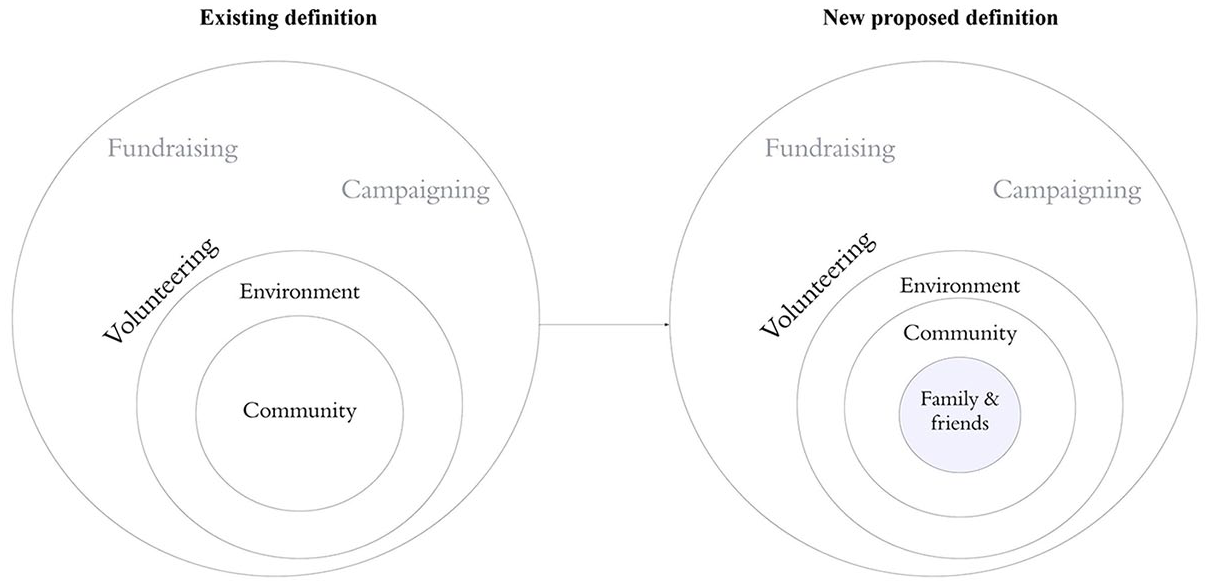
Transition From the Existing Definition of Youth/Children Social Action to a New Child-Centric, Place-Based, “Closer to Home” Definition.
We argue that current definitions of social action (e.g., Snyder & Omoto, 2007) could become more inclusive, by connecting with children at the level of their own daily lives, their homes, and the places that they live, before asking them to take action at a broader societal level. We suggest that CLT (Trope & Liberman, 2010) offers an important angle to rethink this definition, and it is a critical theory to consider when understanding the motivations of children to engage in social action. CLT helps explain why children will be engaged in activities “closer to home,” because they are more concrete (less abstract), contextualized, and place-based, and would benefit those at a close distance (Feierabend & Klicperova-Baker, 2015).
Overall, our study contributes to theory by suggesting that children are different. They are mainly motivated to engage in social action by intrinsic motivations (i.e., help their community, “their place”) rather than extrinsic, as it is the case of older generations (Cho et al., 2018). The exception in the context of children seems to be connected to social identity aspects, which seem important in explaining a barrier to engaging (to maintain coolness with peers) and a motivation to engage (to improve how children in their communities are perceived). The significance of social identity in our study might relate to the stage of identity development the children are at, and its importance if compared to adults or young adults (whose sense of social identity is further developed). Different place-based behaviors, those that are concrete and context-specific (low-level construal; Trope & Liberman, 2010), are found to act as motivators for the engaged group (i.e., to help and defend the community) and barriers to the non-engaged. Place (their home, their community), therefore, seems to be a “way in” to attract children in economically disadvantaged communities to engage in social action. By alluding to motivations that are more concrete, and reframing concrete barriers as part of the social action definition (acknowledging the “closer to home” behaviors some children undertake), children in these communities might be able to build habits and extend action, from the home outward.
Study Limitations, Directions for Future Research, and Practical Implications
The main limitation of the study would relate to the sample size. Because of the characteristics of the sample (aged 10–17 years old), recruiting participants was challenging. Future studies could attempt to include the views of more children, and perhaps conduct field work in more locations (considering other areas of the United Kingdom or conducting similar research in a different country, perhaps in the Global South). This study only focused on children from lower socio-economic backgrounds, due to their limited engagement with social action activities and the desire of our partner organization to understand how to best target this group. Future research could collect data in more affluent communities, with the aim of offering a comparative and more comprehensive view of children’s engagement with social action.
Matching youth volunteering motivations and volunteer activities is key (Handy et al., 2010). In our study, children identified helping others and helping the environment (linked to intrinsic motives) as the activities that best represent social action. Future studies could explore the link between motivations and types of volunteering activities further, as we agree with Shantz et al. (2019) in that a better understanding of this interplay is needed, in particular among children.
The new insights presented in this study could inform the development of new policies, strategies, and social marketing interventions aiming at increasing the number of children and young people engaged in social action activities, in particular those living in economically disadvantaged areas. We propose three focal areas, based on our results and the conversations we had with our children sample: (a) build awareness, of what social action is (considering our new proposed definition) and the “close to home” activities children could engage with, empowering them so they believe they can do it (despite the negative perceptions they seem to carry); (b) make the behavior visible, as seeing other members of their social group engaged in social action might trigger a desire to fulfill their sense of social identity and their sense of belonging, of bonding with others and of helping their communities (Baumeister & Leary, 1995); and (c) focus recruitment efforts on the impact of their social action, on assets children from these communities could get from volunteering (as previously suggested by Benenson and Stagg (2016)), including psychological benefits such as feeling safe, but also on the tangible benefits others get from their behavior. Appealing to intrinsic and altruistic motives could help commitment and retention (Andersen, 2003), key to building habitus.
Conclusion
By listening to our participants’ stories and analyzing their narratives, we have been able to better understand what social action means to children living in economically disadvantaged communities, both those engaged and those non-engaged with it. Our study first contributes to theory by providing evidence of the motivations driving children in these communities to engage in social action, suggesting that contrary to young adults, children are mainly motivated by intrinsic motives. Furthermore, we highlight the importance of social identity in both enabling and hindering social action among children, and the potential of building in social identity to motivate and overcome barriers. This study also contributes to theory by exploring motivations and barriers to volunteering through the lens of CLT and place. The importance of proximity of activities to children’s homes and daily lives has been highlighted as a key motivational factor, but also as a significant barrier. We suggest that by embracing a child-centric view of social action, one that is “closer to home,” more concrete, contextualized, and place-based; a new definition that values the positive social action children engage with to help and care for family members and friends; we could encourage more children and young people from lower socio-economic groups to engage in social action. This bottom-up approach to social action could help provide alternative ways to engage children with social action, and shed light on the tools that could encourage more children to engage in these behaviors. If we are keen to better engage children from economically disadvantaged communities in social action, perhaps the old adage of “charity starts at home” would not be a bad place to begin.
Supplemental Material
sj-pdf-1-nvs-10.1177_08997640241278640 – Supplemental material for Charity Starts at Home: Understanding What Drives Children from Economically Disadvantaged Communities to Engage in Social Action
Supplemental material, sj-pdf-1-nvs-10.1177_08997640241278640 for Charity Starts at Home: Understanding What Drives Children from Economically Disadvantaged Communities to Engage in Social Action by Irene Garnelo-Gomez and Kevin Money in Nonprofit and Voluntary Sector Quarterly
Footnotes
Acknowledgements
The authors would like to thank all the organizations that made this study possible. They thank Step Up to Serve for making them part of their project, and they hope their results have contributed to encouraging more children to participate in meaningful social action. They would also like to thank the youth centers and schools that help them with the collection of data (their names are not revealed to keep the identity of the participants confidential). Last, but not least, they would like to thank the 40 children who kindly spent a bit of their time with them. Our Their views are extremely important, and the authors will always be grateful.
Data Availability Statement
The data are not publicly available due to ethical, legal, or other concerns.
Declaration of Conflicting Interests
The author(s) declared no potential conflicts of interest with respect to the research, authorship, and/or publication of this article.
Funding
The author(s) received no financial support for the research, authorship, and/or publication of this article.

Supplemental Material
Supplemental material for this article is available online.
Notes
Author Biographies
References
Supplementary Material
Please find the following supplemental material available below.
For Open Access articles published under a Creative Commons License, all supplemental material carries the same license as the article it is associated with.
For non-Open Access articles published, all supplemental material carries a non-exclusive license, and permission requests for re-use of supplemental material or any part of supplemental material shall be sent directly to the copyright owner as specified in the copyright notice associated with the article.
