




Abstract
Nonprofit organizations contribute to society through service provision, advocacy, and community building. As they face the challenge of pursuing a social mission while operating in a market economy, many adopt businesslike practices in response. Nonprofits’ tendency to adopt such practices has become a contested scholarly topic, with, however, limited empirical evidence. Using survey data from nearly 600 nonprofits in the Vienna region, we examine how organizational practices—specifically businesslike managerial and democratic ones—relate to nonprofits’ emphasis on service provision, advocacy, and community building. Democratic and managerial practices follow institutional logics that may activate interpretation frame effects that influence organizational goals. Contrary to concerns in previous literature, we find that implementing managerial practices is harmonious not only with service delivery but also advocacy and, to some extent, community building. Democratic organizing, conversely, supports community building while reducing service delivery focus. Combining these practices can support a balanced societal role profile.
Keywords
Introduction
Nonprofit organizations (NPOs) play vital roles in society. They provide services, engage in advocacy, and build trust and reciprocity (Neumayr et al., 2009). To improve their efficiency and effectiveness in fulfilling these roles and to enhance their legitimacy, many NPOs have adopted management practices typically associated with the business world (Dart, 2004; Hwang & Powell, 2009; Maier et al., 2016; Salamon, 1993; Suykens et al., 2019).
The movement toward more businesslike practices in NPOs, which gained momentum in the 1990s and 2000s, has drawn academic scrutiny. Researchers have raised concerns about the “survival of the nonprofit spirit in a for-profit world” (Bush, 1992, p. 391) and “civil society at risk” (Eikenberry & Kluver, 2004, p. 132). Hence, the ideology of managerialism—the belief that businesslike management thinking and methods are superior (Hvenmark, 2016)—could lead nonprofits to overemphasize financial concerns, shift their missions away from community building and civic engagement and, in the long run, undermine the legitimacy of the nonprofit sector (Backman & Smith, 2000; Weisbrod, 2004). Organizational democracy may present an antithesis and antidote to managerialism and its dangers (Eikenberry, 2009; Hvenmark, 2013).
This debate has become more nuanced in recent years. Historical analyses show that the line between practices originating from business and those developed within nonprofits is not as definitive as often thought (Brown, 2018; Lee, 2010). The body of knowledge on nonprofit management has expanded, with many concepts and instruments designed to meet the unique needs of nonprofits. Simultaneously, businesses have begun to resemble nonprofits, as expectations toward organizations in all sectors have generally become more similar (Pope et al., 2018). Yet, this trend toward cross-sectoral similarity is far from complete. The notion that certain practices in nonprofits are recognizably businesslike persists, as evidenced by the continuing stream of studies on the phenomenon (e.g., Beaton et al., 2021; Corple, 2023; Suykens et al., 2023; Wang & Seifert, 2022; Xu, 2023).
Advancements in empirical research have shed more light on the effects of businesslike management practices in nonprofits. Previous critiques, such as that of Maier et al. (2016), have pointed to a lack of empirical studies that could quantitatively demonstrate the adverse effects of such practices. Meanwhile, more well-designed quantitative studies have been published and found positive effects of businesslike practices.
Evidence is accumulating in favor of market orientation (e.g., Modi & Mishra, 2010), professionalized human resources management (Ni et al., 2017), accounting (Ni et al., 2017; Shirinashihama, 2019), and strategic orientation toward different stakeholder groups (Hersberger-Langloh, 2022). These practices have been linked to improvements in nonprofits’ effectiveness, performance, reputation, legitimacy, and fulfillment of societal roles (also see Guo, 2006; Suykens et al., 2019, 2022; von Schnurbein, 2014). Negative consequences of businesslike management methods identified by qualitative studies (e.g., Baines et al., 2011; Hustinx & De Waele, 2015; Keevers et al., 2012; Kreutzer & Jäger, 2011; Skocpol, 2003), notably mission drift away from community building and pro-democratic civic goals, are not straightforward to pinpoint quantitatively. One study even found managerial practices to inoculate NPOs against mission drift when under coercive pressure from funders (Hersberger-Langloh et al., 2021). Overall, the quantitative evidence reinforces that nonprofit managers are mostly adept at balancing tensions between management and mission.
Recent qualitative studies provide nuanced insights into how such balancing acts between businesslike practices and nonprofit concerns play out. The tensions between philanthropic mission and market pressures can be conceptualized as the essence of what running an NPO in a market economy is about (Sanders, 2015). Nonprofit managers are creative in how they handle this tension (Sandberg et al., 2020), sometimes in empowering ways (Corple, 2023). However, cases of mission drift, when commercial activities become an end in themselves, can still be found (Beaton et al., 2021).
While quantitative and qualitative evidence on the implications of businesslike management practices in NPOs has grown considerably, this does not apply to democratic organizing practices. Ideas that organizations should embrace organizational democracy not for its presumed positive effects but as an intrinsic good (King & Griffin, 2019), may, however, not work in practice, as members may show little loyalty to democracy for democracy’s sake if they perceive other forms of coordination to be more efficient (Kerr, 2004; King & Land, 2018). Previous research documents that organizational democracy positively affects employees’ job satisfaction, work motivation, civic and democratic behavior, and other individual outcomes (Weber et al., 2020). However, there is very little evidence (for a notable exception, see Lundåsen, 2014) on whether internally democratic NPOs are more committed to fulfilling the societal roles that businesslike nonprofits allegedly neglect. Often regarded as an alternative to businesslike management practices (Eikenberry, 2009; Hvenmark, 2013; Knutsen, 2012; Maier & Meyer, 2011; for a discussion beyond the nonprofit sector, see Parker, 2019), organizational democracy presents a notable research gap. Without evidence on how democratically organized nonprofits fulfill societal roles, there is a risk of lapsing into wishful thinking.
With this study, we aim to advance the debate about the societal implications of businesslike practices in nonprofit contexts twofold: first, we bring democratic organizing practices—as an alternative or complement to businesslike practices—more prominently into the theoretical analysis, by focusing on interpretation frame effects of different sets of organizational practices. Second, we contribute further quantitative evidence on this relationship. Specifically, our study addresses the following research question: How do managerial and democratic organizational practices relate to NPOs’ emphasis on their societal roles?
As we seek to deepen the theoretical understanding of how organizational practices influence nonprofits’ societal roles, we build on institutional theory and prior qualitative research (Hustinx & De Waele, 2015; Maier & Meyer, 2011; Purdy & Gray, 2009; Sirris, 2019; Skelcher & Smith, 2015). This approach helps us differentiate between two sets of practices—managerial and democratic—rooted in different institutional logics. We reason that these sets of practices have interpretation frame effects (Horvath et al., 2018; Suykens et al., 2023). By influencing how actors perceive and interpret signals from their organizations and the environment, they affect what societal functions organizations focus on. We conceive organizational practices not as mutually exclusive but as sets that may conflict as well as complement each other.
We provide quantitative empirical evidence employing survey data from nearly 600 NPOs in the metropolitan region of Vienna (Austria). Our findings contribute to the increasingly nuanced understanding of the implications of businesslike and alternative forms of organizing, as we find that managerial and democratic organizing practices have different strengths and weaknesses, and blending them presents challenges.
Theoretical Framework
Organizational Practices
Both managerialism and organizational democracy can be analyzed from various perspectives (Hvenmark, 2016), focusing on processes, ideology, or practices. We adopt a practice perspective, looking at specific techniques and routinized actions. “[. . .P]ractices have a virtual existence as largely unconscious yet shared and recognizable ways of doing things.” (Jarzabkowski et al., 2016, p. 271). The enactment of practices varies among actors, depending on their contexts, skills, and interests. Sets of organizational practices are the manifest dimension of institutional logics (Thornton & Ocasio, 1999), complementary to the latent dimension of ideas and ideologies (Hvenmark, 2016). Our operationalization of managerial and democratic practices is depicted in detail in Figure 1.
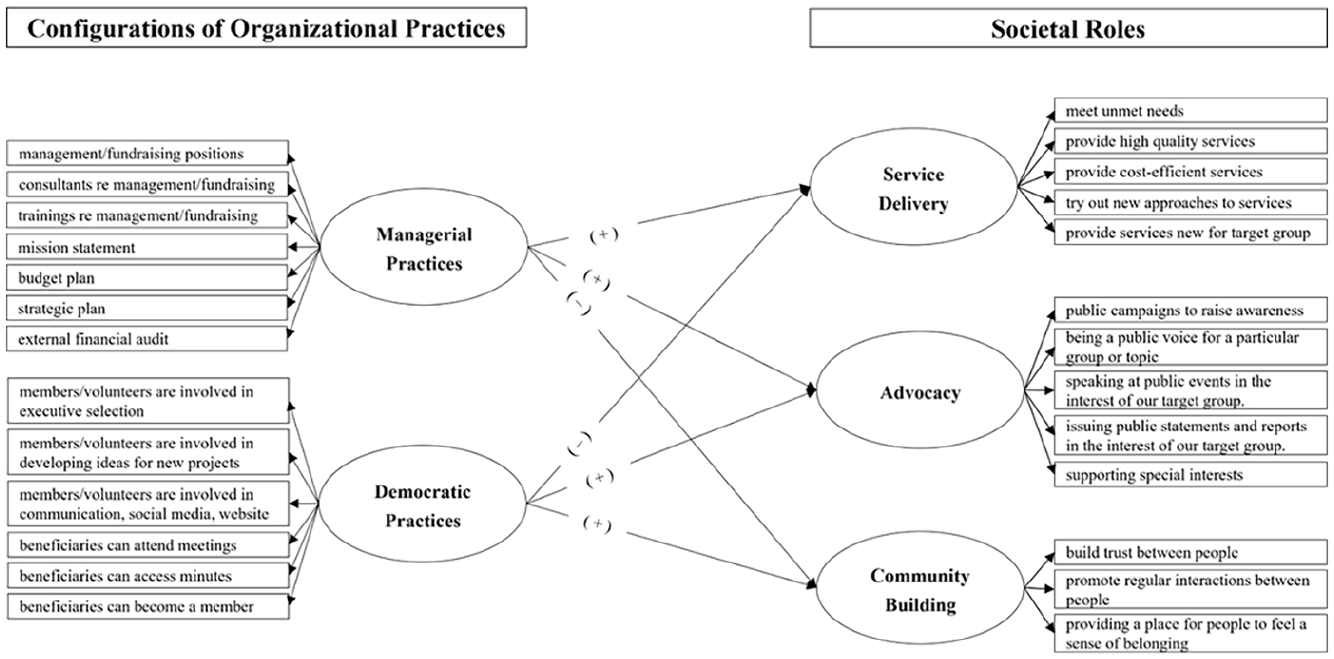
Hypothesized Structural Model (Hypothesized Relationship Direction in the Parentheses).
Nonprofits have increasingly adopted managerial practices—a trend described by scholars using concepts like marketization (e.g., Eikenberry & Kluver, 2004), professionalization and organizational rationalization (e.g., Hwang & Powell, 2009), becoming businesslike (e.g., Dart, 2004), managerialism (e.g., Maier & Meyer, 2011), and hybridization (e.g., Suykens et al., 2019). Historically, this trend has not been consistent in the transfer of practices from businesses to nonprofits. Rational management techniques were already developed in the Middle Ages, particularly in Catholic orders (Kieser, 1987). In the 18th and 19th centuries, key tenets of today’s management knowledge evolved from public administration as bureaucracies developed in search of technical rationality (Weber 1921 and 1922/1976). It was not until the 20th century, with the works of Frederick Taylor and contemporaries, that management practices became equated with for-profit business. The 1980s saw the start of New Public Management, which brought businesslike management practices into public administration. Public agencies subsequently pressured NPOs to make similar changes (Alexander, 2000). Today, there are increasing social and environmental sustainability pressures on businesses, compelling them to resemble nonprofits in some respects (e.g., to commit to gender equality, diversity, and environmental protection; Pope et al., 2018). In the future, the “businesslike” management concept may, thus, lose its discriminatory power.
For now, however, there is a general consensus on what constitutes businesslike management in NPOs (e.g., Hersberger-Langloh et al., 2021; Suykens et al., 2023; Xu, 2023): strategic planning, annual independent audits, working with management consultants, hiring professional managers, performance-based pay, and more. Yet, the devil lies in the details, with considerable differences in how studies operationalize businesslike management practices. Such differences could arise from the research field’s immaturity or the need for context-bound adaptations. For example, having a “mission statement” is markedly businesslike for nonprofits in Austria but rather generic for U.S. nonprofits. Coherence across different operationalizations stems from a shared understanding that different organizational practices belong to specific institutional logics (or discourses, or organizational identities, depending on the theoretical framework, see Maier et al., 2016). Businesslike practices belong to the market logic, which is centered on selling goods and services (Skelcher & Smith, 2015).
Similarly, NPOs are also rooted in an institutional logic of democracy (Knutsen, 2012; Skelcher & Smith, 2015). In terms of organizational practices, this logic is about including a broad range of stakeholders in organizational and societal governance and having them participate in agenda-setting, deliberation, and decision-making (Eikenberry, 2009; Skocpol, 2003). The key idea is that “those governing are made accountable to those governed through the mechanism of participation” (Kerr, 2004, p. 83).
Democratic practices appear to diminish in U.S. and European nonprofits (e.g., Ibsen et al., 2019; Skocpol, 2003), although data are sparse and even less available for other regions. Practices such as open membership and election of functionaries by members are also present in NPOs in authoritarian settings, although reportedly in decline there too (Pan & Xu, 2022). For the Vienna metropolitan area, there are no historical data available about the prevalence of democratic practices in nonprofits. Using 2019/20 data, Maier et al. (2022) show they are relatively widespread: 59% of nonprofits allow beneficiaries to become members with formal co-decision-making rights, and 43% involve members or volunteers in the selection of executives.
Our study draws on institutional theory, specifically the concepts of institutional logics (Thornton & Ocasio, 1999), interpretation frame effects (Suykens et al., 2023), and hybridization (Skelcher & Smith, 2015). Institutional logics are “the socially constructed, historical patterns of material practices, assumptions, values, beliefs, and rules by which individuals produce and reproduce their material subsistence, organize time and space, and provide meaning to their social reality” (Thornton & Ocasio, 1999, p. 804). We focus on the practices through which institutional logics manifest themselves in organizations. Considering the multiplicity of typologies and the cultural contingency of institutional logics, we focus on market and democratic logics, which are present in many countries (Hustinx & De Waele, 2015; Pan & Xu, 2022; Purdy & Gray, 2009; Sirris, 2019; Skelcher & Smith, 2015) and also identified in the local context of our study (Maier & Meyer, 2011).
NPOs typically orient themselves toward multiple organizational logics, hybridizing logics and combining practices in manifold ways (Hustinx & De Waele, 2015; McMullin & Skelcher, 2018; Skelcher & Smith, 2015). Such hybridization involves multiple organizational actors, and diverse outcomes are possible (Skelcher & Smith, 2015). In cases of unsuccessful hybridization, a blocked hybrid with organizational dysfunction arises from the inability to resolve tensions between competing logics. On the contrary, successful hybridization can materialize as segmented, segregated, assimilated, or blended hybrids. For instance, managerial and democratic practices are not mutually exclusive but rather somewhat conflicting; they can or even must be combined because of nonprofit-specific institutional pressures.
Different organizational practices, such as businesslike or democratic ones, can have an interpretation frame effect (Suykens et al., 2023) on how organizations view their role in society. These practices may mold and define actors’ mindsets (Horvath et al., 2018) as they influence how actors interpret signals from their organization and its environment based on their shared cultural knowledge. Actors then use their agentic capabilities to decide about maintaining or changing their organization’s practices or goals (Powell & Colyvas, 2008). This idea is central to institutional theory and supported by research on the micro-foundations of institutions (Beaton et al., 2021; Horvath et al., 2018).
Nonprofits’ Societal Roles
Since the early days of nonprofit research, understanding how NPOs contribute to society has been a scholarly priority, examined mainly using the concept of societal roles (e.g., Maier et al., 2024; Moulton & Eckerd, 2012). Societal roles designate how organizations contribute to solving societal problems. Therefore, the societal roles of NPOs can vary by context, depending on which issues nonprofits should address. The concept of organizations’ societal roles is, hence, not identical to organizational purposes, goals, or responsibilities (Pope et al., 2018). However, there is an overlap between what society expects from organizations regarding their responsibilities, what organizations declare as their purposes and goals, and what societal roles they, in fact, fulfill.
Various taxonomies of societal roles have been proposed to conceptualize NPOs’ societal contributions. Taxonomies typically differentiate between service provision and advocacy, as well as varying numbers of other roles such as community building, civic engagement, innovation, and expression (see literature reviews by Maier et al., 2024; Moulton & Eckerd, 2012). Most nonprofits fulfill multiple societal roles, albeit to varying degrees.
We build on a framework by Neumayr et al. (2009) outlining three societal roles: service, advocacy, and community building. This framework is not only parsimonious but has also been validated with Central European Data, which is relevant as societal roles may vary across social and cultural contexts (see also Figure 1 which specifies the measurement of these three societal functions).
Service delivery is the most widely recognized societal role of nonprofits (Maier et al., 2024). It generally refers to the provision of goods or services, often to compensate for government or market failures. Services range from private goods (e.g., clean syringes) to club goods (e.g., members-only sports facilities) to public goods (e.g., hiking trails). Service provision often requires co-production by clients, and the services often have positive externalities (e.g., prevention of harm through safe syringe exchange).
The advocacy role encompasses any attempt to influence the decisions of institutional elites on behalf of a collective interest (Jenkins, 1987). Advocacy is the second most widely recognized societal role of nonprofits; synonyms of this role are variants of policy (e.g., policy-making, policy formulation), representation, watchdog, or voice (Maier et al., 2024). Much advocacy seeks to influence government directly, and some seek to influence businesses. Advocacy may also seek to indirectly influence powerful actors by generating new evidence, disseminating information, or raising awareness among the broader public (Shier & Handy, 2015).
Finally, community building refers to nonprofits’ contribution to creating and facilitating social capital, trust, a sense of community, and reciprocal relationships. This notion goes back to Alexis de Tocqueville and was revived and popularized by Robert Putnam’s work on civic engagement (Putnam, 2000; Putnam et al., 1993). In recent research, community building appears under the umbrella term of integration: more precisely, social integration. It focuses on connections between individuals and is, thus, distinguished from systemic integration, which refers to promoting civic engagement and nonprofits acting as convenors, fostering connections at the organizational level rather than the individual (Maier et al., 2024).
Hypotheses
Nonprofits providing services often adopt managerial practices (Suykens et al., 2023), which is facilitated by their focus on readily identifiable target groups, clear quality standards, and, thus, the straightforward translation of for-profit strategic management, marketing, accounting, and control techniques into the nonprofit context. Managerial practices fit well with the service role because both align with the market logic (Hustinx & De Waele, 2015).
Regarding advocacy, theoretical arguments (Eikenberry & Kluver, 2004), and qualitative evidence (Keevers et al., 2012; King, 2017) suggest that managerialism focuses on service provision, which may cause a drift away from advocacy. However, this may be a rare occurrence. Managerialized nonprofits move toward more professionalized and nonconfrontational tactics (Skocpol, 2003; Tatarchevskiy, 2011), which is different from reducing advocacy. Institutional theory suggests that managerial nonprofits are likely to embrace advocacy because they understand themselves as goal-oriented and agentic actors working on behalf of constituents and society (Hwang & Suárez, 2019). “Ideas such as stakeholder communication, lobbying, and public relations are part of the conventional managerialist set of ideas” (Suykens et al., 2023, p. 689). Mounting quantitative evidence shows that managerialism has no adverse effect on the extent of advocacy (Leroux & Goerdel, 2009; Suárez et al., 2018) but, in some cases, even a positive one (Suykens et al., 2023).
Numerous scholars have cautioned that by becoming more businesslike, NPOs might compromise their community-building role (e.g., Backman & Smith, 2000; Eikenberry & Kluver, 2004; Skocpol, 2003). The core of their arguments is based on a dichotomous understanding of instrumental rationality and community, going back to the classical works of Tönnies (1887/1979) and Weber (1921 and 1922/1976): Managerialism, with its emphasis on efficiency, effectiveness, and individual agency, is a facet of the iron cage of technical rationality and as such antithetical to community. However, if NPOs do not typically produce blocked hybrids, as they more often than not skillfully accommodate plural institutional logics (Skelcher & Smith, 2015), managerial practices may support community building. For example, “the intelligent adoption of business practices” could help NPOs reach new audiences or diversify their constituent base and thus be more effective in creating social capital (Dees & Anderson, 2003, p. 23). Neither line of reasoning (positive or negative effects of businesslike practices on community building) has a definitive empirical backup. Moreover, there is evidence that social capital building altogether does not strongly depend on the internal operations of NPOs (Lindberg & Farkas, 2016; Sivesind et al., 2013; Wollebæk & Strømsnes, 2008). Since theoretical arguments and empirical evidence are inconclusive, we test the hypothesis based on the older sociological view that there is a conflicting relationship between managerialism and community building:
Democratic organizing contradicts managerialism, as it values community orientation and expressive activities more than instrumental rationality (Frumkin, 2002). While there is little empirical evidence on how organizational democracy affects community building, a positive relationship seems plausible for various reasons: Organizational democracy requires transparency and inclusion, which would probably strengthen participant trust. It promotes civic engagement, which helps participants develop prosocial values (Weber et al., 2009). It also provides a forum for addressing participants’ needs and handling conflicts, thus strengthening the community fabric. Moreover, at the level of countries, a (recursive) positive relationship between democracy and social capital has been demonstrated (Ljunge, 2014; Paxton, 2002).
While there is limited research on the relationship between NPOs being internally democratic and externally engaging in advocacy, we can draw inspiration from studies on democratic mass organizations and their advocacy tactics (e.g., Piven & Cloward, 1979; Skocpol, 2003). Although it is unclear whether democratic organizations are inherently more likely to engage in advocacy, we can anticipate this to be the case. Both organizational democracy and advocacy are rooted in similar values of participation and giving everyone a voice. Advocacy extends these values into the political sphere.
When it comes to the relationship between organizational democracy and fulfilling a service role, the issue is whether there is an efficiency advantage in democracy. Efficiency is crucial for the delivery of services because funders—often government agencies—demand it (King & Griffin, 2019). Organizational democracy may positively affect organizational commitment (Weber et al., 2020), and make operations more efficient in the long run: considering all relevant views can smoothen the implementation of decisions. Democratic organizing may, however, be resource-intensive, requiring a lot of time and effort to make collective decisions, implement initiatives, and simultaneously be flexible and respond to the changing needs of the target group (King & Land, 2018; Polletta, 2004). Whether organizational democracy is efficient depends on the nature of the organization’s work, workforce characteristics, organizational culture, and manager’s support for democracy (Kerr, 2004). Models of democratic organizing in social service contexts, for example, the Buurtzorg model, have an appealing potential for efficiency gains, but transferring them is not trivial (Hegedüs et al., 2022). The prevailing view remains that nondemocratic practices are more efficient (King & Griffin, 2019). Hence, we may expect that democratic practices redirect organizational focus away from service provision.
Methodology
Research Context
We draw on survey data collected as part of an international research collaboration exploring how nonprofits in and around cities worldwide contribute to society. This article focuses on NPOs in the metropolitan region of Vienna, which comprises some 2.6 million people living in three federal states (Vienna, Lower Austria, and Burgenland) and 211 municipalities (data from 2019, www.stadtregionen.at/wien).
The Viennese nonprofit sector combines elements of social democratic and corporatist nonprofit regimes (Maier et al., 2022). It includes nonprofits affiliated with the Catholic Church and political parties, as well as globally oriented organizations and institutional entrepreneurs seeking to disrupt the corporatist status quo. The sector has been subject to relatively moderate New Public Management reforms and is characterized by many membership associations, a high level of volunteering in all nonprofit fields, and substantial government funding for service-providing organizations. In 2017, when we drew the sample for our study, the Vienna region was home of approximately 22,000 associations, 282 nonprofit corporations, 29 nonprofit cooperatives, and 121 nonprofit foundations. In other words, there was one NPO for every 116 inhabitants.
Data Collection
Data were gathered through an online survey among NPOs in the Vienna region from October 2019 to December 2020. In total, 593 NPOs completed it, for an average response rate of 53% from the effective sample of 1,117 organizations (Table 1). The survey serves various research projects and, thus, includes a wide range of questions on organizational structures, practices, and orientations. It was addressed to top leaders of the organizations, such as executive directors or presidents. Most respondents completed the survey online, and about a fifth requested a telephone or in-person interview. The survey was available in German and English.
Sampling Descriptives.
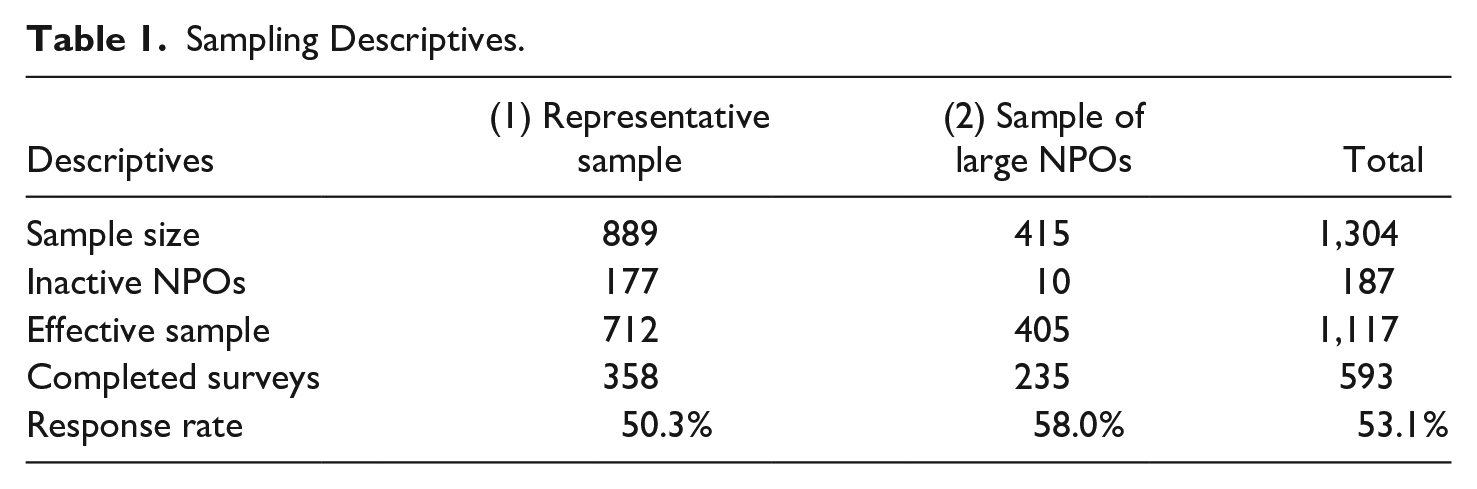
The sampling was carried out in two steps: (a) a random representative sample from all registered NPOs in the region, of which the majority are small organizations (annual budget below € 25,000 and solely volunteer workforce), and (b) a random sample of NPOs in the region with an annual budget of € 25,000 or more. Eligibility criteria were set according to the guidelines outlined by Salamon and Sokolowski (2016), so we sampled self-governed private organizations with a limited profit-distribution requirement and noncompulsory participation. However, purely grant-making foundations were not included. For the representative sample, we used the Austrian Register of Associations (Vereinsregister) and the Austrian Companies Register (Firmenbuch), accessed via Compass Verlag LLC. The sample of large NPOs was drawn from a company database provided by Herold Business Data LLC. The latter database is not representative but contains information on the annual budget of many organizations, otherwise not publicly available. Any large NPOs included in the first sample were excluded from the second. Table 1 shows key descriptives related to the sampling process.
To assess sample representativity, we compared the distribution of fields of activity (according to ICNPO categories) in the sample with a recent semiautomated classification (Litofcenko et al., 2020). The Pearson chi-square test showed no significant deviation from the population structure for the first (thus, representative) sample (at the 95% significance threshold). As for the second sample, representativity could not be assessed due to a lack of data on fields of activity in the population of large NPOs. Tables S1 and S2 in the Supplemental Materials provide descriptive information about the sample.
Measures and Analysis
Societal Roles
As discussed above, we differentiate between service delivery, advocacy, and community building. To operationalize these societal roles, we asked respondents to evaluate the importance of different activities for the mission of their NPO (for the complete list of items, see Table S3 in the Supplemental Materials). Each item was rated on a 3-point Likert-type scale ranging from 0 (unimportant), 1 (supports mission/desired side-effect) to 2 (essential to mission). The 19-item scale was developed based on items by Moulton and Eckerd (2012) and Neumayr et al. (2009).
To ensure the internal consistency of the scale, we performed the following steps: First, we estimated interitem correlations (see Table S4 in the Supplemental Materials) to examine the extent to which the scores of each item are related to the scores on all other items in the scale. Exploratory factor analyses using the Promax rotation revealed three factors (see Table S5 in the Supplemental Materials: Service Delivery, Community Building, and Advocacy. Confirmatory factor analysis validated the three-factor solution (Comparative Fit Index [CFI] = .989, Tucker–Lewis Index [TLI] = .986, Root Mean Square Error of Approximation [RMSEA] = .043, Standardized Root Mean Square Residual [SRMR] = .059). Following, we tested the internal consistency of the scale by estimating the composite reliability of each construct (hierarchical omega as the items are categorical). All three constructs show acceptable reliability values: service delivery (ω3: .765), community building (ω3: .716), and advocacy (ω3: .837). Finally, discriminant validity was assessed using the Fornell–Larcker criterion, indicating satisfactory results except for service delivery, which improved after removing one item from the scale for the remainder of the analysis (service delivery: ω3: .748, Average Variance Extracted [AVE]: .503).
Organizational Practices
For operationalizing managerial practices, we specifically build on conceptualizations of managerialism (Maier & Meyer, 2011) and organizational rationalization (Hwang & Powell, 2009). The following items were used: designated positions (paid or volunteer) for management and/or fundraising, employing consultants (paid or pro-bono) for management and/or fundraising, training of paid staff or volunteers in management and/or fundraising, mission statement, written budget plan, written strategic plan, and financial audit by an external professional auditor. In Austria, these practices are not limited to a specific organizational size, legal form, or employment of paid staff. External audits are mandatory for NPOs above certain size limits, but there are smaller organizations that deploy them voluntarily. We control for size in the analysis.
For democratic practices, we build on the work on organizational democracy by Weber et al. (2009, 2020). In line with this research, we focus on the ways members, beneficiaries, and volunteers can participate in agenda-setting, deliberation, and decision-making. The following items were used: beneficiaries can participate in public meetings of committees or of the board, beneficiaries can access minutes of meetings, beneficiaries can become members of the organization to have more participation rights, members and/or volunteers are routinely involved in developing ideas for new programs or services, members, and/or volunteers are routinely involved in selecting executive staff, and members and/or volunteers are routinely involved in the organization’s communication toward the public. These practices do not align directly with specific legal forms, as organizations of any type have the freedom to facilitate participation. Formal membership requires the form of an association or cooperative, but many of these organizations do not allow beneficiaries to become members with participation rights.
We estimated interitem correlations (see Table S6 in the Supplemental Materials) and performed a confirmatory factor analysis to evaluate the theorized two-factor solution. The confirmatory model does not fully satisfy the recommended standard fit measurements (CFI = .910, TLI = .891, RMSEA = .086, SRMR = .116). Nevertheless, the fit considerably improves once it is part of the analytical model. We tested the internal consistency, and both managerial (ω3: .800) and democratic (ω3: .736) practices showed acceptable reliability values. The assessment of the discriminant validity revealed that democratic practices did not reach the recommended .5 threshold but were retained for their analytical value to the model. Despite this limitation, the discriminant validity of the constructs is supported, as the highest squared correlation between all pairs of constructs is less than the AVE of each construct in the respective pair.
Analytical Approach
For the analysis, we used structural equation modeling (SEM). Founded in factor analysis and multiple regression analysis, SEM allows for incorporating latent constructs (represented by measured variables) into the model and the simultaneous estimation of a series of separate but interdependent multiple regression equations and accounts for the relationships between the exogenous and endogenous constructs. With SEM, it is possible to come closer to recognizing causal relationships based on cross-sectional data. To determine the direction of the analyzed relationships, we refer to the effects identified in theory. Figure 1 visualizes the hypothesized structural model and includes the manifest variables representing each latent construct. The analysis was performed using the lavaan package in R, using diagonally weighted least squares as an estimation model because the observed endogenous variables are categorical and not normally distributed.
Findings
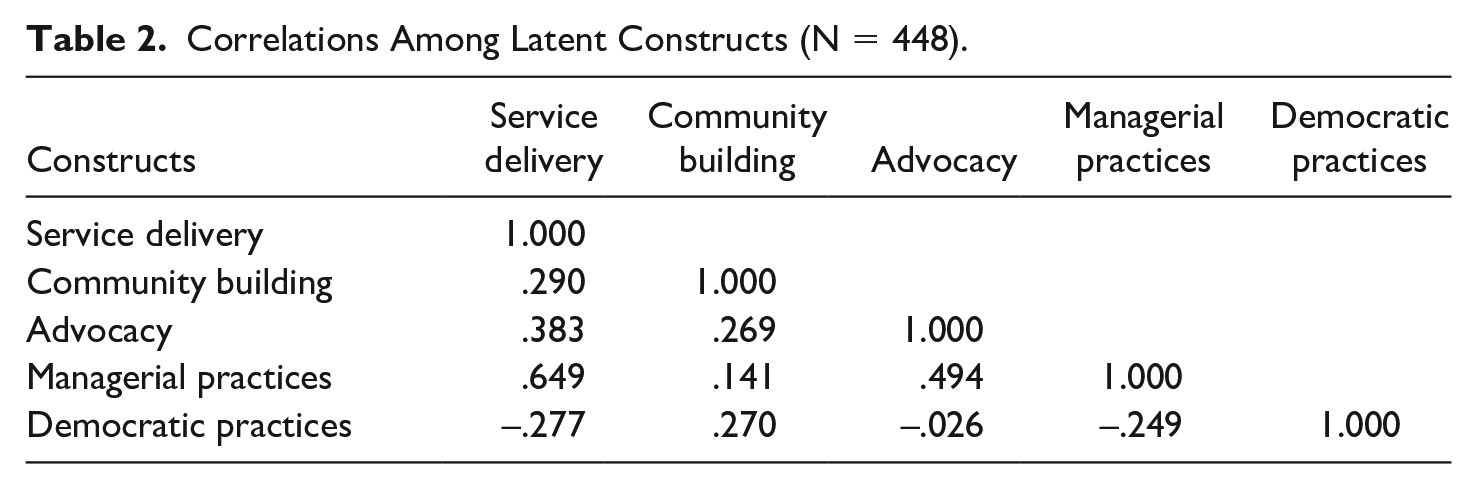
As a first step, we performed a confirmatory factor analysis, including all five latent constructs, to demonstrate their convergent and discriminant validity. Loadings on each of the proposed latent constructs ranged from .557 to .841, with a good model fit: CFI = .965, TLI = .961; SRMR = .085. Table 2 displays correlations for the latent constructs used in the model. After establishing the measurement model, we computed several structural models (A-D, see Tables 3 and 4) to explore the hypothesized relationships (A) as well as alternative model specifications (B-D) and, thus, ensure the robustness of the reported results. We begin by analyzing the hypothesized model (A) and then proceed to evaluate the impact of control variables (B), representative sample (C), and reversed relationship directions (D) on the initial results. We draw our conclusions based on consideration of all models tested.
Correlations Among Latent Constructs (N = 448).
Results of model Comparison: Fit Indices.
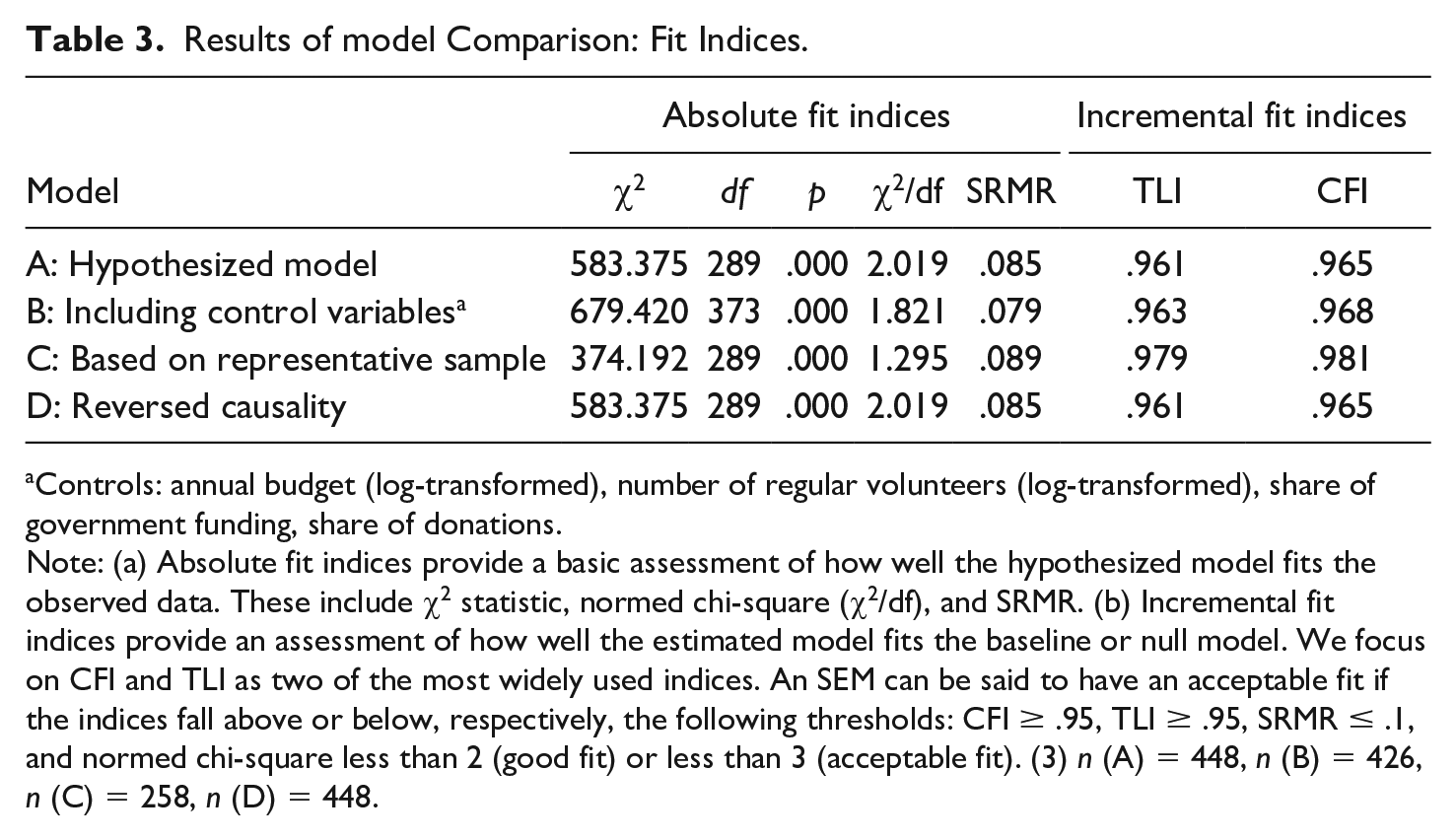
Controls: annual budget (log-transformed), number of regular volunteers (log-transformed), share of government funding, share of donations.
Note: (a) Absolute fit indices provide a basic assessment of how well the hypothesized model fits the observed data. These include χ2 statistic, normed chi-square (χ2/df), and SRMR. (b) Incremental fit indices provide an assessment of how well the estimated model fits the baseline or null model. We focus on CFI and TLI as two of the most widely used indices. An SEM can be said to have an acceptable fit if the indices fall above or below, respectively, the following thresholds: CFI ≥ .95, TLI ≥ .95, SRMR ≤ .1, and normed chi-square less than 2 (good fit) or less than 3 (acceptable fit). (3) n (A) = 448, n (B) = 426, n (C) = 258, n (D) = 448.
Results of Model Comparison: Parameter Estimates.
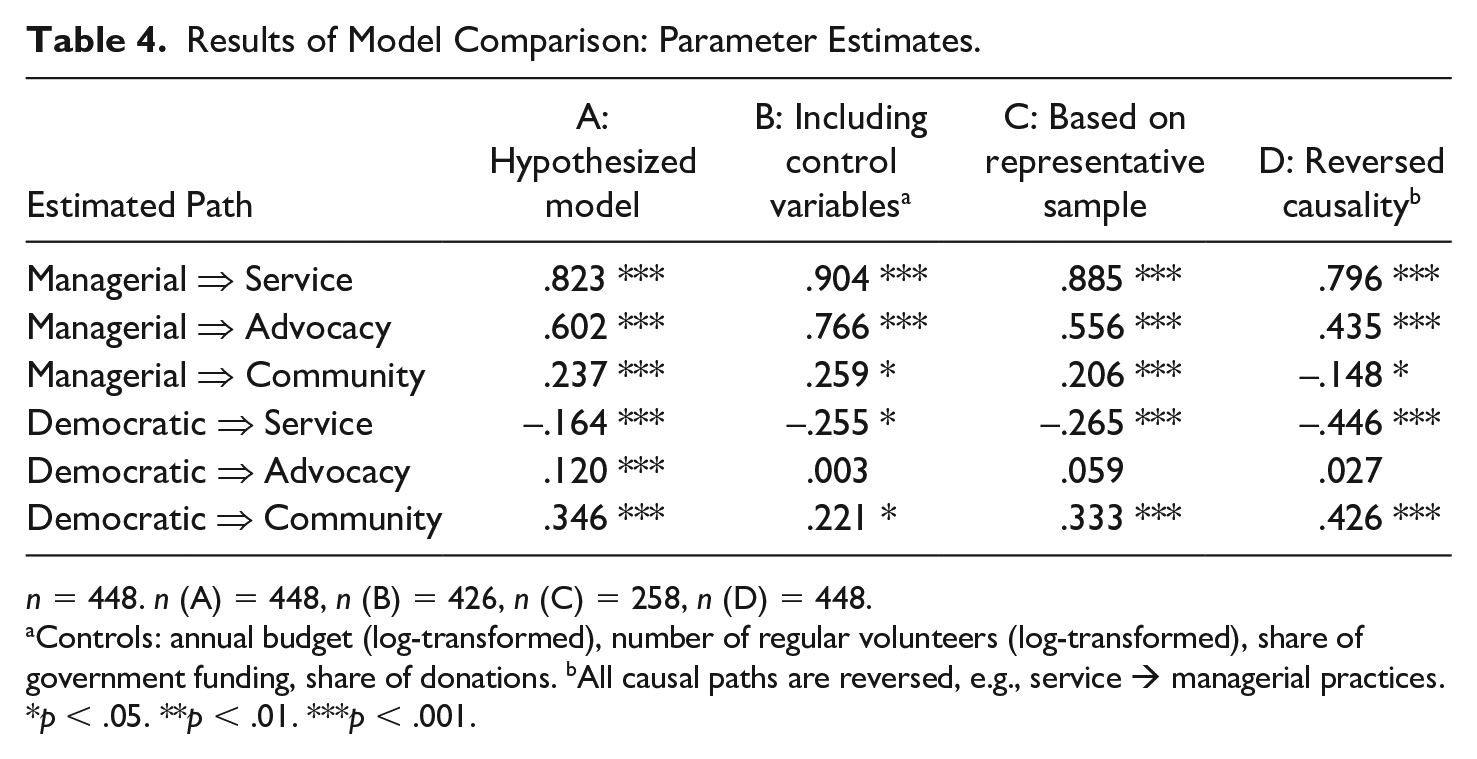
n = 448. n (A) = 448, n (B) = 426, n (C) = 258, n (D) = 448.
Controls: annual budget (log-transformed), number of regular volunteers (log-transformed), share of government funding, share of donations. bAll causal paths are reversed, e.g., service → managerial practices.
p < .05. **p < .01. ***p < .001.
Figure 2 visualizes the results of the estimated structural equation model. This model fits the empirical data well: χ2(289) = 583.375 (p < .001), SRMR = .085, TLI = .961, CFI = .965. It provides strong support for nearly all our hypotheses. We find a strong positive relationship between managerial practices and the nonprofit’s emphasis on service delivery (β = .823, p < .001), supporting hypothesis 1.1. A strong positive relationship is also found between managerial practices and advocacy (β = .602, p < .001), supporting hypothesis 1.2. Notably, this finding cannot tell us anything about the nature of advocacy, for example, whether these organizations engage in less confrontational forms of advocacy. Our findings reveal a moderate positive relationship (β = .237, p < .001) between managerial practices and nonprofits’ focus on community building, contrary to hypothesis 1.3, which assumed a negative relationship. These findings show that managerial practices can, to varying degrees, support nonprofits in fulfilling all their societal roles. Regarding democratic practices, the model supports hypotheses 2.1, 2.2, and 2.3. We find that democratic practices are weakly negatively related to organizations’ emphasis on service delivery (β = −.164, p < .001), while showing a moderate positive relationship with community building (β = .346, p < .001) and a weak one with advocacy (β = .120, p < .001).
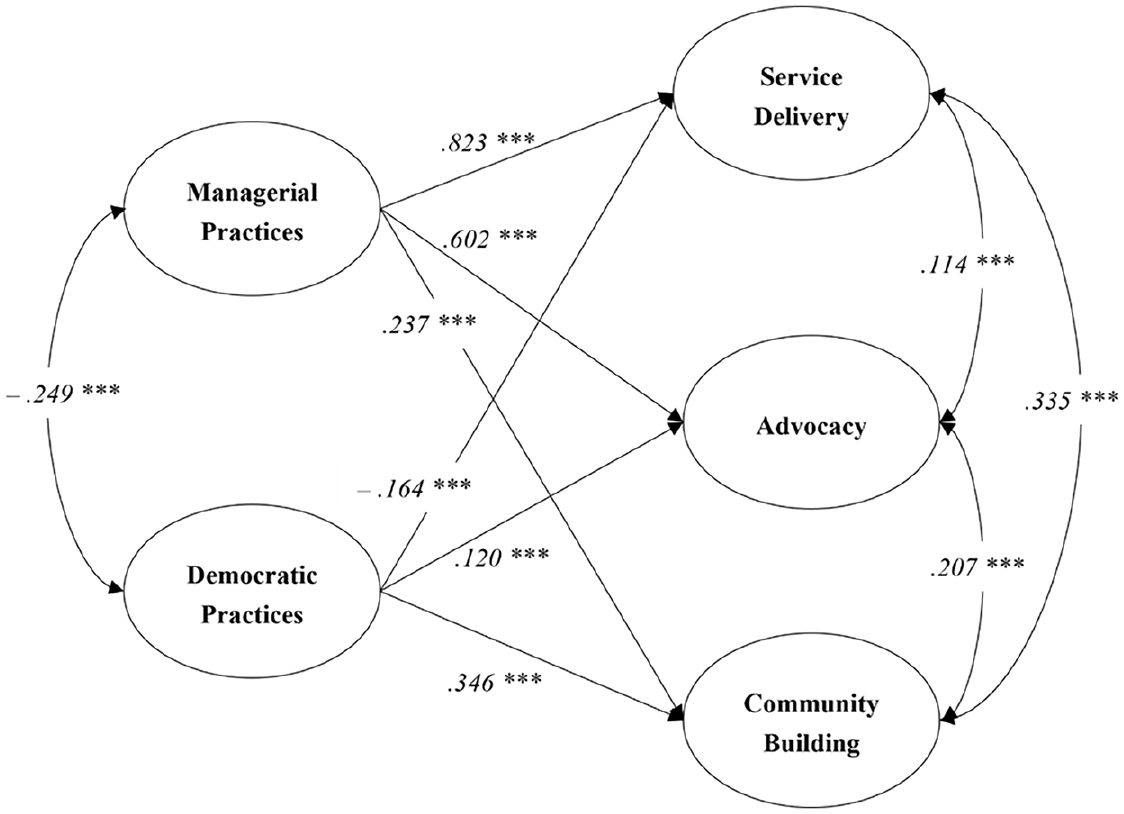
Estimated Structural Model (A).
An additional noteworthy finding is that managerial and democratic practices are moderately negatively related (β = −.249, p < .001). More managerial practices tend to go hand in hand with less democratic practices, and vice versa. This relationship is highly significant with only a moderate effect size, suggesting that the two sets of practices can still be integrated.
Before drawing further conclusions from these results, we checked the robustness of the model. Hence, we computed three additional models (see Tables 3 and 4). First, we tested a model (B), which adds control variables to the hypothesized model (A), as structural paths directly to the endogenous variables, i.e., the societal roles. Size of the organization (using the natural logarithm of the annual total revenue as a proxy) was chosen as a control variable because larger organizations can fulfill more roles. The level of reliance on volunteers (using the natural logarithm of the number of regular volunteers) was used as a control variable because nonprofits with more volunteers may place stronger emphasis on roles in line with the values of this group (e.g., Frumkin, 2002). We, moreover, controlled for the proportions of funding from government and donations as funding sources can affect the societal role profile of nonprofits (Moulton & Eckerd, 2012). Results indicate that after entering these controls, the relationships between the latent constructs remain with only slight changes in the effect sizes. The only exception is the positive relationship between democratic organizing and the advocacy role, which is not statistically significant in model B. The chi-square difference (Δχ2) between the hypothesized model (A) and the model (B) with control variables is 96.045, which is not significant (p < .01) at 84 degrees of freedom. This means that both models fit equally well statistically.
Second, we ran a model C identical to Model A but using only the representative sample (N = 358). Here, all but one of the effects stated for the hypothesized model A maintained their significance. As in model B, the positive relationship between democratic organizing and the advocacy role is not statistically significant. This indicates that we should be careful when interpreting this relationship.
Finally, as we are well aware that cross-sectional data only allow us to postulate but not empirically substantiate causality, we composed a fourth model (D), where we reversed the direction of the regression paths from societal roles to organizational practices. This reversed model (D) fits the data just as well as the initial model (A). All path coefficients, except for the democracy-advocacy relationship, remain significant with some notable effect size changes. Here, we find that service and advocacy have a strong positive effect on adopting managerial practices (both effects are slightly weaker than in model A). As for democratic organizing, the model shows that service and community building have a strong negative and a strong positive effect, respectively, on the use of democratic organizing practices (both effects are stronger than in model A). Comparing models (A) and (D) with respect to these effects, the findings suggest a reciprocal relationship whereby certain societal roles are associated with certain organizing practices, and these organizing practices are associated with emphasizing certain societal roles. The relationship between community building and managerial practices is peculiar, as this is the only change in effect direction (compared to model A). This finding suggests a complicated relationship, with more managerial practices leading to more focus on community building (model A), but a stronger focus on community building leading to less use of managerial practices (model D).
Overall, our hypothesized and alternative models provide robust evidence for a positive relationship between managerial practices and service delivery and advocacy, while a more complicated relationship with community building becomes evident. Moreover, democratic practices relate positively to community building but negatively to service delivery.
Discussion
This study explores how managerial and democratic practices relate to NPOs’ emphasis on their societal roles, providing quantitative evidence and advancing theoretical explanations. Our findings show that managerial practices have large positive effects on service provision and advocacy, and a moderate positive effect on community building. However, a more intricate interplay emerges once we extend our view to democratic practices. These have a moderate positive effect on community building—only a bit larger than managerial practices—but no or only a small positive effect on advocacy and a small to moderate negative effect on service delivery. In addition, the societal roles organizations prioritize can influence their choice of practices. Specifically, a focus on community building slightly reduces the adoption of managerial practices but moderately increases the use of democratic practices. This suggests tensions between managerial and democratic practices, underscored by their moderate negative correlation. The effect sizes indicating tensions are, however, not large enough to preclude the possibility of successfully integrating managerial and democratic practices within organizations.
Our hypotheses were built upon the idea from institutional theory that organizational practices can unfold interpretation frame effects (Horvath et al., 2018; Suykens et al., 2023), thus prompting and predisposing actors to pursue specific goals. Our results are consistent with an interpretation frame effect, as five of six hypotheses are supported. In retrospect, even the results that led to the rejection of the hypothesized negative relationship between managerialism and community building appear consistent: Management ideas are not against community building. Contributing to the community is seen as one of the responsibilities of businesses, although not the most important, but rather the least important (Pope et al., 2018). This is compatible with our findings: Service provision as the nonprofit equivalent of economic responsibility has the largest positive effect on management practices, and community building has the smallest positive effect.
Our robustness test for reverse causality also supports the interpretation frame effect: nonprofits that see themselves as community builders use less managerial and more democratic practices. This aligns well with the “logic of appropriateness” (March & Olsen, 2011), a key concept in institutional theory: Organizations have an understanding of their identity and the appropriate organizing for them. Our study suggests a culturally ingrained notion that community builders should avoid managerial practices and rely on democratic ones. Such a notion reflects the dichotomy of management as a cold iron cage and democracy as warm and community-oriented. Further support for an interpretation frame effect stems from our finding that management practices do not actually hurt community building, suggesting that considerations of cultural appropriateness rather than instrumental rationality are at play.
Our results also shed some new light on the concept of hybridity. We provide new insights into the issue of dysfunctional hybrids. Our findings suggest that nonprofit leaders may find it difficult to maintain democratic practices, even if they favor them in principle. Practices of organizational democracy come with tradeoffs: the more organizational democracy, the less engagement for service delivery, and the more skepticism against management methods within the organization. Management methods are, however, helpful in many ways, and service delivery is an important role that can contribute substantially to a nonprofit’s legitimacy and funding. So, hybridizing managerial and democratic practices in a way that does not “block” (Skelcher & Smith, 2015) efficient service delivery is a challenge. While many organizations manage to reconcile these practices to some extent, achieving a fully synergistic combination remains uncommon.
This research, however, is not without limitations: First, our cross-sectional data only allow for a cautious postulation of causal mechanisms. We address the causality issue by testing for a reversed model. The fit of the hypothesized and reversed models is identical, pointing to the long-standing question of what comes first: structure or strategy. Second, we only examine three societal roles: service, advocacy, and community building. Another important societal role concerns civic engagement (Moulton & Eckerd, 2012), which qualitative studies (e.g., Skocpol, 2003) have found to be negatively affected by managerialism. Third, the specific context of Vienna (Austria) may be somewhat distinctive due to its historically strong and persistent emphasis on democratic organizing in the nonprofit sector. The study is also limited to the 2019/20 survey period. Fourth, our data come from a single source and may thus be subject to key informant bias. We have mitigated this by focusing on objectively verifiable practices rather than subjective judgments and using items from different parts of the questionnaire. However, some degree of subjective interpretation was likely involved when measuring the importance of societal roles. Finally, although we base our hypotheses on the notion of interpretation frame effects, our research design does not allow for direct observation of such effects, as this would require a design focused on the micro-level of decision-makers.
Finally, our findings have important implications for nonprofit management practice, research, as well as teaching and training:
First, practitioners can be confident that—when used judiciously—managerial methods and tools will not inevitably cause nonprofits to neglect their social goals, as theoretical discussions of mission drift may suggest (Hersberger-Langloh et al., 2021). Moreover, organizational democracy is a great way of ensuring a focus on community building (see also Eikenberry, 2015). Finally, combining managerial and democratic practices may create internal tensions between service provision and community building in the organization, which our findings show to be a widespread phenomenon. If these tensions indeed come from interpretation frame effects of people not used to combining management and democracy, or not used to democratically organizing service provision, changing people’s expectations may be just as crucial as adapting practices.
Second, in light of today’s global crisis of democracy, scholars should not be satisfied with finding that managerial practices work well, in some ways better than organizational democracy, and thus implicitly condoning when nonprofits trade democracy for management. We do not recommend organizational democracy just for deontological and virtue ethics reasons (King & Griffin, 2019), as if its drawbacks did not matter. Instead, we take a different stance on organizational democracy: nonprofits that do not practice democracy at the organizational level are less credible as advocates for democracy at the state level and cease functioning as schools of democracy (Dodge & Ospina, 2016; Skocpol, 2003). Researchers should address this considering the interpretation frame effects: If there are rarely technical obstacles to combining democratic and managerial practices, we should challenge the common assumptions about suitable practices and their typical combinations. Future research could dissect this effect, using methods that make up for the limitations we faced: utilizing longitudinal data, focusing on effects at the micro-level of decision-makers (e.g., by experiments or qualitative interviews), considering additional societal roles, such as civic engagement, and testing for the generalizability of our findings in different contexts. Likewise, future research should measure the fulfillment of societal roles through objective indicators. Meaningful research efforts could also aim to improve democratic organizing practices to enable collective decision-making even with large numbers of diverse stakeholders, thus reducing costs in terms of money, time, and emotional effort. Particular attention should be paid to the integration of such practices and practices typically viewed as managerial.
Finally, our findings also have implications for teaching and training in the field of nonprofit management. To date, organizational democracy is mostly trained within organizations or communities in an informal way. Nonprofit management programs and textbooks extensively cover managerial concepts and instruments, even ethics (Brudney & Martinez, 2010), but rarely teach students how to involve large numbers of stakeholders in collective decision-making at a reasonable cost in terms of money, time, and emotional effort. How to make organizational democracy work is not part of the curriculum (e.g., recently Ahmed, 2023; Bexboruah & Carpenter, 2020). The gap between democratic organizing skills and management education might be a key reason why many people view managerial and democratic practices as mutually exclusive options.
Conclusion
With this study, we shed light on the complex interplay between sets of organizational practices and the societal roles that nonprofits prioritize. Our empirical findings show that more elaborate organizational practices generally strengthen NPOs’ focus on their societal roles. Moreover, they underscore the importance of balancing managerial and democratic practices within NPOs. We suggest that organizational practices shape the goals and identities of organizations through an interpretation frame effect. In addition, our study highlights the challenges of maintaining democratic practices alongside managerial ones, suggesting the need for further research into effective integration strategies. Finally, we highlight the potential for reconciling different practices and offer insights for scholars and practitioners to capitalize on the distinctive strengths of each set of practices rather than being limited to a single set.
Supplemental Material
sj-docx-1-nvs-10.1177_08997640241267861 – Supplemental material for Democracy and Management: Organizational Practices and Nonprofits’ Contributions to Society
Supplemental material, sj-docx-1-nvs-10.1177_08997640241267861 for Democracy and Management: Organizational Practices and Nonprofits’ Contributions to Society by Berta Terzieva, Christian Burkart, Florentine Maier and Michael Meyer in Nonprofit and Voluntary Sector Quarterly
Footnotes
Data Availability Statement
Declaration of Conflicting Interests
The author(s) declared no potential conflicts of interest with respect to the research, authorship, and/or publication of this article.
Funding
The author(s) disclosed receipt of the following financial support for the research, authorship, and/or publication of this article: This research was made possible by grant P 33229 from the Austrian Science Fund (FWF).
Supplemental Material
Supplemental material for this article is available online.
Author Biographies
 ).
).
References
Supplementary Material
Please find the following supplemental material available below.
For Open Access articles published under a Creative Commons License, all supplemental material carries the same license as the article it is associated with.
For non-Open Access articles published, all supplemental material carries a non-exclusive license, and permission requests for re-use of supplemental material or any part of supplemental material shall be sent directly to the copyright owner as specified in the copyright notice associated with the article.
