




Abstract
Charities have invited public scorn through their use of chugging (or “charity mugging”) methods of fundraising, which involve interpersonal interaction between fundraisers and potential donors. It is not known how such mass market interpersonal fundraising methods are associated with donors giving over time. We analyzed transactional data from a natural experiment involving 213,404 donors to 45 charities to examine the relationship between interpersonal interaction at the time of donor recruitment and the long-term value of donations made by those donors. Multilevel analyses show that different fundraising methods are associated with different donation values. Specifically, mass market fundraising methods that involve interpersonal interaction are linked to lower donation values over time (β = −.12; equating to 59% fewer dollars donated on average in the second year), driven by much higher rates of cancelation (odds ratio [OR] = 3.14). We theorize several possible mechanisms through which interpersonal fundraising comes to generate these poorer outcomes.
There is growing public criticism of charities for using high-pressure tactics in their mass market fundraising 1 (e.g., Anonymous, 2016). The British neologism chugging—a contraction of “charity mugging”—suggests negative public sentiment: Some people feel as if they are held hostage to the demands of charity fundraisers who solicit donations from them in public places such as malls or city streets (called face-to-face fundraising), or even in their own homes (called door-to-door fundraising; Barnett, 2012). But why would charities engage in practices that lead to public reprimand? In theory, charities should be extremely sensitive to shifts in public sentiment because their funding depends on their ability to maintain high levels of public trust and support (Chapman et al., 2021). Yet despite evidence of reputational damage for charities (Waldner et al., 2020), interpersonal fundraising methods like the face-to-face approach persist.
Many fundraisers believe that mass market interpersonal methods of recruitment (i.e., methods that involve direct conversations between potential donors and fundraisers) are the most effective at recruiting high volumes of donors who will commit to making recurring donations to charity. In Australia, for example, charities raise over $120 million from new donors each year through face-to-face campaigns (Nguyen, 2019). Yet we do not know how the different methods of mass market fundraising affect donor value, whether immediately or over time. As will be discussed, interpersonal methods may provide opportunities for respectful, two-way communication that lead to greater commitment and value over time or alternatively could exert pressure that crowds out donors’ intrinsic motivations, resulting in lower commitment and value over time. The current study tests empirically these two competing hypotheses for the possible relationship between the method of donor recruitment (especially whether that method involves interpersonal interaction) and second-year donation value.
Literature Review: Fundraising Methods and Donor Behavior
From the broader marketing literature, we know that the methods used for advertising (e.g., TV, direct mail, digital banners; collectively referred to as “channels”) can influence consumer and organizational outcomes. Different marketing methods are perceived differently by consumers (Danaher & Rossiter, 2011), are recalled at different rates (Klein, 1981), and have differential impacts on sales (Breuer et al., 2011; Danaher & Dagger, 2013). However, commercial marketing usually adopts integrated approaches (i.e., delivering the message across multiple channels simultaneously; e.g., Danaher & Dagger, 2013); a practice which is not common in nonprofit fundraising (see Tharpe, 2019).
Within the nonprofit marketing context, only a handful of studies have considered how the method of fundraising may have consequences (see summary in Table 1). Much of this research has focused on one method: face-to-face fundraising. The early data have not been kind: Donors acquired face-to-face cost more to recruit, are more likely to cancel their standing donations quickly, and are more critical of the recruiting charity (Fleming & Tappin, 2009; Sargeant et al., 2006; Waldner et al., 2020). Face-to-face methods (including door-to-door) also generate more complaints than other fundraising methods (Sargeant et al., 2012).
Summary of Key Articles Examining the Impacts of Fundraising Methods.
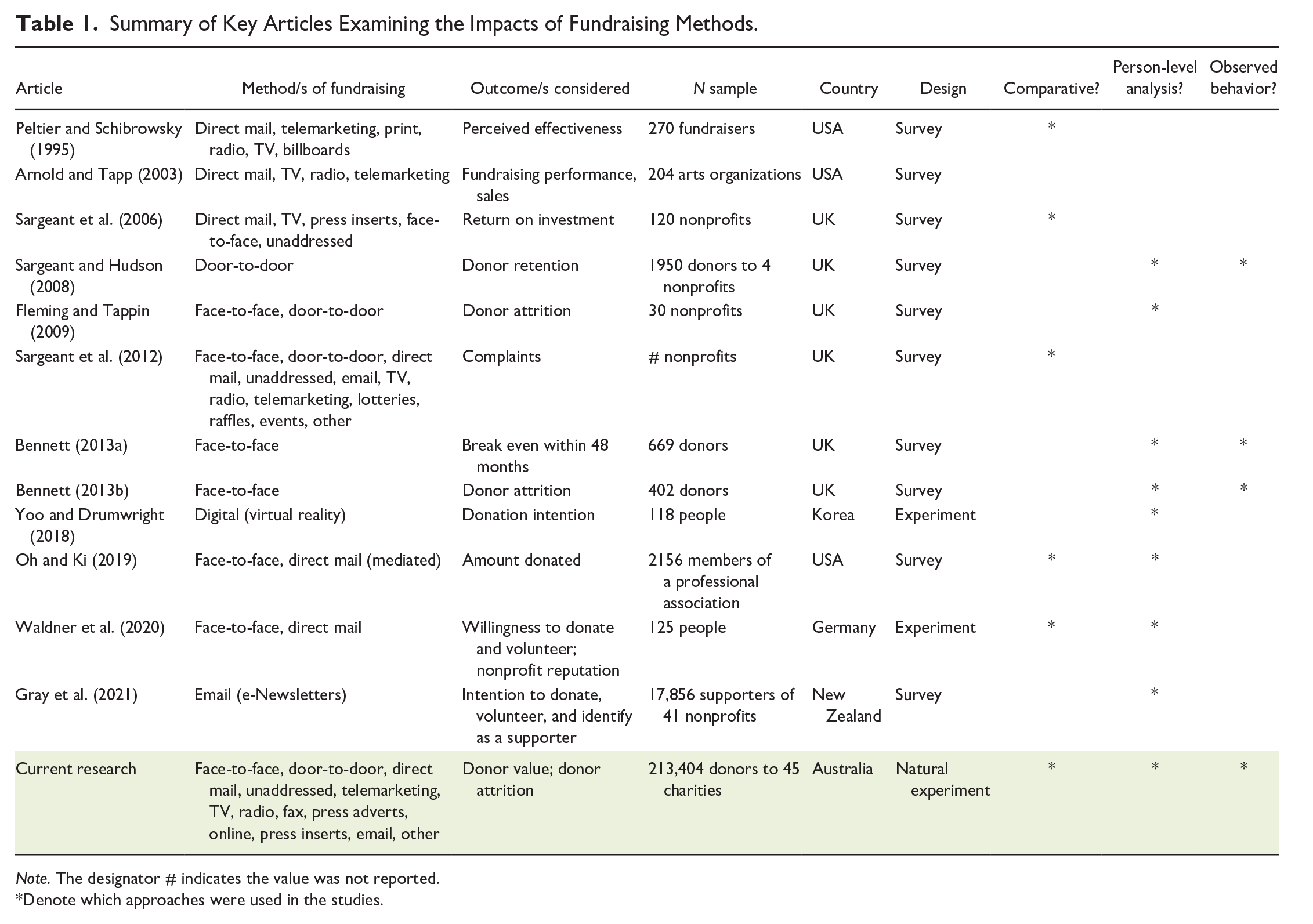
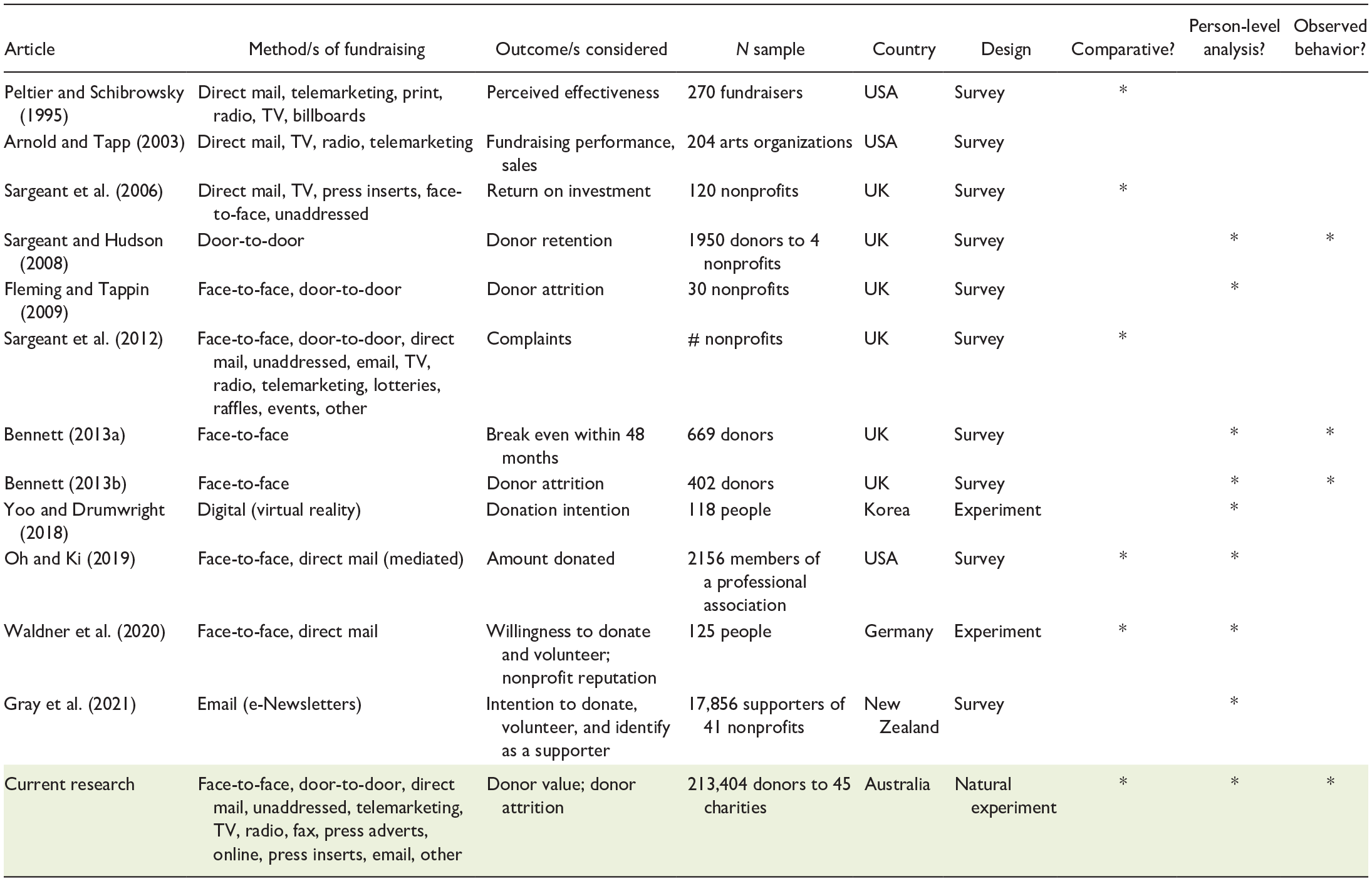
Note. The designator # indicates the value was not reported.
Denote which approaches were used in the studies.
Only one previous article has considered donor acquisition and compared the outcomes of different fundraising methods, as we do in the current study. Sargeant et al. (2006) benchmark the performance of a range of direct marketing approaches within the UK fundraising market by asking 120 nonprofit marketers to report their organization’s campaign results. Comparing results for donor recruitment campaigns focused on securing recurring donations, those authors found that TV campaigns generated higher average return on investment (ROI; 2.27) than press inserts (0.87), addressed direct mail (0.81), face-to-face (0.66), and unaddressed direct mail (0.56). That study is instructive because it highlights different outcomes for different fundraising methods. However, that study relied on data reported by charity fundraisers, focused on campaign-level outcomes (i.e., ROI) rather than donor-level outcomes (i.e., donor value and attrition), and only considered a handful of fundraising methods.
We did not identify any previous research that considered donor-level outcomes using observed behavior across a broad array of fundraising methods, as we do here. Our study appears to be the first large-scale natural experiment to examine the impacts of mass market fundraising methods and the first to specifically consider the impacts of interpersonal fundraising methods in comparison to non-interpersonal methods.
Theorizing Interpersonal Interaction in Fundraising
Charitable Triad Theory (Chapman, Louis, et al., 2022) argues that fundraisers, and especially interactions between donors and fundraisers, are instrumental in determining charitable behavior. In marketing more broadly, theories of relationship marketing (MacMillan et al., 2005; Morgan & Hunt, 1994) and customer lifecycles (Wells & Gubar, 1966), for example, highlight the relevance of how consumers engage with brands over time. These various theoretical approaches all highlight the importance of interaction in consumption contexts. Nevertheless, no specific theories exist to explain how interpersonal interaction in fundraising may influence charitable giving. We propose that there are at least two possible psychological impacts of fundraising that involves interpersonal interaction (summarized in Figure 1).
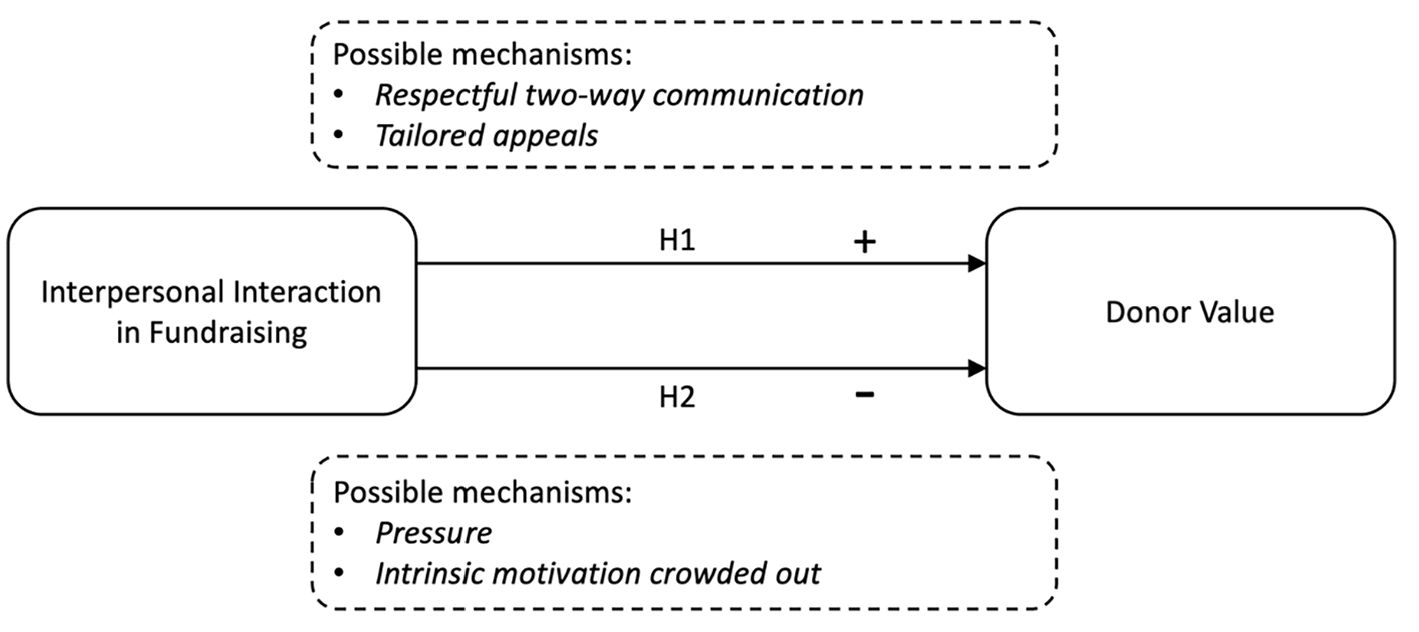
Conceptual Model Showing Competing Hypotheses for the Impact of Interpersonal Interaction on Donor Value and Possible Mechanisms.
On the one hand, through two-way communication donors may have the chance to ask questions, learn more in-depth information about causes, and ultimately become more committed to their giving as a result. Interpersonal methods also give fundraisers the chance to test different motivational appeals for giving; important because some donors are more egoistically and others more altruistically motivated (Chapman et al., 2020; List et al., 2021). If these methods allow a sense of open dialogue, respectful two-way communication, and tailored appeals, one could hypothesize that people who decide to give after being approached through interpersonal methods would be more committed to their giving and be more generous over time. Therefore, we propose:
On the other hand, interpersonal methods of recruitment may put more pressure on people to give (Oh & Ki, 2019; Sargeant & Hudson, 2008). The mere act of having someone ask you to give can create social pressure. People may feel it is impossible (or very difficult) to say no, especially if they want to be seen as a generous person (as most people do; Sullivan et al., 2022), if they think that generosity is common (Brañas-Garza et al., 2017), if they are worried that others will be observing and judging their behavior (Fehr, 2004), or if they are asked repeatedly despite initially saying no (as fundraisers are trained to do; Coscarella, 2019).
If such pressure is experienced, an important consequence would be that extrinsic motivations may crowd out intrinsic motivations (Deci et al., 1999; Wollbrant et al., 2022). If people look back on their choice to donate and can explain it to themselves in terms of social pressure, they may not internalize the notion that they themselves have freely chosen to give (Cialdini, 2001). In the language of Self-Determination Theory (Ryan & Deci, 2000), they would perceive their actions to be externally regulated rather than autonomous and may therefore show reduced generosity and commitment over time. Therefore, we also propose the competing hypothesis:
The Current Study
We analyzed transactional data from 213,404 Australians who signed up to make regular donations to one of 45 different charities during 2014. 2 Because these donors experienced different conditions (i.e., were recruited using different methods of fundraising) with assignment arguably “as if” random, the data serve as a natural experiment (Dunning, 2008). In our focal analyses, we consider that fundraising involving interpersonal interaction is the treatment, and fundraising without interaction is the control. We are therefore able to test whether so-called “chugging” and other methods of interpersonal fundraising remain effective after the donor walks away from the interaction. As discussed earlier, donors who are recruited through mass market interpersonal fundraising methods may be more committed and therefore donate more over time (H1) or potentially less committed and donate less (H2). In this article, we examine empirically the relationship between the method of donor recruitment and donor value to test these two competing hypotheses as a basis for stimulating research and theorizing on fundraising methods.
To our knowledge, this is the first natural experiment on the long-term relationship between donor recruitment methods and charitable giving. The current research serves primarily as an “empirical factcheck” that demonstrates that fundraising methods can influence donor behavior. Findings and the resulting theoretical discussion can therefore contribute to a nuanced understanding of fundraiser-mediated generosity and inform charity management and fundraising strategy.
Method
Sample
We received secondary data from 52 large Australian charities that participated in a national benchmarking project. De-identified data were shared free of charge for scholarly purposes. The syntax, codebook, and supplementary analyses are available on the Open Science Framework (OSF; https://osf.io/68f4b/). Due to commercial sensitivities, data cannot be published online but will be supplied upon request.
The data file contained transactional giving data from Australian residents who signed up to a regular giving program (i.e., committed to make recurring donations) during the 2014 calendar year. Charities that recruited at least 50 donors in 2014 were included in the analyses. In total, 213,404 people signed up to regular-giving programs across 45 charities in this time (see Supplemental Materials on the OSF for more detail). 3
Measures
Method of fundraising was captured in each charity’s customer resource management (CRM) database at the time they were added. Thus, for each donor, we had information about how they came to be a donor of the charity. Fourteen different methods of fundraising were used by the participating charities in 2014. Radio, TV, press adverts (i.e., printed in publication), and press inserts (i.e., printed on stand-alone flier and inserted into publication) are all forms of advertising. Direct mail, email, unaddressed, and fax are all forms of direct marketing; “direct mail” is personalized to a specific person, and “unaddressed” is not personalized. Online involves donations received online where the source of contact was not known; unsolicited involves donations received offline where the source of contact was not known. Phone and lead conversion are both telemarketing methods, with the former meaning they were cold-called and the latter meaning that the person had previously made a one-off donation and were called and asked to become a recurring donor. Face-to-face includes fundraising in the street and in malls, and door-to-door involves fundraising in residential neighborhoods. Because of the requirements of the modeling technique, the two methods that were used to recruit fewer than 50 donors (i.e., radio and fax) were collapsed into an “Other” category for analyses.
Donation value was based on the observed behavior. For each new donor recruited during 2014, we matched transactional information about the total amount they donated during the subsequent calendar year (i.e., 2015). As is typical with charitable giving data, these values were positively skewed (M = $211.54, SD = $266.57, range = $0–$57,000). For the focal analyses, we therefore log transformed the donation values.
Coding
Each method of recruitment was coded as to whether it involved interpersonal interaction by two independent coders (the first and fourth authors; see Table 2). Methods were coded 1 if they involved interpersonal interactions between the donor and a fundraising representative of the charity and coded 0 if no interaction was involved. Interrater reliability was perfect (Cohen’s κ = 1.00, p < .001), with not a single instance of disagreement between the coders.
Summary of All Methods of Recruitment Included in the Dataset.
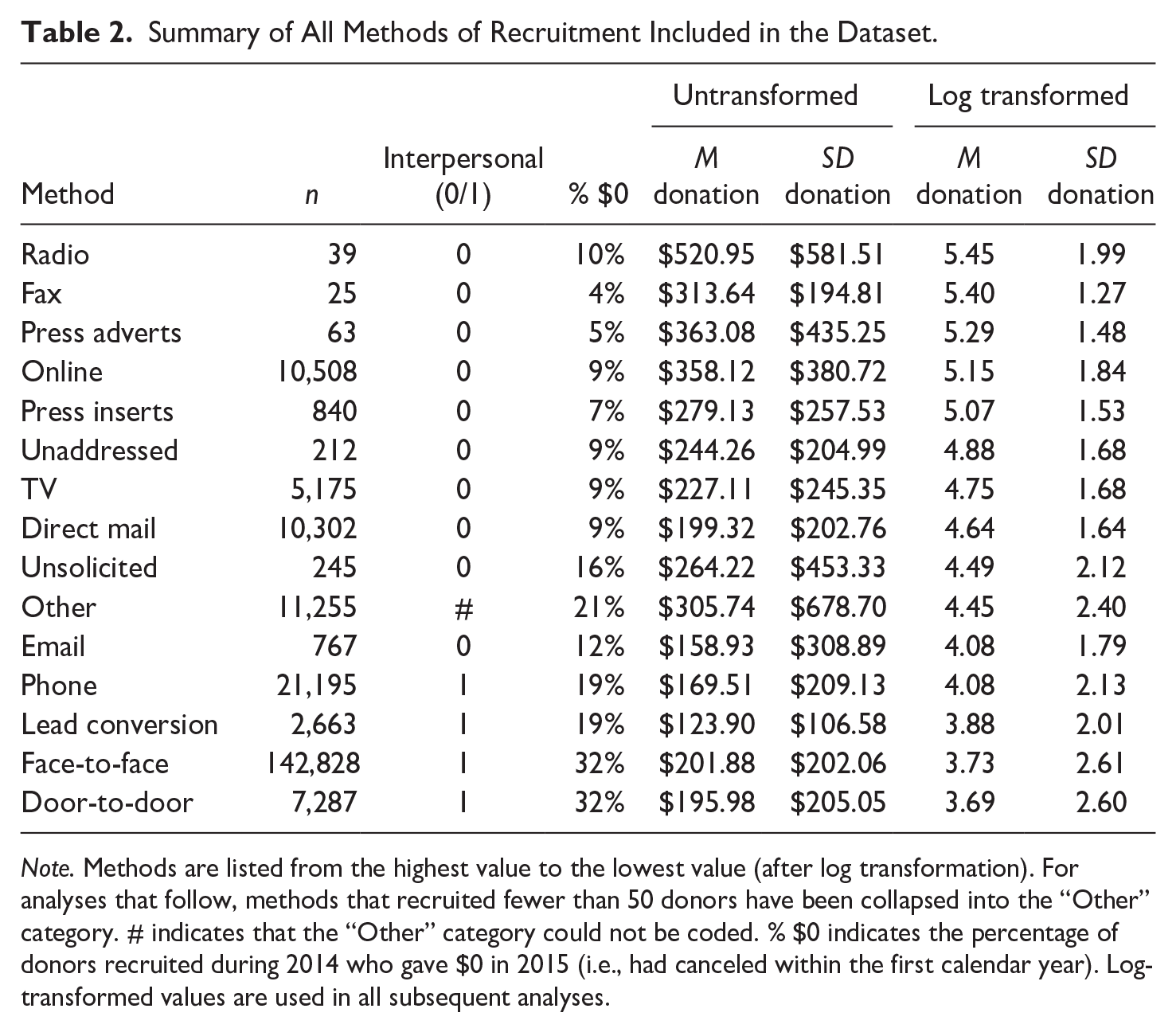
Note. Methods are listed from the highest value to the lowest value (after log transformation). For analyses that follow, methods that recruited fewer than 50 donors have been collapsed into the “Other” category. # indicates that the “Other” category could not be coded. % $0 indicates the percentage of donors recruited during 2014 who gave $0 in 2015 (i.e., had canceled within the first calendar year). Log-transformed values are used in all subsequent analyses.
Analyses
All analyses were conducted in R (R Core Team, 2020) using the lme4 and nlme packages (Bates et al., 2015; Pinheiro et al., 2020). Data were multilevel in nature, with individual donors nested within charities. We therefore analyzed the data using multilevel regression models with restricted maximum likelihood (REML) estimation, which is more accurate for smaller Level 2 sample sizes (i.e., <50 charities; following McNeish, 2017). Including random intercepts significantly improved the model relative to a model with only the fixed intercept, χ2(1) = 7451.97, p < .001. Thus, average donations varied across charities (intraclass correlation coefficient [ICC] = .05; see Table 3), possibly for pragmatic reasons such as different charities typically asking for different monthly donation values.
Summary of Multilevel Models Examining the Effects of (a) Method of Recruitment and (b) Interpersonal Interaction on Second-Year Donation Value (Log Transformed).
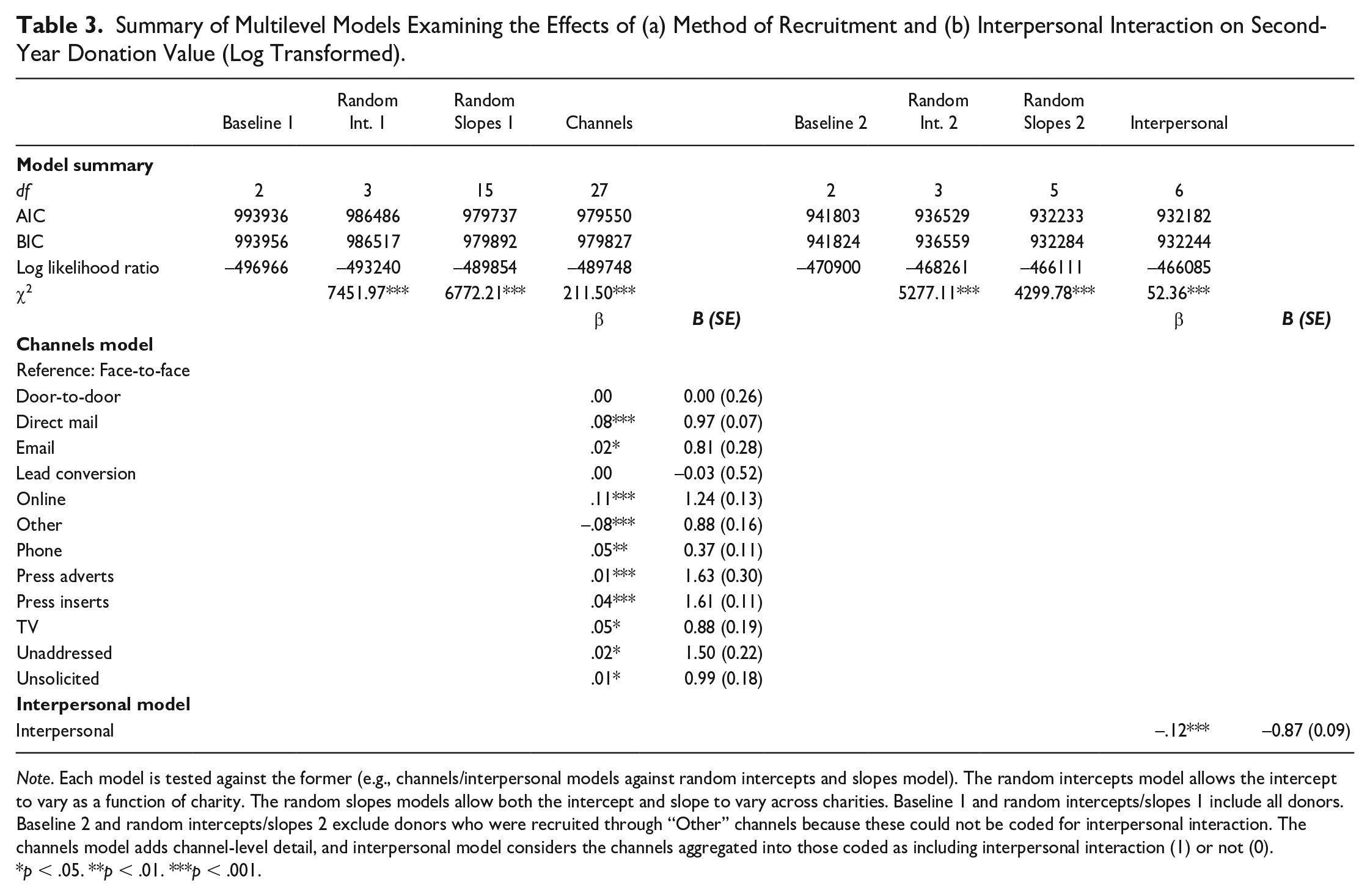
Note. Each model is tested against the former (e.g., channels/interpersonal models against random intercepts and slopes model). The random intercepts model allows the intercept to vary as a function of charity. The random slopes models allow both the intercept and slope to vary across charities. Baseline 1 and random intercepts/slopes 1 include all donors. Baseline 2 and random intercepts/slopes 2 exclude donors who were recruited through “Other” channels because these could not be coded for interpersonal interaction. The channels model adds channel-level detail, and interpersonal model considers the channels aggregated into those coded as including interpersonal interaction (1) or not (0).
p < .05. **p < .01. ***p < .001.
Including random slopes further improved the model, χ2(12) = 6772.21, p < .001, indicating that different fundraising methods returned different results for different charities. Different effects of methods across charities could be due to, for example, differences in the quality of fundraiser training or perceived fit between fundraising method and charitable cause. In the Results section, we report the observed effects of both fundraising method and interpersonal interaction after accounting for both random intercepts and random slopes.
Results
We considered the total donations made through regular giving programs in 2015 by all new donors who signed up to make a recurring donation for any of the charities during 2014. The average total second-year donation value among these new donors was $211.54 (SD = $266.57) but varied significantly across different methods of fundraising (see Figure 2 and Table 2).
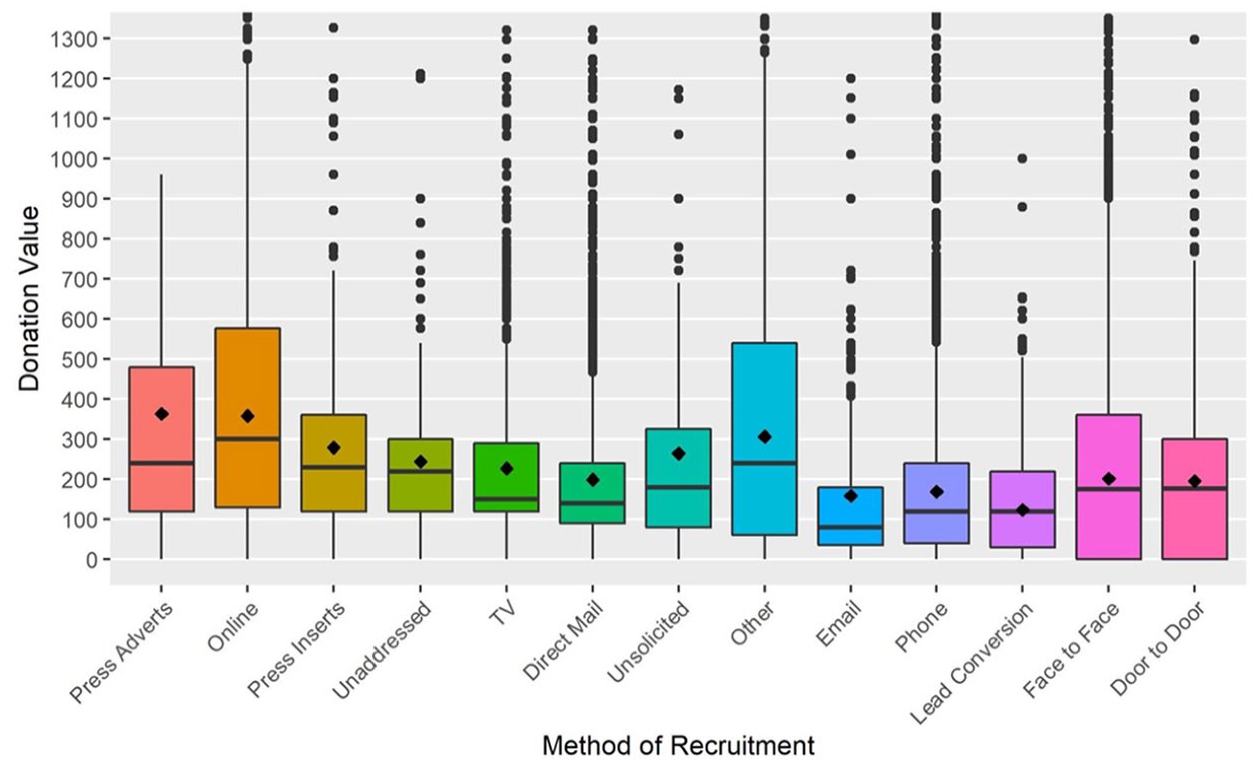
Second-Year Donation Value Totals for Donors Recruited Using Different Fundraising Methods.
Methods of Fundraising
Including the method of fundraising significantly improved the model’s prediction, χ2(12) = 211.50, p < .001. The way that people were recruited as donors was therefore associated with their average second-year log-transformed donation value (see Table 3). Relative to the face-to-face approach (the most common method), almost all other methods were associated with larger second-year donation values: online (β = .11, p < .001), direct mail (β = .08, p < .001), TV (β = .05, p = .011), phone (β = .05, p = .002), press inserts (β = .04, p < .001), unaddressed (β = .02, p = .022), email (β = .02, p = .026), unsolicited (β = .01, p = .001), press adverts (β = .01, p < .001), and other methods (β = .08, p < .001). No significant differences were found between face-to-face and door-to-door or lead conversion (ps ≥ .960).
Interpersonal Interaction
Whether an individual’s method of being asked to give involved interpersonal interaction or not significantly improved our prediction of their second-year donation value, χ2(1) = 52.36, p < .001. Methods that involved interpersonal interaction resulted in significantly lower second-year donation totals than methods that did not (β = −.12, p < .001). The overall effects of interpersonal interaction for different charities are plotted in Figure 3. Almost all charities experienced lower donation value among donors recruited using interpersonal methods. On average, and after accounting for differences across charities, people who were recruited through interpersonal methods gave $61.38 less in the subsequent calendar year—representing a 59% reduction in donation value—compared to people who were recruited through methods that did not involve interpersonal interaction. 4
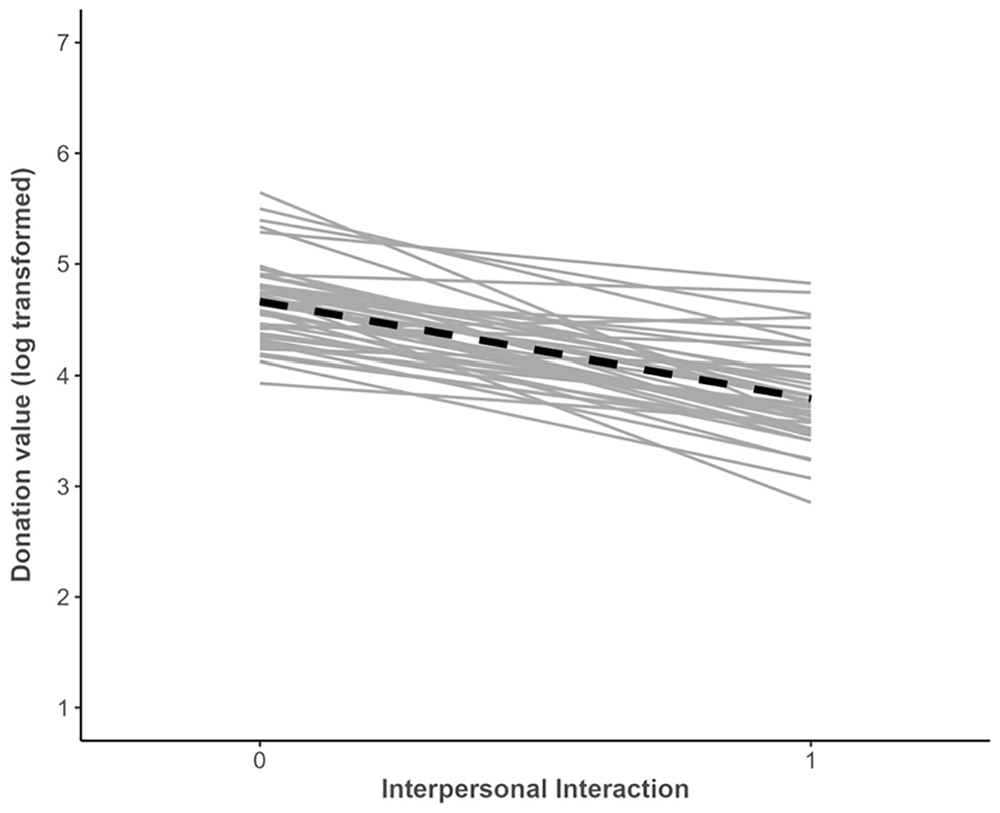
Effects of Interpersonal Interaction on Overall Second-Year Donation Value (Log Transformed) for Each Charity. N = 202,149.
Disaggregation of Charitable Giving
Having established that methods of recruitment that involve interpersonal interaction are associated with a lower second-year donation value, we finally examined how this reduced value manifested. We applied an approach that is commonly used to understand charitable giving and disaggregated the data into two distinct outcomes: whether donors canceled or stopped giving by the end of 2014 (first-year cancelation; dichotomous outcome) and how much donors gave in total during 2015 if they had not canceled or stopped giving (conditional second-year donation value; continuous outcome).
Disaggregated results (summarized in Figure 4) show that donors who were recruited through methods that involved interpersonal interaction were over three times more likely to cancel their standing donation within the first calendar year than donors recruited using methods without interpersonal interaction, Exp(B) = 3.14, 95% CI [2.62, 3.77]. Donors who were recruited using interpersonal methods but did not cancel in their first calendar year gave at similar rates in their second calendar year as those who were recruited using non-interpersonal methods, β = −.01, p = .593.
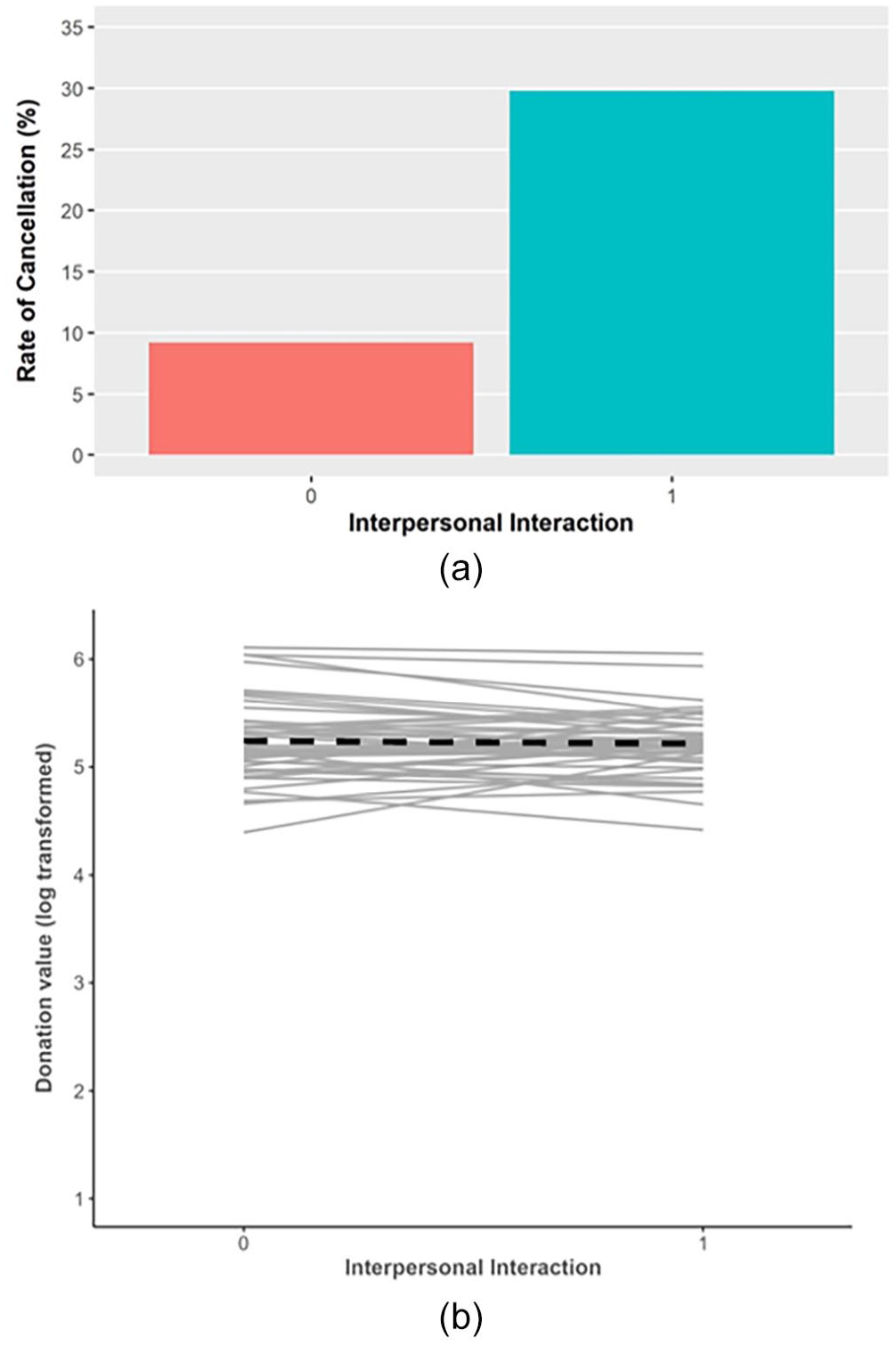
Disaggregated Data Showing the Effects of Interpersonal Interaction (vs. Its Absence) in Fundraising on the Probability of Canceling Within the First Calendar Year (a; N = 202,149) and Conditional Second-Year Donation Value Among Those Who Did Not Cancel (b; N = 147,711).
Discussion
We analyzed behavioral data from 213,404 Australian donors who signed up to make recurring donations during the same year. Results show that donors who were recruited through mass-market fundraising methods that involved interpersonal interaction gave less over time than donors who were recruited through methods that did not involve interaction (supporting H2 but not H1). Specifically, the fundraising methods collectively called “chugging” (i.e., face-to-face and door-to-door), as well as telemarketing methods, were associated with lower donation value over time. A reduced second-year donor value was explained by the fact that donors recruited using interpersonal methods were more likely to cancel their donations quickly. Many of these donors did not sustain their giving beyond the year of recruitment.
The data do not allow us to test the mechanism directly. However, as these data will potentially open a new line of scholarship in fundraising, we see value in theorizing potential mechanisms. To this end, one interpretation of the findings is that donors engaged directly by a fundraiser experience social pressure to give, which may crowd out their inner motivations and commitment (Cialdini, 2001; Deci et al., 1999; Wollbrant et al., 2022). Although we do not test pressure directly as a mechanism, our analyses show that the methods that involve interpersonal interaction are associated with lower donor value over time. Coupled with survey findings that people do experience pressure through these methods (Fleming & Tappin, 2009; Sargeant et al., 2006; Waldner et al., 2020) and critical media reports of the high-pressure tactics used in fundraising (Oh & Ki, 2019; Sargeant & Hudson, 2008), the current study suggests that interpersonal methods of fundraising may currently be leveraging social pressure to coax yeses from doubtful donors and that those donors quickly have a change of heart. If true, this situation should give nonprofit marketers pause.
If pressure is a key factor that explains why donors recruited with interpersonal interaction show lower commitment to their generosity over time, it would be consistent with theories of human motivation such as the Self-Determination Theory (Ryan & Deci, 2000). Behaviors that are freely chosen (i.e., autonomous) are more likely to be sustained than behaviors that are externally regulated (i.e., controlled; Deci & Ryan, 2008; Teixeira et al., 2012). Inferring external motivations for behavior can crowd out one’s internal motivations (Cialdini, 2001; Deci et al., 1999; Wollbrant et al., 2022).
An alternative explanation is that donors recruited via interpersonal methods have higher expectations for the nature of their ongoing relationship with the nonprofit in question. If donors experience an opportunity to dialogue with a human at the time of recruitment, they may come to expect an interactive relationship. If they then only receive generic, mass-produced, noninteractive communications (such as via direct mail or email), they may experience a disconnect between their expectations and reality that causes them to become disillusioned (similar in nature to the more extreme “moral disillusionment” that occurs when the public’s positive expectations of nonprofit behavior are violated; Chapman, Hornsey, et al., 2022; Hornsey et al., 2021). Indeed, interviews with lapsed charity donors suggest that failure to meet donor expectations after face-to-face recruitment is, for some, the reason that they stop giving (Nathan & Hallam, 2009).
A final interpretation of the findings is that donors with a strong intrinsic motivation to give will do so through non-interpersonal methods while interpersonal methods tend to mop up the more reluctant (or less passionate) donors. According to this interpretation of the data, the donors who are more resistant (and therefore perhaps less committed by nature) are those most likely to respond positively when given the chance to interact with a fundraiser and ask questions. If so, one could argue that even short-term giving from resistant donors should be considered a net benefit for charities. However, interpersonal methods require significant financial investment. The average ROI of face-to-face fundraising within the first year is 0.66 (Sargeant et al., 2006), meaning donors recruited through face-to-face methods only donate an average of 66% of the cost of their recruitment during their first 12 months of giving. Donors who cancel quickly may therefore actually cost charities more than they are worth.
Strengths, Limitations, and Future Directions
A strength of the current study is that we were able to capture and analyze real giving behavior from a large sample of donors. Observing behavior in this way overcomes some of the challenges inherent in studying prosocial behavior, particularly social desirability biases that manifest in the tendency for people to overreport their generosity (Lee & Sargeant, 2011). With a sample of this size, estimated to be approximately 45% of all new donors recruited in Australia in 2014 (Fundraising & Philanthropy, 2018), we can also be fairly confident of the generalizability.
That said, the data were collected almost a decade ago. Although the broad psychological mechanisms proposed to be underlying the current findings should be relatively stable over time, it is nevertheless possible that fundraising methods may show different effects at different times, especially as fundraising practices evolve and people habituate to certain methods. Future research should continue to explore the impacts of fundraising methods using contemporary data. Furthermore, participants were not randomly assigned to experience different fundraising methods. Natural experiments involve analyzing archival data where people have experienced different conditions, to which they were not randomly assigned but to which one could argue that assignment is “as if” random (Dunning, 2008). The fundraising methods considered here are typically targeted only by location rather than donor-level attributes. There is therefore no reason to believe that different kinds of people would be more or less likely to experience one fundraising method versus another. Nevertheless, future research should consider testing these relationships using random assignment.
Managerial Implications
Charities continue to use interpersonal methods of fundraising, some of which have been derogatorily labeled “chugging” or “charity mugging” by the public and media. We found that the method of mass market fundraising—especially whether the method involved interpersonal interaction—is associated with subsequent donor behavior. Even though interpersonal methods do get people to agree to donate in the moment, almost a third of those new donors cancel their donations by the end of their first calendar year. These cancelations translate to lower donor value over time: Donors recruited using interpersonal methods donate an average of 59% fewer dollars in their second year than donors recruited using other methods. Interpersonal fundraising methods have incredible potential—offering the possibility to generate dynamic, personalized, and responsive conversations between fundraisers and donors, as evidenced by the great success of major donor fundraising (e.g., Breeze & Jollymore, 2017; Shaker & Nelson, 2022). Yet our data show that potential is not being realized in the mass market.
It may be that interpersonal methods inadvertently reduce donor commitment, or perhaps reluctant donors are simply more responsive to interpersonal methods. Whatever the reason, people who donate after interacting directly with mass market fundraisers are less likely to sustain their giving. We recognize that many charities may be committed to interpersonal fundraising methods due to their need to meet immediate acquisition goals and stay visible and competitive in the marketplace. However, our data also invite speculation that the sector may be inadvertently generating chug-and-churn cycles whereby donors feel pressured into giving to one charity and become disillusioned and abandon that cause, only to be pressured into giving by the next, which could feasibly lead to a growing sense of psychological discomfort with giving that could have devastating long-term consequences for the sector. Nonprofit marketers should therefore be wary of how they are executing interpersonal interaction in their mass market fundraising campaigns. At minimum, they should audit the conversations and overhaul their scripts and subsequent donor journeys to minimize negative outcomes.
Footnotes
Acknowledgements
The authors wish to thank Pareto Fundraising (now part of IVE) and 52 participating charities for generously sharing data for scholarly purposes. The authors convey special thanks to Clarke Vincent and Andy Tidy for their support in generating the data file. They also acknowledge Ian MacQuillin for suggesting the interpretation of the data based on communication expectations.
Author Contributions
CMC was responsible for negotiating access to the data, data cleaning, conceptualization and design, coding, interpretation, and writing. JC conducted all data analyses and visualizations and was involved in conceptualization and design and editing. AKT and CF were involved in conceptualization and design, coding, and editing.
Data Transparency
Due to commercial sensitivities, the data that support this article cannot be made publicly available but will be supplied by the corresponding author upon request.
Declaration of Conflicting Interests
The author(s) declared no potential conflicts of interest with respect to the research, authorship, and/or publication of this article.
Funding
The author(s) disclosed receipt of the following financial support for the research, authorship, and/or publication of this article: This work was funded by an Australian Research Council Discovery Early Career Researcher Award (project number DE220100903) funded by the Australian Government, which was awarded to the lead author.
