




Abstract
Increasing online advocacy by donors has important implications for nonprofit organizations (NPOs). Through a lens of self-disclosure theory, this current research combines data across three quantitative cross-sectional surveys of millennial Australian donors who donate blood, time, and/or money to better understand how NPOs can encourage existing donors to engage in greater online advocacy. Findings demonstrate (a) the importance of social norms and psychological involvement in online advocacy decisions, (b) that “firm-generated” marketing effectiveness can vary by the content provided by NPOs, and (c) that not all donation types are equal when encouraging donors to be advocates. The work contributes by broadening the scope of existing models of online brand advocacy to a donation context by examining “firm-generated user-shared” content and millennials’ social media use for prosocial behaviors.
Introduction
In a crowded market, nonprofit organizations (NPOs) are competing for finite resources—such as money, blood, or time—made more challenging by the decline in “giving behavior” witnessed worldwide in response to the global pandemic (Wiepking et al., 2021). In an effort to optimize limited resources, social media has arguably become an important low-cost, interactive communication tool for NPOs to reach large audiences with advocacy efforts, recruit donors, and build rapport with supporters (Guo & Saxton, 2014; Harrell et al., 2022; Seo & Vu, 2020). Advocacy is one tool for generating public support. In the context of NPOs, advocacy can be used to disseminate information and encourage prosocial behaviors, as well as empower policy-making processes (Özdemir, 2012). Advocacy is described as “the act of publicly representing an individual, organization, or idea with the aim to persuade others to look favorably upon, or accept the point of view, of the individual, the organization, or the idea” (Edgett, 2002, p. 1). Online advocacy is achieved through digital strategies such as e-petitions, hashtag protests, or selfie campaigns (Johansson & Scaramuzzino, 2019; Santini et al., 2022).
The potential power of social media for “getting the word out” and engaging with existing and potential donors is most evident among millennials, given its deep integration into daily life (Y. Lee, 2019). Yet, at the same time, social media is an increasingly “noisy” environment that makes gaining attention challenging for NPOs. While research has focused on improving the effectiveness of NPOs’ online advocacy (Almog-Bar & Schmin, 2014; Guo & Saxton, 2018; Halpin et al., 2021), the potential of social media to mobilize donors as advocates online has largely been overlooked (Guidry et al., 2014).
The liking and sharing of content created by NPOs appear to be emerging from the “clicktivism” movement (Noland, 2020) but expresses only passive support that may not lead to actual donations (Wallace et al., 2017). Alternatively, active and meaningful online endorsements by donors can increase awareness, trust, and positive feelings toward an NPO (Sundermann, 2018). Chapman et al. (2019) refer to this as the “champion effect,” where emphasizing the person’s commitment to the cause, more so than the cause, improves peer-to-peer fundraising efforts. Self-disclosing support for NPOs on social media provides social information that can establish donation as a normative behavior among networked groups (Croson et al., 2009), as well as increase “need awareness” for the NPO (van Teunenbroek et al., 2020). This is particularly impactful on individual donation decisions when such social information is provided by those known to the individual (e.g., friends and family), as found on social networking sites like Facebook (Kaplan & Haenlein, 2009). For example, organ donor registration rates increased by 2,200% on the first day that Facebook users could publicly display their organ donor status (Cameron et al., 2013). Donor advocacy also has the potential to improve donors’ own commitment and loyalty to the endorsed NPO (Sweeney et al., 2020; Wilk et al., 2021). Therefore, increasing online advocacy by donors has important implications for NPOs.
The theory of self-disclosure is credited to Jourard (1959), who first described self-disclosure as an indicator of a healthy personality. Pearce and Sharp (1973) extended this definition within a context of close personal relationships, suggesting self-disclosure is a transactional process of deliberately and voluntarily sharing personal information to help others. Initially explored in an offline, face-to-face context, research on self-disclosure through online platforms is now gaining attention (Chell et al., 2020; Nguyen et al., 2012). The notion of “helping behaviours” is entwined within self-disclosure, in that individuals will share information to help or encourage others to make prosocial choices (Song et al., 2016). Simply, posting a virtual badge that identifies a donation outcome or milestone may encourage others to also donate. On Facebook (and other social network sites), communication and information exchange through self-disclosure is referred to as “sharing” or “posting.” Sharing involves “the act and process of distributing what is ours to others for their use, and/or the act and process of receiving or taking something from others for our use” (Belk, 2013, p. 126).
Millennials represent a substantial segment of the population and are important contributors to NPOs as donors and volunteers (Florenthal & Awad, 2021; Y. Lee, 2019). As social media has become an essential communication tool of this generation, both scholars and practitioners have studied how millennials’ social media use affects their behaviors (Duh & Dabula, 2021). Although it seems people would prefer to publicly endorse and affiliate with nonprofit rather than for-profit brands (Bernritter et al., 2016), online advocacy is relatively low, with fewer than 40% of social media users reporting they would be willing to share donation activity on social media (Howe, 2017). Evidence suggests that people will share their donation activity to enhance or maintain a positive social image, to solicit praise, or to raise awareness for a charity (Foth et al., 2013). However, there is little understanding as to how NPOs can encourage existing donors to engage in greater online advocacy. This article represents a focused effort to address this research question.
Combining data across three studies of millennial Australian donors of blood, time, and money, we provide a comprehensive analysis of (a) social (descriptive and prescriptive norms), and brand (psychological involvement) contextual determinants of donors’ likelihood to engage in online advocacy (Chell et al., 2020), (b) content strategies for online advocacy, and (c) whether online advocacy varies by the type of donation. In doing so, this current research contributes to the literature in several ways. We broaden the scope of existing models of online brand advocacy to a donation context and, for the first time, empirically examine “firm-generated user-shared” content strategies NPOs can employ to encourage greater voluntary online advocacy among donors. The findings offer new theoretical insights into the process by which social norms are developed on social media and the role of psychological involvement in categorizing NPOs in decision sets. We respond to calls for further research on the relationship between millennials’ social media use and prosocial behaviors (Duh & Dabula, 2021; Y. Lee, 2019) and contribute to delineating what makes the donation of blood, time, and money distinct (or similar) types of formal giving (White et al., 2017). In addition, Wilk et al. (2018, 2021) note that online brand advocacy is unique and differs from offline brand advocacy and suggests more research is needed to determine its antecedents and outcomes. Accordingly, we seek to apply the ideas of online advocacy to a donation context, with specific outcomes of intentions to share “firm-generated” content.
Defining Advocacy
Despite variation in definitions, brand advocacy is generally described as favorable comments or strong recommendations of a brand, a willingness to forgive, and active defense against negative opinions (Bhati & Verma, 2017; Sweeney et al., 2020; Wilk et al., 2020). Advocacy for brands has been found to increase consumers’ purchase intention (Kudeshia & Kumar, 2017), brand equity (Mahmood et al., 2021), trust, loyalty, and commitment (Sweeney et al., 2020; Wilk et al., 2021). Although advocacy originated in the offline context, online advocacy has gained prominence in the years since the internet originated (Choi et al., 2021; Sashi et al., 2018).
Online Advocacy
Online advocacy, compared with offline advocacy, is more elaborate in terms of structure, imagery, and content due to the unique characteristics of virtual expressions (emoticons, emojis), wide reachability, and immediacy that online communication enables (Guo & Saxton, 2018). Online advocacy is more powerful than positive electronic word-of-mouth (eWOM), where the valence of the message and underlying intention to influence others is stronger than eWOM (Bhati & Verma, 2017). Advocacy is considered “more forceful, enduring, and relational than eWOM, motivated by a strong sense of internalized identity with the brand,” comprised of a “hierarchy of advocacy behaviors” (Sweeney et al., 2020, p. 150). Online advocacy involves objective-lead and persuasive communicative actions, in multiple ways, including posting positive and favorable communication about a brand (eWOM), defending the brand, sharing information, and using visual positive expression, that is, emojis and emoticons (Wilk et al., 2020). Hence, this study operationalizes positive eWOM, information-sharing acts, and recommendations to family and friends on social media as online advocacy actions by donors.
Online Advocacy by Donors
Research has previously examined NPOs’ advocacy efforts that address health, education, civil rights, and environmental issues (Guo & Saxton, 2018; Halpin et al., 2021). Online platforms offer organizations new opportunities to facilitate and enhance the effectiveness and efficiency of their efforts (Almog-Bar & Schmin, 2014). This current research adds to existing knowledge by exploring how NPOs can motivate existing donors to promote their cause and enhance advocacy efforts (Dahl et al., 2018; Guidry et al., 2014).
Content shared by donors across social media can be classified as “user-generated” or “firm-generated.” User-generated content tends to be unprompted, voluntary, and conversational, whereas firm-generated is prompted, targeted, and action-focused (Godes & Mayzlin, 2009). It is not uncommon for people to share their opinions and views (advocacy) for brands online, as well as share (re-post) firm-generated content. Researchers have primarily focused on user-generated, characterized by conversations occurring naturally between individuals (Previte et al., 2019; Sundermann, 2018). Recently, Wallace and Buil (2021) identified four donor segments who varied by their “level of engagement” with charities on Facebook, “motivation to engage,” and “likelihood to donate” to the charity, with three of four segments willing to promote the charity online (e.g., via likes and mentions on Facebook). We argue that rather than relying on donors to naturally advocate for an NPO online, NPOs can cultivate such behavior through created “firm-generated” content that is sharable (Godes & Mayzlin, 2009; Kozinets et al., 2010). To this, Chell et al. (2020) examined online donor recognition in the form of a “digital badge” that was generated by an NPO, but shared by donors. Similarly, Gough et al. (2017) examined the tool Thunderclap that, when given permission, would automatically post “charity-related” messages on the user’s social media timeline on their behalf. Despite many NPOs producing postdonation, prepopulated status updates (Waddingham, 2013), there remains little understanding as to how NPOs can encourage such behavior by creating “firm-generated” content that is sharable, which enables a donor to demonstrate their advocacy online. This current research seeks to address this gap.
Existing research primarily considers advocacy as an outcome function of brand experiences (de Matos & Rossi, 2008; Sashi et al., 2018). In particular, the positive feelings experienced by donors following a donation (i.e., warm glow) have been shown to promote advocacy in altruistic services (Chell et al., 2021; Previte et al., 2019). Motivations to engage in advocacy include “impression management” and “positive self-enhancement,” as well as a desire to “influence or help others make an informed decisions” (Wallace et al., 2017). However, these relationships are focused on the individual and do not consider the context within which advocacy decisions are made (Libai et al., 2010), such as the “social appropriateness” of online advocacy by donors (Chell et al., 2020). While individuals prefer to publicly affiliate with nonprofit (vs. for-profit) brands (Bernritter et al., 2016), this may not apply equally to all NPOs, but rather may depend on the individual’s relationship with the NPO being endorsed (Chell et al., 2020) or whether a cause is considered “unpopular” (Body & Breeze, 2016).
This research has three aims. First, it examines the importance of social (descriptive and prescriptive) norms and brand-related (psychological) involvement as contextual determinants of online advocacy by donors. Second, it examines whether the “type of content” created by an NPO as a form of “firm-generated” online advocacy is likely to influence donors’ decisions to share or not share (see Chae, 2021; Shahbaznezhad & Rashidirad, 2021). Finally, the work tests the extent to which “donation type” (blood, money, time) influences online advocacy by donors and their preference for “firm-generated” content strategies is also tested. The following section presents the theoretical rationale for the hypothesized relationships in Figure 1.
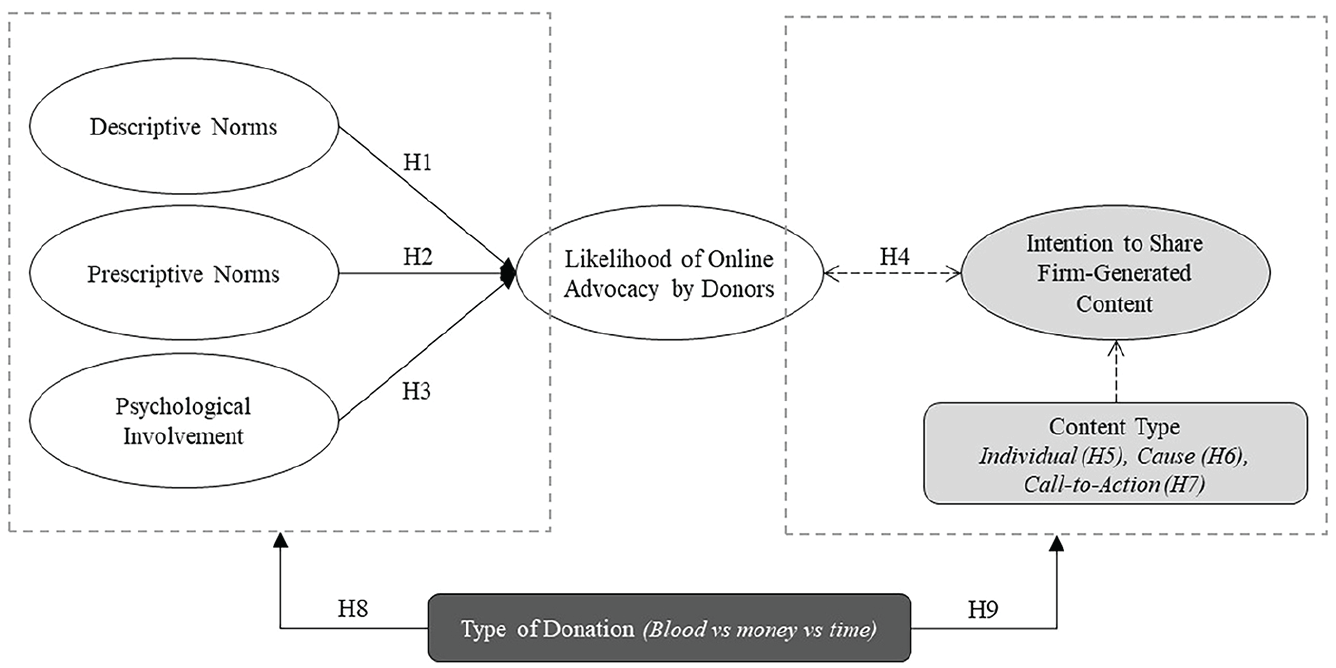
Conceptual Model.
Hypothesis Development
Social Norms
Social norm theory asserts that individuals will engage in behavior considered socially accepted by others, particularly in relation to social media (Masur et al., 2021). However, different social norms may exert a varying normative influence on donors’ behavior (Park & Smith, 2007), based on the difference between “descriptive norms” (what people “actually” do) and “prescriptive norms” (what people “ought to” do) (Kenny & Hastings, 2011). Accordingly, it was considered an important contribution of this work to distinguish between these two norms given the potential for incongruity. While both descriptive and prescriptive norms may positively impact on online advocacy by donors, incongruity may present when people simply “approve” of advocating online (prescriptive) because this is a behavior we “ought” to demonstrate, but not “actually” engage in (descriptive) advocating for an NPO online (Rimal & Real, 2003).
The importance of social norms informing donation decisions is well documented (Bennett, 2013; van Teunenbroek et al., 2020). Aligned to this idea, individuals may be encouraged to advocate online for an NPO if their friends, family, peers, and other donors consider such advocacy socially acceptable (Chell et al., 2020). Simply observing “others” promoting positive messages about an NPO on a social media site will theoretically encourage donors to engage in similar behavior. In a qualitative study, Chell et al. (2020) found that when participants shared their “actual” donation activity online, the information contained in posts not only created positive norms relating to donating, but also encouraged future donation activity intentions. Researchers have consistently found social norms influence and predict both “user-generated” and “firm-generated” forms of advocacy, including eWOM, and the frequency online brand advocacy (Hansen & Lee, 2013; Wilk et al., 2021). Therefore, it is hypothesized that
Psychological Involvement
Psychological involvement is the level of intrinsic importance (cognitive aspect) and inherent interest (affective aspect) an individual perceives with a particular product or brand (Zaichkowsky, 1994). High-cause involvement (Hajjat, 2003) occurs when people perceive a cause to be personally relevant, important, and interesting. Highly involved individuals tend to process a charity message more intensely (Broderick et al., 2003), talk more about a cause (Bennett, 2009; Palmer et al., 2013), and use knowledge of the cause to judge the appropriateness of nontransactional behaviors such as advocacy (Hajjat, 2003). However, it is not uncommon for individuals to support multiple causes and NPOs. When individuals support and donate to multiple causes, Chell et al. (2020) found that their level of psychological involvement with the NPO motivated them to either “publicly endorse” or keep their support private. Donors were more inclined to promote NPOs that were of greater interest and importance to them. Therefore, we hypothesize that
Online Advocacy by Donors and “Firm-Generated” Content
As stated earlier, there are multiple ways donors can demonstrate “advocacy” for an NPO. Research has mainly focused on “user-generated” outcomes, such as posting positive communication (eWOM), defending, or promoting the NPO, sharing information, and using visual positive expression, that is, emojis and emoticons (Wilk et al., 2020). However, a lesser-known but emerging area of donor advocacy research involves examining the impact of sharing “firm-generated” content, such as a “virtual badge” (Chell et al., 2020). Simply, to encourage online advocacy by donors, NPOs may proactively create content for donors to use in their advocacy efforts, such as prepopulated tweets, “twibbons,” or a virtual badge of a donation activity (Chell & Mortimer, 2014; Wallace & Buil, 2021). Firm-generated virtual badges may include marketing messages that highlight an “individual’s contribution,” the “impact of their donation,” or a “call to action” (Chell & Mortimer, 2014). As such, this research examines the impact of what “types” of marketing messages contained on virtual badges might encourage greater sharing of this firm-generated content, thus signaling NPO advocacy. Given “high brand advocacy” is likely to engender behaviors in support of the focal brand (Becerra & Badrinarayanan, 2013; Wallace et al., 2012), we expect donors who report stronger online advocacy efforts will engage in more cause-supportive behaviors (Sweeney et al., 2020), by sharing “firm-generated” content created by the NPO. Therefore, the following hypothesis is presented:
The topics and messages of “user-generated” tools, like “twibbons” virtual badges, may vary (Ramondt et al., 2022; Shahbaznezhad & Rashidirad, 2021; Zhou et al., 2021). As such, this current research investigates three content strategies NPOs may use to prompt online advocacy by donors: (a) highlighting the donation amount or milestone (e.g., “I donated $50 to support X” or “Today was my 5th Donation”), (b) highlighting the donation impact (e.g., “My blood donation saved three lives” or “I helped fund five vaccinations for rescued animals”), and (c) including a call-to-action where the NPO explicitly asks donors to share a virtual badge and states why the NPO is asking (“please share this virtual badge to encourages other to support . . .”).
Highlighting a donation amount or milestone in a virtual badge can communicate not only one’s donor status but also the extent of generosity (Wallace & Buil, 2021). When the donation amount is considered achievable by others, such information can act as a cue, indicating a socially appropriate donation amount (van Teunenbroek et al., 2020). The concept of celebrating milestone donations is well documented in blood donation literature, with such announcements a common topic posted by donors on social media (Ramondt et al., 2022). Even blood donors who prefer to be discrete about donation activity are open to sharing significant milestones (Foth et al., 2013). Therefore, we hypothesize that
The feeling of making a difference to a cause also matters to donors. Oppenheimer (2015) found that increasing the tangibility of the donation outcome can help enhance the donor’s own understanding, and that of potential donors, of their charitable giving impact. In the same vein, a key motivation for giving is demonstrable utility, which is the charitable impact as seen by the donor (Sargeant, 2014). Therefore, a gain-framed message used in “firm-generated” content that highlights the benefits or positive impacts of charitable giving (Cao, 2016) could enhance not only the promotional effectiveness but also shareability. Moreover, as positive expressions such as donation benefits are considered more appropriate on social networking sites (Waterloo et al., 2018), users are more likely to favorably perceive and share the message. Therefore, it is hypothesized that
The third type of “firm-generated” content strategy is a call-to-action message by the NPO, as user participation is found to be higher when actions are explicitly solicited (Chae, 2021). Guidry et al. (2014) asked participants to advocate for a social organization and found the call-to-action generated a high number of engagements on Twitter. Similarly, the public often responds most positively to call-to-action posts by NPOs on social media (Saxton & Waters, 2014). The “Donate Like Share” video call-to-action post that also explained the benefits of sharing their experiences with others received the highest level of engagement (likes, comments, shares) by blood donors (Dobele et al., 2014). Given that donating and advocating both benefit the NPO and are identity-consistent actions (Chell et al., 2021), donors are likely to respond favorably to a call-to-action to share content following a donation. Therefore, we hypothesize that
Type of Donation
Finally, in addition to several motivational differences reported (L. Lee et al., 1999; White et al., 2017), there is evidence to suggest that online advocacy by donors will vary by donation type. Willingness to share donation activity appears relatively low for donations of money (Howe, 2017) but slightly higher for blood donations (Dobele et al., 2014; Ramondt et al., 2022) and volunteering (Bekkers, 2010). These differences could be attributed to the “level of self” invested in the act of donation, where a higher investment of self (volunteering time, donating blood) creates a stronger desire to advocate. Blood donation has the highest investment of self, due to the temporal (i.e., time involved in attending the donation session), physical (i.e., personal loss from body, pain, and discomfort), and psychological (i.e., anxiety and stress) costs involved in making the donation (L. Lee et al., 1999). Volunteering for an NPO represents a greater investment of self than donating money due to the time and effort required to volunteer, and is subsequently perceived as a more caring, moral, and self-expressive act (Reed et al., 2007). Although donations of money can range from small to very large donations, donations of money involve the lowest investment of self, with only a financial cost to the individual. Given that blood donation and volunteering represent a higher investment of self, we hypothesize that
Research Method
This study employed a quantitative cross-sectional research design (online survey) to investigate social factors, brand-related factors, content type, and donation type as determinants of online advocacy by donors. Following ethics approval, millennials (~18–40 years) in Australia who had made a charitable donation of blood, time, or money in the previous 12 months and who used Facebook were invited to participate in one of three versions of an online survey. Given observed motivational differences (White et al., 2017) and expected differences in advocacy, it was deemed an important contribution of this work to examine all three formal types of donations. A focus on millennial donors was deemed important as this cohort was more likely to actively use and share personal information on social media (Y. Lee, 2019). Given online advocacy decisions are likely specific to the NPO or cause, where possible, collaborative partnerships with NPOs were used for recruitment. Therefore, the sampling approach was different for each donor group (see Table 1). Respondents were made aware that participation was voluntary and anonymous, and the research was not funded but supported in-kind by their respective NPO.
Recruitment and Sample Sizes for Blood, Time, and Money Donor Samples.
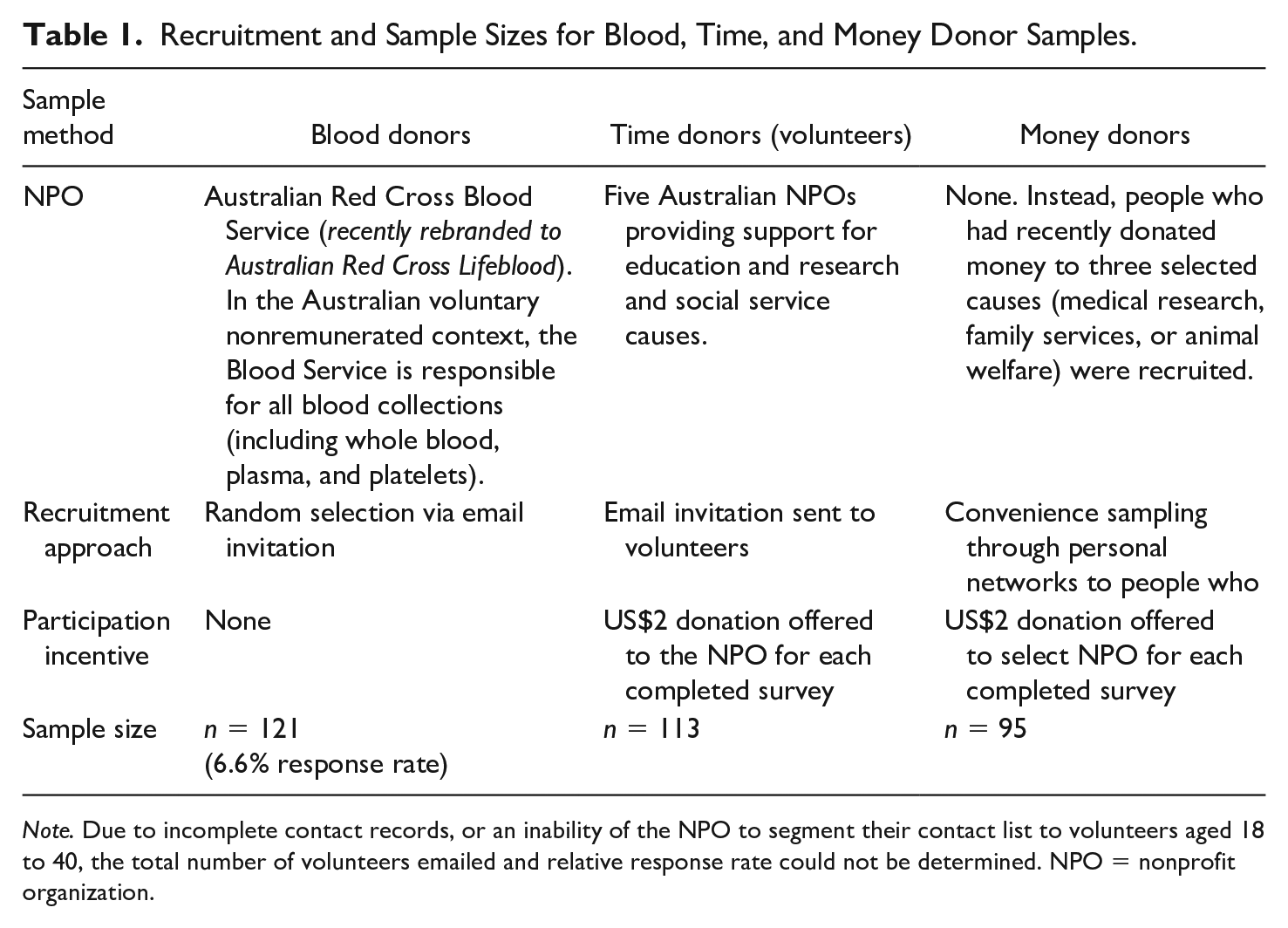
Note. Due to incomplete contact records, or an inability of the NPO to segment their contact list to volunteers aged 18 to 40, the total number of volunteers emailed and relative response rate could not be determined. NPO = nonprofit organization.
On average, the sample was 27 years, with a much higher proportion of female respondents (70%–80%) across all donor groups (see Table 2). Most were repeat donors (90%) and multitype donors (72.4%), meaning they donated in various ways, including blood, time, and/or money; this reflects work by Shehu et al. (2015), where an increasing portion of donors engage in more than one type of donation. Furthermore, just over half of the sample has had someone donate based on their recommendation, with this more common among those who donate blood and money.
Sample characteristics.
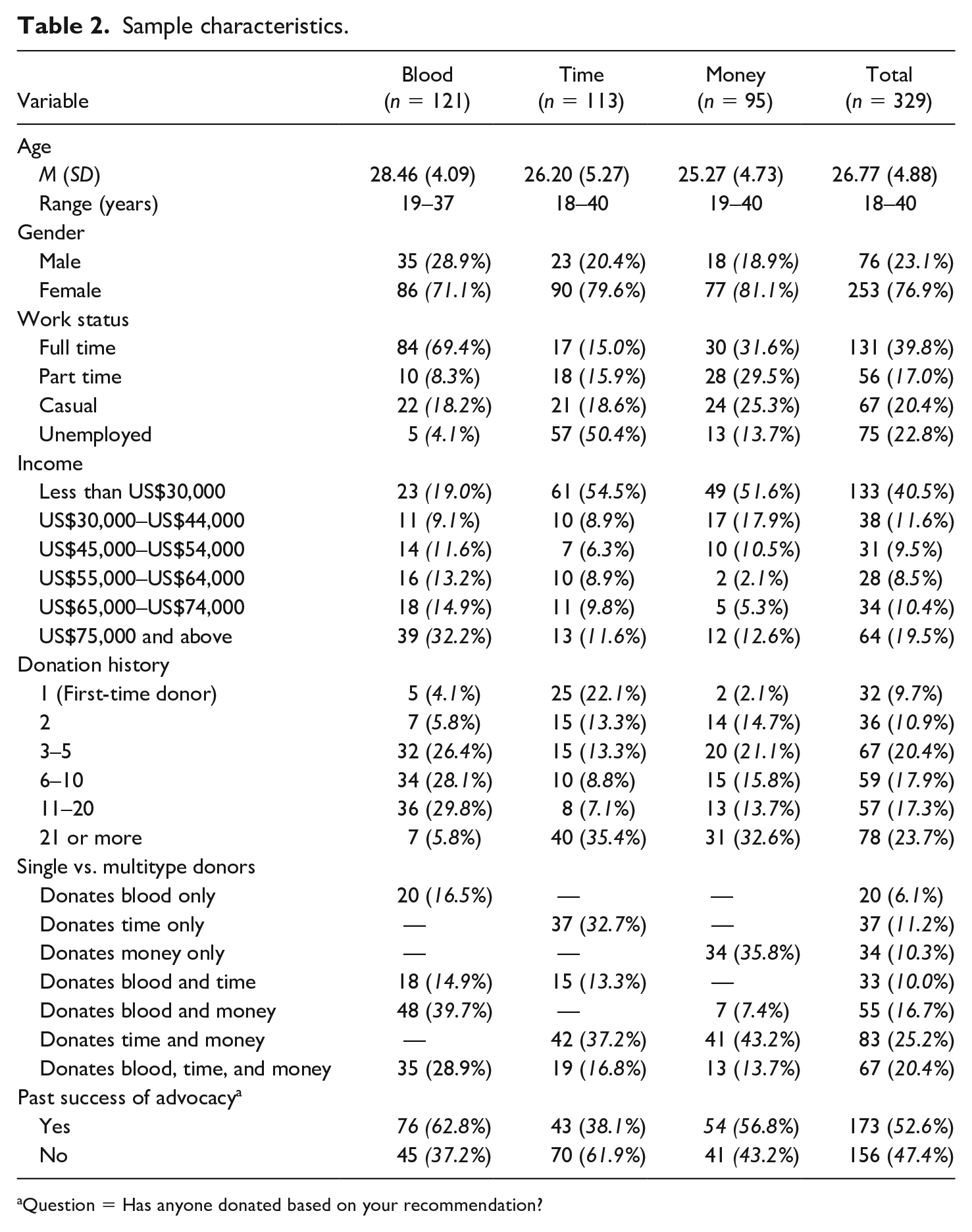
Question = Has anyone donated based on your recommendation?
Measures
To eliminate nonresponse errors, the technical setup of the survey ensured that respondents could not skip questions; however, respondents were advised they did not have to complete the survey, enabling them to exit survey at any point. Composite validated measures were adapted for the study and tailored to the relevant NPO (blood donors and volunteers) or cause category (money donors), with items rated on a 7-point Likert-type scale anchored strongly disagree (1) to strongly agree (7), unless otherwise specified (see Table 3). Descriptive norms were measured using four items adapted from Park et al. (2014). Prescriptive norms were measured using three injunctive norm items and four subjective norm items (Rimal & Real, 2003). Psychological involvement—that is, the level of importance and interest placed on “donating blood to or volunteering for [NPO]” or “donating money to [cause]”—was measured using a 10-item, 7-point semantic differential scale (Zaichkowsky, 1994). Items used to measure online advocacy by donors were adapted from Wallace et al. (2012) to measure the likelihood of engaging in social network advocacy rather than actual engagement. Finally, a three-item scale was created to measure intentions to share “firm-generated” content. Respondents were asked to consider the following scenario and presented with a mock virtual badge customized to the type of donation and NPO or cause (e.g., see Figure 2) before answering the three items: “You have recently donated [blood/money/time] and received a ‘thank-you’ email from [NPO/cause, e.g., family service charity]. You have been given the option to share the below image on your Facebook page via a link within the email.” For all content types, the introduction text was the same and only the image was manipulated to promote a different message: (a) badge to highlight general donation activity (“I donated today”), (b) badge to highlight an individual contribution (milestone), (c) badge to highlight the donation impact to the cause, and (d) a mock email including a call-to-action and a general donation activity badge.
Construct Items With Reliability and Validity Scores.
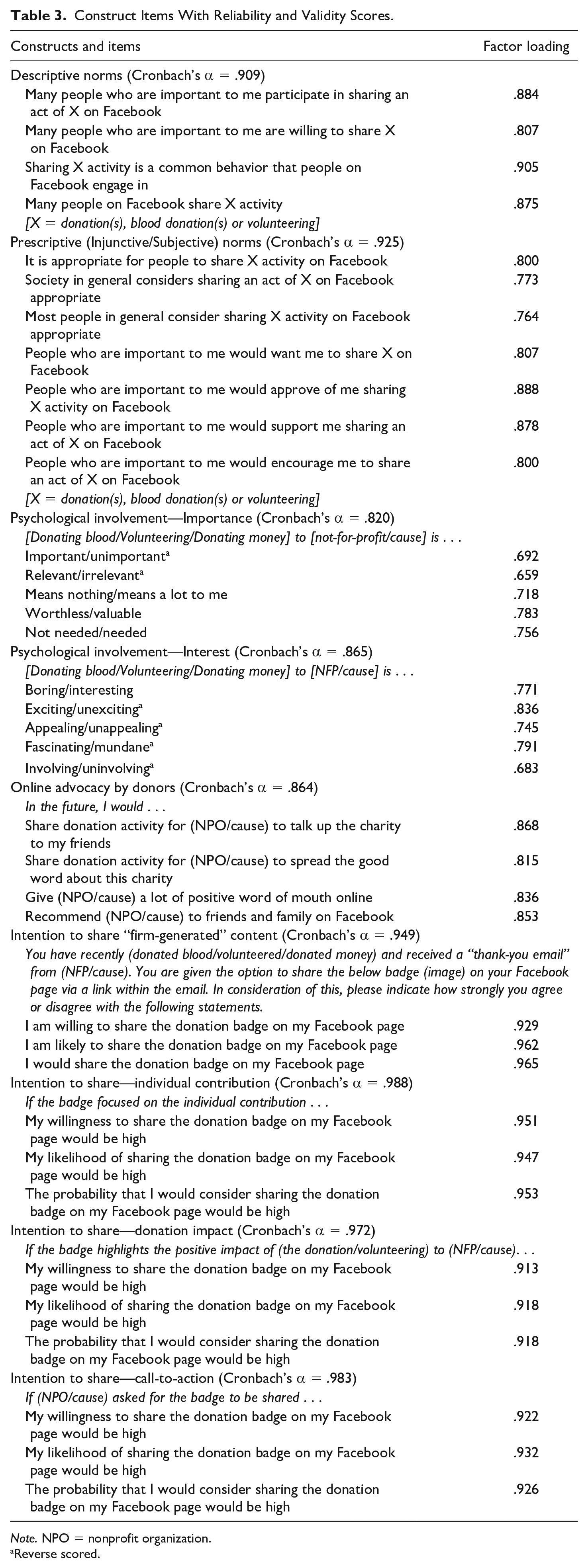
Note. NPO = nonprofit organization.
Reverse scored.
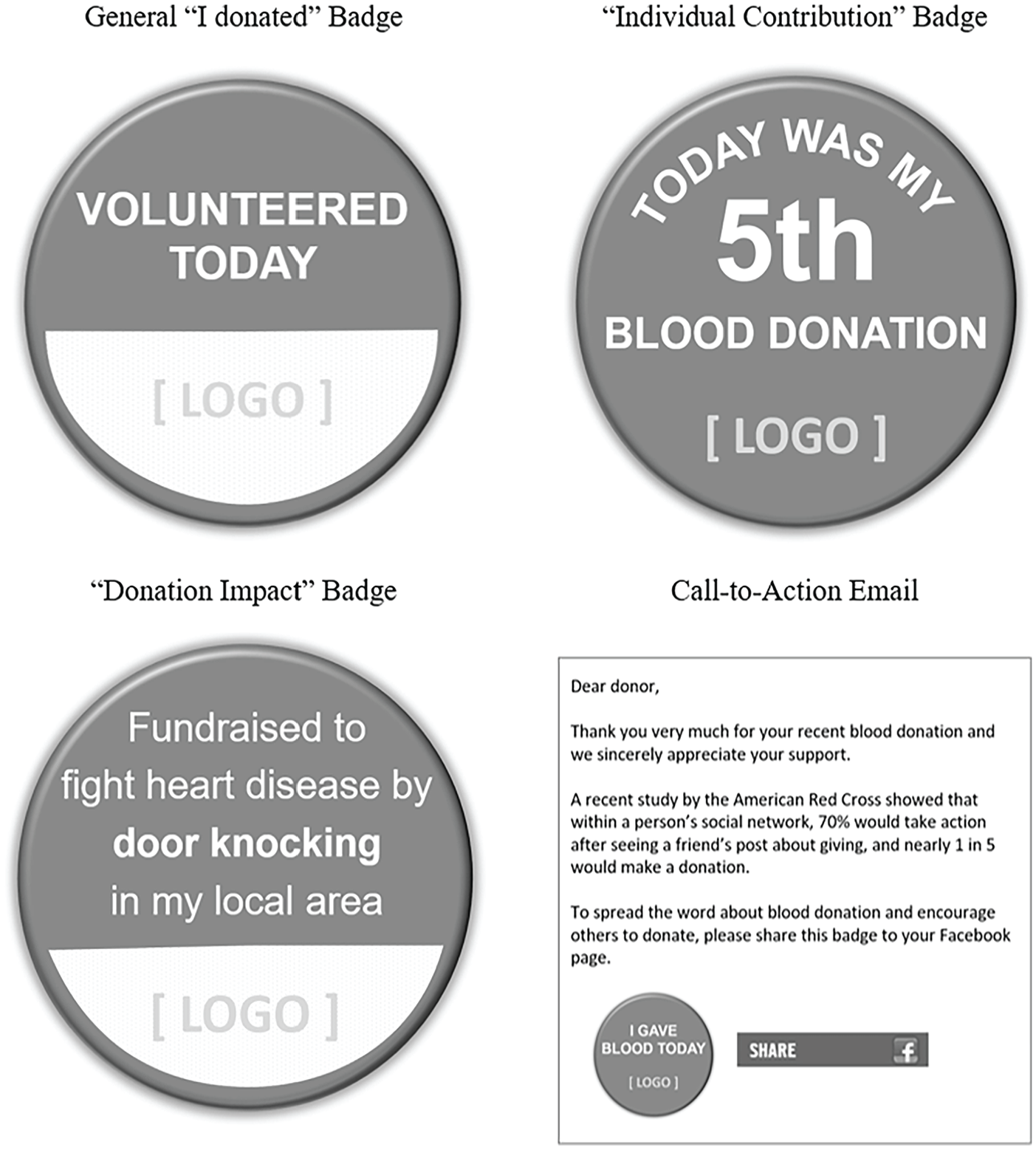
Examples of Firm-Generated (NPO-Generated) Content Types.
Data Analysis
Harmen’s single-factor test with all independent and dependent variable items indicated that common method bias did not impact the results, with only 35.8% variance accounted for by the first factor. Factor analysis and reliability tests demonstrated validity and internal consistency of measurements (see Table 3) with Cronbach’s alpha (α) scores well above the lower threshold of 0.7 (Hair et al., 2010). Psychological involvement emerged as a two-factor solution representing importance and interest dimensions (Zaichkowsky, 1994). Factor analysis also supported the distinction between each of the three content strategies (individual, impact, and call-to-action), producing a three-factor solution. All constructs demonstrated convergent and discriminant validity with average variance extracted (AVE) scores above 0.5, as well as exceeding the shared variance of constructs (see Table 4).
Construct Means, Standard Deviations, Pearson Correlations, and Average Variance Extracted.
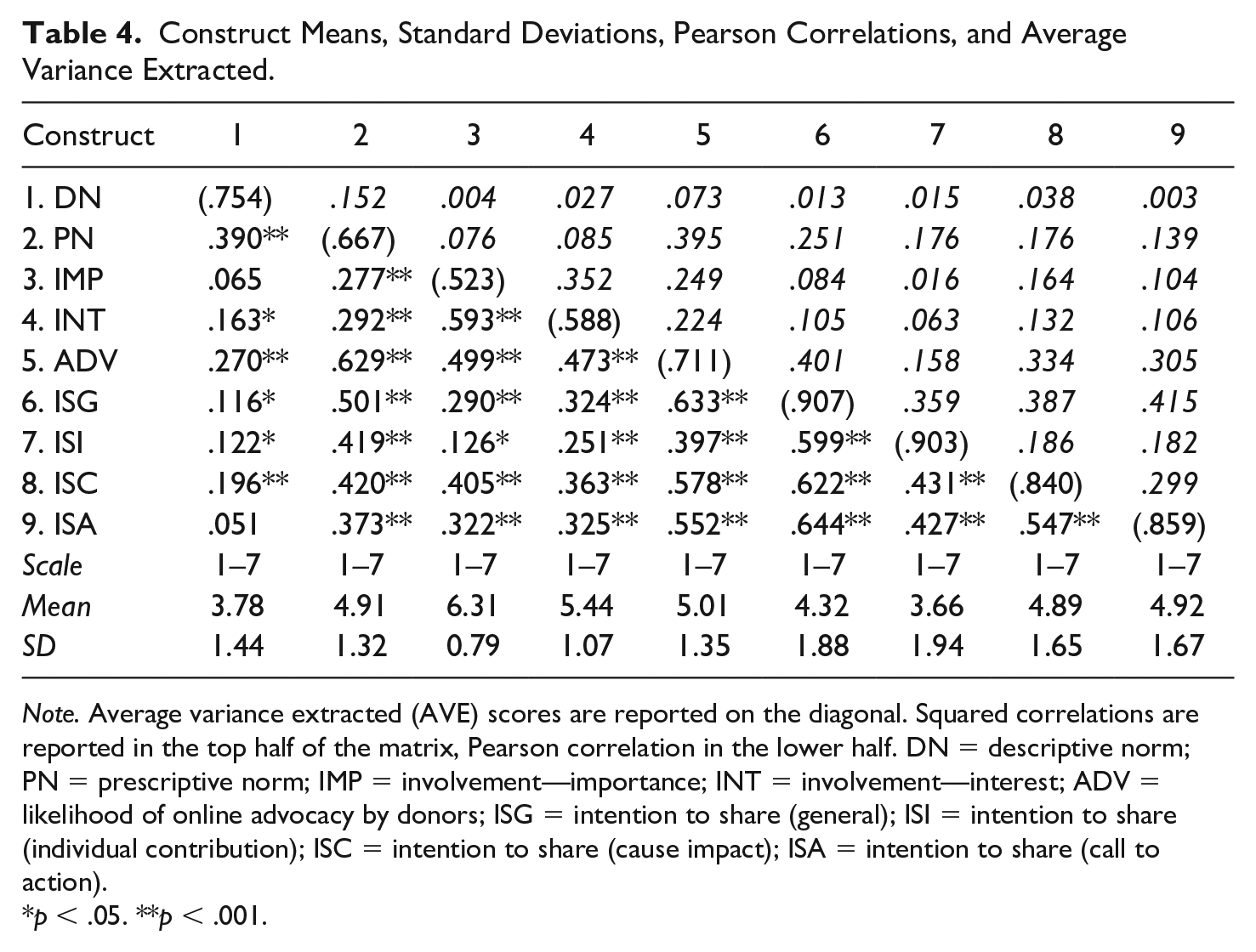
Note. Average variance extracted (AVE) scores are reported on the diagonal. Squared correlations are reported in the top half of the matrix, Pearson correlation in the lower half. DN = descriptive norm; PN = prescriptive norm; IMP = involvement—importance; INT = involvement—interest; ADV = likelihood of online advocacy by donors; ISG = intention to share (general); ISI = intention to share (individual contribution); ISC = intention to share (cause impact); ISA = intention to share (call to action).
p < .05. **p < .001.
Hierarchical moderated multiple regression was used to assess what influences donors’ likelihood to engage in online advocacy (Objective 1: H1-H3) and to explore potential moderation effects by the type of donation (blood, money, time). Control variables (age, gender, donation history, donor type, and past success of advocacy) were entered on Step 1, all main effects (descriptive norms, prescriptive norms, psychological involvement) on Step 2, and all interaction terms (with mean-centered main effect variables and type of donation dummy coded variables) on Step 3. Pearson bivariate correlation was used to assess the relationship between likelihood of online advocacy and intentions to share firm-generated user content (H4). Paired samples t-tests were performed to compare the statistical difference in intentions to share different firm-generated user content types (Objective 2: H5-H7), and analysis of variance (ANOVA) tests were performed to examine the extent to which online advocacy by donors and related variables differ by type of donation (Objective 3: H8). Analyses were performed using SPSS v26.
Results
Respondents reported higher prescriptive norms than descriptive norms, demonstrating that sharing donation activity on Facebook is socially acceptable but not widely prevalent across individuals’ social networks. Despite this, donors were willing to engage in online advocacy for the respective NPO or cause. Moderate to strong correlations between model constructs (r = .267–.629) provide preliminary support for the hypothesized relationships (see Table 4). Furthermore, as hypothesized, online advocacy by donors was positively correlated with intentions to share firm-generated content (β = .397−.633, p < .001); supporting H4. As intercorrelation scores are below the threshold of ±.85, multicollinearity did not pose a threat to the analysis.
Hierarchical Moderated Multiple Regression (H1–H3)
Hierarchical moderated multiple regression was performed to analyze the direct effect hypotheses (H1, H2, and H3) (see Table 5). The main effects accounted for a significant amount of variance (52.7%) in donors’ likelihood to engage in online advocacy (Adj. R2 = .527, F(4,319) = 80.785, p < .001). Prescriptive norms were the strongest positive predictor of online advocacy donors (β = .477, p < .001), followed by the importance (β = .251, p < .001) and interest in donating to the NPO or cause (β = .171, p < .001). Although positively correlated with online advocacy, descriptive norm was a nonsignificant predictor (β = .027, p = .523). Furthermore, entering the interaction effects did not account for significant variance in online advocacy (R2 change = .020, F(8,311) = 1.747, p = .087). Therefore, type of donation did not moderate the direct effects, indicating that the model is generalizable across donation contexts.
Hierarchical Moderated Multiple Regression.
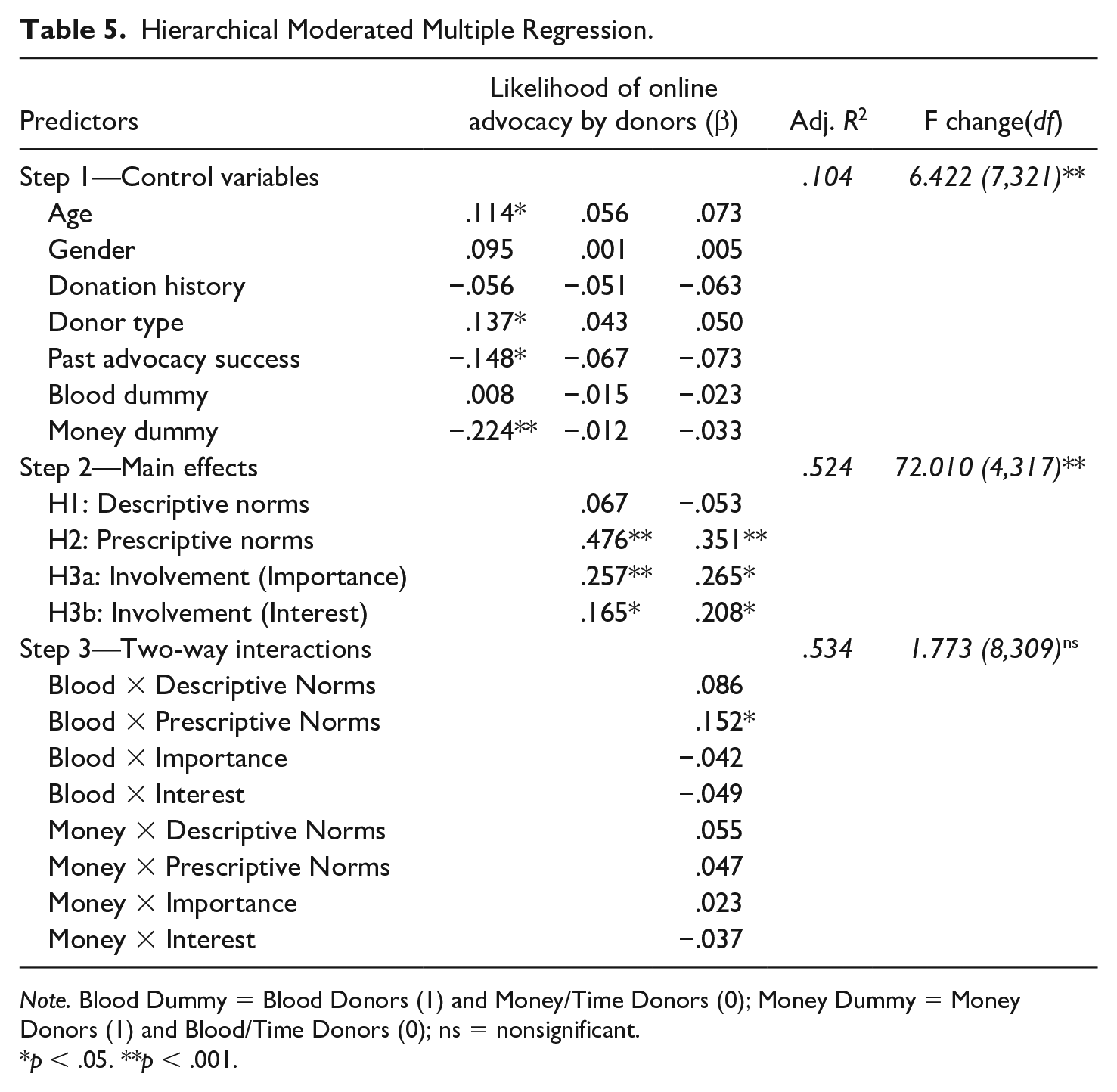
Note. Blood Dummy = Blood Donors (1) and Money/Time Donors (0); Money Dummy = Money Donors (1) and Blood/Time Donors (0); ns = nonsignificant.
p < .05. **p < .001.
Paired Sample t-Test (H5–H7)
Paired sample t-tests were used to compare intentions to share “firm-generated” content between a generic “I donated” virtual badge (M = 4.32; SD = 1.88) to one that highlights the individual contribution or donation milestone (H5: M = 3.66; SD = 1.94), donation impact to the cause (H6: M = 4.89; SD = 1.65), and when the NPO includes a call-to-action asking donors to share the badge (H7: M = 4.92; SD = 1.67). On average, intentions to share were higher when the virtual badge highlighted the donation impact to the cause, 95% CI = [.75 to .41], t(328) = 6.75, p < .001, and when the NPO asks donors to share, 95% CI = [.77 to .44], t(328) = 7.30, p < .001, but lower when focused on the individual contribution, 95% CI = [−.47 to −.84], t(328) = −6.91, p < .001. These patterns were again consistent across the type of donation (blood, money, time), except for volunteers who reported statistically similar intentions to share between the generic badge and one focused on the individual contribution.
ANOVA by Type of Donation (H8)
ANOVAs were statistically significant for all constructs (see Table 6) except for intentions to share “firm-generated” content when the NPO asks the donor to do so, indicating that differences exist between the type of donation (blood, money, and time) and model constructs. Post hoc analyses were conducted using the Games–Howell procedure for involvement as the homogeneity of variance assumption was unsupported, and Tukey’s honestly significant difference (HSD) test was used for all other constructs (Hair et al., 2010). Overall, blood donors and volunteers reported statistically similar but significantly higher willingness to engage in online advocacy and intentions to share compared with those who donate money.
ANOVAs and Post Hoc Analysis Results (Donation Type: Blood, Money, Time).
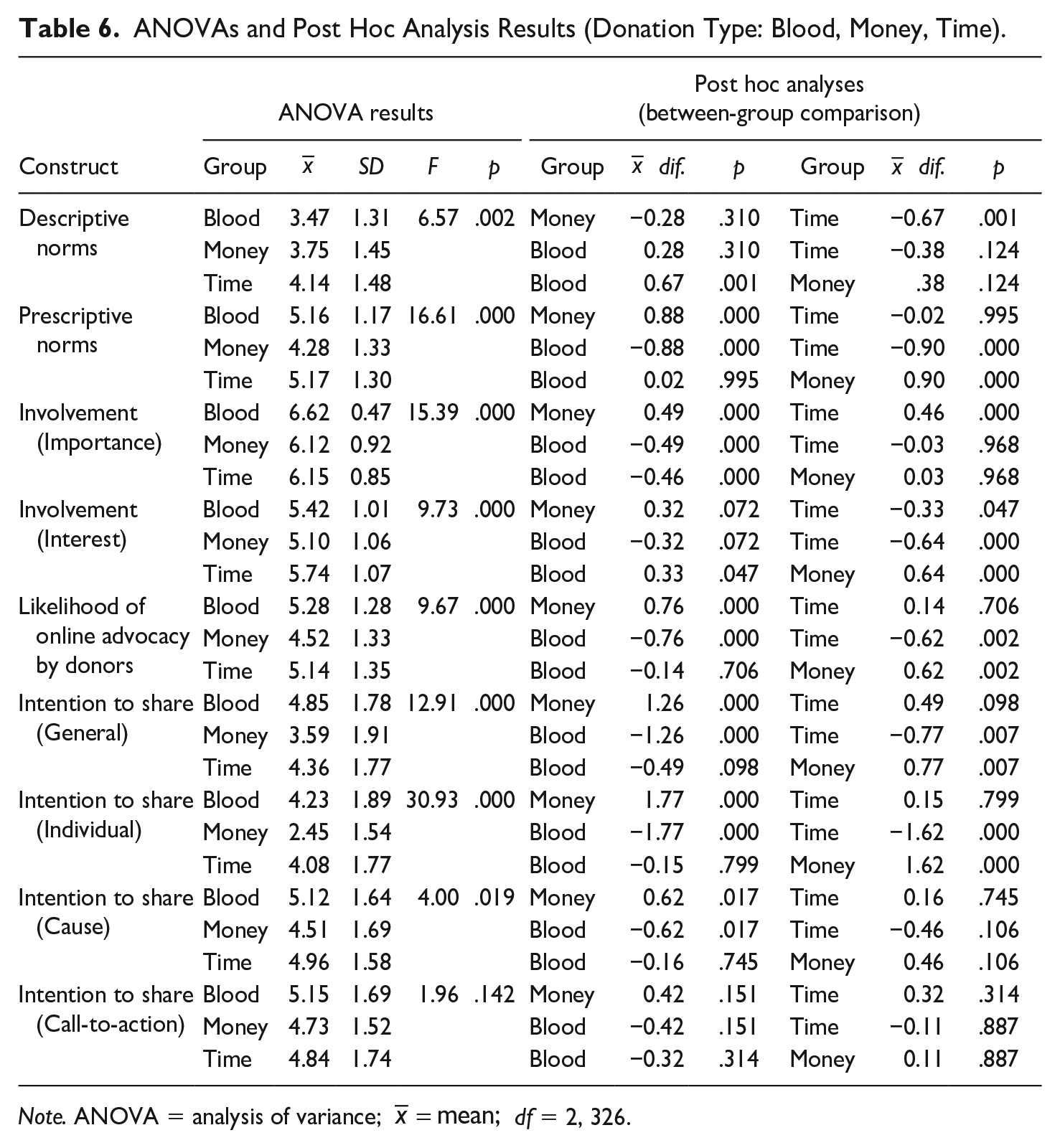
Note. ANOVA = analysis of variance;
Discussion
An important goal for any NPO is to develop effective strategies that maximize limited resources and capabilities. This current research combines data across three surveys of millennial Australian donors who donate blood, time, and/or money to better understand how NPOs can encourage greater online advocacy among existing donors. Overall, willingness to engage in online advocacy was relatively high and considered socially acceptable by respondents (prescriptive norms) but not widely prevalent among their social networks (descriptive norms). This presents an opportunity for NPOs to proactively encourage online advocacy efforts to capitalize on awareness-raising and relationship-building benefits. Given online advocacy requires voluntary action by donors to meaningfully endorse an NPO, it is necessary to delineate what contributes to this decision. Specifically, this study demonstrates (a) the importance of the social and brand-related context within which online advocacy decisions are made, (b) that “firm-generated” online advocacy can vary by the content provided by NPOs, and (c) that not all donation types are equal when encouraging donors to be advocates.
Although Ramondt et al. (2022) showed the breadth of topics discussed by blood donors on social media, volunteers reported significantly more positive descriptive norms than blood donors. The higher prevalence of sharing volunteer activity on Facebook could be attributed to the proportion of the Australian population who participate in each activity; approximately 30% volunteer (Volunteering Australia, 2021) compared with 3% who donate blood (White et al., 2017). Unsurprisingly, sharing volunteer and blood donation activity was considered almost twice as more socially acceptable than sharing donations of money, given the societal taboo around openly talking about money (Alsemgeest, 2016). This was further reflected in significantly lower online advocacy among money donors compared with blood donors and volunteers.
Other than the social context, online advocacy is likely motivated by a strong sense of connection to the brand or NPO that is being endorsed (Sweeney et al., 2020); in fact, Wilk et al. (2021) found a reciprocal relationship between online advocacy and brand loyalty. In addition to donating (Broderick et al., 2003), this article shows that a high level of involvement with a cause or NPO also translates into a higher likelihood of online advocacy. Just as individuals develop an evoked set of NPOs they would be willing to support (Body & Breeze, 2016), this research provides initial validation that donors may not want to publicly affiliate with all NPOs to which they donate; in addition, psychological involvement functions to categorize NPOs into those donors would and would not publicly endorse (Chell et al., 2020). Future research would need to measure involvement and willingness to advocate across multiple charities and individual supports. Psychological involvement also most strongly correlated with intentions to share the impact-focused firm-generated content. Although Grau and Folse (2007) found people with high cause involvement were more likely to respond to loss avoidance (negatively framed) messages, this study suggests that positively framed messages of impact may more likely engender online advocacy by donors. However, the role of message framing of advocacy decisions, for both the call-to-action and firm-generated content provided to donors, should be further investigated.
Furthermore, in addition to donors organically sharing donation experiences and endorsing NPOs online (Ramondt et al., 2022; Wallace & Buil, 2021), NPOs have the opportunity to prompt such actions via “firm-generated” strategies. This is the first empirical study to demonstrate donors’ overall willingness to share (“firm-generated”) content created by the NPO in a context in which such behavior is voluntary and cannot be incentivized. However, the design and message of such content are influential in donors’ decision to use it or not (Guidry et al., 2014; Shahbaznezhad & Rashidirad, 2021). Compared with a generic “I donated” virtual badge, intentions to share were higher when the content highlighted the donation impact to the cause and when the NPO asks donors to share (call-to-action) but lower when focused on the individual contribution. These patterns were mostly consistent across the type of donation. Although this research focused on online advocacy postdonation, volunteering and blood donation often require donors to commit to their donation prior to its performance (e.g., making a blood donation appointment and registering to volunteer at a fundraising event). Examining “firm-generated” marketing activities “predonation” could increase the opportunity for individuals to advocate and elicit support from others.
While the inclusion of three donation behaviors (i.e., blood, time, and money) improves the broader application of the research, results are bound by several limitations. Data collected were self-reported and cross-sectional; therefore, conclusions would benefit from experimental research to examine the impact of the social context, brand-related factors, and varying content strategies on actual online advocacy donor behavior. The generalizability of results is constrained by the sample size (n = 329) and discreet nature of the study, donating behaviors of millennials (~18–40 years) who had made a charitable donation of blood, time, or money in the previous 12 months. A slightly larger sample size may encourage greater confidence, as would extending this research across different generational cohorts.
Theoretical Contributions
This current research offers new theoretical insights into the process by which social norms are formed, rather than simply considering types of norms as distinct as independent constructs, finding what others do (descriptive norms) will inform views on what is considered acceptable (prescriptive norms), which then influences advocacy decisions. Whether sharing donation activity on Facebook is socially acceptable (prescriptive norms) was found to be the strongest predictor of online advocacy (Wilk et al., 2021);; however, descriptive norms indirectly informed advocacy through prescriptive norms. Similarly, Park and Smith (2007) found subjective norms were more important in enacting a social behavior (i.e., talking to others about organ donation), while descriptive norms related more to “registering” to be an organ donor. In doing so, this article broadens the scope of online advocacy (Libai et al., 2010) by empirically validating existing models of “user-generated” and “firm-generated” online advocacy in a donation context (Chell et al., 2020; Hansen & Lee, 2013). Furthermore, we extend and apply self-disclosure theory in the context of donation behaviors. Croson et al. (2009) suggest self-disclosing support for NPOs on social media provides “information” to others which helps establish donation as a “normative behavior.” This is particularly impactful on individual donation decisions when such social information is provided by those known to the individual (e.g., friends and family) (Kaplan & Haenlein, 2009). This notion of “helping behaviours” is entwined within self-disclosure, in that individuals will share information to help or encourage others to make prosocial choices (Song et al., 2016).
Practical Implications
Nonprofit research has primarily focused on consumer-generated eWOM or passive acts of public endorsement such as liking a Facebook page (Bennett, 2013; Previte et al., 2019; Wallace et al., 2017); however, we posit that “advocacy” is a more desirable outcome given the persuasiveness and valence of communication (Sweeney et al., 2020). The practical significance of this research has to do with understanding how NPOs can more effectively and efficiently encourage donors to endorse them publicly and how they can actively engage potential new supporters across the donation of time, money, and blood. Overall, efforts to encourage online advocacy by donors should (a) improve social acceptance of promoting NPOs and donation activity online, (b) foster strong connections with current donors, (c) proactively ask donors to perform online advocacy actions, and (d) provide content that donors will want to use.
To normalize online advocacy by donors, NPOs could enlist the services of social media influencers to authentically communicate support and create a positive social norm by sharing their own donation experiences or donation impact (Zhou et al., 2021). Personal communication is shown to be a more effective way of establishing pro-donation social norms as opposed to mass media (Lemmens et al., 2009). Furthermore, NPOs should foster strong connections with donors to build a sense of congruency and perceived importance of continued support. As this relationship strengthens, a donor’s identity will become internalized (White et al., 2017), and their experience will lead to online advocacy. When donors are publicly recognized for their support of an NPO, this can engender feelings of accountability to continue donating, which only encourages subsequent WOM among experienced donors (Chell et al., 2021). As such, initial efforts to encourage online advocacy should target more experienced donors as a more likely cohort to engage. A clear call-to-action asking donors to share content and highlighting the potential benefits of social information (van Teunenbroek et al., 2020) proved to be an equally powerful motivator for online advocacy decisions across the donation of blood, money, and time (Chae, 2021; Dobele et al., 2014). Finally, it is important to provide content that donors will want to share with their social networks. To the extent that donation impact can be quantified and personalized, NPOs should utilize a gain-framed content strategy emphasizing a positive donation impact over individual contribution (Cao, 2016; Oppenheimer, 2015), particularly for donations of money.
Footnotes
Acknowledgements
The Australian Government funds the Australian Red Cross Lifeblood to provide blood, blood products, and services to the Australian Community. We would also like to acknowledge the in-kind data-collection support provided by five Australian non-profit organizations.
Declaration of Conflicting Interests
The author(s) declared no potential conflicts of interest with respect to the research, authorship, and/or publication of this article.
Funding
The author(s) received no financial support for the research, authorship, and/or publication of this article.
