




Abstract
Millions of nonprofits compete for a share of the billions of dollars donated to charity each year. Yet how donors select which charities to support remains relatively understudied. Social norms influence whether people give to charity at all, but no research has yet considered whether norms also communicate information about which causes group members typically support. To address this important question, we surveyed 1,735 people from 117 countries to understand whether they identified normative causes typically supported by their social groups. We found different normative giving profiles for men, women, older people, younger people, conservatives, progressives, religious, and nonreligious people, with varying degrees of consensus within each social group. Results demonstrate empirically—and for the first time—that social identities contain normative content about which charitable causes group members typically support. Some causes were relatively universally approved of or avoided. Results can inform nonprofit fundraising strategy around segmentation and targeting.
Each year, people around the world donate billions of dollars to charity: for example, individuals give $47 billion in the United States and $10 billion in Australia (Australian Charities and Not-for-Profits Commission [ACNC], 2022; Giving USA, 2021). These donations are distributed across the millions of charities and nonprofits that must compete for donor support. In the United States, for example, there are over 1.5 million registered charities (National Center for Charitable Statistics [NCCS], 2020). Thus, it is the job of fundraisers to understand donor psychology so that they can effectively segment the market, identify desirable segments to target, and craft campaigns that appeal to those donors’ priorities.
There exist vast and interdisciplinary literatures on donor psychology, which have identified who gives to charity, under which conditions, and why (e.g., Bekkers & Wiepking, 2011; Konrath & Handy, 2018). Yet comparatively few studies consider the psychology of charity selection, or who prefers to give to which charities and why. To illustrate the disparity in research attention, a systematic review on charitable giving research published in the last 40 years identified 1,337 articles on giving (Chapman, Louis, Masser, & Thomas, 2022); yet there are only around 20 articles examining charity selection (see summaries by Chapman, Louis, Masser, Hornsey, & Broccatelli, 2022; Neumayr & Handy, 2019). Further research on the psychological processes underpinning charity selection is therefore warranted.
One topic in donor psychology that has been well researched is the role that social identities play in shaping charitable behavior. Donors’ social identities can influence their giving through associated social norms. For example, norms may provide information about whether other group members typically give to charity or not (Agerström et al., 2016). Such information, in turn, can influence whether a group member chooses to donate and how much they give (Hysenbelli et al., 2013; Smith & McSweeney, 2007). Yet no study has examined whether norms also communicate which causes group members typically support.
The purpose of the current research is to consider the role that social norms play in charity selection. We survey people around the world to identify if people agree that their social groups—based on gender, age group, political ideology, and religiosity—prescribe normative causes for receiving their charitable giving; and we find that they do. We then consider the relative emphasis different social groups place on different charitable causes, the degree of consensus that exists within particular social groups about the causes they typically support, and the alignment between normative causes and observed charity selections. In doing so, we advance theoretical understanding of the psychology of charity selection.
Social Identity Theory and the Role of Social Norms in Giving
The basic premise of Social Identity Theory (Tajfel, 1981) is that the social groups a person belongs to can provide social identities, which contribute to their overall sense of self. When people identify with their social groups, they become attuned to expectations about what other group members typically do or approve of, which are called social norms (Cialdini et al., 1990). Two categories of norms are usefully distinguished—descriptive norms reflect the prevalence of a behavior and highlight what most people typically do, while injunctive norms reflect what most people think is the right thing to do (Cialdini et al., 1990). Perceptions of descriptive and injunctive norms are generally associated (Eriksson et al., 2015), though descriptive norms may be particularly powerful in charitable giving contexts (e.g., Croson et al., 2009). In this article, we focus specifically on the descriptive norms associated with particular social identities.
Identities play an important role in charitable giving (e.g., Aaker & Akutsu, 2009; Chapman et al., 2020; Charness et al., 2014; Charness & Holder, 2018; Kessler & Milkman, 2018). Many people prefer to give to charities that serve beneficiaries with whom they share an identity (Chapman et al., 2020; Charnysh et al., 2015; Dula, 2022)—indicating a norm of ingroup favoritism. For example, Levine and Thompson (2004) found that British participants were more likely to offer help to victims of a disaster in continental Europe when they were first primed to think of themselves as European, thus extending the ingroup to include citizens of other European countries. These studies imply that group norms likely prescribe giving to causes that serve ingroup beneficiaries.
Yet charitable giving preferences cannot exclusively be understood based on a norm to benefit the ingroup. For example, some people give to animal charities, environmental charities, or international charities (Chapman et al., 2020; Chapman, Louis, Masser, Hornsey, & Broccatelli, 2022), all of which serve beneficiaries outside the donors’ social groups (see also Nilsson et al., 2020). Early studies on charity selection indicate that different kinds of donors give to different kinds of causes: for example, women are more likely to give to animal charities while men are more likely to support sports organizations (e.g., Neumayr & Handy, 2019; Piper & Schnepf, 2008); older people give more to welfare, religious, and health charities while younger people give to environmental groups and animal welfare (e.g., Chapman et al., 2018; Srnka et al., 2003); progressives are more likely to give to international causes than conservatives (e.g., Chapman et al., 2018; Wiepking, 2010); and people who are more religious show preferences toward religious, international, and welfare charities, but are less likely to give to animal or environmental causes (e.g., Casale & Baumann, 2015; Chapman et al., 2018; Oxley, 2022; Schnable, 2015). Yet none of these studies have identified the mechanisms through which these group-based preferences emerge. In other words, studies show that different groups give to different causes, but not why this may be.
Chapman and colleagues (2018) proposed that charity selection is influenced by the norms associated with donors’ social identities. However, they did not test that notion explicitly. The purpose of this study is to address this theoretical deficit and to understand whether social norms may play a role in the process of charity selection. Specifically, we ask whether group members are aware of normative charitable causes for their group’s charitable giving.
Literature Review: Social Norms and Charitable Giving
It is well established that social norms play a role in whether someone will give to charity at all and how much they will give (e.g., Agerström et al., 2016; Krupka & Croson, 2016; Nook et al., 2016). Surveys show a positive association between perceived social norms for helping and intentions to donate (Winterich & Zhang, 2014). For example, Smith and McSweeney (2007) found that people who said that giving was more normative in their social group were also more likely to say they intended to donate themselves.
Norms are sometimes evoked through information about the behavior of others in the form of behavioral traces or explicit social information. For example, behavioral traces in the form of past donations visible in a transparent art gallery donation box influenced both the likelihood of visitors making a voluntary donation and the size of their gift (Martin & Randal, 2008). Explicit social information about the giving of others (e.g., learning how much others have donated) has sometimes been shown to impact giving; though such information does not always promote giving and can even backfire (van Teunenbroek et al., 2020). One factor that determines the relative impact of social information is whether it comes from other people who share an important social identity with the donor. For example, callers to a public radio fundraising appeal were more strongly influenced by the pledge value of previous callers who shared their gender (Shang et al., 2008), and Italians were more influenced by information about the typical gift amount of Italian than of German donors (Hysenbelli et al., 2013).
Experimental research—where normative information is made salient or manipulated—suggests a weaker, or perhaps more volatile, association between supportive social norms and giving (Chapman et al., 2023). For example, Agerström and colleagues (2016) conducted a field experiment in Sweden where they embedded normative information into fundraising materials for an international charity. Those authors found that providing information that others have donated to charity encourages people to donate themselves, especially when the norms are tied to a relevant social identity (i.e., students from the same university). However, Lindersson and colleagues (2019) tried to replicate these findings using different reference groups (e.g., airline passengers) and found no positive impact of norms. These differences may indicate that some social identities (e.g., student identity) are more relevant to giving decisions than others (e.g., traveler identity; see also Chapman et al., 2020). It may also be the case that different reference groups have different normative targets of giving. In these examples, perhaps international charities are normative for students but not for airline passengers, making the norm manipulation more effective for students than for travelers.
In sum, diverse methods have converged on the conclusion that social norms can influence whether someone donates to charity at all and how much they give when they do. However, this conclusion comes with caveats: norms must be associated with an important social identity and, even then, they work under some conditions but not others. One reason for the observed inconsistencies in effects could be that different groups have different charitable causes that are typically supported. Norms may therefore only work when the promoted behavioral response aligns with the social group’s normative causes. No study has considered whether social identities contain descriptive norm information about the types of charity group members typically donate to. The purpose of this study is therefore to assess the prevalence and variability of social norms for charity selection.
The Current Study
The goal of the current research is to understand whether group members perceive normative targets of charitable giving for their social groups. To answer this question, we survey people around the world to assess their perceptions about social norms associated with four social group identities: their gender identity, their age group identity, their political identity, and their religious identity. Gender, age, political affiliation, and religion are all important sources of social identity (Turner et al., 1987), which have previously been studied in relation to charity selection (e.g., Chapman et al., 2018; Oxley, 2022; Shang et al., 2008; Wiepking, 2010).
As the first study on the role of social norms for charity selection, our research is necessarily exploratory in nature but is guided by three overarching research questions about group differences (RQ1), group consensus (RQ2), and alignment between normative causes and observed charity selections (RQ3):
RQ1: Do different social groups perceive different normative charitable causes for group members’ charitable giving?
RQ2: To what extent is there consensus within groups about normative charitable causes?
RQ3: Do perceived normative charitable causes align with the observed charity selections of group members?
In answering these questions, our research contributes to a burgeoning field of enquiry about the psychology underpinning consumers’ charity selection. Specifically, we show that people perceive normative targets of giving associated with their social groups. This extends the application and theorizing of both Social Identity Theory and social norms within the nonprofit context, and also highlights the importance of understanding charity selection and the psychology underlying consumers’ charity preferences. Such information can be used to further theorize charitable giving processes and to provide practical guidance to fundraisers about which social groups will be best targeted by their causes and campaigns.
Method
Participants and Procedure
Between December 2016 and October 2017, students in a massive open online course (MOOC) on psychology were invited to take part in an online study. Free online university courses like this one tend to attract participants who are older than traditional university students, from diverse corners of the globe, and already employed but taking courses for curiosity or career development (Christensen et al., 2013). In other words, free MOOC participants are generally not full-time students seeking a degree, but rather community members with a casual interest in the topic of study. People enrolled in the introductory psychology course were invited to take part in research projects in exchange for a partial course credit but received no financial compensation for their involvement. Many studies were offered, and students in the course could elect to participate in any, all, or none of the studies. Participation was therefore strictly voluntary. Our study involved a 30-minute survey, in which participants answered a range of questions about their own charitable giving and perceptions of other people’s giving behavior. To participate, students had to be above 18 years of age and proficient in English. Demographics were captured at the end of the survey and were optional.
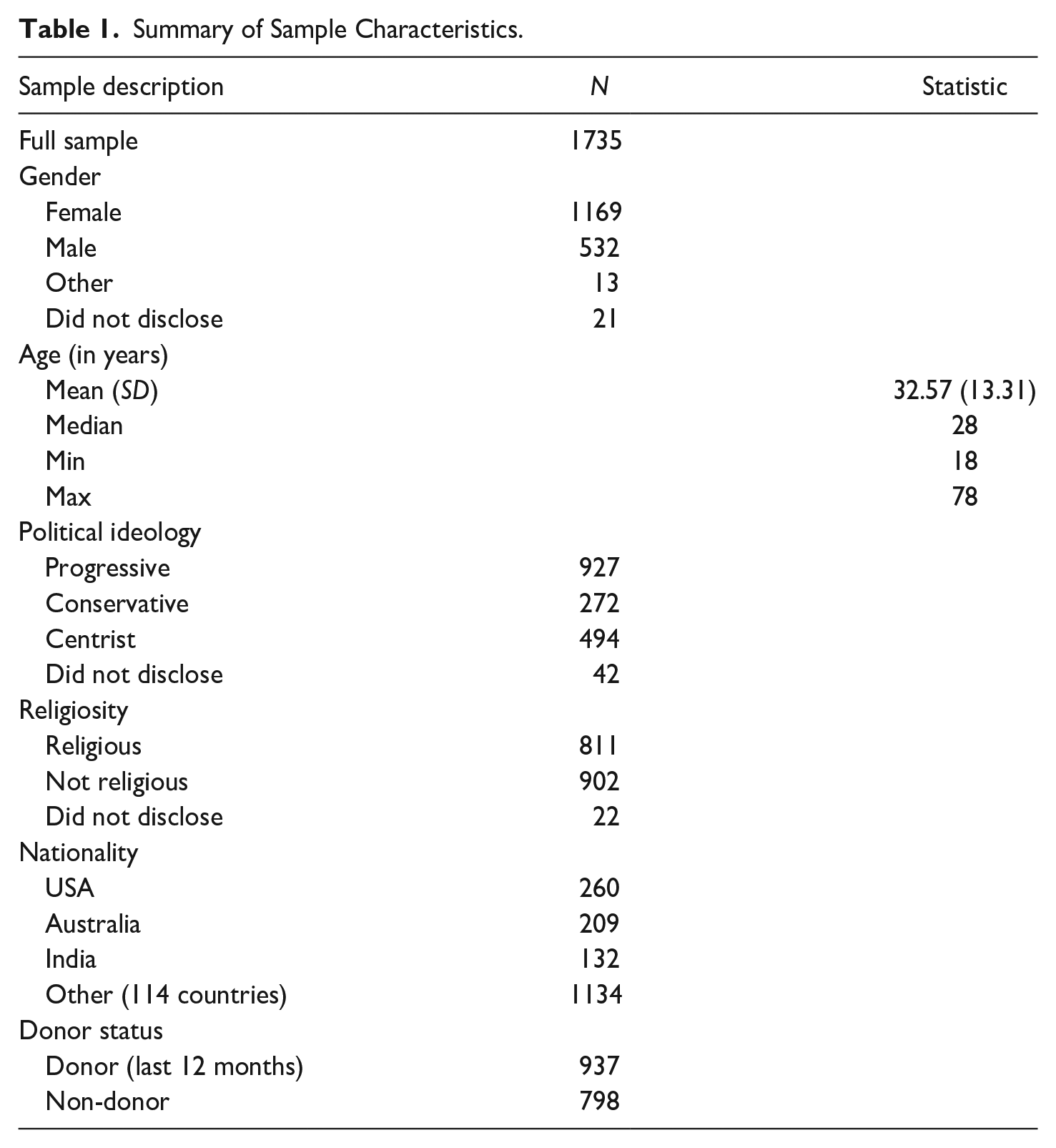
In total, 4,234 people started the survey but only 1,941 people finished it (46% completion rate). Lower completion rates are expected for long and noncompensated surveys like ours (Kost & Correa da Rosa, 2018). The final sample for analysis consisted of 1,735 people who completed measures relevant to the current research and also passed an attention check. This final sample is summarized in Table 1.
Summary of Sample Characteristics.
Measures
Measures relevant to the current research are summarized below. The full questionnaire, data, syntax, and supplementary analyses are available on the Open Science Framework (OSF; https://osf.io/xnztq/).
Gender
Participants were asked to indicate their gender (i.e., “What is your gender?” Male, Female, Other, Prefer not to say). In the analysis, we compare the responses of people who identified as male (n = 532) versus female (n = 1,169).
Age
Age was assessed with a single, free-response item: “How old are you (in years)?” We recoded participants into two categories based on their age to compare age-based group norms. Younger people were those aged under 40 years (n = 1,154), while older people were those 40 years or older (n = 392). This age threshold was chosen because 40 years is often considered the beginning of middle age (e.g., Shukla, 2008). Cross-cultural research has also shown that at least 80% of people aged under 40 years self-identify as “young” while at least 80% of people aged 40 years or older self-identify as “middle-aged” (Barak et al., 2001).
Religiosity
We asked participants if they were religious (i.e., “Are you religious? Yes, No) and coded participants into groups on that basis: religious (n = 811) versus nonreligious (n = 902).
Political Orientation
Participants indicated their political orientation: “Politically speaking, would you describe yourself as generally left-wing (progressive) or right-wing (conservative)?,” −3 = Very left-wing (progressive), +3 = Very right-wing (conservative). For the analyses that follow, participants who elected a negative point on the scale were coded as progressive (n = 927), while participants who elected a positive point on the scale were coded as conservative (n = 272). Participants who selected 0 to indicate centrist views were not included in the analyses.
Normative Causes
The focus of the article is on people’s perceptions of the charitable causes typically supported by people in their social groups. 1 We asked participants to consider which causes different groups of people typically support. For each of eight social groups, participants selected the causes that they believed the group would most likely donate to (e.g., “[Younger people] are most likely to support. . .”). Response options were the 15 cause categories identified in the U.N. nonprofit reporting guidelines (United Nations Statistics Division, 2003): Culture and arts (e.g., performing arts, museums, and zoos); Sports, recreation, and social clubs; Education (including primary, secondary, and higher); Research (e.g., medical, science, and policy); Health (e.g., hospitals, nursing homes, and mental health); Social services (e.g., child welfare, disability support, and elder care); Emergency and relief (e.g., disaster prevention, temporary shelters, and fire service); Environment; Animal protection; Development and housing (e.g., community development and housing assistance); Civic and advocacy services (e.g., civil rights, advocacy, and ethnic associations); Law and legal services (e.g., crime prevention, rehabilitation of offenders, and victim support); Political organizations; International (including poverty reduction, disaster relief, and human rights); and Religious congregations and associations. Participants could select all that applied.
Observed Charity Selections
We asked people about the types of causes they had recently supported. We first asked: “Thinking about the last 12 months, have you made a donation of money to any charitable organization?” [Yes, No]. If they had donated, we asked them to name the organizations (i.e., “Please name each charitable organization you have made a donation of money to in the last 12 months”:) and allowed them to name up to five charities that they had donated to, using free response fields. Finally, we asked them to categorize each of their named charities using the 15 charitable cause types named above (i.e., “What type of charitable organization is [Charity Name]?”). Using these data, we created a binary variable for each of the 15 charitable cause types which indicated whether that cause type was included among the recent charities they had donated to (1 = yes, 0 = no).
Analyses
For each social group (i.e., gender, age, political orientation, and religiosity), we conducted two types of chi-square analysis. Chi-square tests are used when assessing relationships between two categorical variables, as is the case with our analyses. First, for each social group (e.g., women and men), we report chi-square goodness-of-fit tests, which compare the observed percentages of people indicating each cause is normative for their group against the assumption that all causes were equally normative. This analysis is used to determine whether group members perceive any charitable cause preferences or rather elect causes indiscriminately. Second, for each cause, we ran chi-square tests of independence to compare selection rates of the subtypes for the two social groups being compared (e.g., men vs women, younger vs older people). A significant result on this test indicates that the percentage of people selecting that cause as a normative cause for their group differed between groups. This second test is the focal analysis used to assess RQ1 (i.e., do different social groups perceive different normative causes for charitable giving?).
We assess RQ2 based on the degree of consensus, or agreement, between group members. The decision criterion for consensus was 75%: when at least three-quarters of respondents either did or did not select a particular cause as a typical target of the groups’ giving. In other words, consensus was reached when either ≥75% or ≤25% of the group selected the cause as typical. The 75% threshold is commonly used in research that is assessing consensus (Diamond et al., 2014).
Finally, for RQ3, we restricted our sample only to people who had donated in the previous 12-months (n = 937) and analyzed which charitable causes the specific charities they had donated to belonged to. We used chi-square tests of independence (described above) to examine if the rates of actual support for each charitable cause differed across social groups. We then considered the extent to which observed charity selections were consistent with their social group’s perceived normative causes.
RQ1 is our core focus. Because we ran multiple comparisons, have a large sample size, and because the analyses are exploratory in nature, we elected to set a more conservative criterion for significance when assessing perceptions of normative causes: only tests where p < .001 are considered significant. RQ3, on the contrary, has a smaller sample size (as the sample is restricted to donors) and is more confirmatory (testing relationships expected based on normative causes and past evidence of group preferences). For these analyses, we therefore retain the standard criterion of p < .05.
Results
Perceived Normative Causes
We considered social groups gathered under four demographic categories: gender, age, political orientation, and religiosity.
Gender
We asked people to reflect on the charitable causes that people of their gender typically support. Chi-square goodness-of-fit tests indicated that causes were not all equally endorsed by men, χ2(14) = 329.89, p < .001, or by women, χ2(14) = 1,627.31, p < .001.
Responses of men and women are summarized in Figure 1. Results of chi-square tests for independence revealed significant differences in selection rates by men versus women for all charitable causes. However, differences were particularly profound for certain causes:
Five times as many men as women identified political organizations as a typical target of their gender group’s giving.
Four times as many men as women said their gender group typically gives to sports and recreation charities.
Around three times as many women as men identified animal protection and culture and arts charities as typical recipients of their gender group’s support.
Twice as many women as men said that social services charities were typically supported by their gender group.
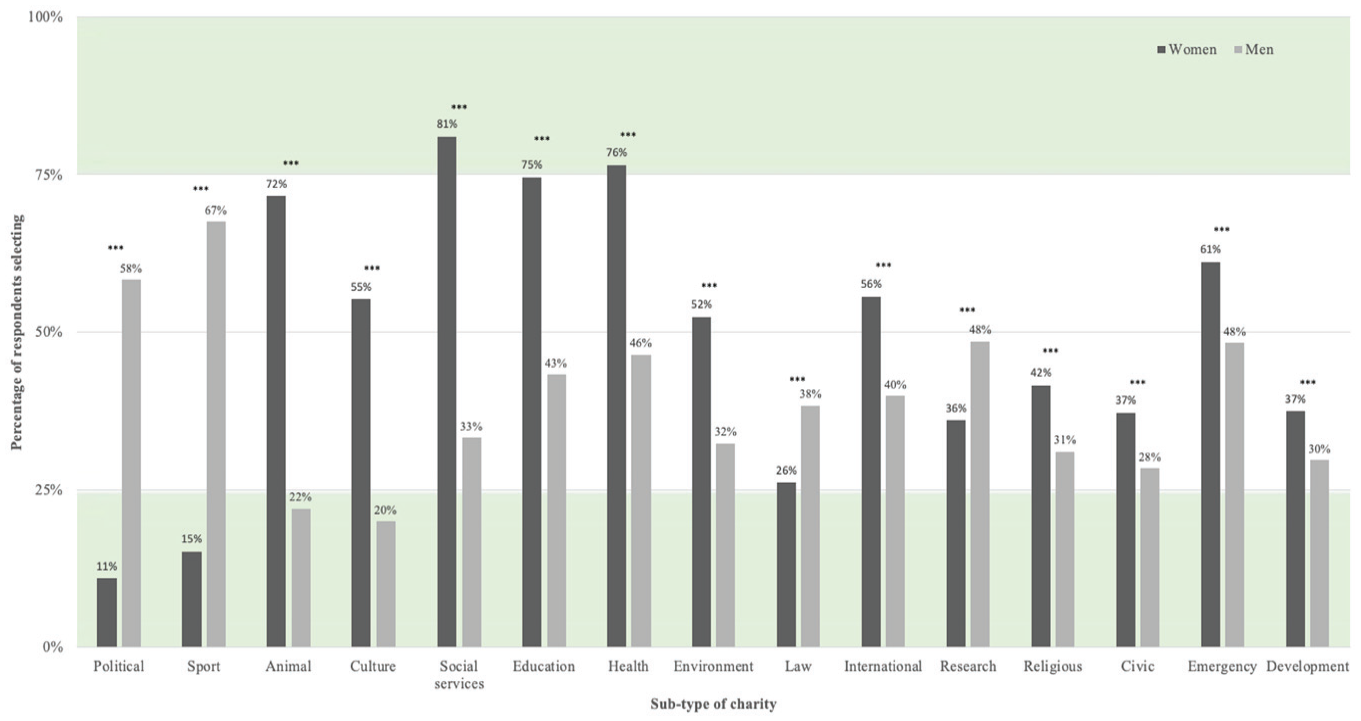
Percentage of Men and Women Who Identified Each Cause as Being a Normative Recipient of Donations From People of Their Own Gender.
Finally, we considered the degree of consensus. Zones of consensus—where ≥75% of respondents agreed that a charitable cause either was or was not typically supported by the group—are highlighted in Figures 1-4. Men did not agree on any causes men typically give to, but did agree that men typically do not support culture and the arts (only 20% selected) or animal charities (22%). Women agreed that women often give to social service (81%) and health charities (76%), but not to sports and recreation causes (15%) or political organizations (11%).
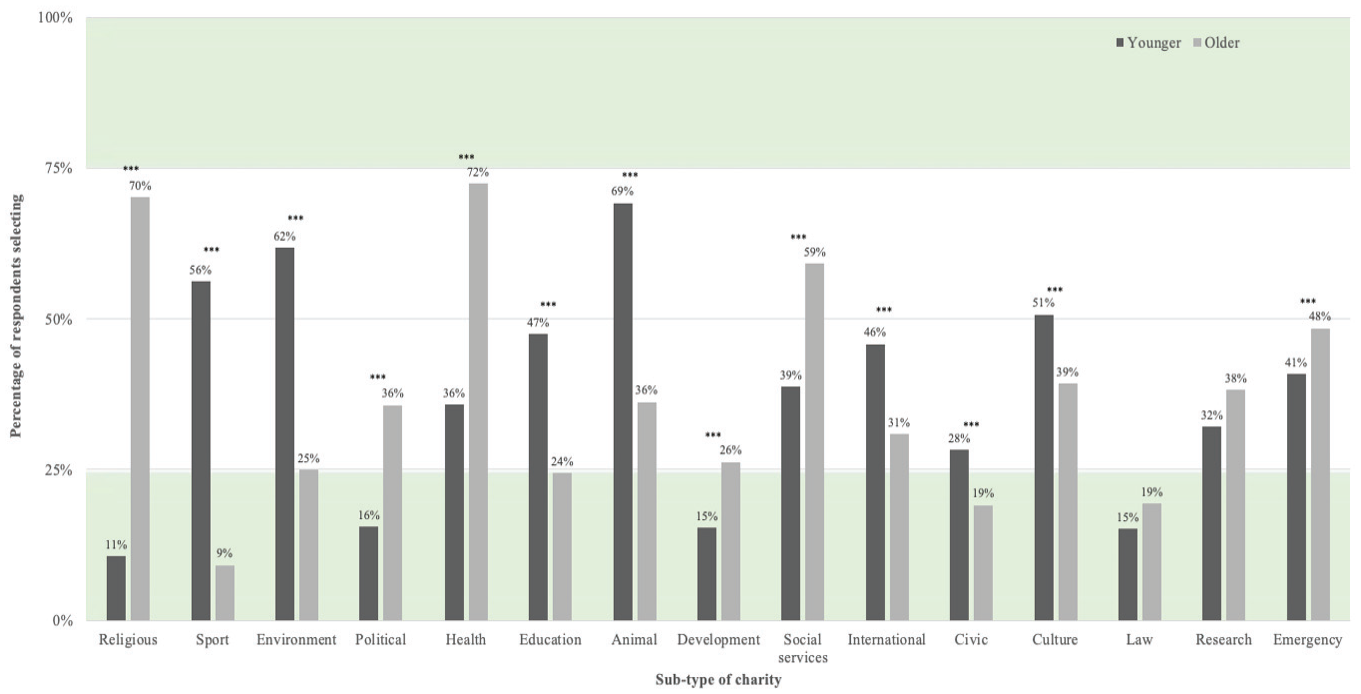
Percentage of Younger and Older People Who Identified Each Cause as Being a Normative Recipient of Donations From People of the Same Age Category.
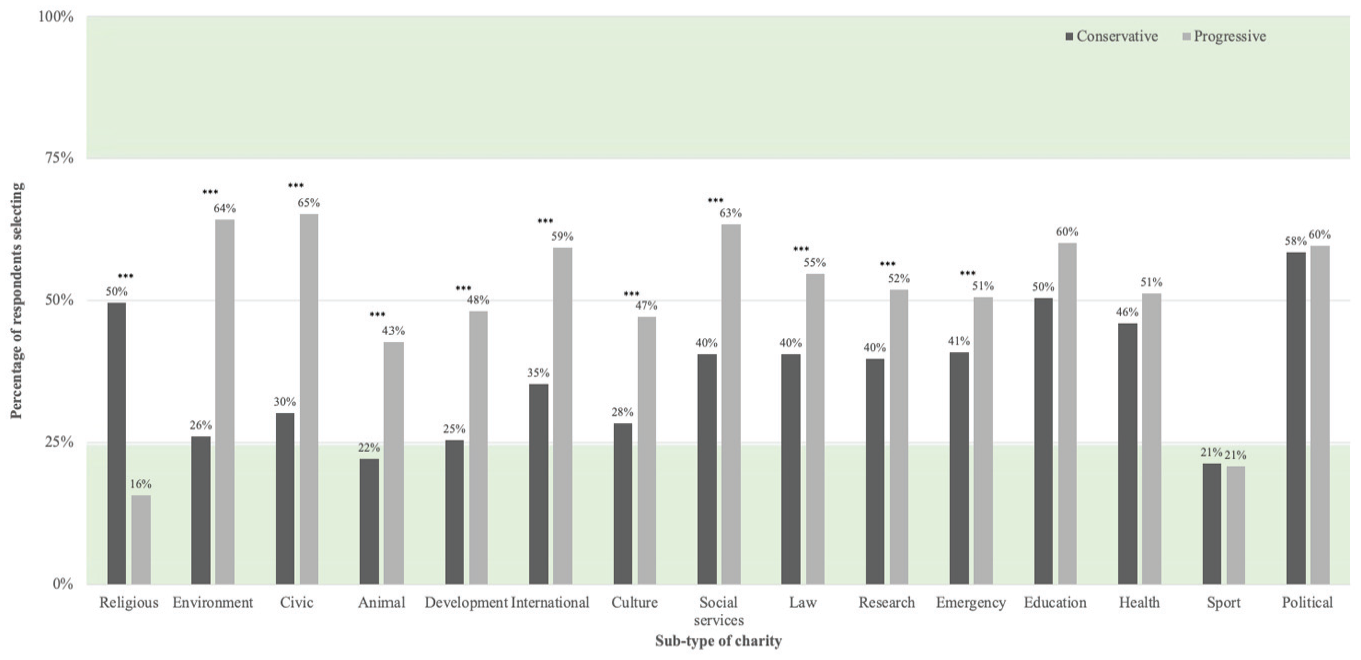
Percentage of Conservative and Progressive People Who Identified Each Cause as Being a Normative Recipient of Donations From People With the Same Political Ideology as Them.
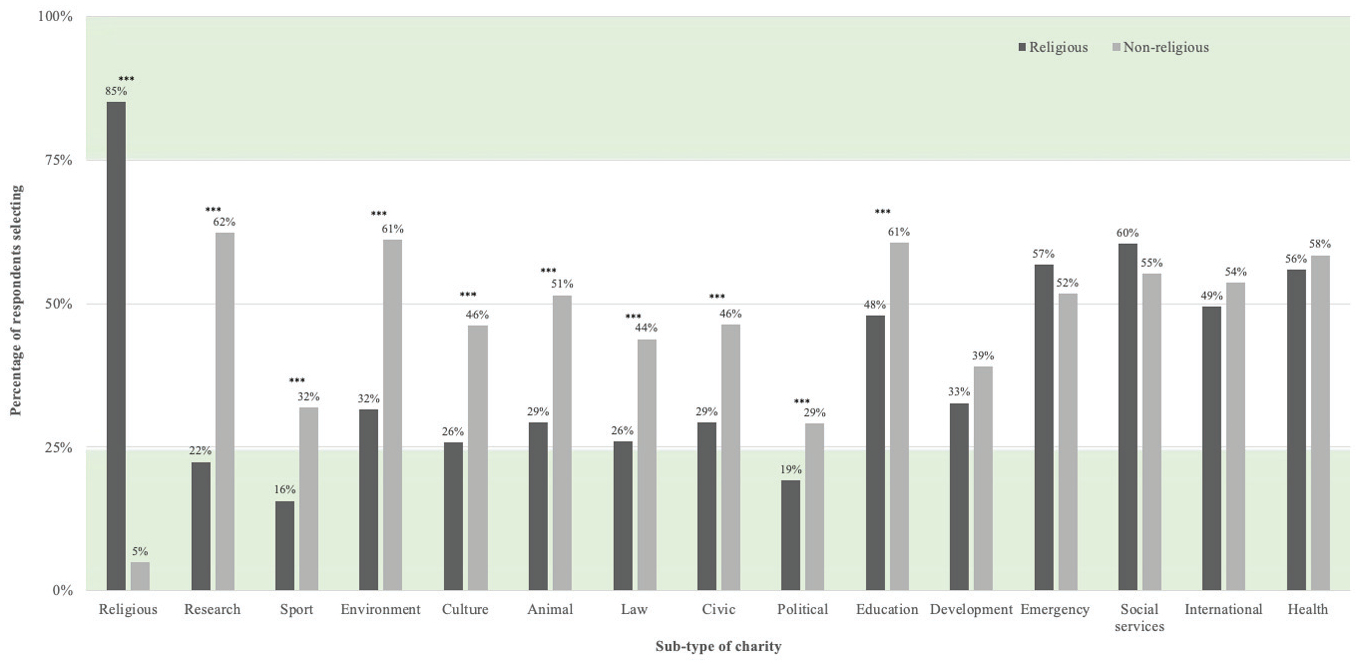
Percentage of Religious and Nonreligious People Who Identified Each Cause as Being a Normative Recipient of Donations From Religious People and Atheists, Respectively.
Age
Charity support profiles varied significantly for both younger people, χ2(14) = 3,057.03, p < .001, and older people, χ2(14) = 12,885.41, p < .001 (see Figure 2). Significant differences in support from younger versus older people were found across all subtypes except research and law charities, p ≥ .012. Again, some causes returned stark differences across groups:
Over six times as many older as younger respondents said people in their age bracket supported religious organizations.
Twice as many older respondents said people of their age group supported health and political causes compared to younger respondents.
Six times as many of the younger than the older respondents said people in their age group typically supported sports and recreation charities.
Around twice as many younger than older participants said that education, environmental, and animal protection charities were typically supported by people of their age group.
Consensus was not reached on which causes are typically supported by younger and older people, though both age groups agreed on causes people of their age did not typically support. Younger people agreed that younger donors do not support religious (only 11% selected), development and housing (15%), law and legal (15%), or political causes (16%). Older people agreed that their age group did not typically support sports and recreation (9%), civic and advocacy (19%), law (19%), education (24%), or environmental charities (25%).
Political Orientation
Figure 3 illustrates how support levels varied significantly across causes for both conservative, χ2(14) = 130.46, p < .001, and progressive respondents, χ2(14) = 556.63, p < .001. Conservatives and progressives showed different levels of endorsement of all but four causes: no significant differences in typical support of sport, education, health, and political organizations were perceived, p ≥ .006. However, some large differences were observed:
Three times as many conservatives as progressives said their political group supported religious organizations.
Around twice as many progressives as conservatives said their political group would support environmental, animal protection, civic and advocacy, and development and housing charities.
Again, no consensus was found for the causes conservative and progressives support (i.e., no subtype was selected by at least 75% of group members). Progressives, however, agreed that they were unlikely to support religious charities (only 16% selected), while conservatives agreed that their political group would not typically support animal protection (22%) or development and housing charities (25%). Both political groups felt their group was unlikely to support sports charities (both 21%).
Religiosity
Different levels of support were observed across causes for both religious, χ2(14) = 1,077.29, p < .001, and nonreligious respondents, χ2(14) = 638.43, p < .001 (see Figure 4). No differences in levels of support between religious and nonreligious respondents were found for health, social service, emergency, development, or international charities, p ≥ .012. However, some big differences were found elsewhere:
Seventeen times as many religious as nonreligious respondents said their group supported religious organizations.
Almost three times as many nonreligious as religious people said their group typically support research charities.
Around twice as many nonreligious as religious respondents said their group supported sport and environmental charities.
Some consensus emerged. Religious respondents agreed that religious people typically support religious organizations (85%) but not research (22%), political (19%), or sports charities (16%). Nonreligious respondents agreed that atheists typically did not support religious causes (only 5% selected).
Alignment With Observed Charity Selections
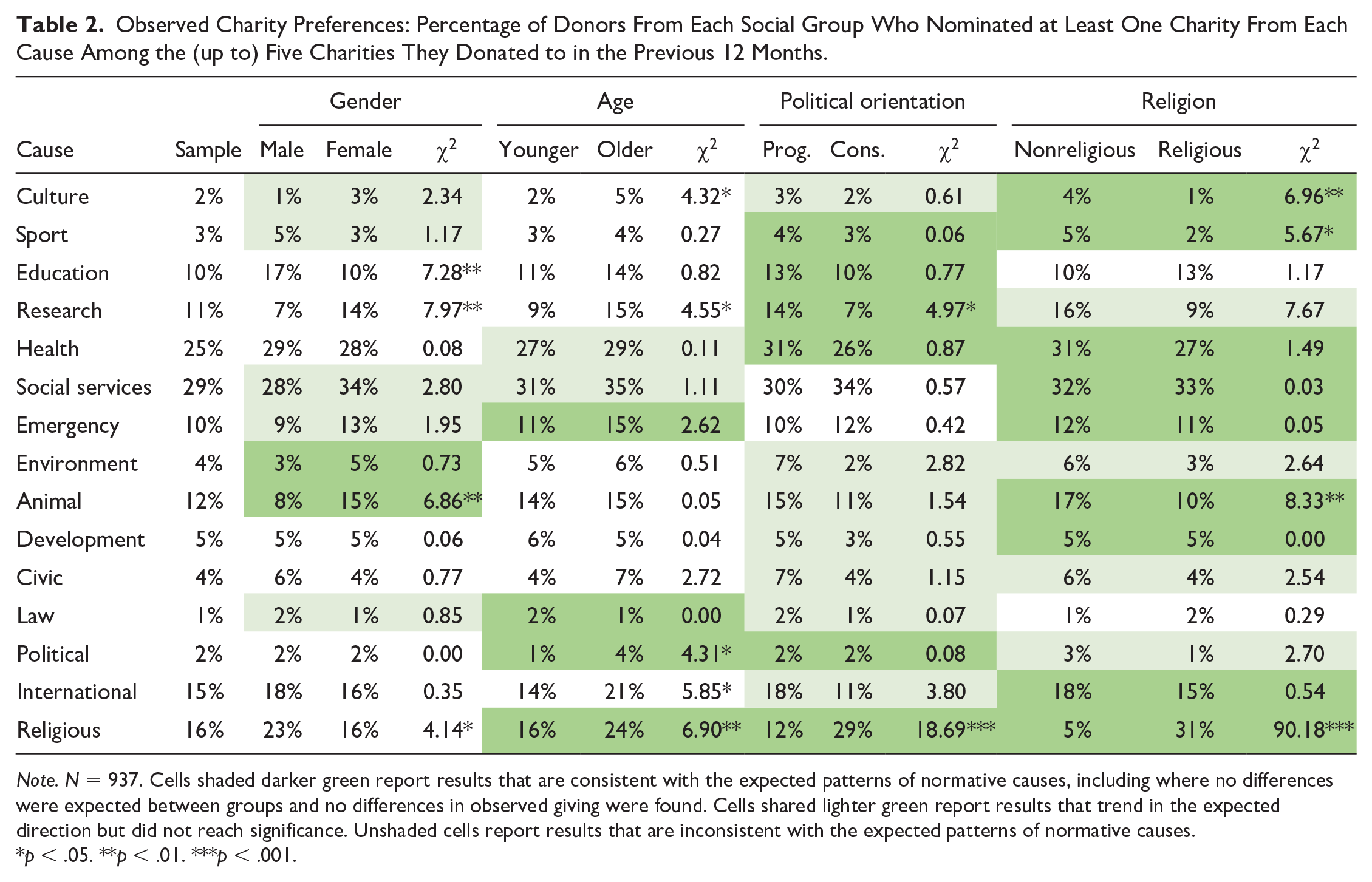
Finally, we considered the causes different social groups actually donated to. For each cause, we considered the percentage of people within each social group who had donated to at least one charity within the cause type within the previous 12 months (see Table 2). Analyses of observed charity selections allow us to consider at a high level whether the social groups’ normative causes appear to be manifest in their actual charity preferences. However, factors such the low prevalence of giving to certain causes, smaller sample size (restricted only to active donors), and the fact that donors hold multiple identities with potentially conflicting normative content introduce noise into these analyses. We therefore advise some caution in comparing observed charity selections to normative causes. Nevertheless, examining broad areas of consistency or inconsistency may help us understand the potential role that social norms play in determining charity selections.
Observed Charity Preferences: Percentage of Donors From Each Social Group Who Nominated at Least One Charity From Each Cause Among the (up to) Five Charities They Donated to in the Previous 12 Months.
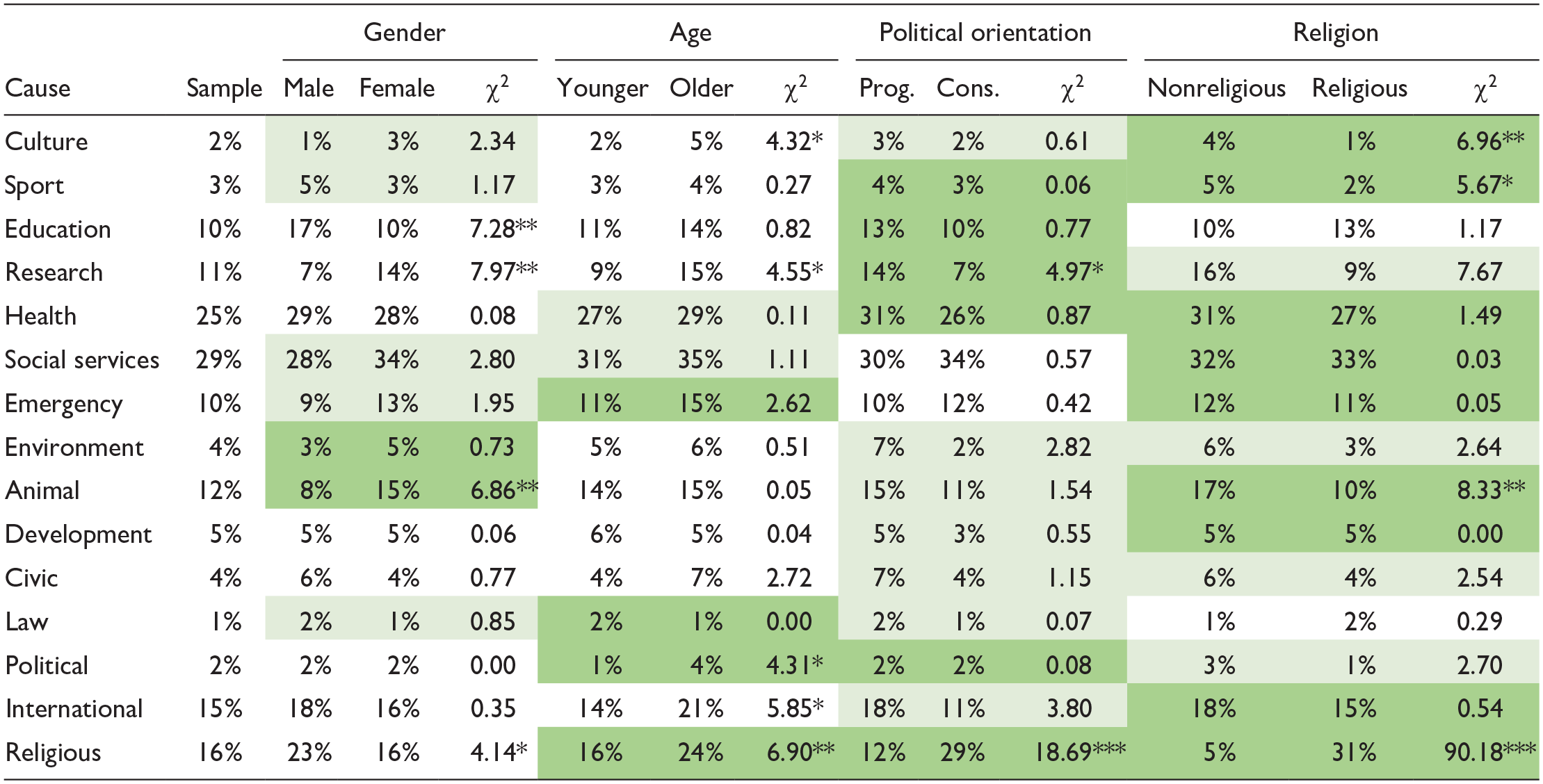
Note. N = 937. Cells shaded darker green report results that are consistent with the expected patterns of normative causes, including where no differences were expected between groups and no differences in observed giving were found. Cells shared lighter green report results that trend in the expected direction but did not reach significance. Unshaded cells report results that are inconsistent with the expected patterns of normative causes.
p < .05. **p < .01. ***p < .001.
First, we note substantial variation in the frequency with which different causes were supported. For example, only 1% of people supported at least one law charity, only 2% supported a culture or political charity, and only 3% supported a sports charity. With occurrence rates so low, it is very difficult to detect differences in prevalence rates across social groups. On the contrary, some causes were much more commonly supported. For example, 29% of respondents had donated to at least one social service charity and 25% had donated to at least one health charity in the previous 12 months.
Overall, as indicated by the shading in Table 2, there was some degree of alignment between normative causes and observed charity selections, though the degree of alignment varied substantially across different social groups. Weak alignment was observed for gender- and age-based social groups, where observed selections were inconsistent with the normative expectations in 53% and 60% of cases, respectively. More consistency was observed for political and religious groups. For political groups, 40% of the observed charity selections were consistent with the normative causes of their social groups and a further 47% trended in the expected direction but did not reach significance. Thus, only 13% of observed selections were inconsistent with political group-based normative expectations. For religious groups, 60% of findings were consistent with normative causes and a further 27% trended in the expected direction but did not reach significance. Again, only 13% of observed charity selections were inconsistent with group-based normative causes.
Discussion
We asked a large sample of community members from around the world to share their perceptions about the normative targets of giving for their social groups. The key contribution of our research is to demonstrate empirically—and for the first time—that social identities contain normative content about which causes group members typically support. Specifically, we found different normative giving profiles for men, women, older people, younger people, conservatives, progressives, religious people, and the nonreligious. Each of these groups identified causes for which social group giving preferences diverge, with varying degrees of consensus within each group. Results advance our theoretical understanding of the role that social norms play in charitable behavior, and also the processes underlying the psychology of charity selection.
Men and women identified different typical targets of charity. Particularly large divergences were observed between men and women when evaluating political, sport, animal protection, culture and arts, and social service charities. Men identified political and sports causes as more typical for them, while women identified animal, culture, and social services as more typical for them. Most of these larger normative differences were reflected to some extent when considering the observed preferences of donors within the sample (i.e., the causes participants had supported in the previous year). Beyond this study, identified normative causes also align with evidence that men are more likely to actually support sports charities (Piper & Schnepf, 2008) and political charities (McMahon et al., 2023; Showers et al., 2011), while women are more likely to actually support animal charities (Piper & Schnepf, 2008; Srnka et al., 2003). Social norms therefore may be the mechanism which explains why men and women are more or less likely to support these causes.
Normative charity preferences were also different for people in different age categories. Younger people were more likely to say their age group supported sport and environmental charities, while older people were more likely to say their age group supported religious, political, and health charities. While the normative profiles of older people were broadly borne out in their observed preferences, the expected preferences of young people were not observed. However, this may be due to a pragmatic factor: older people are more likely to give to charity (Midlarsky & Hannah, 1989) and therefore likely give to more causes than younger people do. Indeed, older people were more likely to actually support 13 out of the 15 causes. Nevertheless, some of the normative targets identified in this study do align with previous evidence: younger people give more to environmental causes than older people do (National Australia Bank [NAB], 2014), and older people are more likely to support religious and political charities (Chapman et al., 2018; Ponce & Scarrow, 2011).
Participants also reported different normative giving targets based on their political identities. Conservatives perceived that their political group more typically supported religious causes, and these perceptions were reflected in their observed charity selections. Previous research has also shown that conservatives are more likely to give to religious charities (Forbes & Zampelli, 2013). Progressives perceived that their political group more typically supported environment, civic and advocacy, animal, and development and housing charities. These progressive normative causes aligned with intergroup trends in observed preferences, but the differences did not reach significance. These targets make sense from a Social Identity Theory perspective as groups may promote ingroup values through their collective behavior. Indeed, many of these causes reflect typically progressive values, such as welfare, egalitarianism, and support for climate action. Past research has also found that progressives are more likely to give to international causes (Chapman et al., 2018; Nilsson et al., 2016; Wiepking, 2010), and our observed preference data also trended in that direction. While our data show that more progressives than conservatives see international giving as normative for their group’s giving, the difference was not as large as for other causes and neither group reached a level of consensus.
Finally, religious and nonreligious people perceived different targets of giving for their ingroups for some causes but, for 12 out of 15 causes, the differences were not very large. This is curious, given that differences between religious and secular giving have been a focal area of research attention within the field of charitable giving (e.g., Eckel & Grossman, 2004; Hill & Vaidyanathan, 2011; James & Sharpe, 2007; Oxley, 2022). Nevertheless, some large differences did emerge. Unsurprisingly, the largest group difference observed across all groups was between religious and nonreligious participants perception of whether giving to religious causes was normative for their group: 85% of religious participants said yes while only 5% of nonreligious participants said yes. This large intergroup difference was also found on observed charity selections in our study and has been found in previous studies of actual giving behavior: religious people are much more likely to give to religious charities (Chapman et al., 2018; Forbes & Zampelli, 2013; Helms & Thornton, 2012; Hill & Vaidyanathan, 2011). Differences in norms for giving to environmental charities have also been previously found on actual charity selections: religious people are less likely to support environmental charities (Chapman et al., 2018). To our knowledge, differences in norms for giving to research charities—with nonreligious people almost three times as likely to see these as a normative charity target for their group—have not previously been demonstrated. This priority makes sense in light of a false dichotomy presented in popular rhetoric between religion and science, perhaps leading some people to see the two as mutually exclusive (Levinson, 2006). Therefore, people who endorse religion may not support research charities and vice versa.
Across different social groups, different degrees of alignment were found between the patterns of normative causes and patterns of observed charity selections within our sample. For gender- and age-based groups, norms, and preferences were not strongly aligned. For political orientation and especially religion-based groups, norms and preferences were strongly aligned. This suggests that norms may be more important for some social groups than others, or perhaps some groups simply perceive or report norms more accurately. In addition to norms, other pragmatic forces influence charity selections, and these forces may disproportionately outweigh certain group norms. For example, household giving, whereby the couple who heads a household makes decisions about donation distributions together, is very common (Andreoni et al., 2003). Many couples are heterosexual and therefore include a man and a woman. This means that the observed charity selections of people who made their decision as part of a couple may not reflect gender norms. On the contrary, couples may be more likely to share a political ideology or religion, which may help to explain why greater alignment was observed between these group norms and charity preferences. Finally, people hold multiple identities. The fact that norms based on political orientation and religiosity showed greater alignment with observed charity selections may suggest that these kinds of identities are more important in giving contexts than identities based on gender and age. Future research may wish to consider the interaction of multiple identities as well as the relative strength of identification and how these two factors influence whether normative causes manifest in people’s actual giving decisions.
Overall, the normative causes identified in this study align with previous research examining actual charity selections made by people in different groups. This suggests that social norms are a likely mechanism through which different social groups manifest such giving priorities. In other words, results show that social groups prescribe typical targets of charitable support for group members. It is therefore probable that individuals’ charity selections are, in turn, influenced by those perceived group norms. Testing this proposed mediation explicitly will be an important direction for future research. As has previously been theorized (see Chapman et al., 2018), these normative causes seem to reflect group priorities and goals. Campaigns which make explicit the connections between group priorities and preferred charitable responses could therefore shift group norms over time (see also Chapman, Lizzio-Wilson, et al., 2022). This represents a further opportunity for future research on norms and charity selection.
The possibility also exists that, in some cases, norm perceptions may be false or exaggerated (the false consensus effect; Marks & Miller, 1987). False norm perceptions arise when a behavior is not public, and/or when media or public attention is disproportionately focused on misleading example behaviors; both conditions that may characterize some charitable giving sectors. Potentially erroneous norms are socially significant because they can create problematic conformity pressures. For example, exaggerated perceptions of peer alcohol consumption are associated with students’ risky drinking (e.g., Marks et al., 1992). False norms are also significant because they offer opportunities for behavior change interventions based on providing accurate information (e.g., Perkins & Craig, 2006). For example, if norm perceptions that religious people are less likely to give to research charities are incorrect, these could be targeted with education campaigns to increase donations from religious people.
We considered both differences between groups in the relative typicality of giving to different causes (RQ1) and the degree of consensus within groups (RQ2). Differences between group norms (outlined above) were found more often than consensus. This may partly stem from the threshold chosen for consensus (i.e., 75%), which was chosen based on past research (Diamond et al., 2014). Statistically, it is possible that small relative group differences at the average may be significant, and associated with large differences at the extreme, even though most group members overlap in their choices in absolute terms (Nielsen et al., 2018). It is also possible that a particular group difference may be associated with a subgroup of donors much smaller than 75%. For example, hardly anyone in a particular community, male or female, may give to a cause such as a sports team, even while it is also true that the team’s small but ardent group of financial supporters are disproportionately men. Furthermore, norms emerge and change over time: an initial preference to support or not support a particular charitable cause may begin with a minority of group members, build through example and advocacy to become a consensus behavior practiced by the majority, and then erode over time as new messages are received and new role models are observed. Examining changes in support norms for different charitable causes over time, within particular social groups, will be an exciting direction of future research.
Overall, findings advance our theoretical understanding of the psychology of charitable giving. We provide the first empirical data to show that social identities provide normative information about not just whether to give, but also which causes group members typically support. Building on prior theorizing (especially Aaker & Akutsu, 2009; Chapman et al., 2018), these findings therefore highlight the important role that identities and their associated norms play in shaping charitable behavior. We demonstrate for the first time that social identities contain normative information about typical targets of group members’ charitable giving and invite future empirical studies of the ways that norms can be evoked in competitive fundraising contexts to acquire and retain supporters.
Strengths, Limitations, and Future Directions
An advantage of this study is that we surveyed almost two thousand people from diverse cultural backgrounds. By sampling a broad array of people, we can gain confidence in the generalization of our findings beyond any individual cultural context. Nevertheless, although the sample may have been diverse culturally, they were relatively homogeneous in other ways. For example, all were enrolled in an online psychology course, able to access materials via the internet, and were proficient in English. This therefore limits generalizability beyond a relatively uniform group in terms of interests, education, and socioeconomic status. Furthermore, different countries or social subgroups may have different understandings of terms like “left-wing (progressive)” and “right-wing (conservative),” which could influence the causes that are considered normative. Future research may wish to study norms across more diverse groups, and potentially to consider country or cultural orientations as moderators of the normative content identified here. 2
One challenge in this study is that we have categorized participants into age groups based on their objective age, but this may not have aligned with their subjective age-based identification. It is possible, for example, that some people over 40 years of age identified more as “younger people” than “older people” and vice versa (though see Barak et al., 2001). Similarly, nonreligious participants rated the charity targets of “atheists” as their ingroup, although not all people who are not religious identify as atheist. Despite these methodological limitations, the overall patterns observed in the data suggest broad agreement of age- and religiosity-based group norms. Future research could consider the strength of identification as a moderator of the relationship between perceived normative causes and actual charity selections.
It is a strength of this article that we considered observed charity selections alongside normative causes. We asked group members to identify if a target was a normative cause, rather than how normative each cause was. The data were not therefore structured in a way that allowed us to test directly for mediation. Future research may wish to examine mediation pathways by testing the degree of endorsement of different norms. Future studies may also wish to examine injunctive norms as well as descriptive norms, which we have focused on here. Finally, experimental work could examine whether priming identities in campaigns can affect which norms are made salient.
Finally, our research suggests that social identities contain normative content about which causes group members typically support. We look at causes (broad subtypes of charities) rather than specific organizations. Past research has shown that many other factors also influence whether someone gives, to whom, and how much, including worthiness of recipients, connection with fundraisers, and events like natural disasters (e.g., Chapman, Louis, Masser, & Thomas, 2022; Fung et al., 2023; Zagefka & James, 2015). For example, people may give to a cause that is not typical for their social groups under conditions of crisis if there is urgency and the particular charity is able to respond quickly. Also, if someone trusts a particular charitable organization because their friend works there, they may give to that charity even if they do not generally support the cause it represents. Future research may therefore wish to examine how other factors interact with social norms to affect charity selections.
Managerial Implications
We surveyed people around the world to identify which charitable causes they believe their social groups typically support. Overall, we found many differences in the charitable causes that ingroup members think are typically supported by men versus women, younger versus older people, conservatives versus progressives, and religious versus nonreligious donors. Some of these differences also reached consensus—where group members largely agreed that a cause either was typically supported or was not typically supported by members of their group. Nonprofit marketers may wish to be particularly attuned to norms which have achieved consensus when segmenting the market and targeting campaigns.
Data on observed charity selections also demonstrated that certain causes are more popular than others (see also Chapman et al., 2020). Social service and health charities were frequently supported, while law, political, cultural, and sports charities were rarely supported. Nevertheless, the current data suggest that there will be certain donor segments that may be more ready to give to relatively unpopular causes because of normative expectations related to their identity. For example, fundraisers for political organizations appear to face a particularly tough time in recruiting new supporters. Data suggest that fundraising efforts of political causes will be most effective when directed toward older men who have political views, especially if relevant gender, age, and political identities can be made salient in the campaign.
In addition to identifying desirable segments to target, results also suggest that certain identities can be used to frame appeals. Greatest alignment between normative causes and observed charity selections were found for identities based on political orientation and religion. This suggests that these identities are either contextually relevant to people’s giving choices and/or tend to have higher levels of identification among group members. Whatever the reason, framing campaigns around these identities may be effective where group norms align with giving to the cause in question. For example, religious charities may wish to frame their campaigns around conservatism or high religiosity as these identities are consistent with giving to religious causes. Fundraisers could do this subtly by incorporating language that is typically used by group members or more explicitly by talking directly about the alignment between the cause and donors’ political or religious identities. On the contrary, animal or culture and arts charities may wish to steer away from religious framing and instead frame campaigns around secular values to evoke supportive nonreligious identities.
Regardless of the charity sector or community group, the present data suggest that social norms that guide decisions to give or not to give may play an important role in donor behavior. Identifying the ways that these norms develop and how they change over time or in response to fundraiser actions will be an important direction of future research.
Footnotes
Declaration of Conflicting Interests
The author(s) declared no potential conflicts of interest with respect to the research, authorship, and/or publication of this article.
Funding
The author(s) disclosed receipt of the following financial support for the research, authorship, and/or publication of this article: C.M.C. is the recipient of an Australian Research Council Discovery Early Career Researcher Award (project no. DE220100903) funded by the Australian Government. The study received ethical clearance from the University of Queensland (15-PSYCH-PHD-29-JH).
