




Abstract
The collapse of public services in Yemen due to a protracted crisis raging since 2015 has compelled some local citizen-based coalitions to initiate community-based service delivery. This preliminary study identifies Community-Based Initiatives (CBIs) as non-state actors supplying basic services ordinarily provided by governmental institutions. It offers an overview of Yemen’s humanitarian crisis while focusing on public services provision pre- and mid-conflict and highlights the role of CBIs as a response to its breakdown within a severely fragile context. As this work considers CBI a societal constituent and not simply a temporary phenomenon, it discusses the general trends of Civil Society. This article fills the gap in the literature and compares the Western perspective and application of CBIs in Yemen aiming at developing a more specific and contextual conception. The analysis lays the foundation for much needed future studies on the role of informal organizations in service provision in developing countries of the Global South.
Introduction
The Organisation for Economic Co-operation and Development (OECD) defined fragility as “the combination of exposure to risk and insufficient coping capacity of the state, system, and/or communities to manage, absorb, and mitigate those risks” (p. 17). Based on the OECD framework, Yemen ranked the lowest in 2020 across all the five dimensions used out of 57 fragile contexts studied (Desai & Forsberg, 2020), while the Human Development Index positioned Yemen 179th among the 189 countries included (Human Development Report, 2020). In addition, in 2019 and 2020, respectively, Yemen ranked the most fragile out of 178 nations based on the Fragile States Index and was characterized as having the world’s worst and most persistent humanitarian crisis in 2017 (UN News, 2018), remaining so until today (Yemen Crisis Response Plan 2021, 2021). With the disintegration of political authority, the increase in violent conflict and forced displacement, and a breakneck downward spiral of government coping capacity, the provision of public services by government institutions has become nearly nonexistent, resulting in more than 80% of the population requiring humanitarian assistance (Alsabri et al., 2021). In a context where the notion of “civilianization of war” (Sowers & Weinthal, 2021) most applies, where catastrophic impacts of armed conflict, a significant factor of fragility, affect civilians more profoundly than combatants, it becomes imperative to study the government’s role, or its proxy, in securing civilian infrastructure.
Since 2015, the deliberate targeting of energy sources in Yemen by both state and non-state actors has led to severed access to electricity in households, closure of more than half of all medical facilities, fuel shortages that have exacerbated the nation’s food insecurity, and impaired irrigation and sanitation systems leading to widespread health-related outbreaks such as cholera, diphtheria, and typhoid. Such ramifications of conflict and state fragility on civilians’ welfare have compelled researchers, policymakers, and experts to study mechanisms of resilience, particularly when both local state government and international humanitarian aid cannot offer sustainable solutions.
There is a dearth of academic studies that have discussed the concept of Community-Based Initiatives (CBIs) in the context of fragile states. This article reviews the concept of CBIs in the literature with the aim of bridging the academic gap around CBIs as an essential player in the new broad governance concept. It also generally compares the Western perspective and application of CBIs in Yemen aiming at developing a more specific and comprehensive conception of citizen-led interventions in contexts of insecurity and government paralysis. This study also attempts to illustrate the role of CBIs in providing public services in Yemen by highlighting the efforts and motives of the citizens involved through thorough documentation of their stories.
This research uses a qualitative approach in which two complementary types of data sources are employed. Data were mainly obtained from 13 in-depth semi-structured interviews with experts, academics, nongovernmental organization (NGO) workers, and CBI representatives. The data were further enhanced by an extensive review of related documents available in the public domain. This article represents a preliminary attempt to significantly advance our understanding of the role of informal organizations in providing essential social services where the state is unable or unwilling to deliver such services. It also highlights some of the dynamics of civil society in the Global South. To the best of our knowledge, this is the first article that examines the role of CBIs from a policy perspective and uses a comparative lens looking into this role both in the west and in the Global South and expands that role beyond the sole focus of “democracy building.”
The article is organized as follows; the second section consists of a comprehensive review of the scholarly relevant literature dedicated to public service delivery. It also provides theoretical perspectives on fragility followed by the main conceptual approaches related to governance and government legitimacy. It then presents a synopsis of the intellectual historical emergence and evolution of CBIs and a brief description of the dynamics of civil society. The third section consists of an overview on the role of civil society and the provision of public services through CBIs within the Yemini context. We then present the methodology and the analytical conceptual framework followed by the main findings and a discussion in which we report some of the study’s methodology limitations as well as suggestions for future studies. Finally, we give concluding remarks and revisit the study’s main contributions.
Theoretical Perspectives: Public Service Delivery, Fragility, Government Legitimacy, and Community-Based Initiatives
Public Service Delivery
Service delivery is conceptualized as the combined relation between policymakers, service providers, and citizens. It includes the services along with their supporting operating systems, such as social services (health and schooling), infrastructure (electricity, roads, and water), and citizens’ security (police and justice), which are typically the state’s responsibility (Berry et al., 2004). In several instances, government priorities may not reflect the citizens’ needs in general, and public funds may be diverted to nonpriority programs. The preference of government officials may not reflect the majority interests (United Nations Development Programme [UNDP], 2016a). The new governance approach has shifted service delivery to an alternative that harmonizes with the needs of the local community. It recognizes the citizens as part of the supply and/or production process and gives them more responsibility for public service delivery (Igalla et al., 2020). This approach directly impacts service delivery, especially for those living in the “less-developed” countries of the Global South (Igalla et al., 2020). This new concept of governance has already been shaping not only the present but also the future of public services. Nowadays, there is partition in the provision of public service with multiple providers such as the private sector, multisectoral hybrids, public–private partnerships, and the third sector. However, ideally, these stakeholders should still be monitored and supervised by the government (Newman & Clarke, 2009).
Fragility
The concept of fragile states gained popularity in the 1990s, but a universally agreed definition is yet to be reached (Manyena & Gordon, 2015). However, there is broad agreement in the literature that fragile states have common characteristics; these include poor governance, weak institutions, low capacity to provide public services, and considerable risk of conflict combined with insecurity, poverty, and legitimacy disruption (Agborsangaya-Fiteu, 2009). A fragile environment lacks effective political processes so that it struggles, or is unable altogether to maintain a balance between the state’s capabilities and local citizens’ expectations (UNDP, 2016b). AbouAssi and Trent (2013) demonstrate that the past shortcomings of participatory development are mainly due to insufficient local human and institutional capabilities and resources and cross-sector collaboration. They recommend that local participation should be incorporated into practice by donors and government agencies.
Many non-Western states can be classified as “hybrid” in their political order. They are considered liberal constitutional democracies in their structure and should operate according to formal and legal state rules (UNDP, 2016b). However, they remain subject to the dynamics of competition between formal rules and the local roots and informal systems that rely on networks of domestic relations to establish trust and affiliation (Khalaf, 2014; UNDP, 2016b). In a fragile context, we can witness high levels of informalization. Informal systems can overwhelm and weaken a state’s institutionalization, leading to minorities as well as other citizens being prevented from enjoying their right to essential public services (UNDP, 2016b). When a country is genuinely powerless, aid donors need alternatives to provide and distribute aid. State fragility, accordingly, reduces the public sector’s role in favor of non-state actors, which creates several options (OECD, 2008) and new structures quickly start to form.
Governance and Government Legitimacy
It is vital to understand local legitimacy and governance dynamics in fragile contexts. Introduced by Lund (2006), the term “twilight institution” refers to the traditional authorities such as tribal leaders, sheikhs, and notables which may not be part of the official state but nonetheless play a clear role in governing social and political life (also see Elayah & Verkoren, 2020; Verkoren & van Leeuwen, 2016; Vogel & Richmond, 2013). In addition, governance shifts from the state to other players at the local level and creates a mounting supremacy gap, allowing manipulation of public services as war tools and creating a vast service gap which citizens are forced to fill through community approaches (Khalaf, 2015). These approaches can be adaptive and nested dynamics of short-term resilience to face state fragility (Manyena & Gordon, 2015). In wars’ lean time, this can also be a type of sociability and solidarity source (Bilic, 2012).
Government legitimacy refers to the state’s authority in relation to its right to maintain law and order (O’Neil et al., 2015). In development policy, legitimacy deficits are considered a primary driver of fragility (Department for International Development, 2010). The loss of legitimacy denotes a failed state or fragile state (O’Neil et al., 2015), where links between the state and society collapse. Violent conflict, socioeconomic vulnerability, food insecurity, commodity dependence, and lack of access to justice are both contributors and resultants of fragility (Desai & Forsberg, 2020) and have a massive and subversive effect on a country’s governance system. Haider (2009) argues that the impacts can be tangible such as ineffective health and education facilities or intangible such as government mistrust. In Yemen, there is a rapid and drastic decline in legitimacy, along with government authority, leading to its diminishing capacity to cope (Carment et al., 2015). Nevertheless, some communities have instigated mechanisms for addressing essential public needs in the absence of state-provided services and essential interventions. These mechanisms can be in realms of socioeconomic recovery, community-based media and radio stations, and traditional community approaches for justice and reconciliation (Haider, 2009). In recent years, mounting focus has been placed on community-based approaches to tackle inclusive needs in fragile and conflict-affected contexts. One such approach is through CBIs, involving community members or local, citizen-led groups who collaborate to prepare and implement service and product-based undertakings to support community well-being (Igalla et al., 2020).
CBI: Emergence and Evolution
In nonfragile states, CBIs operate as part of a new paradigm commonly referred to as New Public Governance. They serve as an important enactment of the active citizenry (Igalla et al., 2020) and an interorganizational/sectoral collaboration to address complex social problems. Such initiatives seek to deliver publicly funded services through new interrelational frameworks such as nonprofit organizations, commercial entities, and individual community members via models that seek efficiency and quality (Vinokur-Kaplan, 2017). However, CBIs can also be borne out of the need to respond to inefficient government programs not oriented to community needs (Igalla et al., 2020; UNDP, 2016a). In conflict zones and fragile contexts, CBIs serve a different purpose, well beyond that of increased quality and financial optimization—one of resilience and heightened urgency to close a critical gap in the state’s failure to provide essential public services (Haider, 2009; Lewis, 2007). While many recent studies have focused on NGOs and other civil society components (Barnes, 2006; Della Porta, 2020; Elayah & Verkoren, 2020; Marchetti & Tocci, 2009; Rosenblum & Post, 2002; Verkoren & van Leeuwen, 2014), a new concept was introduced at the turn of the 20th century. As early as 1910, the sociologist Cooley introduced the concept of primary groups as “those characterized by intimate face-to-face association and cooperation” (p. 23). Cooley mentioned the neighborhood and self-governing village communities as small primary groups providing space for sympathy and aid. People are introduced to these affiliations even before recognizing the other complexed ones of the state and government. These types of groups may include clubs, charitable societies, and informal groups that individuals form to fulfill their different needs.
Large groups, including the government, army, and NGOs can influence the small groups’ dynamics (Cooley, 1910; Mitchell, 1968). Thus, the developmental routes of community initiatives can be essential to understanding the national NGO spheres and vice versa (Bilic, 2012). Ahrne & Brunsson (2011) identified five foundational elements for the organization concept: membership, hierarchy, rules, monitoring, and sanctions and introduced a new organizational concept known as “partial organization,” which accepts dependence on one or a few of these elements. Nevertheless, it is necessary to define the organization on a broader scale to understand the emerging phenomena that are often described as networks, institutions, and initiatives (Ahrne & Brunsson, 2019). Thus, the concept of micro-organization introduces some aspects of organizations that exist outside and between organizations’ concepts as a response to the emergence of new global and local organizational formations such as social movements, networks, initiatives, coalitions, and so on. (Schoeneborn & Dobusch, 2019).
The recent literature places the concept of CBI under the umbrella of civil society that plays an essential role in service provision and community-based response (Verkoren & van Leeuwen, 2014). They create a space of formation that is independent of work from the state and the market, enabling citizens to organize themselves individually and collectively to achieve purposes that interest them (Teegen et al., 2004). In weak, fragile, or non-existent states, the lines between civil society and state become foggier. Civil society proceeds to fill the state’s gap by interacting with underground and shadow actors (Marchetti & Tocci, 2009).
The term civil society was imported to the Arab world after the democratization and liberalization of the concept in the West without considering the complicated status of governance and power for many Arab countries (Beshara, 2017). Aimed at identifying both internal and external obstacles faced by the civil society organizations (CSOs) in the Arab region, Abdel Samad (2007) observes that the sector is not only weak but is also dominated by welfare and charitable concepts and is primarily involved in service provision, social assistance, and welfare.
Through the civil society, people are searching for an alternative for state failure; in this case, the NGOs can be dominant due to the blockage of many other alternatives. Remarkably, while some have argued that a strong civil society and strong bonds of social capital are possible outcomes of a state’s fragility (OECD, 2008), Avdeenko and Gilligan (2015) attribute the increase in citizen participation to the openness of governing institutions rather than social capital growth.
There is a clear gap in the literature in terms of differences between definitions for CBIs in Western and non-Western conflict countries (Igalla et al., 2020). In Western definitions, CBIs refer to citizen participation as a form of engagement, democracy, and a new governance approach where citizens are part of the service design and delivery with direct or indirect state supervision (Serrano et al., n.d.; also see Edelenbos et al., 2020), while in conflict zones and the global south, CBIs may refer to citizen solidarity and resilience away from the state’s supervision. The literature does not agree on a single specific term for these types of initiatives referred to as localized initiatives, citizen engagement, citizen’s initiatives, community-led initiatives, community-based approaches, societal initiatives, and local self-help (Awio et al., 2007; Carapico, 1998; Lewis, 2007; Rutherford et al., 2004; UNDP, 2016a; Verkoren & van Leeuwen, 2014). In this study, the term CBIs is used to describe: “self-organized forms, where citizens group themselves and allocate resources to identify and implement specific projects to provide public services to their community collectively” (Igalla et al., 2020, p. 10). Based on this definition, citizens control the goals, processes, and implementation of their activities (Igalla et al., 2020). Solving critical and urgent social and economic problems through community-based approaches and initiatives is not new. Nevertheless, the evolving strategic methodologies that appear at the local level are considered unique, with CBIs aiming to be more organized and goal-oriented (Torjman et al., 2004). In fact, Atia and Herrold (2018) find that the private sector and international donors are not able to do community led work; as: “they can do community work but not community-led work, because they cannot give up control” (p. 1050). Nevertheless, as these initiatives often operate in systematic ways with all sorts of regulations at multiple levels, they must, in one way or another, have some sort of interactions with the government.
On a separate yet related note, in the Global South, a primary site for development, community-driven development (CDD) approaches are becoming an essential component of the various development procedures. Labonne and Chase (2009) found that community preferences were often ignored, and resources were channeled based on local leaders’ authority and control. Nevertheless, Casey (2017) argues that these projects, specifically in difficult environments, can deliver public goods; however, they do not transform local decision-making or empower the poor significantly. The latter finding was also confirmed by Nkonya et al. (2012) who concluded that participation increased the beneficiaries’ mean income, but the impact of the projects was not significant on the income of the poorest. On the other hand, evidence continues to show that building capacity remains a key for empowerment—both considered ingredients for sustainable development (Wahid et al., 2017). Finally, AbouAssi and Bowman (2018) have anticipated that “the next large catalyst for social change and structural transformation in poorer nations will occur at the inter- section of NGOs and local governments” (p. 233).
Setting the Context: Civil Society and Public Provision in Yemen
Since the early 1920s, civic associations have been active in Yemen’s southern cities, and by the 1930s, several were established in multiple Yemeni major cities (Elayah & Verkoren, 2020). Carapico (1998) has documented civil society activity pre-unification, 1 which can be linked to the concept of CBIs within rural region. These initiatives improved living conditions and provided services to ensure collective survival mechanisms. By establishing alternatives, these initiatives could be considered as a form of defying the regime (Carapico, 1998). The country’s unification heralded the formation of a new civil society in Yemen (Elayah & Verkoren, 2020). Before unification, most public services were mainly financed through citizens’ contributions with minimal state contributions, and most of the state’s contributions came from foreign aid. Moreover, tribes in Yemen were building community ties and mutual-aid networks when state interaction was unseen (Carapico, 1998). After unification, although more service provision responsibility was transferred to the central government (Carapico, 1998). Tribes continued to control massive areas, working independently and with loose connections to the central state (World Bank Group, 2017).
In 2000, the government adopted the Local Authority Law as a form of local government decentralization. This law aimed to create a system of service delivery in Yemen’s 22 governorates and their 333 districts. In Yemen, service delivery mechanisms can be: (a) service managed by the governorates and districts locally (e.g., waste management); (b) services managed by ministries and their technical bodies (e.g., IT); or (c) services with hybrid models relating to the area and situation (e.g., water services). There are strictly centralized sectors in which the central government plays a direct role and others that are less centralized. Likewise, in financing service delivery, the central government allocates a stable budget for the local authority at the governorate and district levels through the Ministry of Finance. Local councils were delegated power and support local participation in service delivery while service provision is primarily the central state ministries’ responsibility (World Bank Group, 2017).
Yemen’s recent history after the passing of the Local Authority Law has been filled with conflict, with hostilities between several internal groups and foreign interventions leading to the erosion of the central government. During the latest conflict, Yemeni institutions have collapsed and living conditions have deteriorated to among the worst in the world (Sharp, 2019). With the worsening of the humanitarian situation and the inadequate provision of public services, local, and international NGOs and CBIs have struggled to fill the public services gap (Al-Araby Al-Jadeed, 2015). These components may not essentially indicate the availability of a democratic umbrella (Kaviraj & Khilnani, 2001).
Service delivery in Yemen has always been primarily inequitable. Public services have been lacking, insufficient and unequal, with some rural areas beyond the public service system. Alongside many other social and political issues, these inequities have mainly driven the 2011 protests as part of the Arab Spring. The protests ended with the formation of an interim consensus government that was meant to bring stability to the country (Kleemann, 2019) and mediate an agreement that finished with early presidential elections in 2012 and a transition plan (Jongberg, 2016), followed by a National Dialogue Conference (NDC) (Kleemann, 2019). However, in 2014, the Houthis (referred to as Ansar-Allah), an armed non-state group, led attacks and acquired the capital Sana’a, creating a space for governance and power for themselves. Their military advance then expanded to other central and northern cities (Jongberg, 2016). Meanwhile, in the southern region, the government established Aden as a temporary capital in March 2015 (Human Rights Watch [HRW], 2020). The crisis was escalated with the Saudi-led military intervention known as the “Arab Coalition on Yemen” in mid-2015, leading to an extremely complicated and multidimensional regional conflict and civil war (Kleemann, 2019). 2
Nowadays, in the northern areas, the Houthis are the de facto authority, while in the southern cities, governance is split between the Republic of Yemen government, which is internationally recognized, and the Separatist Southern Transitional Council (Sharp, 2019). This multiplicity of authorities within the same state has created parallel public administrations, which has complicated service delivery (see Figure 1).
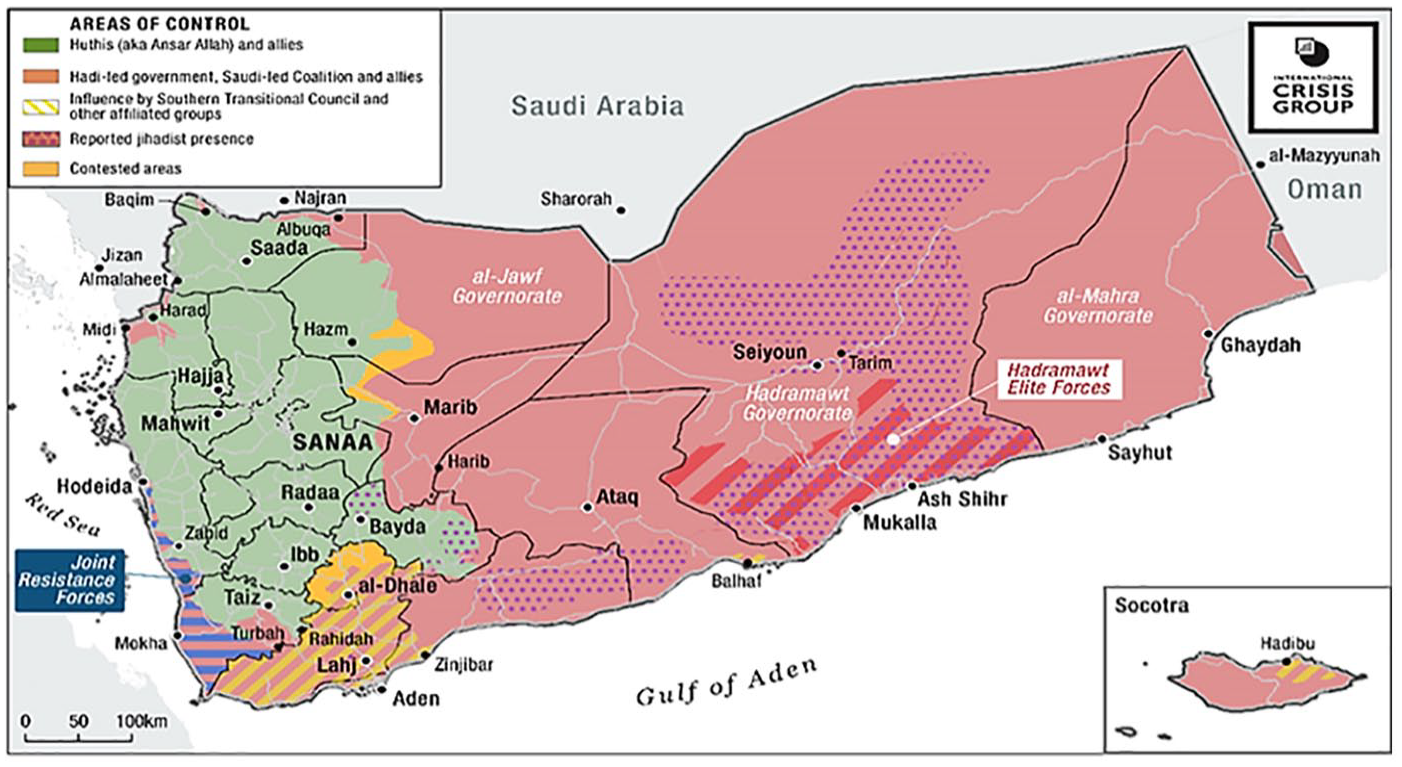
The Distribution of Control and Power in Yemen.
Many events related to the conflict have directly affected citizens’ lives. One is the naval and air blockade imposed in March 2015 by the Saudi-led coalition. According to HRW (2020), there is an informal ban on imports. Importers cannot use standard containers for shipments, which has forced them to use more costly transportation and unloading methods, pushing up the price of essential commodities (International Crisis Group, 2020). In addition, the years of conflict have caused massive decay in the infrastructure and quality of basic services. These complications have led to the restriction of access to health care services for nearly 14 million, including 8.3 million children (World Bank Group, 2017). The country faces massive health problems with several disease outbreaks, such as cholera and diphtheria (Kleemann, 2019).
Furthermore, 4.3 million citizens lack electricity access, and 19.4 million face shortages in clean water sources and sanitation (World Bank Group, 2017). Currently, only two thirds of schools and half of the health facilities are functioning. The main truck routes between northern and southern Yemen are either closed or badly damaged. In addition, about 90% of Yemen’s population has no or little access to public electricity (Humanitarian Needs Overview Yemen, 2021). Civil service salaries have been unpaid in the northern areas for more than 4 years; both the Houthis and the recognized government argue over who is responsible and should pay them (International Crisis Group, 2020). A report conducted by UNDP in 2019 projected that if the conflict continues through 2030, it will be responsible for reversing 39 years of human development (Moyer et al., 2019). The COVID-19 pandemic has magnified underlying vulnerabilities and worsened Yemen’s situation (Humanitarian Needs Overview Yemen, 2021).
Method
This study uses a qualitative approach in which two complementary types of data sources are employed. Primary data were mainly obtained from 13 in-depth open-ended and semi-structured interviews with staff of local and international NGOs that have worked on CBI funding projects (38%), representatives of Yemeni CBIs—including those who directly work with CBIs or have contributed to the establishment of a CBI (69%), and academics and think tank researchers (30%). Some of the participants have a cross-experience history working as journalists, community activists, and local field workers. The security situation and logistics of having access to key informants as well as being able to conduct the interviews have limited us from obtaining a larger sample size. Nevertheless, as we had a rigorous recruitment process that resulted in interviewing individuals whose expertise and experience are adequate, we consider the sample sufficient to uncover a variety of insights and views and to attain saturation (Babbie, 2014). These data were further enhanced by secondary data derived from an extensive review of related documents available in the public domain including reports, publications, policy notes, and credible social media sources.
The primary data were collected over a 3-month period from February to early April 2021 immediately after the institutional review board (IRB) approval was granted and in the presence of one of the authors. The interview instrument included questions that focus on the conceptualization and practice of CBIs according to the interviewees as well as their assessment of the provision of public services in Yemen. The researchers used a narrative inquiry in which the stories and experiences form the raw data. The researcher designed each question in a goal-based manner to ensure that the research gaps were covered. The design of a very structured interview guide would not minimize the research bias, and perhaps even exacerbate it, as it may restrict interviewees from voicing ideas that fit into the frame of the research perspective, which is likely to be embodied in the formulation of the questions (Babbie, 2014). Hence, a more open format for interviewing is required. The interview guide is relatively straightforward, as it corresponds to the main questions regarding their involvement in CBIs and their assessment of the quality of the public services delivery during the war as well as the associated challenges and opportunities. As the questions were key-open ones, some additional questions were posed during the interviews and specific examples were requested. The interview data from the participants was handled in a similar way to written sources. Interviews were conducted via different platforms depending on accessibility and convenience including phone calls, Zoom meetings, WhatsApp chats, and in person. There was a gender balance among the sample with 46% women and 54% men. We ensured that the data are representative and geographically covered Yemen’s nine governorates.
It is important to note that one of this study’s authors is a Yemeni civil society activist, local NGO worker, founder, and member of several previous CBIs. This researcher’s background and practical experience strengthened the research and greatly aided in accessing data resources from the field and in choosing the participants through working networks. The judgmental (purposive) and snowball non-probability sampling methods used in this study helped this researcher obtain answers based on the interviewees’ related field of expertise and academic background while maintaining objectivity with the interviewees’ inputs (Strauss & Corbin, 1998). As most of the participants preferred to be unnamed, the anonymity of all key informants was chosen.
Data generated from the interviews were analyzed and findings served to illustrate CBIs components and types and the dynamics and state of the provision of public services in the Yemen context. Topics of the community initiatives’ sustainability in providing public services and the response to local needs were prime questions that were spotlighted. The emergent ideas, explanations, and relationships were then identified and discussed aiming at developing a more specific and comprehensive conception of citizen-led interventions in Yemini context to hopefully extrapolate to similar ones. The process continued until the authors felt that saturation was reached.
On a separate yet related note, this study faced some limitations. The global COVID-19 pandemic imposed many communication boundaries and as most of the interviews were conducted virtually, the lack of stable connections in Yemen was challenging. In addition, due to the war and insecurity, it was often difficult to gain interviewees’ trust and convince them to talk freely.
Findings
Our findings are organized under three main themes all related to the role of CBIs in Yemen. These include the characteristics of public services provision in the country, the driving forces and governance structure of CBIs as well as their sustainability and ability to meet the local needs.
Public Services Provision Post Conflict: Characteristics, Quality, and Access
All interviewees agreed that there were poor services even before the conflict, but there was a complete decline and poor provision of public services after 2015, noticeably in 2018 until now, where services were completely cut off in several governorates. As five of the interviewees observed and while the collapse of Yemen’s public service delivery system is widespread, “it remains uneven between governorates, especially the conflict-affected ones” observes a local NGO director. According to one respondent, at the onset of the conflict, public authorities in the northern cities lost their legitimacy and “their monopoly on violence in favour of the de facto authorities.” The former centralization of the state and regime in the capital, Sana’a, affected the distribution of essential government public services and facilities (Center for Conflict and Humanitarian Studies, 2021). This was exasperated by the sudden and abrupt transfer of the government and many pivotal state administrative bodies to the temporary capital, Aden. Managing the state from a new location with new staff and new leadership was certainly problematic. In fact, at the beginning of the war, there was apparent public confusion. A division between public employees accompanied with conflicting financial policies had a direct impact on providing public services, the way taxes were distributed and redistributed, and the mechanisms for collecting revenue. In fact, one respondent argued that the fact that state was integrated with the formal and informal economy and the military machine has caused more fragility in the service sector. He adds that due to the weakness of the new center, there was “competitive violence in the periphery”; as a result, other governorates stopped handing over taxes to the new center. The weaker the center became, the greater the decentralization in the rest of the governorates, especially those with natural wealth. Another interviewee mentioned that for the first years of conflict, the public services crisis was a shock for urban citizens who got used to a decent level of public services. They waited for services to resume but eventually came to the realization that the conflict would not be over quickly, and services would not improve in the short term. Nevertheless, one of interviewees notes that there was some recovery in certain governorates, such as Hadramout and Marib, while another one mentions there are still some government institutions that citizens trust. He gives the example of Marib where the state’s presence was strengthened by the presence of services. Nevertheless, five respondents agreed that there was an apparent collapse in several other cities/governorates affected by the conflict, such as the Taiz governorate, where control is divided between the legitimate authority and the Houthi forces.
In Yemen, the key trend in terms of international intervention revolves around providing humanitarian assistance. Seven of our participants concurred that many international and local NGOs have been working on delivering public service and responding to the crisis; however, the responsibility for providing these services comes down to the main conflict parties.
Although the Houthis succeeded in developing an effective taxation system for goods and businesses and gained a monopoly on the practice of violence, which they legitimize for themselves in their controlled areas, they are accused of using the taxes to pay for their war efforts instead of delivering services to citizens (International Crisis Group, 2020). The Houthis argue that they are employing these taxes to implement projects and improve public services. Their government cites actions to enhance the performance of local authorities and provide valuable services toward the local community (Ministry of Local Administration, 2020). Despite these statements about development projects and their amounts of funds (Yemeni Government Portal, 2021), six respondents confirmed that citizens are not aware of these projects.
In addition, the interviewees covering the Taiz governorate confirm that the city is also suffering in the electricity, water, roads, internet, security, and gas sectors. One interviewee said that “commercial electricity suppliers have appeared in Taiz, but from my point of view I see that this new sector is tainted by corruption as these merchants are also statesmen.” While the level of service provision varies from one governorate to another, measuring and defining disparities is essential. We should consider the different governorates’ history of service contexts, the controlling forces, the local authorities, and the degree of each governorate’s involvement in the conflict.
Citizens Reactions and CBIs: Driving Forces and Governance Structure
All Interviewees agreed that there is a strong community resilience. The gradual fragility of services has resulted in the community’s notability to differentiate between the responsibilities of the government from that of the citizens. It became evident that local and international NGOs and CBIs have struggled to fill the public services gap as the result of the worsening of the humanitarian situation and the inadequate provision of public services. Despite the previous presence of CBIs in Yemen, the state paid little attention to them, leading us to conclude that these practices were not coordinated between the state and individuals. Nowadays, two interviewees concurred that the internet and social media have facilitated the demonstration and dissemination of these initiatives. Five of the interviewees confirmed that societies can create communication channels through these initiatives and implement joint actions that enhance dialogue, acceptance of the other, and cooperation.
Some initiatives have emerged that imitate CBIs to obtain subsidies and funds from NGOs by submitting fake financial reports and documents especially when NGOs may not put much effort into investigating the funds’ outcomes. According to several respondents, regardless of the corruption paired with the high cost of NGOs’ projects, the community still needs every kind of intervention and aid. Interviewees working with local and international NGOs believe that working with CBIs leads to projects that are more responsive to local needs and may lead to a reduction in costs. While community approaches encourage societies to define their priorities in fragile state settings, stable and conflict states that still maintain a form of state or non-governmental organizations seek to mobilize local communities to contribute resources and implement initiatives. This rapid rehabilitation of services usually leads to highly visible “quick wins” and “peace gains” that reduce the risk of renewed failure in post-conflict settings (OECD, 2008).
In addition, the nature of and driving forces behind these initiatives differ. There are initiatives formed as a response to a lack of a specific service or an attempt to solve a societal problem resulting from citizens’ despair at public authorities’ mediocre-or lack of- response. These initiatives may continue for a limited period or may end once their targeted goals are attained as many of the respondents observed. These CBIs can be found in urban and rural areas, and they can be either close or open membership groups. Another form of CBI is formed as a response to the NGOs’ open funding application calls. Usually, these calls come under a specific development theme defined either by the organization in deliberate local ways (bottom-up approach) or as a response to the donor’s will (top-down approach). These initiatives are often more structured due to the criteria imposed by NGOs. After admission, most CBI members receive capacity-building training by the NGO as a preliminary stage. Almost half of the respondents noted that these initiatives may either subside after the funding ends or continue their work and begin to search for other internal or external sources of funding. In other cases, they may evolve into a local civil society organization or network, according to members’ backgrounds and level of organization.
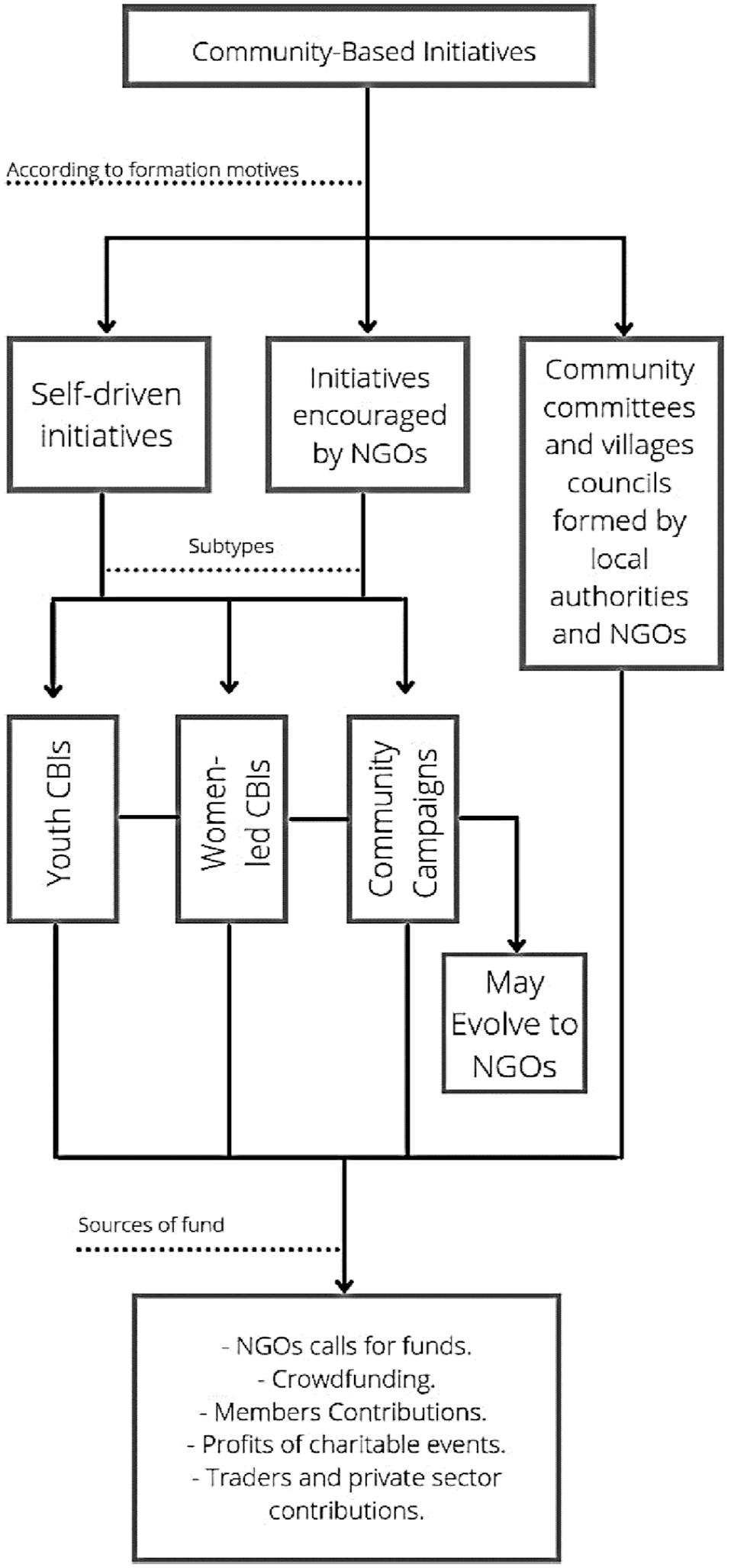
Types of CBI found in Yemen.
As shown in Figure 2, NGOs have encouraged and supervised the formation of new village councils and community committees with local authority collaboration to monitor needs, distribute foodstuffs, and solve small community conflicts. “Village councils enhance the presence of citizens on the services map” emphasized one academic researcher. These are elected councils that are trained to encourage people to mobilize themselves rather than wait for donations (World Bank Blog, 2020).
Similar to the NGOs, some CBIs depend on external funding resources for their existence while others, who do not have access to external sources, mobilize resources locally by fundraising initiatives or through membership fees and subscriptions. These CBIs may not belong to any formal body; however, many attempts have recently been made to document their work (Yemeni Youth Initiatives Forum, 2015; Yemeni Youth Initiatives Guide, 2019). In addition, eight interviewees note that they must coordinate with local authorities, especially those initiatives funded by NGOs in areas under Houthi control, where coordination may become essential to ensure members’ safety and the smooth implementation of the activity. As CBI is not a legal entity and does not have a formal institutional framework and may be unregistered, they use innovative ways to manage their activities which facilitates obtaining financial support/funding from NGOs. It is evident from the interviews that some of these initiatives have some sort of organizational structure, and some CBIs indicate their will to evolve in the future and become formal NGO. Others declare that they do not want to emulate the complex systems usually found in NGOs due to their lack of managerial capabilities or because they simply wish to provide community service, and their goal is to implement the activity and serve the community and the target groups and escape NGOs logistics and complexities.
Furthermore, it is often the case where NGOs drive CBIs to perform more structured work by raising funding acceptance standards. NGOs usually are required to have a basic structure with a defined members’ tasks and responsibilities description, an official logo, stamps and invoices for financial clearance, and project proposal when applying for funds. These constitute essential indicators for NGOs’ seriousness, legitimacy, and credibility for receiving funds. Alternatively, one interviewee states that village councils, community committees, and other CBIs can allocate and mobilize funds from different resources, exceeding this range. The concept of horizontal structure ensures the decentralization of power to achieve the greatest possible equality among the active members. These specific initiatives help overcome the NGOs’ ongoing and current dilemmas inherent in vertical organization.
According to one respondent, specialized and organized youth- and women-led initiatives gain more recognition in securing NGOs’ grants and funds and get better media attention and support. Therefore, these initiatives may sustain their work, expand, and become more organized. At this point in their development, a CBI enters a critical stage of institutional transformation that may lead to growth and expansion or a halt and collapse. Our findings also indicate that CBIs have affected gender roles, especially with the war creating different changes at all levels and times (Young, 1999). This was confirmed also by the observation made by a respondent related to an NGO project report in Dhamar and Sana’a that showed that women’s access to leadership positions in the initiatives increased after 2015. Ninety rural young people, 50% of them women, supervised AlSalafiyah District in Raymah governorate, where the community elected 93 people to represent the village cooperative councils, with 50% of them women (World Bank Blog, 2020). NGOs also support initiatives with gender diversity. Thus, engaging men and women becomes necessary, and placing women in leadership positions increases funding chances.
It is essential to point out that fragile Yemeni context differs from the Western experience. Citizens’ enrollment in some of these initiatives may sometimes be their primary work and not a side volunteering activity. In fact, they may devote themselves entirely to resource mobilization and implementation of such activities on an ongoing basis. This specificity may be due to the difficult financial situation and the large numbers of citizens who have lost their steady income and jobs. According to one respondent, members may sometimes get a small financial remuneration when funding is available or gain practical field experience for young adults.
Challenges and Opportunities: Finding Sustainable Solutions and Meeting Local Needs
Although several interviews indicated that the micro-community’s ability to respond to and identify the problem may be higher than that of organizations, difficulties may arise in the ability of these communities to find sustainable solutions and allocate funds. There was no agreement over whether these initiatives are sustainable, or they simply came as temporary response. All the interviewees emphasized that even in the presence of these initiatives, government intervention and the solidarity of other components of society are necessary. Seven of the respondents believed that initiatives’ projects are not sustainable but are rather temporary projects that try to cover the gap of the state’s absence. The other six asserted that the nature of the intervention and its objectives determine its sustainability level.
The types of public services covered by these initiatives vary between awareness-raising, advocacy, facility rehabilitation, development projects, charity campaigns, environmental activities, and health support, most of which were responses to local needs according to all respondents. Examples include cleaning campaigns in Taiz, Sana’a, and Aden to respond to the municipalities’ deficiencies in combatting the spread of diseases such as diphtheria and cholera. Other examples given by respondents include mobilizing resources and distributing food packages to families affected by conflict, and economic empowerment projects for families, youth and women; “We have provided multiple humanitarian responses; not in a large scope but in what we can reach” adds one respondent.
Many initiatives at the urban localities level (neighborhoods/small residential complexes) have been supplying free water tanks to low-income families in addition to green energy initiatives that have provided families with a miniature solar energy system.
One of the vital sectors that has been affected by the conflict is the transport sector. According to one respondent, it represents a lifeline for markets and the private sector but has suffered from an increase in fees on goods from the port of Aden and road blockages due to conflict damage. This in turn has meant an increase in the prices in local markets. In Lahj governorate, through the community committee, with funding from merchants, citizens’ donations, and support from CARE International, an initiative was launched to pave a new 165-km road to relieve pressure on other routes, allow small goods trucks to travel, and reduce travel hours between these governorates. In Ibb, there have also been road-paving initiatives that mobilized resources from residents and expatriates living in America, Europe, and the Gulf countries. In Sabr Al-Mawadim District, in Taiz Governorate, an initiative was implemented to repair a war-damaged water network connecting four areas. This initiative contributed to the drafting of a peace document with the residents of the four areas to end an ongoing conflict due to the scarcity of water supplies.
The absence of electricity led to dark and desolate streets, creating security problems. Two initiatives in Taiz and Sana’a with other governorates have distributed solar lights and creative solutions in streets. Residents also contribute to lighting in front of their homes. Two initiatives in the Taiz governorate have set up surveillance camera systems in some crime-ridden streets. According to the directorate’s police department’s statements, these contributed to decreasing the area’s crime rate. One respondent argued that this prompted security departments and local authorities to complete and expand this project.
An initiative in Taiz, funded by an NGO, renovated a dilapidated public school in Cairo district. Following numerous desperate, unsuccessful appeals from the area’s residents to the local authorities, another initiative was executed to renovate a health center, which was the only facility in the area. The local authority finally responded and contributed to the restoration and resumption of medical supplies. One respondent describes “we had to initiate the steps otherwise the authorities are not responding.”
A social enterprise in Hadramout was started as a group of students’ initiatives to create clean waste disposal techniques and improve people’s health, especially in rural and displaced camps. They invented a product with a patent: a tank producing biogas from organic waste from farms or households. This gas is utilized as a cooking gas that encourages girls to complete their education rather than spending time searching for firewood and enhances women’s and children’s respiratory health. Another initiative in Aden by a group of engineering students in response to the rising number of war injured individuals to manufacture artificial limbs using three-dimensional (3D) printers was mentioned by a respondent. This initiative has stalled due to the lack of adequate support.
Another example of a community initiative is the innovative solution to the difficulty of moving and transporting goods between a village in the mountain and a village below. A modest Cable Car Route (teleferic) was established to transport goods and people, with nominal operating fees.
Two interviewees mentioned the importance of learning from the Social Fund for Development (SFD) experience, a national quasi-governmental institution with multidimensional projects that supports initiatives and directs its work to humanitarian response, development, and post-conflict recovery. The SFD Youth Employment in Community Activation project intended to enhance community cohesion by formatting, activating, or training village councils. Several districts were involved across 14 governorates. According to their reports, between 2018 and 2020, a total of 2,847 funded community initiatives have been formed with 3,877 village councils. The fund adopts a community development approach by mobilizing and organizing its members’ efforts and directing them to collective volunteer work to allow community interactions and engagements to continue even after the projects complete (Social Fund for Development [SFD], 2020).
Some problems appeared in coordination between the services provided by initiatives and organizations, while the ones provided by local authorities were not activated. “We appealed to the local authority to coordinate and unify services provision work of all providers in Taiz, to direct working towards gaps; with no real response.” The interviewee argues that in Mareeb, the Executive Unit for the displaced people must be given authority by the government over humanitarian aid coordination of the different actors, including CBI, NGOs, and local authority in the governorate. While another interviewee states that in Raymah “there is limited coordination between local authorities with CBI due to absence of the developmental vision.”
Discussion
Our findings indicate that CBIs have affected gender roles: both women’s access to leadership positions in CBIs and the NGOs’ support to initiatives with gender diversity increased. In addition, we found that popular international development agencies have been working toward bottom-up community-based approaches by influencing NGOs to promote local participation and working with community groups not only as beneficiaries or fund receivers but also as partners. This has been achieved by implementing projects that emphasize self-help and local control of programs (Haider, 2009). This is a win-win situation for both NGOs and development agencies striving to cut and minimize funds. CBI can be a less complex and more available alternative for citizens than NGOs. CBIs work with low costs due to the voluntary nature of their activities and their minimum to zero operational costs. It may be necessary for local and international NGOs that are donors to focus on identifying the needs of these local initiatives without influencing and intervening in their operational and organizational structures. This measure would help prevent the common practice, carried intentionally or unintentionally, of pushing CBIs toward institutional work through NGO empowerment programs that might be not well-considered and are often not sensitive to the local context. Indirectly, these programs may frame how these initiatives work, leading them to lose the basic innovative element embedded in their formation.
Based on the study’s findings, we conclude that the harm of having these initiatives guided toward developing into NGOs associations and institutions outweighs the benefits. Instead, they may be more effective in their informal capacity which characterizes them—mainly as CBIs with innovative and dynamic organizational methods of their own; this is exactly what corresponds with the nature of their inception, mechanism of action, and generally limited funding.
In addition, we found that members of the initiatives are usually volunteers who might be motivated by the prospect of financial return, the desire to gain work experience with connections, or simply altruism. Unfortunately, in conflict zones, many warlords and war beneficiaries emerge, creating a challenge to those who have a real desire to help society. Recently, CBIs have become a fashion of fame and livelihood, especially when there is no adequate financial control and monitoring and, in a country, where poor economic situations may drive individuals to these unethical behaviors. Nevertheless, this article provided many good examples of success stories reflecting community participatory efforts with minimal self-maximizing incentives among those engaged and a strong intention and will to do good and be an agent of change in their community.
CBIs can improve the mechanism for providing public services and reflect on the organized community participation methods in Yemen. This study found that the international community and local authorities should support all types of CBIs in Yemen. They should assist in creating proposals on how to start involving these initiatives in the future reconstruction processes as an essential and accepted component within civil society. A good example of this already happening is Social Fund for Development Programs. It would be interesting to examine the extent to which the international aid agencies fund their visions of community-based development rather than the local understanding of community-based development. Being purely voluntary, and operating with little, or no formal funding, there is a need to investigate how international aid agencies, as procurement agencies, can meaningfully support CBIs in ways that are beneficial, and not harmful, to the CBIs.
Conclusion
In conflicts, local communities create defensive means to respond to the lack of services and resources. This comes as an initial attempt to alleviate the acute severity of the conflict and its ramifications as well as to preserve the societal fabric. CBI is not a one-country phenomenon. It is also evident in other countries of the region such as Kenya, Uganda, Nepal, and Bangladesh, among many others, where evidence showed that these types of initiatives have led to enhanced social cohesion, bonds, and resilience (Lewis, 2007).
In the case of Yemen, CBIs were similarly important as they acted as one of the primary lines of confronting the services crisis exacerbated by the ongoing war. Many development projects and funds have been immobilized, and the donors are directed to humanitarian responses (World Bank Blog, 2020). It became evident that the country needs an emergency response to support the in-or-post conflict inclusive service delivery programs adopting new creative context-related solutions focusing on enhancing inclusiveness and local-level resilience (World Bank Group, 2017).
As both, the topic and the region, are drastically understudied in the field of nonprofit studies, this preliminary research also fills a gap in the literature. The analysis conducted in this article laid the foundation for much needed future evaluation studies on the country’s CBIs by documenting the work of these initiatives, across the country as well as region, and their impacts. The treatment of this subject from a governmental policy angle has not received nearly enough attention among scholars of civil society in general and CBIs, in particular. The article is a first step to create a roadmap that can help policymakers and aid practitioners understand local meanings and manifestations of CBIs, thus positioning them to better provide relevant support. The Global Southern perspectives on CBIs have received minor treatment in comparison to other perspectives. A series of case studies would ultimately lead to the introduction of a theoretical framework that could explain the emergence, dynamics, and outcomes of CBIs within the Global South context as well as generate a set of recommendations to improve their work.
Footnotes
Declaration of Conflicting Interests
The author(s) declared no potential conflicts of interest with respect to the research, authorship, and/or publication of this article.
Funding
The author(s) received no financial support for the research, authorship, and/or publication of this article.
