




Abstract
Keywords
Background
In 2021, there were 119.6 million adults aged 50 and older (collectively “aging adults” referring to middle-aged and older adults) in the United States (U.S.), representing 36% of the total population (U.S. Census Bureau, 2021). It is estimated that the aging adult population will continue to increase, and by the year 2035, there will be 77 million people aged 65 years and older (U.S. Census Bureau, 2018).
The U.S. adult population is becoming more racially and ethnically diverse, with Hispanics/Latinos being the most rapidly growing diverse aging adult population (Administration for Community Living, 2021). In fact, Hispanic/Latino adults aged 65 and over will quintuple by 2050 (Ortman et al., 2014). Unfortunately, Hispanic/Latino aging adults often experience negative health outcomes such as hypertension and diabetes at higher rates than non-Hispanic White populations (Odlum et al., 2020). Various factors contribute to these health disparities including structural racism, sociocultural factors, and environmental influences (Churchwell et al., 2020). For example, structural and sociocultural factors such as limited access to formal education and healthcare could lead to inability to pay for medication which have been found to be a barrier to poor medication adherence for Mexican-Americans with type 2 diabetes (Aguayo-Mazzucato et al., 2019; Baghikar et al., 2019).
Positive health behaviors, such as physical activity, can help to reduce these health disparities; however, Hispanic/Latino aging adults in the U.S. are disproportionately sedentary (Piedra et al., 2018). In 2019, 40.3% of Hispanics 65 years and older reported being physically inactive compared to 29.7% of non-Hispanic Whites. In Nebraska, 45.5% of Hispanics 65 years and older reported being physically inactive compared to 31.5% of non-Hispanic Whites (America’s Health Rankings, 2019). Across Hispanic/Latino subgroups, sedentary behavior increases among middle-aged and older adults (Merchant et al., 2015). Hispanic/Latino aging adults experience a variety of barriers to engaging in physical activity such as family caregiving responsibilities, limited social support, financial constraints due high cost of fitness facilities, and safety concerns (Belza et al., 2004; Marquez et al., 2020). Innovative efforts are needed to assist Hispanic/Latino aging adults in becoming more physically active.
Intergenerational Programming
One promising method of intervention is through intergenerational programs, which are defined as organized programs or activities between individuals from younger and older age groups (Newman, 1997). Intergenerational programming involves activities and programs that increase cooperation, interaction, or exchange between people of different age groups or generations in order to share skills, knowledge, and experiences in a mutually beneficial manner (Cohen-Mansfield & Jensen, 2017; Giraudeau & Bailly, 2019; Herrmann et al., 2005; Martins et al., 2019). Interest in intergenerational programming has increased among adults across the lifespan (Gualano et al., 2018). Motivational factors that prompt individuals to engage in intergenerational programs vary among age groups and by activity (Cohen-Mansfield, 2022; Spiteri et al., 2019). In a recent study, older adults’ motivation was influenced by their interest in the particular topic addressed by the program, satisfaction they received from participating, receiving support and assistance, and having a sense of companionship (Cohen-Mansfield, 2022). Intergenerational programming may be of interest to Hispanic/Latino aging adults due to cultural values such as familismo (i.e., a high emphasis placed on the importance of the extended family unit; the expectation that family members will actively participate together and provide support to one another) and personalismo (e.g., the value placed on interpersonal relationships characterized by friendliness, caring, and trust) (Calzada et al., 2012; Cuéllar et al., 1995; Marquez et al., 2020, 2023; Sabogal et al., 1987). Further, Hispanic/Latino aging adults, particularly women, often have caregiving responsibilities for their grandchildren. As such, a program where both caregivers and children could come together may be especially appealing (Marquez et al., 2023).
Importantly, studies have found positive impacts of intergenerational programs for both youth and adults. Benefits of intergenerational programs for younger generations have included positive changes in attitudes towards aging adults such as increased patience for the physical, behavioral, and cognitive challenges aging adults may experience; improved personal growth; increased self-confidence and self-efficacy; and reduced anxiety (Cohen-Mansfield & Jensen, 2017; George et al., 2011; Young & Janke, 2013). Benefits of intergenerational programming for aging adults have included perceived positive health benefits; increased engagement in physical activity; enhanced emotional well-being; elevated sense of purpose and usefulness; decreased depression and stress; increased self-confidence, self-efficacy, and meaningful and enduring relationships; and improved quality of life and life satisfaction (Cohen-Mansfield & Jensen, 2017; George et al., 2011; Herrmann et al., 2005). Prior research has also noted that intergenerational programs challenge stereotypes, motivate attitude changes among different generations, and meet social needs (Teater, 2016; Young & Janke, 2013).
Few intergenerational programs have focused on physical activity (Gualano et al., 2018), and research on culturally tailored physical activity programming is even more limited (Larsen et al., 2014). Dance for Health is one example of a culturally tailored intergenerational physical activity program focused on increasing access to physical activity in an underserved, high-risk urban community in West Philadelphia, Pennsylvania. This program consisted of free dance classes for 8 weeks throughout the year for 4 years and served over 500 African American participants aged 2–79 years old. They found adults were more likely to reach target heart rate levels through the program, thereby improving their cardiovascular health (Schroeder et al., 2017). However, other potential benefits of the program, such as increased physical activity and social connectedness, were not measured. Most intergenerational programs that have been conducted and evaluated have not analyzed how cultural, environmental, logistical, and contextual factors may affect outcomes, and few have explored intergenerational programming with Hispanic/Latino aging adults. Formative research with Hispanic/Latino communities is critical in developing relevant programming (Larsen et al., 2014; Marquez et al., 2020). Therefore, the purpose of the present study was to explore Hispanic/Latino aging adults’ perceptions and preferences for intergenerational physical activity programming.
Methods
This exploratory sequential (Qual-QUAN) mixed methods study (Creswell & Plano Clark, 2017) using focus groups and surveys was approved by the Institutional Review Board at the University of Nebraska Medical Center and was conducted between September 2020–March 2021. An exploratory-sequential design was chosen to assist in identifying the specific constructs of interest to explore through the quantitative phase of the project (Figure 1). Exploratory sequential mixed methods study design.
Study Design
Participants
To be eligible to participate in the study, individuals had to be at least 50 years old and identify as Hispanic or Latino. Participants for both the qualitative and quantitative strands of the study were recruited using the same procedures, including through flyers, social media (e.g., Facebook), word-of-mouth, and through a partnership with the Latino Center of the Midlands, a community-based organization that serves the Hispanic/Latino community. Recruitment focused on individuals residing in the Omaha, Nebraska metropolitan area.
Focus Groups
Three focus groups were conducted online using the Zoom video conferencing platform between September–October 2020 to elicit participants’ perceptions about intergenerational physical activity programming. A total of 21 Hispanic/Latino aging adults were recruited for the study, and 13 participated in the focus groups (age range: 50–79 years; M age = 62.5, SD = 7.6 years). There were four participants in the first group, three participants in the second, and six participants in the final focus group. Informed consent was obtained from each participant. Focus groups were conducted in Spanish and lasted between 30 and 70 minutes, depending on the number of participants (M focus group length = 50 minutes). Each focus group was led by a female native Spanish-speaking facilitator with a master’s degree in public health who had training and experience in conducting focus groups with Hispanic/Latino communities. Additionally, at least two other bilingual members of the research team including the principal investigator and a note taker participated in each focus group (Kidd & Parshall, 2000). Individuals received a $20 Visa gift card for participating in the focus group.
The facilitator led the discussion using a semi-structured guide. Participants were asked a series of questions about their interests and engagement in physical activity followed by specific questions related to intergenerational programming, which were prefaced with the statement, “An intergenerational physical activity program is one that includes both adults and children working together to be active.” Specific questions included: (1) “What do you think of an intergenerational physical activity program?” and (2) “Would you or your family or friends be interested in an intergenerational physical activity program? Why or why not?”
Survey
Between January–March 2021, surveys were conducted with aging adults (N = 105; M age = 57.3 years, SD = 7.2) through either: (1) a verbal interview with a member of the research team over the phone or (2) by completing the survey online on their own through Research Electronic Data Capture (REDCap), a secure, web-based application designed to support research-related data collection. The survey consisted of 56 questions divided into four sections: (1) demographics and health (15 questions); physical activity (27 questions); interest in physical activity and related programs (5 questions); and interest in intergenerational physical activity programs (9 questions). Survey constructs were informed by the focus groups. All questions aside from the physical activity section were developed by three PhD-level researchers with expertise in gerontology, physical activity, and community interventions and were based on their previous work and initial findings of the focus groups. Informed consent was provided by each participant. The survey was available in English and Spanish, and participants could choose to complete the survey in the language of their choice. Surveys took between 20 and 30 minutes to complete, and individuals received a $10 Visa gift card for completing the survey.
Survey questions that focused on intergenerational programming were prefaced with the following statement, “These questions refer to an intergenerational physical activity program. An intergenerational program is one that involves sharing skills, knowledge, and experiences between at least two generations of people - typically between young and old.” Then, participants were asked their preferences regarding the frequency of sessions, duration of each session, and the length of the overall program using the following questions: “How long would you prefer an intergenerational physical activity program to last?” “If you were to participate in an intergenerational physical activity program, how frequently should it meet per week?” and “If you were to participate in an intergenerational physical activity program, how long should meetings be?” Participants were also asked, “What barriers do you anticipate to participating in an intergenerational physical activity program?” Participants could select all that applied from the following response options: transportation, personal physical limitations, cost knowledge/awareness of the program, work schedule, family commitments, uncomfortable with age or activity differences, and other (with the option to specify). Participants were asked the following question about their preferences for implementing an intergenerational physical activity program, “How would you prefer the program to be offered?” Response options included adults and youth in a group together (participants may be from the same family), adults and youth in a group together (participants may be from different families), adults and youth in separate groups, one-on-one sessions, or other (with the option to specify). They were also asked, “What is your preference for the age of youth to be involved in the program? From what age to what age would be best in your opinion?” Then, participants were asked to rate their level of comfort with each age group of children, including children aged 5–9 years old, children aged 10–12 years old, and teenagers aged 13–17 years old. Response options ranged from not comfortable (0) to very comfortable (4). Finally, participants were asked what other characteristics they would like to see in an intergenerational physical activity program. Again, they could select all that applied from the following response options: culturally tailored program, Spanish-language program, bilingual (English/Spanish) program, virtual program (e.g., online), in-person program, rewards for participating (e.g., incentives and freebies), and “other” with the option to specify.
Data Analysis
Focus Groups
All the focus groups were audio recorded via Zoom, and 10 steps were followed to sort and structure the focus group data based on the steps proposed by Ose (2016): (1) Collected the data; (2) Transcribed the audio files into Spanish by a professional external transcription service; (3) Transcripts were translated from Spanish to English by two members of the research team; (4) Transferred the text from transcripts in Microsoft Word to Excel; (5) Created a matrix in Microsoft Excel to consolidate focus group transcripts; (6) Developed a priori codebook with specific codes and definitions based on three general categories: physical activity interests (i.e., previous and current physical activity and interests in physical activity), current physical activity engagement (i.e., barriers, facilitators, and benefits of physical activity), and physical activity programming preferences (i.e., program implementation concerns and specific design considerations; (7) Each team member coded the first focus group transcript individually. Then, the team met to discuss the coding of the first transcript, verify coding procedures, and check the reliability between coders. New codes were discussed and added to the codebook as necessary; (8) Data was sorted, and a master codebook was developed and used to code all transcripts; (9) Coding was completed by four masters’ in public health (MPH) trained bilingual members of the research team, and each transcript was coded individually and discussed by two members of the team. Any discrepancies in coding were resolved by consensus and referencing the original Spanish-language transcripts for accuracy; and (10) Data was analyzed.
Survey
Descriptive statistics were used to describe participants’ interests and preferences for intergenerational programming using IBM SPSS statistical software, version 27.
Mixing of Methods
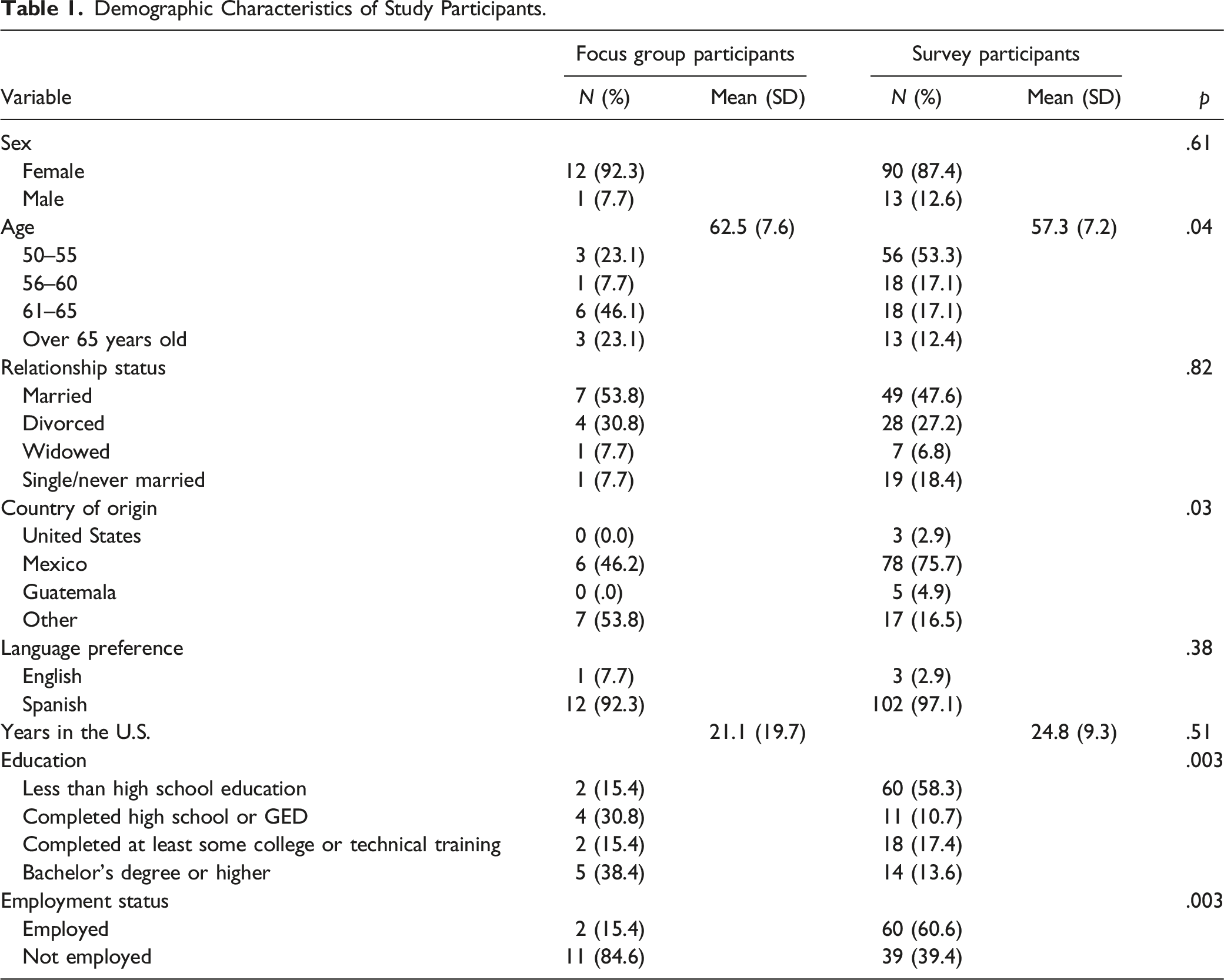
There was integration of methods built into the design of the study with the qualitative strand informing the development of the quantitative strand. Integration also occurred in the analysis phase. First, descriptive statistics were generated summarizing demographic information gathered from the focus groups and survey participants. Then, chi-square and Fisher exact tests were conducted to compare the demographic characteristics of the two groups (i.e., focus group participants vs. survey participants). Additionally, findings from the focus groups were compared with results of the surveys. Joint displays are used to present the results and highlight the integration of both the qualitative and quantitative strands of this study.
Results
Demographic Characteristics of Study Participants.
Interest in Intergenerational Physical Activity Programming
Nearly 86% of survey participants were interested in an intergenerational physical activity program, and almost all focus group participants (12 of 13 individuals) liked the idea of intergenerational physical activity programming. Focus group participants mentioned that such a program could be a way to promote health, enhance social support, decrease loneliness, and foster motivation. For example, one participant mentioned, “It would be very good, of course, anything that helps us get out of the house to exercise. It’s great not just for exercising, but for socializing” (FG3, Speaker 7). Another noted: “A very good idea because then we would all interact together as a family – and, at the same time, you meet other people and can make groups -- either of us adults, young people, or small children so that they get used to this. They are more motivated…we motivate each other more.” (FG2, Speaker 3)
Participants in all focus groups were also interested in activities that could engage the whole family. They noted that importance of the family in Hispanic/Latino cultures and that an intergenerational program could be a way to enhance engagement, even within a family. Children were seen as bringing happiness, life, motivation, and energy to a room. Participants mentioned: “That is an interesting thing because Latinos really have certain characteristics, and one of those is that we Latinos are very family-oriented. So there are many grandmothers who take care of their grandchildren, and there are many mothers who even sometimes stop working to take care of their children. It seems to me that an intergenerational program would make it easier for those people to participate in programs where they can do exercises along with their children, young people, and adults.” (FG1, Speaker 3) “My family, I know that they would agree because my daughters really like to ride bicycles… It’s something that, sometimes, young people – even if one leaves tired, even if one is stressed from work, from home, from everything, when you see them doing some activity, you transform and also want to participate with them. And I think that my family would 100% agree on that family activity.” (FG2, Speaker 3) “Children interact with adults and that is, they kind of give us life too, and we feel a little more accompanied [not alone]. We give them or we remove the fears that they might have and in turn they too accompany us. I mean, let’s see, it’s like we stop aging. Well, I would like to interact with children and with adolescents, and also with people like my children who are not so much teenagers anymore, but still like exercising a lot and to interact with other people.” (FG1, Speaker 4)
Preferences for Intergenerational Physical Activity Programming
Frequency, Timing, and Duration
Over 73% of survey participants were interested in an ongoing type of intergenerational physical activity program (i.e., one without a specific start or end date). Most participants (74.4%) believed that the program should meet 2–3 times per week, and 76.2% believed that each session should last between 1 and 2 hours.
Format and Delivery
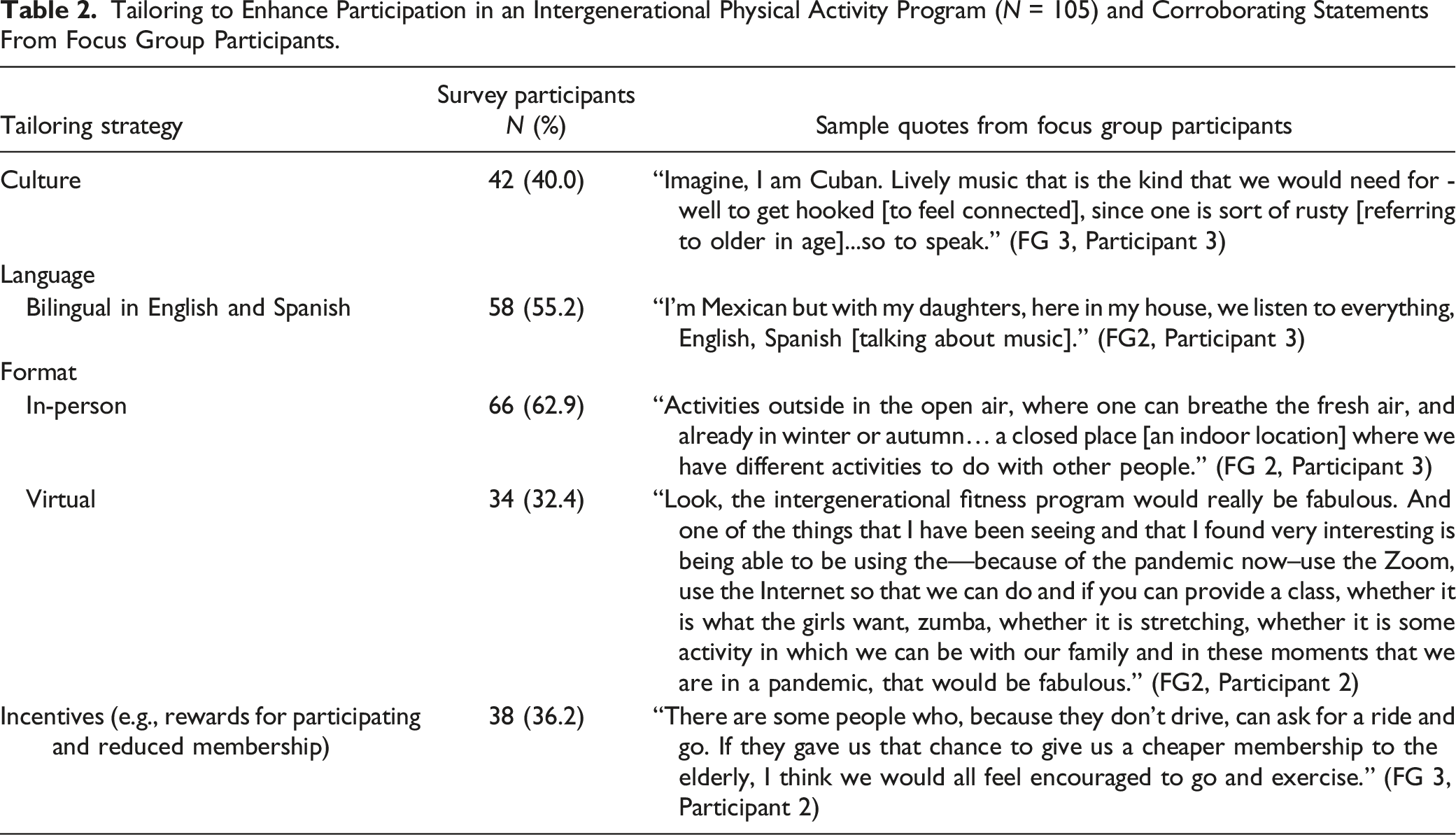
Tailoring to Enhance Participation in an Intergenerational Physical Activity Program (N = 105) and Corroborating Statements From Focus Group Participants.
Barriers to Program Participation
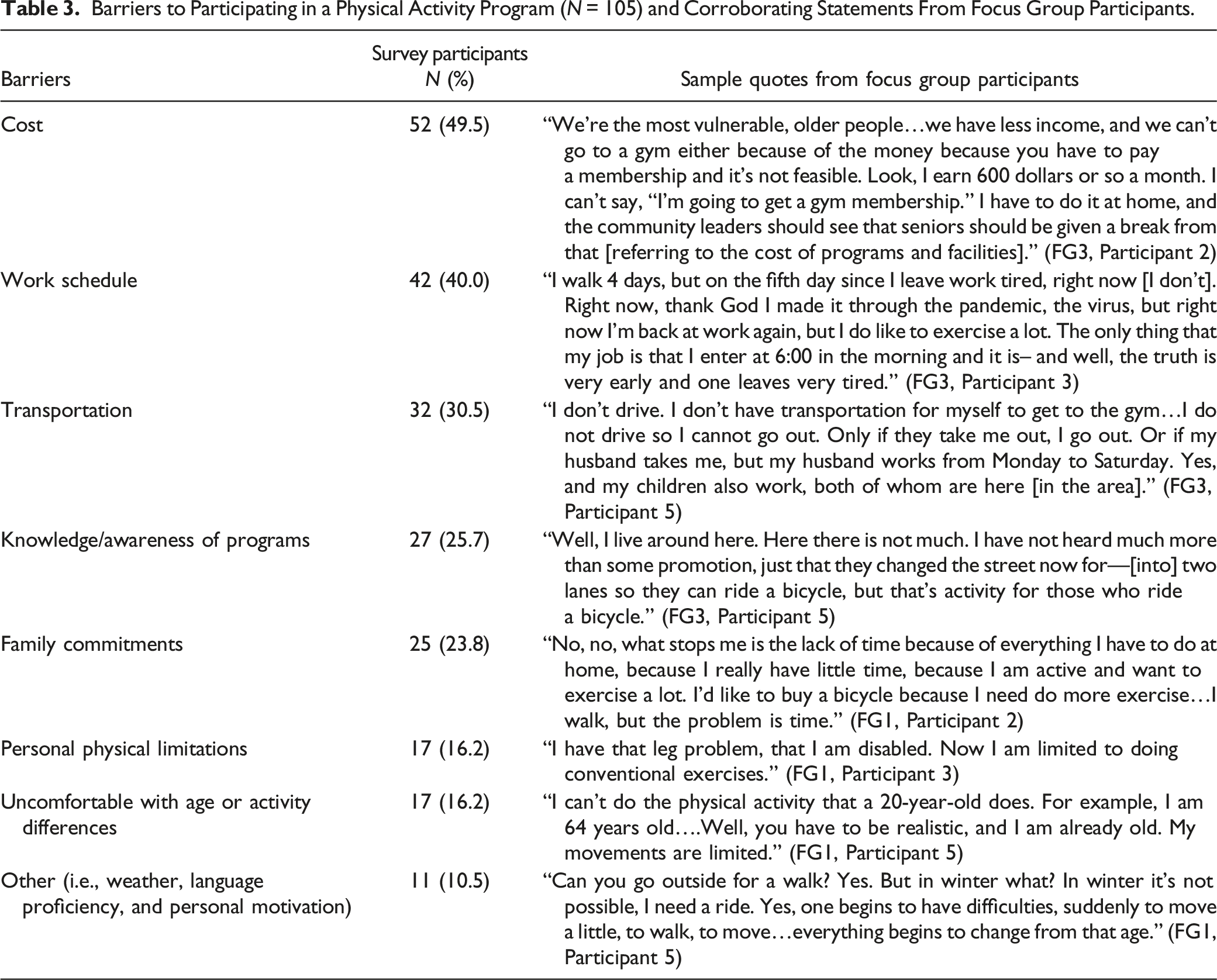
Barriers to Participating in a Physical Activity Program (N = 105) and Corroborating Statements From Focus Group Participants.
Participants were asked their level of comfort working with different ages of children, and 62.5% were comfortable or very comfortable with children aged 5–9, followed by 62.2% being comfortable or very comfortable with children aged 10–12. Less than half of participants (48.9%) were comfortable working with teenagers (youth aged 13–17).
Discussion
This study sought to better understand Hispanic/Latino aging adults’ perceptions and preferences for intergenerational physical activity programming and to determine the acceptability of such programming. We found that Hispanic/Latino aging adults were interested in intergenerational physical activity programming as a way to promote health. This is consistent with prior research that found that Hispanic/Latino aging adult participants were motivated to exercise because it kept them active and healthy (Harrison et al., 2020). Participants in our study also wanted to ensure that activities were age- and physically appropriate. Expanding prior research, our participants noted the important benefits of the intergenerational aspect of such programs, like enhancing social support, decreasing loneliness, and youth providing aging adults motivation to be active. Thus, in accord with a previous systematic review, our results highlight that a life course approach to physical activity may be beneficial (Spiteri et al., 2019).
Participants also communicated the importance of a program that could involve the whole family. They felt that participating in an intergenerational physical activity program along with younger family members (e.g., grandchildren) would motivate them and facilitate their engagement, given that many aging adults have family care responsibilities including taking care of children in their families (Marquez et al., 2020; Schwingel et al., 2015; Spiteri et al., 2019). Thus, our results are congruent with prior research documenting that common Latino cultural values, such as familism, may impact interest and participation (Calzada et al., 2012; Marquez et al., 2020). However, it is possible that incorporating child family members (e.g., grandchildren) may limit aging adults' opportunity to focus, learn, and enjoy physical activity programming (Schwingel et al., 2015). It is also possible that dynamics between aging adults who participate with their own children and aging adults who participate with their grandchildren may be distinct. Those considering working with the aging adult population should weigh the potential physical, psychological, social, and economic benefits and costs of intergenerational programs. Finally, young people may differ in their receptivity to participate in intergenerational programs. As such, future research should explore Latino youth’s interest in intergenerational physical activity programs.
These findings complement those from Piedra et al. (2018) and the ¡Caminemos! Program as well as the conceptual framework for culturally-safe physical activity (Gagliardi et al., 2022) in that culturally relevant and age-appropriate programming is critical. Our results are also consistent with a recently published systematic review highlighting the essential nature of tailoring physical activity interventions for culturally and linguistically diverse populations in the U.S. The authors noted that cultural adaptations may be necessary based on consultation with the community, such as adjusting to the common language spoken by participants, ensuring cultural and linguistic concordance of program personnel with participants, and providing culturally relevant intervention materials and content (El Masri et al., 2022). Physical activity programs should aim to acknowledge and integrate factors that may affect participation such as cultural values, language preferences, social norms, and cultural concordance of program facilitators (Gagliardi et al., 2022; Joseph et al., 2017; Marquez et al., 2020). Previous research has demonstrated that a culturally tailored aerobic dance program (e.g., using bilingual community staff to implement all aspects of the study in Spanish, adapting for lower formal education levels, and addressing cultural myths) increased physical activity among Latinas facing cultural, social, and environmental barriers to routine physical activity (Hovell et al., 2008). Another study of a lifestyle intervention for older Latinas found that faith may be an important consideration and that incorporating religious content such as prayer, scripture, and the lives of Saints or other religious figures may enhance participant retention and satisfaction (Schwingel et al., 2015). Finally, other evidence-based practices should also be incorporated into intergenerational physical activity programs, such as offering meaningful roles, incorporating mechanisms to facilitate friendship and socialization, promoting the novelty of program content, and structuring flexibility into the program (Jarrott et al., 2021).
Understanding barriers to participation in physical activity is critical. The current study also revealed some of the most pressing barriers to participating in physical activity for Hispanic/Latino aging adults in this community. They commonly cited logistical concerns such as cost, work schedules, family obligations, and transportation as well as limited awareness of local resources, particularly those available in Spanish due to limited English language proficiency among participants. We found that participants preferred bilingual (English and Spanish language) and Spanish-language programming, and they were interested in programs that were ongoing in nature and met frequently. Environmental factors such as weather conditions were also mentioned as potential barriers by participants given that the study was conducted in an area of the country that experiences all four seasons and sometimes extreme weather. Such barriers are consistent with what has been reported by previous studies (Harralson et al., 2007; Juarbe et al., 2002; Larsen et al., 2013, 2014; Marquez et al., 2020; Spiteri et al., 2019) and highlights the continued relevance of designing programs and services that can address such challenges, especially for aging adults in community-based settings. Some proposed solutions for overcoming such barriers include providing free and/or low-cost programs, hosting programs both during the day and in the evening to engage those who may still be working, selecting convenient locations, encouraging carpooling, educating on the benefits of physical activity in the primary language of participants, and increasing self-efficacy for participating in physical activity (Larsen et al., 2014; Marquez et al., 2020). Weather is much more difficult to overcome, especially in Midwestern cities where heat, humidity, cold, ice, and snow can affect participant attendance (Marquez et al., 2020). However, providing indoor spaces accessible to community members in their neighborhood along with transportation from and to their homes may help lessen some of those weather-related concerns.
This study has a number of limitations to note. First, because of the COVID-19 pandemic, the institutional review board introduced restrictions on in-person contact with research participants. Therefore, focus groups were conducted virtually using Zoom video conferencing technology, which may have limited the number of participants who were able to join given the relative unfamiliarity with the platform and limited computer and Internet literacy of Hispanic/Latino aging adults (Chang et al., 2015). It is possible that individuals who were unable to participate may have had different experiences and perspectives. Given that these focus groups were an exploratory component of the study, additional focus groups may be needed to ensure saturation. Some focus group participants did not join the Zoom platform on camera and instead joined only over the phone using only audio; therefore, not all participants were visible to each other or to the facilitator. Although this may have limited interactions and the interpretation of body language and facial expressions, the use of virtual and remote technologies facilitated our study in a time when many people were afraid and/or unable to gather in person. Restrictions on in-person engagement and contact also hindered recruitment for the survey component of this study. Second, participants were primarily females and only one focus group participant was male, limiting generalizability by sex. Finally, the study was conducted in the Midwestern part of the U.S., where there is generally less multilingual infrastructure and fewer services for diverse aging adults. Despite these limitations, we were encouraged by the age range of the participants that joined the focus groups and completed the survey. This study provided important perspectives regarding the acceptability as well as barriers to participation in an intergenerational physical activity program within this population group. Engaging with potential end users of a program provides important and relevant information that may foster participation, improve implementation processes, and promote sustainability (Ramos et al., 2016, 2019).
Conclusion
There are immense benefits of physical activity for aging adults as well as benefits of intergenerational programming on physical, mental, and social well-being; however, few studies have explored cultural, environmental, logistical, and contextual factors that may influence participation. Given the exponential expected growth of the Hispanic/Latino aging adult population in the coming decades, this study provides foundational knowledge to help develop and refine intergenerational physical activity programming for this population. Understanding benefits, barriers, and preferences for programming is imperative to foster participation, engagement, and ultimately health and social well-being outcomes.
Our study demonstrated that Hispanic/Latino aging adults were interested in intergenerational physical activity programming and saw many benefits, and intergenerational programming was perceived to be consistent with cultural values such as familism. Increasing access to physical activity opportunities is essential, particularly for aging adults. More research is needed to test intergenerational physical activity interventions with Hispanic/Latino communities. Future research may also consider exploring program preferences with other age or ethnic groups.
Footnotes
Acknowledgments
Thanks to our community partner, the Latino Center of the Midlands, for their assistance with this project and to all the participants for sharing their perspectives with us. The research team would also like to thank Dr. Dave Marquez for providing ongoing guidance to our team.
Declaration of conflicting interests
The author(s) declared no potential conflicts of interest with respect to the research, authorship, and/or publication of this article.
Funding
The author(s) disclosed receipt of the following financial support for the research, authorship, and/or publication of this article: This work was supported by the University of Nebraska Medical Center (UNMC) Vice Chancellor for Research and the health disparities pilot grant program through the Nebraska Tobacco Settlement Biomedical Research Development Fund. The use of REDCap at UNMC was supported by Research IT Office funded by Vice Chancellor for Research.
Disclaimer
This publication’s contents are the sole responsibility of the authors and do not necessarily represent the official views of UNMC or the Vice Chancellor for Research.
