




Abstract
This paper utilises the concepts of social exclusion and precarity to explore the situation of migrants during the COVID-19 pandemic. Focusing on European countries, we first demonstrate how migrants were more likely to experience exclusion prior to the crisis and how they were further marginalised due to the public health measures. Second, we show how inadequate government support exacerbated the exclusion of migrants. Finally, we explore social ties of migrants during the pandemic, with a focus on local and transnational ties. The paper is based on qualitative data collected as part of the European Union (EU)-funded project RESISTIRÉ, which examined the impact of the COVID-19 pandemic on vulnerable groups across Europe. Over 100 narratives with migrants were gathered during the project, and these were analysed to explore the multiple social exclusions experienced by migrants, as well as the ways they coped with being on the margins of receiving societies.
Introduction
Migrants are often identified as a ‘vulnerable’ group located on the margins of the receiving society, especially if they enter the destination country as asylum seekers, fill in the gaps in the secondary labour market, or have undocumented status. The transient and liquid nature of international mobilities often contributes to the potential marginalisation of migrants, even when social inclusion is included in official policies. Furthermore, studies also emphasise close links between migration and precarity, which can also provide a conceptual angle for exploring the links between migration and social exclusion. As we argue in this paper, both these concepts can thus be very useful in analysing the social and economic position of migrants in their new destination, particularly in the context of crisis.
Social exclusion is often placed on the opposite end from social inclusion (Kronauer, 1998), with the latter identified as a desirable part of the integration process. However, it needs to be emphasised that both social exclusion and inclusion should be understood as a process rather than a static situation (Gingrich and Lightman, 2015). Both are also multidimensional, relative and structural (Hyman et al., 2011). Furthermore, migrants can be both included and excluded, not only in the context of their host society, but also in relation the sending community (Benuto et al., 2018).
The multidimensional, structural and processual nature of social exclusion becomes increasingly visible during the time of social change – such as political reforms or economic crisis, which provide a unique context for a reconfiguration of social structures. Previous research has shown that certain groups, such as migrants, are more likely to be affected by economic downturns (Castles, 2015; Dustmann et al., 2010). In this paper, we will use the crisis of COVID-19 and the public-health-related lockdowns across Europe to further examine this multifaceted character of the relationship between migrants’ social inclusion and exclusion. Migrants, especially those from outside of the European Union (EU), e.g. refugees, might have been especially vulnerable to the COVID-19 crisis, particularly in relation to their position in the labour market. It has been noted that the pandemic brought fundamental changes to the organisation of the world work, with disruptions to the work routines and customs, as well as changes in entrepreneurial decisions regarding employment security (Falkenhain et al., 2021). The vulnerability of migrants in this context can be linked with several factors, but, most importantly, their pre-pandemic labour market status (Fasani and Mazza, 2021), especially considering that migrants often occupy positions which are low-paid or precarious. Studies on previous crises also showed that migrants are more likely to lose their jobs during the economic downturn (Castles, 2015; Dustmann et al., 2010) and become trapped in networks of unemployment, irregular economics, and the lack of stability (Carrasco-Carpio, 2017), while the migration status has been identified as a crucial determinant in relation to accessing welfare and state supports (Avato et al., 2010). However, it has also been noted that while a crisis situation may act as a ‘great disrupter’, it can also play the role of a ‘great revealer’, particularly in the context of social resilience and ‘bottom-up’ supports for the vulnerable groups (Preston et al., 2022).
This paper is based on qualitative data collected as part of the RESISTIRÉ project (Responding to outbreaks through co-creative inclusive equality strategies and collaboration), which investigated the impact of COVID-19 on equality in 30 countries, specifically through a gender + approach that focuses on analysing the impact of policy responses to COVID-19 on existing inequalities. One of the main elements of this study was the collection of qualitative data in the form of narratives with individuals from vulnerable groups, including migrants. By analysing the narratives conducted with migrants, we aim to contribute to the existing literature of the subject in multiple ways. First, we show how migrants, who were often already marginalised before the pandemic, became even more vulnerable, particularly in the context of their labour market situation. Second, we will examine how state policies, and the lack of welfare supports for certain groups (usually non-citizens or undocumented), exacerbated the economic and social exclusion of migrants in some European countries. Third, by using the concepts of bridging and bonding social capital, we will demonstrate how different facilitating factors enabled these individuals to navigate through the crisis and avoid being pushed out of the social margins. Finally, we will closely look at the issue of transnationalism and the inclusion/exclusion across countries, particularly in the context of restricted mobility and reduced financial resources necessary to provide remittances.
Theorising Social Exclusion
Social exclusion is a process which can be explained by a breakdown of relationship between society and the individual (Lee, 2022). As a part of this process, individuals are blocked from accessing economic resources, political rights or social services (Jordan, 1996; Taket et al., 2009), as well as cultural practices and social networks (Bombongan, 2008). Conceptualisations of social exclusion often emphasise the multidimensional aspects of social participation, with different physical, material, relational and societal needs involved (Barnes, 2005; Berghman, 1995; Room, 1999). Such multidimensional nature of social exclusion also implies that social exclusion can be manifested and experienced in different domains of life, including the economic dimension, social and relational dimension, political dimension, and, in some cases, cultural dimension (Bhalla and Lapeyre, 1997; Lee, 2022). Hence, social exclusion should be studied with a dynamic approach which allows for a recognition of exclusion in one domain followed by inclusion in another sphere (Raaum et al., 2009).
In addition, there are some interlinks between the concept of social exclusion and the concept of precarity. It could be argued that the two are a result of the same socio-economic transformation, namely the move away from the ‘certain degree of social integration represented by the Fordism era’ (Munck, 2004: 30). In that sense, exclusion is a consequence of the socio-structural changes related to the rise of neoliberalism, rather than an individual’s actions (Bhalla and Lapeyre, 2004: 4). Similarly, the notion that precarity is increasingly widespread is often viewed as a direct result of the neoliberal globalisation, and the restructuring of the economy and welfare institutions (Schierup and Bak Jorgensen, 2017). While precarity is usually closely related to the labour market situation and working conditions (Standing, 2011; Wacquant, 2009), it is also noted that precarity can also be applied to describe ‘a certain historical moment marked by the emergence of a new global norm of contingent employment, social risk and fragmented life situations which provide no security, protection or predictability’ (Schierup and Bak Jorgensen, 2016: 948). Precarious employment can thus be characterised by further limits in social protection and benefits, as well as insecurity of contract and risks of ill health (Vosko, 2006). This understanding of precarity is particularly useful here, as it perceives the state of precarity not only in the context of changing labour market conditions, but also concerns the retrenchment of the welfare state and the increasing inequalities (Lombard, 2023). As it will be further discussed, the notion of precarity, within the social exclusion approach, can be crucial in understanding the social positioning of migrants, particularly in times of crisis.
Migrants and Social Exclusion
In general, migrants can experience economic exclusion due to the discrimination in the labour market (Lee, 2022), or due to the limited or segmented access to the host country labour market (Arbaci and Malheiros, 2010; McLaren, 2003; Rydgren, 2004). Quite importantly, their situation on the labour market is, in many cases, interconnected with the mode of entry or the legal status of migrants (Portes and Rumbaut, 2006), with such categories as refugees more likely to have limited access to employment (Taylor, 2004). In addition, precarious work is used to conceptualise the position of migrants on the host countries’ labour markets (Castles, 2015), while migrants are also argued to be a ‘quintessential incarnation’ of precarity understood as a broader societal shift (Schierup and Bak Jorgensen, 2016: 947). While not exclusively assigned to migrants, precarious work can be further linked with informalisation, defined as ‘a redistribution of work from regulated sectors of the economy to new unregulated sectors of the underground or informal economy’ (Ness, 2006: 22). In that sense, the shift towards precarity is often conceptualised as a direct result of the neoliberal globalisation and the restructuring of the economy and welfare institutions (Schierup and Bak Jorgensen, 2017). Undocumented migrants are a crucial element of this growth (Castles, 2015) as some authors conceptualise precarity of displaced migrants around ‘hyper-precariousness’ (Lewis et al., 2014). Thus, in a broader sense, the lack of citizenship status combined with the poor working conditions puts migrants in a ‘doubly disadvantaged’ position (Lombard, 2023: 307). Consequently, precarity of employment becomes a ‘sticky web’ for many migrants with precarious status as labour markets become stratified according to migratory status (Goldring and Landolt, 2011). Finally, migrants with low pay, and often precarious jobs, can also be in a danger of financial exclusion linked with relatively low wages and their legal status. This form of exclusion mainly refers to the failure of the formal banking system to offer their products to all households (Dymski, 2005), especially in the context of debt understood as a tool for investment and a substitute for social welfare (Charron-Chenier and Seamster, 2021) and limited access to welfare supports for those in precarious employment (Vosko, 2006). All these shifts, usually associated with neoliberal policies, expands the notion of precarity beyond labour markets, thus broadening its definition to include ‘a new global norm of contingent employment, social risks and fragmented life situations which provide no security, protection or predictability’ (Schierup and Bak Jorgensen, 2016: 948). The concept of ‘precarious work’ can therefore be replaced by a more general concept of ‘precarious lives’ (Kalleberg, 2018), particularly in the context of global North–South divisions (Butler, 2004) or specifically in relation to the disadvantaged migrant population (Lewis et al., 2014). This broader understanding of precarity allows to strengthen conceptual links between the migrant population, marginalisation and precarity (DeVerteuil, 2017). Finally, it should also be emphasised here that the shift towards neoliberalism also brings new meanings to the concept of resilience during the crisis – particularly in relation to vulnerable groups, such as migrants in precarious circumstances – as it places the emphasis on the ‘neoliberal self’ with individuals expected to be resilient and self-reliant, with limited state help (DeVerteuil et al., 2021; Preston et al., 2022).
Status and the mode of entry feature are the most important factors behind the vulnerability to marginalisation and social exclusion. However, it needs to be noted that, while social exclusion itself is multidimensional, vulnerability to becoming marginalised is also intersectional. For example, various studies have shown that migrant women are at a greater risk of social exclusion, compared with females in the general population, as well as in comparison to male migrants (Fleury, 2016; Kawar, 2004). As it has been documented, Europe had undergone a process of feminisation of migration from the 1970s onwards (Kofman and Sales, 1998). The growth of the service sector, including informal work in such domains as domestic and care work, combined with the family reunification programmes, are the main drivers behind this process (Castles and Miller, 2009; Piper, 2003). The globalisation of care work plays an important role in this instance, particularly in relation to gendered division of work, migrant labour and inequalities (Romero, 2018). Quite importantly, while migration may offer women increased financial independence and new opportunities, women are also at a greater risk of being disadvantaged as they tend to have higher unemployment rates compared with migrant men and local women (Fleury, 2016) and are often concentrated in limited number of occupations, often precarious (Foley and Piper, 2020) or so-called ‘3D’ jobs, which makes them more isolated and less likely to build support networks (Kawar, 2004). Migrant women are also more vulnerable to exploitation if employed in domestic work, which is not covered by employment regulations (Fleury, 2016; Kawar, 2004), and they are less likely to seek help due to their concerns associated with accessing resources, restricted mobility and fear of deportation (Min-Harris, 2008). In addition, migration status also shapes their vulnerability to family violence (Vasil, 2023).
Finally, relational exclusion is also common among migrants, with limited social relations in the host country (Reid, 2004; Sen, 2000). This type of exclusion is reflected in both inadequate social cohesion at the societal level, and an ‘incapacity to participate in normatively expected social activities and to build meaningful social relations’ at the individual level (Silver, 2022: 159). Within this context, family is noted as a major source of support (Ayón, 2011, 2016), but is also important from the point of view of restructuring of the family roles post-migration (Ayón et al, 2018; Tummala-Narra et al., 2016) and potential isolation, if family remembers are left behind (Hurtado-De-Mendoza et al., 2014). Adding to the social isolation of migrants is the often-reported difficulty in establishing new connections in the host society (Ryan et al., 2008). Conceptualising these connections as ‘social capital’, Putnam (2007) makes a distinction between social bonds (with family and co-ethnic communities) and social bridges (with other ethnic groups). While Putnam is optimistic about the integrative function of social capital, he has been criticised for ignoring aspects of power and the fact that social capital is linked to other forms of capital (DeFilippis, 2001). From a more Bourdieuan perspective, social capital is primarily exclusionary, and it contributes to the social reproduction of class. In the analysis presented in this paper, both inclusionary and exclusionary aspects of social capital are explored. Furthermore, while the discussion of our findings continues to engage with the concept of social exclusion for the analytical purposes, we will also explore the notion of precarity as a useful concept for analysing migrants’ experiences of crisis – in addition to, or in parallel with, social exclusion models.
Contextual Background
This article is based on qualitative data collected in 30 European countries: EU27 (except Malta), Iceland, Serbia, Turkey and the United Kingdom. A pan-European approach of this kind has the benefit of illuminating aspects of social inclusion/exclusion that cuts across national contexts, but it makes contextualisation of the study challenging. Naturally, there are considerable differences between these countries both in terms of the pre-existing conditions (e.g. for migrants) and their responses to the pandemic. While an extended discussion of policy measures is outside the scope of this paper, this section will provide a brief overview of those most relevant to the argument presented in this article.
Across Europe, policy measures to curb the spread of COVID-19 were introduced, but the stringency of these measures differed (Mathieu et al., 2020). Most countries introduced full ‘lockdowns’ at some stage, but even in countries that relied more on voluntary recommendations, COVID-19 measures had a significant impact on the labour market (Fana et al., 2020). Migrant workers were particularly hard hit for several reasons. On one hand, they were overrepresented among essential workers which may have prevented some job losses, but it also meant they were more exposed to contagion, especially for female migrants working in healthcare (Foley and Piper, 2020). On the other hand, they were more likely to have temporary contracts and were less likely to work in occupations where teleworking was an option (Fasani and Mazza, 2023).
The extent to which national welfare states covered the income loss of migrant workers also differed. The quite extraordinary increase in public spending during the pandemic stands in stark contrast with the austerity measures that preceded it (de Beer and Keune, 2022). Most of this extra funding was channelled through already existing welfare systems and measures (Mäntyneva et al. 2023), and comparative studies show that the universalist Nordic welfare states proved more resilient and better able to mitigate some social and economic inequalities than conservative and liberal models (Ellison et al., 2022; Pereirinha and Pereira, 2021); however, some exceptions to these general tendencies can be found. Ireland, for example, departed significantly from previous welfare policies by offering relatively generous payments to all who had lost their job due to the pandemic, including undocumented migrants who could access these payments without fear of deportation (O’Sullivan, 2020).
The EU’s impact on national welfare systems is limited, but EU regulation had a fundamental impact on the mobility of migrants during the pandemic. Commentators have argued that the pandemic was used an excuse to strengthen ‘fortress Europe’ and that travel restrictions were racially coded and aimed primarily at the global South (Reynolds, 2020). However, the pandemic also limited movement within the union in the form of bans on non-essential travel and the introduction of internal border controls (European Court of Auditors, 2022). This ban on non-essential travel, and subsequent exceptions to these bans, also reveal deep-seated inequalities within the EU. Exemptions to the travel bans were usually tailored to the needs to the receiving countries, paying little attention to the needs and interests of the migrant workers (Leiblfinger et al., 2021; Paul, 2020).
Methods
This paper is based on narrative interviews collected in the EU-funded research and innovation RESISTIRÉ Project which explores the impact of the COVID-19 pandemic on the behavioural, social and economic inequalities in Europe. Narrative interviews differ from structured or semi-structured interviews as they do not rely on the traditional question–answer format. Instead, the purpose of the narrative interview is ‘to let stories be told, particularly the stories of those who might have been marginalised or alienated from the mainstream, and those whose valuable insights and reflections would not otherwise come to light’ (Kim, 2016: 166).
In total, 740 narrative interviews were conducted with individuals from marginalised groups in 30 European countries. Out of those interviewed, 108 were migrants, broadly defined here as a person who is currently living in a country other than their country of birth. The analysis presented in this paper is based solely on these migrants’ narratives.
Data Collection
The data collection consisted of three consecutive cycles, the first cycle starting in July 2021 and the third cycle ending in December 2022. The interviews and the initial analysis were conducted by a network of experienced, native language speaking, national researchers. The national researchers were asked to recruit participants using purposive sampling. The aim in all three cycles was to collect diverse experiences highlighting the intersection of inequalities and identities, thus reflecting the gender + approach of RESISTIRÉ Project.
The narrative data was standardised by providing the national researchers with detailed guidelines for interviewing and reporting, as well as regular online training and monitoring sessions. The national researchers opened the interview with a ‘grand question’ about the ways in which COVID-19 affected their situation. Beyond that point, the interviewer’s main role was to listen and ask clarifying questions when needed. The openness of the narrative interview method allowed for a great variation in terms of the content of the interviews; however, they were reported in a standardised manner. The national researchers were asked to summarise each interview into a narrative in English of approximately 750 words, using the participant’s own words as far as possible. They were also asked to provide keywords, especially telling quotes and relevant background information. It is these narratives, rather than the full interview transcripts, that form the basis of this paper.
Obtaining informed consent was an essential part of the interview process. The national researchers were provided with a sample consent form informing the participants of the purpose of the study and their rights as a participant. Written consent was given when the interview took place face-to-face and verbal consent was recorded in the instances where online interviews had to be conducted due to COVID-19 restrictions.
The Sample
The sample consists of individuals with diverse backgrounds based on social inequality grounds, including gender, social class/socioeconomic background, age, disability, nationality, ethnicity, religion/belief, sexual orientation and gender identity. The national researchers were instructed to indicate which of these inequality grounds were relevant to the narrative. Race and ethnicity were only recorded in this way, as relevant to the narrative, and no data on the specific racial or ethnic identity of each individual were collected. While we recognise the important interconnection of race and social exclusion, this methodological limitation meant a systematic analysis of the impact of race was not possible, and the decision was made to focus primarily on migrancy.
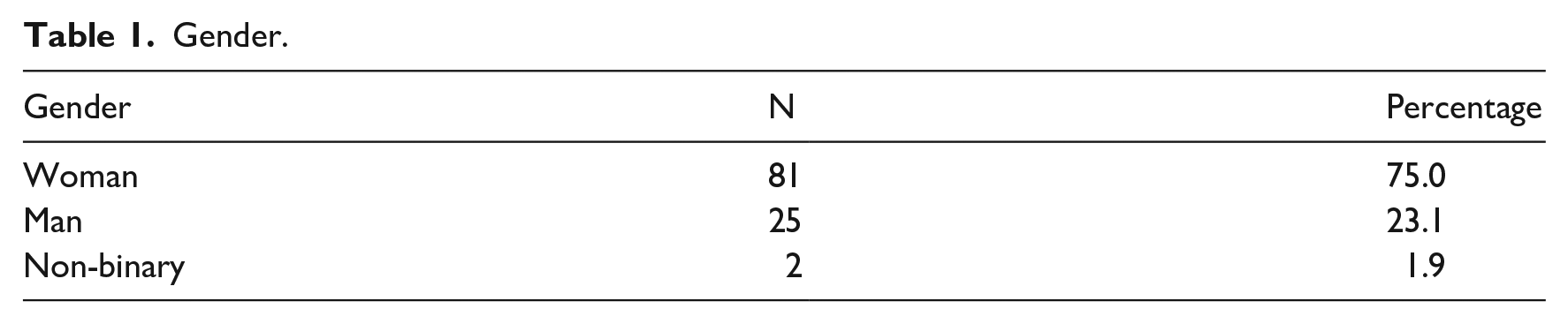
As seen in Tables 1, the sample is not gender balanced. This reflects both the disproportionate effect the pandemic had on women, and a deliberate recruitment strategy aimed at telling the untold stories of marginalised women.
Gender.
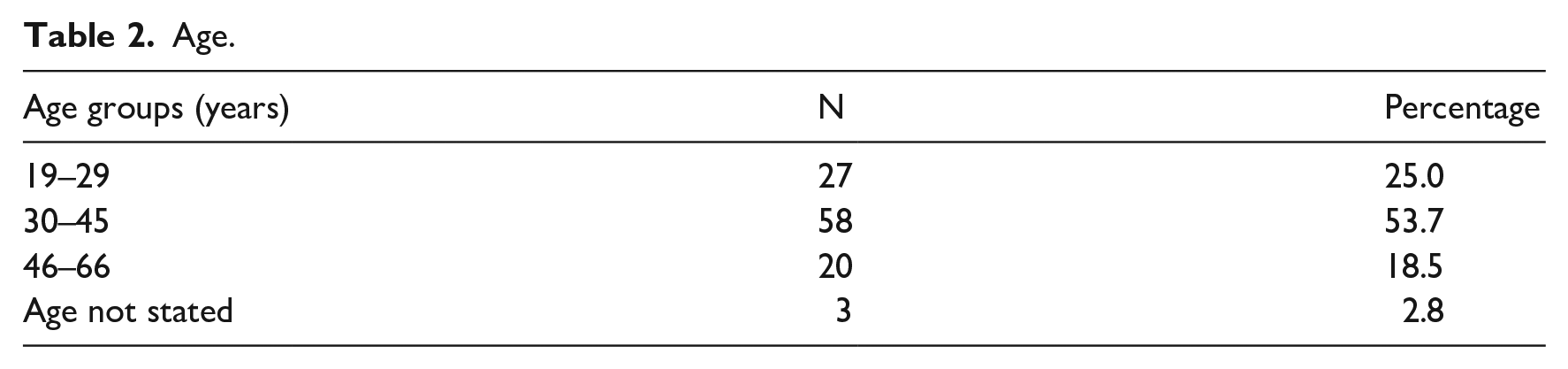
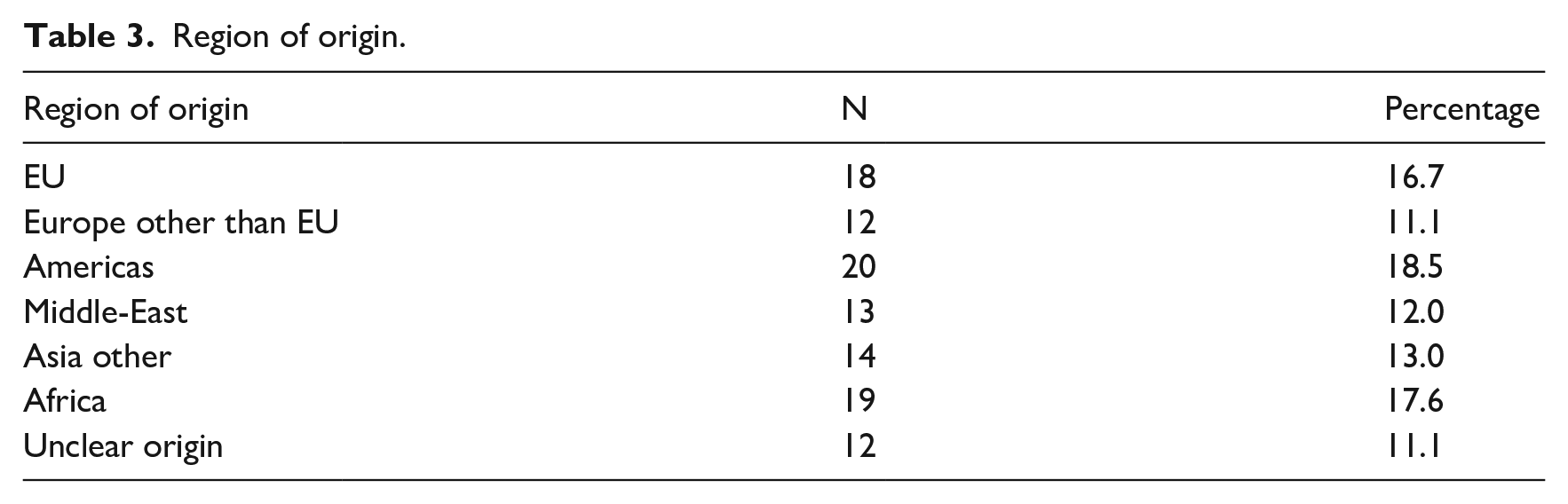
As seen in Table 3, the sample is quite diverse in terms of geographical origin. The reasons for migrating and residence status were not always stated in the narratives, hence it is difficult to quantify. However, labour migrants make up the majority of the sample, followed by refugees and international students. The sample also includes individuals for whom marriage or other intimate relations were the grounds for migration. In terms of age (Table 2), participants aged between 30 and 45 years are overrepresented and there is only one migrant past retirement age in the sample.
Age.
Region of origin.
Data Analysis
The first step of the data analysis was conducted by the 30 national researchers who summarised the ‘essence’ of each interview into a coherent narrative. A more focused reading of the narratives then ensued by the authors of this paper, where the narratives were coded into broad categories relating to social exclusion: economic exclusion, political and civic exclusion, exclusion from the welfare state and exclusion from social connections. Barriers and facilitators of inclusion were also identified. Economic exclusion, in the labour market and the welfare state, and social connections were deemed most fruitful to examine further. Hence the narratives in these categories were coded thematically, resulting in the sub-themes presented in the results sections below. All individual names used for the purpose of the following analysis were pseudonymised, while the country of origin (if stated) and the country of residence remain original.
COVID-19, Migration and Social Exclusion: Stories from the Narratives
This section will now turn to the qualitative data collected for the purpose of this study. As we will demonstrate in the analysis, migrants often held vulnerable positions in their host society prior to the pandemic. However, our data also show that their position further changed during the COVID-19 crises. First, the precarious nature of migrant-niche work resulted in financial struggle. Second, the state often failed to assist migrants with their pandemic-related supports. Third, their social connections were jeopardised through the lockdowns. However, as finally demonstrated, for some the pandemic meant the reconfiguration, rather than a dissolution, of the existing social networks. As will be discussed, the last point is particularly important here: as pointed out by other scholars, a disaster can open up new opportunities for reconfiguration of structures, particularly in the context of resilience and vulnerable communities (DeVerteuil et al., 2021).
Economic Exclusion: Labour Market and State Aid
As discussed, migrants often occupy spaces in the secondary sector of the host country labour marked and work in precarious employment, which makes them more vulnerable to any economic turmoil. This can be linked to the legal status of migrants, especially if they come from outside of the EU and do not have required employment permits. Language barriers and the lack of proficiency are also frequently important factors for not being able to avail white-collar jobs. However, the ability to send remittances back home in many cases compensates for the low pay and insecure nature of employment, which makes these jobs relatively attractive for migrant workers.
Although some the interviewees in our sample held the ‘white-collar’ positions, most migrant workers featured in the narratives worked in the secondary labour market in the receiving countries prior to the pandemic. Among them, the most common were care workers, cleaners and those working in hospitality or retail. Their working conditions were characterised by precarious employment (often irregular), lack of prospects and limited social contacts. Daniela, originally from Ukraine, who worked as a domestic carer in Greece, noted she ‘was lonely before the pandemic’ and even more so during it, as her life revolved around the client’s house. Carla, a migrant care worker living in Spain, explained her situation as follows:
I left Honduras 5 years ago with my son to live in Spain. I worked as a carer of elderly people. My life here has been very hard since the beginning. I left my country because of the extreme violence, and I had high expectations of a better life, but the reality here was different. When I started working, I had the opportunity of a job in the care sector, but the conditions were inhuman: I worked seven days a week, and the salary was below minimum income. The lady I was taking care of treated me very badly, insulted me, diminished me, called me names and made jokes about my weight. I was exploited, basically.
The narratives revealed several reasons for being ‘forced’ to low-paid jobs. Some of the interviewees explicitly stated the structural barriers as the main factor. As claimed in some of the narratives, irregular cleaning and care work were ‘the only options’ for migrants in certain countries, with the white-collar positions ‘locked’ for foreigners, particularly those coming from outside of the EU. Interestingly, financial reasons were also sometimes mentioned, especially when the dissatisfying working conditions went in tandem with satisfactory earnings. Vanha, who moved from Mozambique to Germany, explained:
Some time ago, I attended a course for caregivers of elderly people, which I liked. There, I had to attend two internships accompanying people. I found it interesting but afterwards I realized that I would not have earned more than cleaning. [. . .] My professional life changed when I came to Germany. In Mozambique I had been working as an accountant at a big transnational company. If I wanted to work as an accountant in Germany, this would not be possible as you need a special vocabulary and I did not have a good command of the language.
While the above quotes refer to the pre-pandemic times, it needs to be emphasised that the circumstances changed for many of these migrants due to the outbreak of COVID-19. It became clear that they were relatively vulnerable to the crisis for multiple reasons. First, some of the migrant-dense sectors, such as hospitality, closed down with the public health restrictions. Second, home-based workers were in danger of losing jobs as their ‘employers’ were afraid to be infected. Third, migrant workers, who often had frontline jobs, became more vulnerable to the virus itself. Finally, those who contracted COVID-19 also faced job losses due to the nature of their precarious contracts and the inability to take a sick leave.
The impact that lockdowns had on work featured in multiple narratives. For example, in his narrative Prune, a Cameroonian living in France, exemplifies the consequences of lockdowns and mobility restrictions for a migrant worker on a temporary contract:
At the time of the crisis, I was working at the airport, cleaning the terrace where passengers are received in the morning. There were rumours [about] fewer passengers, fewer flights. And the president announced it, and the interim company called me to confirm. I was on a long-term temping contract. One morning it suddenly stopped.
Furthermore, those migrants who worked in private houses were even more directly impacted by the virus. Josefa, a Polish migrant working as cleaner in Greece described her situation as follows:
The lockdowns destroyed everything for me because only one client, who is a single male, [. . .] told me that I could continue going to his house to clean. I lost all my income in one day and then I could not send anything back home because I was not allowed to claim government compensation in Greece. When the first lockdown eased, I got a second client back, but after few weeks, I got COVID and had to stay home.
As noted in her narrative, due to the informal nature of the job, she was not entitled to any government support during the lockdowns. In fact, this was a quite common situation affecting many of our participants, either due the nature of their job (no formal contract) or their legal status (non-citizen). We argue that the governments often remained ‘blind’ to some categories of workers severely affected by the crisis. Migrants frequently fell under that category, either because they were undocumented, or worked in irregular jobs that did not entitle them to social welfare payments. While in some countries (e.g. in Ireland) the government supports were universal, in some they depended on social security payments or residency status. As a result, some of those already economically vulnerable became even more financially excluded. These conjunctures between the legal status, and the economic exclusion were clearly visible in a narrative of Andrea, a Brazilian national living in France:
During the lockdown, the Family Allowance Fund suddenly stopped paying my benefits. I spent two months in the doldrums, I was really desperate. I had to prove that I and my daughters had been here for five years, that I had a residence permit to validate my rights. I provided all the papers that prove this, that I have paid taxes, that I am legal in the country. But I needed a certificate from the prefecture, and it was closed. All my orders had stopped, my savings were gone. I had rent to pay. I had to ask a social worker for help. She gave me food vouchers to get by with my girls. That’s all we had, and what’s more, not all supermarkets take the vouchers!
A number of narratives with migrant workers feature financial struggles, or even not being to afford basic needs. It should also be noted that in some countries, even though the assistance was available, the information about such payments was not easily accessible to non-nationals, especially those with limited knowledge of the host country language. While living ‘normal’ lives before the pandemic was usually less problematic, knowing how to navigate the system during the lockdowns became a challenge for some of them. As Flore, a migrant who worked as a self-employed trader in Italy, explained, understanding the complexity of the state aid was often confusing and difficult:
The policies issued by the government to help traders were there but difficult to understand and to access because of language barriers, and of course, because the uncertainty that comes with constantly changing information. [. . .] I turned to social media to try [to] stay up to date, and did my best to scour government websites for news on financial assistance, and to find other up-to-date information. I think that the government made things much more confusing than they needed to be.
In some cases, the difficulties associated with navigating the system caused a lot of distress and carried significant mental load. This is clearly illustrated in a narrative conducted with Charlotte, a Senegalese migrant in Germany:
We had to apply for the general state subsidies, but I was in a hospital and my husband did not have the required knowledge of the German language back then. [. . .] My husband himself was not allowed to ask for state aid as he has another nationality. It was a really hard time because we had not received any income for more than four months. It was a catastrophe.
Interestingly, while it became evident that some of these migrant workers struggled disproportionally at the beginning of the pandemic, it also emerged from the narratives that some were able to eventually receive a certain level of assistance. In many cases, they rely on different types of social connections they established either before or during the pandemic. As we will argue in the following section, this reconfiguration of social networks during the crisis, and the ability to avoid economic exclusion with the help of these networks, can provide an interesting avenue for the analysis of the inclusion–exclusion nexus.
The ‘Social’ Dimension of Social Exclusion
In the narratives, we see evidence of both the inclusionary and exclusionary power or social capital, on the individual, national and transnational levels. Furthermore, they demonstrate how inclusion and exclusion are not binary absolutes, nor are they static conditions. The narratives show how many slipped further into the margins during the pandemic, but they also show how even very limited social capital can help individuals reach some form of inclusion. However, it also needs to be emphasised that this can be problematic in the light of the self-reliant neoliberal subjects (Preston et al., 2022), which is an issue that the authors will return to following the analysis.
Local Ties
Life during the pandemic was a lonely experience for many, regardless of origin, but migrants were disadvantaged in several ways. On the most basic level, being new to a country typically means limited access to local social networks. Language barriers are potentially a more long-term challenge, as are xenophobic and racist attitudes from the host population. Many narratives describe how lockdowns and social distancing measures during the pandemic prevented both the establishment of new connections and the maintenance of existing ones.
As migrants often find work through social connections, and also connect with people through work, inclusion in economic and social life is strongly interlinked with changes in one area affecting the other. In the more privileged segment of migrant narrators, the switch to remote work had a damaging effect on social relations. Muhammed, a Syrian refugee working as a developer in Latvia described his situation as follows:
I don’t have a big number of friends in Latvia. I had a big number of friends, but in Syria. The social interaction I had was at work. And I was deprived of that during lockdown [. . .] And after two years, I mean, your colleagues turn into icons on your desktop. It’s hard to realize that this guy I’m talking to is another person, he has feelings. I mean, we do talk, but if it’s online, the talk is not natural.
At the other end of the labour market, narratives with migrant care workers described how the pandemic often resulted in being isolated not at home but at work. For example, quarantine rules meant that Milena, a Slovakian woman working in Austria, had to stay with her client for extended periods of time:
Thinking about the pandemic, I predominantly think about social isolation. At the beginning of the pandemic, I could not go home. I stayed for a long time with my client which came with a massive physical and mental burden.
Other care workers described how the pandemic not only limited opportunities to travel but also cut them off from local support networks. In order to protect their old and frail clients, they had to stay isolated. The local support networks that were sustained often relied on ‘social bonds’, or co-ethnic ties, exemplified here by Narnia, a Sri Lankan woman living in Cyprus:
My community help a lot. We are many girls from Sri Lanka and some men. We meet on Sundays and go to park to eat together, we discuss problems and good moments. We sing and pray together. We exchange clothes.
These types of social bonds often took the form of mutual support, offering both emotional and material support, as well as information on how to access services, find work and housing. Sometimes, as in Narnia’s case, they were ethnic communities, sometimes the commonality shared was the migrant experience. Many migrant narrators also relied on more formal civil society organisations to get by, and this support often covered gaps in the public welfare system. This more one-sided support was sometimes associated with a sense of shame at having to rely on charity. That civil society organisations and non-governmental organisations (NGOs; third sector) often fill in the gaps for the absent welfare state, by supporting the marginalised population, in particular the immigrant population, characterised by multiple precarity, such as precarious work or lack of citizenship has also been demonstrated in other studies (see, for example, DeVerteuil, 2017).
Social bridges with the majority population were also described with more ambivalence. Migrant narrators with a native partner were faced with particular challenges. Although this could provide some benefits in terms of social inclusion, it also implied an unequal power balance in the relationship. Total dependence on a partner and their network had particularly devastating consequences when the partner turned violent. Elena from Estonia moved to Greece to be with her husband. After some time, he became abusive, and she decided to leave him:
But he began to visit and he became abusive again. It was very embarrassing and I had no one to turn to because all the people I knew where his relatives and friends. Mine are in Estonia. I couldn’t even travel there to meet them.
As they had a child together, Elena was unable to move back to Estonia as she was legally obliged to give her ex-husband access to their child. Trisha, an Indian woman living in Denmark, was similarly tied to her perpetrator as her residence status depended on staying with her abusive husband.
In addition to social distancing rules, many narrators reported other pandemic-related barriers to forming social bridges. As Martha, a migrant woman living in Estonia put it: ‘Estonians had their own families and they tended to clam up into their little pods and forgot about us, foreigners, who did not have these pods’. Many narrators also describe an increased hostility towards migrants during the pandemic and several described being treated with suspicion as potential ‘virus spreaders’. One such example came from Rita, a Yemini refugee in Bulgaria:
Something I noticed after the start of the pandemic is that people in Bulgaria became more suspicious towards me. When I take my kids to the playground, they play with the other children there. But when the parents see me – that I’m not a Bulgarian and I’m wearing a hijab – they take their children away. This is very painful for my kids because they love playing with others. It’s difficult to explain to them why the locals started being afraid of us, like we will carry the virus more.
Deepening divisions of this kind are likely to affect not only the potential for social inclusion on the individual level but also social cohesion in society as a whole.
Transnational Ties
Whereas the previous section largely stayed within the confines of the nation-state, the narratives also emphasise the importance of transnational ties. As such, they challenge the ‘methodological nationalism’ (Wimmer and Schiller, 2003) often implicit in discussions on social exclusion. That social exclusion is not confined to one national context is seen, first of all, in how the narrators spoke of their reasons for migrating. These often reflect global inequalities, and many narrators were economically marginalised in their countries of origin as well. There are also examples where other forms of social exclusion were stated as the reason for migrating, for example, members of the lesbian, gay, bisexual, transgender, queer and intersex (LBTQI) community who migrated due to discrimination in their home countries.
Second, participating in ‘normatively expected social activities’ and building ‘meaningful social relations’ (Silver, 2022) are things that migrants do across as well as within borders. Maintaining family and other social relations abroad is a challenge at the best of times, during the pandemic it became even more difficult. The narratives contain a number of stories from parents whose working life was in one country and their children in another, ranging from those who had lived on separate continents for many years to women like Adina, whose 25-minute commute from Chechia to Germany turned into a 3-hour commute and later, when the borders closed, to staying in a dormitory in Germany in order to continue working. Adina took it in her stride as her husband was still in Chechia with her children, but her colleague was less fortunate:
She is a nurse, but she is a single mother, and has two children, a similar age as my youngest. It was extremely difficult for her. She had a mental breakdown, crying for a really long time. When we talked about it, not knowing what’d happen next, she said: ‘What is going to happen now? Will the borders remain closed, and they will just bring our children to the fences for us to at least see them or what?’
For undocumented migrants and refugees, the possibility to visit family abroad was already severely restricted, but border closures during the pandemic affected migrants regardless of their level of exclusion in other respects, and many described not being able to see their family for an extended period of time as one of their greatest difficulties. Those who were economically marginalised may not have been able to travel abroad on a regular basis prior to the pandemic either, but the pandemic removed the possibility to travel even in the case of emergency. This caused a great deal of uncertainty for many, as exemplified by Ishaan, an Indian student living in Chechia whose parents contracted COVID-19:
Covid positive people were being ignored, like untouchable. They were transferred to the hospital, and my brother was calling me crying [. . .]. They had insurance that did not cover Covid-related hospital stay [. . .]. My mother sold her gold, and later, I sent them some money. This was extremely difficult for me, being trapped here and not knowing whether they would be able to make it.
The quote from Ishaan brings up a recurring theme in the narratives: the mental strain of worrying about not being able to take care of loved ones, especially older parents living in countries with limited access to healthcare. It also brings up the issue of remittance. Ishaan was fortunate enough to have a job that not only sustained him but also allowed him to send money to his parents. Many of his fellow international students struggled to pay their university fees as they lost their part-time jobs, and their parents were unable to support them due to financial difficulties caused by the pandemic. In other words, money flowed in both directions in the narratives, but it was far more common that the migrants were financially responsible for family members in their home countries. Loss of income therefore had implications not only for the migrants themselves but also for those they were supporting.
Finally, being separated from family during a crisis like the pandemic added to the sense of isolation, and indeed exclusion, for many. Regular communication over the phone or online helped alleviate this isolation, and some even described becoming closer to their families as a result. Alberto, a Brazilian man living in Portugal was one such narrator:
One of the things that happened during the pandemic was that I got much closer to my parents. I was very apart from them because of my sexual orientation, we never managed to talk about that. But now we did, not with my father but with my mother. We talked openly about the issue and I’m feeling much closer to them. Also with my father, with both of them, I now spend a lot of evenings chatting. We turn on the conference call and we stay connected, me and them watching tv, doing things at each home but being together and commenting things.
The pandemic in many ways emphasised the difficulty of living transnational lives. However, it also reinforced the importance of maintaining transnational bonds and some, like Aberto, even found a way to strengthen these bonds.
Discussion and Conclusion
As demonstrated in this paper, our data follow the international literature suggesting that migrants, in general, are at a greater risk of broadly understood social exclusion and, consequently, have limited access to economic resources and social networks (Bombongan, 2008; Jordan, 1996; Taket et al., 2009). In the case of our narrators, these were strongly linked with their legal status, the labour market position and the limited social connections – all of which were described as important factors contributing to the social exclusion of migrants (Arbaci and Malheiros, 2010; McLaren, 2003; Rydgren, 2004). Not only were they often employed at the lower end of the host country labour market; some could be described as the ‘quintessential incarnation’ of precarity (Schierup and Jorgensen, 2016) due to the informal nature and the insecurity of their jobs, which were often based in unregulated sectors (Ness, 2006), particularly domestic care. Those who were undocumented, were also experiencing the ‘double disadvantage’ (Lombard, 2023) with precarious employment constituting a ‘sticky web’ (Goldring and Landolt, 2011). However, it needs to be emphasised that such vulnerability was already experienced by the narrators prior to the pandemic. As argued by, for example, Dustmann et al. (2010) and Castles (2015), such risks become even more pronounced during the time of crisis, particularly in relation to the economic exclusion. In our analysis, we demonstrated how the COVID-19 pandemic often pushed migrants out of their jobs, which, in many cases, resulted in livelihood struggles.
In relation to welfare support, while some studies explain why migrants are less likely to seek help (e.g. Min-Harris, 2008), this lack of willingness is often presented in relation to restricted mobility or fear of deportation, rather than lack of services or information offered to migrants by the state. Our data show a rather complex nature of the relationship between migrants and state services. The experiences discussed in the narratives varied and showed how migrants can have difficulties with access due to their legal status. Time spent in the country, frequently a prerequisite for accessing supports, was also often an issue. Furthermore, the ad hoc nature of the pandemic welfare measures meant that the information was sometimes not accessible or, indeed, confusing. As a result of this mechanism, some migrants were at the risk of systemic exclusion, which goes beyond the common understanding of economic exclusion linked to the segmented nature of host countries’ labour markets. This, in conjunction with the possible financial exclusion understood as a lack of access to the formal banking system which can substitute social welfare (Charron-Chenier and Seamster, 2021), resulted in further financial struggles, described by Datta (2007) as the intensification of poverty experienced by poorer households, including those consisting of migrants. It could be thus argued that the migration status here interacts with precarious employment, once again calling for more scrutiny in relation to the understanding of migration and broadly understood precariousness (Kalleberg, 2018; Lewis et al., 2014). Consequently, precarity is crucial here for conceptualising social exclusion, as it is not only related to the labour market, but rather refers to the precariousness of migrant lives (Lewis et al., 2014).
Similarly, our data suggest that migrant status in the host country can also be linked with social exclusion defined by limited access to social networks. However, the narratives collected for this project also show a more complex nature of this issue, which goes beyond the distinction between bonding and bridging social capital (Putnam, 2007). While some of our respondents reported an increase in social isolation during the pandemic, they also discuss having existing connections in the host country prior to the crisis. A rather interesting pattern emerged during the pandemic as social connections were rapidly activated in the absence of formal state support. Social networks were thus mobilised in order to alleviate the economic exclusion and they consisted of both bonding and bridging capital. This finding corresponds with findings from other scholars discussing the issue of crises opening up possibilities for positive transformation (DeVerteuil et al., 2021). Here, the social resilience concept has been demonstrated to be relevant to migrant inclusion and integration (Preston et al., 2022), while non-profit organisations have been found as an important source for supporting migrants in the absence of the state-based welfare supports (e.g. DeVerteuil, 2017). However, there was a tendency to rely more on bonding capital and some reported difficulties in establishing bridging capital due to increased xenophobia. Furthermore, our data problematise the ‘positive’ impact of having access to bridging capital. For example, bridging networks obtained through a native partner often had an ambivalent nature due to the unequal power balance they imply. This dependence on a partner proved particularly problematic for women subject to violence and abuse.
Finally, our analysis challenges the ‘narrow’ understanding of social inclusion, which tends to frame it within a nation-state ‘box’ (Fangen, 2010; Wimmer and Schiller, 2003). Many of the narrators discussed the important role of transnational networks in relation to connectivity and emotional support. However, the pandemic and the closure of borders resulted in the breaking of these direct connections as people were not able to visit their relatives and friends in their origin countries. While some narratives emphasised how the pandemic intensified transnational connections via online communication, bringing migrants closer to their original communities, the lack of possibilities to socialise across borders highlighted the importance of social inclusion that reaches outside of the nation-state context. The narratives emphasised the isolation experienced when family members are left behind (Hurtado-De-Mendoza et al., 2014), and as these family members often relied on remittance from the migrant workers, the economic exclusion experienced also had knock-on effects further afield.
Overall, the narratives collected for the purpose of this project demonstrated how migrants often become subjects of social and economic exclusion and that the crisis can also exacerbate this pattern. However, we also need to emphasise that the interviews resemble a strong notion of resilience and provided interesting examples of coping with the exclusion during the pandemic crises. As such, these stories often present an opposite direction of network building, moving away from vulnerability and escaping the exclusion. This was particularly the case when the state was leaving the marginalised behind due to the lack of targeted or universally available assistance policies. Here, the grass root mobilisation, the ‘bottom-up’ agency (DeVerteuil et al., 2021) and capitalising on individual networks were crucial in helping to avoid extreme marginalisation. In this way, our analysis contributes to the existing literature by demonstrating how social exclusion and social inclusion are not only complex and multifaced, but also non-linear and multidirectional.
Footnotes
Funding
The author(s) disclosed receipt of the following financial support for the research, authorship and/or publication of this article: The RESISTIRÉ (Responding to outbreaks through co-creative inclusive equality strategies and collaboration) research project is funded by the EU under H2020, Grant Agreement No. 101015990.
