



Abstract
Texas legislation mandated that colleges offer developmental education using a corequisite model, where students concurrently enroll in introductory college-level courses with supplemental developmental support. Using data from the population of Texas students in developmental education, we estimated regression models to investigate differential relationships between corequisite characteristics and outcomes, both overall and by student characteristics. Our findings suggest there is no single “magic bullet” course structure that is universally more effective, as relationships between the reform and student success vary by subject and student subgroup. Additionally, even a single credit of corequisite developmental support can be beneficial for some students, potentially more so than traditional three-credit courses.
Keywords
Open-access community colleges and a growing number of 4-year institutions have long struggled to effectively support students who enter higher education underprepared for college-level coursework. A significant portion of these students, upon placement in one or more semesters of traditional developmental education, fail to progress to, or even attempt, introductory college-level courses in math or English (Clotfelter et al., 2015; Scott-Clayton & Rodriguez, 2015). In response, a promising policy alternative has emerged through corequisite models that move away from the notion that developmental education must be completed in a separate sequence before enrolling in college-level courses. Instead, they allow students to concurrently enroll in introductory college-level courses and receive supplemental developmental support through mandatory companion classes, additional lab sessions, or other integrated learning supports (Edgecombe, 2011). This approach offers several potential benefits over traditional developmental education sequences. First, corequisite models restructure course sequencing, reducing the number of potential exit points for students compared to traditional sequences. This can help to improve persistence rates and completion outcomes for underprepared students (Jaggars et al., 2015; Ran & Lin, 2022). Second, corequisite models often involve pedagogical changes that better align the content and delivery of developmental and college-level courses. This can help to create a more cohesive learning experience for students and promote smoother transitions into college-level coursework (Jaggars et al., 2015; Ran & Lin, 2022).
Recent studies reveal significant improvements in completion rates for initial college-level mathematics and English courses following the adoption of corequisite models. These models have demonstrated an increase of 10% points or more in comparison to conventional developmental models (Austin et al., 2024; Logue et al., 2019; Meiselman & Schudde, 2022; Miller et al., 2022; Ran & Lin, 2022). Furthermore, empirical evidence from Tennessee underscores the cost-effectiveness of the corequisite model, resulting in up to a 50% reduction in the average cost per successful student in mathematics and an 11% reduction in writing compared to traditional developmental education approaches (Belfield et al., 2016).
Encouraged by the promising efficacy of corequisite models in supporting underprepared students, policymakers and educational leaders seek to understand how to optimize the implementation of these courses to maximize student success. This requires an investigation into how institutional-level decisions concerning characteristics such as corequisite structure and credit intensity influence student outcomes. Examining these factors holds the potential to mitigate attainment gaps, particularly among historically underserved student subgroups. Students from underrepresented racial and ethnic groups may encounter heightened challenges in developmental education, exacerbated by issues of discrimination, racism, structural inequalities, and institutional shortcomings in supporting their unique social and cultural values. Previous research indicates that Black, Hispanic, and low-income students are not only more likely to be assigned to developmental education but also more susceptible to adverse impacts from such assignments (Bahr, 2010; Bailey et al., 2010; Bettinger et al., 2013). Consequently, if developmental education reforms such as corequisites prove effective, these students may experience even greater gains.
As the first state to mandate widespread adoption of corequisites within its public institutions, Texas provides an ideal context for exploring the implications of corequisite implementation decisions. In 2017, House Bill (HB) 2223 required that a minimum of 25% of students enrolled in developmental education should be in a corequisite course by Fall 2018, increasing to 50% by Fall 2019, and reaching 75% by Fall 2020. Subsequent modifications to the Texas Administrative Code further increased corequisite participation, aiming for full implementation at 100% of developmental education students by Fall 2021. The state also provided considerable autonomy to institutions in making decisions about how to implement corequisite courses, providing a unique opportunity to further explore the conditions that may best support student success. In this study, we focus on two specific corequisite characteristics: course intensity and corequisite structure. The course intensity for the developmental component of the corequisite ranges from fewer than 1 to 4 credit hours at institutions across Texas. Additionally, colleges can choose from among three different corequisite structures: (1) concurrent/paired course model (student co-enrolled in college-level and developmental courses simultaneously), (2) sequential course within same semester model (students enrolled in a developmental course followed by enrollment in an accelerated college-level course in the same semester), (3) non-course competency-based option, or NCBO (student participates in for-credit academic support such as tutoring, supplemental instruction, or self-paced online modules).
There is some prior evidence that characteristics of how corequisite courses are implemented may affect student course engagement (Cerna et al., 2023) and the likelihood of student success in short-term coursetaking outcomes (Bahr et al., 2022; Ryu et al., 2022). This study seeks to further examine the effectiveness of different corequisite models in Texas and assess whether benefits differed among diverse student subgroups. The investigation is guided by the following research questions:
1. What is the relationship between corequisite course structure/intensity and student outcomes coursetaking outcomes at the end of the first year?
2. To what extent do these relationships differ based on students’ race/ethnicity and low-income status?
We begin by establishing a framework of the potential mechanisms through which corequisite reform may enhance student outcomes, emphasizing potential variations among historically underserved student subgroups. Next, we describe our data for the population of students enrolled in developmental education courses at Texas institutions over 4 years, and the characteristics of our sample. The analytic approach uses a series of first- and second differenced regression analyses, aimed at examining potential variations in the relationship between course structure/intensity and academic outcomes, both overall and by student subgroups. The findings are then presented and discussed, offering insights into the implications for both policy and practice.
Framework & Literature Review
The corequisite instructional model entails structural modifications with the potential for enhanced student success compared to conventional developmental education, which is typically delivered as independent, semester-long courses. One key mechanism driving this improvement is acceleration, wherein expediting students’ access to college-level courses can set them on a more favorable long-term trajectory (Logue et al., 2016, 2019; Miller et al., 2022; Ran & Lin, 2022). Another pivotal structural adjustment involves the criteria for determining eligibility for enrollment in college-level courses. Traditional developmental education often relies on standardized placement tests, which can be inaccurate and lead to underplacement of students required to enroll in developmental education even though they may be likely to succeed in college-level courses (Leeds & Mokher, 2020; Scott-Clayton et al., 2014). Underplaced students take unnecessary developmental courses, potentially hindering their progress and motivation. The corequisite model mitigates this issue by allowing students direct entry into college-level courses, ensuring they are not held back by inaccurate initial assessments (Jaggars et al., 2015; Royer & Baker, 2018). Moreover, the implementation of corequisite courses not only diminishes the potential harm associated with underplacement but also holds promise for enhancing student motivation and reducing stigma. This is achieved by seamlessly placing students into college-level courses and offering opportunities to earn college credit (Edgecombe, 2011; Royer & Baker, 2018; Sobey & Lowery-Hart, 2022). A study by the Dana Center’s Corequisite Research Design Collaborative Study among institutions in Texas and Minnesota found that standalone corequisite developmental courses tend to have small enrollment sizes which allow instructors to provide greater customization regarding the content reviewed and the types of activities conducted in the classroom (Cerna et al., 2023). Students also reported that they perceived higher levels of engagement, greater personalized attention, and more opportunities to interact with faculty and peers in the smaller corequisite developmental courses.
Prior Evidence on the Effectiveness of Corequisites
Rigorous evidence indicates that the implementation of corequisite courses in Texas has already resulted in substantial gains in student success, particularly among short-term outcomes. A randomized controlled trial of corequisite courses in integrated reading and writing (IRW) at 5 Texas community colleges found that the likelihood of completing a college-level English course increased up to 24% points within 1 year and 18% points within 2 years (Miller et al., 2022). There were smaller positive effects on the outcome of credit accumulation, but no long-term effects on college persistence. A second study by Meiselman and Schudde (2022) used regression discontinuity to compare outcomes for Texas students assigned to corequisite math relative to similar students in traditional developmental math at a sample of 18 colleges prior to the statewide scale-up of corequisites. They found substantial positive effects of corequisites on the outcomes of taking and completing college-level courses, and corequisite students also tended to take fewer developmental credits. Yet similar to the previous study, there were no effects on longer-term outcomes such as degree completion. A third study of Texas corequisites conducted by Austin et al. (2024) used regression discontinuity in an attempt to disentangle the effects of accelerated course placement and concurrent academic support using data from before and during the implementation of the statewide corequisite reform. Accelerated course placement was associated with a 22-percentage point increase in passing college-level math, and together with concurrent developmental support, the gains increased to 36% points. The authors conclude that students near the margins of college readiness may benefit more from corequisites than removing developmental education entirely. Together these studies provide substantial evidence of the benefits of corequisite courses, which tend to be quite large in magnitude for course taking outcomes. Even though there were some null effects for longer-term outcomes, these findings indicate there were no negative unintended consequences for students who took these courses.
Developmental education reform also has the potential to reduce achievement gaps among traditionally underserved student subgroups. Prior research on Florida’s developmental education reform has indicated that gains in first-year coursetaking and credit accumulation were greater for Black and Hispanic students compared to White students (Mokher, Park-Gaghan, & Hu, 2021a; Park-Gaghan et al., 2020). These differential gains also had financial implications, with cost savings in tuition that were two to four times greater for Black students relative to White students (Mokher, Park-Gaghan, & Hu, 2021b). A study of corequisites in Texas by Coca et al. (2023) found that the gains associated with corequisites for gateway course completion outcomes tended to be greater for Latinx students relative to those from non-Latinx backgrounds. Additional results from a student survey in the same study found that Latinx students in corequisites reported feeling less overwhelmed academically and less bored relative to those in traditional developmental courses. Yet more research is needed to understand differential responses to corequisite structures by student characteristics.
Variation in the Characteristics of Corequisite Courses
A noteworthy aspect of Texas’ reform lies in the considerable institutional autonomy granted for the implementation of corequisite courses. One important characteristic pertains to the class intensity, with the developmental component ranging from fewer than 1 to 4 credit hours. This necessitates a careful balancing act for colleges, weighing the imperative of providing sufficient time for mastering competencies essential for success in college-level courses against the imperative of minimizing the time and costs incurred by students in completing these courses. While traditional developmental education has typically been delivered through a three-credit hour course, there is a growing interest in exploring the feasibility of achieving course objectives within a shorter format. Instructors are confronted with the decision to opt for a comprehensive review encompassing all topic areas or to adopt a more focused approach on specific topics, given the constraints of reduced instructional time. Furthermore, critics have voiced apprehensions regarding the potential drawbacks of shorter courses. While such courses may facilitate a quicker progression to college-level courses, concerns have been raised about students potentially being inadequately prepared to succeed in subsequent classes due to insufficient time to fully master the course material (Paulson & Van Overschelde, 2021).
Another important distinction in corequisite implementation across institutions relates to the structure of the corequisite itself, wherein the developmental component can be offered concurrently with the college-level course, sequentially (completed before the college-level course), or through a non-course competency-based option (NCBO) format. Decisions made by institutions regarding the structure of corequisite courses may have significant implications for student success. For instance, prior research suggests that sequential courses (e.g., two 8-week courses taken in the same semester), characterized by extended class periods over a shorter duration, tend to employ more diverse instructional strategies as instructors have greater flexibility to incorporate varied classroom activities during prolonged class sessions (e.g., Edgecombe, 2011). A review of the literature on these shortened courses found that instructors have reported that this format allows for more in-depth discussions, greater use of experiential activities, and additional time for faculty-student interactions (Daniel, 2000). More recently, a study on accelerated developmental programs found that some instructors reported that the long blocks of time allowed them to implement a broad range of instructional activities in the classroom, such as collaborative group activities (Jaggars et al., 2015). Furthermore, a study conducted by Guy et al. (2015) identified pedagogical changes in an intensive 4-week developmental math course at a large urban community college, such as a substantial reduction in lecture time and a greater focus on advanced content. These structural and pedagogical alterations have the potential to influence students’ likelihood of success in the corequisite course and their readiness for subsequent courses.
Moreover, NCBOs utilizing formats like self-paced interventions may exhibit greater efficiency compared to other structures by allowing students to concentrate on competencies where they require additional support. However, self-paced courses also present challenges related to pacing and ensuring students remain on track (Edgecombe, 2011). Students assume increased responsibility for their own learning and must seek assistance when needed. Additionally, instructors may face challenges with assessing progress and determining optimal points for intervention. Concerns may also arise regarding students facing difficulty in synthesizing information across topics and retaining knowledge when focusing on one topic at a time (Bickerstaff et al., 2016). While some studies report positive effects of self-paced interventions, such as computer-based modularized instruction, on the likelihood of passing developmental math (Okimoto & Heck, 2015) and test score gains (Foshee et al., 2016), others have found null effects (Weiss & Headlam, 2019).
Only two prior studies have examined how the effectiveness of developmental courses may vary based on the characteristics of course implementation specifically within the context of corequisite reform. In the first study of the Colorado Community College System, Bahr et al. (2022) examined variation in instructional format (lecture or individual tutoring), scheduling (whether courses are taught back-to-back or separately), cohort (whether the same group of students is enrolled in both the developmental and college-level components), instructor continuity (same or different instructor in each component), instructor appointment (full-time or part-time), and class enrollment size. The authors found that many of the corequisite characteristics had little to no effect on student success, and the ones that did tended to have differential influences by subject area. In English, there were benefits associated with having the same instructor, an individualized format, and a smaller class size. In math, corequisites tended to be more effective if the developmental and college-level components were scheduled back-to-back. The effects of implementing a cohort-based model was mixed, with negative effects in English and positive effects in math. The authors also noted that colleges need to adapt to their own contexts and constraints when making implementation decisions about corequisites, such as scheduling conflicts and the availability of instructors who are credentialed to teach both developmental and college-level courses.
A second study of corequisites in Texas by Ryu et al. (2022) examined whether the effectiveness of corequisite math courses differed among over 10 characteristics of developmental and college-level classes. There was some variation by course characteristics for college-level math course outcomes, but little to no difference for longer-term outcomes of transfer and persistence. Some of the course characteristics that were mostly beneficial for shorter-term outcomes include having students with mixed abilities in the college-level course, higher credit hours for the developmental course, and having the same instructor for both the developmental and college-level components.
Our study builds on the work of Ryu et al. (2022) examining how the association between the corequisite reform and student success may differ reform by course characteristics in several important ways. First, the prior study only included math and our study includes both math and IRW. Since research in Colorado indicated that the effectiveness of corequisite course characteristics may differ by subject area (Bahr et al., 2022) we will examine whether similar results occur in Texas. Second, the Ryu et al. (2022) study only included data from the first 2 years of corequisite implementation in Texas when only 25% to 50% of developmental students were required to take corequisites and many institutions were still learning how to offer these courses. Our analysis includes four cohorts of students so we can capture the full scale-up of the reform as it evolved into a fully developed intervention for all developmental education students. Third, the regression models in the Ryu et al. (2022) study include institutional fixed effects, which limits the analyses to exploring within-institution variation. Many institutions only offer one type of corequisite structure or intensity, and when multiple course types are available there tends to be more selection bias in terms of which students select into different types of corequisite courses. Our models do not include institutional fixed effects so we can explore important variation in corequisite characteristics across institutions. Additionally, in the prior study, only about 10% of students were enrolled in a corequisite format other than concurrent. Since our study includes additional years of data, there was more experimentation with corequisite formats over time with about a third of the students in our sample enrolled in alternate corequisite formats, which allows for more variation to explore. Lastly, our study provides evidence about whether relationships between corequisite structure/intensity and student success differ among traditionally underserved student groups of race/ethnicity and low-income status, which will contribute to a growing body of research intended to improve our understanding of for whom and under what conditions educational interventions are most effective (e.g., Reardon & Stuart, 2017).
Overview of Texas’ Reform
Texas stands out as a pioneering state in adopting corequisites as the predominant method for developmental education across its public institutions, offering a unique context for examining institutional decision-making processes regarding implementation. In 2009, Texas conducted a pilot project involving Non-Course-Based Options (NCBOs), mandating student involvement in computer-assisted instruction and designated hours in writing centers or computer labs. These interventions aimed to provide supplementary support to academically underprepared students in subjects such as reading, writing, and mathematics, diverging from conventional classroom-based approaches.
The adoption of corequisite developmental instruction gained traction in Texas with the passing of Senate Bill (SB) 162 in 2011. This legislation tasked the Texas Higher Education Coordinating Board (THECB) with formulating a comprehensive statewide strategy aimed at accelerating students’ transition into college-level courses. Consequently, select institutions in Texas initiated the provision of either concurrent developmental courses alongside college-level classes or developmental courses via NCBOs. In 2017, the implementation of House Bill (HB) 2223 mandated a phased expansion of corequisite developmental instruction, spanning from fall 2018 to fall 2021, for students demonstrating inadequate college readiness as indicated by the Texas Success Initiative Assessment (TSIA). While certain students may qualify for exemptions from corequisites based on specific criteria outlined by THECB in 2018, the legislation mandated that all non-exempt students in need of developmental education must receive corequisite instruction by Fall 2021. HB 2223 afforded institutions substantial latitude in the implementation of corequisites, which provides a distinctive opportunity for investigating factors contributing to student achievement. In this study, we explore whether there are differential relationships between corequisite structure/intensity and first-year coursetaking outcomes, both overall and by student characteristics.
Data
Our data consist of student-level records collected by the Texas Higher Education Coordinating Board and maintained and made available by the University of Texas at Dallas Education Research Center (ERC). These records contain information on student demographic characteristics, test score data, prior academic preparation, enrollment patterns, and course transcript records. We included four cohorts of first-time-in-college (FTIC) students who enrolled in a corequisite math or IRW course in their first term of study during the fall 2018, fall 2019, fall 2020, or fall 2021 semester. While this policy affects most underprepared students in the state, certain student groups are exempt from the corequisite requirement and are also excluded from our analyses. These exempt students include the lowest-performing students in adult basic education programs, and, for students in developmental reading and writing, those classified as ESOL upon college entry (Texas HB 2223). We tracked student outcomes through their first year in college to assess their academic success. In particular, we examined three specific academic outcomes: (1) passing the corequisite course in the first term, (2) passing the associated college-level math or English course within the first year, and (3) the number of college-level credits earned by the end of the first year. Our sample is drawn from all public 2-year and 4-year colleges and universities in Texas.
Across the four cohorts, a total of 63,772 students enrolled in an IRW corequisite course and 74,603 students enrolled in a math corequisite course (Table 1). By race/ethnicity, there is some variation in enrollment patterns. For example, Hispanic students comprise 57% of the students in IRW, but only 51% of the students in math. There is also variation in the enrollment patterns of low-income students, who comprise 46% of the IRW sample, but only 35% of the math sample.
Descriptive Statistics for Sample Characteristics, by Subject Area.
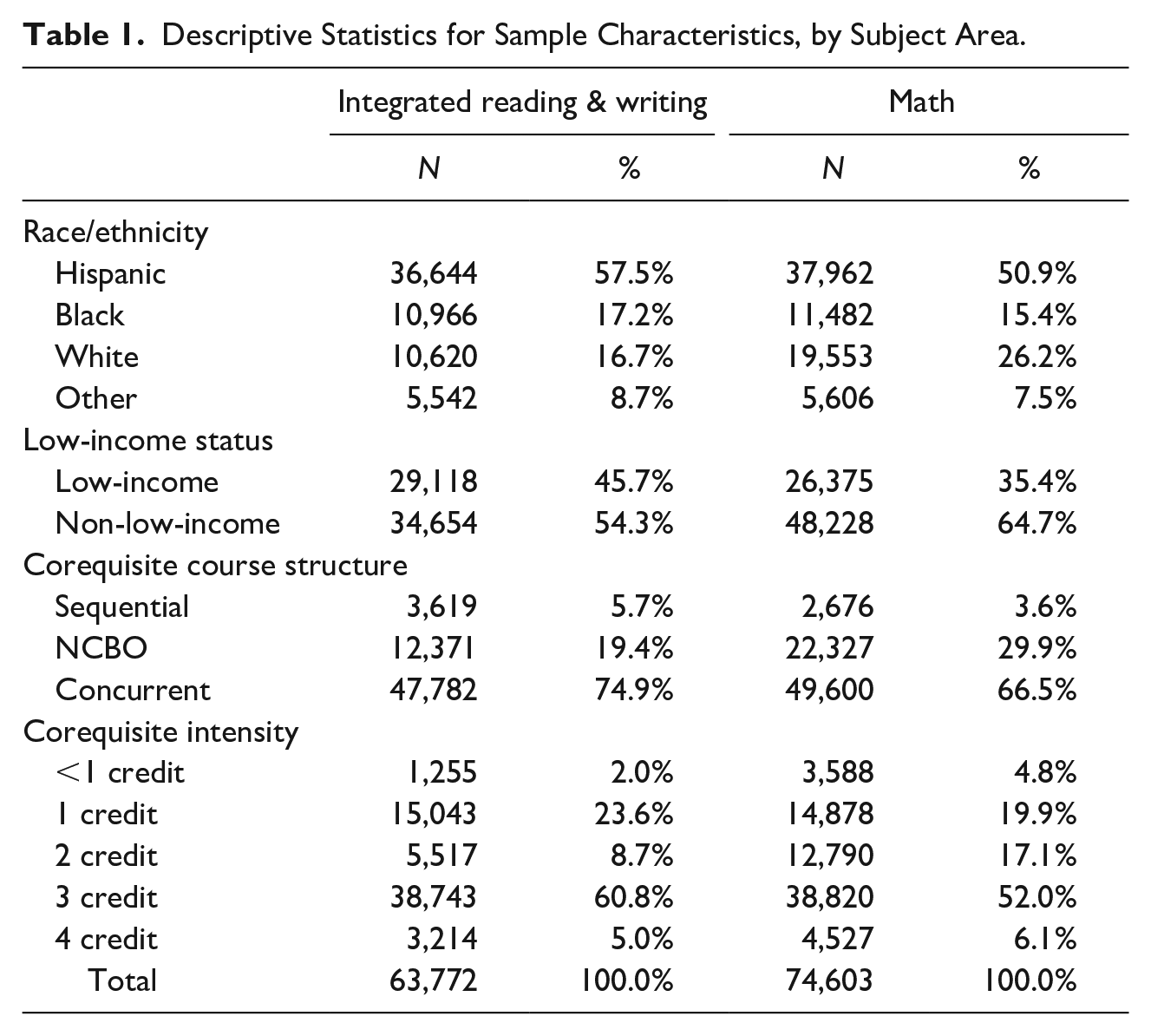
Overall, roughly 75% of students taking an IRW corequisite course enrolled in a concurrent model, 20% enrolled in an NCBO, and 5% enrolled in a sequential model. For the overall corequisite math sample, 66% enrolled in concurrent models, 30% enrolled in NCBOs, and 4% enrolled in sequential models. We also explored student enrollment patterns in corequisites by course intensity for the developmental component. Overall enrollment patterns in IRW show 61% of students enrolled in a three-credit corequisite, 23% enrolled in one credit, 9% enrolled in two credits, 5% enrolled in four credits or more, and 2% enrolled in less than one credit. There were similar patterns in math. Overall, 52% enrolled in three credits, 20% enrolled in one credit, 17% enrolled in two credits, 6% enrolled in four credits or more, and 5% enrolled in less than one credit.
We examined descriptive statistics for student-level and institution-level characteristics to assess the extent to which there are differences in who enrolls in different corequisite structures and credit intensities. For the category of corequisite type, we calculated the standardized mean difference for each characteristic among students in current corequisites (the reference group) relative to students in each of the other corequisite types (Table 2). We focus on standardized mean differences >0.25, which are considered to be non-equivalent according to the What Works Clearinghouse (2015). Notably, student performance based on TSIA scores tended to be similar across all corequisite types and intensities. In math, students in sequential corequisites were more likely to be Black and less likely to be Hispanic, relative to students in concurrent corequisites. Additionally, students in NCBOs were more likely to be male relative to students in concurrent corequisites. In IRW, there were no differences >0.25 among the student characteristics. There were some differences in institutional characteristics in both subject areas. Students in sequential corequisites and NCBOs tended to enroll in smaller institutions, and students in NCBOs were almost exclusively enrolled in 2-year institutions. There were also some differences by institutional locale that varied by subject area and corequisite type.
Descriptive Statistics for Student and Institutional Characteristics by Corequisite Type.
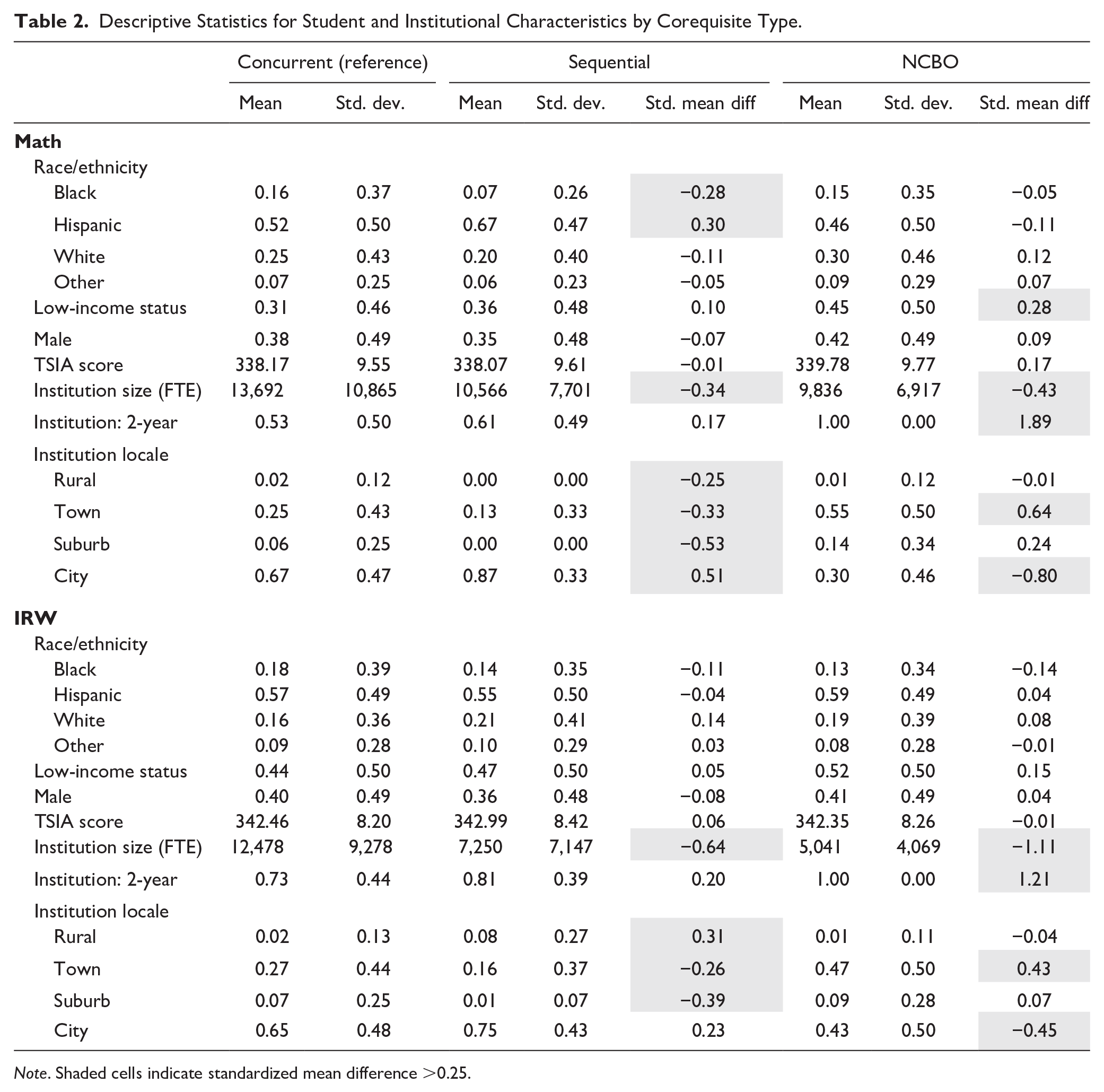
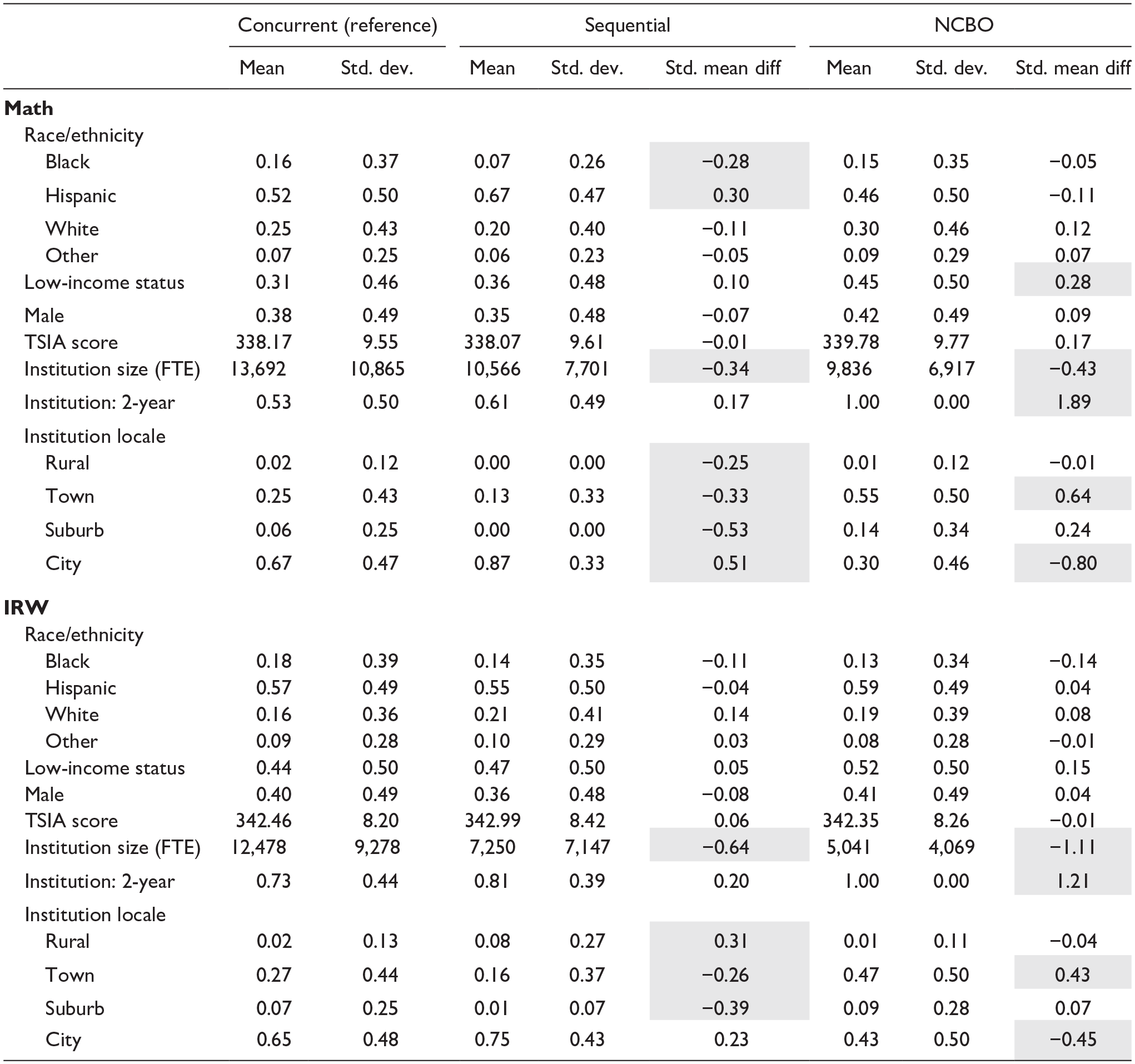
Note. Shaded cells indicate standardized mean difference >0.25.
For corequisite intensity, we calculated the standardized mean difference for each characteristic among students enrolled in 3-credit corequisites (the reference group) relative to students in each of the other corequisite intensities (Table 3). Corequisites of less than 1 credit hour were not very common, and there were many differences in both student and institutional characteristics relative to the 3-credit corequisite. However, for each of the other corequisite intensities (one credit, two credit, and four credit), there were no standardized mean differences >0.25 for any of the student characteristics in math and IRW. There were a few differences in institutional characteristics by corequisite intensity. In particular, four-credit corequisites were taken almost exclusively by students at 2-year institutions. In IRW, students in two credit corequisites were more likely to be enrolled at smaller institutions while students in four credit corequisites were more likely to be enrolled at larger institutions. Additionally, there were some differences by institutional locale that varied by subject area and corequisite intensity.
Descriptive Statistics for Student and Institutional Characteristics by Corequisite Intensity.
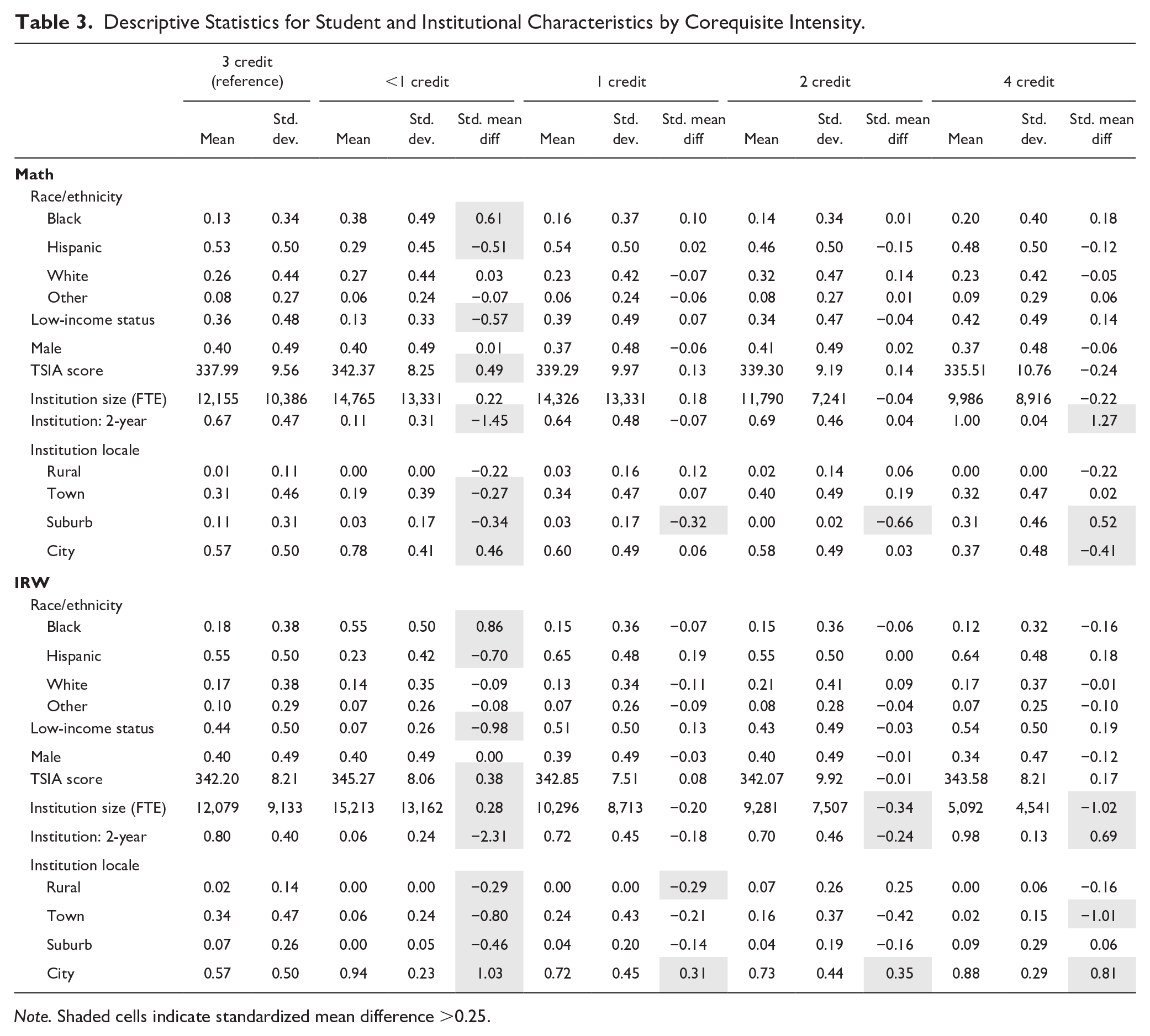
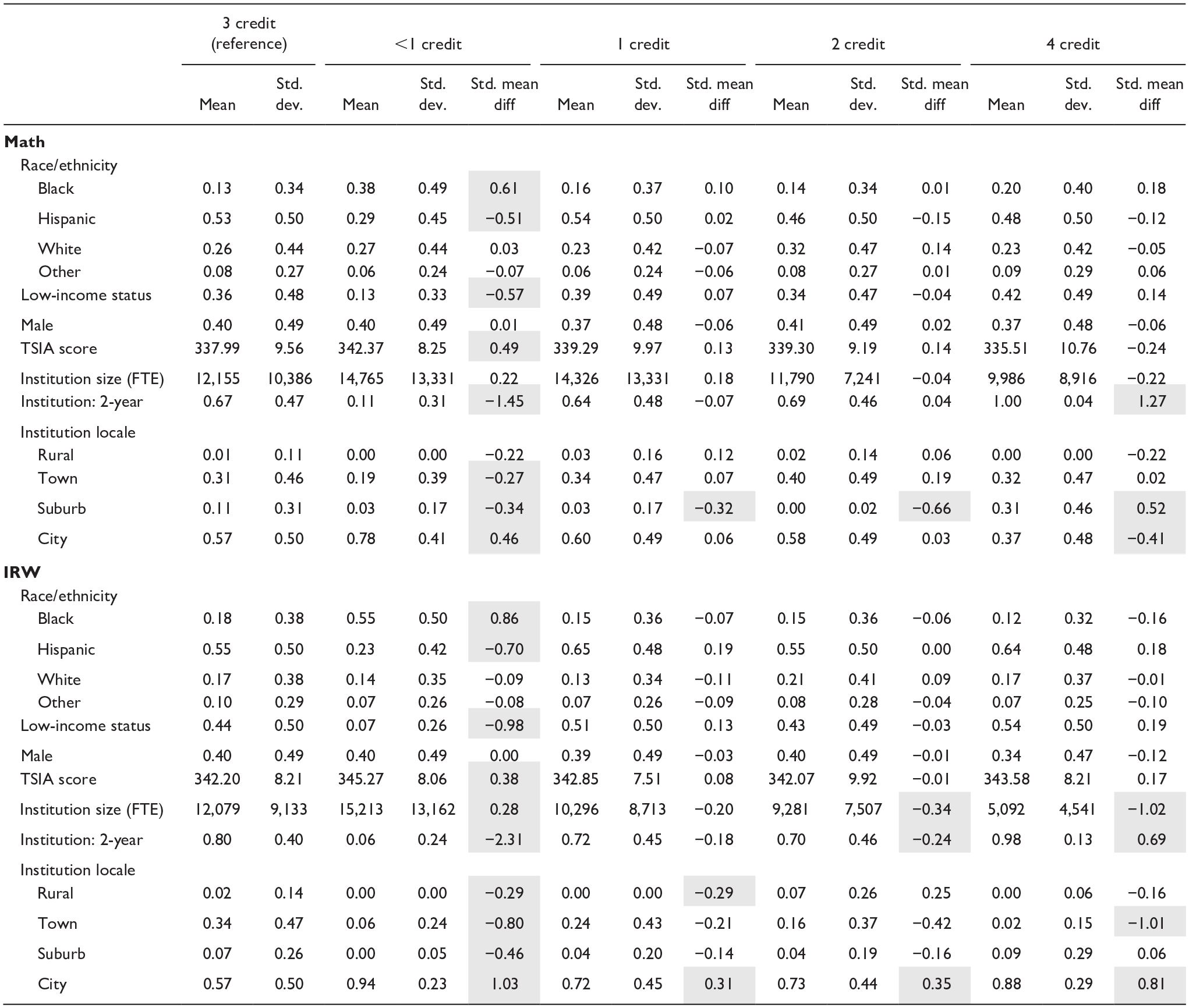
Note. Shaded cells indicate standardized mean difference >0.25.
Analytic Approach
To explore the relationship between different corequisite developmental structures and credit intensities with student outcomes, we made use of a series of first-differenced regression analyses. To start, we modeled corequisite developmental structure and intensity separately. Formally, we estimated the following model for students i at college j passing course y in cohort (year) t, as a function of developmental corequisite structure (concurrent [omitted/comparison category], sequential [SEQ], and non-course competency-based option [NCBO]), and further controlling for student demographic background (S) and TSIA score (TSIA), with a linear cohort/time indicator (λ t ) to control for any pre-existing trends in the data:

The coefficients of interest – β1 and β2 – can be interpreted as the change in course-passing rates for sequential and NCBO, respectively, compared to the concurrent course corequisite model (the most common type). For our third outcome (the number of college-level credits earned in the first year), we use a similar set of variables; however, we model this outcome using a linear regression. We also clustered standard errors at the college level to capture heterogeneous effects across the individual colleges.
Then, to examine the relationship between corequisite developmental intensity and the student outcome measures, we adjusted equation 1 by replacing indicators for structure with indicators for the intensity of the corequisite course. These include whether students are enrolled in fewer than 1, 1, 2, or 4 credit hours, with 3 credit hours being the omitted/comparison group:

Like before, the coefficients of interest – β 1 , β 2 , β 3 , and β 4 – can be interpreted as the change in course-passing rates for fewer than 1, 1, 2, and 4 credit corequisite courses, respectively, compared to three-credit models (the most common option).
Next, we utilized a series of second-differenced regression equations to explore differential relationships between corequisite models and outcomes by student characteristics. In particular, we included a series of interaction terms designed to explore whether the type of corequisite structure has a differential effect on Black and Hispanic student outcomes relative to white students. More specifically, we made use of the following model:
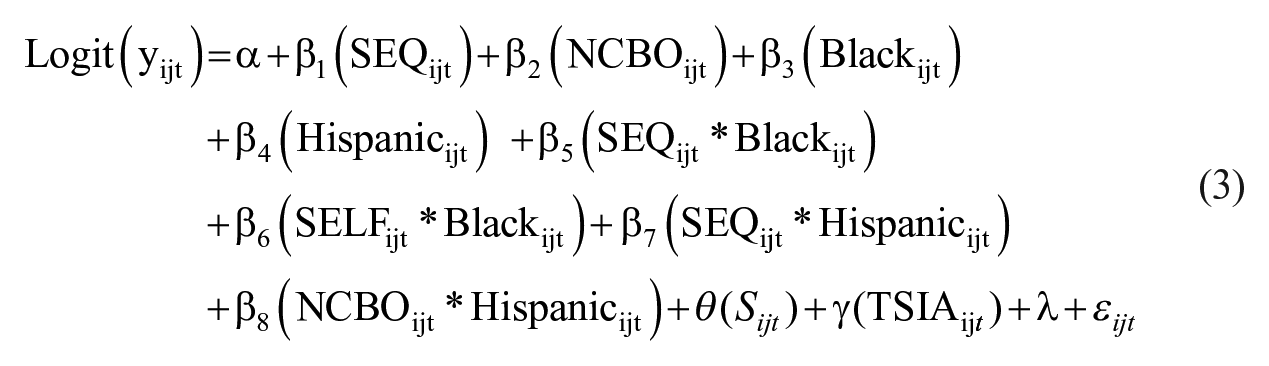
Using this modeling strategy, the estimates for β5 – β8 are second-differenced estimates that indicate whether course passing rates in different corequisite courses varied for Black or Hispanic students in ways that were different for white students. This strategy allows us to determine, after accounting for other demographic characteristics and prior academic achievement, whether Black, Hispanic, and white students experienced differences in passing rates across the different corequisite course structures—differences that have the potential to alter the racial/ethnic achievement gap in terms of these specific measures.
Our modeling strategy is similar when exploring indicators for income status and is similar for modeling course intensity (in these models, the omitted group is three credit hours) and there are indicators for less than one credit, two credits, and four or more credits. The only difference is that for models exploring race/ethnicity, only Black, Hispanic, and white students are included; however, all students (including students of other races/ethnicities) are included for models exploring income status.
Findings
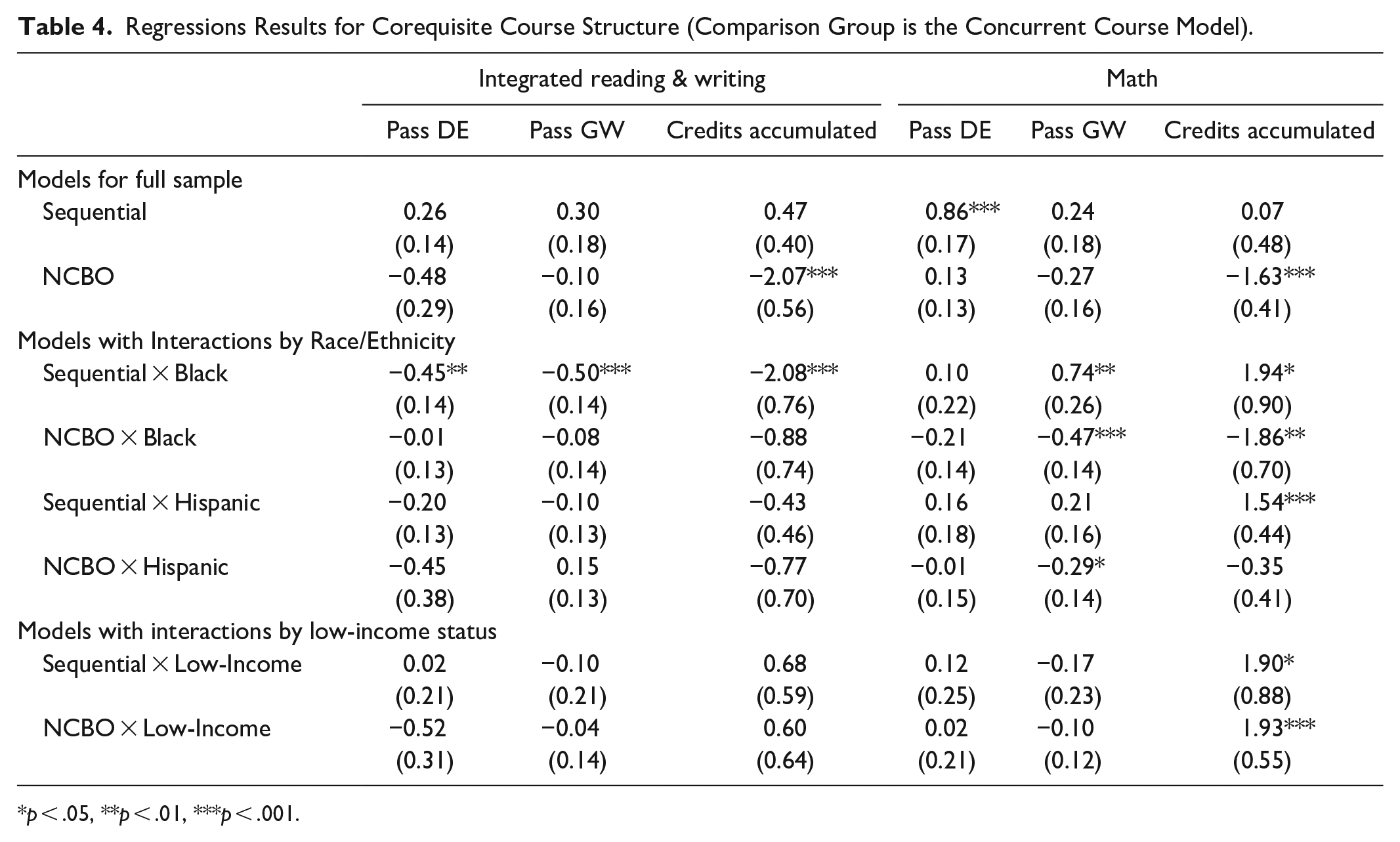
In this section, we present the results from the quantitative analysis exploring the relationship between corequisite course structure and intensity with student outcomes over the course of the first year of college, and whether there are differential effects among student subgroups. Table 4 presents the estimates of interest for the models predicting student outcomes as a function of course structure for the full sample of students. We present odds ratios for passing the corequisite developmental education course and passing the associated college-level gateway course, and we present linear regression coefficients for the number of college-level credits accumulated in the first year.
Regressions Results for Corequisite Course Structure (Comparison Group is the Concurrent Course Model).
p < .05, **p < .01, ***p < .001.
With respect to course structure, while we find no statistically significant effects for passing developmental and gateway courses in IRW, we do identify a negative and statistically significant effect for students enrolled in NCBOs (b = −2.07, p < .001) relative to concurrent corequisites with respect to credits accumulated. In math, there are also no statistically significant effects for most outcomes and course structures; however, there is a positive effect of sequential corequisites on passing the developmental course (OR = 0.86, p < .001) and a negative effect of NCBOs on credit accumulation (b = −1.63, p < .001) relative to concurrent course structures. These findings suggest that performance in developmental and college-level courses tends to be similar across course structures, although there is some evidence that students in NCBOs tend to accumulate fewer credits in the first year.
Next, we examined whether there were differential effects of course structure by students’ race/ethnicity and low-income status. These findings were also quite mixed by subject area and student subgroup. For example, Black students enrolled in sequential corequisites for IRW were negatively associated with the outcomes of passing developmental education (OR = −0.45, p < .01), passing the gateway course (OR = −0.50, p < .001), and credit accumulation (b = −2.08, p < .001). However, Black students enrolled in sequential corequisites in math were positively associated with the outcomes of passing the gateway course (OR = 0.74, p < .01) and credit accumulation (b = 1.94, p < .05). Effects by course structure by low-income status were largely similar, except that credit accumulation rates tended to be higher for low-income students in sequential courses (b = 1.90, p < .05) and in NCBOs (b = 1.93, p < .001).
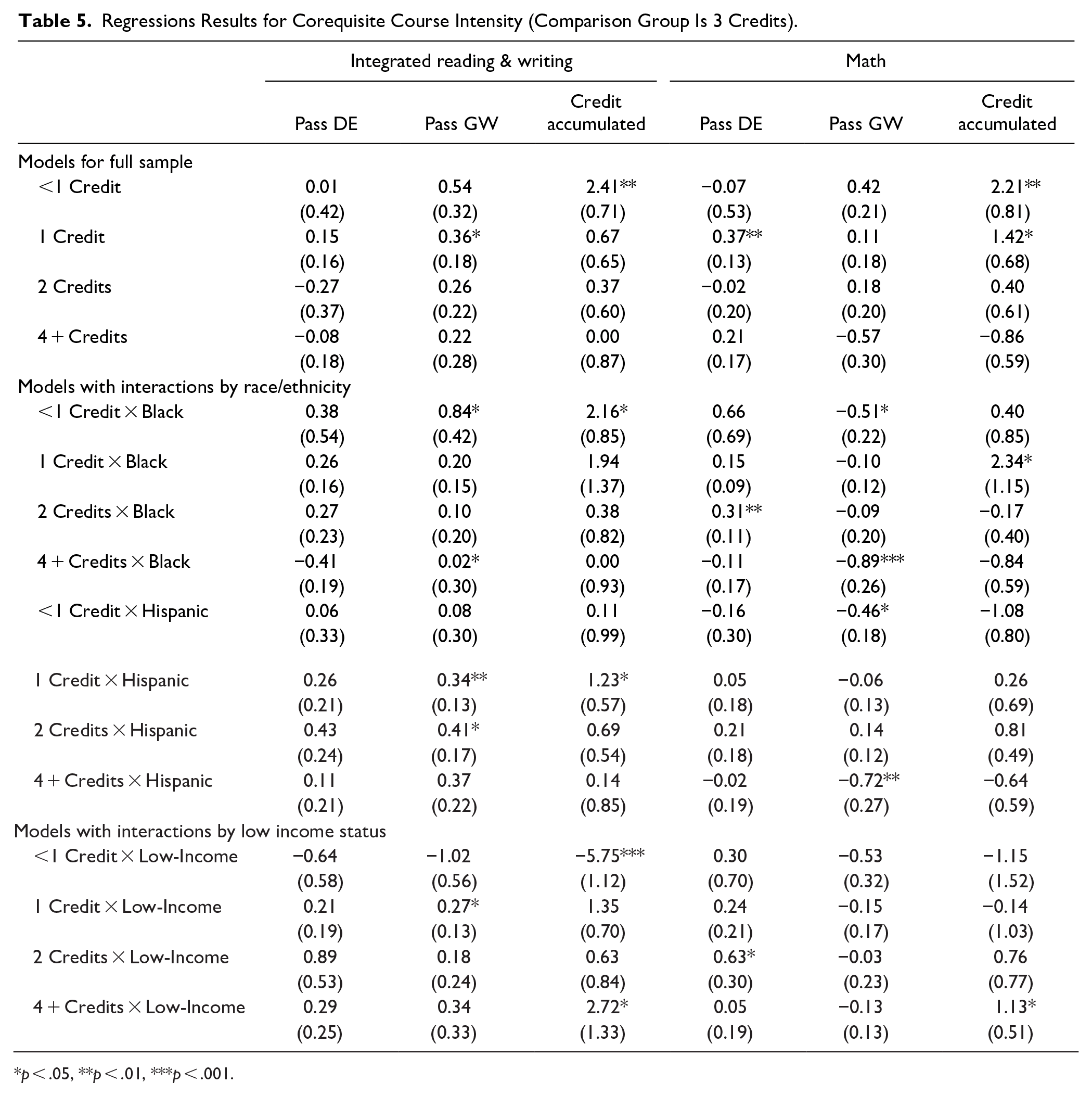
With respect to course intensity, most outcomes in IRW were similar regardless of the number of credit hours for the corequisite developmental course (Table 5). Although students in 1-credit IRW courses were more likely to pass the gateway course (OR = 0.36, p < .05) and students in IRW courses of less than 1 credit tended to have greater credit accumulation (b = 2.41, p < .01) relative to students in traditional 3-credit courses. These differences in credit accumulation may have occurred because these courses are equally effective at helping student pass the college-level courses, and also allows some students to fit another course into their schedules, thereby increasing their overall credit load and their likelihood of passing more credits. 1 Similarly in math, most outcomes were similar regardless of credit intensity but there were a few positive effects associated with shorter courses. Students tended to have greater credit accumulation if they were enrolled in corequisites of less than 1 credit (b = 2.21, p < .01) or 1-credit (b = 1.42, p < .05) relative to those enrolled in traditional 3-credit courses. Additionally, enrollment in a 1-credit math corequisite was associated with an increased likelihood of passing the developmental course (OR = 0.37, p < .01).
Regressions Results for Corequisite Course Intensity (Comparison Group Is 3 Credits).
p < .05, **p < .01, ***p < .001.
Lastly, we examined whether there were differential effects of course intensity by race/ethnicity and low-income status. In IRW, Black and Hispanic students tended to experience greater gains from shorter courses (ranging from less than 1 credit to 2 credits) for the outcomes of passing the gateway course and credit accumulation. However, the results in math were more mixed with some positive effects and other negative effects for Black and Hispanic students enrolled in shorter courses. Results were somewhat different when examining differential effects by low-income status. Low-income students tended to experience greater gains in credit accumulation for longer 4-credit courses in both IRW (b = 2.72, p < .05) and math (b = 1.13, p < .05). Most other outcomes were similar by low-income status, with a few statistically significant effects that were not consistent in direction or by course intensity.
Discussion
The statewide adoption of corequisite courses in Texas provided a unique opportunity to examine potential strategies for optimizing their implementation to enhance student success. Yet similar to other studies that have examined whether the effectiveness of corequisites vary by characteristics of course implementation (Bahr et al., 2022; Ryu et al., 2022), we find that most outcomes tend to be similar regardless of course characteristics and any statistically significant effects tend to be inconsistent across outcomes and subject areas. The one exception is that students in IRW and math NCBOs tend to accrue fewer credits in the first year. These results are somewhat similar to Boatman’s (2021) study of remedial reform in Tennessee, which found that while students in accelerated and corequisite formats tended to out-perform their peers in traditional developmental education, those in modularized courses (similar to NCBOs) earned fewer credits, were less likely to pass college-level math, and less likely to complete an Associate’s degree in 8 years. However, in our study the outcomes for NCBOs were not as consistently negative, as students in NCBOs had similar passing rates in both developmental and college-level courses as those in other course structures for IRW and math.
Taken together, these findings suggest that colleges should retain the autonomy to tailor their corequisite course structures based on individualized considerations for their student cohorts and the resources they have available. Our research underscores the absence of a universally effective “one-size-fits-all” model for corequisite course design that uniformly benefits all students. Rather, it is important to ensure that implementation decisions made by individual colleges remain aligned with the specific demands of their unique student populations. A qualitative component of our evaluation of Texas’ corequisite reform found that many institutions created advisory groups or committees that held ongoing meetings for several years to make decisions about how to scale-up corequisite courses, so these were issues that were given thoughtful reflection by a broad range of stakeholders (Mokher & Park, 2023). Institutional autonomy in implementation decision-making also allowed colleges to experiment with new options for corequisite classes and revise their course offerings to reflect what worked best for their students.
Despite the mostly similar outcomes by corequisite course characteristics, there was some evidence to suggest that students may benefit from shorter corequisite courses relative to traditional 3-credit courses. These gains tended to be even greater for Black and Hispanic students (relative to White students) in IRW. Our findings differ somewhat from the prior study by Ryu et al. (2022) which found that longer credit hours in corequisite math courses were associated with an increased likelihood of passing college-level classes and a decreased likelihood of withdrawing. However, this study only examined within-institution variation in the effects of corequisite characteristics and many institutions only offer traditional 3-credit courses. Another qualitative study of corequisite implementation in Texas found that among institutions that did provide multiple options for credit intensity, students with weaker academic preparation were more likely to be advised to take longer courses (Mokher & Park-Gaghan, 2023). This suggests that there may still be some selection bias in terms of which students within the same institution choose to enroll in longer courses even after controlling for TSIA scores. Our study reduces some of this selection bias by exploring variation across institutions with different offerings for corequisite intensity. Beyond potential differences in course effectiveness by credit intensity, it is important to consider that there are also financial implications. A cost-analysis of Texas institutions that piloted corequisite English courses found that participating students saved money because the corequisite courses tended to be fewer credit hours than traditional developmental courses which resulted in lower tuition costs (Cunha et al., 2023).
We also found that aside from the few exceptions noted above, there was a lack of consistent evidence that certain types of corequisite courses were more effective than others for students of different racial/ethnic backgrounds or by low-income status. While there is some prior evidence to suggest that students from traditionally underserved backgrounds may benefit more from developmental education reform (Authors, 2020, 2021a; Coca et al., 2023), it seems that the decision of whether to offer reformed courses is more important than decisions of how those courses are structured. Colleges should consider other ways to reduce achievement gaps that may benefit underserved students regardless of the type of corequisite course they take. For instance, Wood et al. (2015) found that mandated tutoring sessions may be particularly beneficial to men of color enrolled in community colleges. These compulsory tutoring sessions not only offer academic assistance but also may facilitate the cultivation of a sense of belonging, the establishment of peer relationships, and perceptions of the campus as a secure environment. The authors posit that although these strategies hold potential benefits for all students, men of color may experience even greater benefits due to heightened societal pressures, external life obstacles, racial-gender stereotypes, and potentially alienating campus environments that they commonly encounter.
Additionally, colleges should consider whether there are ways to combine corequisite reforms with other equity-minded initiatives. For instance, Hernández et al. (2023) conducted a qualitative study of faculty and administrator perceptions of corequisite implementation in math and English at a large community college in Texas. They found that corequisites were often implemented in conjunction with equity-minded practices including building students’ confidence in their potential for success, engaging in proactive communion and validating students’ feelings about the course, and developing a community by providing opportunities for student interactions. These types of initiatives may also be important for reducing student achievement gaps. However, institutional leaders may find it more challenging to adopt these types of equity-minded initiatives in states like Texas which have passed recent legislation prohibiting activities “promoting differential treatment of or providing special benefits to individuals on tbe basis of race, color, or ethnicity” (Texas Senate Bill 17, 2023; p. 2).
Conclusion
In conclusion, this study highlights the complexity of the relationship between corequisite course characteristics and student outcomes. These findings underscore the importance of allowing colleges to consider their diverse student populations and contextual factors in course design and implementation strategies. There is a growing body of evidence that corequisite reform has been beneficial for all students in Texas relative to traditional developmental education (Austin et al., 2024; Cunha et al., 2023; Meiselman & Schudde, 2022; Miller et al., 2022). Policymakers in other states should consider a similar approach to corequisite reform that allows for institutional autonomy given that there is no “one-size-fits-all” model for corequisite course structure that is consistently more effective. Additionally, it is important to consider that corequisite developmental courses do not need to be a traditional 3-credit course and that short-term interventions may even help some students more.
Footnotes
Author’s Note
The conclusions of this research do not necessarily reflect the opinions or official position of the Texas Education Agency, the Texas Higher Education Coordinating Board, the Texas Workforce Commission, or the State of Texas.
Declaration of Conflicting Interests
The author(s) declared no potential conflicts of interest with respect to the research, authorship, and/or publication of this article.
Funding
The author(s) disclosed receipt of the following financial support for the research, authorship, and/or publication of this article: The research reported here was supported by the Institute of Education Sciences, U.S. Department of Education, through Grant R305A210319 to Florida State University. The opinions expressed are those of the authors and do not necessarily represent the views of the Institute or the U.S. Department of Education.
