



Abstract
This study focuses on the disparities between the educational aspirations and expectations of high school students in the U.S., and explores why students do not expect to earn a bachelor’s degree despite their aspirations. Using a national dataset and logistic/multinomial logistic regression analyses, the study identified the factors associated with this diminished expectation, such as family background, school experiences, and college preparedness activities. Additionally, students with low expectations of reaching their college aspirations are less likely to search for, apply to, and/or enroll in 4-year colleges. This study provides new insights into the college access process.
Keywords
Introduction
Since the late 20th century, the role of higher education in promoting social mobility has become a central global issue in the field of postsecondary education. In the U.S., for example, one of the most important postsecondary policy issues is the preparation for and participation in postsecondary education (Haveman & Smeeding, 2006; National Center for Public Policy and Higher Education, 2001). American high schools, communities, and institutions of higher education have placed more emphasis on improving all students’ access to college. Because of this focus, the proportion of the U.S. population 18 years and over with a postsecondary degree increased from 24% to 41% between 2001 and 2017 (U.S. Census Bureau, 2016, 2017). Although college access and completion for high school students have improved in recent years, prominent groups such as the Lumina Foundation (2017) and Complete College America (2014) have called for degree attainment rates in the United States to reach 60% in the future.
An issue of concern among policymakers is that many students who have a desire to go to college do not end up enrolling. According to theory and previous research related to college access and choice (i.e., Hossler & Stage, 1992), once students form the aspiration to go to college, they maintain this aspiration and eventually enroll in college. However, a surprising number of these students do not fulfill their stated aspiration to go to college. For example, Castleman and Page (2014) found that in some cities 10% to 40% of high school seniors who had committed to enrolling in college did not do so as of the Fall semester. Recent work by DesJardins et al. (2019) also noted that many students change their plans for college—in both directions—during high school.
One way to help identify students who might be at risk for non-matriculation to college is to compare their postsecondary aspirations and expectations. Although the terms appear to be similar, in theory they capture an important difference for students because aspirations reflect what one wishes to achieve whereas expectations denote what one realistically expects to achieve (Khattab, 2015; Morgan, 2005; Reynolds & Pemberton, 2001). Students who aspire to earn a college degree but do not expect to be able to do so—referred to here as having “low expectations for college”—are an important group to examine for making progress toward reaching the nation’s education goals because they are already predisposed to wanting to go to college. However, little is known about why some of these students did not expect to be able to earn a college degree. Past studies have discussed the significant implications of the relationship between pre-college students’ educational aspirations and college access with respect to various dimensions (social, economic, and human capital), but most of these studies do not address the role of educational expectations and how they compare to aspirations. Of the few studies that focus on this distinction, most are limited to revealing the factors pertaining to personal and familial characteristics (e.g., Gilkey et al., 2011) or to motivation and psychological factors (e.g., Kirk et al., 2012).
Thus, this current study focuses on the evidence why some high school students aspire to earn a bachelor’s degree but do not expect to be able to do so, and whether having low expectations for college actually translates into lower rates of college enrollment. The data were taken from the most current representative sample of high school students (2009 High School Longitudinal Study [HSLS:09]) and used to compare their stated postsecondary aspirations and expectations. HSLS:09 is a valuable source of information for this study because students were specifically asked to assess both their educational aspirations and expectations as of grade 11. The data show that about one in six high school students in this sample indicated that they would like to earn at least a bachelor’s degree but did not expect to be able to do so. The importance of this distinction is reflected in the fact that on average the students with low expectations for college were less likely than their peers to search for, apply to, and enroll in a 4-year institution.
The analysis begins with a series of statistical models to identify the factors relating to why some students had low expectations for reaching their goal of a bachelor’s degree. The last part of the study focuses on whether students with low expectations for college in fact were less likely to search for, apply to, and/or enroll in college. Taken together, this study will help improve our understanding of how and why some students do not feel that they can achieve their goal of earning a college degree, and find ways to increase their enrollment in postsecondary education. Therefore, the study focuses on two specific research questions: (1) Do factors such as familial relationships, high school performance, higher education attributes, and the broader social context, predict whether students develop low expectations for college? and (2) Are those students with low expectations for college less likely to search for, apply to, and/or enroll in college?
Literature Review
The existing literature contains rich discussions of and the historical discourse regarding how students make the decision to attend and subsequently matriculate in a given college. For example, Perna’s (2006) conceptual model uses four broad contexts—individual and family, school and community, higher education, and broader social context—to explain college choice. One of the chief points of this model is that “college enrollment decisions reflect an individual’s situated context” (Perna, 2006, p. 116). In fact, empirical evidence from previous studies suggests that differences across groups—such as gender, race, family and school background, and high school experiences—can be understood as factors in individuals’ college decisions that influence their college aspirations, college choices, educational attainment, and outcomes (e.g., Cabrera & La Nasa, 2001; DesJardins et al., 2019; Hossler & Stage, 1992).
There is a very large literature that has examined the reasons why students go to college (see Mayhew et al. (2016) for a thorough review). Not surprisingly, students with better academic qualifications in high school, in terms of grades and standardized test scores, are more likely to pursue a postsecondary education. Studies have also documented that the stages of demand for college are related to a range of personal attributes such as gender and race (e.g., Means et al., 2016; O’Connor et al., 2010). Other studies have centered on the effects of finances on facilitating or hindering access to higher education (e.g., Scott-Clayton, 2015; Toutkoushian & Hillman, 2012). And students who come from higher socioeconomic families are more likely to aspire to go to college, enroll in college, and earn a degree (e.g., Choy, 2001; Harding et al., 2017; Nichols & Islas, 2016; Toutkoushian et al., 2018). Additionally, a few studies have focused on the relationship between high school contexts, such as rural areas and public schools and college choice or attainment (e.g., Barr, 2018; Means et al., 2016).
In terms of the college choice process, specifically, according to Hossler and Gallagher’s (1987) study, the model consists of the predisposition, search, and choice phases. More recently, Toutkoushian and Paulsen (2016) presented a model of the college choice process (aspiration-search-application-admission-enrollment) that covers five stages of how high school students progress from forming aspirations for college to finally enrolling, and which includes the role of institutions in the admission process. These models focus on the traditional progression from high school to college, wherein students first form the desire to attain some level of education, and then take steps to prepare for college, search for possible institutions to attend, and ultimately enroll in a given college. These models implicitly assume that once students form their initial aspirations, they maintain this intention and eventually reach their goal. However, not all students follow this prescribed pathway. Recent evidence suggests that high school students were as likely to lower their educational aspirations as they were to raise them during high school (DesJardins et al., 2019), and research on “summer melt” has shown that in some locations, a surprising number of students who have accepted admission offers to attend specific institutions do not matriculate the fall after graduation. This could be due to evolving expectations: what a student believes they may gain from college and their own predisposition towards it might change during the course of their secondary schooling (DesJardins et al., 2019; Hegna, 2014). These theoretical backgrounds provide insight into the factors that help high school students to form educational aspirations and then realize them.
Thus, it is necessary to focus on the concepts of educational aspirations and expectations and the distinctions between them. These terms are often used interchangeably in the literature and in policy discussions, but the distinction is very important for examining the leakages observed in the high school-to-college pipeline. In psychology, aspirations are imbued with emotional significance and closely related to hopes, ambitions, or goals, whereas expectations are more related to how an individual actualizes their aspirations—they are less emotional, and more action-oriented. The distinction between these two concepts can influence an individual’s choices regarding their aspirations, motivations, and ultimately their decision-making (Golman & Loewenstein, 2012). In the specific context of education, Reynolds and Pemberton (2001, p. 704) note that “educational aspirations refer to the level of education that an individual would ideally like to obtain.” Similarly, aspirations are described as abstract statements or values, and they refer to “future plans”; they are defined as idealistic values that do not necessarily reflect realistic issues, such as socioeconomic status, which might influence future mobility via educational attainment (Marjoribanks, 2005). On the other hand, educational expectations reflect “individuals’ subjective probabilities that an event, such as receiving a college degree, will occur sometime in the future given available information and preferences at the present time” (Reynolds & Pemberton, 2001, p. 704). The concept of educational expectations refers to future expected possibilities; they are concrete values related to the empirical realities faced by students (Khattab, 2015; Mickelson, 1990).
Moreover, research examining the mismatch between aspirations and expectations in education has found background characteristics such as race and family environment (Trusty & Niles, 2004) to be associated with this misalignment. Reynolds and Baird (2010), for example, concluded that psychosocial factors such as depression are associated with unmet educational expectations. Test anxiety and school bonding can also result in such mismatches (Boxer et al., 2011). Moreover, according to Kirk et al. (2012), academic motivation, self-regulating behaviors, academic self-perception, and attitudes toward teachers can all influence how expectations match students’ aspirations. Khattab (2015) examined how different combinations of aspirations, expectations, and school achievements can influence students’ future educational behavior. Boxer et al. (2011) and Hanson (1994) focused on the aspiration–expectation mismatch and found that this issue is limited to high-achieving adolescents with expectations of attaining a college degree, and is unidirectional in that aspirations usually exceed expectations. From this evidence, the gaps and mismatches between aspirations and expectations tend to discourage students from achieving their educational goals. Minimizing unfulfilled aspirations among potential students should thus be considered as important as encouraging postsecondary educational attainment. Meanwhile, some studies have emphasized the correlation between educational aspirations or expectations and educational attainment (Khattab, 2015; Klasik, 2012; Morgan, 2005; Perna, 2006). Taken together, these studies show that a complete alignment between high aspirations, high expectations, and high achievement is a significant predictor of future educational behavior in students.
In recent studies that have specifically dealt with educational aspirations or expectations among high school students, factors such as race, gender, SES, immigrant status, and teachers’ expectations have been shown to impede students from achieving their aspirations or expectations (Agger et al., 2018; Goings & Shi, 2018; Khattab, 2018; Manzano-Sanchez et al., 2019; Van den Broeck et al., 2020). In the context of college attainment or college choice, aspirations and expectations can be significant indicators that reflect how society and interpersonal networks can support a given individual’s postsecondary enrollment plans (Bryan et al., 2011; Farmer-Hinton, 2008), by minimizing the common challenges and barriers that might prevent students from achieving them. Postsecondary aspirations for college evolve during high school (DesJardins et al., 2019) and decisions regarding college enrollments can change (Bohon et al., 2006; Britton, 2019), especially for those considering 4-year institutions (Adamuti-Trache, 2022).
Conceptual Frameworks
Figure 1 presents a modified version of the Toutkoushian and Paulsen (2016) five-stage model that highlights the college choice process for college aspirants with low expectations for meeting them. In this framework, after a student has determined that he or she would like to go to college, the student takes steps to prepare for college and assesses whether they feel that they will be able to reach their aspirations. Accordingly, leakages could occur at different points in the process for those who form low expectations for college. These leakages might emerge between different stages as students revise their expectations over time based on the information they receive about college, their own academic performance, and their ability to pay for college. Some students, however, may nonetheless persist with the traditional pathway to higher education despite having formed low expectations for earning a college degree. Thus, this study examines the factors that influence the gaps between educational aspirations and expectations, focusing on lower expectations for 4-year degree attainment among 11th grade students in high school, in the context of the previous literature and theoretical background. Thus, equipped with this conceptual framework, we then explore how lower expectations predict future behaviors related to college attainment, such as the college search, college applications, and college enrollment.
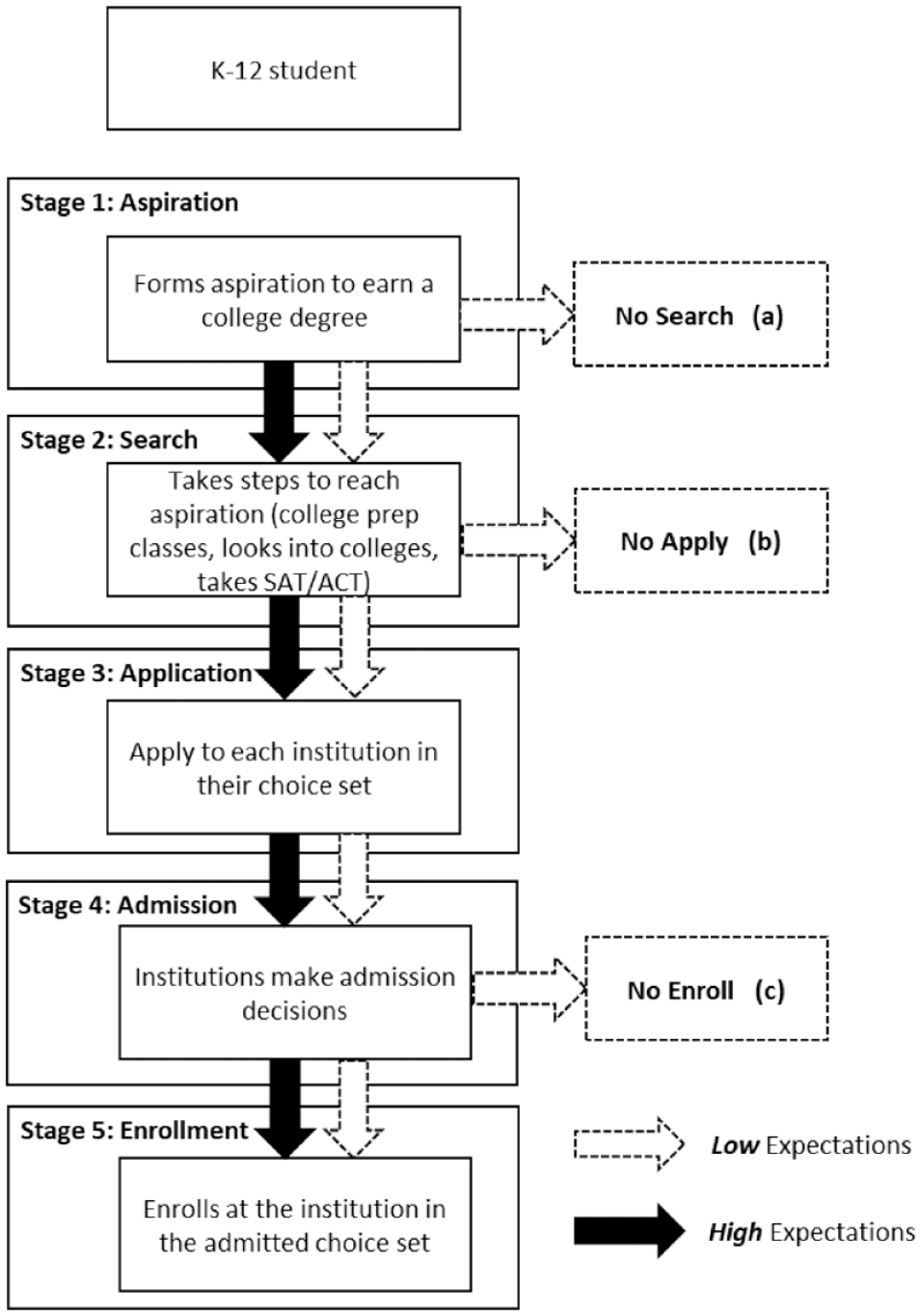
Model of college choice for K-12 students with low expectations for college.
Data and Methods
Data
The data for this study were drawn from the HSLS:09, conducted by the National Center for Education Statistics (NCES). The survey is a longitudinal study of the most current national representative sample of approximately 20,000 ninth graders from 944 public and private schools across the U.S. The participants were surveyed for the first follow-up to HSLS:09 in the spring of 2012, when they were in the 11th grade (HSLS:09/12), and for the second follow-up in the spring of 2016 (HSLS:09/16). In this study, the sample was limited to students who indicated that as of grade 11 they aspired to earn at least a bachelor’s degree (approximately 85% of students). 1 After sample cleaning and dropping observations with missing values on key variables used in the statistical models to follow, the final analytical dataset consisted of approximately 9,660 students. 2
Dependent Variables
The dependent variable for low expectations for college aspirants was derived from the following two questions which were administered to students in the first follow-up survey (grade 11): (1) “If there were no barriers, how far in school would you want to go?” (aspirations); (2) “As things stand now, how far in school do you think you will actually get?” (expectations). Students were given a number of possible choices, ranging from “less than high school completion” to “complete a doctoral degree.” 3 The distributions of responses for aspirations and expectations are presented in Figure 2. The distribution of aspirations (dark bars) is more highly skewed to the right than is the distribution of expectations (light bars). It is likely the case, though, that stated graduate aspirations and expectations are more subject to error given that they occur farther into the future than bachelor’s degrees. It is important to note that in the full HSLS:09 dataset approximately half of the students as of grade 11 reported different answers for the two questions pertaining to aspirations and expectations. Accordingly, a large number of students with college aspirations and expectations perceived these questions to be capturing different constructs.
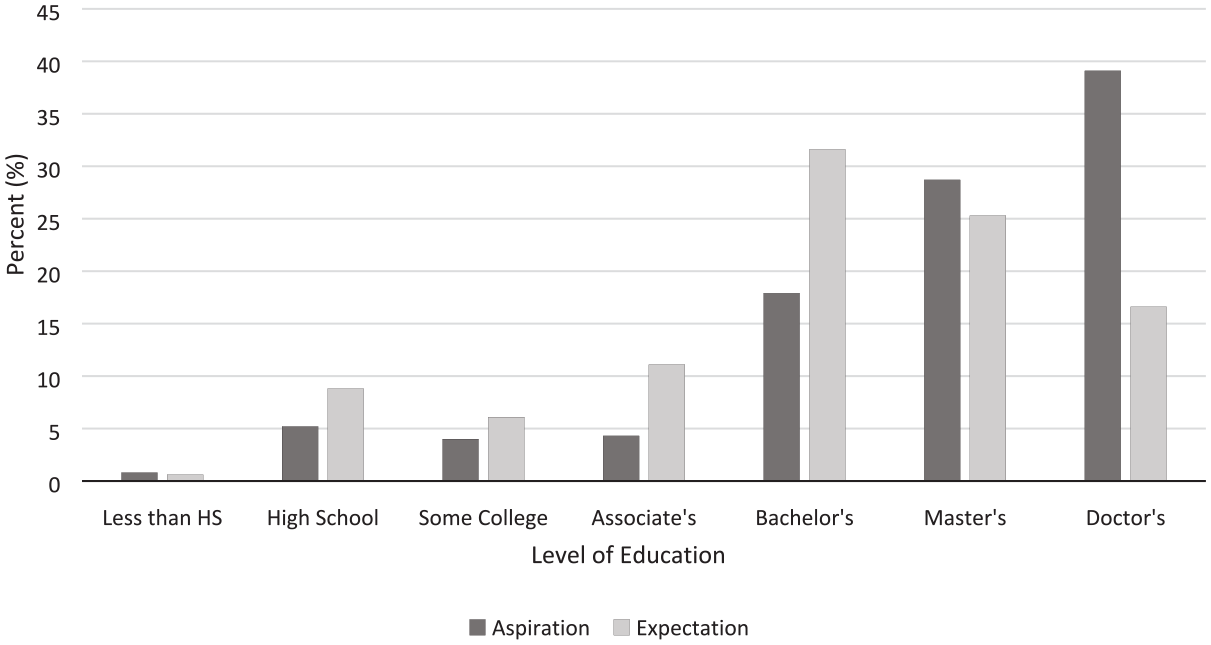
Highest educational aspirations and expectations of 11th graders—HSLS:09.
This study focused on the difference between bachelor’s degree aspirations and expectations, and connect to the emphasis from policymakers on bachelor’s degree attainment. In the given dataset, although 86% of all students aspired to at least bachelor’s degree, only 74% of all students expected to earn at least a bachelor’s degree. As a result, 12% of all 11th grade students aspired to earn a bachelor’s degree or higher but did not expect to earn one. The outcome variable was therefore defined as follows: LowExpBA = 1 if aspired to earn a bachelor’s degree or higher but did not expect to do so, else 0.
Additionally, to determine whether students with low expectations for college were less likely than other students to search for, apply to, and/or enroll in college, dependent variables were created for these factors, based on the conceptual framework we proposed. Specifically, the variable for college search measured information on whether students had experience or not of “searched internet or read college guides for college options” in the HSLS survey. The variable for college application measured whether students applied to one or more colleges. Both the search and application variables were dichotomous (0,1). Lastly, the categorical variable for college enrollment consisted of three options: did not enroll in college, enrolled in a 2-year college, and enrolled in a 4-year college. High school students’ college preparedness activities and status of expectations and aspirations were drawn from the HSLS:09/12. Also, responses on college applications and enrollment were based on the HSLS:09/16, the second follow-up data from the point they replied to regarding their educational expectations and aspirations.
Table 1 provides a comparison of means for selected variables in the study by college expectation status (low vs. high). On average, students with low expectations for realizing their college aspirations were more likely to come from lower-SES families, and be less well prepared academically in terms of high school GPA. Likewise, there were notable differences in the personal characteristics of students with low versus high expectations: those with low expectations for college tended to be male and/or Hispanic. Consistent with the theoretical model in Figure 1, students with low expectations for college were almost 15% less likely to search for information on colleges, 21% less likely to apply to college, and an astounding 29% less likely to enroll in any college. However, the breakdown of means in Table 1 further revealed that many students with low expectations for completing a bachelor’s degree were instead enrolling in an associate’s degree program and not forgoing college altogether.
Mean Comparisons for Students with Low- Versus High Expectations for College.
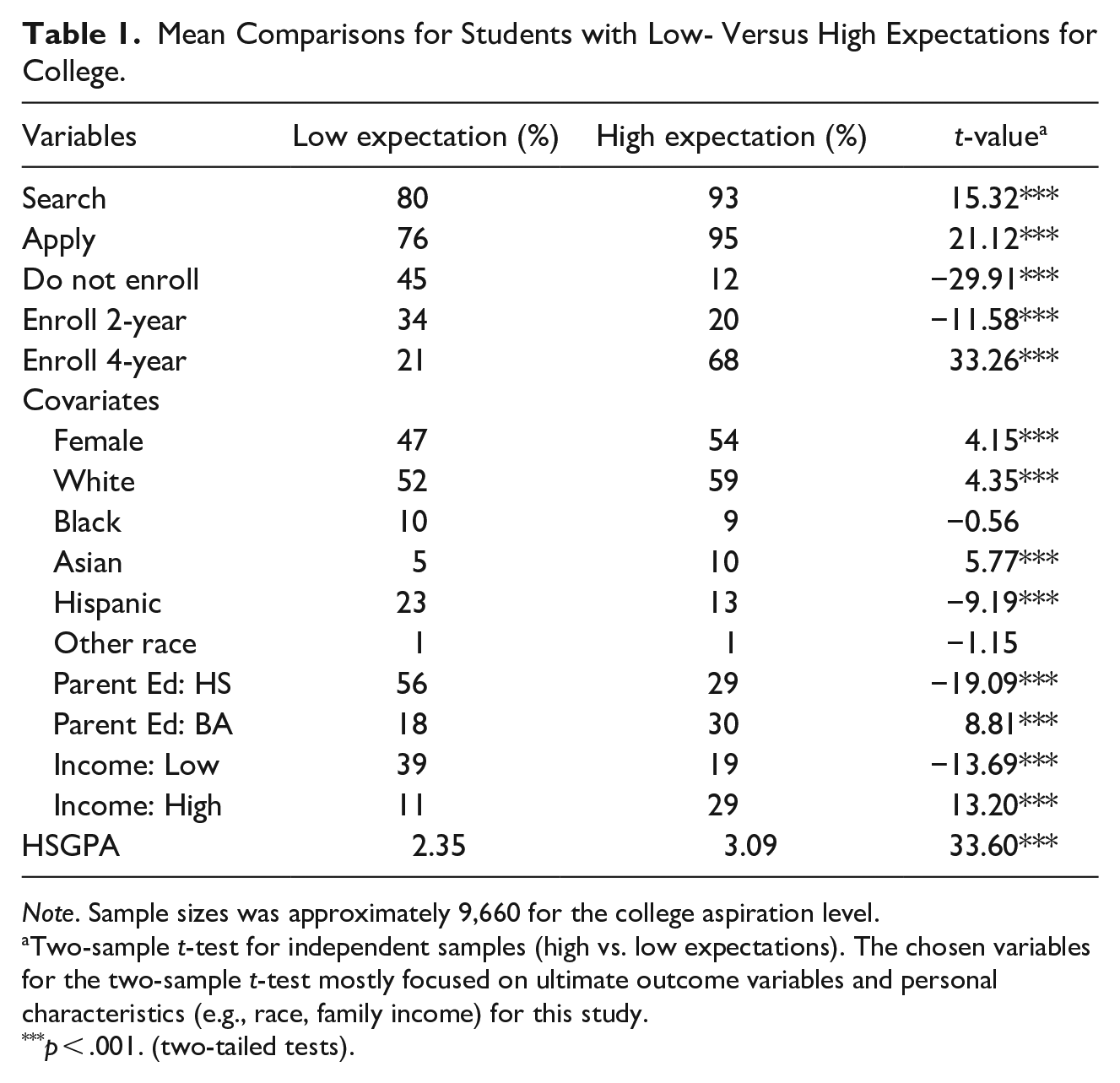
Note. Sample sizes was approximately 9,660 for the college aspiration level.
Two-sample t-test for independent samples (high vs. low expectations). The chosen variables for the two-sample t-test mostly focused on ultimate outcome variables and personal characteristics (e.g., race, family income) for this study.
p < .001. (two-tailed tests).
Explanatory Variables
Based on the previous literature and theoretical background we reviewed for this study (e.g., Hossler & Stage, 1992; Perna, 2006), the explanatory variables for this study were broadly grouped into four categories: (1) demographic characteristics (
Descriptive Statistics for Analytical Sample.
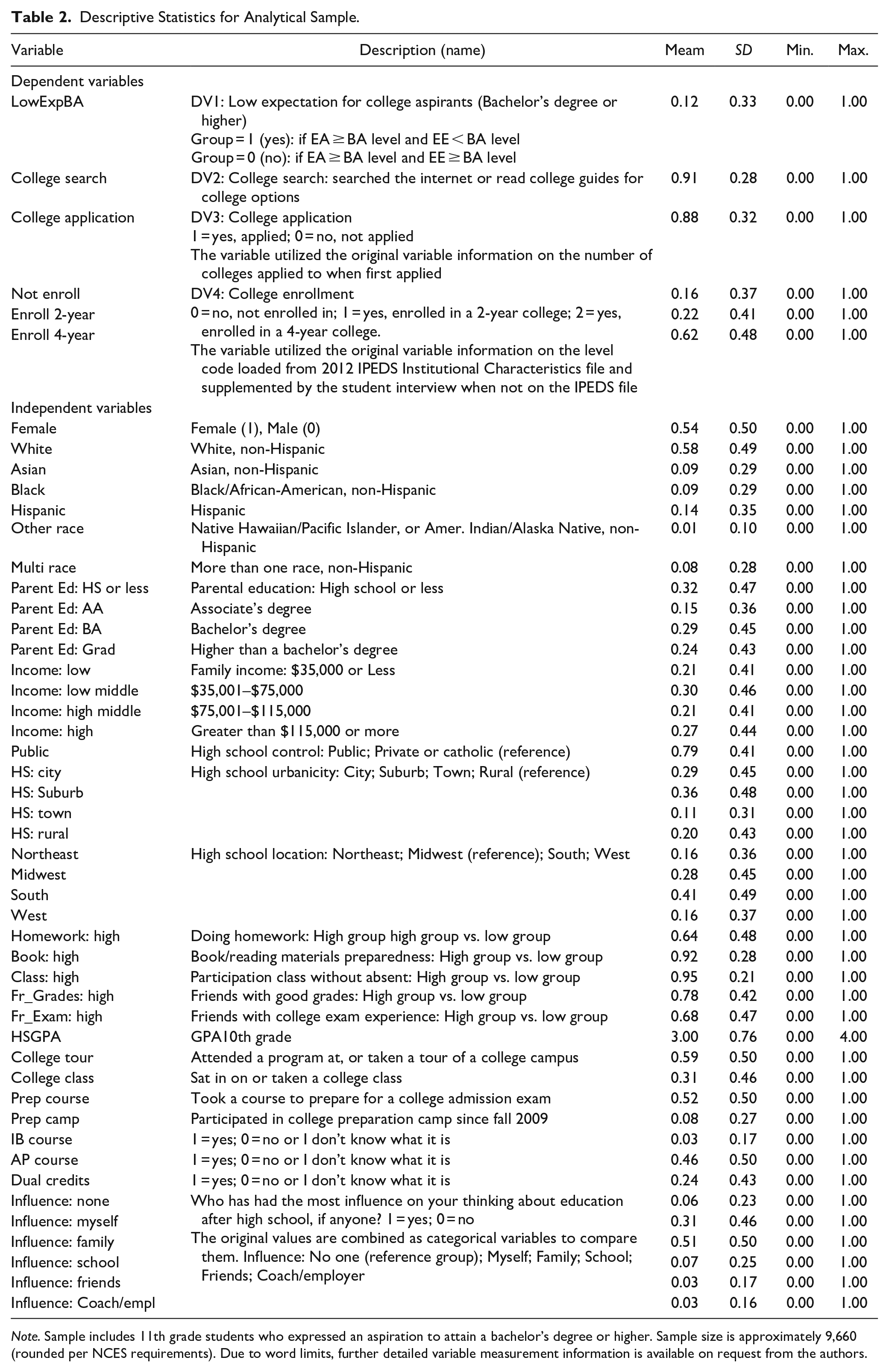
Note. Sample includes 11th grade students who expressed an aspiration to attain a bachelor’s degree or higher. Sample size is approximately 9,660 (rounded per NCES requirements). Due to word limits, further detailed variable measurement information is available on request from the authors.
Descriptive statistics for the variables in the analytical sample used in this study (N = 9,660) are presented in Table 2. As noted earlier, 12% of students reported having low expectations for earning at least a bachelor’s degree. The vast majority of students with bachelor’s degree aspirations searched for information on colleges (93%), applied to one or more colleges (95%), and enrolled in either a 2-year (20%) or 4-year (68%) college.
Statistical Methods
The first set of logistic regression models focused on the factors that were associated with whether students had low expectations for college, which was based on college access theory and the conceptual model of the study. The form for the logistic model can be summarized as follows:


where LowExpBA = low expectations for college (1 = yes, 0 = no),
To answer the second research question, the following statistical models were used:



where Search = 1 if searched for college information, else 0, Apply = 1 if applied to college, else 0, Enroll = 0 if did not enroll in college, 1 if enrolled in a 2-year college, and 2 if enrolled in a 4-year college. Equations 3 and 4 used binary logistic regression, and equations (5) relied on multinomial logistic regression. In the multinomial logistic analysis, the Hausman test was used to test the assumption of the independence of irrelevant alternatives (IIA), and the results confirmed that the IIA assumption was not violated. In all of these models as before, the logistic coefficients were converted to marginal effects, the data were weighted to account for the stratified sampling design, and robust standard errors were used. For the model (4) and (5), as with the models for low expectations for college, equations were estimated for application and enrollment with the college preparation measures as a robustness check and to rule out potential problems due to the endogeneity of factors in
Limitations
There are, of course, some limitations to this study that should be noted. In particular, the data from HSLS:09 included self-reported information from students, which could be particularly important for measuring their educational aspirations and expectations. Student responses to survey questions such as these may not always be accurate given the number of choices for each question and the time between when the survey was administered (grade 11) and subsequent outcomes, such as completing a doctorate degree. However, the two questions in HSLS:09 have a clear connection to the constructs used, and offer a good opportunity to begin exploring this topic since, unlike many other kinds of surveys at the national level, HSLS asks specifically about both aspirations and expectations. The data show that a number of students were in fact able to make a distinction between these two constructs. As aspirations and expectations were measured when students were in the 11th grade, students were close to the end of their high school experiences and probably had a sense of what their educational expectations would be with regard to the pursuit of their bachelor’s degrees. It might be meaningful for further studies to examine the gaps between educational aspirations and expectations that occur during high school and explore the changes in the two concepts through a qualitative methodology approach. This could support the findings of this study and provide practitioners with additional helpful information. Likewise, collecting data on aspirations and expectations at different points in the education pipeline would yield more insight into how these plans for college evolve over time.
Results
In Table 3, the results show how the various explanatory variables in the study were associated with whether college aspirants had low expectations for college. Collectively, the variables accounted for approximately 17% to 19% of the variations in having low expectations for college. Focusing on model 2 with full explanatory variables, there were no significant differences between genders in the likelihood of having low expectations; however, black students were 5.2% less likely than white students to have low expectations for obtaining a bachelor’s degree. Not surprisingly, the level of parental education was negatively associated with having low expectations for college. For example, when the highest parental education level was a BA degree, subjects were 8.2% less likely to have low expectations for obtaining a bachelor’s degree. Family income had little association with college expectations; however, compared to the low family income group, the high family income group was 3.2% less likely to have low expectations for college aspirants. High school students who attended public school were 3.2% more likely to have lower expectations than college aspirants, and those who attended schools located in the Northeast compared to Midwest had 4.2% less lower expectations for college aspirants. In terms of high school experience and performance, a student’s high school GPA had a large connection with the likelihood of having low expectations for college. For example, students with a one-point increase in GPA were about 6.3% less likely to have low expectations for earning a bachelor’s degree. Several school measures showed that student involvement and competitive peers were contributing factors to a lower probability of having low expectations for college (3.3% for peers with high grades, and 3.6% for peers with preparation exams). Finally, various college preparedness activities were associated with college expectations. Among the college preparedness activities, taking a college tour and taking AP courses in high school were negatively associated with the likelihood of having low expectations for a bachelor’s degree, at 2.0% and 5.3% respectively.
Marginal Effects of Factors Associated with Low Expectations for College.
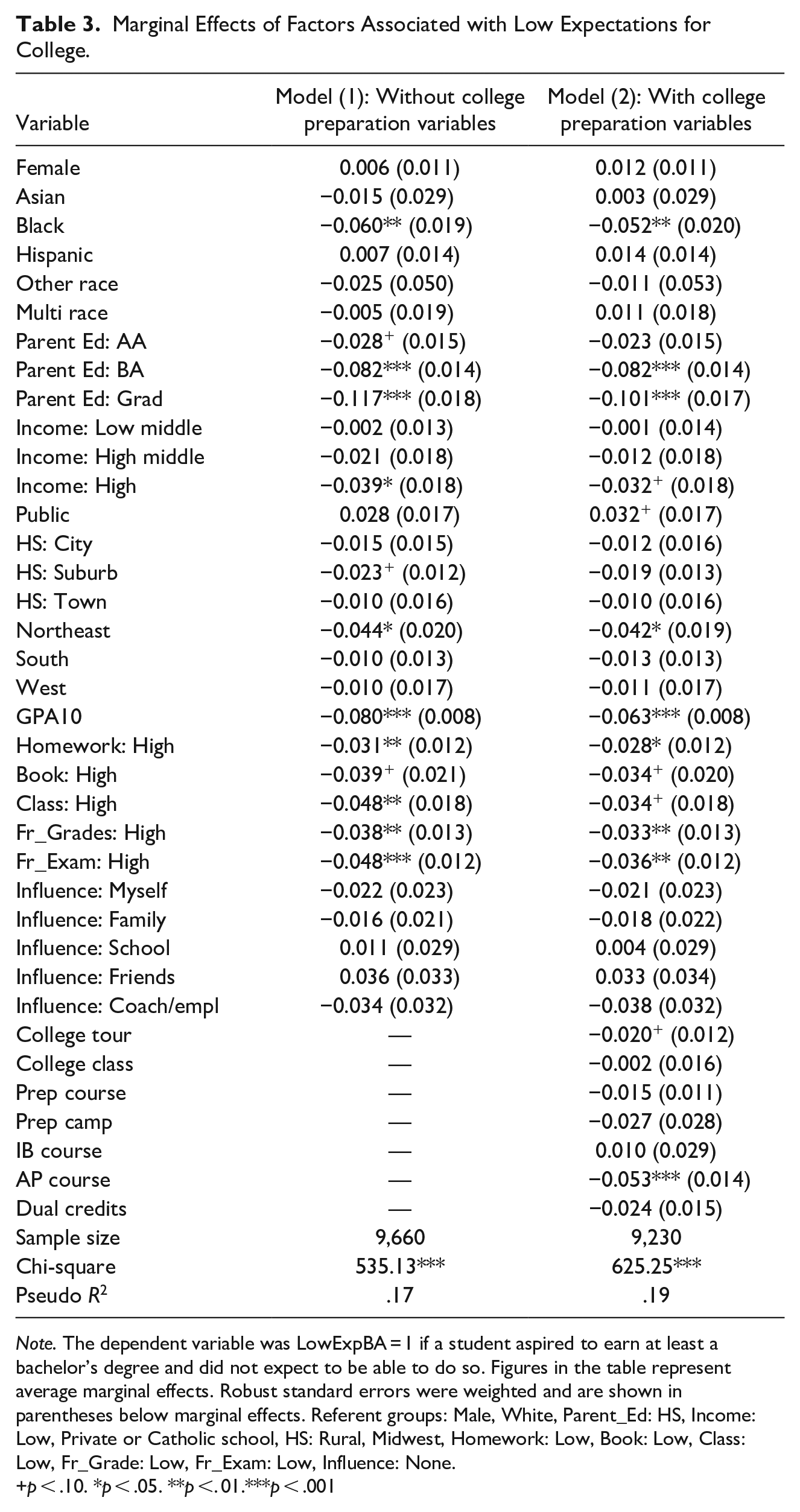
Note. The dependent variable was LowExpBA = 1 if a student aspired to earn at least a bachelor’s degree and did not expect to be able to do so. Figures in the table represent average marginal effects. Robust standard errors were weighted and are shown in parentheses below marginal effects. Referent groups: Male, White, Parent_Ed: HS, Income: Low, Private or Catholic school, HS: Rural, Midwest, Homework: Low, Book: Low, Class: Low, Fr_Grade: Low, Fr_Exam: Low, Influence: None.
p < .10. *p < .05. **p <. 01.***p < .001
Table 4 presents the results of exploring whether having low expectations for college translated into students being less likely to search for, apply to, and enroll in college after controlling for other factors. The results in the first row (boldface) showed that students who had low expectations for obtaining a bachelor’s degree were 7% less likely than those with high expectations to search for college information, even after holding other variables such as personal, family, and high school backgrounds and factors constant. Also, students who had low expectations for obtaining a bachelor’s degree were 2.4% less likely to apply to colleges, as compared to the students with high expectations, even after controlling for whether the student searched for information.
Marginal Effects of Factors Associated with College Search, Application, and Enrollment.
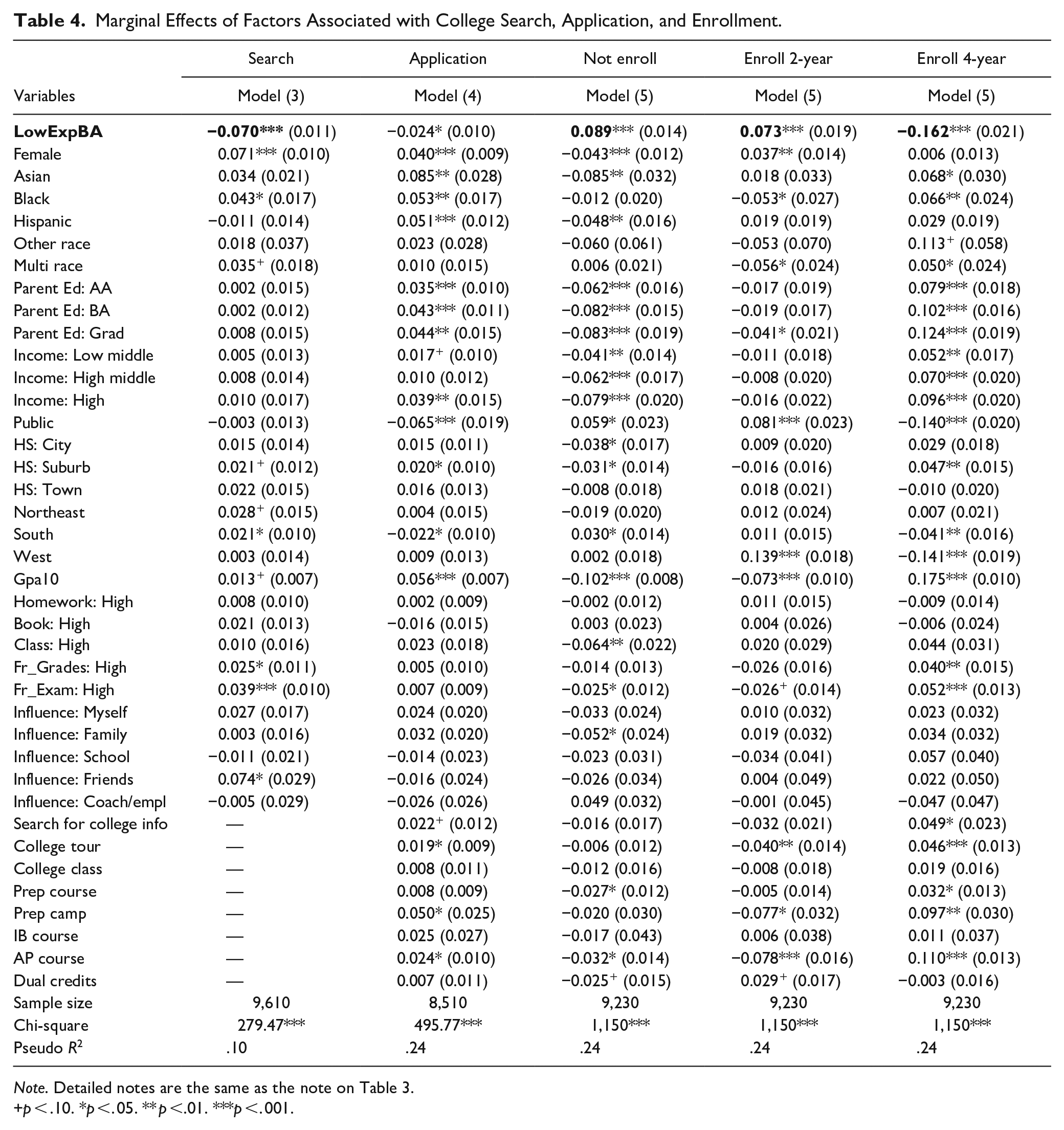
Note. Detailed notes are the same as the note on Table 3.
p < .10. *p <. 05. ** p <.01. ***p <. 001.
Furthermore, the multinomial logistic model showed a strong connection between having low expectations for college and actual enrollment decisions. Of students who aspired to earn a bachelor’s degree or higher, those with low expectations of completion were 8.9% more likely than their counterparts to not enroll in any postsecondary institution. Also, those students with low expectations were 7.3% more likely than their counterparts to enroll in 2-year institution, and an astounding 16.2% less likely to enroll in a 4-year institution. Clearly, many students who aspired to earn a 4-year degree but did not believe that they could do so were substituting away from enrolling in 4-year institutions and instead either enrolling in 2-year institutions or not going to college altogether. It is important to keep in mind that these effects were found after holding constant factors such as high school grades and experiences, parental education and income, and college preparedness activities.
Summary: Discussion
This study focuses on the disparity between college aspirations and expectations for high school students, a subject that has not yet been examined rigorously in previous relevant studies. As noted earlier, about half of the respondents to HSLS:09/12 reported having different aspirations and expectations for their educational attainment. Among them, this study focused on the subgroup of students who aspired to earn a bachelor’s degree but did not expect to be able to do so. To explore what defines “low or high expectations” among those who aspire to obtain postsecondary degrees, this study utilized a representative national sample of high school students and drew upon college access and choice related literature to consider a variety of variables, including factors in students’ lives such as their families, schools and communities, their college preparedness, and their social environment.
The results show that there were a number of factors relating to whether students had formed low expectations of earning a bachelor’s degree. This study confirmed the strong relationship between parental education or family income and low/high expectations. Additionally, the strong association with high school grades suggests that some students with lower grades may be concerned that they would not be able to be admitted and/or succeed in college. Students enrolled in public high schools were more likely to experience low expectations for college even though they were college aspirants. Students tend to feel it is more likely that their educational aspirations will be achieved when they have more competitive friends. Furthermore, when high school students have more academically prepared peers, they are more likely to search for college information and enroll in 4-year colleges. Additionally, activities such as engaging in a college search, taking a college tour, completing a course for a college admission exam, or taking an AP course, are all helpful for students as they help them realize their aspirations to go to college—such students are experiencing high expectations. These factors are important to address when one considers that, for some, individual and family backgrounds are difficult to overcome. Lastly, our results revealed that low/high expectations are associated with changes in the likelihood of searching for information on colleges, applying to colleges, and ultimately enrolling in college, and such expectations are related to individual factors (e.g., personal backgrounds, high school environment) that directly relate to college access.
With regard to demographics, it was notable that black students were less likely than white students to have low expectations for college. According to Morgan (2005), it is possible that black students can maintain their self-esteem, whether or not they have lower educational attainments, by protecting themselves from the “stereotype threat” and feeling “self-evaluative pressure.” Also, as other studies have suggested (e.g., Schneider & Saw, 2016), black students have higher aspirations and expectations than white students, conditional on characteristics such as income and test scores. Thus, extensive further research focusing on the relationship and causal factors influencing racial differences in college enrollment and expectations is necessary.
In the high school and community context, when considering that students in public schools are more likely to be disadvantaged in terms of individual background (first-generation, low-income, or minority), governments and local schools might continuously pay attention to how college affordability policies or programs link to college preparedness and access. For example, the federal government provides helpful resources such as America’s College Promise (ACP), which expands access to Pell Grants and other financial resources, and has even sought to simplify the FAFSA process to minimize barriers. Additionally, as school academic engagement is associated with high expectations for college, providing a rigorous academic core curriculum for all students alongside remedial classes or coaching programs should be established. To bolster the relationship between high school and postsecondary education in terms of curriculum alignment, college access programs and a school-based commitment to college access are also needed (Martinez & Klopott, 2005; Oseguera, 2013). Moreover, based on the results of this study, peer pressure operates as a positive influence on their expected educational goals and college-going behavior, as it is functionalized as peer-learning. This result can contribute to the debate found in previous studies–that the peer effect is ambiguous–since different studies have found differing results (e.g., Goldstein et al., 2005; Ryan, 2000). Drawing upon this finding, secondary schools might operate a peer-counseling/mediating program to help fellow students search for college information and apply to colleges. As suggested by Sokatch (2006), college access programs and services should be built with peer-strengthening approaches, and employ the same counselors or programs, which particularly helps for low SES students.
In the higher education context, although there are diverse arguments concerning whether AP courses help students gain admission to colleges or universities, or whether such courses offer equal opportunities for disadvantaged students (Klopfenstein, 2004; Tyson et al., 2005; Santoli, 2002), this study suggests that taking an AP course can potentially produce a positive association between successful expectations and aspirations. One recent study shows that state-mandated AP programs benefit students’ performance and outcomes (Arce-Trigatti, 2018). Thus, individual states and policymakers need to proactively examine how high schools and colleges should help students take AP courses whenever possible. In recent discussions of test-optional/free policies in particular, AP courses and achievement in school are thought to play a significant role in maintaining high expectations of 4-year college attainment. Therefore, relevant policies should be made more approachable for students who have difficulty realizing their educational aspirations, especially within the context of other influential factors that are inherent and are not easily changeable, such as family income, parental education, race, or school features.
Lastly, the reasons for the low expectations for college aspirants suggest that policymakers should exercise caution in pushing for all students to go to college. The strong relationship between high school grades and low expectations, for example, could indicate that these students feel that they may struggle to earn a degree if they were to enroll. Policy makers could help in this regard by providing students with better information about the range of students who successfully enroll in and graduate from college. On the other hand, students who formed low expectations for college due to having low social capital and/or insufficient financial resources could perhaps succeed with appropriate interventions including financial aid, counseling, college campus visit, or other college preparedness activities.
In K-12 and higher education settings, policymakers, scholars, and practitioners have continuously discussed the issues of students’ educational aspirations, access, and choice in postsecondary education (e.g., Harding et al., 2017; Means et al., 2016). This study reveals how various factors can account for the disparity between aspirations and expectations in a variety of contexts in the U.S. This study, consequently, can be utilized as a steppingstone to a fuller understanding of the relationship between educational aspirations and expectations and provide insight into why some students do not achieve their college aspirations. In the long run, adequate approaches and support should be offered to minimize the gaps that impede students’ anticipated achievements, and hence, improve college attainment rates in the U.S.
Footnotes
Declaration of Conflicting Interests
The author(s) declared no potential conflicts of interest with respect to the research, authorship, and/or publication of this article.
Funding
The author(s) received no financial support for the research, authorship, and/or publication of this article.
