




Abstract
The current study examined the mediating role of perceived risk of COVID-19 and the moderating role of hope in the relationship between intolerance of uncertainty and job-seeking anxiety. 812 advanced undergraduate students participated in this investigation (Mage = 21.95, SDage = 1.37; 69% female). Results indicated that intolerance of uncertainty is positively linked to job-seeking anxiety. Perceived risk of COVID-19 mediated the relationship between intolerance of uncertainty and job-seeking anxiety. Hope moderated the direct path and the indirect path from perceived risk of COVID-19 to job-seeking anxiety. Specifically, the relationship between intolerance of uncertainty and job-seeking anxiety became weaker for high-hope students. The results indicated that intolerance of uncertainty and perceived risk of COVID-19 serves as risk factors, while hope serves as a protective factor for job-seeking anxiety. Interventions, which reduce these two risk factors and increase this protective factor, might help to protect advanced undergraduate students from job-seeking anxiety.
Introduction
By reducing companies’ profits, the COVID-19 pandemic threatened the global economy and labor market (Garfin et al., 2020; Lee et al., 2020). Under this serious situation, individuals may face more difficulties to be employed. According to Lee et al. (2020), millions more youth are unemployed. Previous studies show that anxiety and stress are common among job seekers who have difficulties getting a job after graduating from university (Kang & Chi, 2021; Rafi et al., 2019). Advanced undergraduate students in colleges and universities, who must find a job to support themselves after graduation, are more vulnerable to get job-seeking anxiety (Arnett, 2000). Unlike western developed countries, China has a large number of graduates every year, which makes Chinese graduates experience rather high job-seeking anxiety due to insufficient job opportunities even in normal times (Liu & Raju, 2020). Considering that the majority of participants in this investigation are female, it’s worth pointing out that female graduates have more difficulties finding a job successfully than their male counterparts (He, 2022). According to the perspective of maximizing rational utility, female is a higher employment cost than male due to fertility problems and time allocation (Gong, 2019). More seriously, the three-child policy, implemented by China in 2021, makes employers more inclined than ever to hire males in China. Thus, female advanced undergraduate students may be more easily affected by the deterioration of the job market due to COVID-19. It is of great significance to explore the antecedents of job-seeking anxiety during COVID-19 in a sample with a majority of female advanced undergraduate students, which may help to enhance the validity of the study.
Previous investigation suggests that Guangdong Province has more pressure to prevent new waves of infections caused by overseas COVID-19 cases due to the prosperity of foreign trade and exchange activities (People’s Government of Guangdong Province[PGGP], 2021). The resurgence of the pandemic caused by overseas COVID-19 cases left no hope of being completely controlled, thus triggering individuals’ uncertain perceptions. In addition, China has always implemented a dynamic-zero policy until December 7, 2022. This policy required local authorities to use regional lockdowns and shut down economic activities even with a few COVID-19 cases (Morrison & Kennedy, 2022), further decreasing job opportunities. Taken together, advanced undergraduate students may face unprecedented job-seeking pressure and anxiety during our investigation, especially in Guangdong Province. Thus, exploring the risk and protective factors of job-seeking anxiety among our sample is of very significance.
Job-seeking anxiety refers to a series of negative emotional experiences (e.g., nervousness, irritability, and uneasiness) caused by misperceptions and inadequate employment opportunities before graduation (Fan et al., 2022). Previous studies show that the COVID-19 pandemic has exacerbated employment difficulties (Akkermans et al., 2020), which may in turn trigger advanced undergraduate students’ job-seeking anxiety. Furthermore, university students’ job-seeking anxiety becomes more and more significant during COVID-19 (Chen & Zeng, 2021; Sun et al., 2021). Although previous studies believe that job-seeking anxiety is a state of anxiety that will disappear when individuals find a job successfully (Wei et al., 2020). Other researchers believe that job-seeking anxiety may lead to suicidal thoughts and attempts (Han & Cho, 2015). Thus, it is imperative to explore the risk and protective factors of job-seeking anxiety among advanced undergraduate students under COVID-19, which may help to prevent and intervene in anxiety effectively.
As a pathogenic factor related to anxiety, previous literature demonstrates that intolerance of uncertainty may exacerbate college students’ job-seeking anxiety under infectious disease outbreak situations (Chen & Zeng, 2021; Taha, et al., 2014a). The previous study also indicates that the sudden outbreak of COVID-19 may exacerbate individuals’ sense of worry and uncertainty (Demetriou et al., 2020; Şentürk & Bakır, 2021). Thus, the effect of intolerance of uncertainty on job-seeking anxiety may be more serious during the COVID-19 pandemic (Rudenstine et al., 2022). Although a previous study explored the association between intolerance of uncertainty and job-seeking anxiety among college students under COVID-19 (Chen & Zeng, 2021), no study has explored the related mediating and moderating mechanisms. To fill this gap, this study aims to concept of a moderated mediation model to reveal the underline mechanisms in the relationship between intolerance of uncertainty and job-seeking anxiety.
Given that the COVID-19 epidemic has significantly increased the anxiety of the public, perceived risk of COVID-19 may play a critical role to explain the effect of uncertainty intolerance on job-seeking anxiety. The relationship between intolerance for ambiguity, perceived risk from COVID-19, and job search anxiety has been examined in the past (Asmundson & Taylor, 2020; Bakioğlu et al., 2021; Belle et al., 2021), but no studies have examined the mediating effect of perceived risk. As a psychological capital factor, hope is central to successful goal attainment (Snyder et al., 1991), which may play a protective role in psychological consequences (Demetriou et al., 2020; Mednick et al., 2007). However, to our knowledge, there is no research directly discussing the moderating effect of hope on job-seeking anxiety during the COVID-19. To fill this gap, this investigation aims to examine the mediating role of perceived risk of COVID-19 and the moderating role of hope between intolerance of uncertainty and job-seeking anxiety.
Intolerance of Uncertainty and Job-Seeking Anxiety Relation
Intolerance of uncertainty refers to cognitive, emotional, and behavioral reactions to ambiguous situations (Freeston et al., 1994), which is characterized by interpreting ambiguous situations as threatening or negative. Intolerance of uncertainty is a cognitive amplifier of negative perceptions and emotions (Carleton et al., 2007), thus making it become a popular concept in explaining individual variability in tendencies to experience worry and anxiety (Greco & Roger, 2001; Laugesen et al., 2003). By interpreting neutral stimuli as threats, individuals with a high level of intolerance of uncertainty are vulnerable to anxiety-related symptoms (Koerner & Dugas, 2008).
The previous study also indicates that intolerance of uncertainty is a crucial component of neuroticism (i.e., a factor of The Big-Five Factors Model) (Craske, 1999), which may make individuals perceive threats easily and activate anxiety quickly (Clarke & Kiropoulos, 2021). Empirical research studies demonstrate a positive relationship between intolerance of uncertainty and anxiety (Boswell et al., 2013; Carleton et al., 2012). Noteworthy is that, during the 2009 H1N1pandemic, intolerance of uncertainty was identified as a risk factor for both anxiety and perceived risk of the virus (Taha et al., 2014a, 2014b). Recently, empirical research studies also demonstrate that intolerance of uncertainty predicts anxiety and the perceived risk of the virus during the COVID-19 pandemic (Li et al., 2021; Zhao et al., 2022b). Although the positive link between intolerance of uncertainty and anxiety has been supported, empirical studies on the association between intolerance of uncertainty and job-seeking anxiety remain lacking.
In the job-seeking process, advanced undergraduate students often experience uncertainty regarding the possibility of being appreciated by the interviewee and being employed successfully (Arbona et al., 2021). For college students with high intolerance of uncertainty, these uncertainties are more likely to have bad consequences (e.g., Can’t get a job) than good ones, thus triggering job-seeking anxiety. Besides, an empirical study has found that the intolerance of uncertainty is positively related to employment anxiety (Chen & Zeng, 2021). Therefore, this study assumes that the intolerance of uncertainty is positively related to job-seeking anxiety under COVID-19.
Perceived Risk of COVID-19 as a Mediator
Although intolerance of uncertainty may significantly affect job-seeking anxiety, not all individuals with high intolerance of uncertainty experience job-seeking anxiety. Therefore, exploring the mediating mechanism would deepen our understanding of how intolerance of uncertainty triggers job-seeking anxiety. The large-scale outbreaks of COVID-19 have worsened economic conditions and increased the unemployment rate (Lee et al., 2020), which may trigger more job-seeking anxiety among college advanced undergraduates than at normal times. Perceived risk refers to individuals’ psychological evaluations of the probability and consequences of adverse outcomes (Sjöberg, 2000). Thus, researchers defined perceived risk of COVID-19 as individuals’ negative psychological evaluations of the probability and consequences of COVID-19 (Yıldırım & Güler, 2020). Considering that intolerance of uncertainty exacerbates individuals’ anxiety through irrational perceptions and negative coping styles of uncertain events (Carleton et al., 2012; Koerner & Dugas, 2008). This paper aims to verify that perceived risk of COVID-19 can mediate the effect of intolerance of uncertainty on job-seeking anxiety, which may protect advanced undergraduate students from job-seeking anxiety timely and effectively during the COVID-19 outbreak.
First, intolerance of uncertainty may positively link to the perceived risk of COVID-19. Previous studies suggest that intolerance of uncertainty includes destructive evaluations and irrational perceptions (Bakioğlu et al., 2021; Satici et al., 2022). And they may amplify individuals’ perceived risk of unexpected events (Buhr & Dugas, 2002). Individuals with high levels of intolerance of uncertainty tend to predict disastrous consequences of an unexpected event and avoid it at their full strength (Carleton et al., 2007), which may lead to a more perceived risk of COVID-19. Researchers suggest that intolerance of uncertainty was positively related to the perceived risk of the virus during the H1N1 outbreak in 2009 (Taha et al., 2014b). Recently, many empirical studies demonstrate that individuals with high intolerance of uncertainty tend to interpret ambiguous situations as threatening, which may lead them to perceive more risk in COVID-19 situations (e.g., Asmundson & Taylor, 2020; Bakioğlu et al., 2021; Zhao et al., 2022a). Therefore, we assume that intolerance of uncertainty is positively related to the perceived risk of COVID-19.
Second, perceived risk of COVID-19 may positively link to job-seeking anxiety. According to the ABC model, individuals’ anxiety is not directly caused by activating events, but by irrational perceptions or evaluations (Ellis, 1985). Individuals with a high-risk perception tend to feel more threat and uncertainty, which makes them experience more anxiety (Gentes & Ruscio, 2011). Previous theoretical and empirical research studies indicate that perceived risk is linked to increased anxiety (Gasper & Clore, 1998; Taha et al., 2014a). Literature review and investigations demonstrate that individuals’ fear of COVID-19 is associated with increased perceived job insecurity and future job anxiety (Gasparro et al., 2020; Mahmud et al., 2021; Rajabimajd et al., 2021). Scholars suggest that the health and death threat of the COVID-19 epidemic is positively related to state anxiety during job-seeking (Hu et al., 2020; Park, 2021). Thus, when university graduates decide to find a job, the worry about getting sick during COVID-19 may increase their anxiety. Furthermore, because of the conflict between avoiding physical contact and attending interviews, advanced undergraduate students may experience greater unpredictability and threat throughout their job search during the coronavirus pandemic. Drawing on the literature above, although no research tested the relationship between the perceived risk of COVID-19 and job-seeking anxiety up to now, we assume a positive relationship between the two.
Hope as a Moderator
Although intolerance of uncertainty may have direct and indirect effects on job-seeking anxiety through the perceived risk of COVID-19, not all individuals experience this effect. Hope is a cognitive-motivational concept that includes three components: the positive expectations of goals, the motivations to move toward goals, and the pathways to achieve goals (Martin-Krumm et al., 2014; Snyder, 1995). Despite some similarities, optimism mainly focuses on positive expectations of desired goals, overlooking pathways of thinking (Rand, 2009; Scheier & Carver, 1985). Therefore, hope may be more powerful in dealing with difficulties and negative emotions.
From the perspective of positive psychology, hope is a psychological resource, which can relieve risk factor’s negative effect on human mental health as well as predict life satisfaction and well-being (Counted et al., 2020; Seligman & Csikszentmihalyi, 2000). Previous research studies suggest that hope is related to higher levels of psychological adjustment, personal adaptation, and self-efficacy during a crisis (Karatas et al., 2021; Kennedy et al., 2012; Madan & Pakenham, 2014), which may protect them from psychological distress and anxiety (Dipierro & Johnson-Motoyama, 2018; Kennedy et al., 2012; Mirhosseini et al., 2020). As a psychological resource, hope could enable individuals to overcome difficult positions and regulate negative emotions like anxiety under COVID-19. For this reason, this study further proposes hope as a moderator that relieves the direct and indirect effects of intolerance of uncertainty on job-seeking anxiety during the COVID-19 outbreak.
Individuals with high levels of hope are more optimistic, and have better coping skills (Karatas & Tagay, 2021), which makes them have a better expectation of the future. During the COVID-19 pandemic, hope may improve individuals’ tolerance of uncertainty due to positive expectations and emotions, which lead to a low perceived risk of COVID-19. In addition, hope is a positive state of motivation oriented to the target (Folkman, 2013), thus individuals with stronger hope may focus on taking actions to overcome difficulties during jobhunting rather than being overwhelmed by anxiety. Therefore, advanced undergraduate students with high levels of intolerance of uncertainty would be strengthened by a stronger hope. Besides, individuals with high hope may more focus on good things rather than bad things, which protects them from anxiety. Empirical research also proves that hope is negatively related to intolerance of uncertainty (Saricam et al., 2020), and the perceived risk of COVID-19 (Cuzzocrea, 2020; Demetriou et al., 2020; Feldman, 2021). Thus, we suppose that hope moderates the direct path (i.e., intolerance of uncertainty→job-seeking anxiety) and the second stage of this mediating model (perceived risk of COVID-19→job-seeking anxiety).
Previous studies indicate that individuals with stronger hope tend to have a lower threat or risk perception (Kennedy et al., 2009) and a higher tolerance for health crises (Miller-Smedema et al., 2010). Through coping with stress effectively and evoking positive emotion, hope may protect individuals from anxiety after perceived high risk (Kirmani et al., 2015). Thus, hope may protect college students from job-seeking anxiety by offering effective coping strategies for perceived uncertainties and threats of COVID-19. College students with stronger hope may also adjust their negative emotions in time after the perceived risk of COVID-19 (Madan & Pakenham, 2014), which may help them alleviate the negative effect of the perceived risk of COVID-19 on job-seeking anxiety. Recently, an investigation also demonstrates a negative link between hope and COVID-19 fear (Karatas et al., 2021). Thus, we suppose that hope may moderate the first stage of this mediating model (i.e., perceived risk of COVID-19 → job-seeking anxiety).
The Present Study
The data used in this paper is from a larger investigation concerning the COVID-19 pandemic and mental health among college students in Guangdong province, which was conducted in the first ten days of February 2021. During this investigation, approximately 5–18 overseas COVID-19 cases per day were identified in Guangdong Province (PGGP, 2021). Besides, Guangdong Province often attracts a large number of graduates from other provinces to hunt for jobs due to its higher salaries, which may also exacerbate the deterioration of the job market in this region. A previous investigation also pointed out that nearly 70% of college students in Guangdong Province have job-seeking anxiety after the COVID-19 outbreak (Lin, 2020). Thus, this study aims to test a moderated mediation model (see Figure 1) among advanced undergraduate students in Guangdong Province. First, we examined whether intolerance of uncertainty is positively associated with job-seeking anxiety. Second, we tested whether perceived risk of COVID-19 mediates the link between intolerance of uncertainty and job-seeking anxiety. Third, we examined whether hope moderates the effect of intolerance of uncertainty on job-seeking anxiety. This study tested the following three specific hypotheses: The conceptual model.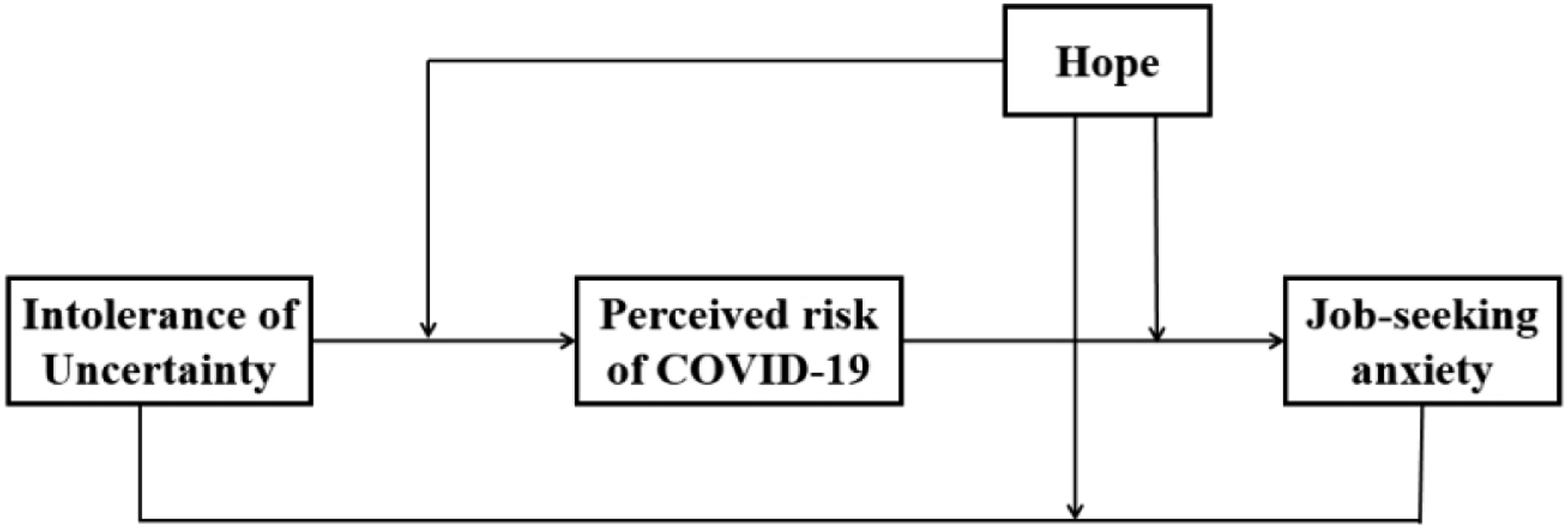
Intolerance of uncertainty is positively linked to job-seeking anxiety.
Perceived risk of COVID-19 mediates the link between intolerance of uncertainty and job-seeking anxiety. Specifically, intolerance of uncertainty is positively related to perceived risk of COVID-19 and perceived risk of COVID-19 is positively related to job-seeking anxiety.
Hope would moderate the direct and indirect links between intolerance of uncertainty and job-seeking anxiety via perceived risk of COVID-19.
Method
Participants
The sample includes 812 advanced undergraduates in college from a larger investigation in Guangdong Province, China (Mage = 21.95, SDage = 1.37, rangeage = 18–26; 69% female; 64.5% 3rd year and 35.5% fourth year). To reduce face-to-face contact, this investigation recruited participants through electronic online mediums (e.g., SurveyStar) using convenience and partial snowball sampling methods. The investigation was introduced to students by college staff during their lectures, and participants were asked to offer the survey link to their peers. Participants were given informed consent and were free to withdraw from the investigation at any time. Participants are all volunteers and complete questionnaires without any compensation. The Research Ethics Committee of the first author’s institution approved the current investigation.
Measures
Intolerance of Uncertainty
This study used the Chinese version of the Intolerance of Uncertainty Scale-12, which was revised by Carleton et al. (2007) and translated into Chinese by Wu et al. (2016). This measure has 12 items including 2 factors: (1) 7 items of prospective anxiety (e.g., “Unforeseen events upset me greatly”), (2) 5 items of inhibitory anxiety (e.g., “Uncertainty keeps me from living a full life”). All items are measured on a five-point Likert scale (1 = totally disagree to 5 = totally agree). Higher scores indicate stronger intolerance of uncertainty. In the current study, α = .90, CR = .93, AVE = .53.
Job-Seeking Anxiety
To measure Chinese college students’ job-seeking anxiety, this investigation revised Ren’s (2010) Job-seeking Anxiety Scale, which consists of 2 sub-scales: (1) 8 items of physiological behavior (e.g., “When I think about finding a job after graduation, I become more tempted to lose my temper.”), (2) 8 items of subjective feelings (e.g., “I’m very upset”). All items were measured on a four-point Likert scale (1 = totally disagree to 4 = totally agree). Higher scores indicated greater job-seeking anxiety. In this investigation, α = .95. CR = .93, AVE = .82.
Perceived Risk of COVID-19
To measure Chinese college students’ perceived risk of COVID-19, we adopted and revised 4 items of the COVID-19 Perceived Risk Scale (CPRS) (Yıldırım & Güler, 2020). Each item is rated on a Likert scale ranging from 1 (totally disagree) to 5 (totally agree). Higher scores indicate higher levels of perceived risk related to COVID-19. The newly revised scale measured 2 dimensions: (1) 2 items for negative psychological evaluations of the likelihood (i.e., “Perceived likelihood of acquiring COVID-19 compared to other persons; the Perceived likelihood of acquiring COVID-19”), (2) 2 items for negative psychological evaluations of the consequences (i.e., “Worrying about becoming a severe patient after being infected with COVID-19; Worrying about COVID-19 emerging as a health issue”). The newly revised 4-item scale was fitted to a two-factor scale, α = .70, CR = .93, AVE = .78.
Hope
This study used the Chinese version of the Hope scale (Snyder et al., 1996), which was translated into Chinese by Zhou et al. (2018). This measure has 6 items (e.g., “If I’m in a dilemma, I can think out many ways to get out of it”). Each item is rated on a Likert scale ranging from 1 (totally disagree) to 8 (totally agree). Higher scores reflect higher levels of hope. The Cronbach’s alpha coefficient for scores on this scale in the current study is .93, CR = .95, AVE = .74.
Analytical Methods
First, we calculated the descriptive statistics and Pearson correlations of the main study variables in SPSS20.0. Second, we examined whether the perceived risk of COVID-19 mediates the link between intolerance of uncertainty and job-seeking anxiety by the PROCESS macro for SPSS (Model 4) (Hayes, 2017). Third, we examined whether hope moderates the direct and indirect links between intolerance of uncertainty and job-seeking anxiety via Model 59. Whether the effects in Model 4 and Model 59 were significant was determined by the bootstrap confidence intervals (CIs) based on 5000 random samples (Hayes, 2017). If the CIs did not include zero, there is a significant effect. All study variables were standardized before data analyses.
Results
Correlation Analyses
Descriptive Statistics and Bi-Variate Correlations.
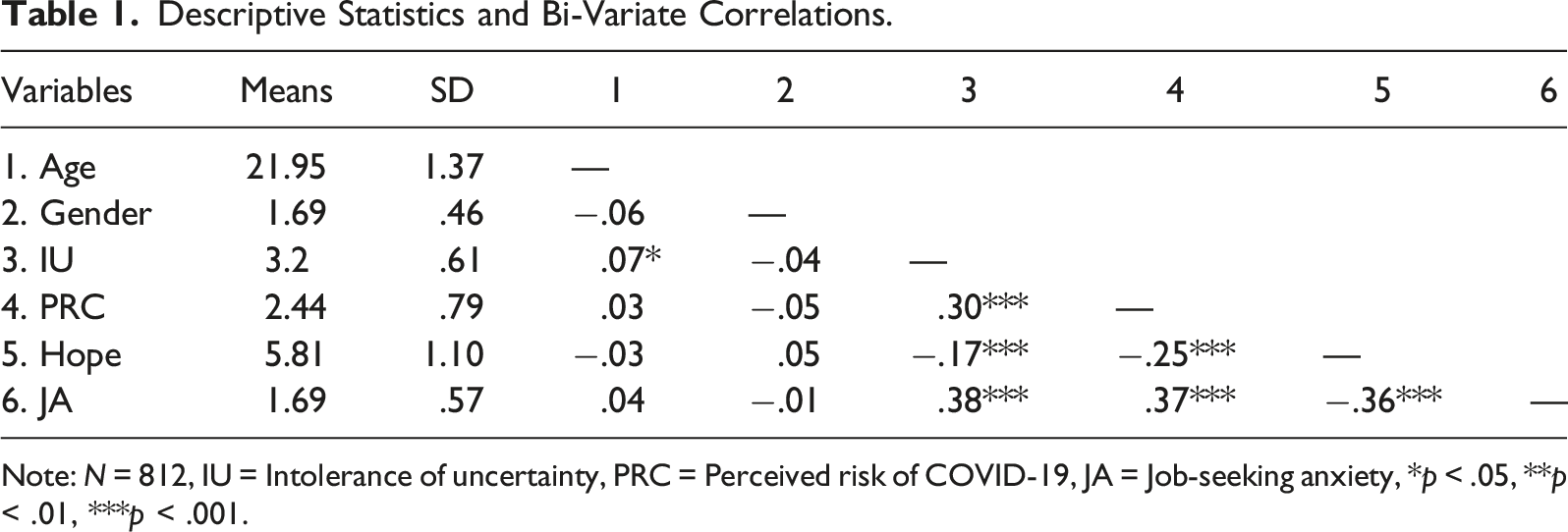
Note: N = 812, IU = Intolerance of uncertainty, PRC = Perceived risk of COVID-19, JA = Job-seeking anxiety, *p < .05, **p < .01, ***p < .001.
Testing for Mediation Effect
Testing the Mediation Effect.
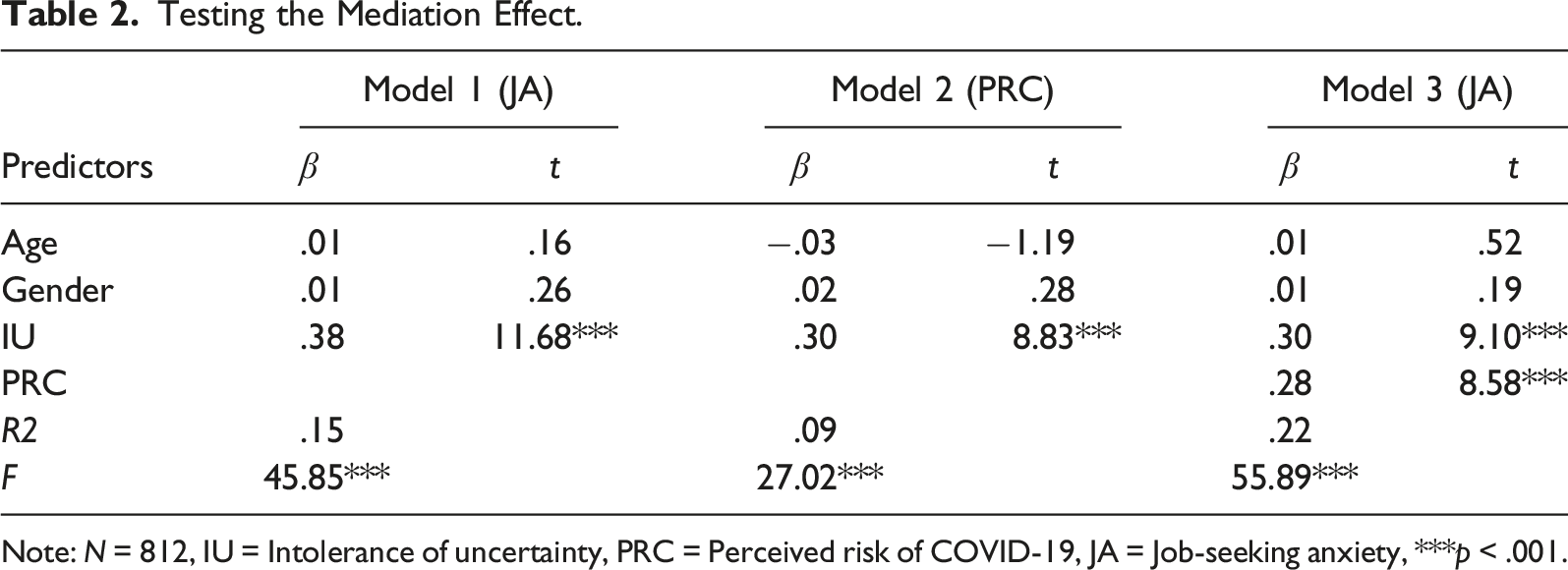
Note: N = 812, IU = Intolerance of uncertainty, PRC = Perceived risk of COVID-19, JA = Job-seeking anxiety, ***p < .001.
Moderated Mediation Effect Analysis
Testing the Moderation Effect of Hope.
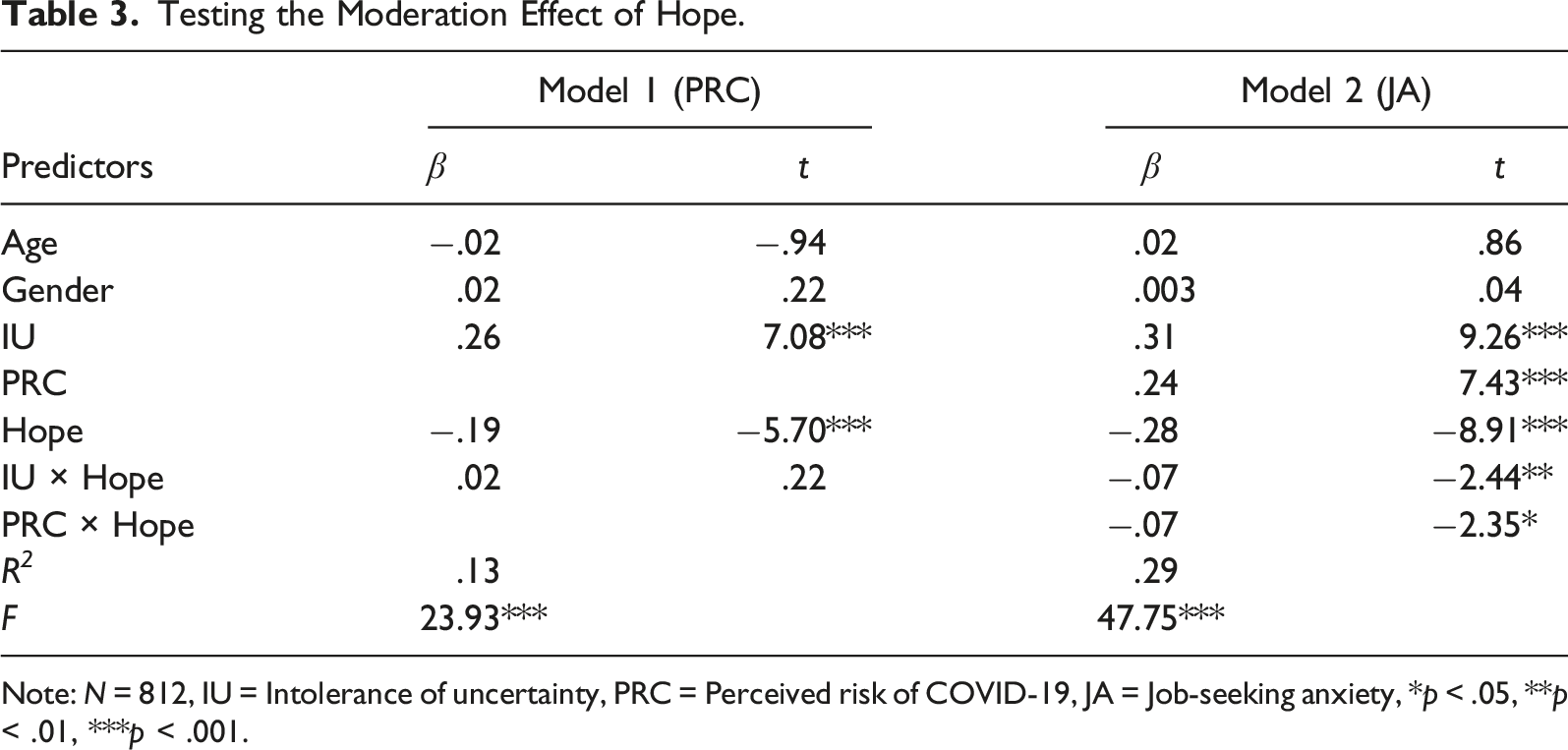
Note: N = 812, IU = Intolerance of uncertainty, PRC = Perceived risk of COVID-19, JA = Job-seeking anxiety, *p < .05, **p < .01, ***p < .001.
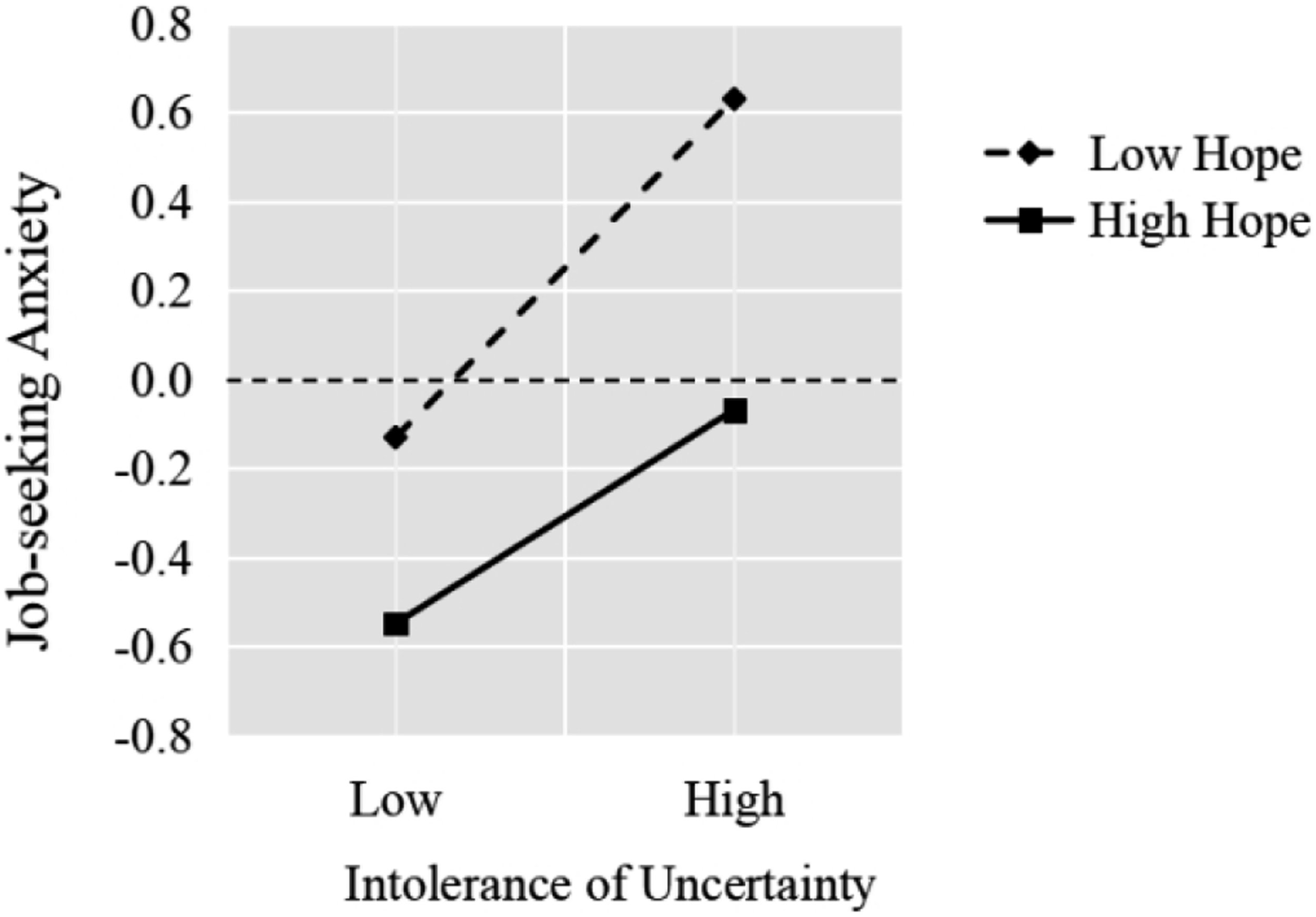
To visualize the moderating pattern, the simple slope figures (Figures 2 and 3 Interaction effect of perceived risk of COVID-19 and hope on job-seeking anxiety. Interaction effect of intolerance of uncertainty and hope on job-seeking anxiety.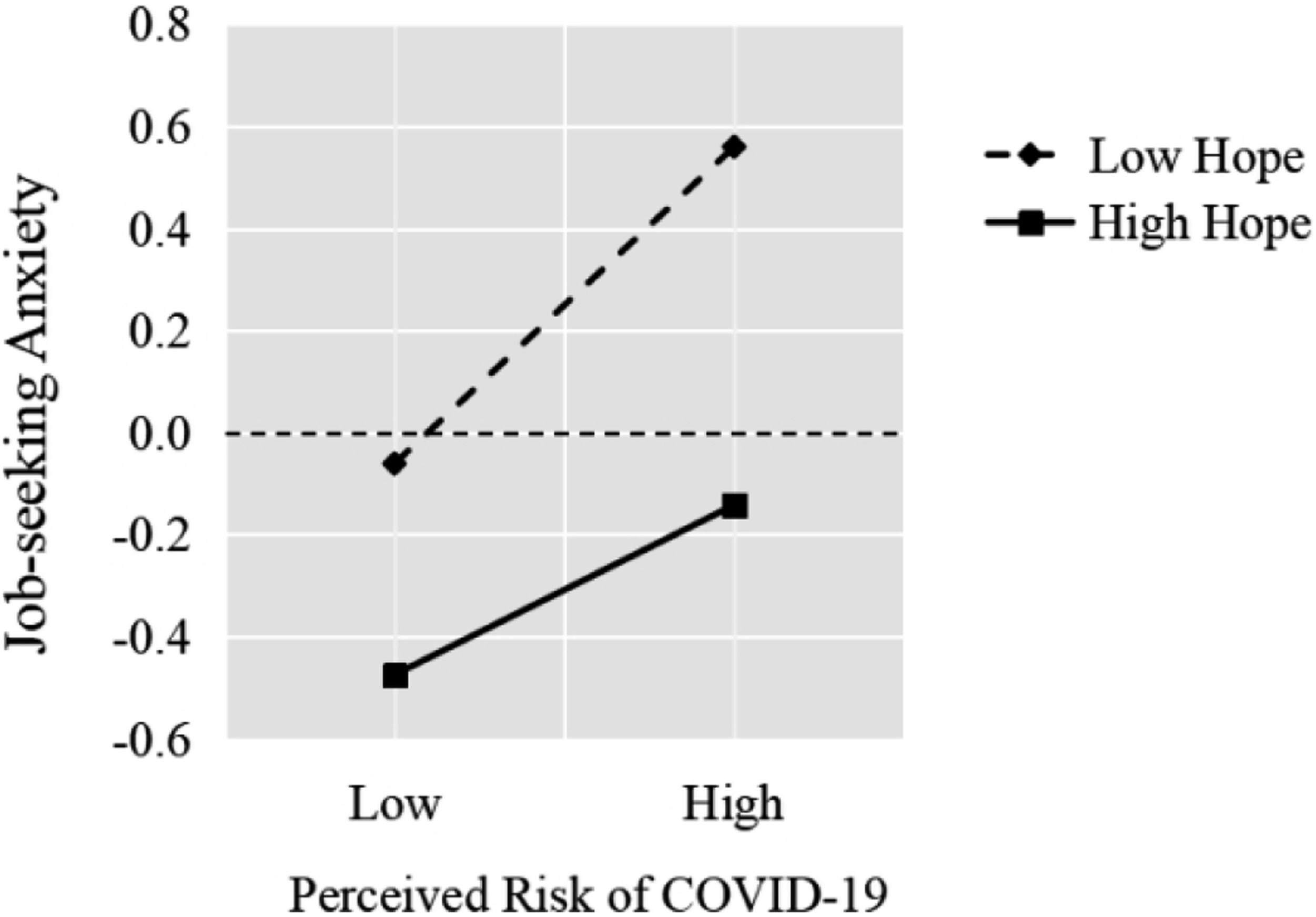
The bias-corrected percentile bootstrap analysis further indicated that the indirect effect of intolerant of uncertainty on job-seeking anxiety through the perceived risk of COVID-19 was moderated by hope. Particularly, for college students with low hope, the indirect effect of intolerant of uncertainty on job-seeking anxiety via perceived risk of COVID-19 was significant, b = .07, SE = .02, 95% CIboot = [.04, .11]. The indirect effect was also significant for college students with stronger hope, but the effect was weaker, b = .05, SE = .01, 95% CIboot = [.02, .08]. The results also demonstrated that the moderated mediation was significant, Index = - .21, SE = .01, 95% CIboot = [−.04, −.002], which indicated that hope moderated the indirect effect of intolerant of uncertainty on job-seeking anxiety via perceived risk of COVID-19.
Discussion
Intolerance of Uncertainty and Job-Seeking Anxiety
The results demonstrated that intolerance of uncertainty was positively linked to job-seeking anxiety, which was consistent with previous research (Angehrn et al., 2020; Chen & Zeng, 2021; Freeston et al., 2020). By amplifying individuals’ negative perceptions and emotions of uncertain events, intolerance of uncertainty plays a key role in the etiology of anxiety-related disorders (Carleton et al., 2007; Dugas et al., 2004). In the career decision process, intolerance of uncertainty may lead to career decision difficulties by increasing the sense of career uncertainty, which then stimulates anxiety experiences (Arbona et al., 2021). Taken together, for advanced undergraduate students with high intolerance of uncertainty, anxiety may occur more easily since the process of job hunting is full of uncertainties (Yu & Chen, 2022). Noteworthy is that the Chinese government utilized a dynamic-zero policy with government-mandated lockdowns until December 7, 2022 (Morrison & Kennedy, 2022). Consequently, the connections between uncertainty, perceived risk, and job-seeking anxiety may be stronger than in other countries or regions under COVID-19.
The Mediating Role of the Perceived Risk of COVID-19
Our results suggested that the perceived risk of COVID-19 mediated the relationship between intolerance of uncertainty and job-seeking anxiety. Consistent with previous research, individuals’ innate personalities link to negative emotions through cognitive appraisal (Li et al., 2021). This result can be explained by rational-emotive theory (Ellis, 1985). Specifically, intolerance of uncertainty as an inner state can aggravate the perceived risk of COVID-19 (i.e., evaluation), which in turn exacerbates anxiety experience. Our finding indicated that external threat factors and innate personalities work together on accelerating job-seeking anxiety among advanced undergraduate students under the epidemic situation.
Besides revealing the mechanism by which intolerance of uncertainty affects job-seeking anxiety as a whole, each of the separate links in our mediation model is of significance. First, our results demonstrated that intolerance of uncertainty was positively related to the perceived risk of COVID-19, which was consistent with previous research (He et al., 2020; Tull et al., 2020; Wu et al., 2021). A possible explanation may be that individuals with high intolerance of uncertainty tend to make negative evaluations and overestimate risks (Li et al., 2021). In addition, individuals with high intolerance of uncertainty may seek more threat-relevant information, which could increase risk perception (Ladouceur et al., 2000). Therefore, intolerance of uncertainty is positively related to the perceived risk of COVID-19 among advanced undergraduate students.
Second, consistent with previous studies (Fisher et al., 2021; Kwok et al., 2020; Lee et al., 2021), our results demonstrated that the perceived risk of COVID-19 was positively linked to job-seeking anxiety. This result can be explained by the conservation of resources theory (Hobfoll, 1989), which states that individuals with compromised cognitive resources may not cope well with difficulties effectively and experience more anxiety. Consequently, advanced undergraduate students with a high perceived risk of COVID-19 may have limited cognitive resources, which makes them more anxious during the job-seeking period.
The Moderating Role of Hope
The results indicated that hope moderated the direct path (i.e., intolerance of uncertainty→job-seeking anxiety) and the indirect path (i.e., perceived risk of COVID-19→job-seeking anxiety). The moderating types were consistent with the risk-buffering model, which demonstrated that protective factors can weaken the adverse effects of risk factors on psychological disorders (Masten, 2001). Our results indicated that hope may serve as a protective factor that mitigates the adverse effects of intolerance of uncertainty on job-seeking anxiety. Although previous studies have indicated that hope may play a protective role in psychological and physical consequences (Demetriou et al., 2020; Mednick et al., 2007), the current study is the first, to our knowledge, to indicate that hope as a moderator significantly reduces the effect of intolerance of uncertainty on job-seeking anxiety.
Firstly, our result demonstrated that hope can moderate the association between the perceived risk of COVID-19 and job-seeking anxiety. Specifically, individuals perceived a high risk of COVID-19 tend to feel less anxiety during job-seeking when they reported high hope. This phenomenon can be explained by hope’s protective function, which indicated that individuals with stronger hope are more likely to have psychological resources, psychological adaptability, and self-efficacy during a crisis (Karatas et al., 2021; Kennedy et al., 2012; Madan & Pakenham, 2014). In addition, individuals with more psychological resources and self-efficacy tend to experience fewer negative emotions (Madan & Pakenham, 2014), which reduces the risk of anxiety. Thus, advanced undergraduate students with stronger hope can shift their attention to positive things easily, which may help to buffer the link between the perceived risk of COVID-19 and job-seeking anxiety.
Secondly, our result demonstrated that hope can moderate the association between intolerance of uncertainty and job-seeking anxiety. This result can be explained by hope theory (Snyder et al., 2003), which indicated that hope can reduce perceived uncertainty by motivating individuals to persevere in achieving goals. Besides, scholars believed that hope acts as a psychological capital factor or psychological strength, making individuals more positive and resourceful (Fitzgerald, 2014; Karatas & Tagay, 2021). Previous studies also pointed out that hope would protect individuals from anxiety by enabling them to persevere in stressful situations (Wang et al., 2017). Thus, advanced undergraduate students with high levels of intolerance of uncertainty would be strengthened by a stronger hope due to its positive effects, which also protect them from job-seeking anxiety.
Taken together, our moderated mediation model will help to identify which individuals are high-risk ones to suffer job-seeking anxiety. Furthermore, the protective role of hope and the risk role of intolerance of uncertainty and the perceived risk of COVID-19 may lead to targeted preventive interventions for job-seeking anxiety. Our findings have particular meanings for advanced undergraduate students in the global epidemic situation, especially for developing countries and regions with large populations and high unemployment rates.
Limitations and Future Directions
Several limitations need to be noted in this investigation. First, besides the two personality variables tested in the current investigation (i.e., intolerance of uncertainty, and hope), other internal personality variables (e.g., Big 5 personality, introvert personality, and resilience) may also have relationships with job-seeking anxiety. Future research should discuss the relationship between these personality variables and job-seeking anxiety. Second, this study adopted a cross-sectional design based on self-report scales at a one-time point, which may not allow us to infer causality and avoid socially desirable responding bias. Future studies should consider experimental or longitudinal designs and collect data from multiple sources (e.g., parents, teachers, or peers). Third, given that college students’ likelihood of severe health outcomes from COVID-19 is extremely low (CDC COVID-19 Response Team, 2020), those college students with a high perceived risk of COVID-19 may tend to be general worriers. Future studies should consider testing our moderated mediation model after controlling the general worry-related variables. Besides, our results not found a moderating effect of hope on the link between intolerance of uncertainty and the perceived risk of COVID-19. Therefore, re-testing our moderated mediation model under a new infectious disease epidemic is necessary. Lastly, the sample used in this study was entirely Chinese, limiting the generalization of results across diverse cultures.
Practical Implications
Despite the aforementioned limitations, this study’s findings inform areas of focus for career counselors working with advanced undergraduate students as they explore their career options as well as strategies for employers conducting job interviews as COVID-19 continues to impact public health globally. First, considering intolerance of uncertainty and perceived risk of COVID-19 are risk factors of job-seeking anxiety under COVID-19, measuring these two indicators among advanced undergraduate students by career counselors helps to identify high-risk individuals. When developing anxiety intervention projects, career counselors need to focus on decreasing intolerance of uncertainty and perceived risk of COVID-19, which may protect high-risk individuals from job-seeking anxiety effectively. Second, offering more online interview opportunities by employers during the virus epidemic may also help advanced undergraduate students reduce intolerance of uncertainty and perceived risk. Third, the results indicate that hope can buffer the effect of intolerance of uncertainty on job-seeking anxiety via the perceived risk of COVID-19. Previous studies have also proved that hope-based targeted interventions can effectively reduce anxiety experience (Cui et al., 2021; Ho et al., 2012). Thus, career counselors should plan prevention and intervention programs focus on hope under COVID-19, which may protect advanced undergraduates from job-seeking anxiety and help them deal with career development difficulties.
Conclusions
In conclusion, this research explored the potential mechanism between intolerance of uncertainty and job-seeking anxiety among Chinese advanced undergraduate students. The intolerance of uncertainty is positively related to job-seeking anxiety. Moreover, the perceived risk of COVID-19 plays a mediating role in this relationship. Furthermore, hope moderates the direct path (i.e., intolerance of uncertainty→job-seeking anxiety) and the second indirect path (i.e., the perceived risk of COVID-19→job-seeking anxiety).
Footnotes
Declaration of Conflicting Interests
The author(s) declared no potential conflicts of interest with respect to the research, authorship, and/or publication of this article.
Funding
The author(s) disclosed receipt of the following financial support for the research, authorship, and/or publication of this article: This work was supported by Social Science Fund for Young Scholars of Guangdong Province in 2023 (GD23YXL06), the Projects for Humanities and Social Sciences of Jiaying University (2023SKY01), Research on Psychological Mechanism of Hakka Ethnic Group Cognition and Ethnic Identity (21KYKT16) and the 2019 Educational Science Planning Project of Guangdong (2019GXJK181).
