




Abstract
This study aimed to understand the role of regulatory focus for influencing self-directed learning activities during a job search. The authors surveyed 185 job-searching university students at two time points to explore the conditions under which regulatory focus (promotion and prevention foci) impacts self-directed learning activities and the number of employment interviews secured. Both promotion and prevention foci showed significant relationships with self-directed learning activities and number of interviews, and positive and negative affect partially mediated these relationships. The relationships between both regulatory focus strategies and self-directed learning were also contingent on self-efficacy. More specifically, prevention focus and self-directed learning showed a positive relationship for job seekers with high levels of self-efficacy but a negative one for job seekers with low levels of self-efficacy. This research extends the understanding of the role of regulatory focus in the context of self-directed learning during a job search. Implications for research and practice are discussed.
Finding a job is a self-directed task that unfolds in an unstructured, uncertain, and ambiguous task environment. In this context, job seekers are required to self-manage their thoughts, emotions, and behaviors while learning to conduct a self-directed job search. In unstructured and ambiguous situations such as a job search, often referred to as “weak” situations (Caspi & Moffit, 1993; Mischel, 1977), individual psychological characteristics tend to be accentuated and matter more in shaping behavior than in more structured or the so-called strong situations. Hence, it is not surprising that several studies have investigated the role of distal trait-like characteristics (e.g., personality differences)—relatively stable but difficult to change individual differences—on job behaviors and outcomes such as interviews (e.g., D. J. Brown et al., 2006; Turban et al., 2009, 2013). Despite the emphasis on distal trait-like individual differences like personality, the role of more motivational-based individual differences in shaping job search behaviors and outcomes is uncharted territory. Yet a recent meta-analysis showed that regulatory focus, a motivational-based individual difference, tends to be more strongly linked to goal pursuit than distal personality variables (Lanaj et al., 2012), suggesting that regulatory focus may fulfill a pivotal role in how job seekers self-manage the goal-driven process of finding a job. Within this context, the present study attempts to fill an important void in literature, that is, exploring the impact of motivational-based individual differences on job search behaviors and outcomes. Particularly, this inquiry will study the role of job seeker’s regulatory focus on self-directed learning behaviors during a job search.
According to regulatory focus theory, two unique regulatory systems control individuals’ emotions, attention, and behaviors during goal pursuit—promotion and prevention foci (Brockner & Higgins, 2002). Some people are oriented toward satisfying growth-oriented needs and are prone to promotion-focus strategies by pursuing desired outcomes, while others are more oriented toward satisfying needs such as maintaining safety and thus are more prone to adopt prevention-focus strategies by avoiding undesired outcomes (Higgins, 1987, 1997). Being a motivation-based individual difference, regulatory focus captures a person’s preference for goal-driven actions, whereas other individual differences such as personality traits reference a person’s self-belief, indicating that the source/nature of both individual differences is different (e.g., Lanaj et al., 2012). This distinction is relevant within the context of job search because the motivational nature of regulatory focus suggests the centrality of this characteristic in determining goal pursuit actions during a job search. Drawing from this observation, the purpose of this study is to unravel how a person’s preference to pursue desirable outcomes or avoid undesirable ones will shape self-directed learning during a job search. Our emphasis on this relationship is timely because the ability to take responsibility of one’s own career development and engage in self-directed learning activities (e.g., asking others for advice and guidance, using online career self-help resources) is an indispensable skill to be successful at searching for a job (Briscoe et al., 2006), especially in times of an evermore demanding labor market. Further, we are interested in better understanding the conditions under which and more specifically how regulatory focus shapes self-directed learning behaviors.
To conclude, this research has two important purposes. First, we extend research on job search by demonstrating the importance of regulatory focus in shaping job seekers’ self-directed learning behaviors. In doing so, we respond to calls to outline the process through which motivational-based individual characteristics of job seekers influence job search behaviors and success (Boswell et al., 2012; Kanfer et al., 2001). As shown in Figure 1, regulatory focus variables are hypothesized to influence job search outcomes (interviews) through their influence on emotions and self-directed learning behaviors. Notably, self-directed learning behaviors have received scant attention in the job search literature, despite most job seekers doubting the effectiveness of their own job search activities (Wanberg et al., 2012). We argue that a promotion focus, with an inherent focus on growth and positive outcomes, may be a powerful driver of the self-directed learning behaviors that are essential for new labor market entrants learning to conduct a job search.
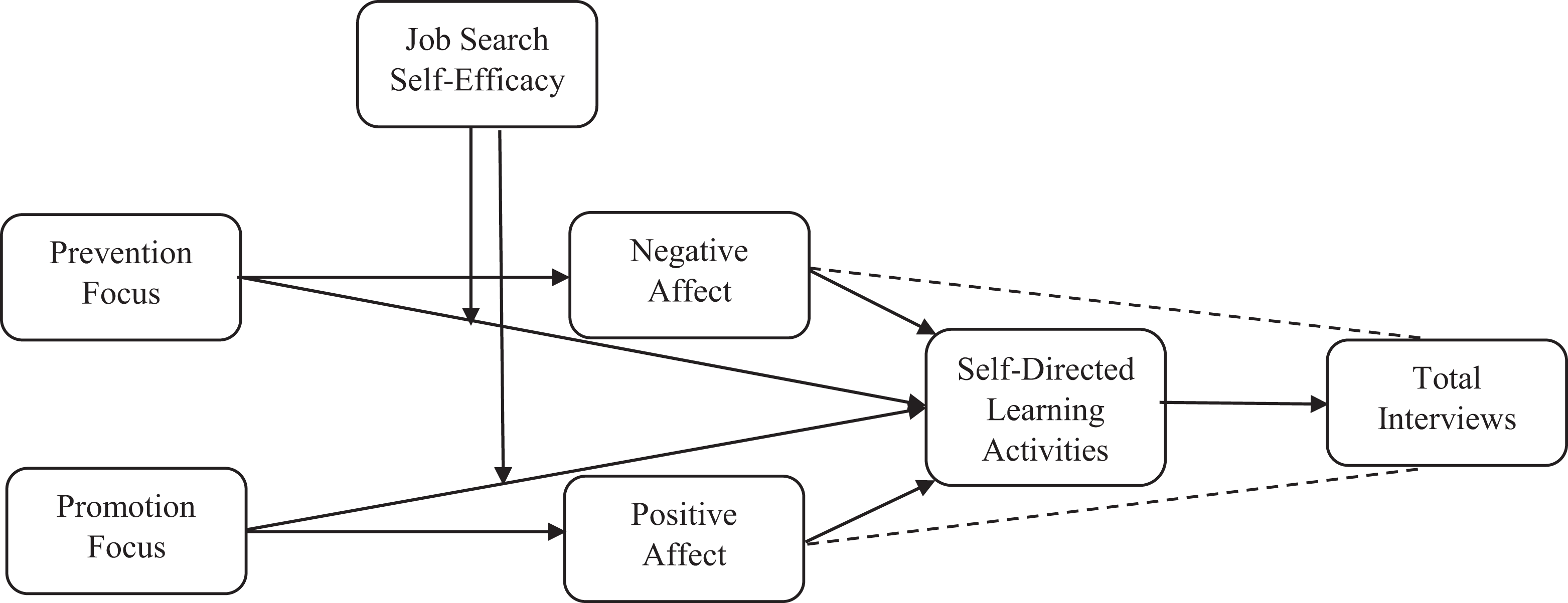
Final model. Note. Solid lines depict hypothesized relationships. Dashed lines are effects that were added but not hypothesized.
A second contribution of this work is to explore the boundary conditions of regulatory focus that may reinforce or mitigate self-directed learning activities. We tackle this void by considering how job search self-efficacy may moderate this relationship, as job seekers with higher levels of self-efficacy are more likely to take responsibility for their own development, seek out challenges, and have greater motivation to learn than individuals with lower levels of self-efficacy (Noe & Wilk, 1993). In contrast, other research suggests that individuals with higher levels of self-efficacy may be less likely to perceive a need to develop their job-searching skills because they are highly confident in their current capabilities (Carver & Scheier, 1998). Our focus extends regulatory focus theory of how the effects of prevention focus on self-directed learning activities are contingent on job search self-efficacy. We expect that a prevention focus, which directs attention to obstacles and challenges, will impact self-directed learning behaviors contingent upon a job seeker’s perceived ability to cope with obstacles and challenges (i.e., self-efficacy).
Theoretical Background
Self-directed learning is defined as the intentional activities job seekers undertake to gain the knowledge and skills required to conduct an effective job search (Garrison, 1997). This can include activities such as asking others for job search guidance, using online resources (e.g., workshops) to learn about the job search process, or seeking guidance from career professionals to become better at finding jobs. Self-directed learning activities are critical in a job search, yet it is often unclear to job seekers which methods or behaviors are most effective (Van Hooft et al., 2013; Wanberg et al., 2012). Further, self-directed learning is vital for new labor market entrants, the focus population of our inquiry, as these job seekers are learning to conduct a self-managed job search process.
Theoretical models of self-directed learning state that motivation drives the initiation and maintenance of effort toward learning and achieving goals (e.g., Garrison, 1997). For example, Garrison (1997) describes self-directed learning as a goal-driven motivation, which is a function of expectancy (belief that a desired outcome can be achieved) and valence (attraction to certain learning goals, determined by personal needs and affect). Drawing from the notions of valence and expectancy, we developed and tested a model for self-directed learning during job search (see Figure 1). In particular, we integrate the idea of regulatory focus theory (Higgins, 1997)—a theory of goal-pursuit rooted in the psychology of personal needs/values (i.e., valence), with self-efficacy theory, which describes the psychological precursor to expectancy beliefs (Bandura, 1997; Garrison, 1997).
Regulatory Focus Theory and Self-Directed Learning
One of the most important ways that individuals differ in their patterns of managing their attention, emotions, and behaviors results from two trait-like differences in the activation of motivational systems (Higgins, 1997). More specifically, promotion and prevention foci are two distinct motivational systems that serve fundamentally different human needs (Higgins, 1987, 1997; Lanaj et al., 2012). Promotion focus serves nurturance needs such as growth, advancement, and regulating oneself toward potential pleasure. People with high levels of promotion focus pursue goals using an eagerness strategy primarily sensitive to the presence or absence of opportunities and positive outcomes (e.g., gains). In contrast, prevention focus serves security needs and focuses on safety, responsibility, and meeting one’s duties, and regulating oneself away from potential pain. People with high levels of prevention focus pursue goals using vigilance strategies that are sensitive to the presence or absence of threats and negative possibilities (e.g., losses; Higgins, 1987, 1997).
Past research has examined the influence of the different regulatory foci on work outcomes such as job performance and work attitudes (e.g., Lanaj et al., 2012). Only a few studies have explored the importance of regulatory focus in the career development and job search domain, generally finding promotion focus is positively, and prevention focus negatively associated with beneficial career-related attitudes, resources, and behaviors. For example, van Vianen et al. (2012) found that promotion focus was positively and prevention focus negatively related to career adaptability resources after controlling for personality traits. Andre and colleagues (2019) found that regulatory focus impacted adolescents’ engagement in their schoolwork and general career planning via the mediating mechanism of future time perspective. In another recent study, Sun et al. (2013) found that regulatory focus and self-efficacy had interactive effects on the number of interviews secured by job seekers. Based on this research, we may conclude that regulatory focus is an important variable in the career and job search context, yet it remains unclear how regulatory foci give rise to different emotions/affect shaping self-directed learning.
The above studies suggest that high levels of promotion (prevention) focus are positively (negatively) associated with an innate focus on the future and curiosity about opportunities to grow as a person (Andre et al., 2019; van Vianen et al., 2012). In general, regulatory focus theory suggests that job seekers adopting high levels of promotion focus may identify more opportunities in the job search process while job seekers adopting high levels of prevention focus may identify more threats and obstacles while looking for a job (Higgins, 1997). Building from this, we argue that the tendency toward satisfying growth needs for promotion-focused individuals implies an innate tendency toward skill development that would also apply in the process of a self-directed learning during a job search. In contrast, individuals with high levels of prevention focus tend to be more cautious and focus their attention on safety needs rather than growth and development. Prevention-focused individuals set minimal goals related to minimizing losses (e.g., avoiding unemployment) and developmental behaviors are a “mismatch” to a prevention focus because such behaviors do not serve security and safety needs directly (Higgins, 1997). Based on the above reasoning, we formulate the following hypotheses:
Regulatory Focus and Job Search Emotions
Regulatory focus theory suggests that one’s orientation toward promotion or prevention gives rise to different emotions (Higgins, 1997). More specifically, people with a promotion focus are more sensitive to the presence of positives and opportunities and therefore are more likely to experience higher levels of positive affect (Brockner & Higgins, 2001). Because promotion-focused job seekers have an innate tendency to recognize positives (e.g., anticipation of exiting new job opportunities), it may foster feelings of excitement and happiness (i.e., positive affect) during the job search process. In contrast, prevention-focused individuals are sensitive to the presence of negatives, threats, and adversities and their job searches are therefore experienced as stressful and tedious, giving rise to negative emotions (Higgins, 1997). Thus, we hypothesize the following:
Job Search Emotions and Self-Directed Learning Activities
Overall, positive and negative affect may also influence new labor market entrants’ decisions of whether to engage in self-development during the job search process. Past research suggests that positive emotions can benefit the job search process (Turban et al., 2009). For instance, Cote and colleagues (2006) found that positive affectivity—a chronic tendency to experience positive emotions—had positive effects on goal clarity. Furthermore, Turban and colleagues (2009) found that positive emotions during job search had a positive impact on job search interviews. Indeed, positive emotions initiate exploratory and proactive behaviors (Fredrickson & Losada, 2005), which are also consistent with behaviors required for self-directed learning in job search. Hence, we propose the following:
Unlike positive affect, the role of negative affect in the job search process is less apparent. For example, past empirical research found that negative affect had beneficial (Crossley & Stanton, 2005), detrimental (Hamilton et al., 1993), and null effects (Cote et al., 2006; Turban et al., 2013) on job search behaviors. Despite these ambiguous findings, we propose that negative affect operates as a mediating mechanism between regulatory focus and self-directed learning activities. Negative affect or feelings of anxiety and stress offer cues about the threat of failing to secure a job (Carver & Scheier, 1998), which should motivate prevention-focused job seekers to seek developmental opportunities in effort to avoid such a potential threat. Negative emotions narrow attention to specific issues that need to be resolved, which may facilitate developmental behaviors. Although we highlighted above our anticipation of a direct negative effect of prevention focus on self-directed learning, we also propose that the experienced dissonance invoked by negative affect should have positive effects by motivating job seekers to engage in activities that mitigate the threat of job search failure. We therefore expect negative affect to partly explain the effects of prevention focus on developmental job search behaviors.
Job Search Self-Efficacy, Regulatory Focus, and Self-Directed Learning
Regulatory focus shapes a person’s self-directed learning behaviors during a job search as we argued before. However, the nature of this relationship may be shaped by a person’s initial level of confidence to perform job search tasks (i.e., job search self-efficacy; S. P. Brown et al., 2001). Individuals with high levels of prevention focus tend to pursue security goals through a vigilant information-processing strategy focused on identifying and avoiding potential threats and setbacks. According to Bandura (1997), people with high levels of self-efficacy are more likely to persevere in the face of setbacks and more resilient to receiving negative feedback because they believe they can achieve their goals. As high levels of prevention focus should increase a person’s attention to obstacles and setbacks, high levels of self-efficacy should initiate an adaptive response to overcoming these setbacks through self-directed learning activities. Indeed, some evidence suggests that high levels of job search self-efficacy may induce approach behaviors in prevention-focused individuals (Sun et al., 2013). On the other hand, individuals with low levels of job search self-efficacy believe they do not have the capabilities to execute the behaviors required during the job search process. They have uncertainties about their abilities and ultimately avoid challenging tasks (Bandura, 1997). Because prevention-focused individuals tend to focus on potential threats (e.g., rejection, unemployment), low levels of job search self-efficacy will exacerbate the negative effects of high levels of prevention focus on self-directed learning activities. Thus, we formulate the following hypothesis:
Individuals with high levels of promotion focus tend to approach growth goals through eager-information processing strategies focused on identifying potential opportunities and are more sensitive to the presence or absence of gain-related information (Higgins, 1997). When promotion-focused individuals have low confidence in their job search skills, behaviors directed toward skill development are consistent with their innate tendency to seek growth and development. For instance, in entrepreneurial context, Tumasjan and Braun (2012) found that high levels of promotion focus compensated for low levels of creative self-efficacy for influencing opportunity recognition. In contrast, when promotion-focused individuals possess high levels of job search self-efficacy, they have less perceived-need to develop their skills. High levels of job search self-efficacy may therefore be maladaptive for individuals with high levels of promotion focus because these individuals may be more inclined to “coast” than to engage in further skill development (Sun et al., 2013). We hypothesize the following:
Self-Directed Learning Activities and Job Interviews
New labor market entrants are relatively unfamiliar with the job-searching process and engaging in self-directed learning activities should therefore lead to positive job search outcomes. One such job search outcome “total number of interviews” is a proximal criterion variable that assesses the effectiveness of job search activities (Boswell et al., 2012; Kanfer et al., 2001). In a competitive labor market, job seekers are expected to act as free agents who must actively seek out self-directed learning activities that will increase their employability and help them to more successfully compete in the labor market (Arthur & Rousseau, 1996; King, 2004). We therefore expect that job seekers who try to learn and improve will see their efforts pay-off through receiving more job interviews.
Method
Procedure and Participants
Participants were students at a midsized Ontario business school. The Career Services Office managed the recruitment of participants and randomly selected 500 possible respondents from their listservs, which increases the likelihood that the student sample is representative of the business student population. Participants completed two surveys 2-months apart. This time frame fits well with our outcome variable (allowing participants adequate time to engage in a range of self-directed learning activities), coincides with the recruitment cycle at the university, and is consistent with prior research (e.g., Turban et al., 2013).
Survey 1 was completed by 271 students who were seeking jobs (54% response rate) and asked participants about their regulatory focus, job search self-efficacy, and background (e.g., work experience). These same participants were invited to complete Survey 2, addressing retrospective questions regarding the frequency they had engaged in self-directed learning activities, their experiences of positive and negative affect, and the total number of interviews they had attended. Of the 271 students who completed the initial survey, 185 (68%) completed Survey 2. We compared respondents who completed only Survey 1 with respondents completing both surveys on all demographic variables (e.g., age, grade point average [GPA], full-time work experience) and found no significant differences for age (M = 20.21 vs. M = 21.24), GPA (M = 77.83 vs. M = 79.60) and full-time work experience (M = 1.37 vs. M = 1.66).
Measures and Psychometric Properties
The measures of the focal constructs in this inquiry rely on scales with robust psychometric properties as shown in previous research, with 5-point Likert-type scales ranging from 1 (strongly disagree) to 5 (strongly agree) unless otherwise noted.
Regulatory focus
To assess regulatory focus, we applied an 18-item scale developed by Lockwood et al. (2002). Nine items measured promotion focus (e.g., “In general, I am focused on achieving positive outcomes in my life”) and nine items measured prevention focus (e.g., “In general, I am focused on preventing negative events in my life”). The Cronbach αs for promotion and prevention foci were acceptable with values higher than .70 (promotion focus, α = .83; prevention focus, α = .76). These reliabilities are similar to the ones observed by Lockwood et al. (2002) in a sample of undergraduate students from a university in Ontario, with values ranging between .81 (promotion focus) and .75 (prevention focus).
Positive and negative affect
To measure positive affect, we used the scale from Turban et al. (2009) who developed their items from the job affect scale from Burke et al. (1989). Participants indicated how often they felt “happy,” “excited,” and “enthusiastic” during their job searches during the preceding 2 months. In a similar sample of North American university students, we found better reliability (α = .85) than did Turban et al. (α = .73). Negative affect was assessed by asking participants to indicate how often they felt “distressed,” “nervous,” and “jittery” during the last 2 months of job searches (α = .85). These items represent the three highest loading items of negative job affect scale (i.e., activation dimension; Burke et al., 1989).
Job search self-efficacy
The moderator variable in this study, job search self-efficacy, has been measured by different scales in different studies in function of the targeted population (e.g., D. J. Brown et al., 2006; Liu et al., 2014; Saks et al., 2015; Vinokur & Schul, 2002). Of all these scales, the Saks et al.’s (2015) 10-item scale is the most psychometrically robust, yet originally tested on a sample that was “between 25 and 40 years of age” and had work experience. We therefore adapted the scale, as some of the items did not apply to our population of new labor market entrants (i.e., “make cold calls that will get you a job interview”). Also, we used a shortened version of the scale selecting the highest loading items from Saks et al. (2015). A shortened version of the scale contributed to our attempt to reduce the length of the survey and boost the overall response rate (Rogelberg & Stanton, 2007; Stanton et al., 2002). Participants were asked how confident they felt about being able to perform different job search activities (e.g., “Search for and find good job opportunities,” or “Find out where job openings exist,” α = .70) on a 5-point scale (1 = not at all confident and 5 = highly confident).
Self-directed learning activities, consistent with prior research in employee self-development (Maurer & Tarulli, 1994), were measured by asking participants to self-report the frequency in which they engaged in five activities aimed to improve their job-searching skills, on a 5-point scale (1 = never, 5 = very frequently). A list of voluntary activities was developed in consultation with the university’s career office (e.g., “asked others for advice or guidance to improve your job searching”) and the items were averaged to create an index reflecting overall engagement in self-directed learning activities. The internal reliability was good (α = .82).
Total interviews was measured by asking respondents to indicate the total number of job interviews they had attended during the past 2 months (e.g., Turban et al., 2009, 2013).
Analyses and Results
Prior to conducting path analysis, we performed Little’s test to check whether the missing data in our inquiry were missing completely at random (MCAR; Little & Rubin, 1989). The test was not significant suggesting that our data were MCAR. Hence, we replaced missing values by applying the expectation–maximization algorithm (Dempster et al., 1977).
We examined discriminant validity for our constructs by checking each construct pair in our study and found significant differences between the χ2 values of the constrained models in which the correlations between the two constructs were set to equal 1 and their unconstrained counterparts in which the correlations were set free (Anderson & Gerbing, 1988). Further, the average variance extracted estimates of the constructs were greater than the squared correlations between corresponding pairs of constructs (Fornell & Larcker, 1981), suggesting discriminant validity of our constructs. Conducting confirmatory factor analysis for all our constructs, we found that the factor loadings of the retained items vary in strength, yet they all exceeded .30—a frequently used criterion for retaining measurement items in confirmatory factor analyses (e.g., Deeter-Schmelz & Ramsey, 2010; Smith & McCarthy, 1995; Tetrick et al., 1999). Furthermore, each factor loading is strongly significant (p < .001), indicating convergent validity (Lattin et al., 2003). We alleviated concerns for common method variance using confirmatory factor analysis, letting each item load on a single factor, which generated significantly worse fit than the fit of the six-factor model, Δχ2(15) = 1177.8, p < .001.
In Table 1, we present the zero-order correlations and descriptive statistics for the study’s variables. For our final analyses, we used the aggregated item scores for every scale. We employed path analysis to formally test our hypothesized model because the sample size was less than 200 (Kline, 2011). We mean-centered the variables before calculating the interaction terms (Aiken & West, 1991). We used χ2/df (Tabachnick et al., 2007), root-mean-square error of approximation (RMSEA; Steiger, 2007), comparative fit index (CFI; Bentler, 1990), and Tucker–Lewis index (TLI; Hu & Bentler, 1999) to assess the fit of our model. Ratios lower than 5.0 for the relative/normed χ2 (χ2/df) indicate good fit (Tabachnick et al., 2007), whereas a cutoff value for RMSEA close to .06 (Hu & Bentler, 1999) or a stringent upper limit of .07 (Steiger, 2007) is considered good fit. Finally, for both incremental fit indices (i.e., CFI and TLI) values equal or greater than .95 are indicative of good fit (Hu & Bentler, 1999).
Descriptive Statistics and Correlations.
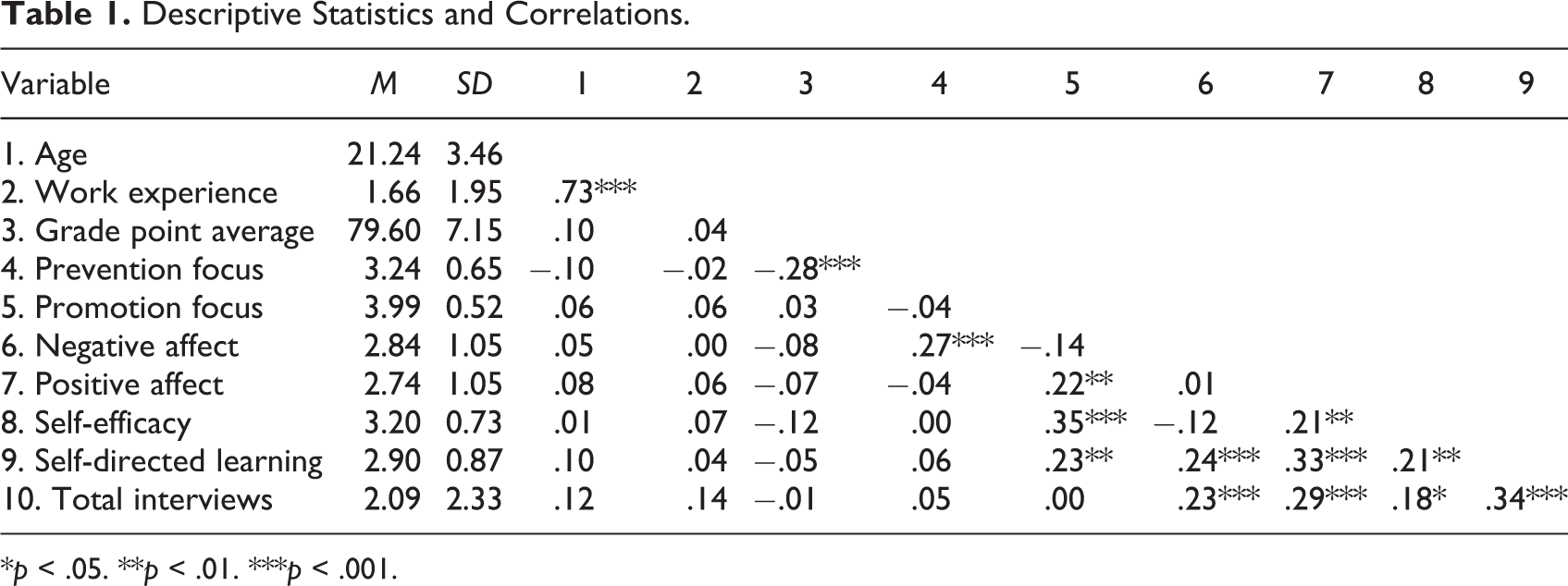
*p < .05. **p < .01. ***p < .001.
Using Amos Version 25, we tested our hypothesized model in Figure 1. We examined how regulatory focus through job search affect (PA and NA) impacts self-directed learning activities, which in turn influences total number of job interviews. Our hypothesized model (i.e., Model 1) explored how job search self-efficacy moderates the impact of regulatory focus on developmental job search activities. We also explored alternative models (see Table 2).
Fit of Alternative Models.
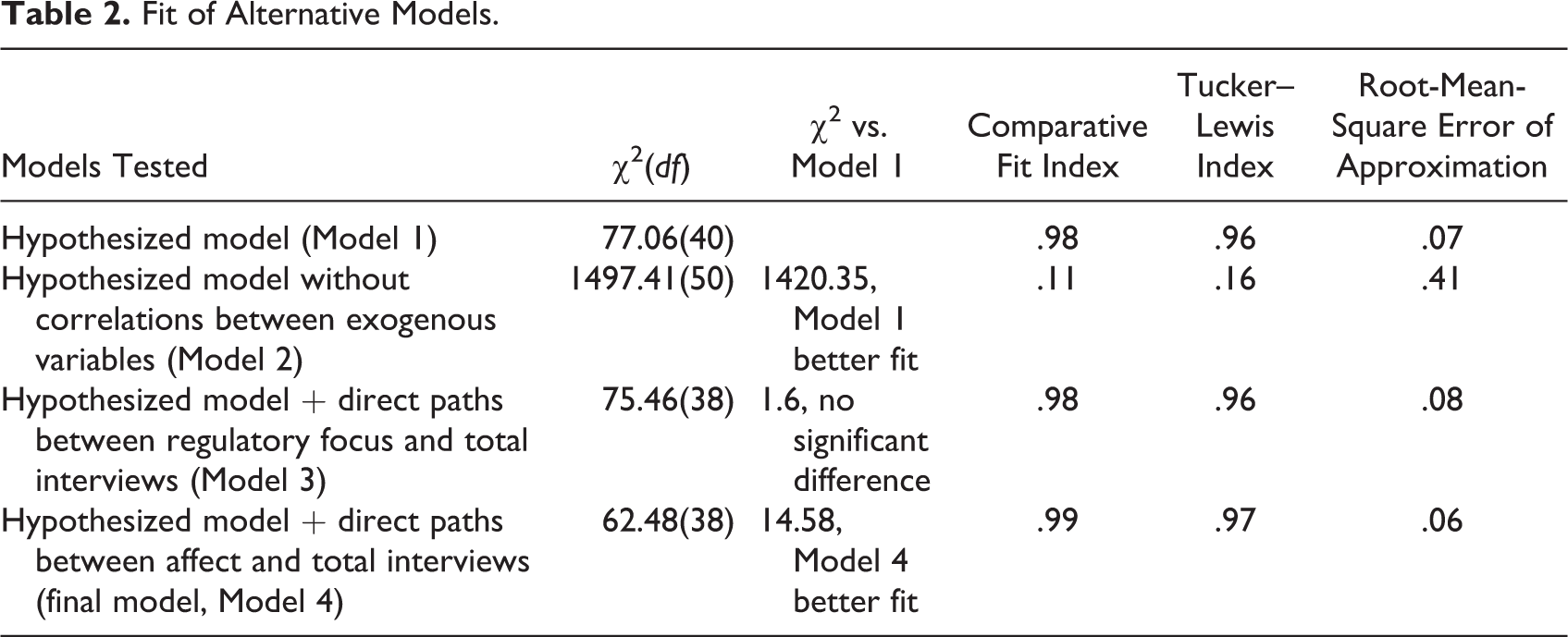
First, we tested our hypothesized model not including the covariances between the exogenous variables, resulting in less good fit for this alternative model (i.e., Model 2, see Table 2). Next, we tested our hypothesized model including direct links between our regulatory focus variables and total interviews (Model 3) based on observations in related studies (Lanaj et al., 2012). Adding these paths did not improve the fit of our hypothesized model (see Table 2). Finally, based on the literature, “positive affect” and “negative affect” have been found to impact job search outcomes (Crossley & Stanton, 2005; Turban et al., 2009); hence, we included direct relations between these “affect” variables and total interviews secured. The latter model (Model 4) resulted in an improvement of fit over the hypothesized model and was used for reporting our findings in this inquiry (see Table 2).
A closer examination of our final model (see Table 3) shows that prevention focus had a negative impact on self-directed learning activities (β = −1.07, p < .01; Hypothesis 2), yet no support was found for the direct effect of promotion focus on self-directed learning activities (β = 0.58, ns; Hypothesis 1). Promotion focus had a positive relationship with positive affect (β = 0.37, p < .01; Hypothesis 3). A positive relationship was found between prevention focus and negative affect (β = 0.64, p < .001; Hypothesis 4). We found strong positive direct effects from both positive and negative affect on self-directed learning activities (β = 0.21, p < .001; β = 0.21, p < .001). Using bootstrapping (see Hayes, 2017), a test of the indirect effect between regulatory focus and self-directed learning activities through affect found support for respectively Hypothesis 5 (bootstrap CI = [.02, .18]) and Hypothesis 6 (bootstrap CI = [.03, .20]).
Results of Path Analysis.
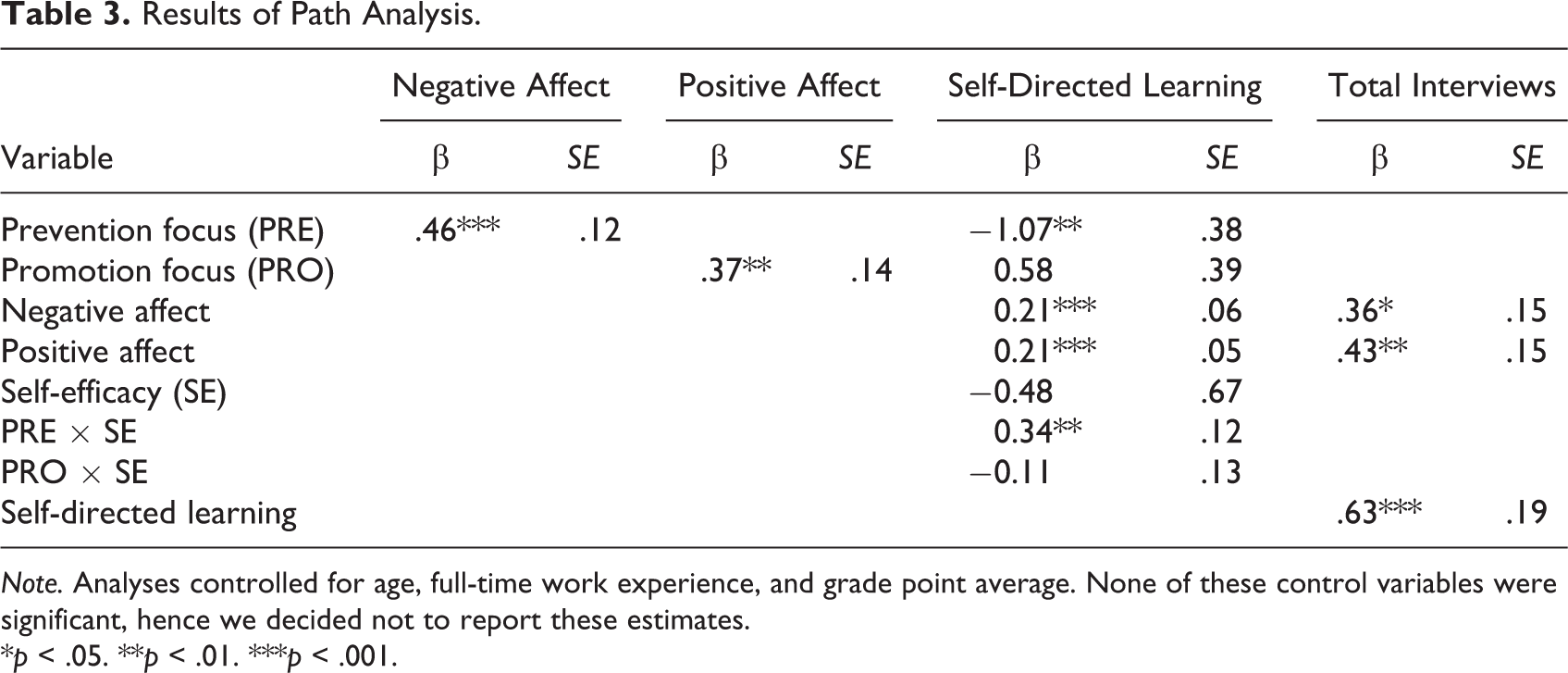
Note. Analyses controlled for age, full-time work experience, and grade point average. None of these control variables were significant, hence we decided not to report these estimates.
*p < .05. **p < .01. ***p < .001.
We also examined the moderating impact of job search self-efficacy on the relationships between regulatory focus and self-directed learning activities. We found support for Hypothesis 7—the relationship between prevention focus and self-directed learning activities was moderated by job search self-efficacy (β = 0.34, p < .01). We clarified the nature of this interaction by plotting the effects at high and low levels of job search self-efficacy (Figure 2), combined with simple slope analysis (Aiken & West, 1991). The analysis indicates a positive relationship between prevention focus and self-directed learning activities at high levels of job search self-efficacy (β = 0.39, p < .01) and a negative relationship at low levels of job search self-efficacy (β = −0.22, p < .05). Hypothesis 8 was not supported: The relationship between promotion focus and self-directed learning activities was not moderated by job search self-efficacy (β = −0.11, ns).
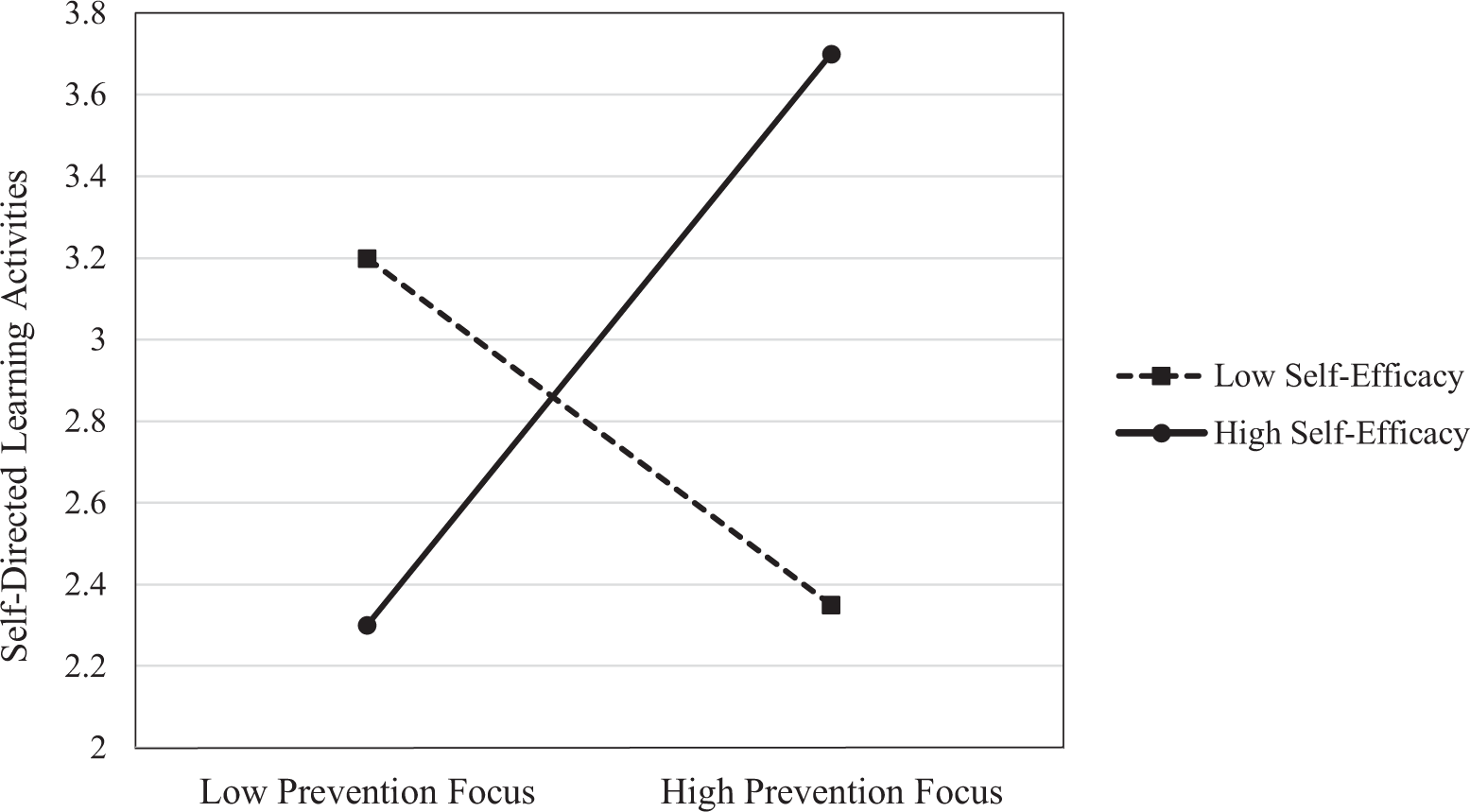
Interaction between prevention focus and job search self-efficacy. Note. High and low levels of variables operationalized using +/−1 SD. Self-directed learning activities are measured on a 5-point scale (1 = never, 5 = very frequently).
Finally, in support of Hypothesis 9, we note positive direct effects of self-directed learning activities on total interviews (β = 0.63, p < .001). Although not hypothesized, we also found direct positive effects of positive affect (β = 0.43, p < .01) and negative affect (β = 0.36, p < .05) on total interviews. Finally, relying on bootstrapping, we found that the total indirect effect of prevention focuses on total interviews through self-directed learning activities was conditional on job search self-efficacy (bootstrap CI = [.13, .64]). More specifically, the mediation effect was more pronounced at higher levels of job search self-efficacy (bootstrap CI = [.06, .62]) in comparison to lower levels of job search self-efficacy (bootstrap CI = [−.48, .04]).
Discussion
Main Findings and Theoretical Implications
The findings suggest that regulatory focus theory (Higgins, 1987, 1997) may offer utility for explaining the role of individual-difference antecedents of self-directed learning activities during job search. A promotion focus, or tendency to focus on approaching gains and positive emotions to satisfy growth needs, was positively associated with self-directed learning activities and number of employment interviews, and this effect was mediated through positive emotions. This finding is consistent with the career literature, which has generally found beneficial effects for a promotion focus on career planning and adaptability (Andre et al., 2019; van Vianen et al., 2012). Although several studies in the career literature have described undesirable consequences of a prevention focus (Andre et al., 2019; van Vianen et al., 2012), we found that it played a more complex role in influencing self-directed learning activities. A prevention focus had negative direct effects on self-directed learning but positive indirect effects through its positive relationship with negative emotions. This is consistent with our theory that developmental behaviors are a “mismatch” with a prevention focus’s concern with security and safety but, when individuals with a prevention focus feel threatened and anxious, they are likely to engage in remedial learning behaviors to avoid the threats. This finding is consistent with other research showing seemingly disadvantageous factors (such as prevention focus) can play dual roles, both hindering and facilitating a job search (cf. Crossley & Stanton, 2005; Vinokur & Schul, 2002).
We also integrated regulatory focus theory with self-efficacy theory and found support for a compensatory interaction between prevention focus and self-efficacy. The relationship between prevention focus and self-directed learning was positive for job seekers with high levels of self-efficacy but negative for job seekers with low levels of self-efficacy (Figure 2). Our theoretical argument was that high prevention focus is characterized by a tendency to identify obstacles and setbacks and high self-efficacy facilitates an adaptive response to obstacles and setbacks, resulting in an interaction where high levels of self-efficacy buffer against the deleterious effects of high levels of prevention focus by increasing self-directed learning activities and interviews. In contrast, individuals with low levels of self-efficacy adopting a high prevention focus were the most vulnerable—they were more likely to identify and focus on obstacles (i.e., high prevention focus), believed they could not overcome the obstacles (i.e., low self-efficacy), and took limited action to improve their skills that may have helped them to overcome the obstacles, resulting in fewer interviews. We did not find that the effects of promotion focus on self-directed learning behaviors were moderated by self-efficacy. One explanation for this null finding is that the anticipated fit between promotion focus and engaging in self-directed learning (growth goal) is likely to have subdued the boundary effects of job search self-efficacy (Tett & Burnett, 2003). Notwithstanding its limited role for promotion focus, our identification of self-efficacy as a boundary condition around the effects of prevention focus on the job search process extends the traditional treatment of self-efficacy in the careers literature as a mere antecedent of job search behaviors (Saks et al., 2015).
Our framework linking regulatory focus theory, emotions, and self-efficacy with self-directed learning in job search is not only useful to job search theory but also contributes to research on learning and development (Noe et al., 2014). Our theoretical position was that job seekers must learn to conduct their job search process via trial-and-error, incidental learning, and voluntarily seeking out developmental opportunities. Whereas previous studies mainly examined job-searching behaviors as intensity and effort, or the role of formal training interventions for teaching job search skills, few studies have considered how job seekers self-direct their own learning about how to conduct an effective job search process. We also empirically validated the importance of self-directed learning activities by demonstrating a positive relationship with number of employment interviews. The theoretical framework presented herein is a promising direction for future research on self-directed learning and development during job search. Future research may consider integrating the idea of growth and fixed mindsets with a regulatory focus framework in the context of self-directed learning during a job search.
Practical Implications
This inquiry addresses an important aspect of the transition from university education to the world of work and provides insight into how student motivation fosters or inhibits self-directed learning during a job search. In general, by exploring the antecedents and consequences of self-directed learning in job search, the present research offers practitioners a better understanding of the personal characteristics and psychological states that trigger self-directed learning activities. This study has three major implications for practitioners. First, our results revealed that low levels of job search self-efficacy were most detrimental for prevention-focused individuals. Eden and Aviram (1993) suggested that individuals with low levels of self-efficacy should be given priority in job-search training interventions designed to raise self-efficacy, and we extend this recommendation to suggest that individuals with a prevention focus, who also have low levels of self-efficacy, should be top priority for self-efficacy job-search training interventions. Prevention-focused individuals with low levels of self-efficacy are not only the most vulnerable but also the least likely to voluntarily act to improve their skills. Further, our results suggest that high levels of self-efficacy can compensate for the detrimental effects of high levels of prevention focus.
A second way to support job seekers would be through improving regulatory “fit” regarding self-directed learning activities. Regulatory fit theory (Higgins, 1997) suggests that job seekers would perceive greater value in activities that are aligned with their regulatory focus. To increase the regulatory “fit” of self-directed learning activities for prevention-focused job seekers, practitioners could emphasize developmental opportunities as serving security and safety needs by helping job seekers to avoid potential losses (e.g., unemployment). Our findings regarding promotion focus offered preliminary support for regulatory fit for job seekers learning to conduct a job search process: developmental activities “fit” with a promotion focus. For promotion-focused job seekers, practitioners might also find ways to increase positive affect, which we found mediated the impact of promotion focus on self-directed learning activities.
Third, the present study provides a framework for understanding self-directed learning during the job search process that compliments and extends the more traditional view of learning via the role of formal job-search training programs. Although acknowledging the significance of formal job-search training programs (Liu et al., 2014), they entail several challenges. First, they are typically expensive and time-consuming to develop and administer. Second, the effectiveness of these programs usually depends on job seekers voluntarily seeking out these training opportunities, transferring the learned knowledge and skills back to the context of job search, and continuing to build on the skills through further practice, trial-and-error, and incidental learning. Indeed, training and development scholars recognize that informal and self-directed learning methods are more widespread, cost-effective, and play a more significant role than formal training programs for developing human capital (Noe et al., 2014). Self-directed learning is especially relevant to tasks such as job searches that are highly demanding and uncertain and require continuous learning and self-management. Our framework for understanding self-directed learning during the job search process should guide practitioners to consider key individual differences (i.e., regulatory focus) and states (i.e., self-efficacy) that influence job seekers’ motivation to use career resources and to seek guidance from career counselors. The present framework for self-directed learning is therefore pivotal in today’s labor market because job seekers are required to take the responsibility for their own development (Briscoe et al., 2006).
Limitations and Future Research
Some shortcomings of this study also suggest research opportunities. A first limitation pertains to our reliance on a business student sample who represents only a small proportion of the total potential population of student job seekers and new labor market entrants. Placement rates were higher than average for this group of students compared to other student groups in this university, resulting in relatively higher levels of self-efficacy. Hence, additional studies should include a more diverse set of graduates to assess the generalizability of the reported findings. Further, high attrition in our T2 survey may have skewed our findings and replication is needed.
Second, we adopted a cross-sectional (two-wave) design and used self-report data. Yet in this context where the key variables are volitional behaviors, self-report data may offer a better alternative than objective measures that fail to capture the extent that a person engages in these activities (Orvis & Ratwani, 2010). Future research could use more objective measures of engagement in developmental activities. A two-wave data collection was appropriate for addressing our research question related to the antecedents and consequences of self-directed learning activities in job seekers. To complement our research, we propose using within-subject designs, which would allow scholars to examine “process” research questions in greater detail.
Third, we examined how emotions and feelings in the form of negative and positive affect mediate the relationship between regulatory focus strategies and developmental job search activities and interviews. Some research suggests that negative emotions may have undesirable effects on interview performance (Barrick et al., 2000), and future research should untangle the beneficial (i.e., greater effort toward self-improvement) and detrimental (i.e., interview performance) effects of negative emotions on a broader range of job search outcomes.
In sum, the purpose of this inquiry was to contribute toward a better understanding of the mechanisms that explain the relationships between trait regulatory focus and job seekers’ self-directed learning activities. Drawing from regulatory focus theory (Higgins, 1987, 1997), we illustrated that affect can be an important mediating mechanism between regulatory focus and developmental job search activities. Furthermore, the relationship between prevention focus and self-directed learning activities was moderated by the level of job search self-efficacy. In summary, we hope that the study’s findings will serve as a catalyst for further research investigating the relationship between job seeker regulatory focus and self-directed learning activities.
Supplemental Material
Supplemental Material, sj-docx-1-jcd-10.1177_0894845321991648 - Job Seekers’ Self-Directed Learning Activities Explained Through the Lens of Regulatory Focus
Supplemental Material, sj-docx-1-jcd-10.1177_0894845321991648 for Job Seekers’ Self-Directed Learning Activities Explained Through the Lens of Regulatory Focus by Adam M. Kanar and Dave Bouckenooghe in Journal of Career Development
Footnotes
Declaration of Conflicting Interests
The author(s) declared no potential conflicts of interest with respect to the research, authorship, and/or publication of this article.
Funding
The author(s) received no financial support for the research, authorship, and/or publication of this article.

Supplemental Material
The supplemental material for this article is available online.
References
Supplementary Material
Please find the following supplemental material available below.
For Open Access articles published under a Creative Commons License, all supplemental material carries the same license as the article it is associated with.
For non-Open Access articles published, all supplemental material carries a non-exclusive license, and permission requests for re-use of supplemental material or any part of supplemental material shall be sent directly to the copyright owner as specified in the copyright notice associated with the article.
