




Abstract
Using self-determination theory among a sample of student employees, the present cross-sectional study (N = 358) examines how mentors’ interpersonal behaviors relate to both motivation at work and motivation for a mentoring relationship and how these two contexts of motivation can differentially relate to mentees’ work outcomes. Results revealed that mentors’ need-supportive interpersonal behaviors were associated with greater autonomous motivation at work and in the mentoring relationship and, in turn, to greater well-being and work engagement, and to lower turnover intentions. In contrast, need-thwarting interpersonal behaviors were associated with greater controlled motivation at work and in the mentoring relationship and, in turn, to lower well-being and work engagement, and to greater turnover intentions. Overall, this study illustrates the impact of the mentor–mentee relationship on motivation for work and for the mentoring relationship and provided support for the contribution of both motivational contexts in the work-related outcomes of employees in the workplace.
Keywords
Introduction
In the workplace, mentoring relationships are increasingly recognized as being essential for the organization at large and for helping employees develop a sense of competence, identity, and effectiveness in a new professional role (Kram, 1985). In mentoring relationships, a mentor (i.e., a more experienced and knowledgeable individual) supports a mentee (i.e., a less experienced and knowledgeable individual) during the acquisition of new skills (Allen et al., 2004). To date, research on mentoring provides support for the importance of mentoring relationships in workplace outcomes (Allen et al., 2008; Ghosh & Reio, 2013). In particular, the quality of these interpersonal relationships can have long-lasting consequences that extend beyond a two-person interaction, such as workplace productivity, and the motivation, well-being, and retention of employees (Allen et al., 2008; Burk & Eby, 2010; Eby & Allen, 2002; Tong & Kram, 2013). It follows that mentors have important roles within an organization and their attitudes and behaviors can be pivotal to the success of mentoring relationships (Eby & Robertson, 2020). Given that the motivation, engagement, well-being, and retention of employees are central to individual and organizational success, the factors that optimize the mentoring relationship are of particular interest.
Self-determination theory (SDT; Deci & Ryan, 1985, 2008) provides a compelling theoretical framework to study how the quality of these relationships can affect consequential work outcomes through the motivation of employees in the workplace. So far, organizational researchers have paid considerable empirical attention to work motivation for its influence on desirable employee outcomes (e.g., Deci et al., 2017), but motivation in the context one’s mentoring relationship has received less attention. Yet, motivational factors pertaining to both work and the mentoring relationship should uniquely contribute to individual functioning and the attainment of desirable work outcomes. Additionally, many undergraduate students are employed at the same time as being enrolled in university (Calk & Patrick, 2017; Cozby, 2009), and student employees appear to benefit in many ways from the guidance of more experienced workers (Frock, 2015). Although not all students work in a domain that is directly related to their field of study, they are nonetheless gaining valuable work experience, knowledge, and skills, that will be useful for their career development and future occupations. Hence, as most researchers focus on the academic consequences of employment, it is also important to study students’ experience in the work context (Frock, 2015). According to SDT, any individual can experience motivation regardless of their context, age, or culture (e.g., Paquet et al., 2016). However, most studies conducted in the workplace focus on regular workers and often ignore those who constitute the future of the workforce, namely student employees, who can equally experience motivation, intentions to leave the workplace, engagement, and pleasure. Building on SDT, the goal of the present research was to study a sample of student-employees (mentees) to examine how their mentor’s interpersonal behaviors can relate to both their mentorship- and work-related motivation and how these, in turn, can differentially relate to their turnover intentions, engagement, and well-being at work.
Self-Determination Theory
Self-determination theory can provide important insights for the understanding of human motivation in the context of mentoring relationships at work. According to this theory, humans have fundamental psychological needs for competence, autonomy, and relatedness (Deci & Ryan, 2000). Autonomy refers to the need to feel that one’s behaviors and resulting outcomes are within one’s control as opposed to being influenced by external forces (Deci & Ryan, 2002). Competence refers to the need to feel effective and capable of performing tasks at varying levels of difficulty (Deci & Ryan, 2002). Relatedness refers to the need to feel connected to, supported by, or cared for by other individuals (Deci & Ryan, 2002). Research has shown that the support and satisfaction of these basic psychological needs can promote the quality of one’s motivation, well-being (hedonic and eudemonic), work engagement, and intentions to stay within the organization (Deci et al., 2017; Gillet et al., 2012). In contrast, factors that thwart or frustrate individuals’ needs are likely to hinder an employee’s motivation, intention to stay within the organization, engagement, and well-being. Therefore, need-satisfaction is argued to provide the necessary fuel for optimal motivation and individual functioning in the workplace (Dagenais-Desmarais et al., 2014; Deci & Ryan, 2008).
Self-determination theory proposes two qualitatively different forms of motivation that are not mutually exclusive—autonomous and controlled motivation—which are respectively derived from the satisfaction and frustration of psychological needs. Autonomous motivation, comprised of both intrinsic regulation and well-internalized extrinsic motivation (i.e., integrated and identified regulation), is defined as engaging in a behavior with pleasure, a sense of choice and consistency with personally important goals. Research has shown that feeling competent, volitional, and related to others at work (i.e., need-satisfaction) promotes autonomous motivation (Deci et al., 2017 for a review). In turn, autonomous motivation is considered optimal because it is related to greater work interest, effort, persistence, and satisfaction (Gagné & Deci, 2005; Lam & Gurland, 2008), lower turnover intentions (Williams et al., 2014), and burnout (Fernet et al., 2010). In contrast, controlled motivation (i.e., introjected and external regulation) is defined as engaging in a behavior for external reasons, such as to obtain rewards or approval from others, or to avoid feelings of guilt. Controlled motivation is considered to be less optimal than autonomous motivation because it leads to greater burnout and exhaustion, and decreased persistence and performance (Deci & Ryan, 2000; Kuvaas, 2009).
The Role of Context: Need-supportive and Need-thwarting Interpersonal Behaviors
At work, the structure of the environment (e.g., job characteristics) and the people within it (e.g., interpersonal relationships) are two contexts within the work domain that can have an important impact on the need-satisfaction and motivation of individuals (Deci et al., 2017; Deci & Ryan, 2000). In the context of interpersonal relationships at work, supervisors, managers, and colleagues all play a vital role in supporting or thwarting the needs of employees.
Interpersonal behaviors are central to interpersonal relationships (Deci et al., 2017; Ryan & Deci, 2017). Self-determination theory posits that there are six types of interpersonal behavior styles that can affect human functioning (Deci & Ryan, 2000): autonomy, competence and relatedness need-supportive interpersonal behaviors, on the one hand, and autonomy, competence, and relatedness need-thwarting interpersonal behaviors, on the other hand. When individuals engage in autonomy-supportive (AS) behaviors, they provide choices and opportunities for initiative to another person; when individuals engage in competence-supportive (CS) behaviors, they provide positive feedback and recognize the other person’s improvements; finally, when individuals engage in relatedness-supportive (RS) behaviors, they express an interest and offer support to another person. Alternatively, when individuals engage in autonomy-thwarting (AT) behaviors, they make requests without justification and control the other person excessively; when individuals engage in competence-thwarting (CT) behaviors, they discourage another person from trying difficult tasks and doubt their ability to improve; finally, when individuals engage in relatedness-thwarting (RT) behaviors, they are unavailable and disconnected emotionally in relation to another person. Of importance, the six types of interpersonal behavior styles are not on opposite ends of a continuum and may consequently co-occur within a dyadic relationship (Chua et al., 2014; Vansteenkiste & Ryan, 2013).
Although the consequences of interpersonal behavior styles have received limited attention in the workplace, they have received considerable empirical attention in the sport, education, and family domain. In particular, need-supportive interpersonal behaviors from coaches, teachers, and parents have shown to positively relate to the receiver’s well-being, engagement, autonomous motivation, and persistence (Chirkov & Ryan, 2001; Pelletier et al., 2001; Rocchi & Pelletier, 2018; Stroet et al., 2013). In contrast, need-thwarting behaviors from coaches and teachers have been linked to subordinates’ negative affect, disengagement, burnout, dropout, and thwarted basic psychological needs (Bartholomew et al., 2011; Hein et al., 2015; Van den Berghe et al., 2014).
So far, empirical evidence suggests similar consequences in the work domain. In particular, managers trained to be more AS are more likely to have subordinates who report satisfaction with their job, positive work-related attitudes (Deci et al., 2017), satisfaction of their basic needs and, in turn, positive performance evaluations, and psychological adjustment (Baard et al., 2004). To our knowledge, Dagenais-Desmarais and colleagues (2014) are the first researchers to examine both perceived need-supportive and need-thwarting as well as both need-satisfaction and need-frustration in the workplace. Of importance, their findings support the respective favorable and detrimental effects of need-supportive and need-thwarting supervisory styles on the need-satisfaction and need-frustration as well as on the well-being of employees.
Furthermore, several studies have shown that the need–outcome relationship takes place indirectly though one’s work motivation. That is, the mediating role of motivational processes has been supported both theoretically (Deci & Ryan, 1985; Vallerand & Losier, 1999) and empirically (e.g., Trépanier et al., 2013) across time and contexts (e.g., Jang et al., 2012). In particular, research has provided support for the differential roles of need-satisfaction and need-frustration on work motivation, as well as for the differential roles of autonomous and controlled work motivation on psychological distress, work engagement, turnover intentions, and job performance (De Cooman et al., 2013; Trépanier et al., 2013; Williams et al., 2014). Hence, these findings provide support for the mediating role of motivation in the basic needs–outcome sequence, as well as for the value of examining both the mechanisms that foster and those that hinder optimal functioning in the workplace. Given that individuals can perceive both supportive and thwarting behaviors and experience both autonomous and controlled forms of motivation, both sets of interpersonal behavior styles and forms of motivations are equally important to consider when attempting to understand their distinct function in the workplace.
Present Research
The structure of the work tasks as well as the people within it can both have an impact on the psychological needs and motivation of a person (Deci et al., 2017). Research so far provides support for the role of basic psychological needs in domain-specific outcomes through its influence on work motivation (e.g., Deci et al., 2017; Deci & Ryan, 2000). Although supervisors, managers, and colleagues have all been shown to play a vital role in supporting the needs of employees, the relationship between a mentor and a mentee represents a unique learning rapport between two individuals. For this reason, a mentee’s motivation with regard to this relationship is also believed to be critical for optimal employee functioning and organizational outcomes. That is, both motivation for work and for the mentoring relationship should differently and uniquely be related to the mentor’s interpersonal behaviors and to desirable outcomes in the workplace, especially in achievement related contexts involving mentee–mentor relationships. The examination of interpersonal behavior styles, motivation for work, and motivation for the mentoring relationship, simultaneously into a single model, could provide novel information on the added contribution that mentoring holds in predicting workplace outcomes.
The objective of the present study was to examine how mentors’ interpersonal behaviors can differentially relate to motivation for work and motivation for the mentoring relationship and how, in turn, they can differently relate to turnover intentions, work engagement, and well-being. As seen in Figure 1, we propose to test a first model (Model 1) in which we attempted to replicate current findings in the literature and examine the respective beneficial and detrimental roles of need support and need thwarting on work motivation (autonomous and controlled) and work outcomes. Adding on to this model, we propose a second model (Model 2) in which we examine the added contribution of motivation for one’s mentoring relationship. The hypothesized paths are illustrated in Figure 1. Hypothetical Models. Model 1 is represented by white rectangles whereas Model 2 is represented by both white and grey rectangles. Note. For simplicity, both variables of psychological and subjective well-being are represented by work well-being.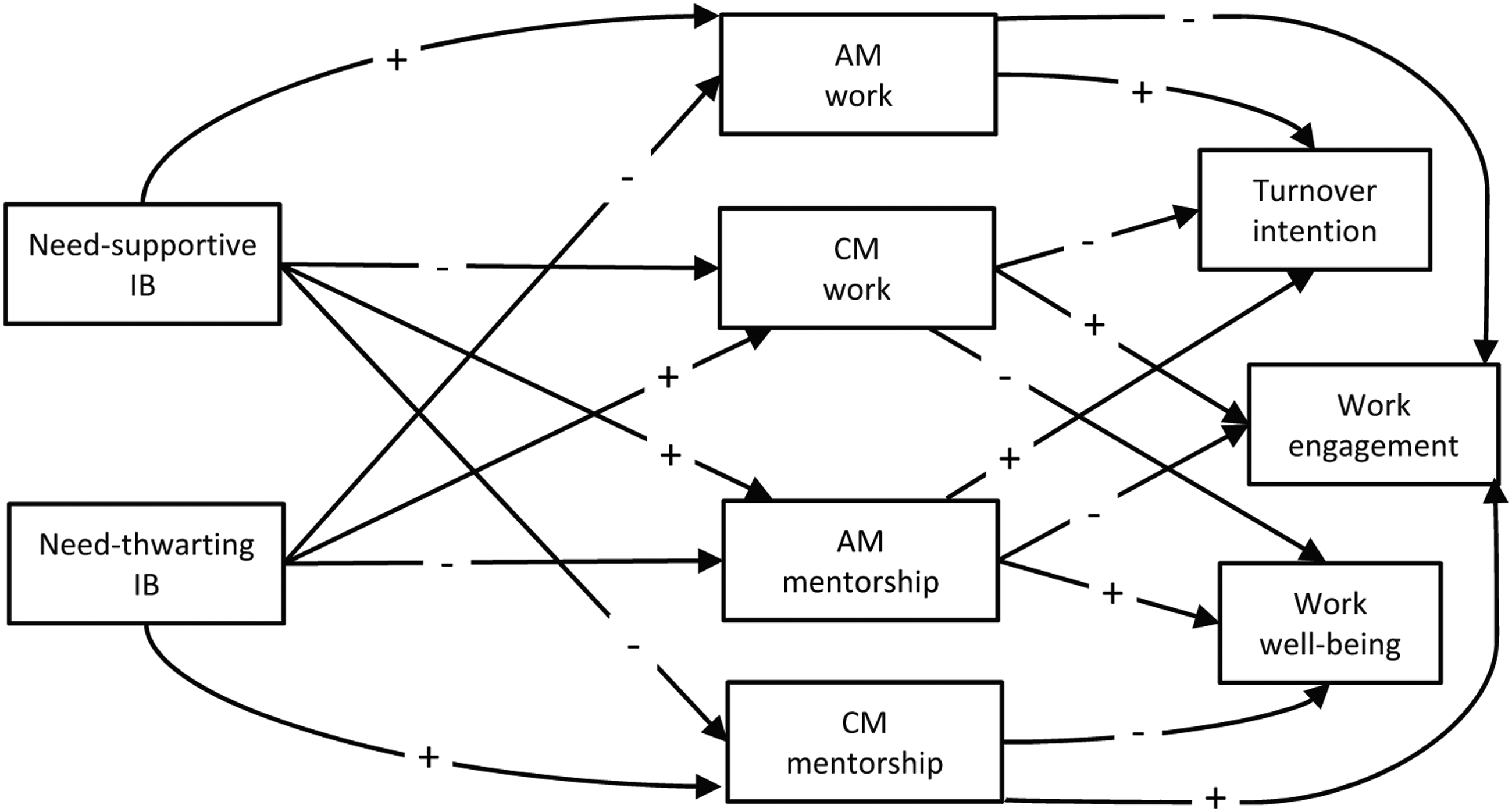
Method
Participants and Procedure
A total of 368 undergraduate students from a Canadian university participated in the study. Participants were recruited through an online participation system and received one participation point towards an introductory course for compensation. To be eligible for this study, the participants had to work with a mentor in their workplace environment at the time of data collection. Participants were invited to answer all questions according to the mentor whose name came first alphabetically if they had more than one mentor. The study was approved by a university research ethics committee and all participants provided written informed consent prior to participating online.
Of the 368 participants, 10 were outliers or had missing data on all variables of interest and were therefore excluded from the analyses. Participants (N = 358; 63.8% female) were between the ages of 17–40 years (M = 20.03, SD = 3.53). They were all employed (Mmonths = 19.76, SD = 31.79), and 47% worked over 10 hours per week. Work settings were diverse: business management and administration (25%), marketing and sales (39.17%), hospitality and tourism (17.5%), health care and counselling (18.33%). All participants had been part of a mentoring relationship at work for over 1 year (Mmonths = 15.71, SD = 22.23) and interacted with their mentor (Mage = 36, SD = 12.04) for an average of 2.91 hours per week (SD = 3.52). Mentees were either involved in a formal or informal (60%) mentoring relationship. Most mentees (62.01%) reported English or French as their first language.
Measures
Model fit for each scale was examined using confirmatory factor analysis. The fit was assessed using the confirmatory fit index (CFI), Tucker–Lewis Index (TLI), root mean square error of approximation (RMSEA), standardized root mean squared residual (SRMR), and MLR chi-square statistic (MLRχ 1 ). Values above .90 but closer to .95 for CFI and TLI, and values close to or below .06 for RMSEA and SRMR were deemed a good fit (Hopper et al., 2008; Hu & Bentler, 1999).
Mentors’ Interpersonal Behaviors
Mentees completed the Interpersonal Behavior Questionnaire (IBQ; Rocchi et al., 2017) by rating the extent to which each item corresponded to their perception of their mentor’s need supportive and need thwarting interpersonal behaviors on a Likert scale from 1 (Do not agree at all) to 7 (Completely agree). The six types of interpersonal behaviors were each represented by four items: AS (e.g., “…Gives me the freedom to make my own choices), CS (e.g., “…Encourages me to improve my skills”), RS (e.g., “…Is interested in what I do”), AT (e.g., “…Pressures me to do things their way”), CT (e.g., “…Points out that I will likely fail.), and RT (e.g., “…Does not comfort me when I am feeling low”). A composite score was calculated for both interpersonal behavioral styles: need-supportive (mean of AS, CS, and RS) and need-thwarting (mean of AT, CT, and RT) behaviors. Internal consistency estimates using Cronbach’s alpha was good to excellent (αs = .88 to .94) for the six subscales; namely α = .94 for need-supportive and α = .92 for need-thwarting interpersonal behaviors and are consistent with prior research (Rocchi & Pelletier, 2018; Rocchi et al., 2017) conducted with athletes (αs = .75 to .88). Confirmatory factor analysis (CFA) of the scale’s items revealed a good fit for a hierarchical factor structure (MLRχ 1 = 409.709, df = 242, p < .001, CFI = .913, TLI = .901, RMSEA = .044, RMSEA 90% CI = [.037, .051], SRMR = .059). Finally, in addition to providing support for the content (i.e., representative of the construct), convergent (i.e., coherent with similar measures) and divergent (i.e., incoherent with different measures) validity of this scale, previous studies (Rocchi & Pelletier, 2018; Rocchi et al., 2017; Rodrigues et al., 2019) have provided support for its use for measuring perceived interpersonal behaviors from others, mainly in the sport domain and across several cultures (Chen et al., 2015).
Work Motivation
Participants completed the Work Extrinsic and Intrinsic Motivation Scale (WEIMS; Tremblay et al., 2009), which comprises 18 statements. Mentees responded to each statement on a Likert scale from 1 (Does not correspond at all) to 7 (Corresponds exactly). The five subtypes of motivation proposed by Deci and Ryan (1985, 2000) were each represented by three items: intrinsic (e.g., “Because I derive much pleasure from learning new things”), integrated regulation (e.g., “Because this job is a part of my life”), identified regulation (e.g., “Because I chose this type of work to attain my career goals”), introjected regulation (e.g., “Because I want to be a winner in life”), and external regulation (e.g., “For the income it provides me”). A composite score was calculated for autonomous (mean of intrinsic, integrated, and identified regulation) and controlled (mean of introjected, and external regulation) motivation. Consistent with prior research conducted with workers (αs = .63 to .83; Kotera et al., 2018; Tremblay et al., 2009), measurement reliability was excellent for autonomous (α = .92) and acceptable for controlled (α = .75) work motivation. CFA of the scale’s items revealed an adequate fit for a hierarchical factor structure (MLRχ 1 = 289.466, df = 84, p < .001, CFI = .901, TLI = .876, RMSEA = .083, RMSEA 90% CI = [.073, .094], SRMR = .119). Finally, previous studies (Kotera et al., 2018; Tremblay et al., 2009) have provided content, construct (i.e., degree of measuring a concept), and criterion (e.g., extent to which a measure agrees with a gold standard) validity for this scale, thus supporting its use for measuring motivation in the workplace.
Motivation in the Mentoring Relationship
Mentees’ motivation in the mentoring relationship was measured with the Motivation in Mentoring Relationships Scale (MMRS) scale, which was created for the purpose of this study. Participants responded to six statements on a Likert scale from 1 (Does not correspond at all) to 7 (Corresponds exactly). The subtypes of motivation proposed by Deci and Ryan (1985, 2000) were each represented by an item: intrinsic (“For the interest and enjoyment I get from this relationship”), integrated (“I feel that this is in line with my deepest values”), identified (“Because I view this relationship as a mean to attain my objectives”), introjected (“Because I would feel bad if I did not continue this relationship”), and external (“Because people around me would be upset if I do not get involved”). A composite score was calculated for autonomous (mean of intrinsic, integrated, and identified regulation) and controlled (mean of introjected, and external regulation) mentorship motivation. Measurement reliability was good for autonomous (α = .81) and acceptable for controlled (α = .74) mentorship motivation. The items generated were inspired by other motivation scales (e.g., Pelletier et al., 2002) and two experts in the field of SDT verified both the ecological relevance of the items and their content validity. CFA of the scale’s items also revealed an excellent fit (MLRχ 1 = 11.567, df = 4, p = .021, CFI = .979, TLI = .947, RMSEA = .073, RMSEA 90% CI = [.026, .124], SRMR = .028).
Turnover Intentions
Mentees completed the Turnover Intention Scale (Cammann et al., 1979), which measures the extent to which they are thinking about leaving the organization (e.g., “I will probably look for a new job in the next year”). Participants responded to three items on a Likert scale ranging from 1 (Strongly disagree - Not at all likely) to 5 (Strongly agree - Extremely likely). A composite score was created by calculating the mean of the items. Consistent with prior research conducted with workers (α = .83; Arshadi & Damiri, 2013; Cammann et al., 1979), measurement reliability was good (α = .83) 2 . Finally, previous studies (Cammann et al., 1979; O’Connor, 2018) have provided content validity for this scale, thus supporting its use for measuring intentions to leave the workplace.
Work Engagement
Mentees completed the Utrecht Work Engagement Scale (UWES; Schaufeli & Bakker, 2003) to measure work engagement, which is a work-related state of fulfillment that is characterized by vigor (e.g., “At my work, I feel bursting with energy”), dedication (e.g., “I find the work that I do full of meaning and purpose”), and absorption (e.g., “Time flies when I am working”). Participants responded to these statements on a Likert scale ranging from 1 (Never) to 7 (Always - Everyday). A composite score was created by calculating the mean of the three subscales. Consistent with prior research conducted with workers (α = .88 to .95; Schaufeli, 2017; Schaufeli & Bakker, 2003), measurement reliability was excellent (α = .95). Confirmatory factor analysis of the scale’s items revealed an adequate fit (MLRχ 1 = 356.474, df = 116, p < .001, CFI = .904, TLI = .888, RMSEA = .077, RMSEA 90% CI = [.068, .086], SRMR = .051). Finally, previous studies (Schaufeli & Bakker, 2003; Seppälä et al., 2009) have provided face (i.e., subjective assessment of the scale), construct, and criterion validity for this scale, thus supporting its use for measuring work engagement across several cultures (Schaufeli & Bakker, 2003).
Psychological Well-Being
Mentees completed the 25-item Index of Psychological Well-being at Work (IPWBW; Dagenais-Desmarais & Savoie, 2012), which comprises five eudaimonic dimensions: interpersonal fit at work (e.g., “I value the people I work with”), thriving at work (e.g., “I find meaning in my work”), feeling of competency at work (e.g., “I know I am capable of doing my job”), perceived recognition at work (e.g., “I feel that my work is recognized”), and desire for involvement at work (e.g., “I care about the good functioning of my organization”). Participants responded to these statements on a Likert scale ranging from 1 (Do not agree at all) to 6 (Completely agree). A composite score was created by calculating a mean of the five subscales. As a whole, psychological well-being focuses on meaning and self-realization and defines well-being in terms of the degree to which an individual is fully functioning (Gillet et al., 2012). Consistent with prior research conducted with workers (αs = .94 to .96; Dagenais-Desmarais & Savoie, 2012), measurement reliability was excellent for the overall scale (α = .97). CFA of the scale’s items revealed a good fit (MLRχ 1 = 620.775, df = 270, p < .001, CFI = .912, TLI = .902, RMSEA = .060, RMSEA 90% CI = [.054, .067], SRMR = .052). Finally, Dagenais-Desmais and Savoie (2012) have provided content, convergent, divergent, predictive (i.e., predict the occurrence of a specified behavior in the future), and incremental (i.e., predictor’s ability to explain an outcome) validity for this scale, thus supporting its use for measuring psychological well-being.
Subjective Well-Being at Work
Complementary to psychological well-being, mentees completed an adapted version of three scales to create an overall score of subjective well-being at work, namely the Satisfaction With Life Scale (SWLS; Diener et al., 1985), the Positive and Negative Affect Schedule (PANAS; Watson et al., 1988), and the Subjective Vitality Scale (SVS; Ryan & Frederick, 1997). SWLS is a 5-item measure (e.g., “In most ways my work is close to my ideal”) on a Likert scale ranging from 1 (Do not agree at all) to 7 (Strongly agree). The PANAS is a 20-item scale that measures mentees’ positive (PA) and negative (NA) affect. Participants had to indicate the extent to which they experienced a series of emotions (e.g., interested, distressed, excited, and upset) at work measured on a Likert scale from 1 (Very slightly or Not at all) to 5 (Extremely). A score was calculated by subtracting NA from PA. SVS is a 7-item scale (e.g., “I feel alive and vital”) measured on a Likert scale ranging from 1 (Not at all true) to 7 (Very true). A composite score of the three scales was then calculated to represent subjective well-being at work which, as a whole, focuses on people’s cognitive and affective evaluation of their work (Ryan & Deci, 2001). Consistent with prior research conducted with workers (αs = .87 to .93 for SWLS, PA and NA and αs = .84 to .86 for SVS (e.g., Schaufeli, 2017; Ryan & Frederick, 1997), reliability was good for the SWLS (α = .86), the PA (α = 0.89) and the NA (α = 0.87), and acceptable for SVS (α = .73). Confirmatory factor analysis of the scale’s items revealed an adequate fit (MLRχ 1 = 6208.325, df = 272, p < .001, CFI = .900, TLI = .889, RMSEA = .059, RMSEA 90% CI = [.053, .065], SRMR = .055). Finally, previous studies (Bostic et al., 2000; Nima et al., 2019) have provided convergent and divergent validity for this scale, thus supporting its use for measuring subjective well-being.
Data Analysis
All analyses were performed in Mplus 8.4 using Robust Maximum Likelihood (MLR) to handle non-normality (Muthén & Muthén, 2012). Given the limited sample and complexity of the models, path analysis was estimated with composite scores (Kenny & McCoach, 2003). Model fit for the hypothesized structural models was not reported because fit indices are not available for saturated models 1 (Brown, 2006). Furthermore, the missing completely at random (MCAR) test from Little (1988) was used on each scale, prior to calculating the composite score, to determine the pattern of missing data. Overall, results indicated that data were missing at random and that the percentage of missing data for each scale was below 5% (ranging from .5% for mentors’ interpersonal behaviors to 3% for work engagement). As such, no further analysis was conducted regarding missing data.
The total effect of interpersonal behaviors on turnover intentions, work engagement, and well-being (i.e., effect without controlling for motivation) was divided into a direct effect (i.e., effect of each interpersonal behavior style when controlling for motivation) and an indirect effect (i.e., part of the relationship between each interpersonal behavior style and the outcomes under study explained by motivation). The statistical significance of each indirect effect was estimated using 5000 bootstrapped resamples and 95% bias-corrected bootstrapped confidence intervals estimated using the ML estimator because these estimates are not available using the MLR in Mplus (Preacher & Hayes, 2008).
Results
Preliminary Analyses
Bivariate Correlations and Descriptive Statistics from Model 2.
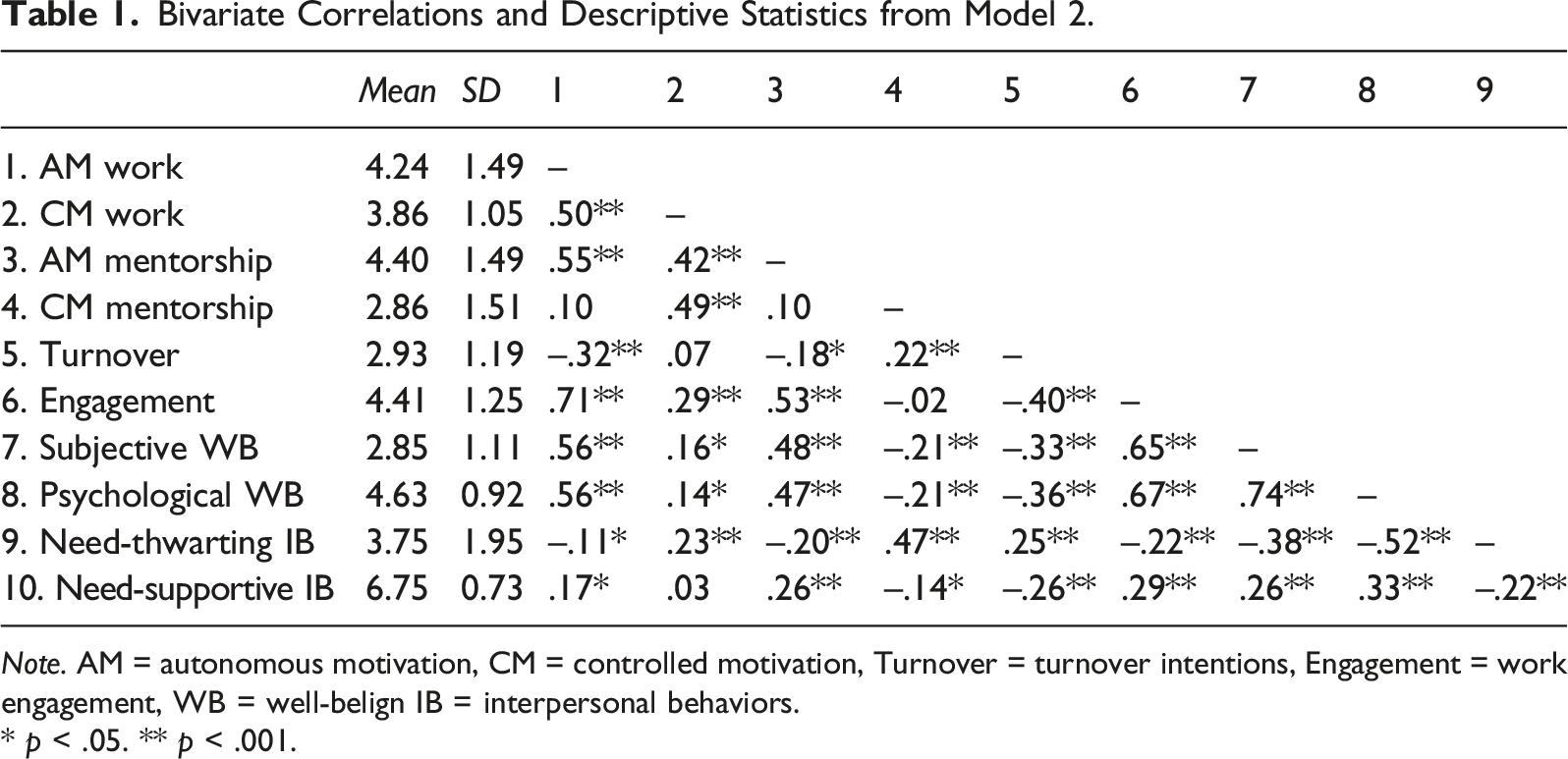
Note. AM = autonomous motivation, CM = controlled motivation, Turnover = turnover intentions, Engagement = work engagement, WB = well-belign IB = interpersonal behaviors.
* p < .05. ** p < .001.
Main Analyses
Standardized Estimates of Total, Direct, and Indirect Effects for Model 1 and Model 2.
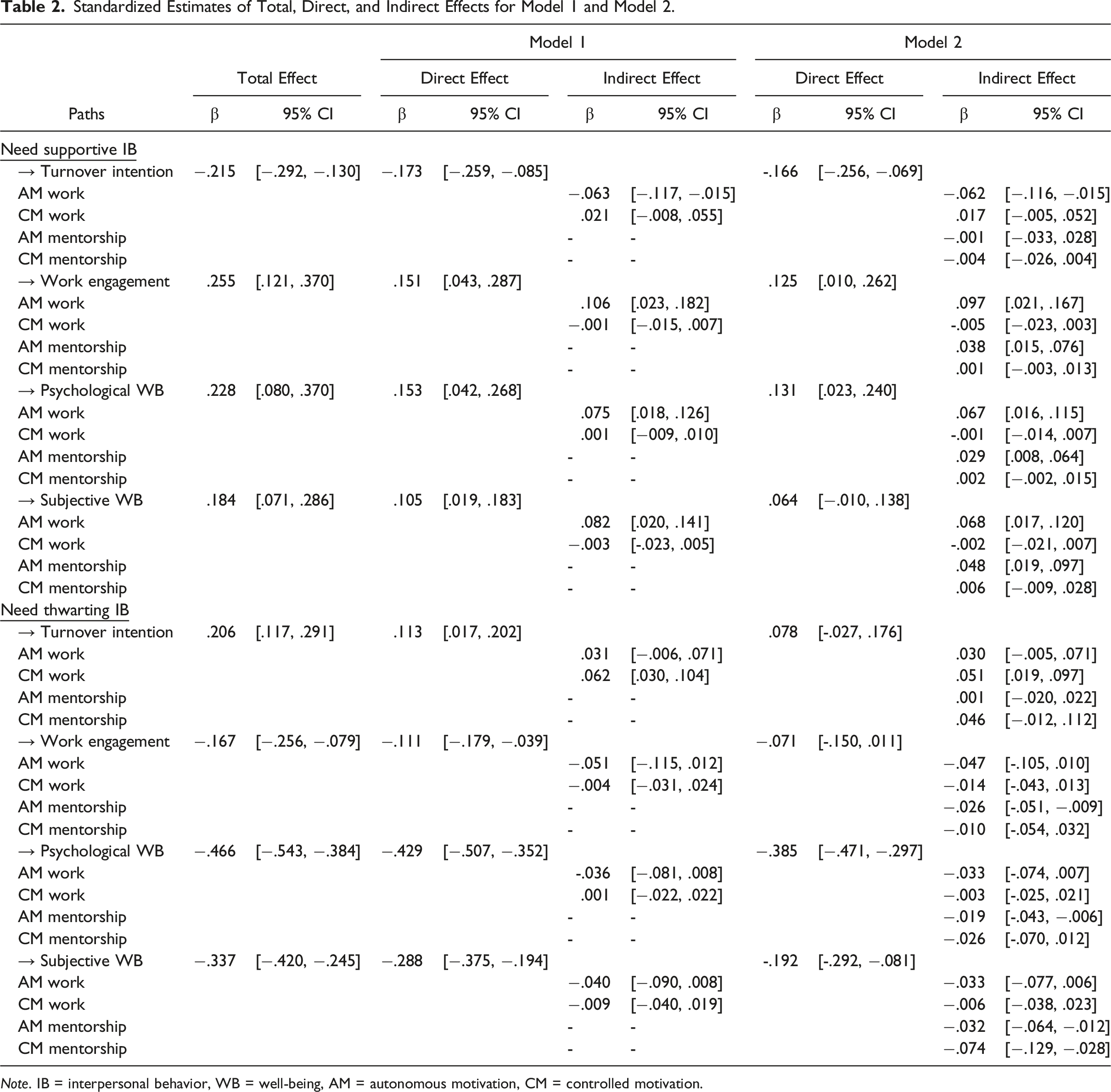
Note. IB = interpersonal behavior, WB = well-being, AM = autonomous motivation, CM = controlled motivation.
On the one hand, NS-IB was significantly related to greater work engagement, psychological well-being, and subjective well-being, and to lower turnover intentions. NS-IB was significantly related to greater AM for work (but not to CM for work), which in turn was significantly related to greater work engagement, psychological well-being, subjective well-being, and to lower turnover intentions. On the other hand, NT-IB was significantly related to lower work engagement, psychological well-being, and subjective well-being, and to greater turnover intentions. NT-IB was significantly related to greater CM for work (but not to AM for work), which in turn was significantly related to greater turnover intentions and subjective well-being, but not to psychological well-being and work engagement.
In the second structural model (Model 2), we added motivation for one’s mentoring relationship to the previously examined model (see Figure 2). In addition to the total effects and paths between interpersonal behavior styles and work motivation found in Model 1, results from Model 2 indicated that NS-IB was significantly related to greater mentorship AM (but not to mentorship CM), which in turn was significantly related to greater work engagement, psychological well-being, and subjective well-being (but not to turnover intentions). In particular, work engagement, psychological well-being, and subjective well-being were predicted by both contexts of motivation, suggesting that mentorship motivation contributed to the prediction of work outcomes over and above work motivation. This was not the case for turnover intentions, thus indicating that work motivation is a more suitable predictor of employee retention. Variance explained in the motivation variables and work outcomes of Model 2 are presented in Figure 2. Model 2 with standardized regression coefficients. Note. Non-significant paths are omitted for clarity. IB = interpersonal behaviors, AM = autonomous motivation, CM = controlled motivation, R2 = variance explained. * p < .05. ** p < .001.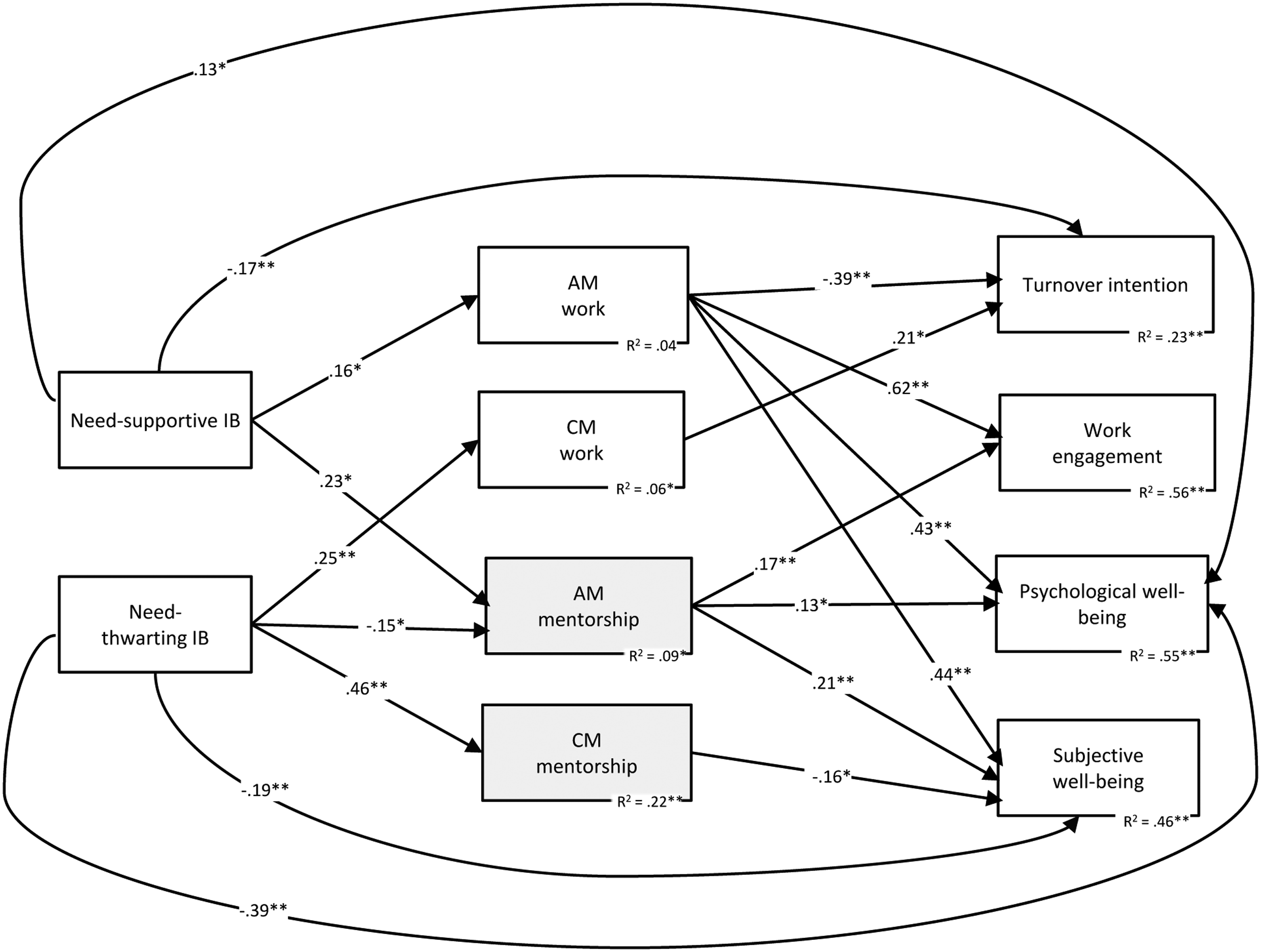
Regarding NS-IB, the indirect effects through mentorship AM were statistically significant for work engagement, psychological well-being, and subjective well-being (see Table 2). Results of direct effects revealed that NS-IB remained significantly related to lower turnover intentions and to greater work engagement and psychological well-being when motivation for work and for the mentoring relationship were accounted for in the model. No statistically significant direct effect was observed between NS-IB and subjective well-being when all forms of motivation were considered. Furthermore, NT-IB was significantly related to greater mentorship CM and to lower mentorship AM. Mentorship CM was significantly related to lower subjective well-being, but not significantly related to psychological well-being, work engagement, and turnover intentions. Regarding NT-IB, the indirect effect through mentorship CM were statistically significant for subjective well-being, whereas the indirect effects through mentorship AM were statistically significant for work engagement, psychological well-being, and subjective well-being. Results of direct effects revealed that NT-IB remained significantly related to lower psychological well-being and subjective well-being when motivation for work and for the mentoring relationship were accounted for in the model. No statistically significant direct effects were observed for turnover intentions, work engagement, and subjective well-being when all forms of motivation were considered (see Table 2).
Discussion
In the present research, we proposed that current organizational research has contributed to the accumulation of empirical evidence for the intermediary role of work motivation while ignoring other highly relevant contexts of motivation within the work domain, which are not taken into account in our understanding of the factors that foster or hinder individual functioning in the workplace. We extended existing career development research by examining the role of mentorship motivation in the need–outcome relationship. Overall, our findings provide support not only for the link between the interpersonal behaviors of mentors and both the work and mentorship motivation of mentees, but also for the role of these motivations in explaining mentees’ work engagement, well-being, and intentions to stay within the organization.
In line with the hypothesized paths of Model 1, mentors’ perceived NS-IB were related to greater AM for work, which was related to greater work engagement, well-being, and lower turnover intentions. In contrast, perceived NT-IB were related to greater CM for work, which was related to lower psychological well-being and work engagement and to greater turnover intentions. These findings are consistent with previous research supporting the essential role of need support in promoting positive outcomes and illustrate that mentors can provide autonomy- competence- and relatedness-support in ways that foster desirable work outcome among mentees (e.g., Trépanier et al., 2013). Furthermore, the non-significant association between NT-IB and AM at work supports the need for researchers to incorporate both sets of interpersonal behaviors styles in order to provide an accurate picture of their distinct function.
As expected for Model 2, interpersonal behavior styles differentially predicted AM and CM for work and for the mentoring relationship. Although interpersonal behaviors share the same context as motivation for the mentoring relationship, our findings suggest that the quality of the mentor-mentee relationship also relates to motivation for the work context. To our knowledge, this is the first study to provides support for the utility of examining these two contexts of motivation within the work domain.
In partial support of our hypotheses, turnover intention was significantly predicted by work motivation (AM and CM), but not by motivation for the mentoring relationship. The latter finding may be attributable to the type of relationship under study; that is, past research on turnover intentions has mainly focused on the role of the supervisor (e.g., Dagenais-Desmarais et al., 2014) rather than the mentor, which may impact the subordinate differently. What is more, turnover intentions have been suggested to be more strongly related to work-related conditions (e.g., job dissatisfaction; Steel, 2002) than to other individuals in the work environment.
Furthermore, work engagement, psychological well-being, and subjective well-being were predicted by both AM for work and for the mentoring relationship. Among these outcomes, subjective well-being was the only one predicted by CM (mentorship). Accordingly, CM for the mentoring relationship seems to be particularly relevant for the happiness and satisfaction that mentees express towards their work (subjective well-being) rather than for their sense of meaning, self-realization, and overall functioning at work (psychological well-being and engagement). These findings are consistent with the premise that when individuals find themselves in an autonomy-supportive context, they are more likely to experience personal growth and to be volitional in their work activities (Rigby & Ryan, 2018). In the same way, we can observe that AM for work and for the mentoring relationships are related to more positive outcomes than is CM. A worker who is engaging out of personal choice and enjoyment (i.e., AM) should experience more positive states than a worker who is feeling pressured or coerced (i.e., CM; Dysvik & Kuvaas, 2008).
It is also worthy to mention that the indirect effects across the two contexts of motivation are similar in magnitude and that their 95% confidence intervals overlap, thus indicating that the effects are not significantly different from each other. For this reason, the presence of a significant indirect effect in one context of motivation but not another is not synonymous with one being significantly more important than the other. It follows that future research with larger sample sizes is needed to test these mediation hypotheses across time and with latent variables to account for random measurement error and better decorticate their unique contribution within the proposed model (Cole & Maxwell, 2003; Westfall & Yarkoni, 2016).
Finally, and of particular interest, the findings from the present research provide support for the added contribution of mentorship motivation in our model: the motivation that is respectively attributable to the context of work and to the context of the mentoring relationship both relate significantly to consequential work outcomes (except for turnover intention, which was only associated with work motivation). Furthermore, when examining the variance explained in turnover intentions, work engagement, psychological well-being, and subjective well-being across Model 1 and Model 2, we can observe that AM and CM for the mentoring relationship accounted for an additional, albeit small, portion of the variance in these outcomes. Of importance, mentorship motivation revealed to be significantly related to work outcomes, over and above not only work motivation, but also IBs which also pertain to the mentorship context. Hence although contextual influences should more strongly relate to contextually matching outcomes (within-context; Vallerand, 1997), our findings provided support for the unique contribution of mentorship motivation for the prediction of work outcomes (cross-context). Accordingly, we can conclude that both mentorship IBs and motivation are not negligible players in traditional workplace models.
Limitations and Future Research
Despite the novel contributions of our findings, a few limitations should be noted. First, we relied on a cross-sectional design for which data were only collected at one time-point. A longitudinal design comprised of a larger sample and repeated measures would be necessary to provide stronger support for the directionality of the proposed sequence of relationships (Cole & Maxwell, 2003). Second, the sample under investigation solely focused on student workers involved in a mentoring relationship, which may not represent the experience of full time, non-student, employees. Information about the position of mentees within the organization or their long-term career goals could be considered in future studies to determine if these individual differences can explain different pathways by which interpersonal behaviors influence work outcomes. Third, we relied exclusively on mentees’ self-reports of their mentors’ behaviors. Although these perceptions should be more consequential for the mentee than are the mentor’s self-rated behaviors, future research may need to examine mentors’ behaviors through a more objective lens (e.g., supervisor ratings; Vazire & Mehl, 2008). Finally, this study was limited to English-speaking Canadian workers. Regardless of the culture (origin, language, religion, etc.), SDT proposes that the satisfaction of basic psychological needs is essential for all individuals (Paquet et al., 2016) and that the way people meet these needs may vary from one culture to another, hence the importance of exploring, with several samples, other cultures such as French-speaking Canadian workers.
Overall, and despite these limitations, the present research contributes to the SDT and mentoring literature by offering a novel framework from which to study mentors’ NS-IB and NT-IB and the role of contextual motivations for the prediction of desirable work outcomes. This study offers novel findings from which researchers can build on to inform organizations about how their investment in mentoring programs can promote productivity through the retention, engagement, and well-being of employees when implemented effectively through need supportive behaviors. Further research is nonetheless needed to first replicate our findings in a latent longitudinal model (e.g., daily diary) and then to identify strategies from which organizations can profit to foster healthy motivational contexts among mentees through the behaviors of their mentors. Ultimately, further research on the processes and conditions by which the IBs of mentors influence the work outcomes of mentees will provide researchers with the proper information to implement interventions designed to promote the mentoring styles that foster positive career development and workplace outcomes.
Footnotes
Declaration of conflicting interests
The author(s) declared no potential conflicts of interest with respect to the research, authorship, and/or publication of this article.
Funding
The author(s) disclosed receipt of the following financial support for the research, authorship, and/or publication of this article: Social Sciences and Humanities Research Council of Canada.
