




Abstract
We use concepts from rhetorical history and mnemonic communities to expand on the notion of “intermarriage” in a family business as the merger of shared histories among family members, nonfamily members, and individuals from other families and suggest that a common mnemonic narrative defines the parameters of the family business rather than the structural properties of the firm or the genetic relationships among family members. Our analysis reveals how fundamental family business practices can be changed when confronted with the intimate knowledge of the rhetorical history of the failure of others.
Introduction
While “intermarriage” is typically considered as the marriage between people of different social, racial, or religious groups (Osanami Törngren et al., 2016), the term is also a topic of consideration in family business studies, where family business intermarriages are analyzed as a way for business families to gain resources, social status, or managerial capabilities (Chung et al., 2021; Kaye, 1999; Mehrotra et al., 2011). This article explores intermarriage as a form of learning. We show how the intermarriage of two business families was a key factor in how one business family learned to change their way of behaving based on intimate observations of the failures of the business family they intermarried with. This is achieved through an analysis of the rhetorical history of narratives of the Brown family as they realize the need to change ways of managing their family and its businesses as they encounter the conflicts and crises of the Murphy family through the intermarriage of these two families.
Families are collectives of interdependent individuals, such that individuals have power over each other in the relationship; that is, the practices or decisions of one family member have important consequences for the others by expanding or limiting their agency. Individuals are interdependent in a family configuration because each one fulfils some of the others’ needs for emotional support, financial and practical resources, and social recognition. (Widmer, 2021, pp. 60–61)
Such a view of families thus constitutes a wide range of social relationships; therefore, families with businesses are characterized by an astounding degree of heterogeneity (Aldrich et al., 2021; Diaz-Moriana et al., 2019). As a way to address variations in families and businesses when studying family business, we suggest that a family business can be conceived of as a mnemonic community (Coman et al., 2016; Coraiola & Murcia, 2020; Feldman & Feldman, 2006; Hjorth & Dawson, 2016; Suddaby & Jaskiewicz, 2020), that is, families can be seen as a community of shared memories that are the basis for collective action. We argue that such a conceptualization is apt for a family business in that it acknowledges the overlapping and evolving nature of a family business as a result of events such as marriage, divorce, or death (Jaskiewicz & Dyer, 2017), as well as the family business itself, in which family and nonfamily members develop a sense of identity across generations as they engage in narrative remembering both within and beyond the business (Giovannoni et al., 2011; Zellweger et al., 2010).
Mnemonic communities consist of dimensions of the past, the present, and the future. We argue that the process of learning that takes place in a mnemonic community, which is social and participative in nature, is central to advancing a historically based understanding of family firms. As an organizational form, family firms are well regarded as being embedded in situated knowledge that is transferred across generations (Clinton et al., 2018, 2020). Furthermore, forms of engagement in family businesses may emerge as shared histories, relationships, interactions, and traditions (Cabrera-Suárez et al., 2018; Suddaby & Jaskiewicz, 2020), which are all mechanisms belonging to a mnemonic community. We understand learning as being embedded in complex social practices and, in doing so, suggest that family businesses can foster cross-generational learning to “produce their future” when they are seen as mnemonic communities (Jaskiewicz et al., 2015). While pioneering studies have looked at how embedded learning can take place within a family—for example, from the founder’s and other family members’ past experiences (Sinha et al., 2020), adult children’s work experiences at competitors (Jaskiewicz et al., 2015), and through adopted sons (Mehrotra et al., 2013)—little is known about a family’s ability to learn from others who are outside of the focal family. Of particular interest in this study is as follows: How does intermarriage facilitate collective learning in a family business through the integration of collective memory? We focus on a particular event in the history of the Brown family, where, through intermarriage with the Murphy family, the Brown family recognizes the need to re-configure their rhetorical history and change how a business family should be organized and managed.
To answer this research question, we present empirical evidence from an in-depth historical case study of an 86-year-old business family spanning three generations, drawing upon data collected over a 14-year period from 50 interviews with family and nonfamily members, 673 archival sources, and 25 observational instances. We explore how family business practices are transformed through the intermarriage of two business families, which engages individuals who are both family and nonfamily members, thereby recognizing how the spaces of a family business in this study are social spaces of narrative history.
We make the following contributions: First, we provide a historically based understanding of how individuals in an entrepreneurial family strategically change their ways of managing their family business through learning generated through an interpretation of the rhetorical history of another family. That is, we show how a family’s mnemonic community is exposed to a rhetorical history similar to its own, yet the other family experiences catastrophically different outcomes. Because of this new knowledge, the family learns from the other family’s mistakes and changes how their businesses and family are organized. Second, as this learning occurs through the integration of collective memory facilitated by the intermarriage of the Brown and Murphy families, we suggest that intermarriage can be one pathway for families to learn that is not widely recognized in the family business literature. Third, by treating a family business as a mnemonic community consisting of heterogeneous members, we demonstrate that learning occurs in shared historical narratives among family members, nonfamily members between generations, and among individuals from other families (e.g., via intermarriage). In particular, we show the role of nonfamily members in maintaining and changing traditions in family businesses as they purposefully engage in reproducing and transforming certain historical narrative practices. We suggest that a common mnemonic narrative defines the parameters of the family business rather than the structural properties of the firm or the genetic relationships among family members. Fourth, we contribute to the family business literature by providing insights into mingled mnemonic communities and multiple overlapping rhetorical histories in the family business and their inherent intergenerational implications. We illuminate how family businesses can avoid path dependencies by engaging with multiple overlapping mnemonic communities implicated in learning (e.g., through intermarriage).
Theoretical Framing
Mnemonic Communities
We theorize family businesses as “mnemonic communities” (Zerubavel, 2003, p. 8), social groups that emerge through shared memories, and collective practices of cooperative remembering/collective reminiscing (Zerubavel, 2003). Mnemonic communities are social institutions comprising historically contingent structures which are bound together by common frameworks of remembering and shared memories of “past practices, identities, and collective meanings” (Connerton, 1989; Zerubavel, 2003). Cooperative remembering/collective reminiscing is a process by which family business members share individual memories of episodes and integrate them into a coherent sense of collective identity and common meaning systems (Suddaby & Jaskiewicz, 2020). Memory is thus a process rather than a reified thing, and the value of the memory is not in its objective accuracy but rather in the process of continually introducing overlooked details or interpretations of the event in order to retain continuity with the past and relevance for the present and future. (Suddaby & Jaskiewicz, 2020, p. 239)
Collective memory is, therefore, less about “what actually happened in history and more about how we remember it” (Zerubavel, 2003, p. 2). Mnemonic communities are thus bounded by collective practices of remembering that binds actors together in a common identity and defines the field’s boundaries (Coraiola et al., 2018). Once created, mnemonic communities provide individual actors with the content and frameworks for remembering. We thus present the theoretical foundation of the concept of the family business as the reconstruction of social structures through mnemonic practices—the practice of remembering, forgetting, and using the past for strategic purposes (Suddaby et al., 2010, 2022).
Traditions, Practices, and Collective Memories
Our interest is in understanding how traditions, practices, and collective memories of actors act as bridging mechanisms that connect the structural and cognitive elements of a mnemonic community (Coraiola et al., 2018). One way in which founders and subsequent generations of family business members produce and imbed traditions, practices, and collective memories is through narratives (Erdogan et al., 2020; Harris & Ogbonna, 1999; Jaskiewicz et al., 2015; Kammerlander et al., 2015). “Human beings are storytellers; we tell stories about ourselves. Thinking and talking about experiences not only helps to make sense of the past, but also changes the likelihood of subsequent remembering” (Schacter, 2002, p. 31). In the narration of traditions of the past in ways that make them relevant to current conditions, managers can mobilize family member commitment to a shared past and collective identification within this mnemonic community. Traditions are beliefs, customs, and symbolic practices that are consciously transmitted (Dacin et al., 2019) by human actors who expend considerable efforts trying to maintain them (Lawrence & Suddaby, 2006). We view traditions as “an interpretive resource that can be used to promote change and adaptation while still honoring the past” (Suddaby & Jaskiewicz, 2020, p. 236). We also acknowledge that we know very little about the mechanisms by which traditions are used as a resource for adaptation and change in family business, with traditions “undefined and relatively unexamined” (Suddaby & Jaskiewicz, 2020, p. 240). In particular, the role of human agency in creating, maintaining, and changing traditions in family businesses is largely unexplored and undertheorized (Suddaby & Jaskiewicz, 2020). This has been the impetus for our interest in understanding how family business members manage history (Sinha et al., 2020).
Rhetorical History
There is a growing interest from management and organizational scholars in the study of rhetorical history (Glückler et al., 2018; Suddaby & Foster, 2017). Rhetorical history provides a framework to explain the process of reinterpreting the past to manage the present (Suddaby et al., 2022). Rhetorical history is the intentional attempt to manage interpretations of the past strategically (Suddaby & Jaskiewicz, 2020, p. 235), and it is defined as “the strategic use of the past as a persuasive strategy to manage key stakeholders of the firm” (Suddaby et al., 2010, p. 157). This definition acknowledges the purposive attempts of specific social actors in controlling processes of social remembering (Mena & Rintamäki, 2020) and the strategic use of history (Brunninge, 2009; Glückler et al., 2018).
Rhetorical history is a mechanism, often overlooked, by which firms can use traditions as a resource (Suddaby & Jaskiewicz, 2020). According to Suddaby and Jaskiewicz (2020, p. 238), history “is an interpretive concept in which the brute facts can be reordered, reinterpreted, and understood in a way that makes history a resource rather than a constraint.” We leverage current theorizing on rhetorical history (Suddaby et al., 2022), which refers to the fluid and bidirectional interaction between past, present, and future across generations. We are interested in how individuals develop and share narratives that intentionally, purposefully, and strategically revise history to explain current conditions in such ways to motivate members of this mnemonic community to pursue current goals (Sinha et al., 2020; Suddaby et al., 2022). We aim to add to efforts that, in their application of rhetorical history, acknowledge the exercise of agency to the managers who “narrate, curate, and interpret it” (Suddaby & Jaskiewicz, 2020, p. 236).
Intermarriage
A unique aspect of this study explores the intermarriage of two business families. Typically, family business intermarriages are analyzed as a way for business families to gain resources, social status, or managerial capabilities (Chung et al., 2021; Kaye, 1999; Mehrotra et al., 2011), with limited prior scholarship on business families using intermarriage as a way to learn from each other. Our exploration of studies of the intermarriage of families from different religious and cultural backgrounds (e.g., Bryant & Duncan, 2019; Edgar & Frommer, 2020; Handlarski, 2020; McGoldrick & Preto, 1984) revealed that intermarriage, in general, typically brings up significant realizations that the other family is “different” and that understanding and making sense of these differences present a significant challenge, that is, in many of these studies of intermarriage across different religious and cultural backgrounds, the primary concern centers on how and why certain religious and cultural aspects are either integrated into the family system, become dominant, or suppressed (Dumănescu et al., 2014).
In this study, we consider each business family as a separate mnemonic community; that is, each family has a rhetorical history that enables them to make sense of the past and guide them through their present circumstances toward the future (Sinha et al., 2020; Suddaby et al., 2022). From this perspective, we explore whether a family learns through the rhetorical history of others. In other words, we are interested in the issues that arise concerning whether business families learn from each other when intermarriage occurs and if the lessons learned from the past change based on observing and engaging in another family’s rhetorical history.
Methodology
To answer our underpinning research question, we utilized a richly detailed, in-depth, historically based case study. The choice of an in-depth, historically based case study methodology was motivated by the potential for generating rich contextual insights to capture both the temporal and spatial dimensions of family practices (Leppäaho et al., 2016). Given our interest in the family business as a mnemonic community consisting of the dimensions of the past, the present, and the future, a retrospective organizational history approach (Decker et al., 2021) that aligns with our chosen research design was necessary. For these reasons, our research design is consistent with our underpinning research question—How does intermarriage facilitate collective learning in a family business through the integration of collective memory?
Case Selection
Our sampling was purposive (Pratt, 2009) and theoretical in having the characteristics that coalesced with our investigation (McKeever et al., 2015). Our evidence of remembering (Suddaby et al., 2018) includes insights from the top management team (including nonfamily members), nonexecutive family members, and external stakeholders of a third generation family business located in Western Europe and referred to in this article as Stonebrook. For our study, we decided on this family firm for our historical inquiry based on four key rationales. First, we selected a family firm that was large enough to represent the family’s main income and, therefore, ensures that family management was financially motivated to engage in a range of practices (Jaskiewicz et al., 2015). Second, we chose a family firm in which the family aspired to pass the business to the next generation, which is necessary for transgenerational control intentions (Nordqvist & Zellweger, 2010). Third, we opted for a family firm in which the senior generation was of succession age (i.e., more than 55 years) (Jaskiewicz et al., 2015). Finally, given our interest in a family business as a mnemonic community, we selected a family firm consisting of various family and nonfamily members. A historical overview of Stonebrook is provided below and diagrammatically in Table 1.
Description of Stonebrook.
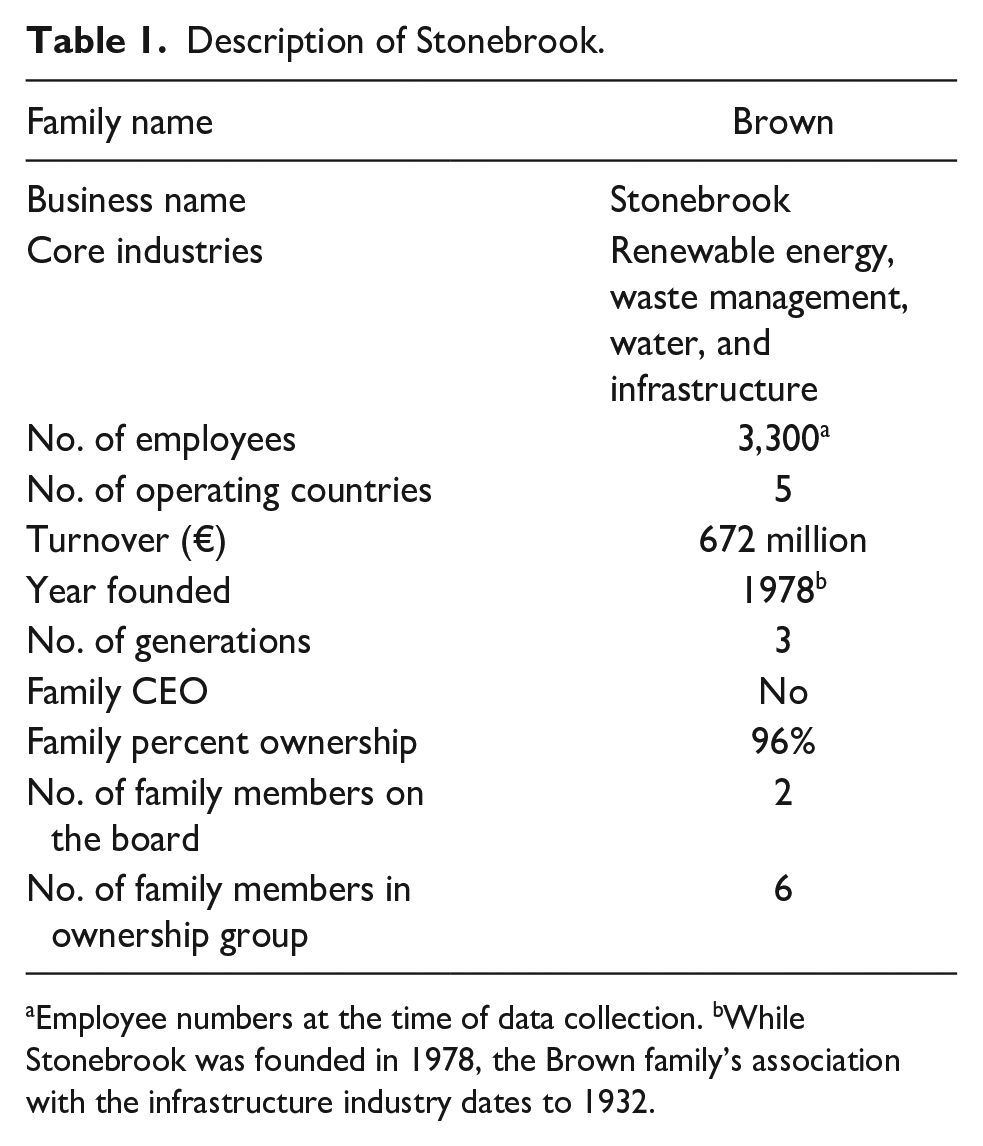
Employee numbers at the time of data collection. bWhile Stonebrook was founded in 1978, the Brown family’s association with the infrastructure industry dates to 1932.
A Brief History of Stonebrook and the Brown Family
Jack Brown began his working life at the age of 16 years when he started his first business in partnership with his brother delivering coal, sand, and gravel. From these humble beginnings emerged Collinswood, which quarried and supplied stones to the building industry. By 1961, Collinswood had expanded overseas, and its success continued through its merger with Silica Limited in 1970 to form Emerald plc. Emerald plc is currently the world’s third largest building supply company, operating in more than 25 countries. Frustrated by the restrictions of a large public company, Jack resigned from his position as CEO of Emerald plc in 1974. Jack married Audrey Murphy, and together, they had four children: Elaine, Ruth, Scott, and Claire.
Following his involvement with Emerald plc, Jack Brown founded Stonebrook in 1978 in partnership with his son, Scott Brown. As the Irish Government’s fiscal policies moved away from state protectionism to an open-market economy, Jack Brown saw opportunities in multiple ventures, including material mining and infrastructure development. Stonebrook’s initial infrastructure project was formed from a public–private partnership with the Irish Government to construct a series of suspension bridges linking the country’s northern and southern motorways (Department of Finance, 1980). In return for the construction of the bridges, Stonebrook secured the contractual right to collect a toll on the routes for 30 years (Department of Finance, 1981). On the contract’s expiration, the deal was the most profitable (per capita) infrastructure agreement signed between a private company and a European country.
When Jack Brown moved to the Chairman position of Stonebrook, his son Scott was appointed as the firm’s CEO. Under the leadership of Scott Brown, Stonebrook repositioned itself as a renewable energy and waste management company. The macrofactors of climate change, security of the energy supply, and general resource depletion underpin the firm’s confidence in the growth prospects of its chosen sectors—which involve acquiring, constructing, and managing sustainable infrastructure assets. In 1973, Scott Brown married Caroline Murphy, whose father, Joseph Murphy, was a leading national hotelier. Scott and Caroline had four children: David, Kim, Charlene, and Peter. Today, Scott has followed in his father’s footsteps by assuming the role of Chairman, while his son David is one of two nonexecutive directors. The current CEO is a nonfamily member. A detailed timeline of the historical development of Stonebrook from 1932 to 2021 is presented in Table 2, and a genogram of the Brown family is shown in Figure 1.
Longitudinal Development of Stonebrook (1932–2021).
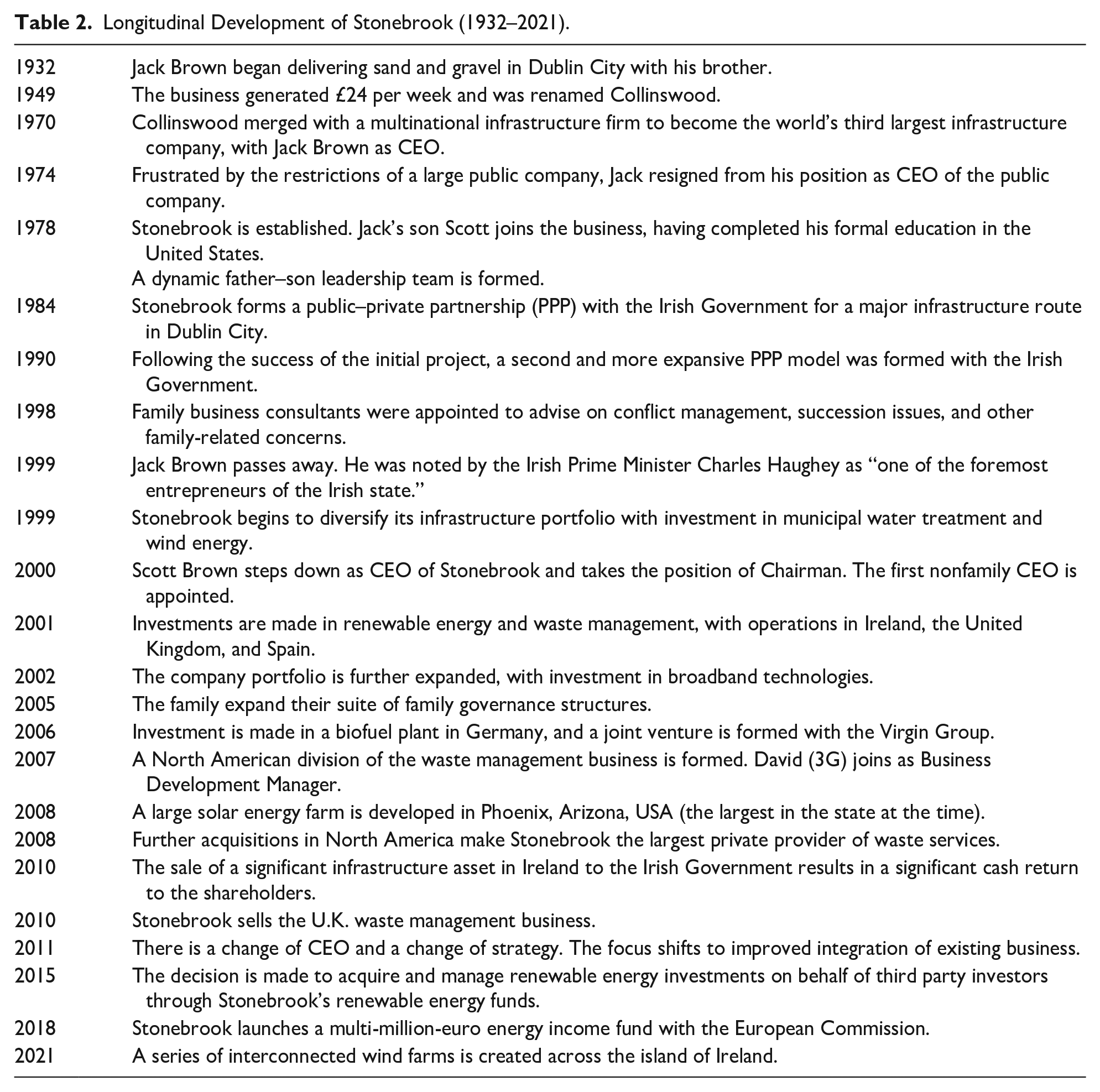
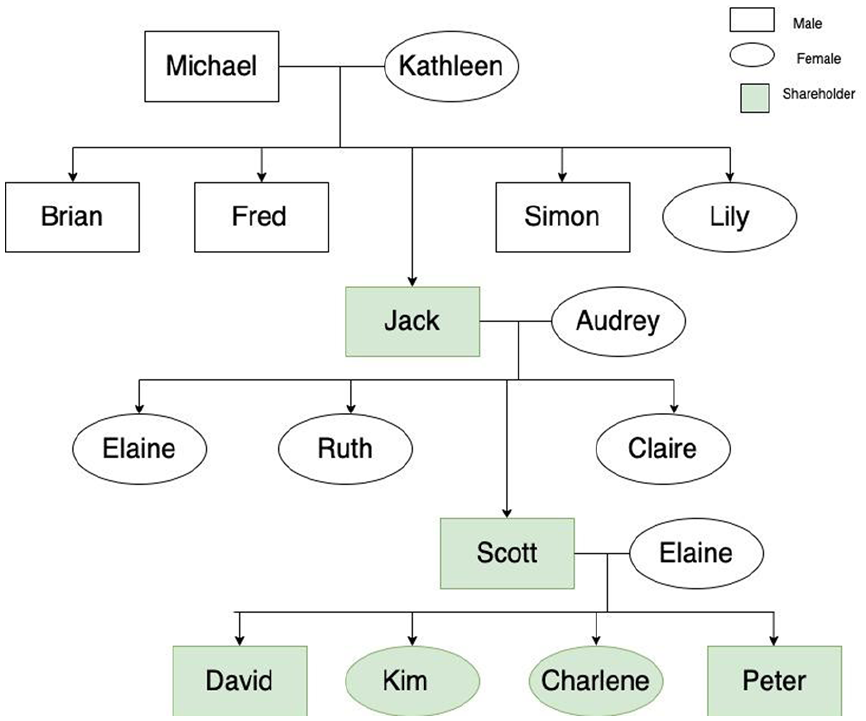
Genogram of the Brown Family.
Data Collection
Our primary data collection process consisted of conducting interviews (both one-on-one and focus groups), documenting participant observations, and collecting archival data over a period spanning 14 years of Stonebrook’s history. The research team was afforded regular access to the research site. This, in turn, provided access to key informants, including top management team members (both family and nonfamily). Our three data collection methods are detailed below.
Data and Sources on the Firm and Family
Interview Data and Sources
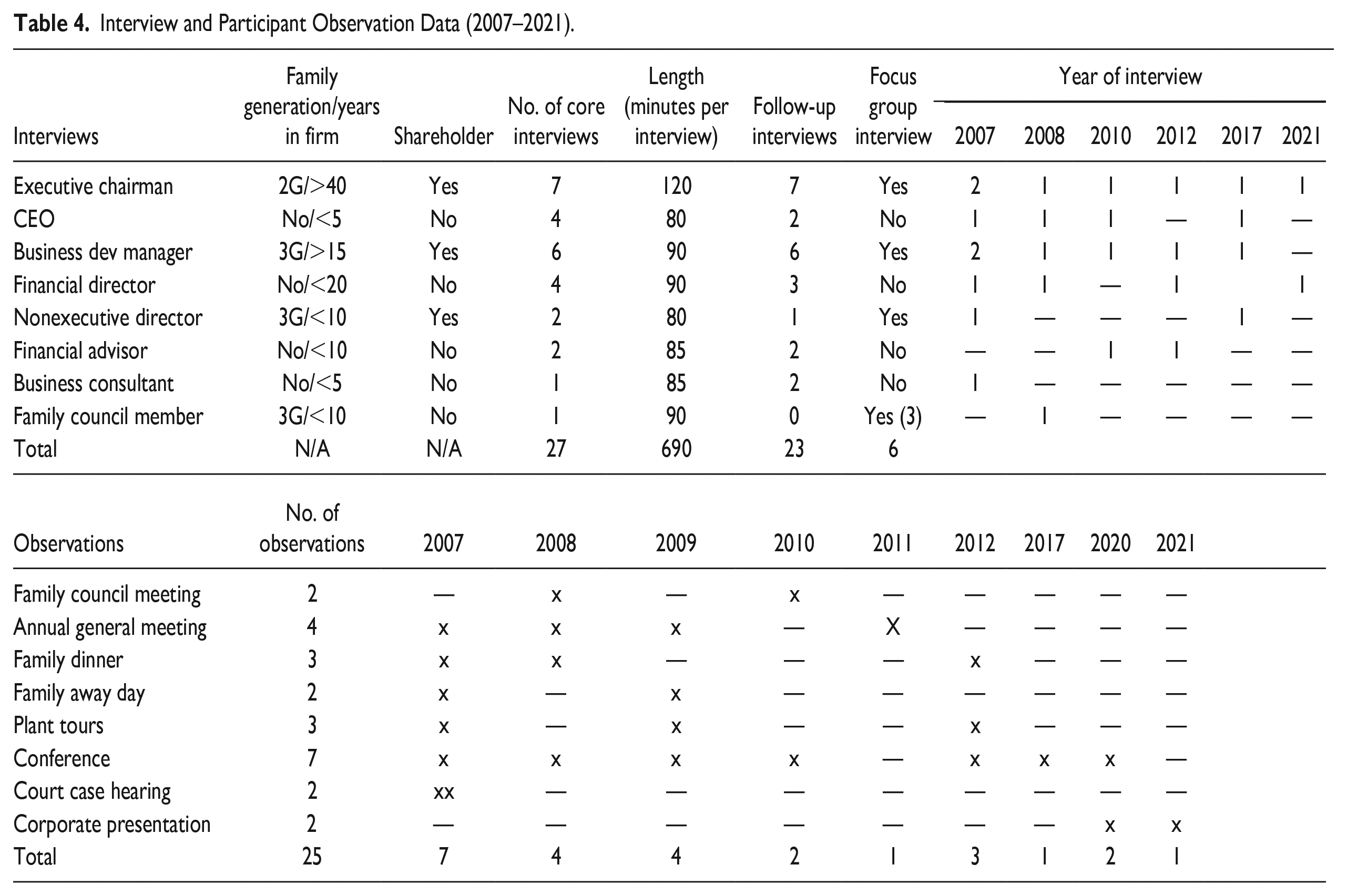
Five waves of core interviews were conducted in the family business over a 14-year period (2007–2021), which totaled 27 interviews that varied in length between 80 and 120 minutes. The heterogeneity of the informant sample was imperative, as both family and nonfamily interviewees noted similar practices. Drawing from our semi-structured interview design, which provided us with the flexibility to ask additional probing questions that naturally arose in conversation, initial questions were posed relating to the firm’s history and externalities. Sample questions included, “Describe how external networks and personal connections play a role in the development of the business,” and “How would you describe the decision-making process in the business?” Follow-up interviews (n = 23) were also conducted to clarify and refine interviewees’ points or to pose additional follow-on questions. Furthermore, in 2009, a focus group interview with six members of the family (one member of the second generation and five members of the third generation) was also conducted. This focus group was facilitated by two members of the research team; one chaired the group interview while the other took notes. Focus groups reveal “dimensions of understanding that often remain untapped by the more conventional one-to-one interview” (Kitzinger, 1994, p. 109), which in this case allowed us to explore, at a deeper level, the nature of the practices that were identified.
Observations
To supplement our evidence while achieving within-method triangulation (Bekhet & Zauszniewski, 2012), a total of 25 observations were made in numerous settings such as family council meetings, annual general meetings, family dinners, family away days, conferences, and plant tours. Given our focus on practices that emerge and are potentially passed down within the family firm, it was contextually significant that we included personal observations to establish that certain practices had taken place and under what circumstances. In doing so, we were able to establish insights that extended beyond the interview and archival data (Noor, 2008). One of the most significant observations was the legal dispute that occurred within the Murphy-Brown family in 2007. One member of the research team observed court hearings and heard testimony from a third generation family member, who stated the important lesson of implementing practices of family governance.
Archival Data
We collected 673 archival sources on Stonebrook consisting of public records supplemented by other information sources provided by the family, which detailed the Brown family’s involvement in business more than 86 years. Moreover, these records were typically produced in real time. They served as a means of method triangulation to counteract any anomalies, preferential hindsight, or retrospective memory bias that may have arisen during interviewing or observations (Yin, 2013). This triangulation of data collection methods enhanced the credibility of our findings (Yin, 2013). A comprehensive review of our archival sources is presented in Table 3. A full review of interview and observation data sources is presented in Table 4.
Archival Data.
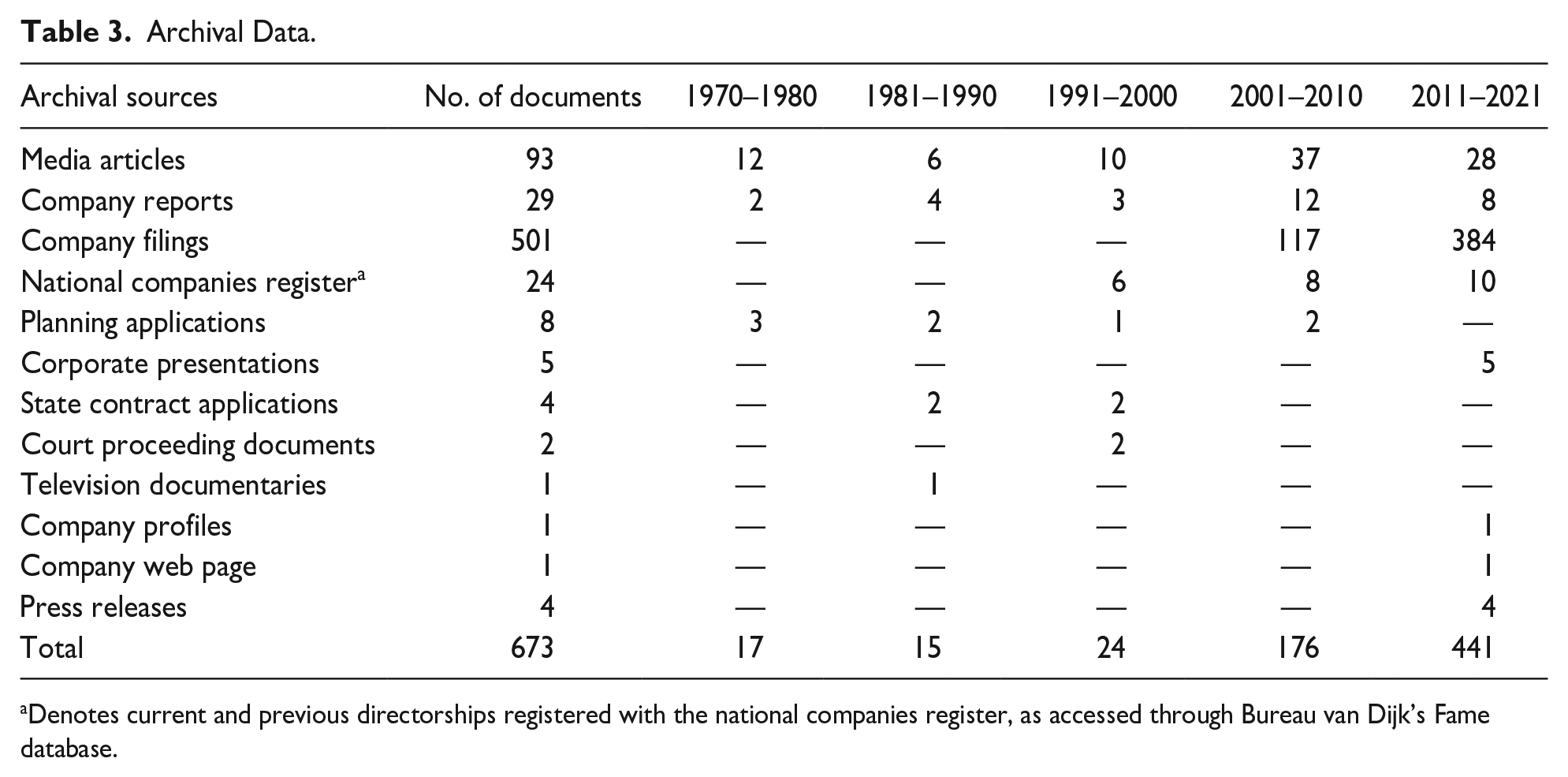
Denotes current and previous directorships registered with the national companies register, as accessed through Bureau van Dijk’s Fame database.
Interview and Participant Observation Data (2007–2021).
Data Analysis
The core interviews were transcribed verbatim, resulting in 513 pages of transcripts from approximately 38 hours of tape recordings. Based on these interview transcripts and the archival data, a historical case study of the firm was completed using a rigorous case study protocol that resulted in the formulation of a case study database (De Massis & Kotlar, 2014). Following Yin (2011, p. 177), our data analysis was a nonlinear iterative process of data “compiling, disassembling, reassembling, interpreting, and concluding,” in which we established inter-rater reliability of the qualitative data analysis through the use of multiple researchers who were familiar with the case study and data set (one of whom acted as a referee) (Armstrong et al., 1997; Leppäaho et al., 2016).
An inductive, data-driven, three-stage constant comparison analysis technique was conceived for the data analysis. This was implemented by importing the transcriptions of the interview data as internal sources within NVivo 12, which was chosen as it is generally considered the benchmark computer-aided qualitative data analysis software for analyzing qualitative data (Gibbs, 2002)—especially when a constant comparison analysis is used (Leech & Onwuegbuzie, 2011). When all of the archival data sources had been collected, they were also imported into NVivo as internal sources (Di Gregorio, 2000). Each source was then iteratively analyzed through NVivo to facilitate the three-stage coding procedure of our analysis (Braun & Clarke, 2019), as detailed below. During the first stage of analysis, we familiarized ourselves with the data, analyzing transcripts individually and identifying broad themes in the form of open coding to develop a holistic understanding of the data (Gale et al., 2013). The coding of the interviews was conducted by two research team members who acted as independent raters and met periodically to discuss their analysis and resolve any discrepancies. A third (more senior) research team member acted as an independent referee, making final decisions if divergent opinions could not be resolved (Sieger et al., 2011). This process involved comparing codes across individual participants and developing a list of generic codes grounded in the participants’ language. To consolidate our codes, we conducted a focus group with six members of the business family, who were asked to name and describe the company’s key events. As a form of method triangulation, the analysis involved corroborating interviewees’ retelling of incidents both against those of fellow interviewees and against observations and secondary sources, thus validating the events’ significance.
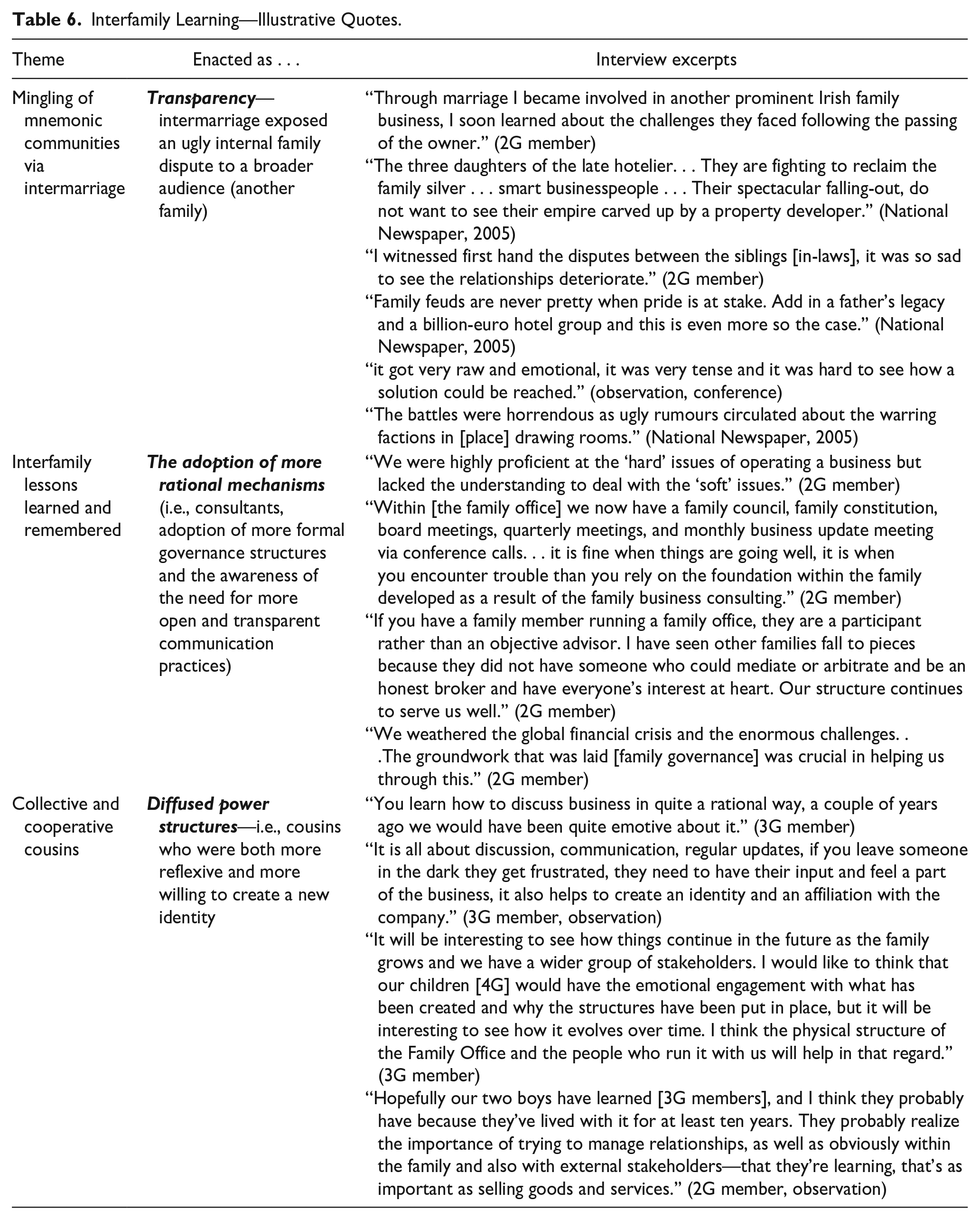
In the second data analysis stage, we gathered evidence from textual items (e.g., article snippets and interview quotations). The final totaled 172 textual items. The textual items were treated as a form of historical narrative and were analyzed using a qualitative interpretive approach. For the purposes of this study, there was no attempt to deconstruct or interrogate these texts in terms of their historical context (Decker et al., 2021); rather, in attempting to conceptualize these codes into concepts, we collapsed them into second-order categories. Rather than any one of our second-order codes being original or significant in isolation, the value of our findings lies in its holistic fit between the empirical and theoretical elements of our study (Gehman et al., 2018; Klag & Langley, 2013). The analysis was undertaken by two members of the research team (a full professor and an associate professor) who were both highly familiarized with the case study firms and data sets, with a third team member (a full professor) serving as a referee, thereby mitigating any potential coding disagreements while establishing inter-rater reliability of the qualitative data analysis (Armstrong et al., 1997). This resulted in an inter-rater agreement of 0.93, which is above the proposed threshold of 0.70 (Cohen, 1960). We worked to guarantee the trustworthiness of our data as we continually sought to clarify and validate our analysis through our traceable chain of evidence and follow-up interviews with informants (Morse, 1991). Thus, we established internal validity by integrating pattern-matching techniques into the analysis process (Eisenhardt, 1989). Finally, in stage three of the data analysis, we developed final aggregate dimensions derived from the first- and second-order codes. Reliability analysis was adopted to cross-reference the data against the characteristics of the respondents (Elo & Kyngäs, 2008), as well as to triangulate the different data sources (Hsieh & Shannon, 2005). The use of triangulation sought to mitigate any potential issues of construct validity (Gibbert et al., 2008). We also executed additional quality control checks by iteratively re-examining the coded data set from the preceding two stages (DeCuir-Gunby et al., 2011). Our aggregate theoretical dimensions are detailed in our data structure table, which is presented in Table 5. In the following section, we present our findings interspersed with power quotes representing the most compelling and convincing data extracts (Pratt, 2008). Proof quotes that further illustrate the key categories of our findings are included in Table 6.
Data Structure.
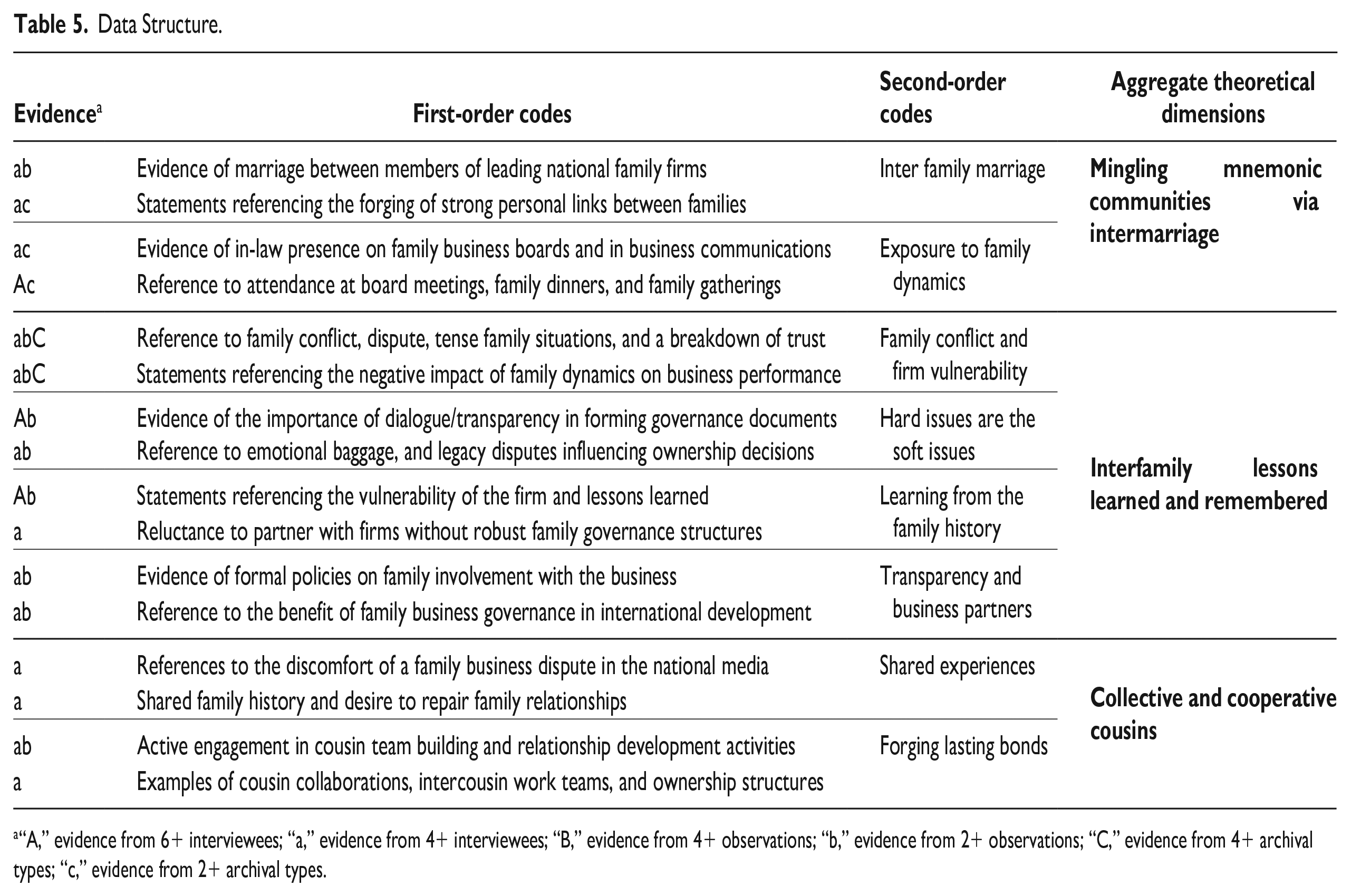
“A,” evidence from 6+ interviewees; “a,” evidence from 4+ interviewees; “B,” evidence from 4+ observations; “b,” evidence from 2+ observations; “C,” evidence from 4+ archival types; “c,” evidence from 2+ archival types.
Interfamily Learning—Illustrative Quotes.
Findings
Early Formation of a Mnemonic Community
In his first enterprise, Collinswood, Jack developed strong opinions on running a “business with national and international growth potential” (Family Archive), which laid the foundation of the structural and cognitive elements of the Brown family/Stonebrook mnemonic community. He regularly expressed to his son that business success depended on “seeing value in the long-term, challenging the status quo [embracing change], and an alignment of values with others” (2G member). Such sentiments [long-term thinking, alignment of values, and challenging the status quo], which became traditions in this mnemonic community, were also collectively reminisced upon in “Building a Legacy,” a 200-page history of the Brown family firm. Despite the nationwide presence of Stonebrook, Jack Brown was less interested in family governance structures across his business and more interested in “getting his hands dirty and. . . leave all that to the accountants” (2G member). From the family history book, “Building a Legacy,” we discover, “Dad [Jack Brown] was fed up with boards and all the structures of the new organization. He was having disagreements with [director name]. While still a non-executive director of the Group, he was heading for the door.”
From letters written by Jack Brown to close colleagues, it was evident that he was less concerned with governance and relied on the practice of “people doing the right thing” (Brown Letters, Family Archives). Regarding family disputes, extracts from Jack Brown’s personal diaries suggest, “we are blood [family], we’ll figure this out [conflict], I’m not worried.” In other words, one of the strategic guideposts (Sinha et al., 2020) of the Brown family assumed that future conflicts within the family and business would be resolved informally, based on the good faith of family members and others involved in the Brown family businesses.
The Mingling of Mnemonic Communities Via Intermarriage
The marriage in 1974 of Scott Brown (2G) to Caroline Murphy represented the coming together of prominent Irish families—mnemonic communities—the Brown Group and the Murphy Group. The Murphy Group was established in 1964 when hotelier Joseph Murphy opened a hotel in Dublin. Extracts from a national newspaper (1989) describe Joseph Murphy as “A man with a mission. In his lifetime, he transformed the hotel industry in Dublin with his singular vision of giving attainable luxury to both the citizens of his native city as well as tourists from abroad.”
International expansion followed shortly after with a presence in upmarket neighborhoods across the United Kingdom. The firm continued its international expansion opening eight five-star hotels across Ireland, the United Kingdom, and the United States. “The Murphy empire seemed invincible, its various hotels, symbols of the new Ireland that was emerging from depressing years of Catholic repression and State control” (National Newspaper, 2012).
On February 6, 1988, at the age of 64, Joseph Murphy died. “The [Murphy] children were certainly thrown in at the deep end when Joseph Murphy passed away” (National Newspaper, 2012). The ownership of the family hotel business fell to his five children, who were all equal shareholders. His eldest son, Ryan, inherited the building arm of the company, while his second son, Seamus, took over as managing director of the hotel chain with his sister Michelle as the marketing director. “He [Seamus] and Michelle had adjoining offices in the [hotel] in central Dublin and often socialised together” (National Newspaper, 2012). Shortly after the sibling partnership began to manage the family business, a dispute arose around the future strategic direction of the international hotel chain. “It was generally felt in the industry that Seamus and the family had a falling-out over his policy of heavy investment in the existing hotel properties” (National Newspaper, 1996). A national newspaper (2005) reported, “He believed that he could import exciting new concepts for the family hotel business from America and maybe even team up with the worldwide Marriott chain to put the brand name on some of the hotels in the Murphy group”.
In what has now been termed a “legendary family feud” (Collins, 2007) which received significant national media coverage, Seamus Murphy was removed from his position of chief executive in the company, “On July 4, 1997, it was announced in a terse statement that the board of the company had voted him out of office as managing director” (National Newspaper, 2012). A national newspaper (2005) comments, “family feuds are never pretty when pride is at stake.” Add in a “father’s legacy and a billion-euro hotel group and this is even more so the case.” During this time, “ugly rumours about the warring factions circulated in Dublin’s high society” (National Newspaper, 2005). Seamus was later reinstated to the position of managing director of the hotel chain after his mother brokered a negotiation between the squabbling siblings. “His sister was named deputy chairman of the family company” (National Newspaper, 2012). His return was short-lived; however, and he left the business one year later “to concentrate on his own business interests” (National Newspaper, 2012). While Seamus remained on the board of the family business, “he reportedly refused to communicate with his sisters” (National Newspaper, 2005). Marrying into this family provided Scott Brown and the Brown Family with exposure to an internal family dispute in another family. The learning gleaned from this exposure, that is, engagement with the rhetorical history of the Murphy family and how it changed Brown’s practices for managing their history, is discussed next.
Lessons Remembered and Learned
As a director in the Murphy Group and husband to Caroline Murphy, Scott Brown witnessed firsthand the need for the practice of family conflict resolution, “the family needed to have the issues resolved or face the ultimate demise of the thriving business” (2G member). Given the magnitude of the in-law conflict, it was “impossible to resolve it [the conflict] without going outside the family” (2G member). Scott Brown was present through the legal disputes, describing them as “some of the most difficult meetings I’ve ever had.” He continued, “There was a pendulum swing from very poor communication to what could be considered as extreme communication. We were unpacking everything that most families would not and getting all the dirty laundry out on the table. Those first meetings were raw and highly emotional, normal family stuff but out in the open in our case. Over time, everyone vocalised their issues. It got heated on occasions, people cried. That’s what happens. It’s never perfect but had we not done that we would not have got to where we are today.”
Scott recalls how the Murphy family had to “have those difficult conversations early in the process, and tears were shed.” He continued, “We had to learn how to talk to each other. How can we communicate better? What do we want from this business? How can we work together? What is fair to us all? What values do we want and, separately, the family to stand for?”
Working with family business consultants, the three Murphy sisters agreed with their two brothers to buy out the brother’s shareholdings, and for the brothers to exit the business, “the consultants assisted greatly with conflict resolution” (2G member). It was suggested to the family that the consultants be retained within the Murphy Group to develop additional family governance structures. However, “certain members of the Murphy family did not want to take the next potential steps, such as developing and agreeing on a family charter” (2G member). Instead, “lawyers were retained to draw up a legally binding shareholder agreement which covered relatively ‘hard’ business and governance issues including the rights attaching to shares, and the composition of the Board” (2G member).
Based on his experience as a board member, husband, and brother-in-law within the Murphy Group, Scott Brown formed the opinion that “in family business, the hard issues are the soft issues” (Observation at a family business conference). “I witnessed firsthand how family dynamics can change and often the trusting bond once so present can never be restored” (2G member). While Scott and his father, Jack Brown, had built a successful international infrastructure business with operations on four continents, the family realized how quickly family dynamics could change, “as a family, we had to take a very serious look at who we are and what structures we had in place, we realized pretty quickly how vulnerable we were” (2G member). “We began to think that while it may not seem likely, things could change in our family business” (2G member). Based on their experience with the Murphy Group, the family sought rational mechanisms to prevent this from happening again (in their family) and acquired the services of the same family consultant and psychologist who had worked with the Murphy Group. “I believed, as did the [Brown] family, that a family charter would serve as the underlying bedrock of the family, the business, and the interrelationships between the two” (2G member). Speaking at an industry conference, the Chairman commented, “It felt like we were going three steps back to go one forward, but I watched what happened before [speaking of the Murphy Group] and realized we need to follow this path.”
Scott and his family also agreed that external consultants “would be retained on an ongoing basis and that his family would continue to address the ‘soft issues’ and develop additional governance structures” (2G member). Working with outside consultants, including a team of psychologists, the Brown family introduced a suite of family governance structures and procedures, including “a family constitution, shareholders agreement, family policies, robust communication mechanisms between the family, the owners and the Board” (2G member). For Scott Brown, “the resultant outcomes have benefited both the family and the business immeasurably.”
While much of the learning was exchanged between members of the Murphy and Brown families, these insights and learnings significantly influenced nonfamily executive members within Stonebrook. In other words, the Brown family leveraged collective remembering from nonfamily members. Speaking about the historical insights of the much-publicized Murphy family dispute and the learnings brought forward to Stonebrook, a nonfamily executive comments, “Yes this was a sea change in behaviour, what Scott and the family learned from the Murphy dispute has had a lasting impact on this business.”
The rhetorical history of the Murphy family’s conflicts, due to the lack of a formal governance structure, went on to serve as an important aspect of “what not to do” for the Brown family’s firm’s international development strategy, that is, collective action across generations. As an international infrastructure business, many of the firm’s businesses reside in industries dominated by family firms (e.g., quarrying, waste disposal, and mining). Reflecting on forming strategic partnerships with other family firms in the industry, the nonfamily CEO comments, “Our policy is to go nowhere near a family that doesn’t have very strong governance over itself and how it interacts with the business because you stand no chance as a professional executive if there is no stability in how the family works together and how the family works within the business.”
Working with executives, the family began to create family employment policies based on openness, transparency, and fairness: “all positions will go to the best person for the job; there is no family favoritism” (Financial Advisor). The nonfamily CEO commented on the introduction of family governance structures, “experienced PLC executives and nonexecutives began to put PLC-type manners on the business.”
During our interviews, a second generation member commented on the impact that the comprehensive governance structures have had on the family business and its international venturing, “Potential partners ask questions like, “Who is Stonebrook?” “Who owns them?” “What industry are they in?”. and that the “primary shareholder is a family called the Brown family, and they hear about our legacy, they like the values we possess and what we stand for as a united and industrious family.”
Collective and Cooperative Cousins
Members of the third generation of the Murphy and Brown families, that is, cousin collaborative (Ward & Dolan, 1998) or cousin consortium (Rutherford et al., 2006) witnessed their parents engaging in a family dispute (i.e., informal reminiscing) that was regularly publicized in Ireland’s national media (i.e., formal memorization), “of course that was hard, reading about your parents, your uncles, your aunts, that is never nice to read” (3G cousin/member). While their parents may have fallen out, the cousins were actively aware of their shared history, were more reflexive, and wanted to change the relationships for this new generation. “As third generation members, we have a shared history, one which I think it is fair to say we have all learned from” (3G cousin/member). The cousins were thus bound together by common frameworks of remembering and shared memories of the past.
Their families have seen a change in both the mind-set of engaging with family and their ways of behaving “you learn how to discuss business in quite a rational way. A couple of years ago, it would have been quite emotive about it” (3G cousin/member). Another Brown family cousin/member (3G) comments, “Relationships that you had as a kid, even as an adult there is a certain point when someone does something, when it brings up the issues from the past. Being family members you are emotionally tied to that person.”
Another cousin/member (3G) continued, “It is all about discussion, communication, regular updates, if you leave someone in the dark they get frustrated, they need to have their input and feel a part of the business, it also helps to create an identity and an affiliation with the company.”
The installation of a suite of family governance systems and structures (including intercousin teams) has been used to promote change and adaptation and has helped the Brown family businesses to endure a series of difficult periods, including the global financial crisis, the collapse of the Irish construction industry, Brexit, and the Covid pandemic. The awareness of their shared history has resulted in collective action intercousin teams and cousin consortiums which were formal manifestations of their shared identity: “Within [the family office] we have a family council, family constitution, board meetings, quarterly meetings and monthly business update meeting via conference calls. . . it is fine when things are going well, it is when you encounter trouble than you rely on the foundation within the family developed as a result of the family business consulting.”
Commenting on the role of governance during difficult environmental periods, a second generation member comments, “We weathered the global financial crisis and the enormous challenges around [Stonebrook] and [another investment]. The groundwork that was laid was crucial in helping us through this. We had businesses that were collapsing and two taken private and the structures [family governance] we had were crucial in getting us through that.”
And another second generation member comments, “If you have a family member running a family office, they are a participant rather than an objective advisor. I have seen other families fall to pieces because they did not have someone who could mediate or arbitrate and be an honest broker and have everyone’s interest at heart. Our structure continues to serve us well.”
Concerning the family governance structures put in place and the future structure of the Brown family business, it emerged that the collection of cousins was less emotional, more reflective of problems, and more willing to create an integrated identity for the business. As a cousin/member (3G) comments, “It will be interesting to see how things continue in the future as the family grows and we have a wider group of stakeholders. I would like to think that our children would have the emotional engagement with what has been created and why the structures have been put in place, but it will be interesting to see how it evolves over time. I think the physical structure of the Family Office and the people who run it with us will help in that regard.”
Discussion
We contribute to a growing number of empirical studies (Sinha et al., 2020; Suddaby et al., 2022) which elaborate upon how rhetorical history facilitates strategic change by showing how the merging of two families encouraged two types of strategic change in the reconstituted family business. While prior research has focused on how learning unfolds within the family, this study expands on this stream of studies by looking at how families learn from outside their focal family group. Rhetorical history was used to initiate strategic change by demonstrating to family and nonfamily members the need for change (i.e., governance) to ensure continuity (Suddaby & Foster, 2017). In so doing, our data answer the question of how intermarriage facilitates collective learning in a family business through the integration of collective memory.
The first type of strategic change manifested in the adoption of more rational structures and governance processes in the Brown Family regarding decision-making. The adoption of more formal governance structures and the awareness of the need for more open and transparent paths of communication were a set of practices (i.e., the hardware) that the Brown family used to manage their history (Anderson, 1983; Sinha et al., 2020; Suddaby et al., 2022). To illustrate, altruistic tendencies and family-centric attitudes (e.g., “People doing the right thing,” “we are blood [family], we’ll figure this out [conflict], I’m not worried”) were replaced by new practices emphasizing clear communication channels and governance structures in family and business practices as the mistakes made by the Murphy family served as lessons for the Brown family. Given that there are ample lessons to be gained about the value of clear communication channels and governance structures from a variety of other sources (e.g., education, books, magazines, cases, television, theater, and movies), we suggest that the power of family narratives and traditions (Coraiola et al., 2018; Jaskiewicz et al., 2015) are such that, in this instance, it took the intimate experiences of encountering how such a family narrative can go wrong for strategic change to occur.
The second type of strategic change encouraged the creation of cultural practices of governance and structure that helped to ensure the continuity of family culture such as the family constitution (Arteaga & Menéndez-Requejo, 2017) and the family council (i.e., cultural software). The collective memory of this mingled mnemonic community and the shared interpretations of the past formed the building blocks of their cultural software, more governance, new organizational culture, and shared organizational identity (Anteby & Molnar, 2012). Collective memory provides a stock of stories about the past that provide the raw material from which more formal accounts of the past can be constructed. With regard to mechanisms by which collective memory can be transmuted into forms of organizational identity and culture, stories, books, and media were identified. In particular, stories provided the technical tools for “doing” rhetorical history (White, 1973). Family business members produce and imbed traditions, practices, and collective memories through narratives (Harris & Ogbonna, 1999; Jaskiewicz et al., 2015).
Rhetorical history and learning through the integration of two-family histories place managerial attention on the family’s capacity to strategically select elements of the past and construct a coherent and compelling historical narrative that appeals to stakeholders by explaining past successes (and failures) and laying out of a future roadmap based on such (Suddabyet al., 2010). Namely, how managers develop and share narratives that intentionally, purposefully, and strategically revise history to explain current conditions in such ways to motivate members of this mnemonic community to pursue future goals (Sinha et al., 2020; Suddaby et al., 2010). A rhetorical history lens underscores the agency of Scott Brown and others in creating meaning that is transmitted between and across generations, within family and nonfamily. Our findings illuminate the role of human agency in creating, maintaining, and changing traditions in family businesses which to date has been largely unexplored and undertheorized (Suddaby & Jaskiewicz, 2020). As a mnemonic community, family firms can leverage collective remembering and shared memories as the basis for collective action across generations (Suddaby & Jaskiewicz, 2020; Zerubavel, 2003).
Our analysis also revealed that as a group of cousins, members of the third generation of the Murphy and Brown families developed a sense of shared identity across generations as they engaged in narrative remembering (Giovannoni et al., 2011; Zellweger et al., 2010) by witnessing the Murphy family dispute. The experience had a significant effect on the next generation in both families. The cousins (first and second) rallied together. This rallying was grounded in awareness of their shared history and resulted in collective action intercousin teams and cousin consortiums (Lambrecht & Lievens, 2008) to “produce their future” (Suddaby & Jaskiewicz, 2020). This shared history also resulted in a shared identity (Roowan, 2009) and the construction of a shared culture (Dellheim, 1986; Rowlinson & Hassard, 1993). Our study underscores the fluid and bidirectional interaction between past, present, and future across generations (Suddaby et al., 2010), “as projections of the future are always entangled with views of the past and present” (Kaplan & Orlikowski, 2013, p. 965).
The mingled mnemonic communities brought together heterogeneous family firm members who engaged in collective action based on a common sense of solidarity and common destiny. Shared history creates group solidarity by identifying shared aspirational values, narratives, and practices of belonging over time (Foster et al., 2020). This heterogeneity also included the pivotal role of nonfamily members within mnemonic communities, namely nonfamily executives’ purposive attempts in other words their exercise of agency (Suddaby & Jaskiewicz, 2020) to control processes of social remembering (Mena & Rintamäki, 2020).
Although there are certainly other ways in which a family might learn and change, for example, family businesses might learn from a good merger with another family business, as research suggests that family firms look for other family businesses when searching for M&A matches (Bettinazzi et al., 2020), the evidence in this study indicates that it was through intermarriage that the Brown family realized the need for changes in how they were organized to prevent the kinds of conflicts and crises that enveloped the Murphy business family.
In this article, we contribute to the growing body of literature that associates the attributes of family business longevity and economic prowess with their skill in rhetorical history (Ge et al., 2022; Sinha et al., 2020). In underscoring intermarriage as a form of learning, it is evident that the narratives and pasts of other families can be used for strategic purposes (Suddaby et al., 2010). In other words, mingling family mnemonics made this family business an organization that could learn to adapt.
Contributions
In this article, we explored the merger of two mnemonic communities through intermarriage and examined how and why a family might learn through the rhetorical history of others. To address this topic, we drew upon an in-depth historical case study of an 86-year-old family business spanning three generations. We drew upon data collected over a 14-year period from 50 interviews, 673 archival sources, and 25 observational instances. Furthermore, to facilitate this historically based investigation, we conceptualized the family business as a mnemonic community, whereby learning involves eliciting specific memories across individuals (Zerubavel, 2003). In concluding our arguments, we make the following key contributions to theory development.
First, we provide a historically based understanding of how individuals in an entrepreneurial family change ways of managing their family business through the learning generated from an interpretation of the rhetorical history of another family. As a result of this exposure, the family learns from the other family’s failures and makes fundamental strategic changes in the adoption of more rational structures and governance processes. (i.e., the hardware) and the creation of cultural practices of governance and structure (i.e., cultural software).
Second, given that this learning occurs through the intimate knowledge gained from the intermarriage of the Brown and Murphy families, the narratives and pasts of other families can be used for strategic purposes (Suddaby et al., 2010). Intermarriage facilitates collective learning in a family business through the integration of collective memory. Intermarriage and the resultant mingling of family mnemonics made this family business a learning organization. We suggest that intermarriage is one way for families to gain learning and understanding, which builds on prior scholarship which has focused on how intermarriage is used by families to acquire resources and social status (Chung et al., 2021; Kaye, 1999; Mehrotra et al., 2011).
Third, our consideration of family business as a mnemonic community demonstrates that collective learning occurs in shared historical narratives among family members, nonfamily members, between generations, and among individuals from other families (e.g., via intermarriage). In particular, we show how members of the third generation of the mingled mnemonic community developed a sense of shared identity via collective narrative remembering (Giovannoni et al., 2011; Zellweger et al., 2010). Furthermore, we illustrate that when nonfamily members purposively engage in certain practices and reproduce and transform them, they identify as part of the family. We expand on the notion of the family being based not on structural or blood relations but on shared stories and understandings (Suddaby & Jaskiewicz, 2020).
Fourth, we contribute to the family business literature by providing insights into mingled mnemonic communities and multiple overlapping rhetorical histories in the family business and their inherent intergenerational implications. Our theoretical orientation of rhetorical history illuminates the agency of family members and the purposive attempts to control processes of social remembering and how family businesses via intermarriage can avoid path dependencies by engaging with multiple overlapping mnemonic communities implicated in learning. The involvement of family business members (both family and nonfamily) in strategic approaches to practice can both replicate and transform practices established by the founder. This is significant as these practices cascade not only across family members but also to and through nonfamily members (Hsueh et al., 2022). Our findings thus illuminate the role of human agency in creating, maintaining, and changing traditions in family businesses which to date has been largely unexplored and undertheorized (Suddaby & Jaskiewicz, 2020).
Future Research and Conclusion
We acknowledge that this research has been subject to a number of limitations, which create opportunities in the form of future research directions. For instance, our case study data set was expansive and drew upon a large pool of interview, observation, and archival data, thus establishing theoretical generalization (Yin, 2013). However, the use of a single-case study approach may be somewhat limited in terms of external validity (De Massis & Kotlar, 2014). Accordingly, future scholars can advance our research findings by way of a multiple-case study approach to explore the same phenomena, thus attaining empirical generalization. Furthermore, the nature of our single-case study also limited the generalizability of our findings in geographic terms, as we focused on one Western European country. Although this has minimized the prospect of cultural bias, future multiple-case study research to build on our findings could comparatively analyze businesses across different countries to highlight differentiated cultural factors that may not have been apparent in our study (Eze et al., 2020), as well as different manifestations of family and familiness in business families and family businesses (Frank et al., 2010; Zellweger et al., 2010). Notwithstanding the limitations outlined above, we believe that our study provides a significant contribution to the family business research domain in that most prior family business definitions have focused on the structural properties of the firm or the genetic relationships between family members. We suggest that the boundaries of the family firm are constructed around shared memories and collective participation in the retelling and reinterpretation of those memories.
Finally, it is curious that the realization of the need for family governance structures and processes required the intimate emotional experiences of another family’s crises and conflicts. Given the myriad number of books, academic research, and practitioner advice on the value of family governance (i.e., Groysberg & Bell, 2014; Suess, 2014; Zellweger, 2017), it is somewhat surprising that this common knowledge would not be practiced in a sizable family business. Yet, it is these stories told about who we are, “we are blood [family], we’ll figure this out [conflict], I’m not worried,” that carries so much weight in the legacy of subsequent generations. Rhetorical history is not only the conveyance of facts, that is, accounts of the past, but also the meanings, values, and emotions imbued in what is remembered and told that gives the past its life in the present. What is learned, in this instance, requires more than a knowledge of the facts but an active engagement in the emotions of situations past, present, and future. It invites us to reconsider the limits and promise of the imagination to engage in the experiences of others (Thompson, 2018).
Footnotes
Declaration of Conflicting Interests
The author(s) declared no potential conflicts of interest with respect to the research, authorship, and/or publication of this article.
Funding
The author(s) received no financial support for the research, authorship, and/or publication of this article.
