



Abstract
Israeli-Jews and Palestinians cannot easily be exposed to contradicting information about “the other” in the intractable Israeli-Palestinian conflict because of the emotionally charged situation and prevailing ethnocentrism. Serious games like PeaceMaker are used as innovative interventions for peace education. Winning PeaceMaker indicates better conflict resolution skills and developing an informative viewpoint regarding the situation, which is required for conflict resolution and peacebuilding. The evaluation of the effectiveness of prosocial games in educating about conflict and peace in the literature is severely lacking. We examine the effects of this computerized simulation of the Israeli–Palestinian conflict on enhancing knowledge about the conflict and “the other” among undergraduate players who are direct parties (i.e., Israeli-Jews and Palestinians) and third parties (i.e., Americans and Cypriots). In addition, we investigate the knowledge gap between direct parties and third parties who won and did not win the game. Using questionnaires, we conducted a quasi-experimental study with 168 undergraduates using a pre- and post-intervention research design. We found that direct parties to the conflict acquired significantly more knowledge about the other side, and third parties acquired significantly more knowledge about the conflict after playing PeaceMaker. In addition, PeaceMaker minimized the knowledge gap after playing the game among direct parties who won the game and those who did not win and increased the knowledge gap between third parties who won the game and those who did not win. Our results suggest that serious games might be effective interventions for peace education, because they appear to enhance knowledge about the conflict, and about “the other” particularly for young people who are direct parties to this divide.
Keywords
Introduction
Peace education is a main theory of change and a practical intervention that has been developed by conflict resolution and political psychology disciplines to impact attitudes and change conflict narratives to resolve conflicts (Kapshuk & Shapira, 2022; Salomon, 2009). Peace education focuses on reducing inter-group prejudice and negative stereotypes of the other, promoting empathy and understanding toward the other, building trust, and increasing awareness of the key causes of the conflict without the use of violence. Facilitating inter-group contact and educating people on different aspects of conflicts and peacebuilding are among the key activities used in peace education interventions in order to attain the aforementioned goals (Kapshuk & Shapira, 2022; Salomon, 2009).
The dominance of the Internet and emerging technologies in the last few decades has added new opportunities to peace education interventions and suggested a new set of tools focusing on the reduction of inter-group tension. Through the lens of new media such as digital games, people may learn to legitimate the other’s narrative and look at events through both viewpoints; can critically analyze their ingroup’s contribution to the situation and challenge their viewpoint of sole victimhood; and perhaps develop understanding toward the other’s pain and loss and generate mutual empathy (Kapshuk & Shapira, 2022; Salomon, 2009). However, the evaluation of the effectiveness of prosocial serious games in educating about conflict and peace is severely lacking in the literature.
Our study examines how effective serious games about the Israeli–Palestinian conflict are as a peace education tool. The study focuses on the evaluation of the impact of a serious game titled PeaceMaker. PeaceMaker is regarded as a serious, prosocial game because it focuses on persuasion, such as changing attitudes about ethno-political issues, and on increasing awareness and knowledge about political issues, in this case the Israeli–Palestinian conflict (Mitgutsch, 2011; Peng et al., 2010; Ravyse et al., 2017). It is also regarded as a simulation because it is a computer-based representation of a real-life situation (Campos et al., 2020), in this case an intractable conflict.
We define, from an operational perspective, three key terms used in our study: Serious Games, Knowledge Acquisition, and Conflict Resolution. Serious Games are defined as fun activities with rules that can increase learners’ awareness of a certain subject (i.e., the Israeli–Palestinian conflict) and contribute to their learning (i.e., by acquiring factual knowledge) about this subject (Durdu, 2021). This study focuses on an intractable conflict, namely, the Israeli–Palestinian situation, a prolonged ethnonational conflict that has been ongoing for more than 60 years, and that has witnessed numerous unfruitful attempts for resolution (Hasler et al., 2023). Finally, knowledge acquisition is defined as acquiring factual information about both sides of the conflict in order to indicate how effective PeaceMaker is as a pedagogical tool about the situation (Kampf & Stolero, 2018).
To the best of the authors’ knowledge, no studies examined Serious Games as a tool for knowledge acquisition in the context of conflict resolution and peace education. Most studies using Serious Games to resolve conflicts and promote peace focused on attitude outcomes rather than knowledge acquisition (see an extensive review by Durdu, 2021). A few studies used serious games for knowledge acquisition about subjects other than conflict resolution and peace education, such as climate change and sustainable development (e.g., Alonso-Fernandez et al., 2019; Saitua-Iribar et al., 2020) and indicated that serious games are more effective in knowledge acquisition than other methods. However, it is hard to draw conclusions from the aforementioned studies to our study given that young people on the Israeli–Palestinian divide know almost nothing about the other and may find it hard to be exposed to information about such a loaded and sensitive issue (Durdu, 2021; Hasler et al., 2023; Salomon, 2009).
This study has two key goals that were not examined in previous studies. First, we examine the effectiveness of the game in knowledge acquisition about the other side in the conflict among Israeli-Jews and Palestinians who are direct parties to the conflict with little knowledge about the other in the situation and difficulty in exposing themselves to such contradicting information. In addition, we examine the effectiveness of the game in narrowing the knowledge gap about the conflict between players who won the game and those who did not win the game, differentiating between levels of knowledge before and after playing the game among those who are direct parties to the conflict (Israeli-Jews and Palestinians) and those who are third parties (Americans and Cypriots).
This study was conducted among Israeli-Jews, Israeli-Arabs, Palestinians, Americans, and Cypriots in order to differentiate between those who are direct parties to the conflict and those who are third parties. This study included Israeli-Arabs, because they represent a unique group, a group of participants familiar with both the Israeli and Palestinian side of the conflict, and therefore, it should be interesting to examine their levels of knowledge about both sides. The ongoing Israeli–Palestinian conflict is one of the key issues that divides Arabs and Jews in Israel. The Arabs in Israel have family ties to Palestinians in the Palestinian territories, as well as to Palestinians in refugee camps in Jordan, Syria, and Lebanon. In fact, Arabs in Israel identify themselves as Israeli citizens holding a Palestinian nationality (Ghanem, 2001; Jamal, 2007). The identification of Arabs in Israel with Palestinians in the Palestinian territories is reflected in their language, religion, and culture, as well as in their negative attitude toward Israel’s policy in the Palestinian territories. In contrast, Israeli-Jews and Palestinian young people are more familiar with their side in the conflict than the other side because of the loaded and emotional situation and ethnocentrism that make it hard to be exposed to contradicting information about the other in the conflict (e.g., Bail et al., 2018). Finally, Americans and Cypriots may hold low levels of knowledge about the situation as third-party participants, and it should be interesting to examine whether they acquire knowledge about the situation through the game, and whether the game minimizes the knowledge gap between those who win the game and those who do not.
What is the connection between enhancing knowledge about the conflict and conflict resolution, particularly in the context of intractable situations such as the Israeli–Palestinian conflict? First, enhancing knowledge has been found to be one of the key factors for reducing inter-group bias and forming a more informative opinion about the situation required for conflict resolution and peacebuilding (Al Ramiah & Hewstone, 2013; Reimer et al., 2017). In addition, players who hold more knowledge about the conflict are more likely to win PeaceMaker compared to those holding less knowledge (Cuhadar & Kampf, 2014; Kampf, 2014). Winning the game indicates better conflict resolution skills and developing an informative viewpoint regarding the situation, which is required for conflict resolution and peacebuilding (Gonzalez et al., 2012). Our study used an elaborate measure including 20 questions on various political and historical aspects of both Israeli and Palestinian sides in the Israeli-Palestinian conflict, in contrast to previous studies that focused only on one of the sides (e.g., Cuhadar & Kampf, 2014; Kampf, 2014).
However, studies have indicated that young people in intractable conflicts may find it hard to be exposed to information about overcoming their country’s troubled past (i.e., hope for peace) since this information tends to contradict their perspectives rather than confirm them, especially since the situation is very much characterized by violence and repeatedly failed peace negotiations (Bail et al., 2018; Ross and Stillinger 1988). Therefore, it may be hard for young people to develop hope for peace regarding the situation, particularly given their strong and ethnocentric perceptions regarding the conflict in the beginning. Digital games may enable youth, more than do other interventions, to be exposed to information about the possibility to overcome their country’s troubled past (Nicolaidou et al., 2023), because playful activities can minimize the tension and loaded atmosphere around such issues and because games are both engaging and interactive in a way that is fun for the players (Kampf, 2014; Cuhadar & Kampf, 2014; Maoz, 2011; McKeown & Dixon, 2017). Play can be naturally conducive to learning (Kampf, 2014; Cuhadar & Kampf, 2014). In fact, learning by experiencing things was found preferable as an intervention method in the context of intractable conflicts (e.g., Maoz, 2011; McKeown & Dixon, 2017). Games are both engaging and interactive in a way that is fun for the players. Such games can motivate young people to engage with contested pasts and ongoing conflicts by exposing themselves to contrasting narratives, engaging with different sides of the conflict, and developing skills toward the renegotiation of troubled pasts (Nicolaidou et al., 2023; Kampf, 2014; Cuhadar & Kampf, 2014). These games can, therefore, directly challenge young people’s views and allow for questioning master narratives, particularly during moments of crisis and their aftermath (Nicolaidou et al., 2023). Thus, PeaceMaker can more easily and effectively produce new learning about both sides in the Israeli–Palestinian conflict, particularly about the “other” (Kampf, 2014; Cuhadar & Kampf, 2014). However, we should keep in mind that young people have to first make a deliberate choice to participate in interventions that utilize social impact games.
The knowledge gap hypothesis focuses on the differences in knowledge acquisition between groups of different social, economic, and political backgrounds (Lind & Boomgaarden, 2019; Tichenor et al., 1970). Researchers have examined the power of mass media technologies in narrowing or extending the knowledge gap between the aforementioned groups (e.g., Lind & Boomgaarden, 2019). Recent research has indicated that emerging technologies such as digital games can serve as an effective learning intervention for young people of different backgrounds because they enable them to learn actively and allow a certain degree of freedom and autonomy (e.g., Palfrey & Gasser, 2016). In addition, young people are native to the digital world, so they speak the digital language fluently (Boyd, 2014). Hence, young people may prefer digital media technologies as a source of information about political issues and more effectively consume online content (Palfrey & Gasser, 2016). As a result, new media technologies such as digital games may be effective for young people in narrowing the knowledge gap about loaded political issues such as the Israeli–Palestinian conflict.
Only a few studies conducted with PeaceMaker examined whether serious games can generate new learning about the Israeli–Palestinian situation (e.g., Kampf, 2014; Kampf & Stolero, 2018; Cuhadar & Kampf, 2014; Kampf & Stolero, 2018). They found that PeaceMaker was effective in teaching about this conflict, showing that serious games can potentially be used as a peace education tool in order to teach young people a less stereotypical and less ethnocentric view of the conflict. The game not only contributed to enhancing knowledge about the situation but also impacted attitude change, at least for those who are third parties to the conflict (i.e., Turks and Americans). These are important findings that suggest new learning about the other and also in-group reappraisal, as elaborated by Pettigrew (1998). More importantly, attitude change is triggered through behavior change by asking students to put themselves in the shoes of the other side (e.g., a Palestinian student has to act like the Israeli Prime Minister) (Kapshuk & Shapira, 2022; Salomon, 2009). Our study is important in that it is among the first to provide empirical evidence that serious games such as PeaceMaker may be effective in enhancing knowledge about the other side among direct parties to the conflict and helping to narrow the knowledge gap between participants who won the game and those who did not, differentiating between direct and third parties.
How Does the PeaceMaker Game Work?
A player in PeaceMaker can assume the role of the Israeli Prime Minister or the role of the Palestinian President and take on a series of actions in order to satisfy constituents on both sides of the divide (Burak et al., 2005). The game focuses on a two-state solution to the Israeli–Palestinian conflict by satisfying Israeli and Palestinian constituents. The game is available in Arabic, English, and Hebrew and can be played at calm, tense, or violent difficulty levels that differ in the frequency of inciting events that are beyond the player’s control. The player can select security, political, or construction actions in order to deal with the events that appear on the screen (Figure 1), each divided into different sub-categories such as speeches and checkpoints. Screenshot of the PeaceMaker game showing the player’s choice among security, political, and construction actions.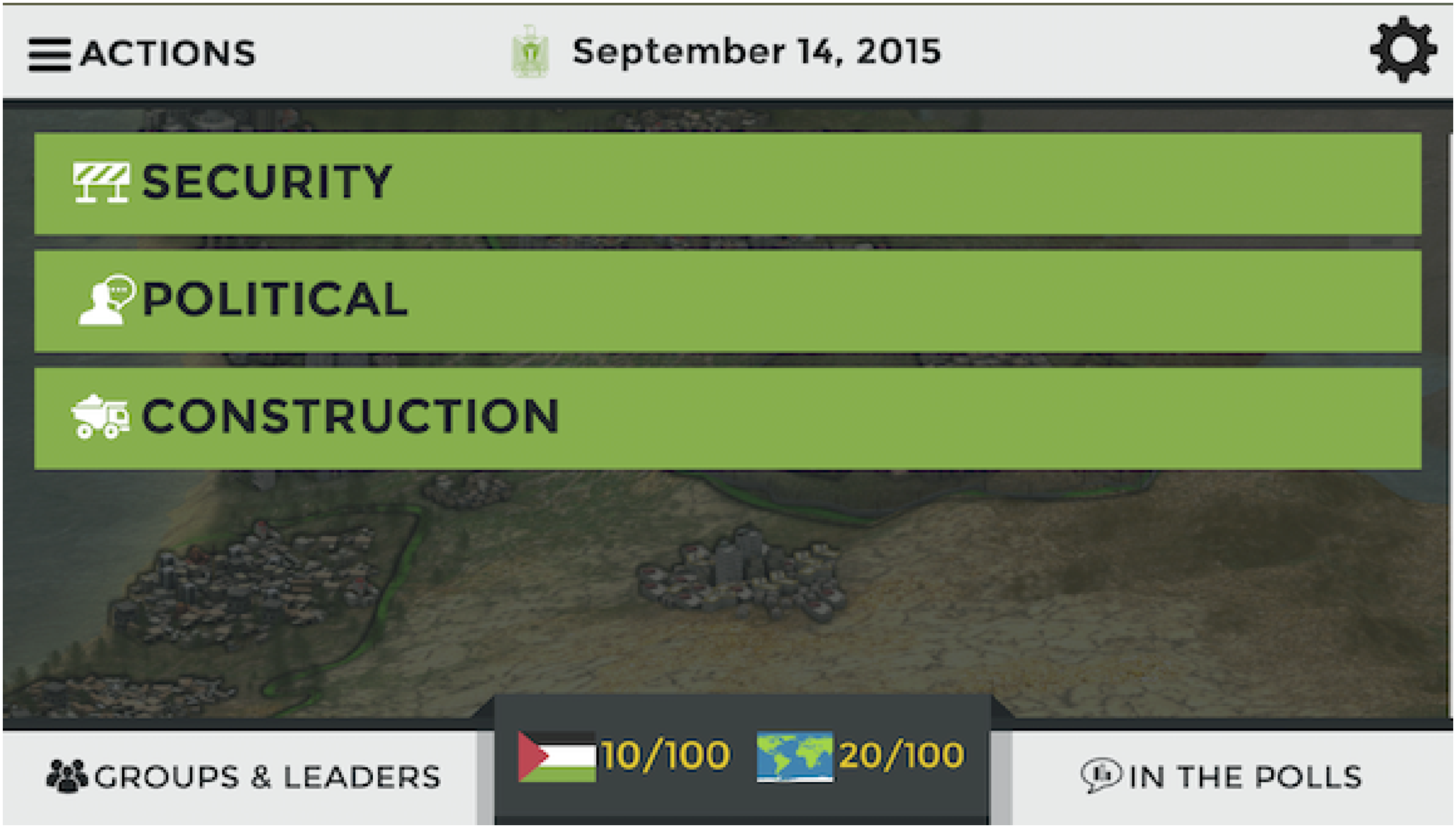
The player gains points for both Israeli and Palestinian sides according to the actions taken in the game. The scores, calculated by an algorithm within the game, are closely connected to the polls indicating the level of satisfaction of different nations and political groups within each side and around the world in response to the player’s actions (Figure 2). Screenshot from the PeaceMaker game showing that an action that favors the Israeli side (+4 points) may negatively affect the Palestinian side (−17 points).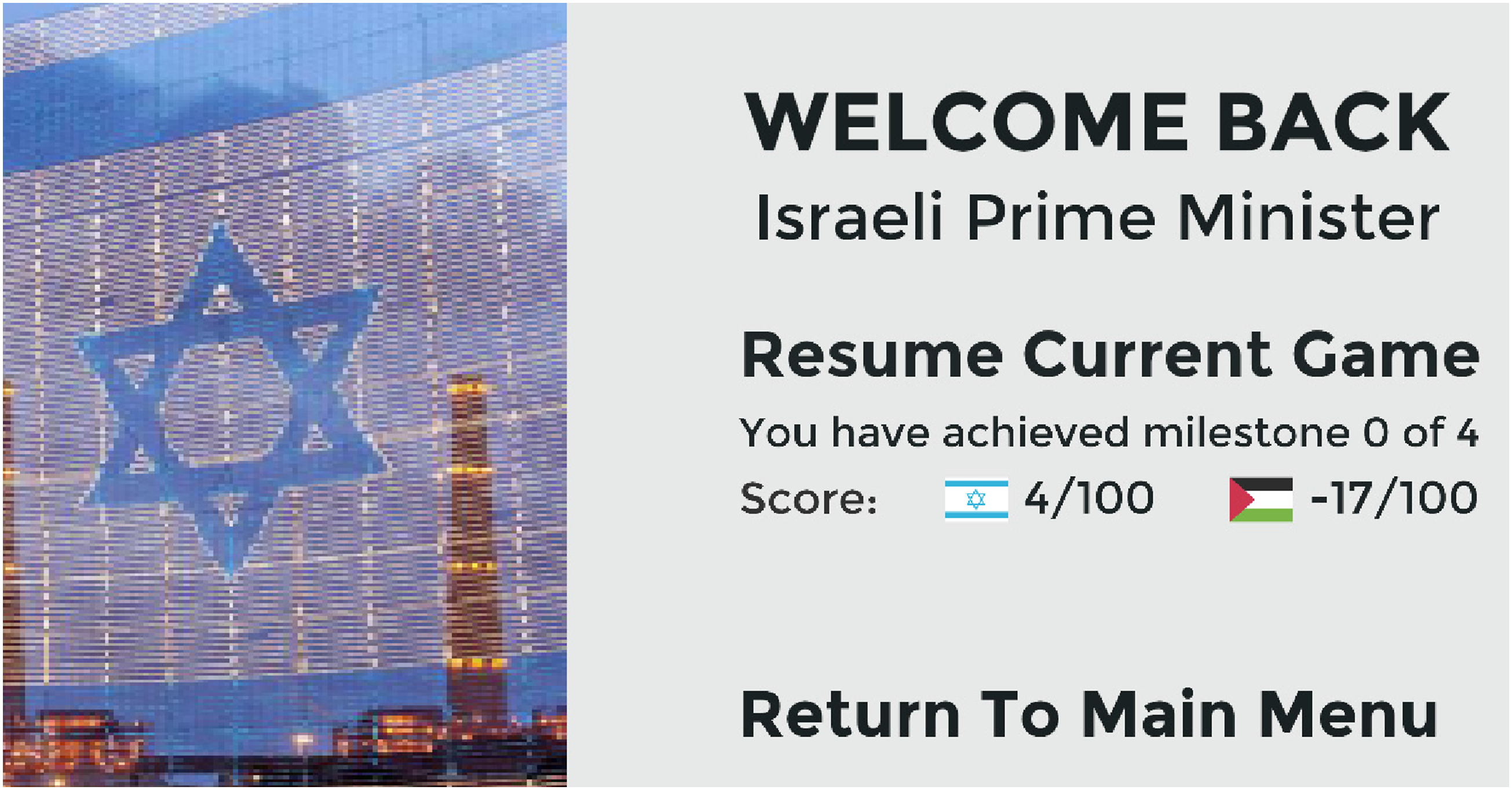
Scores for both Israeli and Palestinian sides should reach 100 points each in order to win the game (Figure 3). Screenshot showing successfully winning the PeaceMaker game and reaching a two-state solution that satisfies both sides.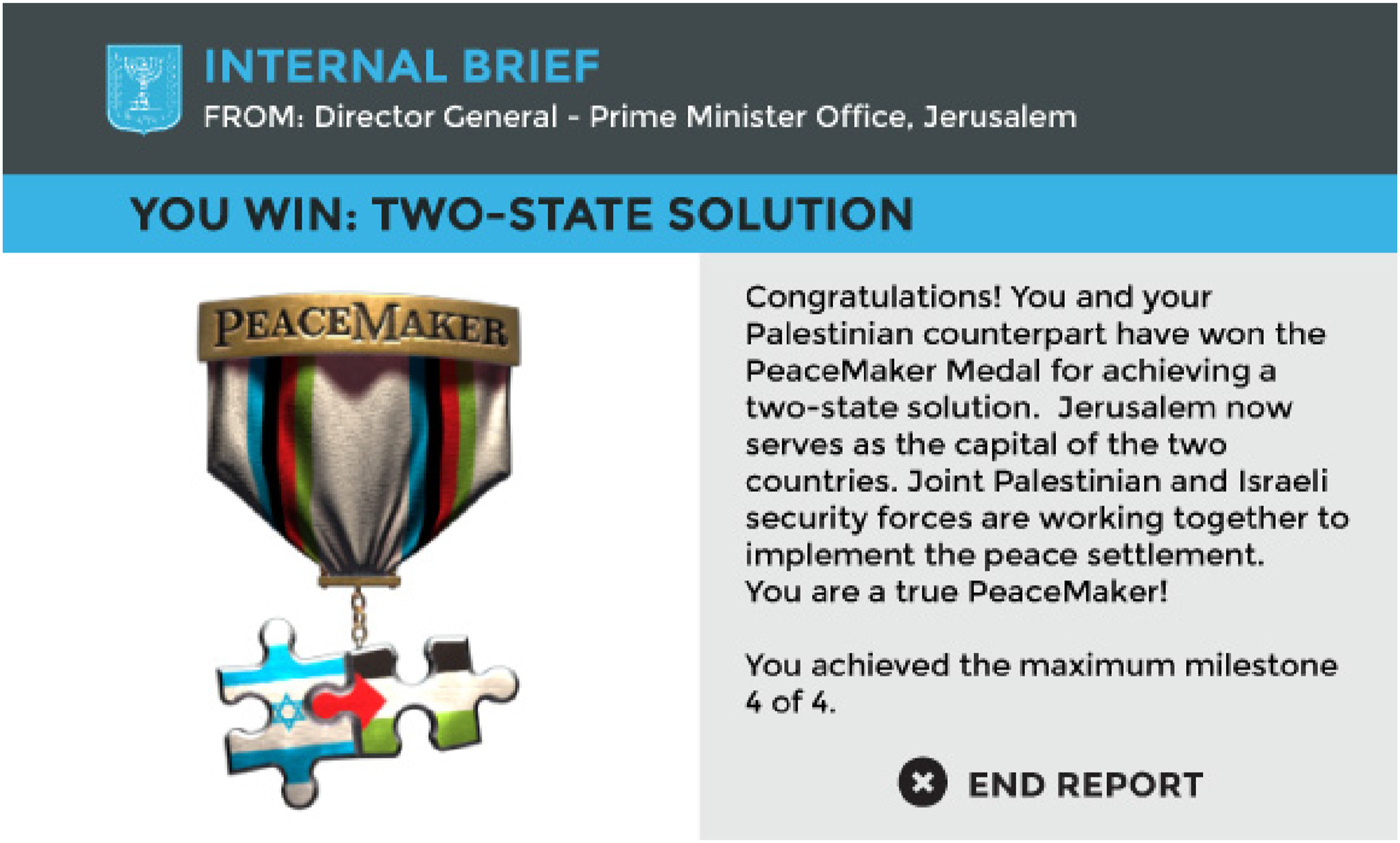
If one of the scores drops below 50, the player loses the game. The game was launched in 2007, and it is less updated to current events in the conflict. Yet our study focuses on knowledge acquisition on key political and historical aspects of the conflict, and therefore the degree to which the simulation is updated to current events is less crucial. In addition, studies found knowledge acquisition for participants who played the game both when it was launched and seven years later (Kampf, 2014). Research suggested that even a decade later, young people on both Israeli and Palestinian sides perceived the game as important, enjoyable, and educational (Kampf & Stolero, 2018).
The Present Study
This study has two key goals. First, the study examines the effectiveness of PeaceMaker in acquiring knowledge about the other side in the conflict among direct parties to the conflict. In addition, the study examines the effectiveness of PeaceMaker in narrowing the knowledge gap about the conflict between players who won the game and those who did not win the game, differentiating between direct parties (Israeli-Jews and Palestinians) and third parties (Americans and Cypriots).
To examine these goals, we used the following research questions RQ1 Did first parties to the conflict (Israeli-Jews and Palestinians) acquire more knowledge about the “other” after playing PeaceMaker? RQ2 Did third parties to the conflict (Americans and Cypriots) acquire more knowledge about the conflict after playing PeaceMaker? RQ3 Did the knowledge gap between direct parties of the conflict who won or lost PeaceMaker decrease after playing the game? RQ4 Did the knowledge gap between Israeli-Arabs who won or lost PeaceMaker decrease after playing the game? RQ5 Did the knowledge gap between third parties who won or lost PeaceMaker decrease after playing the game?
Methodology
Research Design
The research design of this study was a pre-test post-test experimental design in order to gauge the effect of PeaceMaker with regard to knowledge acquisition about the conflict. We used this design because the study included participants of different nationalities who may differ in their levels of knowledge regarding the Israeli–Palestinian conflict and we wanted to evaluate the knowledge gap between them before playing the game and whether it narrowed after playing it. This design was used in previous studies with PeaceMaker that examined the game as a knowledge acquisition tool and suggested significant knowledge outcomes (Cuhadar & Kampf, 2014; Kampf & Stolero, 2018; Kampf, 2014; Kampf & Stolero, 2015). In addition, studies have constantly indicated that Israeli-Jewish and Palestinian young people know almost nothing about the other in the Israeli–Palestinian conflict (Herman & Ya’ar, nd; Salomon, 2009), and we wanted to verify this lack of knowledge which can only be achieved with the use of a pre-test.
Convenience sampling was used to identify 168 participants (M = 21.85 years old, SD = 2.38, min = 18, max = 28) in five different national groups (31 Israeli-Jews, 30 Palestinians, 35 Israeli-Arabs, 42 Americans, and 30 Cypriots) who were asked to complete a pre-test examining their knowledge about the Israeli–Palestinian conflict, play PeaceMaker and complete a post-test immediately after. Pre-tests and post-tests were identical.
PeaceMaker was evaluated as a serious game based on the suggestion that Serious Games are fun activities with rules that can increase the awareness of learners on a certain subject and contribute to their learning on this subject (Durdu, 2021). Thus, this study examines PeaceMaker as a tool to increase the awareness of players about the Israeli–Palestinian conflict and contribute to their learning on this conflict, so we can conclude that PeaceMaker answers the aforementioned criteria of serious games.
Participants
A total of 168 students (79 male, 89 female) participated in the study. None of them had played the PeaceMaker game before. Israeli Jews (n = 31) had a Communication major, 16 were male and 15 were female, and the majority were Jewish (87.1%, 27/31). Palestinians (n = 30) had an Education major, 15 were male and 15 were female, and the majority were Muslims (90%, 27/30). Israeli-Arabs (n = 35) had an Education major, 17 were male and 18 were female, and the majority were Muslims (65.7%, 23/35) while the rest (34.3%, 12/35) were Christian. Americans (n = 42) had a Communication major, 21 were male and 21 were female, and the majority were Christian (76.2%, 32/42) while the rest were Jewish (16.7%, 7/42) or Muslims (7.1%, 3/42). Cypriots (n = 30) had an Internet Studies and Communication major, 10 were male and 20 were female, and the majority were Christian (73.3%, 22/30).
Data Sources
The main data source of the study was a questionnaire examining participants’ knowledge about the Israeli–Palestinian conflict. The questionnaire was constructed based on open-ended and closed-ended questions about the Israeli–Palestinian conflict developed by Salomon (2009) and Herman & Ya’ar, nd (Peace Index). Given previous studies that examined PeaceMaker as a tool for knowledge acquisition about the Israeli–Palestinian conflict, we can suggest that it was robust in detecting differences between high and low scores. For instance, Cuhadar and Kampf (2014); Kampf (2014) found that the questionnaire differentiated between knowledge scores of direct-party participants (Israelis and Palestinians) and third-party participants (Americans and Turks) in a significant way. In addition, Kampf and Stolero (2015) indicated that PeaceMaker is useful in narrowing the knowledge gap between Israeli and Palestinian participants who indicated television as a major source of information about the conflict and those who did not. Therefore, it is possible to conclude that PeaceMaker can be effective as a tool for peace education in terms of knowledge acquisition about the situation, particularly for young people who are direct parties to this conflict and native to the online world.
The questionnaire included 6 open-ended questions (e.g., “Who are the parties in the 1993 Oslo agreement?”). These questions focused on factual knowledge about the situation, they have a correct or incorrect answer, and they were used in previous questionnaires about the Israeli–Palestinian conflict (Herman & Ya’ar, nd; Salomon, 2009). In fact, these questions were used in previous studies with PeaceMaker (Cuhadar & Kampf, 2014; Kampf & Stolero, 2015; Kampf, 2014; Kampf & Stolero, 2015), and their coding was agreed unanimously by the researchers who conducted the studies. In this study, the two authors consulted with one another in case they were not sure whether to code the answer as correct or incorrect and agreed on the final scoring.
In addition, the questionnaire included 14 questions in which participants had to correctly match people and organizations, for example. “A Palestinian Islamic Resistance Movement, which is also a socio-political organization” whose correct answer is “Hamas,” or “served as prime minister of Israel from 2001 to 2006,” whose correct answer is “Ariel Sharon.” Each correct answer was given 1 point, therefore the maximum possible score of the test was 20. The same test was administered before and after participants played the game.
Procedure and Data Collection
The study was conducted in 2022–2023. In the first stage of the study, students were informed in writing and verbally about the study’s objective. The study followed American Psychological Association (APA) ethical standards and General Data Protection Regulation (GDPR) guidelines. It meets the ethical guidelines, including adherence to the legal requirements of the countries where the study was conducted. Participants provided their consent online by selecting boxes indicating that they are adults (older than 18 years old), that they understand the study’s objective, and that they agree to voluntarily provide anonymous data using a project ID number that was assigned to them instead of their name. Participants anonymously completed a pre-test online, interacted with the PeaceMaker game for 30 minutes, playing the Israeli role at calm conflict level (i.e., low frequency of inciting events), provided their final score in the game for both the Israeli and Palestinian sides, and then completed the same instrument as a post-test online. The study was part of undergraduate-level classes in five different universities and colleges that focused on digital technologies, learning, and communication.
Data Analysis
Data from the pre- and post-tests was input in a statistical package (IBM SPSS Statistics 25) for analysis. Pre- and post-tests could be matched with the use of a project ID number that was assigned to participants.
Participants’ “knowledge of key historical aspects of the conflict” was computed by calculating the total score of their correct responses out of 20. This variable was used to answer RQ2. “Knowledge about the other side of the conflict” was examined only for direct parties of the conflict. For Israelis, knowledge about the other side of the conflict refers to knowledge about Palestine, which was measured with a subset of 10 of the 20 questions. An example question is “Which people are covered in the Right of Return?”. For Palestinians, knowledge about the other side of the conflict referred to knowledge about Israel, which was measured with a subset of 8 of the questions. An example question is “Father of modern political Zionism,” which corresponds to “Theodore Herzl.” Two questions, which were general questions about the conflict, were excluded from the computation of “knowledge about the other side of the conflict” variable. Israeli-Jews and Palestinians’ knowledge about the other side of the conflict was computed by calculating the total score of correct responses in questions that referred to Palestine (max score of 10) or Israel (max score of 8), respectively, and they were used to answer RQ1.
Players win the game if they achieve a 100 score for both sides and do not win the game if a score of anything less than 100 for either side is achieved. Based on the scores they achieved in the game, students were divided into two categories, those who won and those who lost the game, for comparisons to be made for RQ3, RQ4, and RQ5. Moreover, the knowledge gap was defined as the difference in knowledge scores between participants who won and lost the game, and it was examined in RQ3, RQ4, and RQ5.
Paired samples t-tests were used to analyze the change in students’ knowledge about the conflict in general or about the other side, before and after playing the game. Paired samples t-tests were chosen because they are the most appropriate statistical test when the aim is to assess the change in a continuous outcome variable within subjects across two observations. Assumptions of normality and homogeneity of variance were met. Independent samples t-tests were used to compare students’ pre-test scores to examine group equivalence and to compare post-test scores to examine the knowledge gap and determine whether this increased or decreased.
The alpha level was set a priori to 0.05 for all statistical analyses.
Results
Direct Parties and Knowledge Acquisition About the “Other”
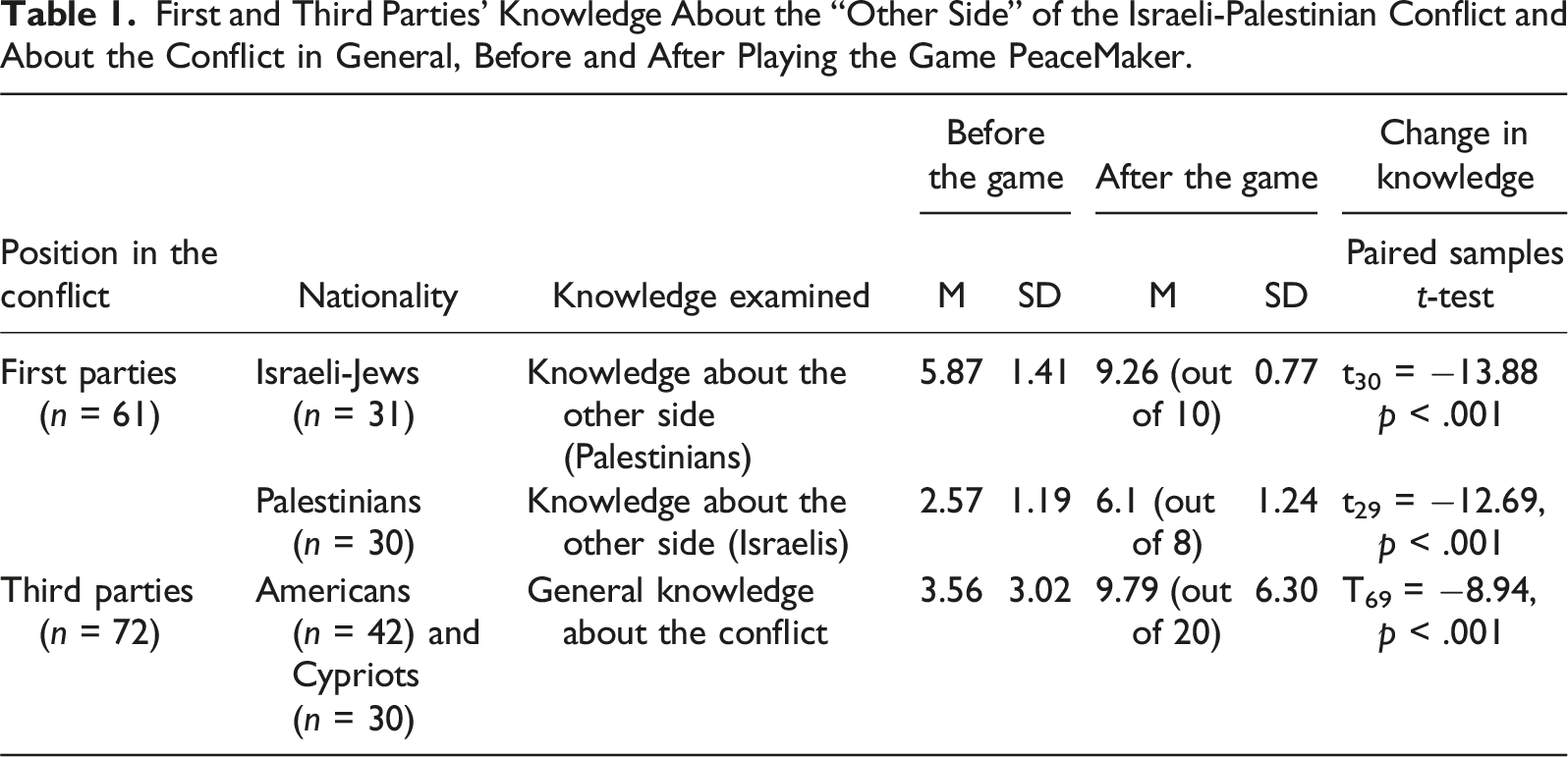
First and Third Parties’ Knowledge About the “Other Side” of the Israeli-Palestinian Conflict and About the Conflict in General, Before and After Playing the Game PeaceMaker.
Third Parties and Knowledge Acquisition About the Conflict
The second research question focused on students who are third parties to the conflict, namely, Americans and Cypriots, taken as one sample. Americans’ and Cypriots’ knowledge about the conflict before and after playing the game was compared to examine whether this increased. Third parties’ knowledge about the Israeli–Palestinian conflict increased significantly from M = 3.56 (SD = 3.02) before playing the game to M = 9.79 out of 20 (SD = 6.33) after playing the PeaceMaker game (Table 1). This finding suggests that the game is probably effective in supporting third parties’ knowledge about the Israeli–Palestinian conflict.
Direct parties and knowledge gap after winning or losing PeaceMaker
The third research question focused on direct parties of the conflict, therefore on the sample of Israeli-Jews and Palestinians taken together. RQ3 compared the knowledge of the conflict before and after playing the game for direct parties who won and lost the game.
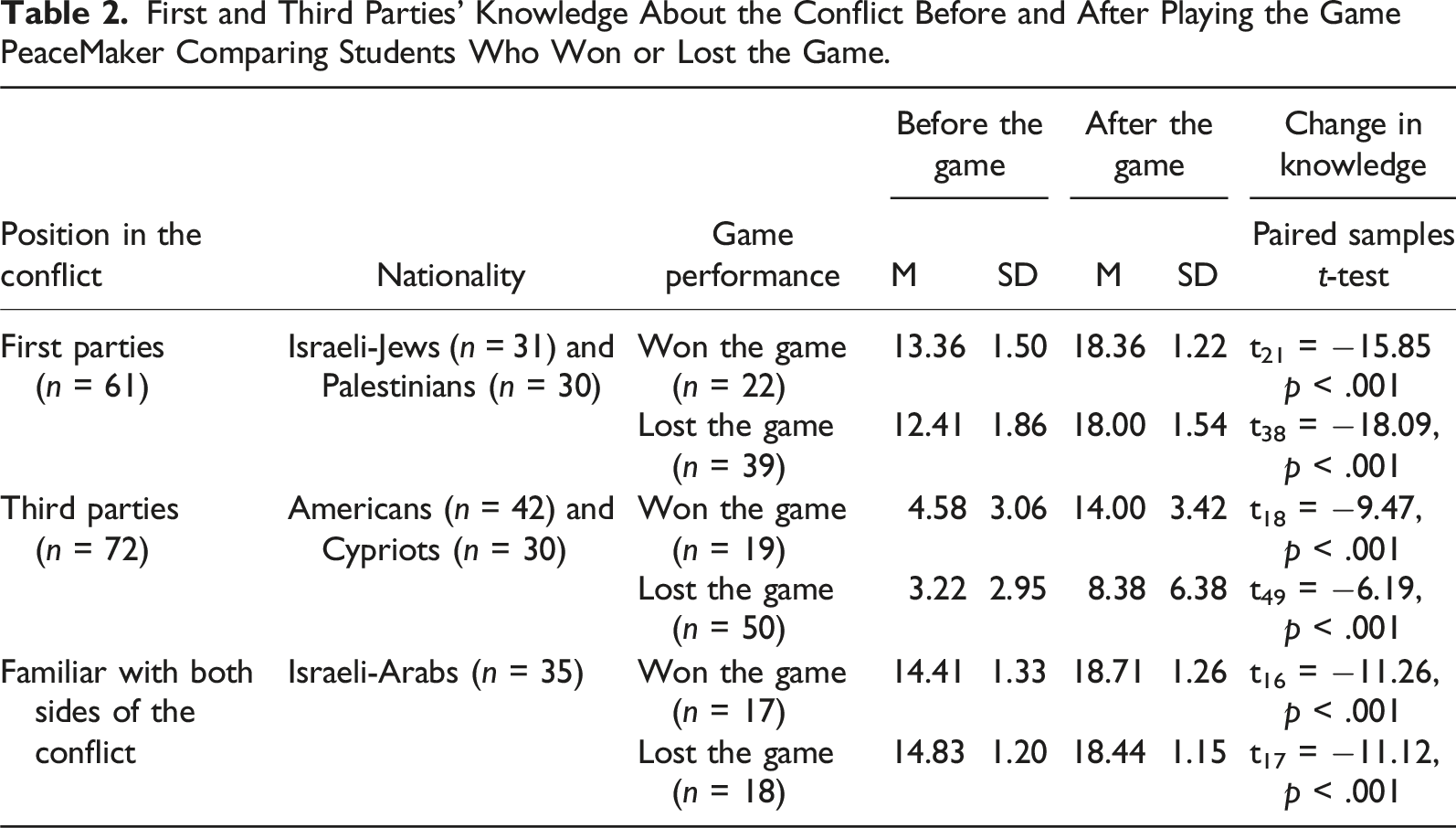
First and Third Parties’ Knowledge About the Conflict Before and After Playing the Game PeaceMaker Comparing Students Who Won or Lost the Game.
Israeli-Arabs and Knowledge Gap after Winning or Losing PeaceMaker
The fourth research question focused on participants who were familiar with both sides of the conflict, therefore on the sample of Israeli-Arabs. RQ4 compared the knowledge of the conflict before and after playing the game for participants familiar with both sides of the conflict who won and lost the game. Out of 35 Israeli-Arabs, 17 students won the game and 18 students lost the game (Table 2).
An independent samples t-test was used to examine group equivalence before playing the game and showed that there was no difference between the prior knowledge of students who won the game (M = 14.41, SD = 1.33) and lost the game (M = 14.83, SD = 1.20), therefore the two groups were initially equivalent (t33 = −0.98, p = .331). Israeli-Arabs who won the game increased their knowledge about the conflict significantly from M = 14.41 (SD = 1.33) to 18.71 (SD = 1.26) out of 20. Similarly, Israeli-Arabs who lost the game also increased their knowledge about the conflict significantly from M = 14.83 (SD = 1.20) to 18.44 (SD = 1.15) out of 20. An independent samples t-test was conducted on the two groups’ post-test scores used to examine the knowledge gap between winners and losers after playing the game. There was no difference between post-test scores of students who won and lost the game (t33 = 0.64, p = .526), a finding indicating that post-game students’ knowledge about the conflict was equivalent irrespectively of whether students won or lost the game.
Third Parties and Knowledge Gap after Winning or Losing PeaceMaker
The fifth research question focused on participants who were third parties of the conflict, therefore on the sample of Americans and Cypriots. RQ5 compared the knowledge of the conflict before and after playing the game for third parties of the conflict who won and lost the game. Out of 69 third parties who provided game scores, 19 students won the game, and 50 students lost the game.
Third parties who won the game (n = 19) increased their knowledge about the conflict significantly from M = 4.58 (SD = 3.06) to 14.00 (SD = 3.42) out of 20. Similarly, third parties who lost the game (n = 50) also increased their knowledge about the conflict significantly from M = 3.22 (SD = 2.95) to 8.38 (SD = 6.38) out of 20. An independent samples t-test was used to examine group equivalence before playing the game and showed that there was no difference between the prior knowledge of students who won the game (M = 4.59, SD = 3.06) and students who lost the game (M = 3.22, SD = 2.95); therefore, the two groups were equivalent before playing the game (t67 = 1.69, p = .095). However, an independent samples t-test on the post-tests of the two groups (t67 = 3.63, p < .001) showed that students who won the game (M = 14.00) significantly outperformed students who lost the game (M = 8.38, SD = 6.39) with respect to knowledge gained after the game, a finding that suggests that the knowledge gap increased significantly.
Figure 4 shows participants’ knowledge scores before and after playing the PeaceMaker game in the three groups examined in this study’s RQ3, RQ4 and RQ5. First, a clear increase in knowledge scores from pre-test to post-test, verifying knowledge acquisition, is evident in Figure 4 for all three groups, in which statistically significant results were obtained. Focusing on the knowledge gap after the game, between direct parties who won or lost the game, we observe that it appears to be very small, showing that direct parties who lost the game were able to perform equally well as direct parties who won the game, despite the fact that their prior knowledge was significantly lower. This shows that prior knowledge of the conflict for direct parties might help in achieving high game performance and also helps them to develop better conflict resolution skills and a more informed viewpoint regarding the situation to some extent. Participants’ knowledge scores before and after playing the Peace Maker game.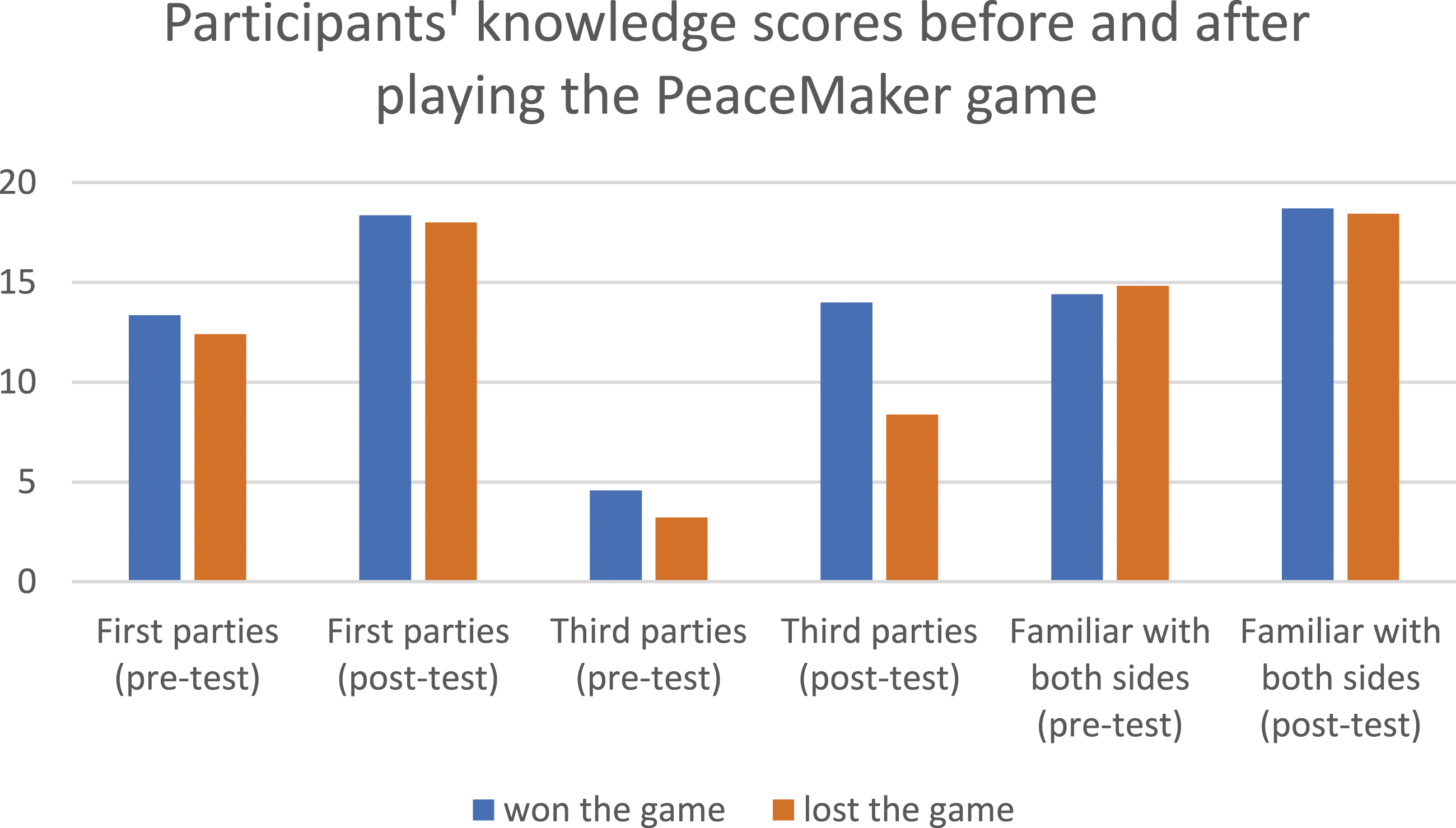
The opposite finding is observed for third parties of the conflict, where the knowledge gap after the game increased, showing that third parties of the conflict who won the game significantly outperformed third parties who lost the game. This probably indicates that third parties of the conflict who were successful in winning the game acquired more knowledge about the conflict compared to third parties who did not win the game.
Parties familiar with both sides of the conflict (i.e., Israeli-Arabs) performed equally well both before and after the game and the knowledge gap between the group that won or lost the game was non-existent.
Discussion and Conclusion
Serious games are emerging as a new intervention for peace education. Despite the growing interest in serious games and the positive impact that games and simulations seem to have with respect to achieving specific learning objectives in higher education (Vlachopoulos & Makri, 2017), only a few empirical studies have been conducted to examine how effective these games are in enhancing knowledge about intractable conflicts like the Israeli–Palestinian conflict and particularly about “the other” as well as narrowing the knowledge gap between Israeli-Jew and Palestinian players who are direct parties to the conflict with limited and negative knowledge about the situation (Cuhadar & Kampf, 2014; Durdu, 2021; Kampf, 2014; Peng et al., 2010). This study is among the first to provide empirical evidence suggesting that interactive prosocial games like PeaceMaker are probably effective in enhancing direct parties and third parties’ levels of knowledge about the conflict in the Middle East and in helping to narrow the knowledge gap before and after playing the game between Israeli-Jewish and Palestinian players who won PeaceMaker and those who did not win.
The results of the first research question of the study suggested that direct parties to the conflict seemed to have acquired more knowledge about “the other” after playing PeaceMaker. In addition, the second research question indicated that third parties acquired more knowledge about the conflict in general after playing the game. Particularly third parties started with very low levels of knowledge about the situation and significantly increased their levels of knowledge after playing the game. These findings suggest that PeaceMaker could be considered an effective peace education tool that can potentially enhance new learning about the conflict and particularly learning about the other side, which includes contradicting information that is hard for participants to accept in conflictual contexts (e.g., Durdu, 2021; Kapshuk & Shapira, 2022; Salomon, 2009).
The findings of the third research question pointed out that PeaceMaker minimized the knowledge gap between direct parties to the conflict who won the game and those who did not win with respect to acquired knowledge after playing the game. These results again seem to argue in favor of using PeaceMaker as an effective peace education intervention enabling new learning about the conflict for direct parties with limited knowledge about the situation. The fact that the knowledge gap was minimized probably increases the chances of those who hold low levels of knowledge about the situation before playing the game to win PeaceMaker and develop an informative and impartial viewpoint regarding the situation, which is required for peacebuilding and conflict resolution (e.g., Cuhadar & Kampf, 2014; Durdu, 2021; Kampf, 2014).
In addition, the findings of the fourth research question did not indicate a knowledge gap between Israeli-Arabs who won the game and those who did not win with respect to knowledge acquired after playing the game. Israeli Arabs had the highest prior knowledge of the conflict of all groups examined in this study, outperforming even direct parties of the conflict. This finding agrees with previous research that suggested that Israeli-Arabs are knowledgeable about both Israeli and Palestinian narratives and hold higher levels of knowledge about the situation (e.g., Jamal, 2007), and therefore PeaceMaker plays a relatively minor role in their knowledge acquisition.
Finally, results of the firth research question indicated that the knowledge gap between third parties who won PeaceMaker and those who did not win increased after playing the game. This finding suggests that the game was likely effective as a peace education intervention for all third parties as both groups had a significant increase in their knowledge about the conflict after the game, but particularly for those who won the game, who outperformed those who did not.
Previous research has already pointed out that serious games such as PeaceMaker can serve as an effective intervention for peace education for three key considerations. First, the aforementioned games are uniquely suited for presenting complex and loaded issues, such as the Israeli–Palestinian conflict, in a very engaging and interactive way, compared to other more linear technologies (Peng et al., 2010; Zeng et al., 2020). In addition, previous studies have suggested that playing a game like PeaceMaker eliciting role-taking enhances knowledge acquisition compared to a text conveying the same information (e.g., Peng et al., 2010; Zeng et al., 2020). Finally, in PeaceMaker, players are exposed to information about various events presented on the screen in text, pictures, and videos taken from real-time news broadcasts, and by clicking on maps, cities, and polls, they can gain knowledge and formulate an informed game behavior (Burak et al., 2005). Studies have suggested that the aforementioned dimensions—interactivity and multimodality—are more effective than other presentation modes in enhancing knowledge about ethnopolitical issues like the Israeli–Palestinian situation and forming an informed viewpoint about the situation (Peng et al., 2010; Zeng et al., 2020).
Our study’s theoretical findings are applicable to various fields, including conflict resolution, communication, education, political science, and game design. The study suggests that new media, particularly serious games, can educate the younger generations about peace and inform them about the situation, transcending strong attitudes and stereotypes. While face-to-face interaction is limited and precluded in the context of the Israeli–Palestinian conflict, computer-mediated communication, such as playing PeaceMaker, has the potential to facilitate conflict resolution beyond existing sociopolitical norms (Hasler et al., 2023; Salomon, 2009).
However, young Israeli and Palestinian people may not willingly access social impact games like PeaceMaker. In fact, in the context of intractable conflicts such as the Israeli-Palestinian situation, there are hardly any peacebuilding interventions that individuals willingly access (Hasler et al., 2023). However, games that are enjoyable, involving, and engaging, may be a preferred peacebuilding intervention (e.g., Kampf, 2014; Kampf & Stolero, 2015; Cuhadar & Kampf, 2014; Durdu, 2021; Hasler et al., 2023; Kampf & Stolero, 2015; Salomon, 2009) to be delivered in schools, universities, and by governmental as well as non-governmental organizations for increasing support for peacebuilding policies and actions, particularly in the context of intractable conflicts such as the Israeli–Palestinian situation. Such games can motivate young people to engage with contested pasts and ongoing conflicts by exposing themselves to contrasting narratives, engaging with different sides of the conflict, and developing skills toward the renegotiation of troubled pasts (Nicolaidou et al., 2023; Cuhadar & Kampf, 2014; Kampf, 2014). These games can therefore directly challenge young people’s views and allow for questioning master narratives, particularly during moments of crisis and their aftermath (Nicolaidou et al., 2023).
Yet this study’s results should be interpreted with caution in light of the relatively small number of students that participated in it, focusing on convenience rather than random sampling. The Palestinian participants were from East Jerusalem and the West Bank, but studied in an Israeli university. In fact, data was also collected from students in a Palestinian university in the West Bank, but because of the complex and delicate situation of the conflict, we did not receive participants’ consent to publish this data. In addition, this study gave participants to play only the Israeli Prime Minister role in PeaceMaker due to time limitations and because it is the strong side in the conflict and it should be interesting to examine its impact on knowledge outcomes. Moreover, the study had additional limitations, such as its short duration and the fact that participants only played the game once, and for only 30 minutes. The lack of a control group was also a limitation of the study. A control group consisting of participants who would be tested pre and post without being exposed to the independent variable, that is, without playing the PeaceMaker game, would strengthen the study because it would eliminate the possibility of knowledge gains that are attributed to practice effects. Moreover, the addition of a control group that would be taught about the conflict using traditional instruction would help in answering the question of whether young people learn more effectively through games. Lastly, the fact that participants’ knowledge was tested immediately after playing the game did not allow for examining long-term retention of knowledge.
Future research is needed to understand how specific affordances of PeaceMaker support knowledge acquisition. Future studies can focus on two dimensions of this game—interactivity and multimodality. In order to examine the effect of interactivity on knowledge acquisition, the study can compare a condition in which the participants do not actively interact with the game but only passively observe someone playing the game (i.e., the game-watching condition) with the active game-playing condition. The game-watching condition can be artificially created to measure interactivity if players are asked to take turns in playing the game and, therefore, are not in control of decisions being made but instead simply watch others play (Kampf, 2014; Cuhadar & Kampf, 2014). In order to examine the effect of multimodality on knowledge acquisition future studies can compare between the game-playing condition and a text-reading condition. The aforementioned conditions should be informationally comparable in order to examine the independent impact of PeaceMaker’s interactivity and multimodality on knowledge acquisition, an issue that previous studies have rarely examined (Peng et al., 2010). Another study can also include a control group that will not play PeaceMaker in order to compare knowledge acquisition between the experimental group and the control group. Another key area of future research that can be explored is the way that serious games might be able to increase intra- as well as inter- cultural knowledge (e.g., of internal cultural/political diversity).
To Conclude, Our key Findings
First, direct parties to the conflict acquired significantly more knowledge about the other side after playing PeaceMaker.
Second, third parties acquired significantly more knowledge about the conflict after playing PeaceMaker.
Third, PeaceMaker narrowed the knowledge gap after playing the game among direct parties who won the game and those who did not win.
Fourth, PeaceMaker increased the knowledge gap between third parties who won the game and those who did not win.
Finally, Israeli-Arabs had the highest prior knowledge of the conflict of all groups examined in this study, and their post-game knowledge about the conflict was equivalent irrespectively of whether they won or lost the game.
Previous research has already indicated that Israeli-Jewish and Palestinian young people know almost nothing about the other in the Israeli–Palestinian divide, except for the limited and violent images constructed by the news media and daily events (Kampf & Stolero, 2015; Hasler et al., 2023; Kampf & Stolero, 2015; Salomon, 2009). Furthermore, since Israeli-Jewish and Palestinian youth have never actually experienced a situation of peace, they may not regard it as a significant value for which a price should be paid (Cuhadar & Kampf, 2014; Hasler et al., 2023; Kampf, 2014; Salomon, 2009). Therefore, the option for these young people to learn about the “other,” even through a serious game such as PeaceMaker, and maybe understand the other’s perspective, is an issue of great importance in any process of conflict resolution and peacebuilding in the Middle East.
Footnotes
Acknowledgments
The authors thank all undergraduate students who have voluntarily played the PeaceMaker game and participated in this study.
Authors’ Contributions
RK conceptualized and designed the study and was responsible for data collection. IN was responsible for data collection only for Cypriots in the study, and for data analysis. IN and RK interpreted the data and contributed to writing and revising the manuscript. Both authors read and approved the final manuscript.
Declaration of Conflicting Interests
The author(s) declared no potential conflicts of interest with respect to the research, authorship, and/or publication of this article.
Funding
The author(s) received no financial support for the research, authorship, and/or publication of this article.

Data Availability Statement
The dataset generated and analyzed during the current study is available in the Zenodo repository, [https://doi.org/10.5281/zenodo.10043492] https://zenodo.org/records/10043493.