



Abstract
Large Language Models (LLMs) have emerged as powerful generative Artificial Intelligence solutions. This paper presents results and reflections of an experiment done with the LLM GPT 3.5-Turbo to perform an inductive Thematic Analysis (TA). Previous research has worked on conducting deductive analysis. Thematic Analysis is a qualitative method for analysis commonly used in social sciences and it is based on interpretations by the human analyst(s) and the identification of explicit and latent meanings in qualitative data. The paper presents the motivations for attempting this analysis; it reflects on how the six phases to a TA proposed by Braun and Clarke can partially be reproduced with the LLM and it reflects on what are the model’s outputs. The paper uses two datasets of open access semi-structured interviews, previously analysed by other researchers. The first dataset contains interviews with videogame players, and the second is a dataset of interviews with lecturers teaching data science in a University. This paper used the analyses previously conducted on these datasets to compare with the results produced by the LLM. The results show that the model can infer most of the main themes from previous research. This shows that using LLMs to perform an inductive TA is viable and offers a good degree of validity. The discussion offers some recommendations for working with LLMs in qualitative analysis.
Introduction
The problem investigated in this paper is whether we can use the Large Language Model (LLM) GPT (3.5-Turbo), to perform an inductive Thematic Analysis (TA) of semi-structured interviews. This investigation is exploratory and does not seek to establish formal procedures for doing a TA with LLMs. I am interested in learning something either about the about the method or about how LLMs can be used in qualitative analysis. LLMs are generative Artificial Intelligences (AI), working with natural language processing (NLP), trained on massive amounts of textual data. They use advanced machine-learning neural networks with the capacity to learn from data and improvise responses. LLMs can produce meaningful conversation and interactions with humans when prompted and solve tasks. LLMs do not produce human level thinking, for example, they do not possess an idea of the world like humans do (Hao et al., 2023). For Floridi (2023, p. 14), LLMs: ‘can do statistically—that is, working on the formal structure, and not on the meaning of the texts they process—what we do semantically’. LLMs operate on the language not with an understanding of its meaning like humans, but from a structural perspective, where words are seen in their numerical representation and sentences are built using structural and probabilistic components of language.
This leads to the provocative nature of my inquiry, which relates to the analysis social scientists operate within qualitative research, considered inductive, interpretative as opposed to the positivist approach focused on deduction or logic. The father of Sociology, Max Weber, for example, noted that the goal of social scientists is to interpret the meaning of social action for providing a casual explanation. This interpretation is subjective, and the analysts use their own sensibilities and knowledge. For example, TA focuses on the identification of ‘patterns of meaning’: themes in data. Braun and Clarke (2006, p. 81 – emphasis added) argued that TA: ‘can be an essentialist or realist method, which reports
TA is a flexible approach to qualitative analysis and lends itself to experimentation with LLMs. Braun and Clarke (2006) famously stipulated that researchers should operate six, inter-related phases: ‘(1) familiarising yourself with your data; (2) generating initial codes; (3) searching for themes; (4) reviewing themes; (5) defining and naming themes; (6) producing the report’. Because of this step-by-step process, I believe it is possible to work separately on each phase and see if an LLM can perform an inductive TA. Inductive TA is created without having pre-determined codes and themes: the analysts ground the codes strictly to the data and do not fit the data into any pre-existing frame (Nowell et al., 2017). The inductive is different and separate from a deductive approach, where analysts attribute data extracts to a pre-defined grid of analysis. Said otherwise, the two terms describe very different relations between theory/concepts and data: in the deductive, the analysts rely on a theoretical framework or defined categories to interpret the data, whereas in the inductive approach, the analysts ignore the theory and openly explore themes or concepts (see for a discussion Kennedy & Thornberg, 2018). Developing an inductive approach with an LLM is an interesting problem, because it puts the LLM in the position to creatively derive codes/themes directly from the data, without any pre-defined analytical frame.
Literature Review
There has been significant hype around LLMs such as ChatGPT including in research and academia. Data analysis is a potential area of application for LLMs, and literature often relates to the field of data science (Hassani & Silva, 2023). For example, ChatGPT has been used for exploratory data analysis (Sanmarchi et al., 2023), visualisation or preprocessing (Kurniadi et al., 2023). The impact on research (van Dis et al., 2023) and research priorities is also discussed in publications, including in healthcare (Sallam, 2023), financial research (Dowling & Lucey, 2023), or ethics of publishing (Lund et al., 2023) to mention few examples. Others focused on the application of ChatGPT such as in marketing research (Peres et al., 2023), or education (Rahman & Watanobe, 2023). There already are literature reviews, for example, in education (Lo, 2023), healthcare (Sallam, 2023), or business (George & George, 2023). Readers can consult these for an overview, but the literature field is in constant evolution.
Some similarities could be drawn between the use of LLMs and previous work using ‘traditional’ supervised/unsupervised machine-learning for qualitative analysis such as qualitative coding (e.g. Renz et al., 2018), grounded theory (Nelson, 2020), content analysis (see e.g. Renz et al., 2018), or TA (Gauthier & Wallace, 2022) at least insofar as activities related to analysis are delegated to algorithms. In a review of the gaps in Computational Text Analysis Methods especially in the social sciences, Baden et al. (2022) noticed that there has been primacy of technological solutions over reflecting on the validity of using computational resources for analysis, and that at the same time, the application of computational resources to text analysis tends to be narrow, focussing on a single aspect such as the sentiment. There has been a limited uptake of machine-learning in qualitative analysis, also because of social scientists’ lack of computing skills.
We should consider that using LLMs for qualitative analysis is a subject in its statu nascendi, in the state of being born. Therefore, there is very limited literature available. To the author’s knowledge, there are only two scientific papers on the use of LLMs for qualitative data analysis (Gao et al., 2023; Xiao et al., 2023). An additional online post is also worth discussing (Schiavone et al., 2023), due to its findings. The first two contributions also place emphasis on the labour-intensive process of qualitative coding of large datasets. Both papers promote the use of LLMs to automate the qualitative coding process. Neither engages substantially with the problem of ‘interpretation’ which is part of qualitative analysis. Xiao et al. (2023) focus on two aspects: the agreement of LLMs deductive coding with coding done by human analysts, and how the design of the prompt (i.e. what is asked to the LLM) impacts the analysis. They deploy LLMs for deductive coding, which in their paper means assigning pre-defined labels to text. They found that ‘it is feasible to use GPT-3 with an expert-developed codebook for deductive coding’ (p. 76) and that a ‘codebook-centered design performs better than the example centered designs’ (p. 77), where the prompt is based on the actual codes, rather than on examples of using the codebook. They use Cohen’s Kappa to measure the inter-reliability between the analysist and the model; however, this measure can only be used when different analysts use the same codes on the same material. Gao et al. (2023) focus on the creation of a support tool for collaborative coding. They connect the use of LLM to social sciences and follow the approach proposed by Richards and Hempill (2018), focussing on ‘open coding’, ‘iterative discussion’, and ‘codebook development’. The research is also supported by user evaluation, which contributes to establishing some agreement across the scientific community. Gao et al. (2023) suggest relevant implications, including the use of LLMs as helpers more than as replacement of analysts, the use of the results for discussion amongst the research team and as basis for refinement. These suggestions fall in the Human-AI collaboration in qualitative analysis suggested by Jiang et al. (2021). Lastly, although not a scientific paper, the online post by Schiavone et al. (2023) deserves mention as it reports the results of a TA conducted on a small set of online user comments. The authors operated a TA both manually and then with ChatGPT to assess the reciprocal inter-reliability of human-to-human and human-to-LLM showing that the Cohen’s Kappa metric appears largely similar in both cases (around circa .7).
In summary, Xiao et al. (2023) and Gao et al. (2023) offer interesting insights, for example, the role of prompts in relation to the outputs, or the use of models as support of analysist. I propose, however, a different approach. Firstly, to work on an inductive TA process and understand if something satisfactory can be extracted from the model. Secondly, I come from a perspective of social sciences and my goal is not building tools, but to reflect on the methodological aspects of doing TA with LLMs. Thirdly, I propose working on qualitative interviews, whereas they worked with secondary data.
Design of the Experiment and LLM Use
Using existing open access semi-structured interviews previously analysed by other researchers, I will attempt at re-analysing the data with the LLM (GPT3.5-Turbo) to see what output it generates, in terms of codes and themes. I will then compare these themes with the original analysis to reflect on whether a LLM TA has some validity. The operationalisation of codes and themes I use follows exactly Braun and Clarke (2006)’s own definitions (see later). For the comparison, I will assess if the model can generate similar names for themes and if the themes descriptions are similar or match those of the original researchers. I will only consider phases 1–5 of a TA. Phase 6 relates to writing up the results, and as there is discussion on using LLMs for writing academic publications, this will not be attempted here.
I will use two datasets of semi-structured interviews, selected because of the following: (1) they are open access with creative commons licenses; (2) because of this, they are anonymised and do not raise specific ethical concerns; (3) we have documents reporting the analysis and can draw a comparison; (4) they are contained in size, and this is beneficial since GPT has inherent limits related with text processing.
The first dataset is the player interviews (n = 13, young people between 18 and 26 years of age) from the project gaming-horizon, an EU-funded ‘project that explored the role of video games in culture, economy and education’. 1 Players were one of the stakeholders’ groups of the project alongside, for example, educators or policymakers. The dataset is available from zenodo (Perrotta et al., 2018). We will call this the ‘gaming’ dataset. There is an associated report with the results of a TA (Persico et al., 2017a), and a literature review (Persico et al., 2017b) where the analysis framework is defined. Albeit the analysis was done with a deductive approach, using the results from the reports it will be possible to identify whether there are similarities or differences with what GPT can produce inductively. The second dataset (Curty et al., 2022) is related with the project ‘Teaching undergraduates with quantitative data in the social sciences at University of California Santa Barbara’; it comprises 10 interviews with instructors/lecturers ‘who use quantitative data to teach undergraduate courses’ at the University. We will call this the ‘teaching’ dataset. There is an associated report (Curty et al., 2021), with the results of inductive coding.
API, Prompt, and Response
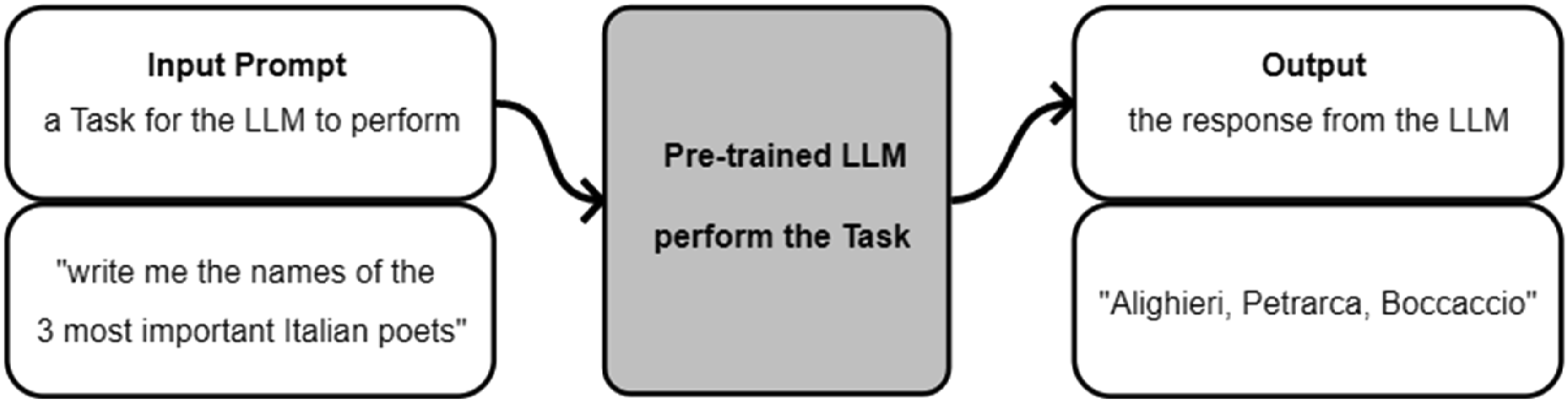
The experimentation was conducted with the OpenAI API, which allows to connect to GPT3.5-turbo (https://platform.openai.com/docs/introduction/key-concepts) via python scripts (a script is a small computer program for a computer to perform). In the following, the python scripts will not be discussed in detail, as they are doing basic operations on the data. However, we will discuss in detail the prompts, with the instructions given to the LLM. We must note also that the model is a black-boked AI and we do not know what operation it does when requested to perform a prompt, due to the complexity of the underlying algorithms (see e.g. Rai, 2020 for a discussion on black-boxed AI), and the proprietary nature of the software. What we know, as users, is that we give the model a textual input (prompt), and we will receive a textual output (response). A prompt is the set of textual instructions given to the model, whereas the response is the model’s output based on its ‘interpretation’ of the prompt. Prompting is when ‘a pre-trained language model is given a prompt (e.g. a natural language instruction) of a task and completes the response without any further training or gradient updates to its parameters’ (Wei et al., 2022, p. 3). For example, in ChatGPT (https://chat.openai.com/), one example is as in Figure 1. The user types the prompt ‘write me the names of the 3 most important Italian poets’, and the model responds. We do not know what the model does with our prompt, but we see its output and can assess it. This is exemplified in Figure 2. Prompt-response example from ChatGPT. LLM prompting and response, simplified workflow.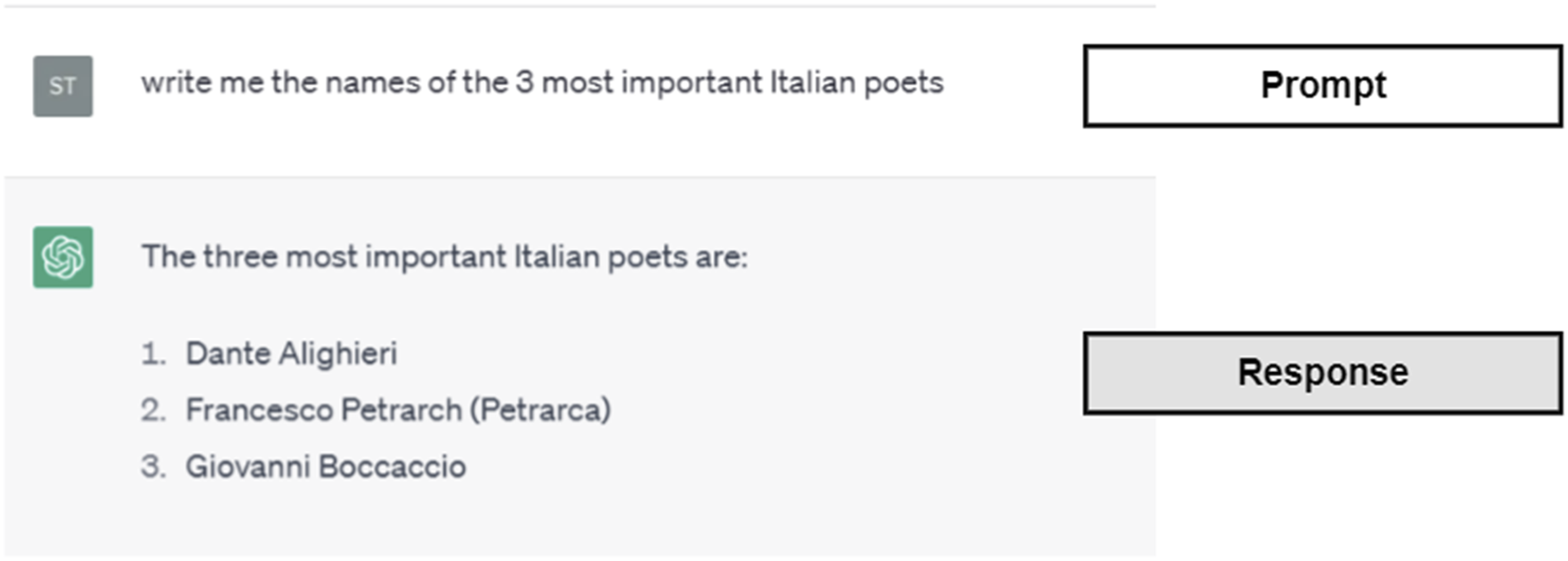
The API works in a similar way, but it is possible to use this in conjunction with a scripting language and this allows additional data manipulations and parsing. Using the API, the script-code of the previous example will look like the one in Figure 3. Python script, prompt, and response replicating the example of Figure 1.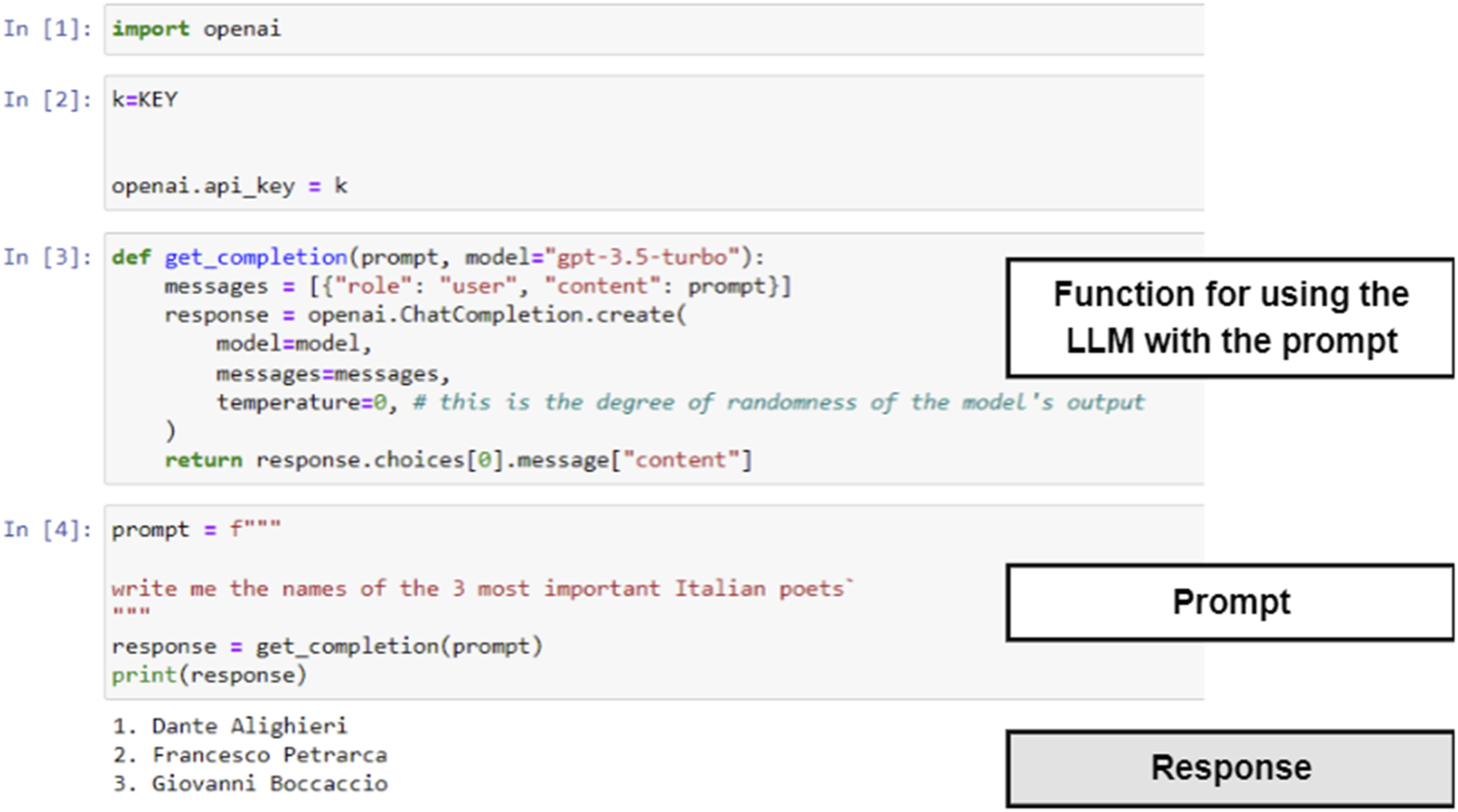
The script requires importing the OpenAI library ([1]) which allows one to connect to the LLM API. The connection requires a secret key (
Lastly, there is an important difference between the webchat and the API; in the second case, it is possible to have the LLM do operations responding to the prompt on textual material, such as interviews or other natural documents. Figure 4 exemplifies this point: with the API, it is possible to pass the data we want to analyse to the LLM and have the model perform a task. Workflow with data in the prompt via API.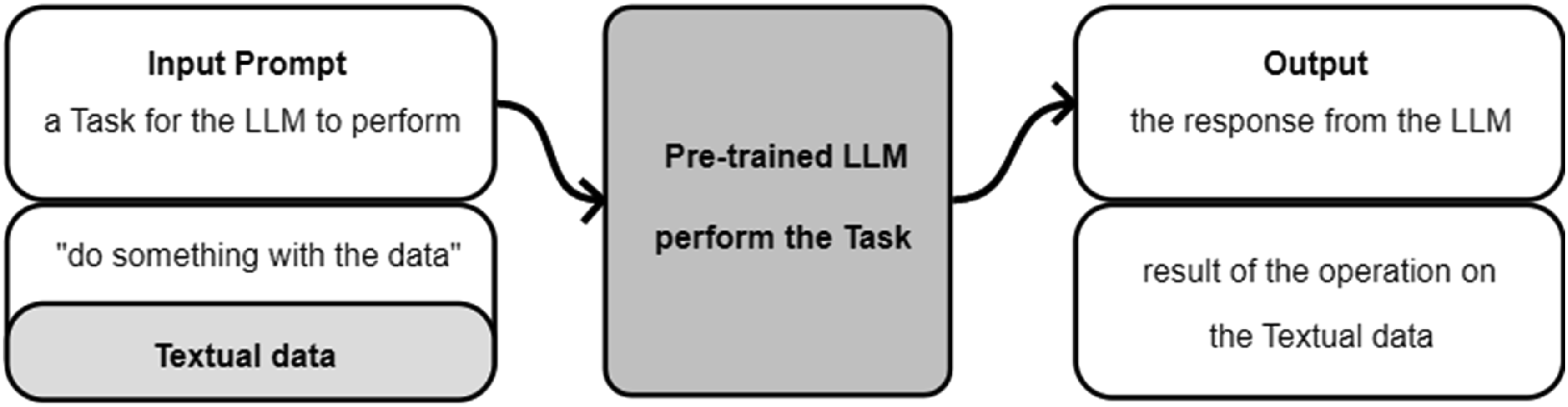
Tokens and Memory
LLMs have a limit related to how many tokens they can process at any one time. A token roughly equates to one word. At the time of writing, the limit for GPT3.5-Turbo is 4097 tokens including both the prompt and response. This limit impacts text processing. For instance, the interviews from the ‘gaming’ dataset are between 5000 and 9000 words. Therefore, interviews must be divided into smaller chunks to be processed one at a time. We have also to consider that interviews will need to be part of the prompt, and therefore chunks must be relatively small to allow the LLM to have enough tokens to produce the response.
I wrote a script to divide the datasets into chunks of roughly 2500 tokens. This number has been selected after experimenting with higher values (e.g. 3000) which would occasionally reach the max tokens limit. With a chunking at around 2500 tokens, the ‘gaming’ dataset resulted in 56 chunks and the ‘teaching’ dataset in 35 chunks. The chunks have been stored in a csv file with the structure of Figure 5. Structure of the CSV file containing the chunks.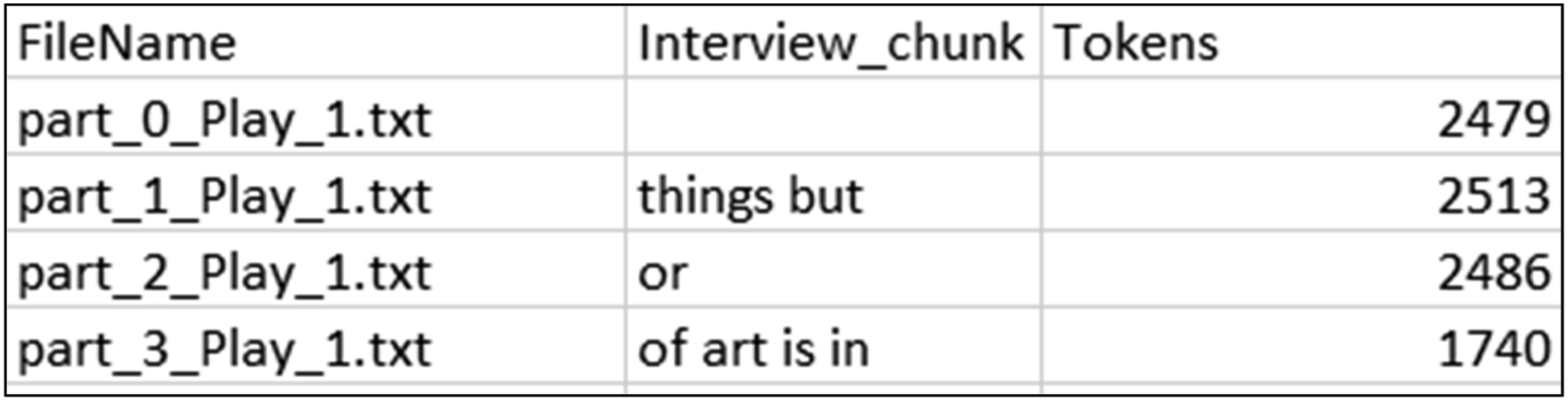
FileName is the name of the chunk, for example, part_0_Play_1 is the first chunk of the Play_1 interview. Then there is the text of the chunk (Interview_chunk) and a column with the tokens number.
Another important aspect of the LLM is that it does not have memory, that is, it does not remember the content of past prompts, and if these are relevant for later operations, then these will need to be passed to the model again as prompts. This is a limit and the LLM can work only one chunk at a time. Therefore, for this experimentation, I assumed that the model would not ‘remember’ previous prompts.
Results and Observations
In this section, I present the analysis done on the datasets. The methodological components of the research are presented alongside the analysis results, since the objective is to establish whether we can perform something looking like a TA with an LLM (i.e. the methods are also the results). This follows the workflow described in Figure 6. In each phase, different prompts are used, and these will be detailed in the following pages. The TA is done inductively: no pre-existing coding framework or examples are given to the model, and all the codes and the subsequent themes, are entirely grounded in the LLM data ‘interpretation’. Simplified workflow for a TA with an LLM.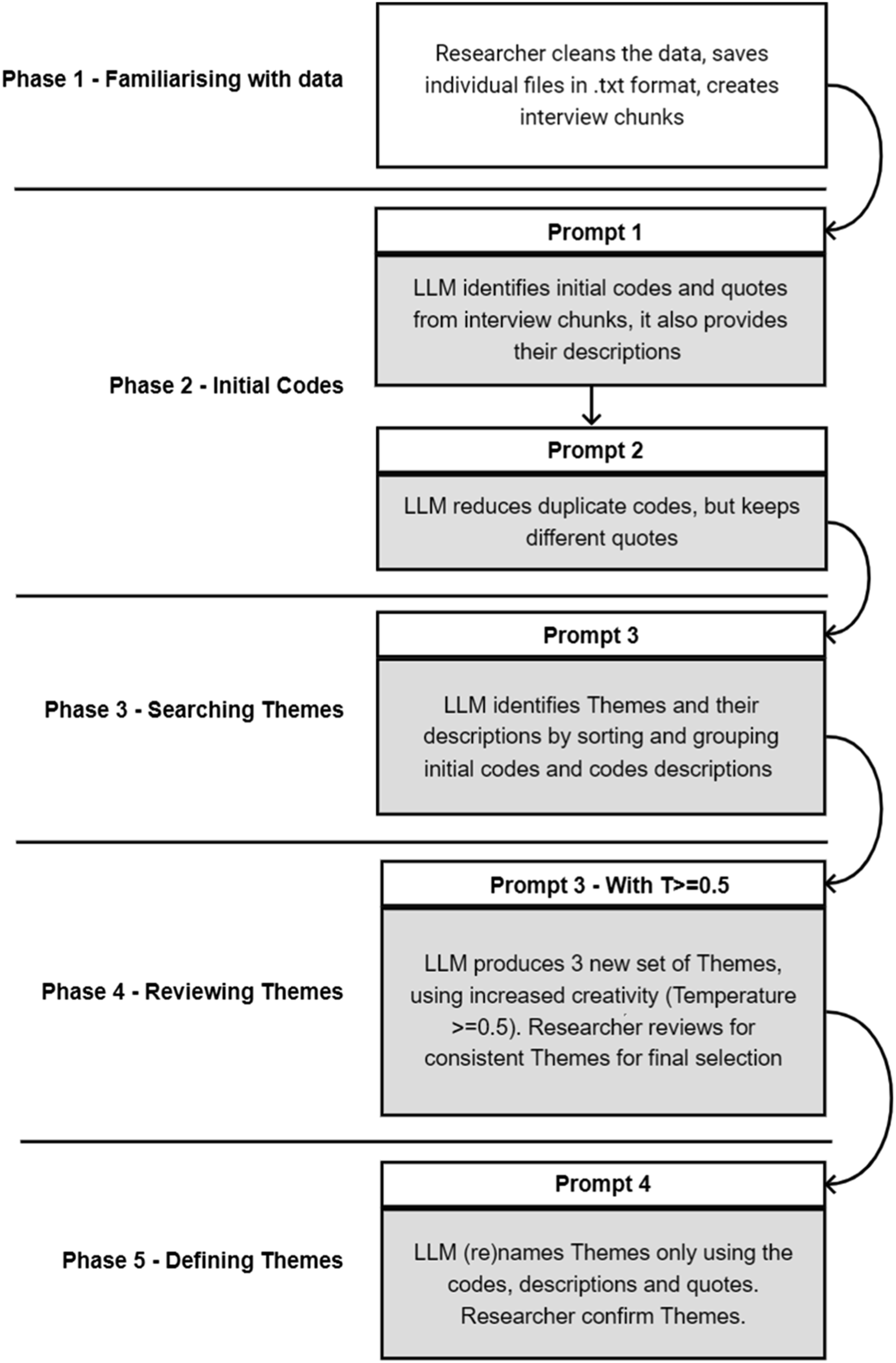
Phase 1: Familiarising with the Data
This phase requires the researcher(s) to familiarise with the data, by, for example, transcribing interviews or reading transcripts. This is done to begin formulating insights into what the data is about. I believe that this familiarisation now cannot be performed with, for example, GPT, due to the tokens and memory limits. It may be possible with more powerful models to have the model read all the material and ‘familiarise’ with its contents. Nonetheless, in this phase, it is important for the researcher(s) to prepare the data for processing.
Due to the limit of tokens, it is useful to clean the data before the analysis. For example, upon inspection of the ‘gaming’ interviews, the first opening page of the transcripts was about, for example, setting up the recording. For example, part of the opening of most interviews was as follows: First of all, you do know you are audio recorded? Yeah. Great. Can you see in the screen I’m sharing? Yeah. Great. I will explain to you how this interview works and what we are interested in....
This is not text which has relevance for the analysis and was trimmed to reduce the number of tokens. This clean-up was done manually, removing irrelevant text at the beginning or at the end (e.g. final salutation). After this, the chunking operation previously described (see Figure 5) can be done. Additionally, it may be useful to change the format of the data. For example, the ‘gaming’ interviews were .rtf files and the ‘teaching’ were pdfs. Everything was saved as text files (.txt) for processing.
Phase 2: Generating Initial Codes
The second phase of a TA is the generation of codes. For Braun and Clarke (2006), codes ‘identify a feature of the data (semantic content or latent) that appears interesting to the analyst’ (p. 88). The analysts identify features of interest in the data that may have some meaning and about the meaning the respondents attribute to, for example, things, social relations, and events under investigation. I asked the model to inductively infer ‘codes’ from the data, without any coding scheme using the prompt in Figure 7. In the prompt, the word ‘themes’ is used instead of ‘codes’ as it works better within the prompt. However, for clarity, here we are identifying the initial ‘codes’. Prompt to infer initial codes 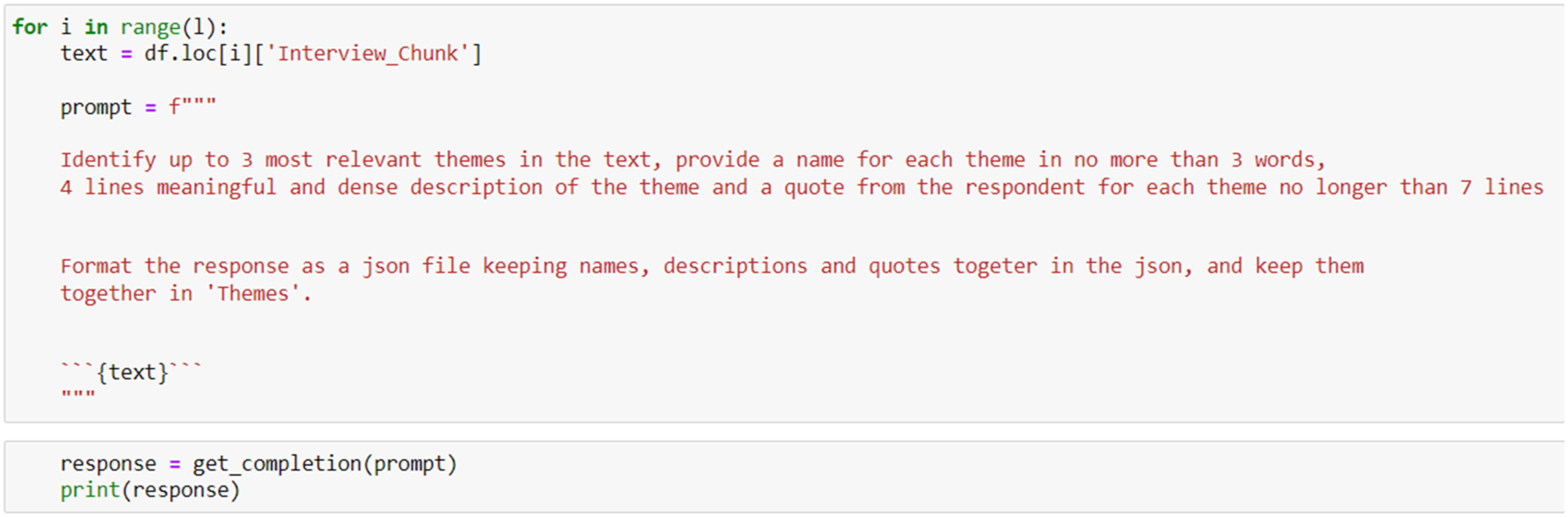
The csv file with the interview chunks had been parsed earlier in a dataframe – df (a powerful data structure in python). The prompt is embedded in a ‘for cycle’ running for the entire length (range(l)) of the dataframe (i.e. for the number of chunks). The script reads each chunk one at a time from the dataframe (df.iloc[i][‘Interview_chunk’]) and puts it in the variable ‘text’ ({text}) which is inside the prompt (i.e., Figure 4 workflow).
The prompt asks the model (using the get_completion function,) to: 1. Identify 3 of the most relevant codes for each chunk ({text}) 2. Provide a 3 word name to each code 3. Provide a 4 line description of the code 4. Store one meaningful quote for each code 5. Format each set of 3 codes, descriptions and quotes as a json file The number of codes inferred from each chunk is limited to 3, because in subsequent phases, some of the output of this operation will need to be used in prompts, and this impacts the maximum number of tokens. When I asked the generation of 4 codes, the system did reach the tokens limit in Phase 3.
This prompt (Figure 7) produced 161 codes from the ‘gaming’ dataset and 101 from the ‘teaching’ dataset. These were stored in a csv file with the structure of Figure 8. Each code has a name, a description, and a quote. Structure of the csv file with the codes inferred (excerpt).
Before considering the next phase, it is important to note that since the model goes through each chunk separately, it is likely that there will be repeated codes. This repetition would happen rarely when the analysis is done by a human, since if a portion of interview reminds the analyst about an already created code, then this is coded accordingly. Therefore, it is essential to reduce the codebook, by merging very similar codes, descriptions, and quotes. For the ‘gaming’ dataset, I also reduced the length of descriptions, because of the tokens limit. For the reduction of codes, I used the prompt in Figure 9. Prompt for reducing duplicate codes 
It took several iterations to engineer this prompt, and I worked initially on making the model trying to identify similarity (e.g. ‘Determine if there are items which are very similar’). The response, however, was inconsistent. I would often get only the list of similar codes, but not unique codes. The output in the json file was also sometimes not well formatted. This is an example of how much prompt construction impacts the output quality. Note the prompt uses the terms items and topics, for clarity with the model. Using ‘items’ and ‘topics’ allowed me to distinguish between the content and the position of each topic in the list of topics/codes. The list of topics includes the code name, its description, and the index (i.e. the dataframe row number). This prompt reduced the ‘gaming’ codebook from 161 to 89 and from 101 to 63 for the ‘teaching’ codebook.
During this reduction, I found that the model would sometimes get hallucinated and generate new code names out of the existing ones. Hallucination is a concept in machine-learning where the system produces a response which is not justified by the input. The prompt in itself also was not enough to guarantee consistency in the reduction of the duplicated codes. In experimenting with the prompt, I found that passing together with the code name, also, the dataframe index would remove the hallucination. This was done by merging strings, where each topic in the list is as follows: ‘code name’: ‘index’ ‘description’.
Phase 3: Searching for Themes
In this phase, the focus moves toward the identification of themes – patterns encapsulating significant aspects of the data – where codes are grouped and sorted. Whilst this phase should remain generally open, I asked the model to generate a roughly equivalent number of themes to those produced by the original researchers, in order to perform a comparison later.
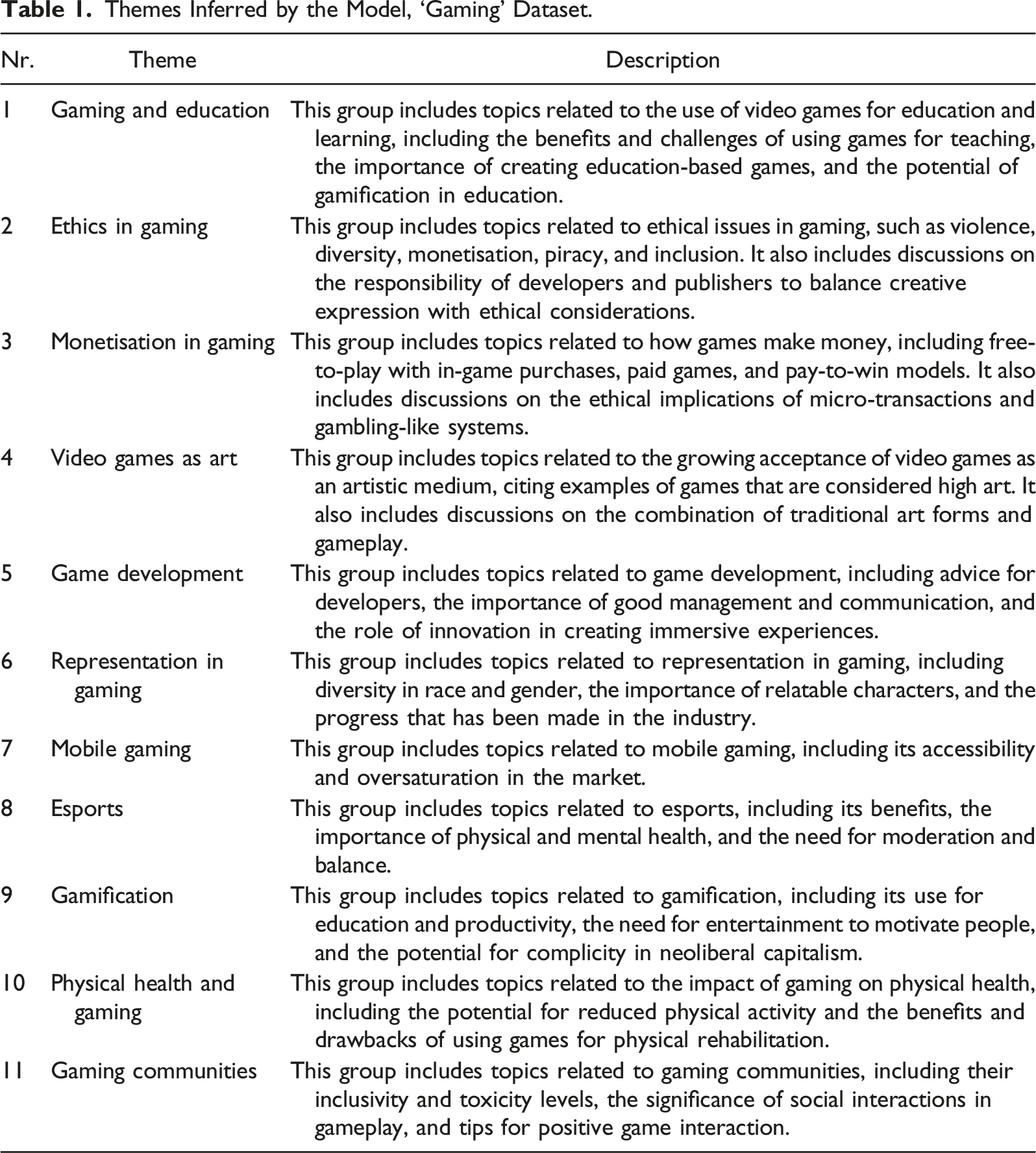
The original analysis of the ‘gaming’ dataset is presented in two project reports (Persico et al. 2017a, 2017b) and the specific themes will be presented later when an interpretation of the results will be provided. For now, it suffices to say that the researchers had 10 themes, and one of these themes also had 3 sub-themes. Therefore, using the 89 codes from Phase 2, I asked the model to generate 11 themes (a number between 10 and 13), using the prompt in Figure 10, where the list of topics is a list containing the name of the codes and the associated description (i.e. each topic has this format ‘code’: ‘description’). Quotes were not included because of the tokens limit. The prompt used to infer themes inductively 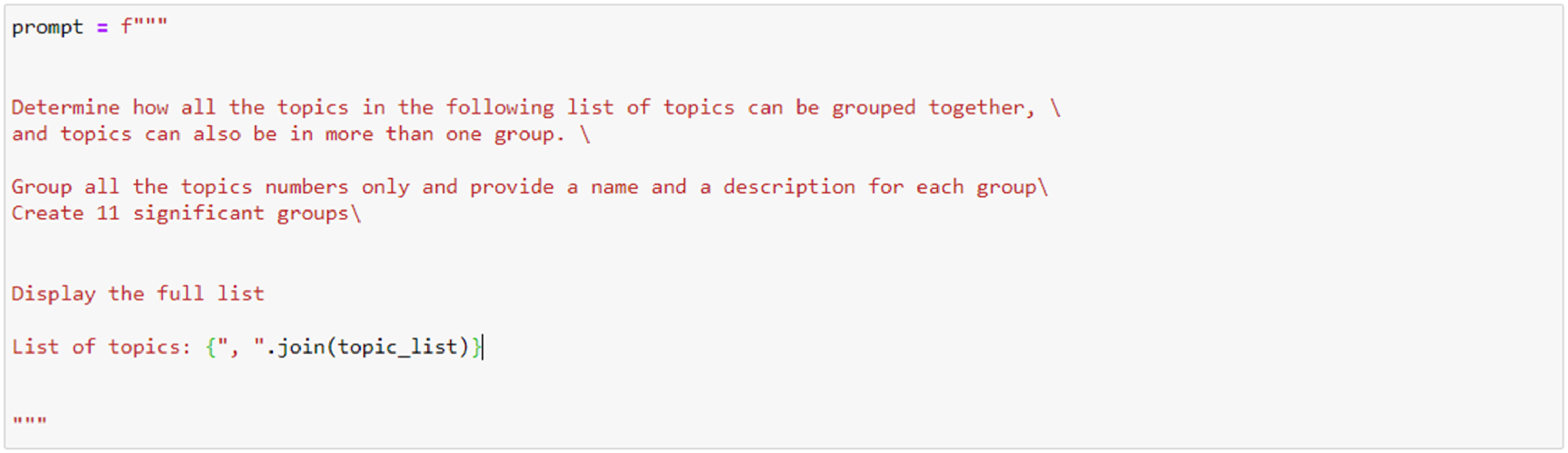
Themes Inferred by the Model, ‘Gaming’ Dataset.
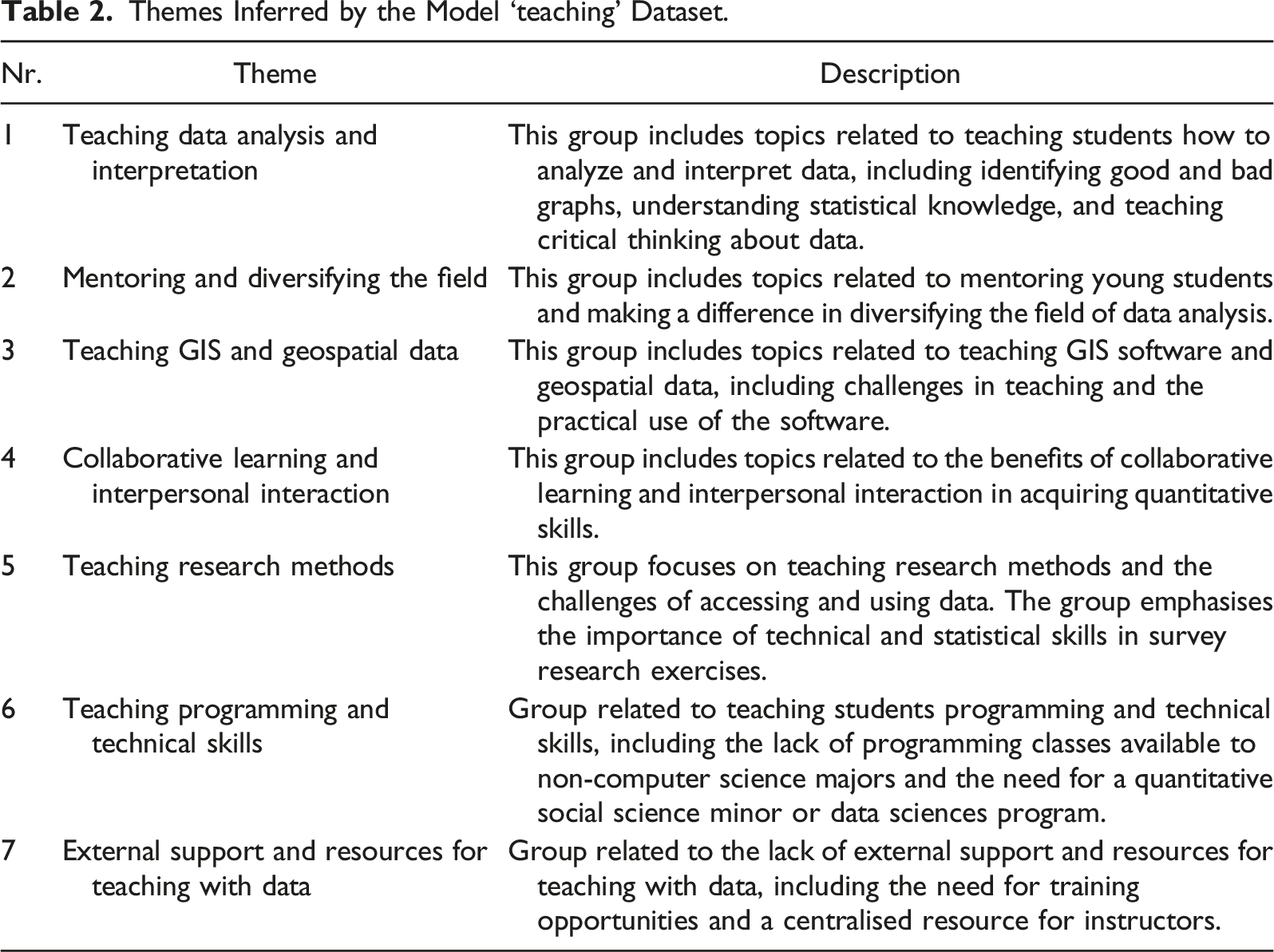
Themes Inferred by the Model ‘teaching’ Dataset.
Phase 4: Reviewing Themes
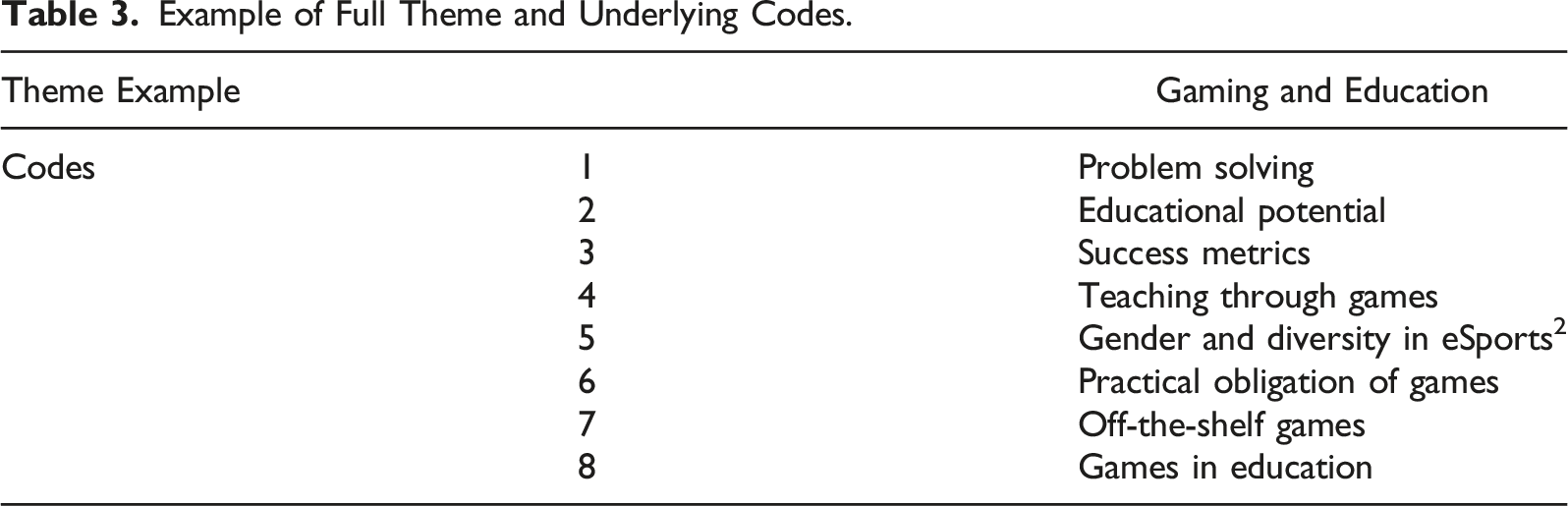
Example of Full Theme and Underlying Codes.
Themes Generated for the ‘gaming’ Dataset With T = 1.
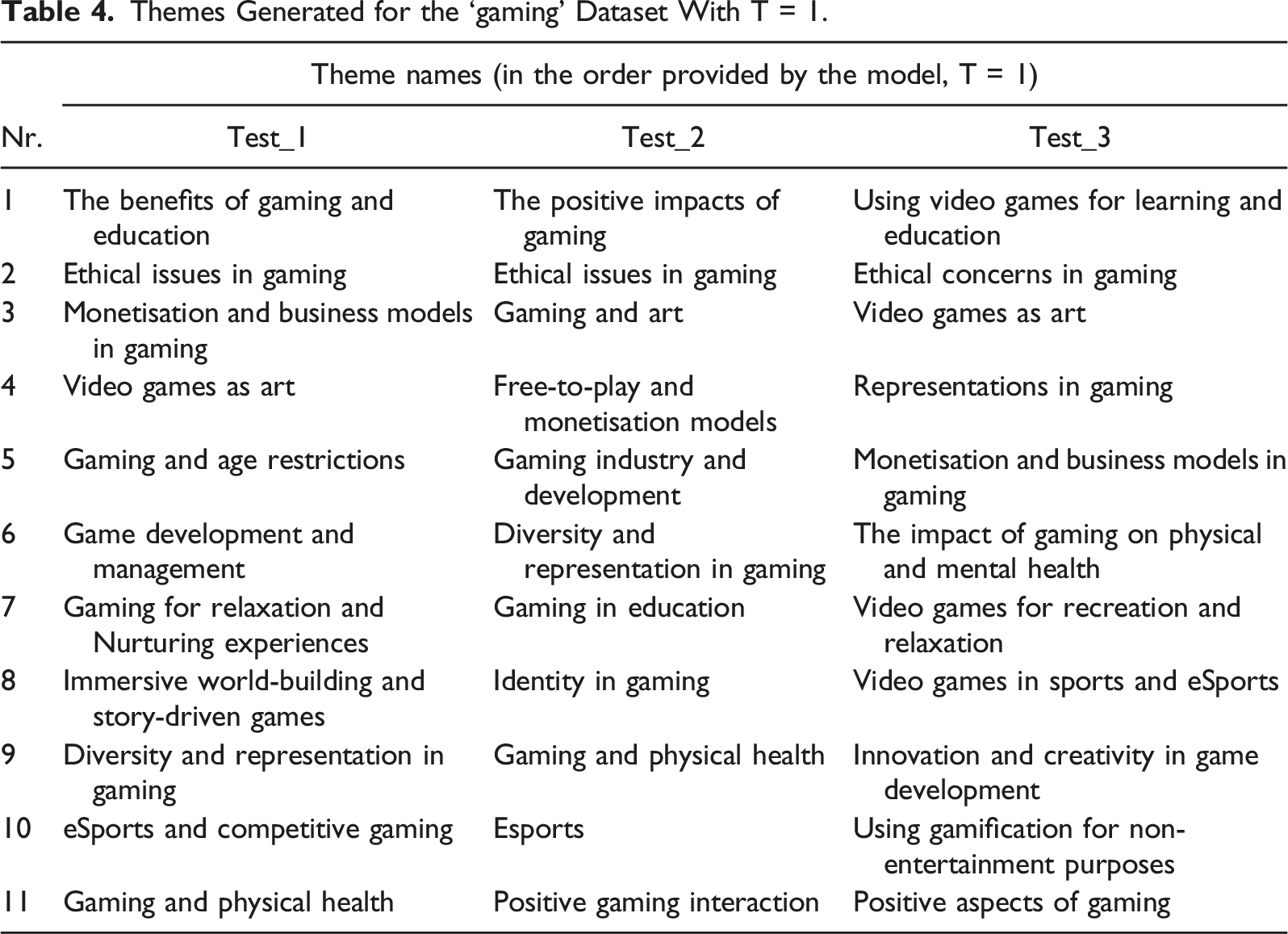
We can see from the three tests some consistency between Phase 3 and Phase 4 around several key themes, which include Education, Art, Ethics, Monetisation, Esports, Physical Health, and Representation among others. Based on this limited testing, we can preliminarily conclude that these just mentioned may be potentially valid themes which represent the data. However, there also are a few other themes which might have been overlooked by the model in Phase 3 and which appear in Phase 4, such as Mental-Health and Age Restrictions.
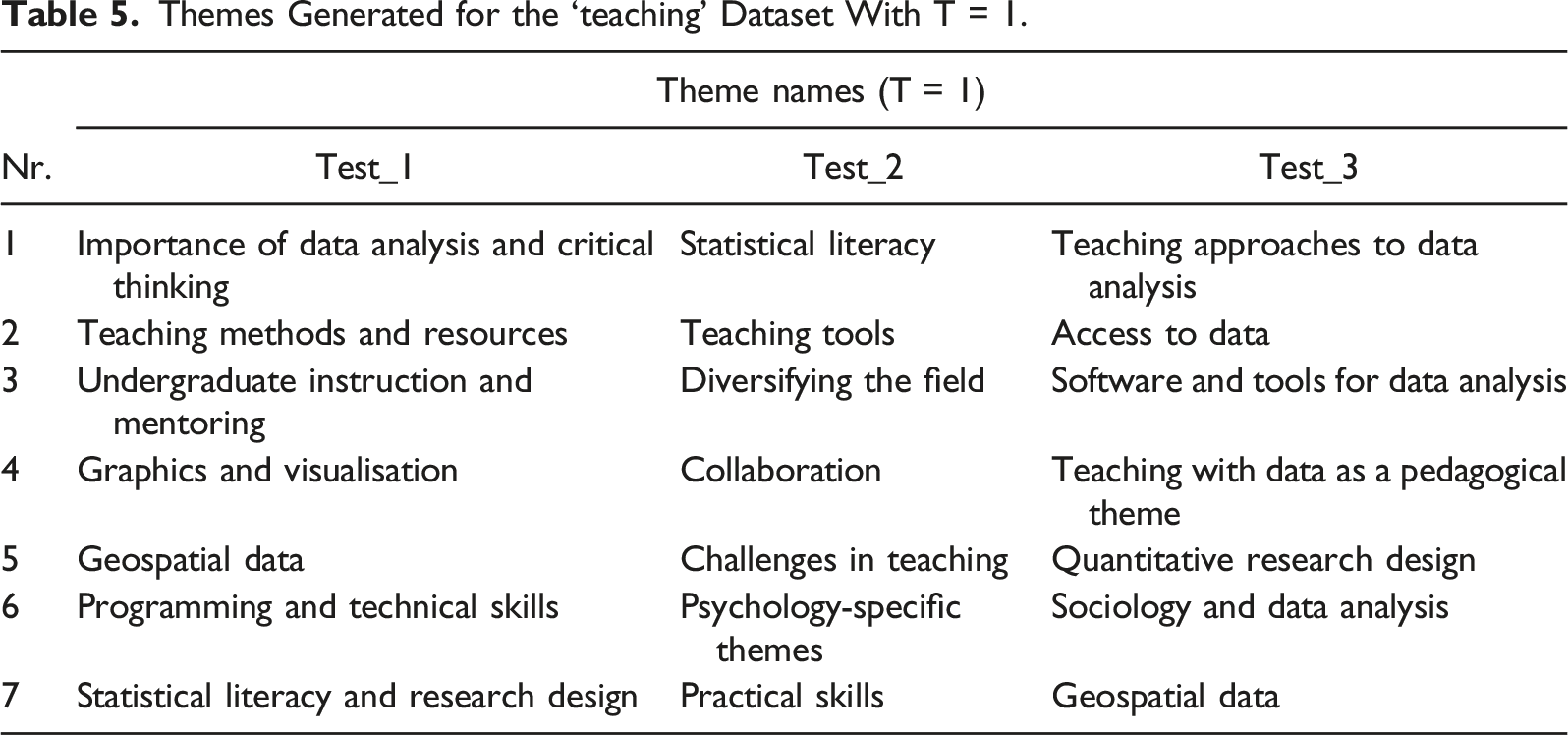
Themes Generated for the ‘teaching’ Dataset With T = 1.
Themes Generated for the ‘teaching’ Dataset With T = .5.
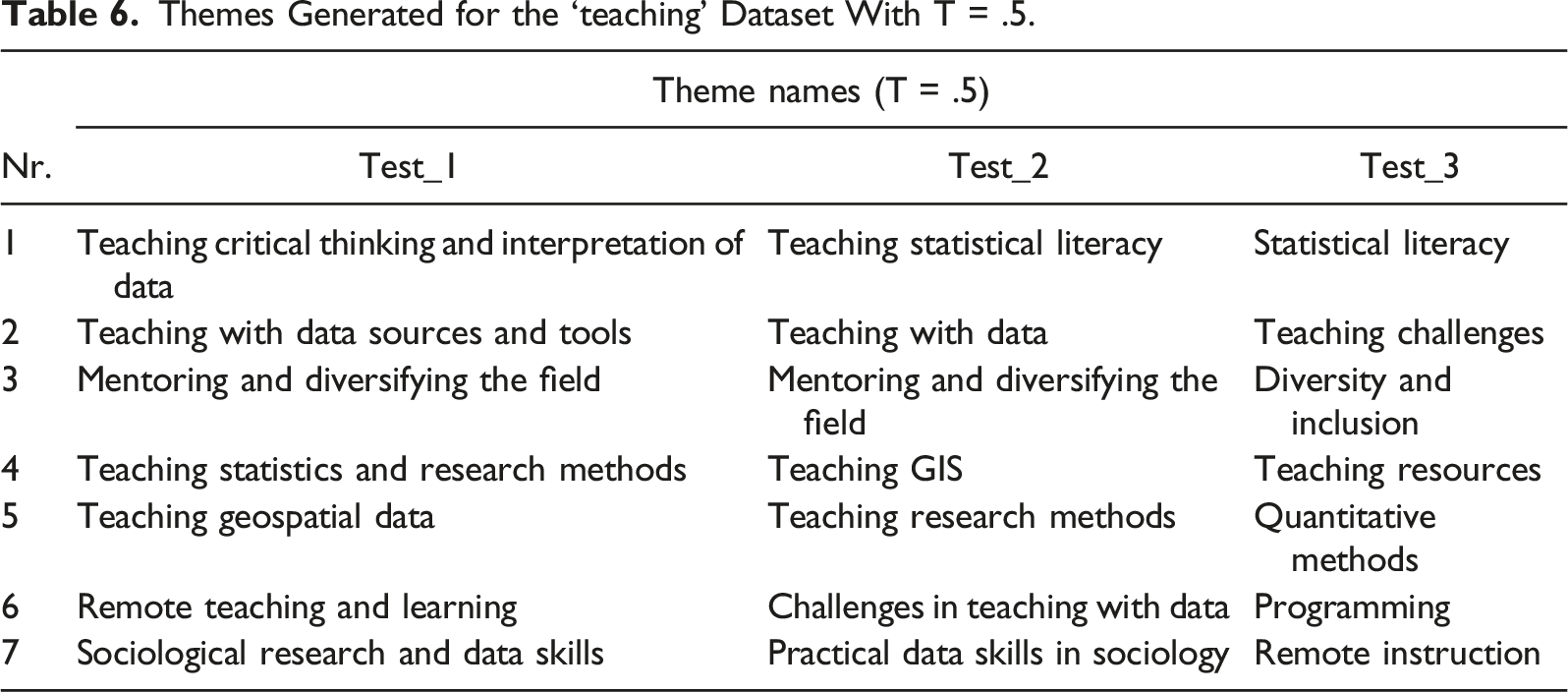
With T = .5, there is (as expected) more consistency. Some themes clearly emerge across Tables 2 and 6, in particular about the issue of resources, the teaching of data analysis, and the teaching GIS technology among others. It may be that T at .5, is acceptable to review the validity of themes in Phase 4 of TA.
Phase 5: Defining and Naming Themes
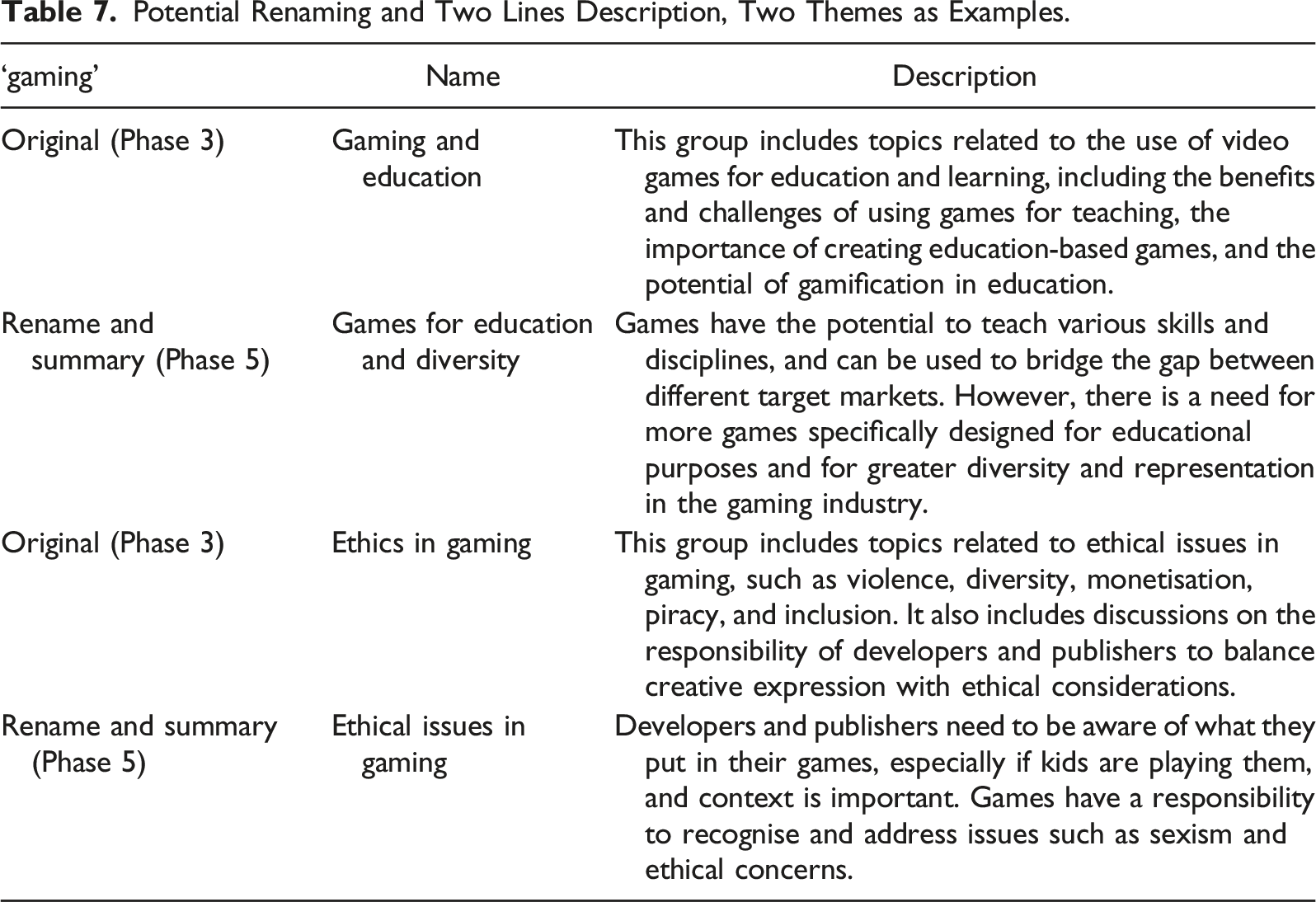
Braun and Clarke (2006, p. 92) state that: ‘It is important that by the end of this phase you can clearly define what your themes are, and what they are not. One test for this is to see whether you can describe the scope and content of each theme in a couple of sentences’. This probably is also a phase that requires the analyst’s capacity to encapsulate all the previous steps as the model does not have memory of what was done. Nonetheless, I propose to perform Phase 5 to provide the model with the list of code names and description composing each theme and one meaningful quote for each code (without theme and theme description) and asked with a prompt to provide a summary of what they mean and a name. The examples I propose here are the one in Table 3, and one additional theme, for the gaming dataset. The prompt used is presented in Figure 11, each topic of the list is the entire set of codes for each theme, including, descriptions and one quote for each. Prompt used to summarise each theme again 
Potential Renaming and Two Lines Description, Two Themes as Examples.
Interpretation of the Results
We can now compare the results seen in the previous pages with the analysis conducted on the ‘gaming’ and ‘teaching’ datasets by the original researchers. This will allow us to evaluate the extent to which the results of the LLM TA are similar or different to the actual analysis. For the comparison, I propose two main criteria: (1) the theme names generated by the LLMs are very similar to the one of the original research; (2) the description of the theme produced by the LLMs conveys a very similar meaning to that proposed by the researchers, even if the theme name differs. Original themes and descriptions are compared then to the tables (1, 2, 4, and 6) seen in previous pages.
Gaming Dataset
Qualitative Comparison Between the Original and the LLM analysis, 'gaming' Dataset.
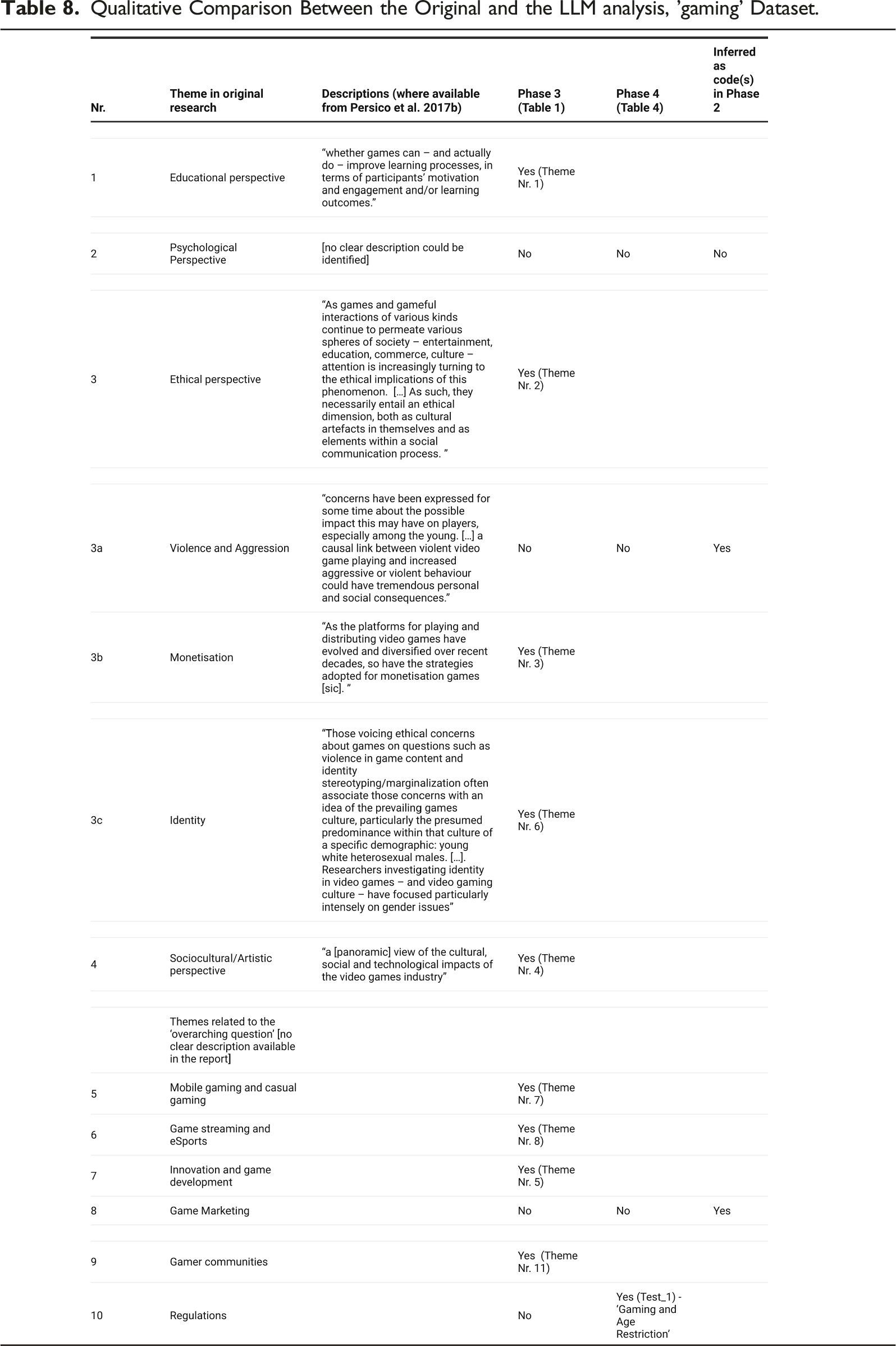
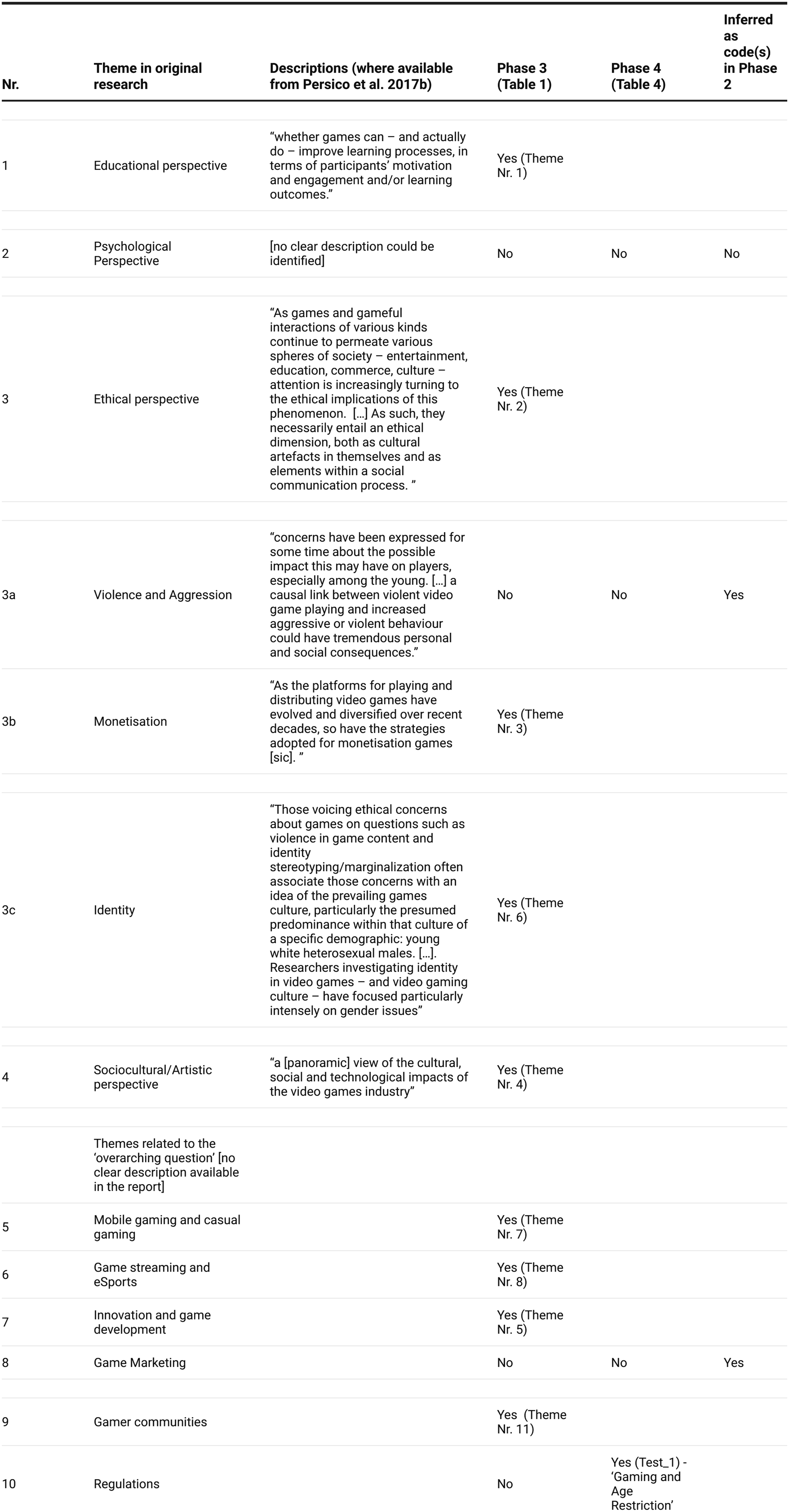
Most themes were clearly identified by the model in Phase 3 of the TA (Table 1), With similar or almost identical names, and alike descriptions. For those that were not identified in Phase 3, one additional was identified in Phase 4, albeit with a clearly different name, that is, ‘Gaming and Age Restriction instead of ‘Regulations (Nr. 10 in Table 8.). Two themes were not inferred in either Phase 3 or 4, but they can be found in the list of codes, which is one of the practices suggested by Braun & Clarke in Phase 4. One theme was not identified. These considerations deserve further scrutiny.
Violence (3a) appears only once as an LLM code ‘Violence in Games’ (Index 51), and there is no mention of aggression across the codes generated by the model. It may be that the model has overlooked this aspect, or that the prominence given to it by the researchers was associated with their interpretation.
Marketing (8) appears in 3 LLM codes: ‘Marketing of Videogames’ (Index 39), ‘Online Marketing’ (Index 59) and Marketing and Intent (Index 80). As there are 3 codes related to marketing, it is clear the model did not infer this as a possible theme.
For the ‘Psychological perspective’ theme, not one of the codes has the word psychology (or similar) in either the codes’ names or descriptions. There may be ‘similar’ words, such as cognition, but they do not have much prevalence. In Phase 4, with T = 1, one theme hinted at ‘mental health’, but we cannot equate this with a psychological perspective. The model did not infer this theme.
Teaching Dataset
Qualitative Comparison Between the Original Themes and the Themes Produced by the Model. 'teaching' Dataset.
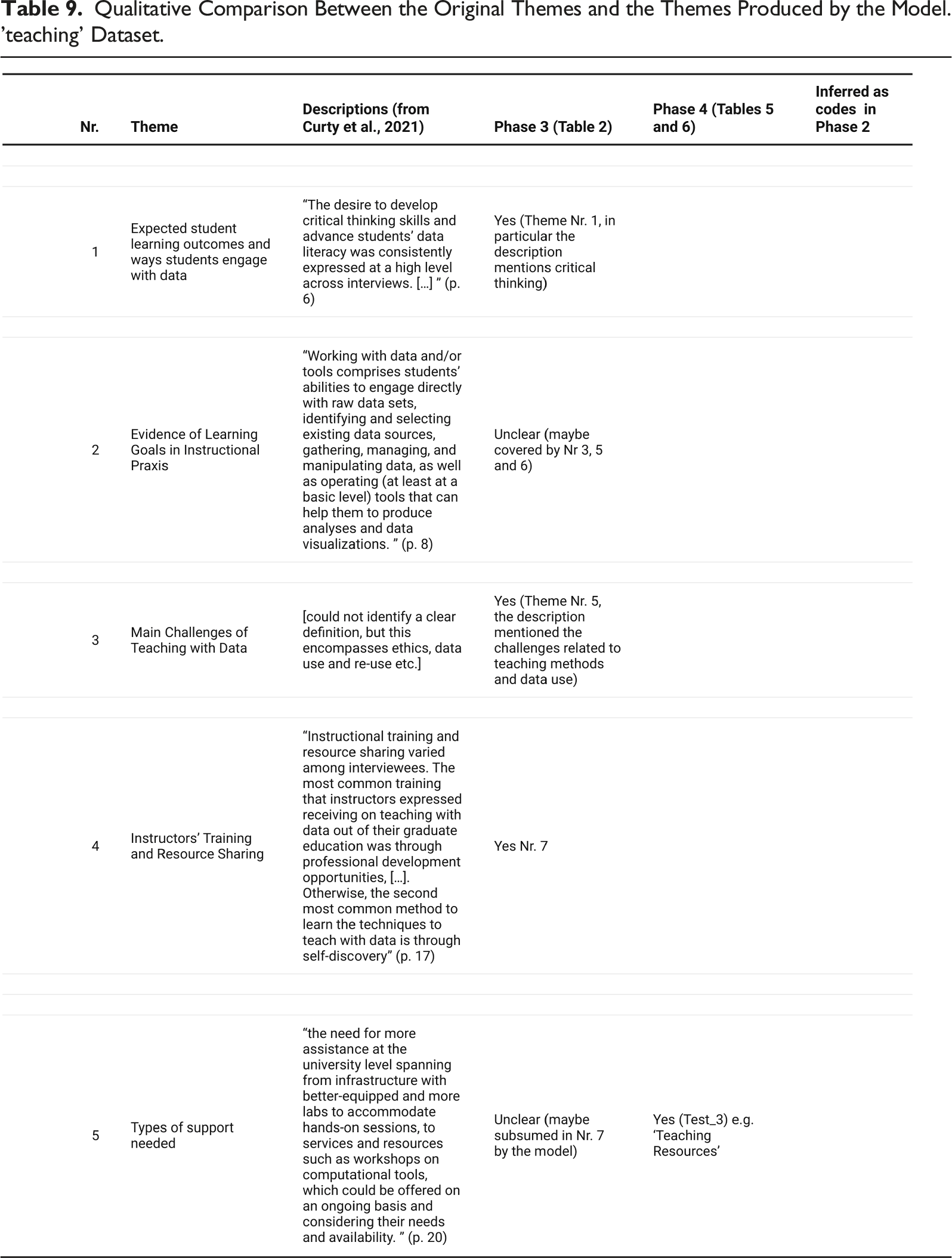
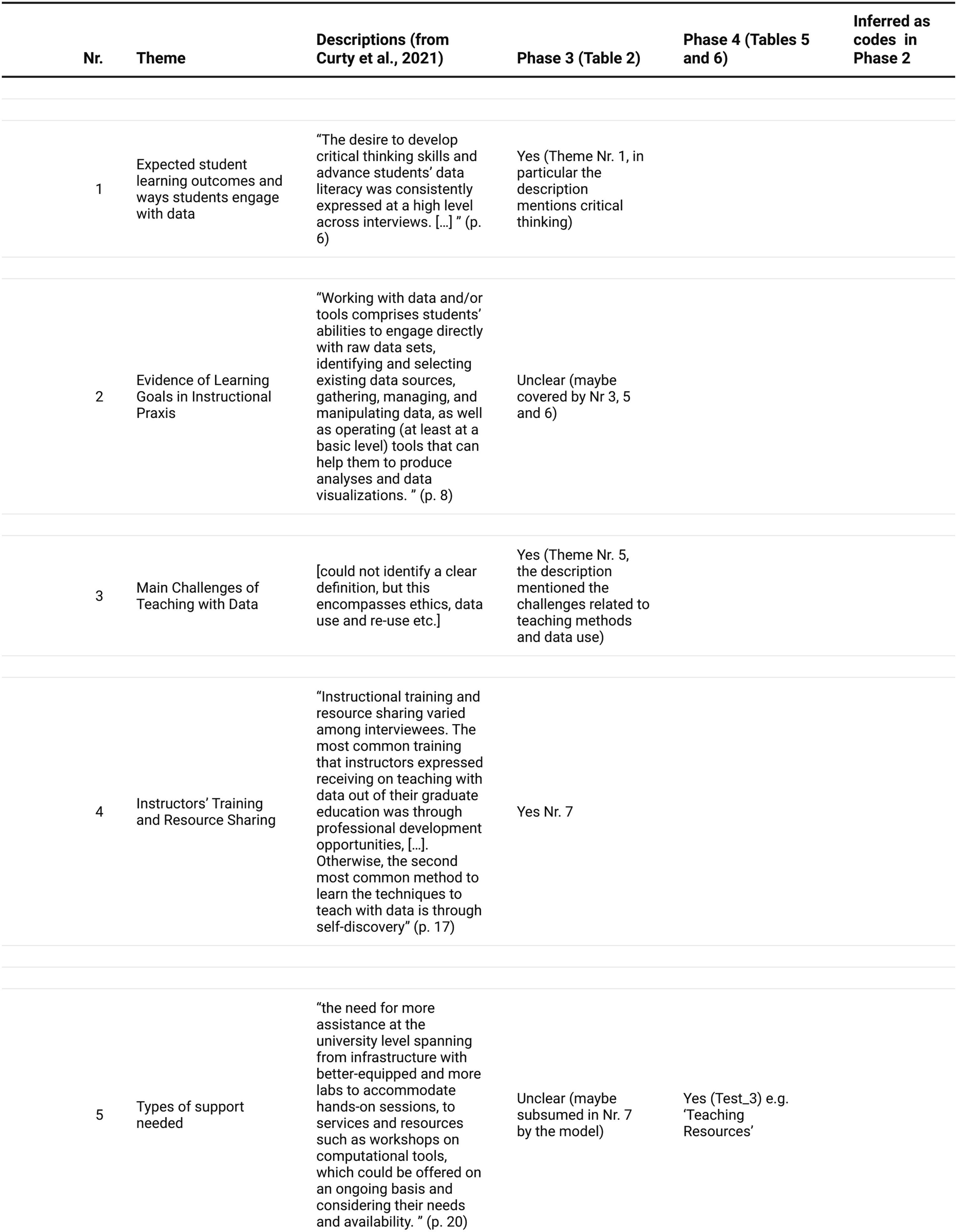
The model was perhaps less effective in inferring the themes directly by names in Phase 3 compared to the ‘gaming’ dataset, but the descriptions report similar ideas. Therefore, in some forms, 3 of the 5 themes emerged in Phase 3, whilst a fifth one emerged in Phase 4 (on support). The theme on ‘Learning goals and praxis’ did not emerge clearly. However, the model also inferred a variety of themes which do not appear in the original analysis. It may be that the focus of the analysts was on the learning process and on learning goals, however aspects such as ‘mentoring’ and ‘collaboration’ were inferred consistently by the model (Phases 3–4). Which might imply the model capacity to identify relevant themes which were not considered relevant by the analysts. In the report (Curty et al., 2021), ‘mentoring’ is never used as a word, and collaboration tends to refer (once) to the collaboration among staff. However, the descriptions and themes built by the model clearly relate to the students’ learning.
Discussion
This paper sought to experiment on whether we can use the LLM GPT3.5-Turbo to perform an inductive Thematic Analysis of semi-structured interviews, reproducing Braun and Clarke (2006) phased approach. This paper was written as an
The value of the
This paper has been written also as a
Recommendations
This section reflects on some potential recommendations for furthering the research on using LLMs for qualitative analysis and connects these with previous literature.
Prompting
I agree with Xiao et al. (2023) that the generation of the right prompts is a key component for conducting qualitative analysis with LLMs. Different prompts (even aimed at the same output) often lead to different responses. The social sciences community may need to work on defining essential prompts that can produce desired analysis or establishing agreed procedures for prompting. These will need to be reported in publications as part of the methods.
Temperature
It would be important to agree how to use the temperature. Whilst using T at 0 allows essentially the reproduction of the results, higher values may also contribute to validity. I suggested that it may be possible to identify the validity of themes by having the model work with, for example, T = .5 and then verify if certain themes are repeated across different outputs. It may be possible to use statistical techniques to identify which themes are most frequent and possibly variance. These observations, however, will require further research.
Human-AI Collaboration
I agree with Jiang et al. (2021) and Gao et al. (2023) that the likely scenario is not one of the human analysts being replaced by AI analysts, but one of a Human-AI collaboration. However, we also need to establish what can be methodologically valid. We need to address how to keep the ‘Human-in-the-loop’ about the decision made by the model and make room for the Human to intervene to address errors/hallucinations or increase validity. Previous research has suggested, for example, to use the model to generate the initial codes. I would think it may also be possible to have the model to be a second coder, that is, to verify the validity of the analysis of the human analyst and suggest overlooked patterns.
Phases 1 and 6
In this experiment, I argued that only the phases 2–5 of a TA are reasonably approachable with the model. For Phase 1, Gauthier and Wallace (2022) seem to suggest that actions like, for example, data cleaning amount to familiarising with the data. This is a good observation if we consider the process within the Human-AI collaboration, however, just looking at the model use, this phase is not covered with the data cleaning. For Phase 6, there is debate about the use of LLMs for scientific writing (Lund et al., 2023) and its ethical implications. However, there may be a difference between having an LLM write a paper from scratch (in place of the author) and having the model write up a report about the analysis it has conducted.
User Research
I commend Gao et al. (2023) for having done user evaluation of the analysis with the model. Although they have done it to evaluate their tool, it does seem important that we work with the scientific community to assess the outputs of LLMs qualitative analyses. I would suggest that user research is not done just to assess software usability, but also to develop the methodological debate, around questions such as: ‘is this analysis valid’? ‘does it have the expected rigour?’.
Issues and Limitations
What has been presented here requires a recognition of limits. This was just an initial experiment, and I cannot claim it is fully comprehensive of a reproduction of an inductive TA.
Prompting
Building prompts producing the desired results has not been easy nor obvious. The response sometimes was inconsistent. Changing the number of themes asked to be inferred produces sometimes different themes. The results produced here are valid with the prompt used and with the proposed chunks, keeping still in mind that LLMs produce outputs based on probabilities. The interview chunks are included as csv files with this paper (or can be requested to the author), to allow for reproduction of results.
Ethics
I did not work with documents (e.g. book reviews), like some of the previous researchers, but with interviews. The interviews need to be analysed by a model in the cloud. Therefore, the data needs to be fully anonymised at the point of performing the analysis. It remains a grey area to understand the extent to which we can use these models on newly generated interviews. For this, we would need in the future to inform respondents and obtain consent for the data to be processed by LLMs. Specific expert research will need to be done to assess all the ethical implications of using LLMs for qualitative analysis.
Hallucination
I found that hallucinations were produced during Phase 3, and I solved the problem by passing an index in the prompt. In one case, I believe the model hallucinated with the assignation of a code to a theme. This can be seen in Table 3, where the code ‘Gender and Diversity in eSports’ is assigned to the Education theme. I did not correct this hallucination, as my goal is to foster discussion more than deliver solutions, but this is an important aspect which will need to be addressed at methodological level and within the Human-AI collaboration.
Footnotes
Declaration of Conflicting Interests
The author(s) declared no potential conflicts of interest with respect to the research, authorship, and/or publication of this article.
Funding
The author(s) received no financial support for the research, authorship, and/or publication of this article.
Correction (December 2023):
Article updated to move one paragraph from Table 8 caption to Gaming Dataset section.
