




Abstract
Shyness has been shown to be linked to aggression. However, whether this relationship occurs in cyberspace and the mechanisms that might affect it are largely unexplored. Based on the social fitness model, the current study examined the relationship between shyness and cyber aggression, as well as the mediating roles of passive use and relative deprivation. Moreover, according to the integration of the social information processing model and moral domain theory, moral sensitivity serves as a moderator in the direct and indirect links between shyness and cyber aggression. A total of 700 Chinese college students (M age = 18.68, 53.57% women) participated in the current study and completed multiple questionnaires, namely, the Shyness Scale, Cyber-Aggression Scale, Passive Use of Social Network Site Scale, Relative Deprivation Scale, and Ethical Sensitivity Scale. The results showed that shyness was positively associated with cyber aggression through the multiple mediating effects of passive use and relative deprivation. Additionally, moderated mediation analysis indicated that moral sensitivity moderated the direct and indirect relationship between shyness and cyber aggression. A high level of moral sensitivity weakened the association of shyness with cyber aggression and the association of relative deprivation with cyber aggression, supporting the moderated mediation model. This study implicates the underlying mechanisms of the relationship between shyness and cyber aggression and preventative interventions to reduce the risk of cyber aggression.
Introduction
With the advent of communication technologies, the internet has gradually gained popularity among young people. The proportion of internet users aged 20 to 29 is 20.5%, which is higher than that of other age groups (China Internet Network Information Center, 2021). Although the internet facilitates the social lives of youth, it also enables a series of negative internet behaviors (e.g., Zhou et al., 2019), among which cyber aggression is a typical behavior (Shapka & Maghsoudi, 2017). Recent research suggests that approximately 58% of youth have engaged in cyber aggression while using the internet (Kokkinos et al., 2016). Cyber aggression is aggressive behavior that occurs virtually via information and communication technologies, such as mobile phones, gaming consoles, and the internet (Shapka & Maghsoudi, 2017). It includes harassment, verbal attacks, spreading rumors, teasing, stalking, and hacking someone’s online accounts (Grigg, 2010). Cyber aggression is a relatively new form of aggression that causes many internalization and externalization problems, such as peer pressure and higher depression (Gao et al., 2021). These findings underscore the importance of understanding the risk and protective factors of cyber aggression.
A Review of the Literature
Shyness and Cyber Aggression
Several studies have identified personality as an antecedent variable for cyber aggression as a negative social behavior (e.g., lower agreeableness and conscientiousness, Festl & Quandt, 2013; dark personality, Zhang & Zhao, 2020). A previous study found that cyber aggression and traditional aggression are closely related in terms of personality traits (Kokkinos & Voulgaridou, 2017). As a personality trait that occurs in social networks, shyness is associated with aggression (Zhao et al., 2020). However, few studies have investigated the association between shyness and cyber aggression.
Shyness is the fear of negative evaluation in social situations and the inhibition of normal social behavior, accompanied by negative cognition, negative emotions, and social withdrawal (Henderson & Zimbardo, 2001). The social fitness model (Henderson & Zimbardo, 1999; Henderson, 2007) proposes that the characteristics of shy individuals, such as social avoidance, negative cognition (e.g., negative perceptions about social consequences), and negative emotions (e.g., anger and hostility) towards the environment, are the key determinants of their aggression (Xu et al., 2021) and may provoke cyber aggression (Kokkinos & Voulgaridou, 2017). A study has directly shown a positive correlation between shyness and cyberbullying (Wang et al., 2020). Some studies have also supported this view indirectly. First, shy individuals are more likely to be aggressive offline (Xu et al., 2021), and this characteristic is also reflected in the network as cyber aggression (Kokkinos & Voulgaridou, 2017). Second, individuals with high levels of shyness show high depression and low self-esteem (Iranmanesh et al., 2021; Geng et al., 2021), which are significant predictors of cyber aggression (Modecki et al., 2013). Moreover, those high in shyness often suffer from peer rejection (Sette et al., 2016), and the experience increases the risk of cyber aggression (Wright & Yan, 2013). Therefore, it is logical to predict a positive correlation between shyness and cyber aggression.
Passive Use as a Mediator
Social network sites are an increasingly central context for social interaction. Shy individuals enjoy the pleasures of and frequently engage in the internet (Luo et al., 2013). According to the social fitness model (Henderson & Zimbardo, 1999), shy individuals are more likely to exhibit social avoidance, and they combat social avoidance through internet dependence (Gao et al., 2019), which also reflects frequent passive use (Wang et al., 2015). Passive use is browsing behavior without directly communicating information (e.g., viewing photos or browsing the news feed without commenting; Verduyn et al., 2015), also called online lurking (Pempek et al., 2009). The present study examines individuals’ use of social network sites without information disclosure. Although no studies have directly demonstrated the mediating role of passive use between shyness and cyber aggression, two reasons underlie our argument for passive use as a mediator.
On the one hand, a study has directly supported the positive correlation between shyness and passive engagement online (Ryan & Xenos, 2011). Some studies also provide indirect evidence for this view. For example, some shy individuals exhibit internet dependence (Gao et al., 2019), which may be reflected in their frequent browsing of news feeds. In addition, shy individuals with severe maladaptive cognitions suffer from more generalized pathological internet use (Tian et al., 2017), including excessive passive use. Furthermore, due to social avoidance offline, we infer that shy individuals engage in frequent passive use to obtain information about others, which can create an illusion that relationship needs are satisfied (Li et al., 2019).
On the other hand, it is logical to predict a positive correlation between passive use and cyber aggression. Based on the social fitness model (Henderson & Zimbardo, 1999), hostility is one of the main causes of aggression. Passive use tends to induce envy (Verduyn et al., 2015), a social emotion characterized by hostility, and is positively associated with cyberbullying (Shu, 2012). Besides, a previous study observed a positive association between passive use and online social anxiety (Wen et al., 2019), which can trigger cyberbullying (Kokkinos & Antoniadou, 2019). In addition, related studies have found that people with passive use exhibit low self-esteem (Liu et al., 2017), which is a predictor of cyber aggression (Modecki et al., 2013).
Based on the literature reviewed above, shyness may be positively related to passive use, which in turn may be positively related to cyber aggression. Passive use may mediate the relationship between shyness and cyber aggression.
Relative Deprivation as a Mediator
Based on the social fitness model (Henderson & Zimbardo, 1999), the negative cognition and affective experience of shy individuals, such as relative deprivation, maybe another mediating variable. Relative deprivation occurs when “some individuals or groups perceived themselves at disadvantageous circumstances compared with the corresponding reference groups, thereby leading them to experience some negative emotions, such as anger and resentment” (Xiong & Ye, 2016, p. 439). The relative deprivation theory (Mummendey et al., 1999) is also used to explain the mediating role of relative deprivation in the relationship between shyness and aggression. It reveals that shy individuals evaluate their statuses and situations primarily through social comparison; once they feel deprived of their basic rights, they will be aggressive (Gao et al., 2017), which may trigger cyber aggression (Kokkinos & Voulgaridou, 2017). Two reasons underlie our argument for relative deprivation as a mediator.
On the one hand, research directly supports the positive correlation between shyness and relative deprivation (Gao et al., 2017). Individuals with a high level of shyness are paranoid, and they tend to make social comparisons with others, which can cause them to experience higher levels of relative deprivation (Zhao et al., 2019). On the other hand, several indirect pieces of evidence support the positive association of relative deprivation and cyber aggression. For groups, group relative deprivation positively predicts cyber collective and aggressive behaviors through group-based anger and efficacy (Song et al., 2018). For individuals, a previous study found that a high level of relative deprivation contributes to the risk of bullying involvement (Napoletano et al., 2016), which may extend to the internet (Kokkinos & Voulgaridou, 2017). In addition, relative deprivation is a risk factor for pathological internet use (Ding et al., 2018), which may be associated with cyber aggression.
In summary, shyness may be positively correlated with relative deprivation, which in turn may be positively related to cyber aggression. That is, relative deprivation may mediate the relationship between shyness and cyber aggression.
Multiple Mediation Model
Based on the literature review, we expected that passive use and relative deprivation would parallelly mediate the relationship between shyness and cyber aggression. According to the relative deprivation theory (Mummendey et al., 1999), individuals with high levels of social comparison feel relative deprivation. A previous study showed that the passive use of social network sites tends to elicit upwards social comparison (Liu et al., 2017). Thus, it is reasonable to predict a positive correlation between passive use and relative deprivation. According to the above assumptions, we can further infer that passive use and relative deprivation act as serial mediators in the relationship between shyness and cyber aggression. Some studies provide indirect evidence for this view. On the one hand, shy people are more likely to adopt passive engagement online (Ryan & Xenos, 2011), and this usage can induce negative emotions (e.g., envy) and cognitions (e.g., low life satisfaction, Krasnova et al., 2013), which are characteristics of relative deprivation (Xiong & Ye, 2016). On the other hand, passive browsing of web pages and photos is a way to identify others’ self-presentations. Content on social network sites could increase individuals’ relative deprivation through upwards social comparison (Fan et al., 2019), provoking aggressive behaviors (Jiang & Chen, 2020). Therefore, passive use and relative deprivation may sequentially mediate the link between shyness and cyber aggression.
Moral Sensitivity as a Moderator
Although shyness may be correlated with cyber aggression via the mediating role of passive use and relative deprivation, not all shy individuals exhibit aggressive behaviors (Xu et al., 2021). Individual characteristics may explain the heterogeneity of the results. Arsenio and Lemerise (2004) integrate the social information processing model and moral domain theory, proposing an integrated model to explain the influence of interactions between moral cognitive processes and emotional processes on individuals’ behaviors. Specifically, moral knowledge and affection (e.g., shy individuals’ emotions and relative deprivation) work together to influence the interpretation of cues, clarification of goals, and response decisions (Gao & Chen, 2008). Moral sensitivity is a moral knowledge structure influenced by moral schemas (Zheng & Cen, 2007) and is described as “the awareness of how one’s actions affect others and the different responses that are available to the actor in an ethical situation” (Jordan, 2007, p. 324). It is the perception and interpretation of whether a situation is ethical or nonethical and includes perspective-taking and empathy about how actions affect others, imagining cause-effect chains of events, and considering moral norms or principles regarding the specific situation (Zheng & Cen, 2007). A study revealed that people with high moral sensitivity are less likely to engage in bullying behavior and online shaming (Robert & Tomas, 2013; Ge, 2020). However, no studies have examined the moderating effect of moral sensitivity on the association between personality traits and cyber aggression.
According to the integrated model (Arsenio & Lemerise, 2004), moral sensitivity may interact with the negative emotions of shyness to influence cyber aggression. Although no studies have investigated the moderation role of moral sensitivity in the relationship between shyness and cyber aggression, some studies have found that moral traits can mitigate or strengthen the relationship between personality and cyber aggression. For example, the link between personality (i.e., trait anger) and cyber aggression is moderated by moral identity (Wang et al., 2017). Cognitively, moral identity reflects individuals’ moral sensitivity, and those with high moral identity are more morally sensitive in decision-making (Sparks, 2015). In addition, a functional magnetic resonance imaging study showed that the development of moral sensitivity is related to empathic emotion (Decety et al., 2011). A high level of empathy weakens the negative link between shyness and prosocial behavior (Li et al., 2018). Thus, moral sensitivity may buffer the association of shyness with cyber aggression.
Some indirect evidence supports the moderating role of moral sensitivity in the relationship between relative deprivation and cyber aggression. On the one hand, the integrated model (Arsenio & Lemerise, 2004) reveals that moral sensitivity may interact with affection to affect individuals’ later social behaviors. Specifically, the negative emotions triggered by relative deprivation (Xiong & Ye, 2016) may interact with moral sensitivity and further affect cyber aggression. On the other hand, people with a high level of relative deprivation ruminate angrily (Li & Lu, 2018), which is a positive predictor of cyberbullying (Yang et al., 2021). Strict moral interpretation (i.e., a low level of moral disengagement) could buffer the relationship (Yang et al., 2021). Thus, it may interact with negative cognition, such as relative deprivation, to influence aggressive behavior, such as cyber aggression.
The Current Study
The present study extends the social fitness model (Henderson & Zimbardo, 1999) from offline to online space and focused on shyness and cyber aggression. In addition, we explored the mediating mechanism of cyber aggression in shy individuals from two aspects of social media use and psychological variables based on the social fitness model (Henderson & Zimbardo, 1999), namely, passive use and relative deprivation. We also investigated the sequential mediation of passive use and relative deprivation based on the relative deprivation theory (Mummendey et al., 1999). According to the integrated model (Arsenio & Lemerise, 2004), we investigated the moderating role of moral sensitivity in the direct and indirect relationship between shyness and cyber aggression. Therefore, from the theoretical and empirical perspectives, we established a moderated mediating model (Figure 1) to test the following hypotheses: The assumptive mediated moderation model.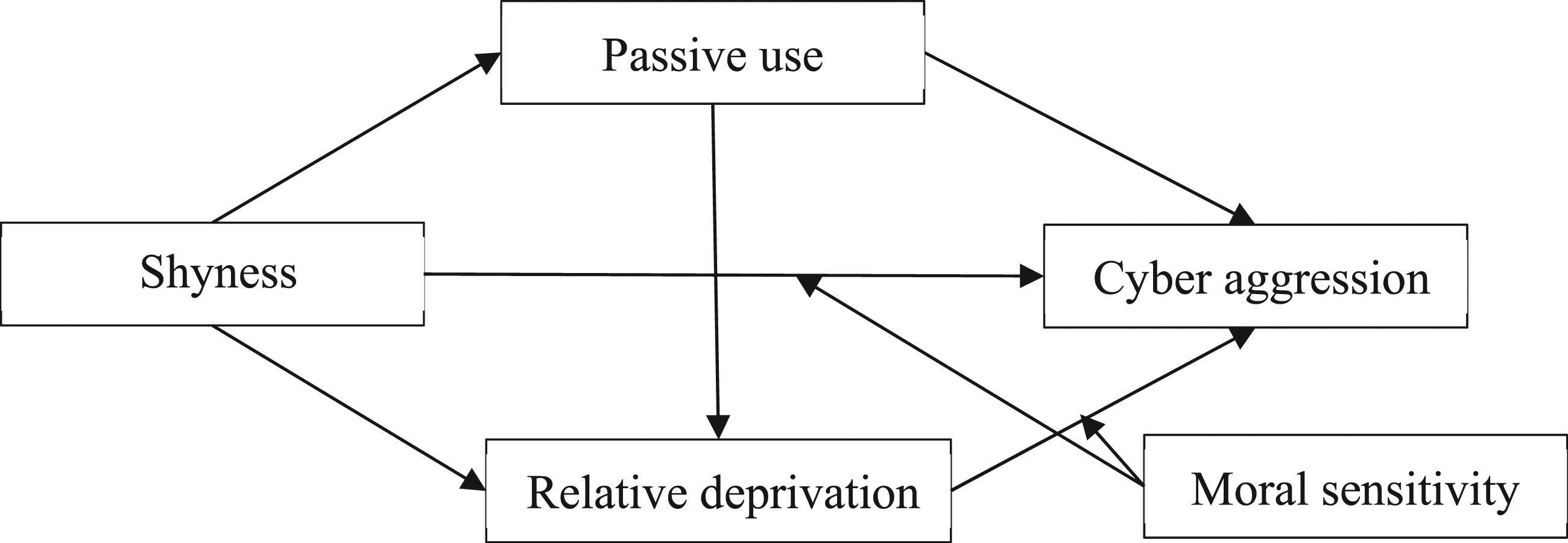
Shyness is positively correlated with cyber aggression.
Passive use mediates the relationship between shyness and cyber aggression.
Relative deprivation mediates the relationship between shyness and cyber aggression.
Passive use is positively correlated with relative deprivation.
Passive use and relative deprivation sequentially mediate the relationship between shyness and cyber aggression.
Moral sensitivity moderates the direct and indirect associations between shyness and cyber aggression. Specifically, moral sensitivity buffers the relationship between shyness and cyber aggression and the relationship between relative deprivation and cyber aggression.
Method
Participants
The participants were 703 students selected by random cluster sampling from universities in Shandong and Fujian Provinces, China. Three participants were excluded before the data analysis due to straight-line responses. The final analytical sample consisted of 700 participants (325 boys, 375 girls) between the ages of 17 and 20 years (M = 18.68, SD = .79), with an effective recovery rate of 98.31%. They completed the questionnaires on a Chinese survey website (https://www.wjx.cn) after providing informed consent. Ethical approval was granted by the Department of Psychology Ethics Committee at Beijing Normal University.
Measures
Shyness
Shyness was measured by the Shyness Scale (Henderson & Zimbardo, 2002) and its revised version by Wang et al. (2009). It has 17 items scored using a five-point scale (1 = complete nonconformity, 5 = complete conformity; for example, “It is difficult for me to join a group of people in a conversation”), with a higher score indicating a higher level of shyness. To estimate internal consistencies, we analyzed Cronbach’s alphas and McDonald’s omegas (Dunn et al., 2014; Hayes & Coutts, 2020). In the present study, Cronbach’s alpha was .88, and McDonald’s omega was .88.
Cyber Aggression
Cyber aggression was measured by cyber-aggression perpetration (CAV-P), which is suitable for the Chinese population (Shapka & Maghsoudi, 2017). It has 12 items and uses a five-point Likert-type scale ranging from 0 (never) to 4 (all the time) (e.g., “Posted or reposted something embarrassing or mean about another person online?”). Higher scores represent greater involvement in cyber aggression. In the present study, Cronbach’s alpha was .88, and McDonald’s omega was .88.
Passive Use
The Passive Use of Social Network Site Scale was revised by Liu et al. (2017) for a Chinese context and includes four items. They are rated according to a five-point Likert scale (1 = Never, 5 = Very frequently; for example, “Viewing photos uploaded by friends”). Higher scores indicate more frequent passive use of social network sites. In the present study, Cronbach’s alpha was .82, and McDonald’s omega was .83.
Relative Deprivation
The relative deprivation scale was developed by Ma (2012). It measures four items using a six-point scale (1 = completely disagree, 5 = completely agree; for example, “My life should be better than it is now, compared to the effort I have made”), with a higher score indicating a higher level of relative deprivation. In the present study, Cronbach’s alpha was .77, and McDonald’s omega was .80.
Moral Sensitivity
Moral sensitivity was measured by the Ethical Sensitivity Scale Questionnaire proposed by Tirri and Nokelainen (2007). The scale has been indicated to work in a Chinese context (Ge, 2020). A total of 28 items were scored using a five-point Likert scale (1 = totally disagree, 5 = totally agree; for example, “I notice that there are ethical issues involved in human interaction”). Higher total scores indicated a higher level of moral sensitivity. In the present study, Cronbach’s alpha was .96, and McDonald’s omega was .96.
Statistical Analyses
All statistical analyses were performed using SPSS Version 22.0. First, we used Harman’s one-factor test to identify common method variance. Following principal component analysis, 12 factors produced a characteristic root value that was greater than 1, and only 23.44% of the variance could be explained by the first factor, which is less than the critical standard of 40% (Podsakoff et al., 2003). Consequently, no obvious common method variance was found in this study. Second, descriptive statistics and Pearson’s correlation analysis were used to examine all research variables. Third, Model 6 of the PROCESS macro v4.0 (Hayes, 2017) was used to evaluate the total effect of shyness on cyber aggression, the parallel mediating effects of passive use and relative deprivation, and the multiple mediation model. Fourth, Model 90 of the PROCESS macro was used to validate the proposed moderated mediation model.
Results
Descriptive Statistics and Correlation Analysis
Descriptive Statistics and Correlations Among the Study Variables.
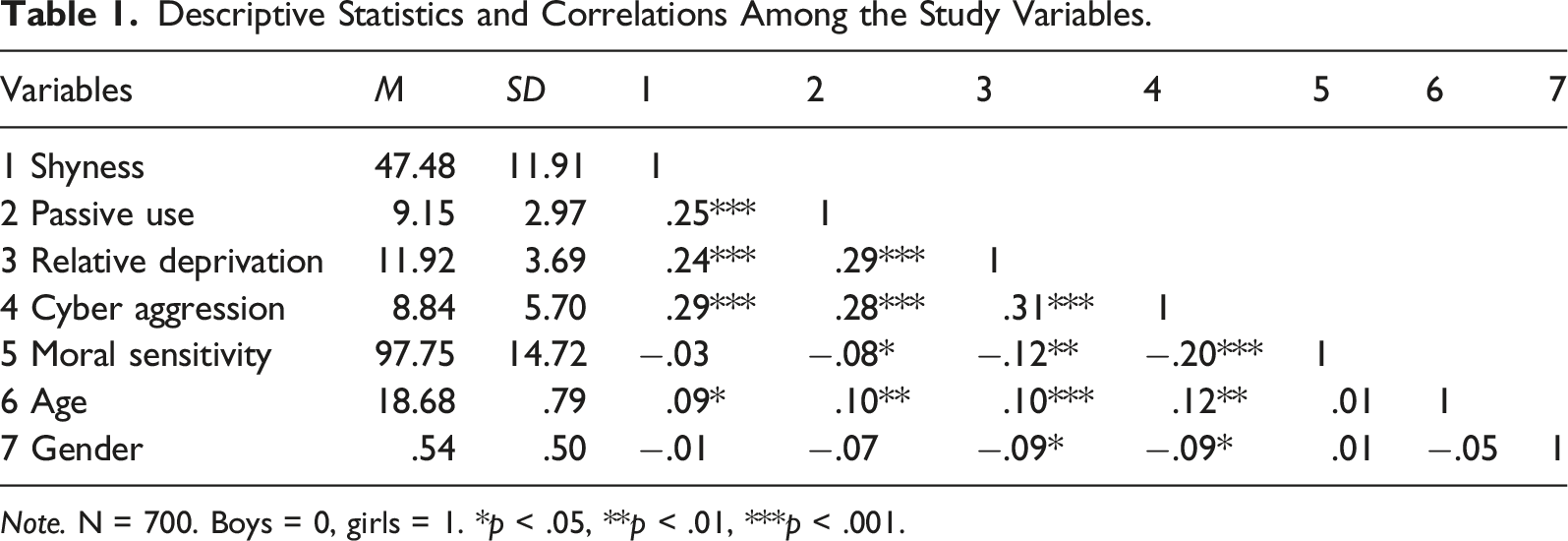
Note. N = 700. Boys = 0, girls = 1. *p < .05, **p < .01, ***p < .001.
Multiple Mediation Model Test
Testing the Pathways of the Multiple Mediation Model.
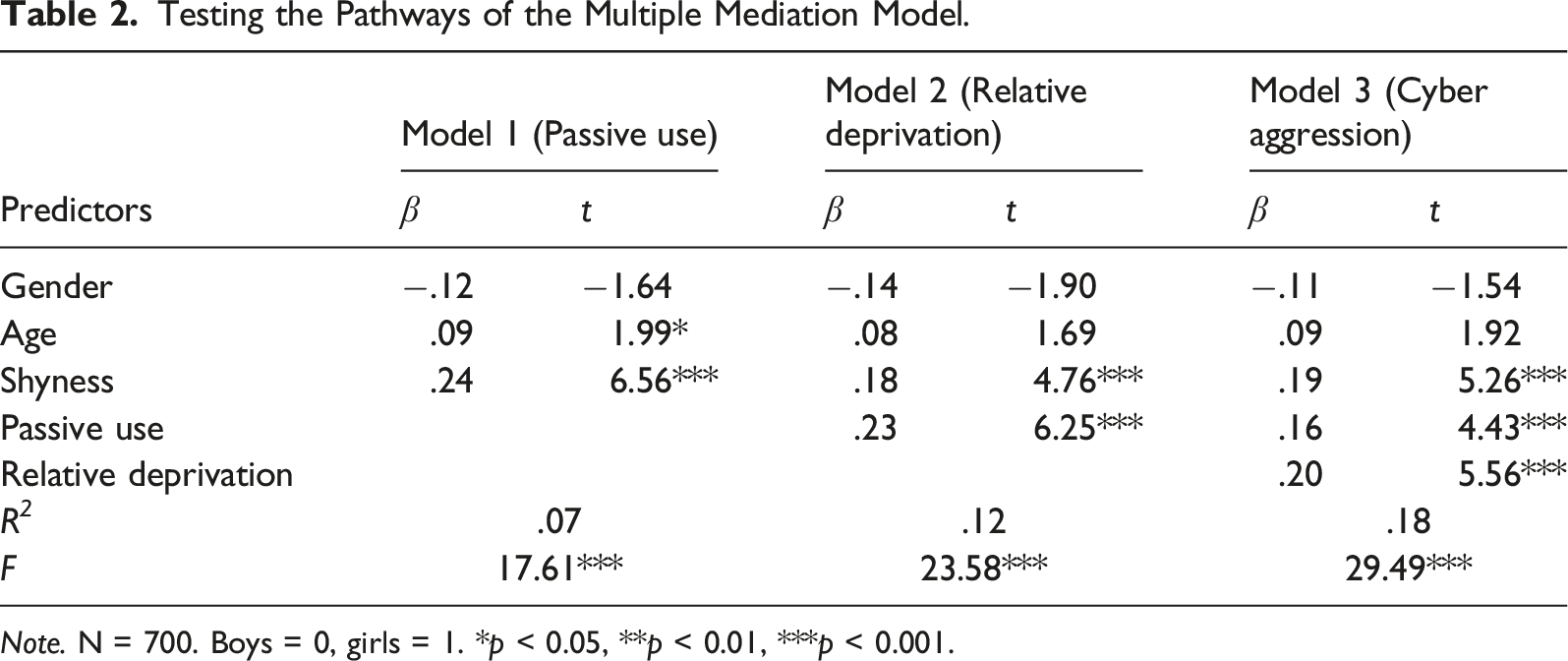
Note. N = 700. Boys = 0, girls = 1. *p < 0.05, **p < 0.01, ***p < 0.001.
Moderated Mediation Model Test
Testing the Moderated Mediation Effect Model.
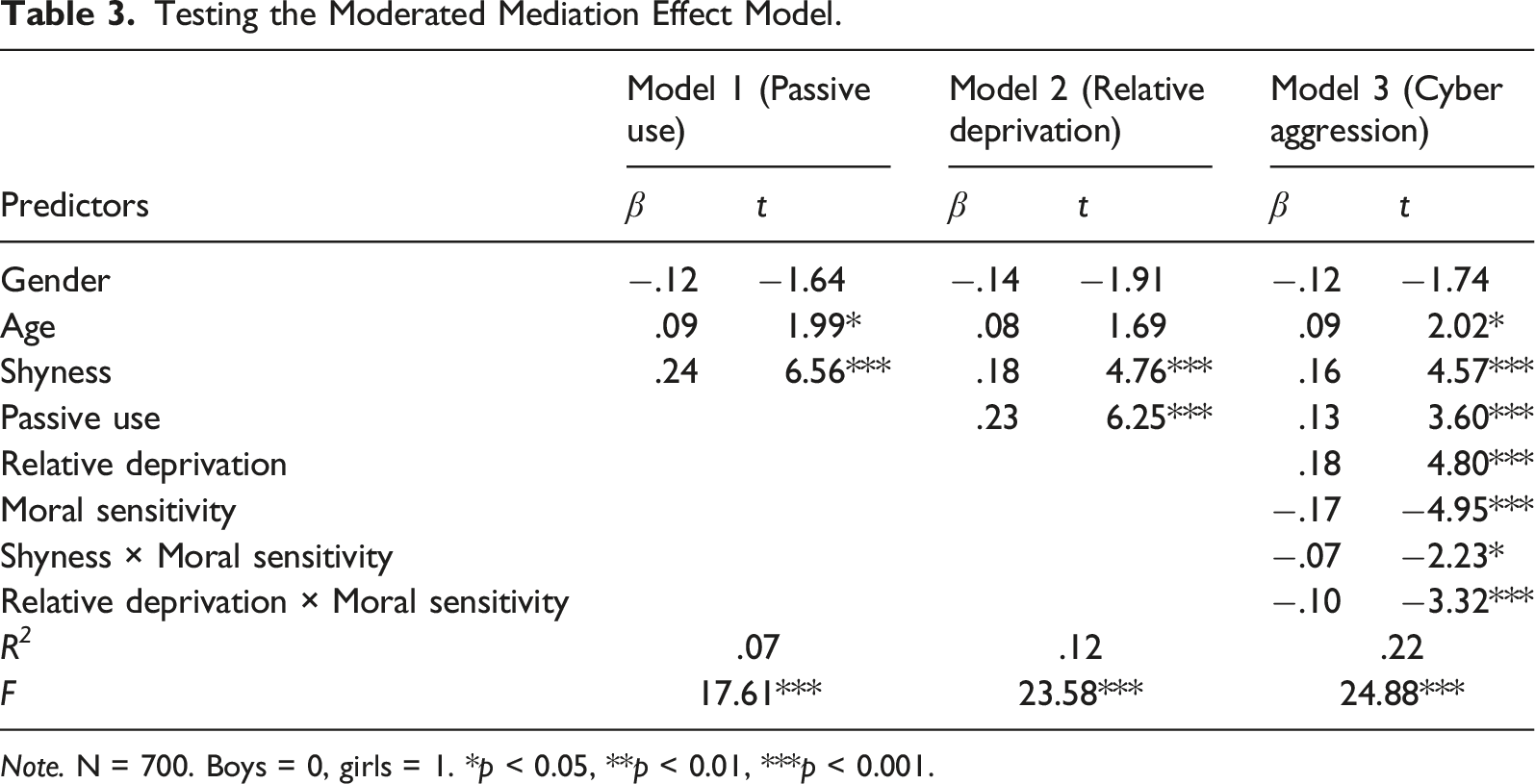
Note. N = 700. Boys = 0, girls = 1. *p < 0.05, **p < 0.01, ***p < 0.001.
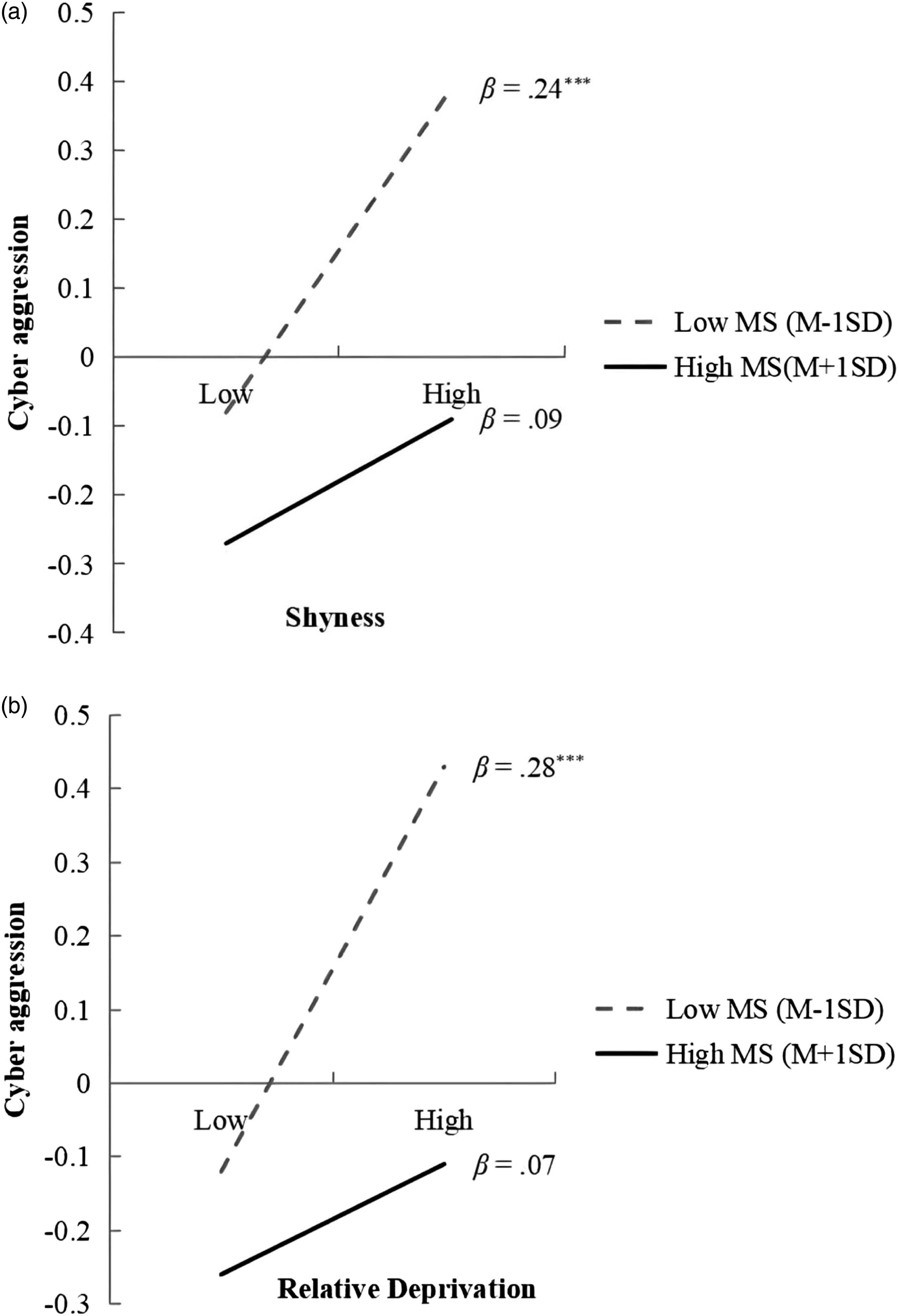
(A) Moderating effect of moral sensitivity on the relationship between shyness and cyber aggression. Note. MS = Moral sensitivity. (B) Moderating effect of moral sensitivity on the relationship between relative deprivation and cyber aggression. Note. MS = Moral sensitivity.
In addition, moral sensitivity negatively moderated the effect of relative deprivation on cyber aggression (see Figure. 2(B)). Specifically, at a low level of moral sensitivity (moral sensitivity = M - 1SD), relative deprivation had a significant predictive effect on cyber aggression (simple slope = .28, SE = .05, t = 5.59, p < .001, 95% CI [.18, .38]), and at a high level (moral sensitivity = M + 1SD), relative deprivation had a nonsignificant predictive effect on cyber aggression (simple slope = .07, SE = .05, t = 1.61, p = .11, 95% CI [-.02, .16]).
Discussion
The total effect showed that shyness had a positive association with cyber aggression among Chinese youth, supporting Hypothesis 1. This result supported the social fitness model (Henderson & Zimbardo, 1999) and was also consistent with the findings of previous research testing the relationships between shyness and internet problem behaviors (Wang et al., 2020). Social anxiety and victimization may be stressors for shy individuals (Henderson & Zimbardo, 2001; Zhao et al., 2020), triggering them to magnify cyber-displaced aggression (Wright & Li, 2012). Another explanation is that internet anonymity allows some shy individuals to express their repressed emotions in reality (Luo et al., 2013), and these emotions may be released through cyber aggression. Additionally, once they experience unpleasantness on the internet, they have trouble controlling their emotions and behaviors (Han et al., 2017), which is also a crucial predictor of cyber aggression (Hoareau et al., 2021).
Mediating Role of Passive Use
Consistent with Hypothesis 2, the results showed that passive use mediated the association of shyness and cyber aggression, which supported the social fitness model (Henderson & Zimbardo, 1999), implying that shy individuals are more likely to rely on social network sites to learn about great relationships online and show greater frequency, even in passive use. However, this usage is prone to social comparison and further increases the risk of cyber aggression.
On the one hand, shyness was positively correlated with passive use, consistent with the results of existing study (Wang et al., 2020). Shy individuals may regard social network sites as their new attachment figures to alleviate attachment anxiety (Lei & Wu, 2007). Thus, even when not disclosing information, browsing others’ statuses can help individuals learn about their friends’ current situations and alleviate the anxiety associated with insecure attachment. In addition, shy individuals are more likely to pursue social needs through the internet (Luo et al., 2013). Passive browsing on social network sites is quick and easy to control and can meet users’ missing relationship needs (Li et al., 2019).
On the other hand, passive use was positively related to cyber aggression, which can be explained by two factors. First, shy individuals with passive use are more sensitive to perceived stress (Yang et al., 2018). Pressure may be amplified after receiving stressful information, and they may feel victimized online (Quintana-Orts et al., 2020). Therefore, they attack others online to relieve pressure and protect themselves (Camacho et al., 2021). Second, due to passive use, shy individuals lack social presence online, which has a negative influence on their interpersonal relationship health (Quiroz & Mickelson, 2021), and this outcome causes shy individuals to lose their willingness to relax online, leading them to further show cyber aggression. Moreover, people with a high level of passive use will take nonnormative means (e.g., vandalism) to improve or protect themselves if the situation cannot change (Smith & Huo, 2014). The browser may see others’ posts online as an unchanging situation, triggering their aggression on the internet.
Mediating Role of Relative Deprivation
The present study found that relative deprivation mediated the association of shyness and cyber aggression, consistent with Hypothesis 3. This result supported the social fitness model (Henderson & Zimbardo, 1999), implying that the negative emotions and cognitions of shy individuals make them more likely to experience relative deprivation, which is associated with cyber aggression. Two factors can be used to explain this result.
First, shyness was positively correlated with relative deprivation, consistent with the existing research results (Gao et al., 2017). From the perspective of attribution, shy individuals tend to attribute stable internal causes to themselves (Alm, 2007), and this negative cognition obsesses them and produces negative emotions, resulting in relative deprivation. In addition, shy individuals have lower self-control, which is negatively associated with relative deprivation (Mishra & Novakowski, 2016).
Second, relative deprivation was positively correlated with cyber aggression. Previous studies support this interpretation. From the perspective of attention bias, individuals with a high level of relative deprivation have difficulty filtering out threat-related information and feel anxiety (Zhang et al., 2021) on social network sites, triggering cyber aggression (Kokkinos & Antoniadou, 2019). From the perspective of cognition, people with high relative deprivation are inclined to maladaptive cognition, which is excessive positive belief and inappropriate expectations of the internet world, triggering pathological internet use (Ding et al., 2018). Cyber aggression may be deviant behavior aimed at reversing the cognition of relative deprivation.
Sequential Mediating Effect of Passive Use and Relative Deprivation
Consistent with Hypothesis 4, the present study found that passive use was positively correlated with relative deprivation; that is, youth who frequently use social network sites passively are more likely to experience relative deprivation. Most social network sites’ contents, such as beautiful photos, are selectively self-presented by users, and this positive and wonderful information triggers negative comparisons in passive users (Liu et al., 2017), which provokes their high relative deprivation. Based on the above results, the present study found that passive use and relative deprivation play a chain mediating role in the relationship between shyness and cyber aggression, which supported Hypothesis 5. Specifically, individuals with a high level of shyness exhibit more passive use, which is accompanied by relative deprivation, and eventually show cyber aggression. The results supported the relative deprivation theory (Mummendey et al., 1999), in which shy individuals are more frequently exposed to passive use (Ryan & Xenos, 2011), and this usage triggers social comparison (Liu et al., 2017) and experiencing relative deprivation (Mummendey et al., 1999). The negative cognitions and emotions associated with a high level of relative deprivation will eventually be released on the internet through cyber aggression (Ding et al., 2018).
Moderating Role of Moral Sensitivity
The present study found that moral sensitivity moderated the direct and indirect associations between shyness and cyber aggression, supporting Hypothesis 6. On the one hand, moral sensitivity buffered the association between shyness and cyber aggression. Specifically, shyness was positively associated with cyber aggression at a low level of moral sensitivity; however, there was no significant relationship between shyness and cyber aggression at a high level of moral sensitivity, which supported the integrated model (Arsenio & Lemerise, 2004) that a high level of moral sensitivity may inhibit cyber aggression resulting from shy individuals’ negative emotions. Moral standards are an important variable for understanding cyberbullying behavior. Individuals who develop strong moral values, specifically those who have strong principles, engage in less cyber aggression (Perren & Gutzwiller-Helfenfinger, 2012). The perspective of cognitive neuroscience may also explain the results. The process of moral sensitivity can promote empathic concern (Decety et al., 2011). A high level of empathy could reduce individuals’ cyberbullying perpetration (Schultze-Krumbholz & Scheithauer, 2013).
On the other hand, moral sensitivity buffered the association of relative deprivation and cyber aggression. Specifically, relative deprivation was positively associated with cyber aggression at a low level of moral sensitivity, while relative deprivation and cyber aggression were not significantly associated at a high level of moral sensitivity. The result supported the integrated model (Arsenio & Lemerise, 2004) that individuals’ judgments of whether an event belongs to the moral domain interact with emotion and affect subsequent aggressive behavior (Gao & Chen, 2008). Individuals with a low level of moral sensitivity may categorize cyber aggression as a means of releasing their emotions or protecting themselves, namely, their personal domains, so they may be less strict about their behaviors (Turiel, 2006). Thus, they indulge in cyber aggression triggered by relative deprivation. In contrast, when they categorize events as in the moral domain, they perceive rules as unchangeable and judge behaviors that break rules as more serious (Yu & Kou, 2015), and this awareness resists the impulse of individuals with relative deprivation to violate society’s moral standards to engage in cyber aggression (Piccoli et al., 2020).
Implications
The present study makes a theoretical contribution by exploring the relationship between shyness and cyber aggression and the underlying mechanisms. This study revealed that the frequency of passive use and a high level of relative deprivation mediate cyber aggression in shy individuals, which expands the explanatory power of the social fitness model in the field of cyber aggression. In addition, the study investigated the moderating role of moral sensitivity, which enriches the cross research of morality and online behaviors and provides proof of the integration of the social information processing model and moral domain theory.
Furthermore, the present study contributes practical implications for preventing cyber aggression in shy individuals. From the study, four types of interventions could be used to reduce cyber aggression among shy individuals. First, the high cyber aggression of shy individuals is associated with their passive use. Shy individuals should be encouraged to reduce their frequency of passive use, such as lurking. Second, shy individuals’ relative deprivation is a risk factor for cyber aggression. A study finds that hope reduces risk-taking behavior in relatively deprived people (Keshavarz et al., 2020). Nurturing hope in them may help reduce their cyber aggression. Third, because passive use may exhibit cyber aggression through relative deprivation, we should guide shy individuals to rationally view the relevant positive information posted by others on social network sites, reducing the experience of relative deprivation caused by passive use. Moreover, it is necessary to develop individuals’ moral sensitivity. Moral sensitivity is largely a learned ability. Teachers should often provide ethics education, encourage students’ moral behavior, and improve the moral climate in schools. Managers of social network sites should use ethical labels to remind people to think of issues in moral terms, encouraging them to demonstrate moral sensitivity (Sparks, 2015).
Limitations and prospects
The present study has some limitations that future research should address. First, the cross-sectional design used in this study can reveal only the correlation of the variables. Future research should adopt a longitudinal research design to explore the stable relationship between these variables.
Second, the self-report measures used in this study may have been influenced by the participants’ other personality characteristics. Future research should consider using more ecologically valid measurements to explore their causal relationships with cyber aggression, such as by manipulating passive use, relative deprivation, and moral sensitivity through experimental research.
Third, the current study examined only shy individuals’ passive use. As social network sites have many features, users may interact with these sites differently. Researchers have developed three levels of social network site engagement: active social, active nonsocial, and passive use (Gerson et al., 2017). When investigating the association of shyness in further research, the three usages of social network sites and cyber aggression should be considered.
Fourth, the sample of this study has some limitations. The sample had a relatively narrow age range (17–20 years) and included only Chinese students, which limits the generality of the results. Some researchers have found that the prevalence of cyberbullying is lower among younger children or older individuals (Kiriakidis & Kavoura, 2010; Wang et al., 2019). Exposure to the internet may be one explanation for the age difference. The features of cyber aggression across age and cultural groups should be explored in future research.
Finally, only passive use and relative deprivation were included as mediators in the present study. Previous research has found that individuals with high shyness may exhibit aggression due to relative deprivation triggered by upwards social comparison (Zhao et al., 2019), which might be a mediator in the testing model. Future studies should explore the mediating role of upwards social comparison in the relationship between shyness and cyber aggression.
Footnotes
Declaration of Conflicting Interests
The author(s) declared no potential conflicts of interest with respect to the research, authorship, and/or publication of this article.
Funding
The author(s) disclosed receipt of the following financial support for the research, authorship, and/or publication of this article: This study was funded by the National Natural Science Foundation of China (31671160), the Major Project of National Social Science Foundation (19ZDA363).
Ethical approval
All necessary ethical standards were followed in studies involving human participants. Approval was obtained from the ethics committee of Beijing Normal University (IRB Number: 202109280047).
Informed consent
Informed consent was obtained from all individual participants included in the study.
Data Availability
The datasets generated during and/or analyzed during the current study are available from the corresponding author on reasonable request.
