



Abstract
Reputation systems are a popular feature of web-based platforms for ensuring that their users abide by platform rules and regulations and are incentivized to demonstrate honest, trustworthy conduct. Accrual of “reputation” in these platforms, most prominently those in the e-commerce domain, is motivated by self-interested goals such as acquiring an advantage over competing platform users. Therefore, in community-oriented platforms, where the goals are to foster collaboration and cooperation among community members, such reputation systems are inappropriate and indeed contrary to the intended ethos of the community and actions of its members. In this article, we argue for a new form of reputation system that encourages cooperation rather than competition, derived from conceptualizing platform communities as a networked assemblage of users and their created content. In doing so, we use techniques from social network analysis to conceive a form of reputation that represents members’ community involvement over a period of time rather than a sum of direct ratings from other members. We describe the design and implementation of our reputation system prototype called “commonshare” and preliminary results of its use within a Digital Social Innovation platform. Further, we discuss its potential to generate insight into other networked communities for their administrators and encourage cooperation between their users.
Introduction
In The Wealth of Nations, Smith (1776) described a new type of society that was emerging in the 18th century: the commercial society. This was characterized by increased social complexity, compared to traditional societies, due to a far more articulated division of labor, with individuals needing to interact with people and commercial partners they did not know much about. Smith saw recognition of consistent, repeated good conduct in others—or more simply, reputation—as the glue that kept commercial societies together, as it facilitated dealings with potentially unknown parties. Good conduct was a moral aspect, maintained out of individual self-interest, and considered by Smith (1776) as the “general principle which regulates the action of every man” (p. 29).
Achieving social order remains a relevant problem in our digital and networked society, with millions if not billions of people and organizations interacting online often with limited or no knowledge of the parties they are interacting with (Roser et al., 2015). It has long been argued that reputation is an important aspect facilitating collective action and promoting social order in “artificial societies” (Conte & Paolucci, 2002). One way to facilitate social order in online relations is to reproduce, in digital form, some dynamics that are associated with good conduct in (off-line) society. This is achieved with “reputation systems,” which can capture, aggregate, and display the reputation of unknown parties interacting online. Reputation systems are the proxies (Floridi, 2015) of distant actors, measuring their “good conduct” in past interactions. In many areas of the social web, the moral principle theorized by Smith thus manifests itself in reputation systems. However, a consequence of this is that individual self-interest is assumed, often uncritically, as the main underlying principle of the design of these systems. This can be seen in the work of influential authors such as Dellarocas (2003) or Farmer and Glass (2010).
Reputation systems based on individualistic models are common in e-commerce websites (e.g., eBay or Amazon) in the form of rating systems, but they are now present in other platforms where communities of users operate. However, the digitization of word-of-mouth dynamics that exists in off-line communities need not necessarily be based on individualism or self-interest, nor is it obvious that this can deliver a design that meets the needs of all types of online communities. Individualistic models of reputation inevitably shape the relations within an online community. Some of these assumptions may work for certain contexts, such as e-commerce, but may be far less effective in other contexts.
Elsewhere, we have made the point that individualistic reputation design principles may actually clash with the goals of communities that have collective action, emancipation, the building of commons, and reciprocal support at their core (Wilson & De Paoli, 2019). This article builds on our previous discussion by addressing one main question: How can we redesign online reputation as a concept that first embraces the consideration of the community as a whole, and then the articulation of the community with the individuals that compose it? We approach this question by conceptualizing online social communities as assemblages (DeLanda, 2019) and considering that reputation is an emergent property of these assemblages rather than an essential property of each individual in a community. For the purpose of modeling a reputation system, this therefore requires a conceptualization of online communities not as the sum of individuals, as proposed by Dellarocas (2010), but rather as assemblages of people and informational objects. In socio-computational terms, we propose to use social network analysis to compute a reputation metric that is derived from the properties of socio-technical assemblages rather than from ratings provided by individuals focused on satisfying their own interest. This follows a suggestion from DeLanda (2019) that social network analysis can be used to capture the dynamics of a community as an assemblage. We take this idea forward by using a model to measure the density of a network proposed by Batagelj and Zaversnik (2003) and applying it to produce a reputation metric for an online community.
To this end, this article describes a prototype reputation system based on assemblage theory. Our reputation model, which we call commonshare, is one outcome of a Digital Social Innovation (DSI) research project aimed at designing and building a platform (called Commonfare.net)—a dedicated online community devoted to social innovation in the areas of poverty emancipation and alternative forms of welfare. The purpose of Commonfare.net is to support people who have been affected by poverty or unemployment in sharing their stories of emancipation and reaction to their conditions. Designing for this specific community led us to a critique of individualistic reputation models and to the conceptualization of the commonshare as a system based on relationality and community density. The commonshare is currently a working prototype, and in this article, we will present its theoretical foundations, its computational modeling, and some initial results from its use.
Individualism in Reputation Systems
According to the Cambridge English Dictionary (2020), reputation is “the opinion that people in general have about someone or something, or how much respect or admiration someone or something receives, based on past behaviour or character.” This definition relates to the idea of “good conduct” based on past interactions as elaborated by Adam Smith. Reputation could also be defined more formally as “a collective measure of trustworthiness (in the sense of reliability) based on the referrals or ratings from members in a community” (Jøsang, 2007). This definition points to a relevant connection between reputation and trust; while these are often used synonymously (Hendrikx et al., 2015), they are overlapping but distinct concepts that must be discussed separately to understand the concept of reputation and its modeling in online communities.
Luhmann (2000, p. 103) defined trust as “an attitude which allows for risk-taking decisions.” When social actors cannot anticipate the outcomes of their actions, they employ trust as a way of managing the risk associated with uncertainty. Trust has also been related to the notion of social capital (Putnam, 2000) and has a functional role in supporting cooperative relations (Gambetta, 1998). Trust can also be viewed as a three-part relation, involving a trustor (the actor placing trust), a trustee (another actor upon which trust is placed), and an object of trust (the focus of the trustor’s action/decision; Sztompka, 1999). For example, we can think about two parents (the trustor) that leave their children (the object of trust) with a babysitter (the trustee). A trust relationship is formed between the parents and the babysitter, whereby the parents assume a risk, not entirely knowing in advance whether the babysitter will be capable of minding the child. By trusting the trustee, the parents are able to take the seemingly risky decision to leave their child under the care of a stranger.
Reputation can be defined in relation to trust, wherein according to the three-part relation, the trustor is seen as an entire community or group of people, who consider the trustworthiness of community members. Reputation is often based on word-of-mouth dynamics. Referring to the previous example, friends and acquaintances of the parents who also have small children (a community of people—the trustor) may recommend a particular babysitter among many (a trustee) based on their positive past experiences with that babysitter. This will allow the parents to reduce their risk as they know that other people in a similar situation have had a positive experience with the babysitter. The parents can know that the babysitter has had previous “good conduct.”
In the online world, reputation has become a central component of a variety of websites and platforms. Reputation is permeating the social web to such an extent that some authors have argued that we are moving swiftly toward a “Reputation Society” (Masum & Zhang, 2004; Newmark, 2011) or a “Reputation Economy” (Gandini, 2016), where reputation becomes the central form of social capital, uniting distant actors in working online communities. In this sense, reputation systems are the digitization of the cumulative processes of actions, judgments, and word-of-mouth dynamics that otherwise exist in the off-line communities (Dellarocas, 2003). The most prominent examples are in e-commerce platforms such as eBay or Amazon. These rely on their reputation systems to facilitate successful transactions between community members in the absence of direct face-to-face contact or the assurance of a well-established business (Panagopoulos et al., 2017).
There are different models for computing reputation, comprehensive reviews of which are provided by Hendrikx et al. (2015) and Jøsang (2007). However, the reputation systems of e-commerce platforms are the most dominant and diffused approaches (Panagopoulos et al., 2017). In these systems, buyers and sellers enter into a commercial–cooperative exchange, after which buyers are asked to rate their overall experience of the transaction on a scale (e.g., Amazon’s 1–5 stars or eBay’s negative/neutral/positive feedback). Future buyers can then see the aggregated ratings from a group of past buyers (the trustor) and thus decide whether to purchase an item (the object of trust) from a seller (the trustee). Other approaches include, for example, more explicit gamification strategies such as the use of points or badges to recognize achievements (Deterding, 2012) or simple counting of votes/marks of approval, commonly implemented in Massive Open Online Courses (Howley et al., 2017).
The variation in reputation needs from different communities is familiar to designers and theorists, and the design of an appropriate reputation system requires careful consideration. However, as mentioned in our Introduction section, there is often an uncritical acceptance that various reputation models can be built, starting from individualistic assumptions. This is clear in what Farmer and Glass (2010, p. 122) have called the “competitive spectrum” of reputation, presented in their influential book dedicated to the design of web reputation systems. The competitive spectrum is a well-known pattern for reputation design proposed as a way to help designers make decisions about the reputation models they should employ for the community they are building. The authors argue that, when building a reputation system, it is always important for designers to consider the purpose of the community, what kind of actions need to be rewarded (i.e., what counts as “good conduct”), and how these rewards should be represented (e.g., with points, stars, or badges). The idea is that communities with different goals require different reputation models.
In communities where there is high competition, Farmer and Glass (2010) propose that reputation systems may include user rankings for comparing performances, such as that used in competitive online games. Rankings, however, would not be appropriate for communities with goals of cooperation, or reciprocal support, as rankings would inevitably put community members on a competitive, rather than a cooperative, course. In such cases, the authors argue that senior community members of good standing may have status badges to illustrate that they are “helpful” to others. In doing so, other community members can determine the value of help from these senior representatives more easily. As an example, Moser et al. (2017) studied how trustworthy behavior was stimulated on “Mom-to-Mom” Facebook groups where mothers buy, sell, swap, and donate toys and clothes. Facebook does not provide any formal reputation system, thus trust was instead stimulated by the shared values of its members and behavior regulations enforced by group administrators.
Although the notion of a competitive spectrum explains differences in communities’ goals and needs, there tends to be a common assumption that individuals are always the sources and recipients of reputation. Under this assumption, even reputation models that aim to encourage cooperative behavior are still designed around one’s individual contribution and thus promote self-satisfaction. In certain situations, this model may be justifiable—major e-commerce platforms continue to employ reputation systems that encourage the simple accumulation of positive feedback, serving both buyers by quantifying and ranking the odds of a successful purchase, and sellers by consequently attracting more sales. However, theorists like Dellarocas, who make the point that online reputation amounts to digitized word-of-mouth in communities, always simultaneously describe communities in the social web as a sum of individuals (Dellarocas, 2010). Likewise, Farmer and Glass (2010) argue for an atomistic approach to design. In this approach, reputation statements (the building blocks/atoms of a reputation model) come in the form of a source making a reputation statement about something or somebody else (e.g., a buyer rates a seller after a purchase or a user gives a “like” to another user’s content, like a video). Then, several individual reputation statements are aggregated to form an overall indicator of trust, such as a metric or a badge.
Similar forms of individualistic reputation can also be observed in platforms outside of the e-commerce domain, across the competitive spectrum. One prevalent example is Stack Overflow, a popular question-answering community in which members post queries on software and programming problems, accruing reputation points and badges that are indicative of the usefulness of their contributions (Bosu et al., 2013; Movshovitz-Attias et al., 2013). In Stack Overflow, community reputation resembles “contributive social capital” (Schams et al., 2018), a form of social capital that represents “a person’s value-add [to their social network] due to their competence, trustworthiness, and social responsibility”. In Stack Overflow’s reputation system, the motives for acquiring reputation are often related to self-esteem rather than economic maximization.
The Commonfare.net Platform and the Need for a New Model
Mainstream approaches to reputation design tend to put individuals at the center and model the reputation system by conceptualizing (and consequently shaping) communities as a sum of separate individuals seeking self-satisfaction and self-interest. However, not all online communities see the prevalence of the individual over the collective. Communities aiming to create commons tend to accommodate community interest over individual self-interest and thus warrant a different starting point for reputation design.
This section of the article describes the Commonfare.net platform, providing context for its specific components to be discussed in the following sections, its sociopolitical orientation and to illustrate how and why an approach to reputation design differing from mainstream individualistic approaches was required. Commonfare.net is a prototype mobile-first, web-based DSI platform. The project was funded by the European Commission through the Collective Awareness Platforms for Social Innovation initiative. DSI projects, where technology is applied toward a goal of positive social impact, are classic examples of complex socio-technical systems, requiring a joint focus on understanding social needs that guide technical system design and on understanding the impact of technical decisions on the social system being designed for.
Commonfare.net is a DSI platform, through which people experiencing precarious income and employment conditions can take action to improve their situations. Commonfare.net aims to be bottom-up, socially equitable, and cooperative through its promotion of “commonfare,” an alternative approach to social welfare (Fumagalli & Lucarelli, 2015). Key features of commonfare include the reappropriation of the common (including immaterial and material goods), provision of a Basic Income to all members of society and development of alternative, complementary financial circuits for the management, and circulation of social wealth. The platform’s main goal is to offer a social innovation route that people could embrace to improve their living conditions, especially those who are at risk of, or actively experiencing, precarity and social exclusion. Participants in the project included young people who were unemployed or in precarious employment, non-Western migrants, and benefit recipients. Commonfare.net offers a complementary channel for the provision of social welfare, and creation of alternative support and empowerment mechanisms. Thus, one of the platform’s core goals is to facilitate bottom-up cooperation, with users sharing resources (such as skills, experiences, and perspectives) to improve their lives, thereby creating a “common.” Key platform features are as follows: user and group profiles for displaying individual and collective information; a digital currency system for facilitating the exchange of goods and services; systems to encourage constructive, cooperative interactions, such as story sharing; and systems to assess contribution and/or correct platform use.
This article focuses on this final feature. In the remainder of this section, we briefly present the other features and their role in achieving the platform’s goals. This will reinforce the relevance of our work—the design of a system to assess the contribution to Commonfare.net.
Users in the platform are called “commoners”—a name chosen to emphasize that participants are more than merely individual “users” insofar as they contribute together to build a common. The platform allows commoners to write stories on their own experiences, ways of coping with problems, their own social innovations, and critical reflections on issues. Examples include: a workers’ self-organized nursery enabling their reconciliation of both parenthood and work needs; recovery of a closed factory where its redundant workers have, with no help from public authorities, created new productions, and thereby work for themselves; and a people’s clinic, where volunteer doctors offer medical services for the less well-off, with equipment provided through donations and fundraising.
Commoners can interact with stories and their authors in different ways: by reading these stories, leaving comments, or taking inspiration for the reproduction of authors’ experiences elsewhere. An example view of this section on desktop and mobile is shown in Figure 1.

The commoners’ voices section of Commonfare.net as it appears on desktop and mobile.
The platform also has a section where commoners can exchange both material and immaterial resources (such as skills and services) to mutually improve their living conditions. The exchange of these goods and services is facilitated by a digital exchange token called “Commoncoin,” which is awarded monthly to users as a form of digital basic income. The underlying motivation is that a complementary digital token could stimulate interactions and thus break down boundaries between communities that might otherwise find it difficult to initiate sharing practices.
The ethos of Commonfare.net values the provision of mutual support and activities that lead to communal benefit. From a collective action perspective, cooperation is an essential component of a strong and valuable commonfare. As in the physical off-line world, trust is important in facilitating and encouraging cooperation, especially among commoners that potentially do not know each other directly as well as identifying potential deviance from acceptable behaviors.
A New Theoretical Framing for Reputation System Design—Commonshare
The overarching goal of assessing and rewarding contributions to the common good of Commonfare.net required the design of a reputation system that differed from existing mainstream individualistic models and that otherwise embodied a more collective approach to reputation. Moreover, the approach was required to be computable (i.e., it would allow us to measure contributions to the development of a common good, to produce a metric supporting trust within the community). These two fundamental requirements suggested that an alternative approach could be found in the work of DeLanda and his assemblage theory (DeLanda, 2019). This is a theory for the study of social complexity and sees social phenomena through their emergent rather than their essential properties. Assemblages are described as social wholes “that cannot be reduced to the persons that compose them, but that do not totalise them either, fusing them into a seamless whole in which their individuality is lost” (DeLanda, 2019, p. 9). In an assemblage, the whole (e.g., the community) and the parts (e.g., individuals) exist through complex forms of aggregation. Thus, for example, social groups or even societies can be studied as assemblages where the task for the researchers is to account for how relations among the parts of the assemblages are not fixed but rather in flux and can stabilize through aggregation. The theory departs radically from other social theories that see social phenomena (whether individual or collective) as fixed and defined by well-established and unchanging properties and that, as a consequence, often operate various forms of reductionism. One example of such reductionism is methodological individualism and the idea that social phenomena are just an aggregation of individual components (DeLanda, 2006).
In his work, DeLanda cites reputation within a community as a relevant example of how “assemblages” work. DeLanda provides various examples of how close-knit communities are held together by reciprocal obligations. These communities are an example of the “assemblages” of the theory. Viewing communities through the lens of assemblage theory, reputation is not an essential property of an individual (e.g., the babysitter or e-commerce seller referenced in the previous section). Rather, it is an emergent effect of the relations between individuals and the whole of the community, such that communities (e.g., the friends of the parents and the babysitters) have the capacity to store reputations of individuals as a sort of collective memory of the whole. Indeed, on this, DeLanda (2019, p. 21) remarks that “Assemblages emerge from the interactions between their parts, but once an assemblage is in place it immediately starts acting as a source of limitations and opportunities for its components.” A good reputation may deliver new work opportunities for the babysitter, a bad reputation instead will just impose inherent limits or sanctions such as refusal of work opportunities. Moreover, when reciprocal obligations and enforcement against violations function properly, the community as an assemblage develops a set of dense relations among its members. Density is defined by the author as “the degree to which everyone knows everyone else” (DeLanda, 2019, p. 10). Again, it is important to remark that this density is contingent and can change further (e.g., decrease) via the interactions amongst the parts of the assemblage.
DeLanda also remarks that the relations within the community need to be “maintained in good shape” in order for a community as an assemblage to have good density, providing examples that are either material (such as looking after each other’s children) or expressive, such as “listening to problems and giving advice in difficult situations” (DeLanda, 2019, p. 30). Seen in this way, reputation is neither something that an individual can accumulate as a sort of capital nor simply the pursuit of individual self-satisfaction. Reputation becomes an emergent property of the community as an assemblage. It emerges from interactions of the parts of the assemblage rather than being inherent and an essential property of individuals. From this perspective, reputation is effectively stored as the density of community network relations from which individuals may benefit or be sanctioned, simply by being part of the community assemblage.
DeLanda’s assemblage theory is closely related to other social theoretical perspectives such as actor–network theory (ANT) that pay explicit attention to the role of nonhuman actants (Latour, 2007) including the material and the digital in social relationships and interactions. There are many parallels between the two approaches (Müller, 2015), since ANT also adopts a nonessentialist stance and accounts for the shifting networked relations of social phenomena. The key aspect of ANT for our research is the symmetrical focus on human and nonhuman actors (called actants) in these networks of relations. Indeed, from an ANT perspective, both humans and nonhumans (i.e., digital objects) are considered equally important in the emergence of agency, knowledge and trust from the network, with actants themselves understood to be products of the relationships between each other (Latour, 1987, 2007). For our modeling of a novel approach to online reputation, such a sociomaterial perspective would suggest that digital communities are more than just networks of people but also of digital artifacts and digital content (Lepa & Tatnall, 2006; Pelizza, 2018). Moreover, it is the set of relations among these heterogenous actants that shape the actants themselves. For example, in the case of Commonfare.net, we have digital objects such as stories, digital currencies, and comments from commoners on these objects in addition to commoners themselves. Commoners and digital objects mutually shape each other in the network of relations that are thereby formed. Thus, the assumptions underlying ANT would allow us to see both commoners and digital objects as part of a potential assemblage, and reputation would be the outcome of this heterogeneous set of relations.
We have therefore decided to combine the needs of Commonfare.net, the ANT-based idea of symmetry between humans and digital objects, and DeLanda’s intuitions about reputation in order to design a new approach for facilitating collective trust. We conceptualize the interactions that take place on Commonfare.net as a social network, whose sustained interactions strengthen the network in its entirety, fostering an increased density. In our approach, reputation is stored by the assemblage as a property of its relation density, which is then represented to the individual as the contribution of their actions within the community.
This approach is radically different to the individualistic model wherein reputation is accumulated by individuals, pursuing their self-satisfaction (e.g., Smith, 1776). Moreover, this approach will allow us to overcome the limits of individualism for the design of online reputation (e.g., Dellarocas, 2010). In the approach we propose, the density and level of activity within a networked community such as Commonfare.net are taken to be indications of the strength or value of the community and of the common that it has built. This value is created in all interactions, including those in which a user asks for advice, guidance, or material help and is not limited to contributions where someone answers a question, provides a solution, or delivers a commercial exchange. In Commonfare.net, commoners wish to be acknowledged for their contributions to the common and not for the delivery of a service, such that each commoner creates and owns a share of the common value. Hence, we refer to this as their commonshare—the individual share of the wider common good created by the community within the platform.
Social Network Analysis for Building a Commonshare
Designing a reputation system that captures the notion of reputation as a distributed and emergent construct requires a model that can account for a whole and its density, and from which individual reputations effectively arise. DeLanda’s work offers hints for a computational solution for modeling reputation in an assemblage. DeLanda remarks that in these cases, “we are dealing with assemblages that can be analysed using the resources offered by social network theory” (DeLanda, 2019, p. 29). In other words, social network analysis could afford the ability to mathematically model an assemblage approach to reputation, developing the following two properties: the community’s global form of reputation, defined as the “commonshare”; and each participant’s individual portion of this global commonshare.
In this section, we briefly describe some key concepts of social network analysis that enable us to model these properties. Metrics that have been developed in mathematical graph theory can be related to underlying social structures across the network or to properties of individuals within these structures (Newman, 2003). Considering social networks as mathematical graphs, each actor in the network (human or nonhuman) is a node, and any relationship between these nodes represents an edge. With this terminology, we are interested in properties of nodes and their edges that are indicative of influence in a network, termed as “centrality metrics,” as well as global properties of the network’s node-edge relations, from which insights can be obtained into overall community behaviors.
With respect to centrality, Freeman (1978) describes three primary measures as applied to the simple star network shown in Figure 2. In this network, the node labeled “p3” is intuitively the central node, which Freeman formalizes in three different ways. Its degree centrality (number of direct connections to other nodes) is 4, whereas all other nodes have a degree of 1. It has a high betweenness centrality, as it is a necessary point of traversal on the path between any other two nodes in the network. Finally, it has a high closeness centrality, as it is at most one edge away from all other nodes, whereas these peripheral nodes are two edges away from one another.
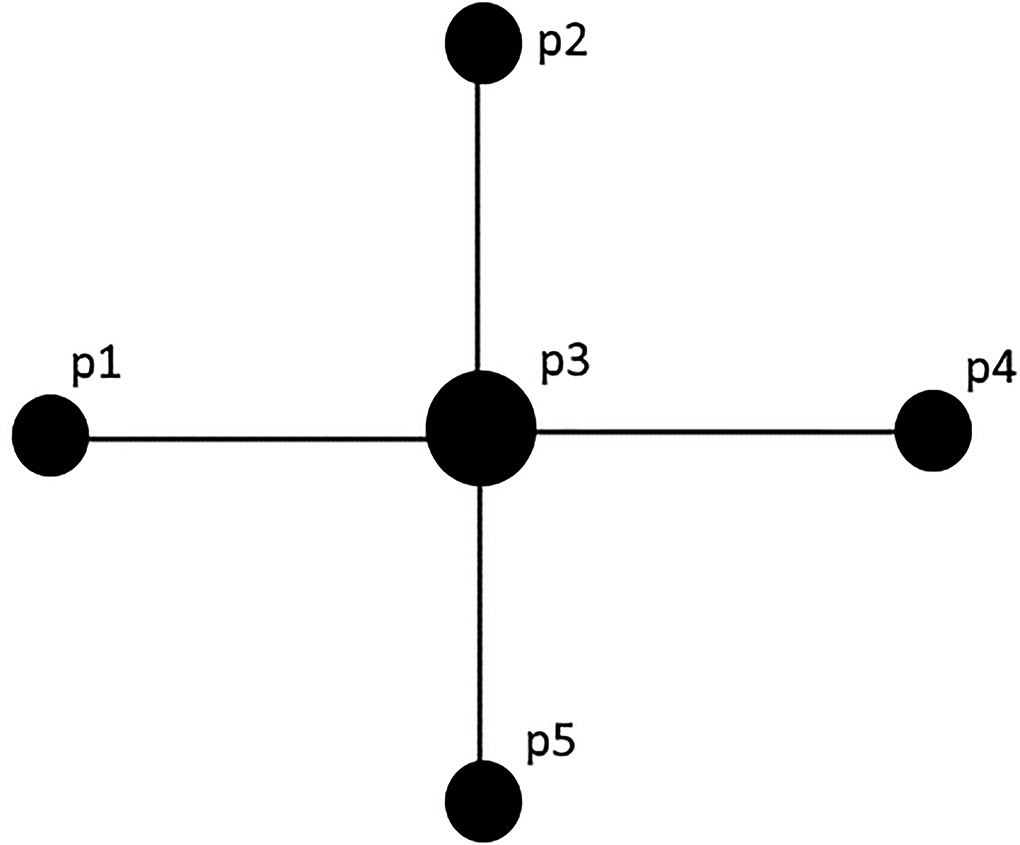
Freeman’s simple network to illustrate centrality measures (Freeman, 1978).
Calculating the Commonshare
From the considerations and assumptions of previous sections, a platform like Commonfare.net can be conceptualized as a social network where commoners’ interactions are mediated by content such as stories, posts describing available goods, skills, or services as well as profile pages for individuals and groups. A suitable representation for this network must satisfy the following requirements: It should capture the dynamics by which the platform’s community creates and accesses the common wealth of content shared online. It should clearly illustrate the commoners and content that most strongly contribute to the cohesion, sustainability, and growth of the platform.
We therefore model the network as a dynamic graph, which captures the emergence of aggregated complex dynamics formed from local interactions at the user level. High-level insights into community activity can be inferred from actions such as creating and sharing content, leaving comments on content, or replying to such comments (as well as the order in which these actions are taken).
These actions are logged in the platform database, which allows us to reconstruct the structural dynamics between platform users and their created content. To model the assemblage as an evolving graph, we start by considering two sets of nodes: the set of platform users and the set of their created digital objects. New objects are created, and new users join the platform, causing these sets to grow over time. We assume an initial set of objects and users exist at the beginning. When a Commoner A posts a new story, she is the owner and a link exists a priori between her and this story. If another Commoner B leaves a comment, a link will be created between Commoner B and the story. Further, an additional link will be created between Commoner A and her story, which represents the strengthening of the contribution she has made. Links between commoners can also be created irrespective of content through conversations or transactions of digital currency. These interaction types, and their directionality, are illustrated in Figure 3.
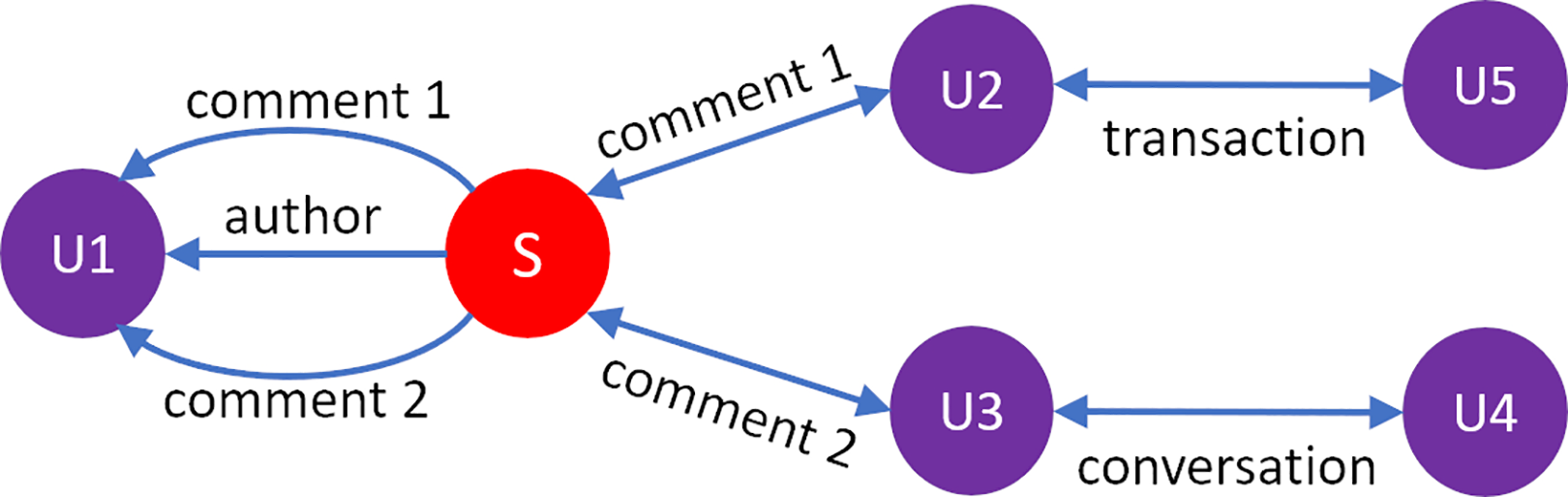
Interaction types and their directionality in Commonfare.net
This node–link graph structure of user interactions—the assemblage—allows us to determine each commoner’s influence in the network. There are several such methods to determine how influential (central) a node is, which reflect its relationship with the wider network structure and how it contributes to the overall density, some of which we reference in Figure 2. For Commonfare.net however, we decided to use the coreness metric. The advantage of this metric is that it connects an individual to a global structural property of the assemblage as opposed to a local one. In other words, it allows us to model the whole-part relation, fundamental to the notion of an assemblage, providing an accurate measure of a node’s influence and allowing us to model an assemblage approach to reputation.
Use of k-Core Algorithm
Our measure of an individual’s contribution to the common value is primarily based on their core number within a k-core decomposition of the aforementioned interaction network. A k-core is a maximal subgraph (the largest subgraph in which all nodes are reachable from each other) that consists of nodes with a degree of at least k. The core number of a node is the largest value k of a k-core containing that node. We use a Python implementation of an algorithm introduced by Batagelj and Zaversnik (2011), which is included in the NetworkX Python package (https://networkx.github.io/). The
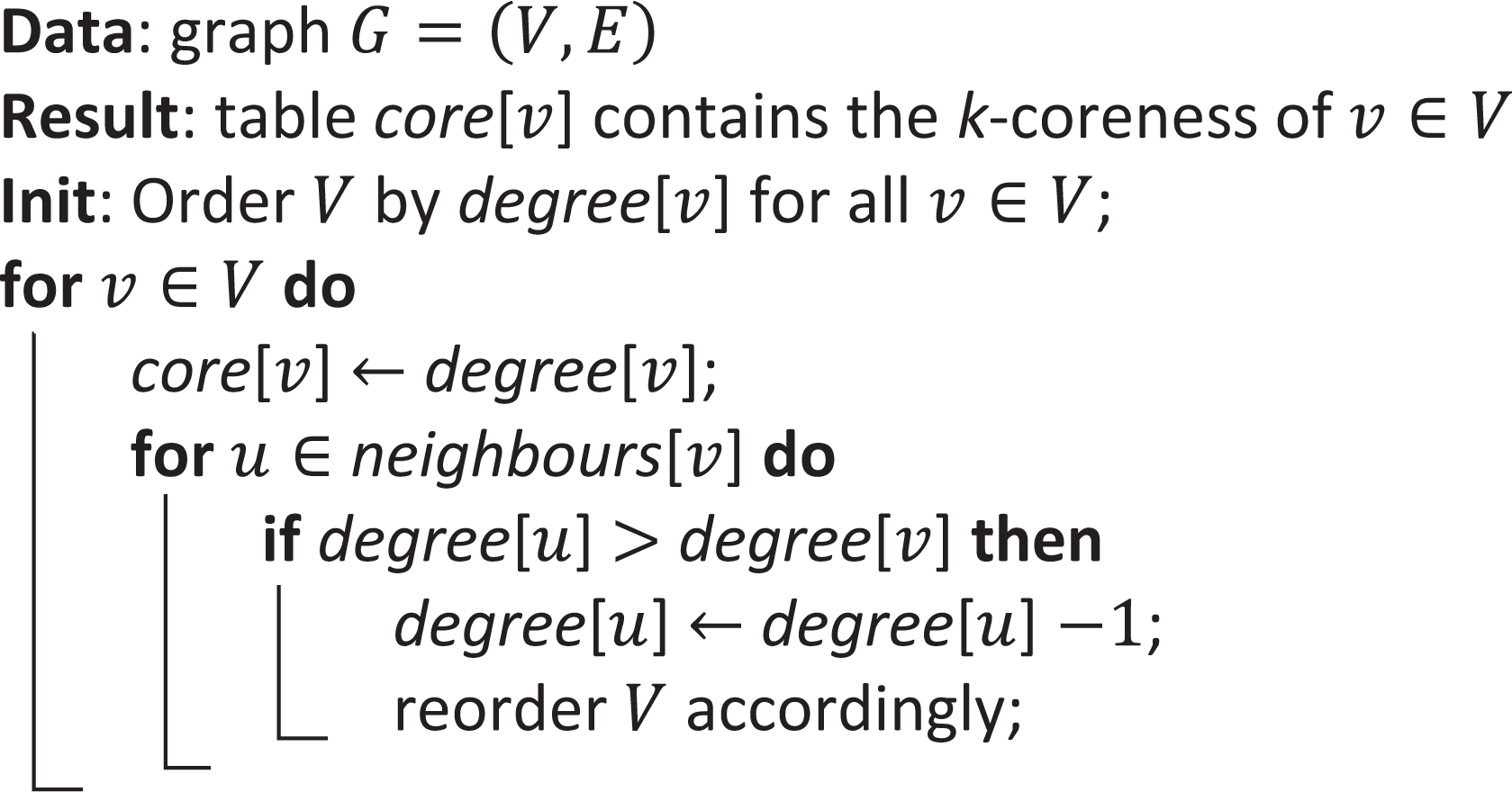
The Batagelj and Zaveršnik algorithm for k-core decomposition.
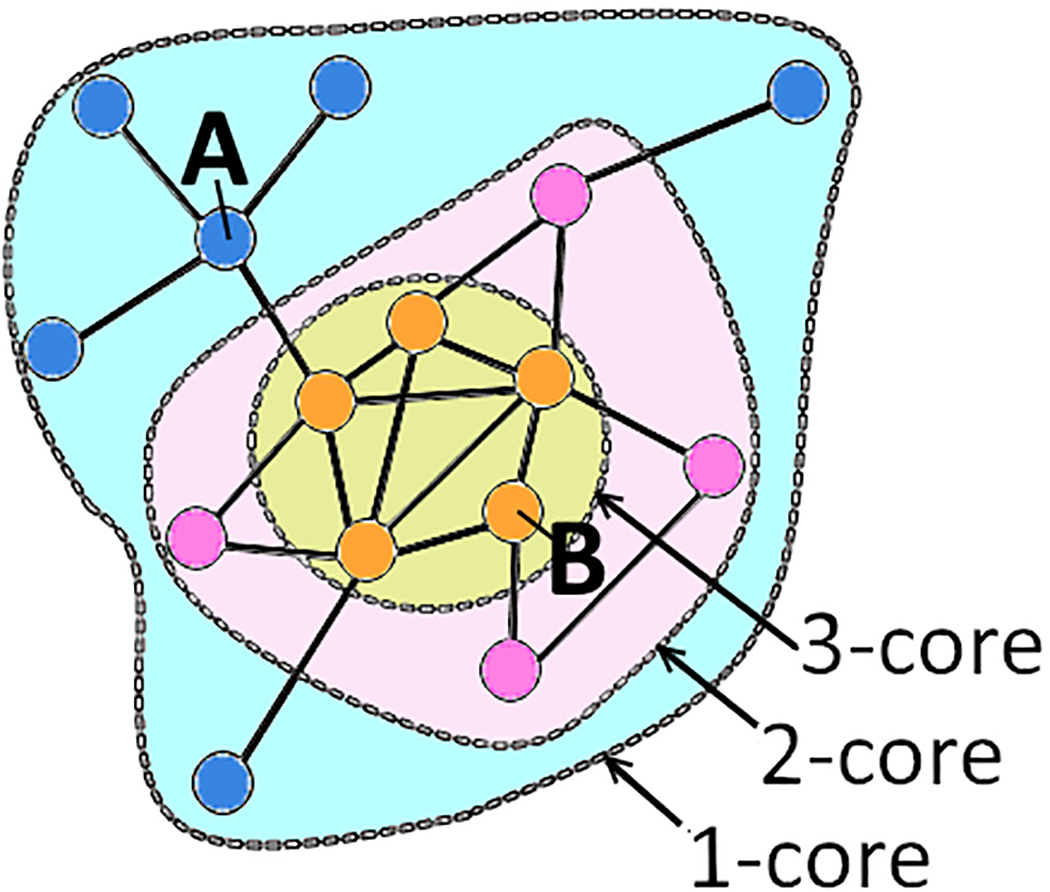
Example k-core decomposition.
As Figure 4 shows, an advantage of the core number metric is that it considers a node’s influence with respect to the global graph structure, as opposed to a localized measure of influence, such as its degree. For example, although Node A in this figure has a higher degree than Node B, the interactions of the latter are with other pivotal members of the network. As such, the k-core decomposition method can be applied to identify influential members of social networks—an approach that has been verified in previous studies of Twitter influencers (Brown & Feng, 2011), and protest movements on Twitter (González-Bailón et al., 2011). We therefore use a node’s core number as a base measure of its impact in the interaction network of Commonfare.net and thereby the commonshare of the commoner whom it represents.
Modifications for Dynamic, Weighted Networks
In this work, we have followed Garas et al. (2012) in modifying the original k-core decomposition to allow different weights to be assigned to different interaction types. We adopt the following heuristic principles (they are not guaranteed to yield optimal values but instead serve as practical guidelines): Interaction types may be weighted differently: In Commonfare.net, interactions are diverse, from transferring digital currency to leaving a comment on a story. Each interaction is given a weight in both directions based on our own estimates of significance. These estimates should be tuned in future based on commoners’ input. Interaction weights decrease over time: As a dynamic network, commoners’ level of contribution at a particular point in time is dependent on how recently their interactions took place. Links between commoners are easy to form but require continued effort to maintain their strength. Repeated interactions decrease in weight: The growth of Commonfare.net relies on commoners establishing new interactions. While multiple interactions increase the weight of an edge between nodes, subsequent interactions along the same edge decrease in value, reducing the impact of potentially collusive behavior.
Our proposed modifications to the k-core decomposition algorithm account for the weighted, directed, dynamic properties of the assemblage. Fair calculation of the commonshare is important for understanding and encouraging further platform use. The following section describes the implementation of these principles as well as the commonshare calculation process.
Implementation
This section briefly details the implementation of the processing pipeline we employ for this calculation—beginning with a Graph Exchange XML Format (GEXF) file and ending with a series of JSON files for visualization. 1 Presently, graph files that are in other formats (such as GraphML, DOT, or CSV) are imported into Gephi (https://gephi.org/), a graph visualization platform, and exported into the required GEXF format. Thus, our approach can be used for any graph format supported by Gephi.
Preliminary Parsing
To be read by the scripts for commonshare calculation and JSON graph generation, the GEXF file must conform to certain constraints, described as follows and illustrated in Figure 5A.
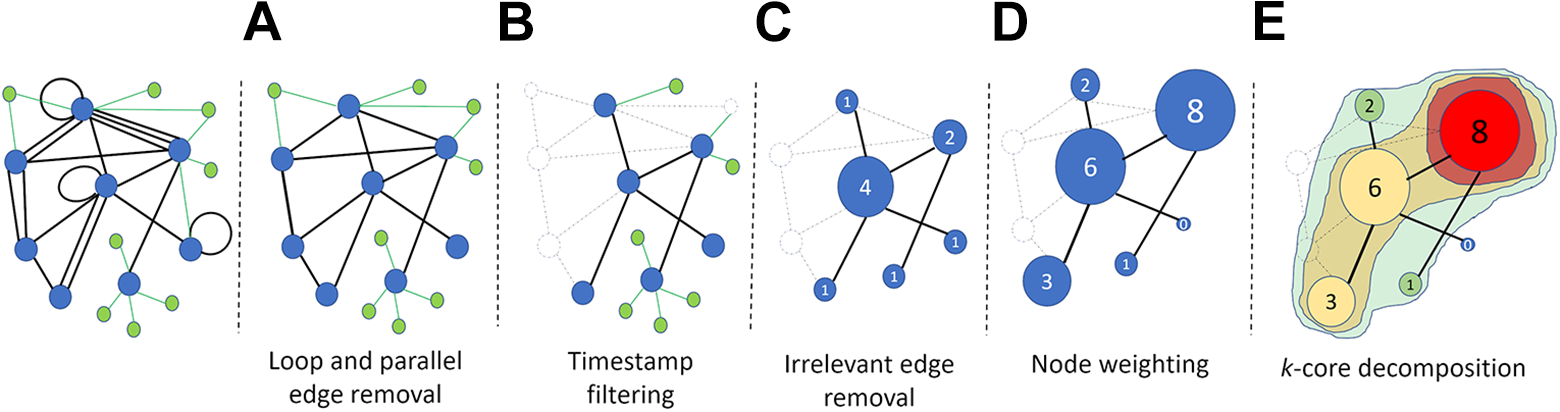
Steps involved in calculating weighted commonshare of a graph. (A) Loop and parallel edge removal. (B) Time stamp filtering. (C) Irrelevant edge removal. (D) Node weighting. (E) K-core decomposition.
Removal of loops
For the k-core calculation to operate correctly, all edges where the source node is also the target are removed. Given that the premise of commonshare is based on one’s interactions with others in a social network, it should not be possible to accumulate reputation by interacting with oneself.
Merging of bidirectional edges
Parallel edges must be reduced to a single edge, while retaining the attributes of both edges. For example, an edge from a Node x to another Node y may have a different weight to that of the edge from y to x. To differentiate the two, we simply append the source node ID onto the value of the attribute, delimited by a forward slash. Figure 6 illustrates the change in node-edge structure alongside changes to the underlying GEXF.
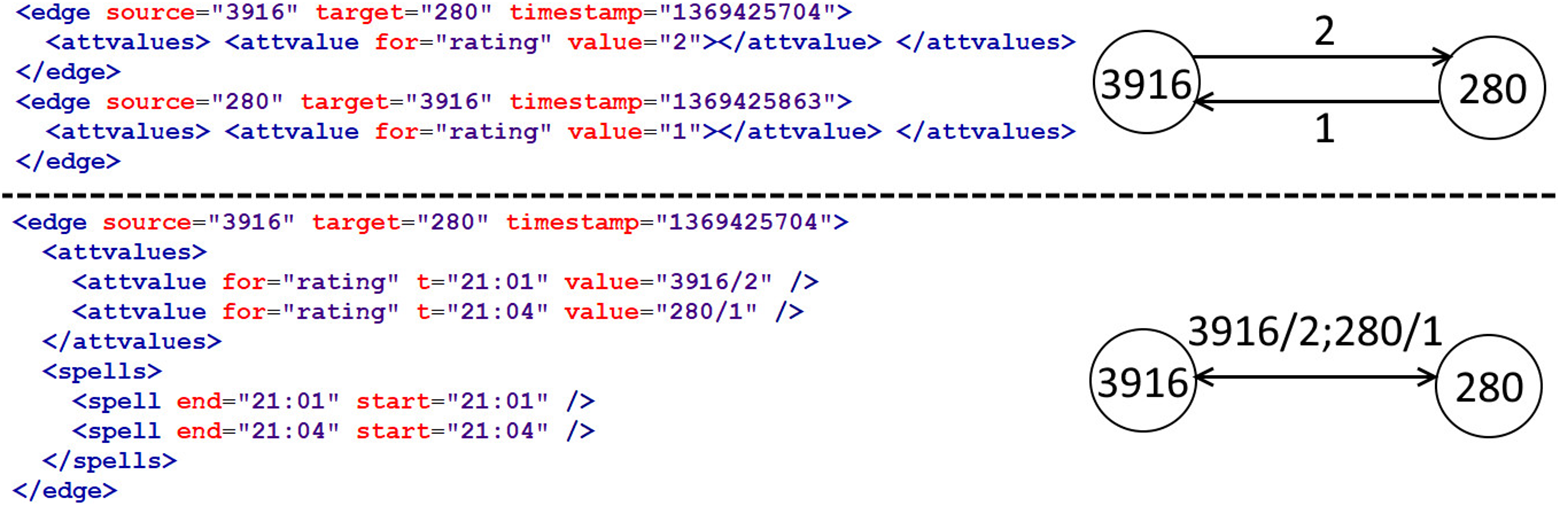
Removal of parallel, directed edges in GEXF.
Dynamic Subgraph Generation
To understand the dynamic nature of network activity, an interval is chosen on which to segment the entire time-stamped graph into windowed snapshots. In the case of Commonfare.net, we use a 2-week interval, such that subgraphs are generated for every 2-week window of activity, with no overlap of these windows.
Time stamp filtering
As shown in the lower half of Figure 6, “spell” attributes are appended to edges (as well as nodes) that represent the time periods in which they existed. Each edge and node must have a spell start or end that exists in the window, otherwise it is removed (Figure 5B).
Irrelevant edge removal
In the case of Commonfare.net, all edges that connect commoners or stories to “tag” nodes are not indicative of a contribution and therefore must be removed to avoid influencing the k-core algorithm. At this point, the degree of each node can be calculated (Figure 5C).
Node weighting
In addition to the node’s degree, each node is given a weight based on the attributes of its edges, thereby distinguishing it from the original k-core algorithm (Figure 5D). For each edge, the following may be present in a network data set for determining edge weight: No additional information: This is often the case in existing data sets, which simply document that an edge exists between two nodes with no further information. A “weight” edge attribute: Network data sets may include an explicit edge weight attribute. For example, in trust networks, this weight corresponds to the source node’s trust ranking of the target node. Number of parallel edges: During the preliminary parsing phase, the number of times either node initiated an interaction is stored. When no other information is present, this number is used as a proxy for the edge’s weight. Weighted action type attributes: In the case of Commonfare.net, an edge weight can be inferred by the actions between nodes that it represents. Algorithm 2 shows the process by which this weight is calculated.
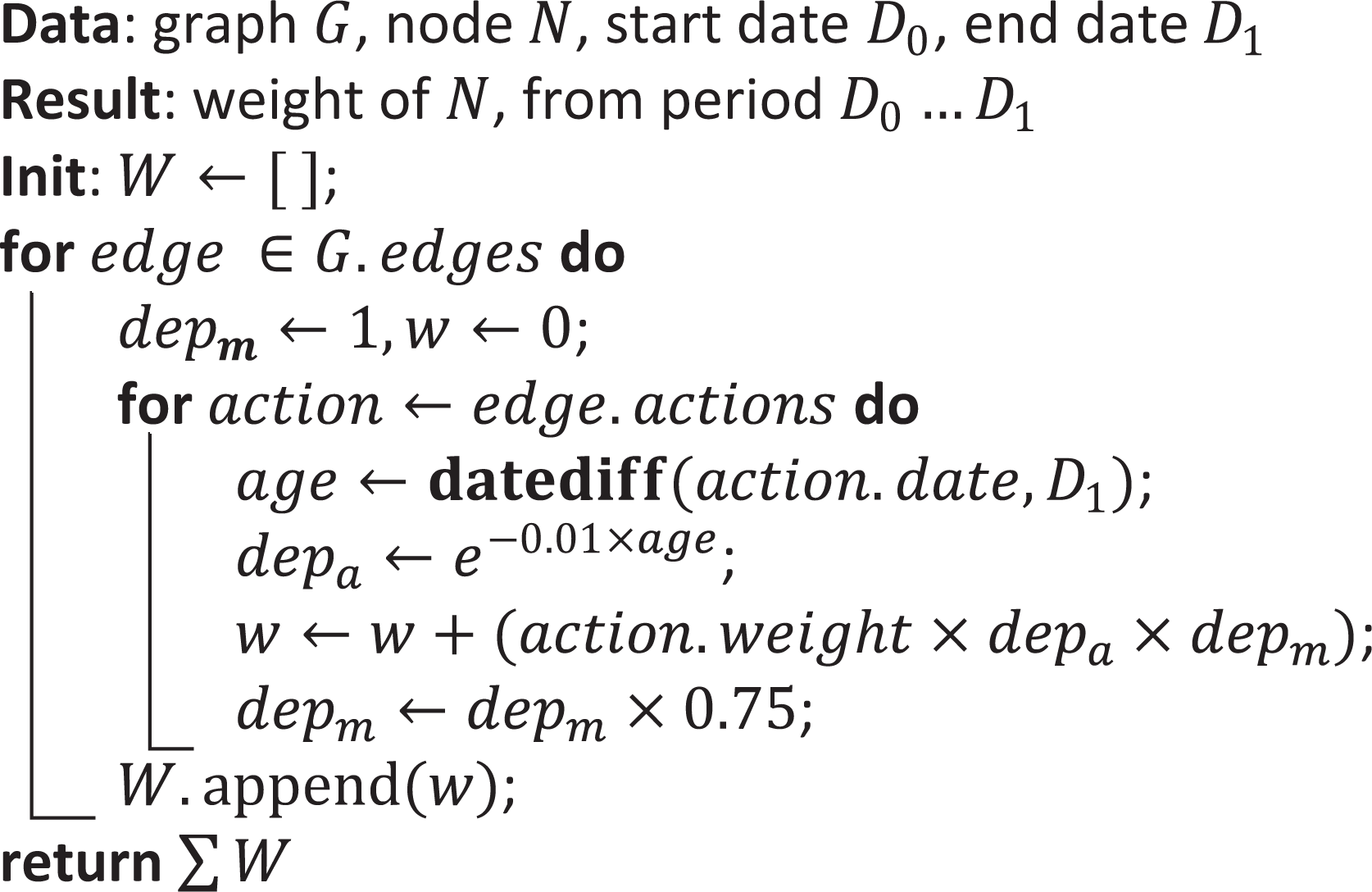
Calculating the weight of a node based on its interactions.
In Lines 5 and 6 of this algorithm, the age of the action is determined, and the age depreciation factor
K-core decomposition
The standard k-core decomposition algorithm described in Algorithm 1 is then applied to the weighted subgraph, which returns the core number of each node. Each node’s core number is then normalized to a value between 1 and 10 for simplicity of representation, the result of which represents the individual’s commonshare (Figure 5E). Finally, each weighted subgraph is output as a separate JSON file.
Individual Commoner Graph Generation
JSON files are generated for each commoner, containing their ego-centric subgraph for each time period. In the visualizations described in the next section, this allows individual representations of one’s commonshare, and the interactions that have contributed to it, to be displayed efficiently.
Cumulative Graph Generation
Finally, a JSON file is output for the aggregated graph of all interactions. In this graph, the steps taken to calculate a node’s overall commonshare are identical to those in the aforementioned subgraph generation, with additional steps based on two aggregated activity heuristics: A commoner’s overall commonshare is proportional to their weeks of activity. All else being equal, we consider commoners who have been consistently active for the duration of Commonfare.net to have a stronger reputation than those with 1 or 2 weeks of intense activity. A commoner’s overall commonshare is proportional to the subsequent activity of commoners whom they interact with—interactions with other users who do not generate any further activity should be weighted less than interactions with users who continue to participate in the platform.
The first metric, periods of activity (A), is simply a count of how many biweekly subgraphs a node has existed in. The second metric, neighborly activity (B), is edge-determinant and represents the fraction of weeks a node’s neighbor N was active following their first interaction. Every edge weight will be equally influenced by the overall activity of the node in question (A) but also influenced by the neighbor’s subsequent activity (B). The min function assures that the edge’s weight is never increased by the adjustment. Further, an edge’s weight is at least 0.1 (when
The resultant commonshare distribution is log-normal as shown in Figure 7 (left). A Box-Cox transformation is then applied to the data to yield a more normal distribution, giving the output shown in Figure 7 (middle). These transformed values can then be normalized to discrete integer values between 1 and 10 as performed for the periodic subgraphs.
While charts such as those in Figure 7 give a basic understanding of the distribution of commoners’ activity, they do not provide insights to the structure of the community, for which different visualizations are required, described in the following section.
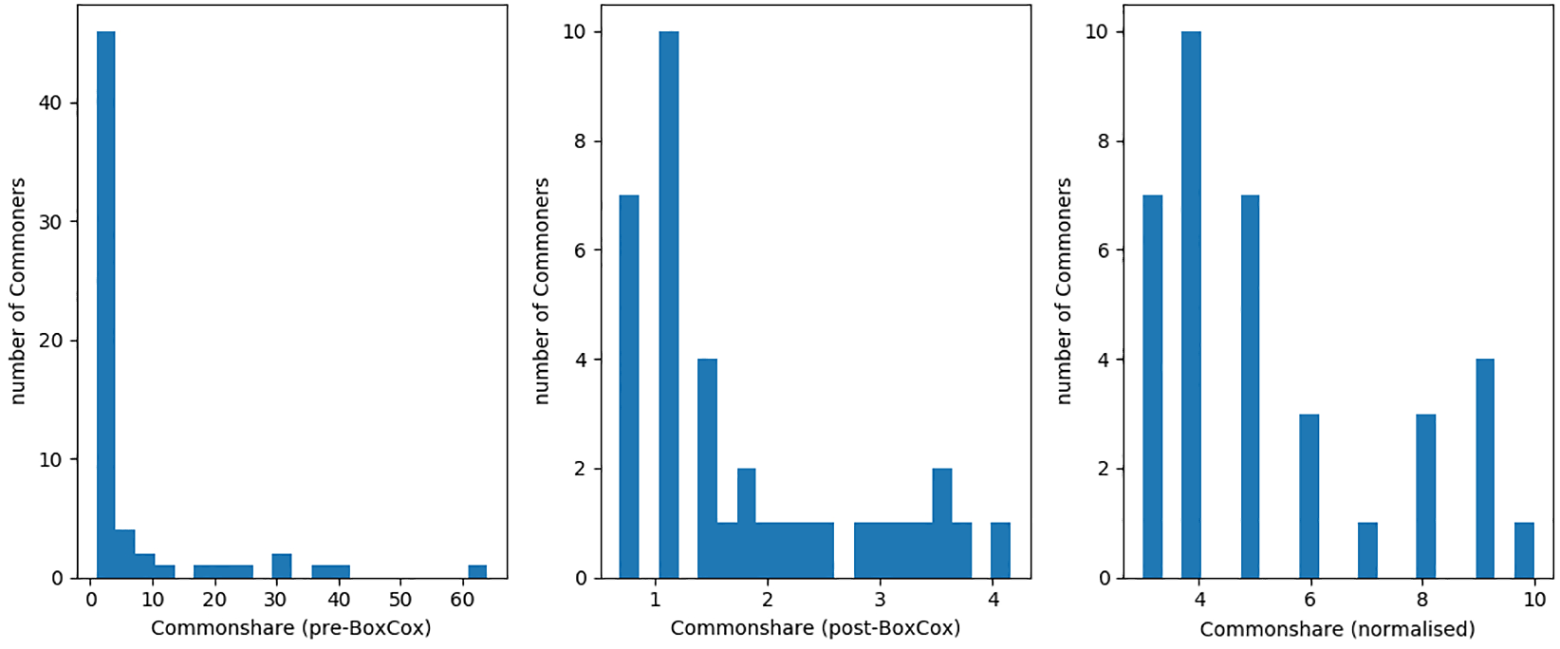
Commonshare distribution (left), after Box-Cox transformation (middle), and after normalization (right).
Visualizations of Commonshare
Previous work demonstrates how well-designed graphical representations can inform decision-making and encourage critical engagement (Gilbert & Karahalios, 2009; Pocock et al., 2016; Valkanova et al., 2013). In this section, we describe the trial commonshare visualizations implemented for Commonfare.net and their evaluation by platform administrators. We developed two separate visualizations intended to communicate information on both the network and personal commonshare values. For administrators, a community visualization was implemented, showing the platform’s network of commoners and stories and the interactions between them. For individuals, we implemented personal visualizations that aim to succinctly represent a commoner’s platform interaction history.
Community Visualization of Commonshare
The community visualization is a graph-like representation of all interactions in the history of Commonfare.net as shown in Figure 8. Circles represent actants in the network—purple circles are commoners, red circles are stories, and the small number of blue circles are listings. Circle size is directly proportional to the represented actant’s commonshare, with the intensity of link color indicating the strength of the interaction between two actants.
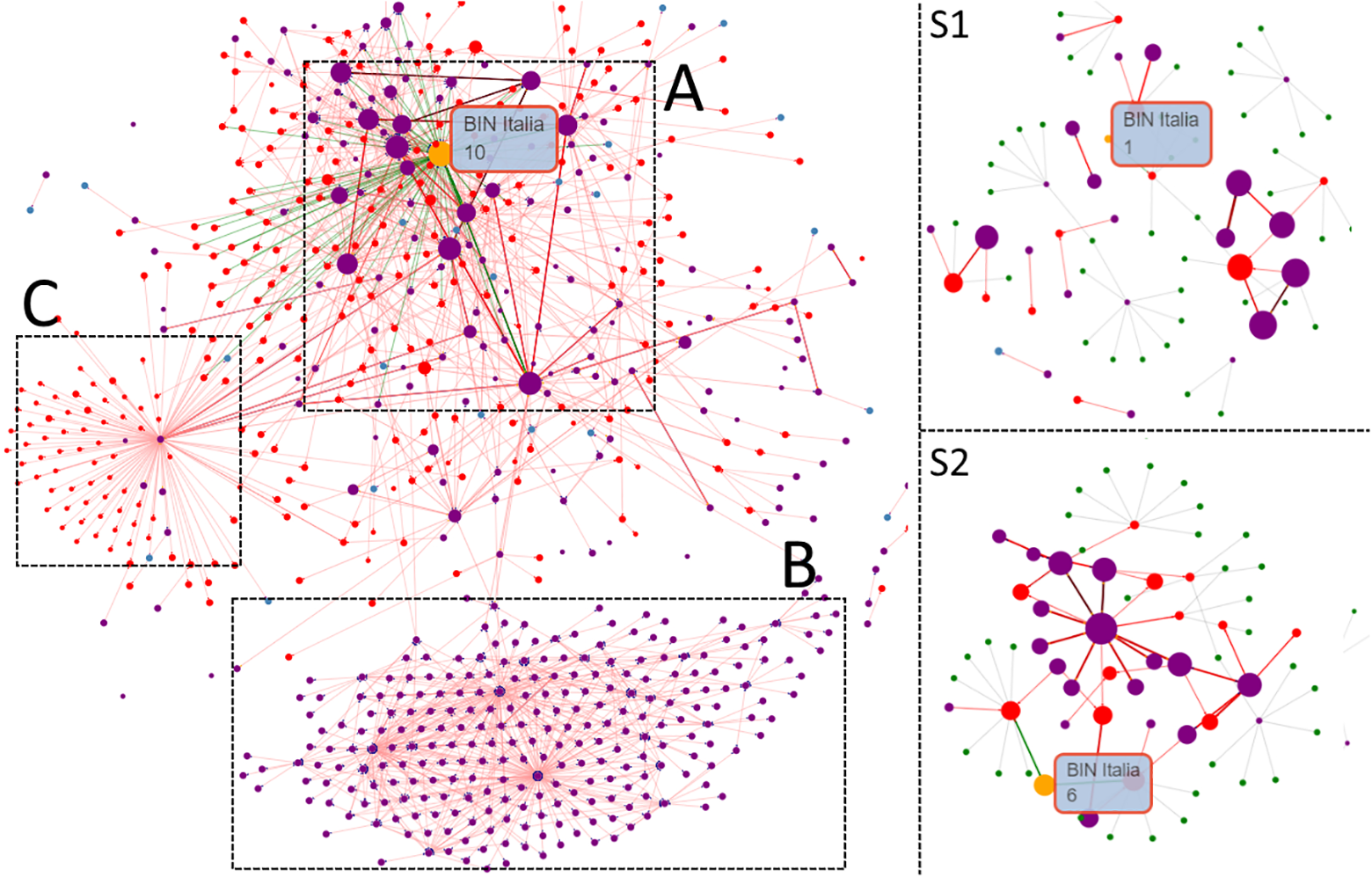
Visualization of aggregated community activity and two biweekly snapshots. Different types of actant in the network are represented by colored nodes (purple = commoners, red = stories and blue = listings). Edge color is used to indicate the strength of a tie between two actants. See text for more details.
Two temporal snapshot graphs (Figure 8, S1 and S2) show interactions over two different 2-week periods. These snapshots are visualized for every 2-week period in the platform’s history, allowing for its dynamic properties to be observed that are otherwise lost through aggregation. For example, the highlighted “BIN Italia” commoner has an overall commonshare value of 10 in the aggregated graph, but this fluctuates over time and may be significantly less in any given period as shown in S1 where this commoner obtained a commonshare of 1 due to a period of inactivity.
The commonshare calculation and visualization were initially developed by simulating random interaction data with different parameters. As platform activity increased, it became possible to test the commonshare calculation on real platform data. By comparing algorithmic output to our knowledge of key platform members, we refined our weighted k-core decomposition to obtain output that reflects our perceptions of members’ contributions. We discuss three areas (highlighted in Figure 8) from which particular insights were obtained.
Network center
The center of the Commonfare.net network is highlighted by the dense cluster of nodes in Figure 8A with a high commonshare. The majority of these nodes are commoners who have been integral in sharing and encouraging widespread use of the platform, reflected in their commonshare values. As a network of objects as well as people, various stories and listings are also central to the network, and their position in the visualization is indicative of their importance for cultivating platform actions. Such stories tend to be emotionally strong, eliciting responses from pivotal Commonfare.net members as well as those outside the core.
Administrative node
The node highlighted in Figure 8C has clearly been highly active, including various interactions with more central nodes, yet has a comparatively small overall commonshare. The node’s high degree represents a number of welfare information and tutorial posts created by the administrator at an early stage of the platform (shown in Figure 10). As these stories present information, they do not attract sustained engagement and therefore do not contribute to the administrator’s overall impact. While this is a special case of honest intent (paramount to the bootstrapping of the platform content) it also mimics the behavior of a potential “spammer,” creating meaningless content to artificially boost their commonshare. Thus, while the user may receive a temporary boost in commonshare, this rapidly diminishes through a lack of further engagement.
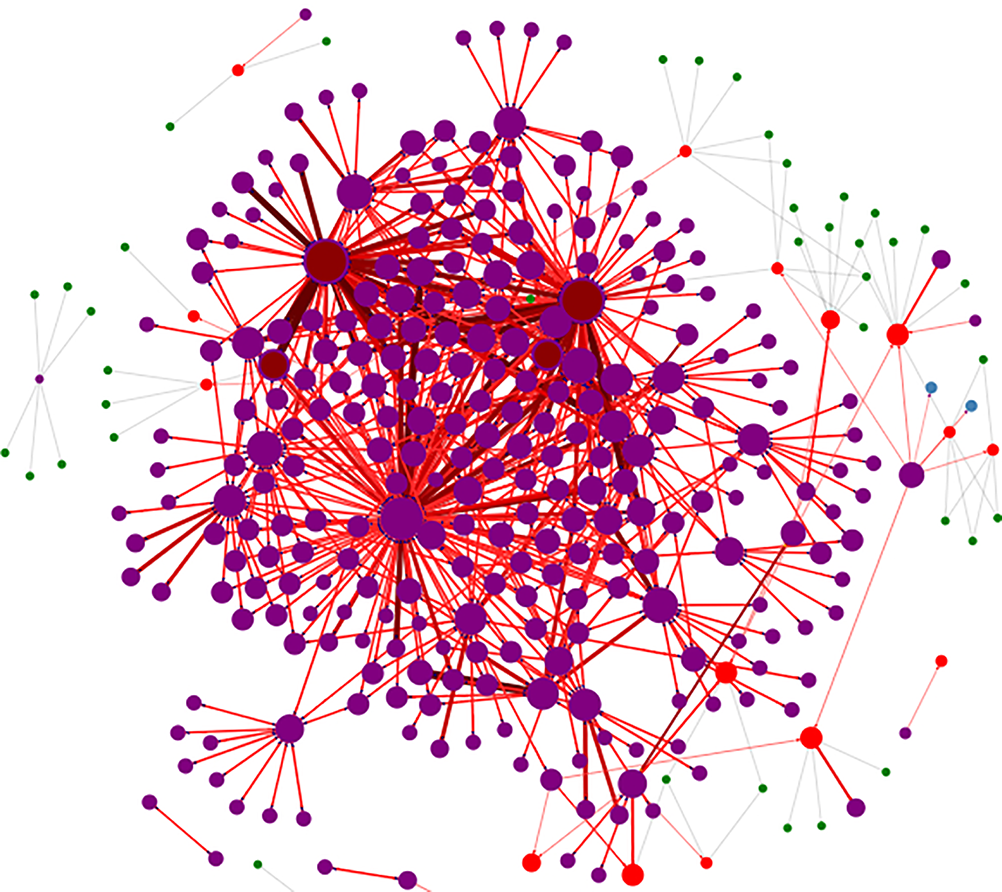
Interactions in the 2-week period during which the art festival pilot took place.
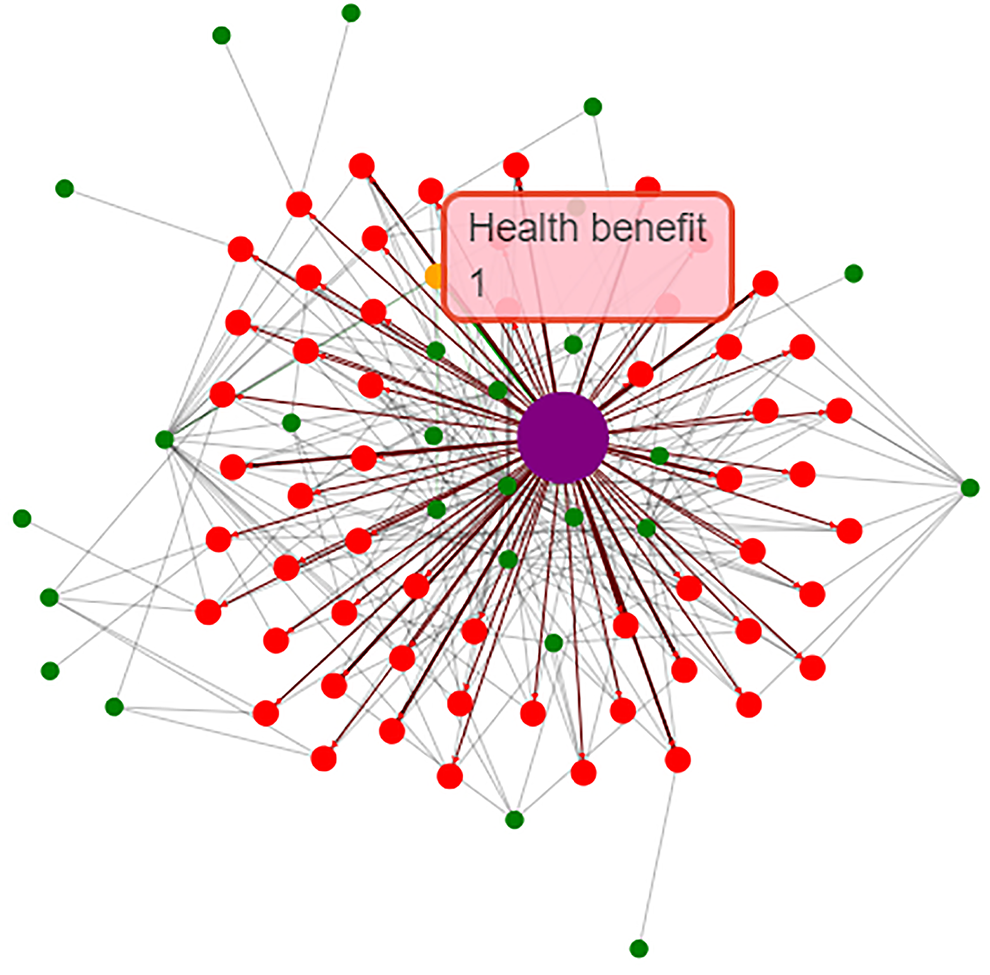
Two-week snapshot where an administrator user created public benefits.
Personal Visualization
Personal visualizations are displayed on commoners’ profile pages, showing their contributions to the collective commonshare as a form of reputation for establishing trust with other commoners of the platform as well as motivating further contributions. Examples of these visualizations are shown in Figure 11.
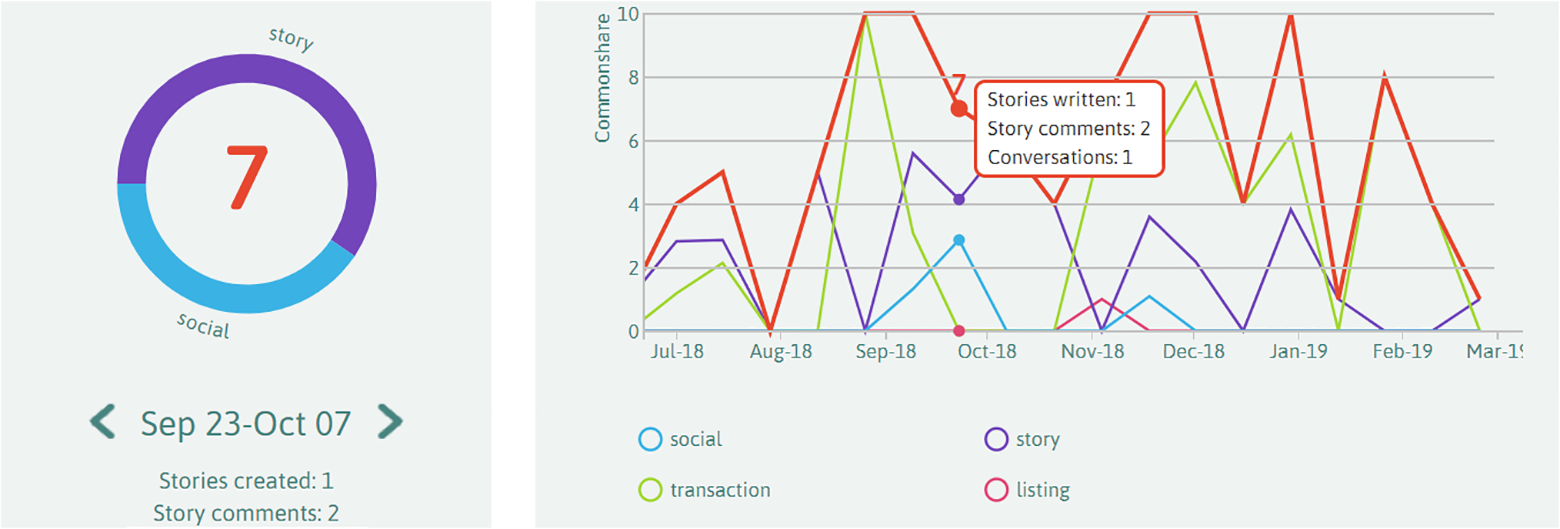
Donut and line chart personal visualizations.
We used both a donut chart and line chart to display the commoner’s commonshare for a 2-week period (the central number in the donut or the height of the thick orange line at a given point on the line chart’s x-axis). They also show the types of interaction the commoner has engaged in to obtain this commonshare. In the example shown, story interactions contribute to most of the commonshare, with social interactions also making a contribution. While the line chart provides an instant view of the temporal fluctuations in the commoner’s interactions, the donut provides more detail for a given time period as shown by its interactive features in Figure 12. The center of the three examples shows the result of clicking on the “story” section of the donut in the left example. Key features include: The commonshare value is replaced by circles, each of which represents an interaction of the previously selected type—in this case, story interactions. The circle’s size represents the weight of this interaction relative to others of the same type. The two letters in each circle are the first two letters of the actant (the username for users or title for stories/listings) with which the interaction took place. Hovering over a circle gives the full title of the actant involved in the interaction (except for transactions) and the type of interaction undertaken.
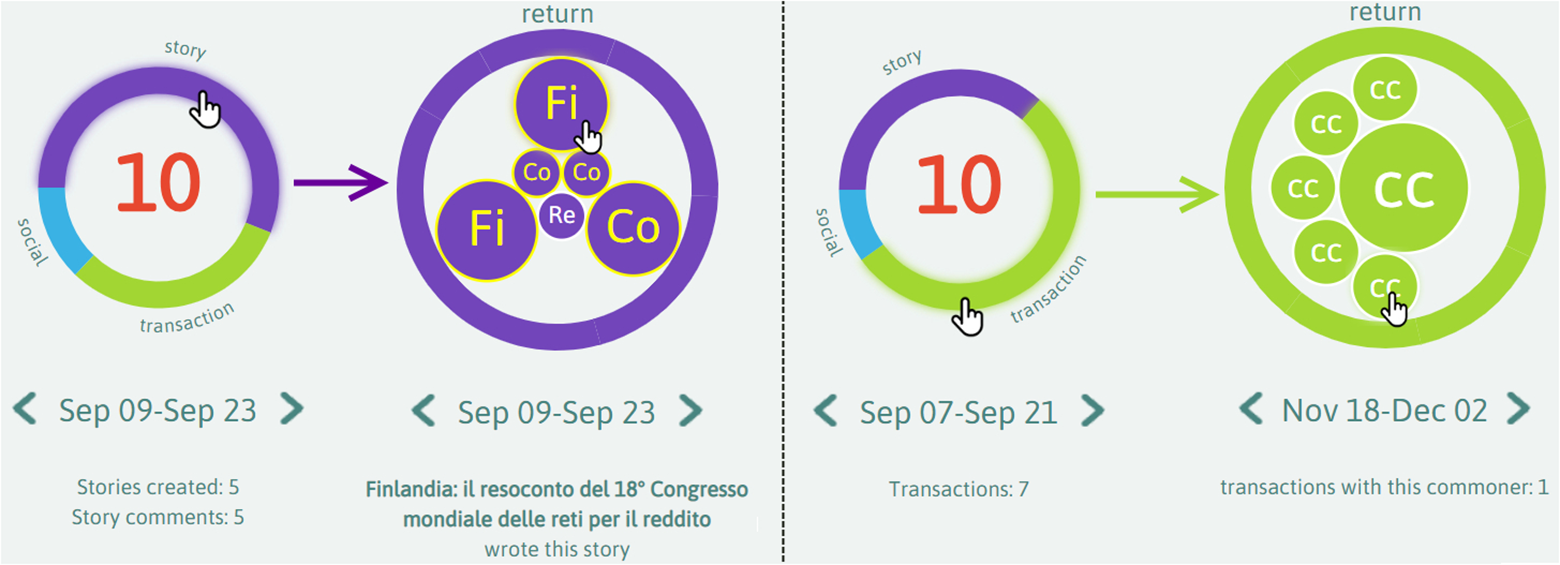
Updated donut visualization with further details.
Discussion and Conclusion
The commonshare concept and calculation offers an approach to evidencing and recognizing contributions to community building, particularly for communities that collaborate toward creating common resources. The commonshare is calculated on the basis of interactions and relations that serve to stabilize, sustain, and grow a community and thus provides community members with a measure of how committed and active other members are. Such information may then serve as a basis for judgments of whom and/or what to interact with in an online platform, such that the commonshare is a form of reputation. However, the commonshare is clearly distinct from individualistic, competitive, and accumulative aspects of mainstream approaches to online reputation design (Dellarocas, 2010; Farmer & Glass, 2010), which are not unlike what Smith (1776) conceptualized as “good conduct” in commercial societies. Our involvement in the design of the overall Commonfare.net platform led us to consider how reputation models that are centered on individual self-satisfaction are also ill-suited to a digital platform that aims to foster cooperation, mutual support, and the creation of a common. For this reason, we took a different point of departure for our design, that of the assemblage theory (DeLanda, 2019) which sees reputation as an emergent property of social wholes (like communities) rather than as an essential property of individuals.
Our approach is not a wholesale criticism of individualistic reputation design models, which clearly work efficiently in certain contexts (e.g., e-commerce) but instead a criticism of applying individualism to design when the community ethos is based on collective action and the common rather than, for example, maximization of personal interest for economic or social reasons (Wilson & De Paoli, 2019). Our proposed approach offers thus an alternative for reputation design. We contend that, for communities geared toward collective action and the building of a common, individual actors or actants should be awarded reputation based on the articulation of their relation to the community. By taking the work of DeLanda (2019) on assemblages as a theoretical basis, we have demonstrated that it is feasible to produce a novel reputation metric that is based on global properties of a community and the individual’s place within it. Specifically, in our research, we used social network analysis to produce a reputation metric, which captures the share of community members’ contribution to the common. We used the k-core decomposition algorithm (Batagelj & Zaveršnik, 2011) to determine the strength of commoners’ positions within the interaction network, with modifications to account for the age, strength, and direction of their interactions.
Even though we mitigate the issue of biased ratings, any reputation or scoring system may still be subject to cases of manipulation (Dellarocas, 2010). In our work, we anticipated that colluding users could try to boost their own commonshare by repeatedly conducting fictitious interactions among themselves or by “spamming” the platform with meaningless stories. Our algorithm design anticipates manipulation by reducing the value of repeated interactions or those that generate no sustained impact, and our community visualization also makes such behaviors easily identifiable to platform administrators.
The Commonfare.net platform is currently in its bootstrapping phase, with the project funding finished and the creation of a public association of volunteers tasked (with limited resources) to foster its continuous use. While this imposes some limits on our future work on the commonshare as implemented in Commonfare.net, we are exploring its potential use in other platforms. Thus, our future work will be shaped through the actionable insights we generate by continuing to work on the platform as volunteers, while looking for other applications of the commonshare. One question is how best to conceptualize the commonshare for the digital content that commoners create. Following the assumption of the symmetry between humans and nonhumans (Latour, 2007), our algorithms already operate on all nodes in a network, whether human or nonhuman. Although the commonshare metric may not be relevant to certain content (e.g., temporary listings of items or services available), it could be applied to generate new insights into platform content that continues to be interacted with over time. For example, stories that are frequently read and commented on would have a high commonshare, which would give a clear indication of their importance to the community. This would differ from a traditional ratings system, as the measure of quality is derived from the dynamics of the assemblage.
To conclude, we have described the underlying research, implementation, and subsequent visualizations for a novel conceptualization of reputation called commonshare. This approach incorporates principles of assemblage theory into a novel design that employs methods from social network analysis. Commonshare differs substantially from individualistic and accumulative approaches to reputation such as rating systems on e-commerce platforms. We have implemented our solutions in the nascent DSI platform Commonfare.net and offered insights from its operation. We believe that our contribution will be most relevant to administrators of platforms that support mutual collaboration.
Footnotes
Authors’ Note
This article reflects only the authors’ views, and the Research Executive Agency or European Commission is not responsible for any use that may be made of the information it contains.
Declaration of Conflicting Interests
The authors declared no potential conflicts of interest with respect to the research, authorship, and/or publication of this article.
Funding
The authors disclosed receipt of the following financial support for the research, authorship, and/or publication of this article: This article received funding from the European Union’s Horizon 2020 research and innovation program under grant agreement number 687922.