




Abstract
Communication can enhance employees’ identification with the organization and encourage positive organizational behaviors. As workplace diversity grows, it has become more essential to inform employees about organizational diversity initiatives while ensuring that they perceive the organization’s diversity climate and integrity positively. We conducted an online survey (N = 1,043) showing that if employees are satisfied with diversity communication, perceive a fair diversity climate, and perceive their organization as authentic, they identify stronger with the organization. The results also imply that organizational authenticity contributes the most to organizational identification. Employees who identify with their organization contribute more to it in terms of loyalty, obedience, and participation (i.e., organizational citizenship behavior, OCB). We conclude that simply having a diverse workforce is not sufficient to foster employees’ identification; organizations also need to communicate their fair diversity measures satisfactorily and be authentic, i.e., be true to their words.
Keywords
Introduction
Employees’ identification with their employer is considered an important factor for organizational success as it promotes a range of positive outcomes such as job satisfaction, job involvement, and employees’ extra-role behavior (Lee et al., 2015; Riketta, 2005) associated with organizational citizenship behavior (OCB; Organ, 1990). Organizational identification has been defined as “the perception of oneness and belongingness to some human aggregate” (Ashforth & Mael, 1989, p. 21), which includes identification with one’s employer. Creating a sense of belonging and organizational identification is a central objective of the “communication between an organisation’s strategic managers and its internal stakeholders,” (Welch & Jackson, 2007, p. 186), by building shared understanding and interpretations (Men & Bowen, 2017).
To achieve the positive outcomes of identification, organizations must ideally build a shared understanding, sense of belonging, and thereby identification in all their employees. As today’s workforce is becoming increasingly diverse in terms of gender, age, sexual orientation, ethnicity/race, disabilities, religion, and social background (Brookings, 2018; Bureau of Labor Statistics, 2022; Charta der Vielfalt, 2024; The Williams Institute, 2019), and against the backdrop of the contested nature of the concept of diversity (Kidder et al., 2004; Vavrus, 2012), this may be challenging. However, diversity is not just a reality, it is also thought to have economic benefits, which is why many organizations have invested in diversity management programs (Hansen & Seierstad, 2017). Thus, an organization’s values and stance in terms of diversity, its policies, goals and measures, need to be communicated in a way that resonates with employees, i.e., they need to be satisfied with their organization’s communication on diversity. However, research on the role of diversity communication on important constructs such as organizational identification is scarce. While it has been demonstrated that employees’ positive perceptions of internal communication (e.g., openness and honesty) increase their identification with the organization (Bartels et al., 2007; Smidts et al., 2001), communicative aspects are often just implied—and not analyzed—in studies on diversity and inclusion (for an exception, see Wolfgruber et al., 2021). This research gap is addressed in this study by testing the hypothesis that when employees are satisfied with their organization’s diversity communication, their identification with the organization increases, which consequently has a positive effect on workplace behaviors, particularly on OCB.
Aside from an organization’s communication, employees also experience the general organizational climate with regards to diversity. Organizational climate refers to “the policies, practices, and procedures as well as the behaviors that get rewarded, supported, and expected in a work setting and the meaning those imply for the setting’s members” (Schneider et al., 2011, p. 373). A positive diversity climate is characterized by the positive perception of equal opportunities (i.e., fairness) for minority groups within an organization (Mor Barak et al., 1998). In general, fairness perceptions in organizations increase employees’ positive attitudes and behaviors, such as organizational identification and OCB (Gillet et al., 2013; Olkkonen & Lipponen, 2006; Tyler & Blader, 2003), and a positive diversity climate has been shown to enhance the positive relation between workforce diversity and organizational identification (Gonzalez & DeNisi, 2009).
Importantly, an organization must act in a way that is genuine and consistent with its values, principles and rhetoric to be perceived as authentic (Cording et al., 2014; Men & Bowen, 2017). If there is a gap between the values communicated by the organization’s leaders and their actual behavior, employees perceive an organization as inauthentic (Bourne et al., 2019; Bourne & Jenkins, 2013). Men et al. (2024) found that an organization’s communicated commitment to diversity enhances employees’ perceptions of organizational authenticity, particularly when concrete diversity initiatives are present. In turn, perceived authenticity has been found to have a positive effect on organizational identification in the context of diversity (Kim, 2023), indicating that perceived organizational authenticity can enhance the identification of employees with their organization (Ertürk & Albayrak, 2020; Reis et al., 2016), potentially fostering OCB.
Organizational identification can be considered the central construct that connects (a) employees’ satisfaction with diversity communication, (b) their perceptions of the fairness of the prevailing diversity climate, and (c) the perceived organizational authenticity with (d) positive behaviors of employees, especially the important construct of OCB. The aim of this study was to examine these relationships. Because satisfaction with diversity communication, the perception of a fair diversity climate, and perceived organizational authenticity are interrelated and might have a common basis, a further research goal was to reveal which of these three variables has the greatest effect on fostering organizational identification. Thus, our study contributes to organizational communication research by specifically addressing diversity communication, examining multiple predictors of organizational identification, and demonstrating organizational identification’s mediating role in enhancing OCB.
Literature Review
Satisfaction with (Diversity) Communication and Organizational Identification
An organization’s internal communication—and also the way it communicates with external stakeholders—is perceived by the organization’s employees and affects their identification with the organization (Cheney, 1983; Morsing, 2006). Through internal communication, employees decide whether the organization’s values, beliefs, and norms match their own; if they do, organizational identification is fostered (Cheney, 1983). It is employees’ satisfaction with their organization’s communication that plays a key role in organizational identification. Studies in different countries and industries have reported a positive relationship between employees’ overall satisfaction with communication and their organizational identification (Guzley, 1992; Krywalski Santiago, 2020; Moghadam & Tehrani, 2011; Scott et al., 1999; Tuzun, 2013). In terms of the impact of internal communication on organizational identification, Bartels et al. (2010) showed that vertical communication (i.e., communication between management and employees) has a positive effect. In addition, several studies have shown that a positive communication climate within an organization is positively related to organizational identification (Bartels et al., 2007; Neill et al., 2020; Smidts, 2001), as this indicates that employees are accepted and valued in their workplace.
To foster organizational identification in an increasingly diverse workforce, how an organization practices diversity communication is assumed to play an important role. An organization’s diversity communication is a strategic approach to identifying stakeholders’ perceptions and expectations, and to expressing the organization’s values and stance on diversity—internally to employees, but also to external stakeholders. Such practices involve the targeted communication of the organization’s diversity policies and inclusive practices, which—in relation to employees—include areas such as recruitment, promotion, fair pay, mentoring or the use of inclusive language. Diversity communication also involves listening to stakeholders’ expectations and possible concerns in order to adapt communication practices accordingly. Because diversity is a sensitive and controversial issue (Kidder et al., 2004; Vavrus, 2012) that polarizes not only society but also internal stakeholders (CAHRS Working Group, 2023), a carefully considered and strategic approach is required. As employees may be more or less in favor of an organization’s diversity initiatives, it is the way diversity communication resonates with employees that is key for organizational identification to form, and not necessarily the communicated commitment to diversity, as studied by Men et al. (2024).
Research on the role of diversity communication for organizational identification is limited. With regards to diversity-oriented communication by managers, Lee et al. (2021) reported that such communication increases employees’ sense of belonging to the organization regardless of a person’s minority background. Despite the limited evidence we assume—based on Lee et al. (2021) and the extant research on the role of organizational communication in general—that employees’ identification with their employer is enhanced if they are satisfied with their organization’s diversity communication. Therefore, we hypothesize:
Satisfaction with the organization’s communication about diversity is positively related to organizational identification.
Diversity Climate and Organizational Identification
A diversity climate is the collective perception of equal opportunities for minority groups in an organization (Mor Barak et al., 1998). Accordingly, fair personnel practices and the social integration of all employees characterize a positive diversity climate (Goyal & Shrivastava, 2013; McKay & Avery, 2015; Mor Barak et al., 1998).
Fairness can take various forms and may refer to fair practices (i.e., procedural justice), fair allocations (i.e., distributive justice), fair treatment (i.e., interactional justice), and correct and adequate information (i.e., informational justice; Colquitt, 2012). Several studies have shown positive correlations between these different forms of fairness and organizational identification (Chan & Lai, 2017; Koçak & Kerse, 2022; Malhotra et al., 2022; Zhao et al., 2014). Organizational fairness in connection with a positive diversity climate has been shown to increase employees’ organizational identification (Jiang, 2024). The procedural fairness perceived by professionals of color was also found to lead to a positive climate of diversity (Buttner et al., 2010). Moreover, based on results regarding identification with team members, Hofhuis et al. (2012) found that diversity climate is positively associated to job-related outcomes for both majority and minority groups in an organization. More specifically, several studies have found a positive association between a fair diversity climate and employees’ identification with their work group (Hofhuis et al., 2016; Žnidaršič et al., 2021) and organizational identification (Chrobot-Mason & Aramovich, 2013). We therefore hypothesize:
Perceived fair diversity climate is positively related to organizational identification.
Authenticity and Organizational Identification
If an organization is inauthentic—that is, if diversity messages and diversity practices are inconsistent—it is perceived as having less integrity and is less attractive to job seekers (Windscheid et al., 2016). Inauthentic communication can occur, for example, when an organization expresses a strong commitment to diversity in its code of conduct, while discriminatory practices based on gender, race/ethnicity, or sexual orientation remain prevalent in its day-to-day operations. Men et al. (2024) have shown that employees perceive their organization as authentic when their organization communicates about diversity. This is particularly the case when there are concrete and actionable diversity initiatives in place, i.e., when the organization “walks the talk.” Organizational authenticity, in the broadest sense, is defined as consistency between espoused values and shared values, meaning that what the organization does and says is congruent (Cording et al., 2014). Such authenticity encompasses honest and fair communication with all stakeholders of an organization, including the organization’s employees (Men & Tsai, 2018). Yue (2021) argued that employees who perceive their organization as authentic see this trait as part of themselves and thus identify with the organization. Accordingly, Men et al. (2024) found that perceived organizational authenticity has a strong positive effect on organizational identification. Thus, we hypothesize:
Perceived authenticity of an organization is positively related to organizational identification.
OCB as a Consequence of Organizational Identification
Meta-analyses have revealed that organizational identification increases positive attitudes and behaviors in the work context (Lee et al., 2015; Riketta, 2005). One important behavioral construct is OCB, which is a positive work behavior that exceeds job descriptions, such as making positive comments to people outside the organization, meticulously following organizational rules, and supporting coworkers (Organ, 1990). Studies have shown positive relationships between organizational identification and OCB for different organizational contexts and in different countries (Lu et al., 2018; Tufan & Wendt, 2020; van Dick et al., 2006; Xie et al., 2022; Yorulmaz & Karabacak, 2021; Zhao et al., 2014; Zulfiqar & Khan, 2021). Using a longitudinal study design, van Dick et al. (2006) revealed a causal relation, suggesting that organizational identification positively influences OCB.
Although OCB is often measured in general terms, Van Dyne et al. (1994) differentiated three dimensions of the construct: OCB loyalty, OCB obedience, and OCB participation. OCB loyalty refers to allegiance to the organization, OCB obedience refers to compliance with organizational rules and regulations, and OCB participation refers to active engagement within the organization. Further research has shown that organizational identification is positively correlated with OCB loyalty (Vondey, 2010), OCB obedience (Qureshi et al., 2011), and OCB participation in the form of helping behavior (Qureshi et al., 2011; Vondey, 2010). A recent meta-analysis that distinguished between OCB loyalty, OCB obedience, and OCB participation revealed positive associations between all dimensions of OCB and organizational identification (Sidorenkov et al., 2022). This suggests the following hypotheses:
Organizational Identification as a Mediator
Mael and Ashforth (1992) proposed a mediating role of organizational identification between different causes and the behavioral outcomes of employees. In studies on organizational justice, various authors have suggested that organizational identification mediates the relationship between organizational justice and OCB (Demi̇r, 2015; de Geus et al., 2020; Guangling, 2011; Yorulmaz & Karabacak, 2021). He et al. (2014) found a mediating effect of organizational identification on the relationship between perceptions of procedural justice and employee engagement. Moreover, studies on organizational communication have shown that organizational identification mediates the relationship between communication and positive work outcomes such as OCB (Moghadam & Tehrani, 2011). Thus, when employees are satisfied with their organization’s diversity initiatives and perceive a fair diversity climate, they should be particularly enticed to contribute to this climate and show positive work behavior that exceeds their job descriptions. Finally, Yue (2021) found that the relationship between authenticity and employees’ advocacy in terms of supporting, recommending, and defending their organization was fully mediated by organizational identification. Therefore, we assume that organizational identification has mediating effects on the relationships between a perceived fair diversity climate, satisfaction with organizational diversity communication, and perceived organizational authenticity and OCB. The following hypothesis includes all of the proposed mediating effects:
The positive effects of a perceived fair diversity climate, satisfaction with organizational diversity communication, and perceived organizational authenticity on OCB with regard to loyalty, obedience, and participation are mediated by employees’ organizational identification.
Minority Background as a Moderator
Employees with minority backgrounds may not only identify with their organization, but also with their minority group (e.g., people with the same sexual orientation, race/ethnicity, religion). These employees may take their organization’s stance on diversity more seriously and be more affected by communication regarding diversity than employees who identify less with their minority group or majority employees. Furthermore, not every employee in an organization may experience the diversity climate in the same way. Thus, we assume that minority background (e.g., in terms of age, sexual orientation, ethnicity/race) is an important moderator in the proposed model. A meta-analysis revealed, for example, that the more ethnically diverse workgroups are, the stronger the positive link is between a diversity-friendly climate and positive work outcomes (Holmes et al., 2021). For Black managers, the negative relation between a pro-diversity climate and turnover intention was found to be stronger than for non-Black managers (McKay et al., 2007). However, Ashikali and Groeneveld (2015) found no difference between native Dutch and non-native Dutch employees with regard to the positive effect of diversity management on employees’ affective commitment. Although these results reflect only ethnic minorities, it is reasonable to assume that due to the self-reference effect (cf. Symons & Johnson, 1997), employees who belong to one or more other minority groups are also more concerned about their organization’s diversity policies (i.e., a perceived fair diversity climate, organizational diversity communication) than non-minority employees. In addition, employees with a minority background might be more aware of whether the organization is authentic, which may influence their organizational identification more than that of non-minority employees. Therefore, these policies may have a particularly positive effect on the organizational identification of employees with minority backgrounds and we hypothesize:
Having a minority background moderates the relationships between (a) satisfaction with organizational diversity communication and organizational identification, (b) a perceived fair diversity climate and organizational identification, and (c) perceived organizational authenticity and organizational identification such that the positive relations are stronger for employees with a minority background than for employees without a minority background. The hypothesized model is depicted in Figure 1.
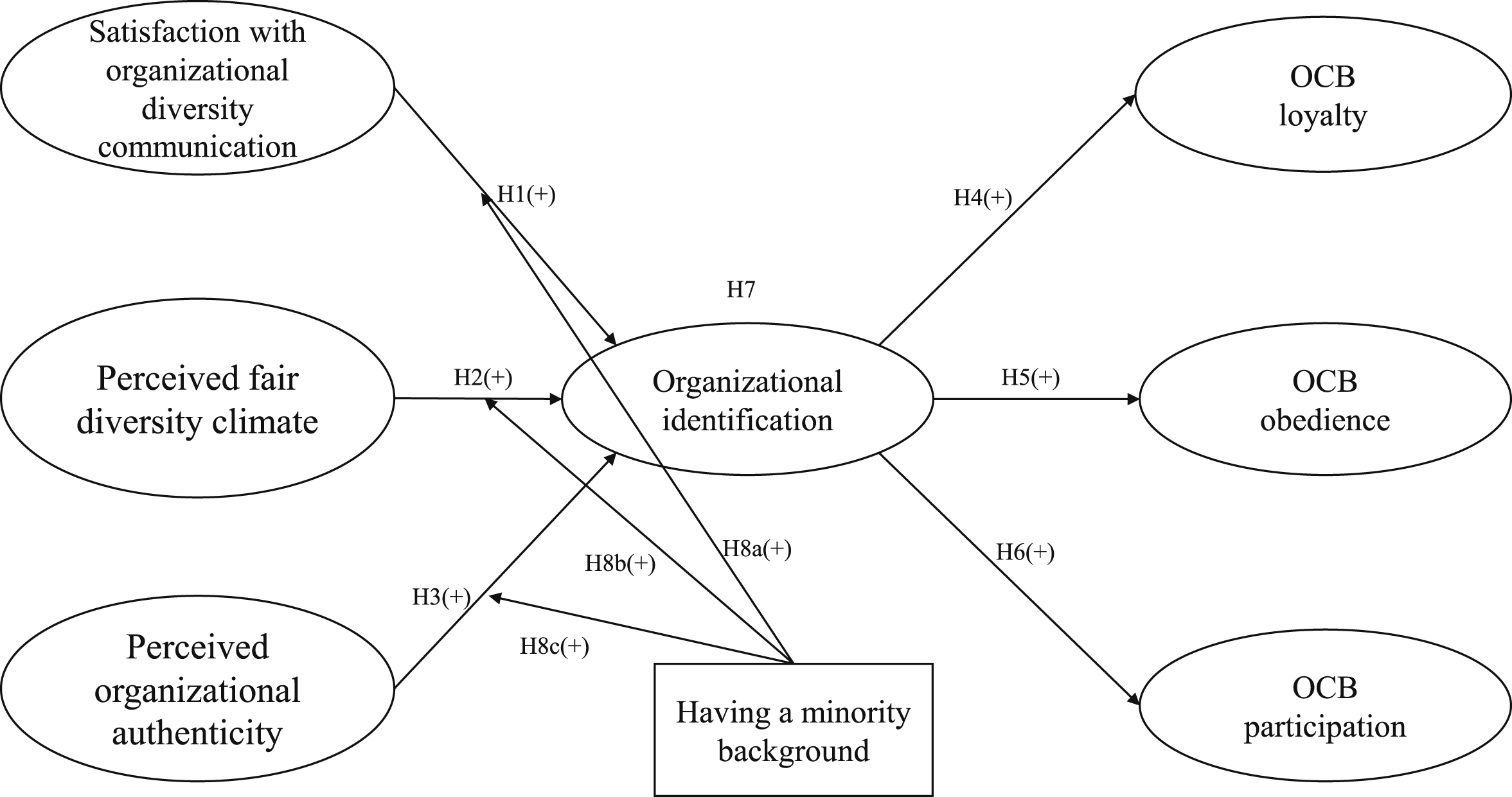
Hypothesized Model
Method
Procedure and Sample
Sample Information
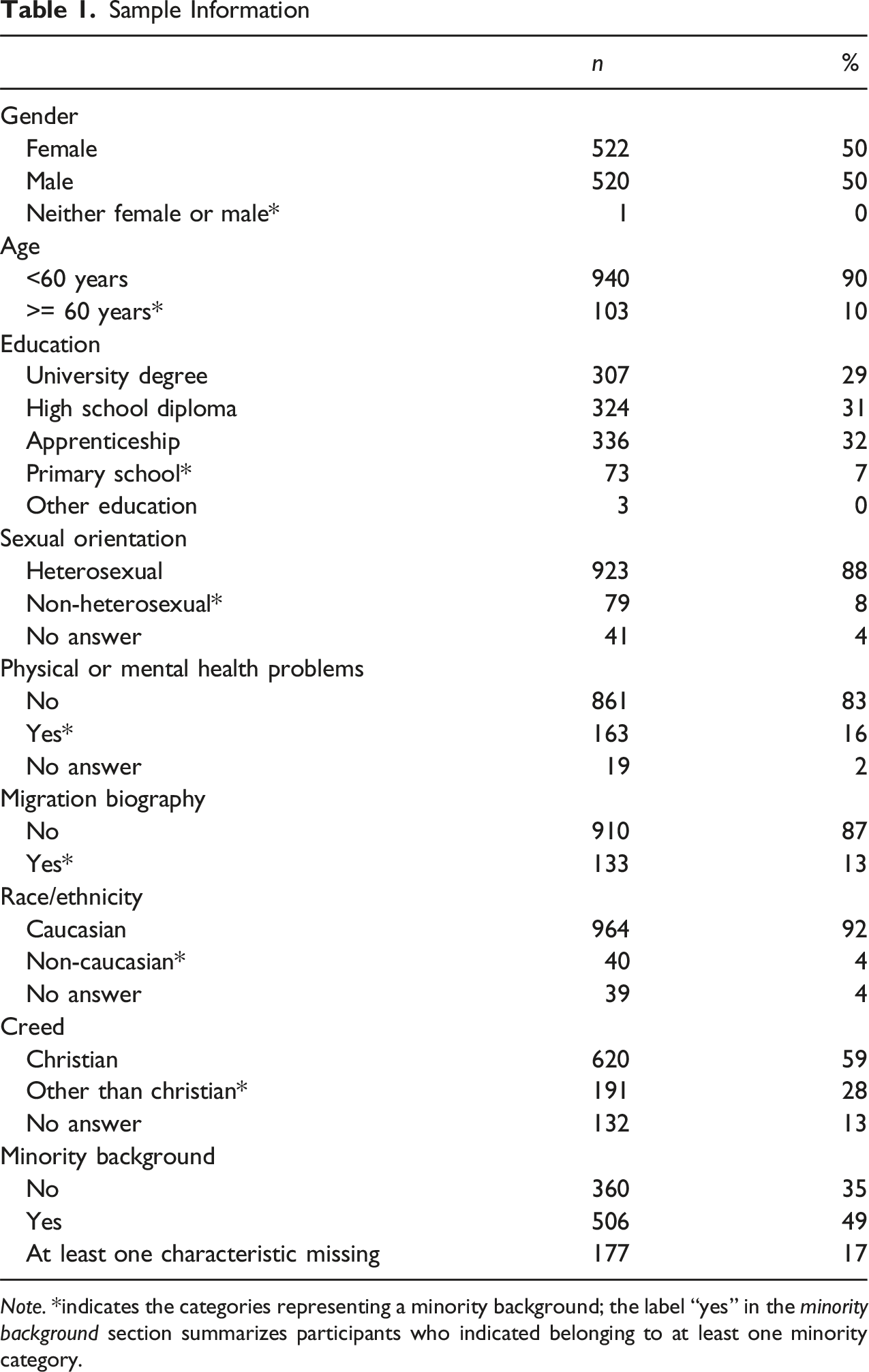
Note. *indicates the categories representing a minority background; the label “yes” in the minority background section summarizes participants who indicated belonging to at least one minority category.
Measures
The measures of key concepts in this study were adopted from previous research, slightly modified to fit the study’s context, and compiled into a questionnaire. A native English speaker who was proficient in German translated the English-only measures backward and forward (cf. Brislin, 1970). Questions about the perceived fairness of an organization’s diversity climate originated from Mor Barak (2016). All items from Downs and Hazen’s (1977) scale on organizational communication satisfaction, which was reassessed by DeConinck et al. (2008), were extended with “diversity and inclusion” to measure participants’ satisfaction with organizational diversity communication. To capture perceived organizational authenticity, Shen and Kim’s (2012) perceived organizational authenticity scale was included. To gauge the participants’ identification with their organization, questions from Mael and Ashforth (1992) were used. Bienstock et al.’s (2003) questions on loyalty, obedience, and participation, which were based on Van Dyne et al. (1994), assessed OCB. All items were answered using a 6-point format with endpoints ranging from “do not agree at all” to “fully agree”, “very unsatisfied” to “very satisfied”, or “does not apply at all” to “fully applies”. Before the term “diversity” was used for the first time in the questionnaire, the participants received an explanation to ensure that all participants interpreted the term in the same way. The dataset, a codebook and the questionnaire can be found at https://data.mendeley.com/datasets/psy25cd4wx/draft?a=43bf3996-19e3-43c4-a08e-56a933b469b3.
Results
The hypothesized model was tested with Maximum Likelihood estimation in SPSS AMOS 26. Confirmatory factor analysis (CFA) was used to establish the measurement model, and then structural equation modeling (SEM) was used to test the hypothesized model. Good-fitting models have a standardized root mean squared residual (SRMR) < .08, root mean squared error of approximation (RMSEA) < .06, Comparative Fit Index (CFI) > .95, and Tucker–Lewis Index (TLI) > .95.
Measurement Model
Statistical Information on the Measurement Model
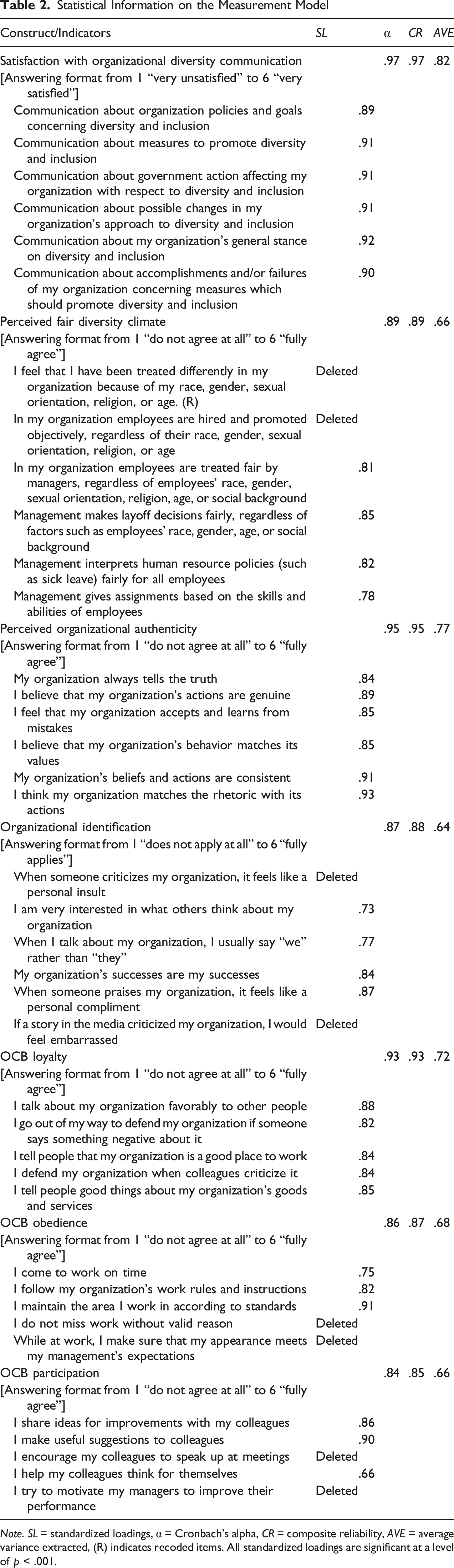
Note. SL = standardized loadings, α = Cronbach’s alpha, CR = composite reliability, AVE = average variance extracted, (R) indicates recoded items. All standardized loadings are significant at a level of p < .001.
Information on the Measurement Model’s Discriminant Validity
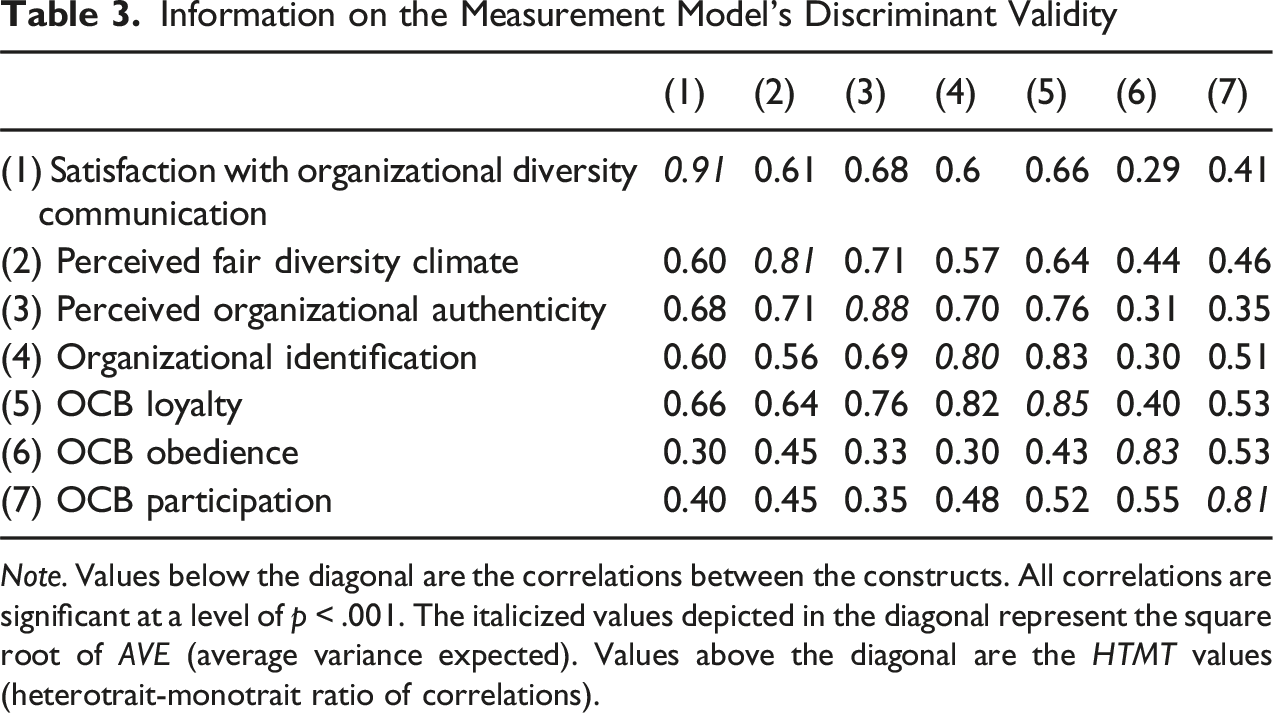
Note. Values below the diagonal are the correlations between the constructs. All correlations are significant at a level of p < .001. The italicized values depicted in the diagonal represent the square root of AVE (average variance expected). Values above the diagonal are the HTMT values (heterotrait-monotrait ratio of correlations).
Common method bias was assessed with two commonly used methods, Harman’s single-factor test and the latent factor model. Harman’s single-factor test—which analyzes all items in the model with a non-rotated factor analysis fixed to extract one factor—yielded a total variance extracted of 48%. Because this was below the threshold of 50%, no problem with common method bias could be assumed. In the latent factor model, a latent factor was added to the measurement model with regressions to all manifest variables. The standardized regression weights of the model with the latent factor were then subtracted from the standardized regression weights of the model without the factor (i.e., delta). For the current model, the delta ranged from .001 to .0178, which was less than .20, indicating that there was no problem with common method bias.
Structural Model and Hypotheses Testing
Figure 2 depicts the results of the structural model, which showed a good model fit (χ2 = 1770.668, df = 423, p < .001, SRMR = .059, RMSEA = .055 [90% CI: .053, .058], CFI = .954, TLI = .950). As hypothesized in H1, a positive relationship between satisfaction with organizational diversity communication and identification with the organization was revealed (β = .23, p < .001). As assumed in H2, perceiving a fair diversity climate had a significant positive effect on identification with the organization (β = .12, p = .001). The significant positive effect of perceived organizational authenticity on employees’ organizational identification (β = .50, p < .001) was proposed in H3. The effect of a fair diversity climate, satisfaction with organizational diversity communication, and perceived organizational authenticity resulted in an R2 value of .60 for identification with the organization. Furthermore, organizational identification was positively related to OCB loyalty (β = .87, p < .001), OCB obedience (β = .34, p < .001), and OCB participation (β = .50, p < .001), which supported H4, H5, and H6, respectively. R2 was .76 for OCB loyalty, .12 for OCB obedience, and .25 for OCB participation. Structural Model. Note. χ2 = 1770.668, df = 423, p < .001, SRMR = .059, RMSEA = .055 [90% CI: .053, .058], CFI = .954, TLI = .950, Values in Parentheses Show Standardized Estimates of Groups (Having a Diverse Background/Having no Diverse Background), ***p < .001, **p < .01, *p < .05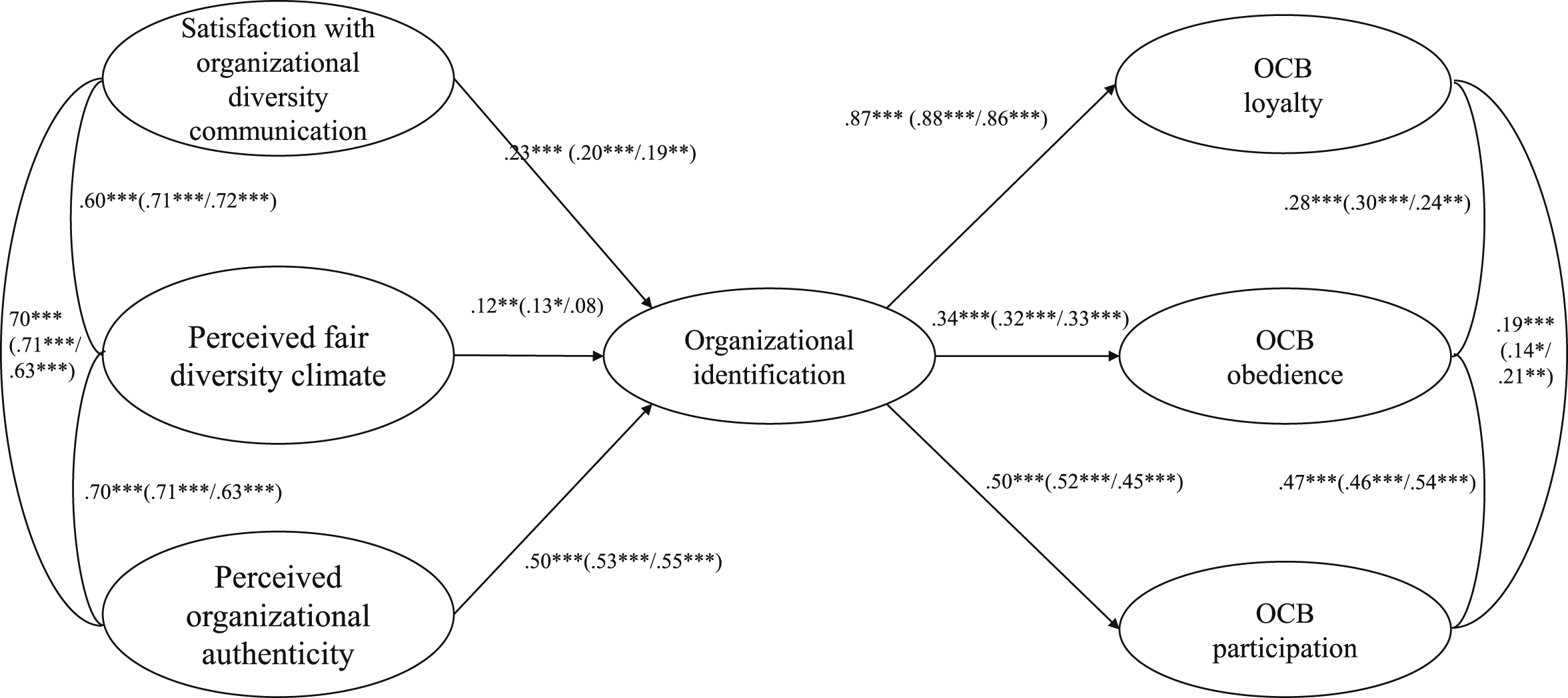
Specific Indirect Effects
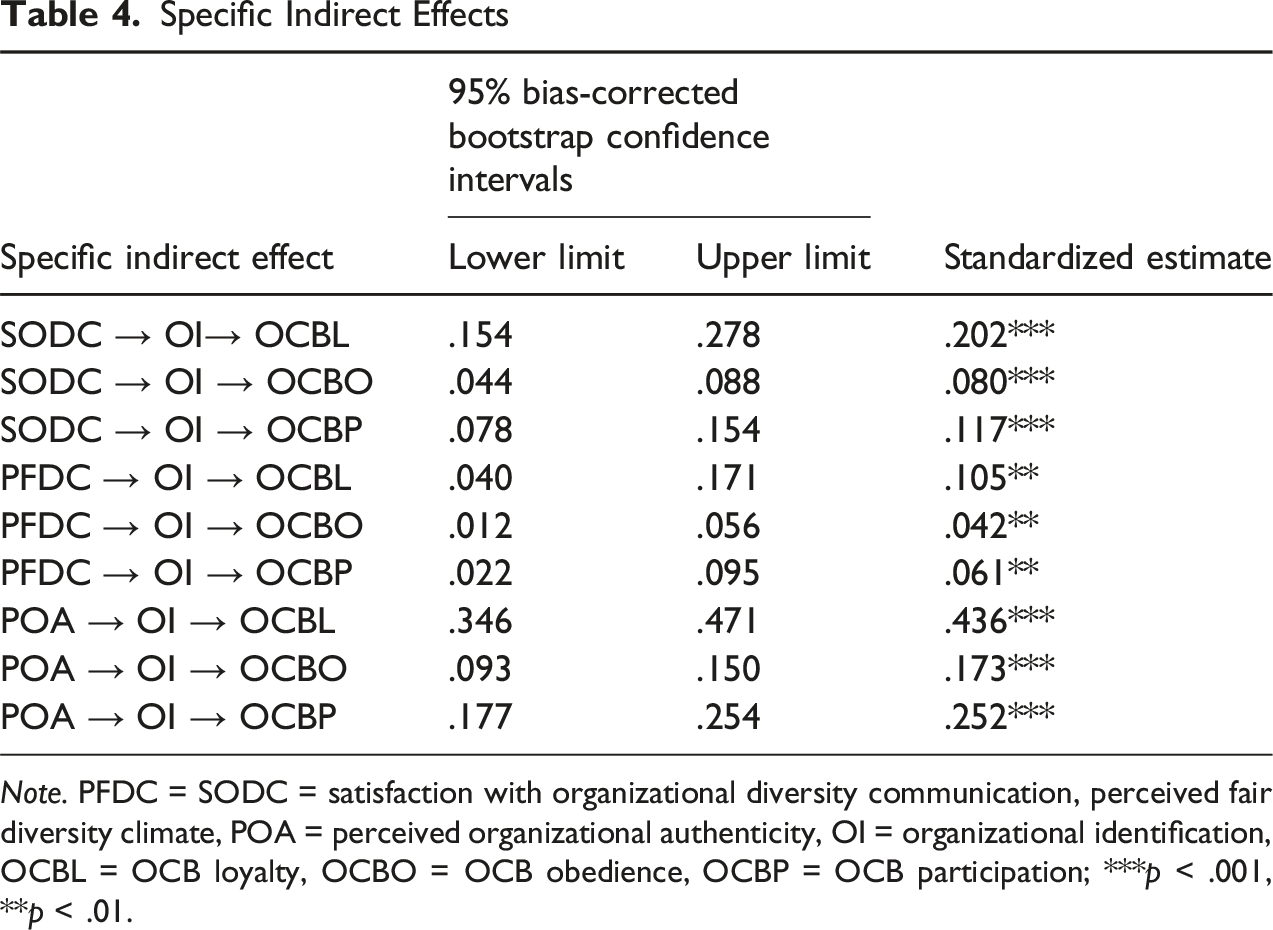
Note. PFDC = SODC = satisfaction with organizational diversity communication, perceived fair diversity climate, POA = perceived organizational authenticity, OI = organizational identification, OCBL = OCB loyalty, OCBO = OCB obedience, OCBP = OCB participation; ***p < .001, **p < .01.
Moderating effects of dichotomous variables (here minority background yes vs. no) are tested via SEM in two stages. In the first stage, the model with all paths constrained is compared with the unconstrained model for the two groups. A significant difference between the two models indicates that the groups differ overall and that there is a moderation effect. In the second stage, individual paths in the model are constrained and compared to the unconstrained model. A significant difference between models indicates a moderation effect in the specific path. A small indication of a moderating effect, however, is also present when the path is significant for one group but non-significant for the other group.
This two-stage procedure was applied to test whether having a minority background moderated the relation between (a) satisfaction with organizational diversity communication and organizational identification, (b) a perceived fair diversity climate and organizational identification, and (c) perceived organizational authenticity and organizational identification, as hypothesized in H8. In stage one, the fully constrained model (χ2 = 2178.416, df = 874) did not differ significantly from the unconstrained model (χ2 = 2143.097, df = 844; Δ χ2 = 35.319, df = 30, p = .231), indicating that the groups did not differ overall. In stage two, comparing the model where the relation between satisfaction with organizational diversity communication and organizational identification was constrained with the unconstrained model did not differ for the two groups (Δχ 2 = 0.028, df = 1, p = .867). Satisfaction with organizational diversity communication was significantly and positively related to organizational identification for both minority (β = .20, p < .001) and non-minority employees (β = .19, p = .001). Accordingly, H8a was not supported because no moderating effect of a minority background on the relationship between satisfaction with organizational diversity information and organizational identification was found.
The model constraining the relation between a perceived fair diversity climate and organizational identification and the unconstrained model showed a non-significant difference between the models (Δ χ2 = 0.192, df = 1, p = .661). However, the regression coefficient was significant and positive for employees with a minority background (β = .13, p = .012), while it was non-significant for employees without a minority background (β = .08, p = .237). Thus, the moderating effect hypothesized in H8b was marginally supported for the association between a perceived fair diversity climate and organizational identification. This means that the fairer the diversity climate is perceived to be, the more minority employees identify with their organization; however, no such relation exists for employees who do not belong to a minority group.
Constraining the path between organizational authenticity and organizational identification and comparing the obtained model to the unconstrained model also did not reveal a significant difference between minority and non-minority employees (Δ χ2 = 0.199, df = 1, p = .656). Perceived organizational authenticity and organizational identification were significantly positively related for both employees with a minority background (β = .53, p < .001) and employees without a minority background (β = .55, p < .001). Because the groups did not differ in the strength of the associations, no moderating effect of having a minority background was found; thus, H8c was not supported. 2
Discussion
Organizational identification is a powerful construct, because it can influence whether employees show behaviors that are supportive for their organization. In this study, we replicated findings from prior research that organizational identification drives employees’ citizenship behavior (Lu et al., 2018; Tufan & Wendt, 2020; van Dick et al., 2006; Xie et al., 2022; Yorulmaz & Karabacak, 2021; Zhao et al., 2014; Zulfiqar & Khan, 2021). Extending earlier research, we demonstrated that organizational identification mostly increases employees’ allegiance to the organization, followed by employees’ active engagement and employees’ compliance with organizational rules. Identifying what can foster organizational identification is therefore of great interest for research and practice alike. It is of particular interest in a work environment that is becoming increasingly diverse—due not only to globalization, but also to the ambitions of companies seeking to derive economic benefits from diversity, as promoted by corporate consultants such as McKinsey (2020).
Our focus in this was the extent to which employees’ satisfaction with their organization’s diversity communication, their perception of a fair diversity climate, and the perceived organizational authenticity resulted in organizational identification. We also considered organizational identification’s mediation role in enhancing OCB. The results of our online survey indicated that satisfaction with organizational diversity communication, the perception of a fair diversity climate, and perceived organizational authenticity increased organizational identification, and organizational identification—functioning as a full mediator—in turn increased OCB in the form of loyalty, obedience, and participation. For the relationship between a perceived fair diversity climate and organizational identification, some evidence was found that belonging to a minority matters; that is, this relationship existed for employees with a minority background but not for employees without a minority background. Overall, we conclude that diversity in the workforce and fair diversity measures should be communicated by organizations in a strategic and authentic way to have a positive impact.
Previous studies have revealed the positive effects of satisfaction with organizational communication (Krywalski Santiago, 2020; Moghadam & Tehrani, 2011; Tuzun, 2013), a fair diversity climate (Chrobot-Mason & Aramovich, 2013; Mansoor et al., 2020), and perceived organizational authenticity (Men et al., 2024) on organizational identification and appendant mediation effects (de Geus et al., 2020; Guangling, 2011; Mael & Ashforth, 1992; Moghadam & Tehrani, 2011; Yorulmaz & Karabacak, 2021; Yue, 2021). While the results of the present study confirm these effects, several of our findings enhance existing research and theory. First, instead of assessing satisfaction with organizational communication in general, the present study indicates the relevance of employees’ satisfaction with their employer’s communication on the specific topic of diversity. Second, while the three antecedents are distinct, they are also interdependent, sharing a common basis that supports organizational identification. Thus, to achieve positive work outcomes such as organizational identification, it is important for organizations to simultaneously communicate satisfactorily about diversity, create a fair diversity climate, and be authentic in organizational efforts. Each of these antecedents is essential, and none can be overlooked. However, the interdependence of the three constructs also suggests a chicken-and-egg problem in which the direction of the influence is unclear. Third, even when analyzed together in a single model, all three antecedents continue to enhance OCB by strengthening organizational identification, further highlighting their importance. Fourth, perceived authenticity is key to fostering organizational identification, surpassing the impact of satisfaction with diversity communication and indicating that diversity communication must demonstrate the alignment of the organization’s actions with its values. Fifth, because satisfaction with organizational diversity communication has a stronger influence on organizational identification than a fair diversity climate, communicating strategically about diversity issues seems crucial.
These five theoretical contributions also offer valuable insights for organizational communication practice. Effective communication about diversity plays a key role in employee satisfaction and should be integrated into the organization’s overall communication strategy. However, a holistic approach is essential, as neglecting any one antecedent—whether satisfaction with diversity communication, a fair diversity climate, or perceived organizational authenticity—can undermine the others. While a holistic approach is essential, communication experts should prioritize, first, authentically presenting organizational diversity measures; second, effectively communicating about diversity to employees; and third, fostering a positive diversity climate through communication to enhance organizational identification.
While previous research has shown stronger links between diversity-friendly climates and positive outcomes in diverse groups (Holmes et al., 2021), our study similarly revealed that the fairer the diversity climate is perceived to be, the more minority employees identify with their organization. Satisfaction with diversity communication and perceived organizational authenticity, however, influenced organizational identification regardless of minority background, highlighting the importance of communication satisfaction for all employees, whether from majority or minority groups. Importantly, authenticity was measured as overall organizational honesty rather than in relation to diversity, leaving the potential impact of diversity-specific authenticity on diverse groups unclear.
This study excluded women without other diversity characteristics from the minority group, despite most diversity initiatives focusing on gender equality (78%, PageGroup, 2021). Minority participants not targeted by these initiatives may have been indifferent to related communication. Future research should explore whether the impact of diversity measures moderates these effects. Additionally, in sectors where minority employees form the majority (e.g., construction), being a member of the majority in this context might influence diversity communication and identification. Future studies should account for diversity backgrounds in both societal and organizational contexts.
Previous research has focused on the effect of perceiving a fair diversity climate on organizational identification (Chrobot-Mason & Aramovich, 2013; Mansoor et al., 2020). However, in the present study, the effects of organizational authenticity and satisfaction with the organization’s diversity communication on organizational identification were found to be more prominent. Because these effects are substantive, future research should take them into account.
Implications, Limitations, and Conclusion
To foster organizational identification and thus achieve positive outcomes for both employees and organizations, effective communication with employees is crucial. For diversity communication to be effective, employees must feel satisfied with it—such as receiving the right level of information about diversity policies, goals, or initiatives. As not all employees are equally affected by or interested in diversity initiatives, organizations must listen to their employees and tailor their diversity communication to meet individual needs. For example, organizations could provide an overview of diversity initiatives with links to more detailed information for those interested, while avoiding unnecessary targeting of those who may not be interested. At the same time, it is important to ensure that employees who are likely to be affected (i.e., minorities) are directly and perhaps more personally informed in order to benefit from these initiatives. Because the term “diversity” can sometimes provoke negative reactions in majority groups due to perceptions of favoritism toward minorities, renaming and reframing it as “belonging and engagement” could help reduce backlash. This approach shifts the focus from emphasizing differences to fostering a sense of common affiliation and shared organizational goals.
Establishing a positive diversity climate where equal opportunities are seen as fair by all employees requires effective diversity communication. Hiring diverse talent or implementing fair procedures only fosters fairness perceptions when clearly communicated. Such communication must inform employees about diversity initiatives and demonstrate that the organization’s actions are authentic and fair for all employees. Thus, organizations need to plan their diversity communication carefully and ensure that, first, fair diversity practices and policies are designed and implemented after consulting employees from various backgrounds to ensure fairness and inclusivity and avoid a one-size-fits-all approach. For these practices and policies to have a positive impact, organizations need to know their employees very well, i.e., they need to consult and engage with their (diverse) workforce on diversity issues. Second, the communicated practices and policies need to be aligned with the overall organizational values so that they are perceived as authentic by employees. Paying lip service is insufficient because employees will see through it and perceive the organization as inauthentic, which in turn weakens their organizational identification. Third, organizational values should match the employees’ values so that employees are satisfied with the information they receive.
Authenticity is closely linked to communication, as employees need to be informed and should understand both what an organization stands for and what it actively does. However, authenticity goes beyond communication alone, as communication can only be effective when organizations and their leadership consistently demonstrate the values, principles, and promises they advocate. Although this study did not specifically examine authenticity in the context of diversity, authenticity in diversity appears to be a key factor in evaluating an organization’s overall authenticity. To foster employee perceptions of authenticity in diversity, top management must actively and visibly support diversity initiatives—such as participating in diversity training or collaborating with diversity-focused organizations—without appearing solely self-serving and without giving in to negative reactions. Moreover, authentic communication about diversity requires a comprehensive approach, addressing all dimensions of diversity, implementing challenging measures, and seeking as well as acting on employee feedback for improvement. Organizations that fail to communicate their diversity efforts effectively risk being perceived as inauthentic, leading to lower identification among employees.
While our model received general support, there are some limitations. First, the study was conducted in Germany and Austria, which limits generalizability. However, as similar developments regarding diversity in organizations can be observed also in other countries, for example the United States (Men et al., 2023, 2024), our findings are unlikely unique for only the countries of investigation. The sample, although diverse in some aspects, had a small proportion of minority groups, hindering meaningful comparisons. Future research should include more minority participants and explore how multiple identities influence perceptions in the workplace. Another limitation of the study is the assumption that all organizations provide information about diversity issues and that organizational diversity communication is perceived as positive by employees. Thus, employees’ attitudes toward diversity should also be assessed to confirm the identified effects because different groups of employees perceive diversity climates in different ways (for an overview, see Dwertmann et al., 2016). Another issue concerns the measurement of overall organizational authenticity rather than the authenticity of diversity communication specifically, which may differ. Finally, our SEM is correlational, and alternative assumptions could be explored. For example, organizational identification might foster a fair diversity climate, organizational authenticity, and satisfaction with organizational diversity information, and these three factors might increase OCB. Thus, experimental studies and longitudinal data linking employees’ and employers’ views on organizational culture and management instruments (e.g., Linked-Personnel Panel, Mackeben et al., 2021) would help confirm the causal relationships suggested in our model.
As diversity becomes increasingly central in organizations, but also contested in politics and society, it is important to understand how diversity communication and closely-linked concepts affect organizational identification and further organizational outcomes. By examining the combined effect of satisfaction with diversity communication, perceived organizational diversity climate, and perceived organizational authenticity, this study demonstrates that perceiving an organization as authentic is the strongest factor fostering organizational identification, followed by satisfaction with diversity communication and fair diversity climate. However, both authenticity and a fair diversity climate can be seen as dependent on effective diversity communication (Men et al., 2023, 2024), underscoring the central role of employees’ satisfaction with this communication—an important insight for communication scholars and experts.
Footnotes
Acknowledgements
We thank Daniel Wolfgruber for his help in developing the questionnaire and collecting the data. This research was funded by the Academic Society for Management & Communication (project title: Diversity Kommunikation - Eine Untersuchung zu Zielen, Potenzialen und Risiken der Kommunikation zu Diversity und Inklusion in Unternehmen [Diversity Communication - An Analysis of the Goals, Potentials and Risks of Diversity and Inclusion Communication in Organizations]).

Funding
Academic Society for Management & Communication.
Declaration of Conflicting Interests
The author(s) declared no potential conflicts of interest with respect to the research, authorship, and/or publication of this article.