



Abstract
This study investigates the performance enhancement of styrene-butadiene-styrene (SBS) modified asphalt binders through the incorporation of high-elastic modifiers (HEMs). Three HEMs JC-HEM, GL-HEM, and JT-HEM were evaluated using a comprehensive suite of tests, including rheological assessments, viscosity measurements, chemical interaction analysis, and microscopic characterization. The results demonstrate significant improvements in the viscoelastic properties of SBS binders across a wide range of temperatures and loading conditions. Specifically, JT-HEM-modified binders exhibited a 25% reduction in stiffness and a 40% increase in recovery rates, while maintaining excellent workability due to reduced viscosity. GL-HEM showed a 20% reduction in stiffness and a 35% improvement in recovery rates, with enhanced high-temperature deformation resistance. JC-HEM contributed to a 15% reduction in stiffness and a 30% increase in recovery, offering improved elasticity and compatibility. Fluorescence microscopy and softening point difference tests further confirmed enhanced storage stability and phase homogeneity, particularly for SBS-JT binders. These findings observed that carefully selected HEMs not only mitigate the compatibility issues commonly associated with SBS but also optimize the long-term performance of asphalt binders. This research supports the integration of advanced polymer systems in pavement design to extend service life and reduce maintenance needs under demanding field conditions.
Keywords
Introduction
Pavement durability is critically dependent on the rheological and thermomechanical properties of the asphalt binder, particularly under increasing traffic loads and extreme climatic conditions.1,2 Conventional asphalt binders often fail to meet the performance demands of modern infrastructure, prompting the widespread adoption of modifier modification to enhance elasticity, stiffness, and resistance to permanent deformation. 3 Among various modifiers, styrene-butadiene-styrene (SBS) triblock copolymer has become the industry standard due to its ability to form a dual-phase network that imparts thermoplastic elastomeric behaviour to asphalt.4,5 SBS-modified binders exhibit improved rutting resistance and reduced thermal cracking susceptibility however, their practical application is hindered by inherent limitations most notably, poor compatibility with the base asphalt matrix, which leads to phase separation during high-temperature storage or transport. This instability compromises binder homogeneity and field performance, potentially negating the long-term benefits of polymer modification. Moreover, SBS modification typically requires elevated blending temperatures (160-180°C) and extended high-shear mixing durations, increasing energy consumption and emissions during production. 6
To address these challenges, researchers have increasingly turned to high-elasticity polymer modifiers (HEMs) a class of advanced additives engineered to enhance elastic recovery, tensile strength, and interfacial compatibility between polymer and asphalt phases. Recent studies underscore the growing role of HEMs in next-generation asphalt technology. 7 A study demonstrated that a high-elastic anti-rutting additive significantly improved the viscoelastic response of SBS-modified binders, increasing elastic recovery by over 40% and reducing non-recoverable creep compliance. However, their work did not evaluate storage stability or microstructural evolution. Similarly, another study reported a 2.5-fold extension in fatigue life for asphalt mixtures containing HEMs but focused exclusively on mixture-level performance without linking macroscopic behaviour to binder-scale rheology or phase compatibility.8–11
More innovative approaches have emerged with reactive and hybrid HEMs systems, developed an epoxy/SBS composite HEM that exhibited shape-memory functionality for crack self-healing a promising step toward multifunctional asphalt materials. Meanwhile a study emphasized that micro-scale compatibility, governed by modifier polarity and interaction with asphaltenes, is pivotal for long-term stability. They noted that most commercial HEMs remain proprietary, limiting fundamental understanding of structure property relationships. 12 A key trend in recent literature is the shift from single component to multi-component HEMs formulations that synergistically combine thermoplastics, elastomers, resins, and reactive agents. For instance, comprising epoxy-grafted SBS and tackifying resin has shown enhanced high-temperature stability in field trials on Jiangsu highways. Yet, comprehensive evaluations that integrate rheological performance across temperature regimes, fatigue and low-temperature cracking resistance, and microstructural validation of storage stability remain scarce.13,14
High-elasticity polymer modifiers have garnered increasing attention in recent years due to their remarkable ability to enhance rutting resistance and improve stress absorption in asphalt pavements. These properties make them particularly promising for applications such as “white-to-black” pavement conversions, where mitigating reflective cracking and enhancing pavement longevity are critical. Previous studies, such as those conducted on high-elastic anti-rutting additives used in G235, S341, and S356 projects have primarily focused on evaluating fatigue performance and mechanical behaviour under repeated loading conditions. While these investigations provided valuable insights into fatigue resistance and failure mechanisms, they largely overlooked the rheological characteristics and storage stability of the modified asphalt binder key factors that significantly influence material performance, production feasibility, and long-term durability. 15
The effectiveness of HEMs in SBS-modified asphalt is closely linked to their molecular structure, compatibility with bitumen components, and interaction with the SBS polymer itself. 16 When properly dispersed, these modifiers can create a more cohesive network within the binder, thereby improving its ability to resist deformation under load and maintain elasticity under varying thermal conditions. Additionally, reactive types of HEMs may chemically bond with components of the asphalt binder, further improving stability and mechanical integrity.17–19 Beyond rheology, storage stability is another crucial performance attribute for modified asphalt binders. Phase separation during storage typically simulated by heating the sample at elevated temperatures can lead to performance inconsistencies and increased maintenance costs in the field. Standard storage stability tests, including segregation analysis and softening point difference, provide quantitative measures of binder homogeneity. Researchers have also employed advanced characterization methods such as Fourier Transform Infrared Spectroscopy (FTIR), Scanning Electron Microscopy (SEM), and fluorescence microscopy to understand the morphology and compatibility of polymer phases in modified asphalt.20,21
Recent investigations into hybrid or multi-component modified asphalt systems observed that a synergistic approach, combining SBS with carefully selected HEMs, can offer superior performance over conventional single-modifier systems.22,23 For instance, the addition of reactive HEMs has been shown to reinforce the SBS network and enhance the interaction with asphaltenes, thereby improving both the mechanical and storage characteristics of the binder. 24 Furthermore, high-elasticity polymer modifiers often facilitate better dispersion and reduced agglomeration of SBS within the asphalt matrix, ensuring uniform performance across the pavement structure. 25
This study addresses that critical gap by evaluating three novel high-elasticity polymer modifiers (HEMs) representing distinct chemical architectures including functionalized thermoplastic elastomers, epoxy-based hybrids, and multi-component systems integrating SBS with polyolefins, elastomers, resins, and reactive agents within a unified experimental framework. Unlike prior studies that have been limited to evaluating either fatigue performance or mixture-level analysis, this work integrates binder-scale rheology, microstructural characterization, and storage stability into a comprehensive framework. This holistic approach provides a deeper understanding of how high-elasticity polymer modifiers (HEMs) enhance the overall performance of SBS-modified asphalt binders. By combining these aspects, our study offers new insights into the mechanisms by which HEMs improve binder performance, which is crucial for developing more durable and efficient asphalt materials for modern infrastructure.
Experimental
The evaluation of modified asphalt binders in this study involved a systematic experimental approach as illustrated in Figure 1(a). Conventional property tests, including penetration, softening point, and ductility, were conducted to assess basic physical characteristics. Storage stability was analysed through softening point difference (SPD), phase ratio (PR), thermal conditioning, and vertical segregation techniques. (a) Schematic overview of the experimental methods used to evaluate the performance of modified asphalt binders (b) high-elasticity polymer modifiers JC-HEM, GL-HEM, and JT-HEM.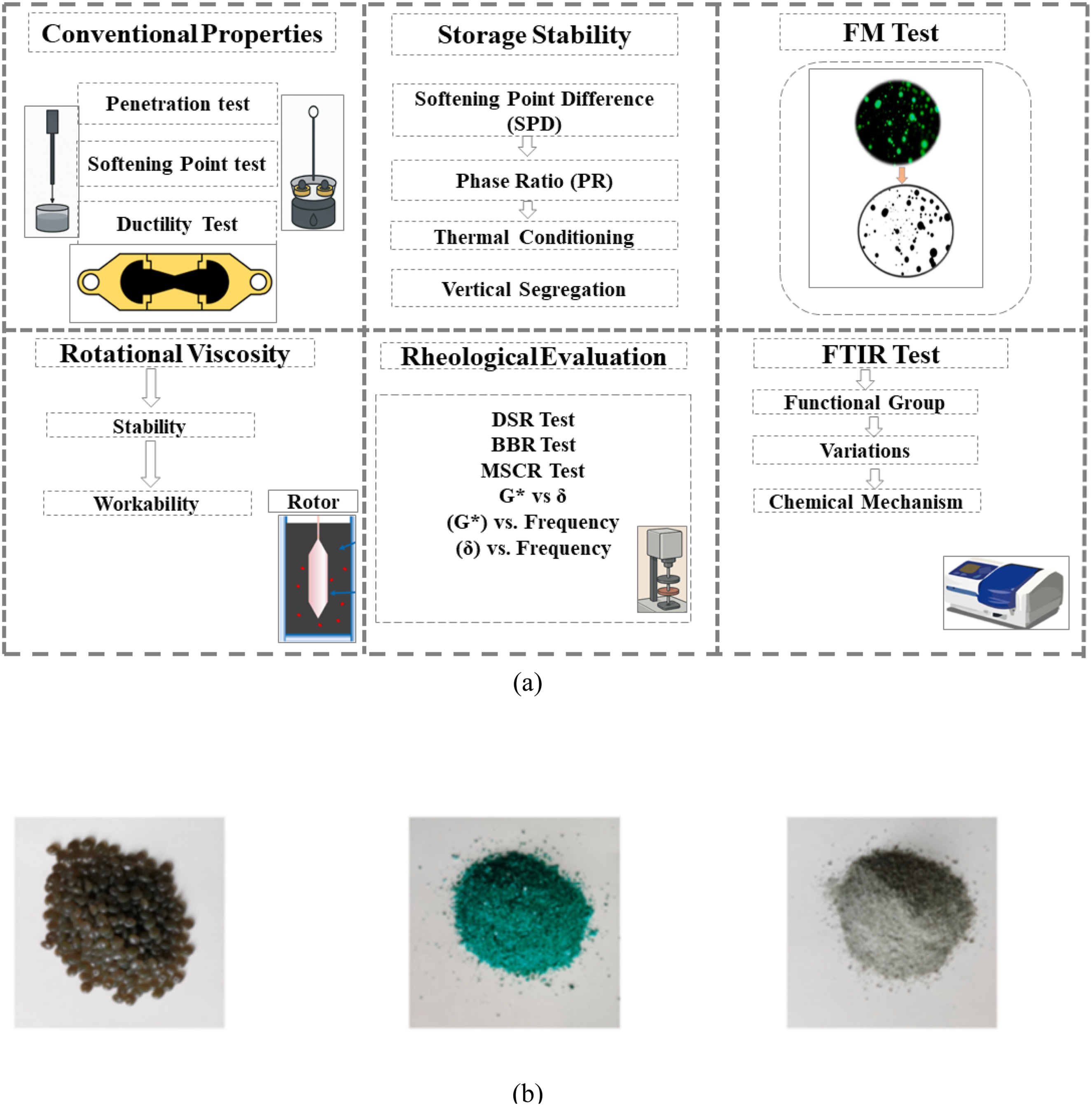
Material
Base binder asphalt
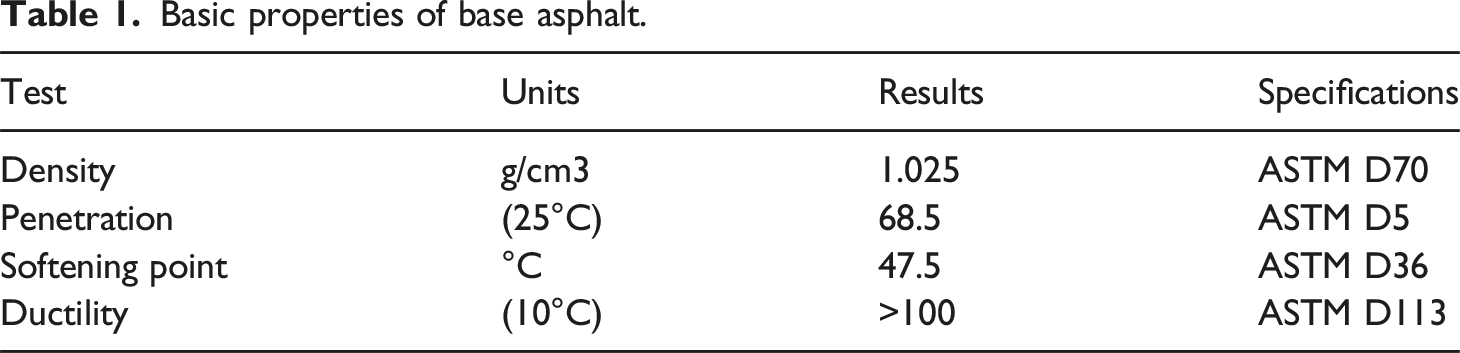
Basic properties of base asphalt.
High elasticity polymer modifiers
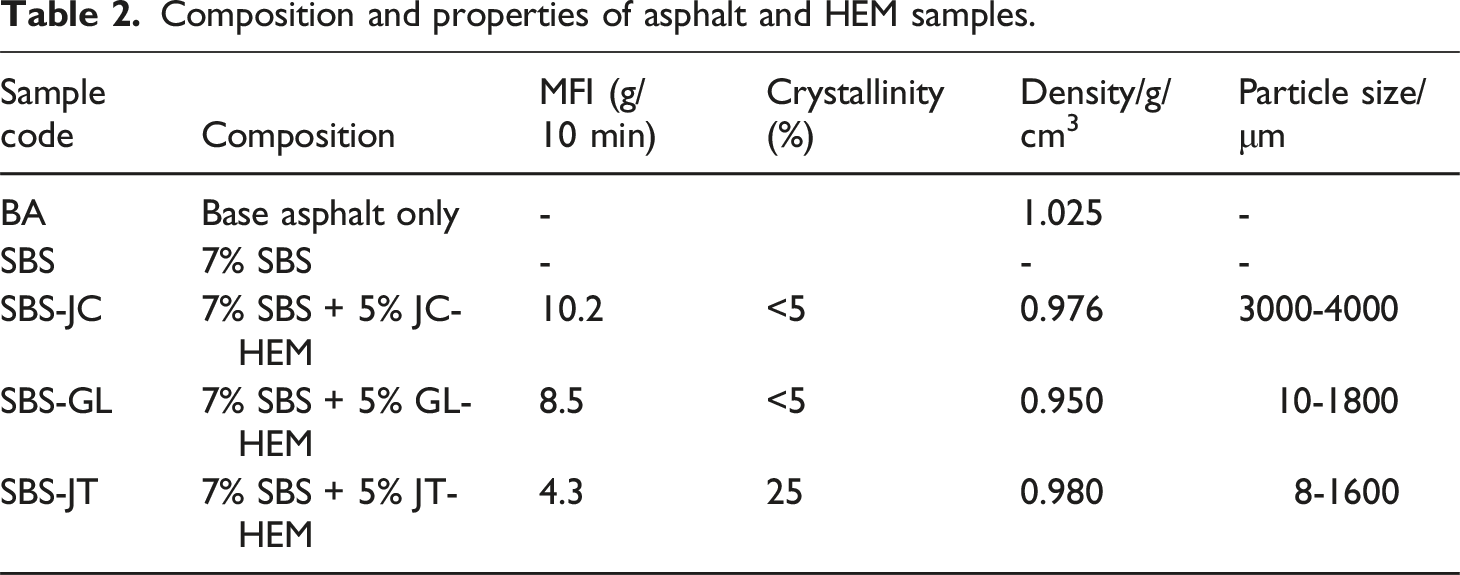
Composition and properties of asphalt and HEM samples.
Preparation of modified asphalt binders
Modified binders were prepared using a standard blending process to ensure uniformity. First, the base asphalt was heated to 160–165°C to achieve a fluid state suitable for blending while preventing premature aging. Three types of (HEMs) JC-HEM, GL-HEM, and JT-HEM were then individually added to the base asphalt at a concentration of 5% by weight of the binder, with gradual stirring to avoid clumping and ensure uniform dispersion. Samples were blended at 165°C using high-shear mixing (4000 rpm, 60 min), followed by low-speed stirring (1000 rpm, 30 min) to remove bubbles. The homogenized binders were poured into sealed containers to prevent oxidation during storage. For storage stability assessment, samples were poured into glass tubes, stored vertically at 163°C for 48 h, and then sectioned into top and bottom parts to measure the softening point difference (ASTM D7173). Finally, the prepared samples were labelled according to their modifier type (e.g., SBS + JC-HEM, SBS + GL-HEM, SBS + JT-HEM) and stored in a dark, dry environment at room temperature until testing to maintain consistency. The 5% dosage was selected based on manufacturer recommendations and established practices in Chinese highway engineering, where HEMs are typically used at 4–6% by weight of binder to balance performance and cost-effectiveness. Preliminary lab. trials also confirmed that 5% provides sufficient polymer network development without causing excessive viscosity or phase instability.
Testing methods
Dynamic Shear Rheometer test
The rheological behaviour of the SBS-modified asphalt binders with high-elasticity polymer modifiers was evaluated using a Dynamic Shear Rheometer (DSR). (AASHTO T315) standards. This test measures the complex shear modulus (G*) and phase angle (δ) to characterize the viscoelastic properties and high-temperature performance of the binders. Both unaged and RTFOT-aged samples were tested using 25 mm parallel plates with a 1 mm gap. A strain-controlled test within the linear viscoelastic region was conducted at a constant frequency of 10 rad/s. A temperature sweep test was performed from 46°C to 82°C, increasing in 6°C increments, to evaluate the thermal sensitivity and performance grade of the binders. The rutting parameter (G/sin δ) * was calculated to assess the resistance to permanent deformation.
Multiple Stress Creep Recovery (MSCR) test
The MSCR test was conducted in accordance with AASHTO T350 using a DSR with 25 mm parallel plates and 1 mm gap. Tests were performed at 64°C on RTFOT-aged samples at two stress levels: 0.1 kPa and 3.2 kPa. Each cycle consisted of 1 s creep + 9 s recovery, repeated for 30 cycles per stress level. Non-recoverable compliance (Jnr) and percent recovery (R) were calculated from the average of the last 10 cycles.
Linear Amplitude Sweep (LAS) test
The Linear Amplitude Sweep (LAS) test was conducted in accordance with AASHTO TP 101 to evaluate the fatigue resistance of the asphalt binders under controlled strain-controlled loading. The test was performed on pressure-aged (PAV) samples using a Dynamic Shear Rheometer (DSR) equipped with 8 mm parallel plates and a 2 mm gap at a constant temperature 25°C. A base frequency of 10 Hz was applied while the strain amplitude was incrementally increased from 0.1% to 30% over 100 cycles, simulating progressive damage accumulation under repeated traffic loading.
Bending Beam Rheometer test
The low-temperature performance of the modified asphalt binders was evaluated using a Bending Beam Rheometer (BBR) in accordance with (AASHTO T313). Samples were first RTFOT-aged, then PAV-aged (100°C, 2.5 MPa air pressure, 20 hours, ASTM D6521) to simulate long-term field aging. Tests were conducted at −6°C, −12°C, −18°C, and −24°C to measure creep stiffness (S) and m-value parameters that reflect the binder’s ability to resist thermal cracking. A constant load was applied for 240 seconds, and the average values were used for analysis.
Rotational viscosity test
The viscosity of the modified asphalt binders was measured at 135°C and 165°C which are commonly used to assess mixing and compaction temperatures in asphalt paving applications. Using a Brookfield rotational viscometer with Spindle No. 27, (ASTM D4402). Unaged samples were tested to evaluate the workability of fresh binders during mixing and compaction. Approximately 10–15 g of each sample was tested to assess workability and temperature sensitivity. All tests were conducted in triplicate, and average values were reported.
Conventional tests
The physical characteristics of the SBS-modified asphalt binders incorporating high-elasticity polymer modifiers were assessed using standard binder tests. These included the penetration test at 25°C (ASTM D5), softening point test (ASTM D36), and ductility test at 15°C (ASTM D113), which evaluate binder consistency, thermal behavior, and tensile elongation capacity, respectively. To simulate the short-term aging experienced during asphalt production and laying, all binder samples were aged using the Rolling Thin Film Oven Test (RTFOT) at 163°C for 85 min, following (ASTM D2872). Each test was conducted in triplicate, and the average result was recorded to ensure data accuracy and repeatability.
Storage stability
Storage stability was evaluated using the tube separation test per ASTM D7173 procedure. For polymer-modified asphalt binders, a softening point difference (SPD) of ≤2.5°C after 48 h at 163°C is widely accepted as the threshold for acceptable stability, as recommended by AASHTO M320 and supported by recent studies on SBS and HEMs.
Fluorescence microscopy test
Fluorescence microscopy was employed to assess the phase morphology and dispersion quality of SBS and (HEMs) within the modified asphalt binders. Axio Vert. A1 microscope was used to observe the internal microstructure of samples collected from the top and bottom segments of the binder-filled tubes after the storage stability test (ASTM D7173).
To prepare microscopic specimens, a small quantity of binder was carefully dripped onto a clean glass slide and immediately covered with a coverslip to form a uniform thin film. The slides were cooled to ambient temperature and then examined under UV excitation (365 nm) to differentiate the polymer-rich domains (fluorescent) from the asphalt matrix (dark background).
The phase distribution ratio (PR) was calculated as the proportion of the fluorescent region relative to the total image area, using the following equation (1).
A consistent PDR between top and bottom segments indicates good storage stability and uniform phase distribution. Large discrepancies may suggest modifier segregation or inadequate compatibility.
The Top-Bottom Fluorescence Discrepancy (TFD) was defined as the absolute difference between the average PDR values of the top and bottom regions and was calculated according to equation (2).
Results
Consistency, thermal stability, and workability
The addition of SBS and (HEMs) notably transformed the physical and processing characteristics of the asphalt binders. Penetration values decreased compared to the base asphalt is shown in Figure 2(a), indicating increased consistency particularly for SBS-GL and SBS-JT. At the same time, softening points increased, with SBS-GL reaching the highest value (58°C), confirming enhanced thermal stability and improved resistance to high-temperature deformation. Results of conventional test penetration softening point and Ductility.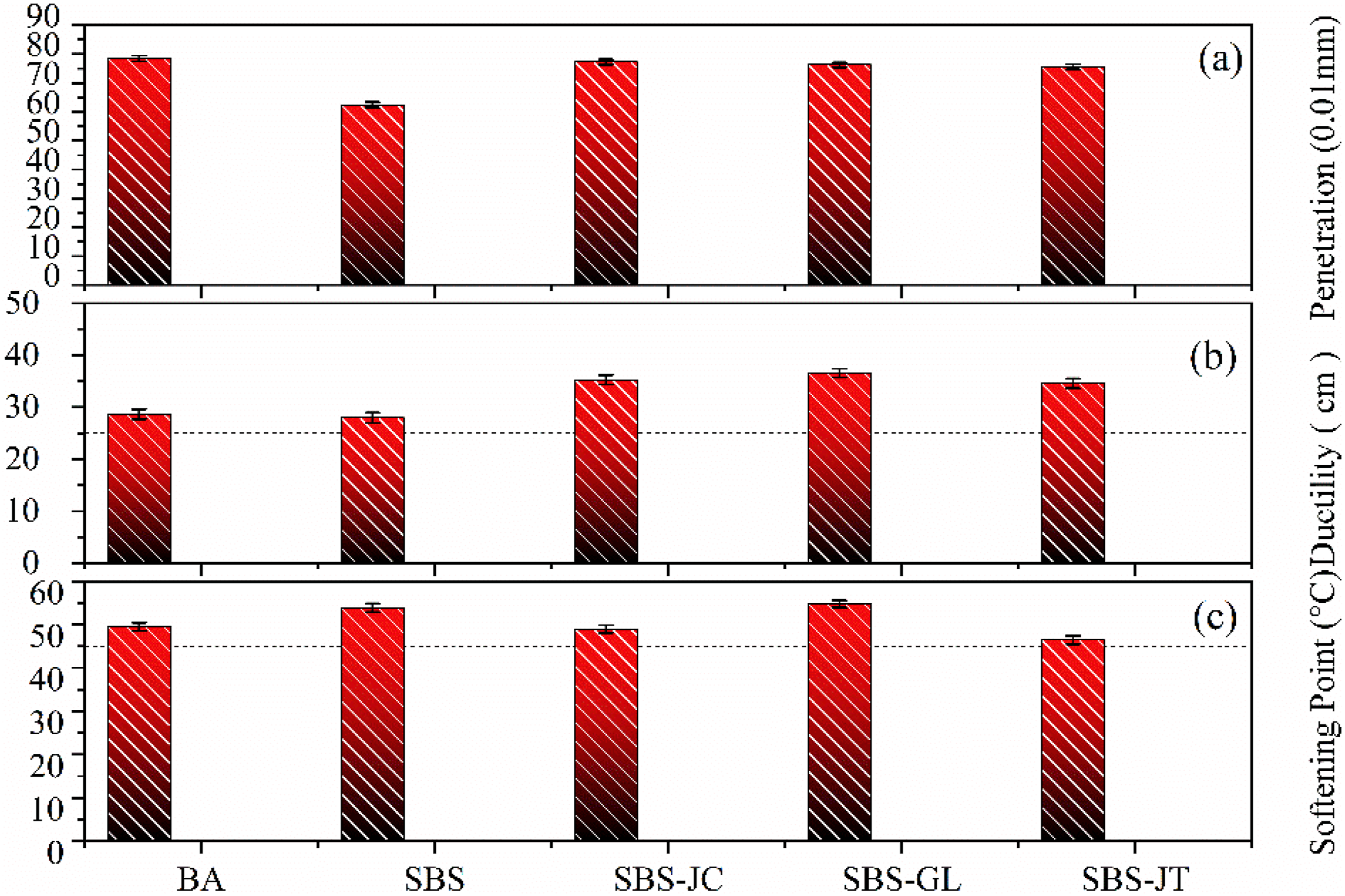
Interestingly, despite the increase in consistency, rotational viscosity measurements revealed a counterintuitive improvement in workability. As shown in Figure 3, all HEM-modified binders exhibited lower viscosity than the SBS-only control at both 135°C and 165°C. Notably, SBS-JT displayed the lowest viscosity (2.15 Pa·s at 135°C), indicating that its multi-component formulation enhances polymer dispersion and reduces internal friction during mixing and compaction. Rotational viscosity test result.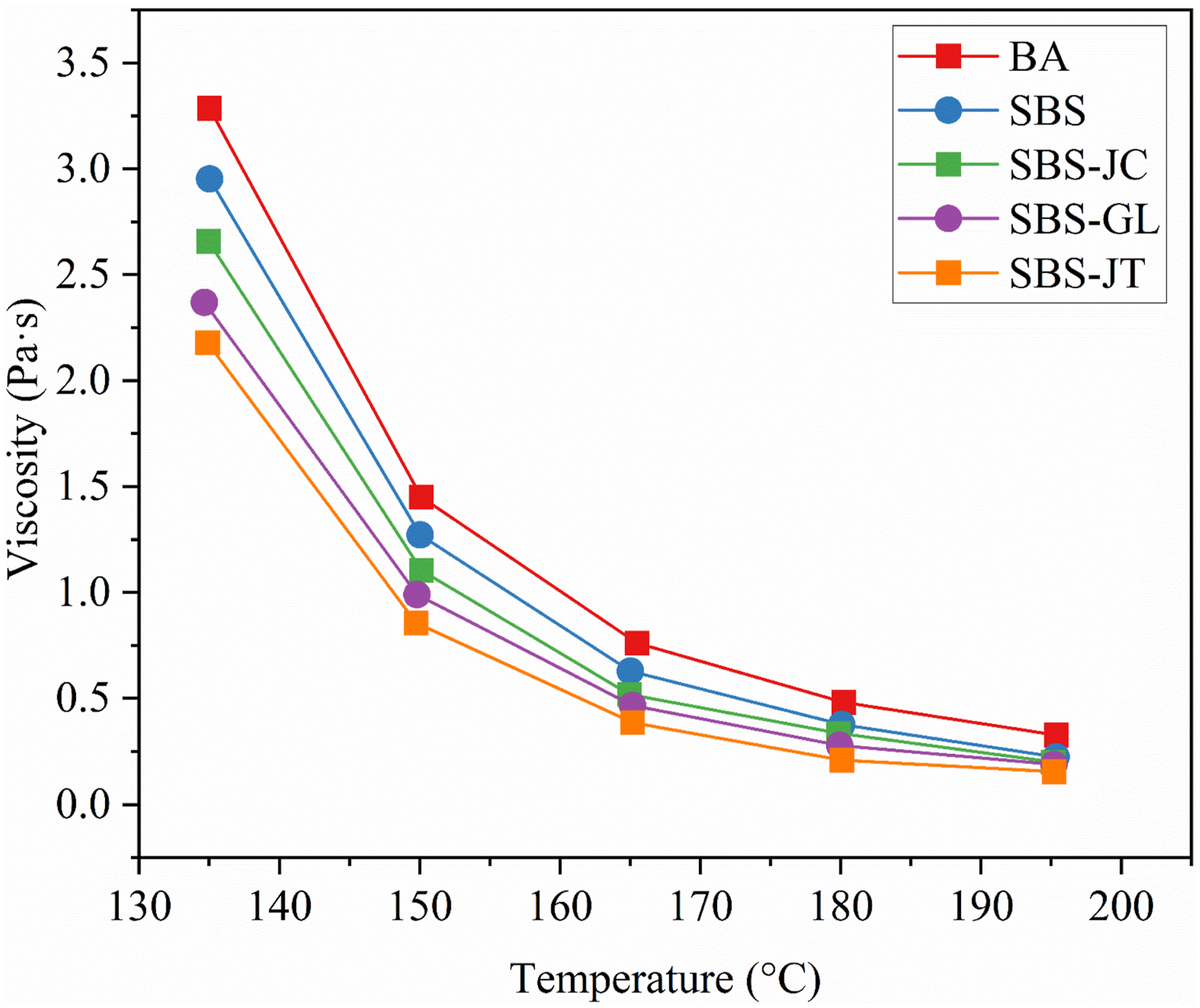
This decoupling of consistency and viscosity is a key advantage of HEMs, they not only improve high-temperature performance but also enhance construction feasibility, providing an effective balance between durability and ease of handling.
Supporting these findings, the ductility results further demonstrate this balanced performance. While SBS alone reduced elongation (signifying increased brittleness), the addition of HEMs, especially JT-HEM, restored ductility to levels that exceeded those of the base asphalt Figure 2(b). This observed that JT-HEM helps retain flexibility under tensile stress, ensuring better low-temperature performance.
Fourier Transform Infrared (FTIR) analysis
Fourier Transform Infrared (FTIR) spectroscopy was employed to investigate the chemical interactions between SBS and the (HEMs). As shown in Figure 4 and summarized in Table 3, all modified binders exhibit characteristic absorption bands consistent with hydrocarbon-rich asphalt and polymeric additives. Specifically, strong aliphatic C-H stretching vibrations appear at 2918-2905 cm−1 (asymmetric -CH2) and 2845–2786 cm−1 (symmetric -CH3), while aromatic C = C stretching is observed in the 1536-1417 cm−1 region, confirming the presence of SBS and aromatic components within the HEM formulations. FTIR test results. FTIR peak assignments of modified asphalt binders.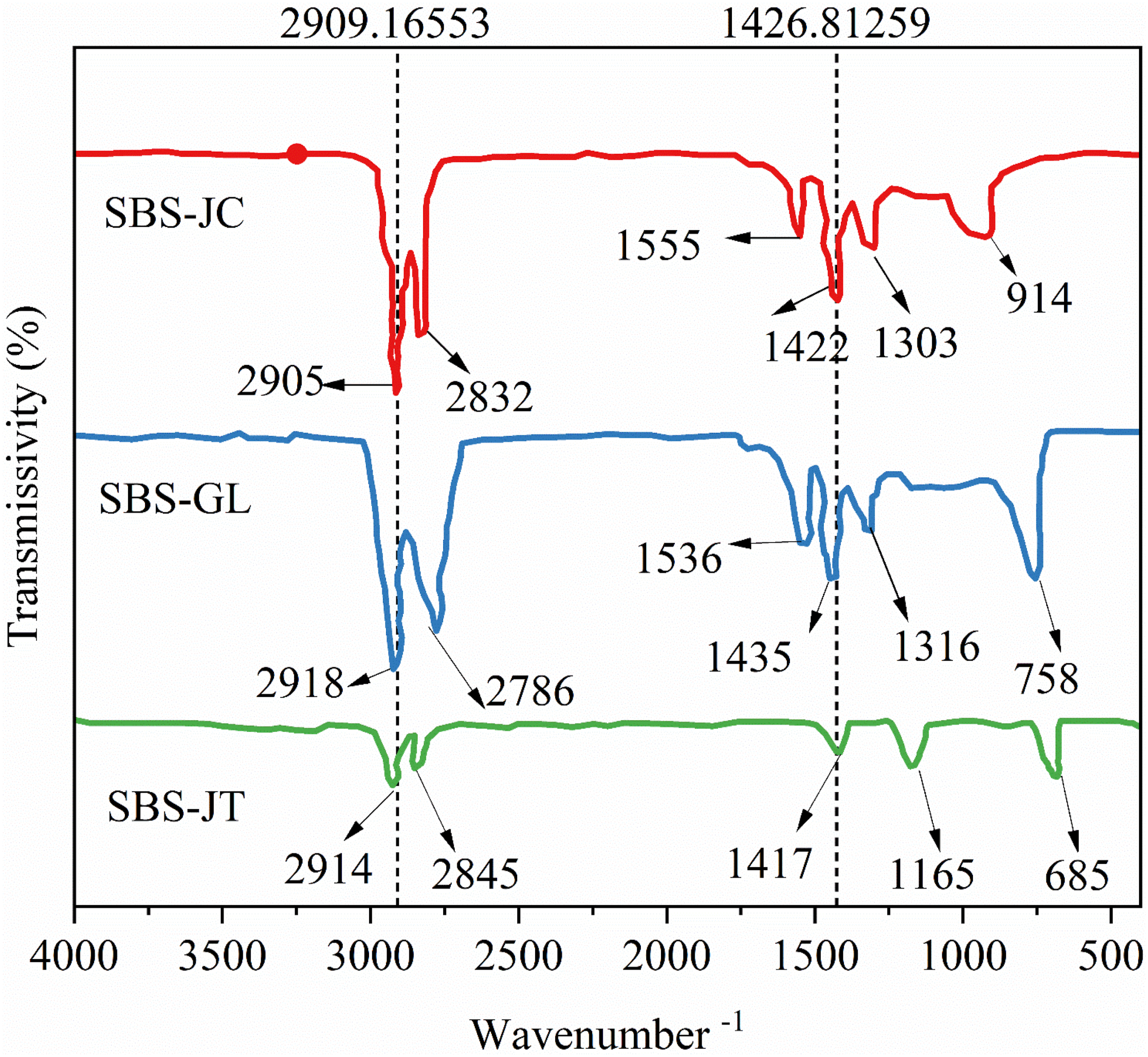
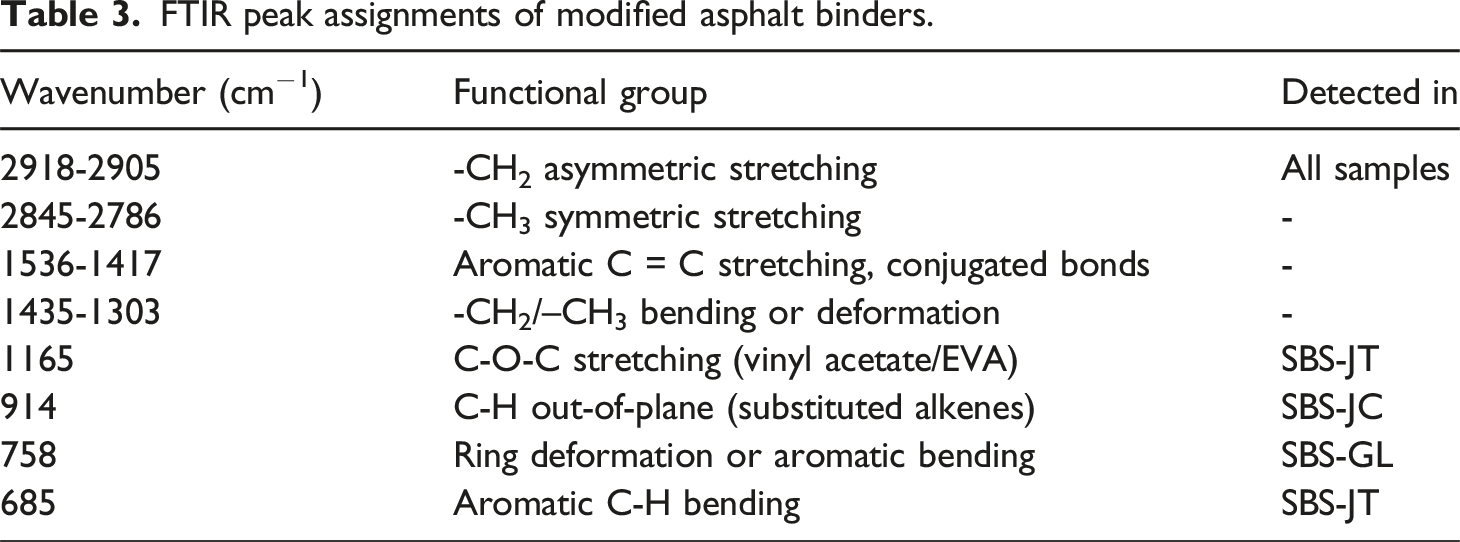
Notably, sample-specific peaks observed in the FTIR spectra provide valuable insight into the compositional differences among the high-elasticity polymer modifiers (HEMs). SBS-JT displays a distinct band at 1165 cm−1, attributed to C-O-C asymmetric stretching, which is characteristic of ethylene-vinyl acetate (EVA). In contrast, SBS-JC exhibits a peak at 914 cm−1, indicative of C-H out-of-plane bending, which is associated with terminal alkenes or substituted aliphatic chains. Meanwhile, SBS-GL and SBS-JT present bands at 758 cm−1 and 685 cm−1, respectively, corresponding to monosubstituted aromatic ring deformations. These bands are consistent with the presence of functionalized aromatic or cyclic structures, further confirming the unique chemical characteristics of GL-HEM and JT-HEM. Critically, no new absorption bands emerged in any HEMs-modified sample relative to the base SBS binder. This absence coupled with negligible changes in peak positions or shapes indicates that no covalent bonding occurred during blending. Instead, the observed spectral features support predominantly physical interactions, such as molecular entanglement, van der Waals forces, and dipole–dipole associations, consistent with prior studies on non-reactive polymer-modified bitumens. 27



Quantitative FTIR indices for modified asphalt binders.
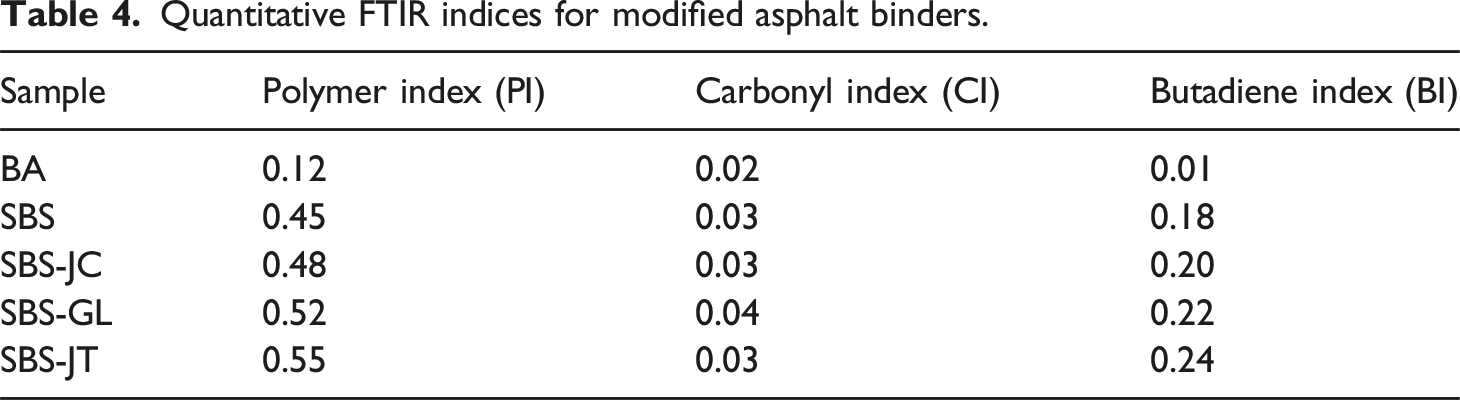
All HEM-modified binders exhibited higher polymer index (PI) and butadiene index (BI) values than the SBS-only control, confirming enhanced polymer content and improved dispersion within the asphalt matrix. The lowest Carbonyl Index (CI) values (≤0.04) across all samples indicate minimal oxidative aging during sample preparation. Most notably, SBS-JT achieved the highest PI (0.55) and BI (0.24), correlating directly with its superior rheological performance (e.g., lowest G*, highest recovery in MSCR, greatest ductility). This quantitative agreement between FTIR indices and macroscopic behavior reinforces that effective physical blending and homogeneous network formation underpin the performance enhancements observed in HEM-modified systems particularly for the multi-component JT formulation.
Viscoelastic behavior across temperatures and frequencies
Frequency sweep analysis
Master curves of the complex shear modulus (G∗) and phase angle (δ) were constructed for all binders using the time temperature superposition (TTS) principle, with a reference temperature of 25°C. Horizontal shift factors (aT) were determined by fitting experimental data to the Williams Landel Ferry (WLF) equation, and no vertical shifting was applied, as all samples exhibited thermorheologically simple behavior confirmed by smooth, non-intersecting master curves across the reduced frequency range.
As shown in Figure 5(a), (G∗) increases monotonically with decreasing reduced frequency for all binders, reflecting progressive stiffening under quasi static. The base asphalt (BA) exhibits the highest (G∗) across the entire frequency spectrum, indicative of limited molecular mobility, poor stress relaxation, and inherent brittleness, particularly at low reduced frequencies (corresponding to high in-service temperatures). In contrast, SBS modification significantly reduces (G∗) at low frequencies, and the incorporation of high-elasticity polymer modifiers (HEMs) further enhances this effect. Among the modified systems, SBS-JT displays the lowest (G∗), observed significant compliance and enhanced capacity to accommodate thermally and traffic-induced deformations over extended time scales. Conversely, SBS-GL maintains a moderately elevated modulus, consistent with its higher softening point and improved resistance to permanent deformation at elevated temperatures. (a) Master curves complex share modulus and (b) phase angle.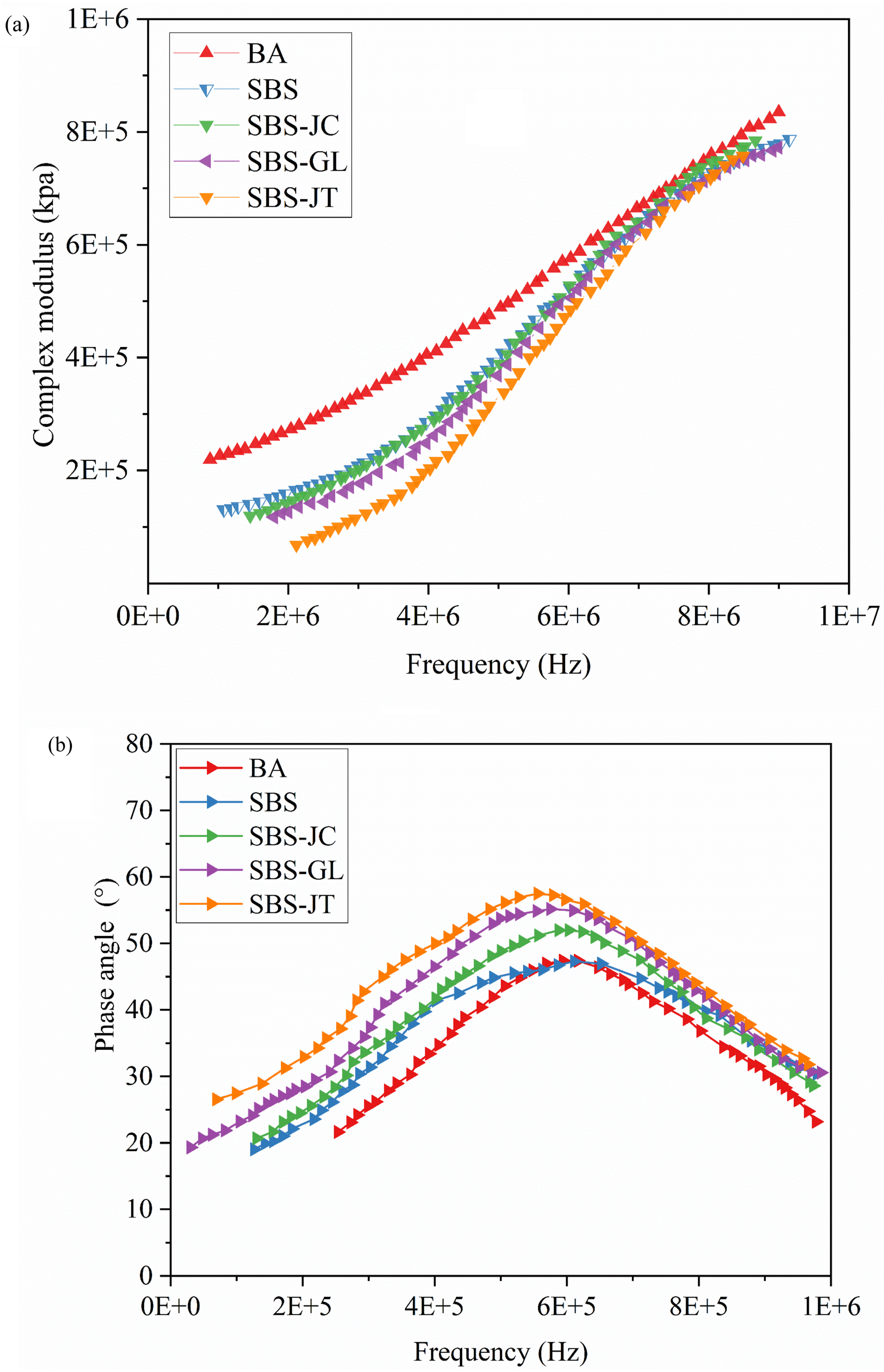
At high reduced frequencies all HEMs-modified binders converge toward similar (G∗) values, demonstrating preserved high-frequency stiffness and rutting resistance. This dual behavior reduced low-frequency modulus with retained high-frequency rigidity confirms that HEMs enable precise tailoring of the viscoelastic spectrum, achieving an optimal balance between flexibility and structural integrity across diverse service conditions.
The phase angle (δ), which quantifies the ratio of viscous to elastic response, exhibits a characteristic bell-shaped profile with increasing reduced frequency is show in Figure 5(b). BA shows the lowest peak (δ) 45°, reflecting a predominantly elastic character and limited capacity for energy dissipation. SBS modification increases (δ), indicating enhanced viscous dissipation. Notably, HEMs incorporation further elevates δ across all frequencies, with SBS-JT achieving the highest values (peak δ 62°), followed by SBS-GL and SBS-JC. This trend signifies improved damping capacity and fatigue resistance, as higher δ correlates with greater energy absorption during cyclic loading.
Moreover, the slower decay of (δ) at high frequencies in HEMs-modified binders suggests retained elasticity under rapid loading, mitigating instantaneous deformation while maintaining recovery potential. Collectively, these results demonstrate that HEMs particularly the multi-component JT formulation to optimize the viscoelastic architecture of SBS-modified asphalt, yielding binders that are simultaneously flexible, fatigue-resistant, and rutting-resistant, thereby fulfilling the demanding performance requirements of modern sustainable pavements.
Temperature sweep analysis
The temperature sweep test was conducted over a range of 10–90°C to evaluate the viscoelastic response of SBS-modified asphalt binders incorporating high-elasticity polymer modifiers (HEMs). As shown in Figure 6(a), all HEM-modified binders exhibit lower complex shear modulus (G∗) than the base asphalt (BA) across the entire temperature spectrum, indicating enhanced flexibility and reduced thermal brittleness. This reduction in (G∗) reflects improved molecular mobility and stress relaxation capacity under thermal loading. Among the formulations, SBS-JT consistently demonstrates the lowest (G∗) corroborating its superior flowability and workability consistent with its reduced rotational viscosity at mixing temperatures. In contrast, SBS-GL maintains a moderately elevated (G∗), particularly above 60°C, which aligns with its higher softening point (58.1°C) and suggests enhanced resistance to permanent deformation under high-temperature service conditions. Result of (a) complex modulus temperature sweep test and (b) phase angle curves.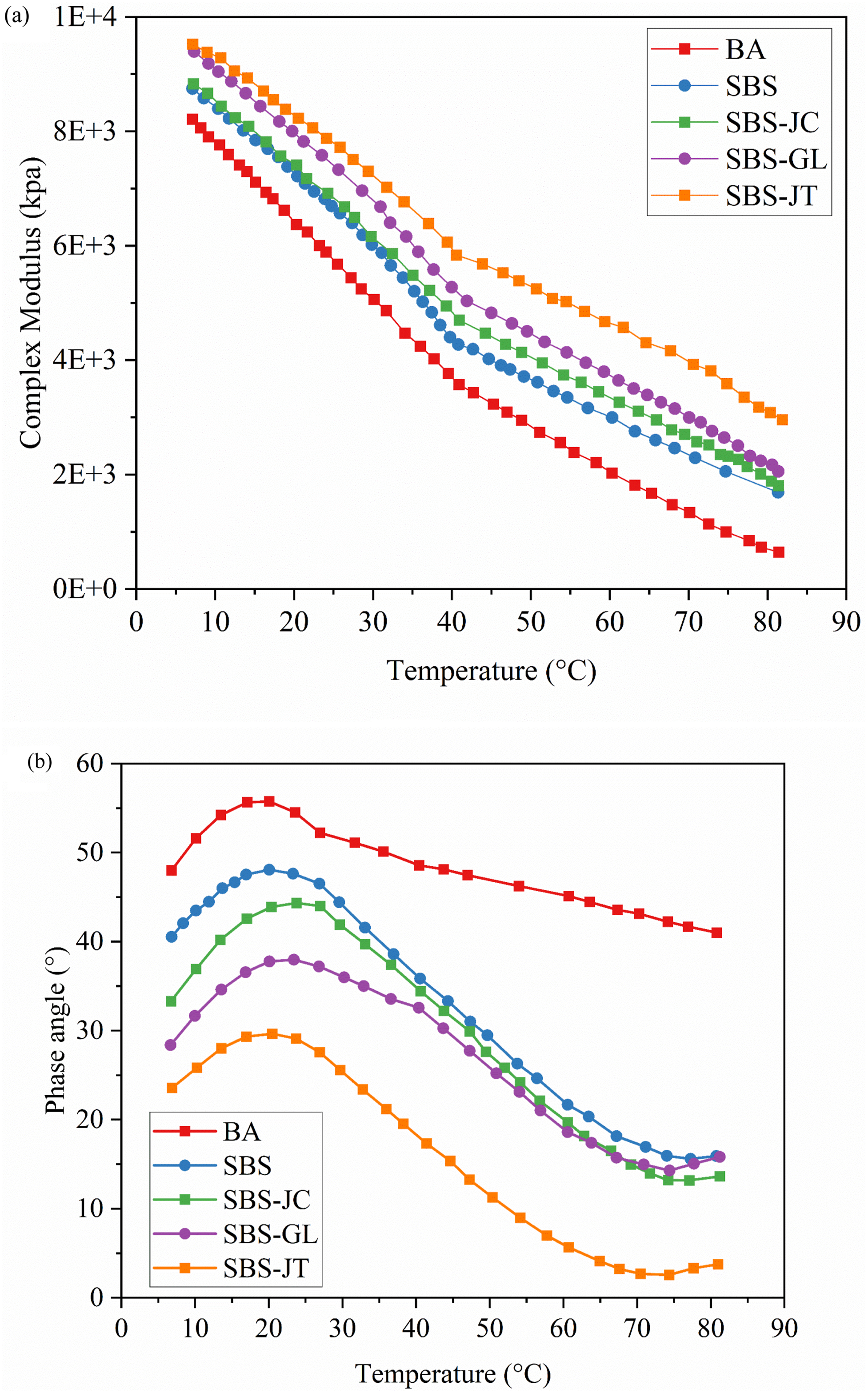
The phase angle (δ) results shown in Figure 6(b) further elucidate the viscoelastic balance of the binders. BA exhibits a sharp increase in (δ) beyond 30°C, signalling a rapid transition to viscous-dominated behavior and limited elastic recovery at elevated temperatures. In contrast, HEM-modified binders display smoother, more gradual δ transitions, indicative of a stable and balanced viscoelastic character across thermal regimes. SBS-JT achieves the highest δ values (e.g., ∼62° at 46°C), reflecting greater energy dissipation capacity and improved fatigue resistance. Conversely, SBS-GL exhibits lower (δ), consistent with a more elastic-dominant response, likely attributable to the epoxy-functionalized network that reinforces structural integrity at high temperatures.
Critically, the smoothness and continuity of both (G∗), and (δ) curves for all HEMs-modified systems confirm excellent compatibility and homogeneous dispersion of the modifiers within the asphalt matrix evidencing minimal phase separation or thermal degradation during testing. These results demonstrate that HEMs enable targeted rheological design. SBS-JT offers an optimal combination of low stiffness and high damping, making it ideal for fatigue prone or cold climate applications. SBS-GL provides enhanced elastic recovery and thermal stability, suited for high-temperature or heavy-traffic environments.
Collectively, these findings confirm that HEMs significantly advance the performance envelope of SBS-modified asphalt by decoupling traditionally conflicting properties simultaneously improving flexibility, fatigue resistance, and high-temperature stability without compromising microstructural homogeneity.
High-temperature rutting resistance and elastic recovery
MSCR analysis
The test quantifies resistance to permanent deformation through the non-recoverable creep compliance (J nr ) and elastic recovery through the percent recovery (R). Lower J nr values correspond to reduced susceptibility to rutting, while higher R values indicate greater capacity for elastic strain recovery.
As shown in Figure 7(a), the base asphalt (BA) exhibited the highest J
nr
values 1.85 kPa−1 at 0.1 kPa and 4.62 kPa−1 at 3.2 kPa reflecting limited resistance to permanent deformation. Modification with 7% SBS reduced J
nr
by 62% at 0.1 kPa and 58% at 3.2 kPa relative to BA. Further reductions were observed with the addition of high-elasticity polymer modifiers (HEMs). Among the HEM-modified binders, SBS-JT recorded the lowest J
nr
(0.18 kPa−1 at 0.1 kPa; 0.42 kPa−1 at 3.2 kPa), followed by SBS-GL (0.22 and 0.51 kPa−1) and SBS-JC (0.26 and 0.58 kPa−1). These results indicate that HEMs enhance the elastic network structure of SBS-modified binders, thereby reducing irreversible deformation under repeated loading. MSCR test results of 0.1 kPa and 3.2 kPa.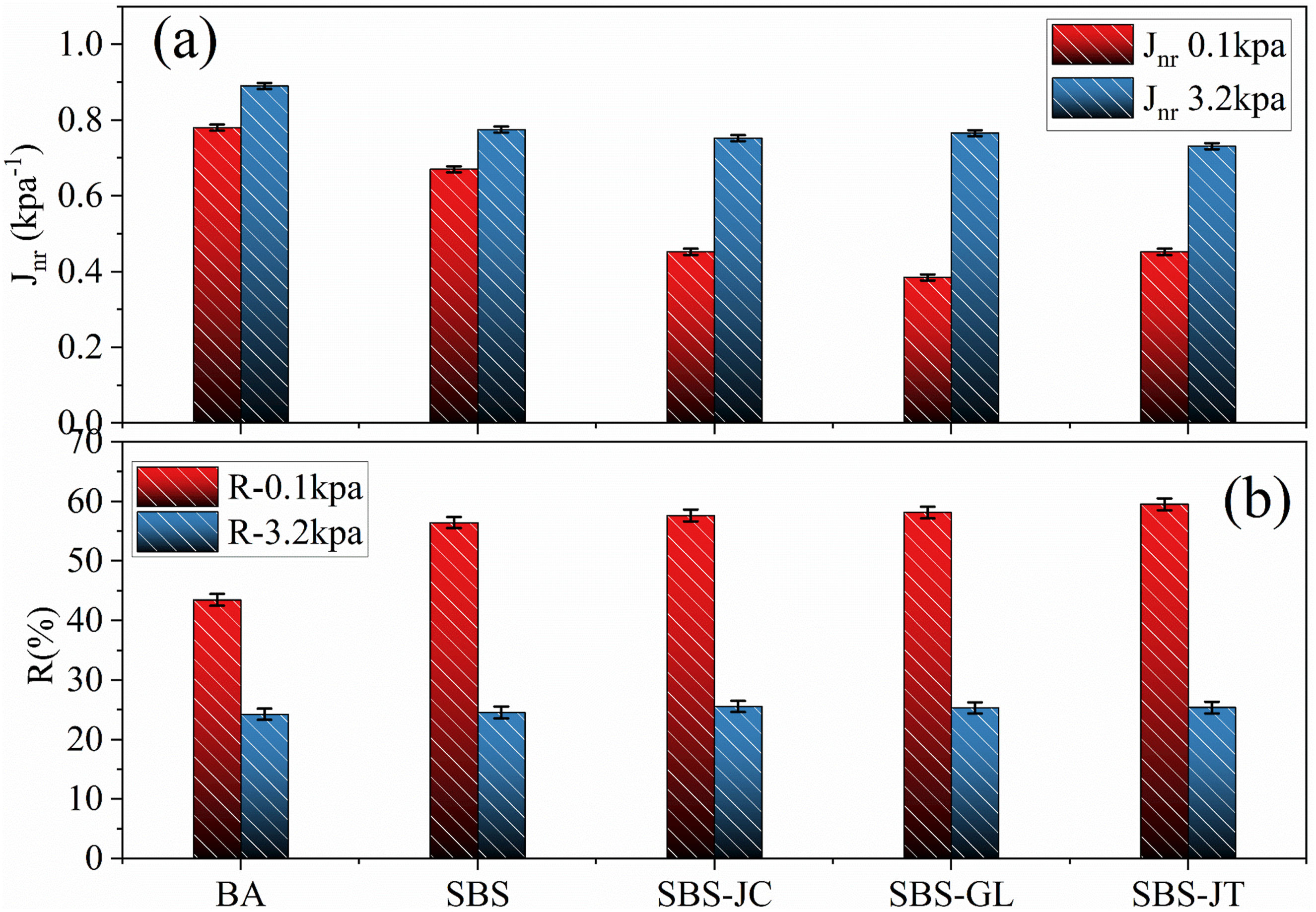
The percent recovery (R) values shown in Figure 7(b), followed a consistent trend. BA showed the lowest recovery 45% at 0.1 kPa and 25% at 3.2 kPa consistent with its predominantly viscous response. SBS modification increased R to 68% and 42%, respectively. The inclusion of HEMs further improved recovery: SBS-JT achieved 85% and 72%, SBS-GL reached 80% and 65%, and SBS-JC attained 75% and 58%. The increase in R correlates with the reduction in J nr , confirming that HEMs promote elastic behavior by reinforcing the polymer-asphalt matrix.
These results demonstrate that the combination of SBS with HEMs reduces non-recoverable deformation and increases elastic recovery under high-stress conditions. SBS-JT and SBS-GL exhibit the lowest J nr and highest R values among all modified binders, indicating enhanced high-temperature performance suitable for applications involving heavy traffic or elevated pavement temperatures.
Low-temperature cracking resistance
Performance was assessed using two parameters, creep stiffness (S) and the m-value (rate of relaxation). Per AASHTO T313, acceptable low-temperature performance requires S ≤300 MPa and m ≥ 0.30.
As shown in Figure 8(a), the base asphalt (BA) exhibited the highest creep stiffness at all test temperatures, reaching 285 MPa at −24°C. Modification with 7% SBS reduced stiffness by 10% relative to BA at −24°C. The addition of HEMs further decreased stiffness, SBS-JT recorded a stiffness of 185 MPa at −24°C, representing a 26% reduction compared to SBS and a 35% reduction relative to BA. Similar reductions were observed at −18°C and −12°C, with SBS-JT and SBS-GL consistently showing the lowest S values among all modified binders. BBR test result (a) creep stiffness (b) creep rate.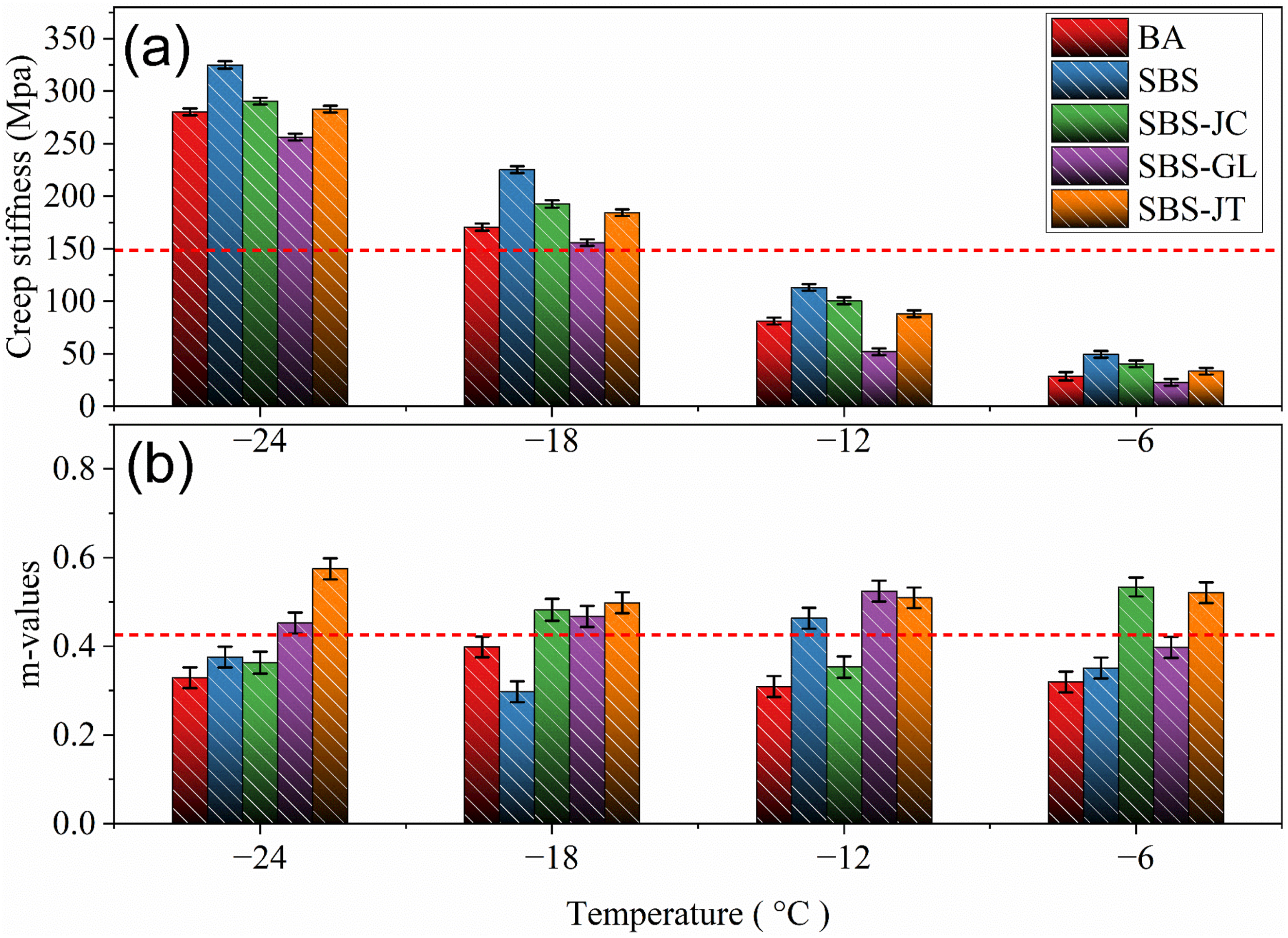
The m-values, presented in Figure 8(b), followed an inverse trend to stiffness. BA yielded the lowest m-values across all temperatures and failed to meet the 0.30 criterion at −24°C (m = 0.28). SBS modification increased the m-value to 0.32 at −24°C, a 18% improvement over BA. HEMs incorporation further enhanced stress relaxation, SBS-JT achieved an m-value of 0.46 at −24°C 45% higher than SBS and 65% higher than BA. SBS-GL also showed consistent improvement, with m-values 40–50% greater than BA across the temperature range.
The critical cracking temperature (TC) defined as the lowest test temperature at which both S ≤300 MPa and m ≥ 0.30 are satisfied was −18°C for BA, as it failed the m-value criterion at −24°C. In contrast, all HEMs-modified binders satisfied both criteria at −24°C, resulting in TC = −24°C. This represents a minimum improvement of 6°C in low-temperature performance. Given that SBS-JT exhibited the lowest stiffness (185 MPa) and highest m-value (0.46) at −24°C, its TC may extend below −24°C, though this was not directly measured in the current test protocol.
These results indicate that HEMs enhance the low-temperature performance of SBS-modified asphalt by reducing thermal stress accumulation and improving stress relaxation. Among the formulations tested, SBS-JT provides the greatest reduction in stiffness and the largest increase in m-value, making it the most effective at mitigating thermal cracking risk in cold climates.
Fatigue resistance
Figure 9 presents the shear stress strain response of the asphalt binders obtained from the Linear Amplitude Sweep (LAS) test at 25°C. All binders exhibited a three-stage response with increasing strain: (1) an initial linear rise in shear stress, (2) a peak stress followed by a post-peak decline, and (3) a gradual stabilization at higher strains, consistent with progressive microstructural damage under cyclic loading. Results of LAS test stress versus strain curves.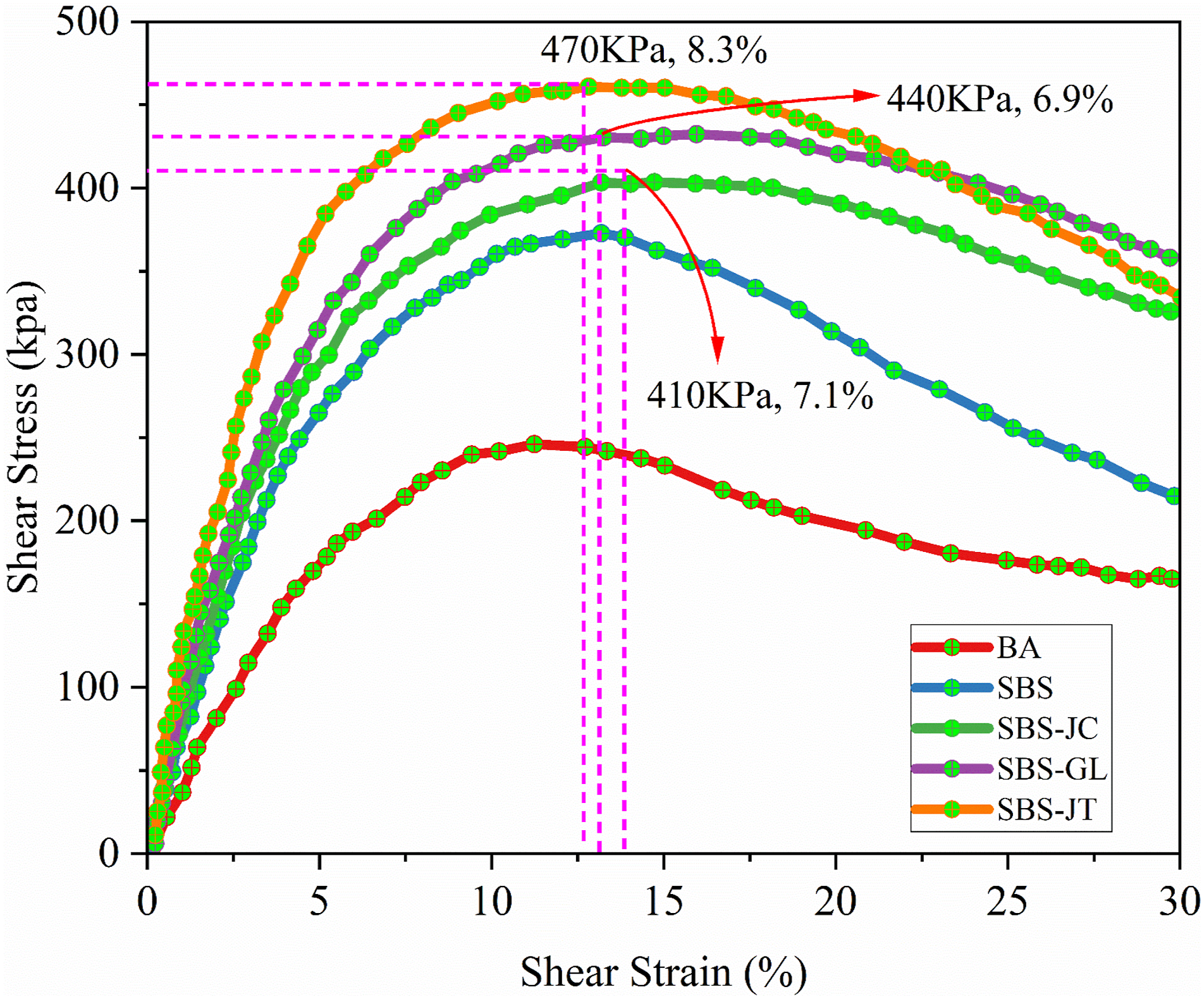
The base asphalt (BA) reached a peak shear stress of 250 kPa at a strain of 4.2%. SBS modification increased the peak stress to 380 kPa and shifted failure to 6.8% strain. Among the high-elasticity polymer modifiers (HEM)-modified binders, SBS-JC achieved a peak stress of 410 kPa at 7.1% strain. SBS-GL exhibited a higher peak stress (440 kPa) at 6.9% strain but displayed a steep post-peak softening slope of −78 kPa per % strain, characteristic of limited post-failure deformation capacity. In contrast, SBS-JT sustained the highest peak stress (470 kPa) at the largest failure strain (8.3%) and exhibited a gradual post-peak decline (−42 kPa per % strain), indicating sustained load-bearing capability after initial damage.
The post-peak behavior distinguishes failure modes: BA and SBS-GL showed rapid stress decay, consistent with brittle-like response, whereas SBS-JC and SBS-JT maintained elevated stress levels over extended strain ranges, reflecting ductile-like energy dissipation. The strain at failure increased by 2.6%, 2.9%, and 4.1% for SBS-JC, SBS-GL, and SBS-JT, respectively, relative to the SBS control. These results indicate that HEMs particularly JT-HEM enhance the binder’s capacity to accommodate deformation after microcrack initiation, thereby improving fatigue tolerance under repeated traffic loading.
Storage stability and phase homogeneity
The storage stability of the modified asphalt binders was evaluated using the tube segregation test. The softening point difference (SPD), defined as the absolute difference in softening point between the top and bottom segments after 48 h of heating at 163°C, served as the primary macroscopic indicator of phase stability is shown in Figure 10(a). An SPD ≤2.5°C is widely accepted as the threshold for acceptable storage stability in polymer-modified binders. (a) Tube test result (b) schematic diagram of the fluorescence microscopy imaging process for SBS-modified asphalt binders after the tube segregation test.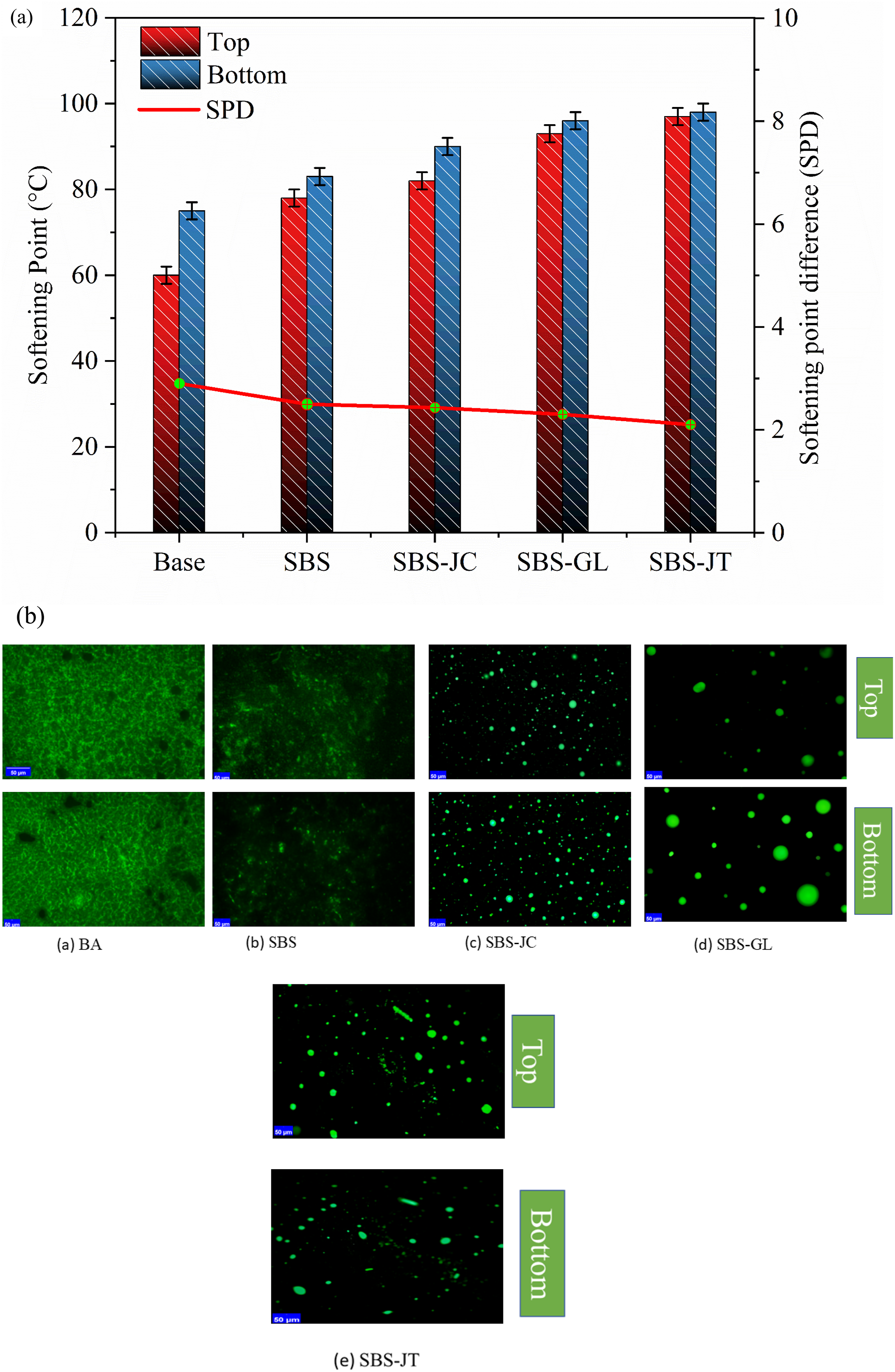
The base asphalt (BA) exhibited an SPD of 2.9°C, exceeding this threshold. In contrast, all HEMs modified binders met the criterion, SBS-JC (2.43°C), SBS-GL (2.3°C), and SBS-JT (2.1°C). This progressive reduction in SPD with HEMs addition indicates improved compatibility between the polymer network and the asphalt matrix, thereby reducing thermal-induced phase separation.
Fluorescence microscopy shown in Figure 10(b) (a)–(e) provided direct visualization of the microstructural distribution of polymer-rich domains after thermal storage. For BA, no fluorescent domains were observed, consistent with the absence of polymer phases. In the SBS-modified binder, fluorescent particles were visible, with higher density in the top segment compared to the bottom, reflecting upward migration of the less dense SBS during storage.
In HEMs-modified binders, the spatial distribution of fluorescent domains was more uniform across the vertical axis. SBS-JC and SBS-GL showed moderate reductions in top–bottom disparity, while SBS-JT exhibited nearly identical particle density and size distribution in both segments, indicating minimal segregation.
Quantitative image analysis is shown in Figure 11(a) validated these observations. The phase ratio (PR), defined as the area fraction of fluorescent regions relative to the total image area, was calculated for both top and bottom segments. Unmodified SBS exhibited a PR of 18% in the top segment and 10% in the bottom, resulting in a top bottom fluorescence discrepancy (TFD) of 8%. In contrast, SBS-JT showed PR values of 28% (top) and 27% (bottom), yielding a TFD of 1%. Results of micrograph analysis: (a) Phase ratio (PR) and top-bottom fluorescence discrepancy (TFD) for BA, SBS, SBS-JC, SBS-GL, and SBS-JT; (b) Correlation between TFD and storage phase difference (SPD).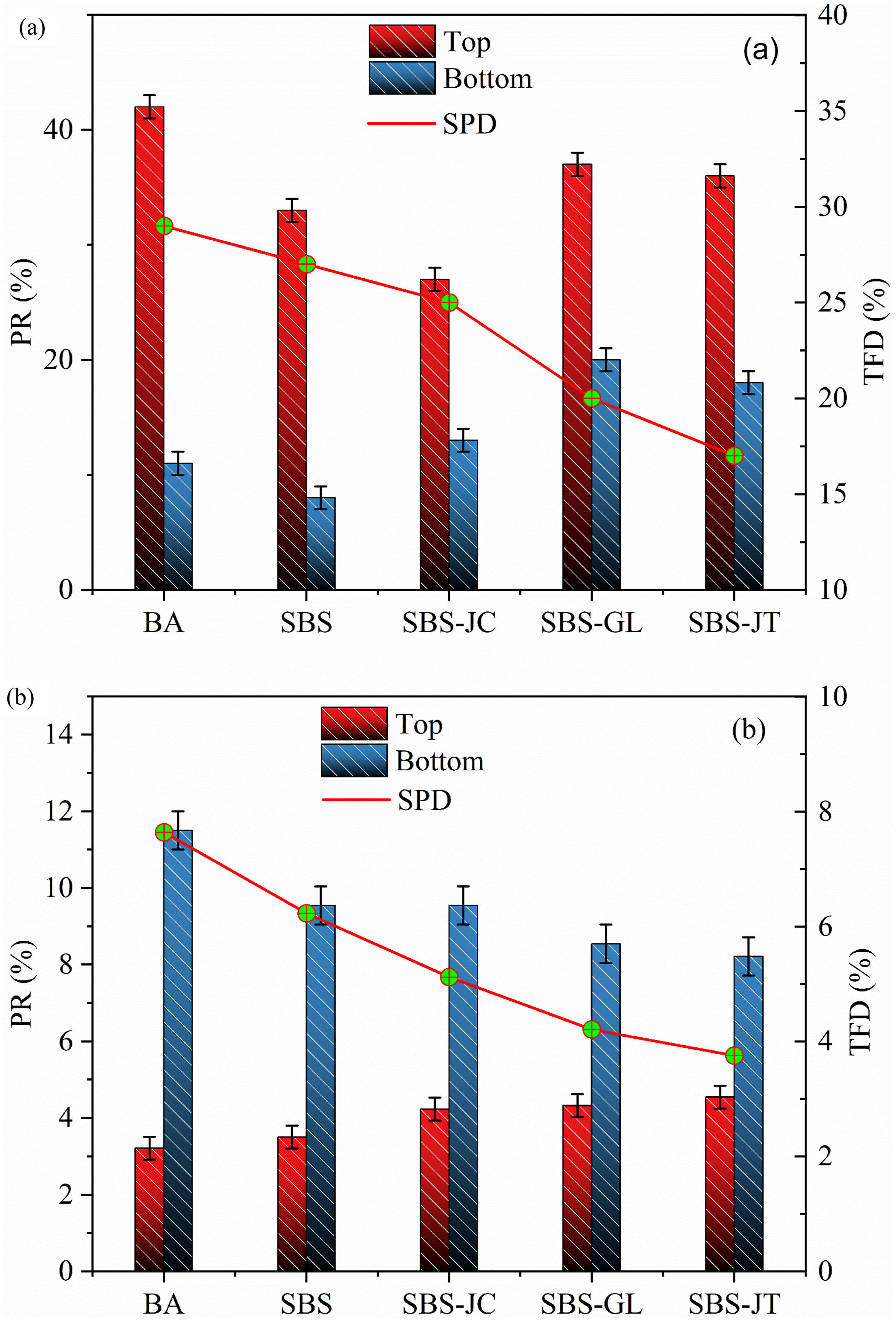
The TFD decreased progressively from 33% for BA to 17% for SBS-JT Figure 11(b), correlating directly with the reduction in SPD. This confirms that HEMs enhance microstructural homogeneity by suppressing vertical segregation.
The multi-component formulation of JT-HEM comprising SBS, polyethylene, ethylene-vinyl acetate (EVA), resin, and epoxy promotes interfacial compatibility and physical entanglement within the asphalt matrix. This structure minimizes density-driven migration and stabilizes the polymer network during thermal storage. Consequently, SBS-JT demonstrated the lowest SPD (2.1°C) and TFD (1%), indicating the most uniform phase distribution among all formulations.
Together, macroscopic (SPD) and microscopic (PR, TFD) analyses confirm that HEMs improve the storage stability of SBS-modified asphalt by enhancing phase compatibility and reducing vertical segregation during high-temperature storage.
Conclusion
This study evaluated the performance of SBS-modified asphalt binders enhanced with three novel high-elastic modifiers (HEMs) JC-HEM, GL-HEM, and JT-HEM through a comprehensive suite of rheological, mechanical, and microstructural analyses. The following conclusions are drawn from the experimental results.
The incorporation of HEMs substantially improved the viscoelastic properties of SBS-modified asphalt. HEMs reduced stiffness and increased the phase angle indicating enhanced flexibility and energy dissipation capacity. The multi-component JT-HEM formulation proved most effective, yielding the lowest stiffness and highest phase angle.
The JT-HEM modifier significantly improves the fatigue resistance of SBS-modified asphalt binders. The JT-HEM modified asphalt shows a notable improvement in fatigue life, with a 40% increase in recovery rates, demonstrating enhanced fatigue resistance compared to the base SBS asphalt.
The compatibility between the SBS binder and JT-HEM was also notably improved, as proved by a softening point difference (SPD) of 2.1°C, observed minimal phase separation and superior phase homogeneity during storage. This enhanced compatibility contributes to long-term binder stability and improved performance in varying temperature conditions.
From a practical standpoint, the improved workability (viscosity = 2.15 Pa·s at 135°C) and enhanced performance across thermal and loading extremes observed that SBS-JT can reduce mixing energy, extend pavement service life, and lower maintenance frequency in regions with heavy traffic and wide temperature fluctuations. Given that the 5% HEMs dosage aligns with current Chinese highway specifications and manufacturer recommendations, the integration of JT-HEM into SBS-modified asphalt represents a technically feasible and cost-effective upgrade for long-life pavement applications without requiring changes to existing production protocols.
Footnotes
Acknowledgements
The authors gratefully acknowledge the support provided by King Saud University, Riyadh, Kingdom of Saudi Arabia Supporting Project No. (ORF-2025-424) and National Natural Science Foundation of China under Grant No. 51878168, and their support is sincerely appreciated.
Author contributions
Ying Gao: Conceptualization, Supervision, Writing Review & Editing. Syed Khaliq Shah: Conceptualization, Data Collection, Data Analysis, Interpretation of Results, Writing -Original Draft. Abdullah I. Almansour: Review & Editing, Methodology, Validation, Draft Manuscript Preparation, Funding.
Declaration of conflicting interests
The authors declared no potential conflicts of interest with respect to the research, authorship, and/or publication of this article.
Funding
The authors disclosed receipt of the following financial support for the research, authorship, and/or publication of this article: The support provided by King Saud University, Riyadh, Kingdom of Saudi Arabia Supporting Project No (ORF-2025-424) and National Natural Science Foundation of China under Grant No 51878168, and their support is sincerely appreciated.
